



Abstract
This study develops a strategic framework to guide the adoption of Industry 4.0 technologies across various business sectors. Using a mixed-methods approach, the research combines an extensive literature review with empirical investigations, including case studies and surveys with industry practitioners. The framework integrates advanced digital technologies, such as artificial intelligence and immersive solutions, and provides specific indicators to measure adoption progress. Key findings highlight critical business areas benefiting from digital transformation, such as production, operations management, and IT, showcasing improvements in resource management, operational efficiency, and innovation capabilities. The study’s originality lies in its comprehensive and actionable framework, validated through empirical data and aligned with international standards, offering practical tools for businesses navigating digital transformation.
Keywords
Introduction
In the realm of modern business landscapes, the emergence of the Fourth Industrial Revolution, commonly known as Industry 4.0, has heralded a new era characterized by the seamless integration of advanced digital technologies, including Artificial Intelligence (AI) and other immersive technologies, into the core of business operations. 1 This digital paradigm, while promising unparalleled efficiency and innovation, also presents a complex challenge: the necessity for a structured and coherent framework to facilitate the adoption of these technologies across various business sectors. 2 Building on this perspective, the transformative potential of Industry 5.0 to enhance supply chain performance has garnered significant attention. Recent research emphasizes the role of Industry 5.0 technologies in fostering efficiency, visibility, and responsiveness within supply chains, demonstrating their ability to reshape performance dynamics and expedite technological adoption in complex business environments. 3 This study addresses the critical need for a comprehensive framework that bridges the theoretical underpinnings of Industry 4.0 and Industry 5.0 with practical tools for technology adoption. By integrating advanced digital technologies and novel performance indicators, this work provides a unified approach that overcomes the fragmented methodologies seen in prior research, offering a distinctive contribution to the discourse on digital transformation.
Research questions
The existing literature on technological adoption within businesses underscores the significant potential of AI and immersive technologies to revolutionize industry practices, particularly in manufacturing, service delivery, and human resources management.4,5 However, it also highlights a critical gap – a lack of comprehensive methodologies to effectively monitor and evaluate the implementation of these technologies using Key Performance Indicators (KPIs) and Key Adoption Indicators (KAIs).2,4,6,7 While several studies have explored individual aspects of Industry 4.0, such as operational efficiency improvements, customer service enhancements, and HR management innovations, there remains a conspicuous absence of an integrative approach that combines these disparate elements into a unified adoption and assessment model. This study endeavors to address these challenges through three pivotal research questions: RQ1. What necessitates the adoption of I4.0 technologies in contemporary businesses, and what are the expected benefits across different operational areas?
This question aims to understand the driving forces behind the push for digital transformation and the expected benefits that this technologies offer. The interplay between smart supply chains and advanced technologies is particularly critical in the manufacturing industry. Recent findings underscore how instrumented supply chains, powered by smart technologies, can significantly boost operational performance. This aligns with the need to explore metrics that reliably track the benefits of digital transformation.
8
RQ2. Given the acknowledged benefits, how can companies select Industry 4.0 technologies that best align with their core business, and what could be the indicators of impact from this adoption?
This question shifts focus on how businesses can strategically select AI technologies that complement their core operations, exploring potential indicators of success and the challenges in aligning technology selection with business goals. RQ3. What indicators can measure the digital transformation process in a company, and what types of metrics can be considered to reliably track the ongoing process?
The third question aims to identify indicators that can effectively measure the progress and impact of digital transformation initiatives, suggesting a structured approach to monitoring and evaluating the effectiveness of technology adoption. By addressing these questions, this research aims to bridge the literature gap by proposing a novel framework designed to aid businesses in the strategic adoption of I.4.0 technologies. Beyond theoretical contributions, this work also endeavors to provide practical tools for companies experiencing an acceleration in the evolution of AI-based technologies yet often find themselves struggling to keep pace. This framework seeks to systematically map these technologies to specific business areas and delineate relevant metrics, thereby offering a comprehensive and actionable tool for decision-makers navigating the rapid advancements in digital transformation. The methodology of this study revolves around a comprehensive review of existing literature combined with an empirical investigation into current business practices concerning technology adoption and performance evaluation. This dual approach ensures that the research synthesizes theoretical insights from scholarly articles and industry reports while also deriving practical implications from real-world case studies. To enhance the quality and applicability of the framework, it undergoes rigorous validation through comparisons with industrial realities and collaboration with international research groups. This integration of diverse perspectives ensures that the framework is robust and adaptable to various contexts. The ultimate goal is to offer a clear, actionable roadmap for businesses embarking on their Industry 4.0 journey.
Article outline
Moving forward, the structure of this paper is delineated as follows: the second section lays the theoretical foundation by examining the I4.0 technologies and the necessity of digital transformation. The third section details the proposed model for technology adoption, elucidating the framework’s architecture, the logic behind mapping technologies to business domains, the methodology employed for the model’s creation, and the selection criteria for technologies and their evaluation metrics. The fourth section delves into a discussion of these findings, contrasting the model with prior studies and addressing its distinctive contributions and limitations, while suggesting directions for subsequent research endeavors. The paper concludes with a summary of the principal insights and their managerial implications regarding the adoption of Industry 4.0, AI and immersive technologies, alongside reflections on the research’s contributions to the academic discourse as well as future research lines
Theoretical background
Digital transformation in manufacturing: Necessity and impact
In the current fast-paced market landscape, the deployment of digitalization technologies is essential for companies aiming to achieve their operational objectives and keep pace with the changing requirements of manufacturing operations. 9 Digitalization involves incorporating intelligent technologies and value chain networks that provide instantaneous insights into manufacturing systems, components, and intelligent products. 10 Such vital data aids managerial decision-making, 11 increasing transparency across all points of the supply chain—a factor deemed critical for competitive advantage. 12 Existing research points to key enhancements in manufacturing operations resulting from the application of Industry 4.0 principles, such as improved visibility within factories, refined production planning and scheduling, better quality management, more effective maintenance, and strengthened links in supply chains.13,14 Adopting digital manufacturing processes propels innovation, boosts productivity, enhances resource efficiency, and cuts costs. 15 Additionally, digitalization leads to the establishment of smaller, more sustainable production entities.16,17 As organizations work through their digital transformations, they face numerous challenges within burgeoning digital economies. The literature identifies numerous obstacles that organizations must overcome as they move toward full digitalization. Understanding and addressing these impediments is crucial, as digital technologies offer solutions to sustainability issues, potentially transforming the path forward for contemporary enterprises. 18 Recent studies highlight the pivotal role of artificial intelligence in optimizing operational processes and fostering innovation in various domains. For instance, the application of AI in domestic care communities during the COVID-19 pandemic has demonstrated its potential in enhancing data-driven appointment services, as outlined by. 19 This knowledge prepares companies to strategically utilize digital tools, ensuring their survival and success in the digital age. In this context, Industry 5.0 emerges as a pivotal framework, offering a suite of technologies that significantly enhance supply chain performance through improved visibility and responsiveness. A study highlights the interplay between these dimensions and their ability to drive efficiency, making Industry 5.0 a cornerstone for advancing operational excellence. 3
Despite the rapid advancement of technology, businesses often face significant hurdles in adopting new technologies. These challenges are particularly pronounced in the context of Industry 4.0, where the breadth of digital technologies encompasses everything from artificial intelligence to advanced robotics and the Internet of Things.20,21 Furthermore, a bibliometric analysis of AI’s role in operational environments provides insights into best practices and the evolution of AI-driven strategies. 22 This analysis enables organizations to align their digital transformation efforts with proven methodologies, ensuring a more structured approach to adopting advanced technologies. Both small and large enterprises encounter common barriers to digitalization, which will be explored in greater detail in the following section. For small businesses, limited resources pose the greatest challenge.23,24 Financial constraints, lack of technical expertise, and limited access to cutting-edge technology can impede the implementation of comprehensive digital solutions. Small enterprises often struggle with the initial investment required for digital transformation and may lack the scale to leverage these technologies effectively.25,26 In contrast, large companies might face obstacles related to their existing infrastructures and the complexity of integrating new technologies into established systems. Organizational inertia and resistance to change can also slow down the adoption process. Large enterprises must manage extensive data privacy concerns and regulatory compliance issues that come with large-scale digital transformations. 27 These barriers underscore the need for a nuanced understanding of digitalization’s challenges across different business sizes and types, setting the stage for an in-depth discussion on overcoming these obstacles in the subsequent section of this paper. This analysis aims to provide actionable insights into how businesses can navigate the complexities of adopting Industry 4.0 technologies, ensuring that they not only keep pace with technological evolution but also harness its full potential to drive innovation and growth.
Industry 4.0 overview
Industry 4.0, often hailed as the fourth industrial revolution, encapsulates a transformative shift driven by disruptive innovations that are reshaping the socioeconomic landscape. 28 Initially introduced at the 2011 Hanover Fair and propelled by thought leaders such as Siegfried Dais (Robert Bosch GmbH) and Henning Kagermann (Acatech), this revolution is grounded in the integration of cyber-physical systems, the Internet, and smart technologies. 29 The adoption of Industry 4.0 enhances the efficiency and effectiveness of operations through real-time connectivity and advanced data analytics, transforming traditional production and supply chain models.30,31 This era of digitalization directly impacts markets, labor dynamics, and social structures, necessitating new leadership styles, work ethics, and management systems to navigate the complexities introduced. 32 As companies integrate smart technologies and value chain networks, they gain unparalleled visibility and control over manufacturing systems, enabling them to predict and respond to changes dynamically.33,34 However, this shift is not without challenges. The implementation of Industry 4.0 technologies often requires substantial investment, which can be particularly daunting for SMEs, and demands a significant overhaul of existing processes and systems.35,36 Despite its potential, many firms are still at the early stages of adopting Industry 4.0 principles, grappling with how to effectively align these technologies with their business models and broader economic goals. Emerging digital paradigms such as the metaverse are also gaining traction, particularly among SMEs. Studies reveal a strong correlation between metaverse adoption intention and performance improvements, emphasizing the role of factors like customer engagement and service experience in driving adoption success. 37 Key challenges include managing the transition towards more sustainable and digitally integrated business practices without compromising operational excellence. 38 The digital transformation requires strong leadership to overcome barriers such as resistance to change, privacy concerns, and the alignment of digital strategies with environmental performance.39,40 Additionally, standardization has played a crucial role in strengthening the industrial sector, and it can further enhance the ongoing digitalization efforts by providing a consistent framework for integrating new technologies. 41 Industry 4.0 signifies a pivotal transformation that transcends traditional industrial automation and informatization to foster a deeper integration of the physical and virtual worlds. This revolution is underpinned by a suite of cutting-edge technologies, including autonomous robots, big data analytics, augmented reality, and the Internet of Things (IoT). These innovations are collectively reshaping the manufacturing landscape, driving the emergence of smart factories and fully digitalized production systems. 42 The transformative impact of deep learning technologies, particularly in generic object detection, has also been widely acknowledged. This technology is integral to many Industry 4.0 innovations, from quality control to predictive maintenance. 43 Integrating such advancements into digital manufacturing systems enhances decision-making capabilities and operational efficiency. Autonomous robots, equipped with advanced sensors and AI, can operate with remarkable precision and flexibility, undertaking complex tasks that were traditionally challenging for human workers. 44 Big data analytics empower manufacturers to harness vast amounts of data from production lines and supply chains, enabling predictive maintenance, optimizing operations, and enhancing product quality. Additionally, the integration of smart supply chains and intelligent technologies fosters operational excellence, particularly within the manufacturing sector. Research highlights how such technologies provide a competitive edge by improving resource efficiency, production planning, and overall supply chain visibility. 8 Augmented reality (AR) offers manufacturers the tools to superimpose digital information onto the physical world, improving design, assembly, and training processes.45,46 Meanwhile, IoT technology facilitates a network of interconnected devices that communicate seamlessly, ensuring continuous data flow and real-time decision-making across the production floor. The convergence of these technologies not only streamlines manufacturing processes but also fosters innovation by enabling the development of new products and services that respond to changing market demands more swiftly. 47 However, the shift toward smart factories also presents substantial challenges, including the need for significant capital investment in new technologies, the restructuring of workforce dynamics, and the management of cybersecurity risks associated with increased connectivity. 48
Despite these challenges, the opportunities afforded by Industry 4.0 are vast. Manufacturers that successfully navigate this transition can expect to see enhanced operational efficiency, reduced costs, improved environmental performance due to more sustainable practices, and increased competitiveness in the global market. These examples of AI applications complement the discussion on the challenges and opportunities associated with digitalization. They provide concrete evidence of how cutting-edge technologies can be tailored to meet the specific needs of diverse sectors, ultimately fostering a deeper integration of Industry 4.0 principles. As such, Industry 4.0 not only represents the future of manufacturing but also a strategic imperative for industries aiming to thrive in an increasingly digital world. 49
Building on the transformative potential of Industry 4.0, this work aims to provide practical tools for the adoption of these advanced technologies. To achieve this, we will systematically map all the tools associated with this technological revolution and explore how each can impact and be applied across different business areas. This mapping will not only highlight the functionalities and benefits of each technology but also identify the specific sectors and processes where they can be most effectively integrated.
By detailing the applications of technologies such as IoT, AI, autonomous robots, big data analytics, and augmented reality, we will delineate a comprehensive framework that can guide businesses in harnessing these innovations. This approach ensures that companies can tailor their digital transformation strategies to their unique operational needs, maximizing the benefits while mitigating the risks associated with digital integration. The outcome will be a strategic blueprint that helps firms navigate the complexities of Industry 4.0.
Proposed model
In this section, we present the conceptual framework illustrated in Figure 1, placing the digital transformation process at its core. Framework for digital transformation (FDT).
This transformation is achieved through the implementation of three fundamental elements, which interact with each other to achieve the business objective. To provide empirical validation of the proposed framework, this study employed a case study approach focused on organizations actively undergoing digital transformation. The case study methodology involved structured interviews with key stakeholders, surveys for quantitative data collection, and an in-depth analysis of organizational documents to understand the alignment between business objectives and technology adoption. Starting with the need for digital transformation, the process begins with an analysis of the company’s business areas to identify those with the greatest need for digital transformation or those where the process would bring the most significant benefits. Subsequently, the potential enabling technologies for digital transition are scanned, followed by the final step of measuring and adopting these technologies. The characteristics of each element of the framework will be detailed further, highlighting their roles and interactions. Data collection methods included a combination of qualitative and quantitative techniques. Surveys were distributed to industry practitioners, gathering insights on the effectiveness of Industry 4.0 technologies in specific business areas. Simultaneously, semi-structured interviews provided a richer narrative on the challenges and successes encountered during digital transformation initiatives. This mixed-methods approach ensured a holistic understanding of the framework’s applicability. In the case study section, a recent application of this framework will be presented, showcasing its practical implementation.
Mapping Industry 4.0 standards
In the endeavor to provide a structured mapping of technologies within Industry 4.0, it is essential to reference authoritative standards that guide our understanding and classification of these technologies.50–52 While there are various contributions in the literature, the standard set by the ISO Smart Manufacturing Coordinating Committee serves as a critical point of reference. This committee’s work provides a comprehensive and authoritative framework for identifying and categorizing Industry 4.0 technologies, ensuring consistency and clarity in their application across different sectors. In this section, we will delve deeper into the technologies of Industry 4.0 as defined by the ISO Smart Manufacturing Coordinating Committee. 53 As discussed in various scholarly contributions on Industry 4.0, enabling technologies play a pivotal role in the framework of this digital revolution.33,35,50 In the ever-evolving landscape of industrial technology, the importance of these enabling technologies cannot be overstated.24,40,54–56 The ISO Smart Manufacturing Coordinating Committee’s standard offers a precise classification of these essential tools, which is crucial for understanding their scope and application in the context of Industry 4.0.
This classification highlights nine key enabling technologies, which are instrumental for companies engaging in digital transition efforts; see Figure 2. In Table 1 is presented a list of the enabling technologies for Industry 4.0 along with a brief explanation for each. Industry 4.0 enablers. Enabling technologies of industry 4.0.

Each of these technologies represents a critical component of the digital toolkit required for effective transformation and integration into Industry 4.0 paradigms. 53 Detailed in Figure 1, this classification not only elucidates the technologies themselves but also serves as a guideline for businesses to strategically adopt and integrate these tools into their operations. This section aims to provide a deeper understanding of each technology’s unique characteristics and potential applications, enabling firms to leverage them for enhanced operational efficiency, innovation, and competitive advantage in a digitally transformed industry landscape. The qualitative data were subjected to thematic analysis, and survey responses were analyzed using statistical methods. The integration of findings with prior literature strengthened the validity and contextual relevance of the results.
Framework development
Primary business areas and their function.

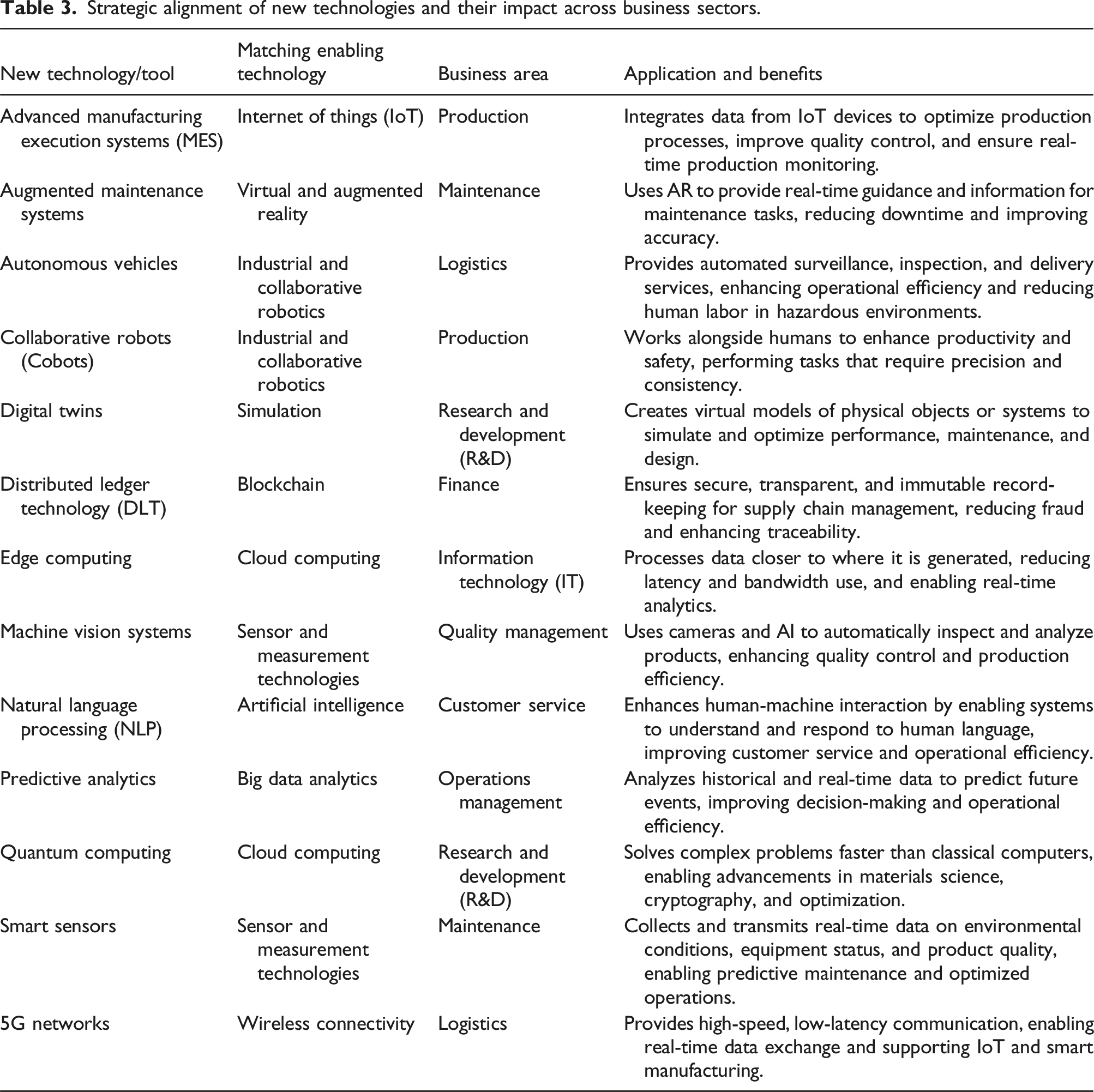
Strategic alignment of new technologies and their impact across business sectors.
Key adoption indicators for measuring digital transformation.

Final reflections on the framework for technological transition
This framework is designed to assist and facilitate technological transition within companies by providing clarifying tools that streamline the integration of Industry 4.0 technologies into existing business operations. Developed and validated through an international collaboration between the Rome Technopole group and the AI Lund group, this work embodies a successful synergy between industrial and academic realms, ensuring its relevance and applicability across various sectors. The collaborative effort has not only enhanced the robustness of the framework but has also ensured that it is grounded in both theoretical research and practical applications. This dual focus helps bridge the gap between cutting-edge technological advancements and their real-world implementations, making it an invaluable resource for organizations seeking to navigate the complexities of digital transformation. In the subsequent sections, we will explore potential future developments of this work, discuss its limitations, and draw conclusions. The case study approach highlighted the practical challenges and opportunities associated with adopting the proposed framework. By integrating perspectives from both practitioners and academic researchers, the study ensured a balanced and comprehensive understanding of the digital transformation process, further validating the robustness of the framework in diverse organizational contexts. This future discussion aims to further refine the framework and expand its applicability, ensuring that it continues to meet the evolving needs of industries as they navigate the challenges and opportunities presented by Industry 4.0 technologies. By examining these aspects, we seek to provide a comprehensive understanding of the framework’s impact and potential, setting the stage for ongoing improvements and innovations in the field of digital transformation.
Case study
In this section, we will explore the application of the proposed framework to a pharmaceutical company, whose board has explicitly stated the objective of accelerating their digital transformation process. We will briefly examine the company context and the implementation of the proposed method, detailing the resulting digitalization projects.
Application context
The company in focus, hereafter referred to as Pharma Ltd. for confidentiality reasons, is a global leader in the pharmaceutical sector, specializing in the development, production, and distribution of drugs, biologics, gene therapies, and consumer health products. Pharma Ltd. is primarily engaged in the research and development of innovative solutions to enhance drug bioavailability, gene therapy delivery, and biologics production. Pharma Ltd. has established collaborations with renowned institutions such as the University of Cambridge for developing new drug delivery technologies and the Massachusetts Institute of Technology (MIT) for advancing gene therapy manufacturing techniques. In recent years, the company has significantly advanced its production lines, incorporating high levels of automation. This enhancement has enabled their facilities to play a crucial role in the production of vaccines during the recent COVID-19 pandemic.
The following sections will delve into the specific application of the proposed framework within Pharma Ltd., highlighting the digitalization projects that were initiated as a result. This case study aims to illustrate the practical benefits and transformative impact of adopting Industry 4.0 technologies in the pharmaceutical industry.
Application of the method
In this context, the initial step involved conducting a survey with the PMO Director to identify the primary business areas critical for the digitalization process. The survey aimed to pinpoint which areas would benefit most from the implementation of digital technologies. As illustrated in the radar graph in Figure 3, the business areas that emerged as the most significant for initiating digitalization projects were Production, Operations Management, and Information Technology. Necessity of digitalization across business areas in Pharma Ltd.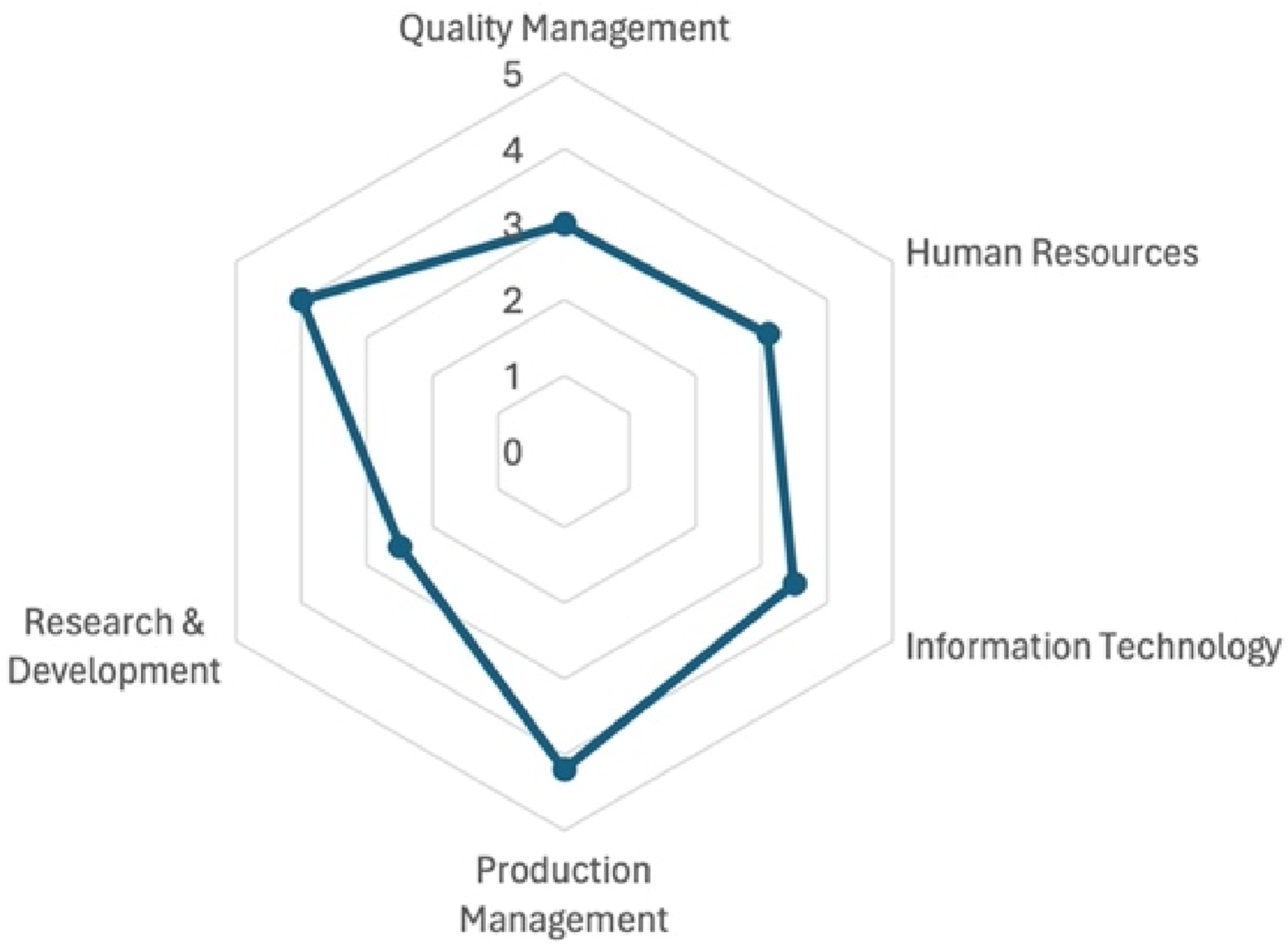
These areas were identified based on their potential to significantly enhance operational efficiency, optimize production processes, and improve the overall technological infrastructure of the company. The insights gained from the survey guided the subsequent phases of the framework’s application, ensuring that the digital transformation efforts were strategically aligned with the company’s key operational priorities. The interview highlighted specific challenges and proposed actionable solutions to address them, aiming to drive the digitalization process forward. Below are the detailed problems identified with the executive team and the projects developed to overcome these issues and proceed with digital transformation: 1. Handwriting Recognition Software Evaluation for Receiving Inspection of Primary Packaging a. Problem: Manual processing of handwritten documents, related to the analysis of samples from incoming batch of primary packaging materials, was severely time-consuming. b. Project Goal: Evaluate the utilization of a handwriting recognition software to digitize handwritten documents efficiently, transfer data on Excel and therefore make computation digitally. 2. Operational Efficiency Enhancement with Digital Twin a. Problem: Inefficient resource management and line improvement planning resulted in operational inefficiencies, increased downtime, and suboptimal utilization of both human and material resources. b. Project Goal: Develop an intelligent Digital Twin simulation model focused on optimizing resource management and improving line processes. This model enabled the execution of tests and simulations to predict real-world outcomes without the need for live trials, significantly reducing costs. By considering variables such as production capacity, resource availability, and regulatory requirements specific to the pharmaceutical industry the model aimed to enhance the process efficiency. The goal was to improve operational efficiency, reduce downtime, and better utilize the workforce, while dynamically responding to unexpected changes. 3. Tech Transfer Optimization through AI and Digital Twin a. Problem: The existing tech transfer process was inefficient, leading to significant time and material waste. There was also a risk of losing orders due to overly congested schedules. b. Project Goal: Implementing AI, specifically using a Digital Twin, to enhance the tech transfer process by reducing waste, quickly adapting to new requests, and improving scheduling to prevent loss of orders. The aim was to make this process more efficient, by also implementing some tailor-made methodology for tech transfer management, not only for Pharma Ltd. but also for other industries with similar tech transfer requirements.
Business area and related project.

Evaluating the success of digital projects through key adoption metrics.

All the projects have successfully commenced, integrating and engaging various business areas. The process for the complete and total integration of the tools and software used is still ongoing. This is a clear indication of the continuous development required for the permeation of new technologies across different business domains. Even though the primary focus of technology adoption is on specific areas, there has been significant interaction and strong collaboration with other business areas. As can be observed from the Key Adoption Indicators (KAIs) for the “Handwriting Recognition Software Evaluation” project, it is currently in the prototyping phase. For its effective integration into the company’s processes, a preliminary training period with the software provider for handwriting recognition is necessary. Nevertheless, it is worth highlighting that preliminary estimate project approximately a 15% time savings in information entry into the system. Notably, the central attention is always on the interaction of people with these new technologies. In line with Pharma Ltd.’s pursuit of Human Excellence, this interaction plays a crucial role. Efficient adoption and digital transition also depend on the seamless integration of these technologies into the company’s regular activities and the development of its human resources. The projects have demonstrated that while each initiative focuses on specific business areas, the technologies implemented foster a strong dialogue and collaboration across various sectors. For example, the tech transfer optimization not only benefits production and R&D but also involves close coordination with operations management and IT. Similarly, the shift management enhancement directly impacts operations management and HR, requiring substantial input from IT for effective implementation. The handwriting recognition software evaluation involves IT and quality management while also necessitating feedback from production teams.
In conclusion, this ongoing process highlights the necessity of continuous technological integration and the importance of human factors in digital transformation. The adoption of Industry 4.0 technologies at Pharma Ltd. is not just about implementing new tools but about embedding these innovations into the fabric of the organization, ensuring that all areas work cohesively towards a common goal of operational excellence and human-centric innovation.
Implication and future research lines
This research contributes to the literature on Industry 4.0 and digital transformation. By developing a comprehensive framework that systematically integrates Industry 4.0 technologies into business operations, this work addresses a critical gap in the existing literature. Previous studies have often focused on individual aspects of digital transformation or specific technologies without providing a cohesive strategy for their integration across various business functions. This study bridges that gap by offering a structured approach that aligns these advanced technologies with key business areas, ensuring that the implementation is both strategic and effective. The methodology of combining theoretical insights with empirical validation through real-world case studies adds robustness to the framework, enhancing its credibility and applicability. Furthermore, the introduction of detailed performance and adoption indicators provides a novel way to measure the success and progress of digital transformation initiatives, contributing valuable tools for ongoing research and practical application. This unique contribution highlights the originality of the proposed framework, which not only synthesizes existing knowledge but also introduces innovative metrics tailored to the dynamic demands of digital transformation. By addressing critical gaps in the alignment of digital tools with business objectives, this work sets a new benchmark for studies in the field.
In the managerial realm, this research offers practical implications that are crucial for business leaders and decision-makers aiming to navigate the complexities of digital transformation. The originality of this research lies in its actionable insights, derived from a synergistic combination of academic rigor and practical relevance. Unlike existing frameworks, which often address isolated aspects of digital transformation, this study delivers an integrated solution, ensuring a balanced approach that empowers organizations to achieve sustainable innovation and competitive advantage. The framework developed in this study provides a clear, actionable roadmap for companies looking to adopt Industry 4.0 technologies. By identifying critical business areas and mapping specific technologies to these areas, the framework helps managers prioritize their digitalization efforts and allocate resources more effectively. The detailed indicators introduced in this work enable managers to continuously assess and refine their digital strategies, ensuring that the adoption of new technologies translates into tangible improvements in operational efficiency, productivity, and innovation. Additionally, the collaborative approach of integrating insights from academic research and industrial practice exemplifies the importance of synergy between theory and application. This alignment ensures that the strategies proposed are not only theoretically sound but also practically viable, offering a balanced perspective that can drive sustained competitive advantage in the rapidly evolving digital landscape.
Looking forward, future research could explore several developments to address these limitations and build on the framework’s strengths. • • • • •
By addressing these areas, future research can enhance the robustness, adaptability, and relevance of the framework, contributing more significantly to the field of digital innovation and transformation.
Discussion and conclusion
In assessing the impact of our work within the landscape of digital innovation, it is important to critically discuss both the strengths and potential limitations of the proposed framework for digital transformation. The framework provides a systematic method to navigate the complexities of digital transformation by aligning Industry 4.0 technologies with business areas based on authoritative standards, ensuring that technology integration is both strategic and beneficial to core business operations. The development of detailed indicators offers organizations practical and actionable metrics to measure the success and adoption of these technologies, enabling ongoing assessment and adjustment which are crucial for sustaining innovation and competitiveness in the digital era. The framework’s validation through international collaboration between academic and industrial groups enhances its reliability and relevance, ensuring it meets real-world needs and stands up to scholarly scrutiny. However, several potential limitations must be considered. The framework may face adaptability challenges across different industries or smaller enterprises with fewer resources, as each business environment has unique challenges and resource constraints. Additionally, the rapid pace of technological change in Industry 4.0 could outstrip the framework’s ability to stay relevant, necessitating regular updates to remain effective. Furthermore, the implementation of this framework requires a significant level of commitment and expertise, which might be a barrier for companies without sufficient technical proficiency or resources. This work has established a comprehensive framework for integrating Industry 4.0 technologies into business operations, marking a significant step forward in bridging the gap between industry and academic research. By systematically mapping these technologies to specific business areas, we have provided a structured approach that enhances the strategic implementation of new technologies within various organizational contexts. This framework aligns with the operational needs and strategic goals of businesses, while also adapting to the dynamic nature of digital transformation. The research contributes to the practical application of academic theories in real-world business settings through the development of detailed performance and adoption indicators. These indicators enable businesses to continuously assess and refine their digital strategies, ensuring sustained innovation and competitive advantage. The collaborative effort between academia and industry, exemplified by the international partnerships in this project, highlights the effectiveness of joint ventures in producing relevant and implementable research outcomes. The framework successfully addresses three critical research questions formulated at the beginning of this study: 1. RQ1. What necessitates the adoption of I4.0 technologies in contemporary businesses, and what are the expected benefits across different operational areas?
Our findings highlight the essential drivers of I4.0 adoption, including the need for enhanced operational efficiency, innovation, and competitive advantage, demonstrating significant benefits across production, quality management, and logistics. 2. RQ2. Given the acknowledged benefits, how can companies select I 4.0 technologies that best align with their core business, and what could be the indicators of impact from this adoption?
The framework offers a strategic approach for companies to select and align I 4.0 technologies with their core business functions. It also identifies specific indicators to measure the impact of these technologies, ensuring that their adoption translates into tangible business improvements. 3. RQ3. What indicators can measure the digital transformation process in a company, and what types of metrics can be considered to reliably track the ongoing process?
We have developed a set of detailed indicators that provide reliable metrics to track the digital transformation process, enabling continuous assessment and optimization of technology integration efforts.
Looking forward, it is imperative to further facilitate collaborations between academia and industry to enhance the translation of research into practice. Strengthening this connection is crucial for developing technologies that are not only innovative but also directly applicable and beneficial to business operations. Efforts should focus on creating adaptable frameworks that can quickly incorporate new technological advancements and cater to the diverse needs of different industries. By fostering a more collaborative ecosystem between academia and industry, we can ensure that ongoing research not only advances theoretical knowledge but also results in practical tools that address the pressing needs of businesses in the era of Industry 4.0. This forward-looking perspective ensures that the framework remains relevant and adaptable, establishing it as a foundational tool for driving meaningful advancements in both academic research and industrial applications. This will contribute to the academic discourse on digital transformation while providing actionable solutions that achieve tangible improvements in business efficiency, productivity, and sustainability.
Footnotes
Declaration of conflicting interests
The author(s) declared no potential conflicts of interest with respect to the research, authorship, and/or publication of this article.
Funding
The author(s) disclosed receipt of the following financial support for the research, authorship, and/or publication of this article: Project ECS 0000024 Rome Technopole, – CUP E83C22003240001, PNRR Mission 4 Component 2 Investment 1.5, funded from European Union – NextGenerationEU.
