




Abstract
High-sensitivity signaling may be an attempt to adapt to an environment by sensitive individuals. However, it may also be a deceptive strategy of nonreciprocal resources extraction used by people with a highly exploitative interpersonal style. In their first study (n = 102), the authors used a peer-rating design to investigate the associations between perceiving somebody as highly sensitivity and attributions of agency and communion. In their second study (n = 102), they used a dyadic design (dyads of friends) to investigate the accuracy of high-sensitivity attributions (i.e., correlations of self-report and peer ratings of sensory processing sensitivity). In their third study (n = 260), they used self-report questionnaires to investigate the location of high-sensitivity signaling in a nomological net of strategies for demanding special treatment (such as entitlement, person victimhood, etc.). The authors also examined the correlations between sensory processing sensitivity, assertiveness, and the dark triad. It was found that people who were perceived as highly sensitive were also regarded as displaying more unmitigated communion. However, people demonstrated poor accuracy in their perception of high sensitivity. High-sensitivity signaling was positively associated with, but distinguishable from, other strategies of demanding special treatment. Individuals with high sensory processing sensitivity signaled their sensitivity and were more eager to use the “highly sensitive person” label. These associations were stronger when individuals were highly assertive. Instrumental signaling of high sensitivity to influence others was, however, associated with narcissism. Signaling high sensitivity appeared to be associated with beneficial social attributions, but simultaneously it is easy to deceptively signal that one is highly sensitive. Signaling high sensitivity could thus be an honest signal given by people with high sensory processing sensitivity, but also used instrumentally by narcissistic individuals to exploit others. The findings are important not only for public understanding of the widely disseminated label of “highly sensitive person,” but also for clinicians and counsellors who encounter people who identify as being highly sensitive.
Keywords
The concept of a “highly sensitive person” (HSP) has become very popular in recent years (Arabi, 2020; Benham, 2006). It refers to high sensory processing sensitivity, which reflects individual differences in the depth of processing external and internal stimuli (Aron & Aron, 1997). This sensitivity plays a significant role in everyday functioning by affecting well-being (Pluess et al., 2023), social behavior (Simons et al., 2011), and the risk of psychopathology (Pluess & Boniwell, 2015). Popular narratives about high sensory processing sensitivity resonate with the self-perceptions of many individuals (Benham, 2006). Thus, HSP as a label frequently appears in self-presentation in social media, day-to-day interactions, and clinical settings (Arabi, 2020; Smith et al., 2019). Signaling one's victimhood and vulnerability is advantageous in the present western culture, characterized by a heightened sensitivity to suffering and kindness to victims (Campbell & Manning, 2018; Cole, 2007). People perceive vulnerable individuals and victims as moral (Jordan & Kouchaki, 2021), and are more willing to help them (Ok et al., 2021). The popularity of HSP as a self-label indicates that signaling high sensitivity in general (not only vulnerability) could also be beneficial.1 However, signaling sensitivity may be an ambiguous social signal.
Signaling sensitivity could reflect actual sensitivity to stimuli (e.g., negative stimulation) or the victimization of the signaler, but could also be an attempt to receive treatment that meets the victim's particular needs. Individuals with high sensory processing sensitivity are easily overwhelmed by external stimuli (Aron, 2010), which could lead them to experiencing a higher negative affect and an internalizing symptomatology in response to negative stimuli (Greven et al., 2019) and unsupportive contexts (e.g., Hughes & Coplan, 2018; Richards et al., 2016). Signaling their heightened sensitivity could thus help them to adapt the environment to their particular needs (Aron, 2010). On the other hand, signaling victimhood and vulnerability is more frequent among individuals with an exploitative interpersonal style marked by the dark-triad traits of personality (e.g., narcissism and Machiavellianism; Jauk et al., 2023; Ok et al., 2021) and is unrelated to actual high sensory processing sensitivity (Kajdzik & Moroń, 2023). This shows that sensitivity signaling may be a deceptive strategy of nonreciprocal resource extraction (Ok et al., 2021). The tendency to signal sensitivity deceptively may be even greater if the honesty of such a signal is difficult to test. This ambiguity in signaling sensitivity results in complex social reactions—for example, signaling anxiety in the workplace may induce both empathy and anger (Liu et al., 2023).
The goal of this study was to expand our knowledge about signaling high sensitivity using signaling theory (Dunham, 2011). High-sensitivity signaling is currently widespread in the media (Arabi, 2020) and appears frequently in mental health (Benham, 2006) and other contexts (e.g., the workplace). Frequently, such signaling is aimed at adapting the environment to the individual needs of the people reporting sensitivity (Lukianoff & Haidt, 2018). Thus, sensitivity signaling could be regarded as a social signal aimed at influencing the observer. We attempted to achieve the goal of our study by: (a) investigating the important features of high-sensitivity signaling according to signaling theory—namely, the reception of the signal (e.g., beneficial or adverse) and the accuracy of detecting the real sensitivity based on the observed manifestations in a target person; (b) inspecting the network of constructs reflecting signaling victimization or entitlement to be treated in a special manner (e.g., entitlement, victim sensitivity; Campbell et al., 2004; Gollwitzer et al., 2015; Ok et al., 2021); and (c) examining the associations between high-sensitivity signaling and its potential personality correlates—namely, sensory processing sensitivity and the dark triad. This study may foster understanding of the popularity of HSP self-labeling and the social functions of signaling high sensitivity.
Signals of high sensitivity and signaling theory
The proposition that the transmission of information from one individual (the sender) to another (the receiver) can influence the latter's behavior is a basic tenet of signaling theory (Dunham, 2011). A signal may consist of any physical or behavioral trait of the sender that may alter the behaviors of others to the sender's advantage (Gambeta, 2005; Krebs & Dawkins, 1984). The biological costly signaling theory (Zahavi & Zahavi, 1997) suggests that some traits evolve because they convey useful information to others about an individual's qualities—and the costlier the trait, the more reliable the signal (Grafen, 1990). For example, public generosity can provide important information to others about an individual's qualities (e.g., genes coding a higher level of intelligence that help in the accumulation of resources; Iredale et al., 2008). In everyday interactions, people tend to pay attention to various signals—for example, in sexual selection, men tend to focus on signals of fertility in women, whereas women tend to focus on signals of resources in men (Li et al., 2002). Thus, individuals may deceptively signal desired qualities to obtain their interpersonal goals (Iredale et al., 2008). Costly signaling theory suggests that this deception is limited because of the cost of emitting these signals (Grafen, 1990). Signaling characteristics that are not based on biological quality may be less limited by its costs. It is proposed that if a signal can evoke the desired response and deception is easy (e.g., people have a limited ability to validly detect reliable signals), the possibility to use deceptive signals will increase.
In a society focused on the alleviation of human suffering, signals of victimization or vulnerability elicit beneficial treatment (Campbell & Manning, 2018; Jordan & Kouchaki, 2021). Victimized people may obtain material and non-material resources, lowered requirements, and unreciprocated resource provision for their suffering or misfortune (Ok et al., 2021). Signaling sensitivity to others may function in a similar way to victimization signaling. Vulnerabilities (e.g., struggling with one’s mental health) that tend to be disclosed to others (Ok et al., 2021) can be a manifestation of higher sensitivity to aversive stimulation, which is part of environmental sensitivity in general (Lionetti et al., 2019). However, the mechanisms of sensitivity signaling are not well known.
Generally, people tend to focus on signals of other individuals’ and groups’ communion (being good-natured, trustworthy, tolerant, friendly, and sincere) rather than agency (being capable, skillful, intelligent, and confident; Cuddy et al., 2008). Individuals who are perceived as being high in communion or an unmitigated version of communion (a focus on others to the exclusion of the self; Helgeson & Fritz, 2000) are simultaneously perceived as friendly and submissive in their interpersonal style (Ghaed & Gallo, 2006). Attributing communion to the other evokes active facilitation of a target's behaviors (Cuddy et al., 2008). Thus, emitting signals of communal traits or vulnerability gives the signaler social benefits.
Previous studies have shown that emitting signals of vulnerability is not necessarily associated with actual victimization or vulnerability (Ok et al., 2021). Individuals can use signals of victimization or sensitivity deceptively (e.g., portraying themselves as a victim or vulnerable) to extract resources from non-victims (Kajdzik & Moroń, 2023). If the accuracy of sensitivity detection is low, the potential deceptive use of sensitivity signaling should be more possible. Vulnerability and sensitivity are not easily observable. Thus, the observer has to rely on the signaler's self-presentation or verbal statements to draw inferences about the signaler's sensitivity. Research on social perception shows that the detection of traits that are less visible (e.g., emotional stability) is moderate (about r = .40), but higher if the target person is closer for the observer (Connelly & Ones, 2010). To our knowledge, the accuracy of high-sensitivity detection in another person has not been examined previously.
Ok et al. (2021) show that virtuous victims benefit mostly from the provision of social support. High sensory processing sensitivity is popularly depicted as being associated not only with deep social processing and empathy, but also with the ease of overstimulation because of this deep processing (Aron, 2010). Signaling high sensitivity could therefore meet the criteria of virtuous victimization signaling, as it combines higher sensitivity to external aversive stimulation (personal victimization) with a positive interpersonal attitude (virtue; Ok et al., 2021). Personal victimization includes mental health problems (Ok et al., 2021). Individuals with high sensory processing sensitivity are high in neuroticism (Pluess et al., 2023) and experience more social anxiety, depression, stress, and lower satisfaction with life (Bröhl et al., 2022; Iimura, 2021; Kenemore et al., 2023; Lionetti et al., 2019; Smith et al., 2019). Sensory processing sensitivity (mostly to aversive stimuli) could therefore be perceived as a cause of personal victimhood. People may attribute more communion to individuals signaling high sensitivity (as empathy is a hallmark of this trait according to the popular depiction of an HSP; Aron, 2010). Thus, willingness to help people signaling high sensitivity may be caused by the latter's beneficial attributions as warm individuals and the reaction of active facilitation linked to their attributed communion (Cuddy et al., 2008).
Signaling high sensitivity in a nomological net of strategies for demanding special treatment
Signals of high sensitivity may consist of signaling vulnerabilities and sensitivities specific to high sensory processing sensitivity (e.g., telling others that one is easily overwhelmed by loud noises) and using the self-label HSP (e.g., Bröhl et al., 2022). This signaling does not depend on a situation and could be regarded as a stable disposition in self-presentation. However, individuals may intentionally signal their sensitivity in situations where such signaling could be beneficial (e.g., in supportive groups or the workplace; Kajdzik & Moroń, 2023). Thus, we differentiate three forms of signaling high sensitivity: (a) descriptive signaling (informing others about the symptoms of one's sensory processing sensitivity), (b) labeling (using the popular HSP label), and (c) intentional signaling (manifesting sensitivity when it could help in achieving one’s personal goals).
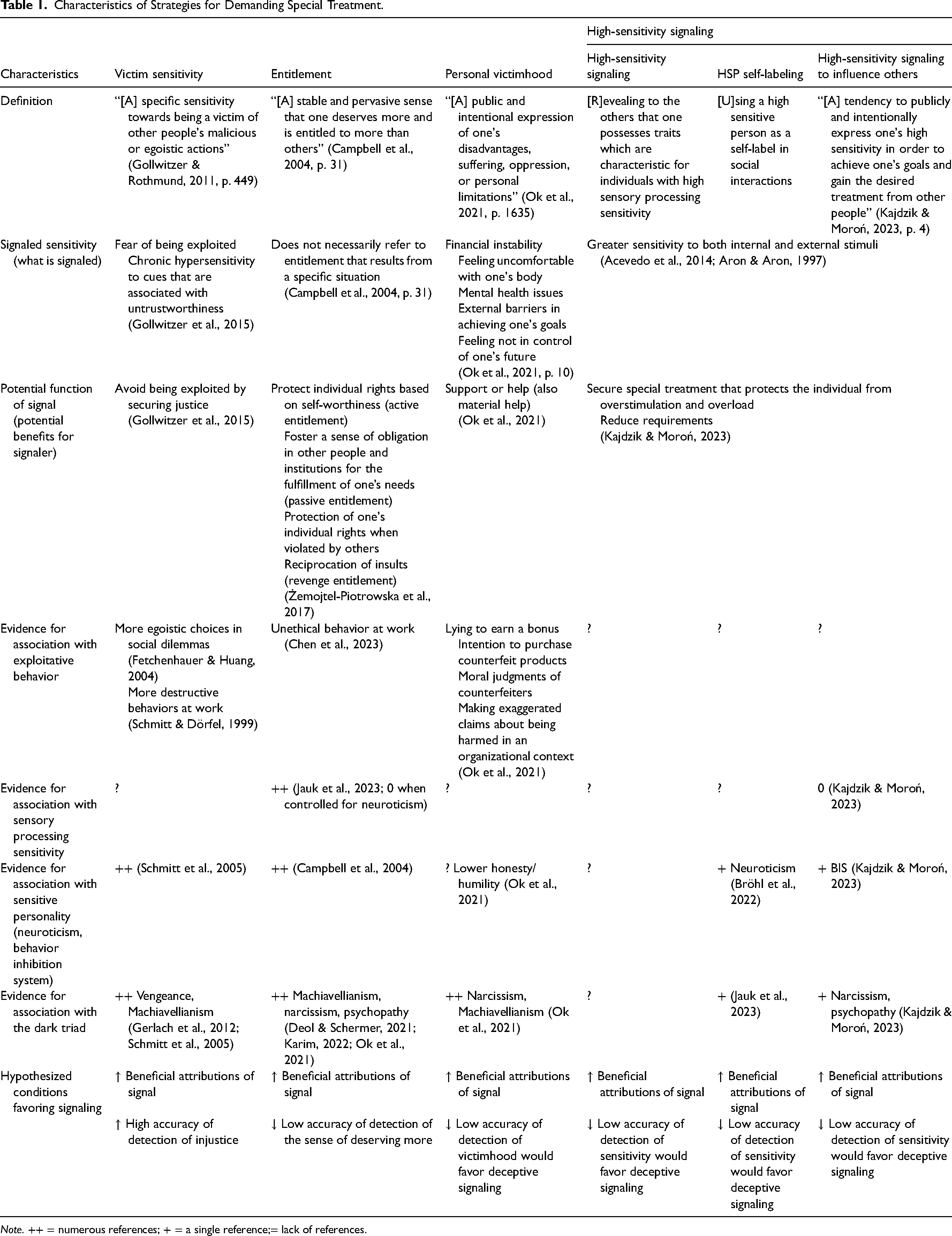
All forms of sensitivity signaling share similarities with previously detected interpersonal strategies for signaling one's sensitivity to demand special treatment—for example, victimhood signaling (Ok et al., 2021), victim sensitivity (Gollwitzer et al., 2013), interpersonal victimhood (Gabay et al., 2020), and entitlement (Zitek et al., 2010). The characteristics of these strategies are presented in Table 1. Table 1 also includes a comparison of the characteristics of each construct and the conditions under which particular signaling could be a deceptive strategy.
Characteristics of Strategies for Demanding Special Treatment.
Note. ++ = numerous references; + = a single reference;= lack of references.
Sensitivity signaling to influence others and personal-victimhood signaling share expressions of one's disadvantages or problems publicly and intentionally as a way to gain the treatment desired (Ok et al., 2021). However, in high-sensitivity signaling to influence others (Kajdzik & Moroń, 2023), the intention to influence is consciously manifested. High-sensitivity signaling to influence others has a tendency to protect individual rights with active and passive forms of entitlement (Żemojtel-Piotrowska et al., 2017).
Victim-sensitivity and high-sensitivity signaling share the need for recognition of one's victimization (Gabay et al., 2020; Gollwitzer, 2021). Moreover, the sensitivity to justice and higher empathy characteristics of individuals with high sensory processing sensitivity may overlap. High-sensitivity signaling, however, is not as focused on justice violations as victim sensitivity.
Given the similarities and also the differences between the constructs discussed, we expected not only positive associations between, but also the independence of these sensitivity-signaling strategies. A fundamental difference that may mark out sensitivity signaling pertains to the twofold nature of high sensitivity. Although the similarities with the other constructs mentioned above are based on the burden of higher sensitivity to aversive stimulation, environmental sensitivity also refers to higher sensitivity to positive stimulation. Thus, the specificity of high-sensitivity signaling is that this general sensitivity is a signal not only of vulnerability, but also of a higher potential to benefit from positive stimuli (Pluess et al., 2023). Therefore, we predicted that high-sensitivity signaling would be associated with, but independent from, other constructs.
The roles of sensory processing and the dark triad in signaling high sensitivity
Signaling high sensitivity could be a sincere expression of heightened sensitivity to external stimuli (“assertive signaling”; Kajdzik & Moroń, 2023). Individuals with high sensory processing sensitivity may inform others about their sensitivity in order to avoid overstimulation and cope with their low threshold of reactiveness (Aron, 2010; Aron & Aron, 1997; Aron et al., 2012). Assertiveness can moderate the association between high sensory processing sensitivity and signaling one's sensitivity to others. Assertiveness is defined as behavior which allows a person to act in their interests, to stand up for themselves without anxiety, and to express one's rights without transgressing the rights of other people (Alberti & Emmons, 1970). HSPs are generally shyer (Aron et al., 2012), which is associated with less assertiveness (Tucker et al., 1983). Assertive demands for respectful treatment (in the form of signaling high sensitivity to influence others) are made only by those HSPs who are assertive.
High-sensitivity signaling may also be a deceptive strategy. The cluster of personality traits characterized by the general tendency to maximize one's utility at the expense of others is frequently referred to as the “dark triad” (Harrell et al., 2024). The dark triad consists of narcissism, Machiavellianism, and subclinical psychopathy (Paulhus, 2014). Narcissism is characterized by callousness and grandiosity. The core features of Machiavellianism are callousness and manipulation. Impulsivity, callousness, criminality, and manipulation are reflected in subclinical psychopathy (Paulhus, 2014). Individuals who are high in the dark triad are reported to have an inflated tendency to deceptively or manipulatively use victimhood and sensitivity signals to extract resources from others, as well as achieve their personal goals and the treatment they desire (Kajdzik & Moroń, 2023; Ok et al., 2021). Individuals with a high dark triad frequently use the “cheater strategy” in social interactions (Jonason et al., 2014; Jonason & Webster, 2012). Thus, the manipulative signaling of high sensitivity could be another deceptive strategy used by individuals with antagonistic traits to obtain their social goals (“deceptive signaling”).
Almost all of the signaling strategies in Table 1 have been shown to be higher among more neurotic people and people with the dark triad personality traits, whereas only a limited number of the references illustrate the association of these strategies with sensory processing sensitivity. Given that neuroticism is the strongest personality correlate of sensory processing sensitivity (Pluess et al., 2023), we can expect positive associations between sensory processing sensitivity and other strategies that signal vulnerability. In line with the review of the literature, we were also expecting positive associations between the dark triad and vulnerability-signaling strategies.
The three studies
The general goal of our three studies was to expand on high-sensitivity signaling.2 The first two studies examined hypotheses derived from signaling theory regarding signal reception and signal detection accuracy. The specific goal of Study 1 was to analyze the associations between the perceived high sensitivity of an individual and the attribution of two fundamental social-perception dimensions: agency and communion (in both their normal and unmitigated versions; Cuddy et al., 2008). We tested whether signals of high sensitivity evoked beneficial attributions. We predicted that the attribution of communion would be higher among people who were perceived as highly sensitive. In Study 2, we explored the accuracy of the attributions of high-sensitivity detection using a self–other correlation (Connelly & Ones, 2010). We predicted moderately positive associations between self-rated sensitivity and the observer's ratings of a target's sensitivity. Thus, Study 1 and Study 2 tested the conditions that could encourage the use of sensitivity signaling as a deceptive strategy according to signaling theory.
The third study explored the similarities between high-sensitivity signaling and other vulnerability-signaling strategies, and analyzed the personality underpinnings of high-sensitivity signaling. In Study 3, we examined the location of high-sensitivity signaling to influence others in a network of other strategies for demanding special treatment. We expected high positive associations between high-sensitivity signaling to influence others and personal victimhood, entitlement, and victim sensitivity. However, we predicted that although associated, these constructs would be independent.
Lastly, we verified the assertive-signaling hypothesis and the deceptive-signaling hypothesis regarding each variable of the network investigated in the study. Therefore, we investigated the relative importance of sensory processing sensitivity, the dark triad (Machiavellianism, psychopathy, and narcissism), and the interaction of sensory processing sensitivity and assertiveness for the prediction of signaling high sensitivity. We expected positive associations between the dark triad and high-sensitivity signaling to influence others (Kajdzik & Moroń, 2023). We predicted that sensory processing sensitivity would be positively associated with signaling high sensitivity and self-labeling as an HSP, but not with high-sensitivity signaling to influence others. Individuals who are higher in assertiveness should express a higher association between sensory processing sensitivity and high-sensitivity signaling. We also compared the associations between other strategies for demanding special treatment and the dark triad, sensory processing sensitivity, and assertiveness. We predicted that individuals high in the dark triad (mostly narcissism) would report higher entitlement (Curtis et al., 2022) and victim sensitivity (Ok et al., 2021), while individuals high in sensory processing sensitivity would express higher victim sensitivity because of their higher empathy (Aron & Aron, 1997). The hypotheses regarding signaling high sensitivity are summarized in Figure 1.
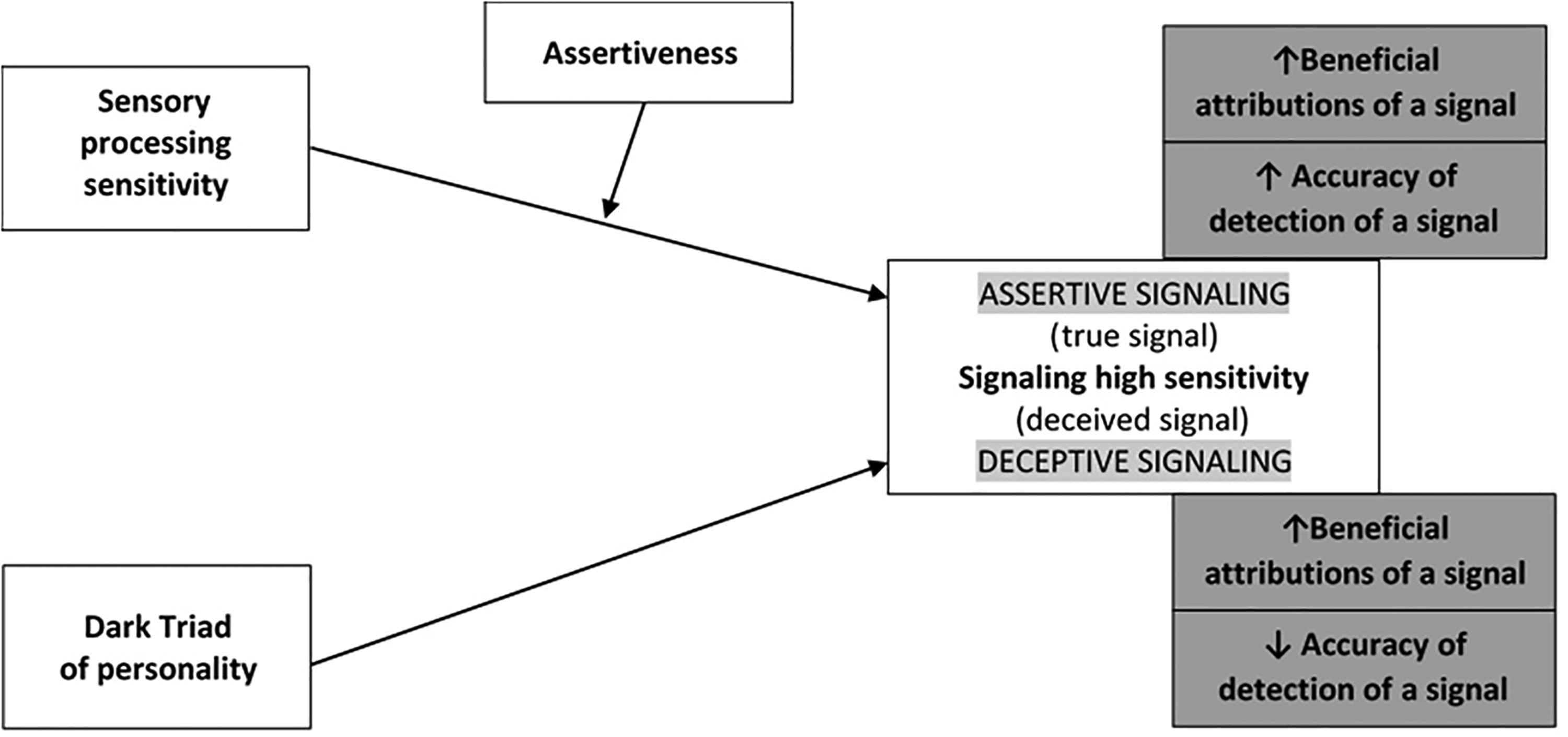
Conceptual Model of the Studies.
Study 1
Method
Participants
One hundred and two individuals (80 women) participated in the study. The age of the participants ranged from 18 to 48 (M = 24.68, SD = 5.33). The majority of the participants reported having completed secondary education (69.6%), whereas the remaining 30.4% reported having completed higher education. Invitations to participate in an online study on social perception were posted on social media. The respondents were not remunerated for their participation. The sample size was sensitive enough to detect a correlation coefficient of the magnitude .24 (Faul et al., 2007).
Measures
The Highly Sensitive Person Scale (HSPS; Aron & Aron, 1997; Baryła-Matejczuk et al., 2023), in its full 27-item version, was reworded for the purpose of peer rating. The items (e.g., “Does this person have a rich, complex inner life?”; “Does this person get rattled when they have a lot to do in a short amount of time?”) were assessed on a 7-point response scale (1 = strongly disagree to 7 = strongly agree). The reliability of the peer-rating version of the HSPS was α = .90.
The participants were asked to rate the target person's agency and communion using items derived from the Scale for Measuring Agency and Communion (Wojciszke & Szlendak, 2010). We reworded the items, which were originally designed for self-report, to fit the peer-rating procedure. The scale consists of 15 items measuring agency (active, self-confident, etc.) and 15 items measuring communion (supporting others, sensitive to others, etc.). The participants assessed each item on a 7-point scale (1 = strongly disagree to 7 = strongly agree), indicating how well each trait characterized the target person. The internal consistency of both scales was appropriate (α = .91 and α = .93, respectively).
The participants rated how the target person displayed unmitigated forms of agency (focusing on themself while excluding others) and communion (focusing on and involvement with others to the exclusion of the self; Helgeson & Fritz, 2000) using 22 items derived from the Scale for Measuring Unmitigated Agency and Unmitigated Communion (Wojciszke & Szlendak, 2010). The items were reworded to fit the peer-rating procedure (e.g., “This person always places the needs of others above their own” (unmitigated communion); “Their relatives blame this person for not spending enough time with them” (unmitigated agency)). The participants assessed each item on a 7-point scale (1 = strongly disagree to 7 = strongly agree), indicating how well the trait characterized the target person. The internal consistency of both scales was appropriate (α = .83 and α = .88, respectively).
Procedure
The invitation informed the respondents that they would be participating in a study on social perception. After they had provided their informed consent, we asked the participants to focus on a person familiar to them. We then asked them to rank the degree of that familiarity. Following this, the participants reported on their perceived sensory processing sensitivity and perceived agency, communion, unmitigated agency, and unmitigated communion. The study was not preregistered. Ethical approval for all of the studies reported here was granted by the Institutional Review Board of the University of Silesia.
Results and discussion
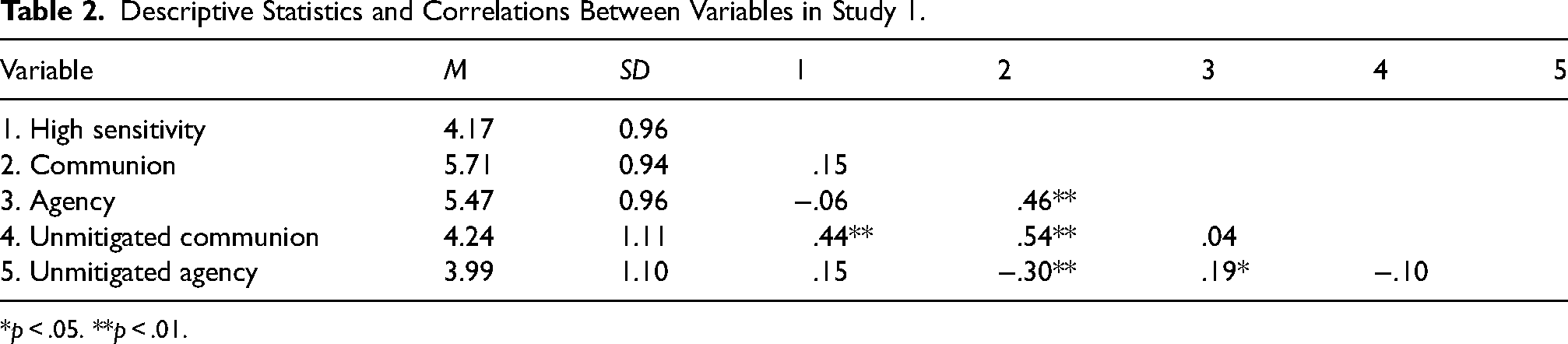
The means and standard deviations for the studied variables are given in Table 2. The distribution of the variables was not much different from normal (skewness = [−0.83–0.27], kurtosis = [−0.43–0.21]). Study 1 showed that people tend to make attributions of high sensory processing sensitivity together with attributions of unmitigated communion. This may indicate that highly sensitive individuals are perceived as more focused on others than themselves (Helgeson & Fritz, 2000), which could also inform others about their friendly and submissive interpersonal style (Ghaed & Gallo, 2006). Since attributions of communion encourage people to actively help the observed individual (Cuddy et al., 2008), Study 1 showed that signals of high sensitivity could give the beneficial social perception of the signaler, which may help to secure better responses from observers.
Descriptive Statistics and Correlations Between Variables in Study 1.
*p < .05. **p < .01.
Study 2
Method
Participants
One hundred and two individuals (62 women) aged from 20 to 76 (M = 30.83, SD = 12.64) participated in an online study on social perception without renumeration. Fifty-one reported that they had completed secondary education (50%) and 37 higher education (36.28%), whereas five reported that they had a primary education and nine a vocational education. Each participant invited one person who was close to them to report on how they perceived the participant in terms of sensory processing sensitivity. We did not collect data describing the raters. The sample size was sensitive enough to detect a correlation coefficient of the magnitude .24 (Faul et al., 2007). We expected the accuracy of the detection of high sensory processing sensitivity to be moderate (r = .40; Connelly & Ones, 2010); thus, we deemed the sensitivity ensured by the sample size to be appropriate.
Measures
To measure self-reported sensory processing sensitivity, we used the HSPS in its full 27-item version. The items (e.g., “Do you have a rich, complex inner life?”) were assessed on a 7-point response scale (1 = strongly disagree to 7 = strongly agree). The internal consistency of the HSPS was α = .85. To measure peer-rated sensory processing sensitivity, we used the version of the HSPS developed in Study 1. The internal consistency of the peer-rating version of the HSPS was α = .86.
Procedure
The invitation informed the respondents that they would be participating in a study on social perception. After providing their informed consent, they obtained a link to a questionnaire on sensory processing sensitivity. They were asked to create a code and share it with one person who was close to them, requesting the latter to independently visit the online questionnaire and complete a peer rating of the sensory processing sensitivity of the target person. The answers in the dyads were matched using the anonymized codes created during the study.
Results and discussion
The means, standard deviations and correlations of the variables are given in Table 3. The observers and the participants did not differ in their ratings of sensory processing sensitivity (paired t = −1.49, p = .14, Cohen's d = −0.15).
Descriptive Statistics and Correlation Between Variables in Study 2.
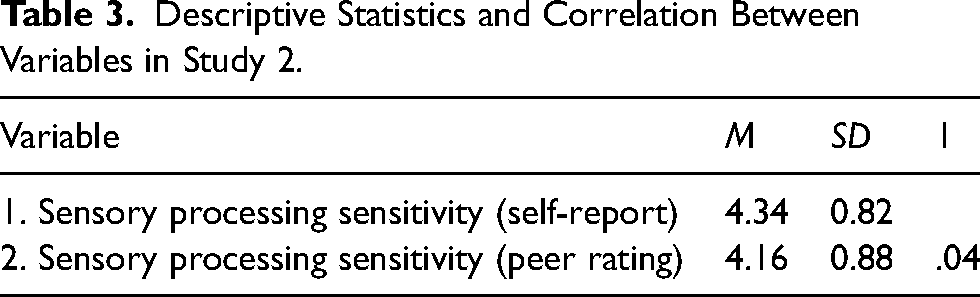
Study 2 showed that the observers’ ratings were not accurate regarding the self-reports of the target persons on sensory processing sensitivity. These results correspond to the lower accuracy in detecting less visible traits such as neuroticism (Connelly & Ones, 2010). From the point of view of signaling theory, this means that giving off signals of high sensitivity could easily be deceptive due to the inability to detect reliable signals of high sensory processing sensitivity accurately, even among friends. Together with the results of Study 1, this indicates that signals of high sensory processing could offer a beneficial social perception that fosters active helping behavior from observers and is difficult to test for authenticity. As such, these signals could easily be deceptive.
Study 3
Method
Participants
Two hundred and sixty adults (209 women) participated in the study. Their age ranged from 19 to 67 (M = 29.18, SD = 8.83). The participants were invited to take part in the study via advertisements on social media. They received no compensation for their participation. The sample size was determined a priori using four criteria: (1) having five participants per item (variable) in exploratory factor analysis (EFA; Arrindell & van der Ende, 1985), which resulted in 260 participants (52 items times 5); (2) an a priori analysis of the sample size required for regression analysis with four predictors, an expected medium effect size of f2 = .15 (based on previous effect sizes in regression models for victimhood signaling and the dark triad as predictors; Ok et al., 2021), α = .05, and 1 – β = .95, which resulted in the required N = 129 (Faul et al., 2007); (3) ensuring a sample size that was appropriate for stable estimates of correlation coefficients (N ≈ 250; Schönbrodt & Perugini, 2013); and (4) ensuring a sample size that was feasible for reliable network analysis based on averaging indicators of a given construct (here, average scores), which is N > 250 (de Ron et al., 2022). According to these criteria, the number of participants in Study 3 was appropriate.
Measures
Signaling high sensitivity was measured using 10 modified items based on the short HSPS (Aron & Aron, 1997; Baryła-Matejczuk et al., 2023). Each item was rewritten to reflect displaying information about one's behaviors and dispositions indicative of high sensitivity. For example, an original item from the HSPS, “Are you made uncomfortable by loud noises?”, was rewritten to read: “I tell others that loud noises make me uncomfortable.” Thus, the items measured high-sensitivity signaling without an explicit intention to influence others or demand special treatment. The participants reported how much they agreed with the statements using a 5-point Likert-type scale (1 = strongly disagree to 5 = strongly agree). The reliability of the scale was α = .88.
Self-labeling as an HSP was assessed using five items created ad hoc: “In company, I admit that I am a highly sensitive person”; “I told my co-workers and superiors that I was a highly sensitive person”; “My relatives know very well that I am a highly sensitive person”; “In conversation, I sometimes mention that I am a highly sensitive person”; and “When I meet someone new, I indicate that I am a highly sensitive person.” The participants rated the items using a 5-point response scale (1 = strongly disagree to 5 = strongly agree). The reliability of the scale was α = .85.
Signaling high sensitivity to influence others (Kajdzik & Moroń, 2023) was measured with a 7-item scale indicating self-presenting as an HSP to influence others (e.g., “I sometimes ask for privileges because of my high sensitivity”). The participants reported how much they agreed with the statements on a 5-point scale (1 = strongly disagree to 5 = strongly agree). The reliability of the scale was α = .88.
The victim sensitivity subscale of the Justice Sensitivity Scale (Schmitt et al., 2005) consists of 10 items (e.g., “It bothers me when others receive something that ought to be mine”). The participants rated the statements on a scale ranging from 0 (not at all) to 5 (exactly). The reliability of the scale was α = .90.
Personal victimhood was measured by five items developed by Ok et al. (2021). A sample item was “I discussed with others how I don’t feel financially secure.” Each item was assessed on a scale ranging from 1 (never) to 5 (always). The reliability of the scale was α = .79.
The Entitlement Attitudes Questionnaire (Żemojtel-Piotrowska et al., 2017) was used to measure three forms of entitlement: active (five items—e.g., “It is necessary to claim what you deserve”), passive (five items—e.g., “Everybody has the right to expect help from the state when in need”), and revenge (five items—e.g.,“I have difficulty forgiving harm done to me”). The participants rated the statements on a scale ranging from 1 (strongly disagree) to 7 (strongly agree). The reliability of the subscales was α = .75, α = .88 and α = .82 for active, passive, and revenge entitlement, respectively.
Sensory processing sensitivity was measured by a 10-item version of the HSPS (Aron & Aron, 1997; Baryła-Matejczuk et al., 2023). The items (e.g., “Do you have a rich, complex inner life?” and “Do you get rattled when you have a lot to do in a short amount of time?”) were assessed on a 7-point response scale (1 = strongly disagree to 7 = strongly agree). The reliability of the HSPS was α = .86.
The assertiveness subscale of the Soft Skills Inventory (Jardim et al., 2022) was used to measure assertiveness. The subscale consists of 8 items (e.g., “In a conflict situation, I usually know when to be firm and not to give in”), which were assessed on a scale ranging from 1 (never) to 5 (always). The reliability of the scale was α = .90.
The Dirty Dozen scale (Czarna et al., 2016; Jonason & Webster, 2010) was used to measure narcissism, Machiavellianism, and psychopathy. The scale consists of four items for each trait (e.g., for narcissism, “I tend to seek prestige and status”; for Machiavellianism, “I tend to manipulate others to get my way”; for psychopathy, “I tend to lack remorse”). The participants rated each item on a 5-point response scale (1 = strongly disagree to 5 = strongly agree). The internal consistency was satisfactory for Machiavellianism (α = .88), narcissism (α = .82), and psychopathy (α = .66).
Analysis
First, we ran an EFA with oblimin rotation on a total of 52 items reflecting high-sensitivity signaling (10 items), self-labeling as an HSP (5 items), high-sensitivity signaling to influence others (7 items), active entitlement (5 items), passive entitlement (5 items), revenge entitlement (5 items), personal victimhood (5 items), and victim sensitivity (10 items). Using parallel analysis, we determined the proper number of factors (Zwick & Velicer, 1986). We eliminated items with cross-loadings and loadings below the expected cutoff of at least λ = .40 (Hair et al., 2005). We additionally used exploratory graph analysis (Golino & Epskamp, 2017) and the Louvain algorithm to detect clusters of variables (Christensen & Golino, 2021; Yang et al., 2016) and investigate the stability of the dimensions (Christensen & Golino, 2021).
Next, we used hierarchical regression analysis to verify the “assertive signaling of specific needs” hypothesis and the “deceptive signaling” hypothesis in reference to high-sensitivity signaling to influence others and all related variables. In the first step, we entered sensory processing sensitivity, assertiveness, and the dark triad into the model. Men tend to report a higher level of dark triad traits compared to women (Carter et al., 2015; Schmitt et al., 2017), whereas women report higher levels of sensory processing sensitivity (Konrad & Herzberg, 2019; Trå et al., 2022). Older participants report the dark triad traits and sensory processing sensitivity less (Barlett & Barlett, 2015; Konrad & Herzberg, 2019). Men and women differ in malicious manipulation (Hyde et al., 2020) and follow different display rules, mostly forbidding displays of weakness in case of men (Moss-Racusin et al., 2010). Thus, in the first step of the hierarchical regression analysis, we controlled for the age and gender of the participants. In the second step, we entered the interaction term of sensory processing sensitivity and assertiveness (the variables were centered prior to calculating the interaction term).
Results and discussion
Nomological net of constructs related to high-sensitivity signaling
We tested the nomological structure of constructs similar to signaling high sensitivity to influence others using an EFA on the pooled 52 items of the signaling high sensitivity to influence others, signaling high sensitivity, self-labeling as an HSP, Entitlement Attitude Questionnaire, personal victimhood, and victim sensitivity scales. Bartlett's test for sphericity (χ2 = 7786.25, df = 1326, p < .001) and the Kaiser–Meyer–Olkin measure (.87) indicated that the EFA assumptions were met. We used parallel analysis to detect an appropriate number of factors (see supplementary material, Figure S1, Table S1).
In accordance with the EFA, eight factors were extracted (see supplementary material, Table S2), explaining 53% of the total variance. In accordance with loadings lower than λ = .40 and cross-loadings with a difference of less than λ = .20 (Hair et al., 2005), we deleted one item from the high-sensitivity signaling to influence others scale (Item 9: “When I mention that I am a highly sensitive person, others are more willing to help me”), one item from the victim sensitivity scale (Item 4: “It takes me a long time to forget when I have to fix others’ carelessness”), and four items from the high-sensitivity signaling scale (Item 1: “I tell others that I have a rich inner life” and Item 3: “I tell others that I experience music and art deeply” due to their cross-loadings, and Item 6: “I tell others that changes in my life disorganize me” and Item 7: “I share with others that I pay attention to and enjoy delicate, beautiful smells, tastes, sounds, or works of art,” which had low loadings). Then we reran the analysis and achieved a structure with all loadings on the respective factors higher than λ = .40, without any cross-loadings and explaining 55% of the total variance (supplementary material, Table S3). The one exception was Item 3 from the Entitlement Attitude Questionnaire (“‘An eye for an eye, a tooth for a tooth’ is a fair rule,” with cross-loading on the victim sensitivity factor), which was also deleted (the final solution is given in the supplementary material, Table S4). The factors were moderately correlated (ρ = [−.03; .46]; see supplementary material, Table S5).
To verify the stability of the EFA, we used exploratory graph analysis with the glasso estimation method (Epskamp et al., 2018), as it offers the best performance (Christensen & Golino, 2021). In networks with more than four factors, the Louvain community detection algorithm outperforms other algorithms (Christensen & Golino, 2021). Thus, in the present study, we used the Louvain algorithm to detect communities. In the first estimation conducted with all items measuring high-sensitivity and victim-signaling-related constructs, the median of the detected communities was 7 (confidence interval = [5.02, 8.98]). The frequency of the detected number of factors ranged from 4% for the 5-factor solution to 38% for the 8-factor solution. The stability of all the dimensions ranged from 49% to 100%, with the lowest stability in the community including high sensitivity labeling items and high sensitivity signaling items, revenge entitlement items, and active entitlement items (Table S6). Similarly to the EFA, seven items indicated the low stability of allocation to an expected dimension (Item 4 from the victim sensitivity scale; Item 9 from the high-sensitivity signaling to influence others scale; Items 1, 3, 6, and 7 from the high-sensitivity signaling scale; and Item 3 from the Entitlement Attitude Questionnaire). Thus, these items were excluded from the analysis and the exploratory graph analysis was rerun.
The median number of factors in the final analysis was 8 (confidence interval = [6.83, 9.17]). The stability of the dimensions ranged from 81% (personal victimhood items) and 83% (active entitlement items) to 100%. High-sensitivity signaling to influence others was replicated in 100% of the iterations. The item stability was high for all dimensions (see supplementary material, Figure S2). The network of the communities detected is presented in Figure 2.
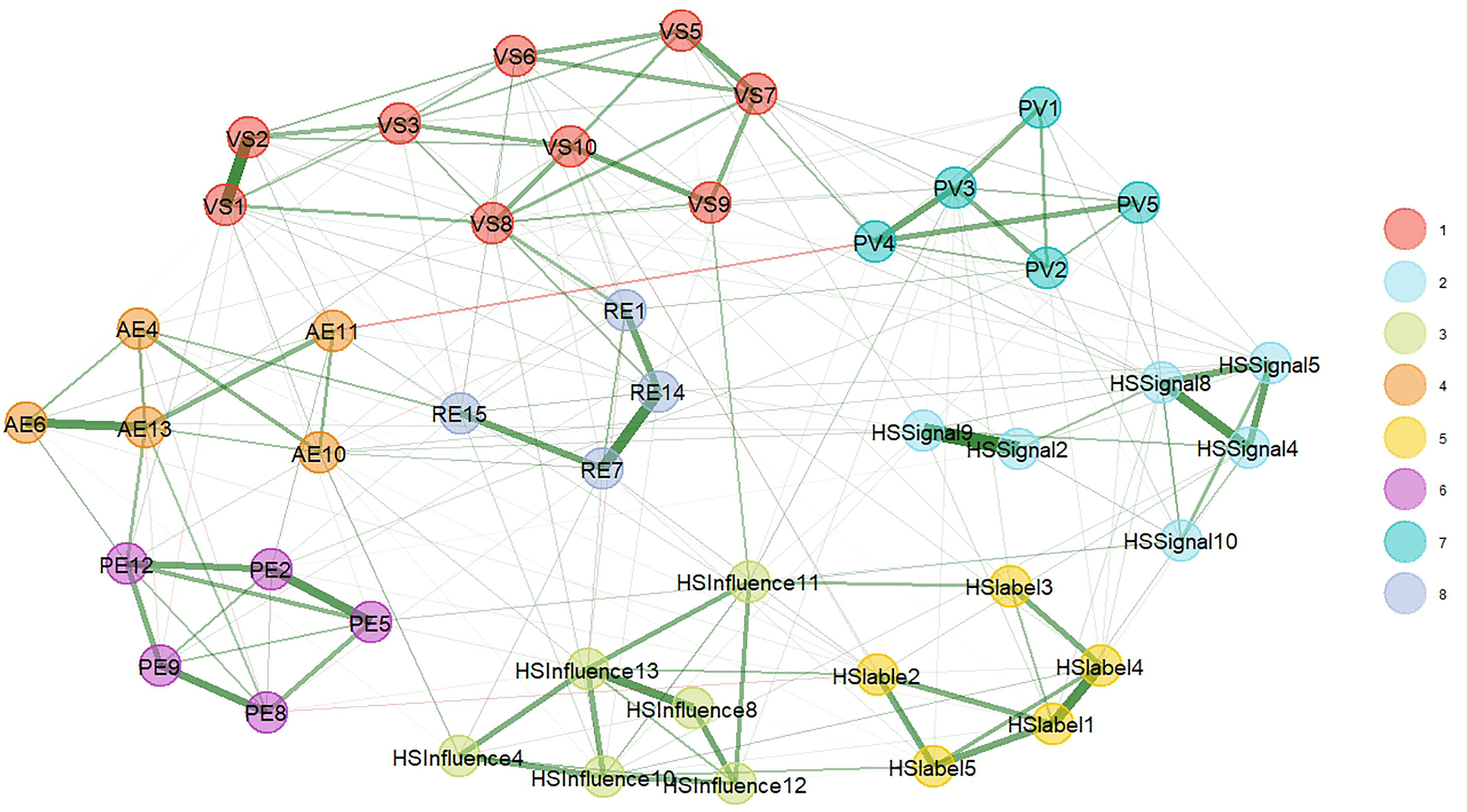
Item Allocation to Dimensions Detected in the Exploratory Graph Analysis for a Nomological Net of Items Related to High Sensitivity and Victim Signaling.
The roles of a highly sensitive personality, assertiveness, and the dark triad
We calculated scores for the eight constructs detected in the EFA (victim sensitivity, active entitlement, passive entitlement, revenge entitlement, high-sensitivity self-labeling, high-sensitivity signaling, high-sensitivity signaling to influence others, and personal victimhood). The scores were calculated as mean ratings for the items with the highest loadings on the respective factors. The descriptive statistics for the variables are given in Tables S8 and S9 in the supplementary material.
Next, we conducted a series of hierarchical regression analyses for each construct regressed onto highly sensitive personality, assertiveness, the dark triad, and the interaction of highly sensitive personality and assertiveness. Collinearity was in an acceptable range (variance inflation factor < 2.25) and there was no violation of the homoscedasticity assumption (Durbin–Watson = 1.75). The results are presented in Table 4.
Hierarchical Regression Analysis for a Nomological Net of Variables Related to High Sensitivity or Victim Signaling
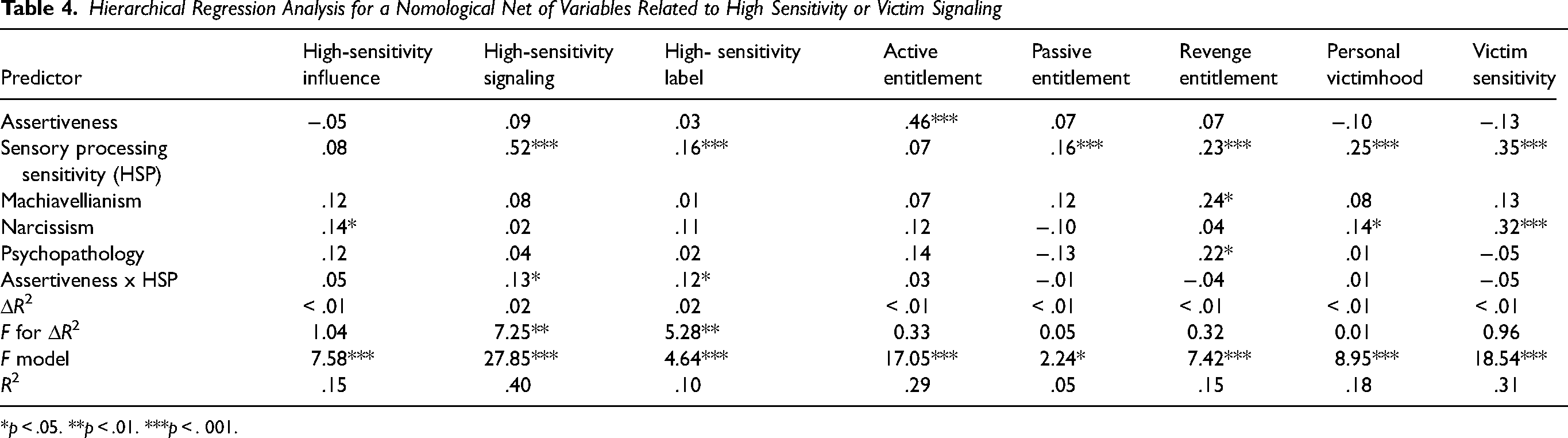
*p < .05. **p < .01. ***p < . 001.
High-sensitivity signaling to influence others was predicted by narcissism. High-sensitivity signaling, self-labeling as an HSP and passive entitlement were higher among individuals high in sensory processing sensitivity. Personal victimhood, victim sensitivity, and revenge entitlement were commonly predicted by sensory processing sensitivity and the dark triad. Machiavellianism and psychopathy were positively associated with revenge entitlement, while narcissism was positively related to victim sensitivity and personal victimhood.
The associations between sensory processing sensitivity and high-sensitivity signaling were all significant, but their magnitude depended on the level of assertiveness (low assertiveness: b = .39, t = 5.73, p < .001; average assertiveness: b = .52, t = 11.83, p < .001; high assertiveness: b = .62, t = 10.68, p < .001). Similarly, high-sensitivity labeling was associated with sensory processing sensitivity non-significantly among individuals with low assertiveness (b = .05, t = 0.92, p = .53), but significantly at medium (b = .17, t = 3.55, p < .001) and high levels of assertiveness (b = .26, t = 4.27, p < .001).
General discussion
Signals of victimization encourage people to provide support and aid to the victim (Ok et al., 2021). Thus, the ostensive signaling of one's victimhood could be a strategy to extract other resources for manipulative personalities such as those represented by the dark triad (Furnham et al., 2013). Victimhood signaling has indeed been associated with narcissism and Machiavellianism (Ok et al., 2021). Recently, a similar strategy for influencing others has been proposed—namely, high-sensitivity signaling to influence others (Kajdzik & Moroń, 2023). High-sensitivity signaling to influence others has been associated with narcissism and psychopathy, but only weakly with actual sensory processing sensitivity (Kajdzik & Moroń, 2023). The present studies investigated features of high-sensitivity signaling (e.g., social attributions of sensitivity signaling and the accuracy of sensitivity detection) and its location in a nomological net of other related constructs (entitlement, person victimhood, and victim sensitivity). Thus, we expanded on the relatively new but already widespread concept of signaling strategy (Arabi, 2020), which conveys information about the general sensitivity of an individual to both positive and negative stimuli. This differentiates high-sensitivity signaling from other strategies focused on disclosing one's vulnerabilities to others.
First, we showed that signals of high sensory processing sensitivity are echoed in the attribution of unmitigated communion to the signaler. Since unmitigated communion reflects a friendly and submissive interpersonal style (Ghead & Gallo, 2006) and highly communal people experience active facilitation of their actions (Cuddy et al., 2008), this result may indicate that individuals perceived as highly sensitive will have the benefit of a positive social perception. Thus, we confirmed that signaling high sensitivity elicits beneficial attributions.
In Study 2, we showed that people display low accuracy in detecting signals of high sensory processing sensitivity. This accuracy was lower than in comparable traits (such as neuroticism). This makes signals of high sensitivity difficult to validate for the observer. In other words, it is difficult for an observer to assess whether a high-sensitivity signal is honest. In accordance with signaling theory (Dunham, 2011), we propose that these two conditions (beneficial perception and low accuracy of detection of high-sensitivity signals) foster the possibility that signals of high sensory sensitivity could be emitted to achieve instrumental goals without the necessary actual heightened sensitivity of the signaler. This confirms that high-sensitivity signaling may also be used in a manipulative manner. To our knowledge, these are the first results on social perception and the accuracy of the perception of people with heightened sensory processing sensitivity.
The EFA and exploratory graph analysis from Study 3 indicated that high-sensitivity signaling, self-labeling as highly sensitive, and high-sensitivity signaling to influence others were related but distinguishable constructs. The final network analysis showed that they belonged to the same dimension, which also included personal victimhood signaling (Ok et al., 2021). Entitlement dimensions and victim sensitivity were separate groups of behavioral strategies. The present study showed, therefore, that high-sensitivity signaling could be another example of the strategy of victimhood signaling (Ok et al., 2021). However, as it conveys information about general environmental sensitivity (sensory processing sensitivity refers to sensitivity to both positive and negative stimulations; Pluess et al., 2023), disclosing vulnerability may be merely part of high-sensitivity signaling. Future studies could focus on the benefits of signaling higher sensitivity to positive stimuli.
The assertive signaling hypothesis was supported for high-sensitivity signaling (descriptive signaling) and self-labeling as highly sensitive. Individuals with high sensory processing sensitivity reported more signaling of their sensitivity and using the exact label of an HSP in their workplace or social interactions. This self-presentation tendency was higher among assertive individuals. Thus, the present study supported the assertive signaling hypothesis for descriptive signaling of high sensitivity and self-labeling as an HSP which do not include a direct intention of influence. Although descriptive signaling was explained to a large extent by the predictors tested in Study 3, a smaller level of the variance in using the HSP label was explained. Thus, future studies should investigate which factors lead individuals to self-present as highly sensitive. This is also important because of the observation that self-labeling as an HSP was positively associated with high-sensitivity signaling to influence others. This may indicate that using a label could result in beneficial treatment and encourage people to purposively use the HSP label.
Consistent with previous studies, high-sensitivity signaling to influence others (instrumental signaling) was more frequent among narcissistic individuals but not among individuals with high sensory processing sensitivity (Jauk et al., 2023; Ok et al., 2021). Thus, in terms of high-sensitivity signaling to influence others, the deceptive signaling hypothesis was supported (Kajdzik & Moroń, 2023). Narcissists may benefit from self-presenting as highly sensitive, fulfilling their admiration needs by demanding special treatment (Jauk et al., 2023; Ok et al., 2021).
Regarding the other constructs studied, active entitlement was associated with assertiveness, while passive entitlement was related to sensory processing. Revenge entitlement was predicted not only by sensory processing sensitivity, but also by Machiavellianism and psychopathy. A combination of sensory processing and narcissism predicted victim sensitivity and personal victimhood. Previous studies have indicated that sensory processing sensitivity is associated with entitlement rage as an indicator of grandiose narcissism (Jauk et al., 2023). The dark triad (Machiavellianism, psychopathy, and narcissism) is also associated with psychological entitlement (Curtis et al., 2022; Karim, 2022) and victim signaling (Ok et al., 2021). However, previous studies have not distinguished between types of entitlement and related constructs. Thus, the present study showed that various forms of entitlement and victim signaling had different personality underpinnings. Revenge entitlement seems to be the most manipulative, appearing among individuals with high Machiavellianism and psychopathy characterized by callous manipulativeness (Paulhus, 2014). Other forms of entitlement appeared to represent (a) active efforts to secure one's needs—active entitlement was predicted by higher assertiveness, which is similar to the construct of assertive entitlement (George-Levi et al., 2014)—or (b) higher expectations of better treatment due to higher vulnerability to the environment—passive entitlement as predicted by sensory processing sensitivity (Pluess et al., 2023).
Personal victimhood signaling and victim sensitivity were predicted by the combination of high sensory processing sensitivity and narcissism. According to these results and previous studies, victimhood signaling in general could be regarded as an expression of personal vulnerability and narcissistic dispositions (Jauk et al., 2023; Ok et al., 2021). Since this combination results in behaviors consisting of simply signaling personal difficulties and being sensitive in terms of ill-treatment by others, narcissism could be responsible for the use of this signaling directly to influence others (Kajdzik & Moroń, 2023). Thus, signaling high sensitivity to influence others could be camouflage behavior, imitating real personal vulnerability without actual higher sensitivity among narcissistic individuals. Our results, therefore, support the deceptive signaling hypothesis not only in the case of high-sensitivity signaling to influence others, but also in the case of revenge entitlement. The results also support the assertive signaling hypothesis for variables such as high-sensitivity signaling, self-labeling as highly sensitive, and passive entitlement. Regarding personal victimhood and victim signaling, both hypotheses were supported.
Limitations and future directions
The present study had some limitations. First, the measures were mostly self-reporting or peer-rating, which can result in a self-serving bias or biased social perceptions. Future studies could use other designs (e.g., experimental) in order to ensure the valid measurement of high-sensitivity signaling. Second, similarities in the wording of the high-sensitivity signaling and sensory processing sensitivity measures could be to some extent responsible for the high correlation between these two variables. Different measurements of high-sensitivity signaling should be used in future studies to verify the tendency to self-present the symptoms of high sensory processing sensitivity and HSPs. Lastly, the generalizability of the findings could be limited due to the fact that the participants were predominantly women and young adults. Display rules favor the displaying of signs of sensitivity among women rather than men (Regina & Allen, 2023), whereas younger individuals share more tolerant attitudes toward others (Twenge et al., 2015). Thus, the present findings may overestimate the general tendency to signal sensitivity and overlook the role of social norms as inhibitors of displaying weakness among men. For example, men may avoid manifesting sensitivity to conform to the social expectations of the male gender role (Regina & Allen, 2023). Future studies should explore gender and generational differences in perceiving and signaling sensitivity.
Practical implications
The findings from the present study have direct practical implications. First, they have shown that publicly signaling high sensitivity could be an ambiguous self-presentation strategy, at least among women. Individuals high in sensory processing sensitivity seem to use high-sensitivity signaling without the direct intention to modify the behavior of observers and gain better treatment. Alternatively, narcissistic individuals express their sensitivity directly to influence others. From an observer's point of view, a signal of high sensitivity could therefore be difficult to interpret. Individuals high in sensory processing who signal their sensitivity could be mistakenly perceived as taking advantage of others, particularly in low-trust societies. As a result, they will be unable to secure their particular sensory stimulation needs and instead receive hostile treatment. The present findings confirm the deceptive and exploitative orientation of individuals with high dark triad traits (Jonason & Webster, 2012). Pretending to be sensitive could be another form of taking advantage of others preferred by narcissistic individuals. These results could also be useful for clinical psychologists and psychotherapists. When working with clients who identify themselves as highly sensitive, psychologists could help them to achieve deeper insight into personality motivation of such self-perception. For some clients, this could lead to understanding their temperamental sensitivity; for others, it could be associated with discovering their narcissistic defense mechanisms.
Conclusions
The present study showed that high-sensitivity signaling had different forms. Some of them are descriptive; others are instrumental and aimed at influencing others. The latter were associated mostly with narcissism, while the former were linked to actual sensory processing sensitivity. High-sensitivity signaling to influence others seems to be a narcissistic strategy for obtaining special treatment in contrast to the strategy of the assertive signaling of stimulation needs by individuals with high sensory processing sensitivity (descriptive signaling and self-labeling as an HSP). Personal victimhood signaling and victim sensitivity were higher among individuals high in sensory processing sensitivity and narcissism, while sensory processing sensitivity in combination with Machiavellianism and psychopathy was predictive of revenge entitlement.
Supplemental Material
sj-jpg-1-pac-10.1177_18344909241266759 - Supplemental material for Signaling high sensitivity: The roles of sensory processing sensitivity, assertiveness, and the dark triad
Supplemental material, sj-jpg-1-pac-10.1177_18344909241266759 for Signaling high sensitivity: The roles of sensory processing sensitivity, assertiveness, and the dark triad by Marcin Moroń, Martyna Kajdzik and Klaudia Janik in Journal of Pacific Rim Psychology
Supplemental Material
sj-jpeg-2-pac-10.1177_18344909241266759 - Supplemental material for Signaling high sensitivity: The roles of sensory processing sensitivity, assertiveness, and the dark triad
Supplemental material, sj-jpeg-2-pac-10.1177_18344909241266759 for Signaling high sensitivity: The roles of sensory processing sensitivity, assertiveness, and the dark triad by Marcin Moroń, Martyna Kajdzik and Klaudia Janik in Journal of Pacific Rim Psychology
Supplemental Material
sj-docx-3-pac-10.1177_18344909241266759 - Supplemental material for Signaling high sensitivity: The roles of sensory processing sensitivity, assertiveness, and the dark triad
Supplemental material, sj-docx-3-pac-10.1177_18344909241266759 for Signaling high sensitivity: The roles of sensory processing sensitivity, assertiveness, and the dark triad by Marcin Moroń, Martyna Kajdzik and Klaudia Janik in Journal of Pacific Rim Psychology
Footnotes
Acknowledgments
Marcin Moroń was responsible for the conceptualization, investigation, formal analysis, data curation, writing, review, and editing, and Martyna Kajdzik and Klaudia Janik for the conceptualization, data collection, writing, review, and editing. All three authors approved the final version of the article, which is partially based on Klaudia Janik’s unpublished Master’s thesis.
Declaration of Conflicting Interests
The authors declared no potential conflicts of interest with respect to the research, authorship, and/or publication of this article.
Funding
The authors received no financial support for the research, authorship, and/or publication of this article.

Supplemental Material
Supplemental material for this article is available online.
Notes
References
Supplementary Material
Please find the following supplemental material available below.
For Open Access articles published under a Creative Commons License, all supplemental material carries the same license as the article it is associated with.
For non-Open Access articles published, all supplemental material carries a non-exclusive license, and permission requests for re-use of supplemental material or any part of supplemental material shall be sent directly to the copyright owner as specified in the copyright notice associated with the article.


