




Abstract
Bacteria and archaea possess adaptive immunity against foreign genetic materials through clustered regularly interspaced short palindromic repeat (CRISPR) systems. The discovery of this intriguing bacterial system heralded a revolutionary change in the field of medical science. The CRISPR and CRISPR-associated protein 9 (Cas9) based molecular mechanism has been applied to genome editing. This CRISPR-Cas9 technique is now able to mediate precise genetic corrections or disruptions in in vitro and in vivo environments. The accuracy and versatility of CRISPR-Cas have been capitalized upon in biological and medical research and bring new hope to cancer research. Cancer involves complex alterations and multiple mutations, translocations and chromosomal losses and gains. The ability to identify and correct such mutations is an important goal in cancer treatment. In the context of this complex cancer genomic landscape, there is a need for a simple and flexible genetic tool that can easily identify functional cancer driver genes within a comparatively short time. The CRISPR-Cas system shows promising potential for modeling, repairing and correcting genetic events in different types of cancer. This article reviews the concept of CRISPR-Cas, its application and related advantages in oncology.
Introduction
Over the centuries, new technology has changed the field of medical science. Medical technology is essential for healthcare and improves quality of life. Diagnostics and treatments have become easier and more accurate due to advancements in areas like genetic engineering, biotechnology and nuclear medicine. 1 In the current decade, there have been tremendous developments in the field of genetic engineering and related technologies. For several years, scientists have been using ‘gene targeting’ to introduce new changes into a specific site in the genome by removing or adding single bases or whole genes. Furthermore, researchers have used technologies derived from the prokaryotic immune system.2,3 Systems involving the clustered regularly interspaced short palindromic repeat (CRISPR) and its associated proteins (Cas) have become the most reliable tools for gene editing. The idea of the CRISPR-Cas technique has been adapted from the bacterial immune system. The CRISPR-Cas9 system has been widely adopted all over the world and successfully applied to target essential genes in different organisms and cell lines, including bacteria, zebrafish, monkeys, rabbits, mice and even humans. 4
Cancer is one of the most significant public health problems around the world. It is the second leading cause of death around the globe, with about 8.8 million deaths due to cancer in 2015. The number of expected new cases will increase globally by about 70% over the next two decades. 5 Current tools are insufficient to fight cancer, and scientists are always looking for helpful new technologies. In this regard, the CRISPR-Cas9 system brings new hope. Rewriting of the genetic code in humans is possible through CRISPR. A patient has been injected with cells that contain edited genes using the revolutionary CRISPR-Cas9 technique. 6 The induction of CRISPR is simpler and more efficient than other technologies and will probably accelerate gene-editing procedures across the world. To date, it has been applied in several different in vivo and in vitro cancer models. Oncologists are very excited about the efficacy, accuracy and potential of CRISPR in the field of cancer research. Peking University in Beijing has started three clinical trials using the CRISPR technique against urinary bladder, prostate and renal cancers. 6
Time line of CRISPR
CRISPR-Cas9 has brought revolutionary change to the field of medical and biological sciences in recent years, as summarized in Table 1. In 1987, a group of Japanese scientists reported a series of short direct repeats interspaced with short sequences in the genome of Escherichia coli. 7 Two years later, Francisco Mojica (University of Alicante) found a curious structure that was roughly palindromic, with the repeated sequence of 30 bases separated by spacers of around 36 bases. 8 He discovered similar repeats in the closely related H. volcanii. These intriguing discoveries motivated him to study the phenomena further; in 2000, he named these structures short regularly spaced repeats (SRSRs). Later, the name was changed to clustered regularly interspaced palindromic repeats (CRISPR). 9 This vital finding helped scientists to hypothesize, correctly, that CRISPR is an adaptive immune system; Vergnaud and his group published similar findings in 2005. 10
Timeline of CRISPR.

While studying Streptococcus thermophiles in 2005, Bolotin and his team revealed an unusual CRISPR locus in the sequence of genes, and successfully identified the novel Cas9 gene. They also noted the protospacer adjacent motif (PAM), which is required for target recognition in the CRISPR-Cas9 system. 12 The following year, Koonin and his team proposed a hypothetical mechanism scheme for CRISPR cascades of bacterial immune system based on inserts homologous to phage DNA in the natural spacer array; they inferred that the Cas proteins might comprise a novel DNA repair system.21,22 In 2007, Horvath and his team showed experimentally that the CRISPR system is an adaptive immune system. They fused new phage DNA into the CRISPR array and showed successful defense against the next attacking phage. 2 Then, in August 2008, critical information was reported by John van der Oost and his colleagues. In E. coli, they determined the phage-derived spacer sequences that were transcribed into small RNAs, named CRISPR RNAs (crRNAs). Those crRNAs guide the Cas proteins to the target-specific part of the DNA. 14 In December of the same year, Marraffini and Sontheimer found that the target molecule is DNA, not RNA. 15 They demonstrated that this system could also be applied in non-bacterial systems. Around 2 years later, Moineau and his colleagues confirmed that Cas9 is the only protein required for cleavage of DNA. 16 In July 2011, Siksnys and his team cloned the entire CRISPR-Cas locus from S. thermophiles and expressed it in E. coli. From this experiment, they confirmed that it was capable of providing plasmid resistance. 23 They showed that the RuvC domain could cleave the non-complementary strand, and the HNH domain cleaves the complementary site. They also proved that Cas9 could be reprogrammed to target a site of choice by changing the sequence of the crRNA. 19
At the same time, another puzzle was solved by the group of Emmanuelle Charpentier. She reported that tracrRNA forms a duplex with crRNA, and this duplex guides Cas9 to its targets. They also enumerated a DNA interference mechanism system involving a dual-RNA structure that directs a Cas9 endonuclease to induce site-specific double-stranded breaks in target DNA. 17 Later in 2012, Charpentier and Doudna revealed that crRNA and tracrRNA could be fused together to form a single simplified system. 18 In 2013, Feng Zhang and his team from Broad Institute of MIT and Harvard, engineered two varieties of Cas9 orthologs from S. thermophilus and S. pyogenes and demonstrated targeted genome cleavage in mouse and human cells. 24 In the same year, George McDonald Church and his team engineered the type II bacterial CRISPR system with customized guide RNA (gRNA) in human cells. 4
CRISPR-Cas9 system
Bacterial CRISPR spacers are short, variable sequences derived from the genomes of viruses that previously invaded the bacteria. Such sequences provide ‘genetic memory’. During viral attacks, the CRISPR defense mechanism of bacteria shears viral genome sequences analogous to spacer sequences (Figure 1). If the invading virus is new, a new spacer is formed and archived into the sequences of spacers. 3
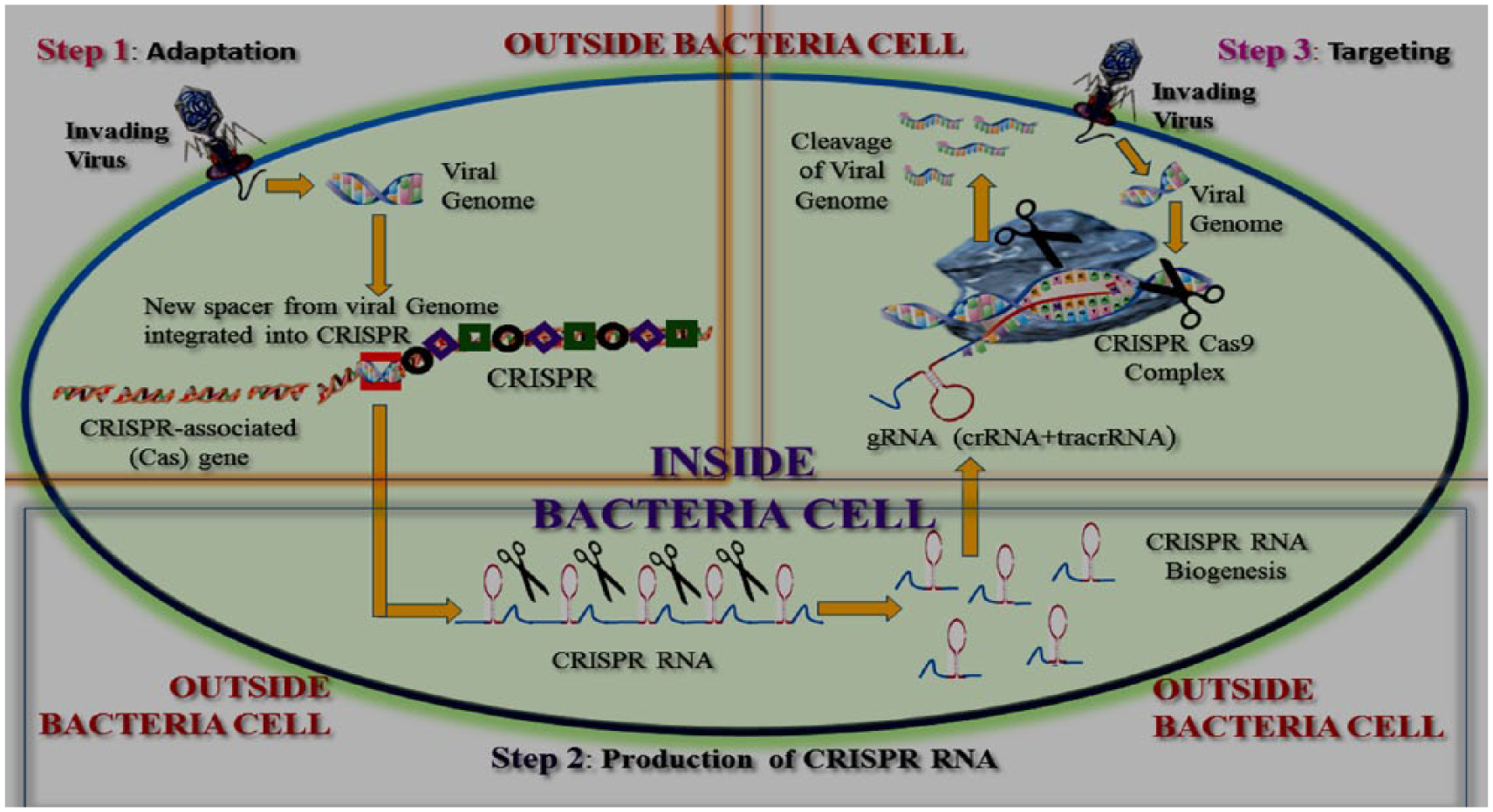
Graphical representation of the CRISPR-Cas9 system.
Adaptation in mammalian cells: role of gRNA in CRISPR-Cas9
The specificity of CRISPR-based immunity is not only useful for bacteria. The system was not only adapted in mammalian cells, but also applied as a potential gene-editing weapon. The modular design is a unique feature of the CRISPR-Cas9 system. The CRISPR complex consists of two modules: a CRISPR-associated (Cas) endonuclease module and a CRISPR RNA (crRNA) module. The Cas endonuclease module initiates the double-stranded DNA breaks and a crRNA module that specifies the target DNA sequence. The target module (sgRNA) and the endonuclease module (Cas9), which are encoded separately, can be optimized without altering the function of each other. The regulation of gene expression can be controlled through CRISPR-Cas9. 4 Especially in mammalian cells, the co-expression of Cas9 and sgRNA is sufficient to incite sequence-specific DNA cuts. 25 gRNAs can guide the insertion or deletion of uridine residues into the mitochondrial mRNAs in kinetoplastid protists during RNA editing. The gRNA is a short, synthetic RNA composed of a ‘scaffold’ sequence necessary for Cas9-binding and a user-defined ∼20 nucleotide ‘spacer’ or ‘targeting’ sequence that defines the genomic target to be modified. 26 A double-strand DNA cut is possible at a particular genomic region where Cas9 nuclease can be programmed by a gRNA. It is also important to consider various factors for designing a gRNA for gene knockout, including the location of the CRISPR-Cas9 targeted sequence within the gene. 27
In mammalian cells, knocking out a gene is highly effective when Cas9 is targeted to the exon regions of a specified gene. In this regard, cutting by Cas9 and subsequent repairing by NHEJ (nonhomologous end joining) result in indel mutations. Usually, such an indel causes a frameshift in the target gene and leads to production of a nonfunctional, truncated protein or the degradation of mutant mRNA through nonsense-mediated mRNA decay. RNA interference (RNAi) typically does not achieve complete silencing. CRISPR interference (CRISPRi), an alternative gene-silencing approach, uses the high binding affinity of Cas9 for its target sequence. Mutation in the nuclease domains of Cas9 produces a nuclease-dead protein (dCas9), which binds to the target DNA without cleaving it. 28 After binding to the target DNA, dCas9 can suppress its expression by interfering with the transcription machinery. 29
Application of CRISPR-Cas9 in cancer drug development
Identifying a target gene or protein is one of the most crucial parts of the drug discovery process. 30 Screening the target in the mammalian cell, before CRISPR, depends on RNAi-based gene knockdown libraries and cDNA-based gene overexpression libraries. The first was used to detect gain-of-function (GOF), and the latter was used to detect high-throughput loss of function (LOF). However, RNAi often produces false-negative rates for incomplete gene silencing and a high false-positive rate due to the effects of notable off-targets. To overcome these drawbacks, shRNA/siRNA libraries are used simultaneously, and the overall procedures related to this methodology eventually increase the cost and/or size of the libraries. Moreover, lentiviral insertion-dependent LOF is restricted to cell lines with a haploid genome. 31 The advent of CRISPR-Cas9 has opened a new door for functional genomics studies. This technique offers precise editing of a genome, enabling genetic research of defective genes and their behavior. It can be applied for the systematic identification of genes that support cancer cell viability and regulate cancer drug sensitivity. 29 The LOF CRISPR libraries can be applied for both positive and negative selection assays. Again, GOF CRISPR libraries are simple to build and deploy compared to cDNA libraries, and the libraries also allow access to large genes that are not available in cDNA libraries. In comparison to cDNA libraries, however, the magnitude of CRISPR activation (CRISPRa) gene overexpression might be more variable.32,33 After screening to identify the target for drug development, the thorough archiving of these cancer genes is vital. This catalog will help to appraise the quality of future members of LOF CRISPR libraries in lethality screening and will also fine-tune the discovery of the target by avoiding cell-essential genes. CRISPR knockout and CRISPRi approaches have already been applied to screen very large sgRNA library pools and to identify essential cancer-lethal genes.34 –36 These genes reveal the functional dependencies in individual cancer cell lines, which could be potential components for drug targets. The retroviral libraries of gRNAs in CRISPR help in targeting every gene within the genome. Around 3000 human genes have been identified to be associated with different genetic diseases, and another ~500 genes have been identified to be associated with complex diseases or various infections. Identification of various genes is rapidly increasing, and it is believed that 4000–7000 additional disease-associated genes will be defined in the next few years. 37 BCR and ABL are examples of genes related to lethality of the chronic myelogenous leukemia cell line KBM7, which harbors BCR–ABL translocation. 38 KRAS and PIK3CA have also been identified as lethal hits for the colorectal cancer cell lines DLD-1 and HCT116. 39 These genes play pivotal roles in cellular processes including DNA replication, RNA processing and proteolysis.34 –36 An important finding is that the CRISPR system is not totally free of the off-target effect. Researchers are studying different methods to overcome the obstacle and hence pave the way for developing cancer drugs using the CRISPR system.29,40,41
Delivery vehicle for CRISPR-Cas9
Often, the therapeutic translation of the CRISPR-Cas9 system is impeded due to lack of an appropriate delivery carrier. The high molecular weight and complexity of the CRISPR-Cas9 system make delivery difficult. 42 Interestingly, researchers have developed a new nanoscale vehicle termed nanoclews, coated with a positively charged material such as lipid or polymers, 37 that can disrupt the endosomal membrane and remain free inside the cell. When the nanoclew enters into a cell, it is absorbed by the cellular endocytic mechanisms. Then, the CRISPR-Cas9 complexes are separated from the nanoclew structure and make their way to the nucleus. Finally, the CRISPR-Cas9 complex reaches the nucleus and starts gene editing. The nanoclews are made of a single strand of DNA and help in delivering the CRISPR-Cas9 gene-editing complex into cells both in vivo and in vitro. 43 The DNA nanoclew-based delivery method of CRISPR-Cas9 is shown in Figure 2.

Graphical representation of a nanoscale delivery vehicle for CRISPR-Cas9 (not to scale).
CRISPR-Cas9 in cancer modeling
Genetic mutations and epigenetic alterations play significant roles in tumorigenesis. Cancer is a multiple-hit disease that is a result of mutations in genes involved in the control of cellular function, growth and division. That is why epigenetic modulation and genome editing are important for cancer modeling and therapeutic efficacy. The whole-genome sequencing data of human cancer cells indicated the complexity of the cancer genome, including numerous point mutations and large genome rearrangements. Cellular and animal models can be established using these data in order to understand the molecular mechanisms underlying tumorigenic responses. New candidate genes to be considered as target genes for cancer therapy can also be validated through these models.44,45
Figure 3 presents an overview of cancer modeling with the CRISPR-Cas9 system. In recent years, the CRISPR-Cas9 system has produced a revolution in the field of cancer modeling. While the other genome-editing tools – ZFNs and TALENs – are based on sequence recognition via protein–DNA interactions, the CRISPR-Cas9 method is known to target specific genomic loci with sgRNA. In addition, since RNA is much easier to synthesize and introduce into a cell than protein domains, the CRISPR-Cas9 tool is regarded as a more promising way to facilitate targeted genome modifications. 46
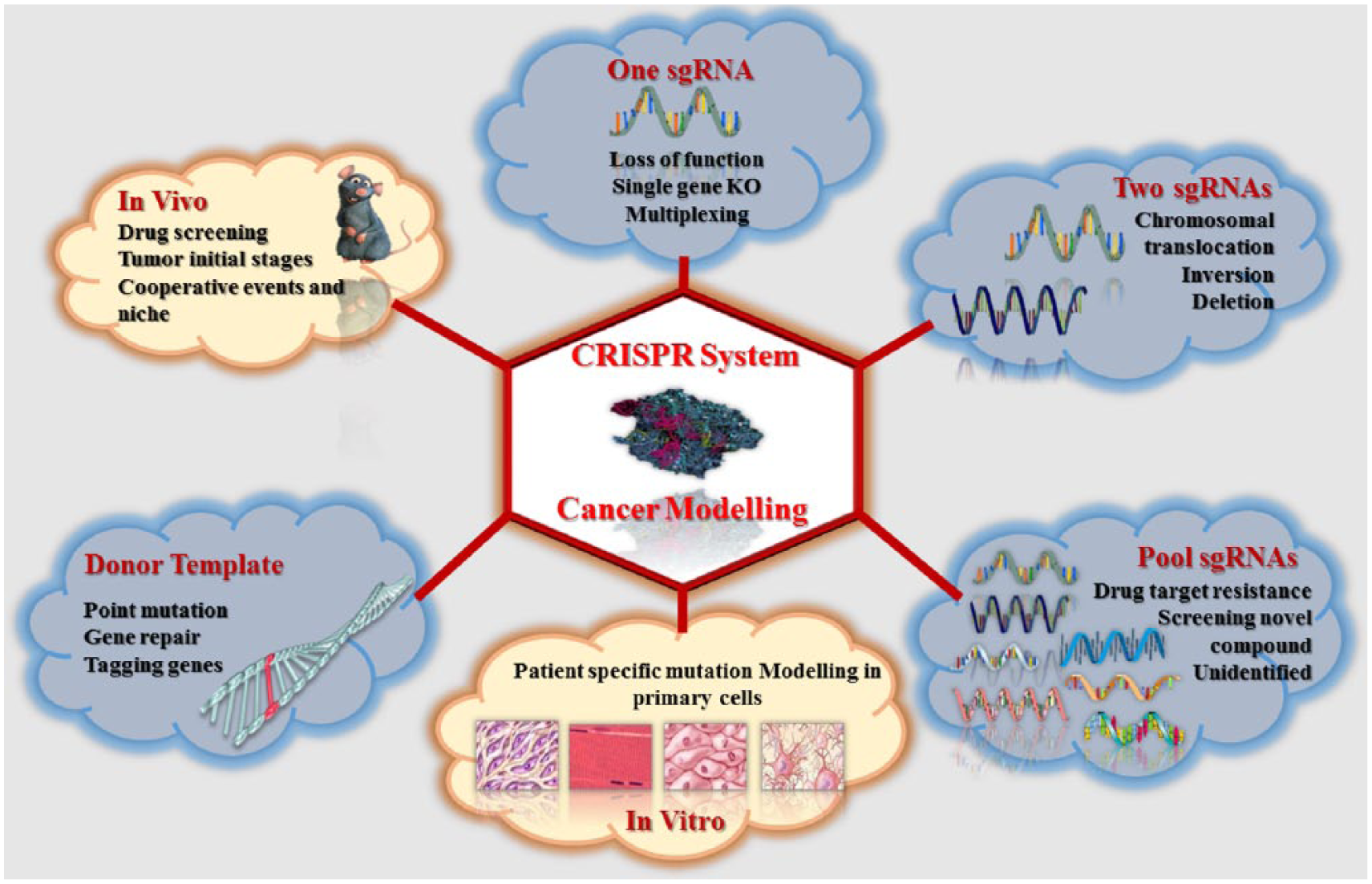
A schematic overview of cancer modeling using the CRISPR-Cas9 technique.
Tyler Jacks and his team recently elucidated the feasibility of using this powerful tool for modeling liver cancer by directly mutating cancer genes in an in vivo study. 47 They showed that this technology can be adapted into a cancer model with lung cancer mutations using genetically engineered mouse models. 48 Scott W. Lowe and his team explained that an inducible CRISPR (iCRISPR) system could effectively be used for creating biallelic mutations in multiple target loci, implying that this platform provides a new position from which to study the LOF phenotypes in vivo. 49 It was also expected that the CRISPR-Cas9 system will help to generate a mimic displaying cancer chromosomal translocations in human cells. This system allows the generation of cellular models that can demonstrate the primary oncogenic events driving tumorigenesis. This technique depends on a pair of plasmids expressing Cas9 and two sgRNAs to actually target the breakpoints of a cancer translocation. In acute myeloid leukemia (AML), t(8;21)/RUNX1-ETO chromosomal translocation is observed in HEK293 and CD34+ human hematopoietic progenitor cells. Choi and Meyerson reported that the CRISPR-Cas9 system could generate a chromosomal translocation mimic (see Table 2). 50
Overview of the application of the CRISPR-Cas9 system in cancer modeling.

The CRISPR-Cas9 system shows many advantages over conventional gene-targeting technology; one is that it can directly modify the zygote genome. Wang and his team applied the system to modify mouse embryos by injecting Cas9 mRNA and sgRNAs into a fertilized egg. 52 This type of genetically engineered modified mouse that carries multiple alterations at loci might have a significant role in cancer research. Moreover, researchers have developed genetically modified immune cells (e.g. T-cells) that showed the ability to kill cancer cells in mice (Figure 4). The cells were modified in such a way that they can express chimeric antigen receptors (CARs) on their surfaces. The CARs can recognize and attack cancer cells, because cancer cells express the corresponding antigen. 59
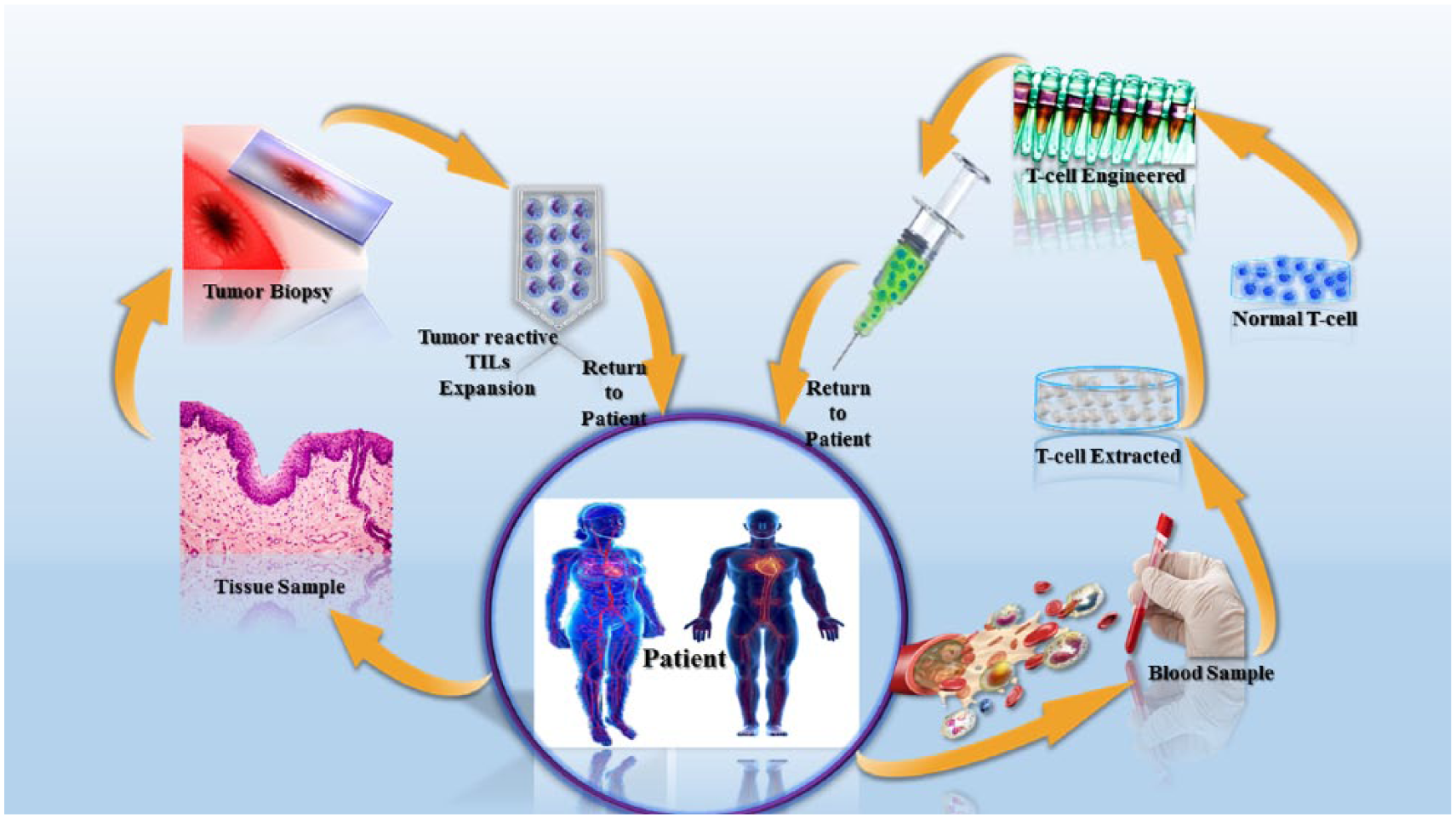
Cells are collected from the patient, edited by CRISPR-Cas9, and returned to the patient.
Application of CRISPR-Cas9 in cancer treatment
Scientists all over the world are using the CRISPR-Cas9 system to address cancer treatment from different research perspectives. In Table 3, that research is listed for quick reference. Again, the following text presents an overview of that research.
Previous studies and edited genes for different carcinomas.

Brain cancer
Brain cancer is the most lethal among all cancers, regardless of gender and age. The therapies used against brain cancers such as gliomas have been more or less the same for the last five decades. 74 There are also technical difficulties in the clinical management of brain cancer. For these reasons, researchers are trying to find solutions at the genetic level. In this context, CRISPR-Cas9 can be an efficient, convenient and less time-consuming technique. 75 There are four types of animal models used in the study of gliomas and medulloblastomas of human brain cancer: patient-derived xenograft (PDX), cell-derived xenograft (CDX), genetically engineered mouse and in vivo mouse model. 76 The Ptch1 gene responsible for medulloblastoma and the Trp53, Pten and Nf1 genes accountable for glioblastoma can be knocked out in the mouse brain using the CRISPR-Cas9 technique. This technique can also be used in further investigations against other regulatory genes found to be responsible for brain tumors.
Urinary bladder cancer
Long non-coding RNA (lncRNA) acts as a critical regulator of the development and progression of tumors and is a potential diagnostic biomarker. Upregulation of the long non-coding RNA PANDAR is associated with poor prognosis and promotes tumorigenesis in bladder cancer. Although the mechanism is not understood, PANDAR plays an effective role in the progression of bladder cancer (BCa). 77 Several lncRNA genes are involved in bladder carcinoma, such as TP53, 78 urothelial carcinoma-associated 1 (UCA1) and long non-coding RNAs-related nuclear protein (ncRAN). 79 Upregulation of UCA1, which is expressed in both 5637 and T24 bladder cancer cell lines, fosters the propagation of BCa cells. 80 LncRNA can be manipulated by the versatile gene-editing tool CRISPR-Cas9. Isolated genomic DNA from 5637 and T24 bladder cancer cells were transfected with CRISPR-Cas 9–UCA1 and then analyzed by T7 endonuclease 1 assays and DNA sequencing. A previous study showed that the CRISPR-Cas9 system efficiently knocked out the lncRNA–UCA1, 60 indicating that this technique might be effective against other bladder cancer genes, both related or unrelated to lncRNAs.
Colorectal cancer
Colorectal cancer
Hepatocellular carcinoma
The CRISPR-Cas9 technique has versatile application potential and is being used in a variety of in vivo and ex vivo experiments. In hepatocellular carcinoma, this technique has already been used in different ways against tumor suppressor candidate genes in the liver.47,82 One approach was to target the tumor suppressors Pten and p53 genes alone or in combination via hydrodynamic tail vein injection. Moreover, sgRNA can create indels that disrupt the respective gene. A combination of Pten and p53 sgRNAs is capable of forming liver tumors similar to those in transgenic animals with CRE-loxP-deleted Pten and p53. This study highlights several points. First, it demonstrates the advantages of bypassing the lengthy process of genetically engineered strains with CRE-loxP technology. The low rate of indel formation is not limiting in a positive selection setting such as propagation of liver cancer. Second, it validates use of the CRISPR-Cas9 genome-editing system to edit the Pten and p53 tumor suppressor genes. 47 This result offers the promise of success in further studies against hepatocellular carcinoma using the CRISPR-Cas9 technique, depending on the role, goal and overall model of the experiments.
Renal cell carcinoma
About 80% of renal cell carcinomas (RCCs) arise from tubular cells of the kidney and are a tumor type called clear cell RCC (ccRCC). 83 Studies have revealed that five miRNAs in particular – miR-885-5p, miR-1274, miR-210-3p, miR-224 and miR-1290 – are unregulated in ccRCC. 84 In an in vivo xenograft study with the CRISPR-Cas9 technique, depletion of miR-210-3p in RCC cell lines such as 786-O, A498 and Caki2 significantly augmented tumorigenesis together with a change in the morphology of A498 and Caki2 cells. Twist-related protein 1 (TWIST1) was the key target of miR-210-3p. The negative correlation between miR-210-3p and TWIST1 expression suggests that RCC progression is promoted by the suppression of TWIST1 mediated by miR-210-3p. 63 This technique was also used in an effective disease model of metastatic renal cell carcinoma (mRCC), which showed that knockdown of the tumor suppressor Von Hippel-Lindau (VHL) might be the cause of RCC tumor cell proliferation. The success of these studies gives rise to the hope that this technique can be applied to detect the gene levels that cause RCC, in addition to activity against the progression of RCC.
Breast cancer
Breast cancer (BC) is one of the most common causes of cancer death among women worldwide. Basal-like or triple-negative breast cancer (TNBC), a subtype of molecular BC lacking expression of estrogen receptor, progesterone receptor 85 and HER2/neu tyrosine kinase receptor, shows the poorest prognosis among the BC subtypes. The CRISPR-Cas9 system was used to inhibit tumor growth and pulmonary metastasis by knocking out Cripto-1, an embryonic stem cell marker whose promoter showed activity in primary tumors. This study revealed that Cripto-1 could be an alternative therapeutic target for TNBC. The Brahma (BRM) and Brahma-related gene 1 (BRG1) are both overexpressed in primary BCs. Activity of the multi-subunit human SWI/SNF chromatin remodeling enzymes is catalyzed by BRM and BRG1. 86 Use of the CRISPR-Cas9 technique to knockout the BRG1 or BRM gene showed that these two genes have at least some non-overlapping roles in promoting BC cell proliferation. Thus, both BRG1 and BRM are potential targets for BC therapy. Invasive lobular carcinoma (ILC) is another common type of human BC. In most cases, this carcinoma exhibits loss of cell–cell adhesion protein and methylation of the CDH1 gene promoter. 87 A CRISPR-Cas9-mediated somatic gene-editing technique was used with an intraductal injection of lentiviral vectors that encode Cre recombinase into female mice carrying conditional alleles of the Cdh1 gene encoding E-cadherin. This newly developed platform can be utilized for rapid in vivo testing of putative tumor suppressor genes implicated in ILC. Similar platforms can be utilized for the development of novel in vivo models for the detection and cure of different BC subtypes. 66
Cervical cancer
Cervical cancer is another common cancer in women worldwide. Human papillomavirus (HPV) is considered a major causative agent of cervical cancer. During HPV infection, the viral oncoprotein E6 promotes degradation of the host tumor suppressor protein p53, promoting malignant transformation of normal cervical cells. 88 The CRISPR-Cas9 system was used to disrupt the HPV16 E6 gene. HPV16 E6 deoxyribonucleic acid was cleaved at particular sites, leading to apoptosis of HPV16-positive SiHa and CaSki cells. The HPV16 E6 ribonucleic acid-guided CRISPR-Cas system will be an effective therapeutic agent in cases of cervical malignancy related to HPV infection. 67 Along these lines, in vivo experiments showed significant inhibition of tumorigenesis. Here, cells were engineered with CRISPR-Cas9 to target the promoter+E6+E7 transcript and edit the HPV16 E6 gene. The cells were inoculated into nude mice for establishment of transplanted tumor animal models. 68 These in vivo and in vitro results demonstrate the potential of the CRISPR-Cas9 technique in detecting, diagnosing, preventing and curing human cervical cancer.
Acute myeloid leukemia
AML is a hematologic malignancy that carries a bad prognosis. miRNA expression is dysregulated in AML. 89 In particular, miR-155 is regarded as a top miRNA candidate for promoting cellular fitness. The CRISPR-Cas9 technique can screen the functions of individual miRNAs and protein-coding genes during the growth of myeloid leukemia cell lines. This technique can be used to identify novel functional miRNAs in mammalian cell phenotypes and can also identify putative target proteins with opposing function. This provides a crucial tool for describing the effects of individual miRNAs and protein-coding genes in leukemic cells. 69 Again, this technique can be used to generate mouse models of AML and consequently develop a broad range of in vivo models to understand the complexity of human diseases. 57
Ovarian cancer
The epithelial-to-mesenchymal transition (EMT) is a common phenomenon during cancer metastasis. 90 During this process, epithelial cells lose their junctions, and gene expression is reprogrammed. This transition is induced by several master regulators, which include several transcription factors such as Snail1, TWIST and zinc-finger E-box binding (ZEB). Knockdown of the Snail1 gene by application of the CRISPR-Cas9 technique demonstrated that loss of Snail1 changes the actin cytoskeleton. This technique was also used to determine the functions of Snail1 and block its expression in human ovarian adenocarcinoma (RMG-1) cells. 70 The reasons for chemoresistance of epithelial ovarian cancer can also be determined at the genetic level using the CRISPR-Cas9 technique. Knockdown of the ovarian cancer biomarker HE4 reversed the chemoresistance. 71 Knockdown of LY75 reduced migration as well as the invasiveness of the tumor cells in vitro and decreased the metastatic potential of EOC cell lines in in vivo environments. 72 Ovarian carcinoma immunoreactive antigen domain containing 1 (OCIAD1) was also knocked out in a BJNhem20-OCIAD1-CRISPR-39 line using CRISPR-Cas9 as a strategy against ovarian cancer. 73 This ex vivo experiment, along with other experiments based on CRISPR-Cas9 strategies, paves a new way for the treatment and/or prevention of ovarian cancer in the future.
Conclusion
Cancer presents a long-standing problem in the history of human health and so far has no holistic solution. Researchers from various parts of the world are searching relentlessly for an appropriate and efficient approach based on genetic technology that can provide a sustainable solution to this disease. The CRISPR-Cas9 system is cutting-edge gene-editing technology with wide potential that stands alone among other cytogenetic techniques of gene editing in cancer-related diseases. This technique also has the potential to be used in every field of medical and biological sciences. However, a significant number of ethical questions have arisen regarding the application of this technique without any protection against inappropriate usage. Misuse of this technique might create lethal conditions that could destroy human civilization. Regarding the use of CRISPR-Cas9 technology around the world, we found little use to date of this technique in developing countries due to the lack of expertise and proper infrastructure. CRISPR-Cas9 should be the preferred approach in deciphering the complex components of gene expression leading to any cancer.
Footnotes
Author contributions
ZAR, YJS, JHK, LAB and JYC designed the format of this paper, interpreted the data and wrote the manuscript. MFH, BM, MU and SBZ edited this paper.
Funding
This research was also supported by the Basic Science Research Program through the National Research Foundation of Korea (NRF), funded by the Ministry of Education (2017R1A6A1A03015642), Korea.
Conflict of interest statement
The authors declare that there is no conflict of interest.
