



Abstract
Background:
Eosinophilic esophagitis (EoE) is a chronic, progressive type 2 inflammatory disorder of the esophagus, characterized by abnormal eosinophil accumulation in esophageal epithelium. Undiagnosed or undertreated EoE leads to increased risk of fibrostenosis, strictures, and food impaction due to persistent inflammation, deeply impacting patients’ health-related quality of life (HRQoL).
Objectives:
To gather insights on comprehensive assessment of EoE, comprising clinical, endoscopic, histological outcomes, adaptive behaviors and HRQoL; to define proper evaluation of disease control and impact of continuous versus noncontinuous treatment to reach full disease control. Finally, to validate an algorithm for disease control, switching criteria, and follow-up.
Design:
Literature review, survey, and panel expert opinion building by a multidisciplinary Italian EoExpert Panel (EoExpert) of nine specialists from various Italian institutions.
Methods:
Non-systematic literature review, followed by a survey including 21 questions on the different topics. Results were then discussed and validated by EoExpert.
Results:
The current diagnostic pathway often does not allow early detection of EoE patients, especially in the presence of adaptive behaviors and unawareness of EoE best practices. In addition, there is a lack of a shared “control” definition. EoExpert reviewed, shared, and recommended two novel management tools for EoE, represented by I.M.P.A.C.T. Questionnaire to uncover adaptive behaviors and S.C.O.P.E. (Symptoms Control, Observation, Pathological Evaluation) scheme for comprehensive treatment efficacy evaluation. EoExpert’s recommendations were gathered and turned into a therapeutic management algorithm for the definition of disease control and switching criteria.
Conclusion:
This document provides a standardized approach to EoE management in pediatric and adult settings, highlighting the importance of timely diagnosis in a multidisciplinary setting, of using unified criteria for assessment of disease control through the adoption of a comprehensive approach and of following up patients. These recommendations highlight the critical role of increased awareness and standardized care in EoE clinical setting for lifelong management.
Plain language summary
Eosinophilic esophagitis is often not timely diagnosed and/or properly managed, which causes its progression and negatively impacts patient’s health status and health related Quality of Life (HRQoL). It is therefore mandatory to highlight the importance and meaning of “complete disease control”, defining an algorithm that ensures diagnosis, treatment, and monitoring for an effective EoE management.
Keywords
Background and objective
Eosinophilic esophagitis (EoE) is a chronic, progressive T-helper type 2-mediated inflammatory disorder of the esophagus, characterized by an abnormal accumulation of eosinophils in the esophageal epithelium.1,2 If left untreated, EoE can progress to fibrostenotic lesions, up to the development of esophageal strictures. 3 The etiopathogenesis of EoE is multifactorial, involving a complex interplay of genetic predisposition, immunological responses to antigenic and environmental factors. The clinical presentation is often heterogeneous and shows age-dependent characteristics that include a broad spectrum of symptoms: failure to thrive in the youngest children, vomiting in older children, abdominal pain in young adolescents, dysphagia and food impaction, retrosternal pain, and manifestations mimicking gastroesophageal reflux disease (GERD) in older adolescents and adults. All these features make EoE diagnosis quite challenging.4 –7 Patients with EoE have substantially impaired quality of life (QoL), with several social and psychological implications of food-related illness.8,9
The diagnosis of EoE requires an integrated analysis of the patient’s clinical history in the context of a proper endoscopic and histological evaluation in a multidisciplinary setting with gastroenterologists, pathologists, allergists, and pediatric specialists’ involvement. Current treatment schedules include proton pump inhibitors (PPIs), topical corticosteroids (TCS), exclusion of trigger foods (elimination diets), and, in specific cases, esophageal dilation.
It is necessary to underline that currently in Europe there are no in-label conventional treatments for EoE in pediatric population (<12 years old), which leads to off-label use of medications for these patients5,6: in this age group (1–11 years old, weighing ⩾15 kg), only biological therapy (Dupilumab) has been investigated and more recently received positive opinion by EMA Committee for Medicinal Products for Human Use (CHMP). 10 For European adolescents and adults, approved treatments include TCS, such as budesonide in orodispersible formulation (Jorveza in EU for people ⩾18 years old), and Dupilumab (⩾12 years old).4,9 Moreover, in February 2024, budesonide oral suspension (Eohilia™; Takeda Pharmaceuticals U.S.A., Inc., Cambridge, MA, USA) was approved by the FDA for the treatment of patients with EoE aged ⩾11 years, based on the data from ORBIT1 and NCT01642212. 11
One of the most challenging aspects of EoE is the diagnostic delay, highlighting the need for increased awareness to improve its early detection. It is well demonstrated that early diagnosis improves patients’ health status and QoL and may slow the development of complications.7,12,13 It has been recently shown that median diagnostic delay in the Italian EoE population reaches 36 months, with mean patient- and physician-dependent diagnostic delay is 18 and 6 months, respectively. 14 However, previous global data showed that the average diagnostic delay in childhood rises to 4–6 years, 7 increasing below age <6 years and decreasing when associated with the presence of food allergy or a family history for EoE. 15 The diagnostic delay can be attributable to both patients, who put in action adaptive behaviors to cope with symptoms, and clinicians, who are not properly aware of diagnostic guidelines for EoE and have difficulty in discerning EoE from other conditions with overlapping symptoms, like GERD.7,16 It is important to underline that each year of symptoms before proper diagnosis corresponds to a 5% increased risk of fibrostenosis. 17
In the EoE management setting, what needs to be defined concerns aspects such as adaptive behaviors, potentially responsible for the delayed diagnosis of the disease, a shared definition of criteria for disease control and remission, as well as criteria for switching therapy in the case of inadequate control. In this sense, it becomes mandatory to understand how the clinical, histological, and endoscopic characteristics, as well as their accurate evaluation in the different diagnostic centers, can influence the management of the disease during its natural evolution. To define a controlled disease, histology must show less than 15 eos/hpf (or <15 eos/0.3 mm2) and Histologic Scoring System (HSS) improvement, together with endoscopic EREFS score of maximum 2 and the reduction between 30% and 90% of Dysphagia Symptom Questionnaire/Pediatric Eosinophilic Esophagitis Sign/Symptom Questionnaire for caregivers (DSQ/PESQ-C; or other clinical scores). 18
Moreover, in EoE therapeutic protocol context, it is necessary to clearly outline the concept of full disease control as a primary end point of treatment, by defining a shared position supported by clinical and literature evidence regarding the role that continuous or intermittent therapy (cycling or stacking) can have in this chronic and progressive disease. Due to these challenges, there is a dire need for comprehensive research to guide clinical practice in pediatric, adolescent, and adult EoE patients.
To address these unmet needs, this work aims to develop a comprehensive knowledge based on the EoE management, addressing existing gaps in diagnosis, definition of control, switching therapy, and follow-up. All recommendations reported here were developed by a multidisciplinary panel of nine experts in the EoE (EoExperts) field including adult and pediatric gastroenterologists, gastro-pediatricians, internal medicine specialists, allergo-immunologists, and pathologists from nine different referral EoE centers across Italy.
Methods
To accurately assess the current landscape of EoE management, an in-depth literature review was first conducted to gather insights on disease management and identify existing knowledge gaps. This web-based study was conducted over a period of 6 months and spanned across various Italian regions and healthcare professional specialties. It began with a non-systematic literature review and progressed through survey administration, expert panel discussions, and culminated in the final output. The literature review was focused on hot topics identified by the EoExpert Panel, and all results were then critically examined and validated. Based on these results, a 21-question survey was developed and administered to EoExperts with the aim of gathering insights regarding the management of EoE, benefits/risks of continuous versus intermittent therapy, definition of complete disease control, and the best approach to follow up the patient.
The literature selection of our current expert opinion panel article is based on expert judgment rather than a systematic process, and the literature review was performed in April 2024 covering articles published between January 1, 2017 and March 31, 2024. The databases that were used were PubMed, OVID, and EMBASE with the key search terms as “eosinophilic esophagitis” AND “disease progression” OR “IMPACT” OR “guidelines” OR “control” OR “remission, “follow-up,” OR “Quality of life” OR “adaptive behaviors.”
All project phases are illustrated in Figure 1 and detailed as follows.

EoExpert panel recommendations, project development steps.
Phase 0: Expert panel selection
To gather insights to standardize EoE patient care across Italy, a multidisciplinary panel of nine experts was selected. EoExperts were chosen based on their proven experience in treating pediatric and adult EoE patients and on their scientific background concerning this disease, with a highly representative geographical distribution.
Phase I: Literature review on hot topics
With the aim to build an essential knowledge framework concerning diagnostic and therapeutic gaps for EoE, a non-systematic literature review was performed focusing on the following topics: EoE definition and diagnosis, diagnostic challenges, adaptive behaviors, current treatments, monitoring and follow-up, definition of control, newly approved treatments, and guidelines.
Phase II: Result analysis validation
Results of the non-systematic review were then shared, discussed, and validated by Experts.
Phase IIIa: Survey development
Following the literature search, a survey was developed to address specific aspects in the management of EoE. The survey, aimed at filling the gaps in the understanding of the management needs of patients with EoE, included 21 questions on diagnosis, adaptive behaviors, disease control, intermittent versus continuous therapeutic approach, and follow-up.
Phase IIIb: Survey online administration
The survey was administered through a web-based format, ensuring confidentiality, and allowing each expert to express personal views without any peer’s influence. A rich dataset was in this way provided and used for subsequent analysis and panel expert opinion-building efforts in standardizing EoE management across the Italian context. Results of the survey were compared, and all panel expert opinions or divergence areas were then highlighted, resulting in 13 recommendations, which were discussed in phase IV.
Phase IV: Expert panel meeting for statement discussion and validation
Recommendations were discussed and validated in the context of a final expert panel meeting, in which all interviewed experts were involved. During this session, proposed recommendations that did not achieve a full agreement during the online survey were further discussed, with participants expressing their full formal agreement. The whole process ensured that final outputs would reflect established practices, addressing current uncertainties in EoE management.
Phase V: EoExpert panel recommendation paper
After discussion and amendments to some recommendations, all statements were fully agreed upon and finally turned into the following document, shared, and agreed upon by the EoExpert panel.
Results
Main recommendations provided by the EoExpert panel are summarized in Table 1.
Summary of EoExpert panel’s recommendations with level of agreement.

All recommendations achieved an agreement of 100%.
DSQ, Dysphagia Symptom Questionnaire; EoE, eosinophilic esophagitis; EoE-IQ, EoE Impact Questionnaire; EoE-QoL-A, Adult EoE Quality of Life; EoE-SQ, EoE Symptom Questionnaire; EREFS, Edema, Rings, Exudates, Furrows, Stricture score; PESQ-C, Pediatric Eosinophilic Esophagitis Sign/Symptom Questionnaire for caregivers; PGIC, Patient global impression of change; PGIS, Patient Global Impression of Severity.
Diagnostic pathway

The median overall diagnostic delay of EoE is approximately 3 years in the Italian children’s population. 14 The non-specificity of symptoms in childhood often leads to them not being perceived as alarming by families or clinicians, resulting in frequent misdiagnosis and unawareness of diagnostic guidelines for EoE. Additionally, clinical presentations in young children are filtered and reported by caregivers, which can further complicate accurate diagnosis.7,16 In young adolescents and adults, this is further complicated by the development of instinctive adaptive behaviors that can effectively mask the disease, delaying suspicion of EoE until symptoms become clinically relevant. Moreover, symptoms of EoE may overlap with other conditions, such as GERD, making it difficult for clinicians to clearly identify it.3,7,16 These behaviors include imbibing fluids with meals, modifying foods, prolonging mealtimes, avoiding textured foods, chewing excessively, and turning away medicines such as tablets or pills, as widely reported in Table 2. 19
Eating behaviors in pediatric EoE patients. 19

EoE, eosinophilic esophagitis.

To improve early diagnosis and assess the effectiveness of treatment for EoE, experts also recommend implementing the I.M.P.A.C.T. assess using a targeted 10-question tool designed to uncover adaptive behaviors that may be masking the underlying EoE condition (Table 3).19 –21

EoE, eosinophilic esophagitis.
Its adoption is advocated by Experts in all patients presenting with immune or inflammatory conditions such as asthma, recurrent rhinitis, and food allergies, manifestations which may harbor subclinical EoE symptoms.
It is possible to answer Yes/No to Each Impact Score question. In the presence of one or more positive answers, patients should undergo further evaluation for EoE suspect investigation.
In Experts opinion, I.M.P.A.C.T. Questionnaire emerges as a valuable asset in the diagnostic toolkit for EoE, offering a structured method to quantify and interpret the subtle behavioral adaptations characteristic of this condition.

Together with the corresponding best practice guidelines for effective and timely diagnosis, the main “Challenges in EoE clinical practice” for addressing signs for EoE suspicion in clinical, endoscopic, and histological evaluation have been identified and evaluated by EoExpert.
It was further emphasized that evaluating at least six biopsies from at least two different sites (ideally two proximal, two medial, and two distal) is recommended to reach a diagnosis of EoE in most cases. It has been shown that sampling a single proximal or distal biopsy leads to a failure to diagnose EoE in 15% of cases. 22 All agreed and validated recommendations are listed in Figure 2.

List of EoE Experts stated and agreed recommendations within the “Challenges in EoE: rules of good clinical practice for the diagnostic and therapeutic path.” The main challenges, with the related best clinical practices, are summarized here in order to provide a guiding tool to perform a correct clinical, endoscopic, and histological evaluation, and therefore obtain an accurate diagnosis of EoE.
Therapeutic approach

In agreement with different position papers and guidelines, including ESPGHAN, EUREOS, EoEtaly panel expert opinion, and International Experts Guidelines, EoExpert states that EoE is a chronic inflammation of the esophagus that potentially progresses from an inflammatory to a fibrostenotic phenotype and, if left untreated, can lead to persistent symptoms and the development of strictures.3,6,23 Effective therapy can limit the progression of the disease. Based on this evidence, the possible coexistence of other type 2 comorbidities must be considered during the diagnostic workup. An integrated clinical, endoscopic, and histopathological examination involving key specialists including gastroenterologists, gastro-pediatrics, allergists/immunologists, internal medicine specialists, and pathologists is therefore strongly recommended to ensure more effective, timely diagnosis, treatment, and long-term care of adult and pediatric EoE patients.3,4
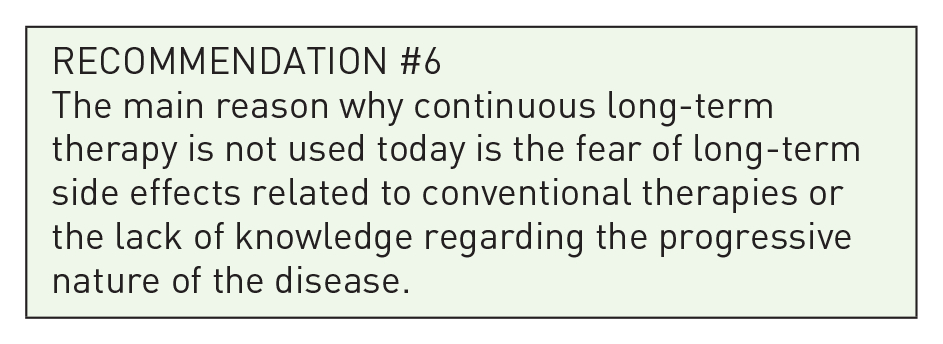
Against this background, an effective therapeutic approach should represent continuous and not intermittent (cyclic or stacking) therapy. Cycle therapy alternates periods of therapy with washout periods depending on whether symptoms are present or not. Stacking means switching from one formulation to another while maintaining the same active ingredient.
EoExperts highlight how a continuous therapeutic approach is not widely adopted in common clinical practice. The possible causes that lead to intermittent approach choices were then discussed and shared. 24 Furthermore, it has been highlighted how therapy interruptions correlate with a 50% relapse rate in those patients who, after induction and maintenance, have achieved remission. 25

EoExpert analyzed both the continuous and episodic therapeutic approaches, with the aim of understanding which could be the best option to achieve adequate disease control.
The advantage of continuous therapy was thus agreed, also confirmed by a recent study on over 500 patients with EoE that clearly highlighted the importance of long-term management due to the lifelong nature of EoE.26,27 Experts also agreed in stating that having a continuous histologic remission may reduce the rate of stricture development and food impactions over time. Indeed, a recent study by Starling et al. showed that patients who achieved periods of histologic remission had lower rates of long-term fibrostenotic outcomes (Figure 3). Moreover, lower esophageal eosinophil counts were associated with less risk of food impaction, and a younger age at diagnosis was associated with lower rates of stricture formation. 24

Stricture development rates versus histologic control.

Analyzing current guidelines on EoE, it was shared that the treatment of patients with EoE should have, as its objective, the concomitant improvement of the histological, endoscopic, and symptomatic picture of the disease.3,6,9,23
Even when symptoms appear to be controlled, EoE may be progressing in the deep layers of the esophagus. 28 Actually, symptoms are late indicators of disease progression, and only endoscopy paired with biopsy can reveal hidden progression and uncover patients who are not in remission (under treatment). 29 A comprehensive approach, therefore, must evaluate together symptoms, adaptive behaviors, the number of previous therapy cycles, endoscopy, and biopsy. 30
The EoExperts have therefore shared and agreed on a scheme for evaluating the state of the disease, based on the analysis of symptom control, observation of the patients’ behavior, and pathological evaluation based on endoscopy and biopsies. The “Symptom Control, Observation, Pathological Evaluation” (S.C.O.P.E.) scheme, with its specific targeted questions, was thus considered as an effective all-encompassing tool that may help in diagnosis, as well as defining the presence or absence of response to therapy and the possible need for a treatment switch.
Regarding disease control, the EoExperts stated the need to investigate the persistence of symptoms after at least two cycles of therapy, together with any evidence of their worsening in terms of frequency and intensity. The presence of adaptive behaviors should then be investigated using the I.M.P.A.C.T. Questionnaire, 19 together with observation of any food impaction episodes. Finally, pathological evaluation should be carried out, paying attention to any evidence of visible esophageal changes on endoscopy, eosinophil count >15 eos/hpf (>15 eos/0.3 mm2), and mucosal or submucosal histological activity on esophageal biopsy.
EoExperts highlight how the evaluation according to the S.C.O.P.E. scheme must be carried out at the beginning of treatment, 3 months after the beginning and 1 year after the beginning.
If, finally, S.C.O.P.E. reveals an incomplete response to treatment, the need for a therapeutic switch should be considered. However, if on the histology side there is control of the disease, endoscopic esophageal dilation needs to be considered first, even in the absence of stricture or grade 3 rings, as mild fibrostenotic changes may contribute to the occurrence of dysphagia or bolus impaction.6,9,31,32

The definition of patient in remission is one of the most challenging points in EoE management and therefore needs to be properly evaluated. According to EoExperts’ opinion, a multidimensional evaluation comprising clinical, endoscopic, histological, and QoL aspects will define if the patient is in remission (under treatment) or not. Additionally, HSS score or similar multiparametric histological scoring systems are recommended to be included for a comprehensive assessment of histologic activity in the esophagus.

As summarized in Figure 4, concerning disease management and according to current guidelines, EoExperts agree on the need to correlate endoscopic, histological, and clinical data by evaluating them at 3–6 months (3 months for conventional therapy, 6 months for biologic) before deciding whether to continue or switch the current therapy, as the effects on the disease should already be evident at these timepoints. 9

Definitions of uncontrolled, controlled disease, and in remission (under treatment). For all histological, symptomatic, endoscopic, and quality of life aspects, the evaluation elements necessary to define the degree of disease control are specified and listed.
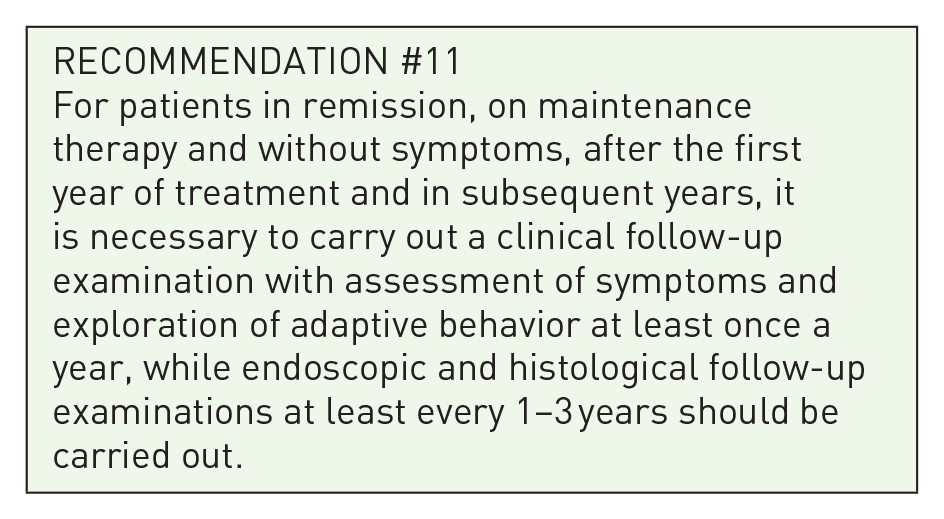
For patient in remission, on maintenance therapy, with the aim of avoiding negative effects in terms of compliance and for improving patient retention, according to what is also reported by ESPGHAN guidelines, EoExperts state that, after the first year of therapy, endoscopic and histological follow-up could be scheduled every 1–3 years. 18

Finally, EoExperts agreed on the need for an algorithm as a guiding management tool for EoE patients. All shared and agreed recommendations were thus integrated and turned into an algorithm that could be followed for proper therapeutic decision-making, evaluation of control, and follow-up in the context of EoE (Figure 5).

2024 Italian EoExpert Panel Disease Control & Switching criteria (D.C.S.C.) algorithm for adult and pediatric patients. As first-line therapies, confirmed EoE patients will be treated with a dietary approach, PPI, TCS, and/or approved biological therapies. Endoscopic esophageal dilation could also represent an add-on therapy before SWITCH for those patients with histological control of the disease who do not achieve clinical remission. After the first induction therapy evaluation (3–6 months), if EoE is defined as adequately controlled, the patient still remains in continuous maintenance therapy. Therapy evaluations are thus performed with endoscopic and histological follow-up (1 year and then after 1–3 years in the absence of symptoms). Only if endoscopy and histology findings do not confirm that EoE is still adequately controlled, a continuous therapy switch has to be considered.
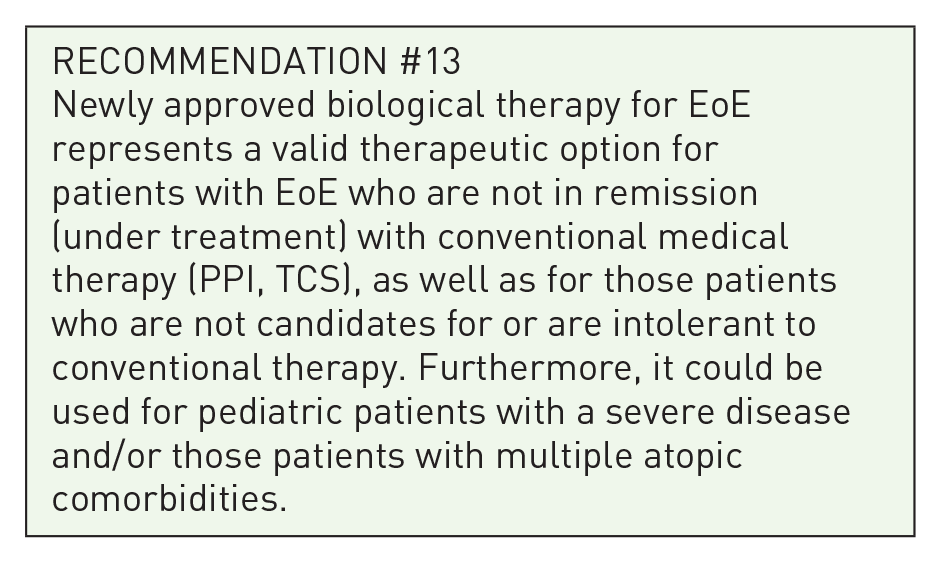
Regarding pharmacological therapies for EoE, experts agreed in stating that approved biologics could represent a significant option for adults and adolescents whose disease is not controlled, as well as for those who are intolerant or unsuitable for conventional pharmacological treatment.
Discussion
EoE, as the Italian EoExpert Panel recommends, has to be considered a chronic, progressive esophageal manifestation of a type 2 systemic inflammatory disorder, with occasional manifestations involving different organs. Timely diagnosis still remains a critical unmet need in EoE management for both the adult and pediatric populations.3,6,7,13,23 It has been demonstrated that the risk of developing fibrostenosis, the main complication related to the progression of EoE, increases by 5% for each year of diagnostic delay, representing a critical global element for health and QoL of these patients.12,15,33
With the aim of both addressing unmet needs and gathering insights to standardize EoE patient care across Italy, the Italian EoExpert panel has analyzed all the clinical and management aspects of the disease, with particular focus on accuracy and timing of diagnosis, therapy, disease evolution, and long-term follow-up. Due to its chronic and progressive nature, EoE requires careful lifelong management. The literature review and the subsequent 21-item survey administered to EoExpert allowed to validate 13-recommendation guidelines within a specific EoE care algorithm, providing a support tool for the standardization of management in pediatric and adult EoE settings.
Adaptive behaviors have been considered the main responsible for masking EoE symptoms, which are then exacerbated in an advanced stage of the disease. EoExperts recommend adequate investigation for the hidden presence of adaptive behaviors by a thorough history. Other diseases could also contribute to diagnostic delay, such as GERD, whose symptoms overlap with those of EoE.3,7,16 Childhood appears to be complicated by the evident difficulties in correctly reporting the perceived symptoms, together with the marked tendency to adopt adaptive behaviors. 19 In EoExperts’ opinion, improvement in early EoE diagnosis is achievable by implementing the use of the I.M.P.A.C.T. Questionnaire: with its 10-targeted questions (in its Italian tongue version, as shown in Table 3b) clinicians could effectively reveal adaptive behaviors and a possible underlying EoE condition (Table 3).19 –21 Although not yet validated, according to experts, the I.M.P.A.C.T. Questionnaire can therefore represent a practical therapeutic guiding tool for clinicians. Moreover, if patient/caregiver or physician records one or more positive responses to the I.M.P.A.C.T. Questionnaire, a further investigation should be started to verify the possible presence of EoE. EoExperts also recommend extending the I.M.P.A.C.T. Questionnaire to patients reporting co-existing type 2 inflammatory conditions such as food allergies, bronchial asthma, allergic rhinitis, and atopic dermatitis manifestations.
Noteworthy, the letter “S” should be added to I.M.P.A.C.T. to highlight the social avoidance dimension, which is experienced by patients with EoE, as this condition has a significant negative impact on mental health-related QoL, with less effective coping strategies experienced by patients. 34
Once possible adaptive behaviors have been revealed and the clinical suspicion of EoE has been confirmed, the diagnostic pathway must proceed according to what listed in the “Challenges in EoE: rules of good clinical practice for the diagnostic and therapeutic path” scheme (Figure 2), a series of specific recommendations that EoExperts have identified as essential for the multidimensional clinical, endoscopic, and histological evaluation of EoE patients. From what has been discussed and shared, EoExperts highlight how essential it would be to carry out an accurate endoscopic evaluation and sampling that could allow for a complete histological picture of the esophagus. This must occur through sampling not less than six tissue biopsies in at least two to three distinct sites of the esophagus. Furthermore, biopsies should possibly include the medial site: in their clinical experience, EoExperts report that medial involvement of the esophagus occurs frequently in EoE, thus making it a valuable site for an accurate diagnosis. The ideal condition for an optimal histological evaluation, however, in the opinion of the EoExperts, should include at least two samplings in the distal, medial, and proximal locations, to return a complete histopathological esophageal picture.
According to what has been stated by EoEtaly panel expert opinion (statements #1 and #13), the chronic esophageal manifestation of EoE could progress from an inflammatory to a fibrostenotic phenotype, if not promptly diagnosed and effectively treated.3,4
EoExperts highlight that EoE should not be considered as an episodic disease but, rather, a chronic and progressive disorder whose manifestations occasionally involve different organs, including the esophagus. This consequentially requires a continuous systemic therapeutic approach rather than intermittent therapy (i.e., cycling or stacking). Monitoring not only peak eosinophil count but also degranulated eosinophils, even though until now there is no consensus on using this biomarker. 35 Nevertheless, mainly for the unjustified fear of long-term side effects related to conventional therapies, in EoExperts’ experience, continuous treatments are not widely adopted in common clinical practice, which represents a limit for proper EoE care. However, similarly to what is confirmed by the literature, EoExperts recommend the adoption of continuous therapeutic protocols capable of guaranteeing prolonged histological remission, an essential condition for reducing the development of stenosis and food impaction over time.22,23 As also Starling et al. recently remarked, patients who achieved periods of histologic remission and lower esophageal eosinophil counts (<15 eos/hpf) were associated with both lower rates of long-term fibrostenotic outcomes and reduced risk of food impaction. Moreover, it has been reported that the timing of diagnosis can be a great determining factor for the possibility of developing complications: younger age at diagnosis was, in fact, associated with lower rates of stricture formation. 24
Correct management of the disease during continuous treatment requires, in the chronic and progressive EoE setting, an effective monitoring protocol to periodically evaluate the endoscopic, histological, and symptomatic aspects of the disease. 3 For this purpose, the experts have first validated the shared characteristics that can describe when the disease can be defined as uncontrolled, controlled disease, and in remission (under treatment), as summarized in Figure 4.
To define a controlled disease, histology must show less than 15 eos/hpf (or <15 eos/0.3 mm2) and HSS improvement, together with an endoscopic EREFS score of maximum 2 and the reduction between 30% and 90% of DSQ/PESQ-C (or other clinical scores). 18 Finally, HRQoL improvements have to be reported in at least one of the QoL scores, such as EoE-IQ, EoE-QoL-A, EoE-SQ, PGIS, or PGIC.
If one or more of these four conditions are not met, even after undergoing endoscopic dilation under therapy to relieve symptoms, EoExperts recommend considering the patient inadequately controlled or, more correctly, uncontrolled, therefore requiring a therapeutic switch.
The remission definition, however, implies the presence of normal biopsy showing less than 1 eos/hpf (or <1 eos/0.3 mm2), an important decrease in HSS score, normal esophagus with endoscopic EREFS score <2, together with symptom resolution with >90% decrease in a symptom metric (i.e., DSQ, PESQ-C) and high improvement in any QoL score.
A recent study demonstrated that pediatric EoE patients demonstrate persistent eating adaptations despite histologic remission, which may be driven by esophageal remodeling. This is a nuance to pediatric identification of adaptive behaviors. 36 As a future perspective, remodeling activity and narrowing of the esophagus should also be assessed by using EndoFLIP, a catheter-based approach that uses impedance planimetry and controlled, volumetric distension to measure esophageal distensibility. EndoFLIP provides a functional assessment of esophageal distensibility and a more quantitative assessment of esophageal remodeling compared with EREFS. Therefore, it may have a role in severity assessment and therapeutic monitoring.37–39
To highlight the clinical setting of an uncontrolled disease, symptoms must be contextualized to histological and endoscopic assessments, as symptoms do not correlate well with endoscopic findings. 40 As a late indicator of disease progression, even when symptoms appear to be controlled, EoE can hide its progression in the deep layers of the esophagus.28,29 Considering this, EoExperts shared the recommendation to adopt the “Symptom Control, Observation, Pathological Evaluation” (S.C.O.P.E.) scheme as a comprehensive tool that can help physicians to correctly classify responses to therapy and evaluate the need for a therapeutic switch in uncontrolled disease. 18 The S.C.O.P.E. scheme considers symptoms, adaptive behaviors, the previous number of treatments, together with endoscopic and histological aspects. Therefore, this system becomes a recommended tool for the multidimensional evaluation of EoE control.
According to the ESPGHAN guidelines, clinical follow-up and symptom assessment with exploration of adaptive behavior should be performed in patients on maintenance therapy and without symptoms or in all patients in remission at least once a year (after the first 12 months of treatment and for the following years), while endoscopic and histological follow-up examinations should be performed at least every 1–3 years. 18 This reduced frequency of endoscopy could enable better compliance and patient retention. The first follow-up examination with endoscopy and biopsy should be performed approximately 3–6 months after the start of treatment during the induction phase (3 months for conventional therapy, 6 months for biological therapy), or/and after any change in treatment. If no signs or symptoms appear and the patient has achieved histological remission in the induction phase, EoExperts recommend that a second follow-up examination must be performed within 1 year of starting therapy. To assess the effectiveness of therapy at an early stage in accordance with the EoEtaly panel expert opinion guidelines, EoExperts emphasized the importance of conducting a multidimensional assessment of endoscopic, histological, and clinical aspects after 3 (for conventional therapy) and 6 (for biological drugs) months. The effects of treatment on the disease may already be visible at this time, suggesting that in uncontrolled disease, a possible switch to a more effective treatment after 3–6 months can be considered. 9 All these recommendations were then converted into a newly developed Italian EoExpert Panel Disease Control & Switching Criteria (D.C.S.C) algorithm (Figure 5), a useful tool that organically brings together the most current indications and guidelines for the management of EoE. It is therefore an effective and easy-to-use tool for a better understanding of this disease, its treatment, and the surgical needs of the patients affected by it, which are often not yet fully satisfied. Finally, regarding pharmacological approaches to the treatment of the disease, EoExperts propose, as reflected in the D.C.S.C. reflected. The algorithm reports in Figure 5 that approved biologics may represent an important option for adults, adolescents, and children who are poorly controlled, intolerant, or inappropriate for conventional pharmacologic treatment. Particularly in EoE patients with one or more type 2 inflammatory diseases, an approved biologic therapy that blocks IL-4/-13 signaling is emerging as a potential first-line treatment to address the underlying pathophysiology of these diseases.8,9 In fact, Dupilumab has shown promising results in reducing the symptoms, histological and endoscopic features of EoE, as well as QoL by intervening on the main and central drivers of type 2 inflammatory diseases, leading to its approval by the FDA and European Medical Agency (EMA) in adults, adolescents, and pediatric patients with EoE aged ⩾1 year and weighing at least 15 kg.4,10
The limitations of this expert panel opinion paper include (1) the non-systematic nature of the literature review, which may have resulted in a limited scope of studies considered, (2) the paucity of research specifically addressing the definition of control in EoE and associated switching criteria, given the relative novelty of this concept, and (3) the methodology of data collection, which relied on a web-based survey, potentially introducing selection bias.
Despite these constraints, this study represents one of the initial efforts to address this topic through a multidisciplinary expert panel, comprising anatomopathologists, allergologists, gastroenterologists, and pediatricians. The findings from this work may serve as a foundation for future global-scale investigations evaluating control parameters in EoE.
The study’s methodology may have introduced potential sources of bias such as (1) selection bias which was mainly due to the inclusion of clinicians from highly specialized centers may not be representative of broader clinical practice patterns and (2) methodological limitations since the consensus-building process relied on informal agreement rather than standardized methodologies such as the Delphi technique, potentially reducing the robustness of the conclusions. Notwithstanding these limitations, it is important to note that the primary objective of this paper was to provide contemporary, pragmatic recommendations from a multidisciplinary panel of experts affiliated with centers of excellence in EoE management. Moreover, Dupilumab trials in pediatric, adolescent, and adult patients evidenced the ability of this drug to improve significantly esophageal gene expression profiles of two gene sets (i.e., the eosinophilic diagnostic panel and the type 2 inflammation sets) associated with active EoE.41,42 This suggests that transcriptomics-related outcomes, representing an objective measure of inflammatory activity within the esophagus, could be investigated in the future as an additional component of a multidimensional assessment of response to treatment and control in EoE. 43
Conclusion
This panel expert opinion paper provides a useful insight for a more standardized approach in the management of EoE, from pediatrics to adults. The importance of a timely and accurate diagnosis is the key point in planning proper disease management. Evaluation of control in EoE should be carried out in a multidisciplinary context, adopting a multidimensional and holistic approach, which considers and integrates aspects related to QoL, symptoms, adaptive behaviors as well as an adequate endoscopic and histological evaluation. Being a chronic progressive type 2 inflammatory condition, EoE requires lifelong management and continuous treatment which, in conclusion, can only benefit from adequate care standardization and disease awareness.
