



Abstract
André Boivin (1895–1949) started his career in Marseille as a biochemist. Soon after the discovery of insulin, he worked on its purification, allowing for the treatment of local patients. He later moved to Strasbourg and set-up a microtitration technique of small carbon molecules and a method for quantifying purine and pyrimidine bases. His main scientific contribution occurred in Bucharest, where he was recruited to organize the teaching of medicinal chemistry. Together with Ion and Lydia Mesrobeanu, at the Cantacuzene Institute, they were the first to characterize the biochemical nature of endotoxins, which he termed the “glucido-lipidic antigen.” After joining the Institut Pasteur annex near Paris, he worked with Gaston Ramon pursuing his research on smooth and rough LPS. Additionally, with Albert Delaunay, he researched the formation of exotoxins and antibodies (Abs). He was nominated assistant-director of the Institut Pasteur in 1940. He initiated research on bacterial DNA and RNA, and was the first to hypothesize on how RNA fits into gene function. In 1947 he moved for a second time to Strasbourg, accepting a position as a Professor of Biological Chemistry. After his premature death at the age of 54, the French academies mourned his loss and recognized him as one of their outstanding masters of biochemistry, microbiology, immunology, and molecular biology.
An overview of André Boivin’s career
André Boivin was born in Auxerre (France) on 18 April 1895. He was the oldest in a modest family of three children. His father was a tailor and his mother the daughter of a cooper. When he was 10, his father was ruined, and he got a job as a handyman at the Auxerre hospital while his mother worked as a concierge. He was a bright schoolboy with an eagerness to learn. His almost illiterate grandfather, so proud of his grandson, bought him second-hand books from which André learned geometry, astronomy, botany, mathematics, and even sociology. While visiting Paris he bought a rudimentary microscope to explore the microscopic world. When he was 16, he attended lectures at the Ecole Normale to become a school teacher. Due to his excellent scores (ranking #1 for three consecutive years) he was admitted in July 1914 to join the Ecole Normale Supérieure of Saint Cloud to become a high school teacher. However, the events of World War I were on their way and André Boivin's career as a school teacher would never materialize. Those events however, offered him a chance to discover biology and medicine. In 1914, he was posted to the military hospital at Marseille. After recovering from a hospitalization for possible appendicitis, he began working as a laboratory assistant for Dr. Jean Escat (1866–1924)—a professor at the medical school. Escat would ultimately die of sepsis that developed from a general infection that he obtained after pricking his finger while operating on an infected patient. At the end of the war, Escat, with the encouragement of Boivin’s new wife (he got married in 1919), convinced André Boivin to start his medical studies. In parallel, he started his scientific studies, acquiring his Licence-ès-Sciences in 1921. He then obtained a position at the Sciences and Medical University in Marseille, continuing to work in the laboratory of Dr. Escat as the head of Escat’s laboratory. Following the discovery of insulin by Frederick Banting and Charles Herbert Best in Toronto in 1921, André Boivin was tasked to prepare insulin for the local patients. His first publication described a new simplified technique to prepare insulin. 1 Thereafter, he focused his efforts on developing micro-analytical urea assays to quantify urea. 2 This work constituted his medical thesis, which he defended successfully in Montpellier in 1926. In 1927, funded by a grant from the Rockefeller Foundation, he moved to Strasbourg to work on microanalysis at the Biological Chemistry Institute of the Medical University. There, he worked for 3 yr under the supervision of Prof. Maurice Nicloux (1873–1945). He set up a microtitration technique for small carbon molecules and a method for the measurement of purine and pyrimidine bases. 3 , 4 All of this work allowed him to defend his Doctorat ès-Sciences in 1931. He also continued his work on the purification of insulin and demonstrated that the pancreas was its only source.
Early in 1930, he was invited by Prof. Ion Cantacuzène (1863–1934) to move to Bucharest. There he was tasked with re-organizing the medicinal chemistry lectures at the Bucharest School of Medicine and worked in the institute of Prof. Cantacuzène, which prepared the sera and vaccines for the country of Romania. At the institute, he was able to setup his laboratory thanks to the generosity of the Rockefeller Foundation. There, he started his work on the chemical analysis of bacterial compounds. Together with Lydia Mesrobeanu (1908–1978) and Ion Mesrobeanu (1904–1987) (Figure 1), he made his most renowned discovery, the biochemical characterization of endotoxins using a trichloroacetic acid extraction method. His first report of this work was published in 1933, 5 a few months before Raistrick and Topley in London reached similar conclusions using a trypsin-based method. 6 The scientists met each other during the 2nd International Congress of Microbiology in London in 1936 and agreed on their common observations. Boivin continued his collaborative work with Lydia Mesrobeanu, who went on to defend her thesis in 1936 at the University of Strasbourg. After having acquired her doctorate she continued with her post-doctoral training at the Institut Pasteur, joining Boivin after he had moved to Paris. Their collaborations went on to yield more than 60 publications. In 1935, Boivin faced a very difficult period in his life. The changing political winds in Romania, driven by exacerbated nationalism and growing xenophobia, led to students ransacking his laboratory there and resulted in multiple closures in the Faculty of Medicine. In a letter he wrote to Paul Martin, the director of Institut Pasteur, and to Felix Mesnil, a Pasteurian colleague, he said: “the vileness continued: slander by newspapers or poster, the locks on the drawers in my office were forced, my papers were put in pieces, and everything was soiled with garbage. The faculty has opened an investigation that has dragged on for months and which will probably not succeed.” Realizing that his career in Romania was over he asked whether he could join the Parisian Institute.

Ion and Lydia Mesrobeanu (1967).
André Boivin (Figure 2) was invited to join the Institut Pasteur by Gaston Ramon, who was the assistant-director of the Institute. Ramon (1886–1963) had discovered a way to prepare toxoids from tetanus and diphtheria toxins. With these toxoids, he discovered and defined the concept of the adjuvants and their benefit for vaccinations. Toxoids were employed to prepared horse antisera for serotherapy. At that time, the Institut Pasteur housed 400 horses! André Boivin was offered and accepted a laboratory at the Institut Pasteur's annex in Garches (in the suburbs of Paris). There, in 1936, he started to work on Gram-positive toxins with Ramon, and continued to work on the so-called “antigène glucido-lipidique” from Gram-negative bacteria by studying their capacity to induce protection against infection. In collaboration with L. Mesrobeanu, he also worked on the toxins from Shiga bacillus (Shigella dysenteriae). Their demonstration of the existence of two distinct toxins (the neurotoxin and the endotoxin) in this bacterium was confirmed in the same year by Morgan.7–9 This work was further pursued by Albert Delaunay (1910–1993), a young French physician, who joined Boivin's laboratory in 1939. Delaunay would end up marrying Ramon’s daughter.
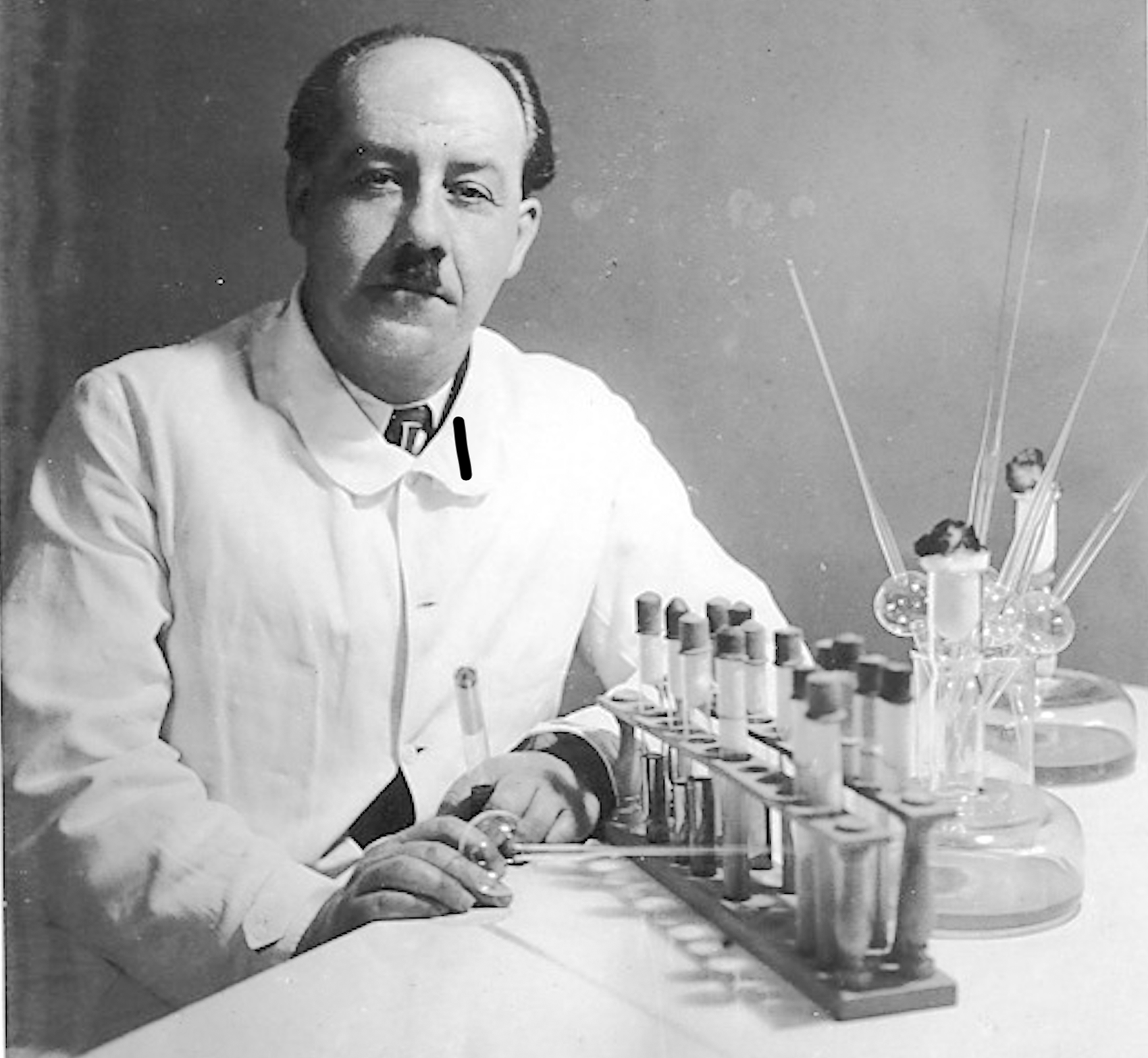
André Boivin, circa 1937.
Main steps of André Boivin’s career.


André Boivin was bright, had a clear and original mind, and possessed encyclopedic knowledge. This was illustrated by his great scientific activity: he independently wrote a book entitled Bacteria and viruses (1941, re-edited in 1947), and two others together with Delaunay: The host fighting microbes (1947) and Phagocytosis and infection (1947). He published numerous articles such as the one published in 1940 in La Presse Médicale in which he presented “the problems about the origin of the life on Earth illustrated by the recent discoveries in biology and astronomy.” He was invited to give talks at conferences such as the one he gave in October 1945 at the Hygiene and Bacteriology Institute of the University of Geneva about new knowledge in cellular immunology. There, he mentioned that immunity was both cellular and humoral, explaining various mechanisms such as the opsonisation, and defining the word “lymphocyte.”
Dr. Lucienne Corre-Hurt, as a resident doctor at the Garches hospital, worked with Boivin on characterizing the “antigène glucido-lipidique” from colibacillus originating from her patients with pyelonephritis or urinary infections. She remembers the time she accompanied Boivin to the French Academy of Medicine. The honorable members of the Academy were not very attentive, until it was the turn of Boivin to talk. He presented his data with great conviction and a respectful silence took over. After the session, Boivin offered a drink to his young colleague at “Aux deux magots,” a famous café in Saint-Germain-des-Près.
The structure of endotoxin: An unexpected discovery
After Boivin, along with Ion and Lydia Mesrobeanu, biochemically characterized the endotoxins of Aertryck's bacillus (Salmonella enterica serovar Typhimurium) in 1933, 5 , 10 Boivin coined the term “antigène complet” (complete Ag) to describe a structure that represents both the somatic Ag and the toxic moiety. He discovered that the antigenic property was lost after heating it to 100–120°C, while the toxicity remained. Boivin and his colleagues reported that the same entity was found in numerous Gram-negative bacteria (Shigella, Vibrio, Proteus, Pseudomonas, Serratia, Bacillus, Brucella, and Pasteurella), but could not be derived from Pneumococcus, Staphylococcus, Streptococcus, nor Mycobacterium tuberculosis. Ironically, the word “lipopolysaccharide” appeared for the first time to characterize an extract derived from the Koch bacillus (M. tuberculosis), 11 later recognized as a peptidoglycolipid named wax D. In fact, the term “antigène glucido-lipidique” was introduced in the title of the thesis that Lydia Mesrobeanu defended in Strasbourg and published in 1936 in the “Archives Roumaines de Pathologie Expérimentale et de Microbiologie.” 12 Boivin also studied the endotoxin of pathogenic bacteria targeting plants and demonstrated that the “antigène glucido-lipidique” of Agrobacterium tumefaciens was capable of inducing similar tumors in plants to those produced by whole bacteria. 13
His work and analyses had a major impact on the knowledge of endotoxins. Not only was it the first chemical characterization of an endotoxin, but it was also the first demonstration that the toxic part of the molecule and the fraction that carries the O-Ag were linked together in a single structure. Prior to its discovery, it was considered that the O-Ag could only be linked to a protein carrier, and that the molecule itself was not antigenic. Thus, Boivin demonstrated, for the first time, that Ags can be molecules other than proteins. This resulted in the concept of the hapten since the isolated polysaccharidic moiety alone was not sufficient to induce Abs (immunogen) while still retaining antigenicity. Boivin knew that anti-O-Ag Abs were associated with protection. Thus, he concluded that the “antigène glucido-lipidique” was the active element of the bacterial vaccine, while the corresponding Abs were the active elements of the anti-bacterial antisera. He also reported that the complete structure he had described was found only in smooth bacteria but not in rough strains.
Soon after Boivin’s publications on the structure of endotoxin, William Topley (1887–1944)—a professor of bacteriology and epidemiology at the London School of Hygiene—came to similar conclusions. 6 Studying fractions isolated by acetone treatment of the bacterial bodies followed by tryptic digestion and alcohol precipitation of S. enterica serovar Typhimurium, he showed that one fraction contained the specific polysaccharides in an antigenically active form in the absence of protein, and that this fraction was toxic. Later, he specified that the toxic and antigenic component consisted of a complex polysaccharide linked to a component containing nitrogen, phosphorus, sulfur and fatty acids. 14 In 1937, Walter Thomas James Morgan (1900–2003), a biochemist at the Lister Institute (UK) came to a similar conclusion after the isolation of the antigenic fraction from Shigella dysenteriae. 15 In 1939, Miles and Pirie, 16 following a chloroform-water-phenol extraction of Brucella melitensis, ended similarly with a fraction harboring both antigenic and toxic properties. The conclusions of all these investigators were close to the recognized structure of endotoxin made with its polysaccharidic O-Ag moiety (the antigenic part) and its lipidic moiety (lipid A), which is responsible for its toxic activity.
In accordance with the White-Kauffman classification of Salmonella, Boivin demonstrated that the immune sera that cross-reacted with the bacteria (assessed by agglutination) showed similar cross-reactivity with the “antigène glucido-lipidique.” It could be then concluded that the “antigène glucido-lipidique” concurrently holds all the properties allocated, since the work of Pfeiffer, to the endotoxin. The expression “Boivin endotoxin” or “Boivin-type endotoxin” was employed by investigators when referring to a material prepared via trichloroacetic acid extraction. 17 , 18 After joining the Institut Pasteur, Boivin pursued his investigations on the antigène glucido-lipidique. He worked on smooth and rough Gram-negative bacteria, where he showed that, when growing cultures of smooth Salmonella in the presence of anti-O-Ag Abs, rough colonies emerged. 19 Having joined the laboratory of Gaston Ramon, who was in charge of preparing the horse immune sera against diphtheria, he prepared the Abs in horses by injected them with either the antigène glucido-lipidique or with the whole bacteria. 20 By doing this he was repeating the experiments performed by Alexandre Besredka, another Pasteurian, who was the first to obtain anti-endotoxin Abs in 1906. 21 , 22 Other investigations performed on the human microbiota led Boivin to demonstrate the presence of numerous O-Ags among Escherichia coli strains, noting the possible cross-reactivities of the Abs. 23 A similar investigation on cross-reactivities of anti-O-Ag Abs was also reported for Salmonella. 24 His associate Albert Delaunay investigated the chemoattractant potency of the antigène glucido-lipidique and their opposing properties (chemoattraction or inhibition of chemotactism) when injected into guinea-pigs in a dose dependent manner. 25 In his book, L’organisme en lutte contre les microbes, co-authored with Delaunay (1947), a drawing depicts the reduced recruitment of leukocytes in the derma after an injection of heat-killed staphylococci, observed in guinea-pigs previously injected i.p. 1–2 h earlier with endotoxin. This observation was fully confirmed in the late 20th century. 26 , 27 As a consequence of the inhibition of the leukocyte attraction an infectious process could be favored. 28 Of note, this observation comes in contrast to the fact that a pretreatment with endotoxin is rather associated with an increased resistance to infection.
From endotoxins to exotoxins to the birth of molecular biology
Boivin’s work spanned multiple professions. He started his career as a biochemist, switched to immunochemistry with his work on bacteria, performed the work of an immunologist while carrying out investigations on the immunizing properties of his preparations, and finally became a molecular biologist when studying mRNA. Before joining Gaston Ramon, the well-known expert in exotoxins, Boivin was able to dissociate the protein exotoxins from the glycolipid endotoxin. 29 So, naturally, once in Ramon’s laboratory, he further investigated the thermosensitive toxins, particularly the neurotropic Shigella exotoxin. 30 Additionally, he contributed to the purification of the diphtheria toxin. 31 As a consequence, he was associated with the development of a tri-valent (diphtheria-tetanus-paratyphoid) vaccine, which was tested, with success, in adults and children. 32
Most interestingly, it is his attentiveness in the differences between smooth and rough endotoxins that drove Boivin to study bacterial DNA and RNA. Boivin compared two smooth E. coli strains cultured from human feces, and investigated the rough forms derived from them. He reached the conclusion that their transformation was associated with a modification to their respective enzymatic equipment, linked somehow to the bacterial DNA. 33 His collaborators on this work were Roger Vendrely (1910–1988)—a pharmacist who joined the Pasteurian laboratory of André Boivin as a young assistant in 1941—and his young wife Colette (MD, PhD) (1924–2017). Both followed Boivin when he moved from Paris to Strasbourg. Roger Vendrely and Yvonne Lehoult measured the bacterial content of DNA and RNA, and reported that the bacteria contained two to three times more RNA than DNA. 34 Boivin and the Vendrely couple stated that DNA was the depository of the hereditary characteristics of the species. They measured the DNA content from different bovine tissues (liver, pancreas, kidney, and thymus) and found that there were similar and constant amounts in the different tissues, estimating to the tens of thousands the number of genes in bovines. 35 They also reported that the amount of DNA in spermatozoids (along with very low amounts of RNA) was half of that measured in any of the somatic cells. Illustrating that the DNA content in gametes (haploid cells) parallels with the reduced number of chromosomes during gametogenesis. 36
Nowadays it is recognized that the first hypothesis about how RNA fit into gene function came from André Boivin, who was one of the earliest and most visionary supporters of Avery’s claim that DNA was the hereditary material.
37
In 1947, Boivin published an article in which he outlined his view: A great number of different deoxyribonucleic and ribonucleic acids exist in each cell: deoxyribonucleic acids in the nucleus (genes) and ribonucleic acids in the cytoplasm (microsomes). Through catalytic actions the macromolecular deoxyribonucleic acids govern the building of macromolecular ribonucleic acids, and, in turn, these control the production of cytoplasmic enzymes. In truth, the enzymic equipment results simultaneously from the effect of ribonucleic acids (catalytic action) and from the effect of substrates (mass action). This hypothesis explains cellular differentiation (multicellular organism) through constitutional variations of cytoplasmic ribonucleic acids.
38
The last primary, post-mortem, publication about André Boivin was published by Albert Delaunay who went to Strasbourg to visit his mentor in February 1949. I found him in a small hospital room and in a physical state that made everything fearful of the future. Nevertheless, if the body envelope was already mortally wounded, the spirit had lost none of its brilliance. In his bed, André Boivin lay in the middle of books and biology journals, and the scientific passion which, all his life, had animated him, burned in him an even more ardent flame […]. I listened to him. Very often already, I had been impressed by the beauty of his presentations. This time again I was conquered; but alas, to my rapture, an inexpressible emotion was mingled. What I heard was a last lesson. Pathetic lesson, if any.
40
Footnotes
Acknowledgements
The author thanks the photo-library of Institut Pasteur and Cantacuzino Institute for the pictures of André Boivin, and Ion and Lydia Mesrobeanu, respectively, and Anthony Yasmann for linguisitic editing.
Declaration of conflicting interests
The author(s) declared no potential conflicts of interest with respect to the research, authorship, and/or publication of this article.
Funding
The author(s) received no financial support for the research, authorship, and/or publication of this article.