




Abstract
This paper, intended as a contribution to transnational memory studies, analyzes museums devoted to people who helped Jews during the Holocaust that recently opened in Bulgaria, France, Germany, Lithuania, and Poland. The author’s particular interest lies in the “traveling motifs” of the “Righteous” narratives. This category encompasses symbols such as a list of names of the help-providers, a fruit tree/orchard, or a wall with photographs of Holocaust victims, which recur in many of the examined exhibitions and are a clear reference to Yad Vashem and other well-established Holocaust memorials. At first sight, they seem to point to a “cosmopolitanization” of Holocaust remembrance and to the emergence of a common reservoir of historical notions and images. However, on closer inspection one discovers that the use of these symbols varies and that they refer to differing ways of understanding and telling history.
Keywords
Introduction
Over the last two decades, a remarkable number of museums dedicated to people who rescued Jews during World War II have been established in various European countries. These are, undoubtedly, an expression of the growing international interest in this aspect of the history of the Holocaust.
At both European and national levels, politicians and opinion leaders increasingly emphasize the importance of commemorating the “Righteous.” 1 One of the first acts which to a large extent contributed to the definition of international directives for Holocaust education and commemoration was the declaration signed by delegates to the Stockholm International Forum on the Holocaust in 2000. The so-called “Stockholm Declaration” highlighted the importance of preserving the memory of those “who defied the Nazis, and sometimes gave their own lives to protect or rescue the Holocaust’s victims.” (International Holocaust Remembrance Alliance—IHRA, 2000). In 2007, member states of the Council of Europe signed a “Solemn Tribute to the ‘Righteous’ of Europe.” Only 5 years later, the European Parliament (2012) established the European Day of the Righteous. In this case, the category was broadened to include all people “who saved lives during all genocides and mass murders [. . .] and the other crimes against humanity perpetrated in the 20th and 21st centuries” as well as to those “who preserved human dignity during Nazism and Communist totalitarianism.” This example is an expression of a more general tendency to universalize the concept of the Righteous by giving it a wider meaning that is not restricted to non-Jews rescuing Jews during the Holocaust, as initially formulated by Yad Vashem.
Furthermore, in recent years, a number of European states, including Belgium, Bulgaria, France, and Poland have introduced legal regulations, established holidays and organized official ceremonies honoring “their” Righteous (Bentov, 2013; Danova, 2015; Forecki, 2018; Gensburger, 2015, 2016). Streets have been named after the rescuers, and monuments dedicated to them have been erected all over Europe and beyond.
Media attention has made the topic even more popular. An important media event that helped shape the remembrance of the Holocaust in Europe and the United States of America was the release of Steven Spielberg’s Schindler’s List (1993). The blockbuster movie drew the public’s attention not only to the Holocaust itself but also to those who helped the persecuted Jews. As an example, the media interest in the so-called Kindertransports and the efforts to honor some of the initiators and organizers of this major rescue action in the UK were directly inspired by the above-mentioned movie (Bell, 2017). In Germany too, as Kobi Kabalek (2013) notes, “Schindler’s List contributed to a wide acknowledgment of the topic of rescue,” spurring on a search for “other Schindlers” (p. 311). In Poland, the film caused such an influx of tourists to the hitherto neglected Podgórze district in Kraków that the city council decided to turn the former Schindler factory into a museum. Although the museum—opened in 2010—is dedicated to the history of Kraków under Nazi occupation, a section of the display is devoted to Oskar Schindler as well as Polish rescuers. Spielberg’s film likewise directly inspired a new museum project in the Czech village of Brnĕnec, where Schindler transferred his Jewish factory workers in a bid to prevent them from being deported to death camps (http://oskarschindler.cz/en).
Thus, it is legitimate to talk in this case about a “fashion” for the topic of rescuing Jews, which goes far beyond the well-established honoring of the Righteous in terms of both form and intensity, as well as when it comes to the agents behind these commemorative initiatives. One could even say that Yad Vashem has fallen victim to its own success, as it produced the “label” “Righteous Among the Nations,” which proved to be so catchy that it was hijacked by other institutions and began to live an independent life.
The subject is not only of historical interest but also highly relevant in the area of civic education. According to Levy and Sznaider (2002), the emergence of a “cosmopolitan memory” in relation to the Holocaust was driven by the development of the human rights discourse and the growing tendency toward universalizing history. Instead of “looking toward the past to produce a new formative myth,” Holocaust memory becomes more “future-oriented” (Levy and Sznaider, 2002: 101). In consequence, the past is increasingly understood as a reservoir of role models. This would also partly explain the “fashion” for the “Righteous,” who seem to be persuasive models. Moreover, discussing dilemmas faced by the rescuers and the rescued may also nurture a better understanding of the past in all its complexity, and help to convey the more uncomfortable issues of indifference, collaboration in, and profiteering from the Holocaust. Furthermore, as Witkowska and Bilewicz (2014) argue, based on a large-scale comparative socio-psychological study, the rescue stories can enhance dialog and reconciliation between formerly hostile ethnic or religious groups.
At the same time, however, the Righteous are often (mis)used for political purposes. The perception of the Holocaust as a common negative European point of reference in the 1990s also implied the acknowledgment that not only the Germans but also other European societies were in various ways implicated in the genocide. In this context, initiatives to commemorate the Righteous can also be interpreted as attempts to neutralize difficult debates on the past. As described by Gensburger (2016: 57–81), the growing political interest in France in the Justes de France in the 1990s coincided with the public debate on the collaboration of Vichy France in the Holocaust. In Switzerland as well, the official rehabilitation and acknowledgment of the St. Gallen police captain Paul Grüninger in the mid-1990s ran parallel with the controversy surrounding the “Raubgold” kept in Swiss banks (Gensburger, 2015: 541). In Poland, many of the commemorative initiatives can likewise be interpreted as a backlash against the publication of Neighbors by Jan Tomasz Gross (2000) and the public debate sparked by this book (Nowica-Franczak, 2017: 306–319). Thus, while over the last 20 years the subject of saving Jews during the Holocaust has gained in popularity throughout Europe and beyond, the rescue stories are told in different ways and used for various purposes.
The aim of this paper is to verify whether and to what extent the growing transnational interest in the topic, enhanced by mass media, and the politics of remembrance of European and other international institutions, has a unifying impact on the Righteous museums and their narratives, contributing to the development of a European or “cosmopolitan” memory of the Holocaust. However, apparent similarities can also conceal marked differences in the visions of history and messages conveyed by the museums in question. As Macdonald (2013: 189) observes, “cosmopolitan developments can be made part of other assemblages and ‘re-territorialized’ or ‘co-opted’ in terms of other interests, too.”
The traveling motifs of Jewish rescue
In this paper, I will focus on the “traveling motifs” of the rescue narratives in museums. I refer here to the concept of “traveling memory” developed by Astrid Erll. In her ruminations on this concept, Erll refers to Aby Warburg’s Mnemosyne-atlas, in which the art historian collected motifs and gestures that appear in Renaissance art and beyond, the origins of which can be traced to antiquity. Erll (2011) broadens Warburg’s concept and concieves it “as the incessant wandering of carriers, media, contents, forms, and practices of memory, their continual ‘travels’ and ongoing transformations through time and space, across social, linguistic and political borders” (p. 11). According to her (2011: 12–14), those mnemonic forms, contents and practices can travel in space and time by different means: historiographical works, novels, print media, movies or the internet, but also via personal interaction between groups or individuals. However, during these travels, memory does not remain unchanged. On the contrary, it is an object of continuous “remediation” and transformation. While, as Erll argues, the “traveling memory” is not a modern phenomenon and can be traced to antiquity, it was accelerated by the globalization process and in particular by the spread of mass and digital media.
This observation also applies to my case-study museums. In the analyzed exhibitions, the same symbols and icons, such as the house/hideout, the boat, the tree/orchard, the list of rescuers’ names or the memorial wall with photos of Holocaust victims appear again and again. Many of these motifs clearly refer to Yad Vashem, the United States Holocaust Memorial Museum (USHMM) and other well-established Holocaust memorials. At first sight, these parallels seem to point to a “cosmopolitanization” of Holocaust remembrance and to the emergence of a transnational “mnemoscape,” a common reservoir of historical notions and images. But is it really so?
This paper is part of a larger research project, in which I analyze and compare twelve museums and exhibitions—in eight European countries—dedicated to people who helped Jews during World War II, all of which have been built or remade within the last two decades (two of them being still under construction). For the purpose of this study, I have selected five cases which are particularly relevant in view of the question posed: the House Museum of Dimitar Peshev in Kyustendil, Bulgaria (2003, refurbished 2013), the Silent Heroes Memorial in Berlin, Germany (2008, refurbished 2018, 2020), the permanent exhibition Rescued Lithuanian Jewish Child Tells about Shoah at the Vilna Gaon State Jewish Museum in Vilnius, Lithuania (2009), Lieu de Mémoire au Chambon-sur-Lignon, France (2013), and the Ulma Family Museum of Poles Saving Jews in World War II in Markowa, Poland (2016). 2 Let us take a closer look at the chosen examples.
List of names, orchard
In May 1962, the first tree-planting ceremony was organized on the Mount of Remembrance in Jerusalem, whereby the rescuers were invited to come to Israel and plant their own olive tree (Kabalek, 2011). The names of people recognized by the Holocaust Remembrance Authority as Righteous Among the Nations were placed on plaques under the trees. For the Yishuv and the Israelis, trees had great symbolic value. They “became an icon of national revival, symbolizing the Zionist success in ‘striking roots’ in the ancient homeland” (Zerubavel, 1996: 60). Thus, planting trees was considered as an act of patriotism. Likewise, in Mandatory Palestine and Israel there was a custom of planting trees in memory of the dead, especially those who had furthered the Zionist cause. According to Kabalek (2011), it was Rachel Auerbach, then director of the Testimonies Department at Yad Vashem, who first proposed such a form of commemoration of the Righteous, back in 1955. She was inspired by a commemorative ceremony for Joop Westerweel that she had participated in the year before at Kibbutz Gal’ed. A forest in memory of the Dutch rescuer was planted near the kibbutz as early as 1947. In 1962, the symbolic gesture on the Mount of Remembrance had another nuance, reflecting the rivalry between Yad Vashem and the World Jewish Congress, which only a year earlier had established the World Council of the Righteous Among the Nations. “By this choice, the Yad Vashem Directorate highlighted its specificity with regard to the World Jewish Congress, which, in view of its status as a transnational organization, had no sovereign territory on which to proceed solemnly with such plantings” (Gensburger, 2016: 20).
As the number of people awarded the Yad Vashem medal had reached almost 14 000 by the mid-1990s, the trees were supplemented by “walls of honor” on which the names of those Righteous who do not have their own tree are engraved. According to the criteria developed by Yad Vashem, the title Righteous Among the Nations can only be awarded to non-Jews who risked their life, freedom or safety to rescue Jews during the Holocaust “without expecting monetary compensation or other rewards” (www.yadvashem.org/righteous/how-to-apply.html). Whereas Yad Vashem honored some groups or communities collectively with a monument or memorial plaque (e.g. Nieuwlande in the Netherlands or the Danish Underground), the medal can only be awarded to individuals (www.yadvashem.org/righteous/about-the-righteous/related-sites.html).
The motifs of the list of names and the orchard are also to be found in the Lieu de Mémoire au Chambon-sur-Lignon. Several thousand Jews, including many children and adolescents, were sheltered during the war in the Huguenot village of Le Chambon-sur-Lignon and the surrounding countryside in southeastern France (Ammerschubert, 1996; Gril-Mariotte, 2013a; Hallie, 1979). When in 1943 their accommodation became increasingly difficult and dangerous, many of them were smuggled across the green border to Switzerland. This large-scale rescue operation was possible thanks to the cooperation of several French and foreign aid organizations, such as the Quakers, the Protestant Cimade—Comité inter mouvements auprès des évacués, Secours Suisse or the Jewish Oeuvre de Secours aux Enfants (OSE), which supported the initiative both financially and logistically.
The Lieu de Mémoire au Chambon-sur-Lignon—opened in 2013—was initially an institution of the local commune, established with the financial support of several governmental and non-governmental organizations, including the Regional Directorate of Cultural Affairs, the regional councils and the European Commission, the private-public interest Foundation for the Memory of the Shoah and the Association for the Memory of Hidden Children and the Righteous (Association pour la Mémoire des Enfants Cachés et des Justes, AMECJ), an NGO set up in 2010 in order to provide financial assistance to the Memorial (Eliane Wauquiez-Motte, 2019, personal communication). In the first years after its opening, the running costs of the Memorial were covered by the commune and the AMECJ, while extra funds had to be raised for all additional events and activities. In September 2020, following a decision of the town council of Le Chambon-sur-Lignon, the management and financing of the museum was entrusted to the Shoah Memorial in Paris, which gives this site a greater international visibility (Floriane Barbier, 2020, personal communication). In this context, it is worth noting that in spring 2020, the Chambon museum was awarded the European Heritage Label by the European Commission (www.memoireduchambon.com/en/the-european-heritage-label-awarded-to-le-chambon-memorial; https://ec.europa.eu/programmes/creative-europe/content/ten-new-sites-awarded-european-heritage-label_en).
The first initiative to memorialize the rescue action came from the enfants cachés (hidden children), who put up a commemorative plaque in Le Chambon as early as 1979 (Gensburger, 2013; Gril-Mariotte, 2013b, 2020). Another important figure involved in the popularization of this story was Pierre Sauvage, a French-American filmmaker, born during the war in Le Chambon-sur-Lignon to Jewish parents. In 1982, Sauvage created the Chambon Foundation in the USA, and the institution not only started petitioning Yad Vashem to award the village with a collective title of Righteous Among the Nations, but also supported initiatives for opening a museum dedicated to the noble deeds of its inhabitants. In 1987, he made a documentary entitled Weapons of the Spirit about the rescue action. However, locals took over the initiative and the museum was ultimately established without any significant involvement of Holocaust survivors. Over the years, the concept of the memorial underwent significant changes and was subject to heated debates between those representing the commune and officials from the regional administration, representatives of the Protestant church, local memory activists, witnesses of history and their families, and academics (Gril-Mariotte, 2019, personal communication). In 2004 the site also became a stage for a political demarche. In a speech delivered during his visit to Le Chambon-sur-Lignon in July that year the president of the French Republic, Jacques Chirac portrayed the town as an embodiment of the true French spirit, a place, where “the soul of the nation manifested itself” (Chirac, 2004), presumably in contrast to Vichy. Ultimately, however, it was the academic committee who played the decisive role in validating the plan for the permanent exhibition elaborated by the project manager, Aziza Gril-Mariotte. The committee was set up in 2010 and is composed of several renowned French historians, including Annette Wieviorka, Jacques Semelin and Olivier Lalieu as a representative of the Shoah Memorial.
In the Lieu de Mémoire, the names of the local Righteous Among the Nations are presented in a very modest manner on the wall of one of the exhibition rooms (Figure 1). This restraint can be explained by the fact that the rescue operation was a collective endeavor that was made possible due to the engagement of the local population and the support of a network of aid organizations. Even though the inhabitants of Le Chambon and the neighboring villages were honored by Yad Vashem in 1990, only some of them were officially recognized as Righteous (www.yadvashem.org/righteous/about-the-righteous/related-sites.html). The honoring of only those few could, therefore—according to the village mayor, Eliane Wauquiez-Motte (2019, personal communication)—be perceived by the others as unfair. Also, the exhibition itself emphasizes not only the individual commitment but also the importance of aid networks and organizations for the success of the rescue operation. A Memorial Garden with an orchard, funded by the French businessman Laurent Dassault, whose mother and uncle found refuge in Le Chambon-sur-Lignon, is located in the backyard of the museum (Figure 2). “[. . .] the flourishing nature,” as we read in the project description, “is a symbolic image of the reception and rescue of the many Jewish children obtained during the war in the village [. . .].” (www.memoireduchambon.com/wp-content/uploads/2014/06/Pr%C3%A9sentation-Jardin.pdf) The reference to Yad Vashem, though not explicitly mentioned, seems quite obvious.
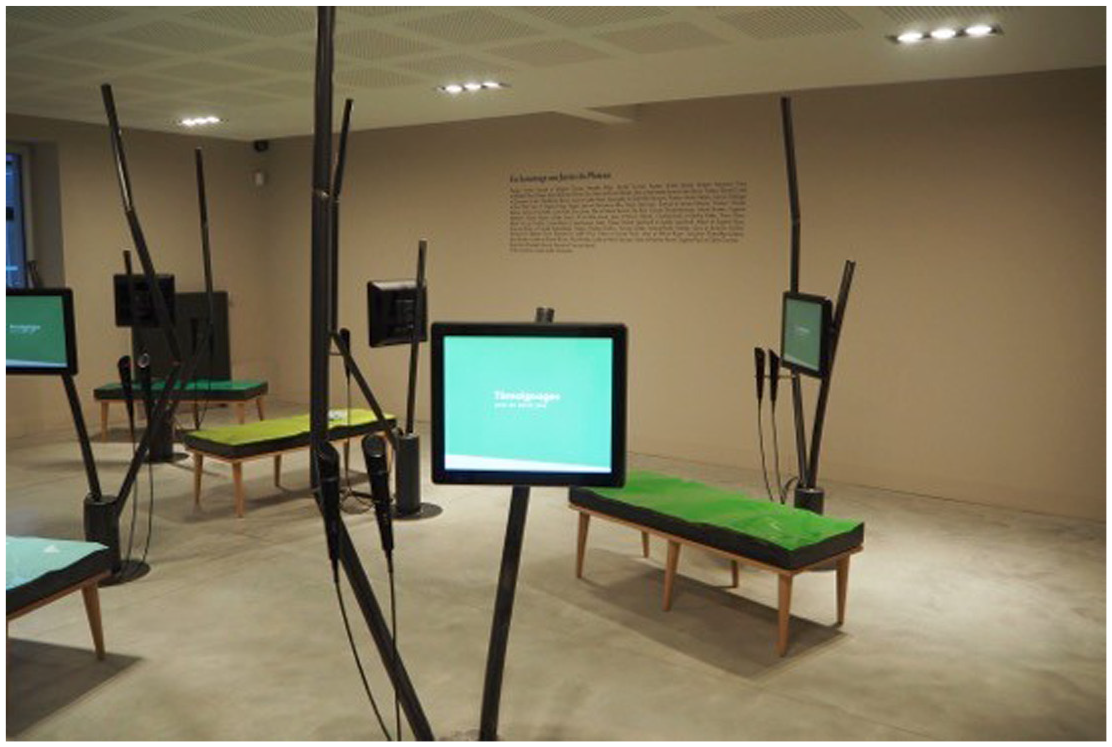
Lieu de Mémoire au Chambon-sur-Lignon: List of names of the Righteous from Chambon and the neighboring villages (photo by Wóycicka, 2019).
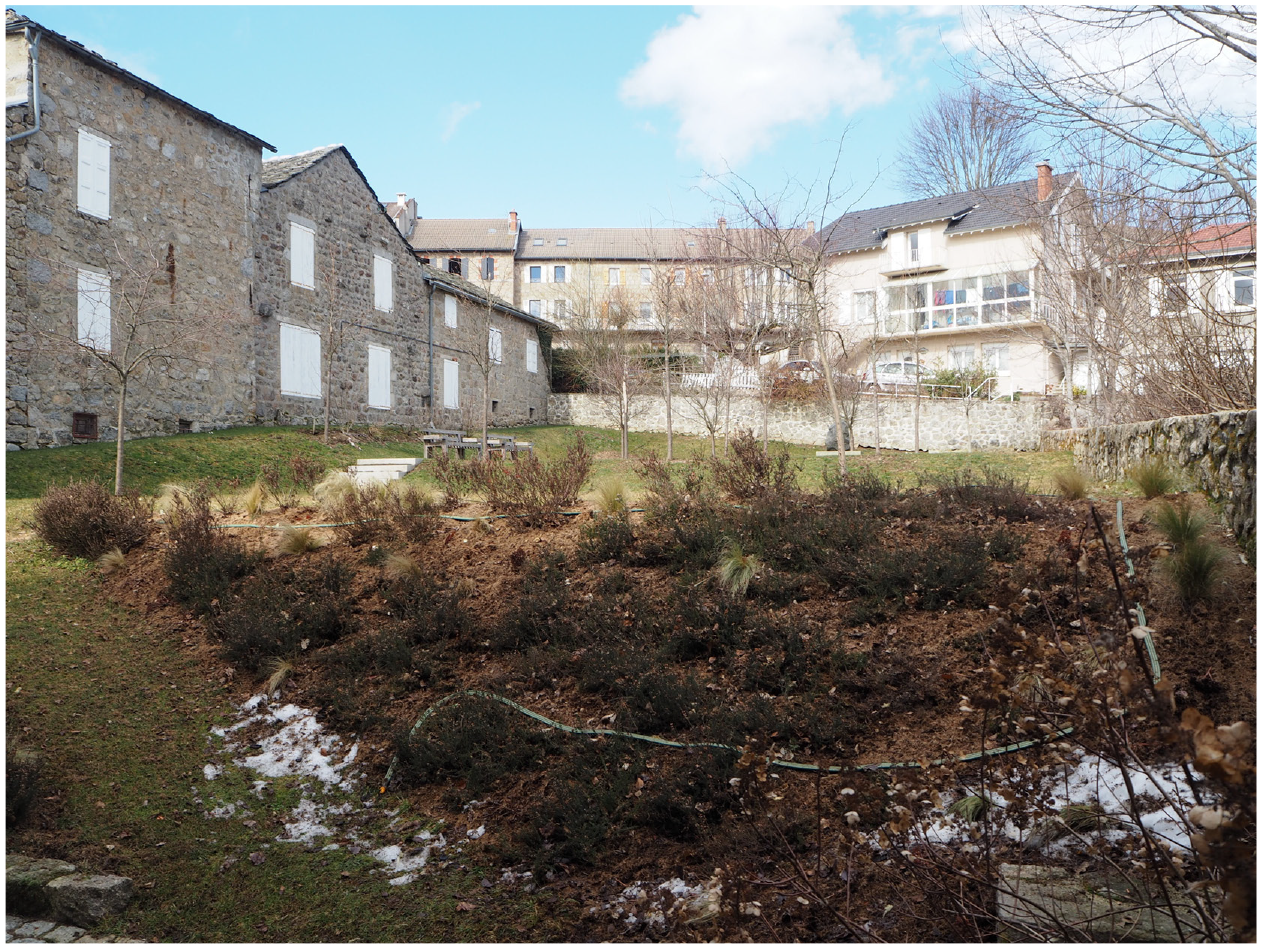
Lieu de Mémoire au Chambon-sur-Lignon: Memorial Garden (photo by Wóycicka, 2019).
The motifs of the list of names and orchard are used quite differently at the Ulma Museum of Poles Saving Jews in World War II in Markowa. In the years 1942–1944, Józef and Wiktoria Ulma hid eight Jews from Markowa and the nearby town of Łańcut. In spring 1944, a member of the Polish Police denounced them to the German gendarmerie. All people in hiding and the entire Ulma family, including their children, were murdered on the spot (Szarek and Szpytma, 2016; on the broader context of this story and its commemoration see Grabowski and Libionka, 2017; Podbielska, 2019). The Ulma Museum, opened in 2016, can be described as a local initiative. Its creator and first director was Mateusz Szpytma, a Markowa-born historian and, at that time, an employee of the Kraków branch of the state-run Institute for National Remembrance (IPN). In his own words, he got interested in the story of the Ulma family after he learned from the local priest that their beatification process was underway (Mateusz Szpytma, 2016, personal communication).
The funds for the museum came mainly from the assembly of the Podkarpackie Voivodeship, which was dominated by the national-conservative Law and Justice (PiS) party. In 2013, the museum also received a modest subsidy from the Polish Ministry of Culture. The chairman of the Programming Council of the Ulma Museum is Jan Żaryn, a historian and journalist who served as a PiS senator in the years 2015–2019, one of the most active proponents of that party’s politics of remembrance. Since PiS came to power in the parliamentary elections of October 2015, the institution has been extensively used as a stage for the official politics of remembrance and a tool of “cultural diplomacy” (Forecki, 2016). Initially a branch of the Łańcut Castle Museum, in June 2017 the Ulma Museum was transformed into an independent cultural institution financed entirely by the central government. A building was erected just a few hundred meters from the actual historical site where the Ulmas lived, solely for the purpose of hosting the museum (broader on the museum see Grabowski and Libionka, 2017; Wóycicka, 2019).
The patrons of the museum are Józef and Wiktoria Ulma. However, as indicated by the lengthy name, the museum is dedicated to all the people from the Podkarpackie region who aided Jews during the war or even to all Polish rescuers in general. Embedded in the ground in the square in front of the building, one finds illuminated plaques with names of Poles executed for helping Jews (Figure 3). In the center of the square, another plaque commemorates “Jews, victims of the Holocaust” and “those unknown Poles murdered for having assisted them.” Further nameplates of Poles from Podkarpackie who aided Jews are located on the sidewall Although the nameplates are a clear reference to Yad Vashem, the memorial mentions not only those officially recognized as Righteous but also other rescuers, whose names were established by historians from the local branch of the IPN (https://muzeumulmow.pl/en/rescuers).
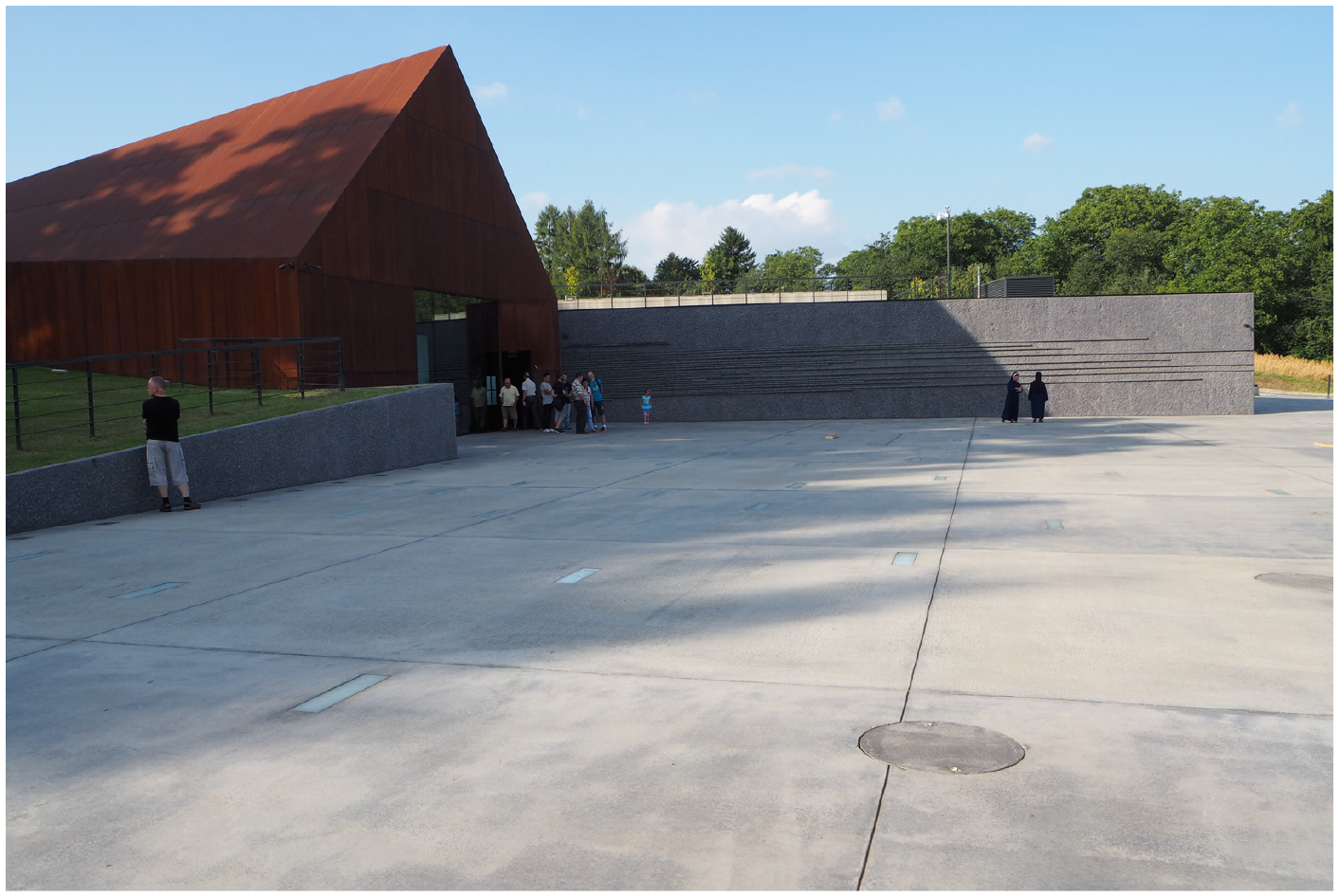
Ulma Museum: Front facade. Also visible the illuminated plaques with names of Poles murdered for helping Jews and the memorial wall with names of other aid-providers from Podkarpacie (photo by Wóycicka, 2016).
The tradition of commemorating those who fell in battle by recording their names on a monument dates back to the 19th century (Jeismann and Westheider, 1994). However, the memorial, like the exhibition inside the museum, additionally introduces a faith-based division between the martyrs, eo ipso those who sacrificed their lives for others, and other help-providers. It is also noteworthy that in Markowa, the Poles are not defined by citizenship but by their confession and ethnic group. Before the war, the Podkarpackie region was multiethnic, with a big Ukrainian minority. Despite this, Ukrainian, Greek Catholic or Orthodox names do not appear on the memorial plaques.
Behind the Ulma Museum, we find an Orchard of Remembrance, which—as stated on the museum’s homepage—“refers on the one hand to Józef Ulma’s passion for fruit horticulture, and on the other—to the Garden of the Righteous at Yad Vashem in Israel” (https://muzeumulmow.pl/en/museum/the-orchard-of-remembrance). The plaques placed along the alleys are inscribed with the names of prewar locations in Poland where help was given to the persecuted Jews by those who were later awarded the title of the Righteous Among the Nations. In contrast to the plaques situated on the opposite side of the museum, the commemorative orchard only honors the helpers recognized by Yad Vashem. This decision is explained primarily by the small size of the orchard and the fact that based on Yad Vashem’s Righteous database “it was relatively easy to create a reliable, up-to-date list for the needs of the project” (https://muzeumulmow.pl/pl/muzeum/sad-pamieci). Despite the similarity to the previously mentioned memorial museums, there are two weighty differences. Firstly, at Yad Vashem the Righteous, on the invitation of Holocaust survivors and the state of Israel acting as their heir, planted the trees in their names. In the case of the Memorial Garden at Le Chambon-sur-Lignon it was a descendant of Holocaust survivors who funded the orchard to commemorate his family’s rescuers. Thus, the gesture of planting trees, though deprived of its Zionist zeal, was in accordance with its original intention. In Markowa the symbolism was reversed—here it was the Poles who honored their own national heroes in such a way. Secondly, by providing the names of the localities where the helpers lived, instead of the actual names of the helpers, the designers of the Orchard of Remembrance suggest that the rescue action was not an individual act but a collective endeavor of whole communities (on this see also Podbielska, 2019: 586). As recent studies show, the opposite is true. In Poland, in most cases, the helpers acted secretly and against the will of their neighbors (on this issue, see amongst others: Schnepf-Kołacz, 2011).
Ljiljana Radonić, who examined World War II museums in several post-communist countries, argues that they apply two different strategies when interacting with Europe: [O]ne group of museums invokes Europe and tries to prove their European-ness [by emphasizing the Holocaust theme]. Yet another group of museums demands from Europe or the West even more generally, that they acknowledge the East European experience of communist crimes and seek to contain certain aspects of the memory of Nazism, so that it cannot compete with stories of Soviet crimes. (2017: 271)
In both cases museums evoke the aesthetics of western memorial museums, especially those of the USHMM and Yad Vashem, even if only to equate one’s own suffering with that of the Holocaust victims. In the case of the Markowa museum, the reference to Yad Vashem fulfills yet another function. Although the Holocaust seems to be the main theme of the exhibition, in fact its key objective is to rebut allegations of collaboration in and profiteering from the Holocaust by the local population and to reinforce a narrative of Polish heroism and solidarity.
While all the above-mentioned museums and memorials accord with the basic definition of the Righteous as gentiles who helped Jews during the Holocaust, the Silent Heroes Memorial in Berlin (Gedenkstätte Stille Helden, GSH) defines the heroes and protagonists of its exhibition in a very different way. The project started as a grassroots initiative of a group of students from Berlin, who decided to create an exhibition about Otto Weidt, the owner of a brush factory for blind people, who protected his Jewish workers from deportation during the war (Kabalek, 2013: 320–322). The exhibition opened in 1999 in the original premises of the workshop. The initiative was supported by Inge Deutschkron, a German-Israeli journalist and writer, who owed her life to Weidt herself. In 2005, the German Resistance Memorial Center (Gedenstätte Deutscher Widerstand, GDW) took responsibility for the place and transformed it into a museum called Otto Weidt’s Workshop for the Blind. The GSH, which opened in 2008 in the same building as an extension of the Weidt Museum, is a national memorial to the rescuers—it was moved to the main building of the GDW in Stauffenberg Street in 2018, where the exhibition was duly modified. A branch of the German Resistance Memorial Center, the GSH is run by a foundation under public law, financed in equal parts by the city of Berlin and the Federal Republic of Germany, whereby the GSH is paid 100% from federal funds. End of October 2020, just when finalizing this article, the GSH opened a new permanent exhibition dedicated not only to German rescuers, as was previously the case, but to helpers from all over Europe. As due to the pandemics I did not have the possibility to visit the new exhibit, I will focus here mainly on the one opened in 2018.
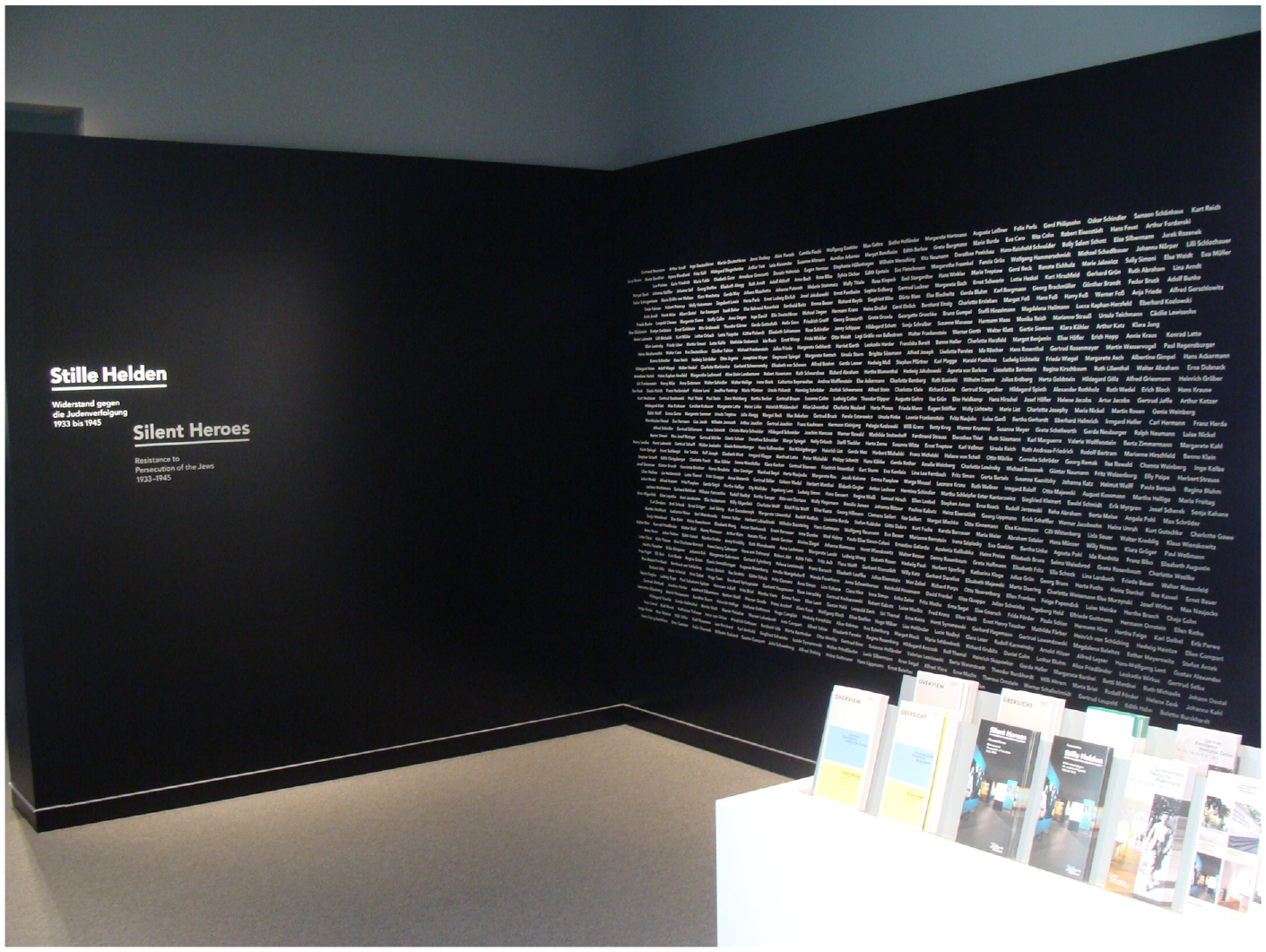
As stated in the catalog, the GSH (Silent Heroes Memorial Center 2010) “is dedicated to commemorating those who escaped the mortal threat and those who helped them” (p. 2). In the entrance area of the 2018 exhibition, there was a memorial wall with several hundred names (Figure 4). However, unlike in the other discussed museums, people were listed without any visual differentiation, embracing German gentiles and Jews who provided help, as well as the people they supported. Most of these people were protagonists of the stories narrated in the exhibition. Thus, the exhibition curators recognized that there were also Jews among the aid-providers, who, although persecuted themselves, supported their fellow sufferers. Furthermore, the help-receivers were not portrayed solely as passive victims. On the contrary, their attitude was presented as a crucial factor in their survival. This very broad concept of heroism resonated throughout the exhibition, which included not only stories of non-Jewish helpers but also of persecuted Jews aiding one another. Equal space in the exhibition was devoted to the fate of the help-receivers. The new exhibition, opened end of October 2020, follows a similar principle. Furthermore, it also introduces a memorial wall listing both, the aid-providers and their beneficiaries (Marta Ansilewska-Lehnstaedt, 2020, personal communication).
Exhibition Rescued Lithuanian Jewish Child Tells about Shoah at the Vilna Gaon State Jewish Museum: Memorial for the Killed Jewish Children (photo by Wóycicka, 2020).
Though all the analyzed museums and memorials refer in a more or less explicit way to Yad Vashem, at the same time, each of them wrestles with the concept of the Righteous Among the Nations. In the case of Lieu de Mémoire au Chambon-sur-Lignon, the exhibition curators had to counter the image of the Righteous as lonely fighters and show that the rescue action was only possible thanks to a collective effort. In Markowa, the abandoning of the stringent criteria applied by Yad Vashem leads to an increase in the number of rescuers. The arrangement of the Orchard of Remembrance also suggests that it was not individuals but entire communities that participated in the rescue actions. Furthermore, the museum ethnicizes the Righteous by excluding other people than Polish Catholics from the narrative. Also striking is the semi-religious arrangement of the memorial, which introduces a hierarchy of heroes, elevating those who sacrificed their lives for a noble cause above those who managed to survive—a differentiation never made by Yad Vashem. The exhibition at the Berlin memorial blurs the distinction between Jewish and non-Jewish helpers. It also questions the image of Jews as passive help-receivers. Here, both Jews and gentiles, aid-providers and their beneficiaries, are the protagonists of the story.
Wall with photos of Holocaust victims
In other diagnostic museums, one finds very different references to both the USHMM and Yad Vashem. At the USHMM there is a three-story Tower of Faces adorned with about a thousand photographs of prewar Jewish inhabitants of the (now Lithuanian) town of Eišiškės (Weinberg and Elieli, 1995: 72, 104–105). At Yad Vashem, on the other hand, the very back of The Holocaust History Museum (2005) is occupied by the Hall of Names. A cone-shaped structure within the hall displays 600 photographs of people who perished in the Holocaust, against a background of pages of testimony. In spite of the apparent similarity, there are important differences in the symbolism of the two projects. The aim of the Hall of Names at Yad Vashem is to give the Holocaust victims a face (Harel, 2010: 92). This message is underlined by a quote from a poem by Benjamin Fondane placed at the entrance to the room: “. . .I, too, had a face. . . quite simply, a human face!” Similar installations can be found in many memorial museums around the world, including Taipei’s 2–28 Massacre Museum/Taiwan, the Memorial Museum and Documentation Centre Kazerne Dossin in Mechelen/Belgium or the Museum of the Second World War in Gdańsk, Poland. “With each photograph usually displayed in the same size and prominence, the grid tries to simultaneously speak to the singular identity of each victim and the scale of loss associated with the event” (Williams, 2017: 374). In contrast, the Tower of Faces at the USHMM seeks to portray Jewish life before World War II. In September 1941, the Germans and their local auxiliaries killed nearly all the Jewish inhabitants of the previously mentioned town of Eišiškės, in the space of just 2 days. Yet the photographs in this installation, all taken in the years 1890–1941, “do not show terror and horror like most of the other pictures in the exhibition, but life, joy and a sense of comfort” (Piper, 2006: 151). On the contrary, as we read on the museum’s homepage, they are to “document the rich religious, cultural, economic and familial life of the Jewish community that existed prior to the occupation of Eišiškės by the German Army [. . .]” (https://collections.ushmm.org/search/catalog/pa1116002).
These already iconic museum installations are echoed in the permanent exhibition opened in 2009 at the Vilna Gaon State Jewish Museum, entitled Rescued Lithuanian Jewish Child tells about the Shoah. The museum was established in 1989 by the government of the then still Soviet Lithuania. It continued the tradition of the Museum of Jewish Art and Culture in Vilnius, which existed from 1944 to 1949 and was then closed by the Soviets (Makhotina, 2017: 231–334). The Lithuanian Ministry of Culture covers the running costs of the institution (Kamilė Rupeikaitė—director of the Vilna Gaon State Jewish Museum, 2019, personal communication). For most additional activities, including the renewal or creation of new exhibitions, money must be raised from other sources, for example, the creation of the discussed exhibition was co-financed by the IHRA. The museum has no official connection to the Jewish Community of Lithuania. However, due to the fact that its co-founder and one of its first directors, Emanuelis Zingeris, as well as many of its first employees, were members of the Jewish community and/or Holocaust survivors, the museum seems to show more sensitivity to the Jewish perspective on the war than some other historical museums in Lithuania (broader on Lithuanian World War II museums see Makhotina, 2017; Radonić, 2020).
The main goal of the exhibition, as stated on one of the introductory panels, is “to reveal to the general public the stories of the Jewish survivors and perpetuate the names of the Lithuanians who rescued Jews during the war.” However, the display not only tells the stories of native Lithuanians, but also those of helpers of other nationalities, including Poles and Germans who were living on Lithuanian territory during World War II. The presentation also provides a broader historical context explaining the subsequent stages and the specifics of the Holocaust in Lithuania. It mostly relies on the testimonies of rescued Jewish children and thus the stories are told predominantly from their perspective.
Despite the fact that the main topic of the exhibition is rescue and survival, there is a Memorial to the Killed Jewish Children in the center of the display, designed as a labyrinth (Figure 5). It has the form of a tower clad with photos of Lithuanian Jewish children who perished during the Holocaust. In order to illuminate the photographs, the visitors can take a stone at the entrance of the exhibition and leave it at the memorial. When entering the tower, one hears a girl’s voice singing a children’s song composed in the Vilna Ghetto.
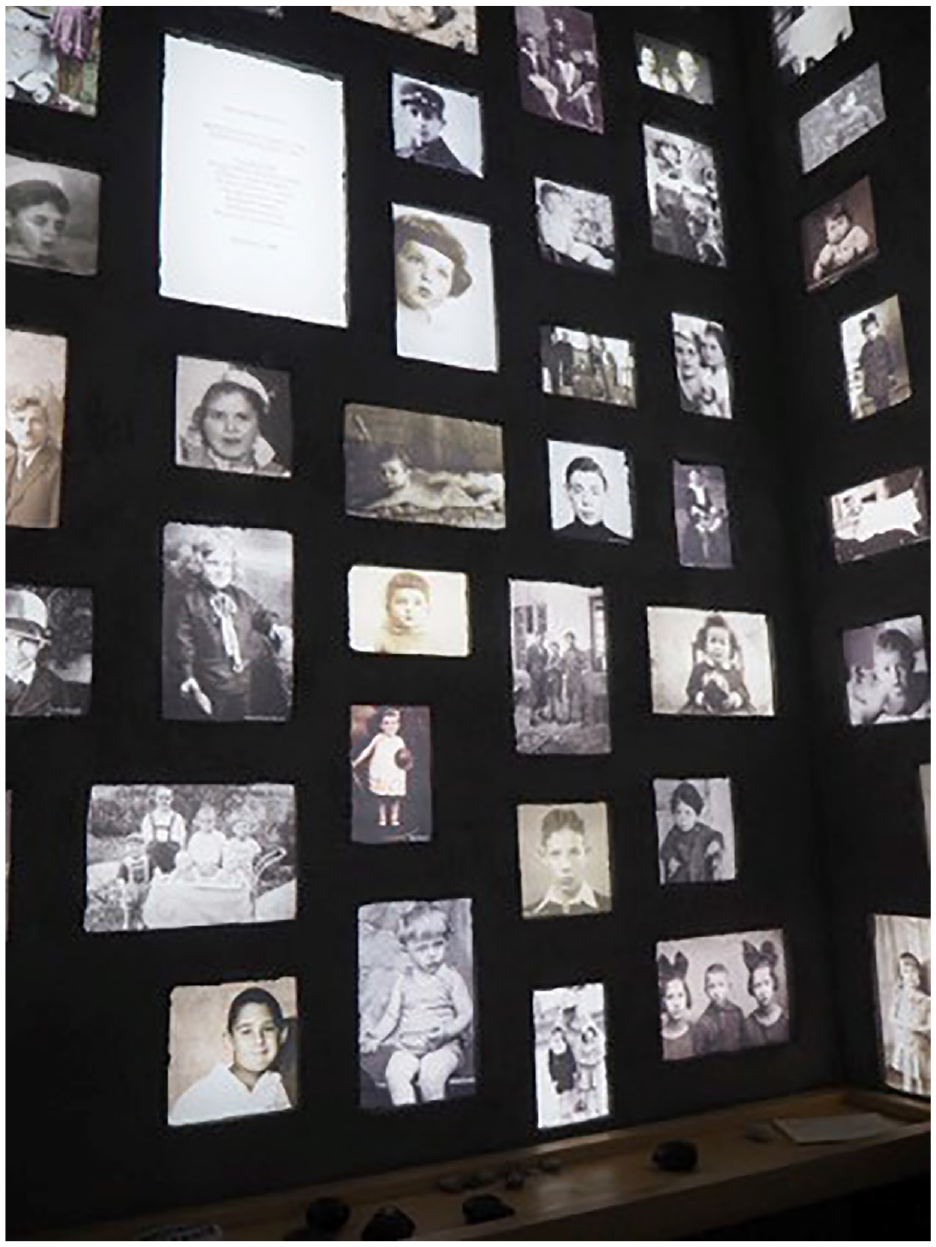
Silent Heroes Memorial Berlin, permanent exhibition from the years 2018–2020: Wall of Names of the persecuted Jews and their helpers (photo by Wóycicka, 2020).
The choice of the inclusion of a display of photos of Holocaust victims instead of a symbolic tree, orchard or garden marks a fundamental difference between this and the previously discussed memorials and exhibitions. While in Markowa and Le Chambon-sur-Lignon the rescuers remain the focal point of the narrative, here the victims of the genocide are placed in the limelight. Ninety percent of Lithuanian Jews perished in the Holocaust, and only about 8000 out of the c. 235,000 Jews living in Lithuania in the summer of 1941 survived the war on the country’s territory (Kibelka, 1996: 273–275). 3 Though the exhibition is dedicated to the rescuers, the curators invite the visitors to actively commemorate those who did not receive any effective support; this of course, in turn, stresses the unique character of the help rendered to the few survivors.
At the House Museum of Dimitar Peshev in Kyustendil in western Bulgaria, the motif of the wall with photos of Jewish victims is used in a quite different manner. Dimitar Peshev was a Bulgarian politician and vice chairman of the National Assembly, where he was the elected representative of his hometown Kyustendil. Although he not only advocated Bulgaria’s alliance with Nazi Germany but also the introduction of anti-Jewish legislation in 1940/41, together with several other deputies, he protested with the authorities and in the parliament against the deportation of Bulgarian Jews to extermination camps in March 1943 (Nissim, 2000; Rychlík, 2004: 61–98; Sage, 2017: 139–145). Probably thanks to this intervention, but arguably also due to other factors, the deportation action was ultimately halted. However, this did not prevent the Bulgarian authorities from deporting over 11,000 Jews from Greek and Yugoslav territories annexed by Bulgaria in 1941, the very same month.
The Dimitar Peshev Museum, a branch of the Regional Historical Museum in Kyustendil (RHMK), is located in a new building, a reconstruction of Peshev’s birthplace but relocated from the outskirts to the city center. The museum opened to the public in March 2003, on the 60th anniversary of the so-called Kyustendil Action. In 2013 the exhibition was enlarged and underwent a major refurbishment. As stated by the director of the RHMK, Valentin Debochichki (2019, personal communication), the project was initiated by the city mayor Kiril Alexov and the then Israeli Ambassador to Bulgaria, Emanuel Zisman, himself of Bulgarian origin. The creation of the museum was largely funded by the Bulgarian Immigrants’ Union in Israel, while the municipality financed the renewal of the exhibition. The exhibition design is quite simple. It mainly consists of text-boards illustrated with photographs, supplemented by a few showcases displaying artifacts, mostly Dimitar Peshev’s private belongings.
It is noteworthy that the opening of the museum occurred at a time when the state cult of Dimitar Peshev was on the rise. In 2003, the Bulgarian government proclaimed the 10th March (the anniversary of the release of the Bulgarian Jews who had been rounded-up for deportation) as “The Day of the Holocaust and Saving of the Bulgarian Jews.” Yet as noted by Sage (2017) “if that date was to be emblazoned in public memory as marking a decisive rescue, the consequential effect was to obscure the ensuing antisemitic actions, that is, the forced labor, evictions, ghettoization and property seizures, as well as minimize the fate of the Jews from Bulgarian-occupied territories” (p. 143; see also Bentov, 2013; Danova, 2015; Ragaru, 2017).
Notwithstanding the broader political context, the exhibition does not focus solely on the rescue action but provides information on both the Jewish community in Kyustendil before World War II and on the deprivation and persecution of Kyustendil’s Jews prior to and after March 1943. It also mentions the deportations from the annexed territories. Still, the final emphasis of the exhibition is rather optimistic. At the very end of the circuit, the visitors see two boards with lists of names of Jews from Kyustendil who left for Israel in the late 1940s and early 1950s (Figure 6). On the lists, which are copies of original archival documents, each name is accompanied by a photograph. As I was told by one of the exhibition curators, Angel Dhonev (2019, personal communication) this arrangement was a conscious reference to the Tower of Faces at the USHMM. However, while the installation in the Washington museum mostly featured photos of people who perished in the Holocaust, in Kyustendil those who managed to escape the genocide are depicted. The exhibition text does not problematize why the survivors decided to leave their home county. Although, unlike the Ulma museum, the Dimitar Peshev House does not evade the issue of collaboration in the Holocaust, the reference to the USHMM fulfills a similar function to the Markowa references to Yad Vashem—highlighting the positive aspects of one’s national history.
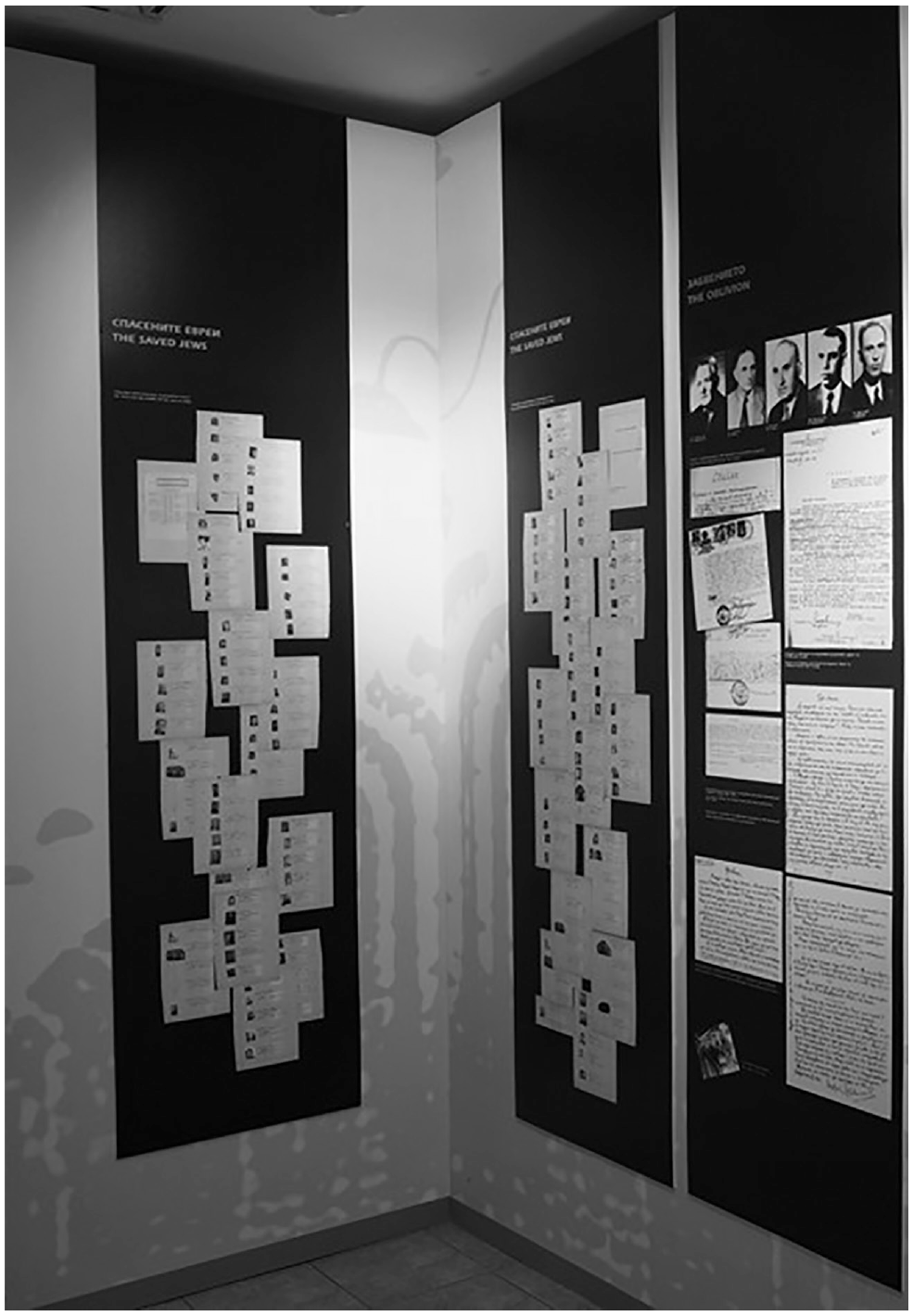
House Museum of Dimitar Peshev: exhibition boards with lists of names of Jews from Kyustendil who left for Israel in the late 1940s and early 1950s (photo by Wóycicka, 2019).
While both the Vilna Gaon Museum and the Dimitar Peshev House use the same motif known from Yad Vashem and the USHMM, in each case this reference conveys a different message. Although due to its form and also the geographical proximity of the presented material, the installation in Vilnius is more reminiscent of that at the USHMM, its message is closer to the one at Yad Vashem: the photographs of the Jewish children are intended to recall the lives cut short by the Holocaust. The fact that the pictures show children further underlines the innocence of the victims. In the Kyustendil museum, the curators used the motif of the wall with photos of victimized Jews in a polemical way. This installation underlines the ultimate difference between the fate of the Bulgarian Jews and that of the Jews from Lithuania or most other European countries.
Conclusions
Researchers (Radonić, 2017, 2020; Rectanus, 2006; Tanović, 2019; Williams, 2007, 2017) have already drawn attention to the fact that one of the expressions of the globalization process in the museum field is that museums increasingly relate to each other and resort to similar design solutions, narrative strategies and forms of commemoration. This applies in particular to World War II, Holocaust and other memorial museums. In this context, Sabina Tanović (2019) even writes about the emergence of “a sort of physical mnemonic system – a global theater of memory” enhanced by “the growing, global social network and ready availability of knowledge and information, conditioned by the internet” (p. 67).
My research confirms this observation. Many of the Righteous museums resort to similar commemorative forms and symbols. This can be explained by the international transfer of ideas but also by their search for international legitimacy. As described by Urry and Larsen (2011), “tourists are in a way semioticians, reading the landscape for signifiers of certain pre-established notions or signs derived from discourses of travel and tourism” (p. 25). The recurring symbols and motifs are clear references to Yad Vashem and other well-established Holocaust memorials, making the exhibitions legible to international audiences.
However, as observed by Rosmarie Beier (2000) in relation to museums of the second modernity, the use of similar presentation tools and aesthetic means does not necessarily imply a similar message. “Basing on the same architecture and exhibition choreography, in each case a different identity is constructed, the adoption of certain standards and international trends opens ever new contexts of aesthetics, society and identity” (p. 17). This applies also to my case-study museums. On closer inspection one discovers that the recurring elements are used in very different, at times even subversive ways, and that they transmit divergent worldviews and ways of looking at history. The exhibitions focus on different aspects of the subject, their protagonists are heterogeneous, they define their heroes differently and tell their stories from varied perspectives. Finally, they also seem to follow disparate aims and convey very different messages.
Therefore, I would argue that the globalization process in the field of World War II and Holocaust museums and in particular museums dedicated to the rescue of Jews has a rather superficial character and is very far from the Europeanization, or cosmopolitanization of memory as propounded by Levy and Sznaider (2002, 2007). The above analysis suggests that we are rather dealing with a “glocalization” of European Holocaust memory, thus a “local reworking of global patterns” (Macdonald, 2009: 123) and their adaptation to suit particular needs.
Footnotes
Funding
The author disclosed receipt of the following financial support for the research, authorship, and/or publication of this article: This essay was made possible thanks to a grant from the National Science Center Poland within the framework of the grant program Miniatura 2 (registration no. 2018/02/X/HS3/00177). The grant was realized at the Centre for Historical Research Berlin of the Polish Academy of Sciences. The copyediting of the manuscript was possible thanks to the financial support of the German Historical Institute Warsaw.
