



Abstract
Employing corpus-assisted discourse studies, this paper examines how COVID-19-related newspaper articles employ linguistic and discursive strategies to introduce and frame expert statements in ways that influence the epistemic authority of science and expertise. The findings indicate that the right-leaning tabloid New York Post referred to experts vaguely and represented scientific research as entertainment rather than as a crucial element of crisis management. By contrast, the left-leaning New York Times drew on experts in diverse ways, such as to present scientific evidence, contextualize events, and provide background information. However, expert statements in the Times were also mobilized to support political criticism, which may undermine perceptions of experts’ impartiality and contribute to declining trust. I argue that newspapers use expert voices to advance their own political attitudes, which can lead to declining trust in science. Overall, the study sheds light on the role of the press in shaping polarized attitudes toward expertise.
Keywords
Introduction
During the COVID-19 crisis, experts frequently appeared in the media, gaining general appreciation in society and an increasingly central role (Lavazza and Farina, 2020: 2). According to Cologna et al. (2025: 713), societies with higher trust in science and scientists responded to the COVID-19 pandemic more effectively than societies with lower trust. High trust in science facilitated effective crisis management as people were more likely to comply with restrictive measures, such as lockdowns and mask mandates and had higher vaccine confidence (Cologna et al., 2025: 714).
There have been concerns that trust in science is declining. However, recent global and national studies have not found proof for such claims (e.g., Cologna et al., 2025; Reif et al., 2024). Cologna et al. (2025) found that in most countries, scientists are generally trusted, but the trust is higher in certain demographic groups (e.g., women, high income, urban, religious, liberal and left-leaning). Science communication has a key role in maintaining trust in science. For instance, transparency and openness have been found to increase trust in scientists (Bentele, 1994, 1998, cited in Cologna et al., 2025; Reif et al., 2024). Furthermore, Hendriks and Jucks (2020) observed that expressing scientific uncertainties in news articles has only minimal effect on readers’ trust in climate science or the credibility of the information. According to Jensen (2008), hedging scientific evidence in news increases trust in the journalist as well as the scientist responsible.
What seems to be lacking, however, are micro-level analyses on the ways in which experts and their statements are utilized in newspapers. This study aims to start filling this gap. In particular, the focus of this paper is on features that possibly contribute to strengthening or weakening experts’ status as trusted sources of knowledge. Corpus analysis offers a means to find and examine the linguistic strategies of introducing experts, whereas qualitative discourse analyses can help us better understand how expert statements interact with other content in the news articles. Understanding the current strategies can help us develop better strategies with which trust in science could be increased.
I employ methods of corpus-assisted discourse studies (CADS; Baker, 2023) and compare articles on COVID-19 between two widely read US newspapers: the New York Times and New York Post. The research questions are the following:
(1) What linguistic and discursive strategies do the New York Times and the New York Post use when utilizing expert statements in their COVID-19 related articles?
(2) What type of effects can the strategies used have on the epistemic authority of experts?
By linguistic strategies I refer to word-level choices, such as vocabulary and word forms. By discursive strategies I refer to the organization of the information presented in the articles. The data consist of 68 articles from the New York Times and 80 articles from the New York Post. Based on the findings of the analysis, I argue that expert statements are framed so that they support the in-group’s views and do not challenge the political views of the newspaper. As experts and scientists have become a common target for (online) harassment and hate speech, journalists and mass media in general need to consider the contextualization of expert statements carefully to avoid unintended political bias.
This paper has the following structure: The next section discusses the concepts of expertise and epistemic authority in an era of increased political polarization. Then, I introduce the data and methods used, which is followed by the findings of the analysis, focusing on the ways in which experts are introduced, the article types in which experts appear, the ways in which scientific evidence is presented and, finally, expert statements appearing alongside political criticism. The concluding section offers conclusions andsuggestions for further analyses.
Epistemic authority and polarization of science
Defining who is an expert is not straightforward. According to one of the most basic definitions, an expert is someone who has more knowledge and skill than a layperson (Goldman, 2018: 4). However, someone might be considered an expert even if they do not possess such knowledge or skill. Furthermore, someone knowing a great deal more about a subject than a layperson is not necessarily perceived as an expert. Hence, expertise is a relational concept that includes social aspects – someone is an expert only if they have a reputation of being one (Goldman, 2018: 3).
Experts who have epistemic authority are recognized as trusted sources of information and knowledge (e.g., Lavazza and Farina, 2020: 1). However, epistemic authority is not dependent on the accuracy of the knowledge presented by that person, but on its perceived accuracy (Giubilini et al., 2025: 11). Therefore, the way scientific evidence is framed and presented in mass media or other public discourse affects the credibility of science (e.g., Chong and Druckman, 2007). Furthermore, according to Lavazza and Farina (2020: 3), characteristics that can increase the epistemic authority of an expert include good education, motivation, solid experience in the field, significant achievements, a prestigious position and impartiality. However, the effect of a prestigious position or good education can be minimal in some communities (e.g., vaccine-hesitant parents, see Hussein et al., 2025).
As a result of increasing political polarization in the US and elsewhere (Salloum and Malkamäki, 2025), impartiality of experts has been questioned. While science is mostly considered a neutral and unbiased practice, Americans were divided in their confidence in science and support for protective actions in the acute phases of the COVID-19 pandemic in 2020 and 2021 (Hart et al., 2020: 680). People with conservative and right-leaning political orientation had lower trust in science than those with liberal and left-leaning orientation (Cologna et al., 2025: 681; Hart et al., 2020: 680). In a survey conducted in April 2020, 52% of Democrats expressed a great deal of trust that medical scientists and scientists in general act in the best interest of the public, while only 27% of Republicans did so (Funk et al., 2020). Furthermore, 83% of Republicans rated President Trump’s response to the crisis as good or excellent, while only 18% of Democrats did so (Van Green and Tyson, 2020).
Such polarization posed a significant risk to crisis management in the US in 2020. While the reasons for it are varied, newspapers have contributed to amplifying the polarization. It has influenced the content that newspapers publish as well as the newspapers’ readership (see e.g., Feldman et al., 2017). As people increasingly use social media to share and read news, the content that they read is personalized for them. According to Braghieri et al. (2025), the news consumed through social media is more polarized than news accessed through other means. Consequently, news articles that are more polarizing are more popular, which can increase newspapers’ incentive to publish more such content. However, for experts, appearing in a news article that includes political criticism can be a risk, as it can decrease their epistemic authority and increase their chances of becoming a target of online harassment and intimidation (Hales et al., 2025).
Data and methods
This study compares the use of expert statements in the COVID-19 articles of two newspapers: the New York Times (henceforth: the NYT) and the New York Post (the NYP). The NYT was the second largest newspaper in combined print and digital circulation in the United States in 2024 (after the Wall Street Journal), whereas the NYP was the third largest (Maher, 2025). The analyzed newspapers differ in two ways. First, the NYT is a daily broadsheet, while the NYP is a tabloid paper. Second, the NYT is politically liberal and left-leaning, while the NYP is a right-leaning paper (AllSides, 2025).
The combined size of the two corpora is 148 articles and circa 132,000 words (Table 1). The articles were published in the first 3 months of the COVID-19 pandemic, between March and May 2020. The NYT articles are from the print version while the NYP articles are online articles (Supplemental Material). 1
Sizes of the corpora analyzed.
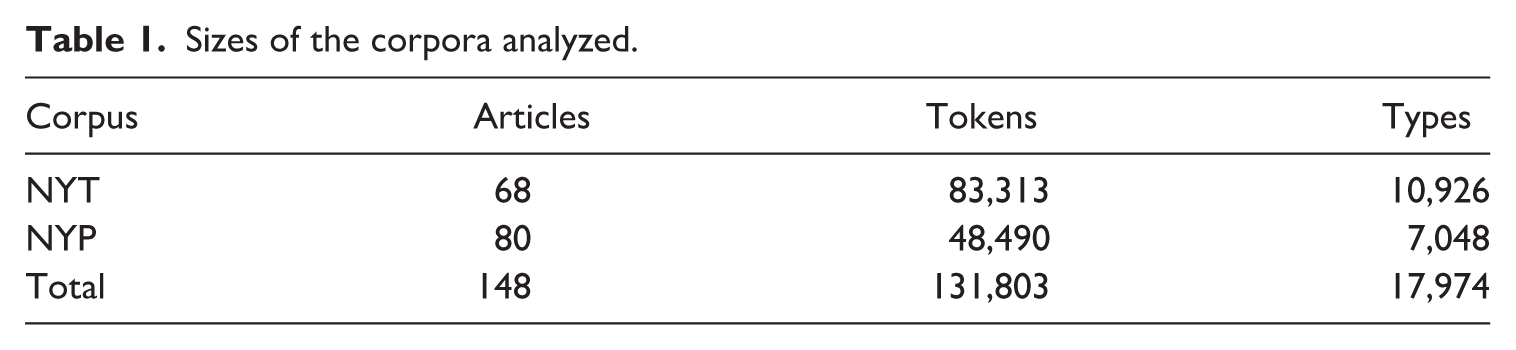
The NYT corpus was collected using the ProQuest Historical Newspapers database. I searched for “coronavirus” in the headlines of articles published between March 2020 and May 2020. The search returned 324 articles in total. Of these, a sample of 80 was collected. Eventually, 12 of the 80 articles that were collected were left out of the final dataset, because they were damaged and could not be opened after collecting them. The remaining 68 articles were transformed into text using optical character recognition (OCR).
The NYP articles were collected from the NYP website with Google’s advanced search. Google was used, because the NYP site does not offer a search tool with which articles could be filtered by publication date. The search for “coronavirus” in articles published between 1 March and 31 May 2020, returned altogether 1420 articles, of which the first 80 articles on the list were collected. The way the articles are distributed along the timeline can be seen in Figures 1 and 2.
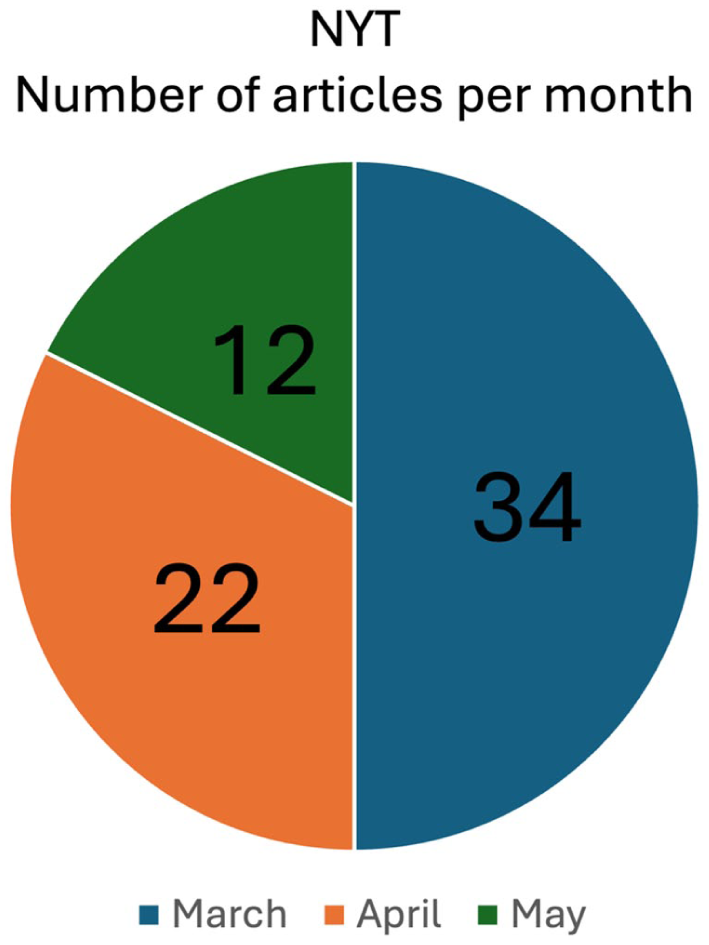
Number of articles per month in the NYT corpus.
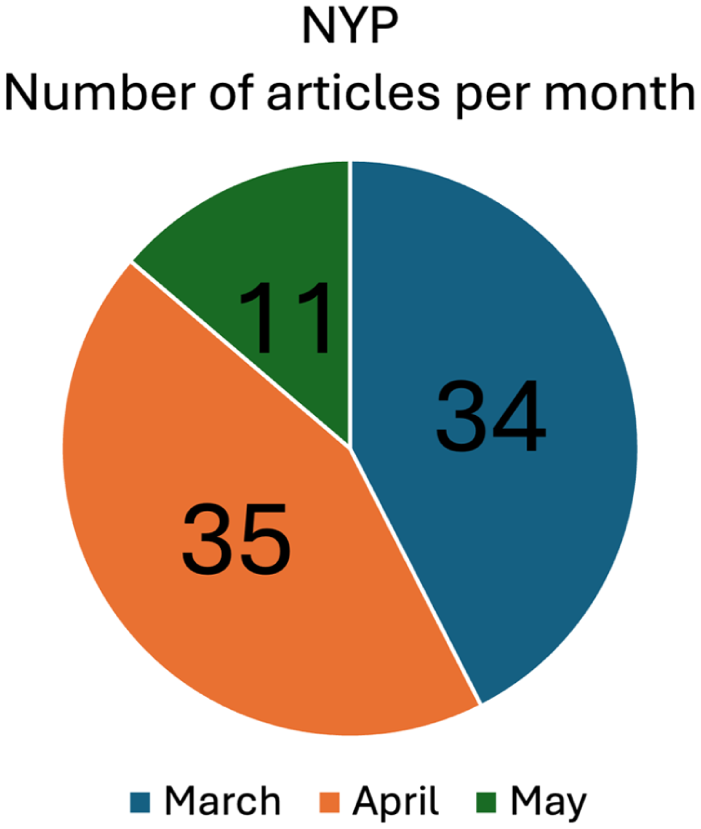
Number of articles per month in the NYP corpus.
I employ methods of corpus-assisted discourse studies (CADS) (e.g., Baker, 2023; Gillings et al., 2023). The focus in CADS studies is typically on examining how and why language works the way it does in society. In this paper, I approach the analysis from the perspective of critical discourse analysis (CDA) (e.g., Fairclough, 2015; Van Dijk, 2015; Wodak and Meyer, 2015). CDA focuses on discursive representations and constructions of reality that eventually influence our world view. Through their easier access to public discussion, the elite (e.g., politicians, journalists and academics) have power to influence the language that is used in society and, consequently, how we understand what is happening. In the context of COVID-19, journalists worked as gatekeepers, having an important role in determining which aspects of the crisis were newsworthy and should be included in the public discourse. Furthermore, the way expertise and science are represented through word choices and framing in news and other public discourse influences how we understand their role in society (Chong and Druckman, 2007: 104; Fairclough, 2010: 46).
In CADS methodology, quantitative corpus linguistic methods are combined with qualitative discourse analysis. The process is typically recursive, as the analyst goes back and forth between quantitative and qualitative analyses. In this case, the analysis involved using various methods, each of which offered new perspectives and evidence informing further analyses. I examined each corpus individually and kept the analyses separate, so that the analysis of one corpus would only have minimal effects on the analysis of the other.
I first extracted word lists of each corpus using AntConc concordancing tool (Anthony, 2024, v. 4.3.1). A word list is a list of words that occur in a corpus, typically ordered by their frequency. I examined the top 500 words in each list (Supplemental Material) and identified words that could possibly be used in contexts referring to an expert or scientific evidence.
The word lists were analyzed for two reasons: first, to see how expertise was typically referred to in each paper, and second, to eventually choose a sample to read and analyze more qualitatively. Table 2 lists the words identified as possibly referring to expert knowledge among the 500 most frequent words.
The words marked as possibly referring to experts in the two corpora.
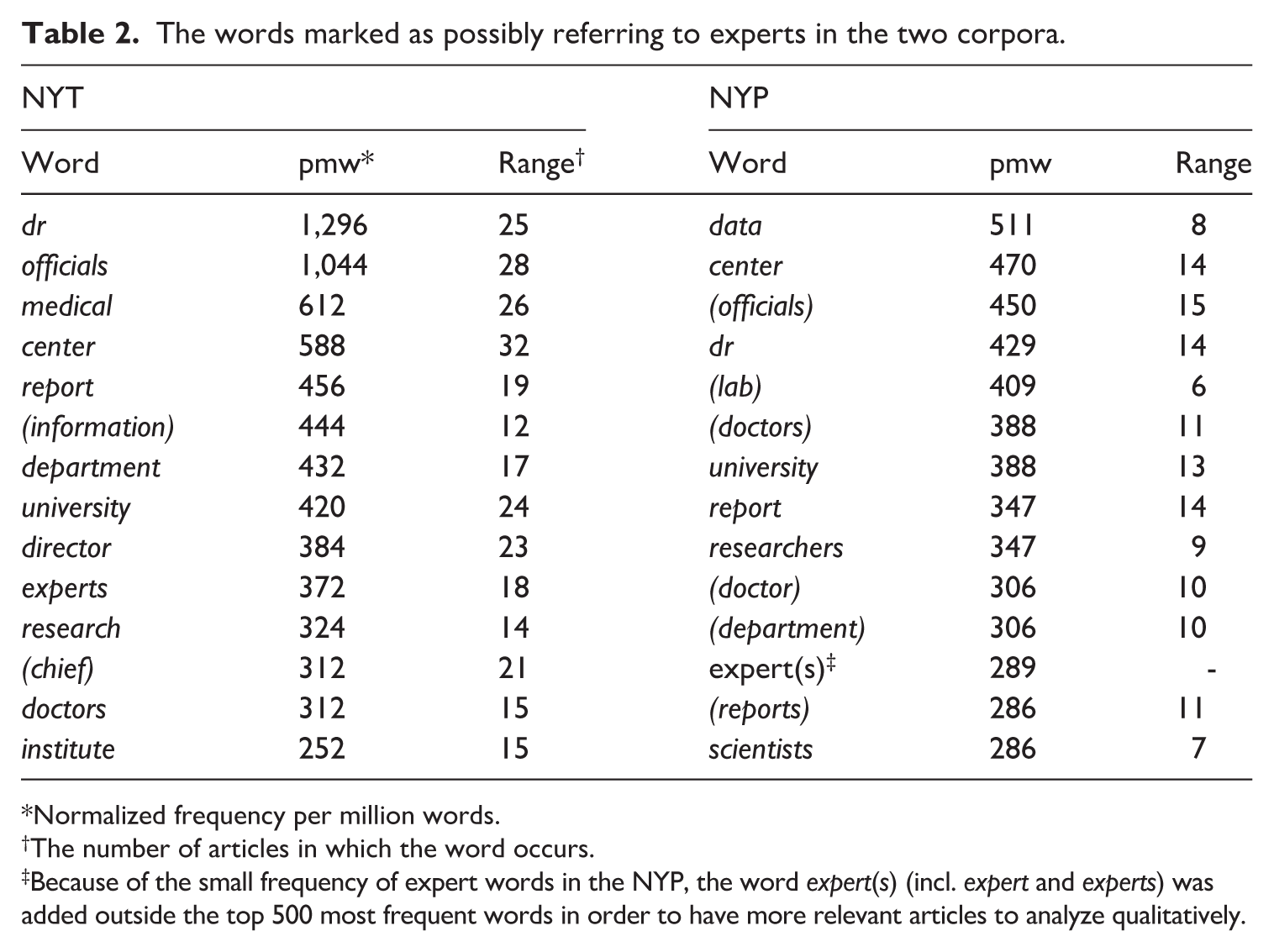
Normalized frequency per million words.
The number of articles in which the word occurs.
Because of the small frequency of expert words in the NYP, the word expert(s) (incl. expert and experts) was added outside the top 500 most frequent words in order to have more relevant articles to analyze qualitatively.
Next, I analyzed concordance lists of each of the words in Table 2 to see how they are used in the data. KWIC-concordances are lists of words in their context, the context typically being something between 10 to 25 words around the node. Figure 3 is an example of what a concordance list looks like in AntConc.
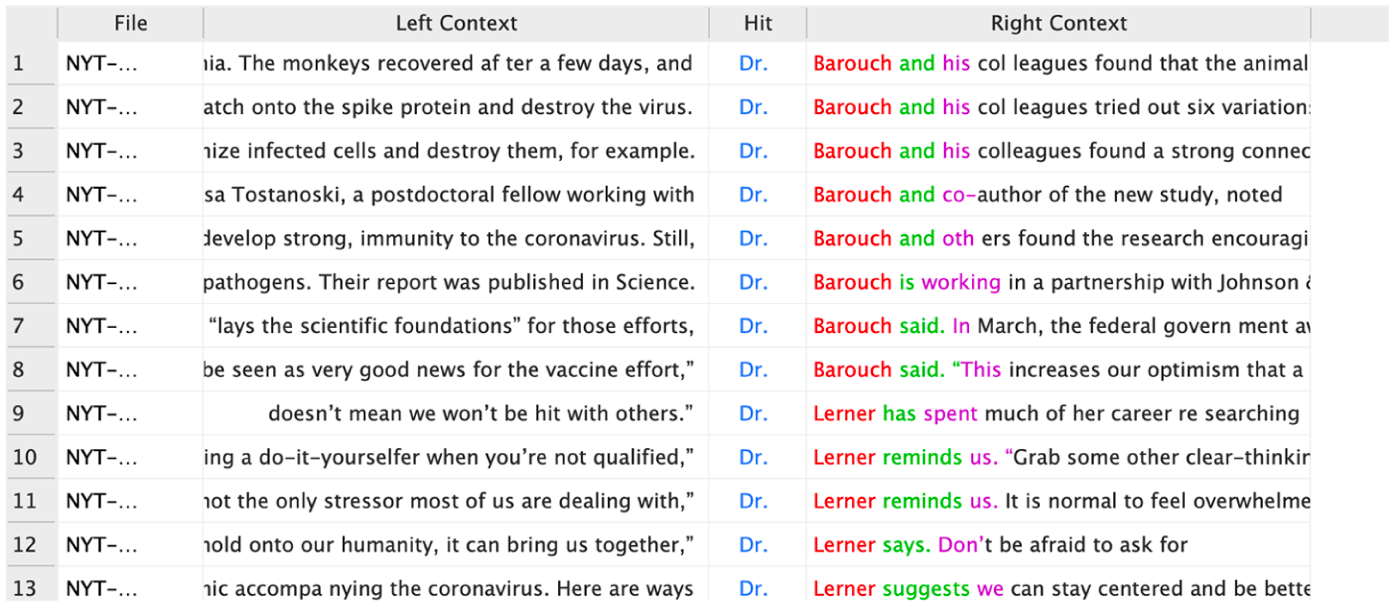
Concordance list of dr in the NYT corpus in AntConc.
By analyzing the concordances, I was able to identify words that were used in contexts referring to experts. As a result, the words in brackets in Table 2 were considered irrelevant, because they were mainly used in contexts other than those discussing expert knowledge. For instance, in the NYP list, one of the irrelevant words is doctors, which typically referred to medical practitioners as a profession and was not used in contexts utilizing the expertise of doctors. Furthermore, in the NYT corpus, officials mainly occurred in the cluster health officials and in contexts where these officials were commenting on the situation as experts. However, in the NYP corpus, this word typically referred to officials in general, and their expertise was not relevant for the context.
Next, I used the revised lists to identify articles that were the most “expert-dense,” that is, had the most mentions of experts or references to expert knowledge. Because the densities varied between the two datasets, the threshold was defined for each dataset individually. In the case of the NYP, the densities varied between 0 and 18 mentions, and the threshold for articles to be included in the expert subcorpus was set to four mentions. Thus, all articles with at least four instances of expert words (in Table 2) were collected into an expert subcorpus for the NYP (16 articles, 13,345 tokens). In the case of the NYT articles, the frequency of expert words in an individual article varied between 0 and 35 instances, and the threshold was set to 10 instances (17 articles, 26,599 tokens).
The articles that were chosen for the expert subcorpora were uploaded to ATLAS.ti software (v. 23.2.1; ATLAS.ti Scientific Software Development GmbH, 2023), where references to experts were coded and analyzed in more detail. The coding focused on who is referred to and how (e.g., are affiliations or titles included, does an expert comment on something or are they mentioned in passing), what the expert says and where the expert statement appears (e.g., what the article is about, does it contain political commentary).
The findings of the analyses are presented in the next section.
Results
This section is divided into four subsections. In Section “How are experts introduced?,” I examine how experts and science are referred to in the articles. In Section “In what types of articles do experts appear?,” by utilizing keyword analysis and qualitative discourse analysis, I explore the topics of the articles in which experts have a prominent role. Section “How is scientific evidence presented?” focuses on the strategies of presenting scientific evidence. Finally, Section “Are expert statements used to support political criticism?” examines how often and in what ways political commentary is used alongside expert statements.
How are experts introduced?
Overall, the NYT is more transparent in introducing experts than the NYP. The introduction typically includes the title (e.g., dr), name and affiliation. In the NYT corpus, the frequency of dr is 1,296 per million words (pmw), while that in the NYP is only 429 pmw (see Table 2). In the NYT corpus, there is also more variety in the words referring to research institutes than in the NYP corpus. The words center, department, university and institute all can be used to refer to establishments for doing research and are typically mentioned to inform the reader where the person is affiliated. In the NYP word list, the only such word is university. According to Lavazza and Farina (2020:3), a position at a university or other research organization strengthens the epistemic authority of an expert. Thus, the NYT’s practice of introducing the experts and their affiliation in detail – as in (1) and (2) – can strengthen the credibility of the expert.
[. . .] said Dr. David Agus, a professor of medicine and biomedical engineering at the University of Southern California. . . (NYT, 9 March 2020)
[. . .] said Devin Burghart, a veteran researcher of white nationalists who runs the Institute for Research and Education on Human Rights, a Seattle-based research center on far-right movements. (NYT, 4 May 2020)
The NYP is less transparent when referring to scientific knowledge or experts. This can be seen, for instance, in the high frequency of the words researchers and scientists, both plural forms. Some instances of researchers are preceded by the definite article the, indicating that researchers have been mentioned and perhaps introduced in more detail earlier in the article. However, in other cases the word is used to refer to experts whose names are not mentioned anywhere in the text. In these instances, the research institute is typically still mentioned, as in (3). In some cases, such as in (4), a study by a group of researchers is referred to without giving any information anywhere in the article on where or by whom that research was conducted.
3. Two new studies from separate teams of
4. But in a small study of 34 patients,
There are no instances of scientists that would be preceded by the definite article the, but the reference is in each case indefinite. There are four instances of scientists (out of 14) where the only defining characteristic that is mentioned is the geographical area where these experts are located, as in (5), while no details are given in (6).
5.
6.
Referring to researchers or scientists in plural without further details portrays them as a homogeneous group. Furthermore, as pointed out by Jensen (2008) and Reif et al. (2024), transparency and two-way dialogue are important for the credibility of science. Offering the audience enough details about the research reported on, without hiding uncertainties, would make evaluating the sources and the evidence easier.
In what types of articles do experts appear?
As described in Section “Data and methods,” I compiled the most “expert-dense” articles of both corpora into two expert subcorpora. The sizes of expert corpora are 16 articles and 13,345 tokens for the NYP and 17 articles and 26,599 tokens for the NYT.
To get a general view of what the articles in the expert corpora are about, I extracted lists of their keywords by comparing them against the articles in which there were fewer than two occurrences of expert words. Keywords are words whose frequency in one corpus is statistically significant compared against a second corpus (Gillings et al., 2023: 33). I also extracted keywords of the reference corpora by comparing them against the expert corpora to see how the article types differ. I used the default settings in AntConc for extracting the keywords. 2 The lists are presented in Table 3. The numbers in brackets indicate the number of articles in which the word occurred in the respective corpus.
Keywords of the expert corpora and the articles with less than two occurrences of expert words.
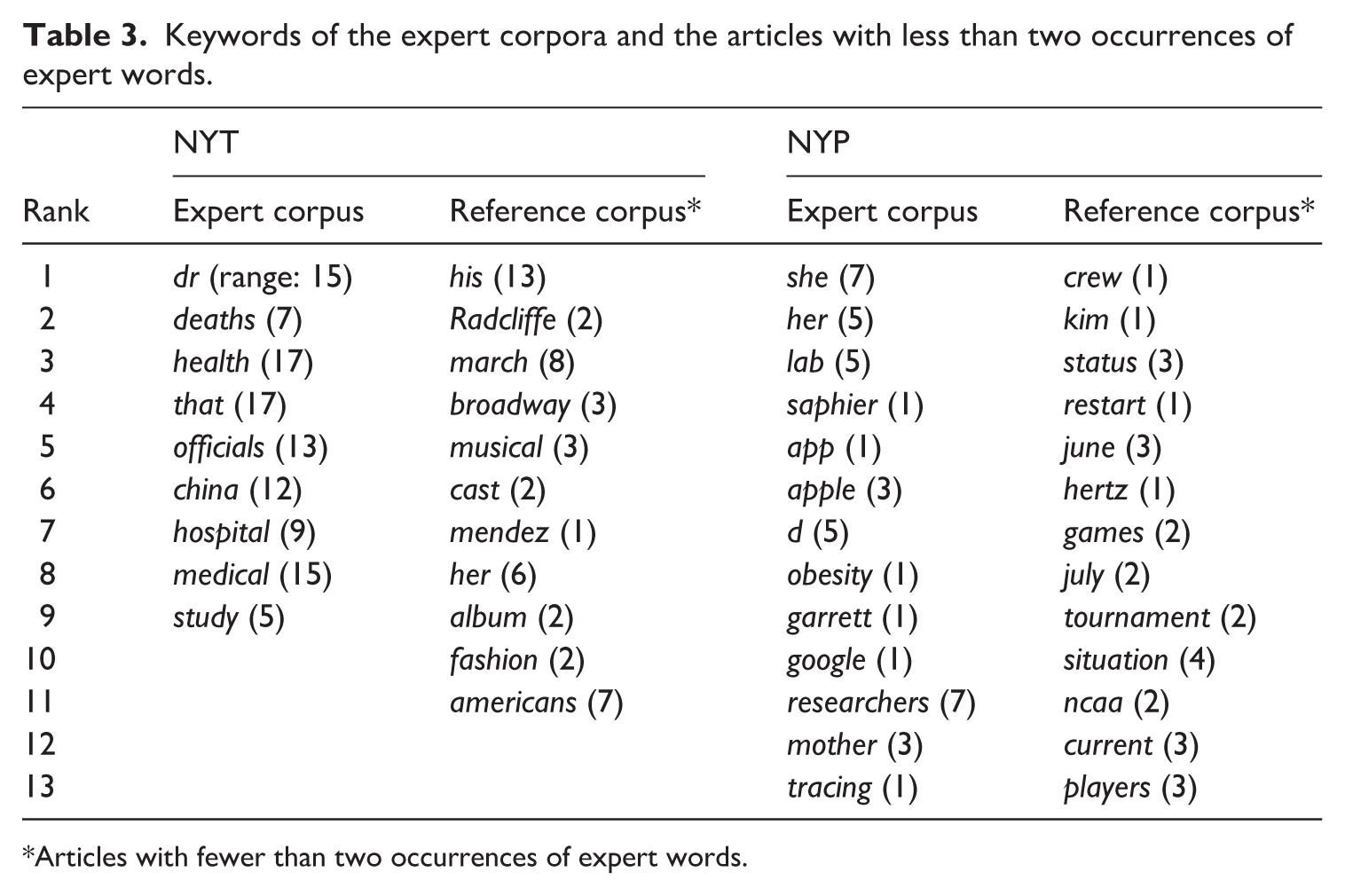
Articles with fewer than two occurrences of expert words.
The keyword list of the NYT expert corpus includes words referring to medical experts and health officials, while the keywords of the reference corpus indicate that many of the articles in which experts are not as prominent are about culture and entertainment. 3
The keywords of the NYP expert corpus do not as explicitly refer to experts or scientific knowledge, except for the word researchers. Furthermore, the keywords are mainly from two articles: the words she, her, [S]aphier and obesity are used in an article discussing the relationship between diet and infectious illnesses such as COVID-19. In the article, Nicole Saphier, MD, talks about her new book as well as the topic in general. Another set of words – app, [A]pple, [G]oogle and tracing – occurs in an article about the development of coronavirus tracing apps. A look at the keywords of the NYP reference corpus suggests that the articles with the least mentions of experts mostly focus on sports.
Too far-reaching conclusions regarding what the articles in the corpora are about should not be drawn based only on the keyword lists. The keyword lists were generated comparing two relatively small corpora against each other, which leads articles with a deviating topic dominating the lists. However, the lists suggest that, in the NYT, the articles utilizing medical expertise are part of the main news reporting (i.e., hard news) and closely linked to society and politics, while the articles focusing on culture and entertainment are the ones that differ from these. In contrast, in the NYP, while sport articles seem to belong to a different group of articles, entertainment and science are more closely linked. Someone’s education or expertise is treated as an interesting fact of a person that is in focus rather than as adding to the epistemic authority of a person that comments on societal or political issues.
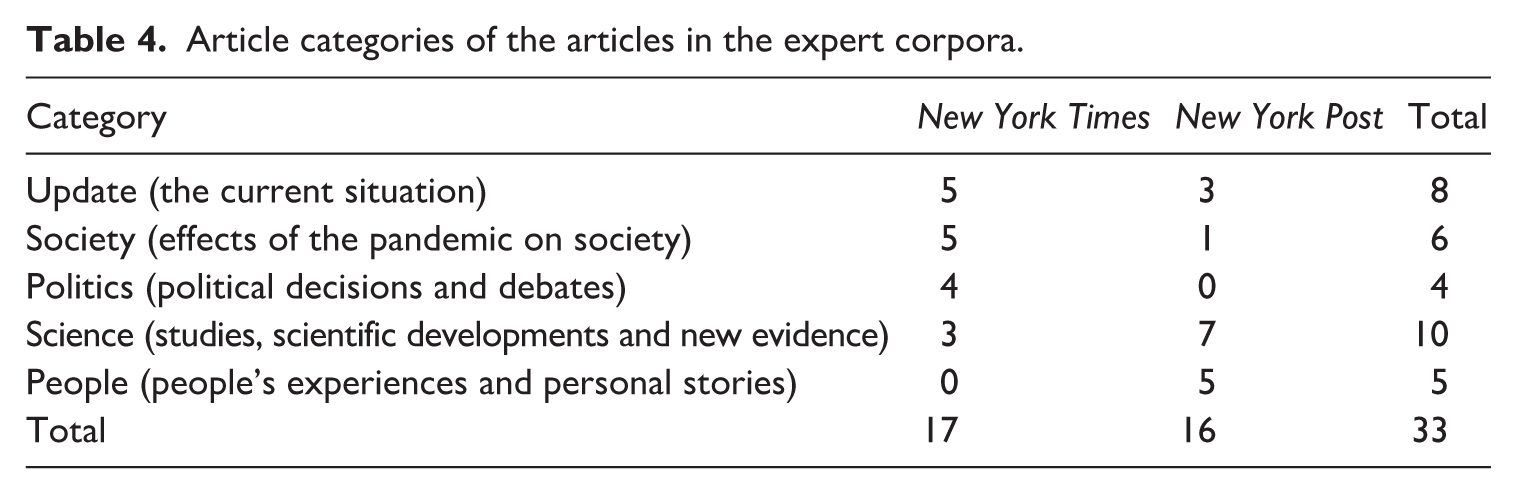
This difference between the two papers can also be seen in the article types in which experts appear. In Table 4, presenting a categorization of the expert articles, we can see that, in the NYT, experts appear in articles discussing current issues related to the COVID-19 pandemic, society and politics, whereas in the NYP, experts are frequently referred to in articles focusing on new scientific studies and people. Thus, in the NYP, experts do not seem to appear in hard news, discussing politics or society. In contrast, scientific knowledge is separated from topical issues and placed in the soft news section, discussing personal and other human-interest stories.
Article categories of the articles in the expert corpora.
How is scientific evidence presented?
In the Science category (see Table 4), the articles focus on reporting about new evidence or research. In the case of the NYT, the Science articles typically refer to several studies on the topic and use multiple strategies that can be seen as attempts to increase trust in science. For instance, the journalists have collected first-hand information from interviews with the researchers involved in the study as well as researchers not involved in it, as in (7). The researchers not involved in the study are asked to comment on the new evidence and its reliability. By citing multiple sources, the journalist can show to the reader that the evaluation of the research is not dependent on the journalists’ views. Furthermore, by expressing the uncertainties and limitations of one study, the scientific process is made more transparent and accessible to the audience.
7. Malcolm Martin, a virologist at the National Institutes of Health
In addition, the NYT Science articles explicitly mention uncertainties, as in (8), and restrictions of the evidence as well as there being differing theories instead of a consensus within a scientific community about interpreting the evidence. These strategies can also have a positive effect on the credibility of science (Giubilini et al., 2025: 8; Jensen, 2008: 15).
8. Dr. Famulare’s
The NYP Science articles typically focus on one study only, with brief references to other projects. These articles are straightforward in that they do not emphasize uncertainties in the same way as the NYT does. The NYP Science articles do, however, report on the research process and the study design, which is a strategy that potentially strengthens trust in science (see e.g., Reif et al., 2024). Nevertheless, as stated in Section “In what types of articles do experts appear?,” science is framed as entertainment rather than hard news in the NYP. For instance, in two of the seven articles, the headlines feature animals (examples 9 and 10). In addition, there is an article about a non-peer reviewed study focusing on whether testicles are the reason for men being more vulnerable to coronavirus (NYP, 19 April 2020). In the article, it is highlighted that the researchers are a mother and a daughter, which adds a human-interest factor to the article.
9. Dogs could “revolutionize” coronavirus testing by sniffing out the disease. (NYP, 29 April 2020)
10. Forget the lab rat: Llama, ferret and hamster join coronavirus fight. (NYP, 18 April 2020)
Choosing which studies to report on and the way in which these studies are framed can influence how science is viewed in society (Lecheler and De Vreese, 2018). While the studies reported on in the NYP do give us important knowledge of the virus, they are framed in a way that highlights their entertaining aspects, while ignoring the crucial role of research in the pursuit of trying to understand the COVID-19 situation better and help politicians and health officials make informed decisions.
Are expert statements used to support political criticism?
Traditionally, objectivity has been one of the key features of news writing in the US and elsewhere (see e.g., Tuchman, 1972). However, news reporting is not just a window to the world but in fact contributes to shaping how we see the world and always portrays it from one point of view (e.g., Lecheler and De Vreese, 2018). Furthermore, in the US, newspaper industry has become extremely polarized together with their readership (Heltzel and Laurin, 2020). While journalists avoid stating their own opinions, articles can be framed so that they support the newspaper’s or its readers’ views on politically charged topics. Similarly, comments from experts or other sources can be used to support these views.
As mentioned in Section “Epistemic authority and polarization of science,” epistemic authority and trustworthiness of experts is increased by the perception of experts as impartial. However, research on issues such as climate change and vaccines have become increasingly political, as they require political action that is not welcomed by all. As a result, experts advocating changes in policies increasingly experience online harassment and intimidation (Väliverronen and Saikkonen, 2021).
An analysis of the expert corpora shows that there is at least some political commentary or criticism in 9 of the 17 articles in the NYT expert corpus, but only one such article out of 16 in the NYP expert corpus. In addition, Trump occurs 1.13 times per 1,000 words in the NYT expert corpus and only 0.67 times per 1,000 words in the NYP expert corpus. These numbers again suggest that the NYT utilizes expert comments in articles discussing politics more often than the NYP. This supports the notion made earlier that science and experts are integrated in the hard news section in the NYT, while in the NYP science is framed as entertainment.
In the NYT Politics articles, it is argued that the pandemic situation is chaotic in the US because of disagreements and misunderstandings between the political leaders and health experts or officials. Most of the criticism is directed at President Trump, who is portrayed as indifferent to the pandemic, while health experts try to convince him and his administration that stricter measures are needed to slow down the spread of the virus. The criticism comes from the paper or the journalist, while health experts offer their views on how the situation should be handled without criticizing the political leaders directly. For instance, in (11), Trump is represented as not understanding the situation, as he is the only one not advocating for more testing. Later in the same article, an expert recommends increasing the testing capacity without criticizing Trump directly (example 12).
11. Virtually everyone but Mr. Trump says that there are too few tests, but everyone disagrees about how many are needed. (NYT, 12 May 2020)
12. Paul M. Romer, a Nobel Prize-winning economist at New York University, has called for daily rapid tests for every worker in contact with others — meaning 20 million to 30 million tests a day. (NYT, 12 May 2020)
There are also examples where experts criticize political leaders more explicitly. In (13), Dr. Anthony Fauci implies that Trump is not telling the truth. However, he uses general expressions such as a president instead of mentioning Trump explicitly. In (14), the names of the experts criticizing the administration are not mentioned. Thus, it remains unclear if there are experts who have explicitly stated that “the administration has struggled” or if that is what the journalist has inferred from experts’ comments.
13. “You should never destroy your own credibility.
14. [–]
It is important that decision-makers are criticized, as critical discussion is an integral part of democratic societies. Furthermore, experts are expected to participate in public discussion about whether politicians follow or ignore science-based recommendations. Participating in public discussion makes scientific knowledge more visible in society and helps the public make informed decisions themselves. However, commenting on politically charged topics or appearing alongside political criticism can also pose a risk to individual experts as they can be viewed as being biased and become a target of (online) harassment. This can eventually lead to experts refusing to comment if they do not know how their comments will be used, which would decrease the impact of scientific evidence in society. Thus, journalistic choices need to be made carefully so that experts or their statements are not framed as political – if not meant as such – but as evidence-based views and suggestions.
Conclusions
This study offers new knowledge on the ways in which experts and expert statements have been utilized in two widely read US newspapers. The strategies are widely different between the New York Times and the New York Post, which was expected, given that the two papers are fundamentally different. While the NYT is a left- and liberal-leaning broadsheet, the NYP is a right-leaning tabloid. As a broadsheet with lengthy articles, the NYT has space to discuss the issues in more depth, while tabloid papers such as the NYP prefer brevity and entertainment.
In the NYP, expert statements are not as frequently used as in the NYT. Furthermore, the NYT uses multiple strategies that can strengthen experts’ epistemic authority: it introduces the experts in detail, acknowledges uncertainties and disagreements regarding the evidence and uses various sources to collect information. In contrast, the NYP typically uses secondary sources and refers to scientists or researchers instead of introducing the scientists in detail.
The NYT utilizes expert statements in hard news, focusing on politics and society, while in the NYP, experts appear more in soft news on personal stories or curious scientific studies. In contrast, politically charged topics are not discussed in the NYP articles where expert statements occur frequently. One of the possible reasons for the NYP to not publish as much political criticism alongside expert statements is that in 2020 there was a Republican president, who himself shared (mis)information that contradicted what experts were saying (Hatcher, 2020; Li et al., 2022). Sharing information that is not in line with what the president is saying could potentially be a risk to the paper and decrease its trustworthiness in the eyes of its Republican readers. Furthermore, many of the actions recommended by medical experts, such as lockdowns and quarantines, were unpopular among the US conservatives who are typically anti-regulatory and pro-business.
In recent studies it has been observed that people with conservative and right-leaning political orientation in the US trust science less than those with liberal and left-leaning orientation (Cologna et al., 2025: 681; Hart et al., 2020: 680). Even though news reporting would not alone be the reason for this divide, we nevertheless can observe a difference between the NYT and the NYP in how expert knowledge is integrated in the news reporting; while in the NYT experts frequently appear in hard news offering their views on topical issues, the NYP portrays science more as a curiosity. It should be remembered, however, that these two newspapers are fundamentally different in many aspects, and this difference between them may be caused by the tabloid/broadsheet divide rather than their political orientation. Nevertheless, these differences can have significant consequences and influence public perception of experts, in particular as the NYT and the NYP are among the most read newspapers in the US (Maher, 2025)
During the acute phases of the COVID-19 pandemic, many experts recommended actions protecting the most vulnerable, even though those actions could be harmful for businesses, private entrepreneurs as well as single-parent households. Actions protecting the most vulnerable are typically supported by the left-wing. Thus, to support its left-leaning in-group, the NYT frequently reported about and supported such recommendations. Consequently, articles in the NYT expert corpus emphasize disagreements between health experts recommending tougher measures and political leaders who were portrayed as indifferent to the seriousness of the pandemic, framing health experts and political leaders as belonging to opposing groups. This portrayal can draw experts, who are valued for being unbiased and impartial, into political debates, which in turn can erode public trust in scientists and science (see Cassidy, 2006). Thus, the context in which expert statements appear as well as the framing of those statements need to be made carefully so that experts themselves are not seen as biased even though the scientific evidence presented could be seen as supporting the views of one side of the political debate.
There are, of course, limits to the study. First, I only analyzed two papers, which means that the results cannot be generalized to other broadsheets or tabloids nor to other left-leaning and right-leaning papers. Second, the datasets were restricted to the first 3 months of the COVID-19 pandemic, which was a historically atypical period of time. Thus, findings from that period do not necessarily reflect the ways these newspapers use expert statements in times that are more “normal.” However, the findings can be used as a starting point for follow-up studies analyzing a larger set of newspapers as well as topics other than COVID-19. Finally, the focus of the paper was on experts who were explicitly introduced as experts, which means that other type of expertise is not covered in this paper. Interesting findings could be observed by analyzing how statements from experts with different levels of education are reported in news.
Despite the limitations, the results of this study do inform us of the ways in which these two widely read and influential newspapers possibly contribute to increasing or decreasing trust in science and experts. Future studies could examine the extent to which the strategies used influence the perceived credibility of the evidence presented or science in general.
Supplemental Material
sj-pdf-1-dcm-10.1177_17504813251412081 – Supplemental material for Epistemic authority of experts in the New York Times and the New York Post: A corpus-assisted comparative study
Supplemental material, sj-pdf-1-dcm-10.1177_17504813251412081 for Epistemic authority of experts in the New York Times and the New York Post: A corpus-assisted comparative study by Jenni Räikkönen in Discourse & Communication
Supplemental Material
sj-pdf-2-dcm-10.1177_17504813251412081 – Supplemental material for Epistemic authority of experts in the New York Times and the New York Post: A corpus-assisted comparative study
Supplemental material, sj-pdf-2-dcm-10.1177_17504813251412081 for Epistemic authority of experts in the New York Times and the New York Post: A corpus-assisted comparative study by Jenni Räikkönen in Discourse & Communication
Supplemental Material
sj-pdf-3-dcm-10.1177_17504813251412081 – Supplemental material for Epistemic authority of experts in the New York Times and the New York Post: A corpus-assisted comparative study
Supplemental material, sj-pdf-3-dcm-10.1177_17504813251412081 for Epistemic authority of experts in the New York Times and the New York Post: A corpus-assisted comparative study by Jenni Räikkönen in Discourse & Communication
Supplemental Material
sj-pdf-4-dcm-10.1177_17504813251412081 – Supplemental material for Epistemic authority of experts in the New York Times and the New York Post: A corpus-assisted comparative study
Supplemental material, sj-pdf-4-dcm-10.1177_17504813251412081 for Epistemic authority of experts in the New York Times and the New York Post: A corpus-assisted comparative study by Jenni Räikkönen in Discourse & Communication
Footnotes

Ethical considerations
This article does not contain any studies with human or animal participants.
Funding
The author disclosed receipt of the following financial support for the research, authorship, and/or publication of this article: This research is part of the project “Languaging Crises: Diachronic Perspectives on Public Communication during Three Pandemics” (LanCris), funded by the Research Council of Finland [Grant Number 356219].
Declaration of conflicting interests
The author declared no potential conflicts of interest with respect to the research, authorship, and/or publication of this article.
Data availability statement
The newspaper articles analyzed in this paper cannot be shared due to copyright restrictions. A list of the titles of the articles included in the corpora as well as word lists generated as part of the study are available in the Supplemental Material of this paper.
Supplemental material
Supplemental material for this article is available online.
Notes
Author biography
References
Supplementary Material
Please find the following supplemental material available below.
For Open Access articles published under a Creative Commons License, all supplemental material carries the same license as the article it is associated with.
For non-Open Access articles published, all supplemental material carries a non-exclusive license, and permission requests for re-use of supplemental material or any part of supplemental material shall be sent directly to the copyright owner as specified in the copyright notice associated with the article.
