



Abstract
The aim of this study was to investigate how accentuated eccentric loading (AEL) is currently utilised by strength and conditioning (S&C) coaches. The survey consisted of closed- and open-ended questions divided into 3 key areas of focus (1-Coach and Athlete Demographic, 2-Perceptions of AEL, and 3-Program Design) was administered to S&C coaches. Response frequencies for sections 1 and 2 were calculated as percentages of total respondents, whereas frequencies in Section 3 were calculated relative to respondents who selected each specific training purpose. A thematic analysis was conducted for the responses to an open-ended question. A total of 38 respondents met the inclusion criteria and completed the survey. Twenty-three (age: 38.9 ± 13.6 years) reported having previously prescribed AEL with resistance training, while 15 (age: 34.7 ± 8.0 years) did not. Respondents most frequently learned about AEL from S&C experts (83%), academic journals (83%), and S&C colleagues (65%). Limited equipment access (60%), supervision issues associated with large athlete cohorts (33%), inappropriate athlete populations (33%), and lack of full knowledge about this training method (33%) were identified as the main barriers preventing non-users from integrating AEL into their resistance training programs. AEL was reported to be primarily applied to athletes involved in team sports (65%), weightlifting/powerlifting (30%), and track and field (22%), most of whom were younger than 30 years and had substantial resistance training experience. AEL was most frequently implemented with the back squat (83%) with a primary goal of enhancing maximal strength (84%) and/or power output (74%). Further practical and evidence-based information on how to safely and effectively apply AEL for different training purposes is warranted to guide practice.
Keywords
Introduction
Since force relative to mass determines acceleration and the duration of acceleration dictates movement velocity, strength is widely recognised as a key factor influencing sports performance.1,2 Therefore, improving an athlete's muscular strength is often one of the central goals of the training programs created by strength and conditioning (S&C) coaches. A common approach to achieving this overarching goal is the use of resistance training that is implemented with progressive loading strategies and standardised programming methodologies. 2 Percentage-based loading methods (i.e., prescribing intensity as a percentage of one-repetition maximum [1RM]) are among the most widely used programming strategies used in resistance training. 3 These methods result in the prescription of identical loads based off of the maximal CON strength (i.e., the traditional [TRAD] 1RM) for both the concentric (CON) and eccentric (ECC) phases of the lift. However, based on a recent Bayesian meta-analysis individual sare likely capable of producing 41% (95% credible interval: 38–44%) more force, or lowering 41% more load in a controlled manner, during maximal ECC muscle actions compared to maximal CON muscle actions. 4 It is worth noting that individuals are more likely to be able to resist approximately 15–25% more load during ECC movements performed in a controlled manner compared to the amount of load that can be lifted during the CON phase of free-weight compound exercises (i.e., back squat and bench press).5,6 Nevertheless, TRAD resistance training prescribes identical external loads to both the CON and ECC phases of the lift, with load selection typically based on maximal CON strength. Because skeletal muscle can produce substantially greater force during ECC actions, this approach may underload the ECC phase and fail to fully exploit its higher force-generating capacity. Given that mechanical tension is a primary driver of muscle hypertrophy7,8 and maximal strength development, 8 such underloading could theoretically limit the magnitude of the adaptive stimulus. Consequently, a growing body of research has examined ECC overload training9–11 and its application within resistance training programs.12,13
Common ECC overload training methods include: ECC tempo training (i.e., prolonged ECC phase duration), flywheel inertia training, ECC-only training, accentuated ECC loading (AEL), and bilaterally-to-unilateral loweing (i.e., loads lifted loads bilaterally and lowered unilaterally).11–13 However, many of these methods lack ecological validity and are therefore not easily applied to free-weight multi-joint resistance training exercises.11,14 For instance, flywheel training does not always guarantee greater mechanical loading during the ECC phase compared to the CON phase a lift.11,15 Since the ECC load is determined by the kinetic energy produced during the CON phase, the degree of overload depends on the inertia of the device selected and technical execution, such as delayed braking (i.e., resisting the load only during the final portion of the ECC phase to maximise peak breaking force). 15 In contrast, AEL, an advanced programming tactic, involves applying an additional external load during the ECC phase, which is typically removed 5–10 cm prior to the initiation of the CON phase.9,14 AEL requires coupled ECC-CON muscle actions while minimising interruptions to the natural mechanics of the selected exercise, 9 thereby preserving ecological validity. The additional ECC load is commonly applied using specific equipment, such as weight releasers,16,17 motorised devices, 18 and pneumatic devices, 19 or through manual assistance from training partners. Based on the magnitude of ECC load, AEL can be categorised into three subtypes: supramaximal AEL (i.e., ECC load greater than TRAD 1RM), maximal AEL (i.e., ECC load equivalent to TRAD 1RM), and submaximal AEL or augmented ECC loading (i.e., ECC load less than TRAD 1RM).
Based on a comprehensive review of the available English literature, the first known mention of AEL was in a coaching paper published in 1988, when Poliquin 20 discussed the application of this technique for developing strength. Since this paper's publication, there has been an increasing number of researchers who have examined both the acute effects16,17,21–37 and chronic adaptations19,38–53 associated with the application of AEL. Notably, Wagle et al. 9 and Suchomel et al. 11 comprehensively reviewed the current scientific body of evidence in 2017 and 2019, respectively. The information in these reviews provides guidance on applying AEL programming tactics and explains the potential mechanisms behind this training method. To bridge the gap between the available scientific evidence and real-world practice of implementing ECC training, Harden et al. 12 conducted a coaching survey to investigate how S&C coaches prescribe and implement ECC training. However, a limitation of this survey study was its failure to specifically explore how coaches use AEL in their professional practice.
As researchers have delved deeper into the acute and chronic effects of AEL across different contexts, this programming tactic has gained wider recognition (2–4,22,23,34). However, it remains unclear how S&C coaches interpret and implement this expanding body of evidence in their programming decisions. Additionally, there is no known consensus on how to prescribe AEL as part of a focused resistance training program. Therefore, the aim of this study was to develop a more comprehensive understanding of how AEL is currently utilised by S&C coaches during resistance training.
Methods
Research design
This cross-sectional survey study was designed to investigate the application of AEL during resistance training using an anonymous online survey. For clarity, AEL in the current study was defined as a programming tactic that applies an extra load during the ECC phase of the lift and removes it prior to the initiation of the CON phase. ‘Flywheel inertial training’ was not included in this definition. An electronic survey, comprising a combination of closed and open-ended questions, was administered via an online survey platform (Qualtrics, Provo, UT, USA) and distributed to S&C coaches through social media and personal contacts from February 2024 to July 2025. The survey consisted of 3 key areas of focus (Coach and Athletes Demographic, Perceptions of AEL, and Program Design) and took approximately 20–30 min to complete. This study was approved by Edith Cowan University Human Research Ethics Committee (Project Number 2023-04578).
Participants
Thirty-eight S&C coaches (male: n = 32, female: n = 5, and prefer not to say: n = 1, means ± SD; age: 37.3 ± 11.8 years) completed the survey. Participants were identified through professional networks and recruited using various online platforms: X (formerly known as Twitter), Instagram, Facebook, Linkedin, WeChat and email networks. To expand the recruitment of additional participants, a ‘Chain Sampling method’ was used, in which respondents were encouraged to pass details about the survey onto other S&C coaches. 54 The eligibility criteria for this study required participants to be a S&C professional working or have previously worked with a professional or amateur club, collegiate, national, international and/or Olympic level athletes. Additionally, to enhance participant involvement, the survey was translated into simplified Chinese and distributed via WeChat in China. Prior to completing the questionnaire, electronic informed consent was collected.
Procedures
The survey was designed to expand on the previously published surveys that have explored ECC training.12,13 Specifically, the current survey was used to further investigate the participants’ knowledge about the application of AEL during resistance training, determining how participants apply this programming tactic in their resistance training programs, and assessing participants’ perceived benefits of using this programming tactic. The closed-ended questions were presented in single and multiple-choice formats. In contrast, the open-ended questions allowed participants to offer more detailed answers to specific questions about the use of AEL protocols within their training programs.
The survey contained three sections: Coach and Athletes Demographics, Perceptions of AEL, and Program Design. The ‘Coach and Athletes Demographic’ section included questions related to participants’ backgrounds (e.g., age, certifications, and coaching experience), as well as the characteristics of the athletes they worked with. The ‘Perceptions of AEL’ section assessed participants’ knowledge of the application of AEL during resistance training (e.g., their perceived effectiveness of its application in resistance training, concerns about its implementation, and factors that might increase their confidence in using it). The final section of this survey explored how coaches implemented AEL for different training goals. The survey remained open for a total duration of 17 months. A pilot version of this survey was administered to a small group of coaches (n = 3) prior to its distribution to evaluate the clarity, relevance, and suitability of the questions for the target population.
Survey analysis
Given the complexity of the matrix-table question format, response data were first exported from the web-based survey platform (Qualtrics, Provo, UT) as PDF files and subsequently extracted into Excel spreadsheets (Microsoft Corp, Redmond, WA, USA) for data management and analysis. Descriptive statistics (counts and response frequencies) were calculated for all closed-ended questions. For multiple-choice questions, response frequencies were calculated as the percentage of respondents selecting each option, therefore, percentages may not sum to 100%. During Section 3, the response frequency for each programming parameter was calculated as the number of respondents who answered that specific question and targeted training outcome.
A systematic thematic analysis was conducted on responses to an open-ended question (‘What would you like to know in order to improve your confidence in programming AEL?’), following the six-step framework proposed by Naeem et al.. 55 This question was selected as it was the only open-ended question with sufficient responses for qualitative analysis. The process included familiarisation with the raw data, identification of keywords, generation of initial codes, and development and naming of themes. The frequency of each theme was quantified to facilitate interpretation. In cases where responses addressed multiple aspects, a single response could contribute to more than one theme. The themes were reviewed and refined through discussion among the research team to ensure consistency and credibility.
Results
Characteristics of respondents
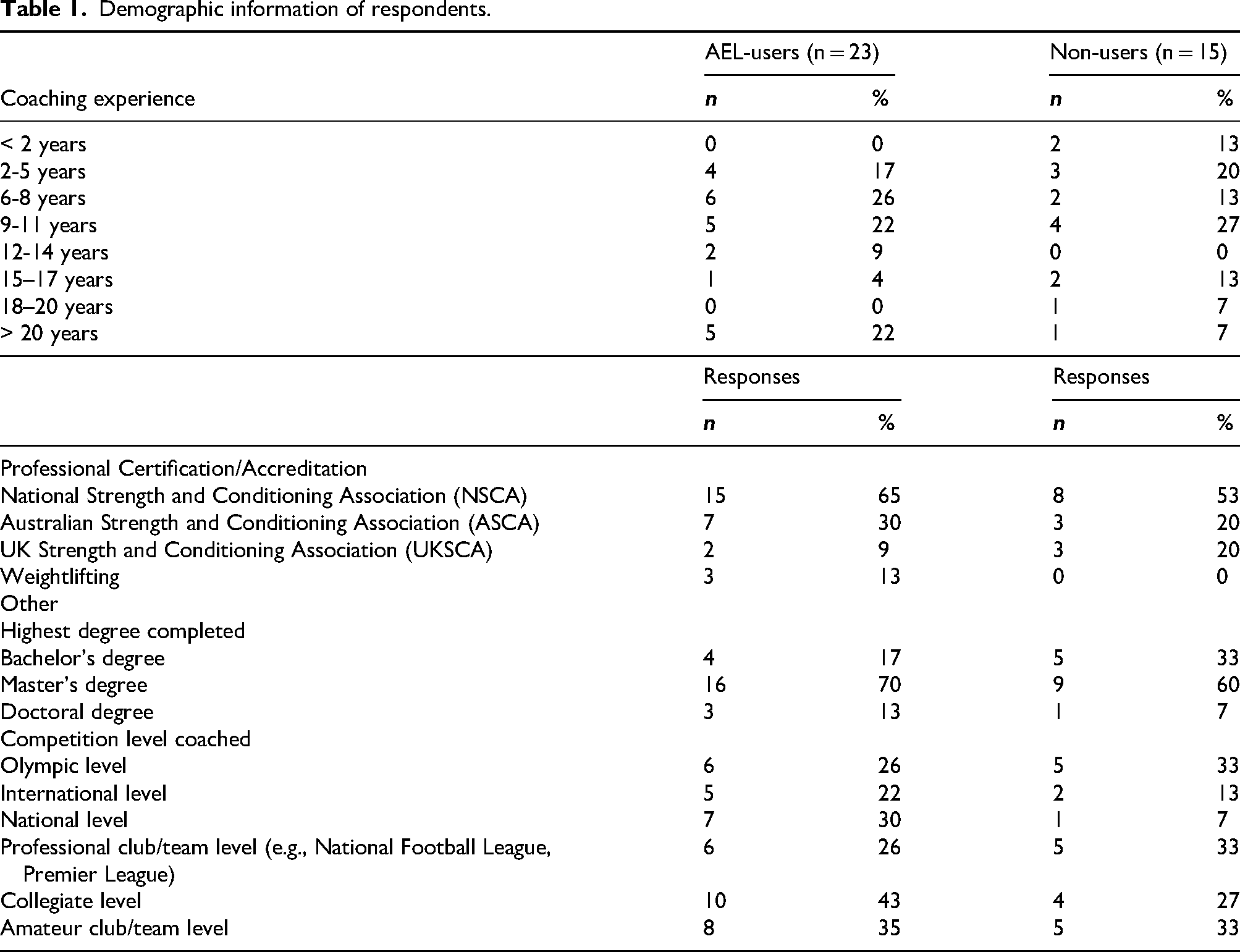
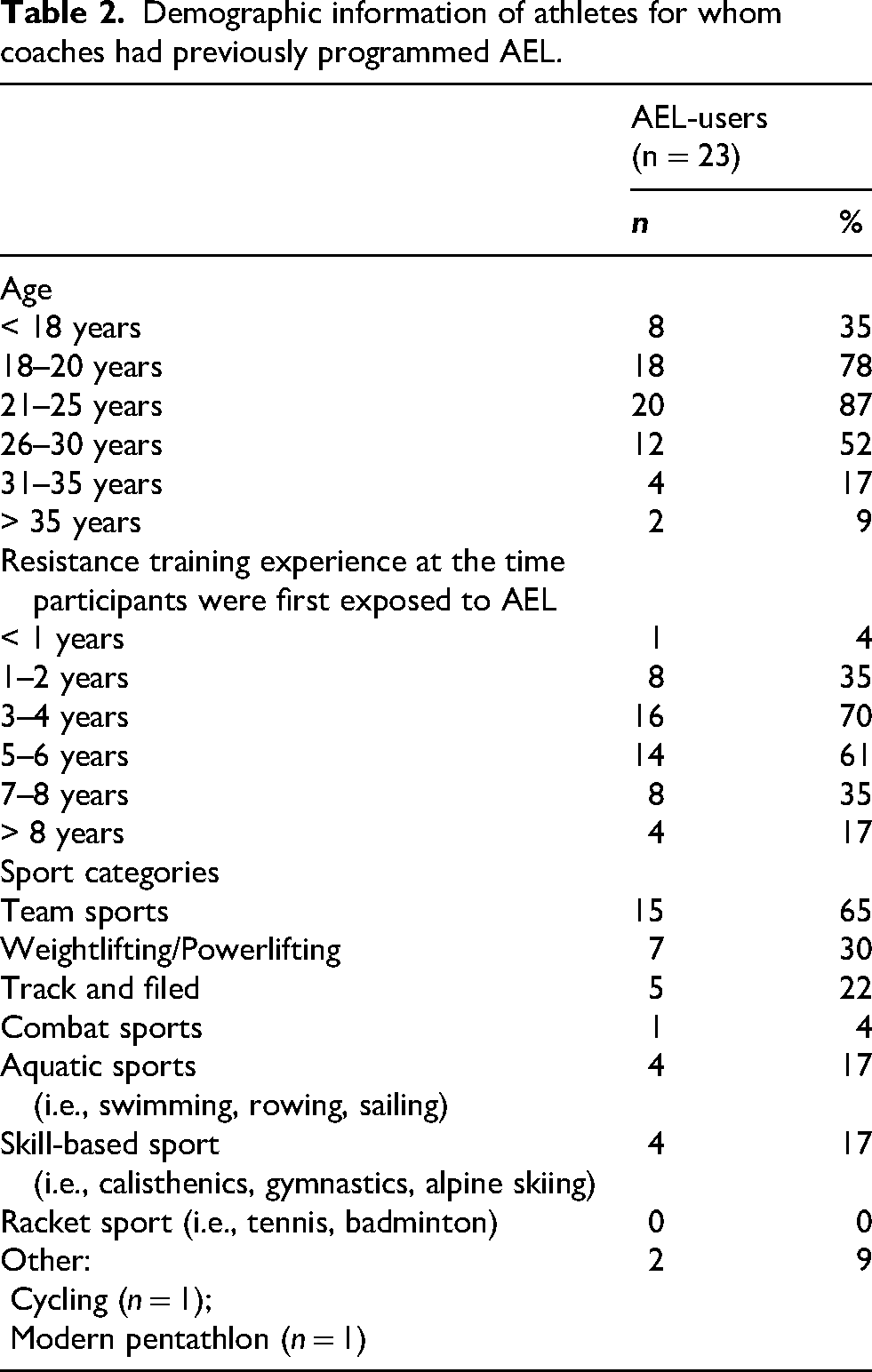
Twenty-three respondents (age: 38.9 ± 13.6 years) reported they had prescribed AEL in their resistance training program, and 15 (age: 34.7 ± 8.0 years) did not. Table 1 presents the demographics of the respondents, and Table 2 presents the demographics of athletes for whom coaches had previously programmed AEL. Respondents reported learning about AEL from a variety of sources (Figure 1), with the United States being the most common country of origin for the AEL-related resources they accessed (48%). Respondents reported multiple concerns regarding the application of AEL (Figure 2).
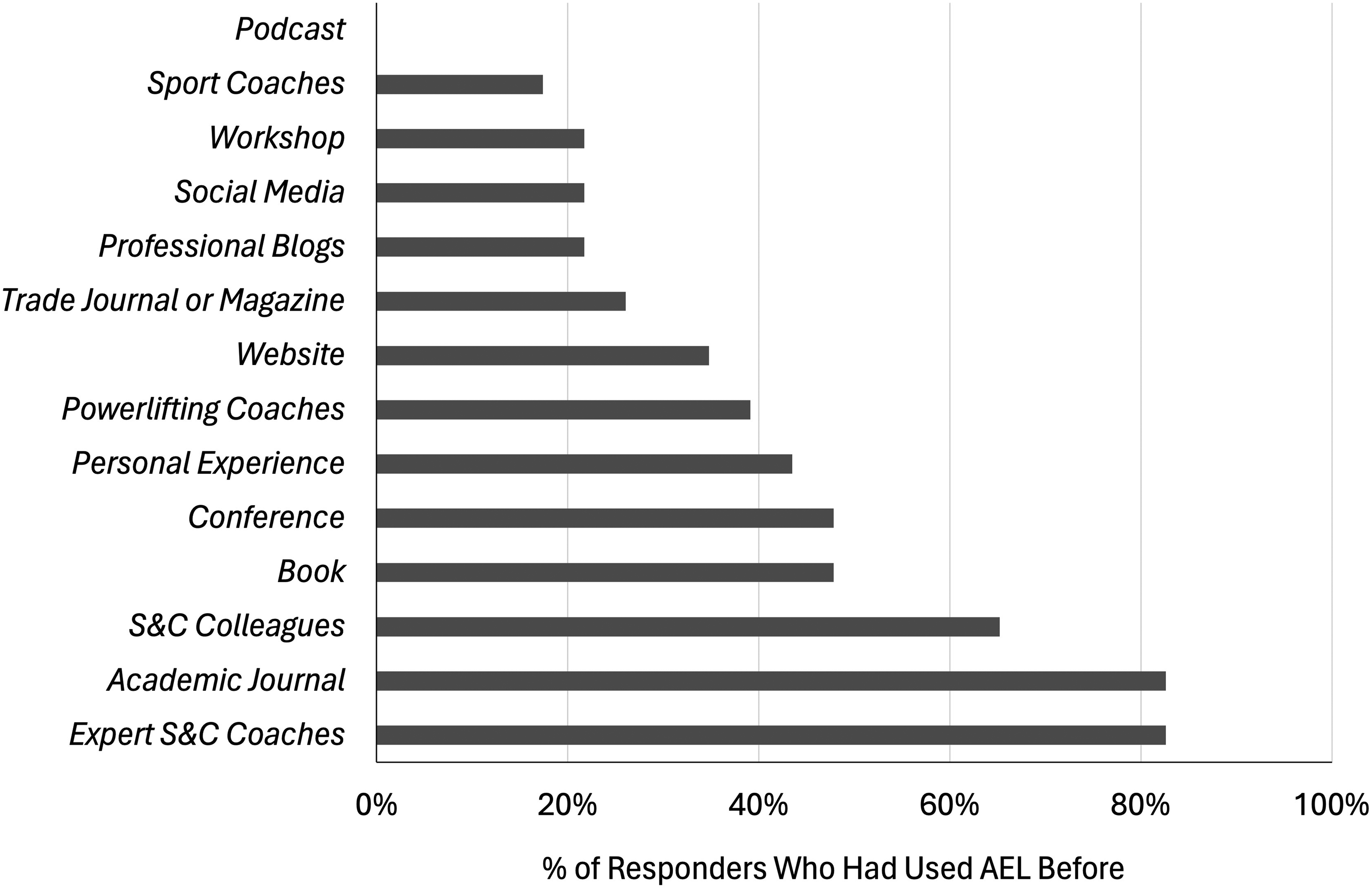
Sources informing AEL programming among respondents.
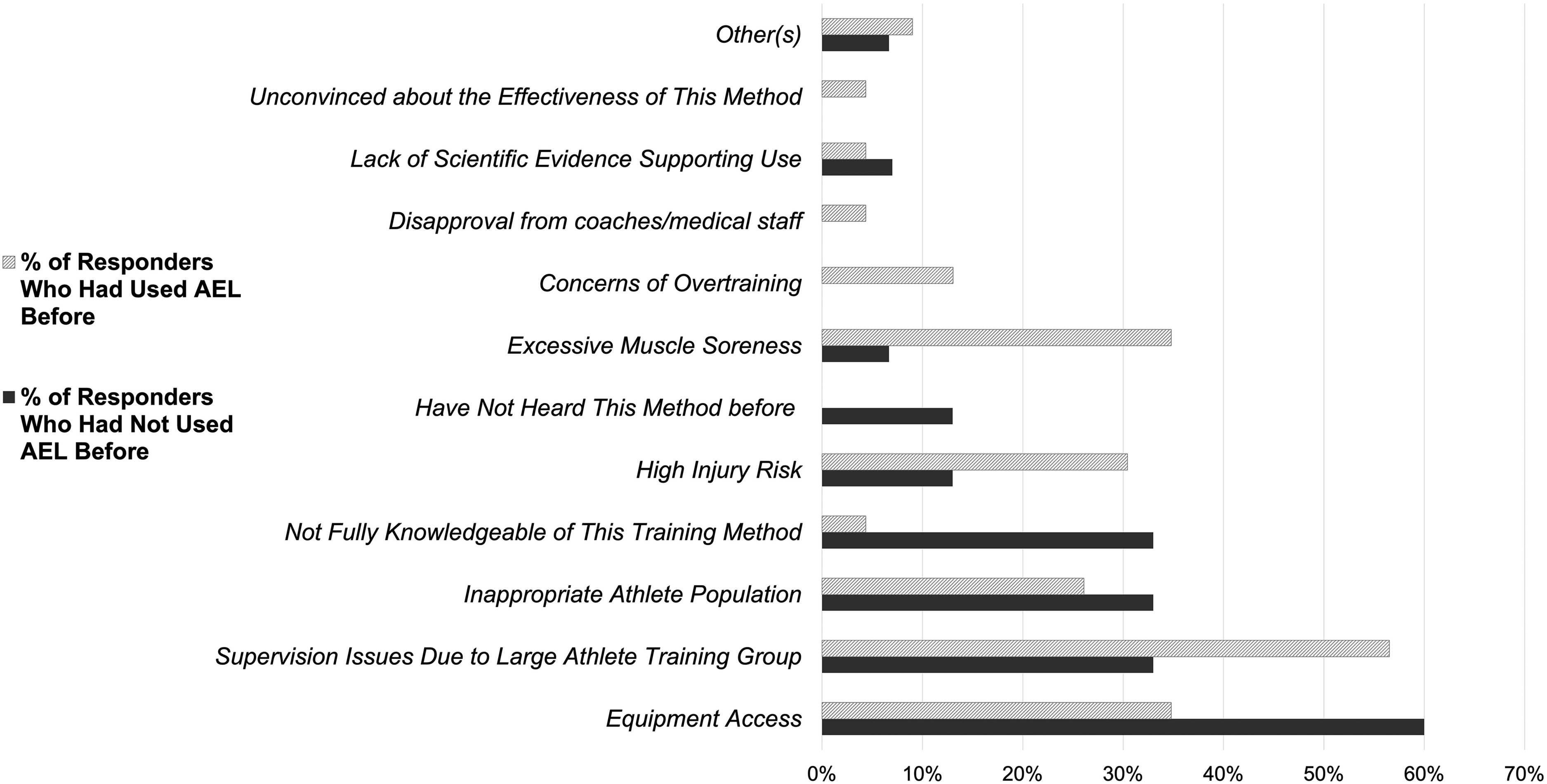
Respondents’ concerns regarding the implementation of AEL.
Demographic information of respondents.
Demographic information of athletes for whom coaches had previously programmed AEL.
In response to an optional open-ended question (“Do you have any other comments or thoughts about AEL?”), one respondent (P07) emphasised the importance of performing the CON phase with maximal intent and noted that AEL should only be prescribed to athletes who demonstrate good exercise technique: “Even though the AEL is focuses on eccentric contraction, and no doubt it should be executed very well, we should also inform the athletes about executing the concentric contractions with 100% “intent”. In my opinion, that's the key. Also, we should be fully confident that the athlete has an excellent exercise technique. If they don't, I wouldn't bother to incorporate AEL or any similar advanced method”.
Perception of implementing AEL
Figure 3 presents the perceived efficacy of implementing different types of AEL for various training purposes. Most respondents (74%) who had reported using AEL believed the benefits of using this programming tactic outweighed the risks and felt “confident” or “very confident” in their knowledge and ability to program AEL. Sixty-five percent of respondents rated their understanding of the underpinning science associated with programming AEL as “well” or “very well”. AEL-users also reported that their confidence in programming AEL would be improved with: (1) increased scientific evidence supporting AEL application (39%), (2) detailed programming guidelines (28%), (3) more programming examples for different training purposes (22%), (4) greater information about the safely integrating AEL into athletes’ resistance training programs (17%), and (5) increased accessibility to methods and equipments for AEL implementation (11%).
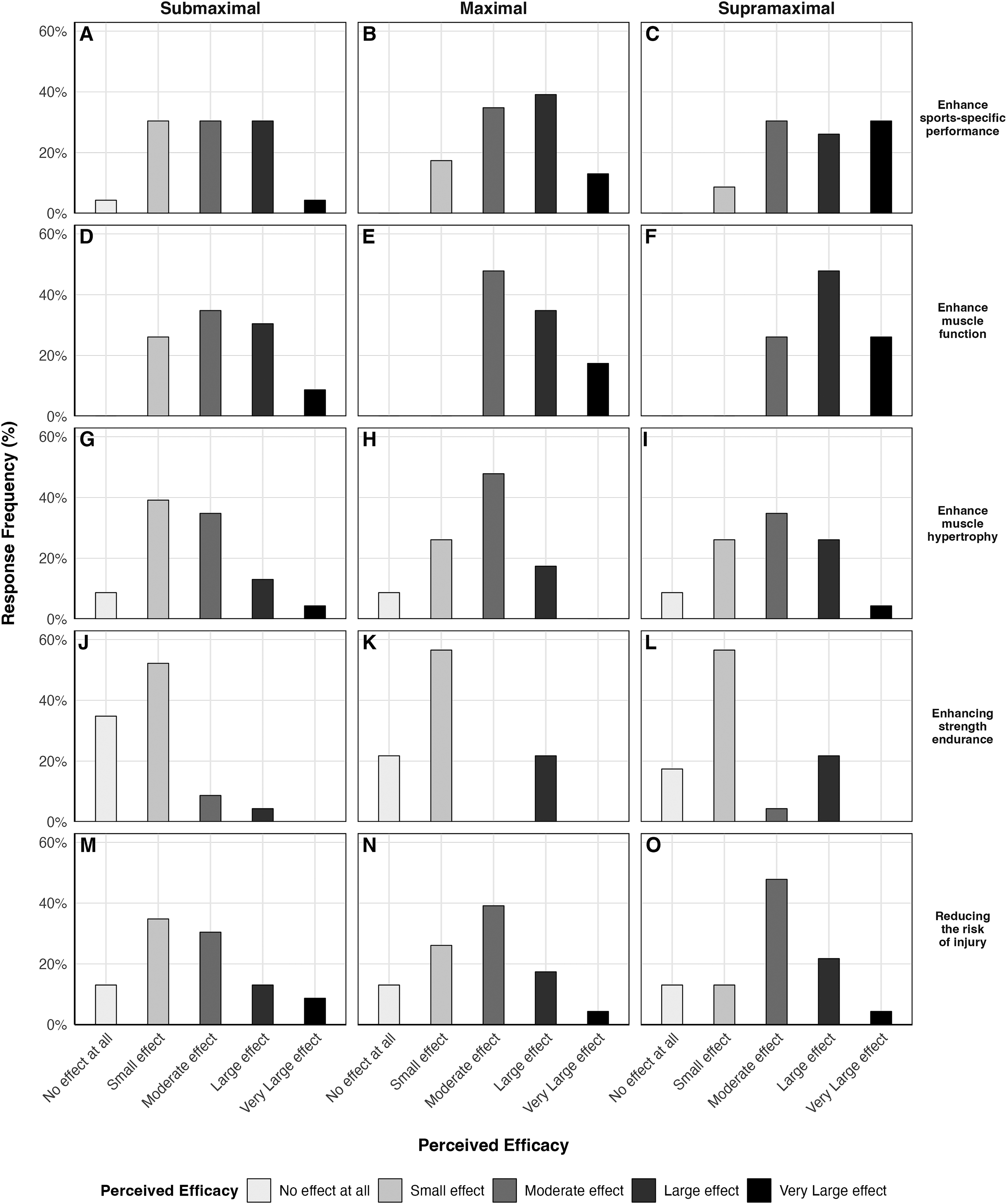
Perceived efficacy of implementing different types of AEL for different training purposes. Note: Muscle function refers to the ability to produce force in terms of both magnitude and velocity.
Programming design
All respondents who reported that they had programmed AEL with lower-body exercises (Figure 4), primarily the back squat (83%). Only seven respondents (30%) had previously applied AEL with upper-body exercises, mainly using the bench press (n = 5) and pull-ups or chin-ups (n = 6). Respondents who prescribed AEL with the back squat targeted several training goals, including stimulating post-activation performance enhancement (PAPE) (53%), increasing maximal strength (84%), maximising power output (74%), enhancing muscle hypertrophy (37%) and improving strength endurance (5%). Most respondents (78%) only programmed AEL with one resistance exercise per session. Given that AEL was most often applied during the back squat, a summary of the reported specific program design information for this exercise is summarised in Figures 5–9.
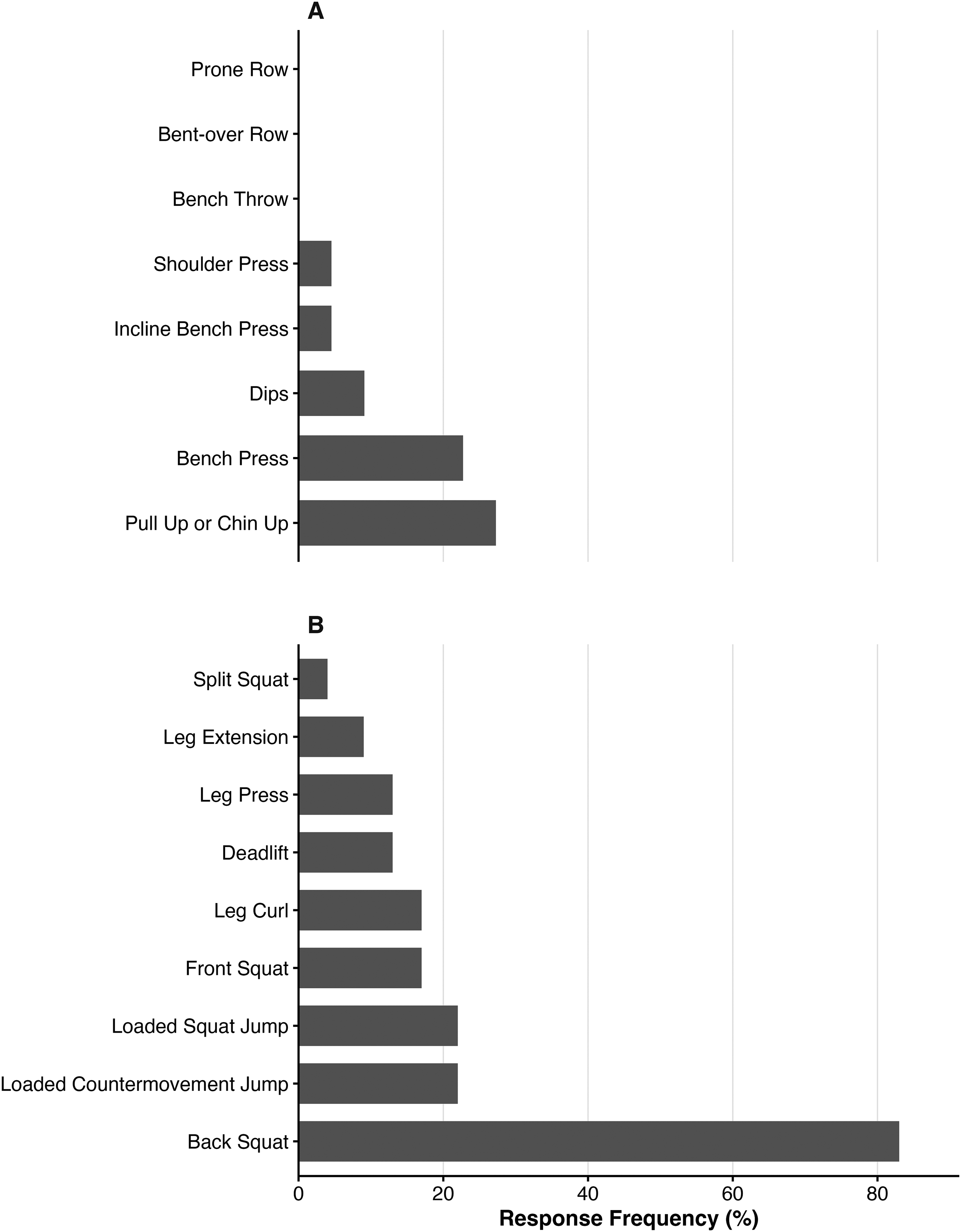
A summary of exercises used when programming AEL. Note: (A) upper-body resistance exercises and (B) lower-body resistance exercises.
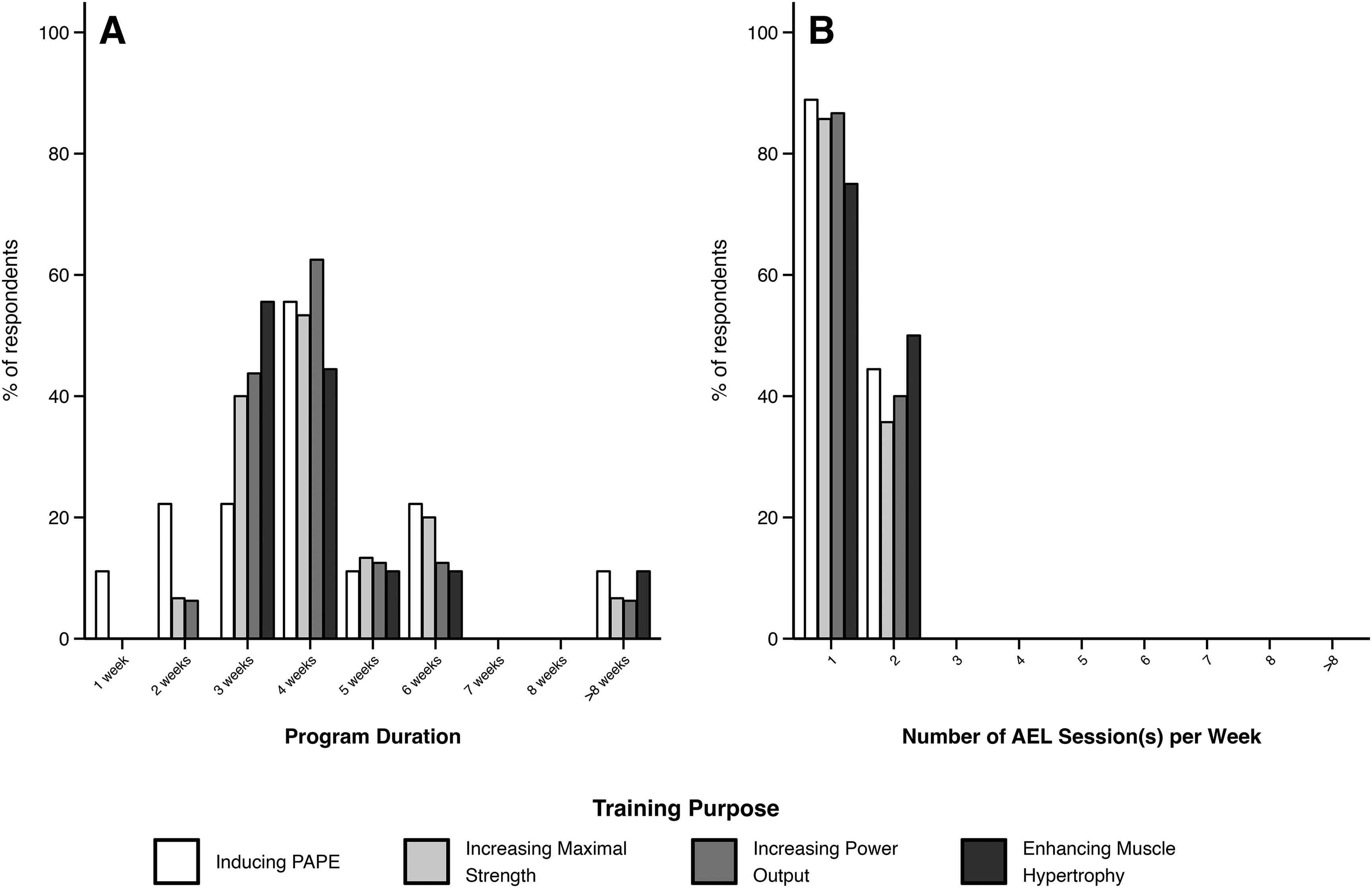
Meso- and micro-cycle of AEL programming.
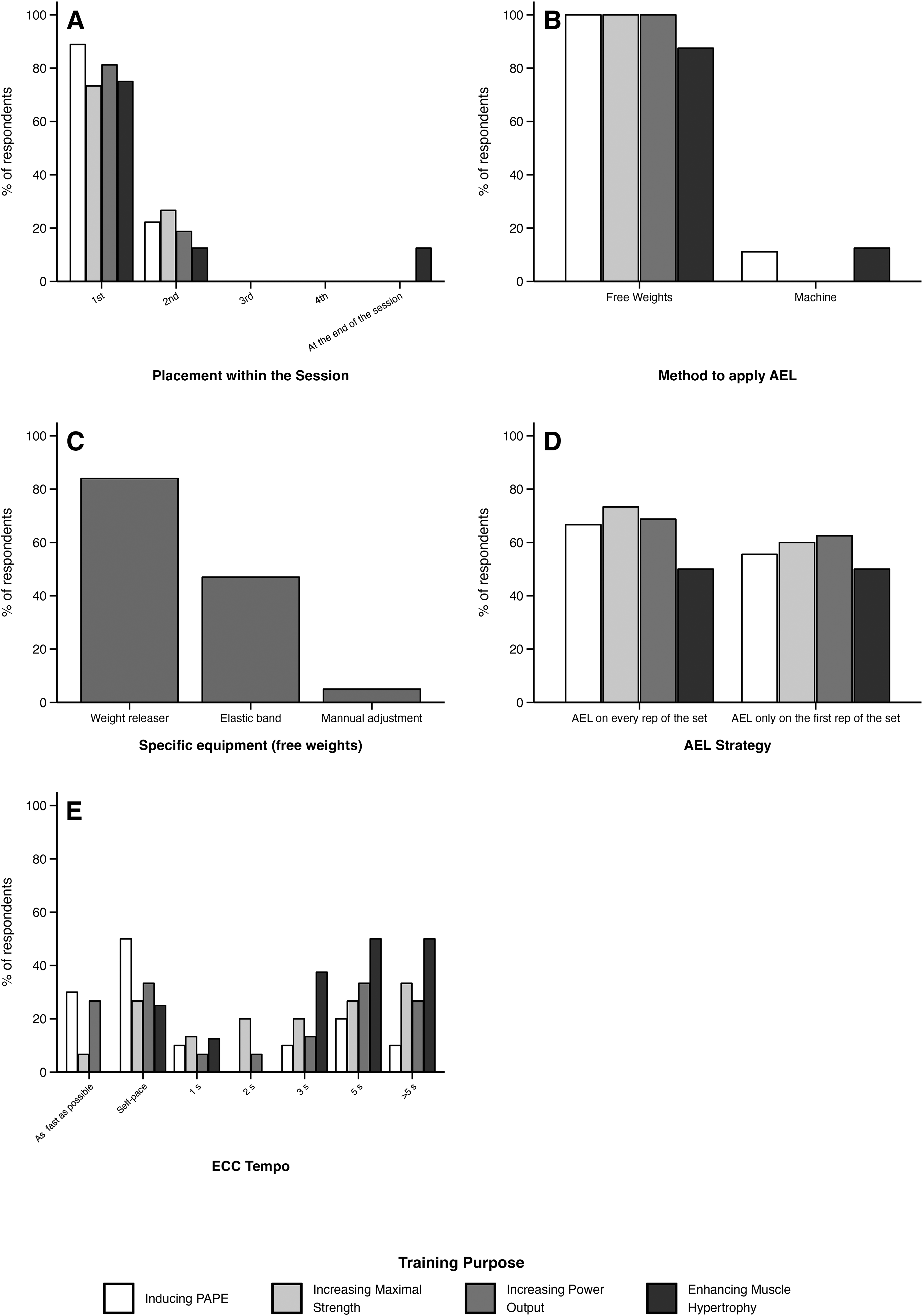
In-Session application and strategy for AEL programming.
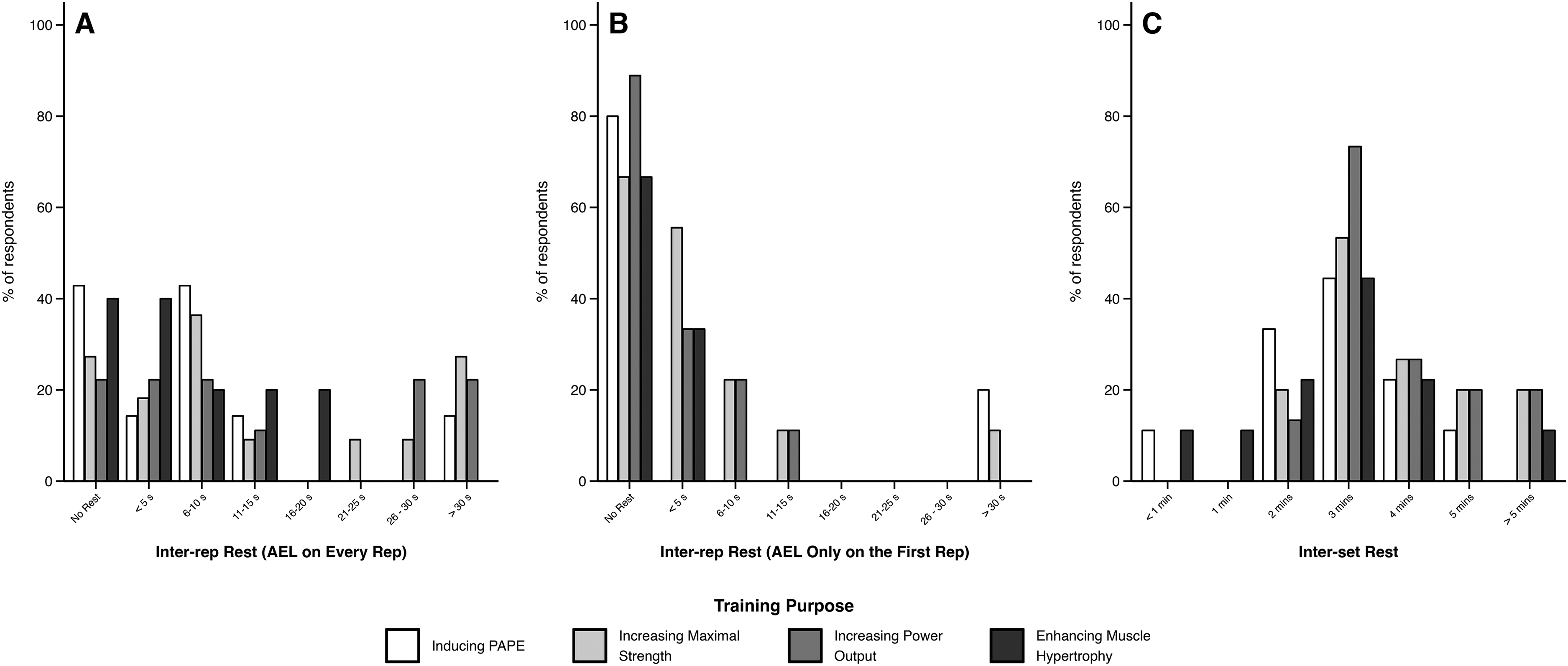
Rest interval strategies for AEL programming.
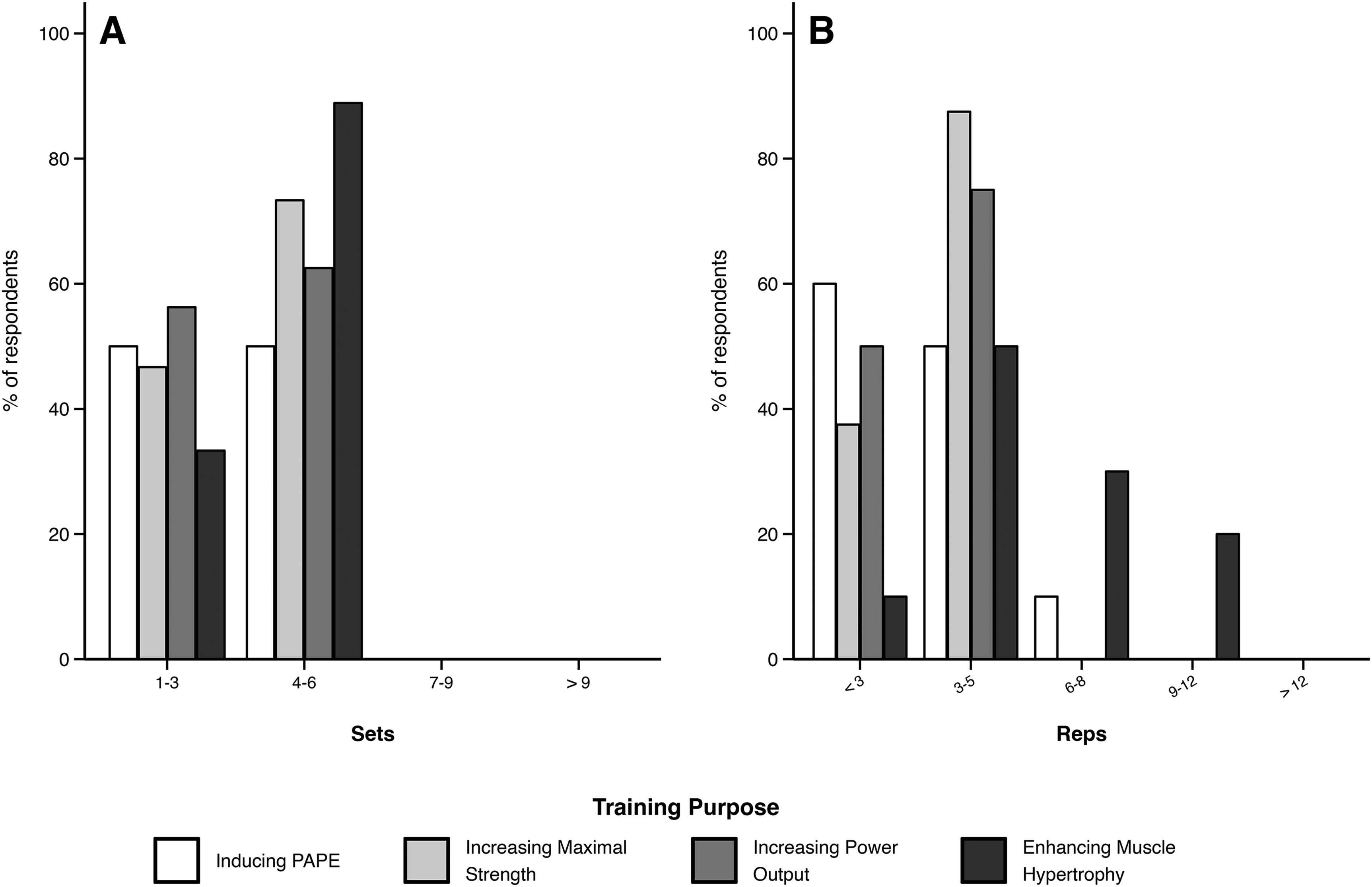
Set and repetition configuration for AEL programming.
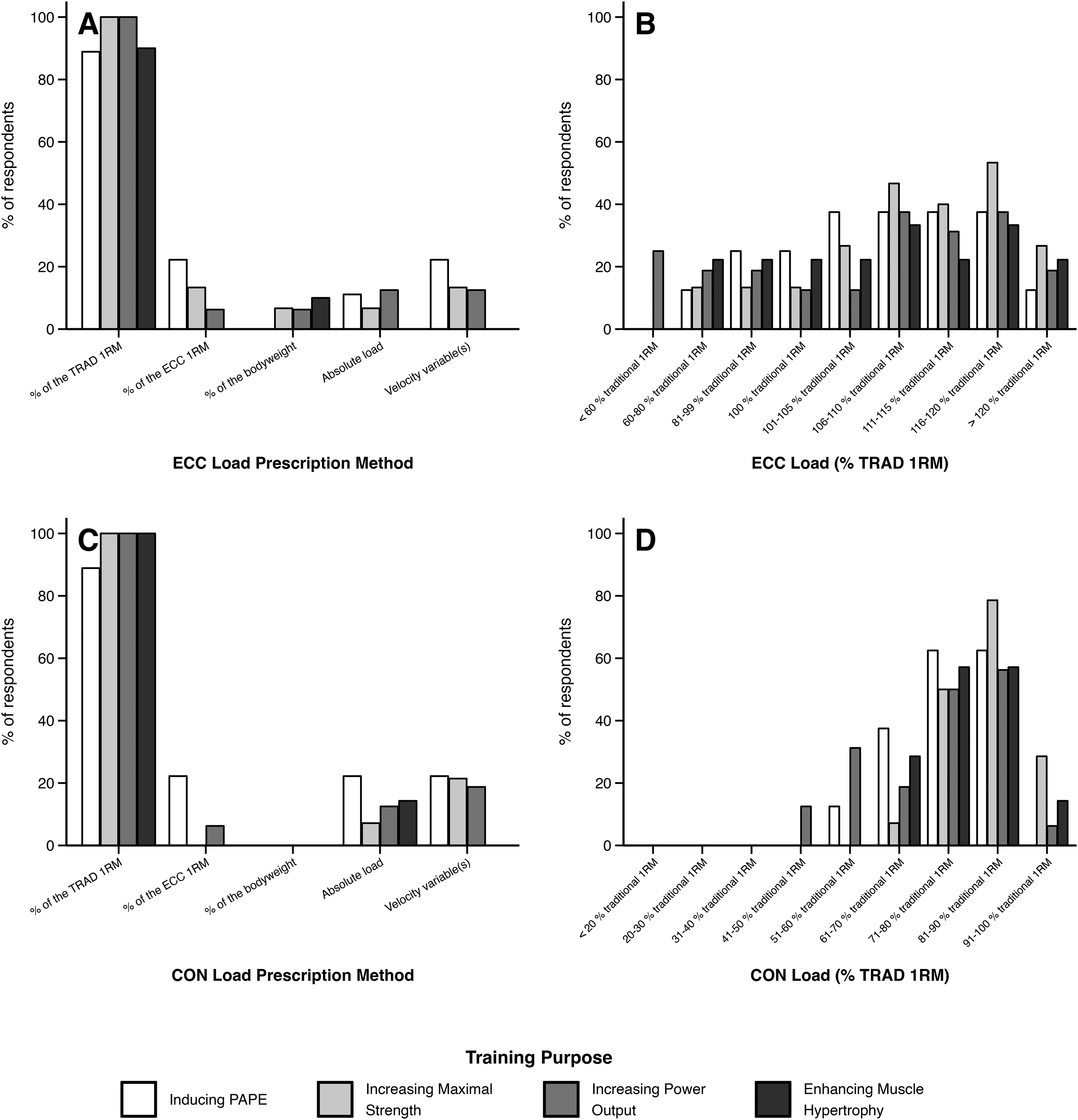
ECC and CON Loading Prescription for AEL Programming.
Discussion
The aim of this study was to gain a more comprehensive understanding of how AEL is currently utilised by S&C coaches during resistance training. The key findings of this exploratory coaching survey can be summarised as follows. Respondents most frequently learned about AEL from S&C experts, academic journals and their colleagues. The United States was the most frequently reported country from which respondents accessed AEL-related learning resources. Supervision issues associated with working with large athlete training groups and limited equipment access were identified as the two main concerns regarding the implementation of AEL. Based upon the current study, AEL has been primarily applied with athletes involved in team sports, weightlifting, powerlifting, and track and field, most of whom were younger than 30 years and possessed substantial resistance training experience. AEL was most frequently implemented with the back squat with a primary goal of enhancing maximal strength and/or power output. Notably, most respondents who had previously used AEL perceived that the benefits of using AEL to accomplish these goals outweighed any potential risks associated with this programming tactic.
Among non-users, the major barriers to incorporating AEL into their resistance training programs were access to equipments, supervision issues associated with large training groups, an inappropriate (i.e., training history, strength level) athlete population, and a lack of knowledge about how to program and implement AEL. Notably, similar major barriers were reported several years ago in the two previous studies examining the implementation of ECC training,12,13 indicating that these challenges continue to persist and remain unresolved in current coaching practice. As such, there is a need for additional research exploring how best to implement and program AEL training methods with a variety of athlete populations.
The limited dissemination of practical and evidence-based information regarding AEL may partly explain the noted knowledge gap reported by non-users. AEL-users indicated that most of the information guiding AEL programming tended to come from both academic and anecdotal sources, including academic journals, expert S&C coaches, and S&C colleagues, which is consistent with findings from previous survey studies.12,13 These findings provide evidence that there may be a lack of education about how to program and implement AEL tactics within the formal certification or professional workshop activities provided by the major S&C organisations (e.g., NSCA, ASCA) and limited exposure to these techniques in educational programs (e.g., sport science, physical education, etc.).
Beyond the informational and practical hurdles hindering the application of AEL, it is crucial to consider the typical characteristics of the athletes that these programming tactics have been implemented with. Based on the present survey AEL has primarily been implemented with athletes involved in team sports, weightlifting or powerlifting, and track and field. Additionally, AEL was more frequently reported to be implemented among athletes aged 18-20 years (78%) and 21–25 years (87%), who generally had greater experience with resistance training (resistance training experience: 3–4 years [70%], 5–6 years [61%]). Similarly, in previously published research ECC training methods were most commonly applied with athletes aged 17–30 years (17–20 years [26%]; 21–25 [32%]; 26–30 [21%]), and those with 6 months-8 years of resistance training experience (6 months-1 year [12%]; 1–2 years [22%]; 3–5 years [24%]; 6–8 years [17%]). 13 Additionally, coaches in the previous investigation indicated that they avoided prescribing heavy ECC training to athletes with a ‘low training age’, yet the criteria for defining a low training age were not provided. 13 Consistent with these findings, respondents in the current study reported that they primarily used AEL with athletes who have at least three years of resistance training experience. Additionally, a coach in a previous survey 12 noted that many athletes were not strong enough to warrant the use of ECC overload training. This perception is supported by experimental findings reported by Merrigan et al., 17 who reported that stronger individuals may display a greater mean barbell velocity during the CON phase of the bench press in response to AEL when compared to TRAD loading. These findings align with the S&C coach's perception of who should use AEL in the present study where it was noted that AEL should be reserved for well-trained athletes with relatively high strength levels. This recommendation may be reflective of the high technical demands associated with its application in resistance training exercises, as highlighted by one respondent (P07).
Most AEL-users perceived that the benefits of applying AEL outweighed any associated risks. However, only about half felt confident in their ability to design training programmes incorporating AEL and their understanding of the scientific knowledge underpinning their implementation. Respondents expressed an expectation of seeing more scientific evidence supporting AEL application and detailed programming guidelines. As one respondent noted, ‘Just more result information and best programming information as far as time of year to best use AEL’. In particular, applied studies were highlighted, as one coach noted, ‘I give more value to whys, as in real life lessons, than knowing the what's behind probable but uncertain physiological mechanisms, so if I had more practical data of more athletes benefiting from the AEL, it would be the most valuable further encouragement for me to implement it’. Information regarding programming examples for different training purposes, integrating AEL into athletes’ resistance training programs for safety, and increased accessibility to methods and equipments for AEL implementation have also been noted to enhance the coach's confidence in implementing AEL (see more raw statements in Supplemental File 1). These findings highlight the informational needs of coaches and can inform the development of future research studies and educational resources by researchers and S&C organisations.
AEL-users in the present study reported primarily implementing AEL with the back squat (83%), most commonly to enhance maximal strength (84%) and power output (74%). When applying AEL with the back squat to improve maximal strength and power output, respondents typically prescribed approximately 1–2 AEL sessions per week over a period of 3–4 weeks, positioning the back squat as the first resistance exercise of the session. This program duration and training frequency have commonly been reported to be effective in improving maximal strength in resistance-trained athletes.43,44,56,57,58 Interestingly, performing three AEL back squat sessions per week has been reported to produce greater strength gains across three types of muscle actions (i.e., CON, ECC, and isometric) compared to one or two sessions per week when training volume during each session was equated. 56 Based on these data, S&C coaches should consider that increasing the number of AEL sessions within the microcycle (i.e., week) may be beneficial for maximal strength development, potentially attributed to exposing the athlete to a greater mechanical stimulus. However, increases in weekly AEL frequency should be implemented gradually, integrated within the holistic training program, and monitored carefully to ensure adequate athlete recovery and the avoidance of overtraining.
When exploring the existing scientific literature, there is evidence that a prolonged ECC tempo decreased the TRAD 1RM during the bench press 59 and reduced the mean CON velocity during both the back squat and bench press. 60 This is an important consideration as most investigations looking at the application of AEL have been performed with a self-paced ECC tempo.16,17,31,41,58 In contrast to the existing literature, the respondents to the current survey reported that they have used a variety of ECC tempos that have ranged from as fast as possible to intentionally slow ECC tempos (i.e., 5 s ECC tempo). This disconnect between the existing scientific literature and how coaches apply AEL highlights that the existing research-based recommendations are not consistently followed by S&C coaches.
In practice, AEL can be implemented using two primary strategies: applying the additional ECC load to every repetition, or to specific repetitions within the set, such as the first repetition only. Both strategies can be combined with cluster sets 36 or rest redistribution approaches, 16 aiming to maintain or enhance the CON performance, while also allowing for reloading of the weight releasers between repetitions. In the present study, when AEL was applied to every repetition within a set, coaches reported using various inter-repetition rest intervals. From a practical perspective, an inter-repetition rest period of approximately 15–30 s may be warranted to allow adequate time for reloading the weight releasers. The specific rest interval likely depends on whether athletes are training alone or with training partners to assist with reloading, and on the availability of specialised rack hooks (e.g., monolift), which can facilitate re-racking and minimise swing of weight releasers after rack-off. When it was applied only to the first repetition, no rest or less than 10 s of inter-repetition rest was typically prescribed to optimise maximal strength and power development.
In this study, coaches typically prescribed fewer than five repetitions per set and a total of 1-6 sets, with rest intervals of 3 min between sets to optimise maximal strength and power development. This set and repetition configuration is consistent with general strength- and power-oriented programming principles 3 and previous studies that have been used to investigate the use of AEL with the back squat.56,57,58 When targeting these training outcomes coaches predominantly used the TRAD 1RM to determine both the ECC and CON loads. It is worth noting that the feasibility of prescribing phase-specific loads (i.e., using a percentage of ECC 1RM for the ECC phase and a percentage of TRAD 1RM for the CON phase) has been demonstrated by Harden et al. 19 during the leg press performed with a customised pneumatic system. However, the findings from the present study are still consistent with the previous survey on ECC training 13 where approximately three-quarters of respondents reported not performing any ECC-specific testing. This may be attributed to the difficulty of determining the point of failure in free-weight exercises.
In the present study, when AEL was applied to the back squat for maximal strength and power development, the most reported intensities were 106–120% of the TRAD 1RM during the ECC phase and 71–90% during the CON phase. These loading prescriptions align with the loading recommendations proposed by Merrigan et al.. 61 Recent experimental evidence56,57,58 has further demonstrated that applying AEL on every repetition, typically across 3–5 sets of 4-6 reps, using 95–140% TRAD 1RM during the ECC phase and 50–75% TRAD 1RM during the CON phase, performed 1-3 sessions per week, over 4–12 weeks, significantly increased the TRAD back squat 1RM.
Although an electronic survey enables the collection of data worldwide, the authors acknowledge that the primary limitation of the present exploratory investigation is the relatively small number of respondents, which may be attributed to both the novelty of AEL and the considerable length of the questionnaire. In addition, the survey incorporated a nested series of program design questions (at least 17 items) to capture detailed programming parameters for each resistance training exercise selected by respondents, beginning with lower-body exercises. While the nested design allowed for detailed data collection for each exercise, it may also have discouraged some participants from continuing to select additional upper-body exercises. Future survey research should consider how to balance the richness of information collected with the overall length of the questionnaire.
Conclusion
Despite the limited number of respondents, the results of this exploratory survey provide insights into how S&C coaches currently apply AEL during resistance training. Based on the findings of this study, AEL has primarily been used with athletes who have extensive resistance training experience and are typically aged 18–30 years old. This practice is likely related to the coach's belief that the athletes who are more developed are better able to tolerate the training stressors associated with being exposed to an ECC overload.
The majority of coaches reported that AEL is most commonly implemented with the back squat to enhance lower body maximal strength and power output, typically using 1–2 sessions per week over 3–4 weeks. While the use of various ECC tempos was reported, the coaches surveyed preferred a controlled self-paced ECC tempo to preserve the subsequent CON performance. Coaches also reported a wide range of inter-repetition rest intervals varying between no rest to greater than 30 s, depending on the AEL strategies employed. Coaches commonly prescribe 1-6 sets of fewer than 5 repetitions using 106–120% of TRAD 1RM during the ECC phase and 71–90% during the CON phase. Further practical and evidence-based guidance on how to safely and effectively apply AEL for different training purposes would help enhance coaches’ confidence in implementing this advanced programming tactic.
Supplemental Material
sj-docx-1-spo-10.1177_17479541261434081 - Supplemental material for An exploratory survey of the application of accentuated eccentric loading in resistance training
Supplemental material, sj-docx-1-spo-10.1177_17479541261434081 for An exploratory survey of the application of accentuated eccentric loading in resistance training by Jiahao Yang, Paul Comfort, Kristina L Kendall and G Gregory Haff in International Journal of Sports Science & Coaching
Footnotes
Acknowledgements
The authors extend their sincere appreciation to all coaches who participated in this survey for their valuable time and insights.

Ethical considerations
The survey was approved by the Human Research Ethics Committee (Project Number: 2023-04578).
Consent to participate
All participants gave electronic informed consent before participation.
Consent for publication
Not applicable.
Funding
The authors received no financial support for the research, authorship, and/or publication of this article.
Declaration of conflicting interests
The author(s) declared the following potential conflicts of interest with respect to the research, authorship, and/or publication of this article: Gregory Haff is a member of the Editorial Board of the International Journal of Sports Science & Coaching.
Data availability
The response counts and response frequencies are provided in the manuscript and supplementary material. The remaining data are not publicly available due to ethical restrictions related to participant consent and confidentiality.
Supplemental material
Supplemental material for this article is available online.