



Abstract
Aim
The aim of this study was to explore the experiences of early- and late-maturing players, their parents, and coaches regarding the talent identification, talent selection, and talent development practices at an elite soccer academy in Norway.
Method
A mixed methods case design was employed, combining semi-structured in-depth interviews with questionnaires. The experiences of six players, their parents (n = 7), and coaches (n = 4) were mapped to illuminate the academy's practice.
Results
Players’ soccer skills and psychological attributes were highlighted as the two most important factors in the talent identification and selection process. The quality of soccer training, competent coaches, and soccer matches were considered the most crucial factors for a successful talent development. Across all participant groups, experiences indicated that players’ day-to-day development was shaped more by soccer skills, psychological attributes, coaching quality, and training and match opportunities than by maturation timing. Participants described the academy's long-term, individualized philosophy as reducing the impact of maturation differences on both identification, selection, and development processes.
Conclusion
This study provides novel insights into how players, their parents, and coaches experience the processes of identification, selection, and development of young talents at a Norwegian elite soccer academy. A major strength of the academy lies in its implementation of knowledge about growth and maturation to optimize its talent identification, selection, and development process, thereby contributing to bridging the gap between scientific research and practical application.
Introduction
Soccer is the most widely played sport in the world, 1 and while many young players dream of becoming professionals,2,3 only 0.04% of the total soccer population (265 million) succeed. 4 Those who reach the top are typically characterized by long-term dedication, a large degree of intrinsic motivation, and advanced technical, tactical, physical, and psychological skills.5,6 To support such demanding development, players need an environment that ensures their safety and well-being and provides the facilities and expertise required for holistic growth.7–10 Professional clubs and academies are vital in this process, 11 investing resources in identifying, selecting, and developing talent,12,13 which may enable financial gains and sporting success for the clubs in the long run.14,15 For a player to succeed in their talent development process, a holistic and long-term approach is essential, 16 together with close collaboration between the club, coaches, players, and parents.17–20 A prerequisite for clubs to succeed, in turn, is the ability to identify and nurture players with the greatest potential to reach elite levels.21,22
Recent research has documented that players born early in the selection year (relative age effect; see Radnor et al. 23 for an overview) or advanced in maturity are strongly overrepresented in youth soccer, particularly at the regional level, in selection teams, and within national youth squads, where competition for limited places is strongest.24–33 This bias may arise when coaches and scouts rely on subjective assessments and physical testing, without considering individual differences in birth date and biological maturation.34–36 Drawing from these assessments, coaches and scouts tend to recruit those who outperform their playing peers during selection, ultimately emphasizing short-term performance over long-term potential.37,38 By selecting players based on current competitiveness, clubs may reduce the pool of available quality players in the future.22,39–41 In fact, younger players and those who are late-maturing may have the greatest potential for future success as senior-players,42,43 though this depends on their continued retention in academy programs.44,45
Talent identification (TID), talent selection (TSE), and talent development (TDE) are three interrelated processes guiding player development. TID refers to the recognition of players with the potential to progress to higher performance levels, TSE concerns deciding which players to include in development pathways, and TDE encompasses the systematic training and support provided to maximize the players potential.10,21,46 These processes must consider the substantial individual differences that emerge during adolescence, a period in which players can differ by 5–6 years in skeletal age (SA) despite sharing the same chronological age (CA).39,47 Such variations reflect biological maturation, which can be described in three related dimensions: status (the current level of physical development relative to full maturity), timing (the age at which specific maturational events occur), and tempo (the rate at which maturation progresses).48–50
Disparities in growth and maturation result in considerable variation in height, body composition, strength, speed, power, and endurance..36,48,51–53 Moreover, maturational differences influence training tolerance and injury risk,46,54–56 highlighting the need for individualized approaches in player development. 16 To address these challenges, some academies and development programs have trialed or implemented bio-banding, where players are grouped by maturity timing. This approach aims to reduce physical inequalities and make the game more focused on soccer skills, thereby providing individual opportunities for mastery.31,57,58 However, bio-banding may pose social and psychological challenges for players.36,59 Complementary environmental and pedagogical strategies—such as providing equal opportunities through flexible selection and competition structures, allowing time for late developers, promoting learning through mistakes within supportive motivational climates, and offering individualized support—may further help mitigate maturity-related disparities.60,61 To gain insight into the advantages and disadvantages associated with the individualization of early- and late-maturing players, qualitative studies are necessary to explore what players, their parents, and coaches perceive as important to consider in the TDE process.
Current strategies to reduce selection bias, includes multidimensional test batteries,52,62 measuring and monitor the players maturation,22,23 bio-banding,63,64 and raising awareness of maturation differences to key stakeholders.51,65 The aim is to be equally proficient to select early- and late-maturing players. However, there is uncertainty regarding the extent to which the various strategies to reduce selection bias are implemented in a real-world soccer practice. Likewise, there is a lack of empirical knowledge on how TID, TSE, and TDE are perceived by players, their parents, and coaches.17,19,66 To further optimize TID, TSE, and TDE in the future, the experiences and input of early- and late-maturing soccer players will be paramount. To our knowledge, no previous study has incorporated biological maturation in relation to the perceptions of players, their parents and coaches regarding TID, TSE, and TDE. Qualitative in-depth studies of this kind could also provide valuable insights into how the collaboration between the academy, coaches, players, and parents could be structured to support effective TDE. The aim of this study is therefore to explore the experiences of early- and late-maturing players, their parents, and coaches regarding the TID, TSE, and TDE practices at an elite soccer academy in Norway.
Methodology
Design and overview
The present study was conducted in collaboration with a well-established soccer academy in Norway. A mixed methods case design was employed to explore the academy's TID, TSE, and TDE practices from the perspectives of early- and late-maturing players, their parents, and coaches. Anthropometric measurements and SA assessments, obtained under a confidentiality agreement from the academy's medical department, were used as objective diagnostics to classify players by maturity timing (SA–CA), ensure a representative sample, and contextualize the interviews. Two questionnaires were used to capture participants’ views on various TID, TSE, and TDE aspects, forming the study's quantitative component, while in-depth interviews explored their experiences and perceptions with these processes, representing the qualitative component.
Academy context
The academy selected for this study is a Norwegian elite soccer academy affiliated with a professional club competing in the country's top division. It includes approximately 70 players across the U15–U19 age categories, supported by a multidisciplinary staff of around 30 full-time and part-time coaches, physical trainers, and medical personnel. The academy emphasizes individualized development and equal opportunities for both early- and late-maturing players, with growth and maturation systematically monitored through SA assessments. A dedicated medical and performance team oversees injury prevention and load management, ensuring optimal player welfare and development conditions. The training environment includes access to high-quality facilities such as grass and artificial turf pitches, indoor halls, and performance centers. Over the past decade, the academy has produced more than 20 players who have signed professional contracts nationally or internationally, several of whom have represented Norway at youth international level.
Participants
The participants of this study consisted of six soccer players, their parents (n = 7), and coaches (n = 4). To be included, the players were required to be outfield players, have their SA assessed and belong to the same academy, while playing in the same team as another with a different maturity timing. Thus, two strikers, two midfielders and two center backs from the academy's U15, U17, and U19 teams were selected, featuring one early-maturing player and one late-maturing player from each team. The parents had diverse experience as previous soccer players (three elite, one sub-elite, and three none-elite) and were recruited and paired in accordance with the player and their maturity timing. The early-maturing group were represented by two mothers, two fathers, and three players. The late-maturing group consisted of one mother, two fathers, and three players. The coaches represented both maturation groups as they had worked with all the players and were included based on having at least 5 years of coaching experience and possessed a UEFA-B license or higher. As such, the coaches selected ranged from 5 to 10 years (7.5 ± 2.4) in working experience at the academy, with three qualified for a UEFA-A license and one coach held a UEFA-B license. The latter had primarily an administrative position at the academy as head of their TID and TSE department, and the other three coaches were mostly involved in field-based coaching. Approval of this study was granted by The Norwegian Center for Research Data (Ref. nr. 590559; 13.11.2024) and performed in compliance with the ethical standards of the lead author's academic institution and the Helsinki Declaration. Written informed consent was obtained from all participants (parents on behalf of the players under 16 years) after the study's purpose and rationale were explained, prior to data collection.
Objective diagnosis
Assessment of anthropometry and skeletal age
The players’ anthropometry and SA were examined on five separate days in the beginning of 2023 by the academy's medical staff. Height was measured with a stadiometer (Seca 217, Hamburg, Germany), recorded to the nearest 1 cm. Weight was measured using a digital scale (Tanita Co., Japan), rounded up to the nearest kilogram, as the SA instrument required integer values. During these measurements, the players were barefoot and dressed in shorts. The portable ultrasound instrument BAUsportTM system (SonicBone Medical Ltd., Rishon Lezion, Israel) was used to determine the players SA. The medical academy staff performing the assessments had trained experience in using the BAUsportTM tool, which has previously been found to be both valid and practical for measuring young athletes’ SA.67–69 The instrument was placed at three different locations on the players’ left-hand. This included 1) the distal radius and ulna's secondary ossification centers of the epiphyses at the players wrists, 2) the proximal phalanx shaft and the third metacarpal's growth plate, and 3) the distal metacarpal epiphyses. The decay rate (ATN) and the speed of the ultrasound pulse (m/sec) traveling through the bone were measured and analyzed by the BAUsportTM instrument, using the Tanner-Whitehouse scoring method.67–70 Based on these measurements the players SA were estimated, following standard test procedures. 68 Maturational timing was classified based on the difference between SA and CA: early (SA–CA > + 1.0 year), on-time (−1.0 year ≤ SA–CA ≤ + 1.0 year), and late (SA–CA < −1.0 year).67,71 Participants' characteristics are presented in Table 1.
Quantitative part
Questionnaires
Two structured questionnaires were developed specifically for this study. The first addressed TID and TSE, which contained seven categories: (1) soccer skills, (2) psychological attributes, (3) social skills, (4) physical capacity, (5) physical factors, (6) family background/support, (7) maturity timing, and (8) birthdate. The second questionnaire addressed TDE and included items across several domains: Player characteristics (maturity timing, birthdate and development of soccer skills, psychological attributes and social skills), training environment (training facility/availability, soccer training and matches), coaching practice (coaching competence, coaches use of physical tests and GPS data, developmental focus on physical training, injury prevention and other arenas), and family background/support. All items were rated on a 10-point Likert scale (1 = least important, 10 = most important). The questionnaires were designed to align with key constructs from the literature6,15,21,72 and were reviewed by a researcher and a coach for face validity and contextual relevance.
Administration procedure
The two questionnaires were embedded within the semi-structured interviews and introduced to the participants at predetermined points to ensure natural flow. Participants completed the relevant questionnaire for each section by rating the items on a 10-point Likert scale, while the interview continued independently. Each questionnaire took approximately 10 min to complete. This design allowed the questionnaires to function both as a quantitative measure and as a structured prompt, guiding participants’ reflections during the qualitative discussions.
Data analysis
Responses from the Likert-scale items (1 = least important, 10 = most important) were entered manually in Microsoft Excel (version 16.91) and analyzed descriptively. Although the data are ordinal in nature, they were treated as interval data to compute means (M) and standard deviations (SD), a practice that is methodically supported and considered acceptable in applied sports science.73,74 Given the small sample size, the results provide an exploratory overview of how the 17 participants perceived the relative importance of factors related to TID, TSE, and TDE, and should be interpreted descriptively rather than generalized.
Qualitative part
Interview design
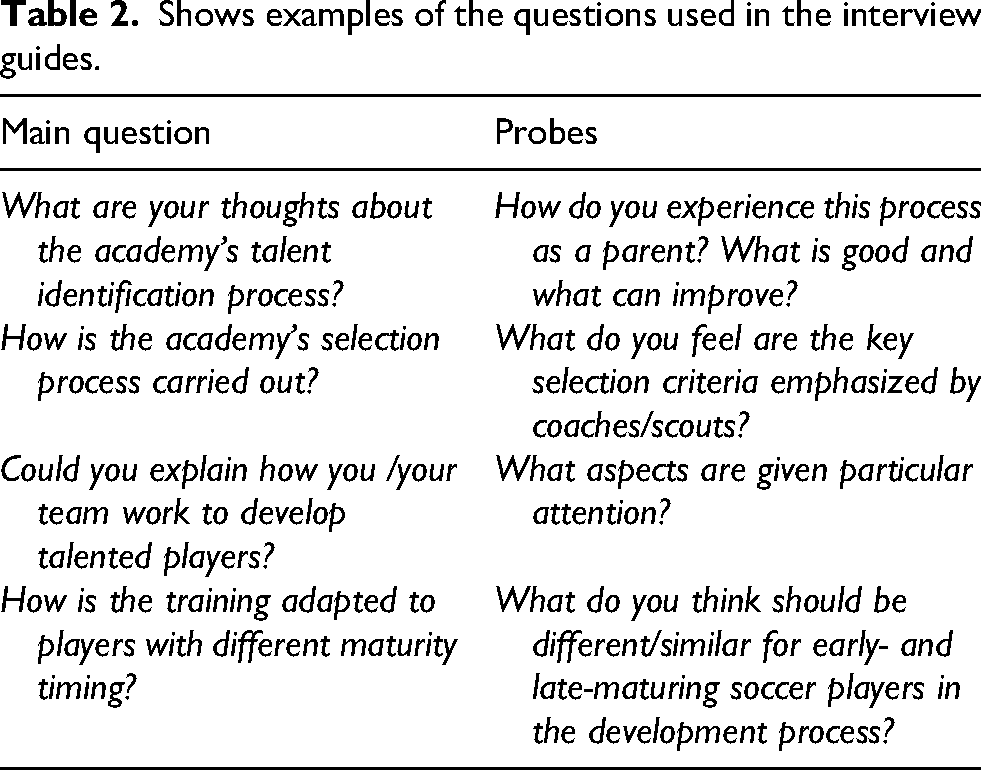
Three interview guides were divided into two parts with the associated questionnaires – one for the TID & TSE processes and one for the TDE process. The guides centered different topics depending on the person being interviewed (player, parent or coach) to collectively contribute to a comprehensive understanding of their experience and perceptions. To elevate the quality and trustworthiness of the interview guides, questions maintained a balance of being open, aligned with the research question and adapted to the interviewee's vocabulary. Additionally, probes were designed in advance to help the participants elaborate on certain subjects (see Table 2). The interview guides were developed by both researchers and feedback was received from key stakeholders in the respective soccer community on the interview guides, before pilot testing the interviews.75,76
Shows descriptive statistics for the players height, weight, CA, SA, and playing experience by maturity timing.
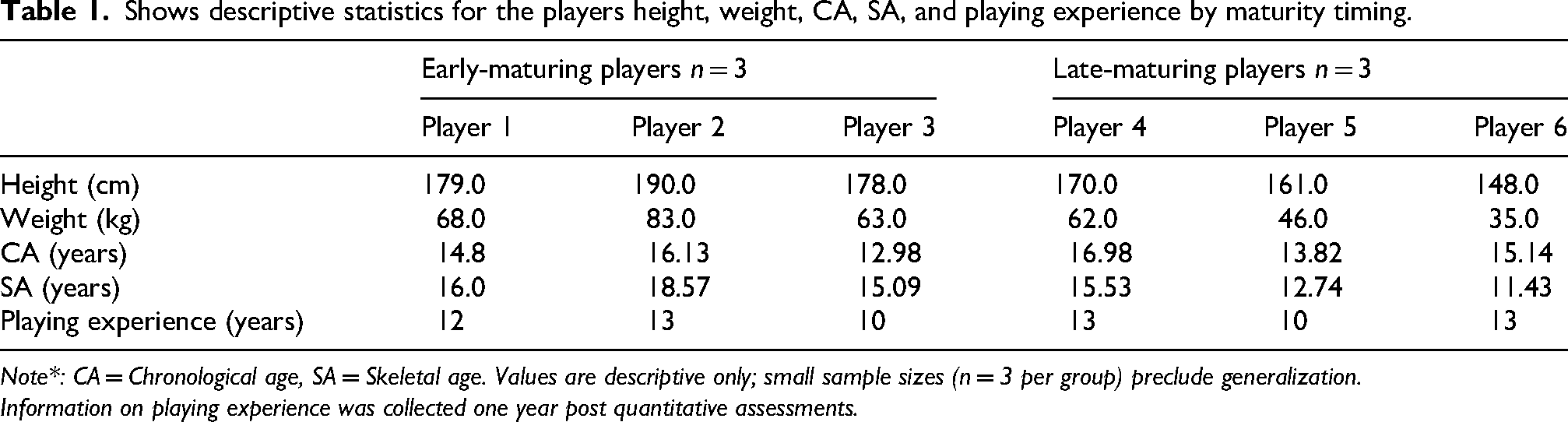
Note*: CA = Chronological age, SA = Skeletal age. Values are descriptive only; small sample sizes (n = 3 per group) preclude generalization.
Information on playing experience was collected one year post quantitative assessments.
Shows examples of the questions used in the interview guides.
Data collection
Fifteen semi-structured interviews were conducted to gain insight into the academy's TID, TSE, and TDE practices. Six interviews were carried out with the players, five with their parents and four with the coaches. Originally, all players were meant to have at least one parent interviewed, but the parents of the oldest late-maturing player in the U19 category were unavailable during data collection. In two of the interviews, both parents attended, while two involved just the father and one involved just the mother. All informants were assured that their personal data would remain anonymous and that they could end the interview at any time. The interviews were recorded using a Norwegian digital dictaphone app (version 5.0.5), which automatically sends the audio recordings to a protected external research server. The interviews lasted between 30 and 55 min (31.3 ± 3.9 for the players, 36.7 ± 7.5 for the parents, and 51± 2.1 for the coaches) and were held face-to-face by the lead author at the academy's facility at the end of 2024.
Data analysis
The six-step framework presented by Braun and Clarke,77,78 following an inductive thematic approach, was applied to analyze the qualitative data. The first step involved familiarization with the data, where the audio recordings were transcribed and read prior to the coding phase. In total, 1,065 codes from the raw material were manually developed (step 2) and clustered into potential themes based on patterns, similarity and relevance to the research question (step 3). The codes and the identified themes were “data-driven”, using primarily the participants’ original language to enrich descriptions of the overall data.77,79 In step 4, the themes were refined and organized into larger themes and subthemes. A brief paragraph was written in parallel for each theme to capture the essence of the analysis and support a clearer understanding of the overall narrative.77,78 Since these steps were initially performed by the lead author, investigator triangulation was used by conducting an experiment with the second author to enhance trustworthiness. 80 This involved the second author to independently categorize 51 of the participants’ quotes across four main themes and ten subthemes written on Post-it notes. These statements comprised 5% of the original transcriptions, which was considered a representative sample of the overall dataset. 84% were correctly placed among the subthemes, and 90% within the main theme categories, regarded as an acceptable level of agreement between the authors. The key findings were discussed internally before naming the final themes in step 5. Both authors contributed to the final manuscript in step 6. Given that the interviews were initially carried out in Norwegian, the presented statements have been translated as accurately as possible.
Results
In the following section, results are presented under two main themes: (1) Talent identification and talent selection and (2) talent development, with results from the questionnaires and the key findings from the interviews, organized in nine subthemes. The early-maturing group is presented as player 1–3 and parent 1–4, while the late-maturing group is displayed as player 4–6 and parent 5–7.
Talent identification and talent selection
At the academy, there was strong focus on identifying and selecting soccer players who could potentially progress to the professional level in the future. Figure 1 presents the participants evaluations of the significance of factors related to identifying and selecting a player. Table 3 provides descriptions of the main findings from the interviews with illustrated quotations.
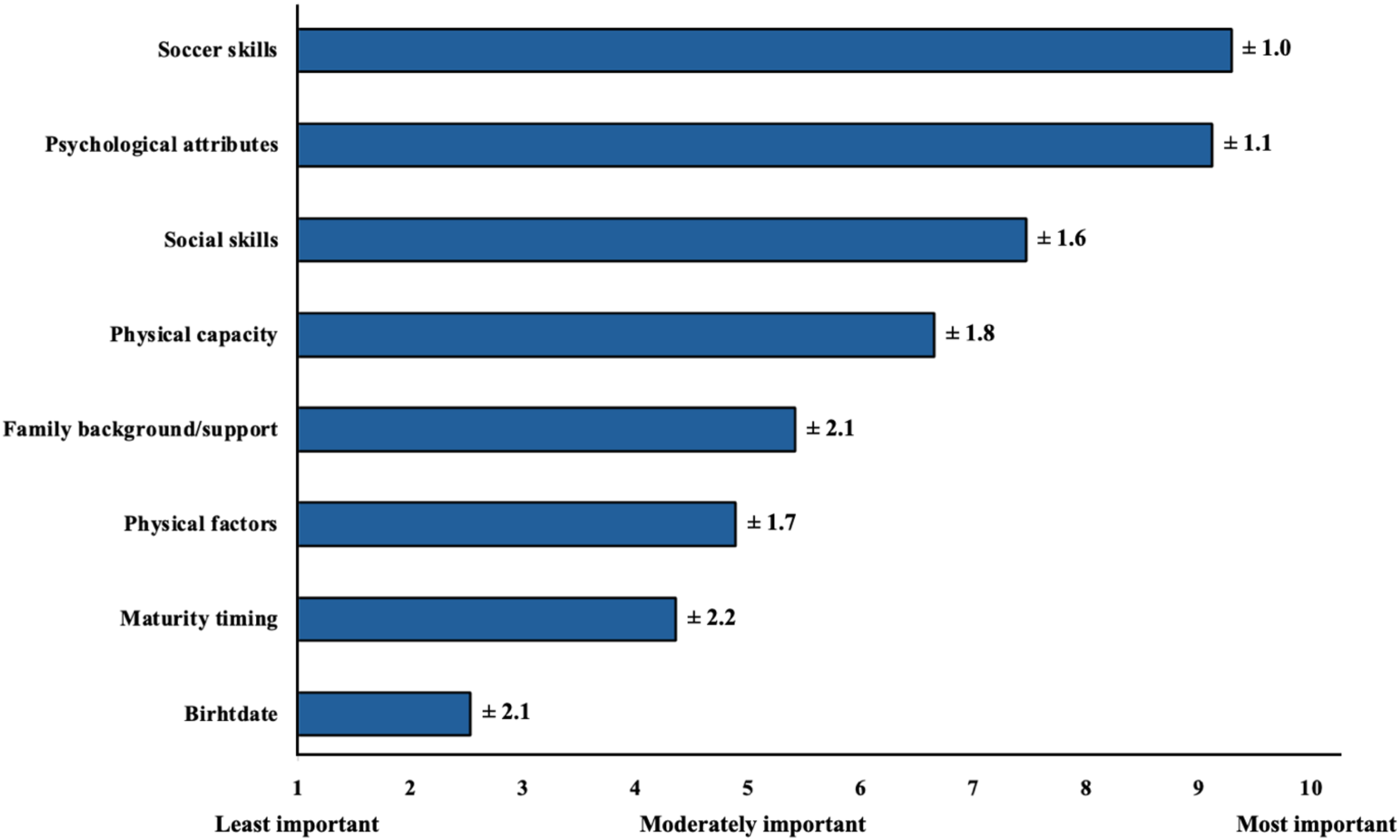
The participants’ rankings (Mean ± SD) of factors deemed least, moderately, and most important for recruiting a player during TID and TSE (n = 17). *Note: Social skills = interaction abilities and creating a positive environment, Physical capacity = speed, agility, jumping, strength, endurance, mobility, Physical factors = height, weight, BMI. Results are descriptive and exploratory.
Key aspects regarding talent identification and talent selection.
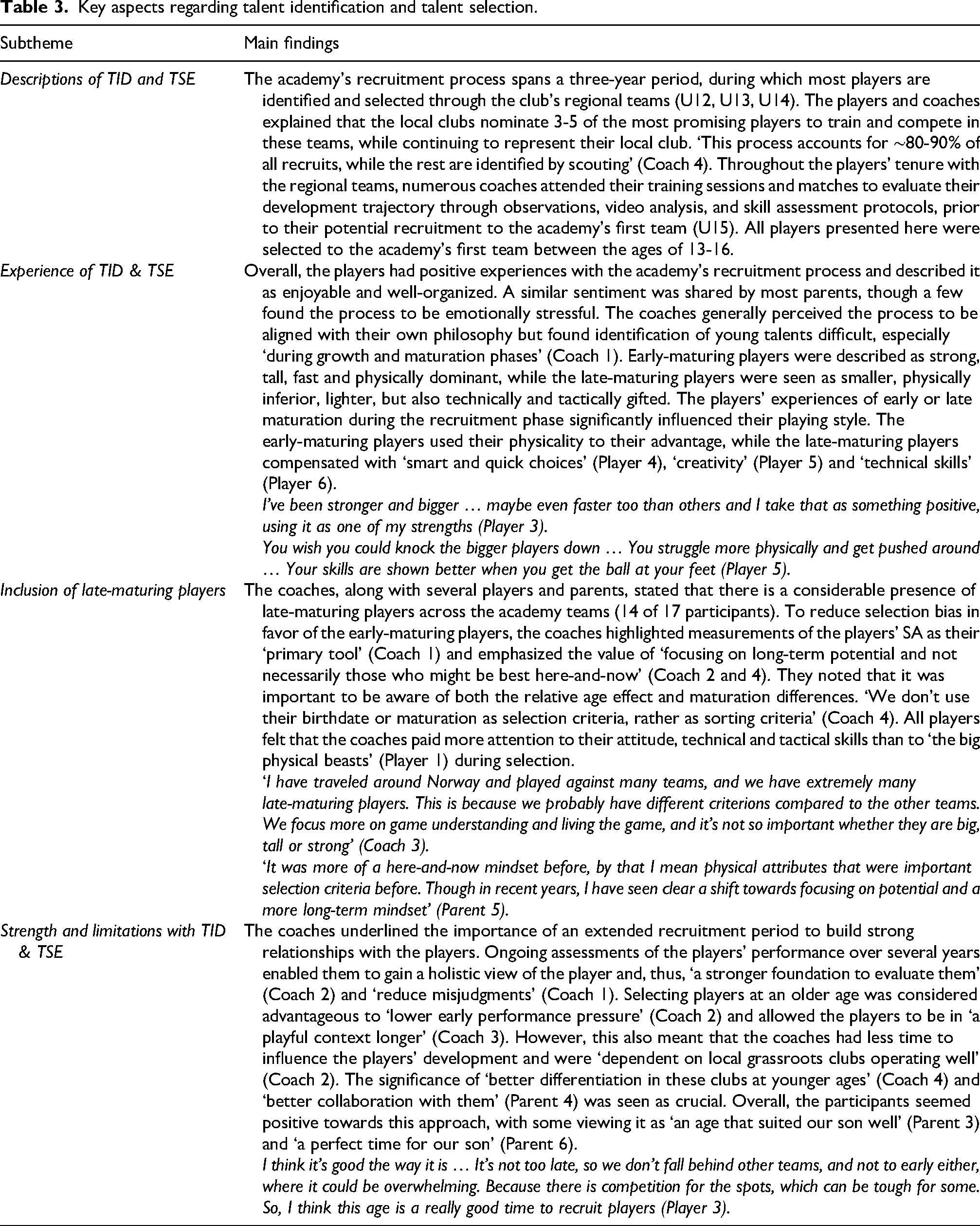
Figure 1 shows that both players, parents and coaches perceive soccer skills (technical and tactical skills) and psychological attributes (intrinsic motivation, willingness to learn, self-regulation and handle pressure/stress) as the two most important factors for identifying and selecting soccer players. Maturity timing (early- or late-maturing) and birthdate (born early or late during the selection year) were regarded to have the least significance for TID and TSE.
Talent development
The academy's development philosophy centers individualized adaption in line with the players’ maturity timing, supported by a dedicated team of coaches and medical staff working closely together. Figure 2 displays the participants evaluations of the significance of factors related to the TDE process. The main findings from the interviews are highlighted with corresponding quotes in Table 4.
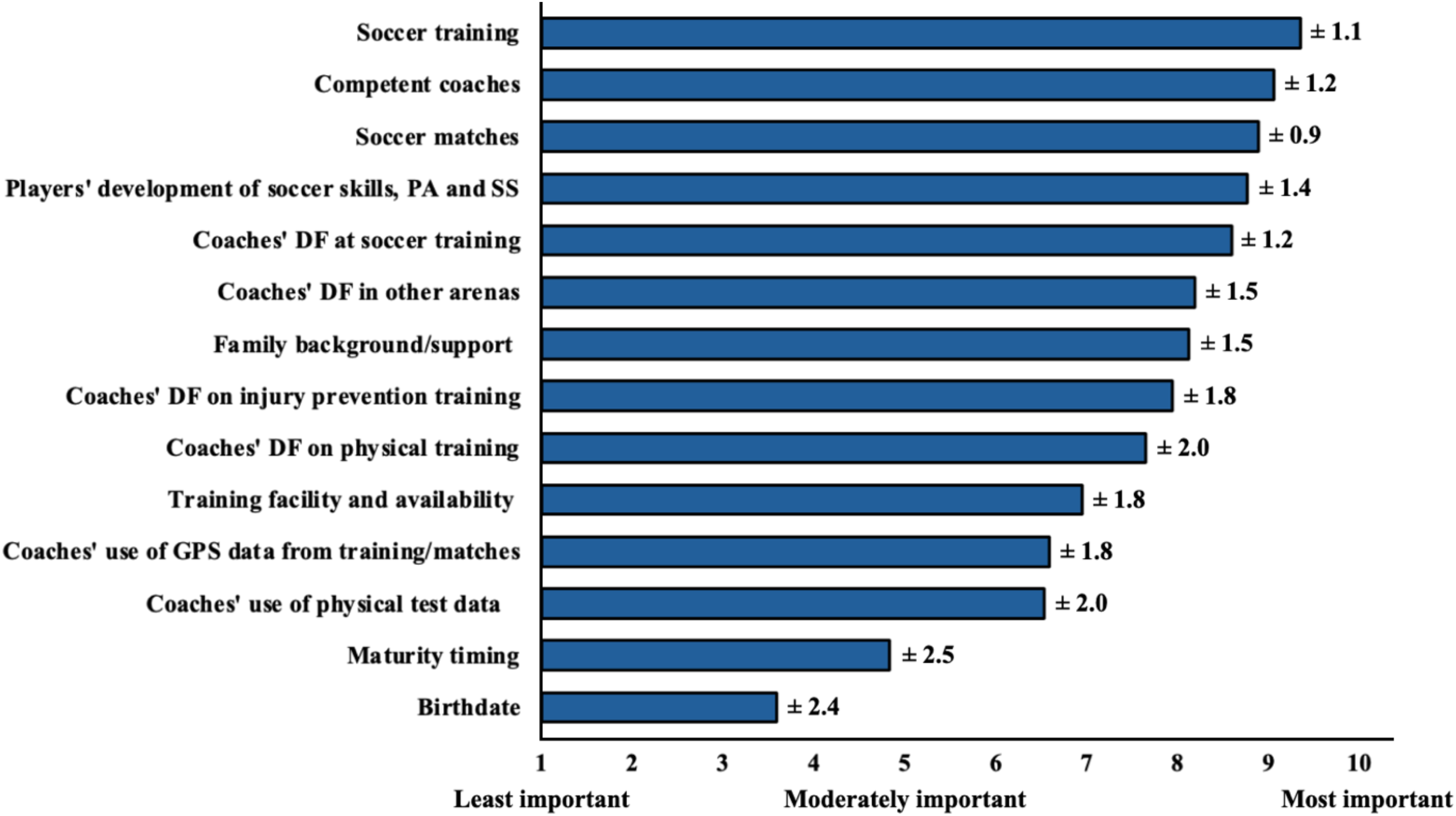
The participants’ rankings (Mean ± SD) of factors deemed least, moderately, and most important for successful TDE (n = 17). *Note: PA = Psychological attributes, SS = Social skills, DF = Development focus, other arenas = nutrition, sleep and individual training. Given the small sample size (n = 17), these results are presented descriptively and should be interpreted as exploratory rather than inferential.
Key aspects regarding talent development.
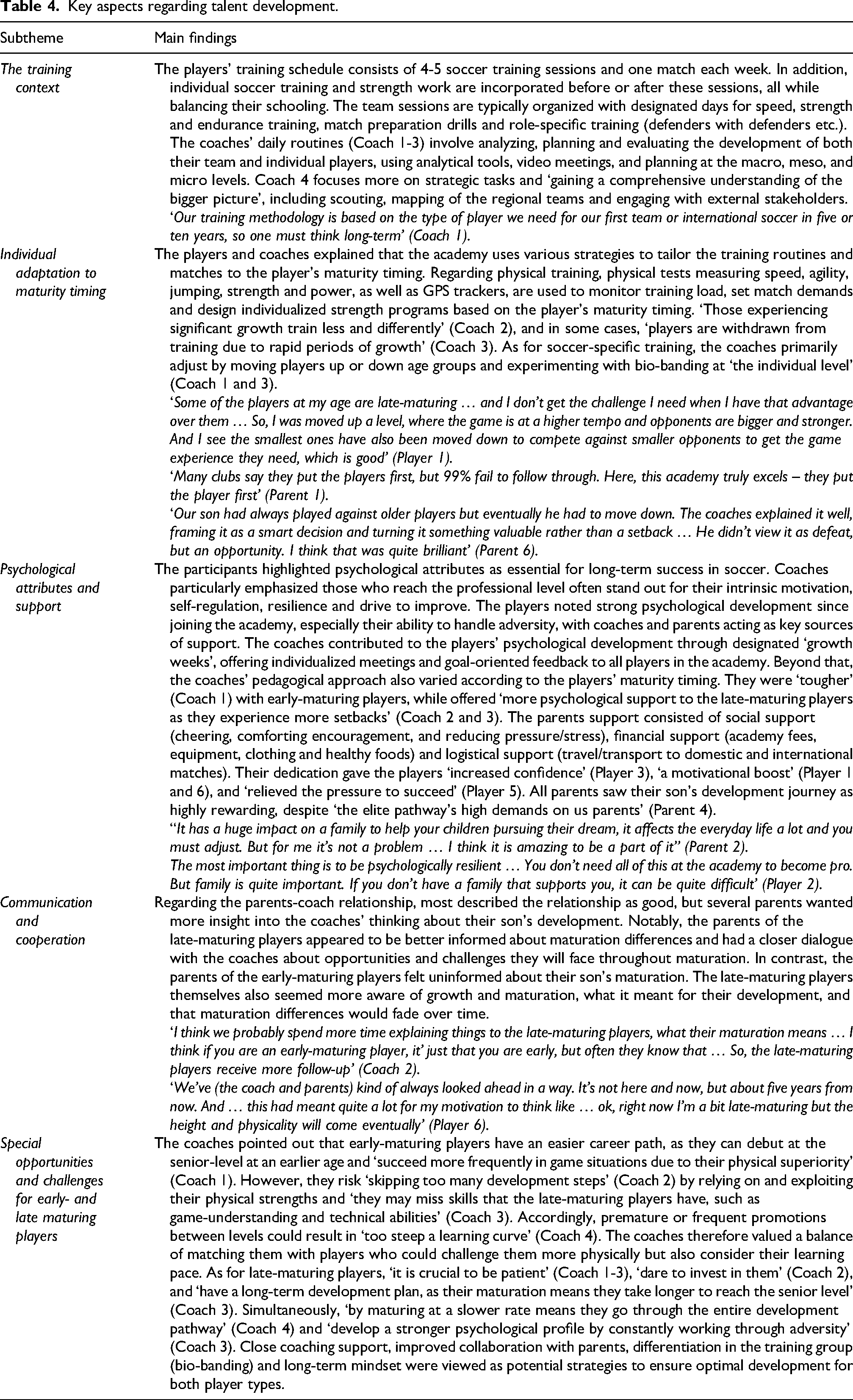
Figure 2 shows that the participants emphasize soccer training (club, regional, national team and individual training), competent coaches (coaches with strong soccer knowledge that foster a positive learning environment) and soccer matches (matches with club, regional, and national teams) as the most important factors for successful TDE in soccer. The players development of individual skills and attributes (soccer skills, psychological attributes and social skills), coaches’ development focus at soccer practice and at other arenas, along with family background/support were regarded as almost equally important. Compared to TID and TSE, maturity timing and birthdate remains the least important, while family background/support seems to have gained more significance for TDE.
Discussion
The aim of this study was to explore the experiences of early- and late-maturing players, their parents, and coaches regarding the TID, TSE, and TDE practices at an elite soccer academy in Norway. Using a mixed-methods deign, the participants have illuminated the academy's TID, TSE, and TDE practices.
While most European academies begin identifying and selecting players as early as 8 to 9 years old,21,81 the academy in the present study adopts a multiyear identification phase, with selection occurring between 13 and 16 years of age. The coaches’ emphasis on an extended recruitment period aligns with previous recommendations, which highlight its importance for ensuring a more accurate and sustainable selection.10,13,21 The reason selection first occurs at 13 years of age is largely due to the Norwegian Football Federation's clear guidelines on TSE, 82 as there is strong evidence suggesting that early selection is not necessary to achieve future success in soccer.3,4,83,84 Provided that differentiation of local grassroots clubs is clear and that these clubs collaborate well with the academy, the participants in this study seem to be positive towards selection at a later stage.
However, given the substantial maturation differences between early- and late-maturing players,36,48,51–53 which are particularly pronounced between the ages of 13 and 15, 48 selection during this age period necessitates heightened awareness of players’ maturation. In this study, the coaches appear to demonstrate a high level of awareness regarding both the relative age effect (the overrepresentation of players born early in the selection year) and biological maturation during the selection process. Crucially, their awareness of maturation is operationalized by adjusting for players’ maturity timing based on SA measurements, thereby enabling the academy to implement important measures to mitigate selection biases.22,23,36 Furthermore, the players’ experiences of early and late maturation reflect these complexities; whereas the early-maturing players often capitalized on their physical advantages, while the late maturing-players compensated with their technical and tactical skills. This underscores the significance of a selection process that recognizes and values a broad range of competencies beyond physical attributes alone.10,36,72
In contrast to coaches’ tendency to favor early-maturing players during TID and TSE, as shown in other studies,30,32,33 this does not appear to be the case for the academy in the present study. The study shows that soccer skills and psychological attributes are considered the most important selection criteria by the participants. This emphasis is crucial for including more late-maturing players, as they often excel in these areas.26,45,48 The fact that physical capacity, physical factors, maturity timing, and birthdate are ranked less important by players, parents, and coaches suggests that the academy has established a collective focus on development potential rather than early physical advantages. Considering the interview material, this approach also seems to be well embedded in the academy's practice.
Several studies confirm that coaches generally place great emphasis on technical, tactical, and psychological skills.85–87 Nevertheless, research has shown that possessing these skills alone is not necessarily decisive for selecting more late-maturing players.31,33 Hill et al. 31 found that although coaches valued late-maturing players’ skills, they often prioritized early-maturing players instead, due to their faster physical development and earlier progression to senior level. This illustrates the importance of academies and coaches having a clear, patient, and long-term development philosophy to give late-maturing players a real opportunity. 36 The coaches in the present study appear to hold such a philosophy, investing in players who are ‘not necessarily best here-and-now’, but who have potential to succeed in the long term. Adherence to this long-term perspective is supported by the fact that 14 out of 17 participants stated there is a considerable presence of late-maturing players across the academy teams. Combined with awareness of maturation differences, maturity assessments, and prioritized selection criteria, the academy appears to exhibit a rigorous commitment to actualize an equitable TID and TSE practice.
Regarding TDE, the players, parents, and coaches considered soccer training, competent coaches, and soccer matches to be the most important factors for long-term success in soccer. This suggests an acknowledgment that the quality and continuity of the daily soccer-specific work constitute the core of TDE, with individual and support factors playing a particularly important role in enhancing the quality of these core components. The amount of soccer-specific training has previously been pointed out to be decisive for future success in soccer.5,15,88 It is therefore not surprising that soccer training, the value of competent coaches, and matches are the factors the participants emphasize as most important for successful TDE. Previous studies have shown that players’ individual maturation levels significantly influence performance, physical training, and susceptibility to injury, demonstrating the need for individualized training adaptations.55,56,89 The coaches strive to address this by tailoring both physical and soccer-related training according to the players growth, maturation, and development.
During periods of growth and puberty, the incidence of injuries increases drastically, and these injuries are often more severe.47,54,55 In line with scientific recommendations,55,56 the coaches in this study appear to be mindful of managing training load during rapid growth phases. Given the players’ demanding training schedule, which includes team training, matches, individual sessions, and school commitments, this appear to be a prudent approach. Moreover, this highlights that assessing players’ maturation is not only relevant for TID and TSE, but also for the TDE phase. As for soccer-specific training, the coaches’ strategy of moving players up/down age groups seems sensible to promote suitable challenges. Both early- and -late maturing players who had experiences being moved with older/younger peers, shared positive experiences with this practice, along with their parents. However, research indicate that the success of this approach depends heavily on the coaches’ competence to consider both physical, technical, tactical and psychosocial factors before deciding to rearrange players between age groups. 90 Similarly, this applies to bio-banding, where particular attention must be paid to psychosocial and technical factors. 44 For example, a late-maturing player that thrives within their own age group may not benefit from competing against younger players of the same maturation level. 64 Thus, determining the most appropriate approach must be assessed individually and collaboratively in dialogue with the coach, player, and parents.44,90
Several studies on bio-banding have shown a positive trend towards reducing physical disparities among players, while fostering a more technical and tactical dimension of the game for both early- and late-maturing players.44,50,57,63 This is particularly pertinent as coaches in this study, along with findings from prior research have pointed out that early-maturing players may leverage their physical abilities at the expense of developing diverse skills.26,31,45 In light of the coaches’ aim to avoid an excessively steep learning curve for early-maturing players, bio-banding may present a more appropriate approach than moving players up several age groups. However, the practical implementation of bio-banding has proven challenging, as it encounters structural barriers related to match organization, adaptation of training schedule, and access to recourses and players.41,65 Furthermore, misconceptions about the concept have been reported among coaches, players, and parents, potentially limiting its full impact.44,91 The fact that the coaches in the present study describe the academy's use of bio-banding at the ‘individual level’ suggests that they, so far, have a pragmatic but somewhat limited understanding of the concept. Rather, bio-banding involves systematically grouping players according to their maturity timing for specific training and competitive purposes.50,63,64 For example, this strategy may involve grouping late-maturing players together to compete against each other rather than moving individual players up/down age groups based on their maturation. Should the academy pursue a more systematic implementation of bio-banding in the future, prioritizing knowledge of both the conceptual framework and the practical challenges it entails would be advantageous.
The participants’ recognition of psychological attributes as key factors for long-term success in soccer aligns with recent studies.92,93 The coaches’ characterization of successful players as intrinsically motivated, self-regulated, resilient, and driven to improve likely reflect an understanding that these traits distinguish those who overcome challenges and continue to develop over time. As such, earlier research has shown that such factors have strong predictive value for future professional soccer careers.5,6,15 Through the implementation of ‘growth weeks’ the academy demonstrates a systematic approach to psychological training, linking the development of the players psychological skills and goal-oriented feedback to each individual player. Especially the players’ parents and their extensive support efforts appear to have played a pivotal role for the players psychological growth and well-being. This may be attributed to the parents’ strong sense of commitment and the way all parents viewed supporting their son as a privilege. Moreover, both early- and late-maturing players reported predominantly positive experiences throughout the TID, TSE, and TDE phases. This consistency in perception may suggest that the academy has succeeded in creating an inclusive development environment that supports players regardless of their maturation.
There were no clear differences in the extent of support provided between the parents of both early- and late-maturing players. However, as the parents of the late-maturing players appeared to have a closer dialog with the coaches about maturation differences, their enhanced understanding of maturation may have enabled them to provide more targeted and patient support. Earlier studies have highlighted the importance of well-functioning communication and cooperation between parents and coaches to nurture players long-term development in academy systems.17,18,20 To promote positive development experiences and maximizing opportunities for all players, it is imperative that coaches, parents and players possess comprehensive knowledge of growth and maturation processes. 65 The fact that the parents of the early-maturing players were less informed about maturation could result in a weaker understanding of challenges these players may face. As highlighted previously, early-maturing players may capitalize on physical advantages, potentially limiting the development of other essential skills. Once maturation differences level out, reliance on physical superiority alone becomes unsustainable. 45 Without a broader skill set, these players may stagnate as competition intensifies, 31 and ultimately fall short of meeting expectations at the senior level.35,64 Therefore, it is crucial that coaches also raise awareness among early-maturing players and their parents about maturation and long-term developmental challenges, so that support and expectations can be adapted in a way that promotes lasting development and mastery – even when physical differences level out.
Conclusion
Practical implications
The study provides novel insights relevant for coaches, academies, and practitioners. Soccer skills and psychological attributes should be prioritized in identification and selection processes, while adaptations in training and match programs to players’ maturation can promote equitable development. Emphasizing psychological development and fostering strong parental support are crucial for positive experiences among both early- and late-maturing players. Furthermore, clear communication about biological maturation, particularly with early-maturing players and their parents, may enhance understanding and engagement in development programs. Collectively, these findings highlight practical strategies that can support fair and effective talent identification, selection, and development practices in youth soccer. Ultimately, this study offers a valuable step toward bridging the gap between scientific research and its application in real-world practice.
Limitations and future research
The findings of this study should be interpreted in light of several limitations. First, the study focused exclusively on a single academy in Norway, and the quantitative component relied on a small sample (N = 17), making the findings descriptive and exploratory. Consequently, their inferential power is limited, and generalization beyond elite academy settings should be approached with caution. Second, there is a potential for response bias, as participants may have consciously or unconsciously emphasized positive aspects of the academy experience. Third, although the academy's long-term philosophy, selection criteria, and awareness and assessment of players’ maturation likely contribute to reducing selection bias, the study's qualitative basis constrains conclusions about their actual impact. To further understand the impact of maturation-aware practices, longitudinal research employing comparative designs across multiple academies is warranted. Future studies could examine how adaptations in training, match programs, and selection criteria influence player development outcomes, retention, and dropout rates. Expanding research to include recreational and non-elite contexts would also provide insights into how growth and maturation considerations can be applied more broadly to support positive experiences and equitable development in youth soccer.
Footnotes
Acknowledgements
The authors would like to thank the academy, the players, their parents, and coaches for participating in this study.

This study was approved by the Norwegian Center for Research Data (Ref. nr. 590559; 13.11.2024) and conducted in accordance with the ethical standards of the lead author's academic institution and the Declaration of Helsinki.
Consent to participate
Written informed consent was obtained from all participants, with parents consenting on behalf of the players under 16 years of age.
Consent for publication
All participants provided informed consent for the publication of anonymized data. The manuscript contains no identifiable personal information.
Author contributions
The first author conducted the study, including data collection, analysis, and manuscript drafting. The second author contributed with methodological and theoretical expertise, participated in study planning, and critically revised the manuscript.
Funding
The authors received no financial support for this research.
Declaration of conflicting interest
The authors declared no conflict of interest.
Data availability
The data supporting the findings of this study are not publicly available due to ethical and privacy restrictions, but they can be obtained from the corresponding author upon reasonable request.