




Abstract
This study aimed to investigate the perceptions of key stakeholder groups, i.e. coaches, players, and referees, of a reduced maximum legal tackle height law variation trial in a collegiate amateur rugby competition. A pragmatic qualitative approach was used. Eighteen semi-structured interviews were performed. Thematic analysis was used to analyse the data. Three main law trial-related themes and four additional contextual themes were identified. The most important contextual factors include perceptions of resource scarcity of the implementation context, deficient concussion knowledge and lack of education among all stakeholder groups, tackle technique deficiencies, and an entrenched culture of a dismissive attitude towards serious injuries and non-disclosure of concussion by players. Real-world challenges such as inconsistent sanctioning during gameplay, multi-tackler tackles, and player fatigue underscore the gap between the theoretical knowledge of the law and the complex, dynamic nature of its execution. Furthermore, deeply ingrained issues like entrenched tackle techniques, the quality of coaching, and prevailing attitudes towards concussion compounded these challenges, indicating a need for a more comprehensive approach to bridge the divide between understanding and implementation. Despite these challenges, several participants felt the law variation was still more effective than the existing law; and that it created more awareness around concussion, while sending a clear message that player welfare is being taken seriously. Collectively these factors indicate the difficulty of addressing a complex problem such as concussion, with a law variation intervention in a challenging (resource-constrained) setting.
Background
Concussion has risen to prominence as a sports injury prevention priority. 1 The intense focus on sport-related concussion (SRC) is driven by increased incidence of SRC2–4 and its association with long-term neurological and mental health problems.5–11 Within rugby union (rugby), the global governing body of the sport, World Rugby, developed various management strategies to reduce the incidence of and improve the care of players with SRC.12–17 Epidemiological data indicate that three quarters of SRC in rugby are sustained during the tackle event.2,3,18 The tackle is a frequently occurring contest that is physical, psychological, and technical in nature, involving the attacking ball carrier and at least one defending tackler. 19 Players’ technical proficiency and capacity specifically have been shown to be major risk factors for injury. 20 For example, in elite rugby, an upright tackler body position contacting the ball-carrier above armpit level increases head injury risk for the tackler and ball-carrier. 18 From this empirical evidence, tackle-related measures were developed to reduce the concussion risk in the tackle event. 14 These measures revolve around changing players’ behaviour in the tackle event and include stricter sanctioning of illegal high tackles, the development of a high tackle sanctioning framework, improved safe tackle technique coaching, and education.14,21,22 Another measure aimed at reducing the risk of concussion during the tackle was implementing a lowered maximum legal tackle height law variation trial (lowering the maximum legal tackle height from the ball carrier's shoulder level to armpit level).23,24 These two studies, which are to date the only lowered maximum legal tackle height trials reported in professional and amateur rugby union, did not reduce the incidence of concussion in the studied cohorts. Despite being based on sound empirical evidence, 18 this intervention has not yielded a clear effect on concussion incidence, highlighting that implementing such a law variation trial is complex and involves various stakeholders. Therefore, effective implementation of these interventions requires deeper evaluation to gain an understanding of the potential factors that may influence outcomes.
Stakeholders’ perceptions and adoption or rejection of a prevention strategy is driven by various determinants that need to be understood in their specific contexts. These stakeholder attitudes and beliefs are a fundamental part of the evaluation process of any preventive strategy.25,26 Thus, this study aimed to investigate stakeholders’ perceptions and beliefs regarding a law trial aimed at reducing concussion incidence in community rugby union, by exploring (i) the effectiveness and value of a lowered maximum legal tackle height in improving player welfare, (ii) the factors that influence the successful implementation of such a law variation and (iii) the contextual factors that underpin these perceptions and beliefs, particularly those that may predispose stakeholders towards a behavioural change that supports the law's successful implementation.
Methods
Design
A pragmatic, qualitative approach was used to explore the law variation trial implementation process from the perspectives of key stakeholders. 27 The study formed part of an overarching law variation implementation trial, described in detail elsewhere. 24 Ethical approval for this study was granted by the Health Research Ethics Council of Stellenbosch University (reference number N19/06/074). Additional methodological information is contained in Appendix 1.
Participants
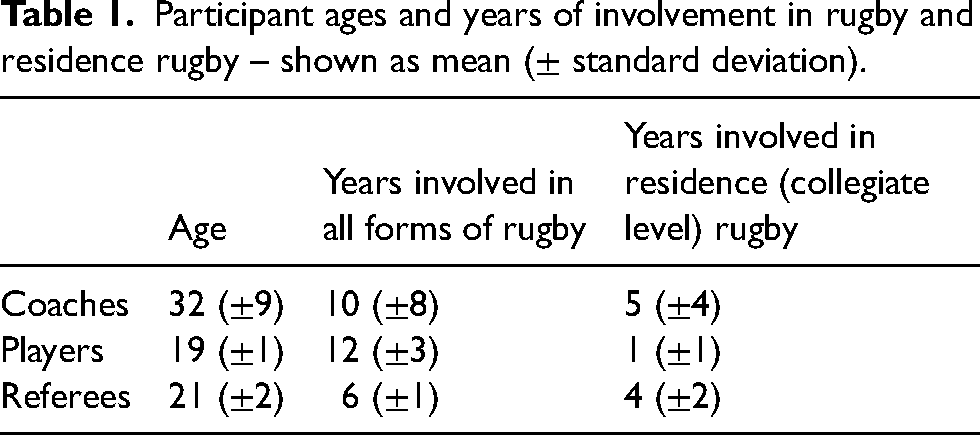
Six coaches, six players, and six referees consented to individual semi-structured interviews (Table 1). Participants were eligible if they actively participated in at least one capacity (coach, referee, or player) in the 2019 inter-residence competition, were 18 years or older, and provided informed consent.
Participant ages and years of involvement in rugby and residence rugby – shown as mean (± standard deviation).
Data collection
At the end of the 2019 season, semi-structured interviews explored stakeholders’ perception and beliefs around (i) the effectiveness and value of a lowered maximum legal tackle height in reducing concussion incidence and improving player welfare, and (ii) factors that influence successful implementation of such a law variation (Appendix 2). Interviews lasted approximately 15–20 minutes and were audio-recorded.
Analysis
Thematic analysis was used to analyse the data.28,29 Qualitative software (NVivo 12, QSR International) was used to organise the verbatim interview transcriptions. Two transcripts from each stakeholder group were coded inductively by both RvT and MB. Codes were discussed and refined in a collaborative manner based on our understanding of the meaning contained in each code. Thereafter, RvT coded the remaining interviews. New codes and reorganisation of codes were discussed and reviewed in depth by RvT and MB at multiple separate meetings. Thereafter, codes with similar characteristics were grouped together to form categories. These categories were further developed into initial and final themes. In subsequent research team meetings, themes were considered and discussed in relation to the coded extracts and the entire dataset, until the research team was satisfied that the themes offered a comprehensive description of the data.
Results
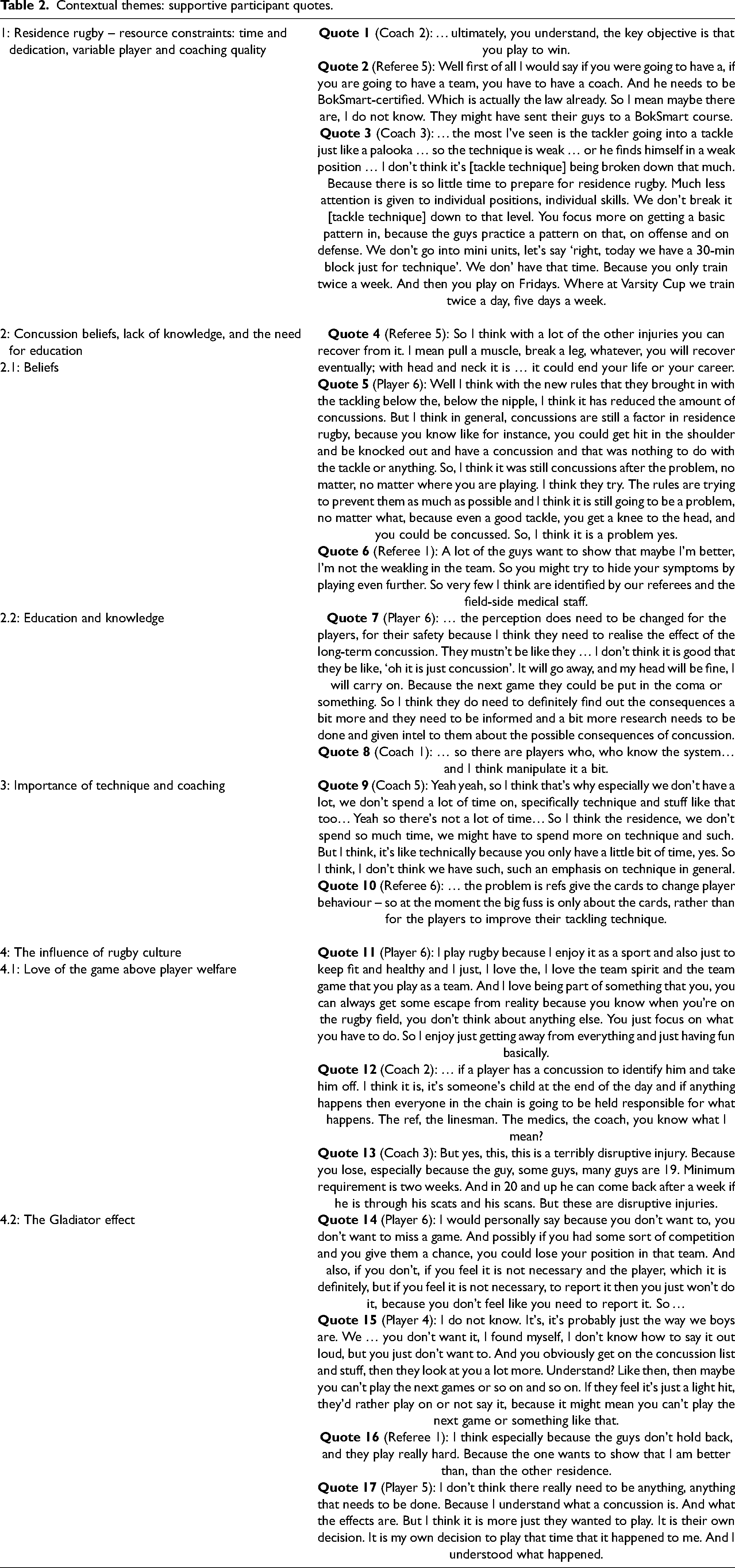
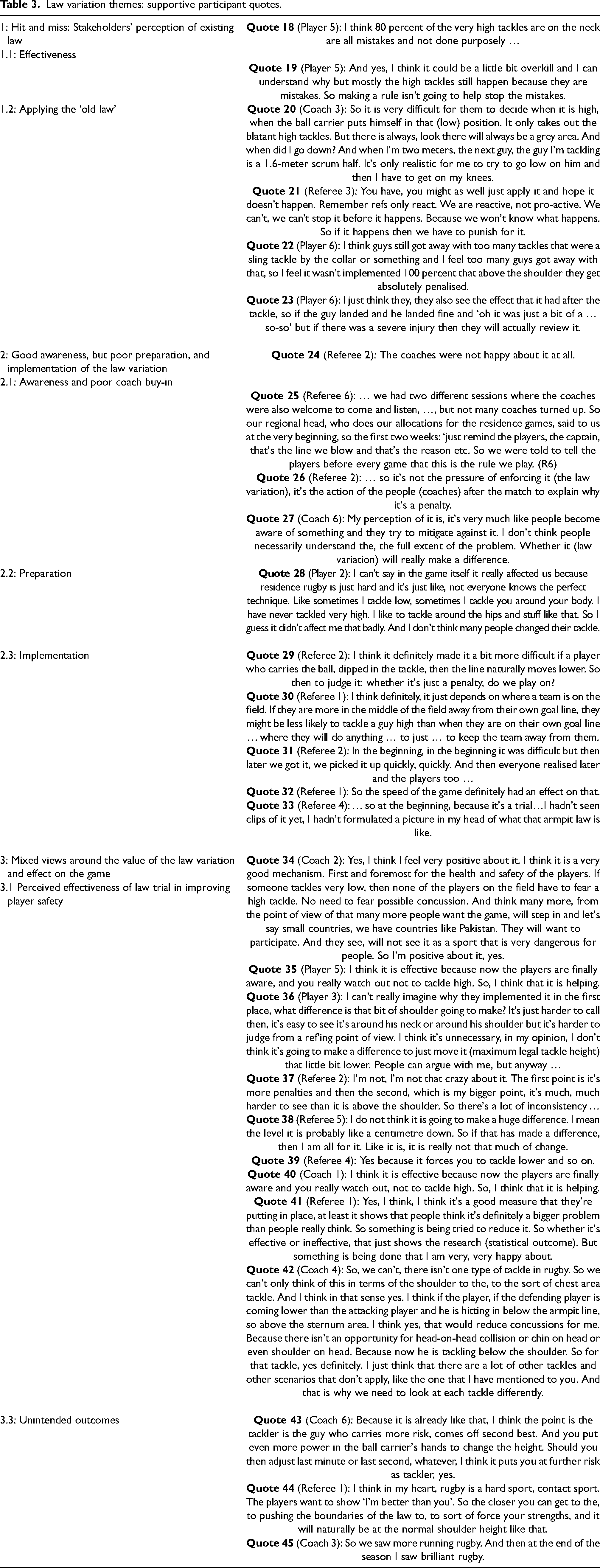
Overall, seven main themes were developed form the data (Figure 1). Our findings are divided into three themes related to participants’ perceptions of the law variation. We identified four additional themes that describe the context in which the law variation was implemented. The contextual themes are presented first, as these aspects describe the nature of the setting in which the trial was implemented and thus, underpin the overall experience of stakeholders. All supportive participant quotes are listed in Tables 2 and 3, respectively (C, coach; R, referee; P, player).
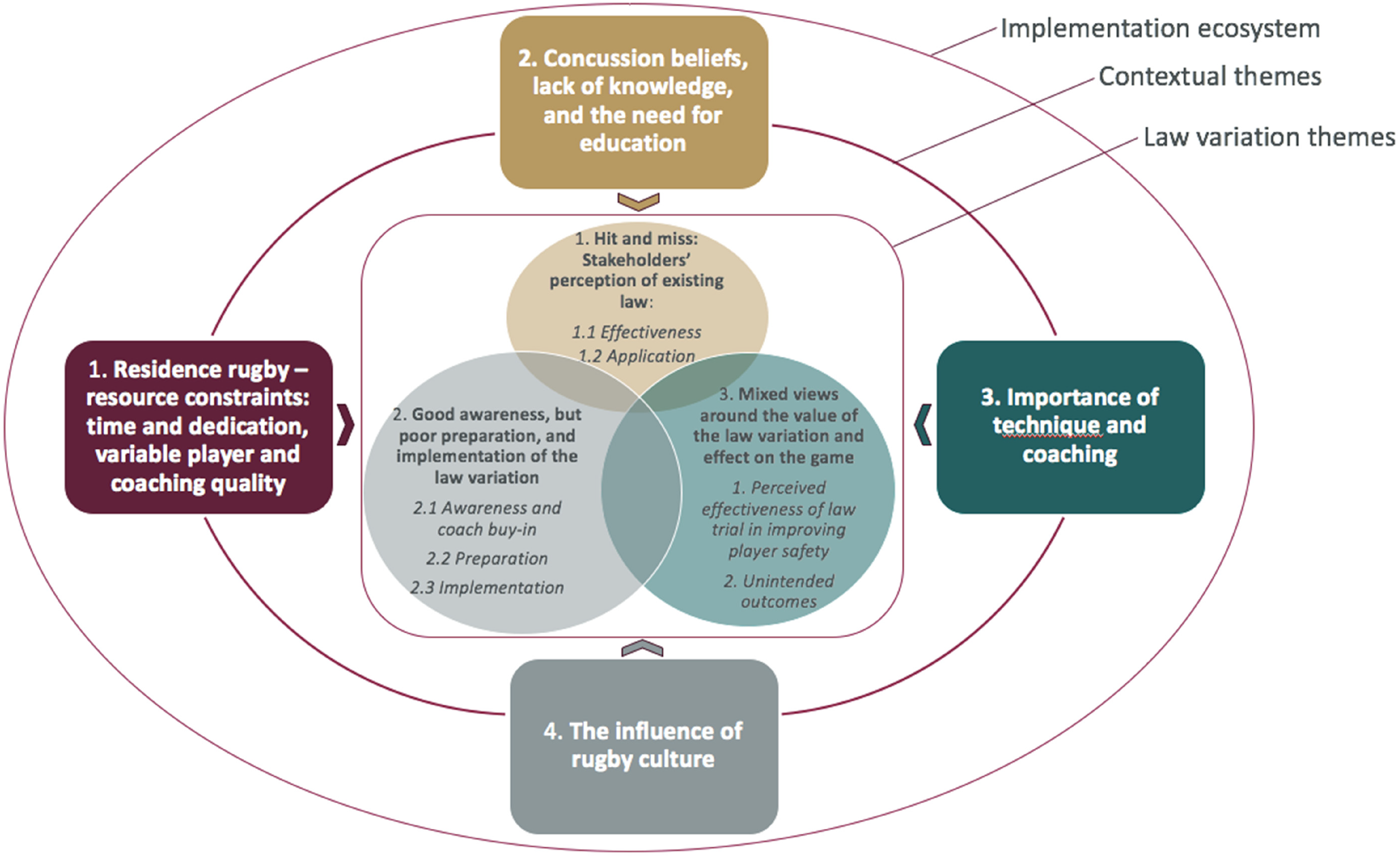
Diagrammatic presentation of interrelationship between contextual and law variation themes.
Contextual themes: supportive participant quotes.
Law variation themes: supportive participant quotes.
Contextual themes – understanding the implementation setting
Theme 1: residence rugby – resource constraints: time and dedication, variable player and coaching quality
Although players prioritised their academic pursuits and did not seek professional rugby careers, they were still immersed in an environment where a ‘win at all costs’ mentality prevails, underscoring a cultural norm that often overshadows personal aspirations and could potentially influence attitudes towards player safety and law adherence (Table 2, Quote 1; C2). Additionally, coach quality varied significantly among teams, with the best coaches often only available to the handful of top teams, whereas teams in lower leagues frequently reported not having coaches at all. Apart from difficulties securing a coach, it is also prerequisite that coaches regularly undergo BokSmart-certification that further limits the number of available coaches. BokSmart30,31 is a national injury prevention and safety programme (Table 2, Quote 2; R5).
The majority of coaches indicated that major time constraints prevent the coaching of technically correct tackle technique during limited training timeslots (Table 2, Quote 3; C3).
Theme 2: concussion beliefs, lack of knowledge, and the need for education
Beliefs
Most of the participants indicated that they believed injuries to the head and neck, and concussion, to be the predominant injury concerns facing rugby (Table 2, Quote 4; R5). Other injuries of concern included musculoskeletal injuries (knee, shoulder, ankle), in addition to any serious (leading to long absence from the game) injury and catastrophic injuries.
All stakeholder groups referred to the difficulty in recognising concussion, especially without obvious signs and symptoms. A player noted that rules are generally well intentioned by governing bodies but that, ‘no matter what’, it cannot prevent all concussions (Table 2, Quote 5; P6). It was felt that players, particularly those that do not exhibit clearly visible signs, frequently lie, or hide their symptoms, to avoid being removed from play and being seen as a ‘weakling’ (Table 2, Quote 6; R1).
Education and knowledge
It was a common perception across stakeholder groups that coaches and players lack sufficient knowledge to recognise concussion symptoms and appreciate the potential long-term neurological and mental health consequences. Participants also appeared to be unsure about return to play protocols and what they entailed. Participants consistently identified the need for more education around concussion (Table 2, Quotes 7 and 8; P6, C1)
Theme 3: importance of technique and coaching
Players’ felt that it is important that players are exposed to correct tackle technique coaching to prevent concussion from an early age, and that more and better technique coaching is required. These views were largely supported by the referees who felt that players lacked sufficient technical skills. Almost all referees indicated that poor player technique is one of the primary causes of injury and that coaches do not allocate sufficient time on correct tackle technique coaching during training (Table 2, Quote 9; C5).
Certain referees noted that laws of rugby exist to govern that which is legal vs. illegal, but that those laws do not directly teach proper tackle technique. Notwithstanding, it was pointed out that players generally are more concerned with the sanctioning rate (i.e. number of penalties / yellow or red cards) than real behavioural change, and the role of poor player technique and lack of quality coaching on concussion incidence was reemphasised (Table 2, Quote 10; R6).
Theme 4: the influence of rugby culture
The deep-seated reverence for rugby in South Africa, akin to a religious devotion, profoundly shapes stakeholder behaviours, often prioritising the sport's traditional values and competitive success over emerging welfare considerations. This cultural backdrop can influence resistance to change and create a challenging environment for the adoption of new safety regulations, such as the lower tackle height law variation. Consequently, stakeholders’ intrinsic cultural alignment with the sport's ethos may inadvertently impede initiatives aimed at player safety enhancement.
Love of the game above player welfare
Stakeholders’ involvement or participation in rugby was driven by one dominant factor: love of the game. It was apparent that participants cared deeply about the game, a tradition entrenched in societal culture and often passed down from one generation to the next. Players indicated that they consider rugby to be a very enjoyable game that created the opportunity to build close friendships and lasting memories (Table 2, Quote 11; P6).
The majority of the coaches and referees were former players who wished to remain involved with the game in some manner. Yet, despite the reported love of the game, an ever-present tension between performance and player welfare was very apparent. For example, players noted that the identification of concussion is reliant on strict adherence to and enforcement of rules and protocols, astute field-side medics, and referees; nonetheless, they also noted that players who wish to continue playing too often manipulate medics and referees.
Coaches reported that all stakeholders have a shared responsibility to ensure the recognition of all concussions (Table 2, Quote 12; C2). Notwithstanding, it was also noted (by referees) that coaches would often intimidate referees or medics not to remove a player, that medics and referees are often not firm enough in their decisions to remove a player.
Two coaches acknowledged that ‘brain injury’, or ‘brain damage’, has serious consequences and may predispose players to neurological or mental health problems but most coaches still appeared to disregard the seriousness of concussion. Coaches still viewed concussion as a minor injury and described it as ‘a knock to the head’, i.e. not as serious as a brain injury; that, although generally aware of concussion-related risks, coaches find themselves in a dichotomy between their own interests (to win), which they naturally tend to prioritise, and that of player safety; that concussion is seen as a ‘disruptive’ injury (akin to an annoyance, as it jeopardises the coach's ability to field a full time of first-choice players); and that their concussion knowledge is lacking (Table 2, Quote 13; C3).
The Gladiator effect
The ‘Gladiator effect’ describes a culture in rugby that embodies ‘winning at all costs’, the ‘boys culture’, and ‘boys don’t cry’-attitude that silences players, creates a dismissive nature towards serious injuries, and a disregard for injuries with significant potential for long-term negative-health outcomes (Table 2, Quotes 14 and 15; P6, P4). All players expressed views consistent with the ‘Gladiator effect’. They reported that players ‘go all in’ and regularly fail to acknowledge or disclose that they have been concussed, and often continue to play ‘through’ a concussion (Table 2, Quote 16; R1). The ‘boys’ culture’ that exists among players and in teams effectively silenced players and lead to non-disclosure of concussion. Some players felt that no intervention is needed as it was up to a player to make the final decision as to whether to continue playing following a suspected concussion and that concussion is simply part of the game (Table 2, Quote 17; P5).
Perceptions of tackle law variation
Theme 1: hit and miss: stakeholders’ perception of existing law
Effectiveness
While most coaches and referees felt the existing laws were capable of keeping concussion rates acceptable, players did not share this perception. The perception among some of the players was that the existing law mainly protects against neck injuries and to a lesser extent against concussion. Players cited various other reasons that rendered the existing law ineffective at protecting against concussion: a ball carrier ‘going low’ or dipping into a tackle; the short distance between the shoulder and the head-and-neck area; that high tackles are mostly on the neck (as opposed to the head) and that most high tackles occur accidentally, and that only regulating against deliberate actions can alter behaviour (Table 3, Quotes 18 and 19; P5, P5).
Applying the existing law
Each of the stakeholder groups aired diverging views, reflecting biases and priorities inherent to each group, as reasons for poor application. In contrast to the other stakeholder groups, half of the coach-group felt that the law implementation was poor.
All stakeholder groups identified ball carrier body position going into a tackle (‘going low’, dipping into a tackle – ultimately height differences between ball carrier and tackler) as an area of concern that negatively affects referees’ interpretation of the legality of the contact event (Table 3, Quote 20; C3). Coaches highlighted the interpersonal dynamics between referees and other stakeholders, the inability of a single referee to ‘see everything’, and referees’ level of experience and personal biases. In agreement with the coach-group, referees felt that referee experience and personal background influences law enforcement in lower levels of the game but that the laws are enforced consistently at elite levels (Table 3, Quote 21; R3).
Players reported that, despite being generally happy with the implementation of the existing law, too many players still ‘get away with illegal tackles’ and that referees’ decisions are influenced by tackle outcome (Table 3, Quotes 22 and 23; P6, P6).
Theme 2: good awareness, but poor preparation, and implementation of the law variation
Awareness and poor coach buy-in
At the time of the interviews, all participants were aware of the law variation trial being conducted, except for a player who, while being aware of ‘a study being done’, was not aware of the detail related to the trial.
According to the referee-group, coaches were generally negative towards the trial being conducted and showed little interest in attending open-invitation information sessions, with one coach expressing his reservations about the motivation behind the law variation. Thus, there was significant lack of information dissemination to teams by coaches, which in turn lead to increased pressure on the referees to ensure adequate on-field implementation of, and adherence to, the law variation (Table 3, Quotes 24–27; R2, R6, R2, C6).
Referees experienced this absence of knowledge translation from coach to player in real time as players arrived for matches not being aware of, or being very uncertain, about the law variation and its implementation. Thus, referees had to assume the responsibility of constantly reminding players at the start of each match that the law variation is being implemented. Stakeholder buy-in was noted by participants as a crucial consideration in future law variations to improve intervention outcomes.
Preparation
Notwithstanding a minority of players indicating that they did nothing to prepare for the law variation, other stakeholders reported employing a number of various strategies to prepare of the implementation of the law variation. Despite poor attendance of information sessions, coaches reported using a combination of constantly reinforcing a lower tackle height during training and before matches, arranging referee-facilitated player education sessions, and specific, correct tackle technique coaching during training. One coach acknowledged that the primary goal of the tackle technique coaching was avoidance of penalties, and not player welfare per se.
Some players indicated that they were exposed to a handful of different strategies: brief team discussions and mental visualisation of lowered tackling, referee-led information sessions that emphasised the need to reduce concussion incidence and specific tackle drills during training. Players reported generally adapting easily to the law variation (Table 3, Quote 28; P2). Additionally, all referees were involved in fortnightly information sessions to review high tackle-related video footage. Enhanced referee education and more focussed sanctioning were also noted as factors that could positively influence the outcome of a law variation trial.
Implementation of the law variation
Factors that coaches felt positively influenced their ability to implement the law variation included their relationships with players, adequate coaching time, ongoing player awareness campaigns, and the sanctioning standard set by referees at the start of matches. However, stakeholders mostly expressed views that pointed towards the challenges experienced in implementing the law variation.
Various factors were reported across stakeholder groups, that made adhering to, or enforcing the law variation difficult. These factors included a low ball carrier position (dipping/short statured player) (Table 3, Quote 29; R2), dangerous or aggressive play, e.g. goal line defence where defenders attempt to stop attacking players at any cost (Gladiator effect) (Table 3, Quote 30; R1), and poor player conditioning with ensuing fatigue, as players would lose the technical form going into tackles and progressively tackle higher and higher as match time progressed. Additionally, coaches noted that tackle events involving more than one tackler frequently caused inconsistent high tackle sanctioning, which, in turn led to player confusion and uncertainty, while players felt that a lack of correct tackle technique coaching from an early age impeded their ability to adhere to the law.
The majority of referees stated that they felt mostly confident in applying the law variation, especially as the season progressed, as there appeared to be an adaptation phase at the start of the season where players, coaches and spectators had to adjust to the lowered maximum legal tackle height (Table 3, Quote 31; R2). Referees reported it was easier to apply the law variation in open play in mid-field away from goal lines where players would generally be more inclined to tackle low. However, referees highlighted the difficulty in implementing the law variation in real time due to high speed and intensity of play with many aspects to officiate and focus on simultaneously, and not having a clear mental image of what a high tackle under the law variation looked like (Table 3, Quote 32 and 33; R1, R4). In addition, refereeing duties in various different competitions on subsequent days required constant readjusting in the referee's mind of the visual image of a high tackle. Other areas of concern noted by referees include players entering breakdown points, ‘no arm’ tackles and dangerous shoulder charges.
In terms of conducting similar studies in future, many participants indicated that the law variation should be trialled for at least two additional seasons, in addition to implementing similar trials in higher levels of the game to allow for top-down implementation to lower levels. Participants also pointed out that match context of tackle events, i.e. what exactly is happening in terms of the body positions of tackler and ball carrier going into a tackle and the nature, and phase of play that immediately precedes a tackle, are important considerations when analysing the statistical outcomes of a maximum legal tackle height law variation. Additional interesting suggestions include further reduction in maximum legal tackle height, should the lower legal height show decreased concussion incidence, employing team-affiliated concussion ‘spotters’, and the use of visual markers on players’ jerseys to indicate the maximum legal tackle height.
Theme 3: mixed views around the value of the law variation and effect on the game
Perceived effectiveness of law trial in improving player safety
The primary aim of the lowered legal tackle height law variation was to reduce the incidence of concussion and thus improve player safety and welfare. Coaches and players held mixed views regarding the perceived effectiveness of the law trial. Referees, in contrary, mostly held positive views.
Although some coaches and players reported that they thought the law variation had value in making the game safer and improving player welfare (Table 3, Quote 34 and 35; C2, P5), others felt the law was inconsistently sanctioned, that tackle behaviour did not change significantly, and expressed doubt whether a marginal tackle height difference was able to influence concussion incidence (Table 3, Quote 36 and 37; P3, R2). It was also noted that while the law variation may potentially be beneficial, it should not be the only focus to reduce concussion incidence,
The referee-group echoed some of the comments regarding confusion secondary to inconsistent sanctioning, with one referee stating that he did not believe the law variation truly influenced player safety (Table 3, Quote 38; R5).
Interestingly, players and referees mostly indicated they thought the law variation was more effective than the existing law, as the law variation increased awareness (which is what really lead to reduced concussion incidence), made players more mindful of contact height going into a tackle event, and that the law variation reduced the odds of a head clash between opposing players due to increased ‘safe space’ around players’ heads (Table 3, Quotes 39 and 40; R4, C1). Additionally, referees believed that the trial sends a clear signal that player safety is important and being prioritised, irrespective of the statistical outcome of the trial (Table 3, Quote 41; R1). Furthermore, some coaches suggested that the law variation may be more effective at reducing concussion risk for specific tackle types (i.e. where opposing players’ heads are in the same vicinity, or air space) (Table 3, Quote 42; C4).
Unintended outcomes
Some coaches and players highlighted instances where negative outcomes were associated with the trial, which included the perception of an increased penalty count and unfair advantage to the ball carrier to change height going into a tackle and ‘force’ the tackler into an illegal position which often resulted in a penalty for the attacking team (Table 3, Quote 43; C6).
All referees agreed that the sanctioning rate was dramatically increased following the implementation of the law variation. Due to this increased rate of sanctioning, referees felt that they were subjected to immense pressure and scrutiny and the general feeling was that enforcing the law is not difficult but dealing with the fallout and attitudes of coaches and other related parties was difficult and unpleasant, and created additional pressure. Some of the referees also suggested that players naturally want to dominate and ‘impose’ themselves at the existing law tackle height to intimidate the opposition (Table 3, Quote 44; R1).
Two coaches felt that they witnessed beautiful running rugby towards the end of the season and diminishing rates of sanctioning as the season progressed (Table 3, Quote 45; C3). Coaches as well as referees noted that it is much easier for the ball carrier to offload the ball in a tackle due to the tackler not impeding the ball carrier's arms.
Discussion
This study explored stakeholder perceptions of a lowered maximum legal tackle height's effectiveness and value in improving player welfare and factors influencing successful implementation.
Contextual factors such as deficient concussion knowledge, lack of education, poor tackle technique, and the pervasive culture that undermines player welfare were also identified. Although stakeholders generally believed that the law change had the potential to positively impact player welfare, mixed views regarding the perceived effectiveness of the law trial was reported. Challenges were identified around awareness and coach buy-in, as well as around effective implementation and adherence to the law variation. Importantly, some of these challenges and diverging views were also reported as playing a part in the ability of the existing (old) law to influence concussion incidence. These findings support the importance of understanding context and the existing conditions within the context, when attempting to implement an intervention. 21 The ‘baseline conditions’ within a specific setting may influence implementation and adherence, and thus ultimately the subsequent outcomes of the intervention. 32 Overall, these findings highlight the complexity of addressing concussion through a seemingly simple injury prevention strategy. 21
The implementation context posed a meaningful challenge to the implementation of the tackle height law variation. In particular, complacent attitudes towards injuries, including concussion, resource constraints, and difficulties in refereeing tackle height laws in general (not just the lowered tackle height during the trial), presented major barriers that negatively impacted the implementation of the law variation. Sufficient time spent by coaches to teach safe tackle technique for injury prevention (and performance) positively influence players’ beliefs and attitudes towards of injury prevention. 22 Consequently, this presents an opportunity to shape players’ beliefs and attitudes, which ultimately influences their intentions to act – a key indicator of behaviour. 33 However, some teams in this study did not even have access to quality coaching and when they did, there were concerns around adequate time and resources to ensure effective translation of the law variation into high-quality tackle technique training. 22
Participants in this study frequently emphasised the need for ongoing stakeholder education to address the general lack of awareness and knowledge about concussion, which serves as the foundation for adopting favourable health-seeking behaviour.34,35 Addressing existing knowledge gaps through ongoing education and awareness campaigns was noted as a key determinant of stakeholder behaviour and therefore, should be a focus to improve player welfare.36–38 Key deficiencies were identified in the recognition of concussion symptoms, understanding long-term neurological and mental health consequences, and return-to-play protocols. Despite some participants acknowledging the immediate and long-term risks of concussion, instances of players continuing to play through a concussion or manipulating the system to avoid removal from play indicate a lack of knowledge and awareness, or intentional disregard for the risks. A lack of knowledge among players, coaches, and other stakeholders, may contribute to players’ non-disclosure of concussions and hamper the detection and management of concussed players.39–42 Therefore, increased efforts to address knowledge gaps within stakeholder groups and translate that knowledge into practical outcomes to enhance player welfare present significant opportunities to shape concussion management in the sport.
Although knowledge may set the foundation for favourable behaviour, this is not always the case. Research has shown that unfavourable concussion attitudes and behaviours exist regardless of adequate knowledge.38,42 In this study, attitudes such as those portrayed in the ‘Gladiator effect’ theme, pose significant challenges for injury prevention. The Gladiator effect, grounded in the psychological concept of hegemonic masculinity, poses a barrier to achieving behavioural change among stakeholders, particularly players and coaches. Hegemonic masculinity encompasses norms, beliefs, and traits, such as toughness, emotional stoicism, aggressiveness, dominance, and competitiveness, and dictates the characteristics and behaviours expected of men. These traits are considered desirable for success in various areas of life, including sports such as rugby, where physical dominance and ‘big hits’ are valued 43 ; however, it may lead to promoting toxic behaviours and imposing rigid gender roles and expectations on men.44–46 It represents a pivotal contextual aspect of the residence rugby environment, but also rugby and other contact and collision sports in general.
Despite awareness of concussion, its management, and potential consequences, these attitudes and beliefs did not translate into sound health behaviours among coaches and players. While coaches acknowledged the concussion problem and saw value in the law variation, their actions belied their words and revealed their lack of real buy-in. Based on participant responses, coaches and players manipulate and influence referees or medics not to remove a potentially concussed player from play. Concussion was deemed ‘just a light hit’ or ‘a knock to the head’ and therefore, an innocuous injury that does not warrant disclosure. This perception among players hindered individuals from making medically sound decisions about their own health and can even result in them remaining silent about their symptoms to avoid backlash from teammates and coaches. Other research has highlighted this phenomenon, showing that while participants had good knowledge of concussion risks, a significant portion would continue playing with symptoms and refrain from reporting them during important matches. 42 Furthermore, participants indicated that ‘tougher players play through concussions’ and not doing so, results in the team being let down, suggesting that the culture is inherent to the sport and not the study environment. Salmon et al. 38 reported a close link between the behavioural intentions and behaviours of coaches and players, illustrating the groupthink present in the community network. As demonstrated in this study, Salmon et al. reported that the pervasive win-at-all-costs culture led players and coaches to disregard established protocols and minimise the seriousness of concussion in their relentless pursuit of victory. Ultimately, these factors remain a challenge for concussion prevention and management in rugby and must be a primary consideration when developing interventions that seek to change behaviour. 47
The primary objective of reducing the legal tackle height in rugby is aimed at reducing the incidence of concussion, thereby improving player safety, by reducing the occurrence of high-risk tackle situations, i.e. an upright, front-on tackler. 18 An understanding of perceptions around the implementation context (including refereeing the existing law) is important as these pre-existing conditions influence the perceived and actual effectiveness of any perturbation to that system, such as an intervention. 48 It was clear from referees, coaches, and players in this cohort that the implementation context would make it challenging for a tackle height law variation to be implemented effectively.
Although coaches and players reported that they thought the law variation had value in making the game safer and improving player welfare, they held mixed views regarding the perceived effectiveness of the law trial. Despite these varying views, most stakeholders held the view that the law variation is more effective than the existing law in reducing head contact/SRC. They highlighted that the law variation increased awareness around safer tackling, prompting players to be more mindful of their contact height during tackles. Additionally, by providing an increased ‘safe space’ around players’ heads, it was believed that the law variation reduced the odds of head-to-head contact. Many stakeholders suggested that, while beneficial, the law variation should not be the sole focus in reducing concussion incidence. Factors such as unintentional high tackles and inconsistent sanctioning – highlighted as barriers as part of the existing law – similarly affected the law variation. This implies that an additional, broader approach to player safety regulations may be required to ensure effective law implementation. The trial also caused some unavoidable and unintended negative consequences. Coaches and players highlighted an increased penalty count, and a potentially unfair advantage to the ball carrier. The increased sanctioning rate was also noted by referees, which in turn increased pressure and scrutiny on them. Nonetheless, the referee group was most positive about the law variation trial.
The only two lowered legal tackle height law variation trials that have been reported to date, found no effect on the incidence of concussion.23,24 Therefore, a deeper appreciation of the factors that influenced implementation may shed light on the apparent lack of epidemiological effect of these studies. Firstly, awareness of the law variation trial was mostly evident among participants. The ongoing awareness campaign provided much needed concussion-related education to stakeholders, especially the players. However, a notable lack of coach buy-in, identified as a crucial success-factor in a previous study, 23 was evident. While this could be a common phenomenon in any setting where significant changes are proposed, the consequences were particularly substantial, given the resultant information dissemination gap to teams. This poses an important challenge to effective law implementation as coaches play a pivotal role in disseminating information to players, reinforcing the importance of adherence to the law, and shaping attitudes towards it. The lack of coach buy-in resulted in an increased burden on referees to ensure on-field adherence to the law variation, potentially compromising the overall efficacy of the intervention. The central role a coach plays in the successful implementation of an injury prevention programme is well known.22,49,50
Despite the reported poor buy-in from coaches, the majority of players and coaches adopted various strategies to prepare for the implementation of the law variation. However, the focus of preparation, particularly by coaches, seemed to be aimed at avoiding penalties rather than enhancing player welfare. This reflects the potential discord between the overarching goals of the law variation (player safety) and the specific actions taken to prepare for it. Future efforts should therefore aim to instil an understanding of the broader objectives behind such changes, ensuring preparation strategies align with these goals.
While coaches’ relationship with players, adequate coaching time, ongoing awareness campaigns, and sanctioning standards positively influenced the coaches’ ability to implement the law variation, several barriers were also reported. Notably, factors such as ball carrier position, aggressive play, poor player conditioning, and tackling events involving multiple tacklers emerged as considerable hindrances to compliance with the law variation. These findings suggest that the law's practical implementation requires a nuanced understanding of the dynamics of the game, along with consideration of the context-specific factors that may affect its operation.
Focussed sanctioning improves on-field player behaviour. 14 As the season progressed, referees seemed to gain confidence in applying the law variation, implying an adaptation phase at the beginning of the season. Nonetheless, referee misinterpretation and inconsistent sanctioning of high tackles (although no different to the existing law) caused confusion among players, coaches, and spectators. This variable sanctioning of high tackle events caused coaches, players, and spectators to place undue pressure on referees. This again underscores the importance of integrating comprehensive training and support mechanisms for referees in any future trials.
Stakeholders offered recommendations for improved player safety, including extending the law trial by two seasons, implementing similar trials at higher levels, considering match context in tackle analysis, and focusing on ‘no arm’ tackles, dangerous shoulder charges, and phases of play leading to concussions. Innovative ideas like further lowering the legal tackle height, using team-affiliated concussion monitors, and visual markers on jerseys were suggested for future law variation trials.
Implication
Understanding the complex interplay between behaviour and contextual factors is vital for successful behaviour change interventions. Even minor individual-level behaviour change may have large effect changes at group level. 51 Social cognitive theories offer insights into how self-regulation processes influence health behaviours, with beliefs and attitudes shaping intentions and subsequent actions. These theories are important cornerstones of positive behaviour change and should form part of future interventions. 33
Participants acknowledged the value of the law variation; nonetheless, numerous challenges exist, and concussion represents a complex problem that is the product of a web of determinants that result in injury. A linear solution is unlikely to address the many different components and the effect of these components on concussion incidence. 52 The contextual environment influences the existing concussion incidence and implementation of tackle height laws. Furthermore, the existing law has limitations that are further compounded by challenges introduced by the law variation. Additionally, barriers to effective implementation due to contextual factors serve to compound these challenges. The cumulative effect of these aspects may exceed that which a law variation could effectively influence, thereby necessitating a comprehensive, multifaceted strategy.
Applying a systems thinking approach to injury prevention acknowledges that injuries are influenced by factors not only in the immediate context of the incident, but also by the actions of people across multiple levels of a system (e.g. schools, parents, managers and regulatory bodies). 37 Focusing solely on specific aspects, such as tackle technique training or law variations, is unlikely to achieve overall improvements in player safety and well-being. 21 The study emphasises the roles of various stakeholder groups, including governing bodies, regulators, and other influential stakeholders, as well as factors such as equipment and the physical environment, which impact the implementation outcome of an intervention. 21 Implementing an intervention is not as simple as identifying a problem, implementing the intervention, and measuring the outcome.
Limitations
Pilot testing of the interview questions with stakeholders was not feasible due to logistical constraints. However, we believe that the comprehensive development of the questions, which involved iterative reviews and refinements by a multidisciplinary research team, coupled with the execution of the interviews by a seasoned qualitative researcher, helped to mitigate the potential drawbacks typically addressed through pilot testing. This experienced researcher's expertise in qualitative methods and familiarity with the subject matter contributed significantly to the robustness of the interview protocol, ensuring that the questions were clear, relevant, and capable of eliciting the rich, nuanced data necessary for our study.
While the study's inclusion of 18 participants may be viewed as a limitation in terms of breadth, the equal representation across stakeholder groups allowed for a thorough exploration of diverse perspectives, achieving data saturation without compromising the depth of analysis. Our rigorous methodological approach, coupled with the rich insights gathered, reinforces our confidence that the sample size was sufficient to draw meaningful conclusions relevant to the research objectives.
It is possible that participants’ knowledge of and involvement as stakeholders in the law variation trial biased their responses during the interviews due to the heightened awareness around concussion created by the law variation trial. Nonetheless, we conducted confidential individual participant interviews, facilitated by an experienced qualitative researcher, to promote honest and frank discussion and mitigate potential bias in the responses.
The first (RvT) and senior (MB) authors took primary responsibility for coding and theme development of interview data. Both these authors are Afrikaans-speaking South Africans. MB is a trained physiotherapist and seasoned qualitative researcher. Her PhD explored catastrophic injuries in rugby union in South Africa. She performed in excess of 90 semi-structured participant interviews during her PhD research project. RvT is a medical practitioner with training in sport and exercise medicine. This study forms part of his larger PhD research project. His interest in concussion research was piqued by a concern for exposure to head impacts in the youth and adolescent population, but ultimately all active populations.
Conclusion
This study showed that there is a complex interplay between the challenging implementation context – characterised by complacency towards injury, difficulty in refereeing the tackle height law, and resource constraints – and perceptions of the existing ‘old’ law, as well as the implementation and perception of the law variation. This interplay led to the creation of direct and indirect positive and negative outcomes. This highlights the reality and complexity of implementing a seemingly simple intervention into real life.
Overall, stakeholders reported varying views around the effectiveness of the trial. Poor tackle technique represents an important, modifiable mitigating factor to address concussion sustained during the tackle event. Resolving challenges pertaining to the refereeing of tackle height law variations could potentially yield substantial advantages in improving the outcomes of similar future trials.
The clear lack of knowledge regarding various aspects related to concussion is apparent. Yet, this lack of knowledge is merely part of what informs stakeholder attitudes and behaviour. The prevailing culture within rugby that pits team performance against player welfare poses a significant barrier to any future law variation trial or efforts to address concussion in the sport. This culture, characterised by a win-at-all-costs mentality and the notion of toughness, silences players and downplays the seriousness of injuries, including those with long-term health consequences. Addressing this culture will likely lead to the largest player behavioural and attitude change towards concussion within the sport.
The implications of this study may extend beyond rugby, informing policy and practice in other contact sports where similar safety concerns are pertinent. Importantly, the study highlights the value of including stakeholders in the evaluation process, acknowledging the lived experiences of those most intimately involved in the game.
Supplemental Material
sj-docx-1-spo-10.1177_17479541241227329 - Supplemental material for Stakeholder perceptions of a tackle law variation to reduce concussion incidence in community rugby union: A qualitative study
Supplemental material, sj-docx-1-spo-10.1177_17479541241227329 for Stakeholder perceptions of a tackle law variation to reduce concussion incidence in community rugby union: A qualitative study by Riaan van Tonder, James Craig Brown, Sean Surmon, Pierre Viviers, Wilbur Kraak, Keith A Stokes, Sharief Hendricks, Wayne Derman and Marelise Badenhorst in International Journal of Sports Science & Coaching
Supplemental Material
sj-docx-2-spo-10.1177_17479541241227329 - Supplemental material for Stakeholder perceptions of a tackle law variation to reduce concussion incidence in community rugby union: A qualitative study
Supplemental material, sj-docx-2-spo-10.1177_17479541241227329 for Stakeholder perceptions of a tackle law variation to reduce concussion incidence in community rugby union: A qualitative study by Riaan van Tonder, James Craig Brown, Sean Surmon, Pierre Viviers, Wilbur Kraak, Keith A Stokes, Sharief Hendricks, Wayne Derman and Marelise Badenhorst in International Journal of Sports Science & Coaching
Footnotes
Declaration of conflicting interests
The author(s) declared no potential conflicts of interest with respect to the research, authorship and/or publication of this article.
Funding
The author(s) disclosed receipt of the following financial support for the research, authorship and/or publication of this article: This work was supported by the South African Medical Research Council, World Rugby,

Supplemental material
Supplemental material for this article is available online.
References
Supplementary Material
Please find the following supplemental material available below.
For Open Access articles published under a Creative Commons License, all supplemental material carries the same license as the article it is associated with.
For non-Open Access articles published, all supplemental material carries a non-exclusive license, and permission requests for re-use of supplemental material or any part of supplemental material shall be sent directly to the copyright owner as specified in the copyright notice associated with the article.
