



Abstract
This randomized controlled study aimed to examine the effects of a six-week Differential Learning (DL)-based adaptation of the FIFA 11+ Kids warm-up program on selected physical performance outcomes, including agility, sprint speed, and jump performance in youth male basketball players (mean age = 13.2 ± 0.8 years). A pre-post test design was used, with twenty participants randomly assigned to either a basketball-adjusted FIFA 11+ Kids (BB-adjusted FIFA 11+ Kids) group or a DL-based warm-up group. Bayesian repeated-measures ANOVAs, along with Bayesian independent- and paired-samples t-tests, were conducted to evaluate between- and within-group changes. Between-group analyses showed inconclusive evidence for differences in sprint (BF10 = 0.41), agility without the basketball (BF10 = 0.55), agility with the basketball (BF10 = 0.54), and jump performance (BF10 = 0.40). Bayesian evidence indicated comparable pre-to-post improvements in both groups across all performance measures. These results suggest that a short-term DL-based warm-up results in comparable performance outcomes to the basketball-adjusted version FIFA 11+ Kids program. Future research should investigate whether extending DL-based approaches beyond an acute warm-up context, such as implementing them across training periods longer than six weeks and including retention testing, affects performance outcomes in youth athletes. In addition, examining different levels and types of variability (e.g., geometric versus dynamic noise) may help clarify context-dependent effects of DL-based warm-ups.
Introduction
Basketball is among the most physically demanding sports for youth athletes, requiring rapid transitions, explosive acceleration, frequent changes of direction, and high vertical jumps. 1 These sport-specific demands necessitate the early development of advanced physical and neuromuscular skills. 2 Accordingly, developing key physical attributes contributes to performance enhancement and injury prevention among young basketball players.1,3 In addition, players must continuously process perceptual information, anticipate opponents’ actions, and make rapid, context-dependent decisions, linking basketball performance to both physical conditioning and cognitive development.4,5
Key performance indicators such as agility, sprint speed, and jump ability are central to basketball success, supporting actions like cutting, rebounding, and shot blocking.1,6 These indicators develop through neuromuscular maturation and are influenced by both physical and cognitive factors.4,5 Positional demands also vary, with guards typically showing higher agility and speed, and centers demonstrating greater strength and jumping ability 1
Differential Learning (DL) represents a nonlinear approach to motor learning that applies system dynamic principles to explain how movement patterns emerge, stabilize, and adapt through fluctuations within the performer–environment–task system. 7 DL emphasizes task-related variability or “system noise,” which should be considered according to the learner's developmental stage, task complexity, and current stability of movement patterns.8,9 This approach facilitates self-organization without overwhelming the learner, which is particularly important for children whose neuromuscular and cognitive systems are still maturing. 10
DL tasks expose athletes to continuously changing task constraints. 8 At the same time, individual characteristics of the athlete and environmental conditions define the boundary conditions within which different movement solutions may emerge. Within this solution space, task constraints restrict how movements are performed. By strengthening perceptual–motor coupling, DL emphasizes movement execution under dynamic, unpredictable conditions.4,5,7,11 Santos et al. (2020) demonstrated that DL embedded in small-sided games nurtured creative behaviours and tactical regularity, 12 whereas Coutinho et al. (2021) reported improvements in overall performance in youth football players. 13 Moreover, DL appears to support long-term skill retention. In a controlled study on futsal goal-kicking, athletes who trained with DL strategies emphasizing external attentional focus maintained higher performance levels in retention tests compared to those using standard practice methods. 14
In youth athletes, neuromuscular and cognitive systems are still developing, which influence their ability to respond to variable practice conditions and complex coordination demands. 15 Therefore, DL-based programs for youth players should ensure that variability remains functional and developmentally appropriate, with the level of variation tailored to the child's neuromuscular and cognitive maturity, allowing effective engagement without overwhelming the learner.15,16 By leveraging stochastic perturbations rather than fixed task constraints, DL enables internal fluctuations within the athlete's subsystems to destabilize and reorganize coordination, facilitating the emergence of individualized and efficient solutions. 7
Traditional training programs typically rely on repetitive practice that emphasizes uniformity and precision.17,18 While repetition enhances movement automation, it limits adaptability in dynamic sports environments. 9 Variability-based motor learning frameworks, such as DL, challenge this paradigm by encouraging athletes to perform non-repetitive variations of the same task, stimulating adaptive coordination and responsiveness to complex environmental constraints.9,19 Neurophysiological findings have been associated with altered cortical activation and perceptual–motor integration, supporting improved coordination and decision-making under unpredictable conditions.8,20
Warm-up routines in basketball serve not only to prepare the body for activity but also to optimize neuromuscular readiness and reduce injury risk.21,22 Well-structured warm-ups enhance cardiovascular efficiency, muscle elasticity, and cognitive focus, contributing to improved performance during training and competition.23,24 The FIFA 11+ Kids warm-up specifically targets coordination, balance, and lower-limb strength.3,25 Yet, its rigid and repetitive structure may restrict athletes’ adaptive motor learning potential.9,19 Integrating the DL approach within the FIFA 11+ Kids framework could provide a more dynamic and effective strategy to improve motor adaptability, agility, and power in young basketball players.
Although the FIFA 11+ Kids program has proven beneficial for injury prevention and general physical development in children, its conventional format may not sufficiently address the cognitive and variable demands of basketball. In contrast, DL emphasizes movement diversity and adaptability, enabling athletes to self-organize and respond effectively to constantly changing environmental demands while engaging perceptual-cognitive processes.7,10 To date, however, no study has examined the integration of DL principles within the FIFA 11+ Kids program in a basketball-specific context.
Therefore, the purpose of this study was to examine the effects of a six-week Differential Learning–based adaptation of the BB-adjusted FIFA 11+ Kids warm-up program on agility, sprint speed, and jumping ability in youth male basketball players. It was hypothesized that participants performing the DL-based warm-up would show comparable improvements in these performance measures to those following the BB-adjusted FIFA 11+ Kids program.
Methods
Sample
Twenty-two trained/developmental youth basketball players were initially recruited, comprising players in the U12 category (10 players) and U14 category (12 players) from the same basketball club academy. Descriptive anthropometric characteristics correspond to the twenty participants who completed the study (mean age: 13.06 ± 0.88 years; stature: 160.0 ± 12.7 cm; body mass: 47.12 ± 12.60 kg) (Figure 1). The experimental phase was conducted between May and June 2024. Participants trained twice per week, with each session lasting approximately 90 min. The experimental intervention was incorporated into the first 20 min of their regular training sessions. Eligibility required the absence of injury and complete attendance in all scheduled testing and intervention sessions. Two participants were excluded from the final analysis: one for not attending the intervention sessions and one for not completing the post-test. Thus, twenty players were included in the final dataset.
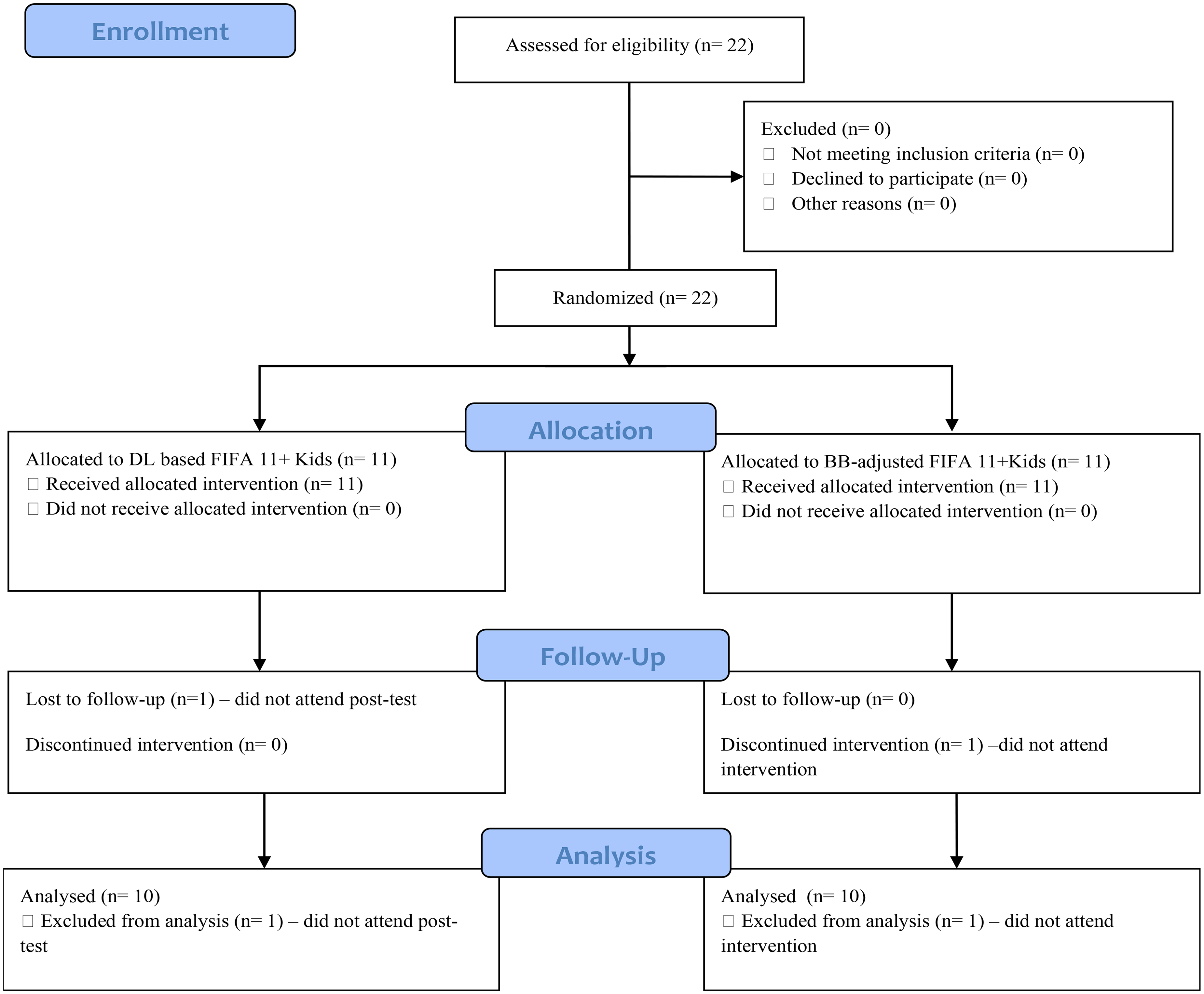
CONSORT flowchart of participant enrollment, allocation, follow-up, and analysis.
Before participation, both players and their parents received a detailed explanation of the study's purpose and procedures. Written informed consent was obtained from the parents, and all players provided their assent in accordance with the Declaration of Helsinki.
Experimental design
This study employed a randomized controlled design as a pilot trial to examine the effects of a six-week warm-up intervention integrated into regular basketball training. Participants were already organized into two pre-existing age categories within the club structure (U12 and U14). Randomization was conducted using an age-stratified simple randomization procedure. U12 players were randomized within their age category, followed by randomization of U14 players within their category, using Randomizer.org. This approach was used to minimize maturity-related imbalance between groups, although no formal maturation assessment was conducted.
A familiarization session was conducted one week before the first data collection to ensure that participants were accustomed to the physical testing procedures and the Differential Learning (DL) concept. During familiarization, participants performed the standing broad (horizontal) jump test, the 10-m sprint test, and the Illinois agility test with and without the basketball.
Following familiarization, baseline testing was conducted for all participants, including the standing broad jump, 10-m sprint time, and agility performance, along with the collection of personal and anthropometric data. Participants assigned to the DL-based BB-adjusted FIFA 11+ Kids group performed variability-based warm-up exercises incorporating DL fluctuations, while those in the BB-adjusted FIFA 11+ Kids warm up group completed the structured warm-up protocol adapted for basketball.
The six-week intervention phase consisted of two sessions per week, integrated at the beginning of regular training sessions. After the intervention period, participants continued their normal basketball training without either the DL-based BB-adjusted FIFA 11+ Kids or BB-adjusted FIFA 11+ Kids warm-up program. Post-testing was conducted one week after the last intervention session using the same procedures and standardized testing order as in the baseline assessment.
Testing procedure
All testing sessions were conducted in the same indoor basketball court where participants regularly trained, following a standardized warm-up and fixed test order to ensure consistency across sessions. Participants refrained from intense physical activity for 24 h prior to each testing session.
Each testing session (both pre- and post-intervention) began with a standardized 20-min warm-up consisting of moderate-intensity running and dynamic stretching. After the warm-up, participants rested for 2–5 min before performance testing began.
The order of tests was standardized for all participants as follows: (1)10-m sprint test, (2) Illinois Agility Test without the basketball, (3) Illinois Agility Test with the basketball, (4) standing broad (horizontal) jump. All athletes performed two maximal trials for each test, and the best performance was used for analysis. All measurements were conducted by the same researcher to ensure measurement consistency.
10 m sprint test
Linear sprint performance was measured using a handheld digital stopwatch (Apple Inc., 2023). Participants began with one foot positioned directly on the line in a self-selected stance and sprinted 10 m in response to a whistle signal. Each athlete performed two maximal-effort trials with two minutes of passive recovery between attempts. The fastest sprint time (seconds) was recorded for analysis.
Standing broad (horizontal) jump test
The standing broad jump (SBJ) was used to assess horizontal explosive strength. 26 Participants began with knees and hips flexed, swinging the arms backward before jumping forward with maximal effort. Both feet were required to leave and land simultaneously while maintaining balance upon landing.
The distance (cm) was measured using a tape measure with pre-marked intervals every 50 cm up to 3 m, and recorded from the nearest heel mark upon landing. Two trials were performed with two minutes of rest between attempts, and the best score was used for analysis.
Illinois agility test
The Illinois Agility Test was used to assess change of direction and speed under two conditions (with and without the basketball). Participants sprinted 10 m forward, slalomed around cones spaced 3.3 meters apart, and completed a total distance of 50 m. The same standardized layout was used for both conditions.
In the with-basketball condition, players performed the test while dribbling a basketball with their dominant hand, maintaining control throughout the course. If a dribbling error occurred (e.g., loss of control or double dribble), the participant continued immediately from the point of error without stopping the timer. Each participant performed two trials per condition (with and without the basketball), with two minutes of rest between runs, and the same standardized procedure was applied to all players to ensure test reliability.
Timing was recorded using a stopwatch (Apple Inc., 2023). The best performance (in seconds) from each condition was used for statistical analysis.
Intervention
Both groups performed their respective warm-up programs simultaneously on the same indoor basketball court, with the court divided into two sections so that all participants were exposed to the same environmental conditions.
The intervention lasted six weeks, with two sessions per week, and each warm-up session lasted approximately 20 min as part of regular basketball practice.
Basketball-adjusted FIFA 11+ kids warm-up procedure
The BB-adjusted FIFA 11+ Kids warm-up followed the standardized structure of the FIFA 11+ Kids program, consisting of six core exercises per session that progressed weekly through the established levels of the program (Level 1 to Level 4–5). Some repetition in exercises was reduced to match the available time constraints of the training environment (Table 1).
BB-adjusted FIFA 11+ kids warm up procedure.
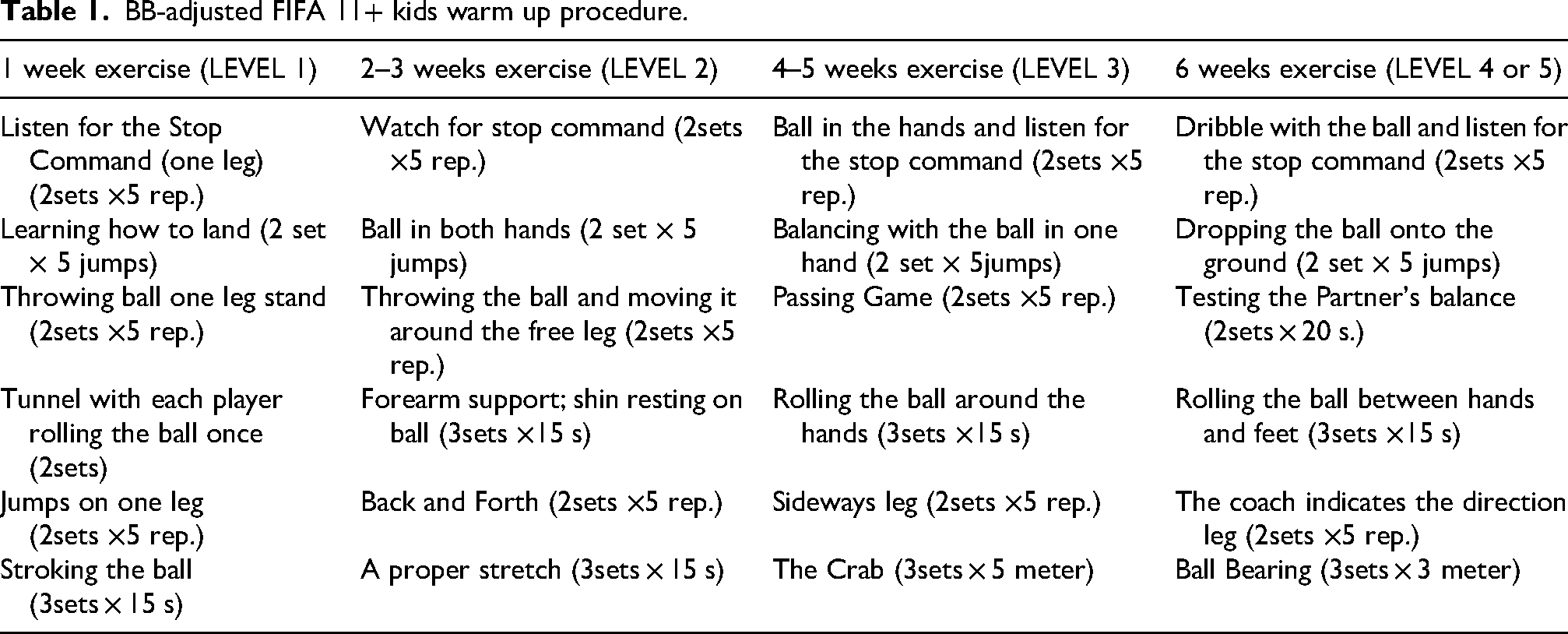
To ensure sport-specific relevance, the original FIFA 11+ Kids exercises, which include football-specific components (e.g., kicking, passing, and dribbling with the feet), were adapted to basketball movements while maintaining their motor demands and structure. Foot-dribbling and passing drills were replaced with hand dribbling, chest passes, bounce passes, jump stops and partner balance tasks originally performed with a soccer ball were completed using a basketball (Figure 2). These adaptations preserved the program's focus on coordination, balance, and stability while ensuring the content remained comparable between the BB-adjusted FIFA 11 + Kids and DL groups.
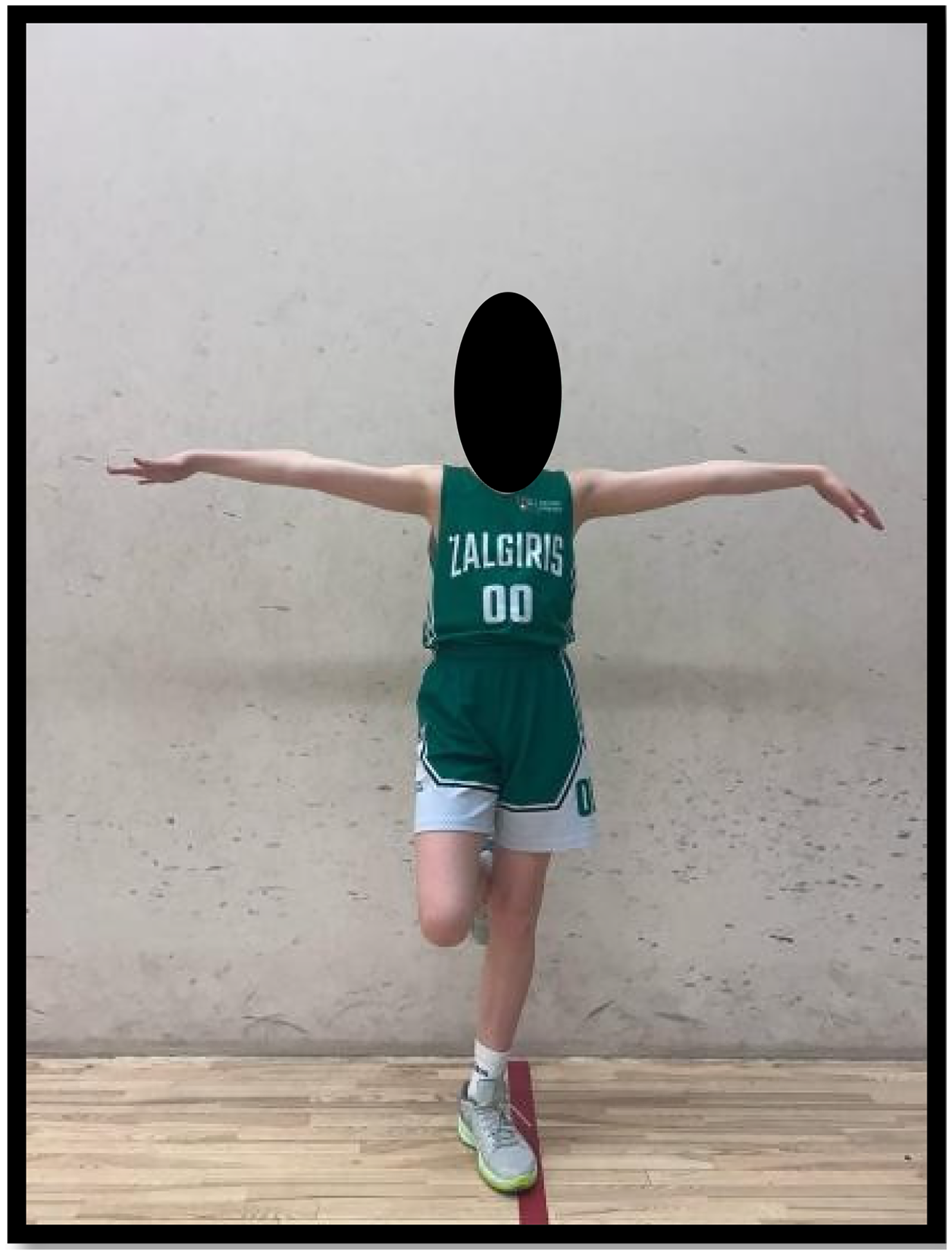
Listen for the Stop Command exercises in the BB-adjusted FIFA 11+ procedure.
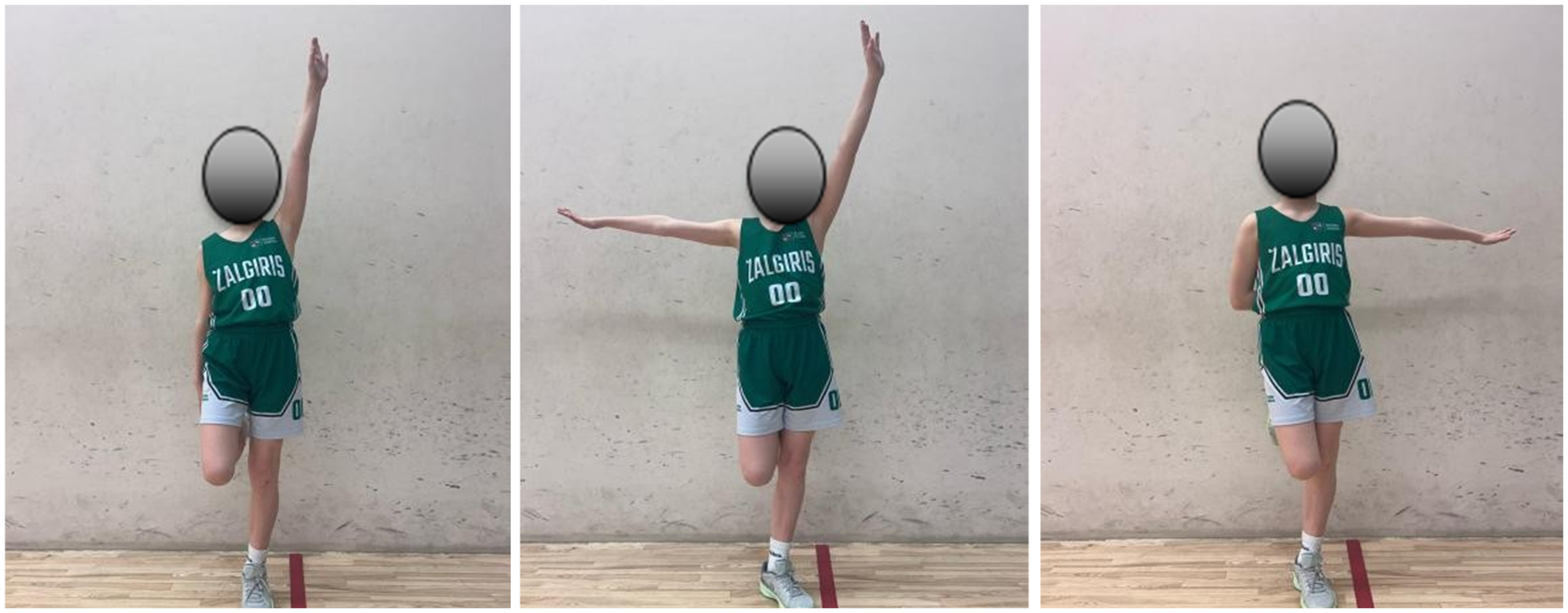
Listen for the Stop Command exercises in DL based FIFA 11+ procedure.
DL-based BB-adjusted FIFA 11+ kids warm-up procedure
The Differential BB-adjusted FIFA 11+ Kids program included the same six core exercises and weekly level progression as the BB-adjusted FIFA 11+ Kids Warm-up group, but each exercise incorporated systematic movement fluctuations consistent with Differential Learning (DL) principles. Before each training session, a pre-defined set of fluctuations was constructed according to the fluctuation framework described by Arede et al. (2021) 11 (Table 2), ensuring systematic variations in movement execution, including variations in body parts. Each exercise included approximately 5 added fluctuations in each set, resulting in approximately 40 added fluctuations per session. Depending on the task, players performed 1–3 sets of either fixed repetitions or timed bouts (e.g., 15 s each). Single-leg exercises included five repetitions per leg. Fluctuations were delivered as short verbal instructions and targeted alterations in movement parameters such as blinking, closing one eye, alternating arm movements, trunk rotation or tilt, and changes in stance width. No fluctuation was repeated within a session, in line with the most extreme variant of DL principles (Figure 3 and Table 2).
Movement fluctuations list (Arede et al., 2021).
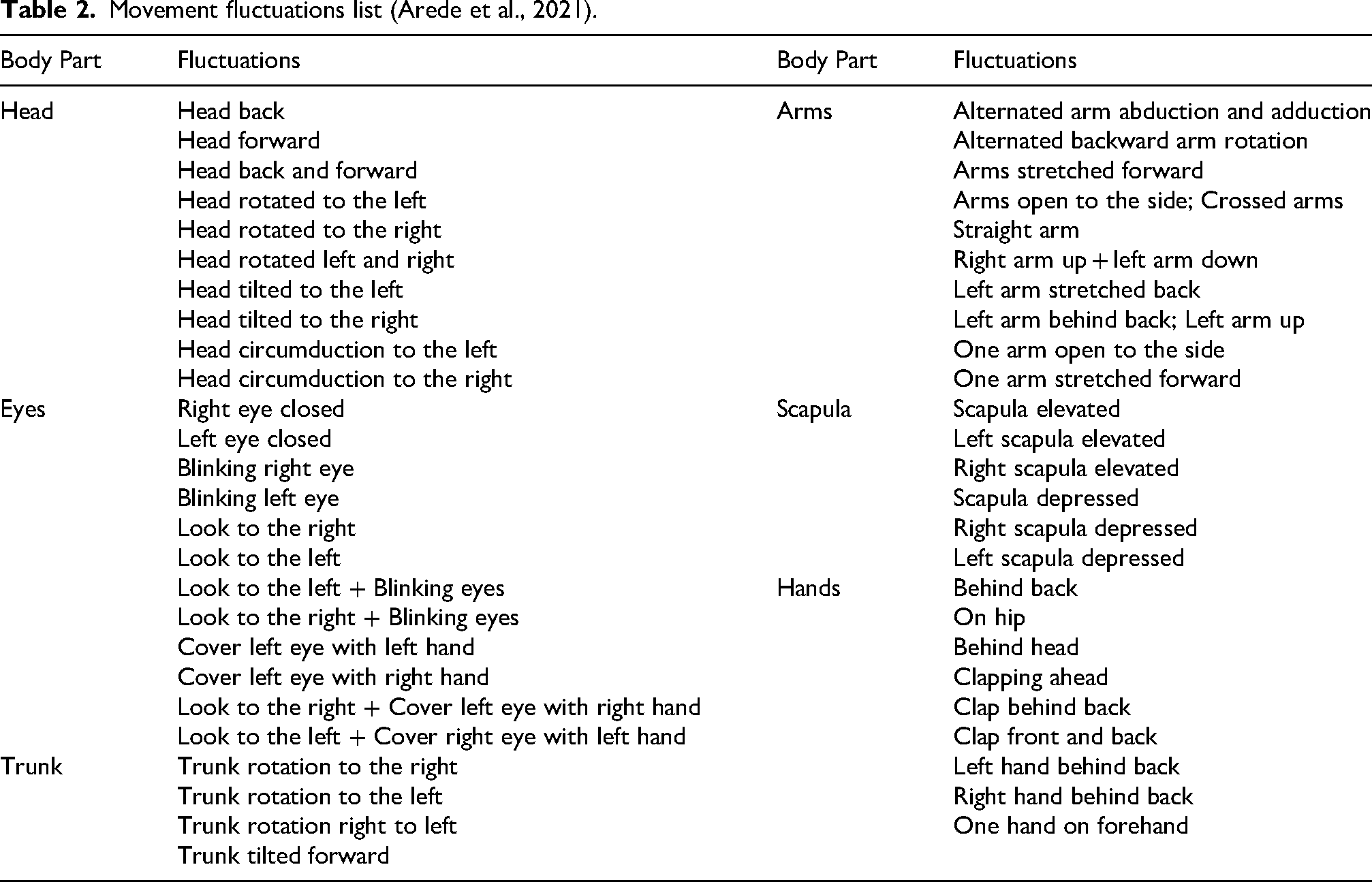
The complexity of fluctuations progressively increased across the six-week intervention, in parallel with the weekly level progression of the FIFA 11 + Kids program. No corrective feedback was provided during performance, allowing athletes to self-organize and develop individualized movement solutions.
Statistical analysis
Descriptive statistics, such as mean ± standard deviation, were computed for all data. All inferential analyses were conducted within a Bayesian framework. The Bayesian methodology, which is based on the quantification of the relative degree of evidence for supporting two rival hypotheses (the null hypothesis, H0, and the alternative hypothesis, H1) by means of the Bayesian factor (BF10), has recently been suggested as an alternative to the traditional frequentist statistics (based on confidence intervals). 27
The Bayesian factor (BF10) was interpreted in accordance with the evidence categories previously proposed BF10 ˂ 1 = evidence for H0; 1–3 = anecdotal evidence for H1; 3–10 =moderate; 10–30 = strong; 30–100 = very strong; ˃100 = extreme evidence for H1. 28
Baseline differences between DL and BB-adjusted FIFA 11 + groups were examined using Bayesian independent samples t-tests. For all Bayesian analyses, the following model specification was used: H₀: δ = 0 versus H₁: δ ≠ 0, with a Cauchy prior distribution on the effect size (r = 0.707).
To examine training-induced changes, Bayesian repeated-measures ANOVAs were conducted with Condition (pre vs. post) as a within-subject factor and Group (DL vs. BB-adjusted FIFA11+) as a between-subject factor. Inclusion Bayes Factors (BF_incl) were used to quantify the evidence for the main effects and Condition × Group interaction. For all Bayesian ANOVAs, the default multivariate Cauchy prior with r = 0.5 was applied. Post hoc Bayesian paired-samples t-tests were conducted to evaluate within-group changes. Between group post- test differences were assessed using Bayesian independent samples t-tests, with BF10 quantifying the evidence for group differences. All statistical analyses were computed using JASP version 0.13.01 (Amsterdam, Netherlands).
Results
Bayesian independent-samples t tests showed no credible baseline differences between the DL and BB-adjusted FIFA11 + groups across all performance measures (BF10 < 1), confirming comparable starting levels. Descriptive and pre-post change values for all performance measures are presented in Table 3.
Pre-Post test mean ± SD and Delta(Δ) values.
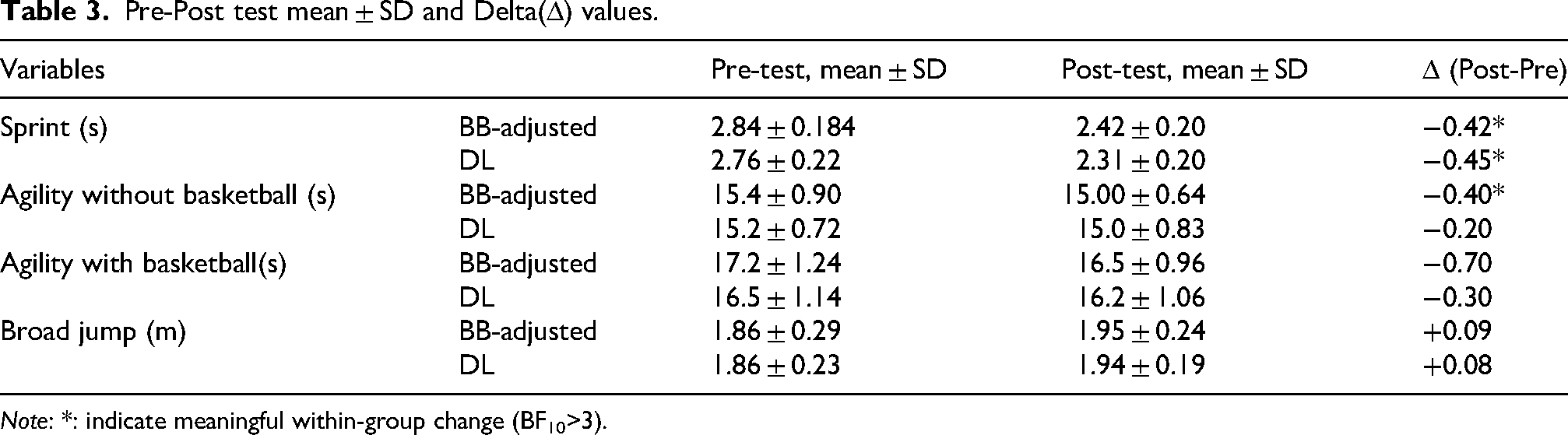
Note: *: indicate meaningful within-group change (BF10>3).
For the 10-m sprint, the Bayesian repeated-measures ANOVA provided extreme evidence for a Condition effect (BF_incl ≈ 4.5 × 10⁷ > 100), and anecdotal-to-moderate evidence for the null regarding both Group and Interaction effects (BF_incl < 1). Posterior estimates indicated a substantial pre–post improvement, with negligible between-group differences (Figure 4).
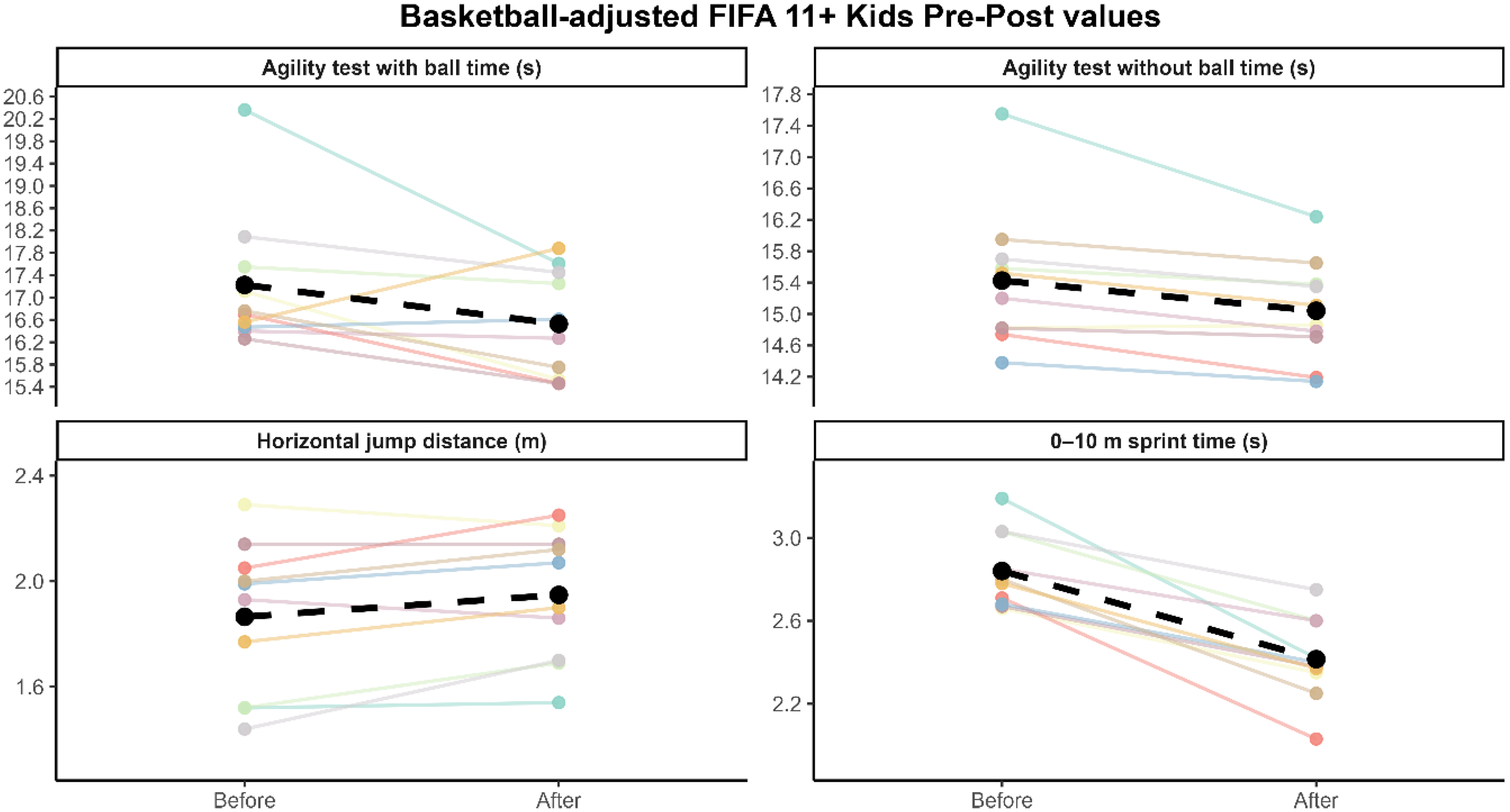
BB-adjusted pre-post value.
For agility without the basketball, results showed moderate evidence for a Condition effect (BF_incl = 3.21 > 3), and anecdotal-to-moderate evidence for the null for both Group and Interaction (BF_incl < 1). Post hoc tests confirmed a moderate pre–post improvement (BF10, U = 4.21), with no credible between-group differences (Figure 5).
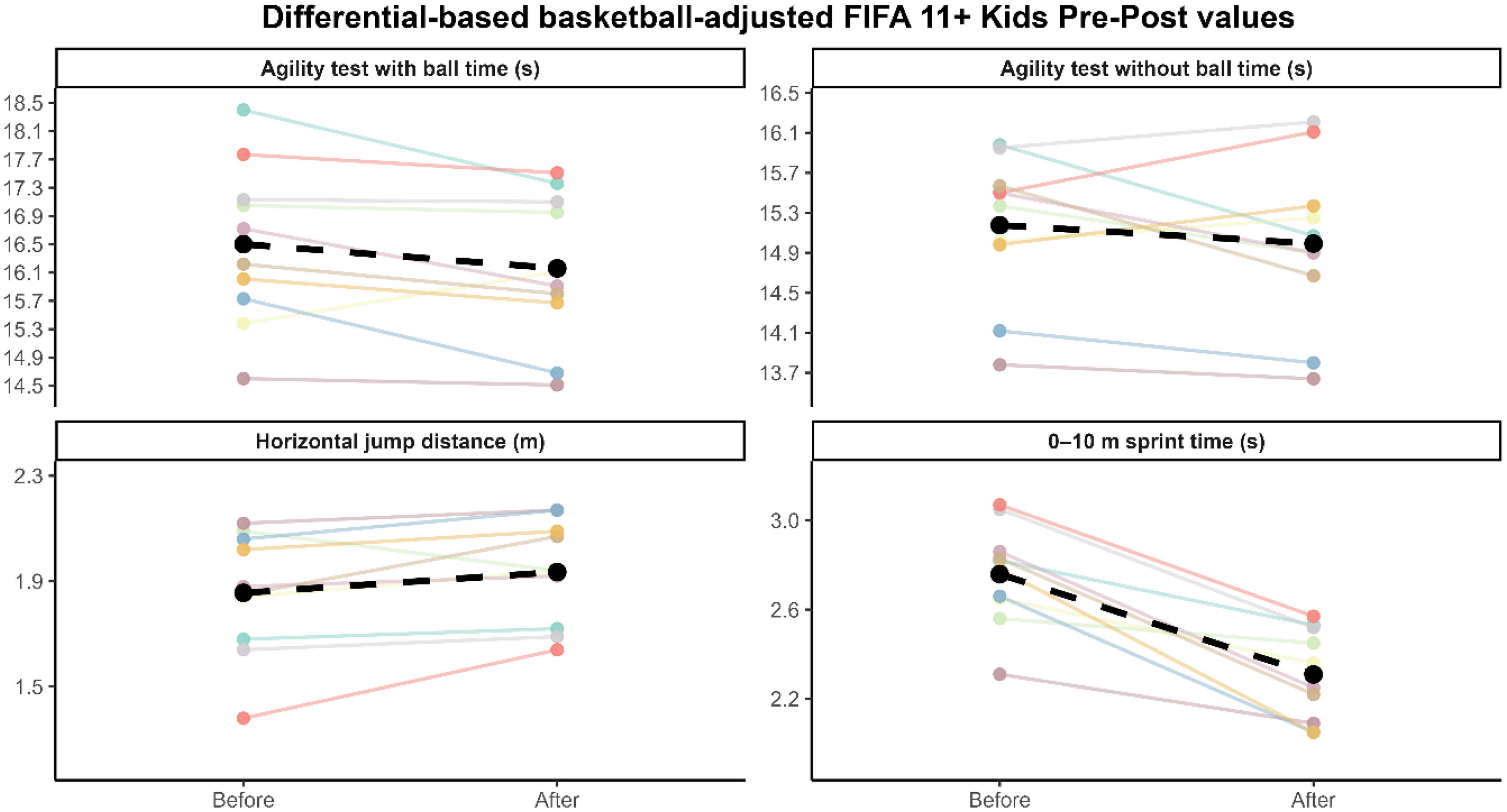
DL based BB-adjusted pre-post values.
For agility with the basketball, the model again favoured a Condition-only effect, with moderate evidence for improvement (BF_incl = 3.20 > 3) and anecdotal-to-moderate evidence for the absence of Group and Interaction effects (BF_incl < 1). Post hoc comparisons reinforced this pattern (BF10, U = 3.98).
For horizontal jump, the analysis provided strong evidence for a Condition effect (BF_incl = 7.59 > 3), and moderate evidence for the null regarding Group and Interaction (BF_incl < 1). Pre–post gains were small but credible (BF10, U = 11.76 > 10).
Within-group comparisons further clarified improvement patterns. In the DL group, evidence was extreme for 10-m sprint improvement (BF10 = 380.79), moderate for horizontal jump (BF10 = 1.73 ≈ anecdotal-to-moderate for H1), and anecdotal or null-supporting for agility outcomes (BF10 = 0.49–1.30). In the BB-adjusted FIFA11 + group, improvement showed extreme evidence for sprinting (BF10 = 564.86), strong-to-very strong evidence for agility without the basketball (BF10 = 6.85), anecdotal evidence for horizontal jump (BF10 = 1.85), and for agility with the basketball (BF10 = 1.33).
Discussion
This study aimed to examine the effects of a Differential Learning (DL)-based adaptation of the FIFA 11+ Kids warm-up program compared to its BB-adjusted version on sprint, agility, and jump performance in youth male basketball players. Structured warm-up programs are widely recognized for their role in injury prevention and performance enhancement among young athletes. 3 However, traditional warm-up routines often rely on repetitive, standardized movements. In contrast, DL introduces task-related movement variability and promotes adaptability in motor control, 19 which may enhance neuromuscular coordination and responsiveness, key demands in dynamic sports such as basketball.
It was hypothesized that the DL-based warm-up would result in performance adaptations comparable to those observed following the BB-adjusted FIFA 11 + Kids warm-up. Consistent with this expectation, both groups demonstrated improvements of a comparable magnitude across sprint, agility, and jump outcomes, with only small and inconsistent differences between them. Given the short intervention duration and the developmental characteristics of youth athletes, both approaches resulted in similar short-term adaptations, with no clear superiority of one warm-up protocol over the other. These findings further suggest that strict or highly standardized execution of warm-up exercises may not be necessary to elicit comparable short-term performance responses in youth athletes.
Sprint performance improved in both groups with only small differences between them, suggesting that both warm-up protocols were similarly effective for short-term effects on linear sprinting. DL, grounded in motor learning theory, emphasizes variability, self-organization, and exploration rather than repetition.7,10,19 However, theoretical frameworks highlight that linear sprinting involves relatively low contextual variability, which may limit the extent to which additional movement fluctuations can meaningfully influence performance outcomes. 7 Although sprinting is biomechanically complex and requires the coordinated integration of multiple musculoskeletal and neuromotor components, its perceptual–cognitive demands remain minimal; therefore, the added variability introduced through DL may have only a limited impact on short-term performance adaptations. Moreover, DL emphasizes individualized levels of variability, meaning that variability should remain within a range that young athletes can process effectively. 9 Additionally, DL-related adaptations are often delayed and follow non-linear dynamics that short-term assessments may not fully capture the eventual magnitude of the DL related sprint improvement.
Another factor that may have contributed to the minimal between-group differences is measurement uncertainty. Manual timing methods are known to produce observable variability when compared with electronic timing systems, which can reduce the detectability of small performance changes. 29 Although pre-test sprint values did not differ considerably between groups, small baseline variations can still affect change-score sensitivity in short-duration interventions, making it more difficult to isolate group-specific effects. In addition, maturation-related neuromuscular changes during adolescence can influence sprint adaptations independent of training, and without assessing maturity status, it is not possible to determine whether individual developmental differences contributed to performance variability.15,30 Previous studies found that larger DL-related sprint improvements in youth athletes typically involved longer interventions or sprint tasks structured with higher movement variability sprint tasks, which differs from the present study. 16 This contextual difference may explain why similar effects were not observed here.
Agility outcomes were presented across test types, as improvements differed depending on the underlying task structure. For agility without the basketball, no notable improvement was found in the DL group, possibly because the test is a pre-planned change-of-direction task with a fixed and predictable movement pattern, which relies primarily on stable motor execution rather than perceptual–cognitive processing. 31 Since DL prioritizes movement variability and non-repetition and adaptive exploration,19,20 its benefits may not fully transfer to tests lacking uncertainty or reactive demands. The Illinois agility test used here is highly structured, 32 potentially misaligned with DL's dynamic variability. Conversely, the agility with basketball test, both groups improved to a similar extent. The BB-adjusted FIFA 11 + Kids group showed a slightly larger descriptive improvement, but this difference was not supported by the Bayesian analysis. Although dribbling tasks impose greater coordination and perceptual–motor demands that theoretically align more closely with DL principles, the six-week intervention may have been insufficient for these advantages to manifest in measurable performance gains. Moreover, DL theory emphasizes individualized and levels of variability rather than maximal perturbation, and excessive variability may change attentional resources in youth athletes whose perceptual and executive functions are still developing.2,19 This may explain why DL did not demonstrate a clear performance benefit, despite its theoretical emphasis on sensorimotor adaptability and flexible movement organization, which DL theory associates with increased decision-making demands during movement execution. 9 The results may also indicate that performance changes are less about perfect execution and more about athletes adopting different planning or execution strategies, suggesting that future research could examine strategy-level adaptations, not just outcome metrics.
The BB-adjusted FIFA 11+ Kids group demonstrated moderate gains in agility without the basketball test, whereas improvements in the agility with the basketball test were smaller and supported by weak Bayesian evidence. These patterns suggest that structured warm-up routines may provide consistent benefits for tasks requiring stable motor patterns, while tasks involving perceptual–motor integration may require longer or more variable exposure for meaningful adaptation. Previous research has shown improved pro-agility performance in young basketball players after 10 weeks of FIFA 11 + training. 33 These benefits likely stem from the program's structured progression, which reinforces stable motor patterns, enhances neuromuscular efficiency, and develops coordination and balance. 3
Both groups showed modest improvements in horizontal jump performance. This small change aligns with findings that short-term warm-up interventions can enhance general neuromuscular readiness in youth athletes. 3 Previous studies have found FIFA 11+ Kids to improve jump-related performance, particularly in youth athletes 3 However, limited or non-significant effects on vertical jump performance have been reported in basketball contexts, 33 suggesting that short-term exposure may be insufficient for developing explosive lower-limb power. Similarly, evidence indicates that DL-related improvements in explosive tasks depend strongly on exposure duration and the specificity of the applied perturbations.34,35 Meta-analytic evidence indicates that complex, explosive tasks such as jumping require extended exposure to DL interventions to elicit significant adaptation. 35
Previous research demonstrates that longer or more targeted DL interventions can produce more pronounced jump adaptations. DL-based plyometric protocols conducted over several weeks have been shown to enhance countermovement jump (CMJ) height through improved motor-unit recruitment, intermuscular coordination, and postural regulation. 36
While improvements in the current study were small, the literature supports the potential of DL-based programs to improve neuromuscular coordination, balance, and postural control11,16 Moreover, task-specificity principles suggest that the transfer of DL exercises depends on the biomechanical similarity between training variations and the performance test. 7 Because the present intervention did not incorporate perturbations that closely reflect horizontal jumping mechanics, limited transfer to horizontal jump performance is expected. Vertical jump tasks in previous DL studies showed larger improvements because variability was introduced in ways more aligned with vertical force production and balance control.
Several limitations should also be acknowledged. The sample size was small and relatively homogeneous; therefore, the findings should be interpreted within the specific context of the present sample. Moreover, only short-term effects were assessed. Because Differential Learning is associated with non-linear and sometimes delayed adaptation processes, 7 the lack of a retention test makes it difficult to determine whether additional improvements might have emerged after consolidation. A further methodological limitation is the absence of blinding in performance assessments, which may introduce subtle expectancy-related bias in outcome evaluation. Additionally, the task–intervention alignment may have influenced transfer, as DL benefits tend to appear more strongly in tasks with higher perceptual–motor demands, whereas the Illinois agility test is highly pre-planned and structurally rigid. 32 The cognitive load generated by variable practice may also have interacted with participants’ developmental stage, as younger athletes often have limited attentional resources to process high movement variability. 2 Furthermore, the study did not control for biological maturation, although maturation is known to influence neuromuscular development and performance responses during adolescence.15,30 Another methodological limitation is the use of manual timing for sprint assessment. Manual stopwatch timing is known to introduce measurable variability compared with electronic systems, which may reduce the detectability of small between-group performance differences. 29 Taken together, these methodological constraints may have reduced the sensitivity to detect subtle group-specific effects, contributing to the overall similarity in performance outcomes between the DL and BB-adjusted FIFA 11+ Kids warm-up programs.
Future research should include larger and more diverse samples and examine whether extending DL-based approaches beyond an acute warm-up context, such as. implementing them across a training period longer than six weeks leads to sustained performance adaptations in youth athletes. Incorporating retention assessments would help clarify the persistence of these effects over time. Additionally, investigating different levels and types of variability, such as geometric versus dynamic noise, may provide insight into context-dependent responses to DL-based warm-ups. Future studies should also tailor DL tasks more closely to the perceptual and coordinative demands of the target performance tests and include maturity assessments to better understand age- and development-related differences in responsiveness to variability-based training. Finally, integrating measures of cognitive engagement and biomechanical analyses could further elucidate the mechanisms underlying DL-induced adaptations in youth athletes.
Conclusion
The findings of this study indicate that both the BB-adjusted FIFA 11+ Kids and the Differential Learning (DL)-based adaptation produced comparable short-term improvements in sprint, agility, and jump performance among youth male basketball players. The absence of clear between-group differences, particularly in sprinting, indicates that six weeks of exposure were insufficient for either approach to elicit superior adaptations in linear or multidirectional tasks. These findings align with theoretical work suggesting that the transfer of movement variability depends on the interaction between task specificity, developmental characteristics, and the duration of practice.
These results are consistent with previous evidence suggesting that DL approaches may support movement coordination, adaptability, and responsiveness in young athletes, particularly within learning-oriented and context-dependent settings.
From an applied perspective, incorporating selected elements of variability into existing warm-up routines may offer coaches a practical means of stimulating adaptive motor behavior without altering established training structures. Although no distinct short-term advantages emerged in this study, variability-based approaches may warrant further investigation when implemented over longer periods or aligned more closely with the biomechanical and perceptual demands of the target performance tasks.
Footnotes

Consent for publication
Not applicable.
Consent to participate
Written informed consent was obtained from the parents or legal guardians of all participants prior to participation. In addition, assent was obtained from the children.
Data availability
The datasets generated and/or analysed during the current study are available from the corresponding author upon reasonable request.
Declaration of conflicting interest
The authors declared no conflict of interest.
Ethical considerations
The study was conducted in accordance with the Declaration of Helsinki and was approved by the Ethics Committee of Otto von Guericke University Magdeburg.
Funding statement
The authors received no financial support for the research, authorship, and/or publication of this article.