



Abstract
Using a living lab approach this study explored the barriers and facilitators for physical activity (PA) for children living with cerebral palsy (CP). Ten children (nine boys, one girl) and nine parents (3 male, 6 female) participated in one-to-one interviews and focus groups, respectfully. Interviews and focus groups aimed to explore their perceptions of the barriers and facilitators for PA faced by children living with CP in daily life. Children participated in game-based practices in the Living-Lab, which aimed to develop facets of their physical literacy. Children then engaged in focus groups to explore their experiences of the Living-Lab. Pen profiles generated through thematic analysis of child interviews and parental focus groups revealed that barriers to PA included: weather, culture of mainstream sport, lack of awareness of opportunities, peers and coaches. Conversely, facilitators (that were often underutilised) included: parents, siblings, peers, coaches, football, storylines/themes, child's autonomy and awareness of opportunities. A subsequent pen profile addressed how the Living-lab empowered these underutilised facilitators and broke the previously presented barriers, demonstrating how children enjoyed collaborating with peers and siblings and developed positive relationships with coaches through the games-based practices. All children expressed a love for football, with older children enjoying competitive games, more representative of a football match and younger children just happy to score in “real nets”. Children also enjoyed the storylines used in practices. This study provides insights into the perceived barriers and facilitators for PA for children living with CP and demonstrates how Living-Lab methodology addresses these factors.
Introduction
Cerebral Palsy (CP) is a group of neurological disorders caused by damage to the brain's motor control centres that occurred before, during, or after birth, leading to motor impairments. 1 Such impairments can include spasticity, dyskinesia, hyper-reflexia, excessive contraction of antagonistic muscles, reflexive reactions, and motor planning malfunctioning. 1 Symptoms vary from person to person, with some more severe than others, with some requiring specialist equipment to help with mobility. The severity of symptoms is categorised using the Gross Motor Function Classification System (GMFCS).2,3 These impairments often interfere with daily life and participation in physical activity (PA) or exercise.
Children living with CP face significant challenges in remaining active due to impaired selective motor control, atypical muscle tone, and muscle weakness. 4 Research investigating the barriers associated with PA within this population has primarily focused on personal factors, such as physical impairments, cognitive attributes and communicative problems. 5 However, environmental factors that may impact involvement in PA remain an understudied area for children living with CP. 1 Prior research examining barriers to PA for children living with CP has focused on factors such as school settings, transportation, lack of facilities, accessibility concerns and social/family support. 5 However, it has been suggested that many parents showcasing support for their child are able to navigate these issues.5,6 Instead, the problems faced may relate to awareness and availability of suitable organised PA opportunities for their children.5,6
Many of the PA environments currently available to children living with CP are primarily focused on therapy and physical rehabilitation. 7 Systematic reviews by Reedman et al. 7 and Sousa et al. 8 highlighted that most PA interventions focused on developing the physical attributes of children living with CP. However, with this type of physical training approach, the psycho-social components that contribute toward a child's physical literacy, and therefore their long-term involvement in PA, can be overlooked. Conversely, group-based interventions help to develop children's psycho-social characteristics, but such approaches are often difficult to tailor to the needs of everyone involved. 8 Due to the continued lack of involvement in PA for children living with CP, alternative approaches which develop each child's psycho-social facets as well as their physical competence, should be explored. 5 The contrast between current and potential approaches presents parallels to contemporary features of behavioural change interventions in implementational science. Such interventions often focus on individually orientated solutions (i-frame) where emphasis should instead be applied to the restructuring of the environment itself (s-frame). 9 Clutterbuck et al. 10 presented a potential alternative approach, demonstrating a group-based, sport-specific intervention which improved PA participation and physical competence. However, in their study, of the eight weekly 1-h sessions, only ten minutes per session included “sport-specific” activity, with the remaining session time consisting of specific gross motor skills “drills”. Despite this focus on a group-based intervention which included sport as an element, the work presented by Clutterbuck et al. 10 likely falls into the same overall paradigm as prior interventions for children living with CP7,8 where a focus on physical therapy or physical training is predominant. However, a key question remains regarding effective future intervention and whether specialist provision for children living with CP can be integrated with a multi-faceted, sport-based, discovery learning approach to be more effective for children living with disability.
The requirements for future interventions (i.e., adapted to the needs of individuals within a group setting) present several similarities to the characteristics of Non-Linear Pedagogy (NLP), suggesting it may be an appropriate pedagogical approach to inform future interventions for PA for children living with CP. 11 NLP involves applying the concept of ecological dynamics to design and manipulate learning environments that foster the generation of unique movement solutions to solve problems set appropriately by coaches, relevant to the capabilities of the individuals involved.11,12 Adopting an NLP approach, which holistically considers each child's needs (physical, psychological, socio-emotional, etc.), may help to provide the necessary opportunities for children living with CP to engage in more regular PA and develop their physical literacy.5,8,11,13,14
One overlooked element in creating PA opportunities for children living with CP is ensuring that any approaches employed are applicable to the ‘real world’. One research methodology that addresses this aspect are ‘Living-Labs’. 15 Living-Labs are open innovation ecosystems in real-life environments that utilise iterative feedback processes to address real word problems and create sustainable impact. Living-labs focus on co-creation, testing and scaling up to provide value to the stakeholders involved. 15 Living-Lab methodology aligns with an NLP approach, and collectively could enable children living with CP to provide meaningful input from their personal perspective in a manner which other methodologies would not.11,15 Employing these creative methodologies can have significant future coaching implications. This includes showcasing the potential opportunity to utilise this approach to facilitate the development of a PA environment which encourages and motivates children to engage in PA. However, to date such an approach has not been explored in the context of enhancing PA with children living with CP.
The primary aim of this study was to use a Living-Lab approach to investigate the barriers and facilitators to PA for children with Cerebral Palsy. The secondary aim is to explore how a Living-Lab approach can overcome these barriers and facilitators.
Methods
Participants
Ten children (nine boys, one girl, mean ± SD age 7.3 ± 1.83 years, height 125.71 ± 12.34 cm, weight 29.29 ± 8.65 kg), participated in the study. Although this paper focuses on CP and factors influencing individuals with CP, only eight of the children had CP (GMFCS I-III). One child had Spina Bifida (when a child's spine and spinal cord does not develop properly in the womb, causing a gap in the spine), and another had Polymicrogyria (characterised by abnormal development of the brain before birth).16,17 Despite the differences in diagnosis, all three diseases can be congenital. CP and PMG are known to often present similarly, likewise with Spina Bifida also being a neuromotor disorder (like CP).17,18 Therefore, all three diseases often experience similar challenges in relation to motor skills and environmental barriers to PA.1,17,18 Given the holistic philosophy of living-lab methodology, all children were included in the study. Nine parents (three male, six female) participated in the study; one parent could not participate due to being absent during data collection.
Living-Lab protocol
The Living-Lab took place over five mornings during a school holiday. An indoor facility accounted for the unpredictable weather and the need for an even surface suitable for walking frames. The content of the living-lab was informed by NLP, and designed to create an environment where all children could participate in PA simultaneously, working independently and/or collaboratively with their peers and siblings to achieve the task goal set by the coaches.11,13 The living-lab activities predominantly comprised of games-based practices. These games were designed following recommendations in the use of NLP to facilitate children’ s movement skills.14,19 The activities were designed to be football-related, alongside developing fundamental movement skills and physical literacy, and often had a (non-football related) theme to further engage children.14,19 An example activity is provided in Figure 1. Key theoretical concepts that helped shape the Living-Lab were Analogy Learning, 19 Ecological Dynamics, 20 Constraints-Led Approach, 21 Affordances, 22 Teaching Games for Understanding (Werner et al., 1996), 23 and Managed Chaos. 24 Adopting this non-linear approach to coaching and learning enabled children to contribute to the development and progression of the games, capturing the essence of the collaborative ‘Living-Lab’ approach.11,15 Placing stakeholders at the centre of the research process can not only help lead to more tailored and effective outcomes, as they contribute towards the creation of the product themselves. 15 Such an approach also aligns with behaviour change literature suggesting that stakeholder buy-in is key to an effective intervention. 9 The living lab approach should be particularly highlighted, as this approach offers real-time data collection, which enhances data credibility. Use of the living lab approach also mitigates recall issues that often may hinder children's involvement in research. As a methodology the living lab approach offers a means to understand a concept in multiple different ways. The living lab approach enabled all of the different ways in which parents and children conceptualised facilitators and barriers for PA to be heard. As such the living lab approach fulfils the concept of total inclusion.
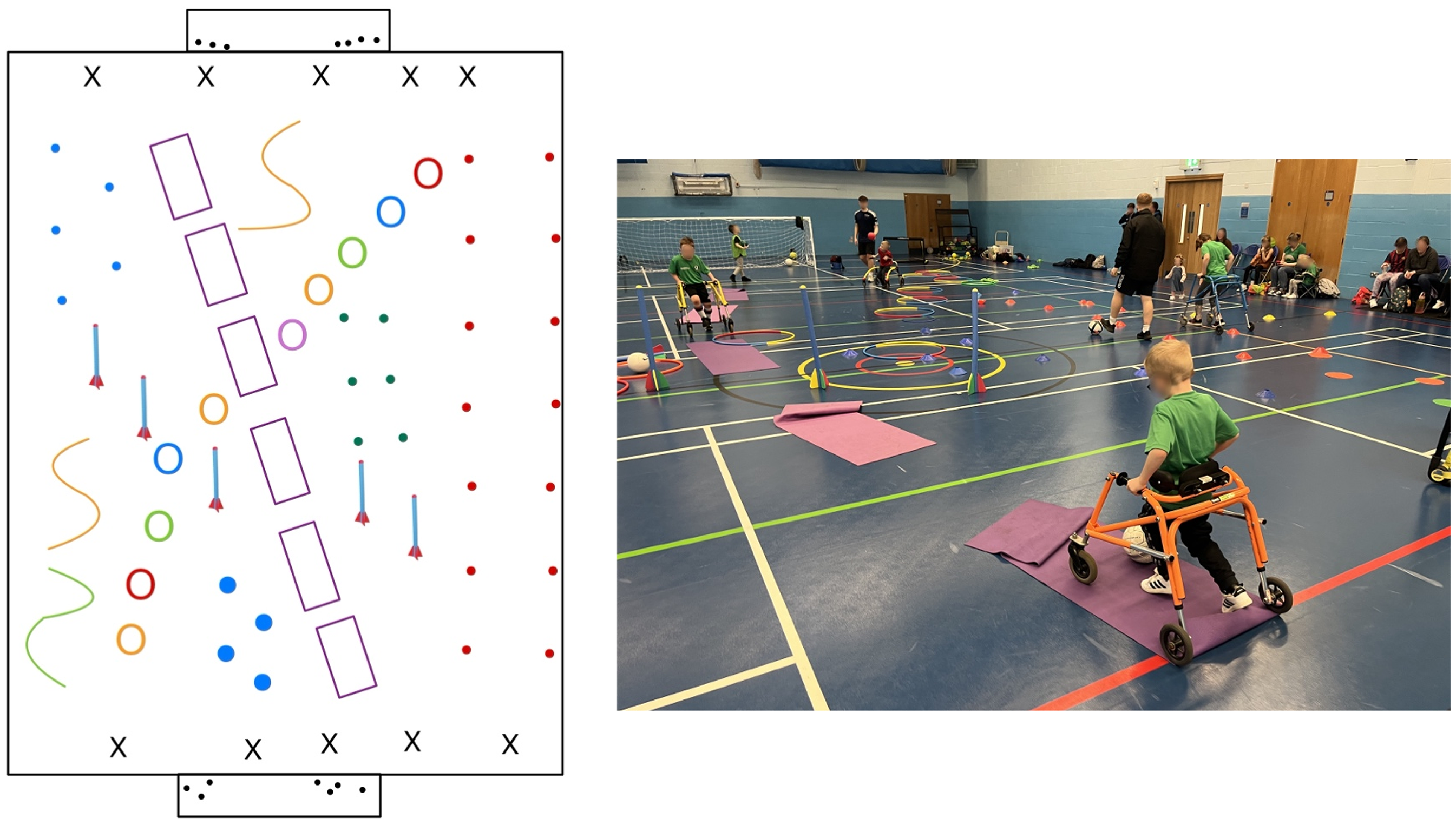
“Traffic Jam” an example game played in living-lab.
The activities within the living lab, including data collection, as described below, were designed in a manner to enable flow of activity within a ‘typical’ timetable that would be accommodated within a coaching based holiday camp, the type of which many children might access.
Qualitative procedures
To examine barriers and facilitators for PA in general (primary aim), and to explore how a living-lab methodology might overcome these barriers (secondary aim) a combination of qualitative methodological approaches was employed. The decision to combine several methodological approaches was taken to ensure robustness of data and to develop the richness of data gathered with the children and their parents. These approaches included: I) focus groups with parents II) one-to-one interviews with children, utilising Write, Draw, Show and Tell (WDST) methodology25,26 and III) focus groups with children using WDST. WDST is an inclusive qualitative technique commonly used with children to encapsulate their thoughts, perceptions and experiences of a particular topic, using drawing and visual prompts to encourage verbal communication. 26 Each of the WDST components were included in interviews and focus groups with children and are outlined in the appropriate sections. Interview schedules for one-to-one interviews and focus groups were informed by the Youth Physical Activity Promotion Model and the Physical Activity and Sport Participation Framework.27,28
Parental focus groups
One parent of each child attending the Living-Lab participated in one of two heterogenous focus groups (group 1 = four parents, group 2 = five parents). Focus groups were chosen as the method of data collection for parents to encourage sharing of unique experiences and generate a ‘community feel’, with groups selected to include parents whose children varied in age and GMFCS classification to showcase the complexity of PA for children living with CP, exploring caveats in each other's statements.28,29
Focus groups were semi-structured and lasted 47–58 min. Topics of conversation were centred around the PA ecosystem for each child that contributes towards their development of physical literacy. 28 Facets of the ecosystem consisted of: I) school – teachers and peers, II) home life – parents, siblings, peers and III) extra-curricular activity – coaches and peers. 28 The aims of the interviews were to: I) understand of parents’ perceptions of their child's daily routines and activities to elucidate their typical behaviours and habits during the day. II) To discern insights into the parents’ perception of the barriers and factors present for their child and its impact on their daily activities.
Child interviews – WDST
All children participated in interviews led by members of the research team experienced in working with children in qualitative data collection. One-to-one interviews were selected to ensure children provided their own unique accounts of their daily lives. Children completed the interview with either their parent and/or sibling present if they wanted to; P2 and P3 chose to have siblings present, P7 chose to have a parent present, and P9 chose to have both a parent and sibling present.
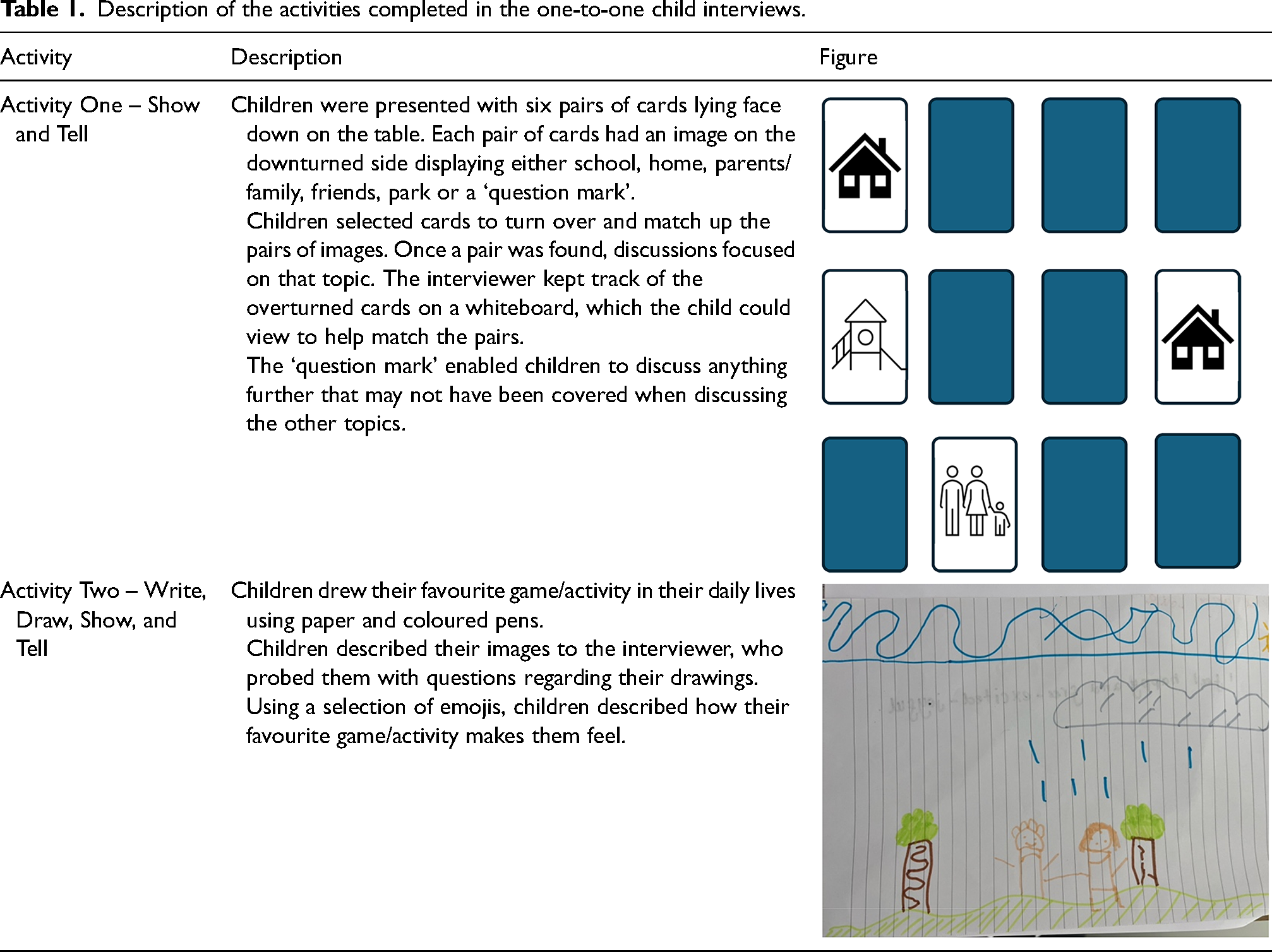
Interviews lasted 12–46 min (average 26 min). The interview was structured into two sections, following recommended guidelines for administration from Noonan et al. (2016), 25 and is displayed in Table 1. The interviews aimed to a) understand the child's daily routines and activities to elucidate their typical behaviours and habits during the day, and b) discern insights into the child's perceived barriers and the impact on their daily activities.
Description of the activities completed in the one-to-one child interviews.
Child focus groups
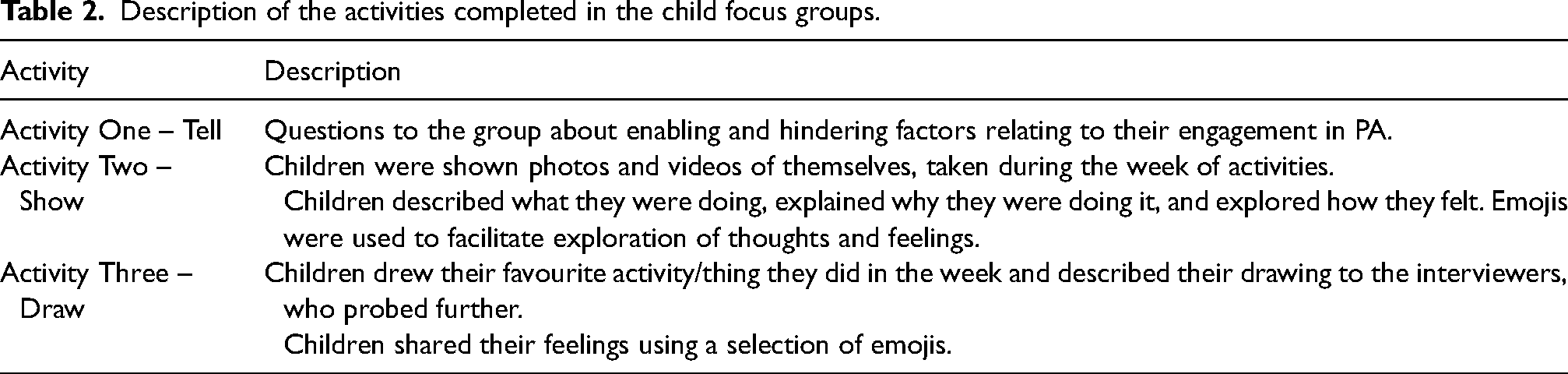
After completion of the living-lab activities, all children participated in focus groups, lasting 47–52 min. Children were grouped based upon their GMFCS classification (group 1, GMFCS III and group 2, GMFCS I-II) to help explore the complexities within CP, demonstrating the differences between the needs of each classification. 3 On this occasion only P9 chose to have their sibling present. The focus groups aimed to investigate the children's perceptions of their experiences in the Living-Lab, and were split into three sections, the content of which is outlined in Table 2. 25
Description of the activities completed in the child focus groups.
Data analysis
To address the two aims of the study, thematic analysis methodology was adopted to create three pen profiles.26,30,31 The key criteria used for analysis and interpreting of findings were drawn from the Braun and Clarke guidelines for thematic analysis using interview/focus group data. 30 Through an inductive approach, the lead author became familiar with the transcripts of parental focus groups and individual child interviews and generated initial codes for each transcript. The codes generated demonstrated overlap between the conversations with parents and children. 30 Therefore, parent focus groups and child interviews were amalgamated to generate themes, to demonstrate a more comprehensive representation the inclusion factors for PA and barriers and facilitators to PA for children living with CP. Two pen profiles were drawn up to illustrate this (Figures 2 & 3).26,31 To fulfil the secondary aim of the study, the child focus groups were analysed by the lead researcher through thematic analysis, followed by the creation of a pen profile, named ‘Breaking Barriers and Empowering Facilitators through a Living-Lab’ (Figure 4). Although the drawings were not specifically analysed, due to the varied range in age and fine motor control impairments experienced by the children, the drawings were used to facilitate verbal descriptions and explanations of the children's thoughts and feelings.32,33 Finally, members of the research team (WP, RM, AS, RP and MD) met following the creation of pen profiles to sense-check the findings of analysis and ensure trustworthiness in the data. 33
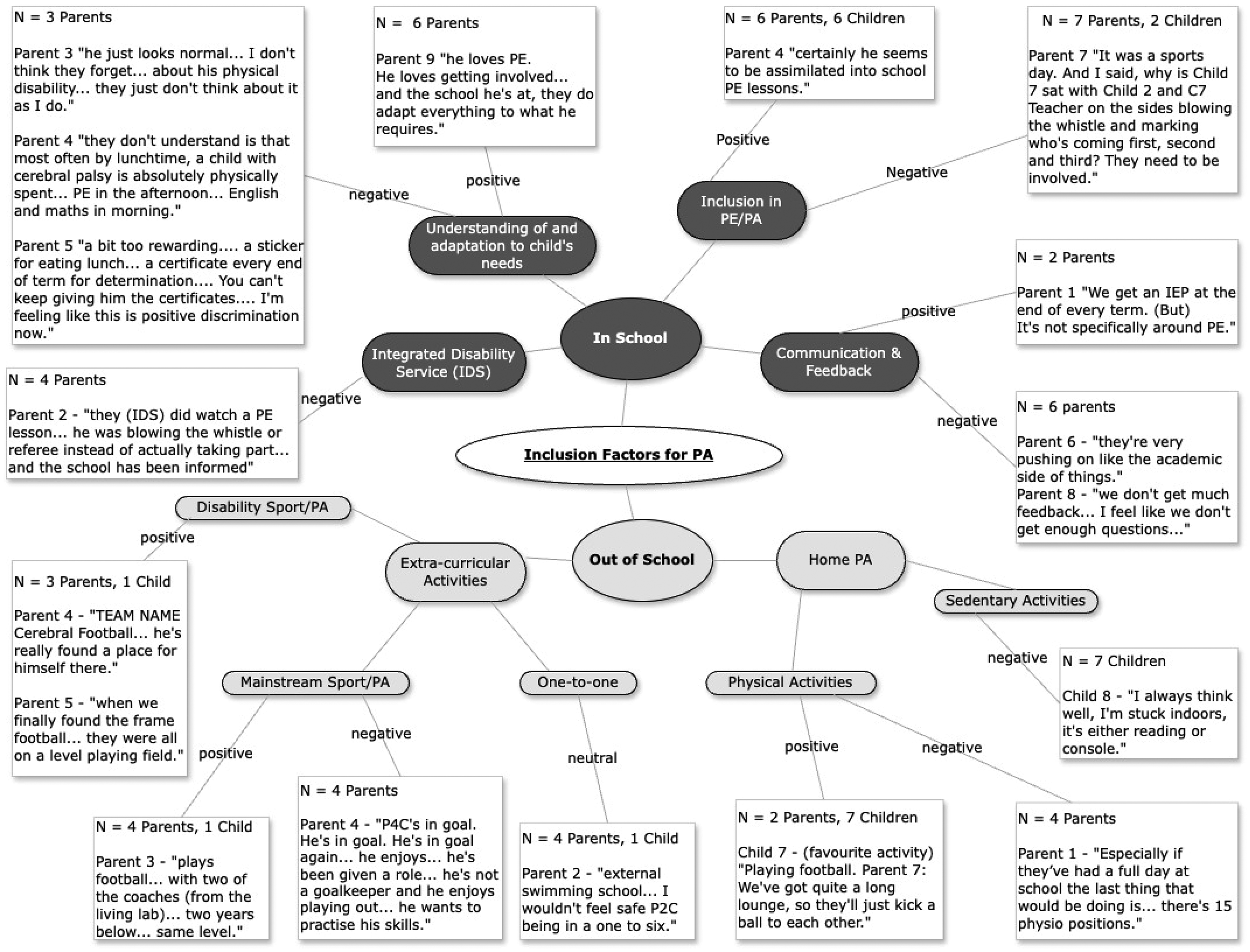
Pen profile presenting inclusion factors for PA for children living with CP.
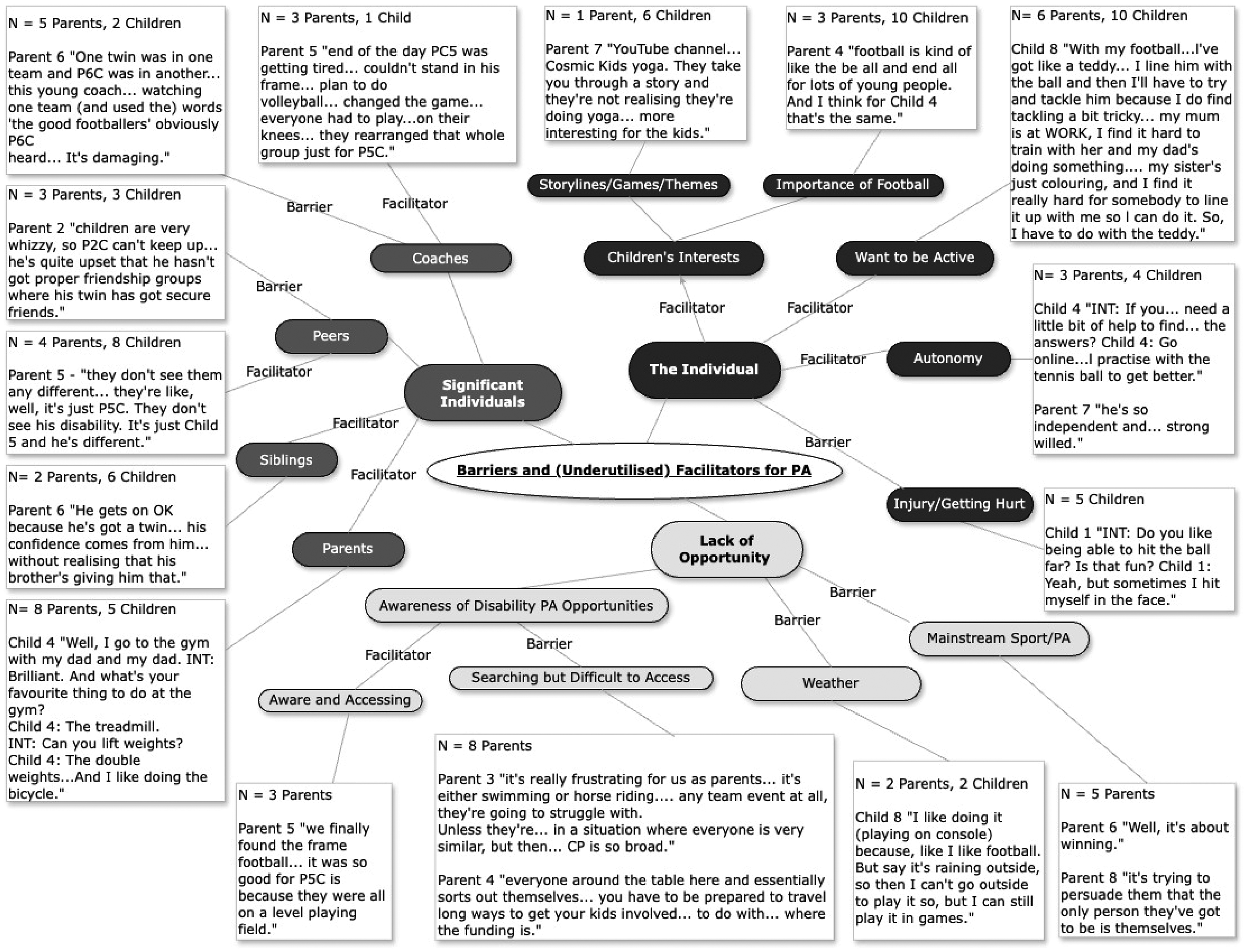
Pen profile presenting barriers and (underutilised) facilitators for PA for children living with CP.
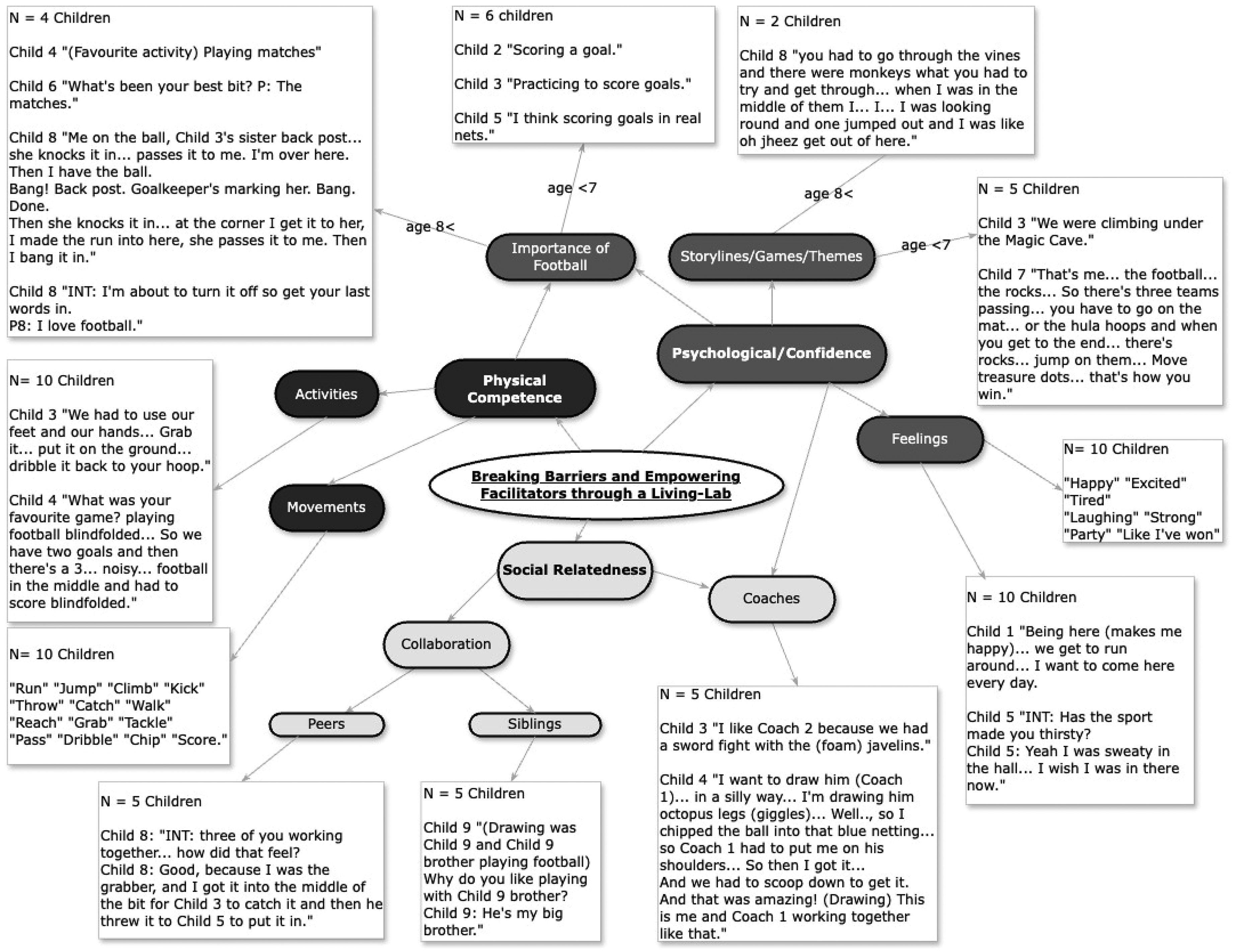
Pen profile presenting the Breaking of Barriers and Empowerment of Facilitators through a Living-Lab for children living with CP.
Results
The study findings were grouped into three pen profiles (Figure 2, Figure 3, and Figure 4). Within the pen profiles, parents and children referred to Physical Education (PE), PA, and sporting activity. Authors acknowledge the differences between these similar yet very different concepts. 34 PA is defined as any bodily movement produced by the contraction of skeletal muscles leading to energy expenditure. 35 PE refers to structured periods of directed PA taking place in the school environment, and sporting activity refers to all forms of PA through casual or organised participation aiming to develop physical fitness, mental well-being, social relationships and/or achieving results. 36 Collectively, this study demonstrates how children living with CP may become more physically active.
Figure 2 demonstrates several inclusion factors for PA both within and outside of school. Parents and children initially displayed content regarding schools and the ‘understanding of and adaption to the child's needs’ (6 parents) and their ‘inclusion within PE’ (6 parents, 6 children). However, after deeper conversation with parents, issues arose (3 parents, 7 parents, respectively) with children's disabilities sometimes being overlooked, instances of “positive discrimination” as well as children with CP being left out of PE and/or PA opportunities to instead referee or help officiate. Children demonstrated less awareness of these issues, with some expressing positive and regular involvement within PE/PA in school, such as P3: “It's (PE) fun… get to use the climbing equipment”. Nevertheless, parents continued to convey some issues with schools and their interpretation of the schools’ priorities (2 parents), suggesting that school day schedules may not work most effectively to encourage PA involvement for children with CP, with schools seemingly prioritising more academic subjects. This feeling was reciprocated by (6) parents in relation to the communication with the school and the feedback that parents receive relating to their child's progress in school, with academic subjects again being prioritised. However, for the (4) parents fortunate enough to receive support from Integrated Disability Service (IDS) to help in their child's transition into and throughout the educational setting. Children have greatly benefited from this, with IDS often highlighting to schools the importance of including the children within PE/PA opportunities.
Out-of-school inclusion factors for PA revolved around the child's extra-curricular and home PA involvement (Figure 2). Home life presented opportunities for physical and sedentary activities, with (7) children discussing physical and sedentary activity with equal frequency. Four parents expressed difficulty in keeping children active at home, especially in relation to physio programmes provided to them, with children being unwilling to perform the exercises after long, tiresome days at school. Parents also displayed a wide range of experiences in relation to extra-curricular activities, with some (4) opting for ‘one-to-one’ classes for activities like swimming as they wouldn’t feel safe with their child in a larger group. Other parents opted to include their child in mainstream sport, leading to mixed experiences. For some (4), it offered an opportunity for their child to be active with other children; however, this sometimes meant they played with children younger than themselves to account for their physical impairments. For others (4), children were given “roles” within games, like playing as the “goalkeeper” which despite showing inclusion, the roles often remained the same each week meaning some children only played this one role, and therefore did not always get the full experience of the game. Conversely, (3) parents expressed how their children “found a place” for themselves within sport/PA opportunities specific to CP.
Figure 3 represents the barriers and (underutilised) facilitators for PA for children living with CP, split into three prominent themes: ‘ significant individuals’, ‘lack of opportunity’ and ‘the individual’. Significant individuals consisted of parents, siblings, peers and coaches. Both parents (8) and children (5) highlighted the positive role parents play in keeping their children active with many displaying role model statuses, either by playing football at home or in the park, going to the gym with their child or practicing yoga with them. Similarly, siblings were underlined as significant facilitators for PA for children living with CP (2 parents, 6 children) by being someone to play with and giving them the confidence to play and be active. Conversely, peers and coaches acted as both barriers and facilitators for PA. Many parents (4) and children (8) experienced children's peers as a positive factor, as those who had known their child a long time saw past the child's disability, just seeing them for “who they are”. In contrast, other parents (3) and children (3) experienced ‘peers’ as inhibiting factors in relation to PA, with some experiencing bullying and others just unable to physically keep up with their friends when playing. Likewise, coaches were identified as sometimes being a barrier to participation in PA (5 parents, 2 children), with their focus being on “winning” rather than “inclusion”, leading to “good footballers” being prioritised and sometimes “damaging” experiences. On the other hand, some coaches were presented as facilitators for PA (3 parents, 1 child), becoming more adaptable to the needs of the children involved to keep everyone active and included.
However, the culture of mainstream sport, particularly football, was identified by parents (n = 5) as a significant barrier towards PA, with “winning” remaining as the primary goal and children struggling to be comfortable in the environment as a result. Conversely, for parents (n = 3) that have secured organised PA specific for CP, the children present were in a more inclusive environment, on a “level playing field”. Nevertheless, most parents (n = 8) have experienced substantial frustration trying to locate organised PA opportunities specific to the needs of their children. For those that do discover opportunities, they often must travel long distances to reach them. Poor weather was also identified as another barrier (2 parents, 2 children) limiting the space available to play as children are forced to remain indoors.
Nevertheless, the characteristics of the children themselves largely presented opportunities for PA facilitators. As identified by both parents (n = 3) and children (n = 10), football is vital for all the children involved in the study. Likewise, storylines/games (1 parent, 6 children) help in motivating children to be physically active. However, children (n = 5) did express awareness of getting hurt or injured during PA, which may provide a barrier to PA involvement for some. Nonetheless, parents (n = 6) and children (n = 10) both specified that all children in the study want to be active. Many children showcase autonomy (N = 3 parents, 4 children), meaning they consistently attempt to discover ways to remain active through any means they can, such as using online resources, practicing their football skills with teddies and using whatever equipment they can access.
Overall, there was a surprising consensus in the types of comments made by parents, with little disagreements. This would suggest a shared perception of barriers/facilitators from parents. Children largely supported the perspectives offered by parents, besides those outlined above (e.g., PE/PA within school) and there was also little disagreement between children's perceptions.
Figure 4 highlights how the perceived barriers and facilitators for PA were addressed through the Living-Lab approach. Within the Living-Lab, children were encouraged to collaborate with others, actively playing games alongside their siblings, which was identified as a positive experience of the Living-Lab by several children (n = 5), with three children including their siblings in their drawings. Five children also identified collaboration with peers as another positive feature of the Living-Lab, by highlighting their enjoyment in completing tasks with each other. Five children emphasised their pleasure in how coaches played games and completed tasks “with” them rather than “telling” them what to do. Two children included a coach in their drawings of their favourite experience of the Living-Lab. The feelings expressed by children (n = 10) demonstrated positive emotions like happiness and excitement whilst being “tired” and “sweaty”, meanwhile stressing their eagerness to return to the activities. All children (N = 10) demonstrated knowledge and awareness of the activities completed involving a range of skills using both the upper and lower body, as well as stimulating other senses through playing “football blindfolded” (otherwise known as ‘Goalball’). Furthermore, all children enjoyed playing football during the Living-Lab. Four children aged >8 articulated their satisfaction in playing football “matches”, demonstrating knowledge of football-specific terminology, such as “back post”, “corner”, and “playmaker”. Meanwhile, children (n = 6) aged <7 were content with “scoring a goal” and doing so in “real nets”. Eight children also communicated fulfilment in the storylines used within the games played during the living-lab, with five children aged <7 demonstrating their enjoyment in participating in games involving the “magic cave” and “treasure”. Two children aged >8 also commented on the storylines within games-based practices in the Living-Lab, expressing enjoyment in playing the “Jungle Game” and the involvement of coaches as “monkeys”. However, it was noted by one child that they were aware that they were “pretending” during one game.
Discussion
This study is unique in employing a Living-Lab approach to investigate the barriers and facilitators for PA for children living with CP. The study subsequently presents new understanding of how these barriers and facilitators can be overcome and utilised through a Living-Lab approach. Although barriers and facilitators to PA for children living with CP have been explored in previous research, the current study fills a gap in the extant literature by examining the environmental factors surrounding engagement in PA, linked to the personal factors relating to children living with CP. 6 The present study addresses this issue for the first time through a Living-Lab approach and via a multilayered qualitative data collection process, ensuring robust data. Our focus on living-lab methods in this context is unique and offers new insight which is significant in understanding how the Living-Lab may help to navigate the current landscape of PA for children living with CP. This ‘s-frame’ approach explores how PA opportunities for children living with CP can be developed. These opportunities are facilitated by not merely developing their physical attributes (i-frame). Rather, by restructuring the way in which PA opportunities are offered to them, placing them at the heart of the solution and constructing a suitable PA environment around them. 9 Such exploration is essential, as a Living-Lab by nature directs the focus towards sustainable development through co-creation and iterative feedback, working directly with the individuals experiencing the situation that the Living-Lab is attempting to solve. 15 Therefore, the current study presents the opportunity to leave a lasting impact on the lives of individuals affected by the lack of access to PA opportunities for children living with CP.
In the present study ‘significant individuals’, including peers, parents, siblings and coaches, were facilitators in PA engagement for children living with CP. Results also show that the importance of these individuals was acknowledged and accounted for by the Living-Lab approach, with children highlighting their positive experiences in the Living-Lab alongside their peers, siblings and the coaches. Children highlighted that coaches played a substantial role in their experience of the Living-Lab, mostly expressing their enjoyment in engaging in shared experiences with coaches, in comparison to their usual experiences of being “told” what to do. It must also be noted that parents were not directly involved in the activities of the Living-Lab, as shown by the lack of presence in the children's descriptions of Living-Lab experiences. This approach was taken due to the significant role that parents already play in the lives of children living with CP, performing numerous roles of parent, coach, friend, and, more often than not, carer. 37 By removing the direct involvement of parents within the Living-Lab, not only did it help to relieve some of this burden upon parents, but children were also afforded the opportunity to indulge in the independence and autonomy they exhibit within daily life (Figure 4; Figure 5). Consequently, this approach helped to conquer the ‘confidence’ domain of physical literacy, as children were able to gain confidence in their capabilities by completing tasks and solving problems independently. 38 As demonstrated by the Self-Determination Theory (SDT), 39 if the autonomy of children can be nurtured, this is likely to encourage them to be more motivated to engage in PA in the future. In addition to autonomy, social relatedness and physical competence are the other facets of the SDT. 39
Although the development of physical competence was not measured to assess the success within the Living-Lab, results did highlight the range of skills practiced by the children in the Living-Lab and their subsequent pleasure in doing so. Examples of motor skills performed included running, jumping, kicking, throwing, and catching. Each of these examples showcases fundamental movement skills (FMS) essential for young individuals’ physical development. 40 Previous research with children living with CP has also demonstrated the need for developing FMS and, as a result, interventions have aimed to develop FMS.9,41,42 The present study utilised theories of ecological dynamics and the constraints-led approach to manipulate the task and environment within which the children were situated using a sport-specific and game-based approach to empower children unlike previous interventions which have tended to focus on physical training in a linear manner.20,21 This approach, underpinned by NLP, enabled each child to receive specific feedback and task-oriented challenges to help progress them within the levels of the games being played, as well as further their physical literacy development. 14 The games themselves were informed by other theoretical concepts such as Analogy Learning and ‘Managed Chaos’.19,24
Creativity and problem-solving were further encouraged within games due to the use of analogies, in which children expressed great enjoyment in participating during the Living-lab. 43 Children recalled moments including “climbing under the magic cave”, jumping on “rocks”, collecting “treasure”, avoiding “monkeys” in the “jungle”, and taking on the persona of “Spidey”. The inclusion of these imaginative elements within games helped to divert children's attention away from the internal conscious control of their limbs to facilitate movement, instead encouraging children to focus on the external goal of the task they were trying to complete.11,43 The captivating nature of the storytelling from coaches helped to further ‘paint the picture’ in the child's imagination. By adopting this approach, the development of the participants’ physical literacy became more holistic, as they were practicing the physical competence component whilst developing their confidence, autonomy, and social relatedness by engaging in the story of the game alongside their peers and siblings.14,39
Further differences between participants’ perspectives were presented in relation to their experiences playing football. Those aged >8 expressed enjoyment in being involved in the competitive aspect of “matches”, demonstrating knowledge of specific footballing terminology, whereas children aged <7 were content with just “scoring a goal” and using “real nets”. These varying needs and desires were adapted for throughout the Living-Lab, with ‘matches’ taking on different forms, from 4 v 4, to 2 v 2 with two balls, and 1 v 1 games, informed by ecological dynamics and the constraints-led approach. 11
Strengths and limitations
This study is the first of its kind to assess barriers and facilitators to PA for children living with CP through a living-lab approach. Consequently, this study demonstrates how innovative approaches to enquiry can uncover new knowledge relating to barriers and facilitators to PA that other research to date,7,8 have been unable to achieve. Such an approach is congruent with Flyvbjerg's 44 assertions on case study research, where the local-led evidence, providing local rationality can inform generalisability. This collaborative endeavour helped design an approach to overcome PA engagement barriers that were informed by children with CP. Furthermore, this approach provides an example to substantiate the misconception highlighted by Flyvbjerg 44 that such research designs cannot enhance generalisability. This is because the living-lab case study approach used in the present study provides in-depth evidence that holds across a population, and not simply those involved in the living-lab itself. We establish generalisability from local-led evidence via the rationale of transferability. That is, to argue the analysis from the living-lab, with children living with CP, holds for comparable other cases. This subsequently provides a pattern of meaning for children living with CP and generates concrete, practical and context-dependent knowledge that establishes generalisability.
The findings of the current study and the approach used within have significant relevance and applicability to populations with CP. The current study also has potential to challenge the status quo of approaches typically used for PA promotion with this population. Despite having a small, majority male sample it should be noted, that this work focuses on a clinical pediatric population where the number of children living with CP is considerably lower in number than typically developing children. As such, the sample in this study should be considered in the context of CP. One other consideration in regard to the practical implications of this approach relates to those who work with children. Teachers and coaches could be conceptualised as the change-makers in relation to provision of opportunity for PA through sport. One of the concerns for teachers and coaches in mainstream provision is they may perceive a lack of experience, or a limited repertoire of teaching/coaching strategies to encourage and reinforce PA for children living with a disability. The results of the study offer new knowledge from the voices of parents and children. Such knowledge might be employed to develop strategies for teachers and coaches to empower them when working with children living with a disability. Future work developing and trialling such an approach would be useful but is beyond the remit of the present study. However, this case study has helped to develop nuanced, context-rich knowledge to assist in the development of expertise in coaching in this relatively unexplored environment. 44 Subsequently, the findings of this study shed light on how coaching for children living with CP may be approached across other sports beyond merely football.
Conclusions
The key finding of this study is in illuminating the use of a living lab approach in the context of PA promotion for children living with CP. The use of such an approach overcomes the limitations of existing approaches to PA promotion for children living with CP. The innovative use of a Living Lab approach is both practical and engaging, allowing children to participate in real-world, game-based activities that enhance their physical literacy. Such an approach is also congruent with coaching pedagogy and is applicable in multiple coaching scenarios. The study also provides valuable insights into how the Living Lab methodology can empower facilitators and address barriers, making it a useful resource for practitioners and policymakers to help change the PA environment for children living with CP in the future.
Footnotes
Declaration of conflicting interests
The authors declared no potential conflicts of interest with respect to the research, authorship, and/or publication of this article.
Funding
The authors received no financial support for the research, authorship, and/or publication of this article.
