




Abstract
Relative energy deficiency in sport (REDs) is a syndrome that negatively impacts the health and performance of athletes, due to low energy availability (LEA), resulting in metabolic, cardiovascular, and endocrine function impairments, and an increased risk of injury. An increased emphasis on the coach-athlete relationship may facilitate the knowledge transfer of LEA's negative effects, mitigating the potential of an athlete developing REDs. Yet building on the International Olympic Committee's 2023 REDs statement of articles published between 2018–2022, to also include articles from 2023–2024, it is noted 38,424 participants were recruited to 246 REDs-related studies, with coaching staff only represented ∼3% of the total cohort. This review aims to assess coaches’ and athletes’ perceptions of their respective, as well as each other's roles and experiences in the presence of LEA and REDs. A summary of athlete and coach first-person experiences of REDs-related issues is provided. However first-person REDs experiences are often that of the athlete, while the coach will more often ‘experience’ REDs from a second-person perspective, thereby highlighting the need for the development and provision of REDs education targeted to coaching staff which maybe sports-specific, taking into account topics such as appropriate language to use and how/when to discuss an athlete's body, health and/or performance. A better understanding of how athletes experience REDs-related issues may facilitate individual coaching staffs’ evaluation of their role in preventing and/or addressing a potential REDs diagnosis.
Keywords
Introduction
Relative energy deficiency in sport (REDs) was first presented in the 2014 International Olympic Committee (IOC) consensus statement as a syndrome that negatively impacts the health and/or performance of athletes through excessive or persistent low energy availability (LEA). 1 The authors of the 2014 IOC statement suggested the REDs model include and expand upon the female athlete triad (Triad) to acknowledge males experiencing symptomology linked to LEA. Continued research within REDs led to updating the IOC's statement in 2018 and 2023, highlighting the potential negative impact of LEA on an athlete's physiological function.2,3 For example, suggested health-related deficits associated with LEA include impaired bone health, glucose and lipid metabolism, gastrointestinal, cardiovascular, and neurocognitive functions, as well as growth, development and reproductive dysfunctions, reduced immunity and muscle function, and potential sleep disturbances and mental health issues.1–3 Performance-related deficits include decreased training response, recovery and athlete availability, reduced muscle strength-, endurance- and power-performance, and decreased motivation, and cognitive performance.1–3 However, it must also be noted that LEA-related health issues may also yield negative impacts to performance, for example increased risk of fracture or difficulty reaching max heart rate due to impairments to bone health and cardiovascular functions, respectively. 3
A notable change to REDs since 2014 has been the change from ‘RED-S’ to ‘RED-s’ and ultimately ‘REDs’ de-emphasising the word ‘sport’, thereby improving inclusion of physical activity outside of organised sport, as well as non-athlete individuals. 3 Another amendment is the inclusion of the concepts “adaptable LEA” (a-LEA) and “problematic LEA” (p-LEA), where the former is an intentional, controlled, and, short-term application of targeted LEA states when attempting to manipulate body composition and improve performance. 3 In contrast, p-LEA is a more long-term and, perhaps, uncontrolled reduction in an athlete's energy intake (EI). 3 Factors associated with a-LEA often encompass intensions of reversibility, such as short-term body mass (BM) reductions or impacts to well-being, and implemented in a pre-planned and structured manner to improve performance.3,4 Conversely, p-LEA is associated with more severe and persistent health- and performance-impacting factors, such as menstrual dysfunction in females or low testosterone levels in males and increased risk of bone stress-related injuries.3,5 While p-LEA should be avoided, athletes may engage in carefully controlled periods of a-LEA, where knowledge transfer from coaching staff and a multidisciplinary team (MDT) including nutritional professionals, 6 is a key consideration on safe energy availability (EA) manipulation if/when deemed necessary. 7 Despite a-LEA being associated with benign effects,3,4 repeated short-term BM reductions may still yield harmful health impacts.8,9
The 2023 IOC REDs consensus statement emphasised a coach-athlete centred approach to improve understanding and knowledge transfer between both groups, thereby potentially reducing REDs development in athlete populations. 3 Indeed, collaborative coach-athlete relationships have been found to hold an interdependence of the coach to impart, and athlete acquire, new skills intended to improve factors such as motivation and performance in individual and team sport settings. 10 Additionally, while Biggin and colleagues 11 found that coaches and athletes displayed differing opinions, experiences, and perceptions of athlete psychological welfare, both groups acknowledged the need to mutually recognise signs or symptoms of poor mental health. Athletes have also indicated the importance of the ability and willingness of the coach to display an interest beyond that of solely a sporting concern, where coach-athlete closeness and trust are seen as positively impacting performance. 12
While coaches displaying a genuine interest in athletes as individuals and outside a sporting context helps to strengthen the coach-athlete relationship and facilitate collaborative efforts, 13 coaches and athletes often possess differing interpretations of a shared situation. 14 Regarding situations of nutrition coaching and knowledge transfer, Trakman et al. 15 in their cohort of elite and non-elite athletes (n = 247 male and n = 163 female), reported that 20%, 19%, and 16% of athletes preferred nutritional advice from dietitians, the internet and nutritionists. The remaining first preferences were athletic trainer (14%), family/friend (10%), academic journal (6%), doctor (6%), and mass media (3%), with 2% each for coach, social media and teammates. Additionally, the authors reported that 48% of athletes indicated they had received nutritional advice from their coach, with 33% preferring individual nutritional consultations and 35% seeking sport-specific nutrition information. This highlights the variety of sources of nutritional advice athletes may be exposed to, whether preferred or otherwise when receiving such advice. For example with the goal of increasing body mass (BM), Costello et al. 16 utilised the Behaviour Change Wheel model which resulted in a 5 kg BM increase across a 12-week nutritional intervention with an elite-level Rugby League player, and was delivered one-to-one between nutritionist and athlete. In contrast, Garthe et al. 17 implemented a group BM nutritional counselling intervention with 12 (n = 10 male and n = 2 female) elite Norwegian athletes, resulting in a mean 3 kg BM increase. Participants in this research, who represented rowing, volleyball, taekwondo (n = 1 for each), soccer, skating (n = 2 each), and ice hockey (n = 5), were led by the national sports federation's head coach and coaching staff. Such instances help to evidence how one-to-one or multi-disciplinary team (MDT) approaches may be adopted during interventions of similar goals. However, for interventions to produce the desired goal, coaches and athletes must be clear on the expectations of each other's roles within athlete-preparation and -support. 18
When coaches and athletes work in an environment where there is a potential increased risk of REDs, it becomes increasingly important that each party's expectations of the other are evident. For example, research by Button and Ouellette 19 highlighted the benefits of support networks, including that of coaching staff, in maintaining an awareness of the impacts that language and behaviour may have on an athlete's potential of developing an eating disorder/disordered eating (ED/DE). Indeed, ED/DE have been linked to LEA1–3 and potential subsequent REDs diagnoses, with an umbrella review 20 suggesting pressure from coaches to athlete to lose weight or improve performances was found to be associated with increased incidence of ED/DE. Such pressures may intentionally or unintentionally negatively influence an athlete's view of their own diet or body image.21,22 Where negative feedback from a coach to an athlete may increase ED/DE risk or conversely, positive feedback intended to reduce athlete self-criticism may aid in mitigating the risk of ED/DE. 23
Continued research within REDs has led to 246 original research articles published between 2018 and 2024 (Table 1). Throughout these publications, more than 38,424 participants were recruited, with athletes representing approximately 97% of the total participants. From a sporting context, the athlete is the individual physically impacted by REDs, 24 resulting in much REDs research focusing on athletes. However, this approach often omits coaches, the individuals tasked with prescribing actions which may influence athlete behaviours in relation to areas potentially contributive to REDs development, such as training, recovery, and nutrition. 3 It has also been suggested that coaches’ perspective of their role within REDs is still unexplored 25 and following inspection of REDs-related publications from 2018–2024, coaching staff were found to represent approximately 3% of participants. The issue of low rates of coach inclusion within research has been highlighted, with one sports science journal from 2015–2021 publishing over 1100 original research investigations, yet <0.5% of those studies recruited coaches within participant cohorts. 26 Indeed, due to the frequency with which coaches and athletes interact with each other, coupled with the potential for athletes of any sport to be at risk of LEA or REDs,24,27 shared behaviours and attitudes between coaches and athletes toward risk limitations may allow for greater knowledge transfer. Further, perception of one's own, and each other's role within the coach-athlete relationship should be clear to both, particularly in the presence of LEA and REDs.5,28 Therefore, the current narrative review aimed to summarise the literature of coaches’ and athletes’ perceptions and expectations of their respective roles regarding experiences of LEA and REDs. To the best of the authors’ knowledge, a review focusing on coach and/or athlete first-person perspectives of perceptions concerning LEA and REDs is, as yet, unconducted.
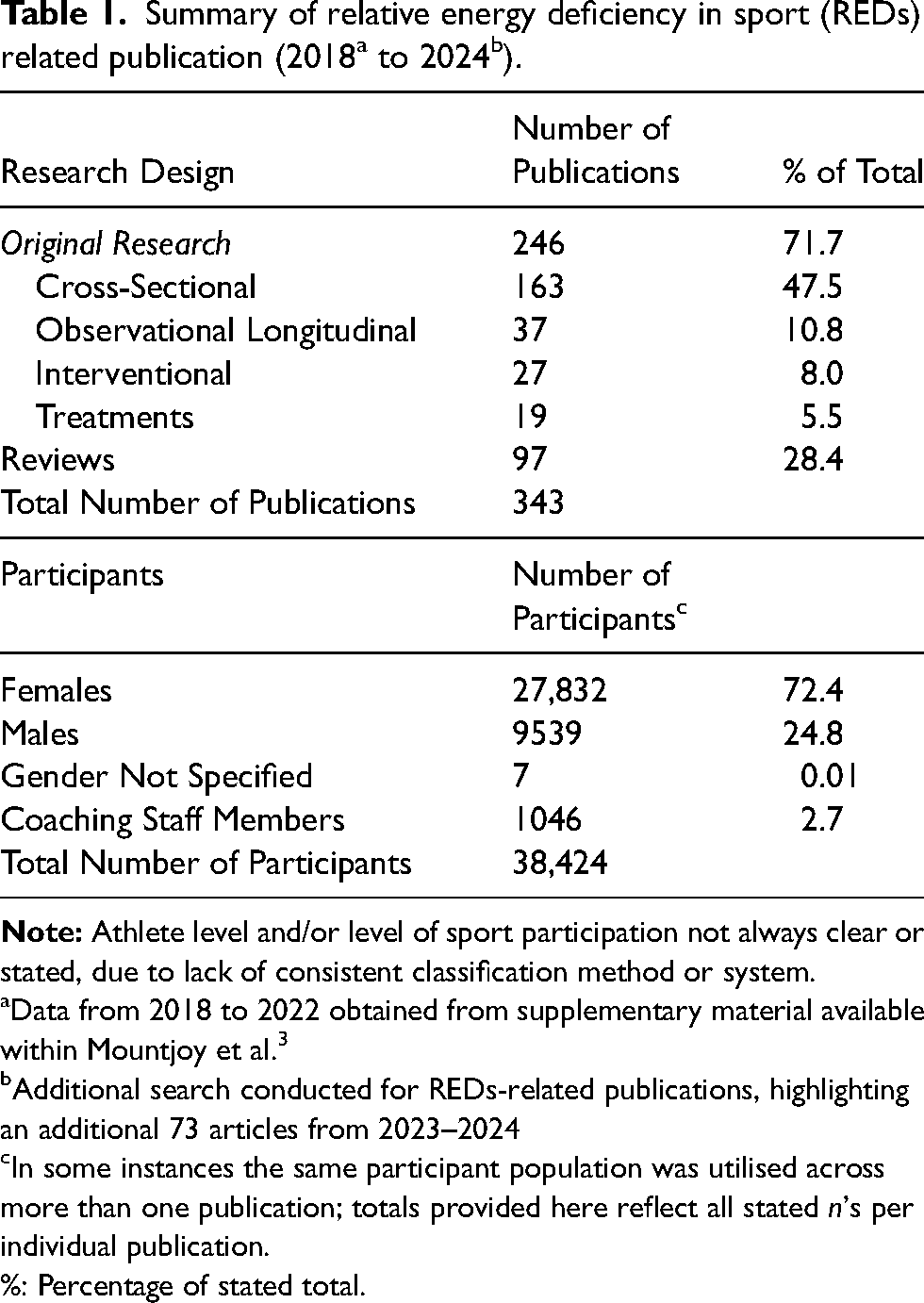
Data from 2018 to 2022 obtained from supplementary material available within Mountjoy et al. 3
Additional search conducted for REDs-related publications, highlighting an additional 73 articles from 2023–2024
In some instances the same participant population was utilised across more than one publication; totals provided here reflect all stated n's per individual publication.
%: Percentage of stated total.
Coaches’ perceptions of relative energy deficiency in sport
Coaching, the athlete and the multi-disciplinary team
Within a sporting context, coaching may be undertaken by a single coach or MDT of support staff. 18 Alongside the head coach, a specialist support staff may include nutritionists or dietitians, S&C coaches, sports scientists, performance analysts, physiotherapists, sports psychologists, or team doctors. The combined efforts of the entire MDT, and the athlete, form the overall coaching paradigm, 29 which guides an individual in gaining targeted performance and/or health improvements.10,30 At any point, an athlete may require guidance in relation to nutrition, health, psychological or performance-related factors, resulting in daily or weekly interactions with various MDT members. While an athlete may have varying day-to-day interactions with members of the MDT, the key coaching connection is often with “the coach”, 12 emphasising the importance of the coach's understanding of their role and duty of care to their athlete(s). If the coach is unaware or unclear of their role and that of the MDT in situations related to mitigating or recognising REDs development, athletes may remain or be at increased risk of REDs. 31 Tables 2 and 3 summarise articles reviewed, which provided coach and support staff first-person perspectives on REDs-related issues.
Coach-centric first-person perspective of relative energy deficiency in sport (REDs) issues.
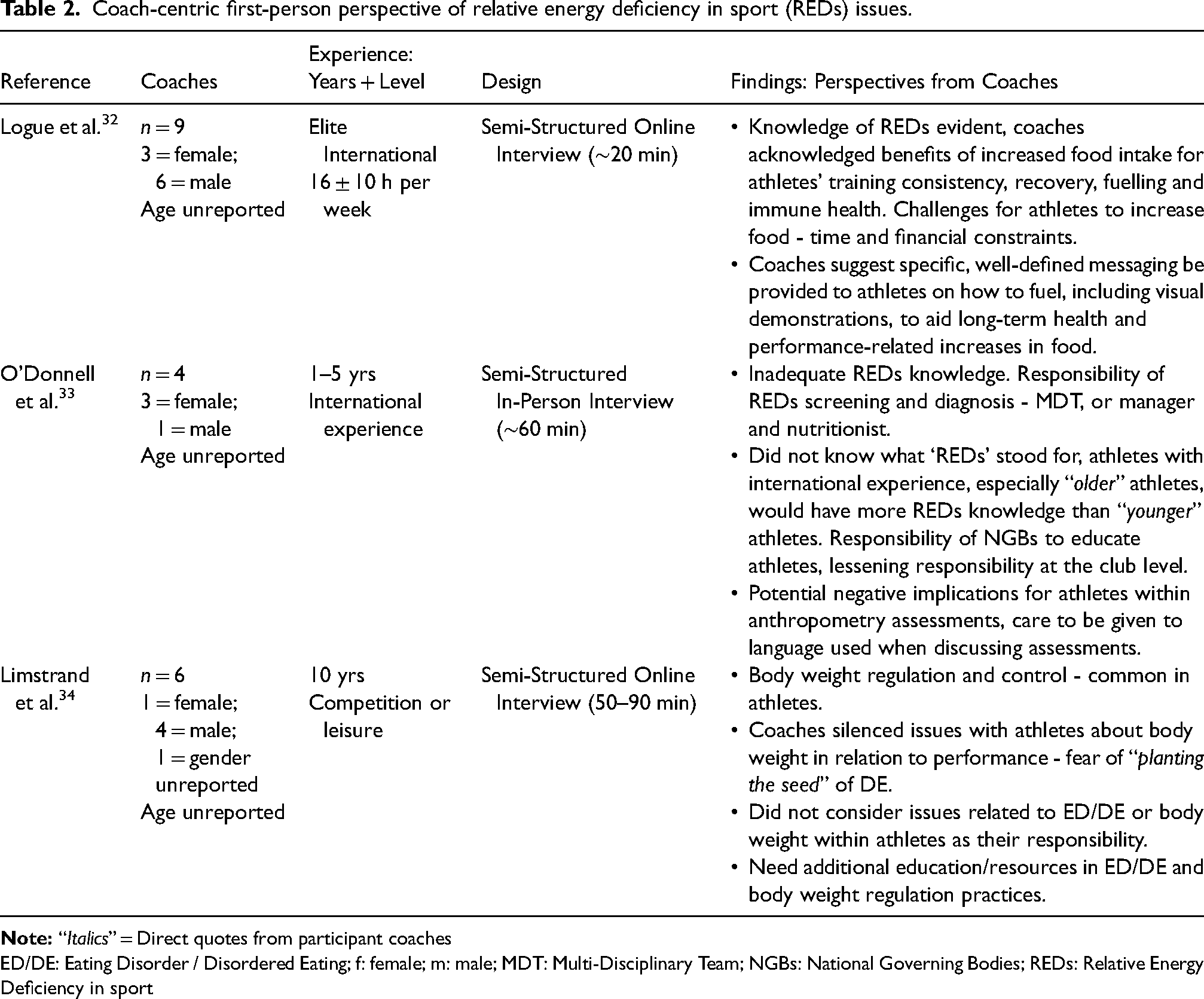
ED/DE: Eating Disorder / Disordered Eating; f: female; m: male; MDT: Multi-Disciplinary Team; NGBs: National Governing Bodies; REDs: Relative Energy Deficiency in sport
Multi-disciplinary team members’ first-person perspective of relative energy deficiency in sport (REDs) issues.
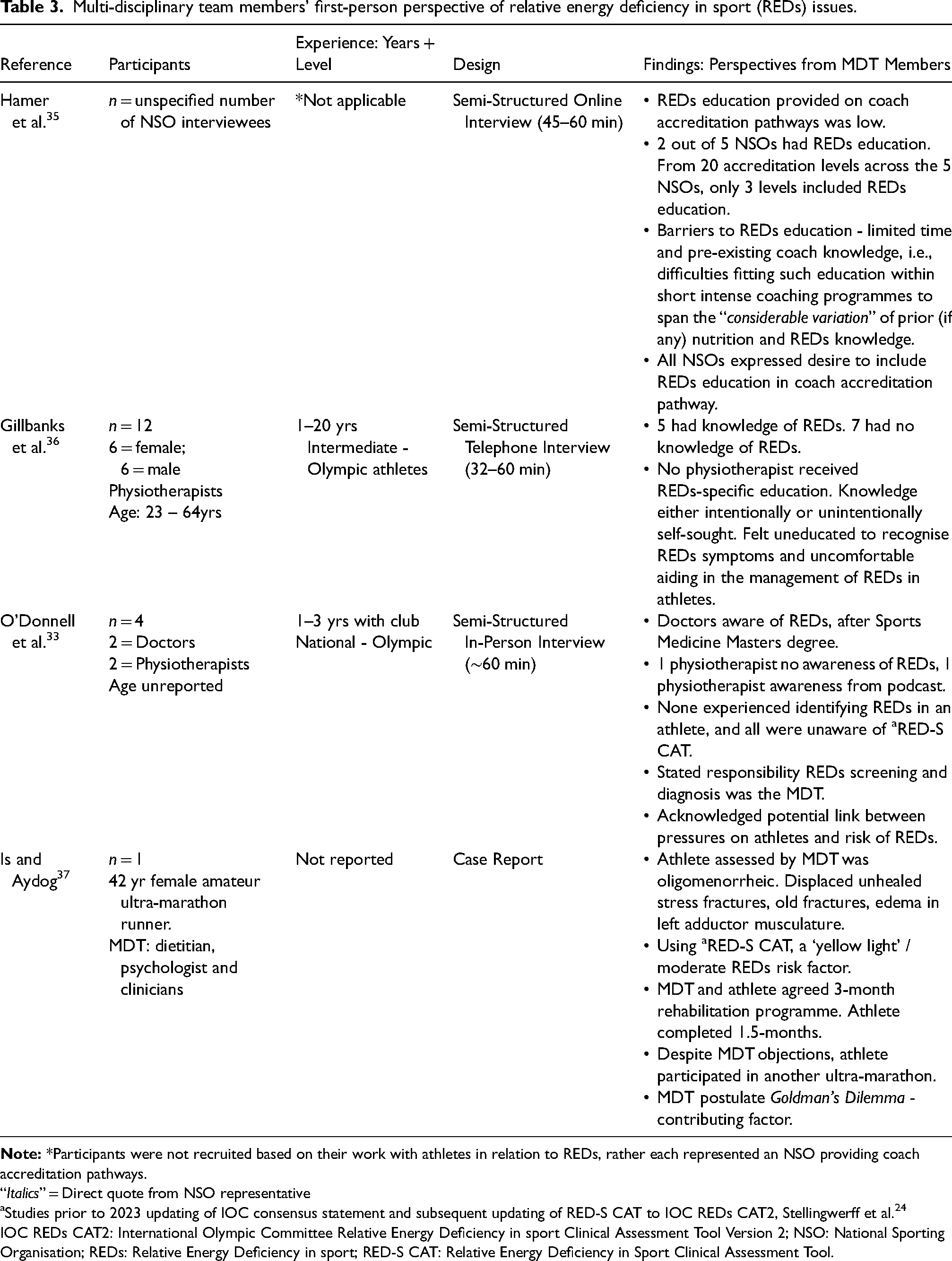
“Italics” = Direct quote from NSO representative
Studies prior to 2023 updating of IOC consensus statement and subsequent updating of RED-S CAT to IOC REDs CAT2, Stellingwerff et al. 24
IOC REDs CAT2: International Olympic Committee Relative Energy Deficiency in sport Clinical Assessment Tool Version 2; NSO: National Sporting Organisation; REDs: Relative Energy Deficiency in sport; RED-S CAT: Relative Energy Deficiency in Sport Clinical Assessment Tool.
Coaches’ knowledge of relative energy deficiency in sport
A 2023 narrative review of twenty articles assessed coaches’ attitudes, knowledge and behaviours towards LEA. 38 Of these, ten explored coach knowledge of the Triad and ten investigated coach knowledge of ED/DE. While the authors suggest there needs to be improved coach education on the implications and mitigation of LEA risk, only one study 39 was included which directly assessed coaches’ knowledge of LEA specifically related to REDs. This was partly due to 11 of the 20 included studies being conducted prior to REDs’ recognition as a health and performance concern impacting athletes. Nonetheless, Hamer et al. 38 reported a lack of knowledge from the coaches’ perspective on elements such as aetiology, recognition of symptoms, or prevention and treatment measures related to the Triad, ED/DE or LEA. The REDs-specific article 39 utilised a cross-sectional study design and recruited 175 athletes, 55 coaches, and 30 athletic trainers (all female) from cross-country sporting teams. The authors reported the highest REDs knowledge scores for athletic trainers (80 ± 17%) with lower scores in athletes (70 ± 18%) and coaches (71 ± 18%). Worryingly, 84% of athletes, 89% of coaches and 71% of athletic trainers reported having received no training from their athletic departments on REDs or the Triad. Participants reported self-directed and self-sought avenues were their primary educational methods in gaining knowledge of REDs, including online searches by athletes, review of nutrition, physiology, and coaching-related textbooks by coaches, and athletic trainer seeking professional consultations with dietitians and physicians. Self-directed continuous professional or personal development (CPD) is imperative to obtaining knowledge on topics directly related to coaching and athlete health/performance, 40 where willingness to participate may be improved if coaches were involved in topic selection or co-creation. 41 However, there also appears to be a current lack of REDs-specific CPD programmes available, which provide education on the identification of signs and symptoms of REDs. 42 Nonetheless, if relevant and topic-specific CPD education was further encouraged by departments or institutes, a higher undertaking by coaches, MDT members, and athletes may be observed. 40
The importance of coach education and knowledge of LEA and REDs may be elevated when it is considered that athletes’ most frequent and influential sport-related contact is their coach. 43 Subsequently, coaches may hold a key position in guiding athletes away from the risks of LEA. Charlton and colleagues 27 in their review paper, highlighted indications from previous studies that 89% of coaches could not name any symptom of the Triad, while only 24% of surveyed coaches were aware of the Triad. Though figures related to coach knowledge of REDs were unreported, the authors indicated that as Triad research may be a precursor to REDs recognition, 1 due in part to LEA underpinning of both syndromes, 44 coach knowledge may be similar across both syndromes. However, while Charlton and colleagues 27 included ten studies that assessed coach knowledge of the Triad, no studies were included that specifically assessed coach knowledge of REDs. The authors’ reporting of coaches’ awareness of the Triad or inability to name any symptoms was determined from two studies. Firstly, research by Mukherjee et al. 45 recruited 106 coaches (n = 81 male and n = 25 female), from Singapore's National Registry of Coaches, with individual sports coached unreported. The authors reported that 85% and 89% of coaches had not heard of the Triad and could not name any symptoms, respectively. Mukherjee et al. 45 concluded that increased education programs are needed to facilitate improved awareness, recognition, and preventative skills for coaches working with at-risk athletes. Secondly, Pantano 46 recruited 123 (n = 64 male and n = 59 female) American high-school coaches, from sports including cross-country, swimming, volleyball, soccer, gymnastics, cheerleading, basketball, track and field, and softball. 24% of participating coaches indicated “having heard of the Triad”, with 14% being able to name all Triad symptoms. Conversely, Kroshus et al. 47 investigated US-based athletics trainers’ knowledge of the Triad and REDs, reporting high awareness of both syndromes. Of the 285 respondents, 98% (n = 281) and 32% (n = 94) indicated having heard of the Triad and REDs, respectively. Athletic trainers were asked in Likert-type questions about actions taken when athletes displayed Triad or REDs symptoms. The authors reported that following screening, athletes highlighted as displaying menstrual dysfunction, bone injury or ED/DE, 47.85% (n = 78), 76.84% (n = 219) and 59.93% (n = 163), respectively, were referred to a sports medicine physician. However, return-to-play following Triad or REDs symptoms was not examined. 47 Interestingly, the authors concluded by recommending CPD for coaching staff whose formal training was completed prior to the 2014 presentation of REDs. Therefore, it may be that a lack of topic-specific education completed on REDs makes it difficult for coaches to determine their role, particularly for more experienced coaches.
Amongst coaches’ responsibilities are aiding athlete performance improvements through well designed training programmes, 48 which may also mitigate the incidence of injury in strength/power 49 and endurance sports. 50 However, Mountjoy et al. 51 cautioned that education pathways must be developed for coaches to increase their awareness of and protect athletes against the health- and performance-related risks of LEA and REDs. As coaches and/or the MDT may inadvertently make recommendations that increase an athlete's risk of LEA or REDs. For example, a 2019 case report of a 20-year-old collegiate male swimmer was diagnosed with REDs following advice from his coaching team and sport physician to lose weight. 52 The authors report that the athlete was advised to reduce his BM from 91.4 kg to 86.4 kg. This resulted in the athlete training for up to 6 h per day (pool and dry land sessions), attending class, sleeping <6 h per night, and consuming ∼2000 calories per day while expending ∼4000 calories. Over one year, the athlete's BM dropped to 82.7 kg, at which point the athlete became concerned with his performance and subsequently sought help. Despite specific performance parameters being unreported, the athlete presented with “strikingly low” testosterone levels, 30 ng/dL total testosterone, 3.6 pg/mL free testosterone, and 10 ng/dL bioavailable testosterone (normal ranges: 348–1197 ng/dL; 52–280 pg/mL and 128–430 ng/dL, respectively). While the initial advice to reduce BM was from coaching staff, and incorporated over a one-year period, when the athlete highlighted his concerns, the team coach and physician implemented a recovery protocol. The athlete was advised to work with a nutritionist and sports physician, to increase BM and reach healthy testosterone levels. 52 This highlights how development of REDs may have gone unnoticed by a coaching team, yet once recognised a recovery plan was implemented and acted upon by the athlete and appropriate MDT members. Conversely, advice intended to protect against REDs development may also be ignored by the athlete. For example, advice from rehabilitation staff to a 42-year-old female ultramarathon runner not to participate in an upcoming ultramarathon was dismissed by the athlete, and she competed in the event. 37 This was despite her presentation with persistent groin pain, which, following MRI, revealed multiple unhealed and old stress fractures to her pelvis. Additionally, edema was present in all left adductor musculature. Utilising the REDs Clinical Assessment Tool (REDs-CAT), 53 the rehabilitation staff determined the athlete to be a ‘yellow risk’, due to LEA, multiple stress fractures and subsequent non-compliance to treatment advice. While it was indicated the athlete was evaluated by a dietitian and psychologist, it was not indicated if education was provided to the athlete that related to the impacts LEA or REDs may have on her ultramarathon participation. 37 However, due to no follow-up assessment, potentially owing to the athlete's treatment non-compliance, the outcome of her ultramarathon participation was not available. The authors postulated a possible explanation for the athlete's disregarding of treatment as being Goldman's Dilemma, where an athlete displays a willingness to endanger their own health in the pursuit of success. 54 Though it must be noted that as it is unclear what LEA- or REDs-specific education may have been provided to the athlete, any potential impact of Goldman's Dilemma also remains unclear. 37
Establishing a framework to aid coaches early recognition of REDs and subsequent treatment avenues for athletes may be warranted. Such a framework may be similar to the guide of the National Collegiate Athletic Association's (NCAA), which provides a ten-point strategy aimed at reducing rates of ED/DE among athletes. 55 The NCAA's ten-point strategy included encouraging coaches to be aware of symptoms, consulting qualified nutritional professionals, de-emphasis of bodyweight, screening of athletes, ensuring the MDT's knowledge is updated on symptoms and encouraging athletes to seek help if/when they themselves have concerns. Educational interventions aimed at improving coaches’ knowledge on consequences or contributing factors to REDs have been shown to be effective. Martinsen et al. 56 recruited 76 Norwegian coaches (n = 70 male and n = 6 female), into either an intervention or control group, where the intervention group was provided with nutritional education, related to the recognition and management of EDs. Following the 1-year intervention, coaches in the intervention group displayed higher nutritional knowledge index scores for weight regulation and EDs (6.2 ± 1.7 versus 4.8 ± 1.3, p < 0.001), and were seven times more likely (OR = 7.1, 95% CI: 2.2–23.2, p = 0.001) to describe their ED knowledge as “somewhat good“ or better, than coaches in the control group. Martinsen et al. 56 reported a follow-up assessment at 9-months post-intervention, indicating the effectiveness of the protocol in enabling the coaches to retain the educational information. This contrasts with previous research where coach education protocols were shown to be poorly retained. For example, poor ED educational information retention at follow-up assessment (8–11 months) was reported in female cheerleading coaches. 57 However, the coaches did display an increased willingness to apply ED preventative measures to their athletes. While ED interventions may highlight improved knowledge retention 56 and willingness to apply acquired knowledge, 57 such studies may benefit from an assessment to determine if ED was reduced due to the improved coaching knowledge. In a review paper, 58 it was recommended that coaches be provided with updated guidance on the risks of LEA and REDs, by encouraging performance enhancements without emphasising body-mass and body-composition. Efforts to help coaches recognise the strengths and weaknesses of how their programming may be associated with risk factors for LEA or REDs should be at the forefront of consideration in the development of coach education protocols.
The coach's role within relative energy deficiency in sport
One area where coaches may benefit from updating their education is determining their role within REDs. 59 Coaches may be questioned about and subsequently, advise athletes on aspects of EI and energy expenditure (EE). 60 Such advice should acknowledge the potential connections between these aspects and LEA or REDs. In relation to EI, research has been conducted on athletes’ and coaches’ perceptions of increasing food intake in relation to mitigating the potential of LEA and improving performance. 32 Logue and colleagues 32 survey and interview study of nine elite-level athletes (n = 6 females and n = 3 males) and nine high-performance coaches (n = 3 females and n = 6 males) found that both groups had knowledge of REDs and its potential effects. However, the knowledge level of each group in relation to REDs was unreported. Even though athletes reported being aware of REDs and its potential negative impacts, six athletes admitted to hesitating and worrying about their coach's reaction if they knew the extent of EI required to fuel optimally, especially if skinfold measurements had increased. One reason for differing opinions on the outcomes of EI between coaches and athletes may be that while athletes are talking from a first-person point-of-view of experiencing symptoms related to REDs, coaches often are not. Logue et al. 32 recommended further research be conducted into differences of opinions between coaches and athletes on energy status issues, but also stressed the importance of aligned perceptions between coaches and athletes in various areas, such as the benefits fuelling may have on consistency of training and recovery; as well as coach-athlete and MDT collaborations to benefit athlete health and performance. In another interview-based study, 34 the interaction of the coach-athlete relationship with weight-controlling behaviors and knowledge of ED/DE in sport climbing was assessed. One point repeatedly highlighted by athletes and coaches was relating a lighter body to improved performances. Quotes from the participants indicated “silencing” of discussions about bodyweight and performance, where neither group wanted to engage in such conversations. Similar findings were reported in lightweight rowers in 2022, in which athletes indicated having accepted the negative impacts of living with REDs as “a sacrifice you have to make”, which appeared to have subsequently reduced the athletes’ willingness to communicate their experiences with coaches. 61 A cross-sectional questionnaire-based study of 203 cyclists revealed that 124 cyclists felt pressure to maintain a certain BM. 62 Further, 114 of the 124 cyclists reported the pressures of low BM maintenance as coming from a range of sources, including coaching staff. The reason for maintaining low BMs reported by athletes was to maximise performance. 62 Indeed, athletes recruited by Limstrand and colleagues 34 also reported believing a lighter body would benefit performance and indicated a reluctance to discuss their efforts in reducing BM with coaches. In addition, the coaches felt uneducated on how to discuss body weight and performance with athletes, while also feeling unable to recognise signs of ED/DE. This combination led the authors to recommend that educational programmes be developed and targeted to coaches, to improve coach knowledge and ability to engage in conversations about body weight and performance in a positive way. 34 However, while ED/DE may be a sign of or contributing factor to the development of REDs, 63 educational programmes must deliver clear definitions when presenting ED/DE and REDs.
Regarding EE, two studies examined the impact of increased training loads on athletes and the relationship with LEA or REDs. Stenqvist et al. 64 recruited 22 well-trained male cyclists (33 ± 6yrs; 76 ± 7 kg; peak oxygen uptake 63 ± 7 mL·kg−1·min−1) to assess the effects of a 4-week intensified training mesocycle's impact on REDs markers. Participants were instructed to maintain their current training load, but with three additional supervised high-intensity interval sessions of 32-min per week. The authors reported no change in the participants’ body composition or EI between pre- and post-testing over the 4-week trial period. However, improvements in peak power output (4.8%, p < 0.001), peak oxygen uptake (2.4%, p = 0.005), functional threshold power (6.5%, p < 0.001), and total testosterone (8.1%, p = 0.011) were observed. While such aerobic performance-based improvements may be seen as beneficial returns of a mesocycle, clinical REDs indications were also displayed, such as decreased absolute and relative resting metabolic rate (RMR) (3.0%, p = 0.010 and 2.6%, p = 0.013, respectively), as well as RMR ratio (3.3%, p = 0.011). A decrease in triiodothyronine (4.8%, p = 0.008) and an increase in cortisol (12.9%, p = 0.021) were also observed. Schaal et al. 65 recruited 16 eumenorrheic female club-level distance runners (21–33yrs; peak oxygen consumption 48 mL·kg−1·min−1), to assess the effects of a 4-week training overload (130% of regular training volume). The authors reported nine (56%) participants had a non-significant increase in running performance (4.4 ± 1.8%, p = 0.10) and designated as well-adapted (WA), with seven participants (44%) displaying a significant decrease in running performance (9.2 ± 2.0%, p = 0.01) and designated non-functionally overtrained (NFOR). Running performance was assessed in a graded treadmill test, with stages 1–3 consisting of 5 min running at 65%, 75% and 85% peak oxygen consumption. Following this, the speed was increased every 2 min by 0.8 km·h−1 until the participant reached volitional exhaustion. The NFOR participants displayed energy conservations of the endocrine system (−17% plasma leptin concentration) and a mid-cycle 27% reduction of estradiol production, accompanied by a 47% reduction in the luteal phase, in addition to a mean decrease in luteal phase length of 3.5 days. However, Stenqvist and colleagues 64 non-assessment of participants’ EI or EE throughout the 4-week intervention period, combined with low participant compliance in providing detailed training diaries, make it unclear if the participants attempted to adapt their EI to the new EE. This limits the ability to accurately determine if the participants were in a LEA state or at risk of REDs, despite post-testing indications of REDs risk markers. In contrast, Schaal and colleagues 65 did assess EI and EE utilising a weighed food diary and a chest worn activity monitor respectively, with WA participants increasing EI (4.2 ± 11 kcal·kgFFM−1·day−1), matching the increased EE (4.0 ± 0.7 kcal·kgFFM−1·day−1). However the NFOR participants did not significantly alter EI (0.6 ± 2.0 kcal·kgFFM−1·day−1) compared to the increased EE (5.5 ± 0.9 kcal·kgFFM−1·day−1). 65 A further potential compounding factor within the NFOR group, was ∼1 h difference in training overload between the WA and NFOR participants. Where the WA participants increased weekly training from 5.6 ± 0.4 h·wk−1 to 7.4 ± 0.6 h·wk−1, p < 0.01 and the NFOR participants increasing from 5.7 ± 0.3 h·wk−1 to 8.4 ± 0.5 h·wk−1, p < 0.001. 65 However, any potential effect of this one-hour difference in training overload was not assessed or discussed. Nevertheless, given that programming inputs may come from various MDT members in relation to fuelling for, recovering from, and gaining desired adaptations from intensified training periods,66,67 it must also be ensured that athletes are coached on how to adopt and implement the programme. This may be of particular importance if/when attempting to limit the risk of LEA or REDs.
Several strategies may protect against the risk of REDs, including addressing low-carbohydrate availability, increasing EI, reducing EE, and managing within-day EA. 68 However, while Kuikman et al. 68 suggest various LEA and REDs management strategies, reference to the role of coaching staff was made only once regarding reducing exercise EE as a treatment strategy to improve an athlete's EA. While this may be a beneficial method, the article is targeted to the athlete, not the coach or MDT in relation to REDs and as previously mentioned, it has been suggested that the coaches’ perceptions of their role within REDs experiences is as yet unreported. 25 The athlete as the individual primarily affected by REDs, 24 may perform periods of training away from the coach, 69 so therefore a level of knowledge regarding the effects of LEA and REDs is necessary. However, an athlete's training, nutritional, recovery and progression or adjustment recommendations to the programme, come from the coach and MDT. 70 With this in mind, researchers should increase efforts to investigate coach and MDT perceptions of their roles during an athlete experience of REDs, specifically in relation to prevention, treatment, and recovery protocols.
Athletes’ experiences and expectations of the coaches role
The coach-athlete relationship
While coaches’ perceptions of their role in supporting experiences LEA or REDs may not be extensively studied, athletes’ experiences of LEA71–73 and REDs25,74,75 are researched to a greater extent. Initially, an athlete's expectations of their coach may come from a sporting context, for example performance-related knowledge, support, and feedback,12,76 and from a non-sporting context, such as closeness, trust, and an interest in the athlete on a personal level.12,13 Following diagnosis, an athlete experiencing REDs may expect evidence-informed support, specific to the REDs syndrome.25,61 Furthermore if/when REDs is suspected, until recovered, symptoms are consistently experienced by the athlete, and at times may persist beyond recovery, 27 whereas a coach may only gain an ‘experience’ of REDs while in the presence of a diagnosed athlete. 27 This contrasting experience of REDs, i.e., first-person compared to second-person points-of-view, may lead to differing athlete-coach perceptions of REDs experiences.
Athlete experiences of relative energy deficiency in sport and coaching staff
A coach may have multiple coaching opportunities that could positively or negatively impact an athlete's REDs risk or treatment. Research by Gillbanks and colleagues 61 investigated 12 (n = 8 female and n = 4 male; 19–32yrs) current and former lightweight rowers using semi-structured interviews. While the number of participants suspected as having suffered from REDs was not reported, all participants expressed having experienced symptoms associated with the syndrome. Psychosocial symptoms were reported as poor mood or emotion regulation, difficulty in relationship maintenance, limiting social interactions, as well as food and body guilt or anxieties. While physical symptoms in the form of menstrual dysfunction, disrupted sleep and bowel function, as well as performance decrements and increased fatigue were also reported. Additionally, the athletes indicated partaking in regular excesses of exercise and/or calorie restriction to ‘make weight.’ The authors attribute these findings to lightweight rowing's rule, where each athlete is held to a strict maximum BM (≤57 kg for women and ≤70 kg for men), which may subsequently focus coaching staff on athletes’ weight. Gillbanks and colleagues 36 conducted another study where 12 physiotherapists working in lightweight rowing were assessed for REDs knowledge. The authors reported five (42%) had some knowledge of REDs symptoms, and seven (58%) had no REDs knowledge. In more recent research, low REDs knowledge and awareness was reported in not only physiotherapists, but also gynaecologists, general practitioners and orthopaedic surgeons, with expertise observed in sport physicians. 77 Nonetheless, the BM focus observed by Gillbanks and colleagues 61 led to reduced interactions with coaching staff to avoid bodyweight related conversations. It has also been reported that female college athletes identified as being at-risk of LEA (n = 66 of 105 participants), as determined using the LEA in females questionnaire, felt less comfortable than those identified as not at-risk, in discussing nutrition with their coach. 78 Additionally, 43 at-risk and 25 not at-risk athletes responded to not feeling comfortable discussing menstruation with their coaches.
Conversation discomfort leading to an avoidance of interaction with coaching staff may limit the delivery of beneficial REDs interventions. Regular avoidance of interaction, whether athlete-driven, such as by the lightweight rowers 61 or athlete- and coach-driven as highlighted in sport climbing, 34 may result in athletes living through the syndrome for more extended periods. Sygo et al. 79 in their group of 13 female sprinters, found that five athletes (38%) displayed LEA symptoms upon initial assessment in November-December, during the resumption of training following a post-Olympic Games training break. Subsequently, in April-May, during follow-up assessments, seven athletes (54%) were found to display LEA symptoms. The observed symptoms included amenorrhea, low bone mineral densities, LEA (≤29 kcal·kgFFM−1·day−1), and low levels of fasting glucose, ferritin, fasting insulin, and free triiodothyronine levels. The researchers’ initial assessment of the athletes was conducted following an off-season training break, at the resumption of training when regular athlete-coach interaction is re-established. This, the authors suggest, may indicate that athletes are at risk of LEA across training phases and competition periods while, at times, also remaining at risk during training breaks. However, beneficial outcomes may be yielded when contact or interaction is evident between athletes and the MDT. Research by Krick and colleagues 80 found 93 female high-school athletes (16 ± 1yrs), following a 10-min educational video displayed improved Triad knowledge, as assessed by correct answers given to the same seven Triad questions (2.5 ± 1.3 vs 6.2 ± 1.2, pre- vs post-intervention respectively). The video consisted of messaging delivered from: 1) a dietitian defining the Triad, 2) a coach presenting the negative consequences of athlete-driven perceptions of BM and body-image, 3) two former athletes’ experiences of the Triad, and 4) a second dietitian explaining dietary methods to reduce the risk of the Triad. While the video facilitated an immediate improvement in knowledge of the Triad, it is unclear as to the effectiveness of long-term retention. Despite this, the combination of the short nature and the athletes potentially relating to the presenters may have aided knowledge improvement. Coaches should establish open, educational coach-athlete relationships, being cognisant and aware of the presence of REDs symptoms, owing to athletes’ potential risk within sporting and/or personal environments.
Athletes may experience negative influences to REDs development from individuals not directly involved in the coaching process. Schofield and colleagues 73 used a mixed-methods approach to demonstrate how sporting cultures can affect an athlete's physiological and psychological manifestation of LEA. The authors recruited 30 athletes, from various sporting backgrounds; endurance (n = 11), Rugby sevens (n = 9), and track cycling (n = 10), where 82%, 22% and 70%, respectively were classified as having LEA. While an extensive discussion was not provided on the physiological results per group, the authors did provide and discuss quotes from the athletes’ sociological or psychological interviews. Similar to coaches, athletes reported to holding the belief that food restriction would lead to a lighter, fitter, and faster body. While novice athletes also revealed a culture of food surveillance from more experienced teammates, in the form of negatively commenting on food choices, labelling food as “good or bad”, telling other teammates to avoid the dessert table, advising the removal of certain food items from the plate and threatening to tell coaching staff if certain foods were eaten. This type of surveillance and reporting to coaching staff may lead to additional negative coaching experiences by athletes. One athlete in research by Logue et al. 32 reported that the coach solely looked at increasing skinfold measures within the group of athletes, believing too much food was being consumed, thereby failing to understand or acknowledge the amount of calories an athlete may require to fuel training efforts. If a coach with such views was informed by an athlete's teammate of their belief of an excessive food consumption, a consequent effect of strengthening a negative coaching practice may occur. In addition, athletes may also experience lack of action from MDT members. Langbein and colleagues 74 study of endurance running athletes’ (n = 10 female and n = 2 male) physiological and psychological distresses of experiencing REDs: sport-specific pressures (from coaching staff and teammates) and social pressures (from family and friends) regarding food intake and body image/composition expressed frustration around a lack of advice and being made feel unworthy of professional support. One athlete indicated they sought help from team doctors, however as their BMI was not low enough no aid was provided, despite being told of the presence of a potential REDs issue. Athletes suggested this was taken as legitimisation of unhealthy behaviours. 74 Langbein et al. 75 also investigated the psychological impacts of REDs in eight female endurance athletes, identifying as in recovery or recovered from REDs. Results highlighted 73 trigger sources of psychological conflicts related to the management of EA, from which personal experiences of each were shared by the athletes. The conflicts included bodyweight or shape, eating opportunities and exercise volume, media influences, team provided nutrition advice, seminars and meetings and also including social events (personal or sport-specific), as well as individual experiences of REDs symptoms. The athletes indicated the experience of a psychological conflict could be triggered by numerous individuals they have regular or irregular contact with, such as the coach, teammates, nutritionists/dietitians, family/friends and other athletes’ social media postings. With such an array and subsequent opportunity to experience psychological conflicts, an increased awareness of an athlete's social and sporting environment's ability to impact management of issues related to LEA and REDs is vital. Langbein et al. 75 reported extreme REDs cases with some athletes indicating they struggled with relatively simple daily tasks such as walking or driving, due to REDs-induced sadness and depression, and one athlete disclosing to having suicidal thoughts while on a training run. The evidence presented in the current section highlights the negative impacts REDs may have on daily life, while also displaying the intertwined nature of an athlete's experiences with coaching staff in relation to health and performance. Table 4 summarises the articles reviewed, which provided first-person perspectives of athletes’ experiences of REDs-related issues.
Athlete-centric first-person perspective of relative energy deficiency in sport (REDs) issues.
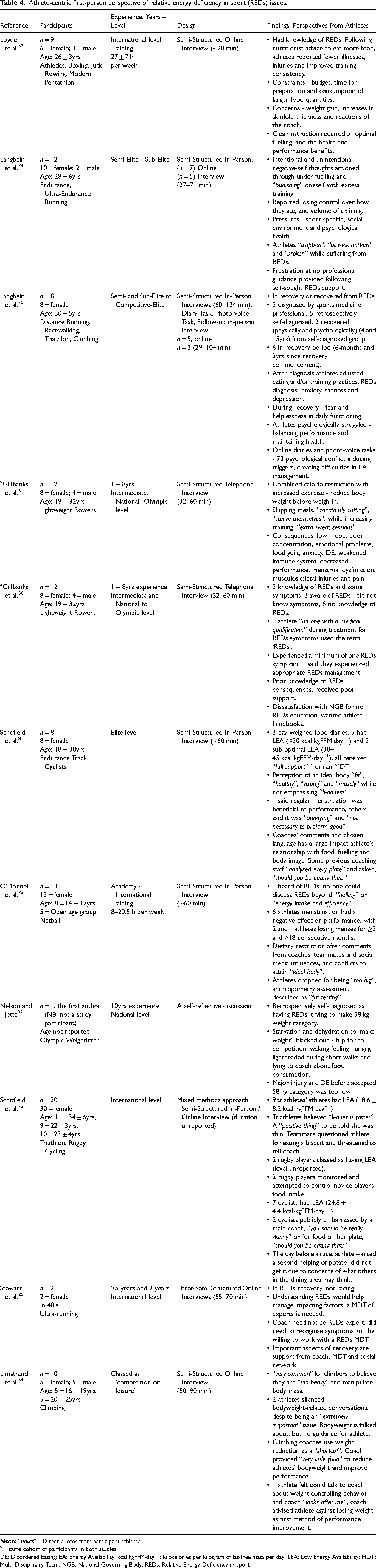
x = same cohort of participants in both studies
DE: Disordered Eating; EA: Energy Availability; kcal·kgFFM·day−1: kilocalories per kilogram of fat-free mass per day; LEA: Low Energy Availability; MDT: Multi-Disciplinary Team; NGB: National Governing Body; REDs: Relative Energy Deficiency in sport
Athlete expectations of the coach within relative energy deficiency in sport
With the risk of REDs development within athletes, coupled with the coach being a constant in athletes’ lives, the athlete's expectations of their coach are an essential consideration. Stewart and colleagues 25 investigated ultra-running coaches’ role within REDs, from the athlete's perspective. The authors recruited and interviewed two female ultra-runners with previous experience of REDs. The athletes perceived the role of the coach as being multifaceted, with key requirements being honest conversations and trust between both parties. In addition, resulting from previous REDs experience and subsequent recovery, the athletes expressed expectations of their coach to be educated on the syndrome. Additionally, a willingness to work with expert MDTs, and actively build a close relationship with the athlete's support network, while also maintaining a strong coach-athlete relationship were also desired, 25 where a strong coach-athlete relationship may allow for a mutual respect, high levels of trust, and an open and honest communication pathway. The authors established four categories with various themes and sub-themes in which coaches may have influence; 1) the onset of REDs, in which there are five themes and thirteen sub-themes; 2) the lived experience of REDs, with three themes and ten sub-themes, 3) the REDs recovery journey, consisting of six themes and twenty-one sub-themes, and 4) return-to-play following REDs, with three themes and nineteen sub-themes. 25 The multitude of categories, themes, and sub-themes describe various aspects of the athlete's journey and experience of the REDs syndrome, including coaching and support network roles, psychological and physiological adaptations, coach and athlete education, as well as the impacts of the athlete's sport, social cultures and environments. A further interview-based study that included assessment of participants’ EA, 81 found five of their eight female track cyclists were classified as having LEA (<30 kcal·kgFFM−1·day−1). The remaining three athletes were found to have sub-optimal EA (30–45 kcal·kgFFM−1·day−1), with EA determined for all participants through 3-day food diary, training logs, as well as RMR and body composition assessments, utilising indirect calorimetry and dual-energy X-ray absorptiometry assessment, respectively. The authors suggested three themes present between athletes; 1) perceptions of expectations and pressures in achieving what might be considered a “high-performance body”, described by participants as being “strong or muscly”, 2) an understanding of how menstruation is impacted by or impacts upon performance and health, and 3) high-performance nutrition and food relationships. 81 Identifying potential impacting factors within the latter two studies echoes Langbein et al. 75 highlighting 73 trigger sources from which athletes experienced psychological conflicts. Despite participant numbers being low in the studies (n = 2, 17 n = 8,75,81) the possibility that such a quantity of potential points of intervention could be identified within a small number of individuals presenting with symptoms indicating LEA and/or REDs, presents extensive areas where members of the MDT may aid in REDs prevention or recovery. However, the inclusion of coaches’ perceptions in these studies may have highlighted further points of interjection in the prevention and treatment of REDs.
For example, in-person and semi-structured interviews of players (n = 13), coaches (n = 4), and medical staff (n = 4) from a Super League netball team, revealed that all four coaches had no knowledge or awareness of REDs. 33 After the coaches were given a written definition, they felt the responsibility of screening or diagnosing REDs was with the MDT. While members of the MDT may hold varying responsibilities in REDs screening, prior REDs knowledge is necessary to ensure beneficial treatment protocols are provided. Indeed, if trained to do so, coaches are in an opportune position to recognise and interject in negatively impacting sport-induced issues, including REDs. 3 However, if coaches are not trained to recognise signs and symptoms of REDS, or in facilitating open communication pathways, athletes may be placed or remain at increased risk. For example, a personal account from the first author / Olympic weightlifting athlete, who self-diagnosed as likely having suffered from REDs. 82 This was following a 4-year period of repeated BM reduction, from a regular 61 kg to compete in the 58 kg weight category, and ultimately attempting to maintain the lower BM. Despite the coach's specific role not being discussed within the article, the author-athlete admitted to lying to her coach about consuming enough food throughout the 4 years, thereby limiting any potential intervention, as it appears the coach was not made aware of any issue. Nevertheless, it was reported that during the final year, the author-athlete engaged in pre-competition dehydration, blacked out 2-h before a competition and experienced constant hunger, as well as regularly becoming lightheaded on short walks and ultimately tearing an elbow ligament in a National competition. 82 Of concern is that throughout these incidents, the coach may have been unaware of such occurrences due to the author-athlete's admission of lying to the coach. This in turn limits potentially beneficial coaching advice, possibly prolonging an athlete's experience. While it is unclear why some athletes may not provide coaches with details of sport-related impacts, athletes have indicated to receiving negative interactions from coaching staff during or following REDs-related issues. For instance, athletes have reported being dropped from the team for being overweight or “too big,” while also indicating that anthropometric testing, in the form of skinfold assessment, was referred to as “fat testing”. 33 These findings echo that of an athlete in a study by Logue et al. 32 who reported that their coach solely focused on skinfold measures as an indication of athletes overeating. Similarly, Bowler and colleagues, 83 in their survey study of dietitians’ LEA management practices, reported that 22 (46%) of the 55 respondents indicated that the most significant difficulties while attempting to aid athletes in LEA treatment were with coaches. The authors suggest this may be due to coaches commonly relying on skinfold measures to determine an athlete's diet adequacy. Such behaviours in conjunction with the previously discussed negative language, are inappropriate and potentially harmful to the athlete's health or wellbeing, and may also be seen as counter to building or maintaining a strong coach-athlete relationship.35,38 However, it may be beneficial first to establish a coach's REDs-specific knowledge, as well as day-to-day coaching practices which are potentially additive to or preventative against the development of REDs. Indeed, aetiology linked to REDs may progress due to coaches initiating counterproductive messaging or failing to act upon counterproductive athlete practices. Key preventative measures may include increasing coach-centric REDs education and a cohesive, collaborative working environment between the MDT and athletes. 25 In addition, Schofield and colleagues 84 suggest that REDs-specific researchers are included within the MDT when attempting to understand the complex physiological and socio-psychological impacts of REDs. The integration of athlete experiences, coaches’ understandings and data-driven researcher findings may be more effective in developing individualised interventions within the REDs syndrome.
Conclusion
This review explored coaching staff and athlete first-person perspectives of REDs experiences. As highlighted here, following review of the literature, of the 38,424 participants recruited across 343 REDs-related articles published between 2018 and 2024, only 1046 coaching staff members were recruited as study participants, representing ∼3% of the total cohort (Table 1). Consequently, this uneven representation within research cohorts, and subsequent reporting of experiences, make it difficult to determine if coaching staff and athletes hold similar or differing interpretations of a shared situation, such as REDs. Within a coach-athlete paradigm, the athlete is the individual experiencing REDs from a first-person perspective, whereas the coach may only gain an ‘experience’ of REDs while in the presence of that athlete, and from a second-person perspective. Indeed, due to the frequency with which coaches and athletes may interact, an alignment of REDs awareness and knowledge, including recognition, experience, treatment, recovery and prevention must be evident. Therefore, echoing recommendations made within numerous articles reviewed here, coaching staff must be provided with continued and up-to-date REDs-related education.3,25,34–36,38,44,47,51,56,58,59 Additionally, attempts should be made to make REDs education sports-specific, taking into account topics such as appropriate language to use and how/when to discuss an athlete's body, health and/or performance. Further, REDs education and research protocols should include combinations of coaching staff and athletes. Combined participant recruitments may allow for a better understanding of athletes’ REDs experiences and facilitate individual coaching staffs’ evaluation of their role in preventing and/or addressing a potential REDs diagnosis. Directions for future research are suggested as an increased exploration of coaches’ perceived role within REDs and how such roles are perceived by and implemented with athletes. This may then provide insights into day-to-day actions or interactions that potentially increase or decrease REDs risk. The current lack of coach-centric research within REDs presents both a sports science literary gap and a potential threat to athlete health and performance.
Footnotes
Authors’ contributions
DD outlined the article content, conducted database searches, wrote the first draft of the article and created the tables. LD and GW conceived the article, critically reviewed article and contributed important intellectual and technical inputs. AMcG critically reviewed the article and contributed important intellectual and technical inputs. All authors have read and approved the final version of the article and agreed with the order of presentation of the authors.
Declaration of conflicting interests
The authors declared no potential conflicts of interest with respect to the research, authorship, and/or publication of this article.
Funding
The authors received no financial support for the research, authorship, and/or publication of this article.
