



Abstract
This study explored the accuracy of pose estimation software, OpenCap, against a marker-based motion capture system for cricket bowling. Ten participants (nine male, one female; seven pace, three spin; nine right-arm, one left-arm; age = 22.8 ± 4.1 years; height = 181.8 ± 7.0 cm; body mass = 82.54 ± 7.6 kg) bowled 48 deliveries with data simultaneously collected by OpenCap and marker-based motion capture. Shoulder (arm elevation plane, arm elevation angle and axial rotation), elbow (flexion), trunk (rotation, extension and lateral flexion), knee (flexion) and ankle (dorsiflexion) joint kinematics were extracted from back foot contact to ball release for each ball bowled. Average (± standard deviation) root mean squared error (RMSE) for each joint angle between OpenCap and motion capture was calculated. 95% limits of agreement were calculated for joint kinematics at back foot contact, front foot contact and ball release events. Of the 473 total trials completed, 217 trials were deemed successful across both OpenCap and motion capture. OpenCap had an average RMSE of 17.61° (± 7.72°) across all joint angles. OpenCap was able to most accurately determine knee kinematics (RMSE = 7.87 ± 2.10°) whilst upper limb kinematics were the least accurate (elbow RMSE = 22.71 ± 7.31°, arm elevation RMSE = 17.59 ± 3.78°, arm elevation plane RMSE = 28.92 ± 5.32°, shoulder axial rotation RMSE = 28.54 ± 7.86°). The relatively large error in upper limb kinematics and number of unsuccessful trials captured makes it challenging at present to recommend OpenCap for use in field-based analysis of cricket bowling kinematics.
Introduction
Cricket is a team sport played globally that requires its players to complete a number of unique movements such as throwing, catching, diving, batting and bowling.1,2 Bowling in cricket is defined by a player from the fielding team approaching the wickets at their end and releasing the ball, towards another set of wickets and batter, with an approximately straight arm. 3 It is a bowlers aim to take wickets whilst minimising their runs conceded. Bowling must be performed with less than 15° of bowling-arm elbow extension anywhere between the arm being parallel to the ground and ball release to be deemed a legal delivery. 4 There are two major types of bowling classifications: pace, and spin bowling. Pace bowlers typically make up the majority of a bowling attack (e.g., 4 out of 5 bowlers) and are defined by the speed they bowl the ball. 2
Biomechanical analysis of cricket bowling is frequently conducted as it can provide information on performance enhancement and injury prevention, whilst being used to determine the legality of bowling techniques.2,5–20 An accurate biomechanical analysis of bowling technique is critical so that any coaching or training interventions are addressing valid and undesirable aspects of the movement. 21 Bowling is responsible for 41.3% of injuries to cricketers, with hamstring strains and lumbar bone stress injuries the most common among fast bowlers.22,23 Lumbar bone stress injuries in fast bowlers often result from undesirable bowling techniques, with several kinematic factors that heighten the risk of injury.6,17,24,25 A fast bowlers’ technique can be a determinant of performance, with kinematic parameters such as run-up speed, front knee extension angle at ball release, the amount of upper trunk flexion in the power phase (from FFC to ball release), and the bowling arm shoulder extension angle at front foot contact being positively linked with ball release speed. 26 Similarly, spin bowling kinematics can determine the number of revolutions on the ball.27,28 Shoulder orientation at ball release and pelvis-shoulder separation at front foot contact are key determinants of ball revolutions in off-spin whilst maximum rear hip flexion and maximum arm circumduction velocity significantly impacted ball revolutions for leg-spin bowlers.27,28
There are currently three main motion capture methods used by researchers or coaches for the collection of biomechanical data for cricket bowling. The most used method for research is three-dimensional (3D) marker-based motion capture, which is the gold standard for motion capture accuracy.29,30 Despite this, it is limited as it is expensive, requires expertise, and is often constrained to an indoor environment. 31 Currently the International Cricket Council (ICC) has mandated that legality tests are completed using marker-based systems in a laboratory setting. 32 Another method of motion capture more commonly used by cricket coaches is two-dimensional (2D) motion capture.9,14,17,33 The use of 2D motion capture has the benefits of being relatively cheap, easily accessible and allows athletes to perform in their natural environment. However, the data collection can be inaccurate due to footage only being recorded in a single plane of motion, and often requires the use of secondary software requiring expertise to identify joint centres.34,35 Inertial measurement units (IMU) are an alternative method to marker-based motion capture systems, with the benefit of being portable and more cost effective. 36 IMUs are able to capture elbow kinematics during the cricket bowling technique with a root mean squared error (RMSE) of less than 2° when compared with marker based motion capture 37 ; showing promise for bowling legality testing. However, there have been conflicting results regarding the accuracy of IMUs for quantification of lower body kinematics during the bowling motion.18,19,38 The complex set-up, synchronisation and data extraction of IMU's make them difficult to use without expertise. 39 Having a cheap method of motion capture that can accurately capture bowling kinematics in a match environment will improve accessibility and validity of biomechanical analysis.
The limitations of current methods for motion capture means that there is no easily accessible method for cricket coaches that will accurately identify cricket bowling biomechanics through multiple planes of motion. Modern methods of motion capture are being readily developed which use predictive algorithms to complete positional estimation in a 3D space based on 2D video.40,41 One specific version of 3D pose estimation software is OpenCap. 40 OpenCap requires a minimum of two iOS devices for video, a checkerboard for calibration, and a different device to run the software. 40 OpenCap has been validated against marker-based capture systems for simple movements such as walking, squatting and drop jumps, 42 estimating joint angles with a mean absolute error of 4.5°. 40 The software has not yet been validated for more complex, whole body or predominantly upper limb movements, such as cricket bowling. Should OpenCap be accurate for cricket bowling, future biomechanical research can adopt it within training environments to enhance the external validity of biomechanical analyses.43,44 Therefore, the purpose of this study was to assess the accuracy of OpenCap against a marker-based motion capture system for cricket bowling.
Methods
Study design
This study involved a cross-sectional design, whereby participants attended a biomechanics laboratory on one occasion. Bowling kinematics were collected concurrently using a marker-based motion capture system and OpenCap. Ethics approval was obtained from Deakin University's Human Research Ethics Committee (project ID: 2024-131).
Participants
This study recruited sub-elite community-level cricket players as participants. The inclusion criteria for the study were: (1) athletes who currently play cricket and bowled at least one over in every game in their previous cricket season, (2) above the age of 18, and (3) no current reported injuries. Exclusion criteria were: (1) individuals who could not bowl the different types of delivery required, (2) could not deliberately direct the ball towards each target. A total of 10 participants (9 male, 1 female; age = 22.8 ± 4.1 years; height = 181.8 ± 7.0 cm; body mass = 82.54 ± 7.6 kg) were recruited for the study. Of the 10 participants: seven and three were pace versus spin bowlers, respectively; and nine and one participant were right- versus left-handed bowlers, respectively.
Experimental procedure
Prior to the data collection session, participants were instructed to wear tight fit clothing with no reflective logos to maximise the accuracy of the motion capture software. Upon arrival to the biomechanics laboratory, each participant had their height, weight and foot length (with shoes removed) collected by the same researcher, following anthropometric guidelines. 45 Participants were also asked to self-report which arm they bowl with, as well as whether they bowled pace or spin.
Each participant completed their own self-selected warm-up prior to data collection. All participants bowled at a target sheet completing an adaptation of the 48-ball standardised bowling protocol from Feros et al., 2018 46 (see Table S1 and Table S2 in Supplemental Material). An adaptation was required to account for spin bowlers, as the original protocol was developed exclusively for pace bowlers. The original protocol required pace bowlers to bowl bouncers, however, given the laboratory space restrictions this delivery type was removed from the protocol and replaced with a maximal effort ball aimed at middle stump.
Right arm bowlers were instructed to bowl from over the wicket (left of the stumps) and left arm bowlers were instructed to bowl around the wicket (left of the stumps) to right-handed batters. This ensured the bowler could land on the appropriate force plates with their back and front feet accordingly with the laboratory setup (see Figure 1). For a trial to be deemed successful, participants needed to make back foot contact (BFC) and front foot contact (FFC) on separate force plates. Additionally, the instance of contact and bowling motion needed to be successfully captured by both systems, and motion capture markers needed to remain attached to the participant until ball release.
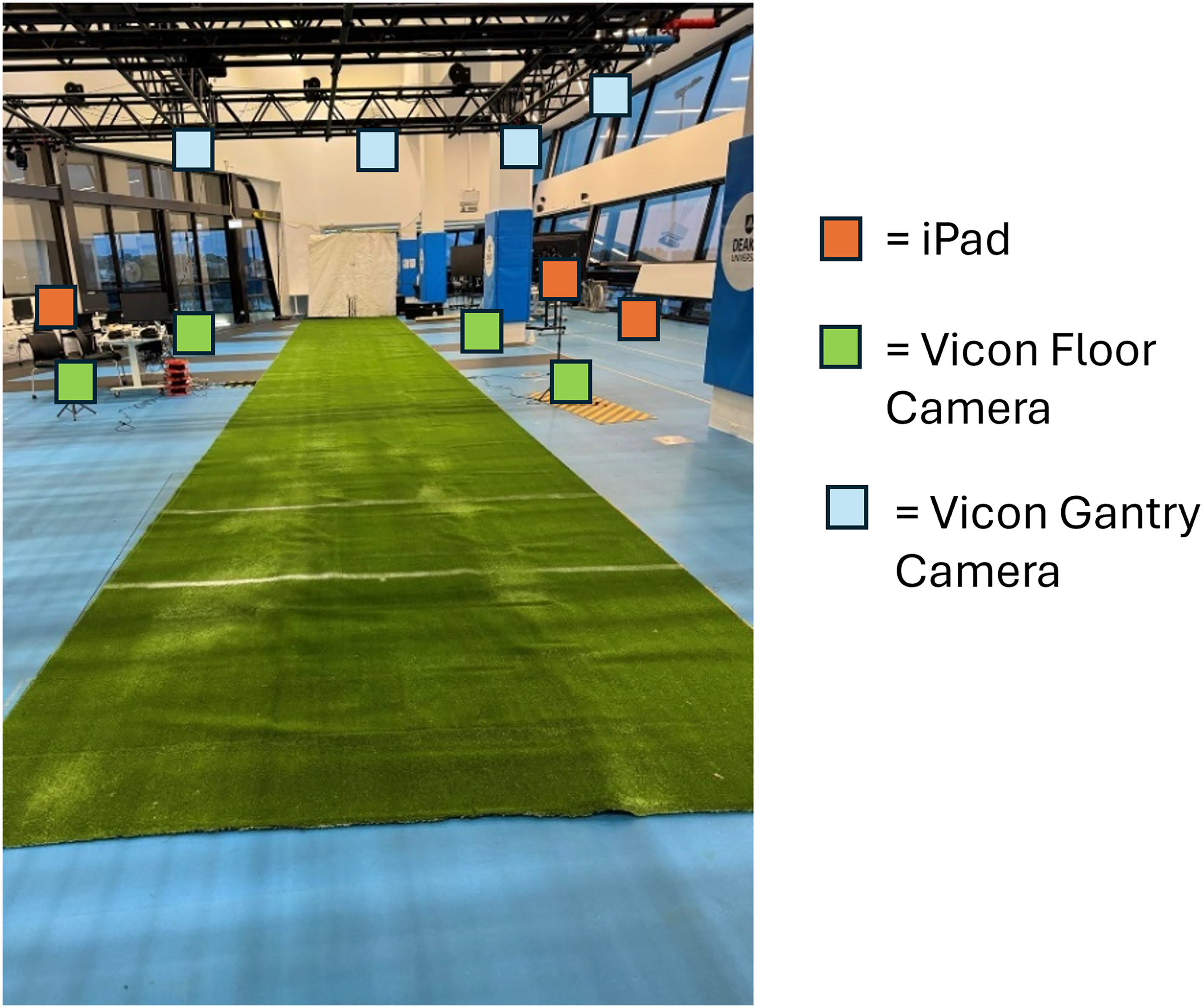
Set up of the pitch and target sheet. A selection of the gantry Vicon cameras can be seen at the top of the image (not all cameras are in frame).
At the beginning of each bowling trial the participant was asked to raise their hand in an upwards motion. This ‘upward punch’ style of movement is recommended by the OpenCap development team to synchronise the iPad cameras prior to recording movements. 47 Bowlers then completed their bowl at the specified pace and target. After each over (i.e., 6-balls), participants were given a rest period of 2-min to simulate the rest experienced during a match and to minimise fatigue. After 4-overs, bowlers were given an extended rest period of 10-min before completing the second half of the protocol.
Instrumentation
Full-body kinematics were recorded during bowling using a 19-camera 3D motion capture system (Vicon, Nexus) sampling at 100 Hz.48,49 A two-part calibration of the cameras according to manufacturer specifications was completed before trials commenced. 50 Participants were fitted with 90 retroreflective markers in accordance with the established UWA whole-body model 51 (see Table S3 in Supplemental Material for a list of the marker set). The same researcher fitted all participants with markers to ensure consistency. Once fitted with the markers, participants completed a static trial standing in a neutral position. Following the static trial, 18 of the retroreflective markers were removed as these were used for model calibration and scaling only. The 3D motion capture system was linked to six Kistler force plates, sampling at 1000 Hz, which were used to identify front-foot and back-foot contact during the bowling technique.
Standard procedures recommended by the software developers were followed for the use of OpenCap.40,47 OpenCap data were recorded using three iPads, attached to tripods at a height of 1.5 m. The iPads were set up at 45- and 30-degree angles on the bowling arm side of the participant and a 45-degree angle on the non-bowling side (see Figure 1). The recording settings were adapted so the iPads sampled at 240 Hz. The OpenCap system was calibrated using the recommended 720 × 540 mm checkerboard. 47 Following system calibration, the participant was required to complete a static calibration in the anatomical position specified by the OpenCap software so an initial skeletal model could be scaled to the participant. The static trials for the 3D motion capture and OpenCap systems were recorded simultaneously. The full-body, HRnet model was selected from OpenCap's skeletal models as this used the coordinates of shoulder axial rotation, arm elevation and arm elevation plane to most accurately track the shoulder movements through the cricket bowling technique, all other default settings of the present version (i.e. mid-year 2024) of OpenCap were used.
A skeletal model with identical joint and coordinate systems was used to estimate whole-body kinematics from the motion capture and OpenCap systems. A full-body model combining the lower limb skeleton of Uhlrich et al. 52 with the upper limb skeleton of Saul et al. was used. 53 The model had 15 degrees of freedom through the glenohumeral joint, elbow, wrist, thumb, and index finger.54,55 However, in this study the hand and wrist were fixed in a set position, reducing the upper limb to seven degrees of freedom at the glenohumeral and elbow joints. 53 The degrees of freedom included shoulder rotation and arm elevation; elbow flexion; arm elevation plane, and forearm pronation/supination. The lower body had 21 degrees of freedom between the legs and torso, 52 with six degrees of freedom between the pelvis and the ground; three rotational degrees of freedom between the pelvis and torso; three rotational degrees of freedom at the hip; one rotational degree of freedom at the knee that estimated the rotational and translational degrees of freedom of the tibiofemoral and patellofemoral joints; and one rotational degree of freedom each at the ankle and subtalar joints. 52 Two skeletal models were created for each participant for use with the motion capture and OpenCap systems. The skeletal model used with the motion capture system was scaled using marker data from the recorded static trial, while the model used with the OpenCap system was automatically generated by the software from the same static trial.
Data analysis
3D marker data captured by the motion capture system was initially gap filled using either the rigid-body (for markers on a rigid cluster) or pattern fill (for all remaining markers) methods. The scaled motion capture skeletal model was used alongside marker data in OpenSim's Inverse Kinematics tool to produce estimates of whole-body kinematics for each bowling trial. 56 Force plates were synchronised to the motion-capture system to detect events in the bowling delivery phase. BFC and FFC in the bowling technique were determined using a vertical force threshold of 20N on the relevant force plates. OpenCap data were synchronised to motion capture data by aligning the force plate identified BFC and FFC events to visual estimates of these events from the OpenCap video footage. Ball release was therefore determined for both systems by viewing synchronised video footage from the OpenCap system. Continuous joint kinematics were extracted from each trial between BFC and ball-release, while time-discrete kinematics were extracted at BFC, FFC, and ball release.
Estimates of ankle dorsiflexion/plantarflexion, knee flexion, trunk flexion/extension, lateral flexion and rotation, arm elevation and elevation plane, elbow flexion and shoulder axial rotation by the OpenCap system were completed in a fully automated manner by the software. 40 OpenCap estimates 2D keypoints on the body throughout a recorded movement (i.e., a bowling trial). 40 These data were then uploaded to a server for processing to synchronise the keypoints across videos and triangulate them into 3D keypoints. 40 Relevant axis flipping was performed for the left-handed bowler so the results matched that of the right-handed bowlers. The 3D keypoints were then used alongside the participants scaled skeletal model to estimate 3D kinematics of the movement. 40 The skeletal model used had identical joint definitions to that of motion capture. For a trial to be deemed successful and OpenCap data valid, the output needed to be uploaded and reflect realistic poses of a cricket bowling technique. Similar to motion capture; continuous joint kinematics were extracted from OpenCap data between BFC and ball release, and time-discrete kinematics at BFC, FFC, and ball release.
Statistical analysis
The continuous joint angles from BFC to ball release were time-normalised to 101 data points and compared between motion capture and OpenCap systems using RMSE. RMSE was calculated across individual trials for all participants to create an average RMSE for each joint angle and participant. Mean (± standard deviation) RMSEs were subsequently calculated for each joint angle across the participant group. Time-discrete kinematics at BFC, FFC and ball release for the extracted joint angles were compared between the motion capture and OpenCap systems using Bland-Altman plots and 95% LoAs.
Results
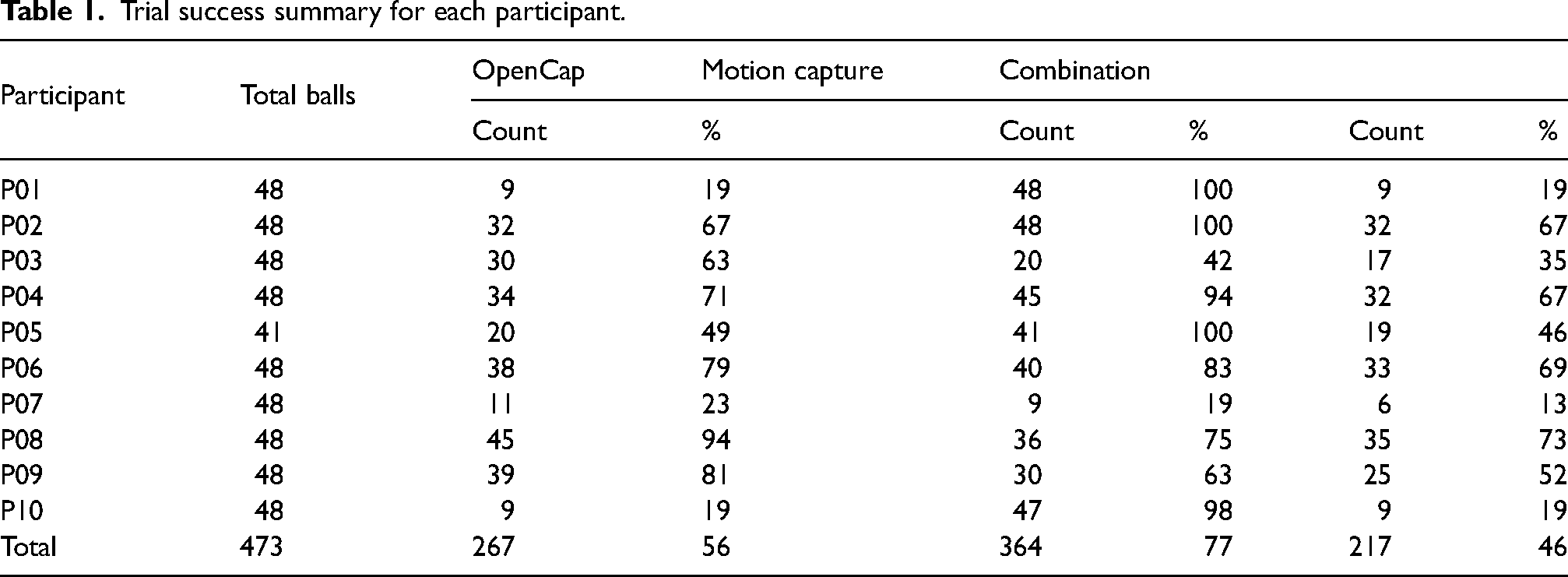
Of the 473 trials completed, 364 of the motion capture trials were deemed successful. Of the 109 unsuccessful motion capture trials, 69 were due to marker capture error, 23 were due to systems errors delaying the start of motion capture (i.e., post BFC), 13 were due to incorrect foot placement on the force plate, and 1 trial lost due to software crashing during the trial. For OpenCap, 267 trials were deemed successful. Of the 204 unsuccessful OpenCap trials, 109 were due to clear pose estimation errors (i.e., unnatural body postures), 63 were due to software processing errors, and 34 were due to video upload errors (See Table S4 in Supplementary Material). Overall, 217 of the 473 trials were successful for both OpenCap and motion capture systems and used in subsequent analyses. One participant did not complete the full protocol as the retroreflective markers would not remain stuck to their body.
Continuous joint kinematics
OpenCap had an overall average RMSE of 17.61° (± 7.72°) across all joint angles. Trunk lateral flexion was consistently overestimated by OpenCap versus the marker-based system throughout the entire bowling technique (see Figure 2). All other continuous joint kinematics displayed inconsistent variation between OpenCap and the marker-based system. Knee flexion was the most accurately tracked joint angle in OpenCap with a RMSE of 7.87° (± 2.10°) (see Figure 2). The least accurate measures were all from the upper limb, with arm elevation plane having the highest RMSE of 28.92° (5.32°) (see Figure 2).
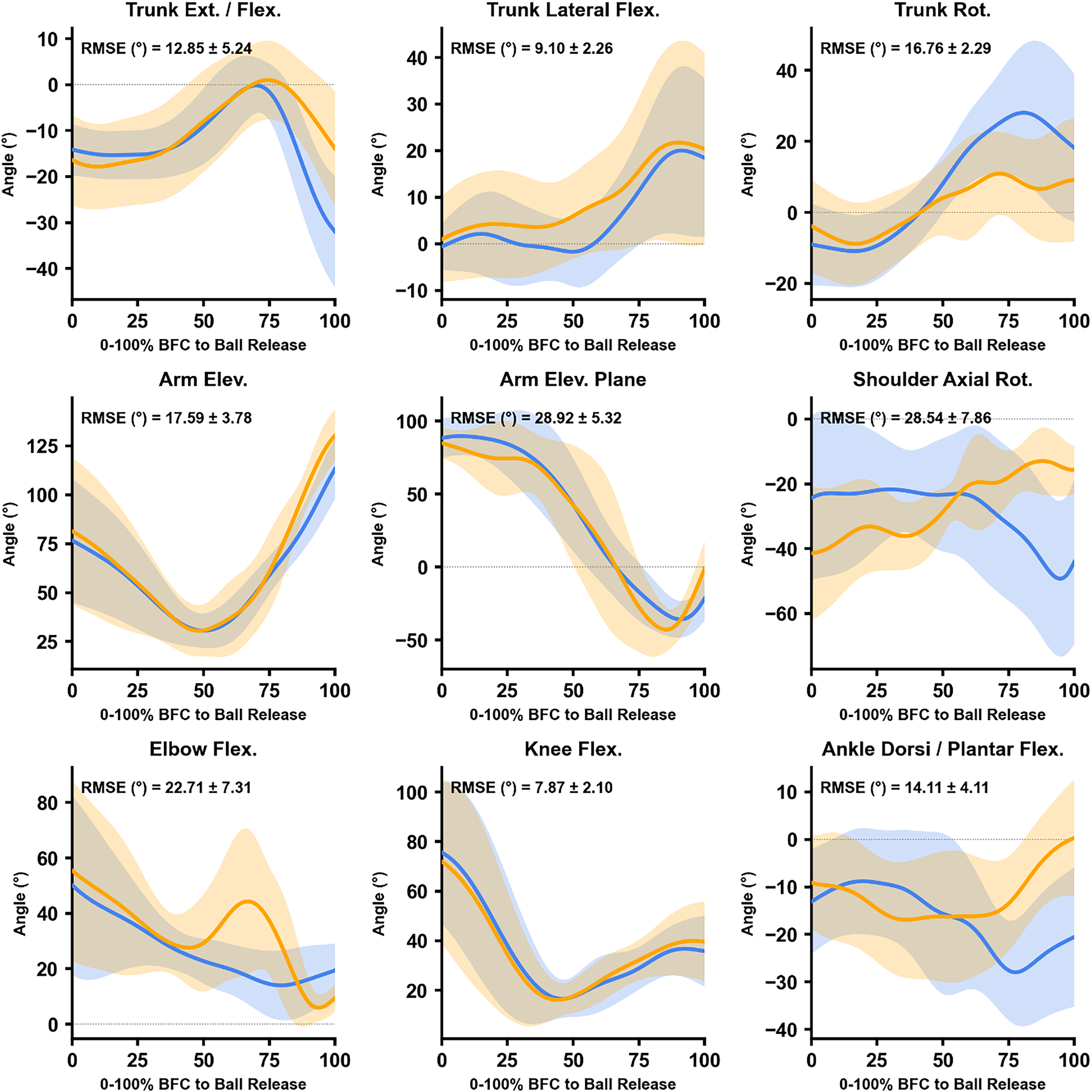
Time-normalised (from back foot contact [BFC] to ball release) average (± standard deviation) joint angle comparisons and average (± standard deviation) RMSE between motion capture (blue) and OpenCap (gold). Shading represents the standard deviation from the mean (solid line). Abbreviations: Ext – Extension; Flex – Flexion; Rot – Rotation; Elev – Elevation.
Time-Discrete joint kinematics
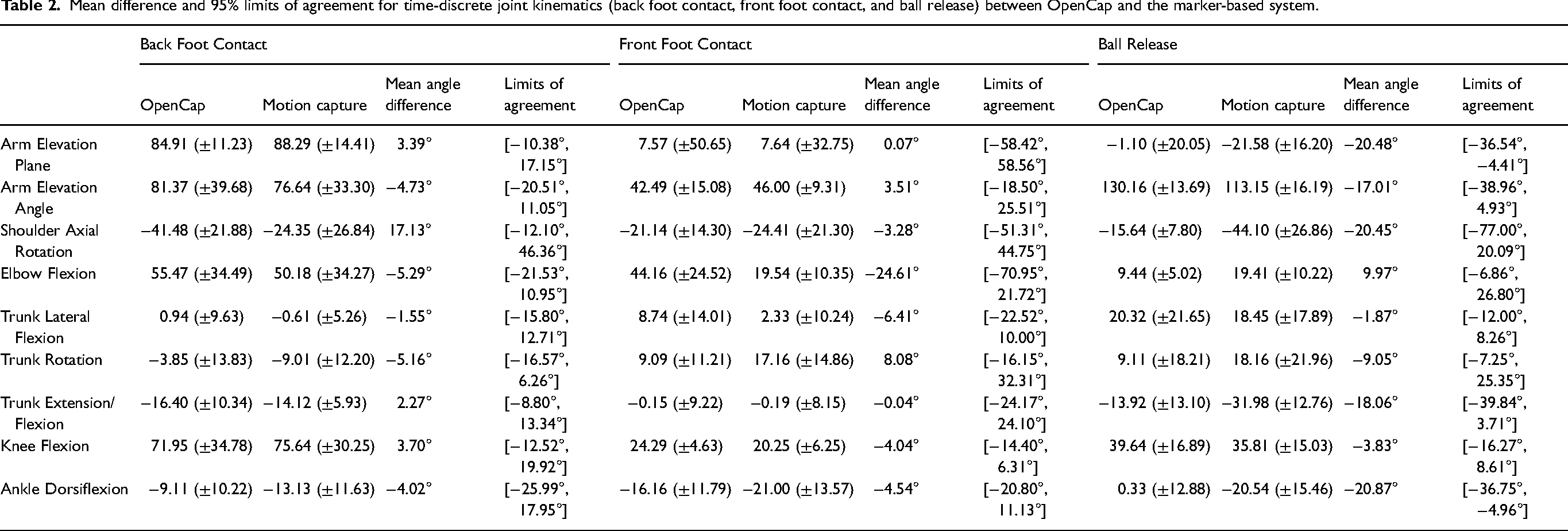
There was a wide range of error across all joint angles at each different time points (see Tables 1 and 2). The upper limb joint angles produced the largest error range at BFC (shoulder axial rotation: mean difference = 17.13°; 95% LoA = [−12.10°, 46.36°]), FFC (arm elevation plane: mean difference = 0.07°; 95% LoA = [−58.42°, 58.56°]) and ball release (shoulder axial rotation: mean difference = −20.45°; 95% LoA = [−77.00°, 20.09°]). Overall, the largest mean angle difference occurred in elbow flexion at FFC (mean difference = −24.61°; 95% LoA = [−70.95°, 21.72°]) and the smallest mean angle difference was trunk flexion/extension also occurring at FFC (mean difference = −0.04°; 95% LoA = [−24.17°, 24.10°]. At BFC the largest mean angle difference occurred at shoulder axial rotation (mean difference = 17.13°; 95% LoA = [−12.10°, 46.36°]) and the smallest was trunk lateral flexion (mean difference = −1.55°; 95% LoA [−15.80°, 12.71°]). At ball release the largest mean angle difference was ankle dorsiflexion/plantarflexion (mean difference = −20.87°; 95% LoA = [−36.75°, 4.96°]) and the smallest was trunk lateral flexion (mean difference = −1.87°; 95% LoA = [−12.00°, 8.26°]). Intraclass correlation coefficients (ICCs) and Bland-Altman plots for all time-discrete joint kinematic analyses are available in Supplemental Material.
Trial success summary for each participant.
Mean difference and 95% limits of agreement for time-discrete joint kinematics (back foot contact, front foot contact, and ball release) between OpenCap and the marker-based system.
Discussion
This study examined the accuracy of OpenCap joint kinematics against a marker-based motion capture system during cricket bowling. Varying levels of accuracy were observed across the joint angles throughout the bowling technique. Knee flexion was the most accurately measured joint angle with an RMSE of 7.87° (± 2.22°). Upper limb joint angles were the least accurate, as arm elevation plane (28.92° ± 5.61°), shoulder axial rotation (28.54° ± 8.29°) and elbow flexion (22.71° ± 7.31°) all had average errors greater than 20°. With respect to the time-discrete kinematic measures, knee flexion was the most consistent of all the joint angles. The majority of joint angles had wide LoAs at each timepoint, with the widest occurring at FFC for arm elevation plane (mean difference = 0.07°; 95% LoA = [−58.42°, 58.56°]). These results indicate that despite average joint angles being potentially accurate, the ball-to-ball accuracy of time-discrete data in OpenCap was highly variable.
The shoulder plays a pivotal role in bowling performance.26,57,58 More specifically, amongst pace bowlers, having a delayed bowling arm (i.e., more desirable proximal to distal sequencing pattern) leads to an increase in bowling speed. 26 To accurately quantify the bowling arm delay, all three shoulder joint angles (axial rotation, arm elevation plane, and arm elevation angle) and trunk angles need to be accurate, especially at FFC and ball release. Furthermore, shoulder axial rotation has been identified as a key measure in creating revolutions on the ball in leg-spin bowlers. 59 OpenCap's determination of shoulder kinematics throughout the entire bowling technique were the least accurate, with the arm elevation plane recording the highest RMSE for continuous joint kinematics of 28.92° (± 5.61°). The large errors for shoulder kinematics could potentially be due to the pose estimation algorithms used in OpenCap software not being trained in the upper limb body postures which are present in cricket bowling. 40 The time-discrete data taken at BFC, FFC and ball release further highlight OpenCap's inaccuracy recording the shoulder joint during the cricket bowling technique. Arm elevation plane (95% LoA = [−58.42°, 58.56°]), arm elevation angle (95% LoA = [−18.50°, 25.51°] and shoulder axial rotation (95% LoA = [−51.31°, 44.75°]) all demonstrated large error ranges in the shoulder at FFC. These errors likely stem from the shoulder being obscured from the camera as the bowler enters a more side-on position (see Figure 3(a) and b).9,60,61 The largest mean angle differences for the shoulder occurred at ball release for arm elevation plane (mean difference = −20.48°; 95% LoA = [−36.54°, −4.41°]), arm elevation angle (mean difference = −17.01°; 95% LoA = [−38.96°, 4.93°]) and shoulder axial rotation (mean difference = −20.45°; 95% LoA = [−77.00°, 20.09°]). These results could be due to the rotation speed of the arm reaching maximal velocity at this point in the bowling technique. 62 The sizeable inaccuracies that occurred during ball release are a problem for identifying delayed bowling arm kinematics and shoulder axial rotation kinematics relating to ball revolutions. This will make it challenging for OpenCap to be used to identify bowling performance related to the shoulder joint.26,57,58
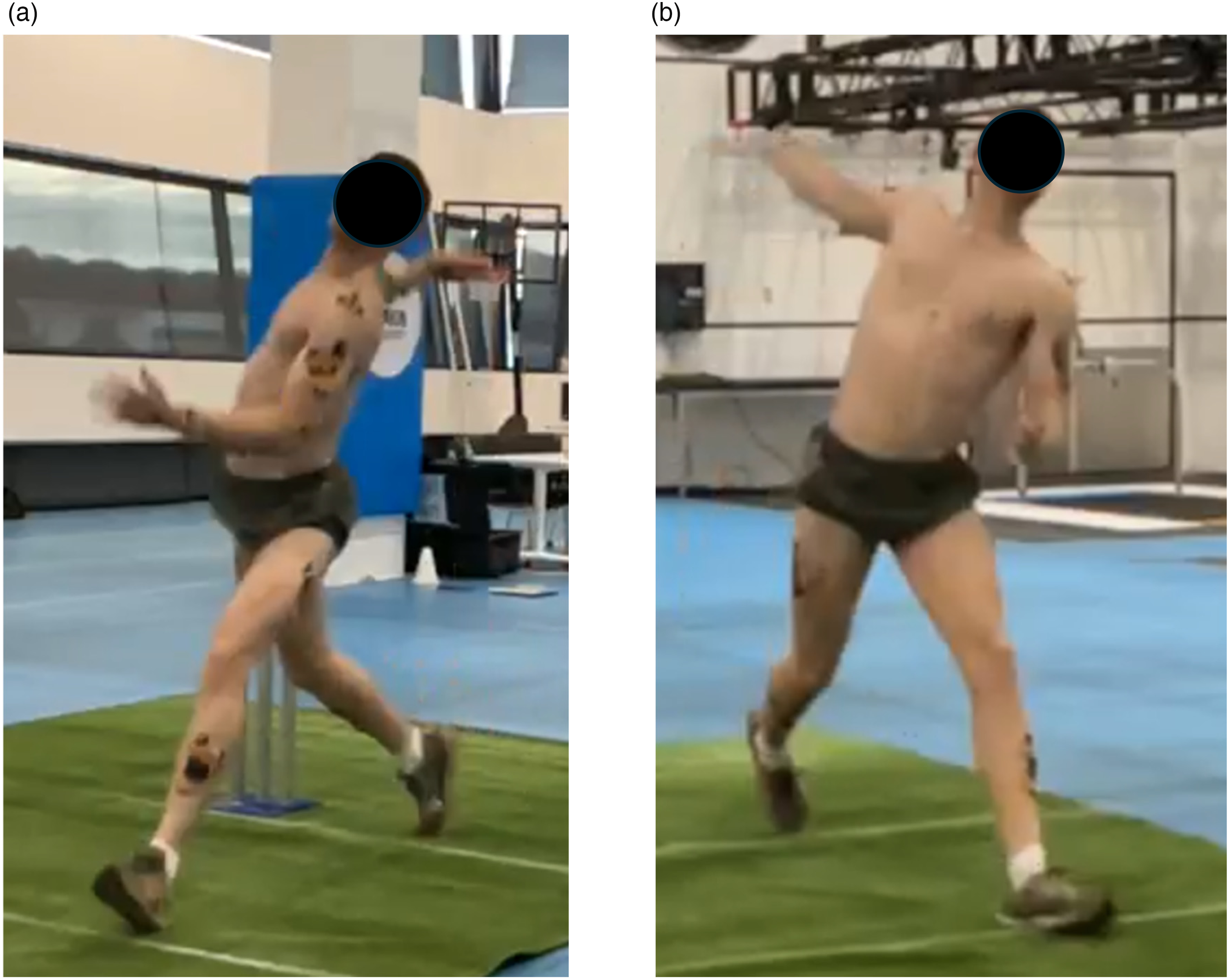
(a) The shoulder joint being obscured from one camera at front foot contact, which cannot be identified by the pose estimation software. (b) Shoulder joint being visible to a camera at FFC.
Our findings highlight OpenCap's inaccuracies in measuring shoulder joint kinematics throughout the bowling technique. Currently, no other methods of motion capture have been compared to marker-based motion capture for cricket bowling or similar, making it difficult to contextualise the magnitude of OpenCap's errors. This is perhaps not unexpected, given the shoulder joint is one of the most complex joints to capture with motion capture approaches. 63 The accuracy of OpenCap at the shoulder joint has been explored64–66 for different movements with contrasting results. Similarly to the present study, for Taekwondo a mean error of 16.8° (± 1.6°) and 16.3° (± 0.9°) for right and left arm elevation angle, respectively, was identified. 65 Contrastingly, athletic movements (i.e., running and squat jumps) and some sport specific movements, such as a basketball free throw and tennis serve have identified more accurate shoulder joint angle results.64,66 OpenCap's accuracy at the shoulder joint therefore appears setup and task dependent. The use of OpenCap to identify shoulder kinematics will likely be better for simple tasks with less range and slower motion at the shoulder (i.e., running) than more complex upper limb tasks like cricket bowling.
A legal delivery in cricket bowling constitutes no more than 15° of elbow extension from when the bowling arm is horizontally behind the bowler (in the upswing) to ball release.3,4 Motion capture for legality testing needs to provide an accurate representation of elbow flexion from BFC to ball release. The continuous kinematic data from OpenCap consistently showed the elbow moving through a flexion movement at ∼50% of the bowling motion, which was not correspondingly measured by the motion capture system. The error could be explained by the body getting into a side-on position which obscured the elbow from the camera placement used in the present study (see Figure 4). 66 This error could therefore be avoided or minimised with better camera placement. FFC was the most variable and least accurate timepoint for elbow flexion (mean difference = −24.61°; 95% LoA = [−70.95°, 21.72°]). Similarly to the continuous data, this could be explained by the elbow being obscured from the camera as the bowler enters a more side-on position.9,60,61 Whilst BFC and ball release were more accurate than FFC, OpenCap still had relatively large inaccuracies (BFC: mean difference = −5.29°; 95% LoA = [−21.53°, 10.95°]) (ball release: mean difference = 9.97°; 95% LoA = [−6.86°, 26.80°]). The extra elbow flexion-extension characterised by OpenCap and the magnitude of error being greater than the allowable 15° of elbow extension could result in several false positives (i.e., bowlers deemed to have an illegal bowling action when in fact they do not) making it presently inappropriate for legality testing of bowling technique. The overall inaccuracy of OpenCap for elbow flexion is larger than that of video-based motion capture, marker-based motion capture and IMUs during the bowling technique.37,67
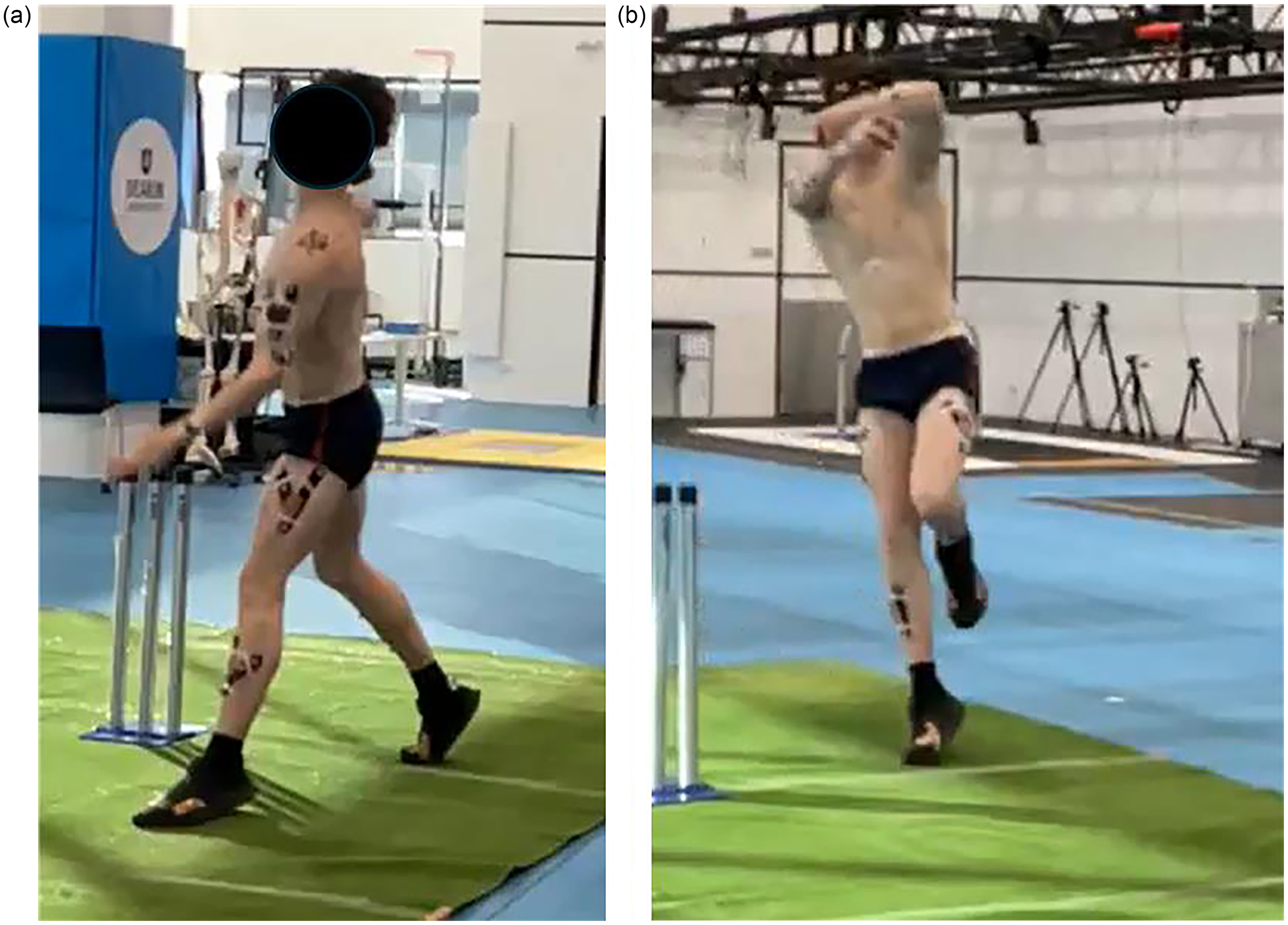
(a) The elbow being obscured from one OpenCap camera after front foot contact as it approaches being parallel with the ground; (b) The elbow is visible by a camera at back foot contact, however, it is directly in line with where the shoulder is so it could be confused by the pose estimation software.
The joint kinematics of the trunk throughout the cricket bowling technique impacts injury risk and performance, particularly for pace bowlers.6,17,24–26 Specifically, upper trunk (thoracic) flexion between FFC and ball release contributes significantly to bowling speed. 26 Additionally, trunk flexion speed and trunk lateral flexion timing impact the amount of revolutions on the ball generated by off-spin bowlers. 27 When considering lower back injury in pace bowlers, trunk rotation and lateral flexion can be key indicators of increased risk.6,17,24,25 Therefore, to identify performance indicators and injury risk, all three trunk measures (trunk extension/flexion, trunk lateral flexion and trunk rotation) need to be accurately recorded throughout the bowling technique. The continuous data displayed mixed results for the three trunk joint angles. Trunk lateral flexion was the second most accurate amongst all joint angles recorded with a RMSE of 9.10° (± 2.38°). Trunk rotation and extension/flexion had larger inaccuracies as shown by their RMSE of 16.76° (± 2.29°) and 12.85° (± 5.24°), respectively. As the trunk enters flexion prior to ball release, OpenCap appears to underestimate the amount of flexion occurring (see Figure 2). This error is likely due to the large amount of flexion that occurs over a short period of time which potentially obscures the hips and trunk from the cameras (see Figure 5). A lower angle camera could potentially reduce the amount of error occurring during the phase of trunk flexion. Mixed results were evident regarding the accuracy of trunk kinematics at BFC, FFC and ball release. Trunk lateral flexion was the most variable at BFC (mean difference = −1.55°; 95% LoA = [−15.80°, 12.71°]), however, was the least variable at FFC and ball release. Trunk extension/flexion showed mixed results; the mean joint angle at FFC was very accurate only underestimating trunk flexion by 0.04° (95% LoA = [−24.17°, 24.10°]). At ball release trunk flexion was underestimated on average by 18.06° (95% LoA = [−39.84°, 3.71°]) highlighting OpenCap's difficulty to capture the trunk posture consistently during the entire bowling technique. The accuracy of IMUs has been determined for trunk kinematics throughout the cricket bowling technique. 68 IMUs have shown an RMSE of 3.93° for lumbar flexion, 2.92° for lumbar lateral flexion and 4.32° for lumbar rotation 68 – subsequently outperforming the accuracy of OpenCap for trunk kinematics. This is likely due to IMUs not requiring a direct line of sight to the trunk during the bowling technique.
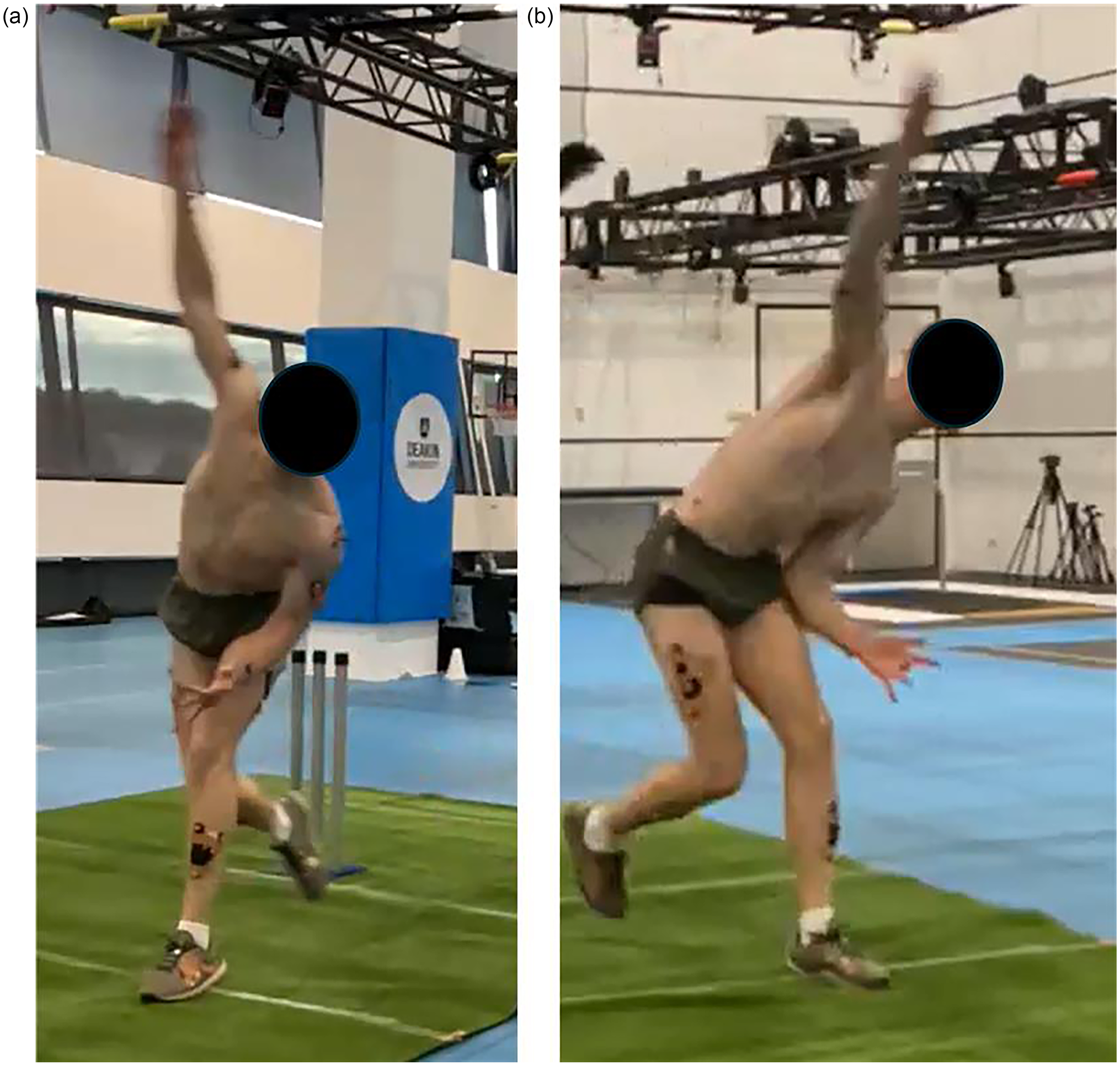
Trunk flexion at ball release from two different OpenCap cameras during the same ball, highlighting the trunk flexion which could be misinterpreted by OpenCap’s pose estimation software. The large amount of trunk and hip flexion at this point of the bowling action may confuse the pose estimation software and make it challenging to identify the 2D keypoints.
A bowler's knee angle can be a key determinant of injury risk and bowling performance amongst pace bowlers.6,10,17,24,26,57 Specifically, an extended knee at ball release is a key determinant of performance, 26 whilst greater knee extension at FFC can be an indicator of lower back stress injuries. 6 The knee joint angle was the most accurately assessed by OpenCap throughout the bowling technique (RMSE = 7.87° ± 2.10°). The waveforms in Figure 2 further exemplify this as OpenCap shares a similar pattern to motion capture including the timing of flexion and extension during the bowling technique. Additionally, knee flexion was one of the more accurately represented joint angles at each of the key timepoints. Previous literature exploring the accuracy of OpenCap has commonly identified knee kinematics to be one of the more accurate measures.60,69,70 Similar methods have been used to determine video-based motion captures accuracy of knee flexion throughout the cricket bowling technique. 9 Throughout the entire bowling technique, 2D motion capture had RMSE of 4.3°. 9 Whilst this RMSE is more accurate than observed with OpenCap, a greater amount of error than OpenCap at FFC was observed (OpenCap mean difference = −4.04°; 2D motion capture mean difference = 5.3°). 9 OpenCap therefore appears a valid approach for identifying any potential injury risks or undesirable performance indicators due to sagittal plane knee kinematics in cricket bowling.
Ankle dorsiflexion is linked to bowling performance and injury risk amongst pace bowlers, specifically at FFC.71–74 The average continuous kinematics of ankle dorsiflexion/plantarflexion shows that OpenCap identified ankle dorsiflexion motions when the ankle was plantarflexing, and vice-versa (see Figure 2). These errors could be occurring due to the speed in which the foot and ankle are moving throughout the run-up and bowling technique. Furthermore, OpenCap had an overall RMSE of 14.11° (± 4.34°) for ankle plantar/dorsiflexion, which highlights the inaccuracy throughout the entire bowling technique. The time-discrete measures throughout the bowling technique show a high level of variability and inaccuracy. At FFC the ankle had a mean angle difference of −4.84° (95% LoA = [−20.80°, 11.13°]) suggesting the ankle was in a less plantarflexed position. At ball release OpenCap also suggested the ankle was in a less plantarflexed position, with a mean angle difference of −20.87° (95% LoA = [−36.75°, −4.98°]). While OpenCap is not able to accurately determine the amount of ankle dorsiflexion especially at FFC, there is no other research to determine if other methods of motion capture are more accurate for the ankle during the cricket bowling technique. Previous research into the accuracy of OpenCap have resulted in a more accurate representation of ankle dorsiflexion/plantarflexion.60,69,75 The study by Horsak et al., 60 found that OpenCap had a RMSE between 4.6° and 7.9°, for ankle dorsiflexion/plantarflexion, during a variety of walking tasks. The increased error found in our study could be due to the participants moving faster and having a larger range of motion at the ankle when completing the cricket bowling technique. Ultimately, OpenCap may be inappropriate for identifying ankle kinematics in the bowling technique, due to the large error and the misidentification of dorsiflexion and plantarflexion.
Ball-by-Ball accuracy
As cricket bowlers have different variations of balls which have subtle changes in technique, it is important for motion capture to be accurate on a ball-by-ball basis. When averaged across balls and participants, OpenCap can provide a relatively accurate representation of bowling kinematics (see Figure 6). However, the high RMSEs reported in this study stem from large errors at a ball-to-ball level (see Figure 7 for a single participant example). This is perhaps best emphasised by the arm elevation plane angle—where the kinematic data shares similar average values and pattern to marker-based motion capture, yet had the highest RMSE at 28.92° (± 5.61°) (see Figure 2). These findings suggest OpenCap could provide a reasonable representation of average bowling technique with a large sample of trials, yet ball-to-ball accuracy of joint kinematics is limited.
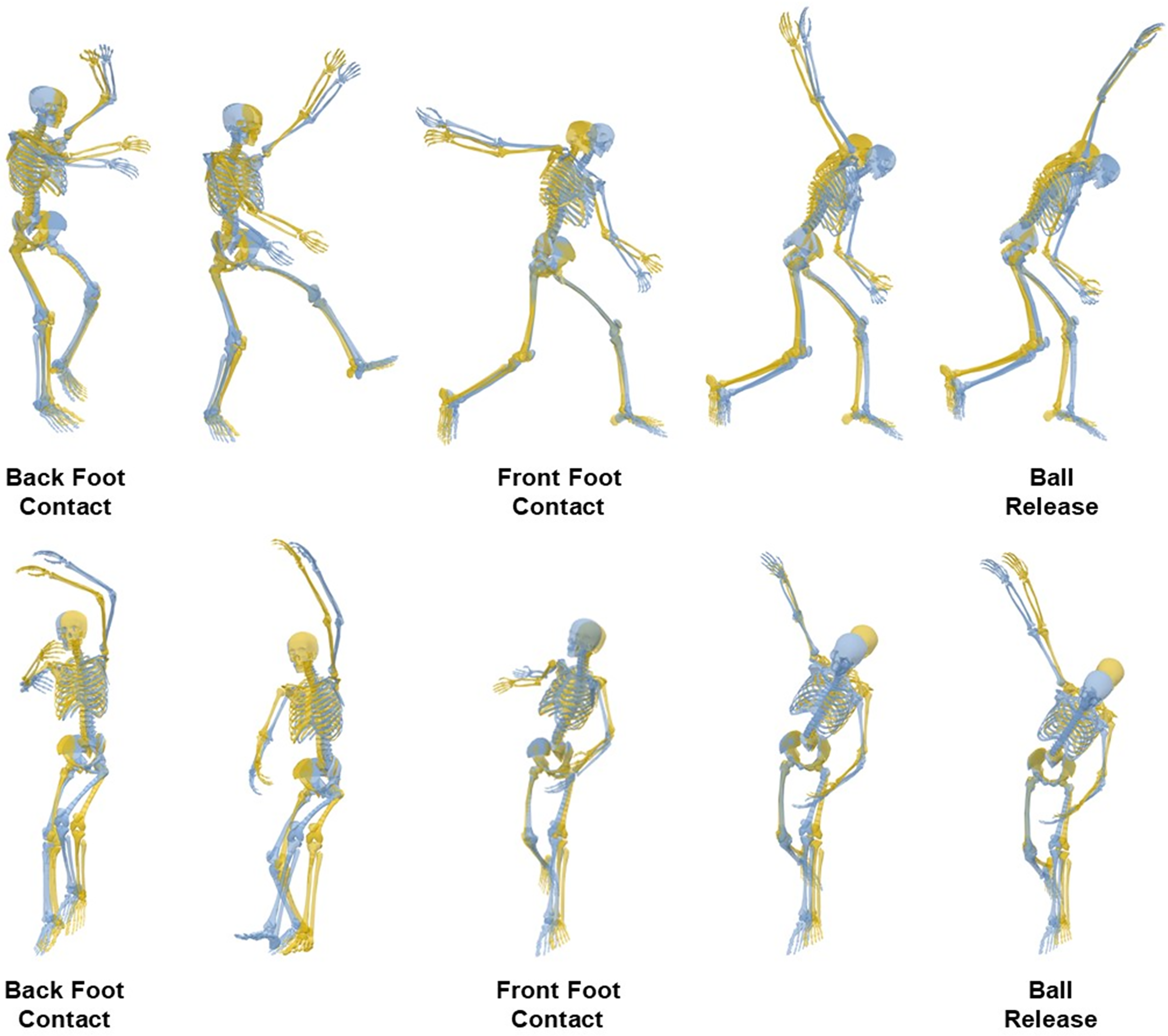
Comparison between OpenCap and motion capture outputs from the sagittal plane. The gold skeleton represents the average of the participant cohort for OpenCap. The blue skeleton represents the average of the participant cohort for motion capture. Time-normalised data has been used to synchronise all the trials between BFC and ball release. The left-handed bowler was inverted so that it matched the right arm bowlers (i.e., left to right).
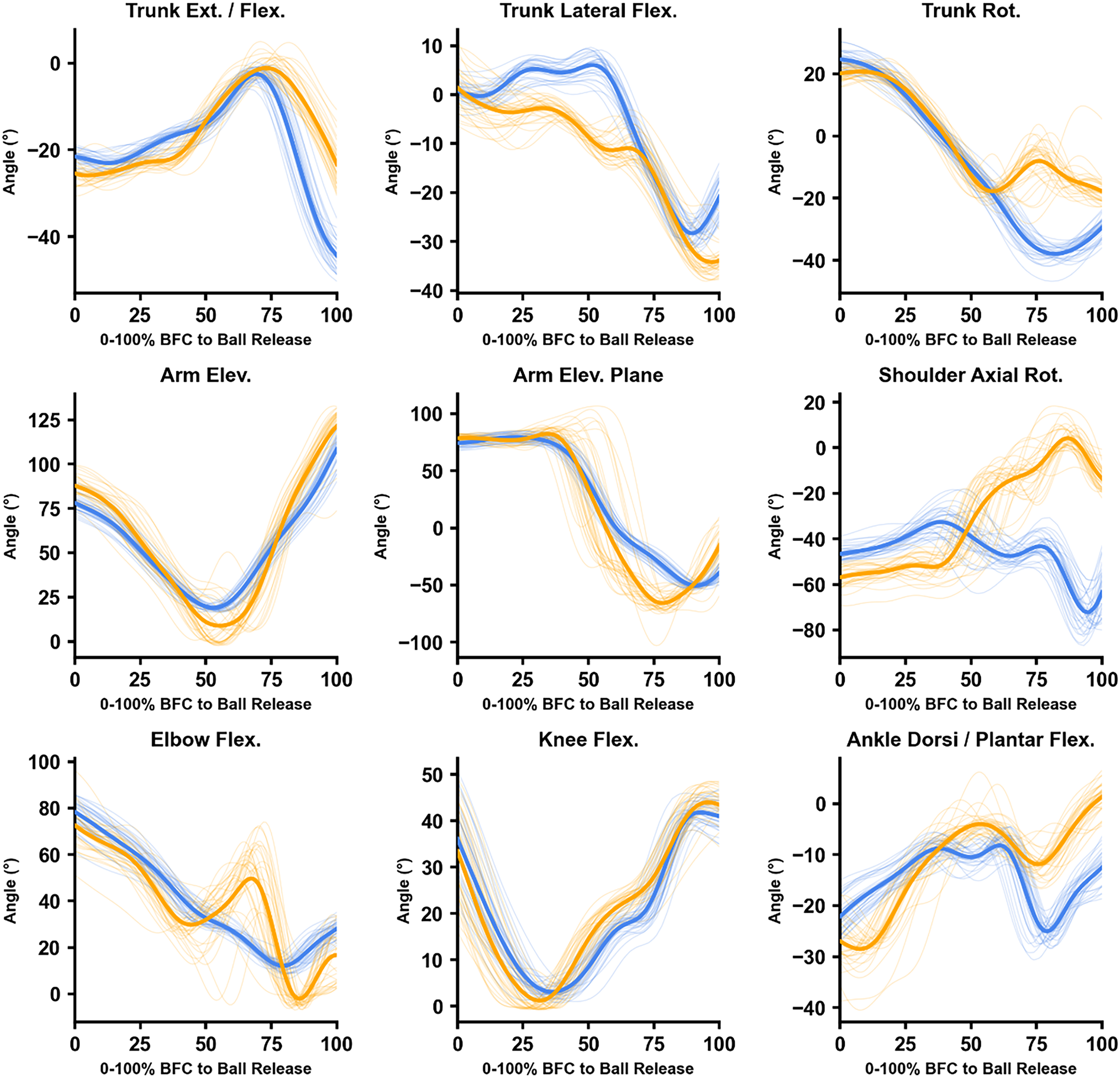
Time normalised data from BFC to ball release for OpenCap (gold) and motion capture (blue) of all joint angles for a single participant. The thick line represents the mean joint angle across all trials. The thin lines represent each individual trial.
Ball-by-ball accuracy is important for determining undesirable techniques leading to poor performance or injury risk. However, it is likely most important for bowling legality testing. Bowlers often have different bowling variations which have subtle changes in technique. These variations (e.g., pace bowler's maximal effort ball, spin bowler's carrom ball) often come under the scrutiny of legality testing so being able to identify the changes in kinematics is important. Based on this and the present study findings, OpenCap and other pose estimation approaches are unlikely ready to be used for bowling technique legality testing due to large ball-to-ball variation in elbow flexion kinematics. It is also not applicable for understanding the impact of ball-to-ball variation on performance or injury risk. However, improvements in the pose estimation algorithms used and continued development of the OpenCap software may yield more consistent trial-to-trial results. Should this occur, the potential for using it as a method for understanding ball-to-ball biomechanics would improve. In contrast, the similarity in average kinematics for certain variables suggests OpenCap may be useful for providing a broader overview of a bowler's technique if a large sample of the same type of balls are used.
Strengths and limitations
The main limitation of the present study was unforeseen issues related to the OpenCap set-up and data collection resulting in a substantial portion of the data being unusable. These errors resulted in only 56% of OpenCap trials being deemed successful and viable. Videos not uploading correctly was one contributor to errors in OpenCap trials. To overcome this error, it is recommended OpenCap is used with a strong and stable internet/WiFi connection. Another frequent error was due to abnormal positions in the OpenCap model output. Improving camera placement by changing their angles or moving them closer to the bowler may reduce the frequency of these errors. However, camera placement was limited due to all three cameras needing to have the bowler in frame from the start of the bowling technique to the point of ball release and ensuring the cameras were not at risk of being hit by the ball or bowlers in their follow through. Improved camera placement might improve the accuracy of OpenCap, compared to our results. Despite a high trial fail rate, the collection of 48 trials per participant allowed for sufficient viable data analysis.
Other cricket studies have similarly used force plate data to determine the timing of BFC and FFC. Without the ability to sync the OpenCap recording to the force plate data, the instant of BFC, FFC and ball release in the OpenCap data was manually determined via visual inspection. These time-instances were subsequently synchronised with the force plate data by estimating BFC and FFC from OpenCap videos. This approach may have introduced a small amount of error in the synchronisation of OpenCap and motion capture data. However, the high video frame-rate (240 Hz) alongside existing studies of gait76–79 using a similar approach identifying foot strikes with a standard error of 0.3–1.0 frames 76 suggest that identifying BFC, FFC, and ball release from video likely introduced minimal error in data synchronisation.
Another strength of the study was that the recording space was large enough to have a full pitch set-up in an indoors space. This allowed for environmental conditions to be controlled ensuring consistency between participants. Furthermore, the indoor set-up allowed for a convenient and time-efficient concurrent study design where both OpenCap and the marker-based systems could record data simultaneously, ensuring comparisons were as accurate as possible.
Whilst this study had an appropriate sample size to determine the accuracy of OpenCap for cricket bowling, there was not a large enough sample size to compare the accuracy of OpenCap for the different types of bowling, pace and spin. If one type of bowling was more accurate than the other this could potentially skew the data. Future research should look to identify if there is any difference in the accuracy of OpenCap for pace and spin bowling.
Given each participant only completed one data collection session, inter-session reliability of OpenCap software was not attainable. This is a potential area of future research to identify consistency between sessions when using OpenCap to analyse cricket bowling.
Conclusion
This study identified the accuracy of OpenCap for assessing biomechanics of the cricket bowling technique. Knee joint kinematics were most accurately captured by OpenCap, whereas upper limb joint angles were the least accurate. OpenCap was able to provide a reasonable average representation of bowling technique when considering a large sample of trials, yet accurate measurement of ball-by-ball joint angles was limited. The size of OpenCap errors were typically greater than other commonly used methods of motion capture (i.e., IMUs, 2D video analysis) for cricket bowling, particularly for the upper limb and trunk. This is evidenced by OpenCap having an average RMSE of 17.61° (± 7.72°) for all joint angles, compared to IMUs which had a RMSE of 2° for elbow flexion (22.61° ± 7.31° for OpenCap) and 2D motion capture which had a RMSE of 4.9° for knee flexion (7.87° ± 2.10° for OpenCap).9,37 However, the fully automated process of OpenCap compared to other methods may make it an attractive option for some users, particularly for joint angles that were more accurately assessed (e.g., knee flexion).
Supplemental Material
sj-docx-1-spo-10.1177_17479541251348081 - Supplemental material for Exploring the accuracy of OpenCap for three-dimensional analysis of cricket bowling
Supplemental material, sj-docx-1-spo-10.1177_17479541251348081 for Exploring the accuracy of OpenCap for three-dimensional analysis of cricket bowling by Alan Abraham, Simon A Feros and Aaron S Fox in International Journal of Sports Science & Coaching
Footnotes
Declaration of conflicting interests
The author(s) declared no potential conflicts of interest with respect to the research, authorship, and/or publication of this article.
Funding
The author(s) received no financial support for the research, authorship, and/or publication of this article.

Supplemental material
Supplemental material for this article is available online.
References
Supplementary Material
Please find the following supplemental material available below.
For Open Access articles published under a Creative Commons License, all supplemental material carries the same license as the article it is associated with.
For non-Open Access articles published, all supplemental material carries a non-exclusive license, and permission requests for re-use of supplemental material or any part of supplemental material shall be sent directly to the copyright owner as specified in the copyright notice associated with the article.
