



Abstract
Important decisions surrounding talent identification (TID), talent development (TD) and (de)selection within elite youth soccer are often grounded in the subjective opinions of coaches. These opinions often stem from coaches’ observations of player performance, which have been shown to be susceptible to several biases. Additionally, previous research has failed to establish specific criteria on which such opinions are based, aside from a coach's own intuition and practical experience. This study aimed to create a communal language and aligned criteria for the specific purpose of evaluating players’ performances. Semi-structured interviews were undertaken with nine experienced coaches (13.6 ± 10.8 years) from a professional UK soccer academy to identify coaches’ perceptions of key position-specific soccer actions, performed during differing moments of the game, for evaluating individual match performance. Thematic analysis of the interview data permitted the extraction of several themes , posited to encompass the position-specific soccer actions highlighted by the coaches. Themes for outfield positions included attacking skills; defending skills; movements to receive, create or exploit space; receiving and releasing skills; support play; end product; press, recover to the ball, man or space; and tactical understanding. Goalkeeper themes included tactical understanding, positioning relative to the ball, danger, teammates and opponents, play forward, support play, choice of action and range of distribution. This study highlights an applied approach of creating a shared mental model for appraising player performances, which can facilitate discussion and knowledge exchange between coaches and practitioners, with the intention of improving decision-making around TID, TD and (de)selection decisions.
Introduction
Professional soccer clubs aim to identify and select talented young athletes providing the environment, resources and opportunity for them to progress to an elite level. These talent identification (TID) and talent development (TD) processes aim to recognise ‘players participating in the sport who have the potential to progress into a high-performance development programme consisting of a relatively systematic combination of coaching, support, training, and match play’. 1 However, each organisation has their own unique approach of developing and transitioning athletes, with added variation around the individuals responsible for the critical periods of (de)selection that exist throughout the pathway (i.e. Youth Development Phase (YDP) to Professional Development Phase (PDP); U16 to U18).2,3 These decisions often becoming increasingly important with age, due to the limited availability of contract opportunities at the professional level.
Previous TID research has commonly used cross-sectional, decontextualised, monodisciplinary attributes (i.e. measures from a single discipline assessed in isolation at a single timepoint) in its design that are purportedly indicative of an athlete's talent or ability to perform in their sport. 4 Whilst such data is informative, in practice, the final (de)selection decisions have previously been grounded in the subjective opinions of scouts and coaches, 5 using a coach's own intuition, practical experience or clinical judgement.6–8 Research has highlighted that coaches’ opinions are partly derived from observations of a player's performance in match situations. 9 In such cases, the multiple attributes of performance (e.g. technical, tactical, physical and psychological) and their complex interactions are generally considered together in a single overall impression. These subjective opinions of performance are at risk of several biases (e.g. a coach's own preferences) and pre-conceived ideas that talented players are consistently high performers, wrongly presuming a congruence between performance and potential. 10 Reliance on the use of coach's personal experiences introduces a higher potential for cognitive biases to affect these decisions, such as the identification and selection of earlier maturing, relatively older players. 11 For example, research by Hill et al. 12 highlighted that coaches’ evaluations of player performance appear to vary in accordance with stage of maturity, with lower ratings for players around the ages of peak height velocity in comparison to those estimated to be pre- and post the adolescentgrowth spurt. Such research highlights one of the associated challenges of player evaluation, where the effects of biological maturation can cause temporary changes in performance that are independent of a player's potential for future success. Similar findings have also been shown when considering a player's relative age (how early or late an individual is born within the selection year), with selection biases evident if coaches are unaware of players’ relative ages. 13 Despite the importance of coaches’ opinions in assessing performance, there is a lack of evidence and research exploring the criteria on which these opinions are based.14,15
Previous research has aimed to understand coaches’ considerations in relation to talent, highlighting coaches perceive technical, tactical and psychological factors as the most important attributes related to talent 16 and for TID purposes. 9 Research by Kite et al. 16 found that 45 academy-level practitioners in the UK rated attributes within psychology and technical/tactical domains as the most important attributes related to talent within young soccer players in comparison to attributes from sociological and physiological domains. Further research by Fuhre et al. 9 supported such findings whereby interviews from six coaches at different professional Norwegian academies considered technical, tactical and mental factors as the most important for TID in the U13–U16 age groups. Additionally, in a survey of 70 UK academy practitioners, Towlson et al. 17 also found psychological factors were perceived as most important for player selection. Further, Towlson et al. 17 demonstrated that the perceived importance of discrete technical, tactical and physical attributes increased as player's advanced through phases of development (Foundation, Youth and Professional Development phases). Interestingly, the results also highlighted significant positional differences for most physical, technical and tactical attributes, 17 emphasising the importance of positional nuances and perhaps the need for position-specific criteria within TID processes.
Whilst such research allows insight and understanding into what attributes coaches perceive as important, it fails to provide the context of how such attributes emerge within performance or how coaches perceive these attributes to contribute to performing specific soccer actions. This is particularly important considering subjective opinions are partly based on soccer performance during match play. It would therefore seem logical that TID processes should seek to agree upon, record and monitor specific aspects of individual player's performances, to create shared criteria for coaches when evaluating their players. Such an approach, which utilises ‘actuarial judgement’ (the application of explicit objective criteria or rules which may also be numerically weighted based on their perceived importance), has previously been proposed to increase the quality of (de)selection processes over the use of ‘clinical judgement’ (an overall impression of an athlete). 8 However, to date, limited research has considered such an approach. The application of coaches scoring specific aspects of performance (shared criteria) may therefore be a valuable process, to provide information in supporting TID (de)selection processes.
Soccer can be identified by key phases or ‘moments’ of the game (Figure 1), that continuously repeat during match-play.18,19 These moments are commonly known as in possession, defending transition, out of possession, attacking transition and set pieces. Breaking the game down into these moments can help a team characterise their style of play and, subsequently, define key performance indicators (KPIs) that help to monitor performance within that style.
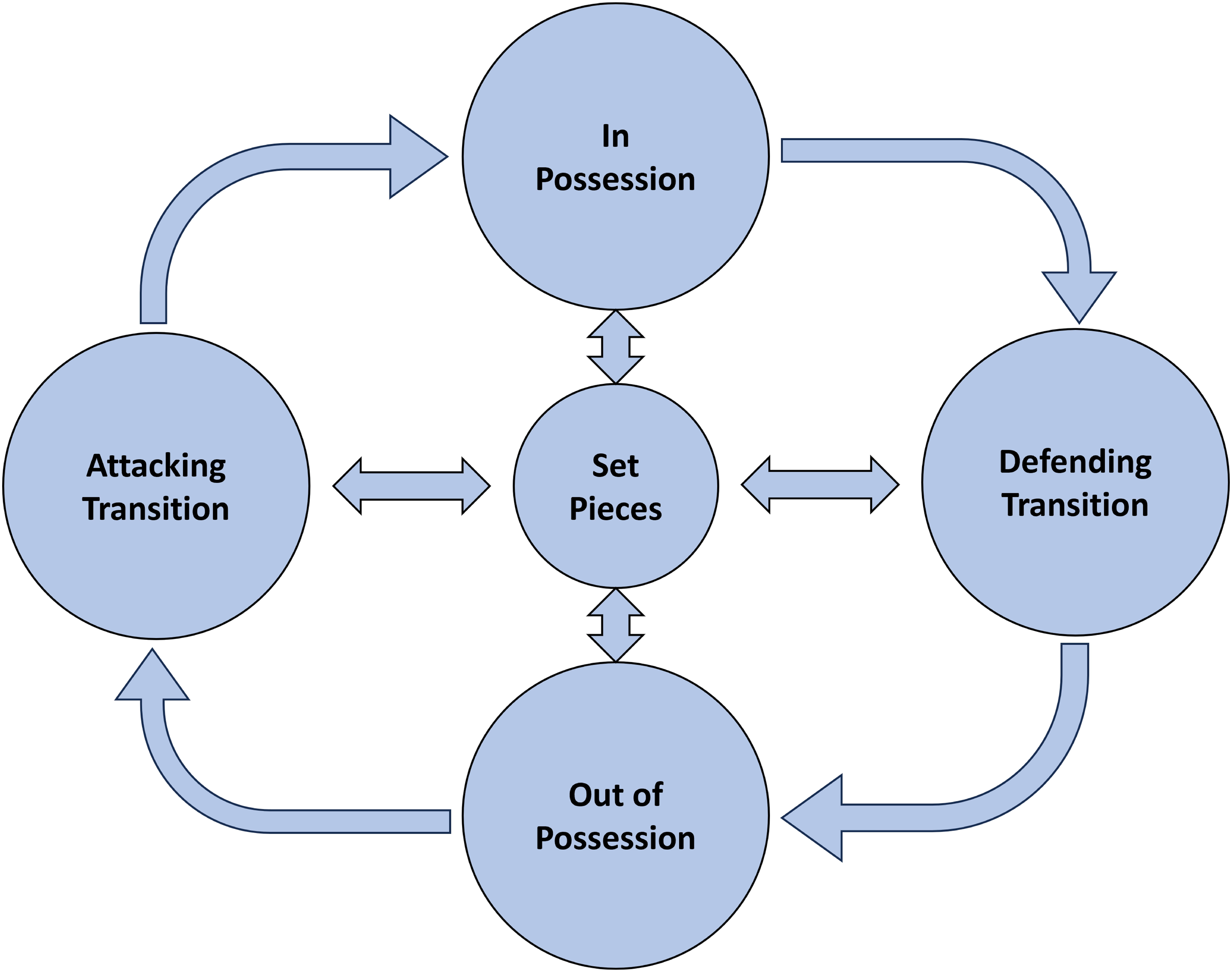
Model of interacting, identifiable, repeating phases of play termed ‘moments of the game’. 18
However, overall team performance and soccer match play is a complex network of ever-evolving interactions consisting of individual actions being performed by individual players. In such a dynamic environment, it is crucial teammates and support staff have a collective understanding of the interdependent actions required and can coordinate those actions during performance. Such a collective understanding is known as a shared mental model and represents a shared knowledge structure between team members. 20
Largely, whilst cognizant of the complexity of performance, previous research in TID has failed to account for its multidisciplinary nature. 4 Previous research has examined isolated attributes linked to performance within a particular domain (e.g. speed and endurance {physical}, passing and dribbling {technical}, motivation and confidence {psychological} and game intelligence and general tactics {tactical}). This approach disregards the chaotic, unpredictable nature of actual performance. A number of modern theoretical approaches would suggest that an athlete's decision-making, and their learning and development in performing a specific sporting action, occurs in a dynamic and varying relationship between the task, performer and environment.21,22 In turn, individual performance of a soccer-specific action combines detailed and complex relations of tactical, technical, psychological and physiological attributes, which are required for competitive match-play 23 and occur in response to the needs of the performer and the team at any given moment. In this regard, specific soccer actions represent context-specific samples of performance that embody many of the attributes coaches consider important for TID, thus providing position-specific performance criteria.
Within the context of the current study, the organisation (a professional UK soccer academy) sought a method to better facilitate (de)selection meetings and decision-making processes, with specific focus on evaluating players’ performances. The authors’ approach to address what is likely a generalisable and ‘real-world’ practical problem was to create a framework for appraising players’ performances that aimed to reduce the known effects of several biases which are the norm in most practical coaching environments. Therefore, the aim of this study was to gain further understanding into coaches’ perceptions of the key position-specific soccer actions, performed during the differing moments of the game, on which they can evaluate individual match performance. This may provide practitioners with a common language 24 and subsequent shared mental model of player performance. Additionally, consistent collection of data relating to players’ performances can provide a longitudinal evaluation of a player's ability within their sport and therefore an indication of their potential for future elite performance (i.e. TID). This may aid in reducing the variation in opinions of staff included in (de)selection processes, avoiding issues of repeatedly misidentifying talented young soccer players and adding a level of continuity to TID processes within respective organisations.9,16
Methods
Research design and purpose
To identify the key position-specific soccer actions deemed important for evaluating successful performance, a qualitative approach was taken informed by a philosophical position of critical realism. 25 This philosophy permitted a clear distinction between reality and knowledge as it reflects ontological realism and epistemological interpretivism. A position of critical realism allowed the lead researcher to reject the notion of multiple, subjectively constructed individual realities but accept that individuals may have their own perspective on a single reality. Such a position therefore informed the research methodology in an attempt to seek shared knowledge and understanding. 25 To further enhance the research process, the criteria for quality of qualitative research was used as a framework, 26 but a flexible approach was taken to guide methodological procedures rather than accepting such criteria as ‘universal’. 27 Such an approach meant not all criteria in the framework were directly addressed, with the research team attempting to increase rigour throughout within the constraints of the research question, process and purpose. Examples of specific criteria are threaded throughout the remainder of the transcript, indicated in quotation marks, italicised and appropriately cited for clarity.
Given the role of selected members of the research team (embedded staff within the organisation), the current topic was considered ‘worthy’ 26 due to its timing, relevance and significance, in relation to their day-to-day working practices within a professional soccer academy. The organisation and embedded staff sought to create aligned criteria for assessing individual soccer performance as part of a wider tool to aid TID processes within the academy. As such, the research team mapped out a methodology to identify coaches’ perceptions of the key actions, within distinct positions and moments of the game, that they deemed as required for judgement of successful soccer performance. Such understanding could be utilised to subjectively assess player performances, providing consistency and alignment within the organisation whilst delivering data to support player/coach learning and to facilitate TID and TD practices.
Sampling and participants
Following institutional ethical approval (application reference 86888), all full-time senior and assistant academy coaches (coaching players aged U15–U21) were purposefully sampled and invited to an initial briefing to explain the nature and purpose of the research. Criteria for inclusion of participants included holding a recognised coaching qualification, under current employment of the organisation for a minimum of 6 months and working within the YDP or PDP phases. Prior to the commencement of the study, participants were also provided with additional information sheets detailing the study background, procedures, potential outcomes and intended use of data. They were subsequently invited to participate, assured of anonymity and confidentiality and provided written consent to participate. The final sample included nine male elite youth soccer coaches from the 11 full-time coaches within the academy. The coaches worked within the PDP (U18 {n = 3}, U21 {n = 3}) and upper YDP phases (U15 {n = 1}, U16 {n = 1}) including an academy coaching manager (n = 1). Coaches had between 2 and 35 years of coaching experience (coaching experience: 13.6 ± 10.8 years) and had spent between 1 and 10 years coaching within the organisation (years with organisation: 4.6 ± 3.3 years). Coaches were qualified to a minimum of UEFA B Licence standard with 78% having obtained UEFA A Licence qualification and were therefore deemed suitable and representative of an expert sample of elite youth soccer coaches.
Procedure
To obtain coaches’ perceptions of the key actions required for successful soccer performance, semi-structured interviews were undertaken. The lead researcher had prior relationships with all participants by engaging in regular informal and formal conversations through their role within the organisation. This helped to simplify the interview process and potentially promoted increased trust and more genuine engagement from participants during the interviews. 28 The research team had substantial accumulated experience (50+ years) working within elite youth sport as both practitioners and researchers across individual sporting organisations, academic organisations and national governing bodies (NGBs). This provided them with extensive knowledge and understanding of each participant's own working context whilst also aiding interview and analysis processes. Such experience helped the flow of the interviews and also allowed a collective understanding of comments made by coaches using idiomatic phrases or using ‘football language’. 29
Semi-structured interviews
Interviews took place between January and March 2022 during the regular competitive season and were scheduled according to individual coach availability. Interviews were conducted one-to-one with the lead researcher in a private room at the organisation's training facility without interruption.
Interview length ranged from 17 to 44 minutes (average interview length: 32.3 ± 7.6 min). Prior to each formal interview, the purpose of the research and the interview procedure was once again explained to participants and they were further assured of anonymity, confidentiality and intended use of their data. To aid the interview process, an interview guide (Figure 2) was developed by the research team detailing a list of open-ended questions allowing the lead researcher to ask the same pre-planned questions to all participants. 30 A pilot interview was conducted with an experienced football practitioner in order to refine the interview guide. 28 This resulted in a re-ordering of the interview guide and questions to follow a logical sequence that would typically represent a passage of play within soccer, allowing for a greater flow of conversation during the interview process.
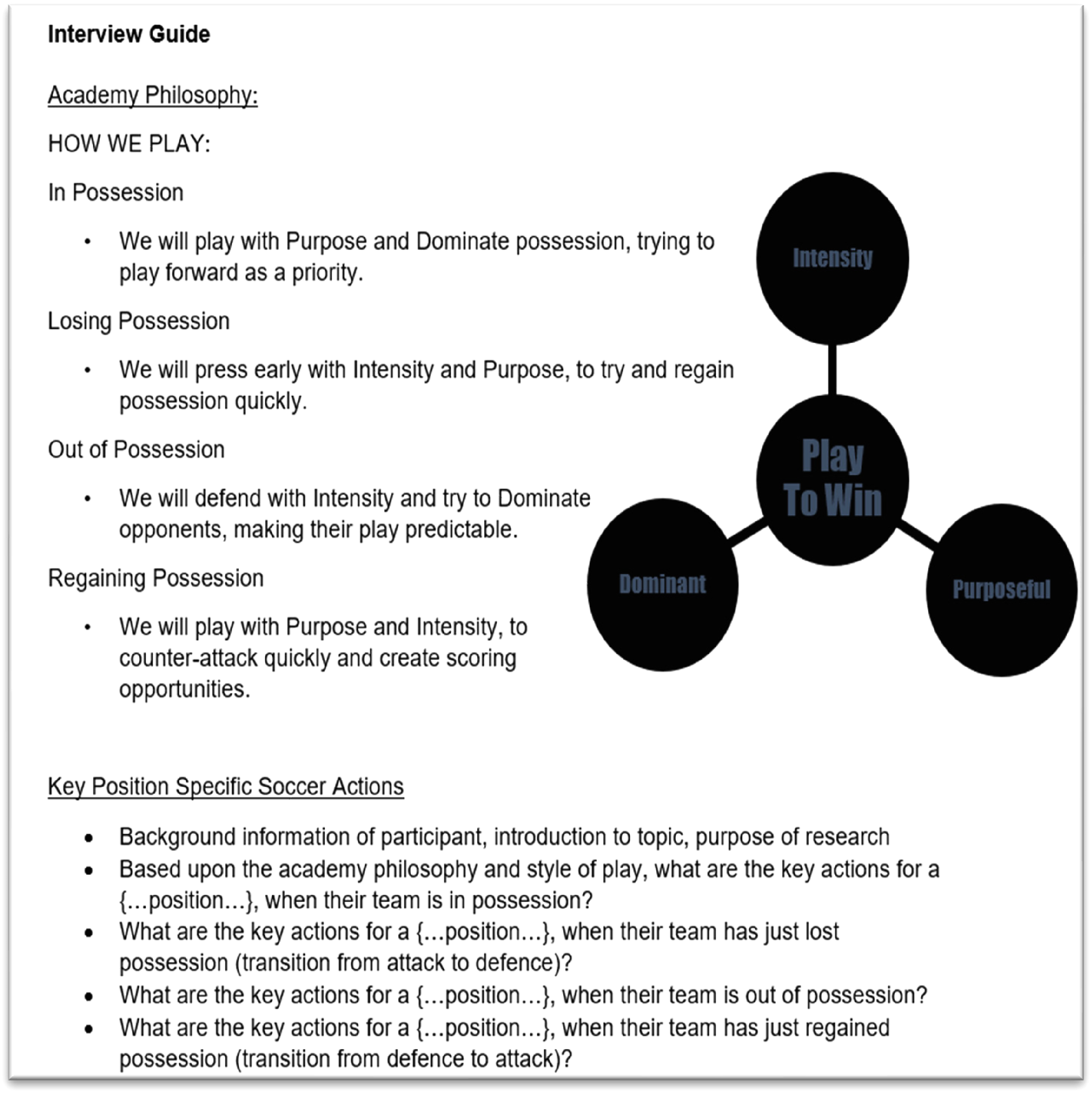
Interview guide detailing questions relating to key position-specific soccer actions within four moments of the game within the context of the organisation's playing philosophy.
The interview guide was developed with the aim of ascertaining coaches’ perceptions of the key soccer actions required for successful performance in elite youth soccer match play (within the context of the organisation's playing philosophy and the age group they coach) and in each different position within four ‘live’ moments of the game (in possession, out of possession, attacking transition and defensive transition).18,31 Specific positions were determined based on the playing philosophy of the organisation (Figure 3) and included goalkeepers, defenders (wide and central), midfielders (central, central defensive and central attacking) and forwards (wide and centre). Questions were not always asked in the same order, with the lead researcher allowing the natural flow of the conversation to guide questioning. This allowed for more probing questions to be asked to stimulate further discussion where necessary and/or to ensure participants had the opportunity to fully express their ideas and opinions. 30 Each interview was recorded and transcribed verbatim at a later date.
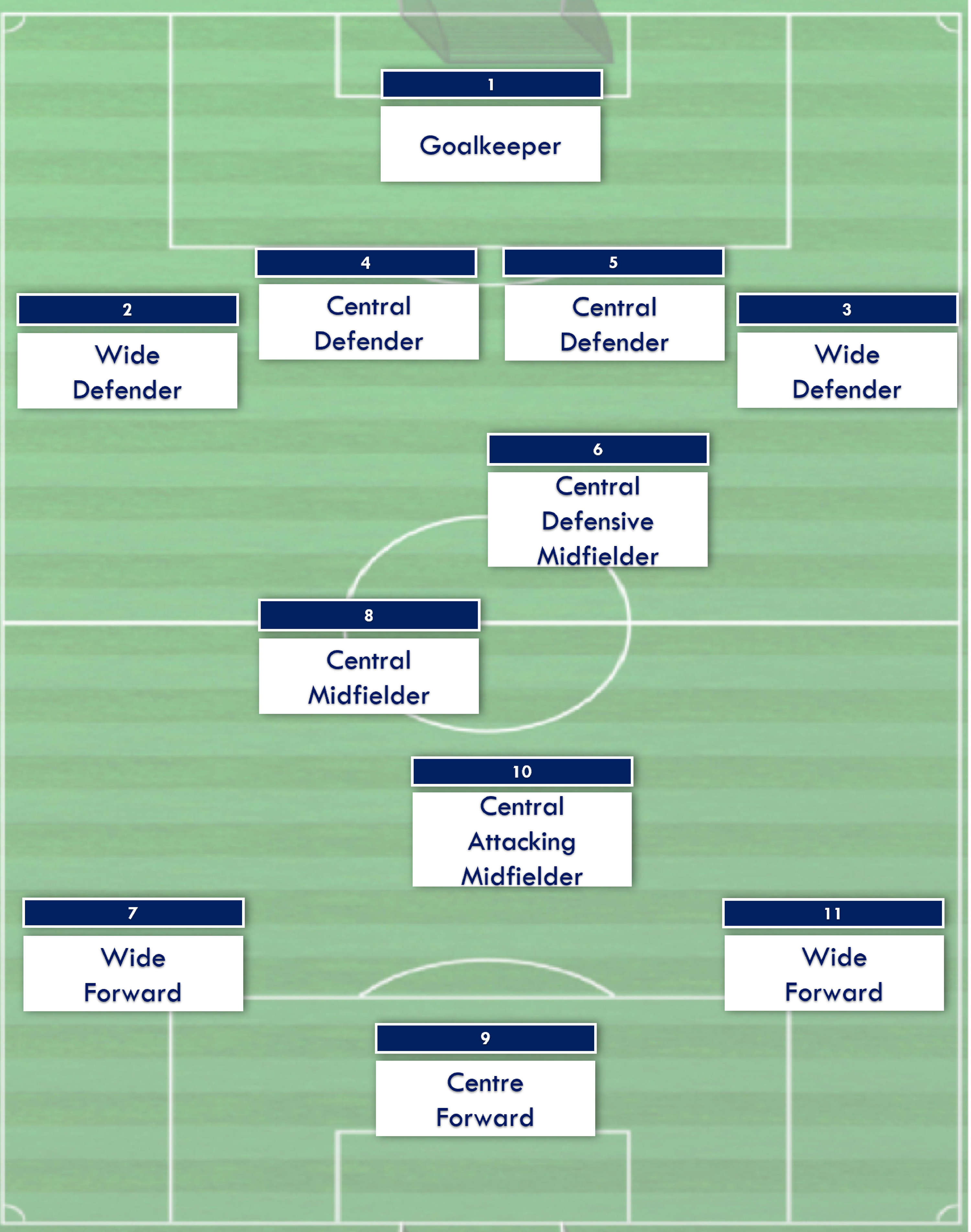
Identified positions based on playing philosophy.
Data analysis
Thematic analysis was undertaken to analyse participant responses using the six-phase approach outlined by Braun and Clarke, which is described as being theoretically and methodologically justified due to its flexibility and ‘theoretical freedom’ 32 p.78 (i.e. ability to be utilised across a range of theoretical and epistemological approaches). Thematic analysis minimally describes and summarises the information gathered through an emphasis on interpretation, which in the current study was facilitated through the explicit nature of participant responses (i.e. specific football actions).30,32 The decision to employ thematic analysis was considered appropriate as the clarity and coherence of methods were aligned with the research aims and theoretical assumptions, allowing coaches’ opinions of the key soccer actions required for successful soccer performance to be identified, analysed and reported, as a form of shared understanding based on individual interpretation. 33 The approach was deemed more theoretical and analyst-driven, with coding and theme development aiming to provide detailed analysis of parts of the data (given the research team’s interest in answering a specific question), rather than providing a rich description of the overall data.32,33 Additionally, the analysis was conducted whilst acknowledging that participant’s responses and knowledge are actively constructed based on their own individual reflections and experience. 32 Thematic analysis has also previously been used in sport science research aimed at understanding coach, practitioner and player perspectives.9,34–36
Initially, interview transcripts and audio recordings were reviewed several times by the lead researcher to allow them to be immersed and familiarised with the data. Following familiarisation, the data were organised into codes to classify and label relevant or interesting features of the data. A second member of the research team also coded randomly selected sections of the data, affording a form of peer debrief to the research findings.27,28 This process highlighted general agreement of codes within the text (i.e. both members of the research team were in agreement with their coding when coaches highlighted a specific soccer action) and stimulated a discussion on the importance of separating the transitional and established moments of the game, despite considerable overlap of the codes generated between the two. The specific soccer actions mentioned by coaches for each individual position and moment of the game (e.g. pressing–defensive transition) acted as a natural coding system. Themes, which represent a form meaning or patterned response within the data, 32 were then constructed on a theoretical and semantic level, i.e. being more descriptive of participant's exact responses and closely aligned to the content of the interviews and research question. This was done through interpretation and assembly of codes with similarities, allowing each theme to have a unique and important concept that described a part of the data, in this case, a theme that encompassed multiple specific soccer actions. 37
At this stage of analysis, on-going discussion with the research team allowed themes to be critically refined and revised against the data and codes, as a further form of peer review and debriefing. 28 For example, descriptions of player's winning ‘1v1 duels’ were originally coded and placed into a single ‘man-to-man’ theme but upon revision were split into distinct ‘attacking skills’ and ‘defending skills’ themes dependant on the nature and context of the description from participants. Such processes promoted ‘sincerity’ 26 and allowed reflection on potential researcher bias 26 whilst aiding with conceptualisation of the data. This also ensured themes were fully representative in the context of the research question.
As an additional measure to increase ‘rigour’, 26 quotes from the transcription and the conceptualised themes were fed-back to participants individually as a form of member-checking, establishing a level of trustworthiness and ‘credibility’ in the data.26–28 Participating coaches were individually provided a document detailing how their responses had been interpreted, coded and ordered into themes representing soccer actions. This provided an opportunity for coaches to confirm their responses had been understood and interpreted correctly and feedback on any misinterpretations to the research team. No coaches reported any misinterpretations within their feedback.
Finally, a report of the findings was developed and edited into the subsequent sections to depict the themes emerging from the data. For reader clarity, findings have been displayed using relevant quotes and codes relating to their interpretation.
Results
The four ‘live’ moments of the game (in possession, defensive transition, out of possession and attacking transition) acted as four natural domains for the data. 33 Within each of the four chosen moments of the game, several higher-order themes were developed to best describe participant responses. Due to the nature of the research question, participant responses were often explicit in nature and thus sub-themes were represented by the specifically stated codes/soccer actions. Figure 4 is a thematic map created to visualise the higher-order themes generated from the data, without reference to specific positional differences.
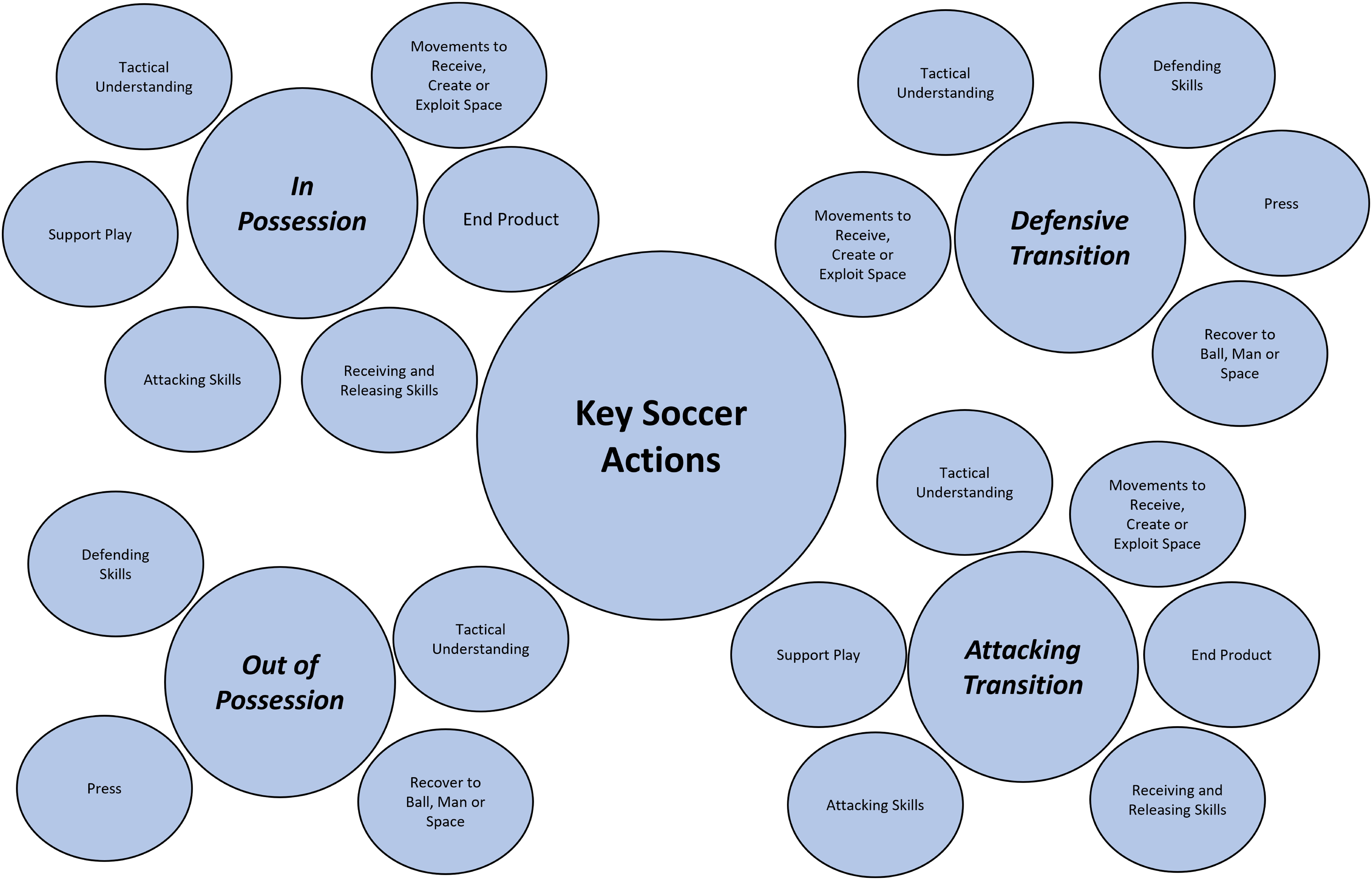
Thematic map of coaches' perspectives of key soccer actions.
As can be seen in Figure 4, several themes are shared across the differing moments of the game (e.g. tactical understanding), with particular overlap both with (in possession/attacking transition {e.g. end product}) and against (out of possession/defensive transition {e.g. press}) the ball. Despite these similarities, during our peer review process (see Section 2.5), it was felt a clear distinction should be made surrounding the different contexts of ‘transitional’ (attacking/defensive) and ‘established’ (in and out of possession) moments of the game. Thus, all themes across the four moments of the game were retained. The following sections will describe the results within each moment of the game, with specific reference to the positional differences in actions described by coaches within a particular theme.
In possession
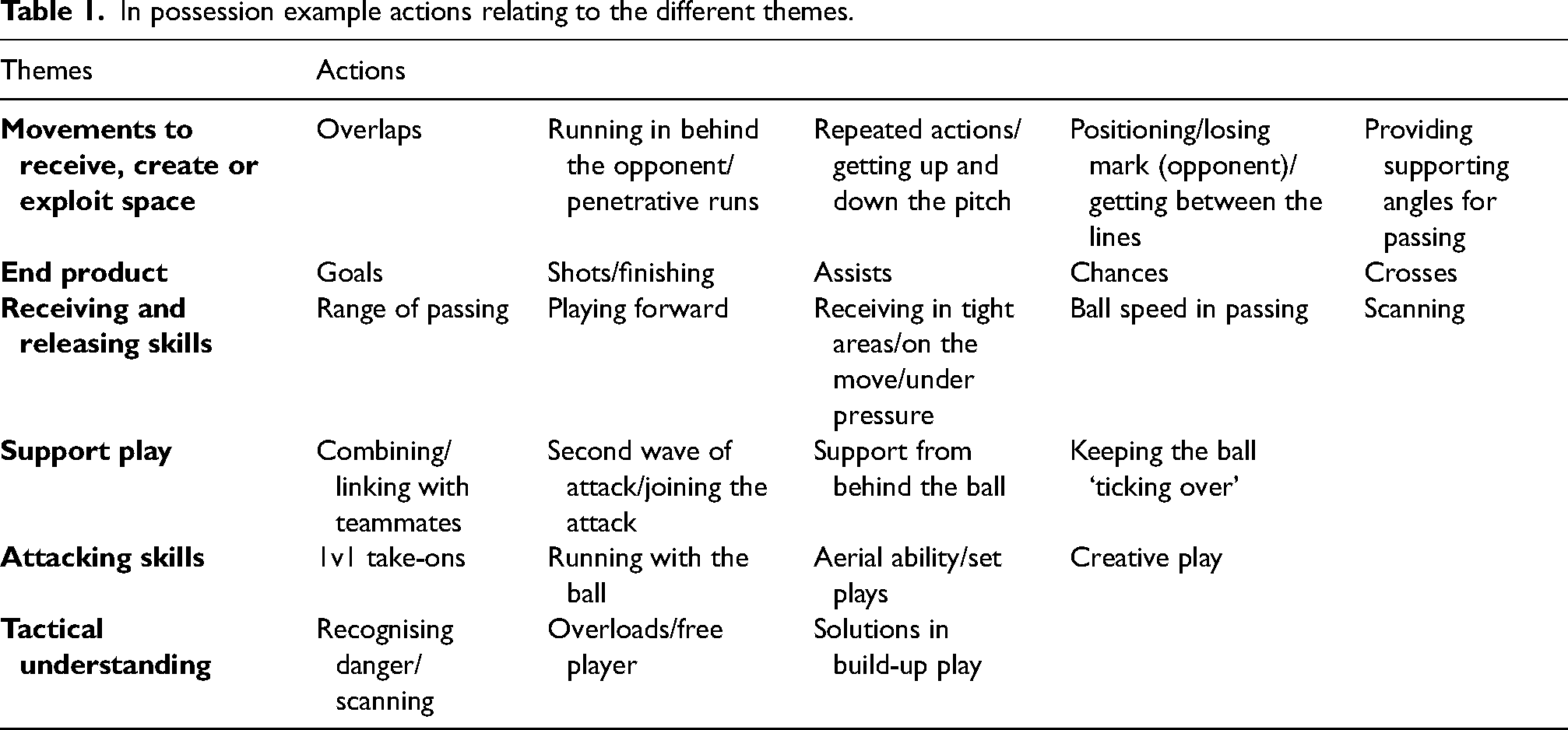
When asked to state the key actions on which they judged performance when their team was in possession of the ball, coaches described actions relating to themes of movements to receive, create or exploit space, end product and individual receiving and releasing skills. However, the specific actions were always within the context of a player's position.
For example, receiving and releasing skills were identified across all positions with the exception of wide forwards, with coaches wanting players to be ‘super comfortable on the ball’ with several references from coaches of players being able to complete passes over ‘short, medium and long distances’. In terms of positional differences, coaches referred to defensive player's passing more in the context of ‘building the attack’.
In the case of movements to receive, create or exploit space, actions from a wide player would be very different to those of more centrally positioned player, with a wide forward needing to display ‘intelligence of movement’ by ‘coming in off the (touch)line’ or ‘staying wide’ rather than having to ‘find little pockets of space’ as a central player.
Equally, during actions relating to a player's end product, a wide player could be judged on finding ‘the opportunity to put crosses into the box’, with more of an expectation of centre forwards to ‘score goals’ and ‘be a real threat’. Actions relating to end product were predominantly mentioned in positional roles that would usually encompass attacking play, with no end product actions being coded for central defenders or central defensive midfielders.
Further potential differences in positions were highlighted when discussing actions related to tactical understanding. In this case, more defensively orientated players were the only positions considered for performance being judged on tactical understanding. In the case of central defensive midfielders, coaches described players needing to perform ‘scans’ and to ‘be aware’ as alluded to by one coach in the quote below: The analogy of kind of being like a guard dog … something happens and kind of going now if I want to commit myself to that, I’ll leave that open. You’ve got to kind of see that … so recognise danger and stop any potential threat.
Finally, actions relating to attacking skills and support play were mentioned across all positions with the exception, surprisingly, of attacking skills for centre forwards. This perhaps highlights a focus, within this specific style of play, of a centre forward being appraised on their ability to ‘score goals’ and ‘link up’ with other players when in possession, with less of an expectation for a centre forward to perform actions relating to attacking skills, e.g. running with the ball, dribbling, 1v1's and creativity on the ball.
Overall, coaches mentioned actions relating to the themes movements to receive, create or exploit space, end product, receiving and releasing skills, support play, attacking skills and tactical understanding as to how they would judge a player's performance when their team was in possession of the ball. Table 1 highlights the higher-order themes and some example soccer actions as cited by coaches.
In possession example actions relating to the different themes.
Defensive transition
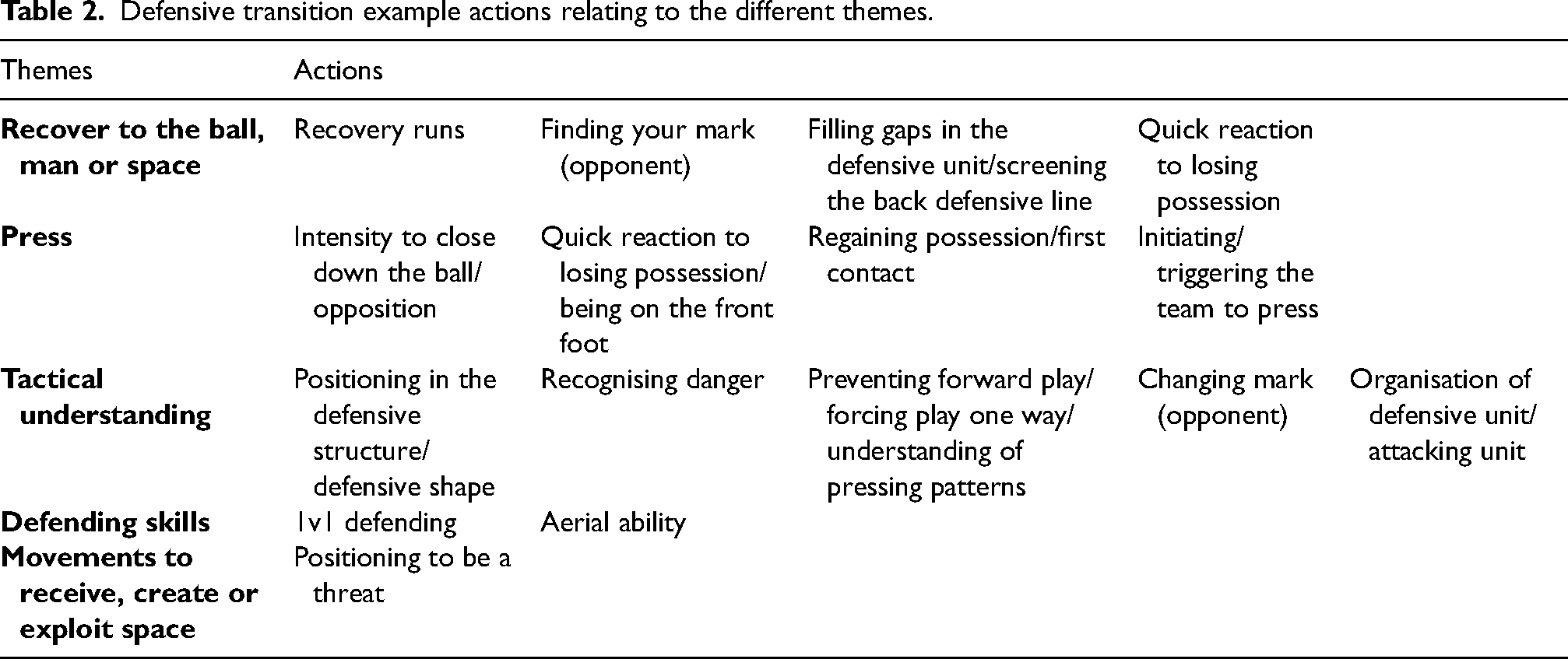
In response to their team losing the ball, coaches were like-minded when describing the immediate actions they would expect to see from their players during the defensive transition. Predictably, coaches reported actions that related to trying to ‘win the ball back’ and ‘regain possession’. Higher-order themes included recover to the ball, man or space, press, tactical understanding and defending skills. Of interest, there seemed to be consensus that during defensive transitions the speed or ‘intensity’ of an action was an important distinguishing factor, regardless of position, particularly in themes such as press.
When coaches spoke of actions within the themes of tactical understanding and recover to the ball, man or space, they often described requirements for players to ‘make good decisions’ during the transition—‘when to man-mark, divide and support’. However, again, positional nuances emerge. Actions and decision-making linked to tactical understanding for attacking players differed with forward players having a greater expectation of ‘dividing (taking a position between two opponents) to really try to force it one way (direction of play/ball)’.
When describing decision-making in reference to recover to the ball, man or space, there was an ‘expectation’ for players to perform these actions, with one coach stating: It's an expectation. The recoveries are huge, so if the ball breaks down, they’ve got to be able to know where they’re recovering to, whether that's the mark (opponent) or the space.
Defending skills such as ‘aerial ability’ (e.g. winning headers) and ‘1v1 defending’ were noted as important actions on which to judge players with the exception of central defenders. This perhaps indicates an expectation for central defenders to ‘re-organise’, ‘regain shape’ or ‘maintain a defensive structure’ during transition in lieu of hasty attempts to regain ball possession. Interestingly, one coach also demonstrated a pro-active and offensively minded approach when discussing the actions to judge a centre forward, wanting them to ‘pick up a position where if we win it, can you go and score’.
Additionally, coaches described a centre forward player’s movement to receive, create or exploit space during the defensive transition, assessing them on their ability to find an area where, if the team is to regain possession, they can be effective. Table 2 provides some of the stated actions, linked to the relevant themes across all positions for the defensive transition phase.
Defensive transition example actions relating to the different themes.
Out of possession
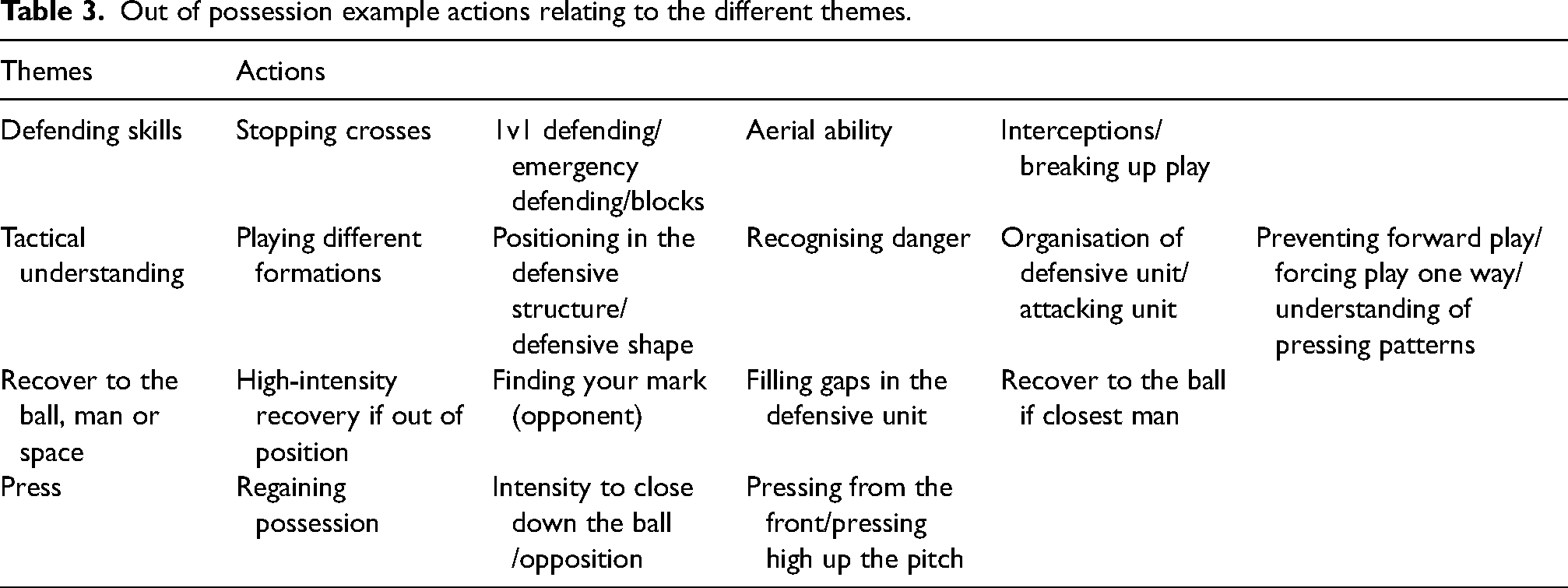
Actions stated by coaches when their team had sustained periods of time without the ball (out of possession) were categorised into four higher-order themes: defending skills, tactical understanding, press and recover to the ball, man or space. All coaches referenced defending skills actions for defensive players (central defensive midfielders, central defenders and wide defenders) without positional differences, instead describing a variety of different actions including being a ‘1v1 specialist’ and being able to make actions ‘in the air, to make a block, make a tackle’.
In contrast, potential positional difference emerged with coaches only reporting actions connected to press for outfield players in more advanced positions (centre midfielders, central attacking midfielders, wide forwards and centre forwards). One coach described the pressing actions required in the following quote: High pressure. Being able to direct play. So closing off…whatever side…Once we’ve done those things, can they win the physical contests?
Whilst other coaches described making ‘recovery runs’ relating to the theme recover to the ball, man or space for both defensive and attacking players, players were expected to be seen ‘tracking the opposition’ and to make sure ‘they don’t lose the back (allow opponent to run behind them)’.
Such positional differences may highlight a common playing style where the defensive players are organised in a unit or shape in preparation for defensive actions (e.g. 1v1 defending, dealing with aerial balls and preventing crosses), with a greater reliance on forward players producing actions to make attempts to try and regain ball possession higher up the pitch (e.g. pressing the opposition and recovering into positions to prevent forward play).
Lastly, multiple coaches referred to assessing a player's out of possession performance based on actions linking to tactical understanding, including having ‘the ability to play in different formations’, ‘understanding and executing pressing patterns’ and individual ‘positioning’ within, or ‘organisation’ of, the defensive units. Further example actions and their relevant higher-order themes are presented in Table 3.
Out of possession example actions relating to the different themes.
Attacking transition
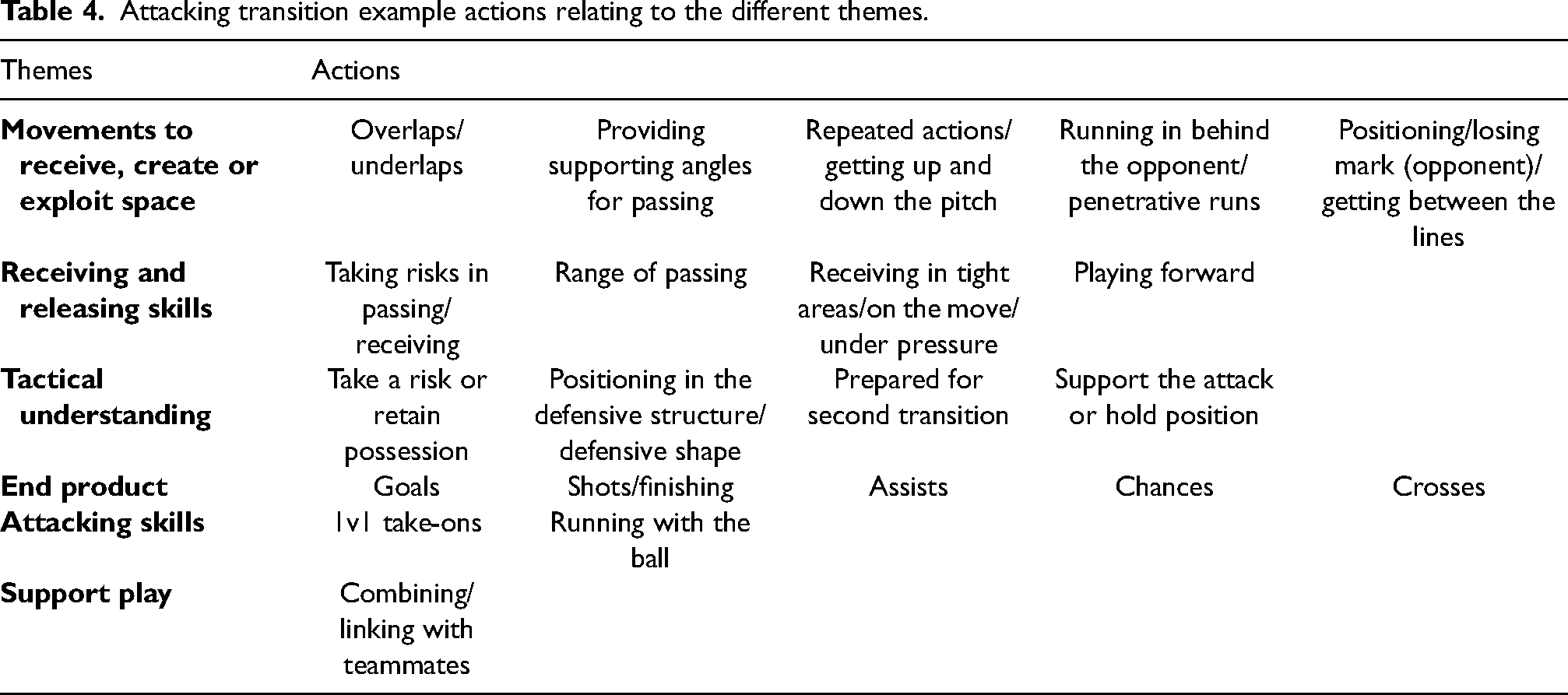
Upon their team winning the ball back, coaches described actions relating to the themes movements to receive, create or exploit space, receiving and releasing skills, tactical understanding, end product, attacking skills and support play. Actions relevant to a player's end product were commonly cited by coaches. These actions included ‘shots on target’, ‘penetrative passes’, ‘assists’ and ‘crosses’, but clearly, ‘scoring goals’ was a key action during this phase.
During attacking transition, movements to receive, create or exploit space were identified across multiple positions with subtle differences in the actions as highlighted in the quote below: Recognising where the spaces are on the pitch to exploit…in particular, if there are opportunities for overlaps, underlaps or to combine in wide areas or to just make direct aggressive runs into space.
Players in central defensive midfield and central defence positions were not included by coaches when stating actions linked to movements to receive, create or exploit space, end product or attacking skills, potentially showing that outside of these positions players are likely to have more attacking ‘freedom’ during the transition.
Further potential positional differences may be seen in the tactical understanding theme, where coaches highlighted key actions for players in defensive positions (wide defenders, central defenders and central defensive midfielders) including needing to ‘organise at the back (defence)' and having the ‘structure right’. These quotes suggest coaches have an expectation for defensive players to be more cautious in the attacking transition.
Responses within the support play and receiving and releasing skills themes were more sporadic. Actions relating to the theme support play were only mentioned by a few coaches, whilst actions for receiving and releasing skills were mentioned by multiple coaches. In general, receiving and releasing skills during the attacking transition focused on the ability to ‘make effective passes’ and to ‘launch an attack’. Example actions for attacking transition within the specified themes are shown in Table 4.
Attacking transition example actions relating to the different themes.
Goalkeepers
As a goalkeeper represents somewhat of a specialist position within soccer, 38 only coaches who held specific roles working with goalkeepers within the organisation (n = 2) were asked to define key actions for performance in the different moments of the game. A separate thematic map detailing the higher-order themes for goalkeepers is shown below in Figure 5.
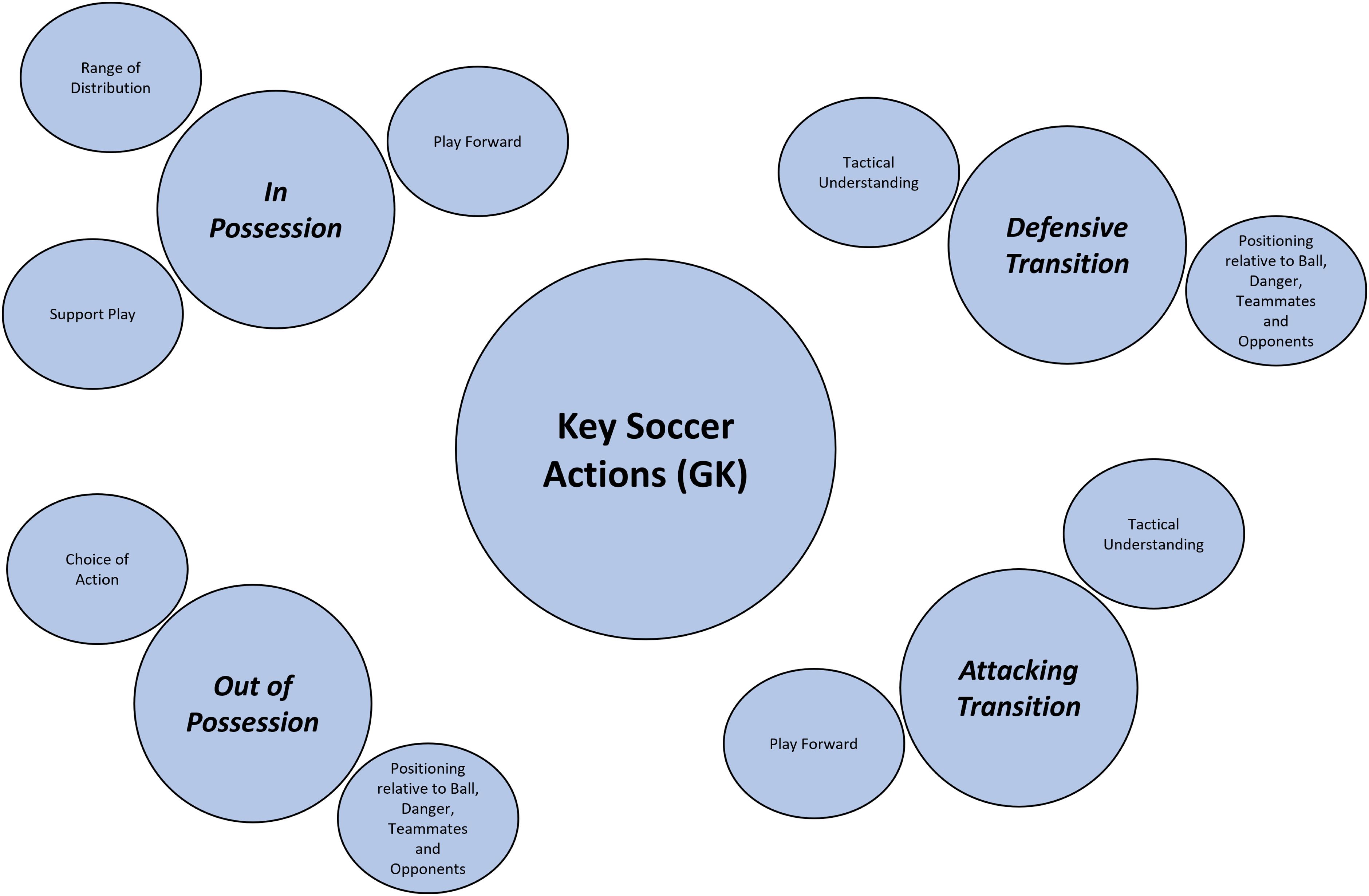
Thematic map of coaches' perspectives of key soccer actions for goalkeepers.
In possession, coaches stated actions relating to the themes range of distribution, play forward and support play. When detailing actions relating to goalkeepers having a range of distribution, coaches spoke about ‘the ability to use a variety of passes or throws’ with variations of ‘playing around…playing through…play into…play onto…playing beyond…and playing quickly’.
Play forward and support play themes included actions where goalkeepers could ‘take up positions’ that were effective to receive the ball back from outfield players when necessary and playing the ball ‘forward quickly’ as a ‘first priority’ for goalkeepers when in possession of the ball.
In the defensive transition, coaches spoke about a goalkeeper's positioning ‘to be able to defend [the] goal’ and ‘having the discipline [to]…not guess, not gamble’. Such actions encompassed a variety of external factors that could influence a goalkeeper's position and were grouped under the theme positioning relative to the ball, danger, teammates and opponents.
Coaches also described actions relating to goalkeepers tactical understanding, where ‘organisation of the defensive unit/structure’ was a key action they would want to see during the defensive transition.
Actions identified for goalkeepers when the team was out of possession mainly involved decision-making processes and were grouped into the inter-linked themes of positioning relative to the ball, danger, teammates and opponents and choice of action. Both coaches highlighted the relevant choice of action as vital, as cited in the subsequent quote: The ability to make correct decisions on whether to defend the space, defend the area and defend the goal and the ability to keep the ball out of the back of the net. ‘Cause if you do the first two things right you don’t have to do the third.
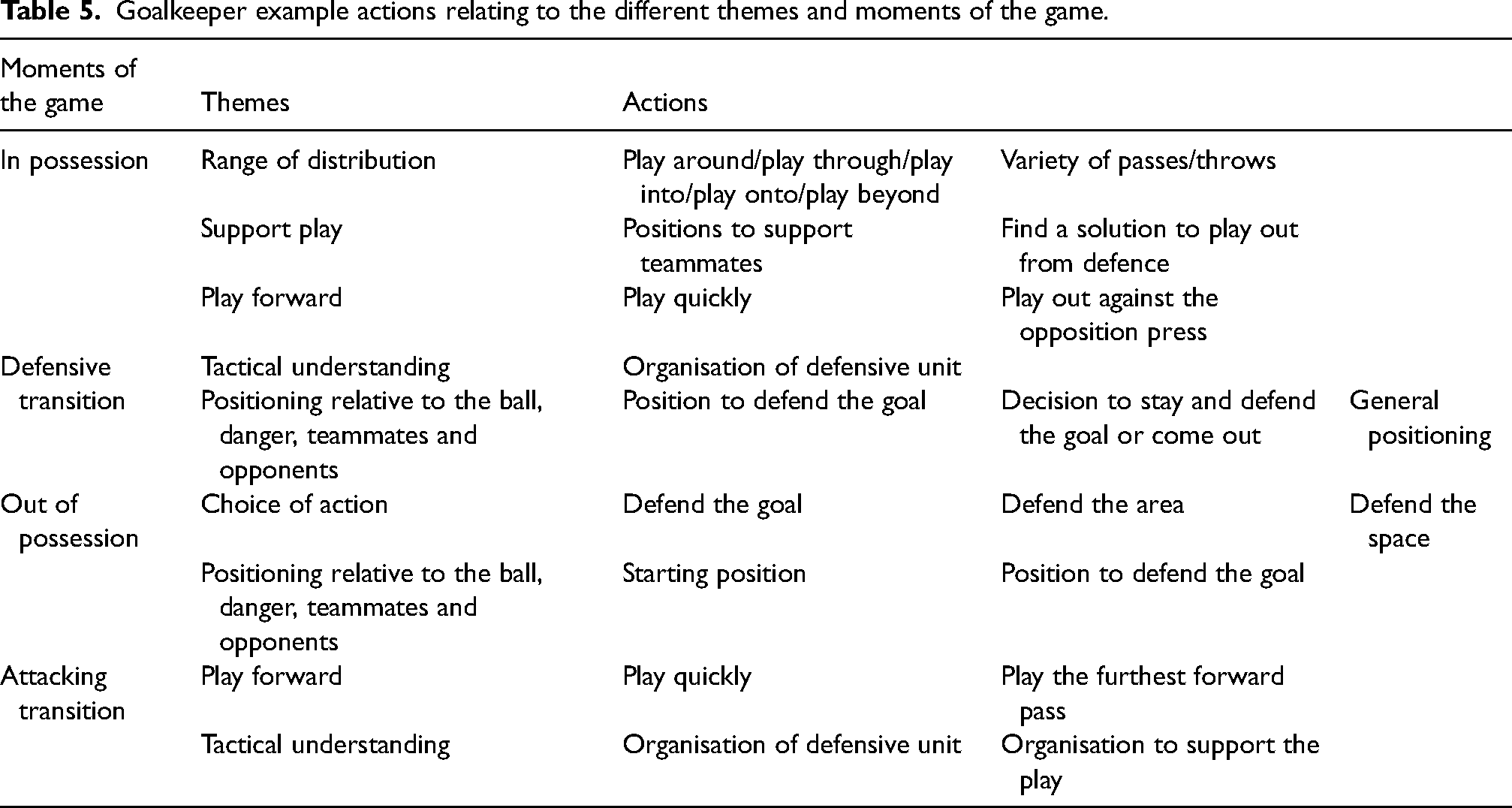
Finally, in the attacking transition, coaches would judge a goalkeeper's performance based on actions relating to the themes tactical understanding and play forward. Tactical understanding was mainly linked to ‘communication with outfield players’ in terms of organisation to ‘prepare for a second transition’ or instructing teammates to take up positions to support the attack. This led to ‘forward play’ being a key priority for goalkeepers when having the ball. Table 5 highlights some example actions for goalkeepers across the four moments of the game.
Goalkeeper example actions relating to the different themes and moments of the game.
Discussion
Nine elite youth male soccer coaches were interviewed to ascertain their perspectives on key position-specific soccer actions deemed important for successful performance. Addressing the aims of the study, the results allowed the identification and classification of coaches’ perceptions of the key position-specific soccer actions, performed during the differing moments of the game, on which they can evaluate individual match performance. Overall, whilst positional nuances were identified in terms of the specific actions reported, the structure of the higher-order themes across positions and moments of the game was chosen as a more suitable framework providing a ‘significant contribution’ 26 to the organisation and a feasible method for practical implementation as a shared mental model of player performance.
The results identified nine themes for outfield players including attacking skills; defending skills; end product; movements to receive, create or exploit space; press; receiving and releasing skills; recover to the ball, man or space; support play; and tactical understanding. As a specialist position, six different themes were extracted for goalkeepers; these included choice of action, play forward, positioning relative to the ball, danger, teammates and opponents, range of distribution, support play and tactical understanding. Figures 6–9 highlight the classification of themes across playing positions within the different moments of the game.
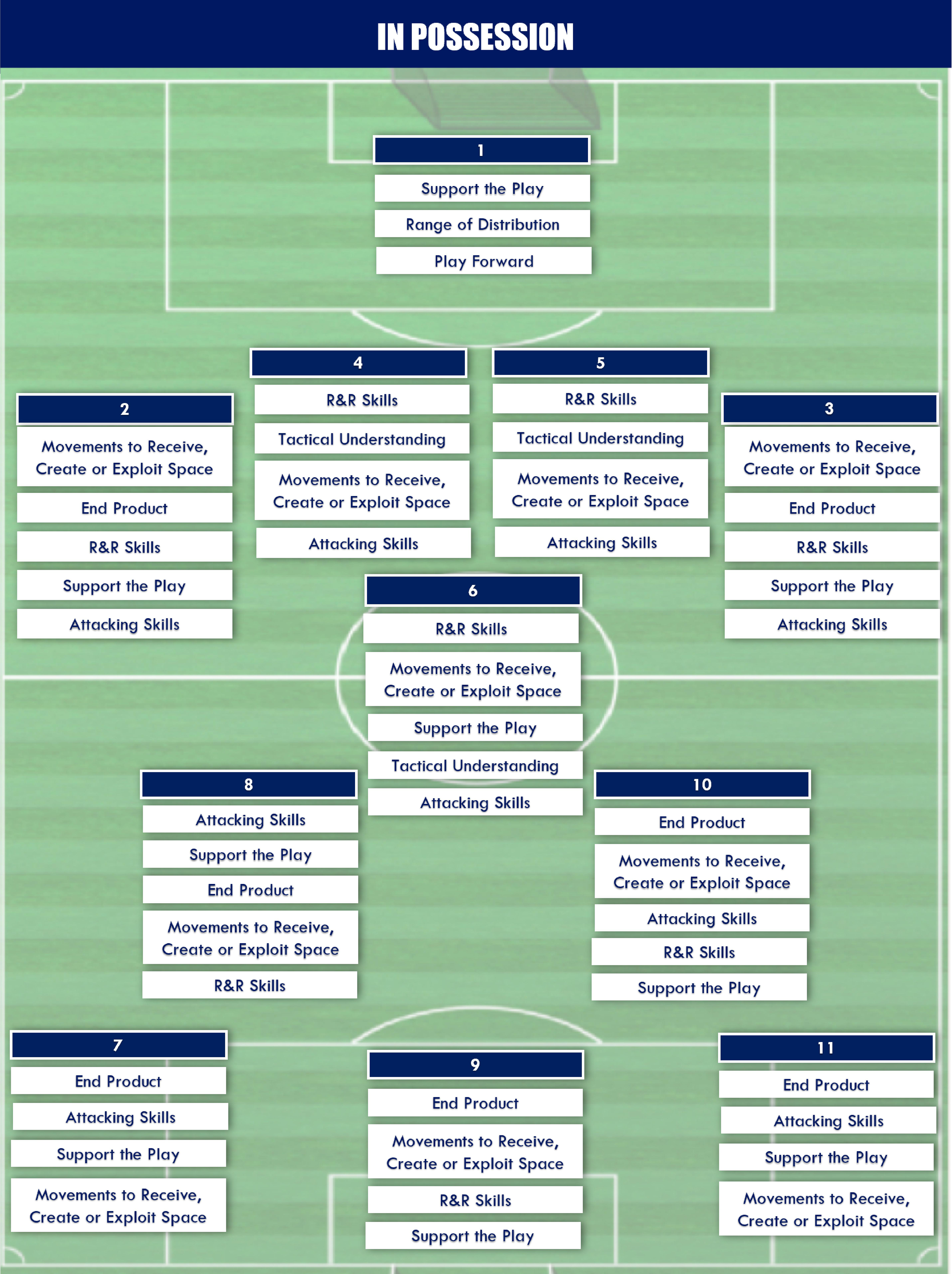
Themes across positions: In possession.
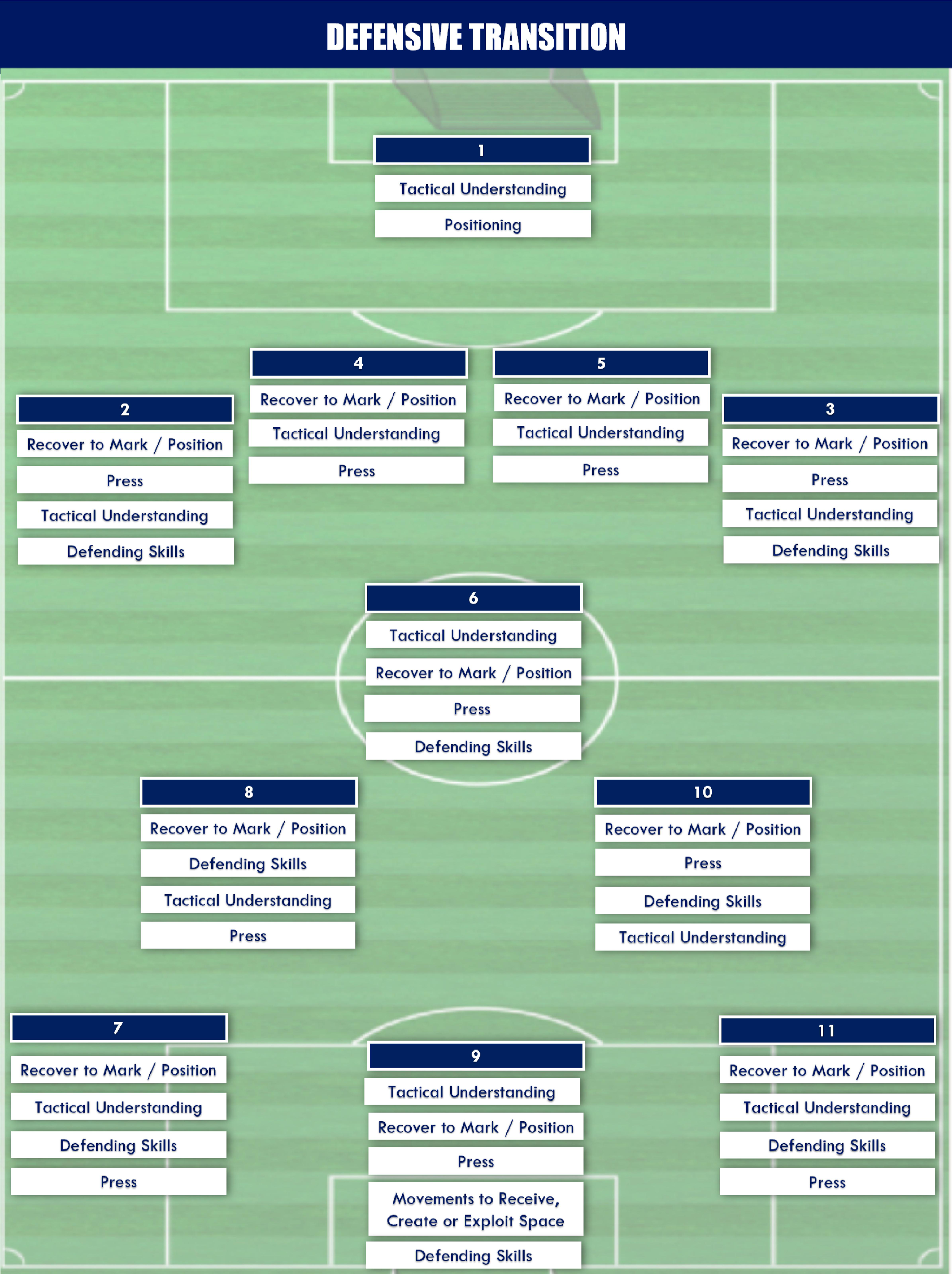
Themes across positions: Defensive transition.
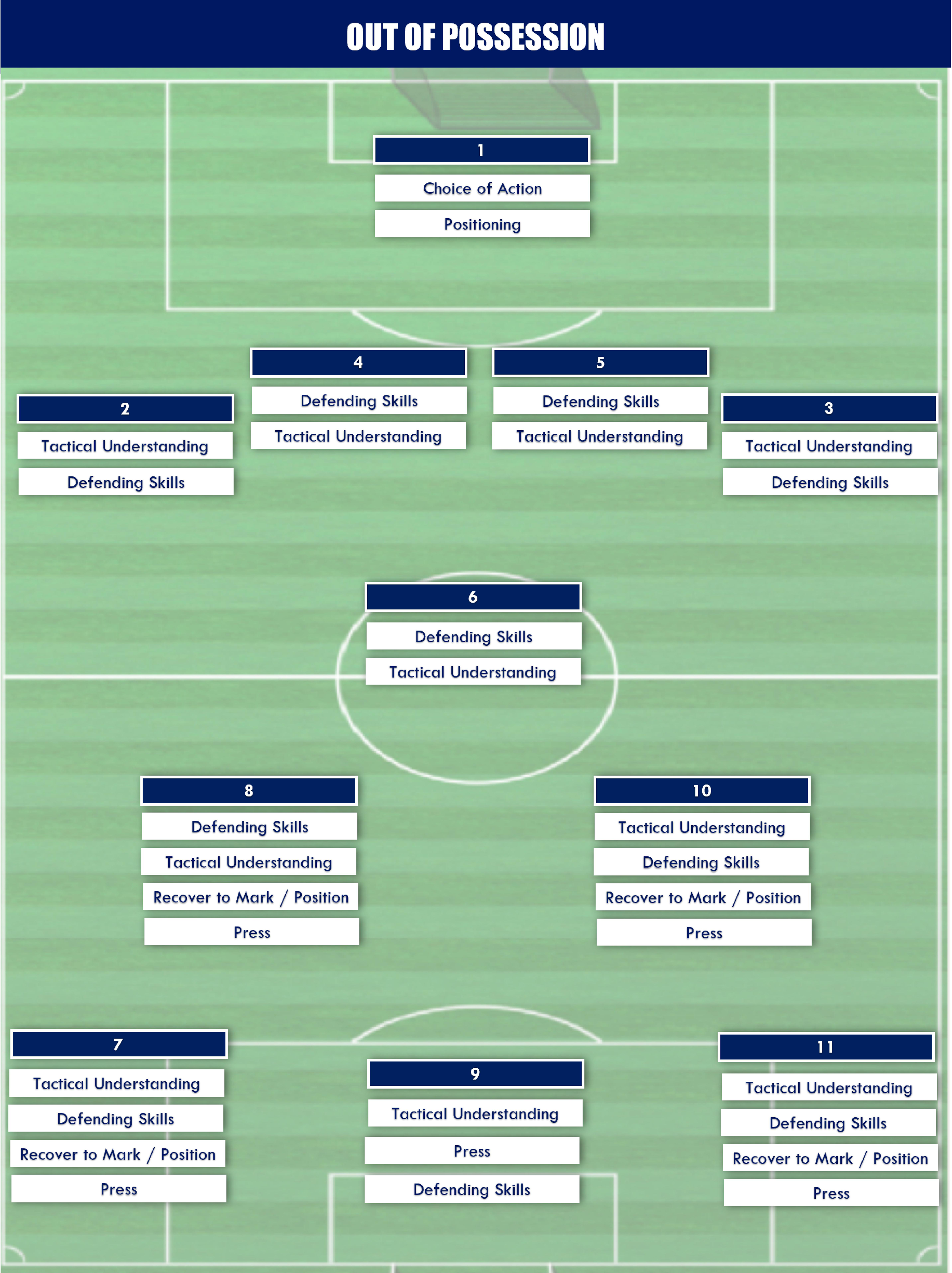
Themes across positions: Out of possession.
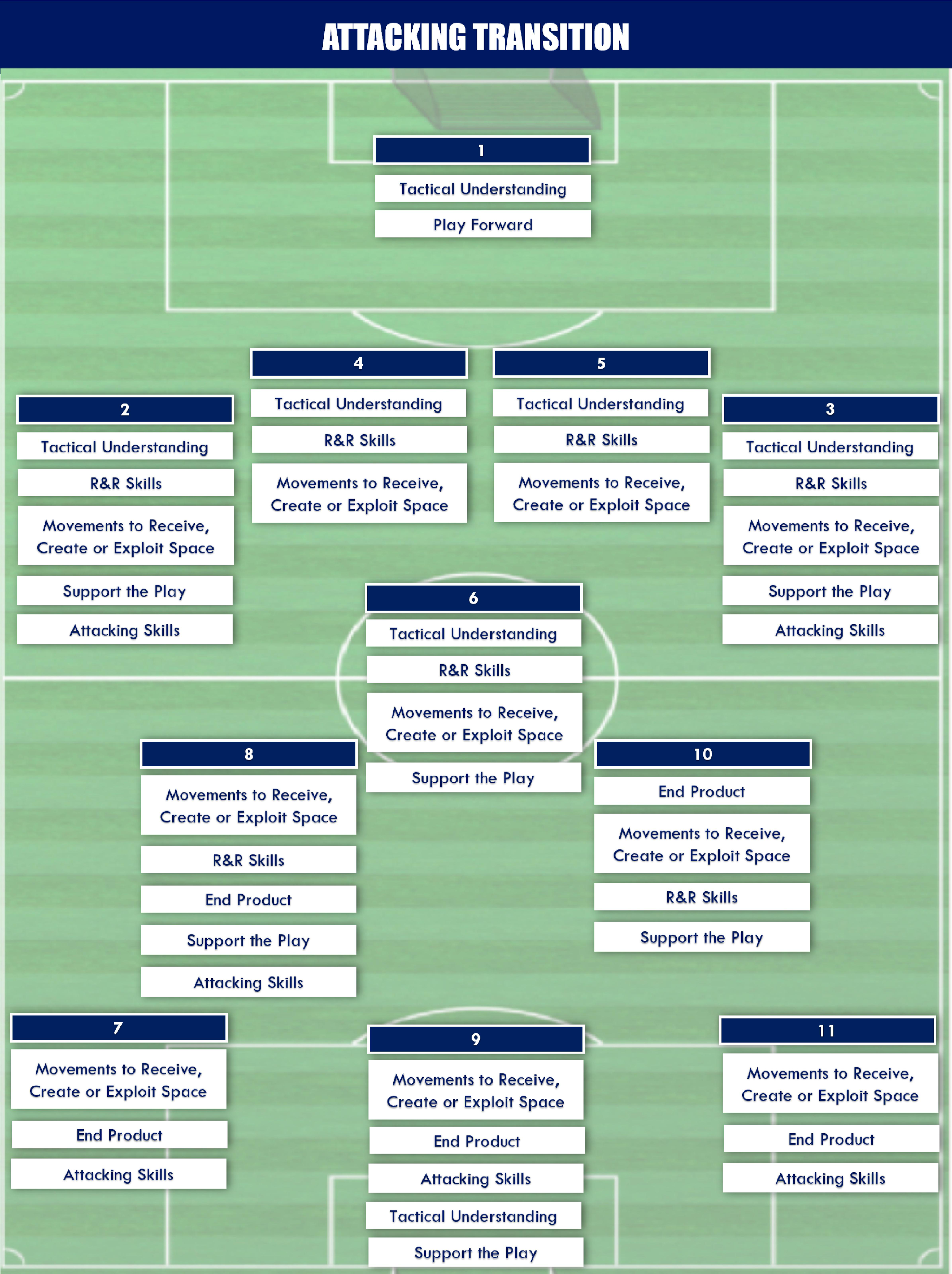
Themes across positions: Attacking transition.
As seen in the figures above, various positions and moments of the game shared similarities (e.g. tactical understanding for central defenders). Several themes overlap in possession and attacking transition moments of the game in addition to overlaps occurring for out of possession and defensive transition moments. However, as previously discussed, our peer review process (see Section 2.5) resulted in retaining all four ‘live’ moments of the game. Indeed, previous research has shown transition moments to contribute significantly to game success, accounting for large proportions of attempts on goal and goals scored during attacking transitions.39,40 Such moments have been proven to be a key difference between higher and lower ranked teams (league position) in terms of winning the ball back quickly during defensive transitions. 41
However, the results highlighted position-specific differences in the actions being described by coaches within particular themes. For example, actions relating to end product for wide defenders might be more related to crossing, assisting or creating chances versus the specific action of taking shots and scoring goals for centre forwards. Such findings agree with previous research, which has shown positional differences also exist in physical match and training outputs 42 and creation of multidisciplinary KPIs for match analysis, 43 TID 44 and recruitment. 45 Such variation in positions is to be expected, given the nature of the sport and the variety of skills, attributes and qualities potential future elite soccer players are required to possess.
The use of themes versus specific performance actions was chosen as a more practical and structured approach to assessing performance. Considering the amount, value and impact of each individual action made by a player within a game is likely to be impossible to process for the human brain; thus, structuring actions into relevant themes or KPIs within different moments of the game provides a valuable alternative for practitioners. Bergkamp et al. 46 previously highlighted that breaking down and assessing performance through specific KPIs may allow for more structured information collection (i.e. considering and scoring different performance indicators separately on the same rating scale) versus traditional unstructured holistic ratings of player performance (i.e. a coach attempting to combine all aspects of performance into a single judgement). In this sense, the creation of a shared mental model of player performance provides the opportunity for structured holistic ratings of performance. Practically speaking, through this framework, coaches can subjectively assess player performance consistently, using a shared set of criteria that encompasses a maximum of five themes, in the different moments of the game, for each player in their relevant position.
Such an approach paves the way for the use of proposed actuarial judgements in (de)selection procedures (Den Hartigh et al., 2018), where structured and holistic ratings of player performance can be tracked longitudinally and used as a criteria or rule as part of the decision-making process. This approach is said to increase the quality of such processes through decreasing the likelihood for biased judgements on players. To illustrate this point, take the situation of a player development meeting or (de)selection decision. A coach may be asked to provide information relating to the player's performance over a previous number of weeks or months as part of the process. Here, an unstructured approach may see the coach provide a simple verbal description explaining the player has done ‘OK’ in his performances or provide a score on a commonly used coach evaluation tool in elite youth soccer, specifying his performances have been scored as 2 (on a four-point Likert scale) indicating the player's performance is approaching academy standard. 12 Whilst this verbal description or score from the coach may be accurate (through his expertise and previous experience), 6 it could also be open to a number of biases. These biases may include failing to account for player's biological maturity11,12 or a recency bias where the coach is basing judgement only on performances he can remember in the recent past. A structured and holistic approach in this situation would allow a longitudinal record of the player's performances to be tracked across the various KPIs or themes derived from our results, giving more insight into how the coach has appraised the player's performance over previous weeks and what specific areas the player has performed well or poorly in. Such insights may either support or challenge the coach's comments and if used as a form of actuarial judgement may add to the decisions made for the future of that player.
Despite the relevant practical application and importance of the findings within the organisation, this study is not without limitations. Firstly, the study was restricted to coaches within a single organisation and thus the results are potentially limited in their application to other TD environments. Conversely, the study may also act as a replicable process to allow organisations to develop their own KPIs, shared mental models of performance or communal language to facilitate discussion and knowledge exchange between coaches and practitioners. 24 A further limitation concerns the perceived importance of each specific action stated by coaches and/or perceived importance of the higher-order themes. Within our results, each theme was included in the framework, irrespective of the number of coaches who denoted actions linked to that particular theme. In this regard, a set of actions within a particular theme mentioned by only two coaches carries equal importance to actions within a theme mentioned by all coaches. Nevertheless, the number of coaches identifying actions related to a theme does not automatically indicate that theme's worth.
Future research may aim to investigate the perceived importance of KPIs when assessing performance as well as establishing the feasibility of implementing and using such a framework in practice (i.e. to judge player performance). Finally, determining the validity and reliability of coaches’ ratings of player performance should be established to justify its use as a tool for collecting longitudinal, contextually valid, markers of performance within TID processes in elite youth soccer.
Footnotes
Declaration of conflicting interests
The author(s) declared the following potential conflicts of interest with respect to the research, authorship, and/or publication of this article: Sam Barraclough is a PhD student part-funded by Leeds United Football Club. Adam Kerr is an employee of Leeds United Football Club.
Funding
The authors received no financial support for the research, authorship, and/or publication of this article.
