



Abstract
The recognition of playing styles in soccer has been established as highly significant in the performance analysis of the sport. The aim of this research was to clarify the terms used by authors to express this specific concept and to identify all recognized playing styles, examining their relationships, thereby creating a comprehensive framework. We employed a qualitative study design using a Grounded Theory approach. A rigorous process of open, axial, and selective coding was applied, involving nine researchers to ensure the reliability of the findings. Qualitative research data were obtained from documents found on Scopus and Google Scholar. After applying specific criteria, 205 documents were deemed suitable, with 22 of them necessary to achieve theoretical saturation, the point where no new properties, dimensions, or relationships emerge during analysis. The 22 documents were analyzed using Atlas.ti.23, identifying 84 codes, 40 of which were utilized as categories and 44 as subcategories. The set of codes categorized into six thematic folders. The analysis led to the identification of terms used to express the concept of style in the international literature and the recognition of playing styles used to characterize a team a) regardless of the game phases, b) in specific phases of the game, c) in specific sub-phases of the attack, d) based on the game phases that teams rely on for their tactics, and e) based on the teams’ physical performance. By synthesizing existing literature, we proposed a Grounded Theory that serves as a consensus point for researchers and coaches. This theory managed to overcome the limitations of individual studies and can serve as the foundation for effective communication within the soccer community, thus being a useful tool for future research, as well as for coaches, analysts, and scouts of the teams.
Introduction
Soccer is the most popular sport globally, captivating a vast audience worldwide. 1 It holds a unique position as the subject of extensive scientific research. 2 Numerous studies within this domain utilize distinct variables, particularly performance indicators, to derive meaningful insights. 3 However, in recent years, researchers have shifted their focus towards a deeper exploration of playing styles that better interpret the tactical aspects of the sport. 4 Playing styles generally refer to the distinctive tactical patterns adopted by teams to control the game across its different phases, aiming to secure victories.5,6
The evolution of playing styles in soccer is a captivating journey through the sport's history, marked by transformative moments that have reshaped its tactical landscape. Beginning with the rigid formations of the early twentieth century to the Total Football revolution of the 1970s, soccer has experienced a continuous evolution in the approach adopted by teams in the game.7,8 The evolution of coaching philosophies, coupled with advancements in sports science, has propelled the development of distinct playing styles.
In practice, various playing styles have been observed in teams across different leagues. For example, playing styles have been reported that characterize some teams as a whole, regardless of the phases of the game, such as the Total Football introduced by the Netherlands national team in the 1974 and 1978 World Cups. 9 In contrast, other playing styles refer exclusively to specific phases of the game, such as the ball possession phase. 10 Additionally, some styles are related to the physical performance of teams, such as intensity play,11,12 while others may be defined by the phases of the game 13 or the characteristic factors (technical, tactical, physical) 14 on which a team bases its strategy.
Furthermore, existing literature has explored various dimensions shaping team playing styles. For instance, team formations have been recognized as an important factor in determining the playing style of teams.15,16 Additionally, in-depth investigations into contextual variables have been scrutinized. Specifically, the adoption of different playing styles has been investigated based on a) match location, match status, and the ranking of the team and its opponent,4,17 b) the country of the league,18–20 c) the level of the league, 21 d) the different teams of the same league,11,12 e) the age group, 22 and f) the type of playing surface. 23 Lastly, the effectiveness of playing styles has also been studied, with researchers adopting various ways. For example, Lopez-Valenciano, Garcia-Gómez 24 correlated playing styles with the ranking position in a national football league, Yi, Gómez 25 studied the differences in technical and physical performance indicators for two different playing styles, while Plakias, Tsatalas 26 used quantified playing styles (as performance indicators) to examine their impact on a team's win or non-win outcome.
It is important to note that a team's playing style may be determined by the individual style of its players, 27 but it is also possible that the selection of players for a team is based on the playing style the team wants to adopt.28,29 This is why a large part of the international literature has focused on player styles, examining both the passing patterns they execute,30,31 as well as the different types of players, taking into account their position on the field.32–35
Various terminologies in international literature have been used to describe playing styles in soccer. While some researchers examine them based on the overall team image, 36 others scrutinize styles based on key moments of the game such as organized attack, defensive transition, organized defense, attacking transition, and set pieces. 6 However, the lexicon's richness often complicates effective communication among scholars, coaches, and players due to the absence of a consensus. To address this discord, our study synthesizes existing literature, identifying recurring patterns, and proposing a Grounded Theory. Through distilling fundamental elements from varied terminologies and frameworks, offering clarity and fostering a unified understanding within the soccer community. This approach is recognized for its suitability in exploring complex and evolving phenomena, such as soccer-playing styles.37,38 Grounded Theory, as a qualitative research methodology, holds immense promise for unraveling the complexities inherent in team playing styles. Initially formulated by Glaser and Strauss, 39 this approach is characterized by its inductive nature, allowing researchers to derive theories from data rather than validating preconceived hypotheses. Yet, it also involves a deductive process, integrating the researcher's subjective interpretation to synthesize and draw conclusions from the data. These interpretations reflect the researcher's conceptualizations of the information contained in the data, acknowledging that no researcher approaches the investigative process with a completely blank or empty mind. 40
In recent years, there has been an increasing adoption of Grounded Theory methodology in soccer studies. Researchers have applied this approach to explore various aspects, including talent development, 41 injuries, 42 psychology 43 and performance analysis. 44 Through an extensive review of existing literature, scholars employing Grounded Theory aim to extract fundamental concepts, relationships, and processes intrinsic to soccer, facilitating a comprehensive understanding of the sport.
Despite the extensive exploration of playing styles in soccer in recent years, there is still a lack of a unified theoretical framework that comprehensively synthesizes these diverse perspectives into a cohesive theory. This study addresses this gap by proposing a novel Grounded Theory that integrates existing knowledge, offering a holistic model. In addition, it attempts to clear up the misconceptions that exist in the international scientific literature, leading to a consensus on the terminology used to this day. The objectives of this study are, therefore, twofold. Firstly, to thoroughly review the existing scientific literature on soccer playing styles, laying the groundwork for our Grounded Theory. This review aims to encompass diverse terminologies, findings, and conceptual frameworks used by researchers in this field. Secondly, the study seeks to employ the Grounded Theory methodology of Strauss and Corbin 40 to systematically analyze and synthesize insights from the literature. Through systematic coding and categorization of key themes, our aim is to distill a comprehensive theory around the team playing styles grounded in empirical data. This theory aims to transcend the limitations of individual studies, offering a unifying framework beneficial to researchers and professionals in soccer. Our research questions revolved around: a) detecting additional terms used in the international literature to express team styles beyond the term “playing styles, b) identifying reported playing styles, and c) classifying the concepts through their interrelations and connections to create a Grounded Theory that provides consensus and a field for discussion among researchers.
Materials and methods
Methodology
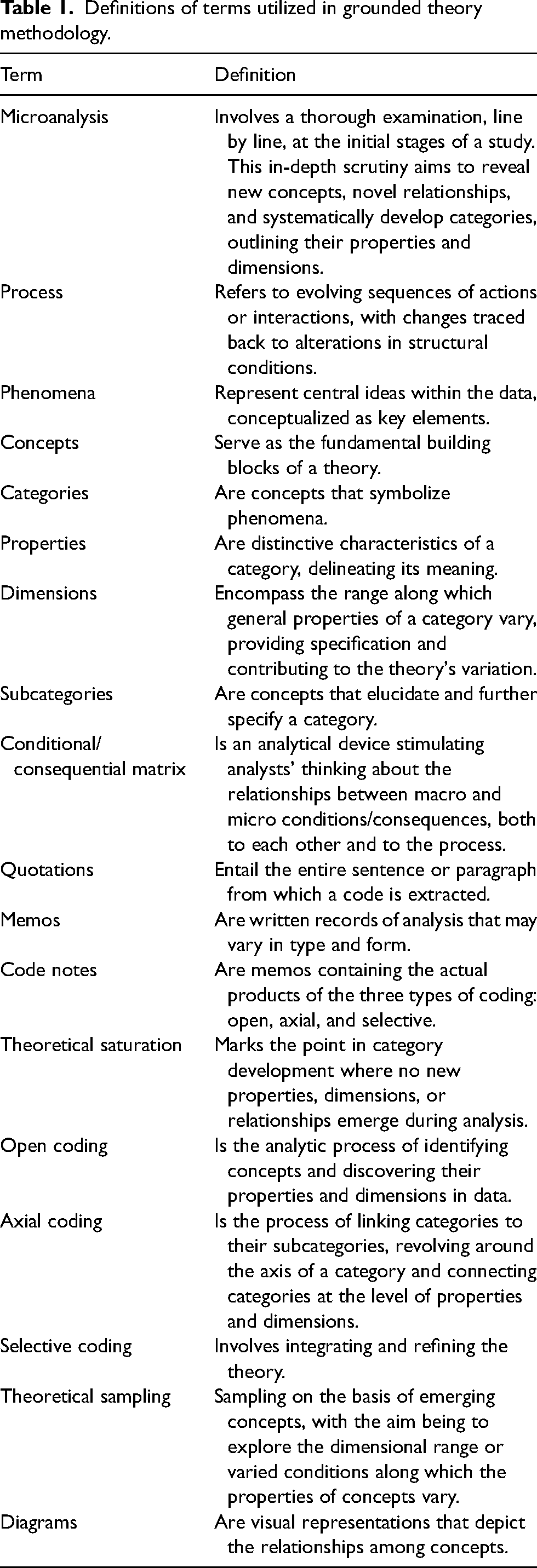
We employed a qualitative study design using a Grounded Theory approach to conduct this literature review, in which the researcher initiates the study in a specific field and formulates theories based on the gathered data.45–48 The adoption of Grounded Theory methodology was chosen for its inherent capacity to offer insights, improve comprehension, and provide a valuable framework for practical applications.40,44 The conduct of this research was carried out based on a) the guidelines of Strauss and Corbin 40 for Grounded Theory, b) the proposal by Wolfswinkel, Furtmueller 49 for “Using Grounded Theory as a method for rigorously reviewing literature”, and c) fulfilling the requirements outlined by the “Quality criteria for articles from qualitative research”. 50 Table 1 provides the definitions of fundamental concepts utilized in Grounded Theory methodology. 40
Definitions of terms utilized in grounded theory methodology.
Search
The search for records included in the review was conducted on the Scopus database and using Google Scholar search engine on November 8, 2023. In Scopus, the search was performed within the title, abstract, and keywords using the Boolean expression “soccer AND (“style of play” OR “game style” OR “playing style” OR “play style”).” In Google Scholar, documents were searched with the title containing both the words “soccer” and “style.” All types of academic literature were accepted, including research articles, review articles, communication papers, master's and doctoral theses, books, etc., provided they were written in English, and the authors had access to the full text. This inclusive approach was designed to ensure a comprehensive understanding of the research domain.
An Excel spreadsheet was used to record the title, author, and year of publication of each article. After removing duplicates, the titles and abstracts of each file were read, and documents whose main topic was not team playing styles in soccer were excluded. Articles related to robotic soccer and those referring to player or coach styles were also excluded. This process was carried out by three of the authors (S.P., C.Kok., T.T.), and in cases of disagreement, consensus was reached through joint discussion. A visual flowchart (Figure 1) illustrates the detailed search and selection process, enhancing transparency and replicability.
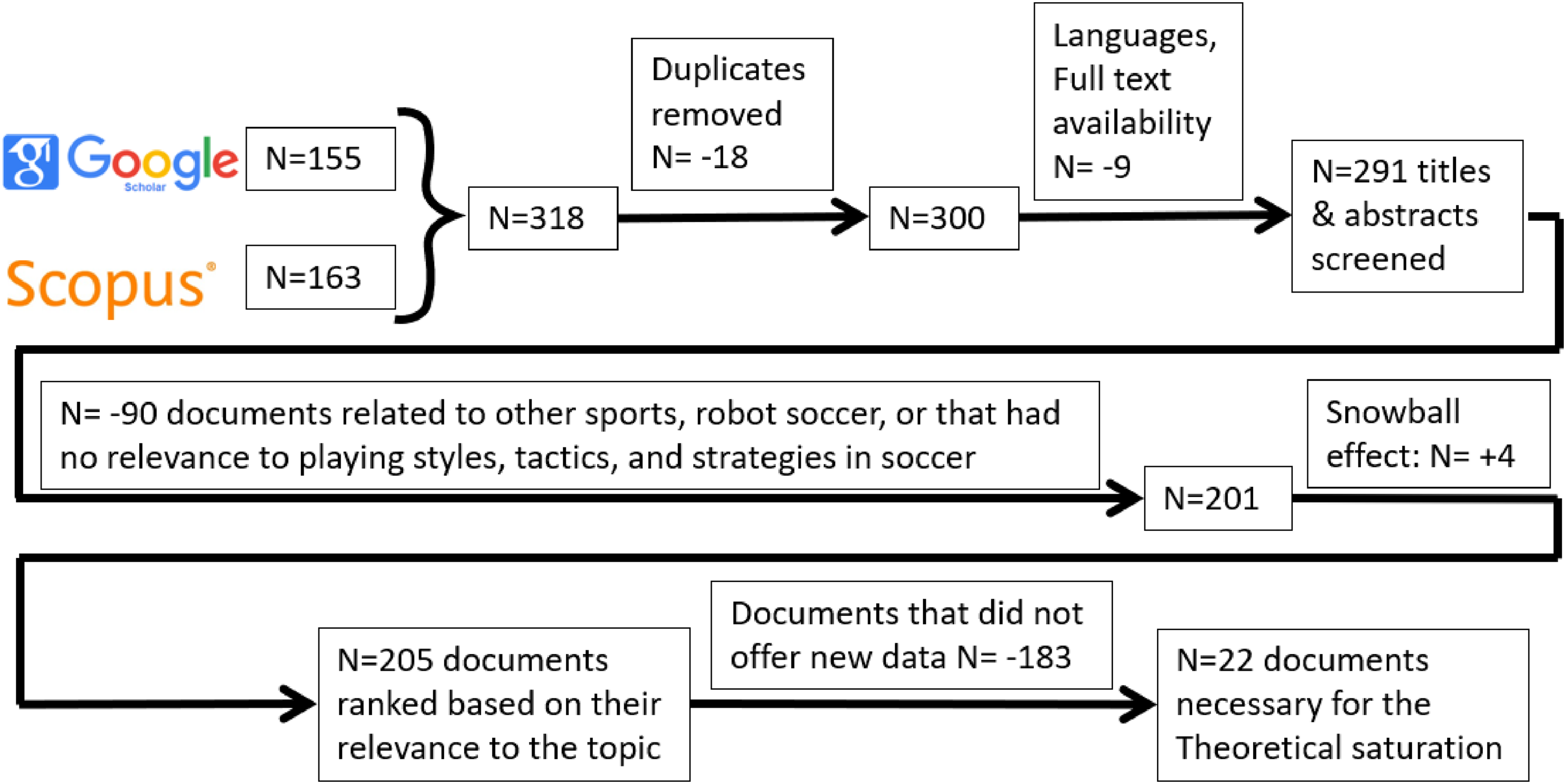
Stages followed to reach the final selection of articles necessary for theoretical saturation and theory construction.
Content analysis and coding process
The selected documents were imported into Atlas.ti.23 for content analysis. The upload into the software and the subsequent coding of the documents were done in order of relevance to the topic. The coding process was conducted in three phases: open coding, axial coding, and selective coding. Open coding involves the initial identification of concepts through a line-by-line analysis of the texts. During this phase, 84 codes were identified, and these were further categorized into thematic folders through axial coding. Categories and subcategories were developed by constantly comparing the data to ensure they accurately reflected the underlying themes. To mitigate researcher bias, two researchers were separately involved in the process of ranking the documents based on their relevance to the topic and in the subsequent coding, with inter-coder reliability checks conducted at each stage. The initial agreement between the two researchers was assessed using Cohen's kappa, which yielded a score > 0.75 in all stages, indicating a high level of agreement. Discrepancies in coding were resolved through consensus discussions, ensuring that the final categories were robust and reliable. Theoretical sampling was used iteratively to refine categories and ensure that the analysis reached theoretical saturation, where no new properties, dimensions, or relationships emerged from the data.
Grounded theory development and theoretical saturation
The process of theory construction followed the principles of selective coding, where the categories were integrated to develop a cohesive theory. Theoretical saturation was achieved after analyzing 22 documents. The criteria for theoretical saturation involved continuous comparisons during the coding process, where the emerging categories and subcategories were refined until no new properties, dimensions, or relationships emerged. Specifically, saturation was determined when subsequent document analysis did not contribute additional insights or refinement to the existing categories, confirming that further analysis would not alter the structure of the theoretical framework.
The selection of the final 22 documents was based on their relevance to the emerging theory. Documents were iteratively analyzed for their ability to provide significant contributions to the theoretical framework. The selection process prioritized diversity in the content and methodological approaches of the documents, ensuring that they collectively offered a comprehensive view of the playing styles in soccer. Documents were included if they provided data that expanded or refined the thematic categories developed through the Grounded Theory process. The decision to stop at 22 documents was informed by the achievement of theoretical saturation, as further document analysis did not introduce new categories or variations, validating the robustness of the final theoretical model.
Regular meetings among the research team were held to discuss the ongoing analysis and refine the emerging theory. This iterative process highlighted the dual nature of the methodology, combining inductive and deductive reasoning to construct a comprehensive theoretical framework.
Results
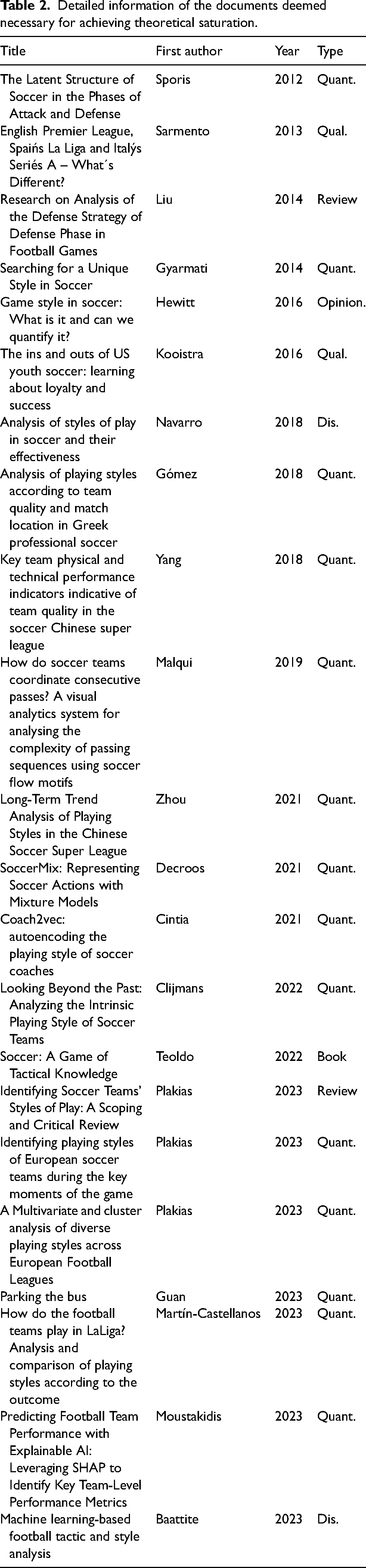
Ultimately, 22 documents were included to achieve theoretical saturation and construct the Grounded Theory. Among these, 14 were quantitative research articles, 2 were qualitative research articles, 2 were review articles, 2 were dissertations, 1 was opinion paper, and 1 was a book chapter. Detailed information, including title, first author, publication year, and document type, can be found in Table 2.
Detailed information of the documents deemed necessary for achieving theoretical saturation.
In the word cloud of Figure 2, the size of each word is proportional to its frequency within the 22 documents. The words with the highest frequency were: team/teams (2182 times), play/playing (1913 times), style/styles (1731 times), soccer/football (1393 times), game/match (1024 times), player/players (962 times), ball (765 times), possession (724 times), performance (622 times), and analysis (590 times).
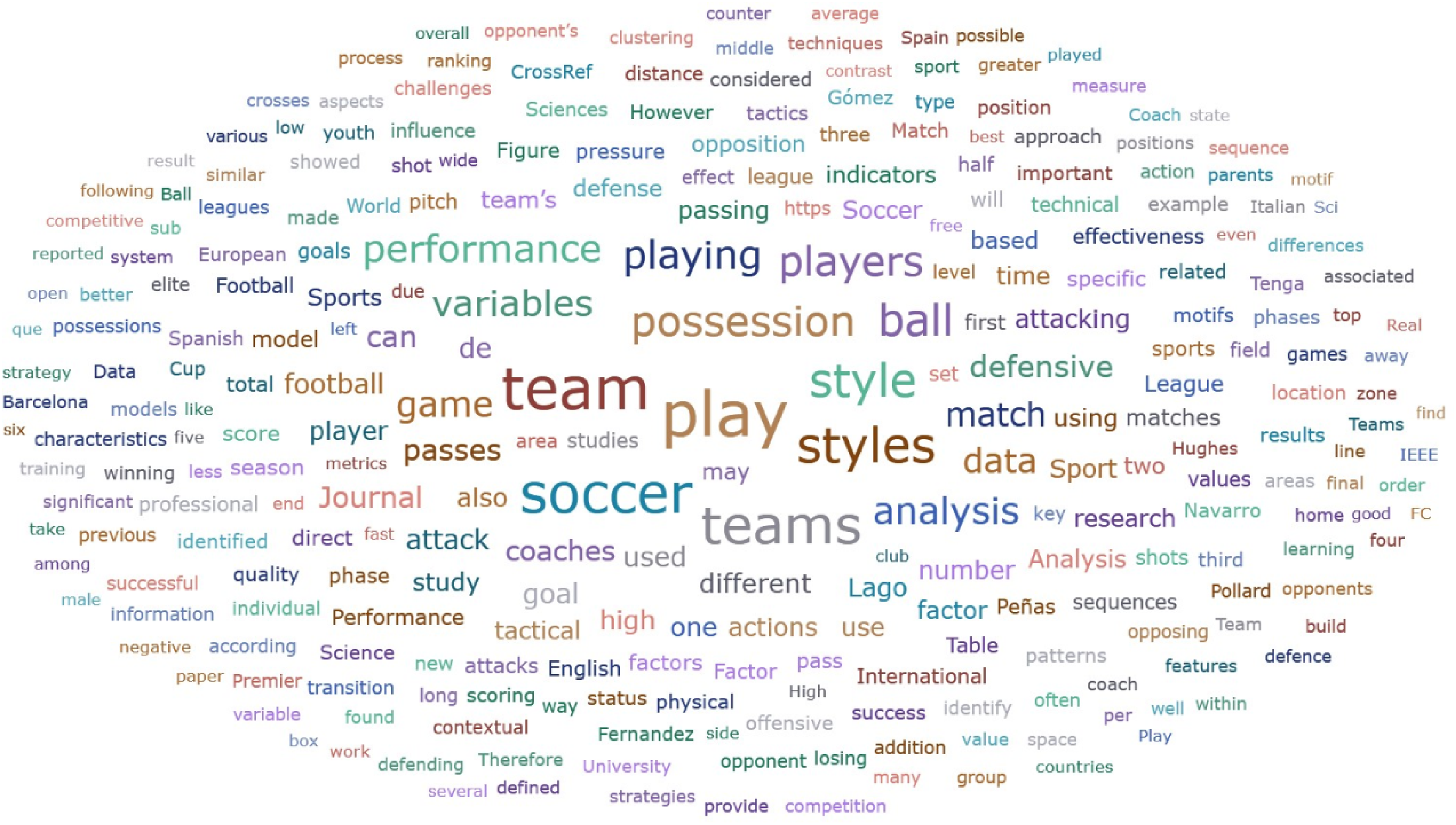
Word cloud for the set of 22 documents.
84 codes were identified by the authors. These codes appeared a total of 2065 times within the 22 documents. The codes “style of play”, “playing style” and “performance analysis” are the ones with the most frequent presence, showing the importance of identifying playing styles in the performance analysis of teams. Table 3 shows the frequency of codes appearance for each document.
Frequency of the 84 codes per document.
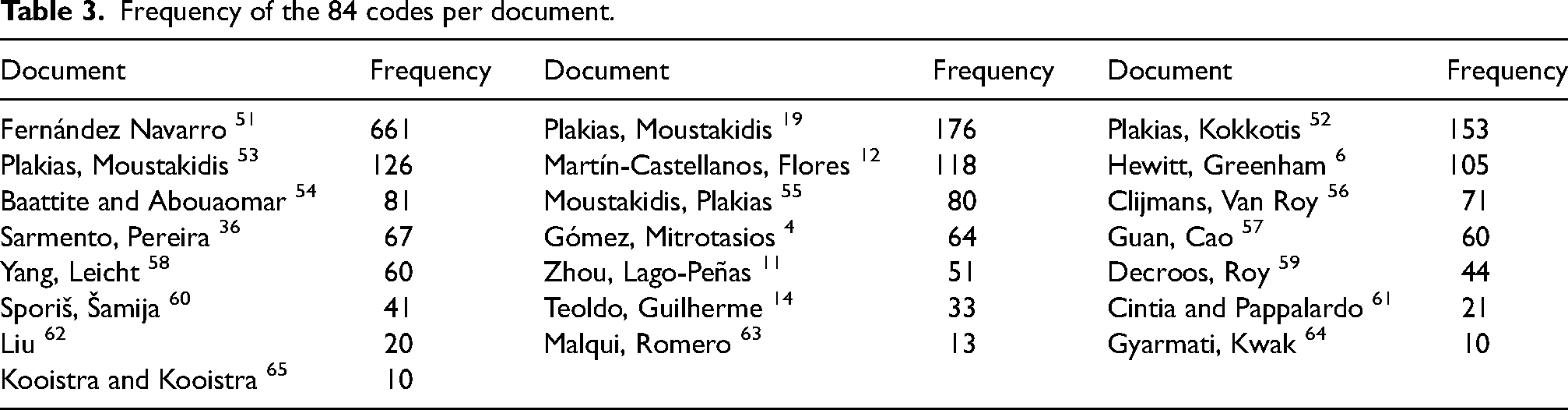
We categorized the 84 codes into 6 folders. The first folder contained codes with terms that the authors of the 22 documents used instead of the term “playing style”. The other 5 folders included names given to various styles and were divided into different folders because these styles were identified: a) independently of the game phases, b) for specific game phases, c) for sub-phases of the attacking phase, d) depending on the game phases that teams based their strategy more on, and e) depending on factors related to the physical performance of the teams. In some folders, there were only main categories, while in others, the codes were divided into categories and subcategories. Table 4 shows the names of the 6 folders with the number of categories and subcategories each one has.
Number of categories and subcategories per folder.
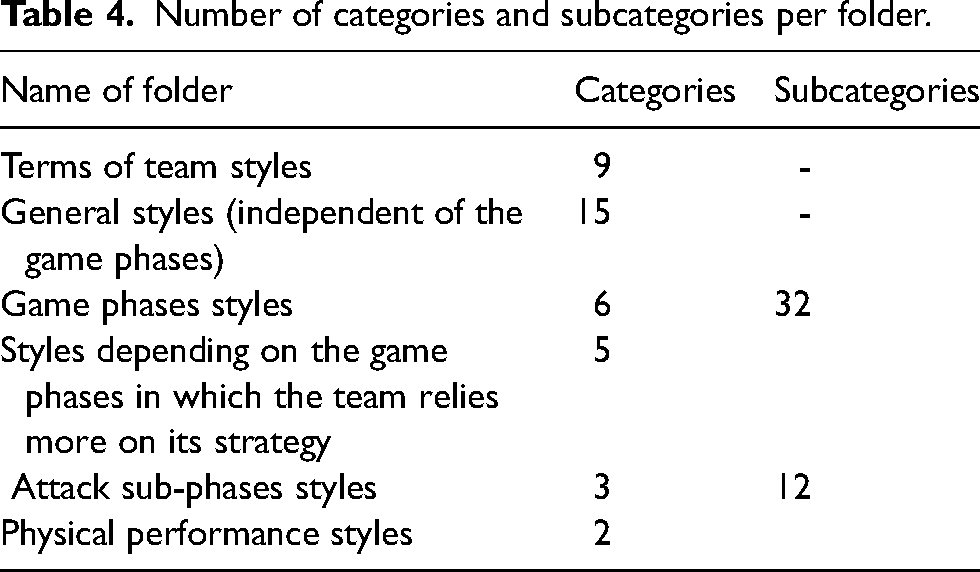
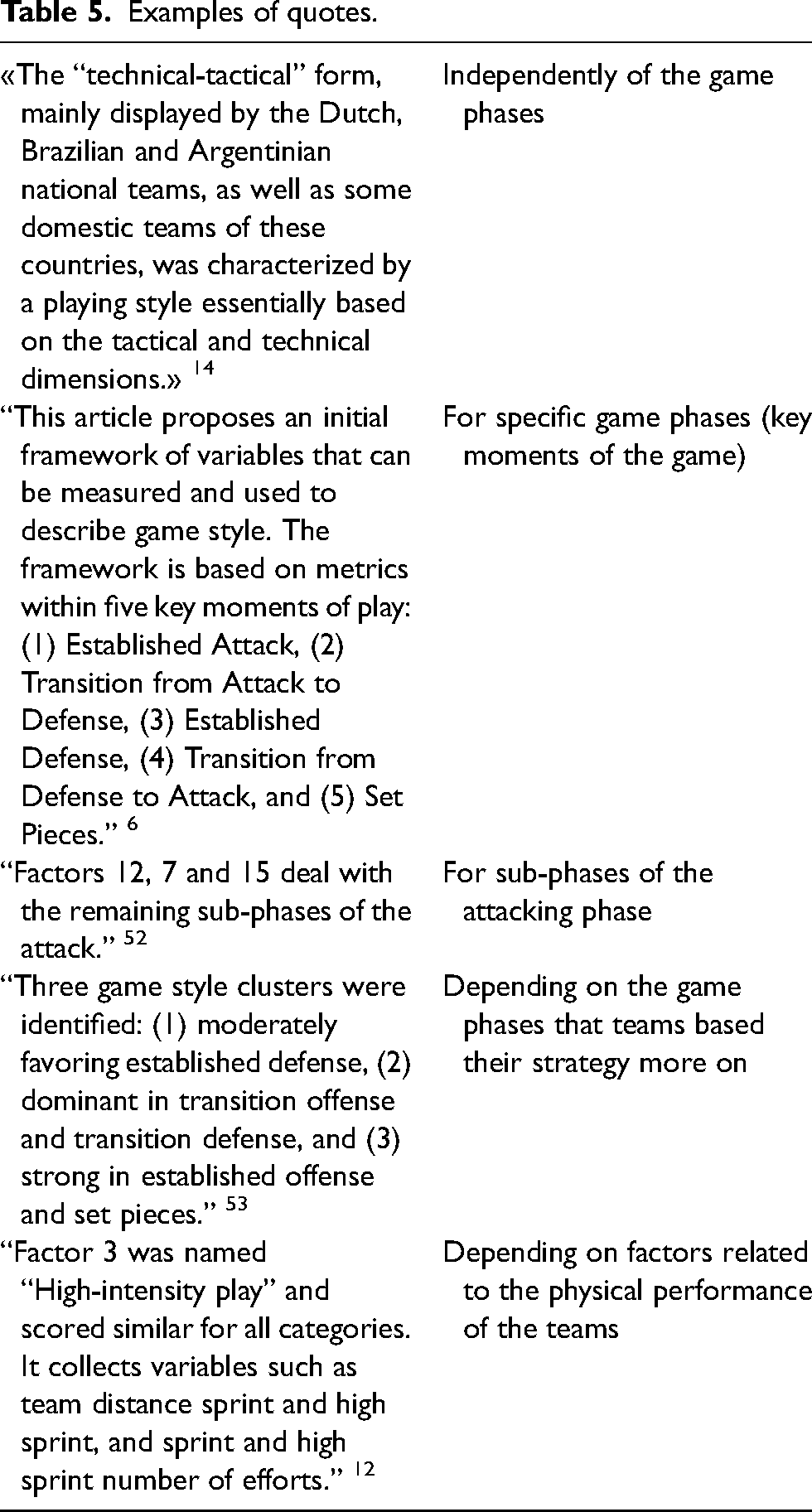
Table 5 includes examples of quotes that show the different ways in which the authors of the 22 documents have identified playing styles.
Examples of quotes.
Discussion
The aim of this research was to construct a Grounded Theory by conducting a comprehensive literature review on team styles and the associated terminologies. This can contribute to a consensus among scientists, which is an urgent need in performance analysis and the sports science community. 66
The definition that seems to have prevailed in the international literature is the one given by Hewitt, Greenham, 6 according to whom, “Game style is the characteristic playing pattern demonstrated by a team during games. It will be regularly repeated in specific situational contexts such that measurement of variables reflecting game style will be relatively stable. Variables of importance are player and ball movements, interaction of players, and will generally involve elements of speed, time and space (location).” As for the terms used for team styles, it seems that the terms “styles of play,” “playing style,” and “game style” are the most prevalent, suggesting their potential utility to use these terms to establish a “common language” among scientists. Other terms have also been used in the literature (Figure 3), while the term “Game model” has been incorrectly used. 67 This term actually represents a broader concept that encompasses playing styles. 27
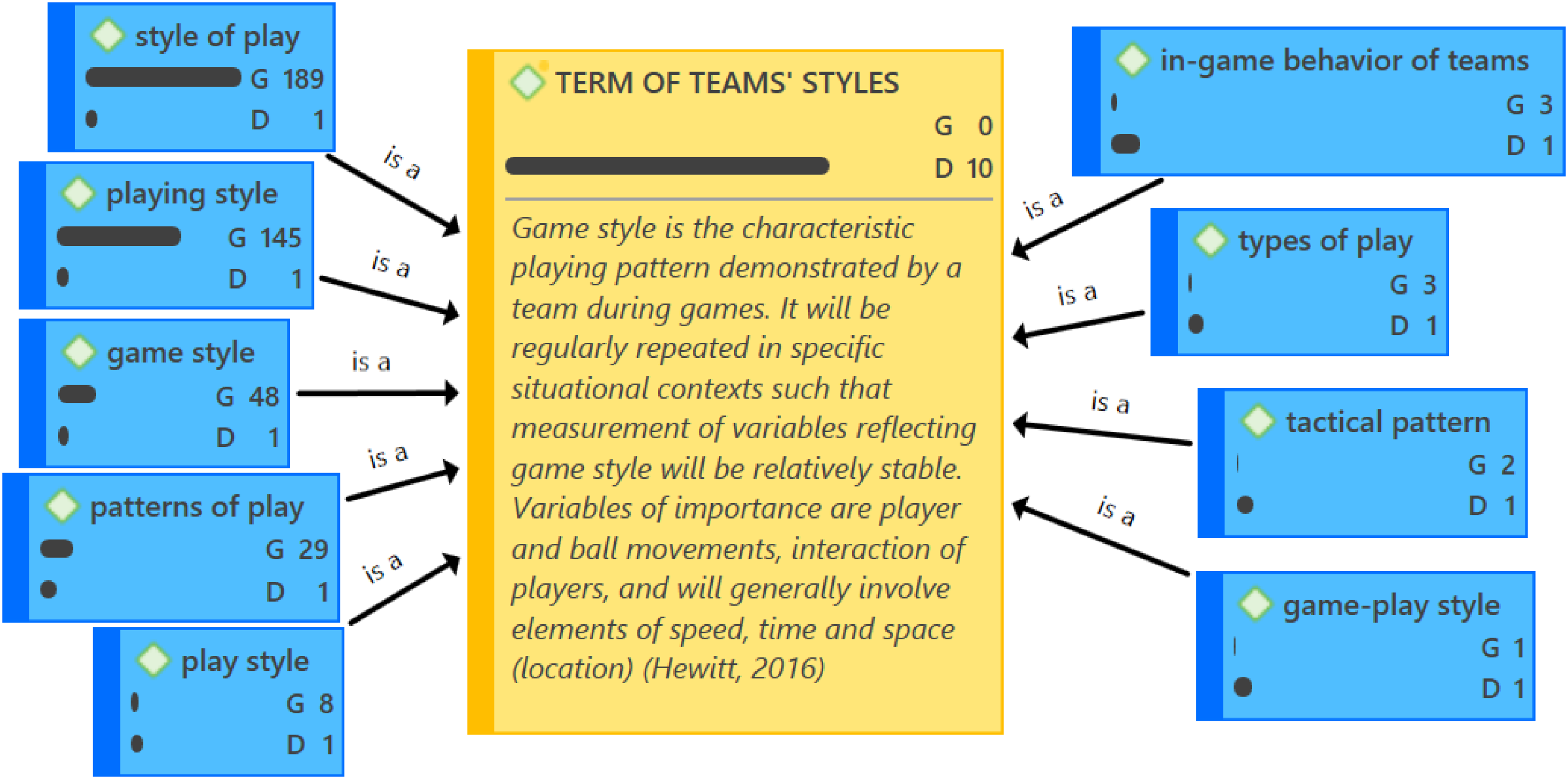
The prevailing definition and terms used to express the concept of team styles. (G = grounded indicates the frequency of the term, D = density indicates the number of connections between codes).
Many authors have mentioned styles that characterize the overall image of a team, regardless of game phases. Based on the coach's philosophy, players’ strengths and weaknesses, teams may tend to lean towards a more offensive or defensive style, 51 prioritizing goal-scoring strategies, while defensive styles prioritize preventing the opposing team from scoring.53,68
In “Football Intelligence: Training and Tactics for Soccer Success”, Teoldo, Guilherme, 14 introduce three playing styles: “physical,” emphasizing dominance in physical attributes with an aggressive and less technically refined game; “technical-tactical,” prioritizing a qualitative relationship between offensive/defensive processes and players’ technical skills; and “tactical-physical,” focusing on tactical and physical dimensions, with technique emerging as a solution to in-game challenges but holding secondary importance. In this style, team selection prioritizes tactical qualities, organizational capabilities, and superior physical skills over technical superiority.
Some of the designations given to styles may be used to generally characterize a team, but they are more attributed to the way the team plays during the ball possession phase. Total Football, often associated with the Dutch style, is a tactical approach where players are versatile, seamlessly switching positions on the field. This approach emphasizes fluidity, positional play, and a collective team effort, allowing players to adapt to different roles during the game. 14 The term “Fury” reflects the attacking, passionate and intense approach displayed by Spanish players during the 1982 World Cup, creating excitement and enthusiasm among fans.12,36 Sarriball refers to the tactical philosophy associated with managers like Maurizio Sarri, highlighting quick, short passes, possession-based soccer, and high pressing. Teams employing Sarriball aim to control the game through precise ball circulation and offensive positioning, often relying on a specific style of play to break down opposition defenses.55,61 Tiki-taka represents a possession-based playing style characterized by short, quick passes and maintaining prolonged ball possession. It involves intricate ball movement, close ball control, and constant player support. Tiki-taka focuses on wearing down the opposition through precise passing sequences, with an emphasis on technical skills and maintaining control of the game.54,55,59,63 Gyarmati, Kwak, 64 presenting an innovative approach to analyzing passing networks, successfully identified a distinct playing style employed by FC Barcelona. Their analysis showcased passing chains highlighting organized passing sequences, revealing FC Barcelona's deliberate, well-structured, and reproducible interactions among players, a departure from random passes. On the other hand, boom ball denotes a direct and aggressive playing style emphasizing long, powerful passes and aerial duels to quickly advance the ball. 65
Certainly, alternative terms given are primarily based on how the team plays during the opponent's ball possession phase. Catenaccio (or le verrou) represents a defensive soccer style characterized by a tightly organized defense, frequently involving a sweeper, aimed at securing a low-scoring game. 36 Park the Bus is also a defensive strategy where a team prioritizes defending with most players behind the ball to limit scoring opportunities for the opponent. 57 Aggressive style of play refers to teams displaying a higher frequency of winning 50–50 challenges and committing more fouls than their opponents, showcasing assertiveness, better positioning, and increased physicality in match challenges. 58 Lastly, the term “dirty” displays a playing style associated with excessive physicality, fouls, and unsportsmanlike conduct, often aimed at disrupting the opponent's rhythm through undesirable tactics. 65 Figure 4
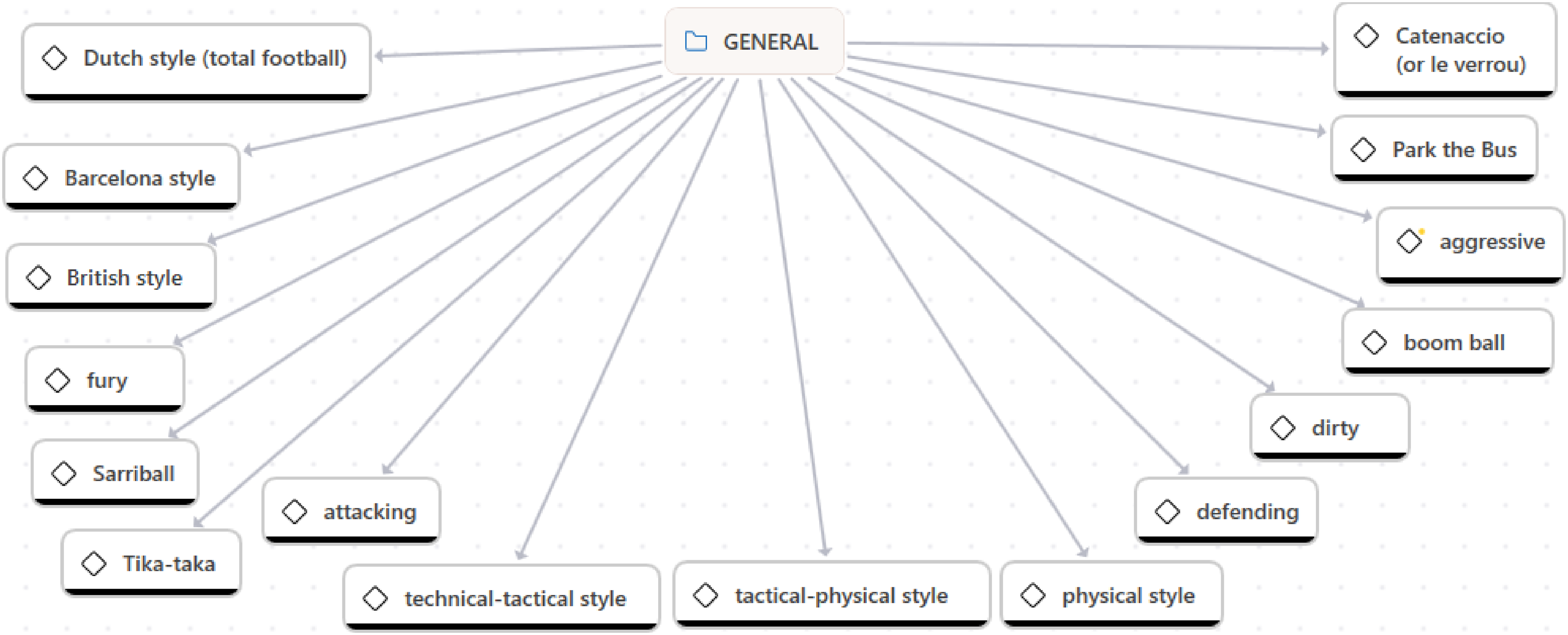
Styles that characterize the overall image of a team regardless of the phases of the game.
Other authors have recognized styles based on the phases of the game upon which teams build their tactics (Figure 5). For instance, Gollan, Ferrar 13 identified three different styles, moderating a preference for established defense, dominance in transition offense and defense, and strength in established offense and set pieces. Similarly, Plakias, Kokkotis 52 differentiated teams between those creating more attacks from open play and those creating more attacks from set pieces.
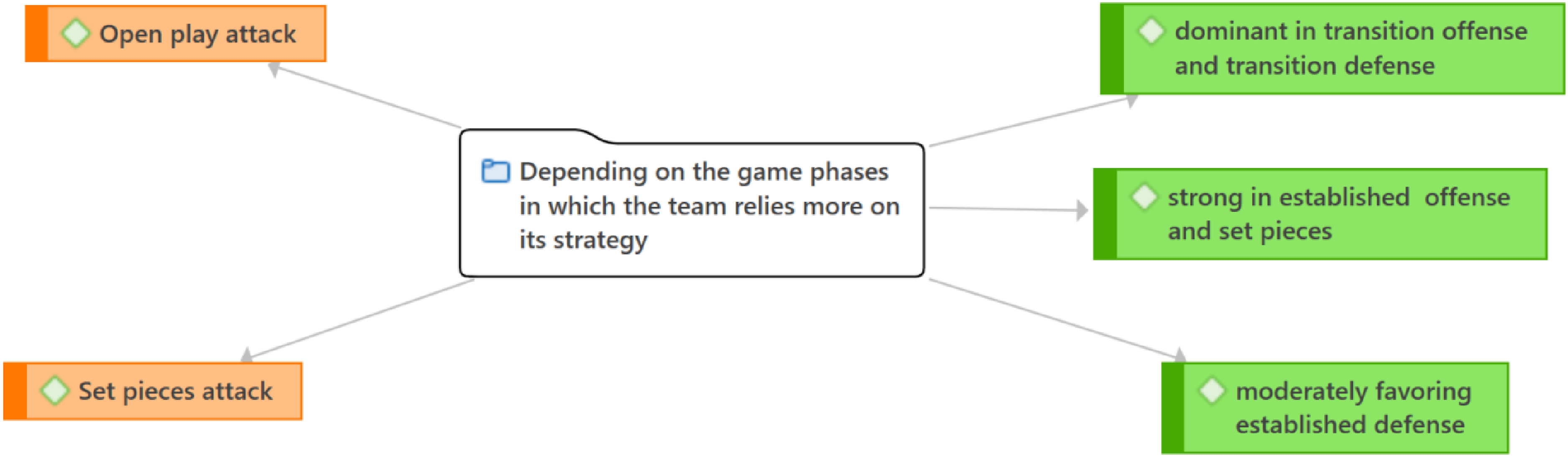
Styles depending on the game phases in which the team relies more on its strategy. The different colours correspond to distinctions of styles made in different ways in separate documents.
Additionally, some authors have identified styles based on the physical performance of teams (Figure 6). Zhou, Lago-Peñas 11 and Martín-Castellanos, Flores 12 categorized teams into high and low-intensity play based on their performance in a series of performance indicators (i.e., total distance, sprinting distance, sprinting effort, sprinting distance in possession of the ball, sprinting distance without possession of the ball, high-speed running distance, high-speed running effort, high-speed running distance in possession of the ball, and high-speed running distance without possession of the ball). Martín-Castellanos, Flores 12 further differentiated them based on whether they cover considerable distance in the opponent's own half.
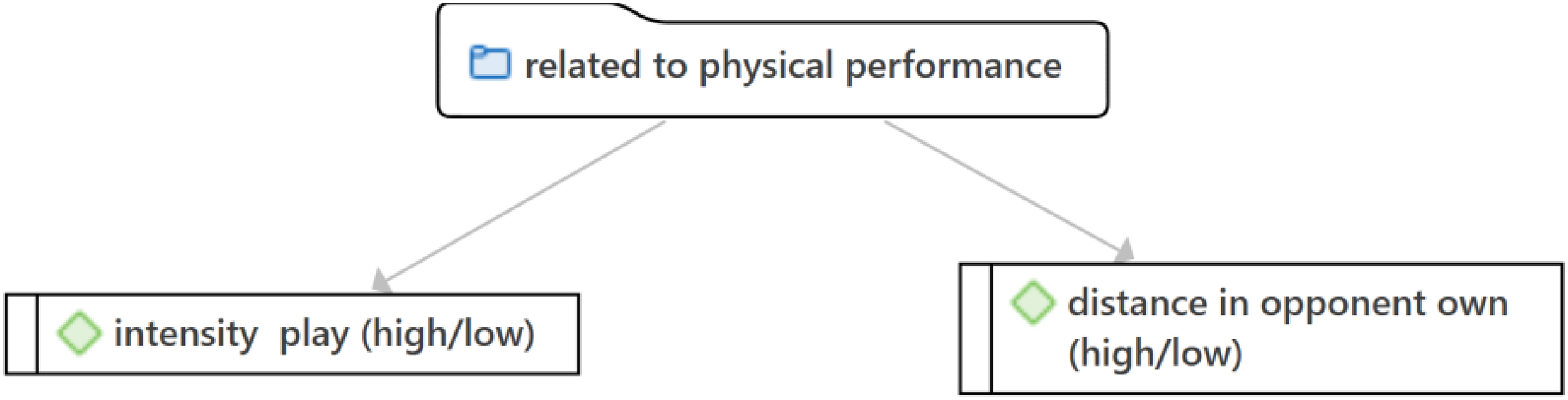
Styles based on the physical performance of teams.
However, most authors focused their efforts on identifying styles specific to various phases of gameplay (Figure 7). In offensive transition, teams may opt to go on counterattacks, rapid attacks post regaining possession, or structured organized attacks. The difference between counterattacks and fast attacks after regaining possession lies in the area where the team recovers the ball. In counterattacks, the team regains the ball far from the opponent's goal, while in fast attacks the team recovers the ball near the opponent's goal. “Therefore, counterattack transitions from a retreat style of play once the ball is regained, whereas fast attack after ball regain follows the high pressure style of play”. 51 Regarding defensive transition, two styles of play have been mentioned. Counterpressing (or gegenpressing), involving swift ball recovery in the space where it was lost,20,54 and the recovery style, where the team tries to return quickly to its goal and organize its defensive formation. 51 Typically, the player closest to the ball tries to delay opponents and prevent potential counterattacks or fast attacks after regaining ball possession.
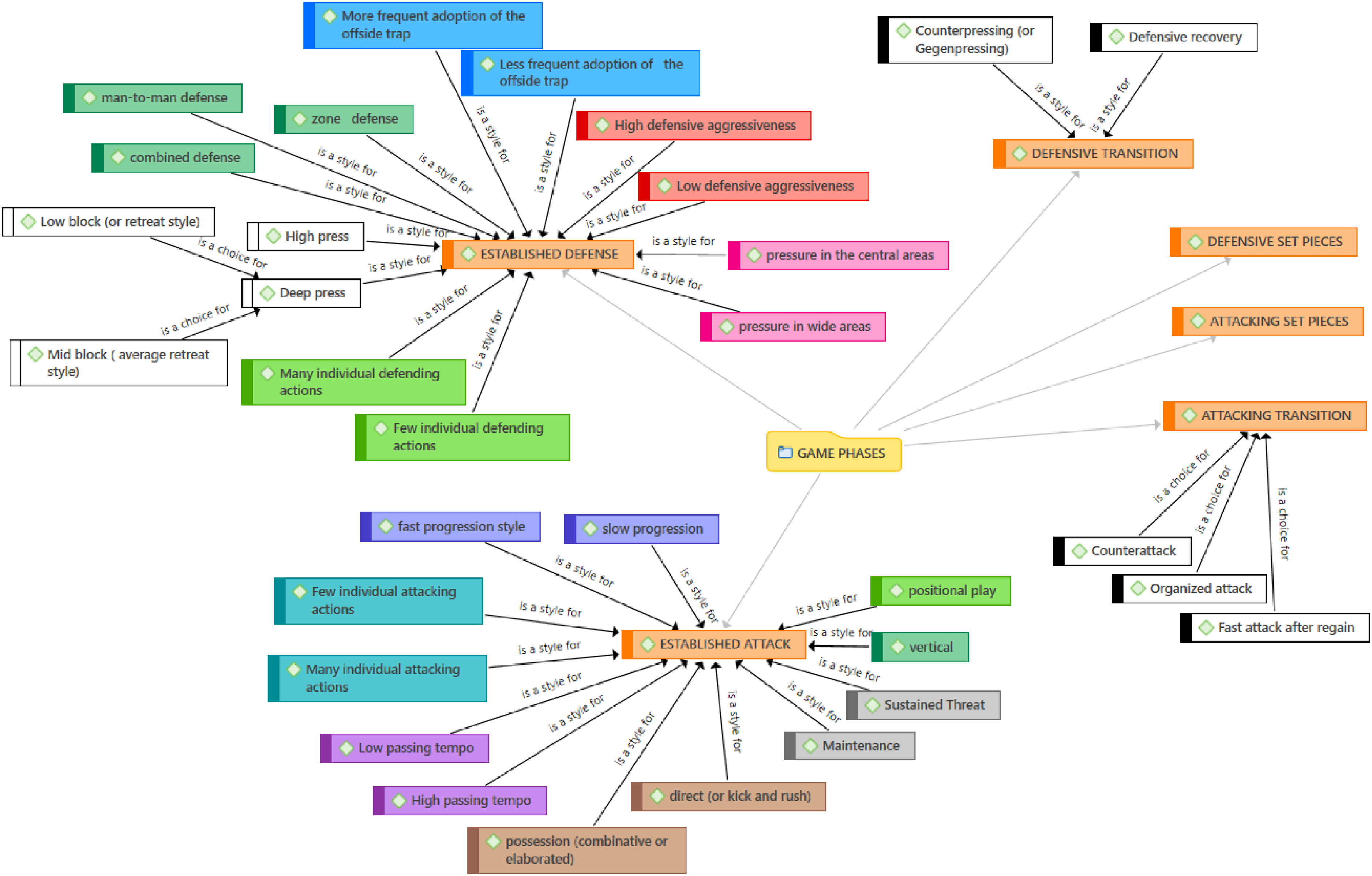
Styles recognized for various phases of the game. The six orange boxes correspond to the six “Game Phases,” represented by the yellow folder. These phases include Established Attack, Established Defense, Attacking Transition, Defensive Transition, Attacking Set Pieces, and Defensive Set Pieces. For the phases of Attacking Transition and Defensive Transition, there are three and two different playing styles, respectively, which are shown in white boxes. In the case of the Established Attack phase, several colors are used to represent different categories. Light purple denotes styles based on the speed of progression, while light blue is used for styles that depend on the number of individual attacking actions. Purple represents styles related to passing tempo, and brown signifies the directness of the playing style. Grey is used to indicate styles concerning possession in specific areas of the field, and shades of green distinguish two different styles related to the type of possession play. For the Established Defense phase, a similar color scheme is employed. Blue refers to the frequency with which a team adopts the offside trap, and green is used to represent different types of defensive approaches. White is employed to indicate the areas on the field where a team chooses to defend, while light green relates to the frequency of individual defensive actions. Red highlights the level of defensive aggressiveness, and pink is reserved for styles that focus on applying pressure in central or wide areas.
There are even more styles recognized in the established defense phase. The most commonly mentioned distinction is between high press and deep press strategies.12,19,51–55 Teams adopting the deep press have two options depending on the starting point of their defensive line on the field. Some choose the mid-block (average retreat style), while others opt for the low-block (retreat style).51,52 Beyond the field position, styles have also been identified regarding the width at which teams choose to lead their opponents to apply pressure. Thus, some teams guide opponents to the sidelines, while others direct them towards the axis and initiate pressure there.52,54 Another common distinction concerns the type of defense, as a team can choose zonal marking, man-to-man marking, or combined marking.60,62 Teams are also differentiated based on the frequency of implementing the offside trap (more or less frequently),19,52 defensive aggressiveness (more or less),19,52 and the frequency with which players engage in individual duels.19,52
Most styles of play have been recognized for the attacking phase. The most common distinction is between possession (or elaborative or combinative) and direct style (or kick and rush). Teams adopting the former style have high ball possession rates and a large number of small, precise passes, while teams adopting the latter have a high number of long passes.4,11,12,51,53,54 Teams are also distinguished based on passing tempo (high or low),19,52 the speed of ball progression towards the opponent's goal (high or low),4,51 and the number of individual attacking actions (many or few).19,52,54 Based on the area where teams tend to maintain ball possession, two more styles have been identified. In maintenance, “a team looks to maintain possession of the ball within the defensive area of the pitch,” while in sustained threat, “the focus lies on possessions in the attacking third of the pitch”.4,51,54 Lastly, two more styles of play (independent of each other) for the attack phase are positional play and vertical play. Positional play emphasizes players maintaining specific positions on the field to create space, passing lanes, and opportunities. Players are organized spatially to control the positioning of the ball and opponents using intelligent movement and positional interchange.53,69 Vertical play, considered a variant of the possession style, differs in that it focuses on penetrating the opponent's defensive lines by advancing the ball vertically up the pitch and avoids when possible, horizontal and back passes. 51
However, beyond the styles recognized for the attacking phase as a whole, authors have identified styles for specific sub-phases of the attack (build-up, creativity or progression phase, finishing phase) (Figure 8). For the build-up phase, Plakias, Kokkotis 52 and Plakias, Moustakidis 19 identified the possession and direct styles, which had previously been recognized for the overall attacking phase. It seems, therefore, that the style adopted by teams in the 1st sub-phase of the attack (build-up) likely plays a crucial role in characterizing the style for the entire attacking phase. In the same studies, for the creativity phase, it was found that some teams prefer to launch attacks from the wings, while others prefer the center. However, the majority of styles have been recognized for the finishing phase. Specifically, some teams execute numerous crosses (crossing style), while others do not.19,51–53 Certain teams show a strong tendency to create final attempts (many final attempts with a low possession percentage), while others need high possession percentages to reach final attempts.19,52 Some teams exhibit high attacking aggressiveness (linked by the authors to instances of being caught offside), while others show low aggressiveness.11,19,52 Finally, some teams take many long-range shots (long shot threat), while others opt for close-range finishes (penetrative and close-range finishing). 54
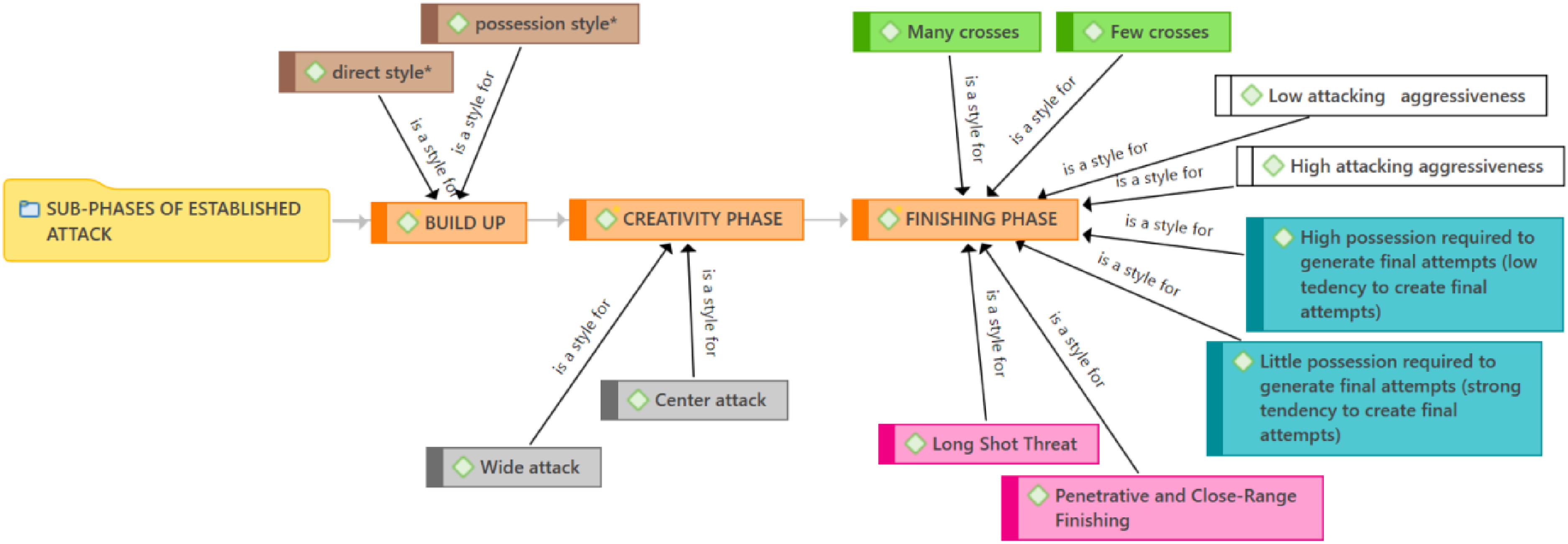
Styles for specific sub-phases of the attack. The color boxes are used to represent different styles in the sub-phases of the established attack. The brown color represents the styles in the build-up phase based on the directness of play in this phase. Moving on to the creativity phase, the grey color is used to signify whether the team prefers wide attacks or attacks through the center of the field. In the finishing phase, the green color indicates two styles based on the frequency of crosses. Meanwhile, the white color represents two styles based on attacking aggressiveness. The light blue color refers to the amount of possession required to create final attempts. Finally, pink describes the type of finishing style, whether it focuses on long-range shots or close-range, penetrative finishing.
The present study offers a nuanced and comprehensive framework rooted in existing literature; nevertheless, it is not exempt from certain limitations. An inherent constraint of our research pertains to the subjectivity inherent in the document selection process, a characteristic of Grounded Theory. 40 However, this limitation was mitigated by our carefully crafted initial selection criteria and the authors’ extensive experience in the domain of soccer playing styles. Another limitation of our research concerns the process of searching for relevant documents. For example, only documents written in English were included in our study. However, it is possible that articles written in Spanish or Portuguese could provide additional insights, as researchers from these countries have a strong publishing presence both in the general field of soccer and specifically in the field of playing styles.70,71 Additionally, the search was limited to the Scopus and Google Scholar databases, and using a specific Boolean expression may have restricted our information sources. Nevertheless, our study is the first to create such a comprehensive understanding of playing styles in soccer, as the limitations of previous studies were even greater. For instance, Plakias, Kokkotis, 52 in their research, may have developed a framework for playing styles during the key moments of the game, but their study is limited by the specific key performance indicators used as variables. Fernández Navarro, 51 in the conclusions of his doctoral thesis, provided a summary of the playing styles he identified across his research, but these do not fully cover the existing knowledge, nor did he address issues related to misconceptions in the relevant terminology. Lastly, the scoping review by Plakias, Moustakidis, 53 although it offers extensive knowledge about team playing styles, is limited both by the general limitations of scoping reviews 72 and by the additional restrictions set by the researchers themselves. Future research could benefit from including documents written in languages other than English, as well as from a discussion among researchers who have extensively studied the subject.
Conclusions
This study set out to develop a comprehensive framework for soccer teams’ playing styles by extensively analyzing the existing literature and transcending the limitations of previous studies. The research addressed the need for a unified framework to bridge the diverse terminologies and conceptualizations in the field. By conducting an extensive review and synthesizing findings from 22 documents, we identified key styles of play, categorized them into six thematic folders, and constructed a theory that can serve as a consensus for researchers, coaches, and analysts. Our findings respond directly to the research questions by identifying a broad range of playing styles, including those that operate independently of game phases, those specific to certain phases, and others contingent on physical performance or sub-phases of attack. This Grounded Theory not only unifies disparate terminologies but also provides a tool for coaches to evaluate and refine their team's playing style by fitting it into one of the identified categories. Particularly our framework is useful for: a) tactical and training planning (e.g., by understanding whether their team's strengths align more with possession-based styles or direct play, coaches can adjust training sessions and match strategies to enhance performance in these areas); b) opponent analysis (e.g., understanding these styles helps in anticipating the opponent's tactics and making informed decisions during matches); c) player recruitment (e.g., a team focused on a high-intensity, physically demanding style could prioritize recruiting players with the physical attributes to sustain such an approach); d) enhancing communication among stakeholders in soccer by having a unified terminology; e) use as a basis for future research.
Footnotes
Declaration of conflicting interests
The authors declared no potential conflicts of interest with respect to the research, authorship, and/or publication of this article.
Funding
The authors received no financial support for the research, authorship, and/or publication of this article.
