




Abstract
Twenty years ago, Northern Ireland’s previously prominent presence in the headlines of the yellow press dwindled to virtual non-existence. As the region’s three-decade long conflict went into abeyance and the daily death tally dropped, the vagaries of the region’s little-understood, political tensions were assigned to little-read columns hidden deep inside broadsheets. Brexit has, however, re-exposed the deep scars and political acrimony that still blight Northern Ireland. Northern Irish schools have seen the introduction of series of educational initiatives aimed at ameliorating enduring inter-community hostility, including the creation of a model of citizenship education designed to enhance pupils’ political understanding and literacy. Drawing on recent survey data on the attitudes and perspectives of 16-year-olds, this paper explores how citizenship is being delivered in schools in Northern Ireland and exposes young people’s level of engagement with current political issues, including the possibility of a united Ireland. Although results are largely in line with expectations, there are some indications that this generation may not be simply marching in step with the same drumbeat that has been followed by generations of their forebearers.
Introduction
Dominant political, social and economic discourses have a profound influence on education (Biesta, 2007). In turn, education possesses an inherent transformative potential for reform (as illustrated by Dewey, 1938; Freire, 1974 and others). Osler and Starkey (2005) identified that the development of a critically aware citizenry could be fostered through active, experiential and inquiry-based teaching, Thus, civics or citizenship education had the potential to ‘promote harmonious co-existence and foster the mutually beneficial development of individuals and the communities in which they live’ (De Coster et al., 2017: 3). Citizenship education is of particular relevance in those societies that are experiencing political and social transition (Worden and Smith, 2017). Notions of identity and nationhood are profoundly problematic in such situations – all the more so if the region is emerging from conflict or the very concept of a single national identity is itself contested (Niens et al., 2013).
Banks (2001: 5) recognised the potential for such tensions and developed a vision of citizenship education that would ‘enable students to acquire a delicate balance of cultural, national, and global identifications and to understand the ways in which knowledge is constructed; to become knowledge producers; and to participate in civic action to create a more humane nation and world’. In later work, Banks articulated four interrelated categories of a fluid and complex concept of citizenship: Failed citizenship - when individuals or groups do not internalize the values and ethos of the nation-state, feel excluded within it, and are ambivalent towards it. Recognised citizenship - when individuals or groups are treated as legitimate, legal, and valued and are afforded full rights and opportunities to participate in the state. Participatory citizenship - when individuals can vote and otherwise influence political decisions in their communities, nations, and the wider world. Transformative citizenship – when individuals are empowered by human rights, social justice, and equality to take action with the aim of changing policies; these actions may be in breach of existing laws. (Banks, 2017)
Banks’s framework and thinking frames and informs this study into the application of Citizenship Education that was developed in Northern Ireland in the wake of the Belfast (Good Friday) Agreement in 1998.
Northern Ireland, citizenship and education
Britain had a military presence in Ireland from Norman times – a partial conquest in 1169 – and dominion over the whole island from 1601. British rule was challenged by regular uprisings until, in 1921, the British state effectively withdrew from the southern and western (overwhelmingly Catholic) regions of Ireland. The north-eastern area had however a different demographic profile – the population there were predominantly Protestant and unwilling to relinquish the bond with Britain. Thus, a compromise was negotiated; Ireland was partitioned and a new state, Northern Ireland (NI), was brought into existence. NI remained within the United Kingdom. The social and political administration of NI lay almost exclusively in the hands of those of a Protestant faith whose cultural identity was unquestionably orientated towards Britain. However, around one-third of the population within the state’s border identified as Irish, followed the Catholic religion and, on the whole, aspired to the political unification of Ireland. This Catholic-Irish minority held limited political sway, had unequal employment opportunities in civic institutions and were denied fair access to state-controlled resources (e.g. housing) – in an article in The Times (1967) they were described as ‘second class citizens’. They were not in possession of ‘Recognised Citizenship’.
In 1969 the British army were deployed to quell increasing civil unrest between these two opposing communities; the arrival of troops marked the start of a 30-year conflict that became known as ‘the Troubles’. In 1998 a peace agreement was signed by the British and Irish governments, and political parties on both sides of the divide. It was endorsed by referenda in both NI and the Republic of Ireland.
The Agreement relied on ‘constructive ambiguity’ to gain buy-in from both sides (Ramsey and Waterhouse-Bradley, 2018). It was also, in part, based on the understanding that common European Union (EU) structures, laws and practices would facilitate an open, frictionless, border between NI and the Republic of Ireland (Gormley-Heenan and Aughey, 2017). NI’s constitutional status as part of the UK was, however, left unaltered; any potential change was to be dependent on the outcome of a re-unification referendum which, under the terms of the Agreement, could be convened at some stage in the future. A consociational Assembly was established in Stormont, Belfast, and responsibility for educational provision was devolved to the new NI Executive along with health, justice and 12 other matters.
Since its inception just over a century ago, the convergence of vested, denominational interests, intercommunity tensions and the pre-eminence of partisan political parties have combined to embed a ‘wicked problem’ in the NI education system – the pervasive separation of education along the traditional divide (Hagan and Eaton, 2020). Thus, schools have either been aligned within a British culture and worldview underpinned by a non-denominational (but essentially Protestant) Christian faith or managed under the auspices of the Catholic church and fostering a Gaelic-Irish cultural identity (see Milliken et al., 2020). The first successful initiatives to deliberately mix Catholic and Protestant children in the same school emerged in the 1980s and, notwithstanding the commitments contained in the Belfast Agreement to ‘encourage and facilitate the development of integrated education’ (Government of UK/Government of Ireland, 1998: 23), such schools still only account for around 7% of pupils (NISRA, 2020).
Education and reconciliation efforts
Initial educational responses to the Troubles in the late 1960s and early 70s had, on the whole, viewed schools in NI as providing safe havens; ‘oases of peace’ where children could be protected from political matters and the surrounding social issues (Smith, 1999). Over time, however, some educators came to see the need for a changed role for schools; that they needed to be actively ‘making a contribution to stability and peacebuilding’ (Arlow, 2004: 278).
By the mid-1970s cross-community, inter-school initiatives had started to emerge. These were driven predominantly by committed individuals, voluntary organisations and universities with little or no involvement from the Department of Education (DE) (Richardson, 2011a). These early enterprises were effectively piecemeal, working with limited numbers of schools in restricted geographic areas. Although they had little immediate effect on policy, they did contribute to the forming of a pool of individuals with expertise and, in effect, helped to create an educational climate within which change could eventually take place (Arlow, 2004).
In the 1980s, DE began to engage with the issues of the conflict more directly. The first acknowledgement of this came in 1982 with a Departmental Circular which stated unequivocally that education did have a role to play in improving community relations in NI. Although it did not directly challenge the segregation of the system per se, the Circular did place a requirement upon schools to take steps to ensure that ‘children do not grow up in ignorance, fear or even hatred of those from whom they are educationally segregated’ (Department of Education NI, 1982).
In 1988 DE released further documentation confirming the department’s commitment ‘to continue to support programmes and activities which bring together children from the two traditions in the interests of fostering greater tolerance and mutual understanding’ (Department of Education NI, 1988: 6). The 1989 Education Reform Order (Northern Ireland) introduced the statutory themes of Education for Mutual Understanding (EMU) and Cultural Heritage (CH) which were to be embedded in a cross-curricular fashion in the teaching of subjects throughout the curriculum.
Through EMU and CH pupils were to be encouraged to develop respect for self and others, to build relationships, to gain an understanding of conflict and an appreciation of interdependence and cultural understanding (Arlow, 2004). Richardson (2011b) observed, however, that most schools elected to focus their efforts on creating opportunities for safe cross-community contact and in so doing avoided engaging with the more contentious and challenging questions that lay at the heart of the conflict.
Citizenship in the Northern Ireland curriculum
In 1999, with the power-sharing Assembly established, the Department of Education began the process of developing a new curriculum that was ‘better suited to the changing needs of pupils, society and the economy’ (CCEA, 2000). At the end of the 20th century citizenship education became an increasingly prominent feature of international educational policy and reform (O’Connor et al., 2020). In 2007, a statutory syllabus for citizenship education in NI was introduced. This was designed to incrementally develop age-appropriate content across primary and post primary curriculums and address themes of democracy, participation, rights and freedoms, and political literacy (CCEA, 2007).
“One of the challenges of diverse democratic nation-states is to provide opportunities for different groups to maintain aspects of their community cultures while constructing a nation into which these groups are structurally integrated and to which they develop allegiance. A delicate balance of unity and diversity must be an essential goal of democratic nations and of teaching and learning in democratic societies.” (Banks, 2017: 369)
The particular political context of NI however ensured that nationality and citizenship were intensely contested concepts; as a result, strategies needed to be developed which did not promote any one national identity or one political viewpoint over any other (Smith, 2003).
“Citizenship education in more politically stable countries often focuses on the symbols and rituals of citizenship, such as the national flag, national anthem, political institutions. . . Since many of these features are contested in Northern Ireland, an important feature of the citizenship curriculum was the attempt to focus on the processes of citizenship in order to provide young people with the concepts, language and ideas that might allow them to participate in constructing what it meant to be a citizen in Northern Ireland in the twenty-first century.” (Gallagher and Duffy, 2016: 541).
An approach was therefore adopted which foregrounded inquiry and values clarification (Niens et al., 2009: 6). Arlow (2011: 320) summarised this approach: ‘The focus was placed firmly on how to think and how to do: not what to think and what to do’. This concept was more closely aligned with Banks (2017) models of Participatory and Transformative citizenship. Perhaps unsurprisingly, delivering this model of citizenship education posed major challenges to educators – many of whom had grown up in an era characterised by Failed Citizenship.
A programme of additional in-service training was provided for nominated teachers. Nevertheless, research undertaken by Niens et al. (2013) identified that, as the new curriculum area became embedded, many teachers opted to focus on global issues (poverty or homelessness) and to side-step the more potentially contentious local themes associated with community division and the conflict. By avoiding direct engagement with the question of nationality, the citizenship syllabus had, in effect allowed teachers to sidestep the issue of identity and, thereby, marginalise the elephant in the room.
The political commitments that had been made to Integrated Education in the Agreement were to some extent eclipsed with the introduction of Shared Education in 2015. Rather than address the segregation of pupils into community-defined schools, Shared Education (and its associated funding initiatives) foregrounded cross-sectoral co-operation and collaboration between schools across the divide. It was heavily supported through philanthropy and international capital. As with previous well-intentioned initiatives, there has been evidence that teachers leading Shared Education programmes have been reluctant to engage in exploring contentious issues that are connected to the conflict and enduring community tensions (e.g. Education and Training Inspectorate NI, 2018).
Worden and Smith (2017) proposed that education has the potential to play an important role in long-term peacebuilding, and that the teaching of civic values and citizenship practices in public schools can support stable democratic societies, help democratisation in transitional societies and can aid in reconciliation in post-conflict societies. However, in practice, Waldron and McCully (2016: 62) found that ‘the sensitivities of a divided and violent society meant that many teachers shied away from the harder challenges it posed, leaving the “risk-takers” to occupy the contested space of history’s contemporary relevance’.
Since 2007, the themes of democracy, participation, rights and freedoms, and political literacy have featured across the post primary local and global citizenship curriculum, with incremental content reflective of age range. This curriculum encourages pupils to become confident, independent and participatory citizens, making informed and responsible choices and decisions throughout their lives.
Worden and Smith (2017) identify two issues that have limited the potential impact of citizenship education in NI. Firstly, citizenship is not directly examinable and has consequently been given low priority and tucked-away in the timetable.
“Whilst there was a strong rationale for citizenship education after the agreement, it remains on the periphery of the curriculum with a low status and limited space within a system that prioritises academic achievement and examination results.” (Worden and Smith, 2017: 391)
Secondly, the concept of empowering the teacher to develop the subject area in response to live issues means that prescribed teaching materials are absent and, whilst this works well for the motivated teacher, the teacher who may be indifferent to the subject feels unsupported.
They propose that, as a consequence, the way in which citizenship has been taught in NI has contributed to two opportunities being missed:
Helping young people deal with the legacy of the past.
Providing knowledge and skills (political literacy) to decide future constitutional status of NI – the disconnection between teaching for citizenship while addressing the past has potentially underestimated the extent to which legacies still have the potential to destabilise current political arrangements.
Research questions
Anyone under the age of 23 living in NI has had no experience of life during the Troubles, they are nevertheless likely still to be surrounded by the trappings of ethnic separation (Gray et al., 2020) – evidence of Failed Citizenship.
“Paramilitarism continues to exist today and as long as it does it carries serious risks of de-stabilising peace and reconciliation. . . [it] is most prevalent in communities which also suffer serious social and economic deprivation.” (McBurney et al., 2019)
Furthermore, the segregation of young people into ethnically divided education systems has militated against meaningful opportunities for reconciliation among the post-conflict generation (Gardner, 2016).
By re-introducing both a sovereign frontier within the island of Ireland, and an economic barrier between NI and Great Britain, Brexit has contributed to political uncertainty and increasing calls for a border poll (Stewart and O’Carroll, 2019). Demographic projections indicate that Nationalists may soon outnumber Unionists in NI (Gordon, 2018) – the longer the poll is delayed the more likely a unification majority may become. At the same time Sinn Féin (the political party most closely associated with the ideals and ideology of the armed Irish Republican movement during the Troubles) has an all-Ireland presence and has grown significantly in strength in the Republic of Ireland. In February 2020 Sinn Féin won 37 of the 160 seats in the Irish parliament, Dáil Éireann. They are currently the largest of the parties sitting in opposition.
It has been proposed that the destabilizing effect of all these elements may, in combination, threaten the prospects for an enduring peace in NI (Daly et al., 2019). In this potentially volatile and brittle climate, this research project set out to address three related questions:
To what extent do young people develop their political literacy and concepts of citizenship in school?
How engaged are young people with politics in NI? (Participatory Citizenship)
How willing are young people to consider a change to the constitutional status of NI? (Transformative Citizenship)
Methodology
The Access Research Knowledge (ARK) social policy hub was established in 2000 by researchers from Ulster University (UU) and Queens University Belfast (QUB) with the goal of increasing the accessibility and use of academic data and research. ARK’s work includes the co-ordination of a suite of three annual public attitude surveys: Life and Times, Young Life and Times (YLT), and Kids Life and Times (KLT).
The YLT survey records the attitudes of a sample of 16-year-olds drawn randomly from the NI Child Benefit Register – respondents are asked to complete either an online questionnaire or a paper equivalent. 1 The survey is approved by Ethics Committees at UU and QUB.
A set of bespoke questions in line with the above research questions was developed for inclusion in the 2018 iteration of YLT. These were structured to identify the citizenship themes post primary pupils were exploring in school and the way in which they were learning about them – in a designated citizenship class or in some other way. Questions were also drafted to determine the progression of young people’s attitudes towards local politics and the enduring question of the constitutional status of NI. 2 All questions were piloted, tested, reviewed, and revised prior to their inclusion in the survey.
The 2018 YLT survey was conducted between 10 December 2018 and 15 February 2019. A total of 660 young people completed the survey; 42.5% (n = 280) identified as being Male, 56.7% (n = 373) identified as Female and 0.8% (n = 5) identified as Other, there were also two missing responses to this question. Participants were also asked to declare their religion: 36.5% (n = 241) identified themselves as being Catholic, 24.7% (n = 163) as Protestant, 0.6% (n = 4) practiced another religion and 35.8% (n = 236) had No Religion (2.4% (n = 16) of respondents did not answer this question).
Findings
To what extent do young people develop their political literacy and concepts of citizenship in school?
The formal education setting is of course not the only contributor to the development of young people’s political literacy. The environment created in school is only part of the wider world that children inhabit, they are inevitably greatly influenced by society’s values – especially by cultural practices, religious beliefs, parental values, the media and their peers. The current ubiquity of social media as a tool for the communication of political messages and participation in (and subversion of) democratic processes was largely unforeseen at the time of the introduction of citizenship into the NI curriculum.
For most of the survey respondents (52%) the primary source of knowledge about politics in NI was friends and family. Only around one-quarter (27%) had explored the issue of NI politics in a dedicated citizenship class, while a greater proportion (39%) had learned about it in another subject, particularly through the teaching of history. 16% had found out about local political issues using other means – particularly through the television news and social media – and 8% had had political education whilst attending youth and community groups. One-in-ten said that they had never learned about NI politics anywhere at all (Figure 1).
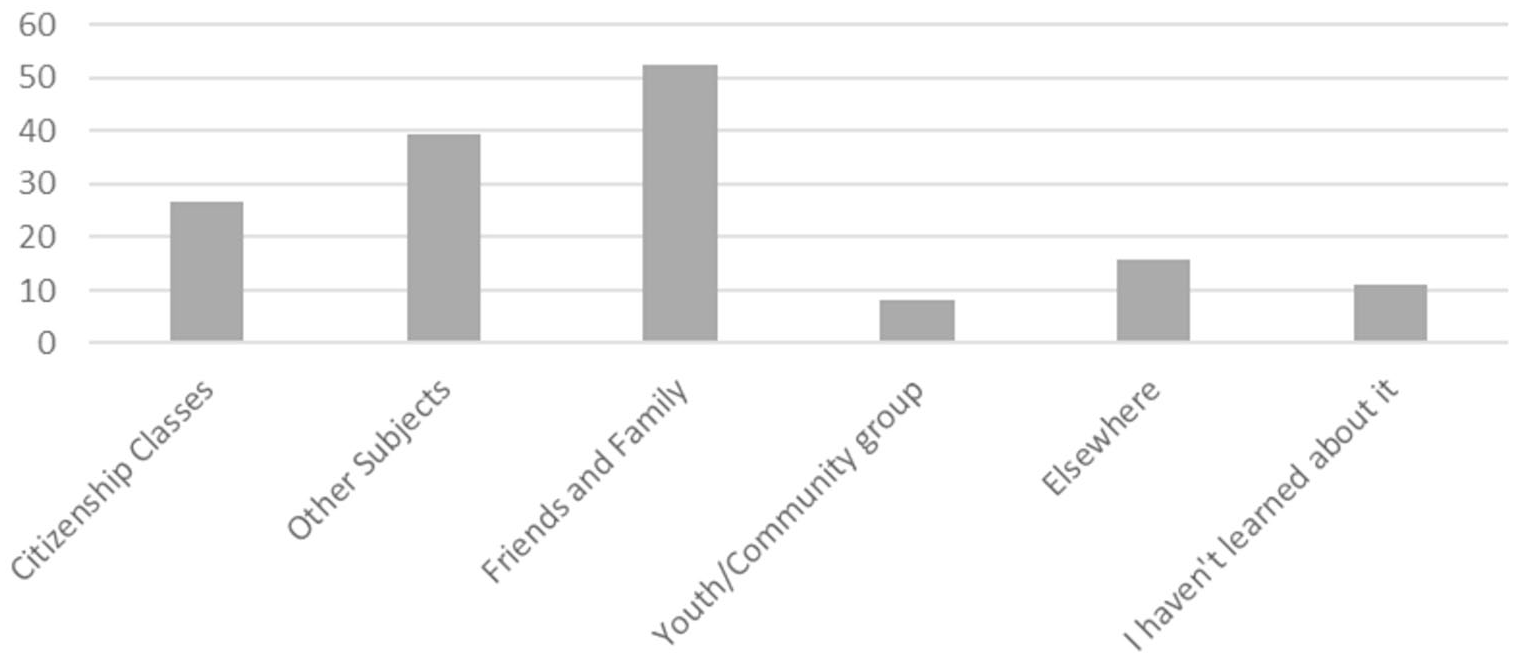
Where do you learn about politics in NI?
Respondents were asked whether or not they had ever had classes or assemblies, done projects or class discussions about individual topics that are identified in the statutory syllabus laid down for citizenship education (Figure 2). The survey illustrated how global issues are studied alongside local issues. Explorations of moral, social, and personal politics take place alongside lessons on the practicalities of participative politics and the historical legacy of the Troubles. However, not all students appeared to have had equal opportunities to explore all issues. The NI conflict was seen to have been the fourth most frequently studied issue amongst the range of topics addressed in citizenship classes; a short way behind the potentially less locally controversial issues of Human Rights and Freedom of Expression, and Global Poverty but, interestingly also less frequently studied than Abortion – a subject that could reasonably be expected to stir some particularly strong discussions on ethics and morality. Fewer than 50% of those surveyed said that they had studied Voting and Elections in school – the eighth most frequently addressed of the 11 citizenship topics covered in school.
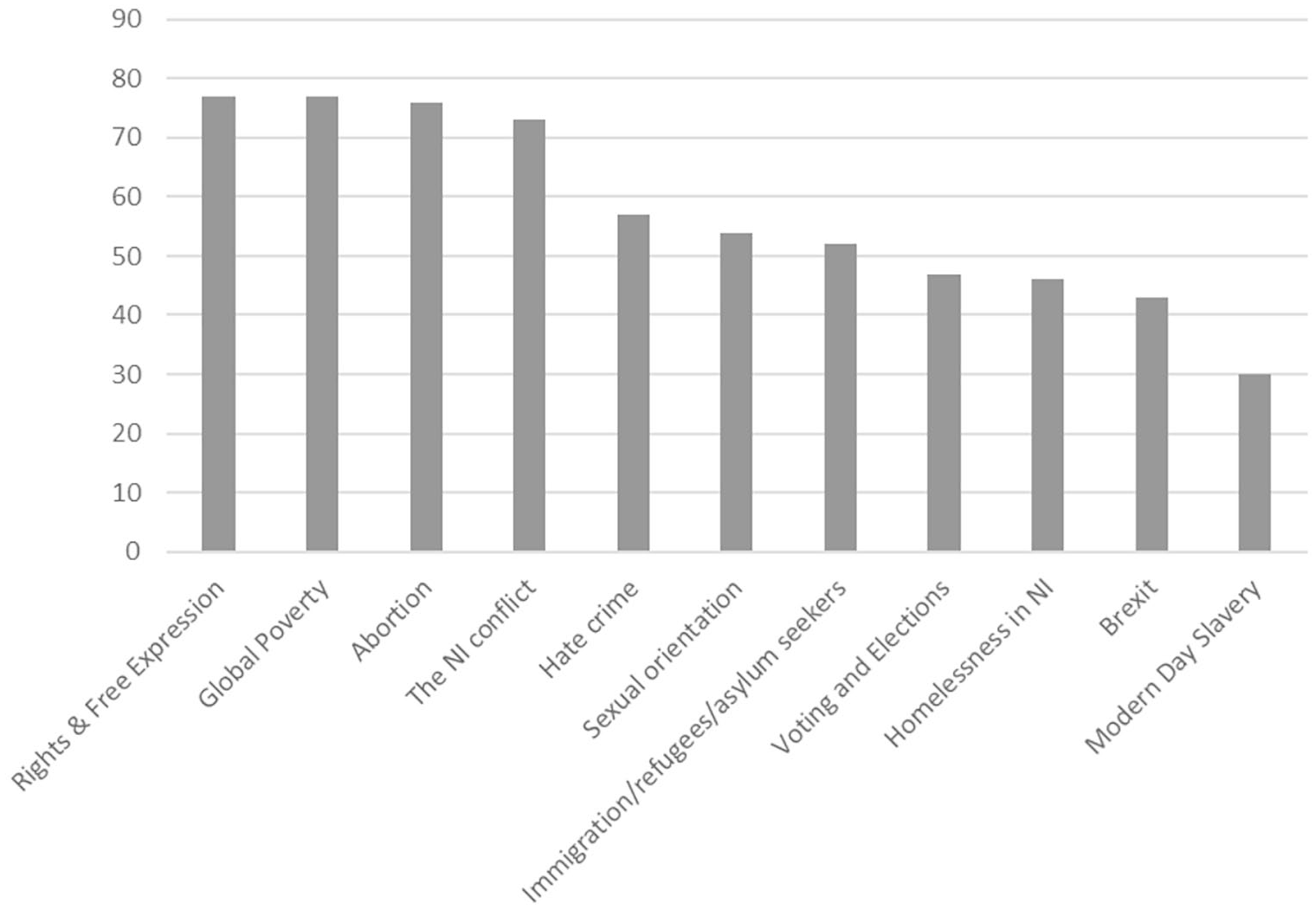
Topics covered in citizenship classes.
Of the 48% of survey respondents who had learned about Voting and Elections in school, twice as many had found it interesting as those who had not. A very similar proportion of young people stated that they had not benefitted from any sort of education in respect of voting and elections – of these young people there was a strong indication of interest in the topic. Five times more respondents wanted to learn more about the topic than those who expressed disinterest. Around one respondent in 20 (4.6%) was unsure as to whether they had received any education in school about Voting and Elections (Figure 3).
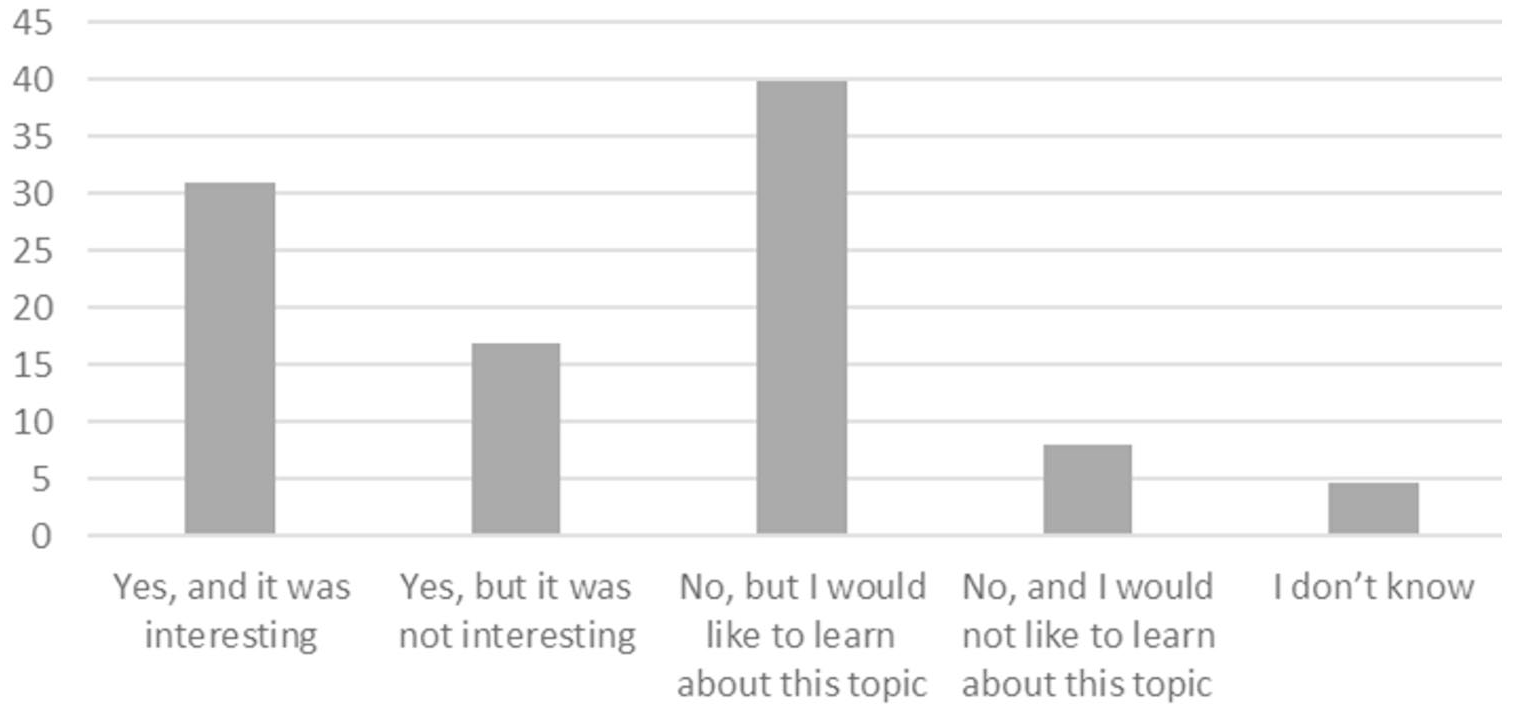
Did you learn about voting and elections in school? Did you find it interesting?
Responses to a similarly framed question about the NI conflict provided a noted contrast. Of the over 70% of young people who had ever attended classes or assemblies, undertaken projects or participated in class discussions about the NI Conflict, those who had found it interesting outnumbered those who had not by more than six-to-one. Furthermore, around 80% of those young people who had not had an opportunity to study the NI conflict in school expressed a wish to learn about it. In a further indication of interest, only 1% of respondents were unsure about whether or not this topic had been addressed in school or not (Figure 4).
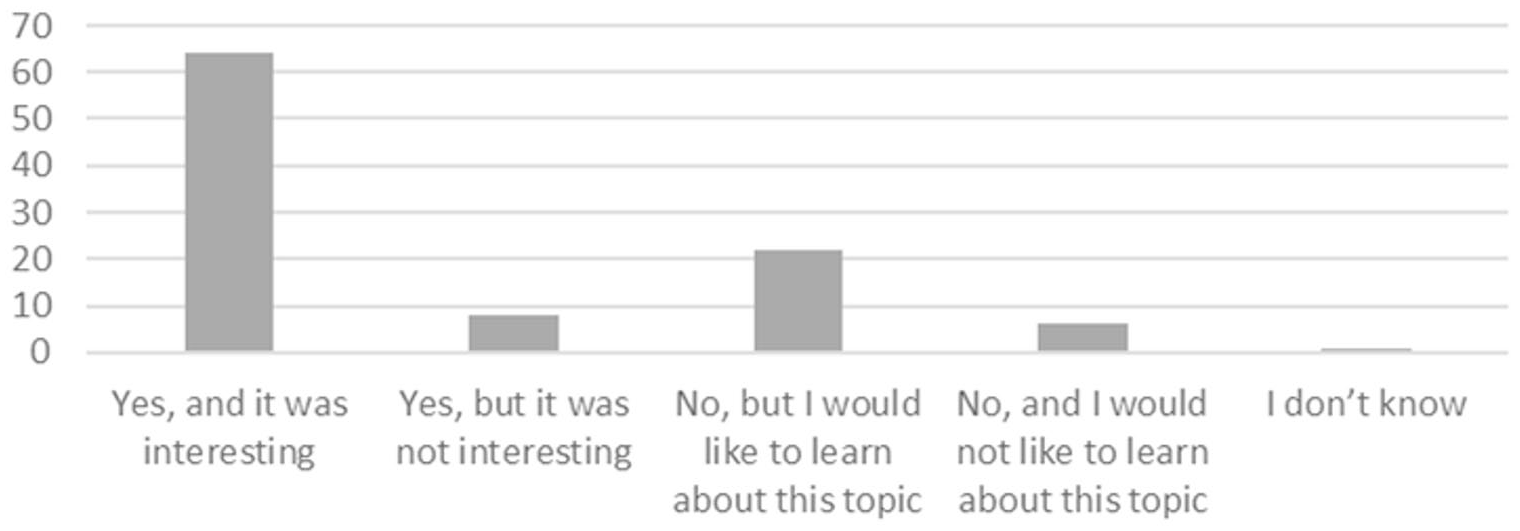
Did you learn about the NI conflict in school? Did you find it interesting?
How engaged are young people with politics in NI?
Eighteen percent of the young people surveyed indicated that they Agreed or Strongly Agreed with the statement that ‘taking part in politics is a waste of time’. However, twice that proportion Disagreed or Disagreed Strongly with that statement. Around one-third of respondents neither Agreed nor Disagreed (Figure 5).
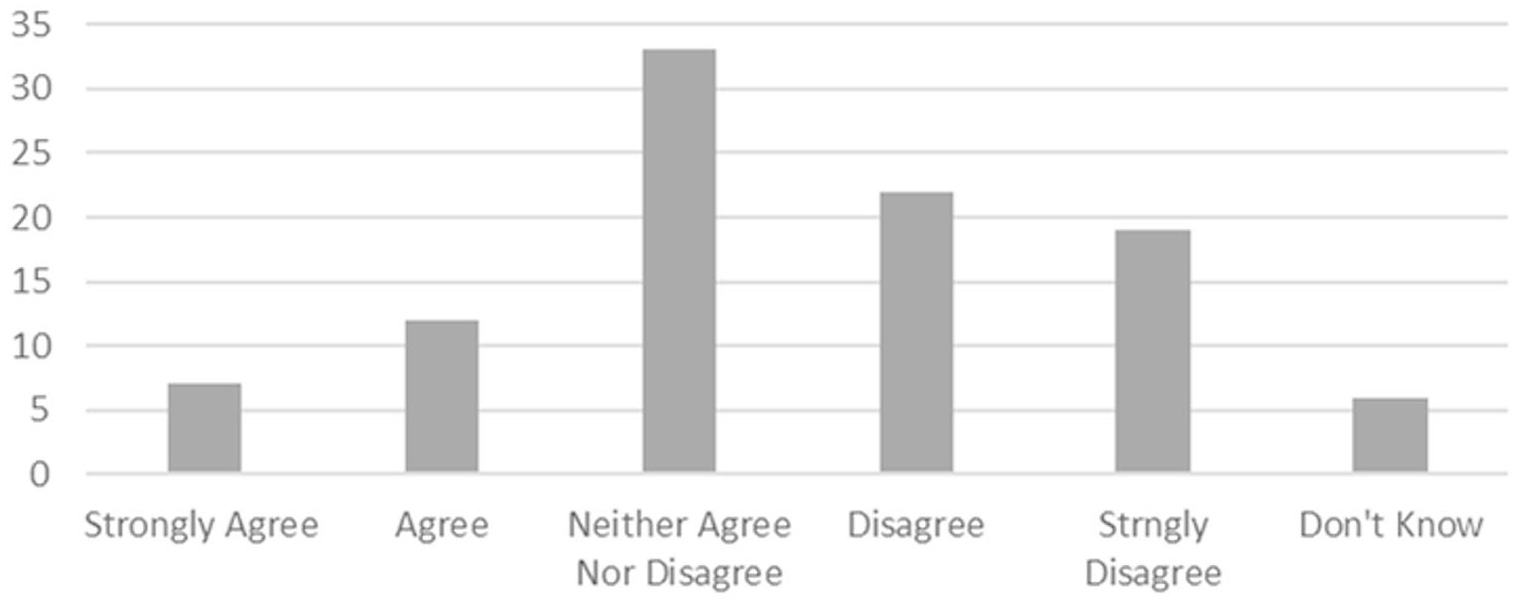
Taking part in politics is a waste of time.
In 2014 the franchise was extended in Scotland to allow 16- and 17-year-olds to vote in the Scottish Independence Referendum. The Scottish Elections (Reduction of Voting Age) Act 2015 subsequently extended that right to include voting in local council elections and elections for the Scottish Assembly – the age of majority for UK general elections, the Brexit Referendum in June 2016 and all elections in England, Wales and Northern Ireland, has however remained unchanged at 18. This Scottish innovation has however stimulated debate about the possibility of broadening voting rights elsewhere in the UK. Respondents were asked to indicate their support (or otherwise) for the extension of the franchise in NI to those aged 16 and 17 (Figure 6).
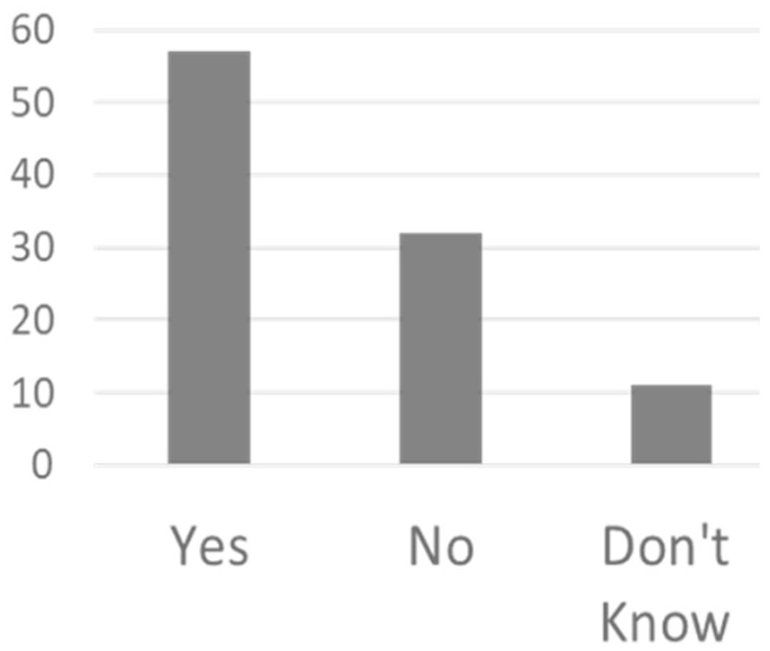
Attitudes to lowering the voting age to 16.
Respondents were almost twice as likely to support lowering the legal voting age than to want to see it left unchanged. More than 10% were unable to provide a definitive answer. In one of the very few open questions included in the survey, participants were invited to comment on the reasons behind their decision. A high proportion of those against a change to the age of franchise felt that young people could or should not be trusted to vote until they had reached a level of maturity conferred by their 18th birthday.
The voting age should remain at 18 because most young people would be swayed very easily in school and by parents [they] wouldn’t vote by what the manifesto says, rather what their “side” says. . . When I am 18, I will be more ready than I am now.
From the other viewpoint it was argued that the current age was arbitrary, and that maturity could not simply be inferred by virtue of chronological age.
The law says that at 16 you can marry, create life and serve in the army, yet you aren’t mature enough to vote!
Britain’s vote to leave the European Union was specifically cited as having impacted upon some young people’s attitude to the issue of extending the franchise.
I was denied a democratic and human right in not being able to vote in the Brexit vote. The outcome of that vote will affect me for a much longer time than many of the older people who voted.
It was also suggested that, since younger people could not vote, politicians might simply overlook their concerns.
Politicians feel no pressure to listen to the needs of young people. . . Introducing policy which harms young people will not make a difference to their share of the vote, as young people aren’t included in the elections.
In spite of being ineligible to vote, more than half of the young respondents indicated that they had been politically active in some other way (Table 1).
Engagement in political activity.

The responses to the questions below showed considerable consistency between the views of the young people who took part in the survey, irrespective of their ethno-religious/community identities. The answers to questions of engagement with local party politics and the constitutional question, however, showed a clear divergence of responses between those who identified as Catholics, those who identified as Protestants and those who identified with neither of these ethno-religious/community affiliations (categorised as No Religion). The following analysis therefore includes a breakdown of responses by these three identities.
Membership of political parties was notably low amongst respondents (2% or less) – although while 21.6% of Catholic respondents and 25.4% of those with No Religion had visited the website of a political party, only 9.1% of Protestants had conducted similar research.
Political engagement amongst young people was generally seen to have been of a more active nature. Around 1-in-20 had taken part in a demonstration, a picket or a march – with those of No Religion more likely to have taken such action than either Catholic or Protestant young people (8.9%:3.7%:5.5%). Across all three identity categories young people were most likely to have campaigned or raised funds for a charity or group – around one-third of young people had been active in this way. Additionally, around one-third had signed a petition. Across all three identities around 40% stated that they had not taken part in any political activity. The survey also included the question, ‘Do any Northern Ireland political parties or politicians represent your political opinions?’
Those young people who identify as Catholic were marginally more likely than not to be satisfied that politicians and parties did represent their opinions. For Protestant young people the difference between the proportion that were satisfied and those that were not was minimal. It was notable that those young people who align themselves with neither of the two dominant identity groups felt more often than not that NI politicians and parties did not represent their opinions. High proportions of young people across all three identity categories (nearly half of all those surveyed) answered ‘Don’t Know’ (Figure 7).
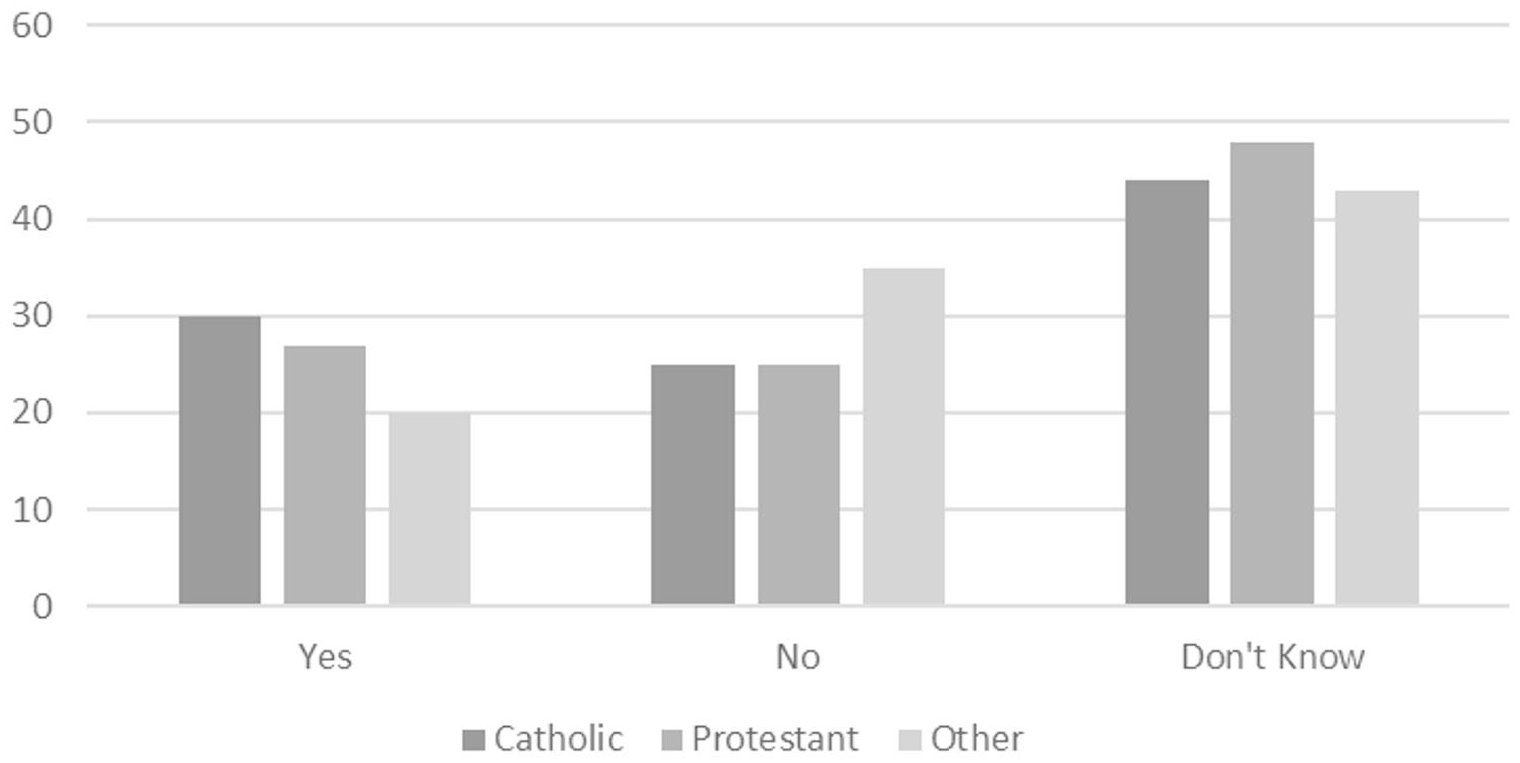
Do politicians/political parties represent your views?
Those respondents who had answered this question in the affirmative were then asked to indicate which party or politician did represent their political opinions. Respondents were not restricted to naming only one party or politician. For the purposes of analysis in the drafting of this paper, where respondents named an individual politician in answer to this question, the party that they represent was credited (e.g. where the answer ‘Michelle O’Neill’ was given this was re-assigned to the party that she represents, Sinn Féin, similarly, where ‘Arlene Foster’ was named this was credited as DUP).
Given that Catholic young people accounted for the largest of the three identity groups who completed the survey, and that they were more likely than Protestants or those with No Religion to feel that their views were represented by a political party, it is not unexpected to see that those parties representing Irish Nationalist and Republican viewpoints (SDLP and Sinn Féin – that traditionally receive their support from Catholic communities) received the strongest endorsement (n = 44). The level of backing for these parties is however disproportionate to the number of Catholic participants while the level of support for those parties associated with Loyalist and Unionist viewpoints (UUP, DUP and TUV) is below that which might have been expected were the distribution to be in line with current adult voting patterns (n = 18). Support for those parties with a consciously cross-community composition, agenda and appeal (Green, Alliance, PBP) was also seen to be proportionately higher than their level of representation in the Stormont Assembly and given that, of the three identity groups, No Religion were least likely to feel that their views were represented by any local political party (n = 34) (Figure 8).
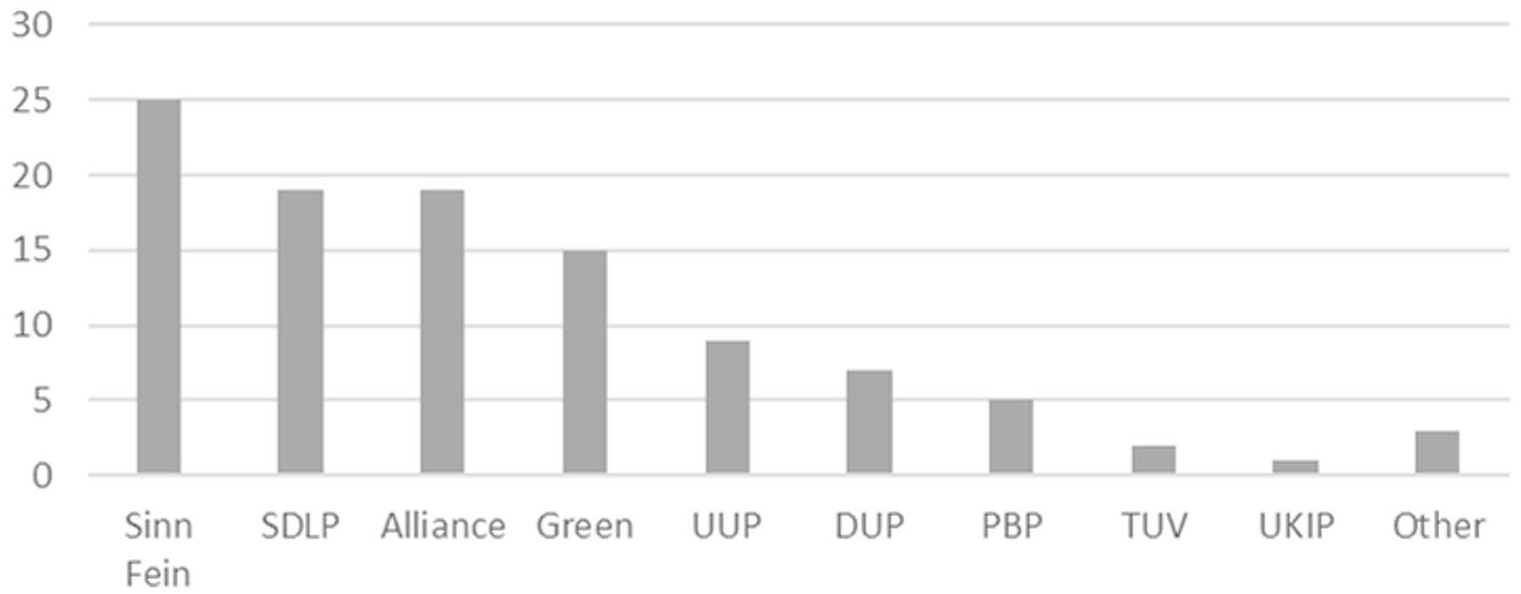
Which political party (or parties) most closely reflects your views?
How willing are young people to consider a change in NI constitutional status?
A series of questions relating to sovereignty and the constitutional question were included in the YLT. Respondents were asked if NI should remain within the UK, if it should be united with the Republic of Ireland, if it should be jointly governed by UK and the Republic of Ireland or if it should be a state separate to both. Responses to these questions showed considerable variation by community identity (Figure 9).
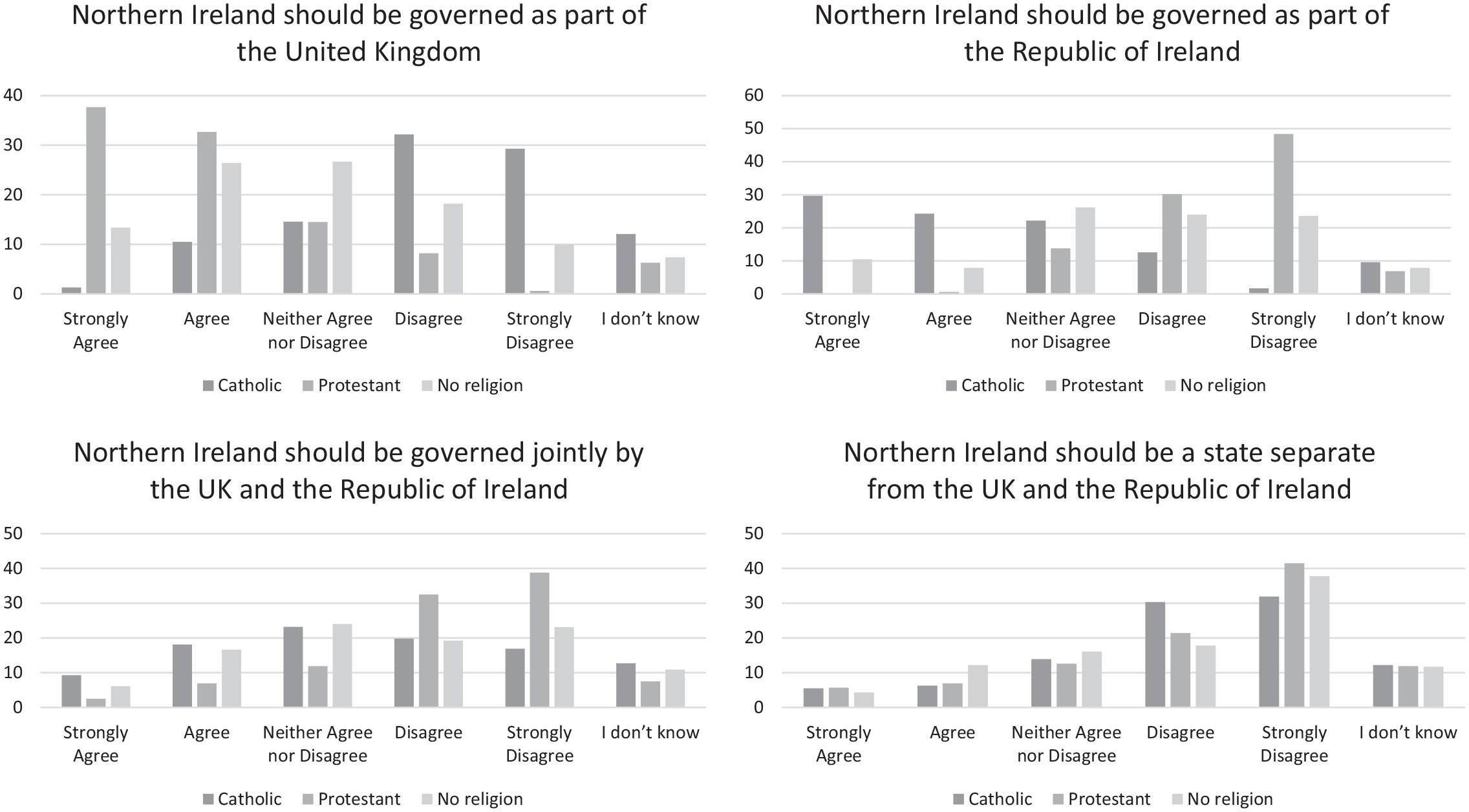
Opinions on options for the future constitutional status of NI.
Slightly more respondents Agreed or Strongly Agreed that NI should be part of the UK (38%) than those who Disagreed or Strongly Disagreed (35%) with this option – 18% were neutral and 9% stated that they Don’t Know. Seventy percent of Protestant pupils either Agreed or Strongly Agreed that the union between NI and the UK should be retained, 15% were ambivalent and 8% disagreed – less than 1% of Protestant young people Strongly Disagreed. In marked contrast 12% of Catholic young people were in favour of the UK/NI union with 62% Disagreeing or Strongly Disagreeing. Catholics were twice as likely as Protestants to have responded, Don’t Know (12%:6%). Respondents with No Religion showed a more balanced pattern; 40% in favour, 28% against and 34% unable or unwilling to declare for one or other alternative.
Across the board, 27% of respondents Agreed or Strongly Agreed and 43% Disagreed or Strongly Disagreed that NI should be part of the Republic of Ireland. Support for a united Ireland was highest amongst Catholic pupils whilst Protestant pupils and pupils of no religion were most likely to oppose the concept. All-in-all, the ratio of Catholic respondents in favour, unsure, or against a united Ireland was 54:32:14, for Protestants less than 1% supported a United Ireland, 21% were equivocal and 79% were against it. For those with No Religion 18% Agreed or Strongly Agreed with unification, 32% either Didn’t Know or Neither Agreed nor Disagreed and 48% Disagreed or Strongly Disagreed.
There was evidence of greater consensus between the three identity groups when looking at the question of Joint Sovereignty of NI between UK and the Republic of Ireland. Although more Catholic young people were receptive to the idea than Protestants or those with No Religion (27%:9%:23%), the idea did not command majority support in any of the three groupings with 37% of Catholics, 71% of Protestants and 42% of those with No Religion opposed to it. The question relating to support for an independent NI produced the greatest consensus of all the sovereignty options offered in the survey. There was a 50%+ majority across all three identity groups that they Disagree or Strongly Disagree with this concept, only 14% were in favour and around one-fourth were undecided.
Discussion
The evidence presented here does suggest that young people do, to some extent, develop their political literacy and concepts of citizenship whilst at school if not through formal education. How much the development of young people’s political literacy is down to the presence of Citizenship on the curriculum is a moot point. It would appear that the teaching of other subjects (particularly history), may potentially have had a greater political impact than dedicated citizenship classes as they are currently being delivered.
The array of topics that are explored under the mantle of citizenship education may be to the detriment of their potential impact. Subjects relating to morality and personal values that might have been considered to be taboo by previous generations of teachers – abortion, sexuality – would appear to be being explored in class while the practical necessities required for participation in a pluralist democracy and a critical examination of recent history and its enduring impact on society in NI are receiving less attention. The results of the ARK KLT survey provided clear indications that young people in NI are keen to know more about both the Troubles and the mechanics and mechanisms of politics.
It would, however, be incorrect to assume that the dearth of in-school support for political and citizenship education has produced a generation of 16-year-olds who are politically uninterested or disinterested. Over half of the young people who completed the survey had engaged in some sort of political (or politics-related) activity. Furthermore, there was considerable support among respondents for the idea of lowering the age of suffrage to 16 – even those young people who were opposed to such a change were articulate and reflected in their reasoning and the rationale behind their opinion. It would appear that the Brexit referendum was a particular focus for the ire of those too young to have been able to participate in a vote that will have an impact for many years to come.
There was general dissatisfaction with the range of parties and personalities on offer in the local political arena. Less than a third of respondents felt that their views were represented by any of the parties or politicians in NI. Young Catholics were most likely to hear their opinions echoed at hustings and in Stormont while those who identified with neither of the traditional ethno-religious communities found themselves least represented.
There were some indications that, on the whole, young people felt that their views were better represented by those parties that were aligned with more progressive ideas in respect of social issues. The conventionally politically and morally conservative Unionist parties, in particular, were notably less popular among the young people who participated in the survey than they are among older generations. The high proportion of young people who ‘Don’t Know’ if their views are represented by politicians or political parties is particularly telling with regard to their failure to reach out and engage with the concerns of future voters.
The constitutional future of NI remains unclear. The survey results indicate that next generation of Protestant voters remain deeply supportive of the union with Britain and opposed to any involvement of the Republic of Ireland in the governance of NI. Young Catholics views are almost the direct diametric opposite – supportive of Irish reunification and opposed to the preservation of the union. It is noted, however, that a higher proportion of young Catholics are willing to accept the retention of the union with Britain than young Protestants that are willing to consider a United Ireland. Neither side is willing to any significant extent to seriously contemplate either joint sovereignty or an independent NI. There is, however, evidence of a potentially substantial middle-ground: a large proportion of respondents were uncommitted or equivocal in their responses to these questions and around one-third of respondents chose to identify themselves as No Religion rather than with either of the two dominant blocs – Catholic and Protestant.
Conclusions
NI was created with a divided population. The Catholic minority were denied civil rights and access to political influence – their failed citizenship was further entrenched by an identity that, rather than being aligned to the state, was defined by their faith and Irish culture. In contrast the Protestant majority were largely content within a state that supported their British identity and afforded them Recognised and Participatory citizenship. Tensions along this inbuilt fault-line erupted at the end of the 1960s and led to a 30-year civil conflict, by the end of which, although the constitutional question had been left unresolved, the imbalance in civil and political rights between the two factions had largely been addressed. A new, more inclusive model of citizenship was required to ensure a sustainably peaceful future. In particular, new iterations of Participatory and Transformative Citizenship were needed to ensure buy-in from the combined populace for the new institutions of state.
Decades of enmity and mistrust had however created a situation where the two communities were deeply separated, nowhere more so than in the education system where the vast majority of children attended schools that were segregated in line with their ethnic identity. The policy solution to this dilemma in the wake of the 1998 peace agreement was the introduction of a statutory citizenship curriculum to be followed in all schools. Since its introduction within the revised curriculum in 2007, citizenship education has taken its place in an extended list of initiatives that have been introduced into schools in order to directly or indirectly address the consequences of enduring sectarian divide in NI.
This project set out, in the first instance to identify, the extent to which young people develop their political literacy and concepts of citizenship in school. The subject had been consciously designed to support a dual approach whereby students would look at the issues of identity, inequality and rights as they affected society in NI and to place these in a wider, global context. Research evidence has, however, suggested that this potential has yet to be fulfilled. The Education and Training Inspectorate reported that ‘one third of citizenship and PD [personal development] lessons in post-primary schools were not effective’ (Education and Training Inspectorate NI, 2015: 10). The evidence reviewed here suggests that although effective citizenship education may be possible in an ethnically divided system, such an outcome may be unlikely and that the community divisions inherent in the current system of education in NI could contribute to a situation where the separation of the two sides may potentially be being further embedded.
Notwithstanding the significant in-service training offered teachers lack the confidence and skills required to engage pupils in discussions around controversial or difficult themes related to the conflict. The marriage of local and global citizenship may have inadvertently provided schools with a convenient escape route – through which focus can be shifted away from locally contentious issues to more distant problems. There is evidence too that school authorities may not have prioritised citizenship and that, as an unexamined subject, it has low status in a neo-liberal school sector dominated by league tables and competition for a declining population of pupils.
Notwithstanding the failings in the implementation of Citizenship Education, the evidence presented here does indicate that young people are interested in politics in NI. Those who had received education about NI issues and political processes saw it as having been beneficial, whilst those who had not received such education, wished that they had. It was more common than not that, outside of formal educational settings, young people had engaged in participatory citizenship activities.
With regard to transformative citizenship, the survey results show that young people still largely divide along the familiar ethno-political schism that has framed discussion in NI throughout its existence. This generates the potential for further questions: if, at some stage in the future, a constitutional referendum were to result in a majority for a future status that they objected to, would young people be prepared to consider or endorse political violence to resist or achieve a particular outcome? If so, then the re-emergence of the conflict is a distinct possibility. There is an urgent need for research to identify what could be done to avoid the consequences of a return to violence.
Citizenship education in the NI curriculum has failed to meet its promise. The task of preparing young people to be active citizens in a shared and peaceful society remains problematic. Worryingly, George Santayana’s famous aphorism, ‘Those who fail to learn from history are doomed to repeat it’, appears to be potentially prescient.
Footnotes
Declaration of conflicting interests
The author(s) declared no potential conflicts of interest with respect to the research, authorship, and/or publication of this article.
Funding
The author(s) received no financial support for the research, authorship, and/or publication of this article.
