



Abstract
The study aims to examine Malaysian and Indonesian undergraduate students’ sustainability knowledge and sustainable attitudes and the impact on their sustainability intention and sustainable behaviour. An online survey was conducted using 953 respondents. The SmartPLS (Partial Least Squares) analysis demonstrated that sustainability knowledge and sustainable attitude significantly impact the students’ sustainability intention. Nevertheless, the effect of sustainability knowledge was less than the sustainable attitude. The results confirmed that sustainability intention is important to influence sustainable behaviour among university students. Interestingly, Malaysian undergraduate students recorded higher effect levels of sustainability knowledge and attitude on sustainable intention and sustainability intention on sustainable behaviour compared to Indonesian students.
Keywords
Introduction
Sustainability is crucial and linked to various aspects: economics, construction, manufacturing and agriculture (Tang, 2018). Sustainability is also an integral part of universities which attracts significant attention worldwide due to pressure from society, students and policy (Radwan and Khalil, 2021). Some universities in Malaysia and Indonesia have become sustainable universities as sustainability is an essential agent in changing students’ sustainable awareness and behaviour (Hübscher et al., 2021). Sustainability knowledge and new educational practices related to sustainability are essential (Sclater, 2018). Universiti Sains Malaysia has significantly progressed in imparting sustainability knowledge and awareness to the students via courses, research and events and thus ranked first in the Times Higher Education (THE) Malaysia University Global Impact Rankings 2019, 2020 and 2021 for sustainable university (Mohamad Saleh et al., 2022). Similarly, Indonesian universities, such as Universitas Gadjah Mada, Yogyakarta, are highly active in promoting environmental programmes and research and conducting environmental activities among students on campus (Nomura and Suyono, 2014). A sustainable university allows the students to obtain green information and participate in sustainable activities at the university (Dagiliūtė et al., 2018).
Undeniably, the role of the university in sustainability is crucial to accelerate the achievement of sustainable future and sustainable development goals (SDGs) by 2030 (Kohl et al., 2022). Furthermore, universities are responsible for engaging with external communities and increasing sensitivity to sustainability issues through community projects (Fissi et al., 2021). The university can reach the community by embracing the local culture, specifically the Asian community that is rich with cultures. For instance, Foroudi et al. (2019) emphasised the crucial role of culture in higher education institutions and sustainability. Some cultures can affect the progress of sustainability, such as Malaysia (Bakar et al., 2016). For example, the ‘not in my backyard’ syndrome made people commit illegal waste dumping (Watanabe et al., 2014) as the syndrome makes people less concerned about environmental issues that do not impact them or their families. Thus, understanding and handling these cultures is vital if the university intends to discuss about sustainability in Asian communities. Hence, the implementation of SDGs by the university is considered a complex process.
The university plays a crucial role in achieving sustainable development (Aleixo et al., 2021). Meanwhile, university students, specifically from Asian and developing countries resembling Malaysia and Indonesia with severe environmental concerns, should contribute to sustainable development by disseminating information to the public, friends and family for awareness and education purposes (Koch et al., 2013; Kamarul Kamarul Zaman et al., 2018; Yusliza et al., 2020, Mohd Mohd Jaafar et al., 2020; Wee et al., 2017; Kamaruddin et al., 2022). University students are the biggest stakeholders in the university with great potential to influence sustainability (Dagiliūtė et al., 2018). Additionally, students are the key stakeholders and future leaders in fulfilling the SDGs (Ribeiro et al., 2021). Therefore, university students could significantly contribute to the achievement of SDGs with significant knowledge, attitude and behaviour in sustainable development.
Although students can promote sustainable development (Mazon et al., 2020) and achieve the SDGs (Cuzdriorean et al., 2020; Yusliza et al., 2020), past studies on university students’ sustainability knowledge, attitude, intention and behaviour emphasised Western perspectives using theories, such as the Theory of Planned Behaviour (TPB) (Heeren et al., 2016; Wendlandt Amézaga et al., 2021; Maiorescu et al., 2020). Few research highlighted the issue from Asian perspectives (specifically in Malaysia and Indonesia) (Wee et al., 2017) excluding several studies in Malaysia (Harun et al., 2011; Sivapalan, 2017; Yusliza et al., 2020). Similarly, limited comparative studies investigated Southeast Asian university students and sustainability (Leal Leal Filho et al., 2021). From a larger population scale, important misconceptions require intervention through education, information and motivation despite the positive attitude towards sustainable development (García-González et al., 2020).
The present study was conducted to fill past study gaps based on Malaysian and Indonesian sustainability knowledge and attitude and the influence on sustainable intention and behaviour. The study is unique as it compares two Asian neighbour countries sustainability and the role of the higher education institutions as not many studies undertook such a topic. Both countries share many common things, such as race, culture, religion, environment, environmental issues, collaboration and prospects (Ministry of Energy, 2018). Moreover, both countries are classified as developing countries and progressing in achieving sustainability; thus, the study provides useful information that might aid both countries in planning for a better future with sustainable education among university students.
Theoretical foundation
The theoretical framework is based on TPB (Ajzen, 1991), which is the most influential behavioural theory (Kwon and Silva, 2020; Longo et al., 2019; Heeren et al., 2016) and is widely applied in sustainability and behavioural studies, such as behaviours related to the environment and sustainability (pro-environmental behaviour, recycling and energy-saving behaviour) (Banytė et al., 2020). For instance, Cuzdriorean et al. (2020) adopted TPB to identify the factors of students’ sustainable behaviour at a Romanian university. Traditionally, TPB was employed to form constructs, such as attitude, intention, behaviour, subjective norms and perceived behaviour. Intention is the best predictor of behaviour determined by attitude towards action (Gkargkavouzi et al., 2019).
Past models and studies include the knowledge construct as a behaviour predictor (Ajzen et al., 2011; Heeren et al., 2016; Sun et al., 2019). For instance, Ardoin et al. (2015) proposed that environmental knowledge can encourage the adoption of pro-environmental and sustainable behaviour (Liu, 2021). Sun et al. (2019) revealed that environmental knowledge positively impacts green consumption behaviour. The TPB assumptions and past studies findings (Klöckner, 2013; Sujata et al., 2019) emphasised that individuals’ actual behaviour can be predicted through intention influenced by other variables. The present study applied TPB in understanding the impact of sustainability knowledge and attitude on sustainability intention and the impact of sustainability intention on Malaysian and Indonesian undergraduate students’ sustainable behaviour (see Figure 1). The hypotheses were developed based on the study theoretical framework as follows. Proposed research framework on the influence of sustainability knowledge and attitude on sustainable intention and behaviour.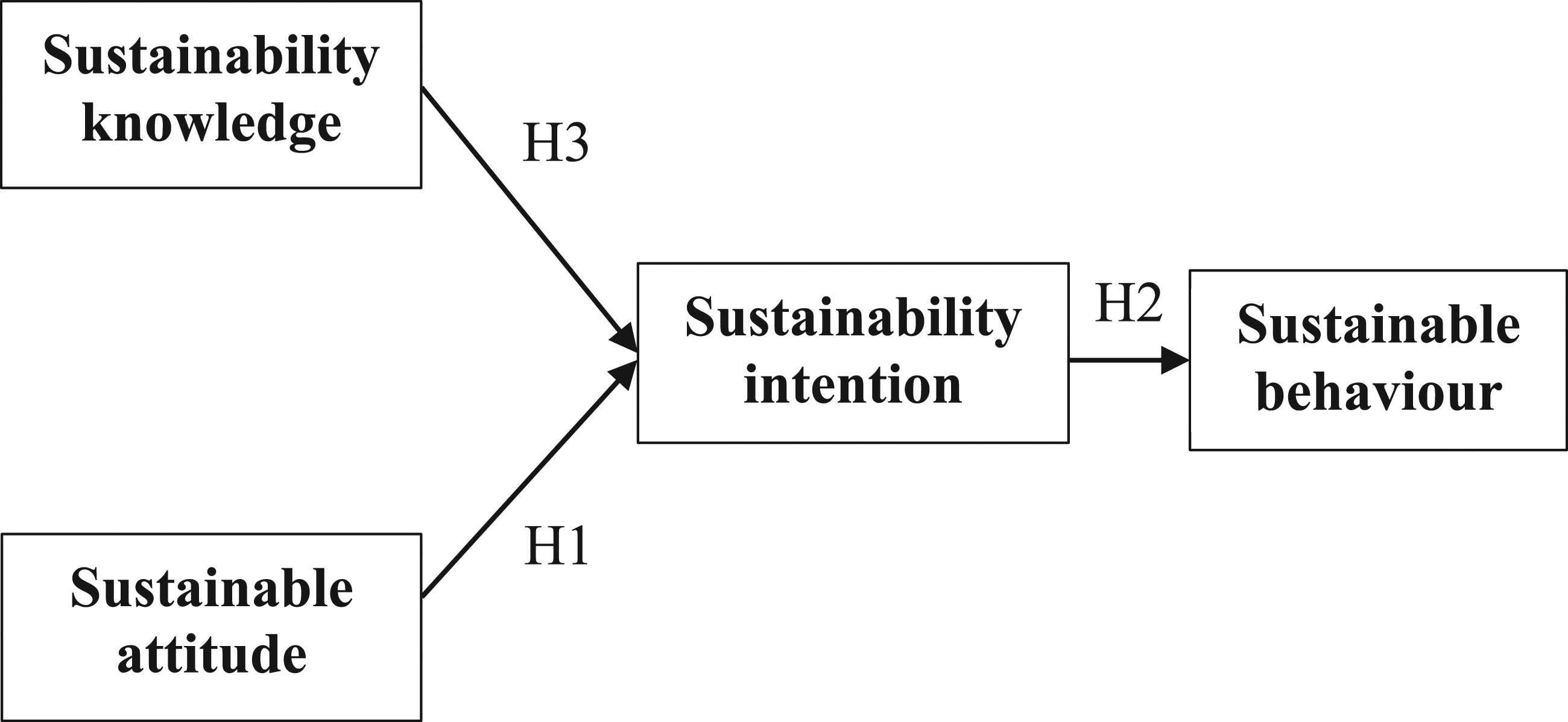
Hypotheses development
Maichum et al. (2016) found that environmental attitudes, social norms and perceived behaviour control positively influence the purchase intention of green products. Environmental attitude has the most significant impact and thus the strongest predictor of green product purchase intention. Organic food consumption studies in developing countries such as Tanzania and Kenya revealed that personal attitudes could significantly influence consumers’ purchase intentions ((Wang et al., 2019)). Thus, the first hypothesis was proposed:
Wang and Mangmeechai (2021) demonstrated that citizens with a strong perception and implementation intention of management policies tend to practice high-level environmental protection behaviours. Sustainability intentions, sustainability knowledge and orientation promote the sustainable development of entrepreneurial behaviour in the research on the legalisation strategy of sustainable development entrepreneurs (Reynolds et al., 2018). Therefore, the second hypothesis was proposed:
Research on Korean fashion product consumers revealed that knowledge and information from corporate sustainability are positively connected to consumer behavioural intentions (Kong et al., 2016). Several studies on green product purchasing behaviour also support the view that green product knowledge is considered a direct precondition variable of green purchasing intention (Newton et al., 2015; Kanchanapibul et al., 2014). Hence, the third hypothesis was proposed:
Based on the holistic factors analysis, prior sustainability knowledge assists entrepreneurs in achieving sustainable development via entrepreneurial intentions (Reynolds et al., 2018). Environmental knowledge about green consumption influences the perceived behaviour of business school students through their attitude towards the environment and intention towards green vehicles (Mohiuddin et al., 2018). Therefore, the fourth hypothesis was proposed:
Echegaray and Hansstein (2017) mentioned that the TPB theory is a good explanation for the e-waste recycling process. Positive attitudes and strong social norms positively affect the recycling behavioural intention and, ultimately, public e-waste recycling behaviour. Similarly, farmers’ attitude towards pro-environment behaviour significantly influences environmental intention, which exhibits positive predictive effects on pro-environment behaviour (). Thus, the fifth hypothesis was proposed:
The theoretical framework is formulated based on the theories and hypotheses formulation and the influence of sustainability knowledge and attitude on sustainable intention and behaviour.
Methodology
The study was conducted among Malaysian and Indonesian undergraduate university students. An online survey was adopted to gather respondents’ data in both nations for two weeks in April 2021. The online survey was selected as the study method due to its advantage in acquiring the data easily and faster compared to the traditional technique (Singh and Sagar, 2021). As the data collection process was completed during the coronavirus disease (COVID-19) pandemic, the online survey was chosen as the study method (Nazar et al., 2020) to ensure the researchers’ and respondents’ safety through an online instead of face-to-face medium. The researchers used an online survey platform (Google Forms) to publish the questionnaire and generate the answer link for the respondents and distributed using the snowballing technique (Chen et al., 2021). The online survey was widely shared through social media, specifically the WhatsApp application (Bastani et al., 2022) based on its wide usage among the students.
Summary of construct items and sources.
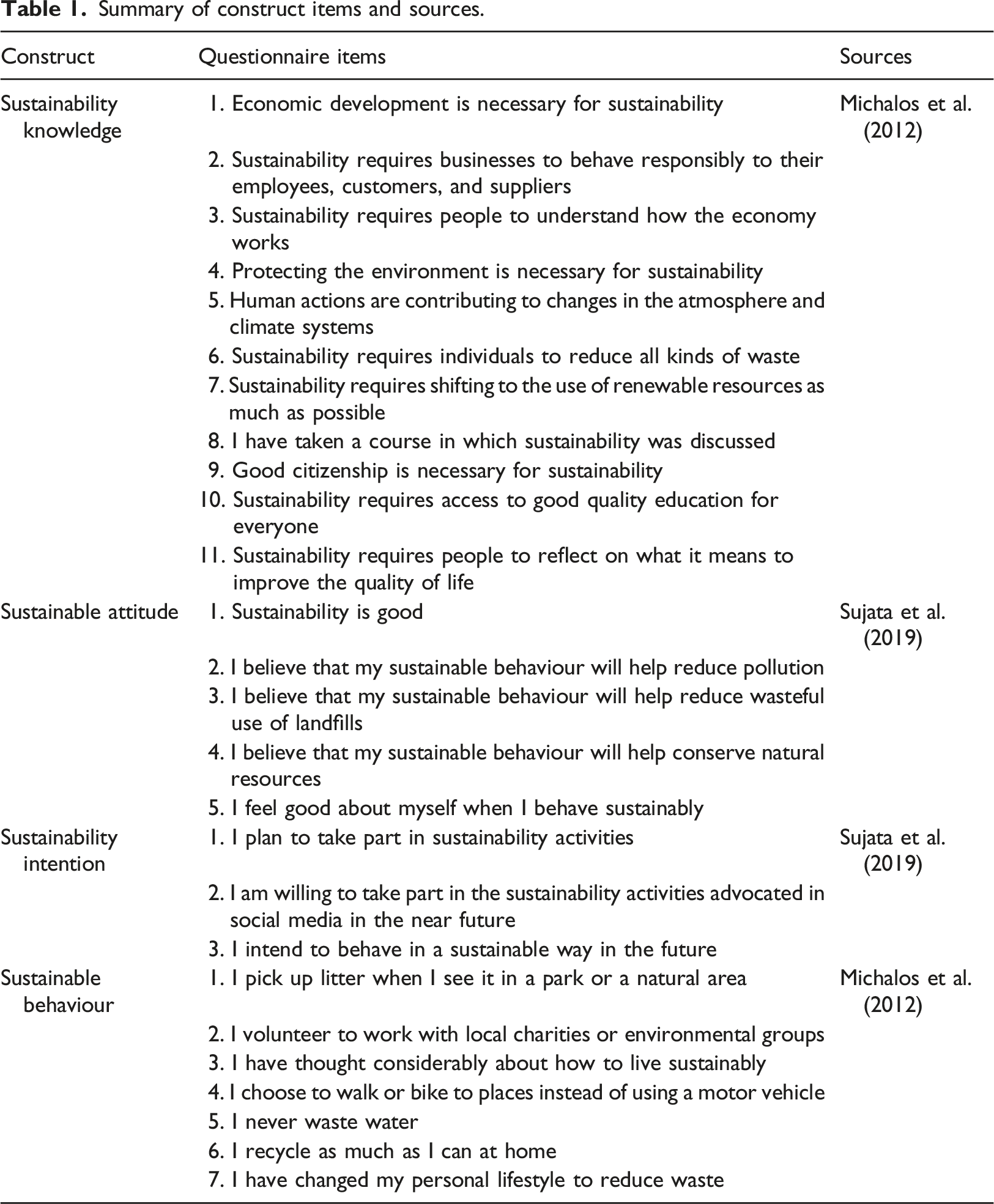
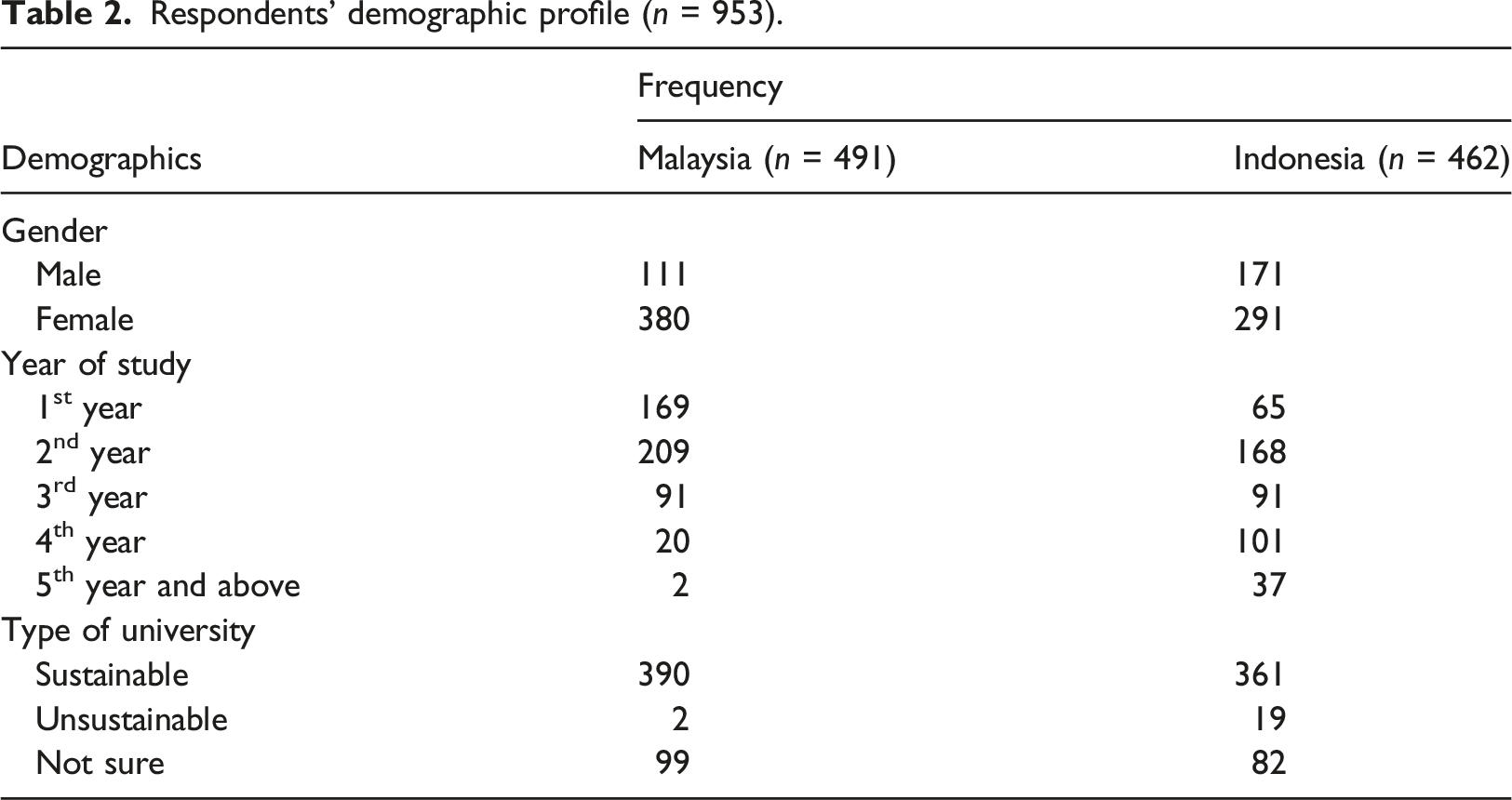
A non-probability sampling technique was employed to obtain 953 valid respondents where 461 (48%) and 492 (51.2%) were from Indonesia and Malaysia, respectively. The online survey was only open to active undergraduate university students in Malaysia and Indonesia, hence excluding alumni or postgraduate students. Following the research ethics, respondents were provided with all the study information, including the study purposes and the use of the study for academic purposes only on the first page of the survey (Brown et al., 2022). Student participation was on a voluntary basis with information on the confidentiality of their participation and an option to withdraw from the survey any time before they submitted it (Paulin et al., 2022). No monetary rewards were provided for the respondents (Sousa et al., 2022). Moreover, a five-point Likert-type scale ranging from 1 (strongly agree) to 5 (strongly disagree) measured all the study variables. The survey data were analysed using a statistical software package for social sciences (SPSS) and SmartPLS software.
Respondents’ demographic profile (n = 953).
Data analysis
The measurement model assessment results.
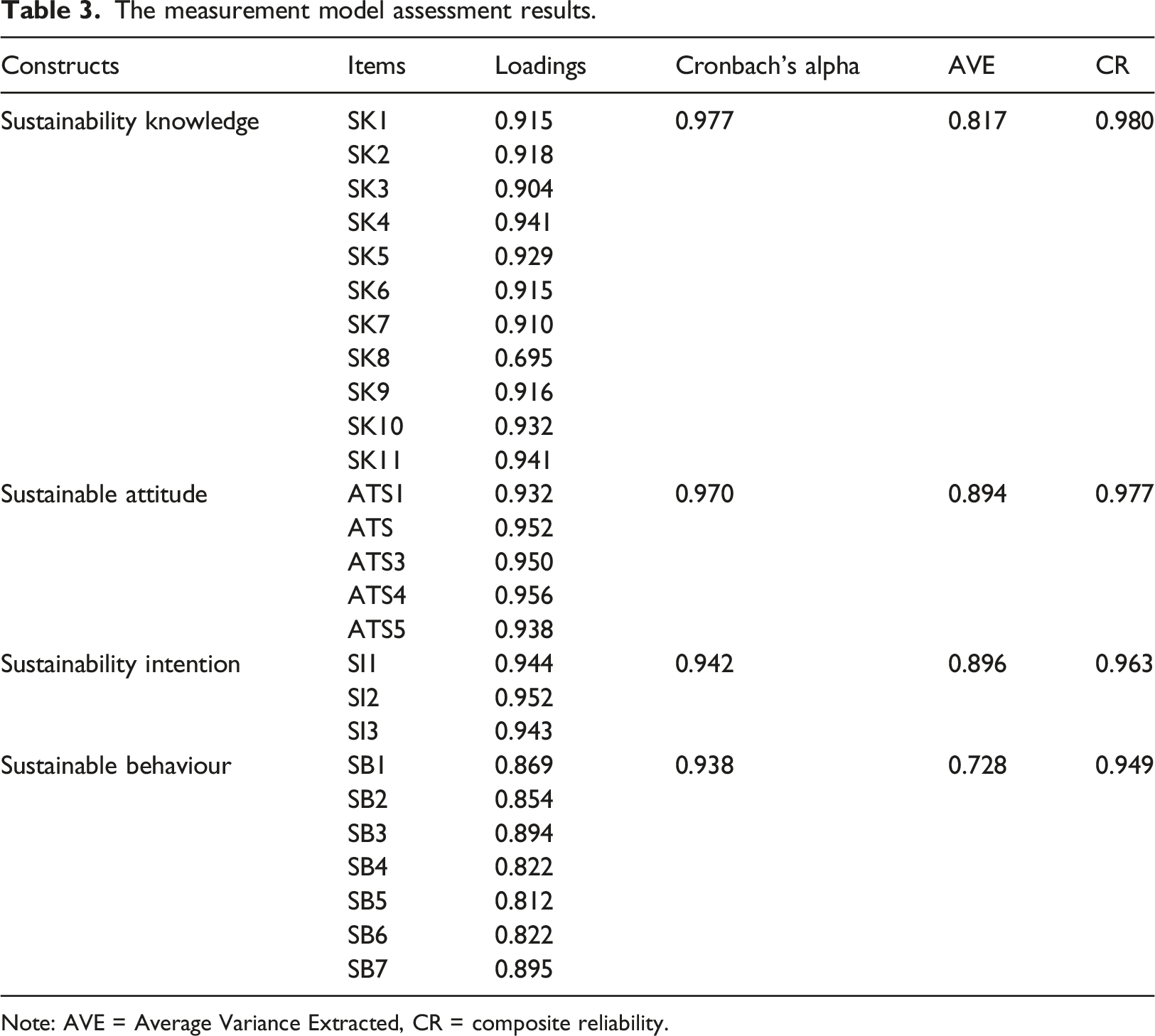
Note: AVE = Average Variance Extracted, CR = composite reliability.
Results
Measurement model
Discriminant validity (HTMT criterion).
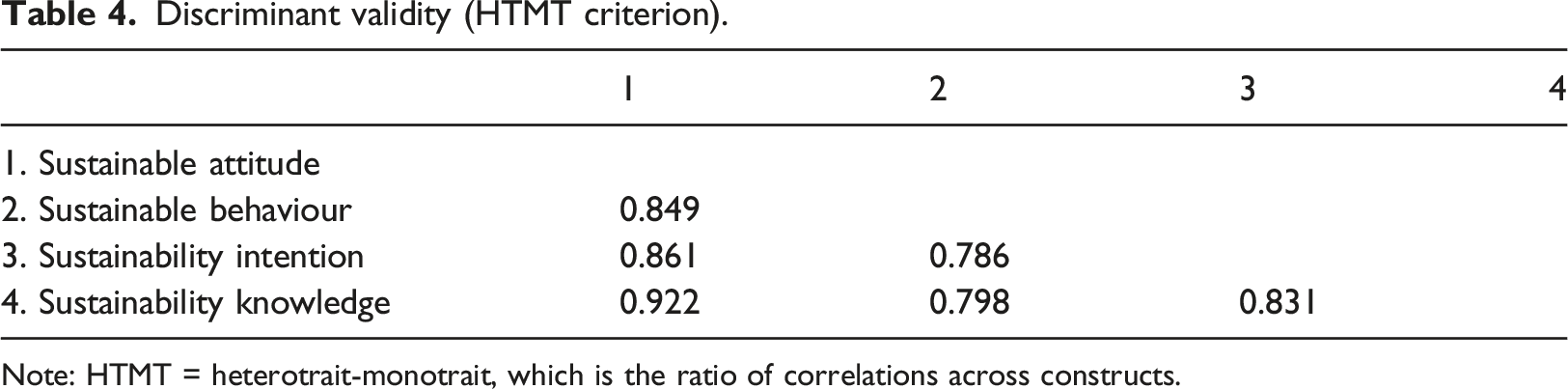
Note: HTMT = heterotrait-monotrait, which is the ratio of correlations across constructs.
Structural model
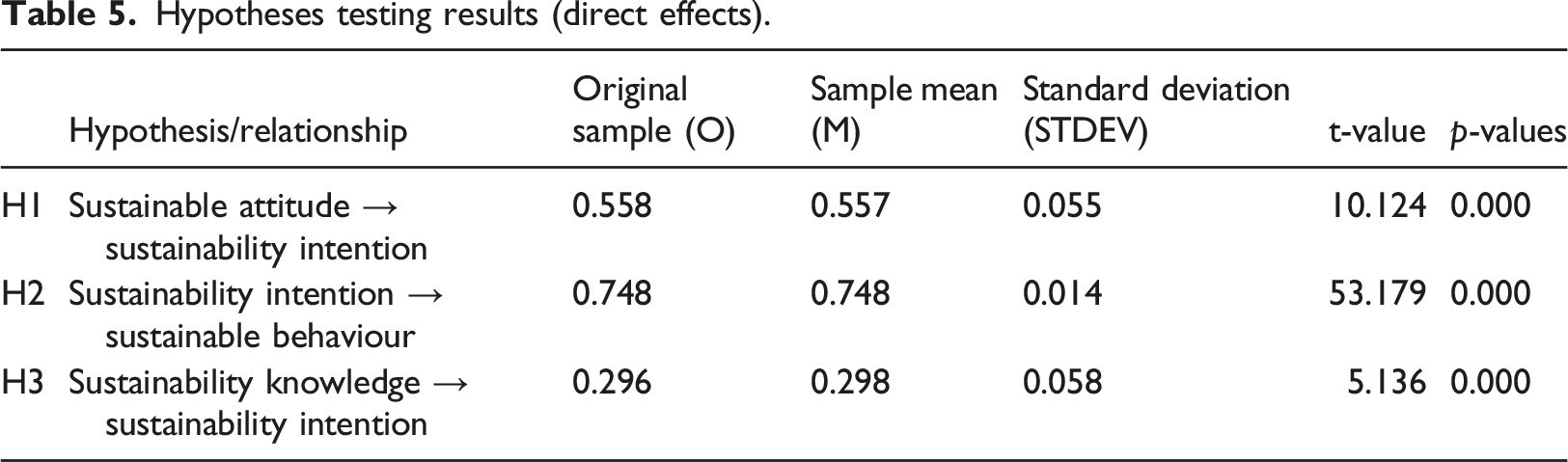
Hypotheses testing results (direct effects).
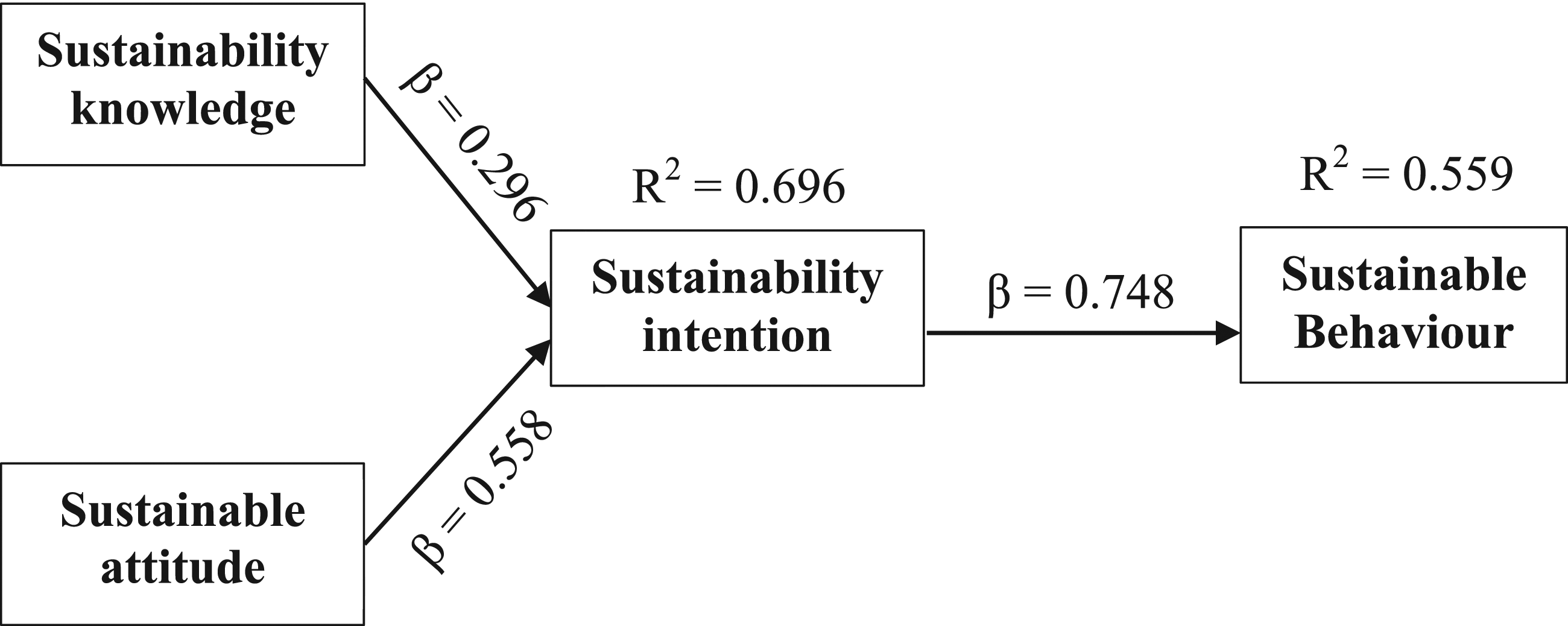
Structural model (direct effect and effect size).
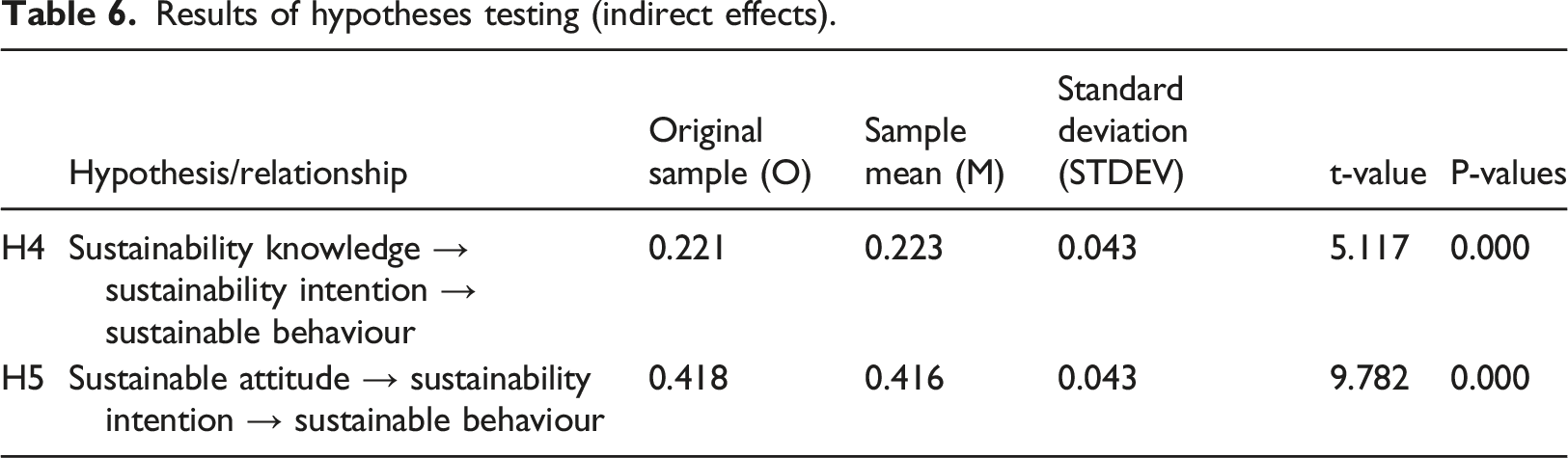
Results of hypotheses testing (indirect effects).
Multigroup analysis (MGA)
Results of hypotheses testing using MGA.
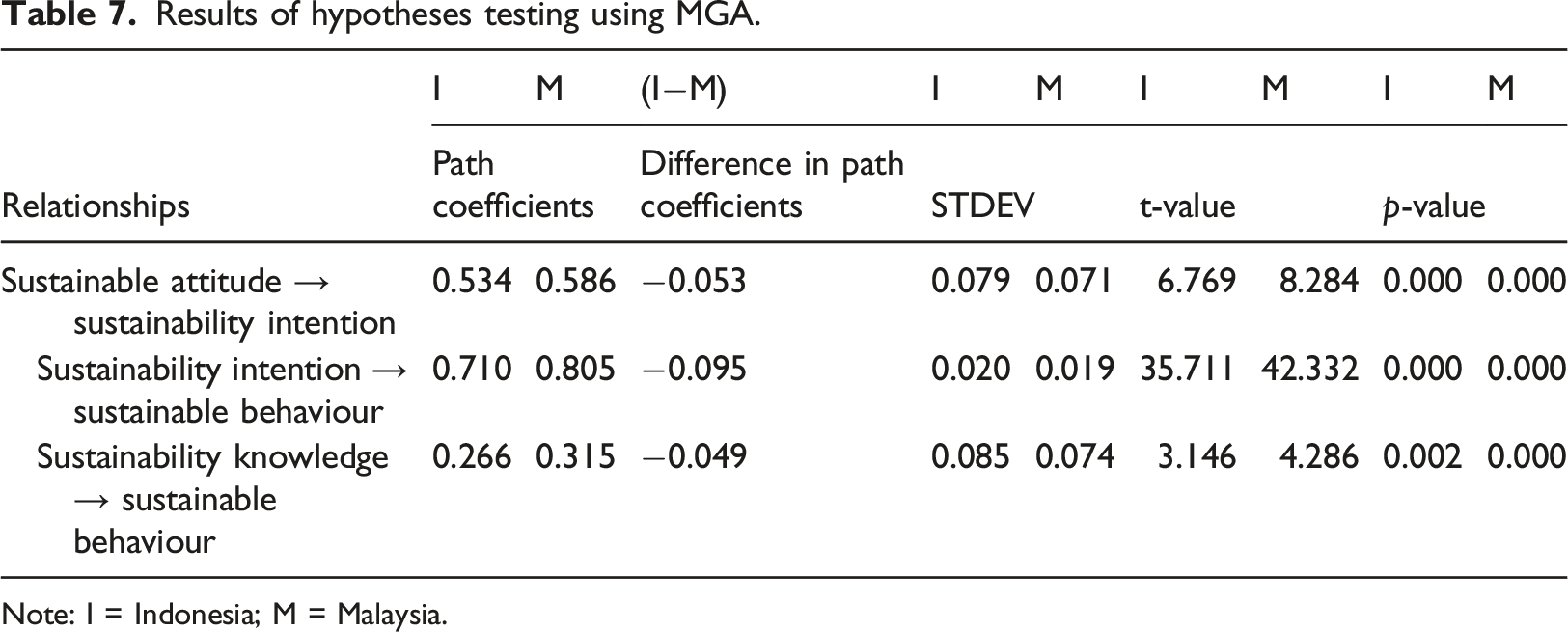
Note: I = Indonesia; M = Malaysia.
Discussion
The results suggested that sustainability knowledge and sustainable attitude significantly impact the behavioural intention of sustainability. Nonetheless, the effect of sustainability knowledge was lesser than the sustainable attitude. The results aligned with past studies (Heeren et al., 2016; Connell and Kozar, 2012; Ajzen et al., 2011). Thus, other factors such as attitude are more crucial and produce a stronger effect than knowledge despite sustainability knowledge being essential in influencing individual intention and behaviour (Liu, 2021; Mohiuddin et al., 2018). Summarily, sustainability knowledge is less significant in predicting sustainability intention and sustainable behaviour. Interestingly, Heeren et al. (2016) and Ahamad and Ariffin (2018) stressed that sustainability knowledge does not necessarily produce sustainable behaviour, but sufficient environmental and sustainability knowledge is required to influence one’s intention towards sustainable behaviour (Liu, 2021; Sun et al., 2019).
Sustainability intention can be influenced by the sustainable behaviour, as indicated in previous studies (Swaim et al., 2014; Sujata et al., 2019; Al Al Mamun et al., 2018; Braßler and Sprenger, 2021). Similarly, Gkargkavouzi et al. (2019) reported that intention is the best predictor of environmental behaviour. Moreover, sustainability intention plays a partial mediating role in the study model where direct and indirect effects were significant. Hence, sustainability intention can mediate sustainability knowledge and sustainable attitude in line with previous studies (Saari et al., 2021; Kimuli et al., 2020; Sabri et al., 2019; Safari et al., 2020).
The overall discriminant validity among variables was acceptable except between the two independent variables (sustainability knowledge and sustainable attitude). The result might be a limitation where both independent constructs were conceptually similar. Moreover, the remaining results met the acceptance level. Future studies should emphasise conceptually similar constructs to establish discriminant validity among model variables. Additionally, careful attention to question (items) selection can contribute to the determination of the relationships among variables, specifically questions regarding knowledge tests (Ajzen et al., 2011).
The current study differs from previous studies (Maneejuk and Yamaka, 2021; Ulkhaq et al., 2019) in its focus on the comparison between two largely homogeneous groups (students) of Malaysians and Indonesians and introducing the differences between the effects of the sustainability knowledge and sustainable attitude on sustainability intention. From one perspective, MGA results demonstrate the differences between Malaysian and Indonesian students where both developing countries supporting the sustainability agenda share similar backgrounds. Malaysian students recorded higher levels of the effect of sustainability knowledge and attitude on sustainability intention and a higher level of the effect of sustainability intention on sustainable behaviour than Indonesian students. Correspondingly, Koch et al. (2013) concluded that educational planners should pay more attention to ecological knowledge and how to integrate it with other fields of knowledge in Indonesian universities. In Indonesia, sustainable development remains an exclusive terminology used in limited contexts and communities, such as the government, academics and practitioners directly involved in sustainable development issues (Razzaq and Ridho, 2019). Particularly, Indonesian students’ low understanding and attitude towards sustainable development and sustainability may indicate the low frequency and intensity of the concept in academic discussions in the university.
The higher level of sustainability knowledge, attitude, intention and behaviour among Malaysian undergraduate students is linked with the effort of Malaysian higher education to emphasise sustainability knowledge through green campus initiatives of several universities, including Universiti Kebangsaan Malaysia, Universiti Malaysia, Universiti Sains Malaysia, Universiti Teknologi Malaysia and Universiti Putra Malaysia (Reza, 2016). Nonetheless, universities in Indonesia such as Universitas Diponegoro (UNDIP) Indonesia is not far behind in the effort to promote sustainability knowledge to the students (Budihardjo et al., 2021).
The study proposed several recommendations for institutions (higher education ministries and universities), policymakers and individuals (students and staff). For instance, higher education ministries and policymakers in Malaysia and Indonesia should impose policies and regulations to apply sustainability at the centre of daily institutional operations. Furthermore, Malaysian and Indonesian universities should educate and empower students and staff to believe in sustainability and practice necessary steps and actions to achieve the desired economic, environmental and social change. The practice can be managed through curriculum, research, seminars, workshops and activities that will disseminate sustainability knowledge and awareness among individuals and ultimately encourage sustainable behaviour (Msengi et al., 2019).
As a future generation affected by the environmental concerns caused by current human activities, university students in Malaysia and Indonesia should become agents of change for sustainable development. Promoting sustainability knowledge in the university can further strengthen students’ attitudes towards sustainable development, thus affecting sustainable behaviour (Braßler and Sprenger, 2021; Alsaati et al., 2020). Education for sustainable development should be added to the teaching system at the higher education stage in Malaysia and Indonesia as an undergraduate course to support the integration of high-level sustainability knowledge with their careers (Al Naqbi & Alshannag, 2018).
Malaysian and Indonesian universities should regularly invite experts in relevant fields to hold sustainable development seminars or lectures to encourage students to participate. Universities should also establish recycling stations on campus for students to practice recycling and further encourage them to choose sustainable projects in their final study year (Alsaati et al., 2020), thus ensuring sustainable behaviour among the students in Malaysia and Indonesia. Furthermore, the use of social media and persuasive design to popularise sustainability education concepts and methods can reinforce the potential of university students to transform sustainable behaviours and foster practical actions (Al Mulla et al., 2022) among Malaysian and Indonesian students.
Conclusions
The main results revealed that sustainability knowledge has less impact on sustainable intention than sustainable attitude. The relationship between sustainability intention and sustainable behaviour was stronger than the relationships between sustainable attitude, sustainability knowledge and intention among undergraduate students in Malaysia and Indonesia. Therefore, the university plays an active role in promoting sustainable behaviour development. Meanwhile, sustainable education in universities should stress teaching sustainability knowledge and the cultivation of a sustainable attitude among university students.
The findings provided substantial practical implications. First, the results are useful for researchers and education stakeholders, specifically the Malaysian and Indonesian governments in improving the current policies regarding sustainability knowledge, attitude, intention and behaviour. Specifically, the higher education ministry in Malaysia and Indonesia can benefit from the study output and use it as a means of focusing on organising the sustainable attitude cultivation activities among the undergraduate university students via university courses, workshops or events to enhance their future sustainability intention and sustainable behaviour. Moreover, the study contributes to the current literature to allow several similar studies to be conducted in other Asian countries.
The study has several limitations despite its contribution to the sustainability communication and education field in Asia, particularly in Malaysia and Indonesia, which is rare in studies. First, the use of a survey instrument as a self-report behavioural measure instead of observed behaviour might be the major limitation of the current study. The findings might be more interesting and realistic if the data were collected through observation. Hence, qualitative and quantitative analyses (mixed methods) would better explain sustainable behaviour. Second, the respondents could include students from elementary to higher education levels on how the awareness of the continuity of sustainability knowledge can start from a young age. Given that the study only focused on Malaysia and Indonesia, future research should conduct a comparative study on the students in other Southeast Asian countries, such as Singapore, Thailand, Brunei and the Philippines.
Footnotes
Acknowledgements
The researcher would like to express heartfelt gratitude to the respondents for their time and effort and the reviewers for their constructive feedback.
Declaration of conflicting interests
The author(s) declared no potential conflicts of interest with respect to the research, authorship, and/or publication of this article.
Funding
The author(s) received no financial support for the research, authorship, and/or publication of this article.