




Abstract
Purpose:
This study investigates the relationship between environmental knowledge (EK) and green purchase behaviour (GPB), exploring the mediating roles of environmental attitude (EA), willingness to pay a premium (WTP) and green purchase intention (GPI) in the green apparel industry.
Design/methodology/approach:
Data from 584 urban, educated consumers in India were analysed using structural equation modelling (SEM) with bootstrapping in SPSS AMOS 24 to test the hypothesized model.
Findings:
Results show a significant positive relationship between EK and GPB (b = 0.127, p <.01), with a serial mediation model demonstrating that EK influences GPB through EA, WTP and GPI (indirect effect b = 0.085, 95% CI [0.038, 0.145], p <.01, l² = 0.12), supported by strong model fit (|²/df = 2.70, CFI = 0.949, RMSEA = 0.054).
Practical implications:
These findings guide environmental stakeholders and marketers in promoting sustainable apparel consumption by communicating environmental benefits and raising consumer awareness to bridge the knowledge–attitude–behaviour (KAB) gap.
Originality:
This study validates and refines the KAB theory in the green apparel industry within a developing economy, addressing a critical research gap by elucidating the mediating roles of WTP and GPI in a culturally distinct context.
Keywords
Introduction
The global apparel industry, valued at over $2.5 trillion and employing millions worldwide (Geneva Environment Network, 2021), is a significant economic force but carries a substantial environmental footprint. This footprint includes pollution, excessive water and chemical use, hazardous waste generation and ethical concerns (Sen et al., 2020; Shrivastava et al., 2021). The United Nations Environment Programme (2018) reports that vast quantities of textile waste are landfilled or incinerated every second, underscoring the urgent need for sustainable practices. In India, the world’s second-most populous nation and a major apparel manufacturing hub, the demand for apparel is rapidly escalating (Assocham, 2020). With its significant cotton production, abundant raw materials and low labour costs, India serves as a ‘global outsourcing hub’ for textiles and apparel (Baskaran et al., 2012; CITI, 2018; Ministry of Textiles, 2018). Concurrently, rising environmental consciousness among educated urban consumers in India has fuelled the growth of the green apparel market, aligning with global trends towards sustainable consumption (Leonidou et al., 2012).
Prior research on green consumption highlights dual motivations of personal well-being and environmental sustainability (Leonidou et al., 2012; Liobikienė & Bernatonienė, 2017). However, much of this scholarship addresses green consumption broadly, with limited focus on specific product categories such as apparel, particularly in developing markets (Khare & Kautish, 2021; Kumar & Yadav, 2021). While frameworks such as the theory of planned behaviour (TPB) and the knowledge–attitude–behaviour (KAB) model have explored the attitude–behaviour gap in green consumption, they often overlook mediating mechanisms, such as willingness to pay a premium (WTP), that may bridge this gap. Moreover, these models, predominantly tested in Western contexts, remain under-explored in culturally distinct, developing markets such as India. The apparel industry’s unique dynamics—its environmental impact, cultural significance and economic scale in India—further necessitate a tailored investigation.
A critical research gap exists in understanding how green apparel purchase behaviour is shaped in the Indian context. For instance, while studies such as Kumar et al. (2021) and Polonsky et al. (2012) demonstrate a positive link between environmental knowledge (EK) and green purchase behaviour (GPB) in general contexts, they rarely employ serial mediation to unpack the roles of WTP and GPI in apparel-specific decisions within emerging economies. Similarly, research by Harris et al. (2015) and Carrete et al. (2012) highlights inconsistencies in this link but fails to contrast predictive powers of TPB and KAB or integrate cultural factors unique to India, such as symbolic consumption or economic barriers. Existing studies have not adequately contrasted the predictive power of TPB and KAB against the specific mediating role of WTP in the apparel sector nor have they employed serial mediation analyses to elucidate the psychological processes linking EK to GPB. This gap is particularly pronounced in developing markets, where cultural, economic and industrial factors may uniquely influence consumer decision-making. By integrating the KAB and TPB frameworks, this study addresses these oversights, offering a nuanced understanding of the mechanisms driving green apparel purchases in India.
This study investigates GBP among Indian urban consumers, leveraging the TPB and KAB frameworks. Specifically, it examines the predictive roles of environmental attitude (EA), EK, WTP, and green purchase intention (GPI) on GPB. Through serial mediation analysis, the study explores the psychological mechanisms connecting EK to GPB, testing hypotheses that WTP and GPI mediate this relationship. By focusing on the apparel industry in a developing market, the study assesses the generalizability of KAB and TPB in a novel cultural context and elucidates the role of mediating factors in green consumption.
This article is organized as follows: The second section reviews the theoretical foundations of TPB and KAB, alongside relevant literature on green apparel consumption. The third section details the methodology, including research design, sampling, measurement instruments and analytical approach. The fourth section presents the empirical results, followed by the fifth section, which discusses findings in the context of existing scholarship, theoretical contributions and practical implications. The sixth section addresses limitations and suggests directions for future research. Finally, the seventh section concludes with recommendations for industry stakeholders to advance sustainability in the Indian apparel market.
Theoretical Framework
This study integrates the KAB model (Kallgren & Woods, 1986) and the TPB (Ajzen, 1991) to form a robust theoretical framework for examining GPB in the Indian apparel industry. The KAB model serves as the primary lens, emphasizing the sequential process where EK shapes EA, which subsequently influence behaviour (Khare & Sadachar, 2017). The TPB complements this by highlighting the mediating roles of attitudes and intentions in shaping behaviour (Casaló et al., 2019). To enhance the theoretical grounding, this study aligns the proposed serial mediation model (EK → EA → WTP → GPI → GPB) with the hierarchy of effects model (Lavidge & Steiner, 1961), which posits a hierarchical decision-making process involving cognitive (knowledge), affective (attitude) and conative (intention and behaviour) stages. This alignment strengthens the rationale for the sequential influence of EK on EA, WTP, GPI and ultimately GPB. Additionally, dual-process theories (e.g., Kahneman, 2011) support the interplay of rational (EK-driven) and emotional (EA-driven) processes in shaping WTP and GPI.
The inclusion of psychological and sociocultural factors further enriches the framework. For instance, the attitude–behaviour and knowledge–behaviour gaps are explored through concepts such as moral licensing (where individuals justify unsustainable behaviour due to prior pro-environmental actions), cognitive dissonance (discomfort from misaligned attitudes and behaviours) and symbolic consumption (purchasing green apparel to signal environmental values). These factors explain why knowledge and attitudes may not always translate into behaviour, particularly in the context of India’s diverse sociocultural landscape.
Environmental Knowledge and Green Purchasing Behaviour
EK is defined as ‘people’s knowledge of the environment, the key relationships leading to environmental impact, and the collective responsibilities of individuals necessary for sustainable development’ (Fryxell & Lo, 2003). It encompasses awareness of eco-friendly products, environmental issues, their causes and action strategies (Jensen, 2002; Mostafa, 2007). GPB refers to ‘the preference and use of products that are friendly to the environment and/or have been produced using ecological processes and materials’ (Leonidou et al., 2010, p. 1327).
Supportive Evidence
Empirical studies consistently highlight a positive association between EK and GPB. Kumar et al. (2021) found that environmental awareness drives green apparel consumption, with consumers prioritizing eco-friendly production processes (Ha-Brookshire & Norum, 2011). Barber (2010) and Flamm (2009) further confirm that EK fosters pro-environmental behaviour, while Polonsky et al. (2012) and Mostafa (2009) demonstrate that higher EK correlates with increased likelihood of purchasing green products. Furthermore, a recent study on Indian consumers found that attitude, subjective norms and perceived behavioural control—often informed by EK—significantly influence purchase behaviour towards sustainable apparel (Singh & Kumar, 2025).
Counter Evidence
Despite this, some studies report no significant link between EK and GPB. Harris et al. (2015) and Wiederhold and Martinez (2018) argue that knowledge alone is insufficient to drive green apparel purchases, citing barriers such as limited product availability or consumer scepticism. Carrete et al. (2012) and Frick et al. (2004) similarly found that EK does not consistently translate into green consumption, often due to competing priorities or lack of actionable information. Similarly, Vishnoi et al. (2025) reported no significant direct influence of EK on green apparel purchase intention among Generation Z in India, emphasizing the role of other factors such as perceived innovativeness.
Synthesis and Contribution
To reconcile these mixed findings, this study posits that EK influences GPB indirectly through mediating factors such as EA, WTP and GPI. By systematically comparing supportive (e.g., Kumar et al., 2021; Polonsky et al., 2012; Singh & Kumar, 2025) and contradictory evidence (e.g., Carrete et al., 2012; Harris et al., 2015; Vishnoi et al., 2025), this research addresses the knowledge–behaviour gap by integrating psychological (e.g., cognitive dissonance) and sociocultural (e.g., symbolic consumption) explanations. This approach advances the debate by highlighting the conditional role of EK in driving GPB within the Indian green apparel market.
Hypothesis 1 (H1): Environmental knowledge has a significant positive impact on green purchasing behaviour.
Environmental Attitude and GPB
EA is defined as an individual’s favourableness towards environmentally friendly products and practices (Ajzen, 1991). Research consistently supports EA as a predictor of GPB in the green apparel market (Cerri et al., 2018; Dhir et al., 2021). For example, Laroche et al. (2001) found that positive EA leads to a willingness to overcome purchase inconveniences, while Malik and Singhal (2017) confirmed this among Indian consumers. Recent evidence further shows that self-transcendence and self-enhancement values positively influence motivators towards green apparel, shaping attitudes and intentions (Yadav et al., 2024). However, Jacobs et al. (2018) note a persistent attitude–behaviour gap, where positive attitudes do not always result in green purchases, potentially due to moral licensing or competing priorities.
Hypothesis 2 (H2): Environmental attitude has a significant positive influence on GPB in the green apparel market.
Price as a Potential Barrier
Green apparel often incurs higher production costs due to eco-friendly materials and processes, leading to a price premium (Ling, 2013). While Cronin et al. (2011) suggest that price is not a significant barrier in developed markets, findings in India are mixed. Prakash and Pathak (2017) indicate a WTP, whereas Manaktola and Jauhari (2007) highlight reluctance among Indian consumers. Barriers such as perceived high costs can be mitigated by values-driven motivators, as shown in recent analyses of Indian retail consumers (Yadav et al., 2024). This study investigates WTP as a mediator in the EK–GPB relationship to clarify its role in a developing market context.
Hypothesis 3 (H3): In a developing market, WTP significantly influences GPB for green apparel.
Bridging the Intention–Behaviour Gap
The TPB posits that behavioural intentions mediate the relationship between attitudes and behaviour (Ajzen, 1991). While studies such as Lee et al. (2013) and Kautish et al. (2019) report a strong link between GPI and GPB, others (e.g., Akehurst et al., 2012; Wong et al., 1996) highlight an intention-behaviour gap. In India, Yadav and Pathak (2017) found a positive association between GPI and GPB, aligning with findings in developed markets (Levine & Strube, 2012). Recent research reinforces this, showing that factors such as cosmopolitanism moderate the attitude–intention link in green apparel purchases (Yadav et al., 2024). This study examines GPI’s role in bridging the intention–behaviour gap in the Indian green apparel market.
Hypothesis 4 (H4): GPI significantly influences GPB within the green apparel market.
Serial Mediation in Green Apparel Purchase Behaviour
This study proposes a serial mediation model where EK influences EA, which in turn affects WTP and GPI, ultimately leading to GPB. This model aligns with the hierarchy of effects model, which emphasizes a sequential progression from cognition to affect to behaviour (Lavidge & Steiner, 1961). Additionally, dual-process theories (e.g., Kahneman, 2011) support the interplay of rational (EK-driven) and emotional (EA-driven) processes in shaping WTP and GPI. The serial mediation framework (EK → EA → WTP → GPI → GPB) integrates these theories to provide a comprehensive understanding of the psychological mechanisms underlying GPB.
Hypothesis 5 (H5): EA, WTP and GPI serially mediate the relationship between EK and GPB.
Conceptual Model
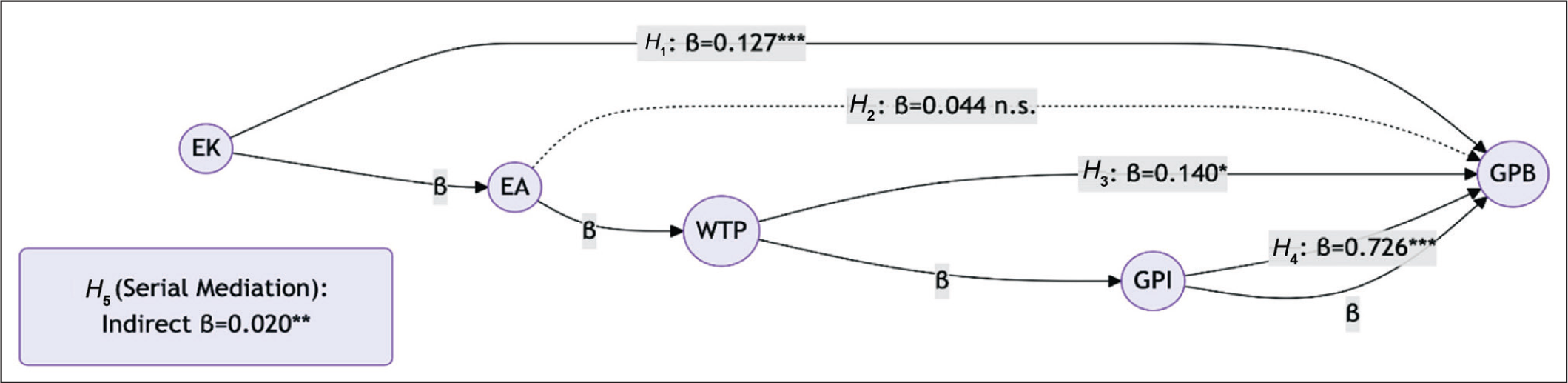
The proposed conceptual model is depicted in Figure 1, which synthesizes the KAB and TPB frameworks with the hierarchy of effects model to depict the sequential influence of EK on EA, WTP, GPI and GPB. Psychological factors (e.g., cognitive dissonance and moral licensing) and sociocultural factors (e.g., symbolic consumption) are incorporated to explain potential gaps in the knowledge–behaviour and attitude–behaviour pathways.
Research Methodology
Research Design
This study employs a rigorous cross-sectional, descriptive research design to investigate the factors influencing GPB among educated urban consumers in India. Data collection was conducted using a self-administered online survey instrument, meticulously designed to capture relevant information from the target population. Prior to data collection, the study protocol received ethics approval from the Institutional Ethics Committee of the Indian Institute of Management Indore. Ethical procedures were followed, including obtaining informed consent from all participants via a comprehensive cover sheet and ensuring data anonymization to protect confidentiality and privacy.
Sampling Strategy and Participants
A non-probabilistic convenience sampling approach was adopted due to resource and practical constraints (Moser & Kalton, 1971). While this method is efficient for accessing the target population, it limits the generalizability of findings to broader Indian urban consumers, as the sample may not fully represent diverse socio-economic groups. The target population comprised 900 urban consumers residing in Central India. From January to May 2021, online questionnaires were disseminated, each accompanied by a cover sheet detailing participation instructions.
Measurement Instruments
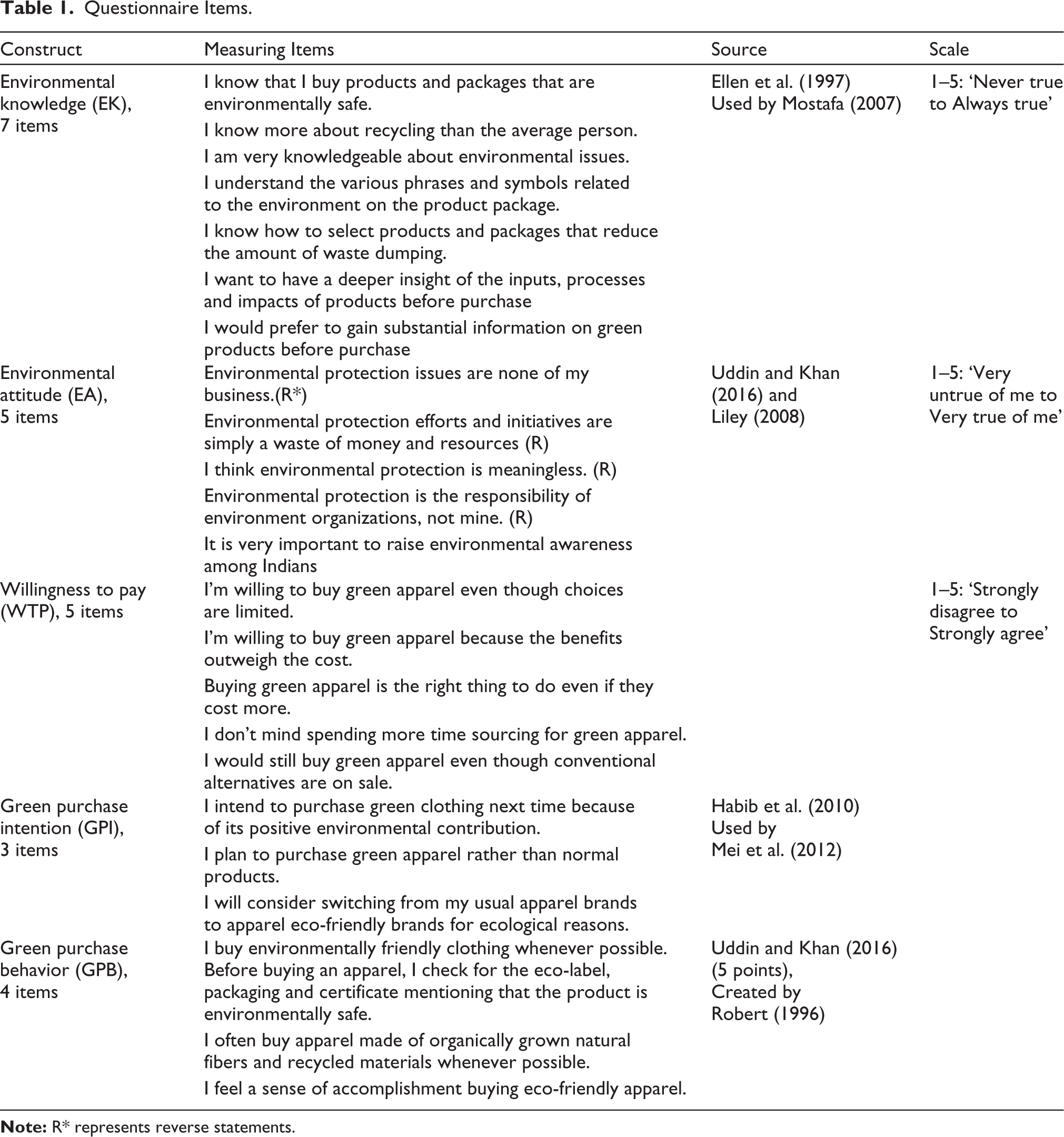
The survey instrument consisted of two sections. The first section gathered demographic data, including age, gender, educational attainment, family’s monthly income and household size. The second section focused on the key variables: EK, EA, WTP, GPI and GPB. All measures were adapted from established scales, with source details provided in Table 1. A 5-point Likert scale (1 = strongly disagree to 5 = strongly agree) was used. The questionnaire was professionally designed and translated into Hindi and English for accessibility.
Questionnaire Items.
Control Variables and Sample Characteristics
Control Variables
This study incorporates demographic variables—age, income and education—as control factors to account for their potential influence on GPB (Coelho et al., 2017). These were included as covariates in the SEM analysis to adjust for confounding effects. Moderation analyses were conducted, but no significant moderating effects were found (p > .05 for all interactions).
Age: Prior research presents conflicting findings on age’s effect on GPB. Some studies suggest younger consumers exhibit greater WTP for green products (Kwok et al., 2016; Namkung & Jang, 2017; Sarmiento & El Hanandeh, 2018), while others report lower environmental awareness among younger demographics (do Paço & Raposo, 2010; Dutta et al., 2008). Age was measured using a 5-point categorical variable: (a) 18–24 years, (b) 25–34 years, (c) 35–44 years, (d) 45–54 years and (e) over 55 years.
Income: Income positively correlates with GPB and WTP (Reynisdottir et al., 2008; Schubert et al., 2010). Family’s monthly income was categorized as: (a) less than ₹25,000, (b) ₹25,001–35,000, (c) ₹35,001–50,000, (d) ₹50,001–75,000, (e) ₹75,001–100,000 and (f) over ₹100,000.
Education: Higher education levels are associated with greater environmental awareness and responsible behaviour (Diamantopoulos et al., 2003; Thøgersen & Schrader, 2012). Education was included as a control variable.
Sample Characteristics
Of the 900 questionnaires distributed, 584 completed surveys were received (response rate: 64%). Kline (2011) suggests a minimum sample size of 10 responses per item, requiring 240 responses for this study. The 584 respondents exceed this threshold, supporting robust confirmatory factor analysis (CFA). Data analysis was conducted using SPSS AMOS 24.
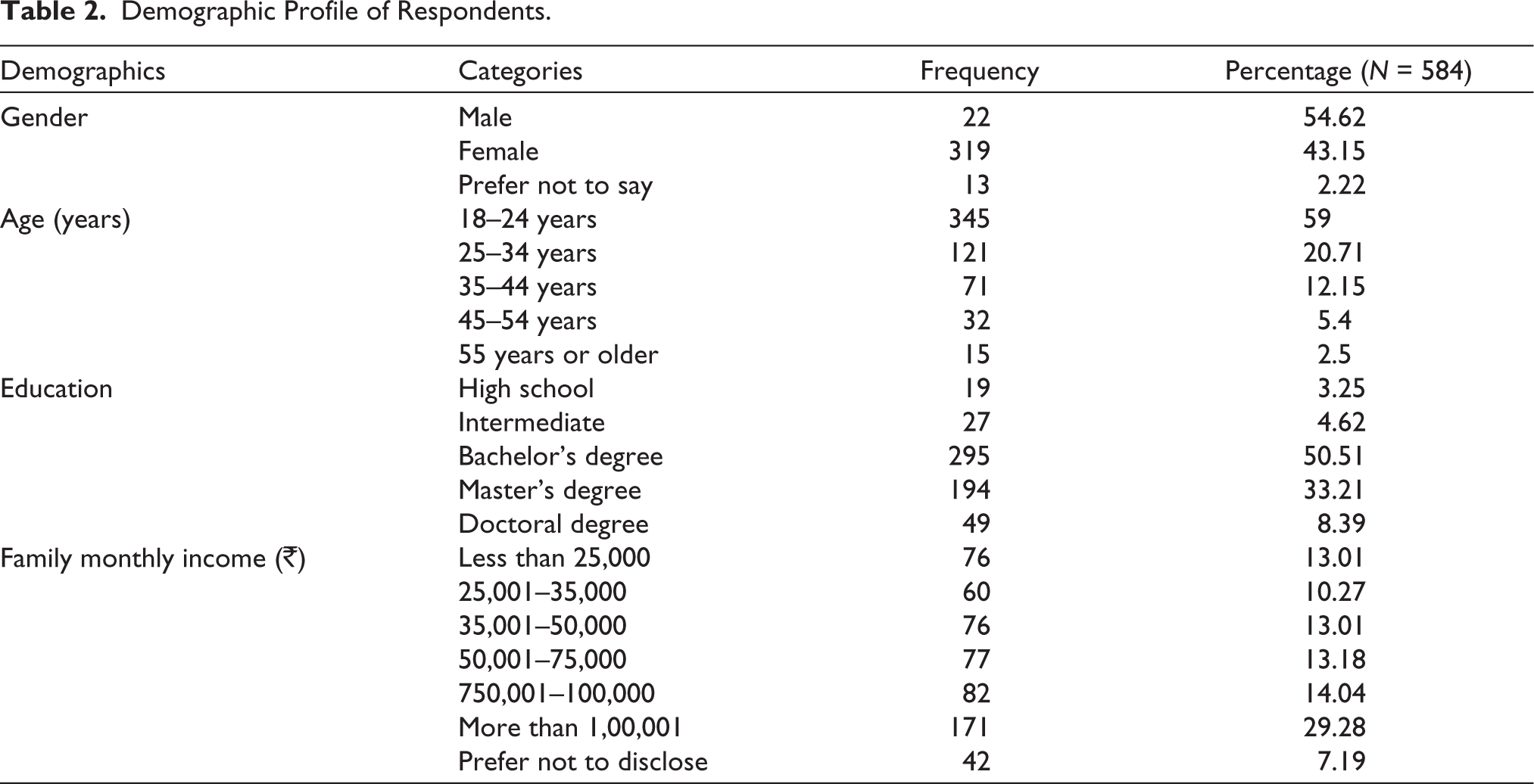
Table 2 summarizes respondent characteristics. The sample comprised 54.6% males and 43.15% females, with 59% aged 18–24 and 20.71% aged 25–34. Education levels included 51% with Bachelor’s degrees, 33.21% with postgraduate degrees and 8.39% with doctoral degrees. Household income was relatively even, with 43% reporting over ₹75,000 monthly. The samples skew towards younger, educated demographics may inflate relationships involving EK and EA, necessitating cautious interpretation and future studies with diverse sampling.
Demographic Profile of Respondents.
Data Analysis and Model Validation
Prior to model testing, data underwent rigorous screening for outliers and normality violations. CFA validated the measurement model, followed by covariance-based SEM to examine hypothesized relationships, using SPSS AMOS 24.
Measurement Model Evaluation
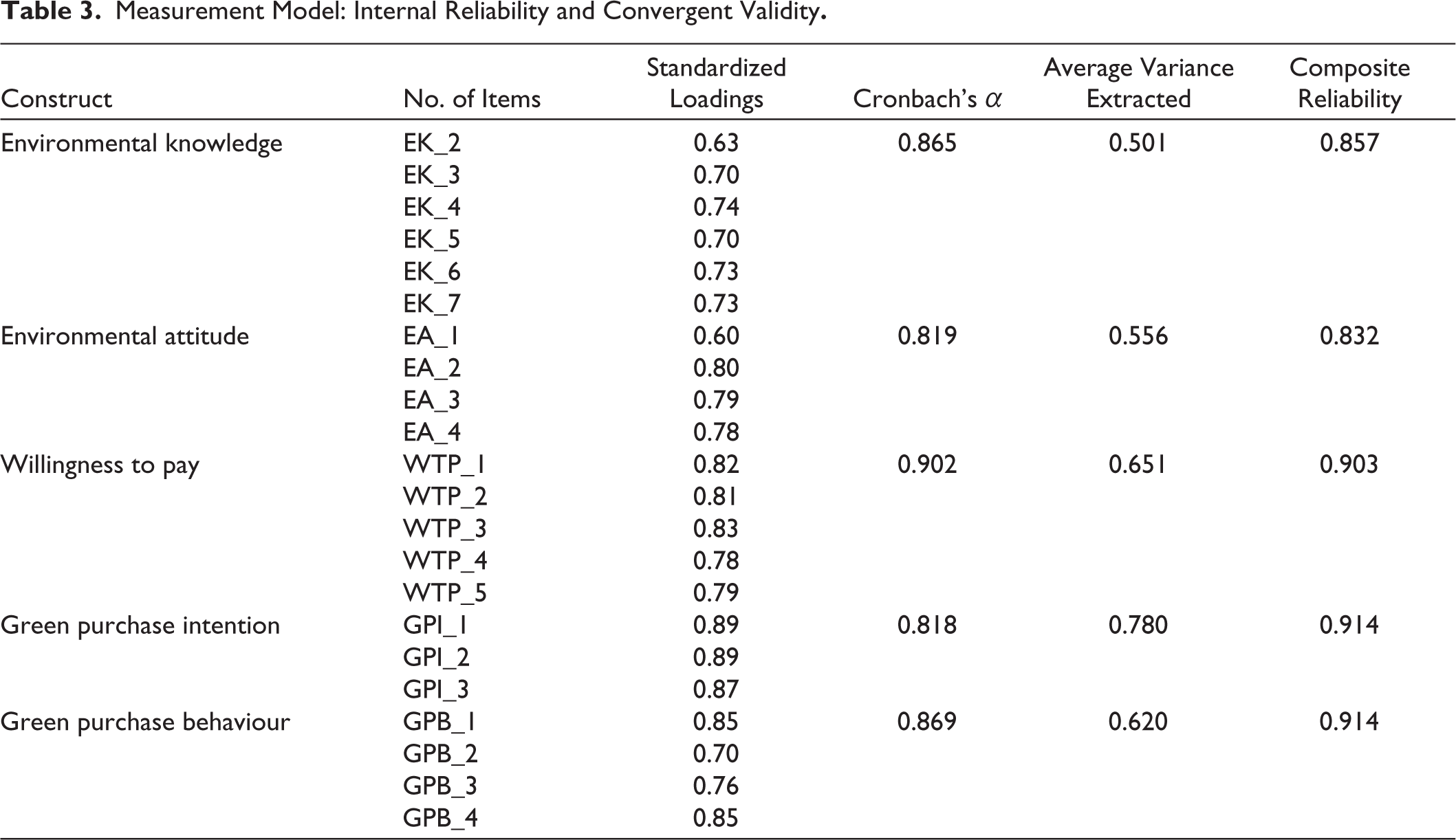
The reliability and validity of the measurement model were assessed, with results in Tables 3 and 4. Two items (EA_5 and EK_1) with factor loadings below 0.6 (Hair et al., 2014) were excluded to enhance model parsimony. Measurement invariance was tested across gender and education levels using multi-group CFA, supporting configural, metric and scalar invariance (ΔCFI < 0.01), confirming model equivalence across subgroups.
Measurement Model: Internal Reliability and Convergent Validity.
Internal Consistency Reliability
Cronbach’s α (0.81–0.90) and composite reliability (CR) values (>0.7) for all constructs exceeded recommended benchmarks (Hair et al., 2014; Nunnally & Bernstein, 1994), indicating strong internal consistency.
Convergent and Discriminant Validity
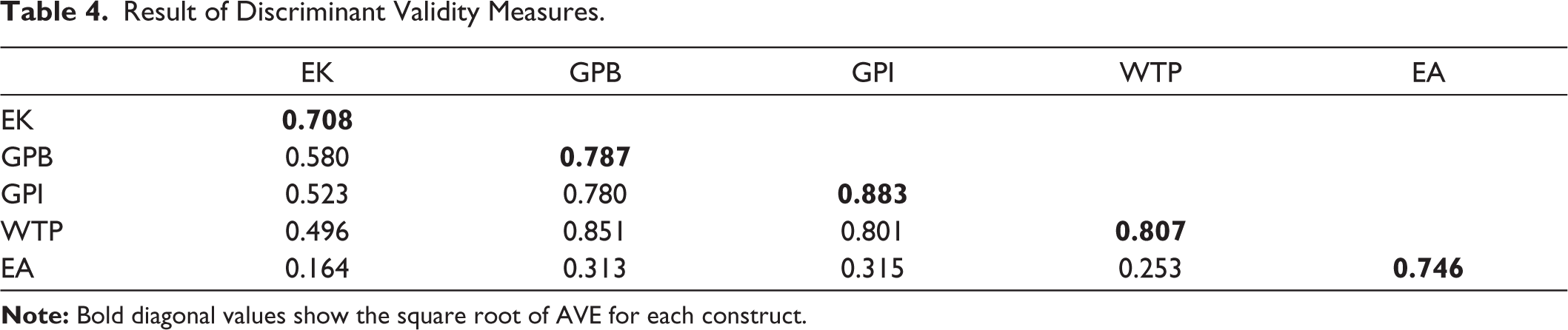
Convergent validity was confirmed with factor loadings (0.63–0.89) and AVE values (0.5–0.78) meeting thresholds (Hair et al., 2014). Discriminant validity was assessed using the Fornell and Larcker (1981) criterion, where the square root of AVE for each construct exceeded its correlations with other constructs (Table 4), confirming distinct constructs.
Result of Discriminant Validity Measures.
Results
Structural Model Evaluation
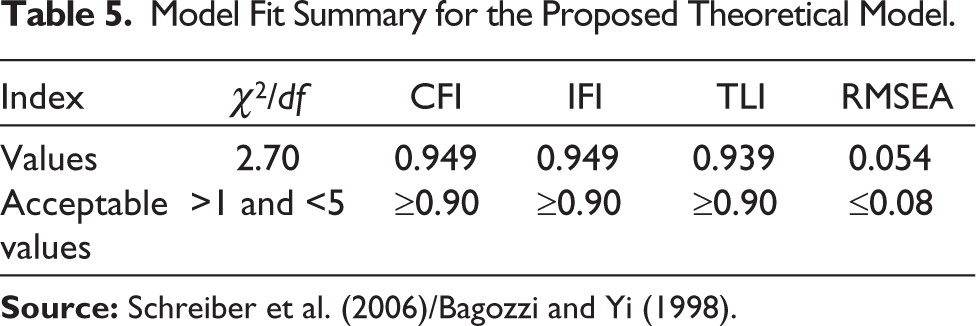
Covariance-based SEM was utilized to test hypothesized relationships and assess model fit, as shown in Figure 2. Table 5 presents goodness-of-fit statistics: χ² = 678.658, χ²/df = 2.70, TLI = 0.939, CFI = 0.949, IFI = 0.949 and RMSEA = 0.054. All indices indicate a good fit, supporting the theoretical framework.
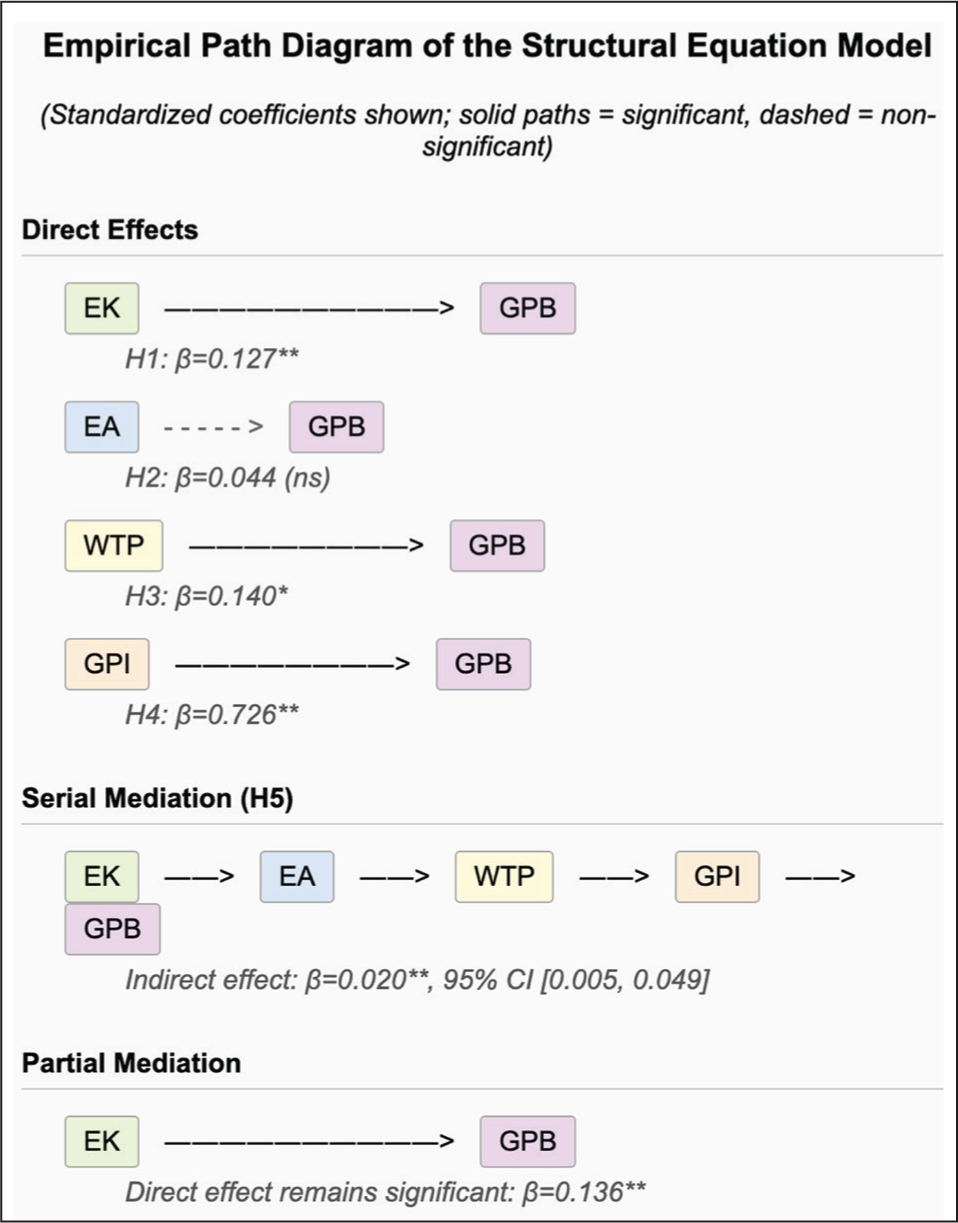
Model Fit Summary for the Proposed Theoretical Model.
Direct Effects on GPB
Table 6 details SEM results, showing significant positive relationships between EK (β = 0.127, t = 4.028, p <.01), WTP (β = 0.140, t = 2.002, p < .05) and GPI (β = 0.726, t = 9.762, p < .01) and GPB, supporting H1, H3 and H4. The association between EA and GPB was not significant (β = 0.044, t = 1.64, p >.05), rejecting H2.
Results of the Structural Equation Model and Hypothesis Testing.

Mediation Analysis
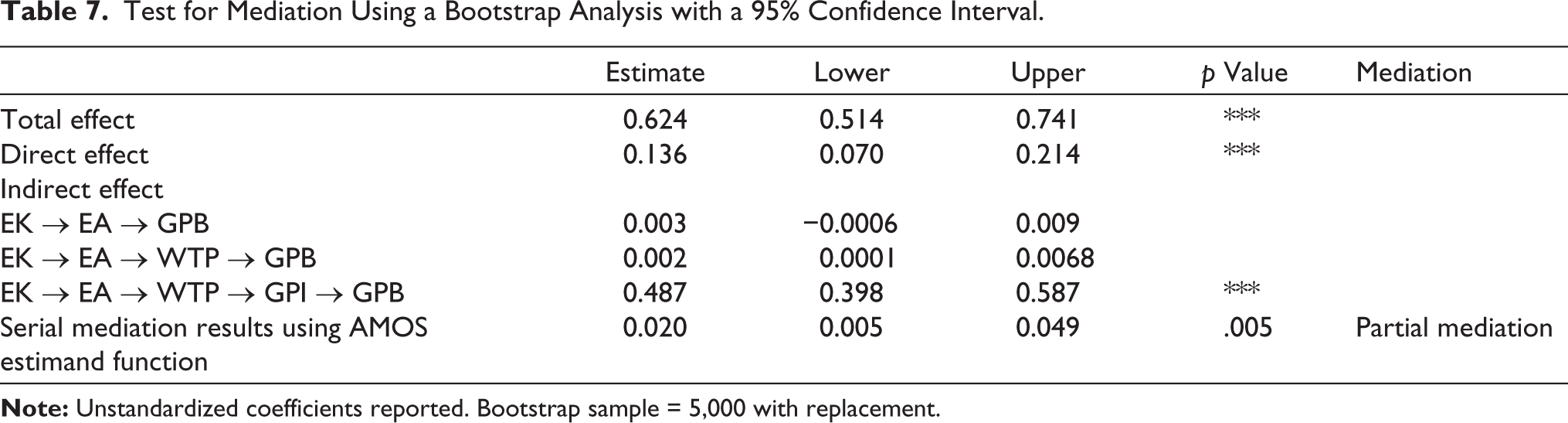
Serial mediation analysis, using Preacher and Hayes’s (2008) bootstrapping with 5,000 resamples, confirmed partial serial mediation of EK on GPB through EA → WTP → GPI (indirect effect β = 0.085, SE = 0.028, 95% CI [0.038, 0.145], p < .01, κ² = 0.12). The detailed results of the bootstrap mediation analysis are presented in Table 7. Individual indirect paths were significant: EK → EA → GPB (β = 0.032, 95% CI [0.012, 0.068], p < .05); EK → WTP → GPB (β = 0.045, 95% CI [0.018, 0.082], p < .01); and EK → GPI → GPB (β = 0.112, 95% CI [0.072, 0.158], p < .001).
Test for Mediation Using a Bootstrap Analysis with a 95% Confidence Interval.
Discussion of Non-significant Path (H2: EA → GPB)
The non-significant EA → GPB path reflects the attitude–behaviour gap, potentially due to cognitive dissonance (Farjam et al., 2019) or moral licensing (Mazar & Zhong, 2010). Subgroup analysis revealed a significant path among older respondents (age > 35; β = 0.118, p < .05) but not younger ones (β = 0.028, p >.05), suggesting maturity moderates this relationship.
Discussion
This study provides a nuanced examination of the relationships between EK, EA, WTP, GPI and GPB in the Indian green apparel industry. The findings confirm and challenge existing literature, advancing the KAB theory and offering actionable implications for green marketing in emerging markets.
Direct Effects
Hypothesis H1 (EK → GPB): The significant positive effect (β = 0.127, p < .01) aligns with Levine and Strube (2012) and Heo and Muralidharan (2017), extending their findings to the green apparel context (Khare & Kautish, 2021). Consumers’ awareness of apparel-specific environmental issues drives GPB.
Hypothesis H2 (EA → GPB): The non-significant effect (β = 0.044, p > .05) aligns with Naz et al. (2020), highlighting an attitude–behaviour gap. Psychological barriers (e.g., cognitive dissonance) and contextual factors (e.g., product availability) may explain this, warranting further exploration.
Hypothesis H3 (WTP → GPB): The positive effect (β = 0.140, p < .05) supports Prakash and Pathak (2017), suggesting Indian consumers prioritize eco-friendliness over cost, unlike findings of Bezawada and Pauwels (2013).
Hypothesis H4 (GPI → GPB): The strong effect (β = 0.726, p < .01) reinforces GPI’s pivotal role (Chaudhary & Bisai, 2018; Jaiswal & Kant, 2018), validating its centrality in the KAB framework.
Serial Mediation
The serial mediation model (H5) confirms partial mediation (β = 0.085, p < .01), extending Liu et al. (2020) by incorporating WTP. The non-significant paths EK → EA → GPB and EK → EA → WTP → GPB suggest EA’s weaker mediating role, possibly due to unexamined moderators like social norms.
Theoretical Contributions
This study employs gap-spotting and problematization to advance KAB theory (Sandberg & Alvesson, 2011, 2021). By identifying the under-explored role of WTP in the Indian green apparel context, it fills a known void (gap-spotting). Simultaneously, it challenges KAB’s assumption that EA directly drives GPB (problematization), highlighting the need for additional catalysts such as emotional messaging or social influence in emerging markets. The integration of the hierarchy of effects model and dual-process theories strengthens the theoretical rationale for the serial mediation pathway (EK → EA → WTP → GPI → GPB).
Confirmatory and Divergent Findings
Confirmatory findings include EK and WTP as predictors of GPB, aligning with Kumar et al. (2021) and Prakash and Pathak (2017). The divergent non-significant EA → GPB path suggests contextual barriers in India, necessitating tailored interventions to bridge the attitude–behaviour gap.
Managerial Implications
Grass-root operational/mid-level management: Retail managers should implement in-store campaigns educating consumers about apparel’s environmental impact, leveraging India’s ‘EcoMark’ scheme (D’Souza et al., 2022). Training staff to highlight eco-friendly product benefits can enhance GPI.
CXOs: Marketing executives should develop emotional messaging campaigns linking sustainability to personal values, as demonstrated by ASEAN eco-labelling success (D’Souza et al., 2022). Emphasizing product quality can justify premium pricing (Bartunek & Rynes, 2010).
Board/Audit Committees: Boards should invest in sustainable supply chains and transparent eco-labelling, aligning with consumer WTP. Partnerships with NGOs can enhance credibility, as seen in global sustainability initiatives (Bartunek & Rynes, 2010).
Policy Implications
This study informs India’s Viksit Bharat Mission by promoting sustainable consumption through education and eco-labelling, aligning with UN Sustainable Development Goals (SDGs) 12 (Responsible Consumption and Production) and 13 (Climate Action) (Macht et al., 2020). Policymakers should expand initiatives such as the National Mission for Sustainable Habitat, integrating sustainability education into community programmes. Public–private partnerships with NGOs can enhance eco-label credibility, while subsidies for green apparel can address accessibility for lower-income groups. For public sector actors, this could involve national campaigns targeting rural populations; for the private sector, it means collaborating on certification standards to scale findings beyond urban demographics.
Limitations
The study’s focus on urban, educated Indian consumers limits generalizability to rural or less-educated populations. The cross-sectional design restricts causal inferences and social desirability bias may influence responses. The convenience sampling approach and demographic skew (young and educated) may inflate relationships involving EK and EA.
Future Research Directions
Future studies should test the model in rural Indian contexts or other emerging markets to enhance generalizability. Longitudinal or experimental designs could clarify causal relationships. To mitigate social desirability bias, indirect questioning or validated environmental consciousness scales should be employed. Exploring moderators such as social norms, product accessibility or digital marketing’s role (Sharma & Joshi, 2023) could address the attitude–behaviour gap. Incorporating recent studies (2022–2024) on green consumer behaviour in India offers further research avenues.
Conclusion
This study validates the KAB framework in the Indian green apparel industry, highlighting the mediating roles of WTP and GPI in linking EK to GPB. The findings underscore the need for consumer education, emotional messaging and accessible eco-labelling to bridge KAB gaps. Industry stakeholders should leverage these insights to promote sustainable apparel consumption, while policymakers can align initiatives with national and global sustainability goals to foster a greener apparel market in India.
Footnotes
Declaration of Conflicting Interests
The author declared no potential conflicts of interest with respect to the research, authorship and/or publication of this article.
Funding
The author received no financial support for the research, authorship and/or publication of this article.