




Abstract
Access to education has been the central tenet of the Millennium Development Goal 2, which focused strongly on increasing enrolment yet failed to promote education quality and equity and address contextual complexities that sustain exclusion. As a consequence, many children are not learning. There is growing recognition that effective, efficient and equitable education for all will not be achieved without better accountability. The present paper details innovative methods for strengthening the learning process through better social accountability. The paper defines and tests in rural schools of Afghanistan and Pakistan a community-based system dynamics protocol using participatory group model building (GMB) techniques. We tested the protocol with two groups of teachers and one group of children, with the three produced causal loop diagrams highlighting factors that influence learning in the classroom from the perspectives of the participants. The sessions showed interest, engagement, quick mastery of how GMB methods work and clear understanding of how the current classroom system hinders learning for many students. Researchers found that large autonomy and initiative could be left to the workshop participants, keeping the facilitator’s role to one of explaining the method and asking clarification about causal relations.
Keywords
Introduction
While enrolment in school is growing worldwide, a majority of children – 617 million children and adolescents, or six out of 10 globally – are not acquiring minimum levels in literacy and mathematics, with 81% of children and adolescents across central and southern regions of Asia (241 million) in particular not being proficient in reading (United Nations Educational, Scientific and Cultural Organization Institute for Statistics, 2017). Disadvantaged children especially – poor, female, from minority ethnicities, with disabilities – are often excluded from meaningful learning processes in low- and middle-income countries (LMICs) (Bines and Lei, 2011; Education for All Global Monitoring Report, 2015; Filmer, 2008). While progress has been made in increasing the overall number of schools and student enrolment, such children vulnerable to exclusion are either not accessing school or, if enrolled, facing important challenges to learning (Bakhshi and Trani, 2006; Kirk, 2004; Seitz, 2004; Trani et al., 2012). Evidence indicates that accessing primary schools and sitting in classrooms does not automatically yield positive learning outcomes, suggesting that complex phenomena indicative of wider social exclusion are hindering the learning process (Hanushek, 2006).
The Sustainable Development Goals (SDGs) have created a strong impetus to focus on education quality and equity and address contextual complexities that sustain exclusion. This focus is highly relevant given that millions of children in LMICs are leaving school without basic numeracy and literacy skills (Education for All Global Monitoring Report, 2015; Pritchett, 2013; United Nations Educational, Scientific and Cultural Organization, 2012). There is growing recognition that effective, efficient and equitable education for all will not be achieved without better accountability (United Nations Educational, Scientific and Cultural Organization, 2016). Grounded in theories of social justice, human development and the capabilities approach, and recognising not only just the instrumental value of education but also its inherent value (Saito, 2003; Unterhalter, 2009), our study proposes to use community-based system dynamics (CBSD) methods to navigate the paradigm shift in discourse from a right to education towards a right to quality and equity in learning (Burnett and Felsman, 2012; Unterhalter and Dorward, 2013).
Quality and equity in education implies that non-cognitive and cognitive skills are both necessary for children to flourish and acquire the critical analyses or problem-solving skills required to adapt to a fast-changing and increasingly technological world (Burnett, 2008; Jegannathan et al., 2014; Unterhalter, 2009). Our research engages the school community – teachers, parents, children, and school committee members – using innovative social accountability mechanisms to improve existing school management systems (school procedures, teaching protocols, and children support systems) to promote both cognitive and psychosocial skills of all children – to which the researchers define as encompassing children of all identities, backgrounds, including gender, ethnicity, disability, level of poverty – in rural governmental and community-based schools of Afghanistan and Pakistan. The present paper investigates the process implemented to determine this community driven intervention.
Following this introduction, the background section reviews existing interventions targeting equity and quality in education and provides an overview of the current challenges of the primary school systems in Afghanistan and Pakistan; the methods section mentions briefly study aims, setting, design and participants, and specifics of GMB workshop’s protocol. The result section presents the pilot-testing of the GMB workshop’s protocol and the final section discusses lessons learned and carried forward into the subsequent development of the method.
Background
Falling short on equity and quality in primary education
Promoting effective learning for all children has remained elusive. Research is scarce and ignores psychosocial skills. Existing interventions (e.g., class size, teacher incentives, school management accountability, and cash transfer) have shown statistically significant but small impact on cognitive skills (test scores) only (Kremer et al., 2013; McEwan, 2015). A study in Kenya showed that providing textbooks improved test scores amongst the top 20% of students only, due to the difficult content (Glewwe et al., 2009). Building “girl friendly” schools (Burde and Linden, 2013; Kazianga et al., 2013), supporting low performing children with adapted remedial instruction interventions (Banerjee et al., 2007, 2010, 2016; Lakshminarayana et al., 2013) have been shown to increase test scores. Yet, no study has measured the impact of interventions that specifically promote equality and inclusion in education and child wellbeing in LMICs (Winthrop and Kirk, 2008). This is partly due to the absence of tools to assess non-cognitive learning outcomes, an important factor of quality education. Finally, no education intervention, to our knowledge, has aimed at promoting inclusion of all children in the learning process.
To foster effective education systems and provide quality education, experts have also encouraged the establishment of various mechanisms of accountability – financial reporting (Dee et al., 2013), regulatory (e.g., increasing school inspections), professional (curriculum, programs, ethical and professional standards), performance-based (students testing, teacher performance–pay and promotion schemes) (Sclafani, 2009), market-oriented (increasing school choice) (Wößmann, 2007), participatory and decentralised (involvement of communities in decision-making) (Di Gropello and Marshall, 2011) – some of which have been part of the school governance systems for decades (Bruns et al., 2011). Overall, accountability has mainly been characterised by the submission of school, staff or teacher’s performance and actions to the oversight from an external entity.
“Social” accountability is largely absent. Social accountability entails setting-up processes that give a voice to citizens in defining and assessing schools’ policies and programmes. It is grounded in civic engagement, of citizens and/or civil society organisations that participate in exacting accountability (Agarwal et al., 2009). Some attempts have been made at introducing social accountability processes in schools with mixed results (Bruns et al., 2011). School-based report cards have sought to gain local community perspectives by gathering information not just pertaining to students’ performance and progress, but also classroom and school characteristics (classroom size and teacher qualifications) (Andrabi et al., 2014; Muralidharan and Sundararaman, 2010). Parents’ involvement has been viewed in terms of expectations, satisfaction and feedback in order to improve education. In Pakistan, report cards led low-quality private schools to increase quality of teaching and high quality private schools to reduce fees (Andrabi et al., 2014). School-based management reforms have been introduced in LMICs based on the hypothesis that giving some decision-making power to local school stakeholders would lead to greater efficiency in education (Barrera-Osorio et al., 2009). Such initiatives involving parents alongside principals and teachers in decision-making processes through school management committees have shown mixed evidence on basic learning outcomes (Di Gropello and Marshall, 2011; Jimenez and Sawada, 1999; King and Ozler, 1998). In practice, the role in school management of parents and communities remains limited, particularly in poor communities where parents’ availability and education level are low (Abadzi, 2013; Kingdon et al., 2014). Evidence further suggests that making information available and accessible to local communities constitutes a first step towards engagement. Yet, the mechanisms for meaningfully involving parents require careful consideration of local context and dynamics which in turn determine the levers of change that can bring about improvement (Di Gropello and Marshall, 2011).
In remote areas of Afghanistan and Pakistan where we intervene, there is only one school at best and parents cannot choose where to educate their children, a mechanism used elsewhere to push for competition for quality. Such top-down approaches do little for awareness about children’s rights and improvement in quality and equity of education (Keefer and Khemani, 2005; Majumdar et al., 2004). Innovative methods are needed to overcome existing barriers to learning within school once the first hurdle of access is crossed (Diez, 2010), since major bottlenecks occur in the classroom. Teachers are regarded as the main cornerstone in achieving quality and equity in education, and reinforcing the community role in school management could improve the teaching process through better monitoring of teachers’ effort (Beasley and Huillery, 2013). Currently, teachers are mainly scrutinised in terms of (non)performance: absent from their posts; occupied with administrative tasks; poor teaching performance; etc. (Hallinger et al., 2014; Kremer et al., 2005). Classroom observations have found that loss of instructional time is a widespread phenomenon (Abadzi, 2009). But, prejudice and discrimination towards disadvantaged children that impact learning (Lynch et al., 2014) require a different approach. Education actually entails complex social interactions between teachers and students and classroom dynamics. Hence, a more deliberate targeting of teachers’ confidence in and commitment towards teaching all children, not leaving disadvantaged children behind, is required for fighting social exclusion within the learning process.
Primary education systems’ challenges in Afghanistan and Pakistan
Education systems in Afghanistan and Pakistan face similar key challenges. With two-thirds of their population residing in rural areas, a young and rapidly growing population and insufficient investment in education, Afghanistan and Pakistan are characterised by alarming education indicators: respectively 45% (Afghanistan and one-third Pakistan) of primary school age children – primarily girls – are out of school; mean years of schooling is 3.2 years in Afghanistan and 4.7 years in Pakistan; and disadvantaged children, particularly children with disabilities, children in remote rural areas and from poor families, girls and ethnic minorities have lower enrolment rates and higher rates of repetition and drop out before completion (Barro and Lee, 2013; Islamic Republic of Afghanistan Ministry of Education, 2015; Malik et al., 2015; Singal et al., 2018; Trani et al., 2012). Both countries share crucial obstacles to quality education: (i) shortage of schools and female teachers as well as unfavourable cultural beliefs towards girls’ education; (ii) adverse school environment (building, accessibility, proximity, electricity, toilet, and water), poor quality of teaching, absenteeism, shortage of suitable learning materials as well as insecurity, political unrest and environmental disasters (floods and earthquake); (iii) stereotypes, prejudice and discrimination against children with disabilities, children from religious or ethnic minorities, and nomadic children; and (iv) weak governance (lack of school supervision and skilled staff, and corruption) (Farooq and Kai, 2017; Independent Joint Anti-Corruption Monitoring and Evaluation Committee, 2017). Yet, both countries’ education policies share common goals in line with SDG4 and commitment to the Education For All framework (United Nations Educational, Scientific and Cultural Organization, 2000): Achieving universal and free primary education and promoting equality and quality education with an emphasis on the education of disadvantaged children have received constitutional and legal provisions (Islamic Republic of Afghanistan Ministry of Education, 2015; Malik et al., 2015). Moreover, both national education strategies encourage the creation of community-based schools with community involvement in management (Islamic Republic of Afghanistan Ministry of Education, 2012; Malik et al., 2015).
In this context, the National Rural Support Programme (NRSP), Norwegian Afghanistan Committee (NAC) and Swedish Committee for Afghanistan (SCA) have been promoting access to quality education through the support of governmental schools or the creation of community-based schools as well as school management committees in Afghanistan and village education committees in Pakistan. Since 1992, NRSP has established 563 community-based schools serving 84,541 disadvantaged children, and a total of 587,848 students (47% girls) have been enrolled through NRSP; since 1980, NAC has supported 6,064 teachers, school administrators and committees (Shuras) members of 250 rural government schools and 206,857 children and youth (47% girls) have gone through their education programs (2017); and since 2006, SCA has created 516 community-based schools (including 46 schools for nomadic people) across six Afghan provinces and serving 61,500 disadvantaged children (Swedish Committee for Afghanistan, 2014).
Methods
Study aims
Using CBSD and a mixed method cluster randomised controlled trial for its evaluation, the present study aims at identifying ways of improving school social accountability mechanisms and evaluating their impact on the quality of the learning experience of children.
Setting
In the present paper, we present the outcomes of three pilot workshops first with teachers and then with children of the group model building (GMB) protocol from rural schools in Punjab province of Pakistan and Badakhshan province of Afghanistan.
Study design
The overall study aims at carrying out GMB workshops in 108 randomly selected intervention schools. School principal and staff, teachers, parents and children as well as members of school management committees in Afghanistan or village education committees in Pakistan will participate in separate GMB sessions to elaborate their vision of factors that influence inclusion in the classroom learning process.
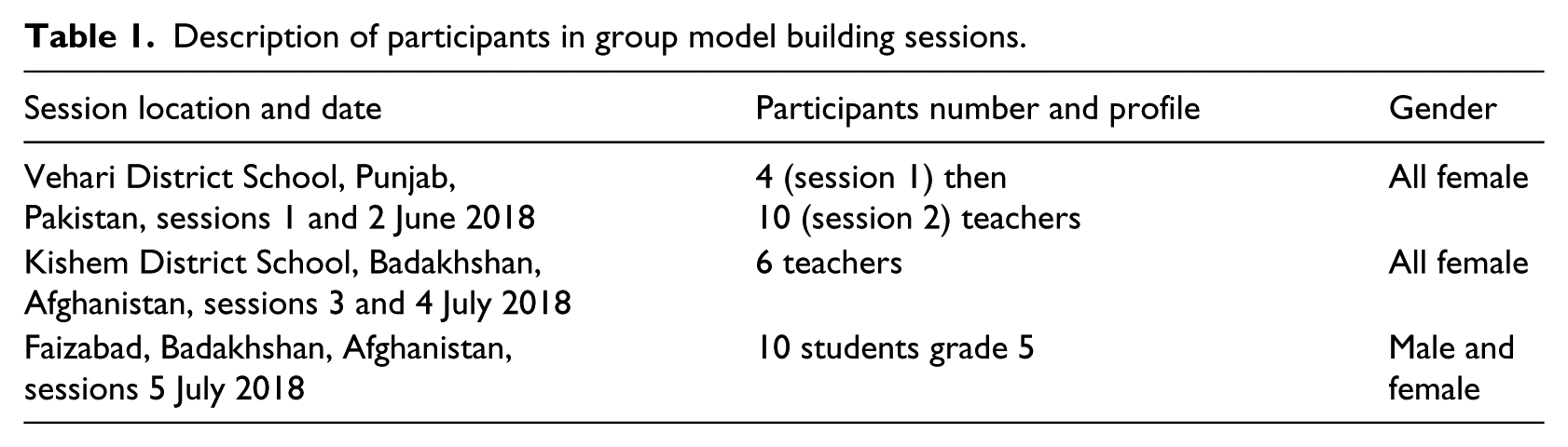
The pilot GMB workshops presented in the present paper were held in three schools in June–July 2018 and aimed at testing the GMB workshop’s protocol (see Table 1). The protocol defines activities planned based on a series of scripts adapted from Scriptapedia (Hovmand et al., 2012). The testing of the protocol was led by a team of two facilitators consisting of several of the paper’s authors. The protocol’s activities are designed to explore the basic constructs and interaction between factors affecting child learning experience in the classroom, and to develop a common vision of the complex school dynamics and possibilities for intervention.
Description of participants in group model building sessions.
Analysis
We used system dynamics, a methodology for studying and managing complex systems that change over time. It offers tools and perspectives that provide new approaches to planning and testing management and social policies. Complex systems are characterised by evolution, adaptation, and emergent behaviours, which result from the feedback loops, nonlinearities, and time delays among system components (Forrester, 1993; Sterman, 2000). A system dynamics perspective argues that the failure to account for these dynamic complexities often leads to poor policy decisions. System dynamics models offer a way of understanding these properties by simulating causal relationships of multiple variables over time, under different assumptions (e.g., different policy environments), and identifying high leverage policy interventions (Meadows, 1999).
Community-based system dynamics provides participatory tools and methods to engage community members – in our case, children, teachers, parents, and school committee members – who are part of the system to examine wicked problems associated to the system (Hovmand, 2014). Community members examine feedback loops, change over time and investigate the causal mechanisms at play in the system. They gain ownership and leadership in the process, develop knowledge about underlying factors that impede overcoming identified barriers such as unequal power relations to improve the learning system. Finally, community members select interventions or “action ideas” in order to overcome impeding factors.
Group model building is a CBSD technique that allows participants to reflect on social issues by focusing on the behaviour of the system. GMB workshops are defined and designed through a series of detailed scripts and are building engagement of the participants by prompting them to talk about the system. GMB workshops with children, teachers, parents, and members of school committees provide, through precise scripts, the basis for developing a common understanding of the school system and to develop consensus around points of intervention and policy decisions called action ideas (Black and Andersen, 2012; Luna-Reyes et al., 2006; Vennix et al., 1992). Through successive sessions, children, teachers, parents, and members of school committees deepen their analysis progressively and identify contextually relevant ways of triggering the required “paradigm shift” to improve equity and quality education for all children in the class. Leverage points are points of intervention in the system where a limited shift in one factor can produce important changes in the system. Defining action ideas to impact these points requires a complex endeavour that becomes even more critical as participants gain more autonomy and build capacities after initially defining their system. After the workshop ends, facilitators examine and discuss the process, attitudes, outcomes, etc.
Each workshop is composed of three sessions (see Table 2). In the first session for teachers, there was a focus group discussion around the concept of inclusion: “What is inclusion? Why is inclusion important (or not)? What are the barriers to inclusion? What could be done to increase participation of children at risk of marginalization in school?”. Children in their first session on the other hand were asked specifically: “Do you think all children should be able to be educated? Are some children not going to school in your community? Why? What are the difficulties you face in your school?”
Group model building (GMB) session agenda and description of “scripts”.
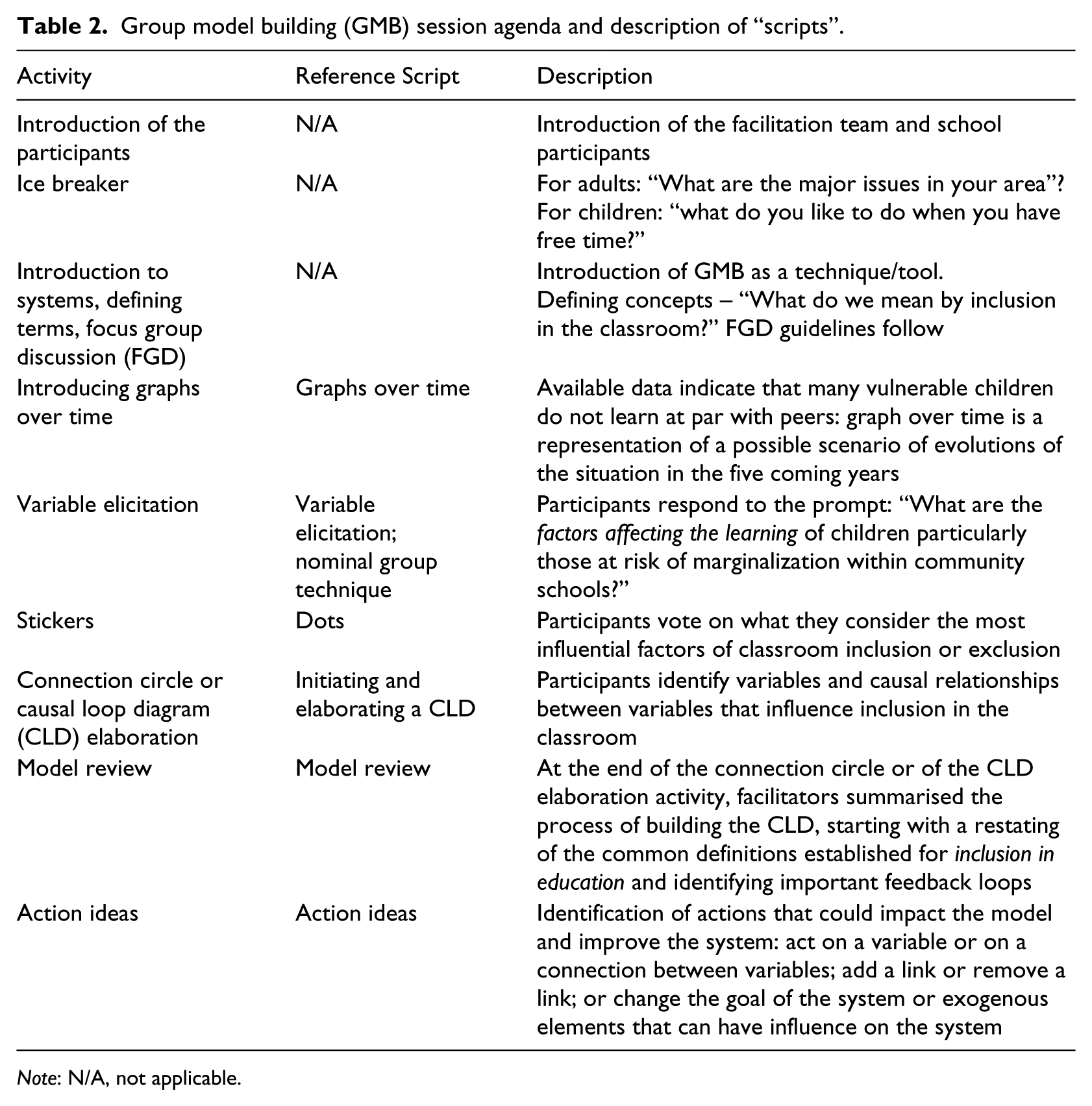
Note: N/A, not applicable.
For adults, we then moved to the explanation of the reference mode, which is a graph over time measuring basic learning outcomes for children (see Figure 1) with time on the X-axis and percentage of children reaching basic learning outcomes on the Y-axis. Reference modes aim to depict trends over time and identify the expected status of the system, while also sharing the hopes and fears of how the system might change. The facilitator sketched the behaviour over time indicating that the fear is that only 40% of children reach minimum proficiency in reading/writing/ basic mathematics. The hope is that the level of learning increases towards 60% in 2022 and keeps growing beyond that date.
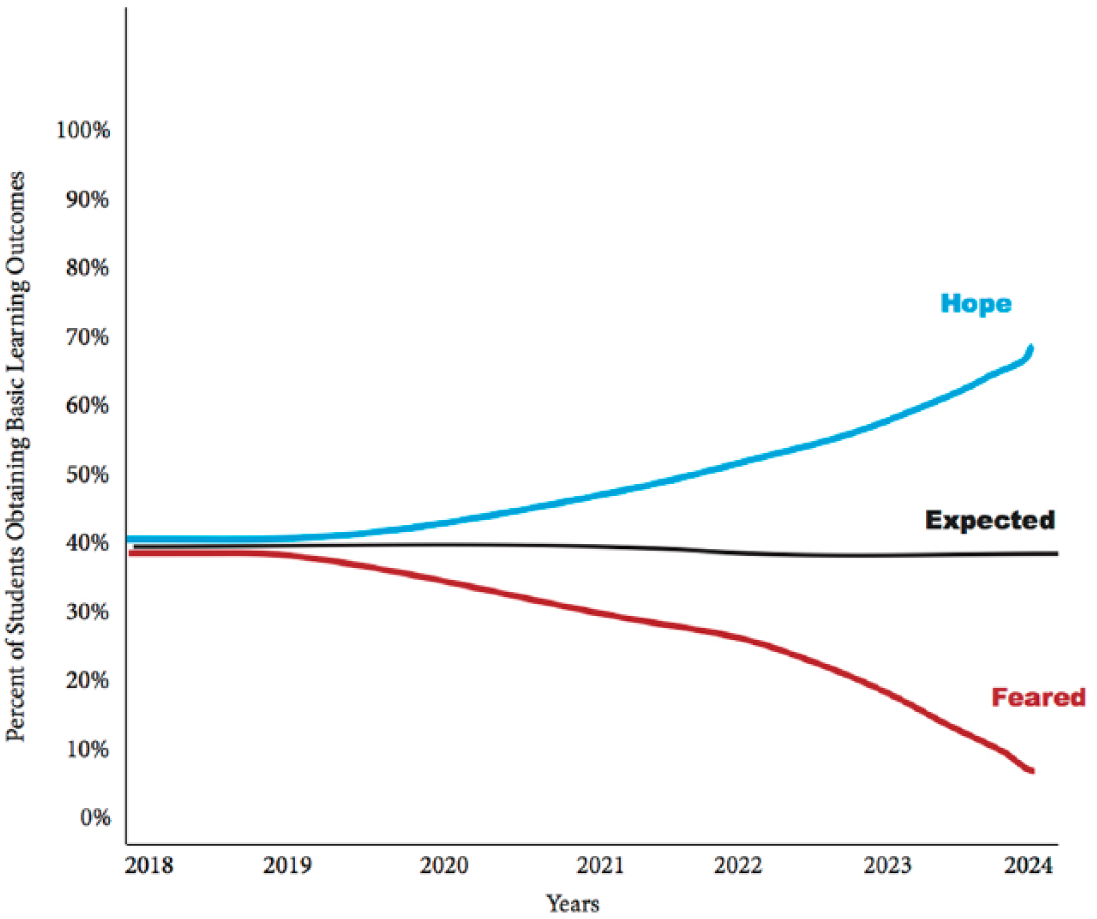
Reference mode: rate of children’s basic cognitive learning outcomes (reading, writing, and basic mathematical knowledge) and non-cognitive learning outcomes.
The script continues for both adults and children with a variable elicitation activity. Participants were given sheets of papers and were encouraged to write per sheet of paper as many variables as they can think of that impact how students learn in the classroom, and then organise them by order of importance. One at a time, participants would then share factors they identified with the rest of the group. Facilitators used a nominal group technique to share variables. One of the facilitators built a wall with all the selected variables organised in clusters or themes, explaining her/his choices of clusters in order to receive affirmation from the participants. Participants were invited to discuss those choices, and could introduce some changes. They were then given five dot stickers and asked to choose which variables on the wall they deemed to be the most important.
The second session examined in groups how variables interact to promote or hinder classroom inclusion during a connection circle exercise. The goal of the exercise is to use the variables that were shared by the group in the previous session, and to identify the connections between them that are important in the educational system affecting inclusion of all children. Variables with the highest votes were selected from the variable elicitation exercise and used to initiate the model on a white- or blackboard. Facilitators first explained causal linkages with both positive and negative polarities. To practice, we used a model of marriage drawn on the board (see Figure 2). The facilitator started with the variable “Number of people” and drew the link with an arrow pointing to “Amount of food”, indicating the direction of influence: if more people come to the wedding, there will be less food for each guest. In this case, the two variables go in opposite directions and the relationship is negative. Similarly, as there is more food, more people will be able to come to the wedding. As both variables increase in this instance, the relationship is positive. During the actual workshop, the facilitator would not make any suggestions of a given relationship between factors, but would ask participants to explain how each relationship identified actually worked. At the end of the session, the reflector highlighted feedback loops identified by participants to underline the fact that non-linear dynamics were taking place within the system. For example, the dual relationship between “Amount of food” and “Number of people” highlights a balancing loop: as amount of food increases, so will number of people, but as more people come, there will be less food, and when there is less food, there will be fewer people, and so on. The facilitator then identified variables that did not have a clear cause and explained the concept of “exogenous” variables. With teachers, the facilitator then ended with an open discussion about the potential use of this method and the model findings in teachers’ teaching practice.
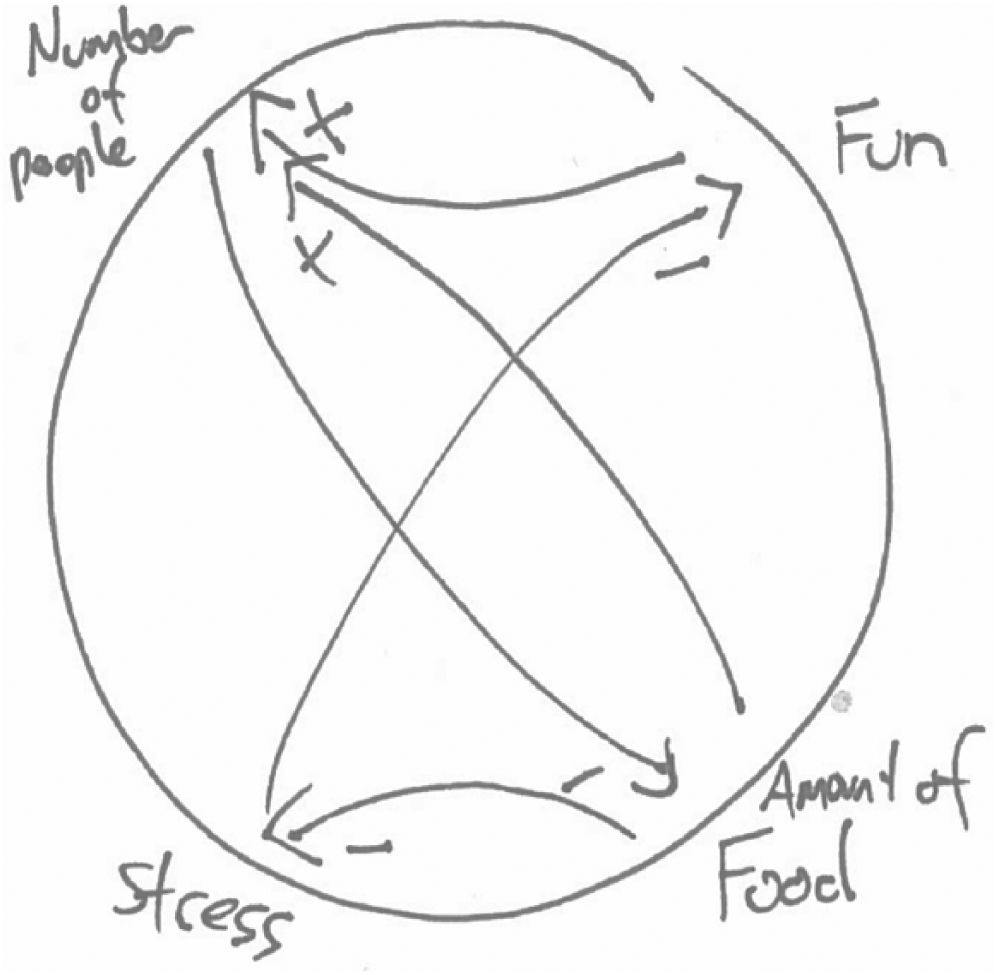
What factors influence a successful wedding party?
During the last session, participants identified leverage points and action ideas. The facilitator asked participants in small groups to take some time to think of as many actions as they can that could impact the model and write them on paper, one per sheet. After 15 to 20 minutes, each group took turns sharing out one of the ideas they wrote down, starting with what they thought was the most important idea. If another group had already identified a given action, then the group would select their next most important action. The facilitator asked clarifying questions to make sure everyone understood the action and where the action would impact the system by referring to the model. As with the previous session, at no point would the facilitator make any suggestions about a possible action to take. Action ideas were placed on a graph indicating levels of difficulty to implement and levels of effectiveness (see Figure 3). Participants were given dot stickers again and had the opportunity to vote on what action ideas they believed would be most important or most interesting to test, and see if it would impact the model as intended. After the participants had placed their stickers on the action ideas themselves, the facilitator identified the ones that had the most votes and had a group discussion to gather consensus on the best actions to carry on.
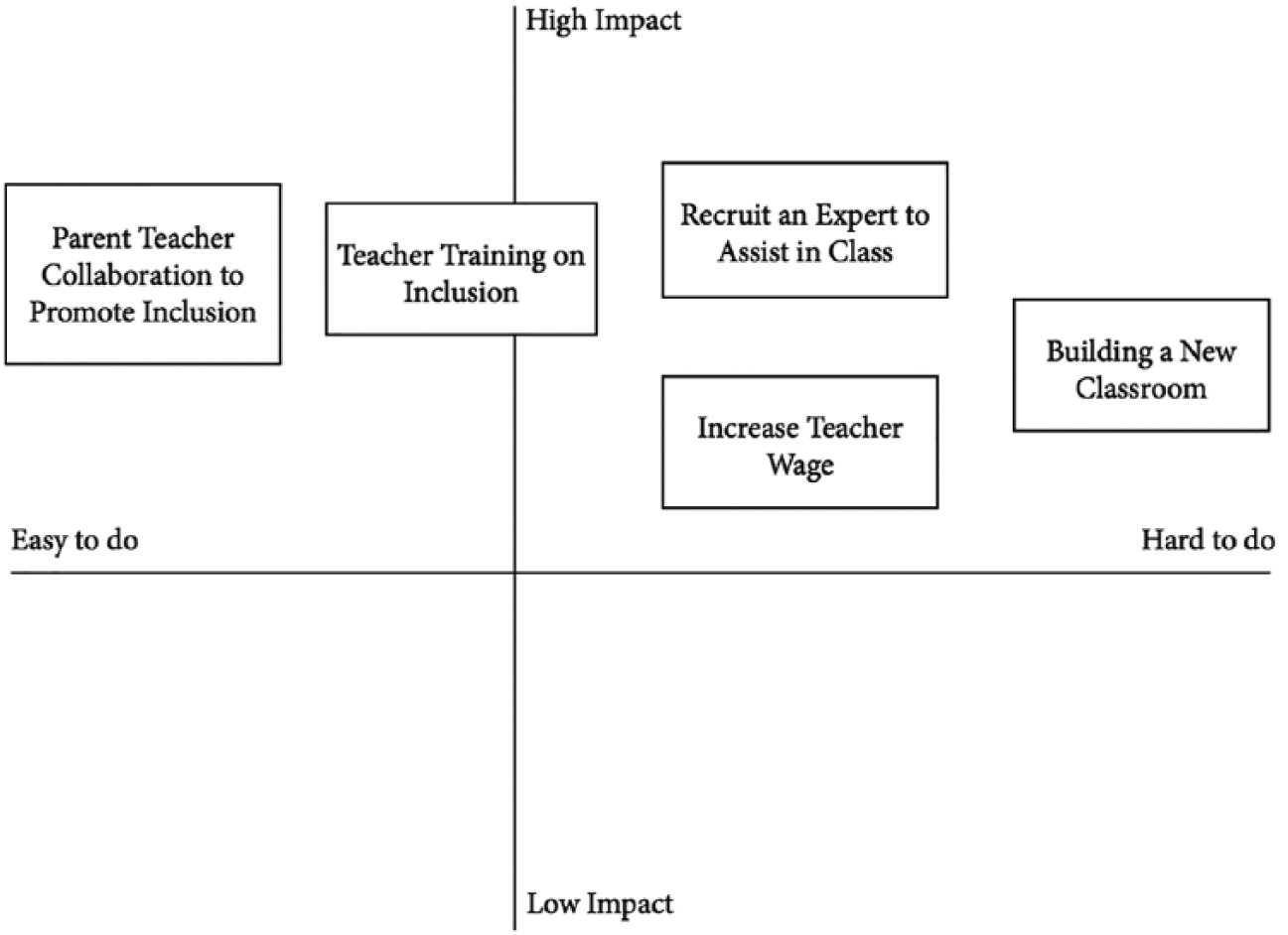
Graph: action ideas according to difficulty to implement and impact.
The reflector provided insights into the reflections the group made on their action ideas, how they prioritised the ideas based on the dots and what was learned in the attempts to model the intervention.
Before leaving, facilitators thanked participants for their active participation in the workshop, and explained that the research team will review all models elaborated, which will be from more than 400 groups across the 108 schools in both countries. In each school, researchers will try to suggest a common understanding of how to address the problem of equity and quality education for all. They will elaborate one model of inclusion per school and simulate various interventions based on the different suggested action ideas. They will share with the GMB workshop participants their synthesised model and try to elicit adhesion on an intervention around common action ideas. The respective partner non-governmental organisation will then support the implementation of those action ideas. Researchers will be looking for one or few common core structures of the model and test simulations to see what interventions could improve inclusion overall. New workshops will take place in 2019 and again in 2020 to see how the system has changed overtime with the suggested intervention. Correcting actions will be eventually be taken if changes are not going in the expected direction by school participants, in other words, if inclusion of all children did not improve.
Results
From the pilot GMB workshops emerged causal loop diagrams (CLDs). Figures 4 and 5 present CLDs of the problem of inclusion of all children in the learning process from the perspective of teachers in Pakistan, while Figure 6 does the same with teachers in Afghanistan, and Figure 7 with children in Afghanistan.
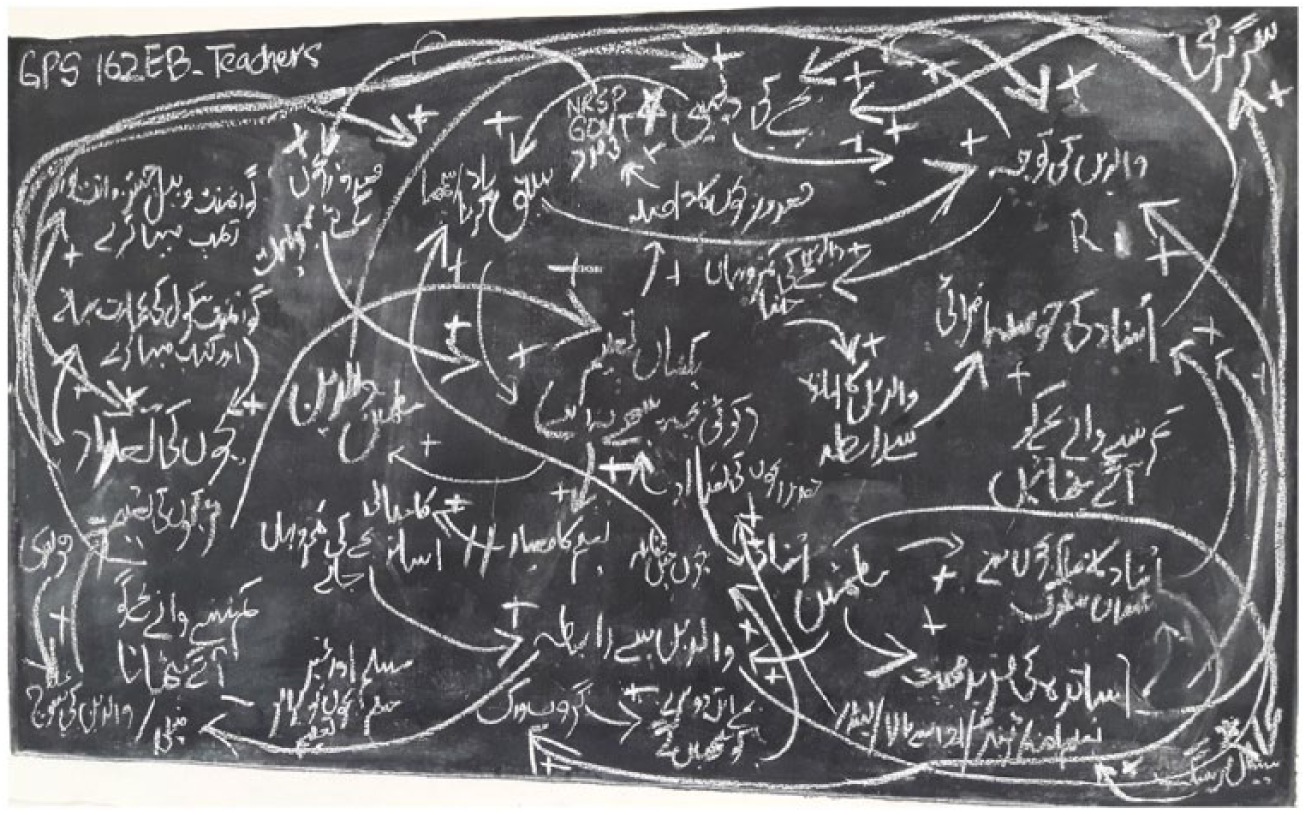
Causal loop diagram done by teachers in Pakistan using the blackboard.
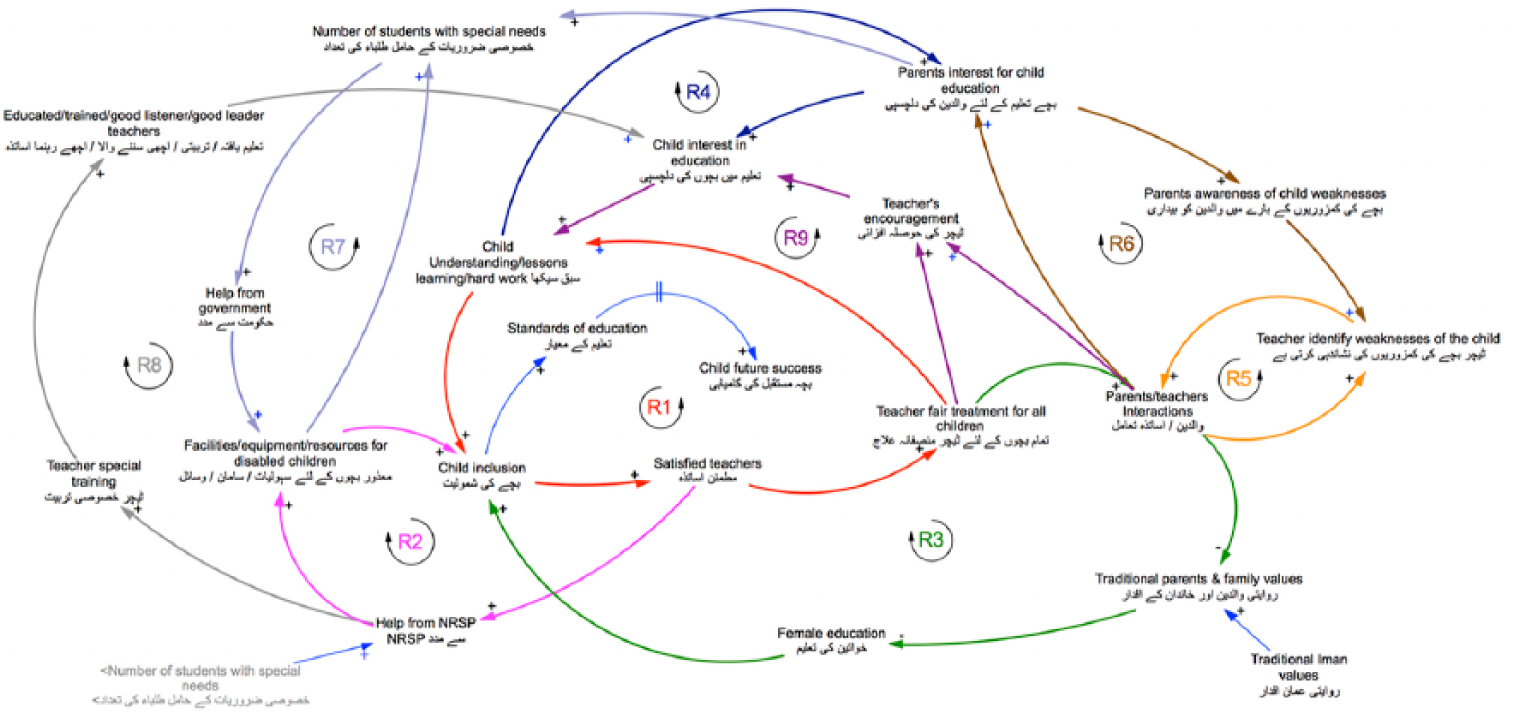
Causal loop diagram done by teachers in Pakistan using Vensim computer software (in English and Urdu).
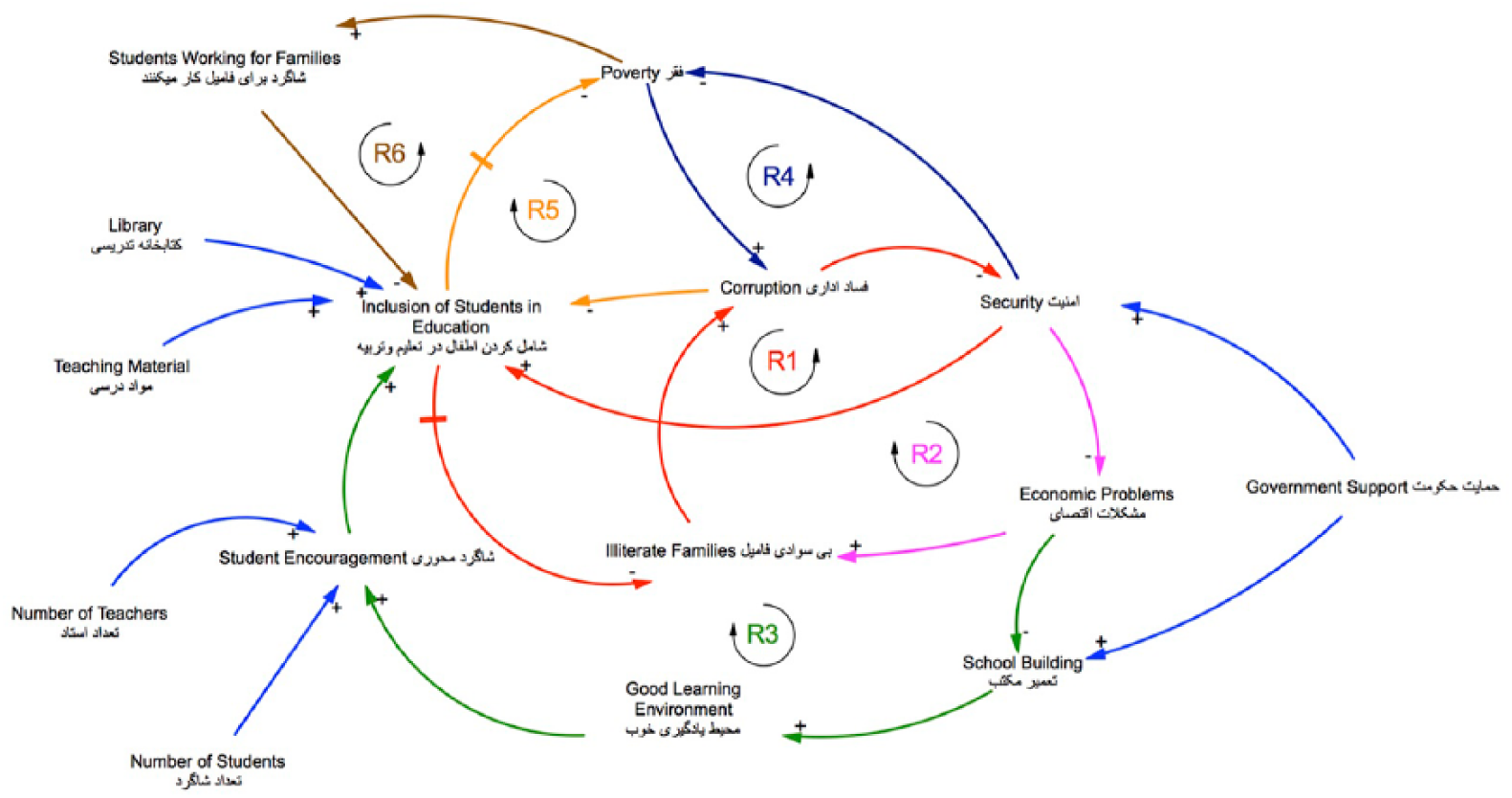
Causal loop diagram done by teachers in Afghanistan using Vensim computer software (in English and Dari).
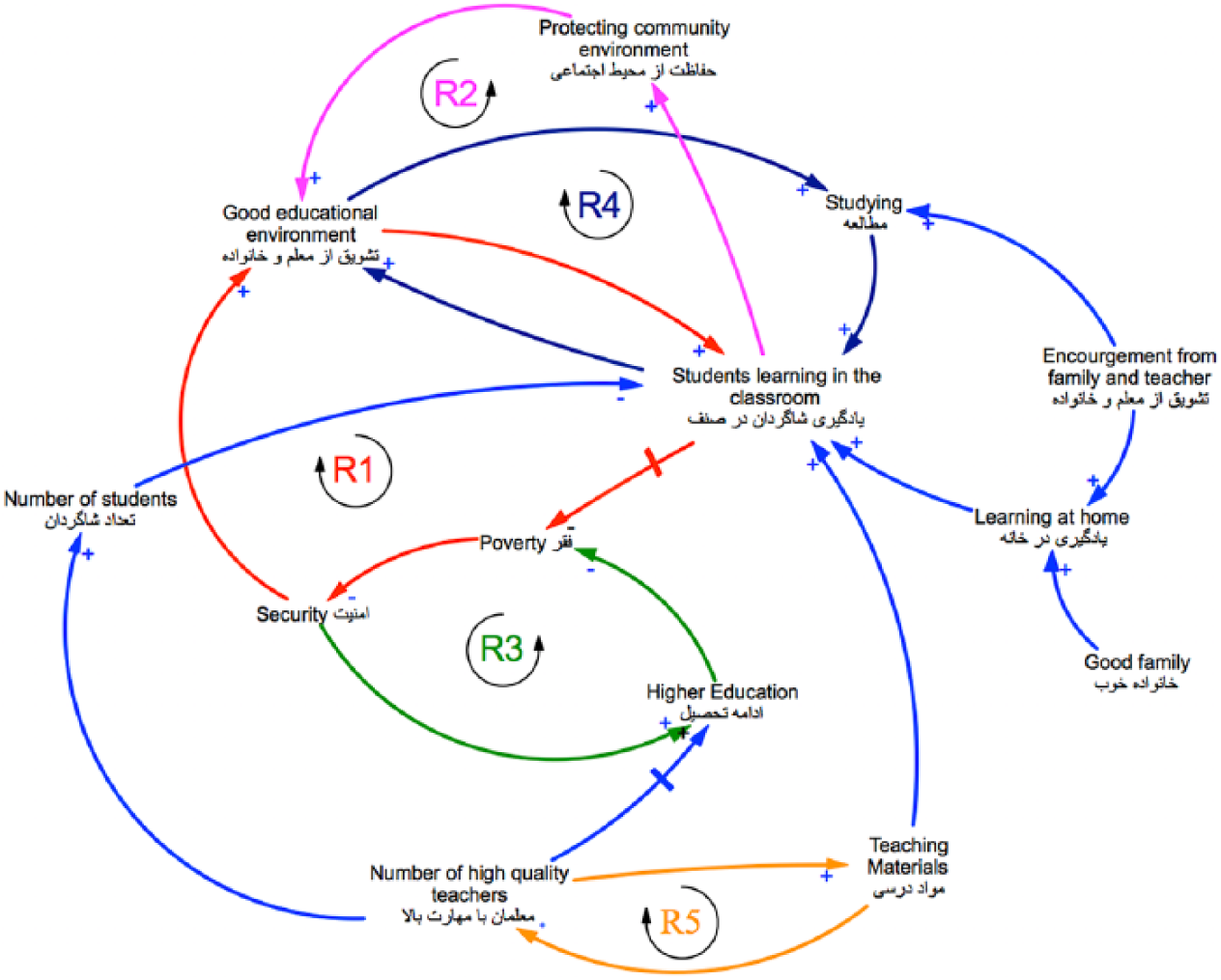
Causal loop diagram done by children in Afghanistan using Vensim computer software (in English and Dari).
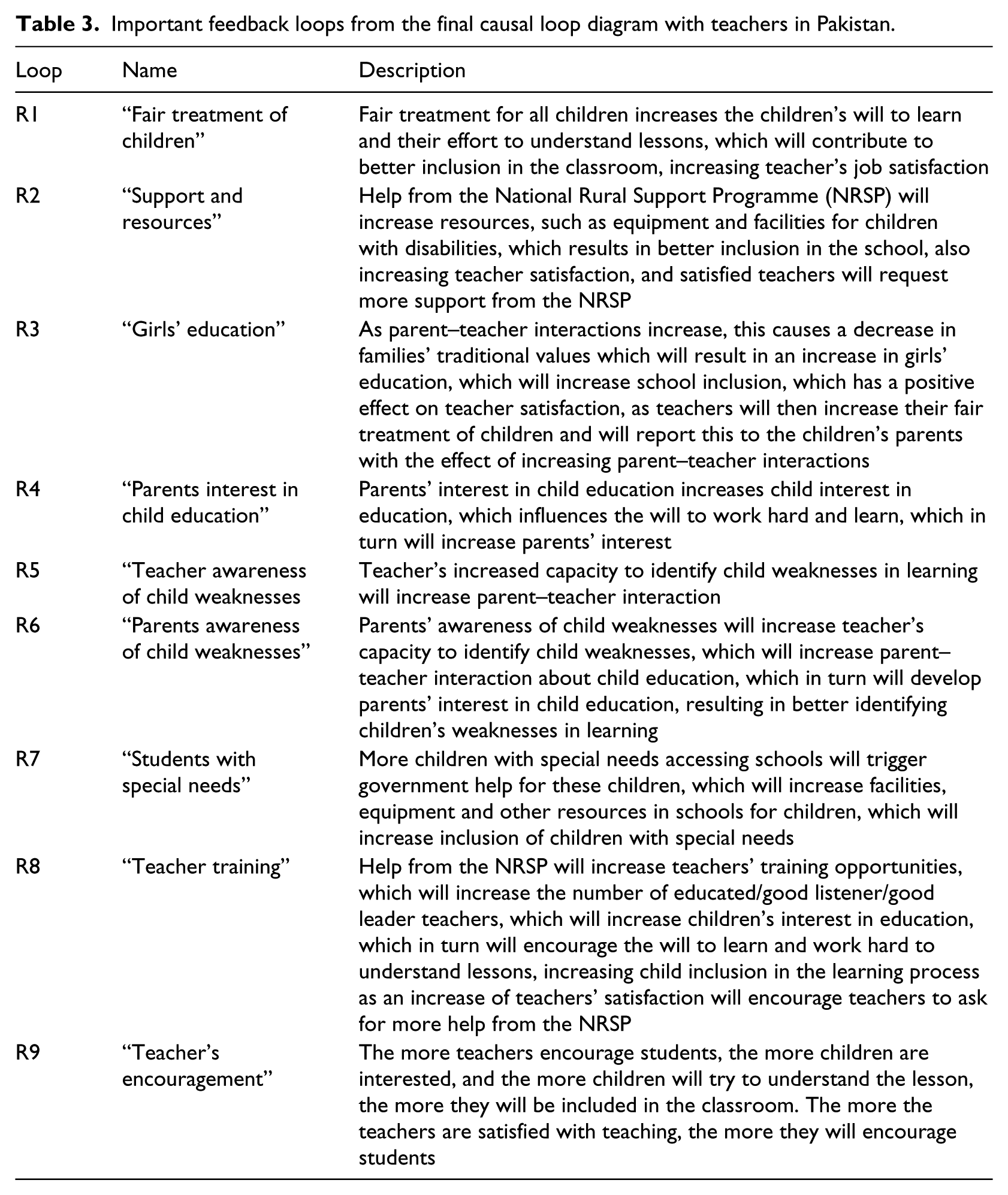
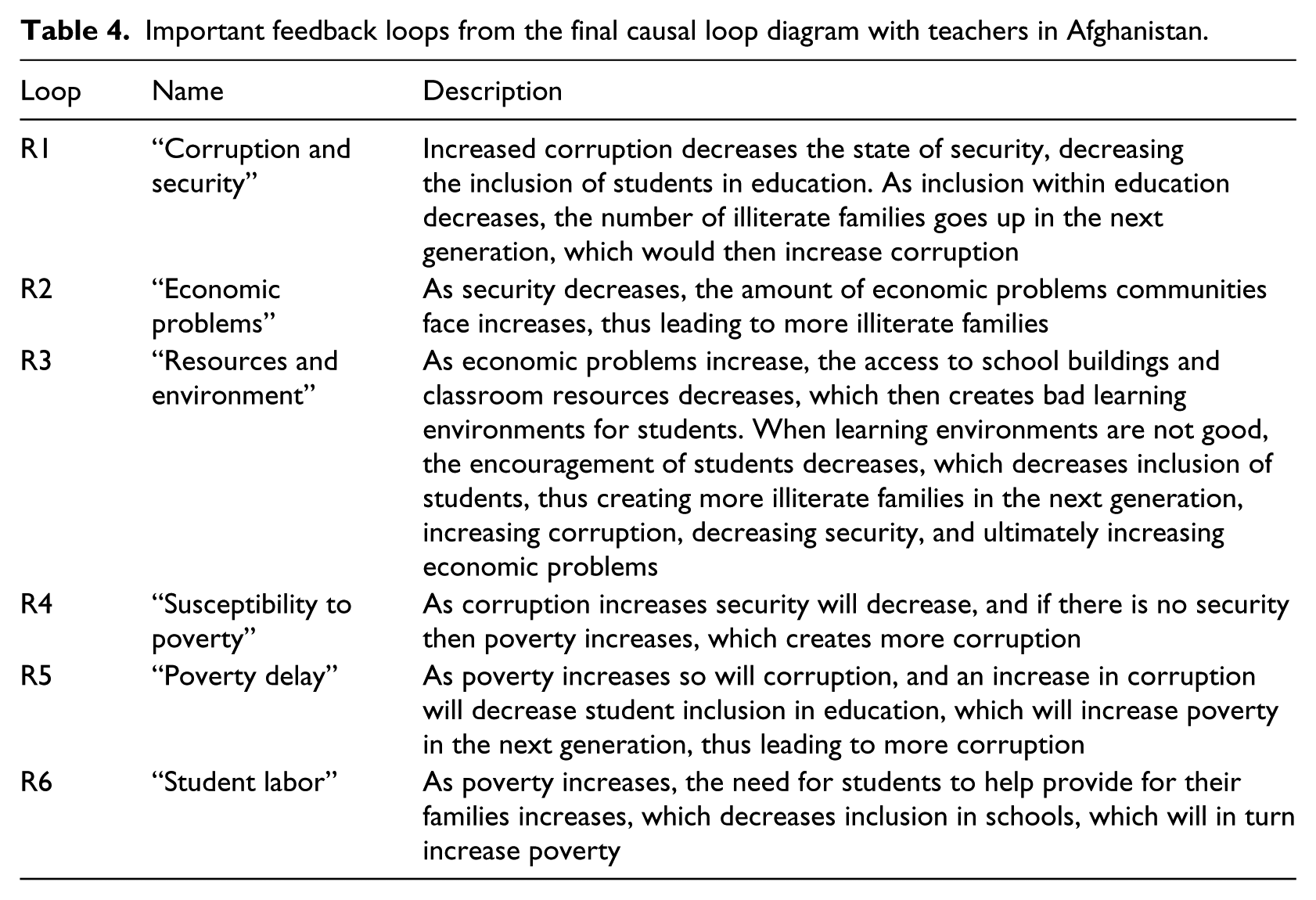
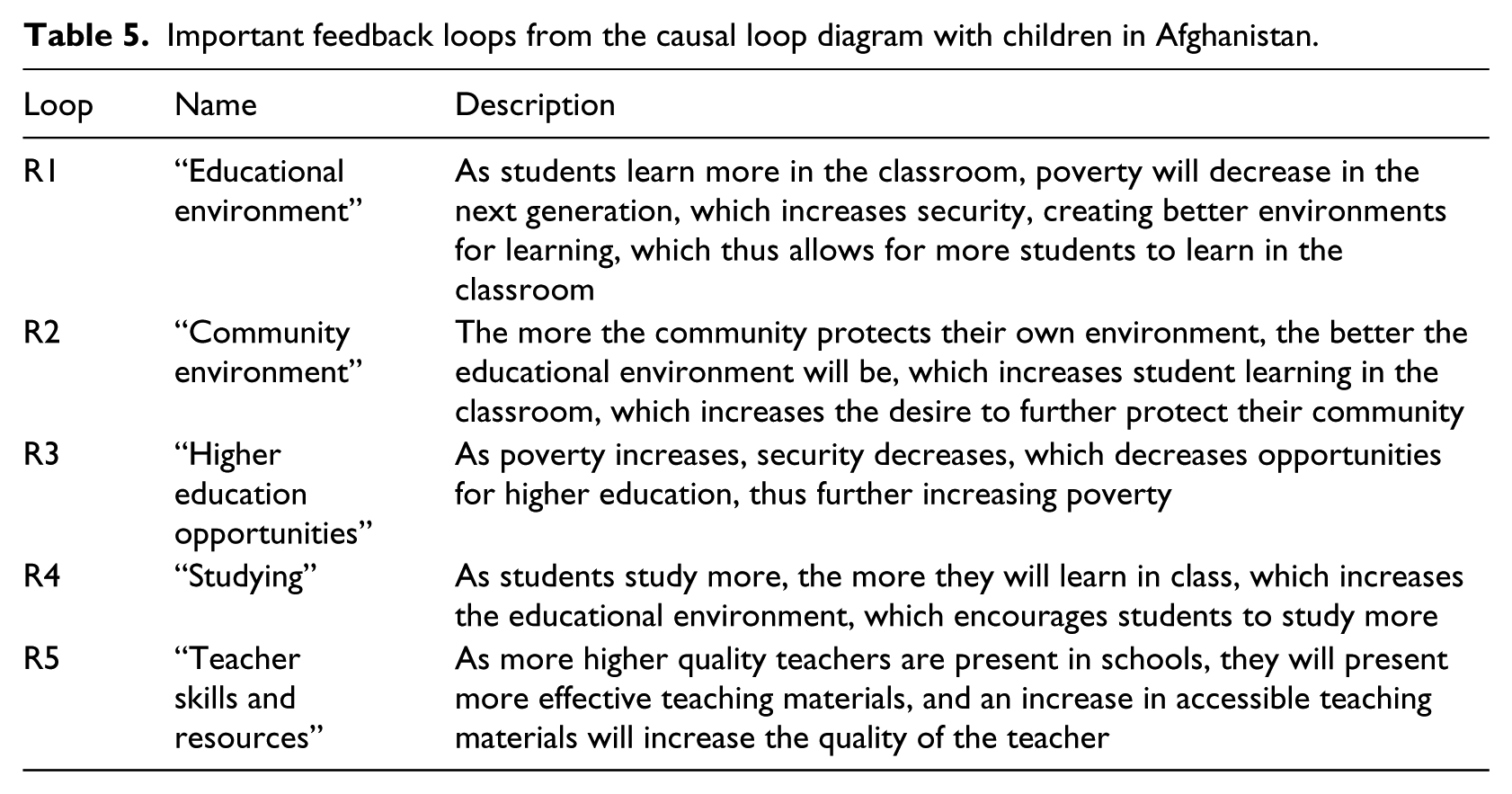
Tables 3, 4 and 5 summarise the major feedback loops identified by participants that constitute hypotheses of how system components interact to generate child inclusion in the classroom. For example, with the first Reinforcing Loop (R1) in Table 3, as a child’s inclusion increases, it causes the teacher to be satisfied with her/his profession, which in turn increases the teacher’s fair treatment of children, which encourages children to work harder and learn their lesson, which thus increases child inclusion. The inverse is also true: if a child’s inclusion decreases, then teachers will be less satisfied with their work, which will lead to less fair treatment, decreasing children’s incentive to work harder. This is a positive relationship. For the CLD from Pakistan, loops show the importance of interactions between the three major actors – children, parents, and teachers – in the learning process. Loops (R1), (R4) and (R9) show how parents’ interest and awareness as well as teacher’s encouragement and satisfaction in their job influence the child’s behaviour and eventually her/his inclusion in the classroom. Similarly, loops (R5) and (R6) indicate the importance of parents–teacher interaction in influencing their respective behaviour and understanding of the children needs, eventually triggering a favourable learning process.
Important feedback loops from the final causal loop diagram with teachers in Pakistan.
Important feedback loops from the final causal loop diagram with teachers in Afghanistan.
Important feedback loops from the causal loop diagram with children in Afghanistan.
Interestingly, while teachers in Pakistan identified the relationships between parents, children and teachers critically playing a role in increasing inclusion in children’s education, Table 4 and Figure 6 show that teachers in Afghanistan recognised the interplay between the seemingly exogenous variables of security, poverty and corruption as critical endogenous factors that negatively influenced each other (R4): as an increase in corruption decreases security, poverty is then increased, which results in creating more corruption. The inverse is also true. As security increases, more opportunities to escape poverty are available, which would then create an environment that is less susceptible to corruption. These factors are then also major drivers of exclusion from the learning process, as they seep into the lives of children and distract them from the learning process. For instance, the first loop (R1) reflects the direct impact of security and corruption on the inclusion of students. As corruption increases, security decreases, and with a decrease in security, inclusion of students in education decreases. The inverse could be true: higher levels of security could increase the inclusion of students in education. As fewer students are included in education, the next generation of families will have lower literacy rates, thus creating a more susceptible environment for corruption.
Like the teachers, children in Afghanistan (Table 5 and Figure 7) also recognised how the situation of their local environment plays into the system, with poverty and security acting as major determinants of child inclusion in the learning process (R1), and how relationships such as encouragement from parents and teachers are major causal factors for the improvement in learning at school and home. Loops R2 and R4 show how a good educational environment is needed for students to learn in the classroom and study more, and once that learning exists it encourages the protection of the community environment, resonating with causal connections the teachers made in how a good learning environment encourages students to learn. Having well trained (professional) teachers and the right equipment (study material) are also seen as major contributors to the learning process by notably creating a sound educational environment to which the students respond by being more interested to study, which influences the learning process, which in turn influences the learning environment. Ultimately, both children and parents identified how an increase in the inclusion of students will decrease poverty after a time delay, which would then either increase security and/or decrease corruption. The shared acknowledgement from both groups on how education as a tool can be used to alleviate the damaging factors that are present within the community highlights how including all children within the educational system can create positive ripples of change across time and scale.
Teachers in Pakistan were asked about possible leverage points as well as potential action ideas to improve inclusion. Teachers reviewed in groups all the feedback loops and then shared with the facilitators a series of action ideas following the script (see Table 2). Most teachers, emphasised a changing role for the teachers themselves to trigger change in other actors, students and parents. Reflecting on “fair treatment by the teacher” (R1), teachers argued that “if the teacher treats everyone the same, he/she is encouraging the students to be motivated to study more and learn in class, therefore producing better academic results. […] Good results of the students motivate the parents about education of their children. When children learn their lessons, parents will pay more attention to the child’s academic life”. They also mentioned that to be considered good, teachers should be able to listen to the children in order to boost child interest through participation (R8). Similarly, revisiting the reinforcing loop R3, teachers acknowledge their own role in promoting girls’ education. To counter the influence of traditional views promoted by religious leaders, they argue that “teachers should talk with girls’ parents and provide them with awareness about the benefits of girls’ education. This could happen during parent-teacher meetings, school events or even by visiting households where girls who are out of school live”. Teachers also recognised that they cannot alone achieve the level of inclusion that they seek. In terms of inclusion of children with disabilities (R2), teachers argued that the NRSP should provide the needed equipment and the required training. “NRSP must arrange for adequate equipment such as glasses or braille to allow children with visual impairment to study. […] For those who cannot speak, sign language training should be provided to some teachers by NRSP”.
While leverage points were not discussed in Afghanistan due to time limitations, teachers still reiterated the new insight they gained by doing this GMB session, in that they have “thought of these [factors] separately, but never together, and now see how [the factors] connect together. It makes sense”. One of the goals of our GMB sessions is to indeed elicit action ideas to consider for implementation; another critical goal is to build up the capabilities of the participants to identify the interconnections within their system and enhance their own mental models. Loops going through security and poverty were highlighted by the teachers as imperative given the difficulties security creates, as teachers adamantly stated that “of course poverty would decrease when there is more security,” and that “schools actually completely close down after 1 or 2 years of opening because of poverty, and the students then have nowhere to go”. Children mentioned the satisfaction of being asked their views and were keen to pursue the experience further. They also suggested that such an interactive approach could be used effectively and successfully in teaching. One child asked: “Why don’t our teachers teach us like that?”
Lessons learned
The CBSD methods through GMB workshops were introduced to validate the idea and “the role participatory social justice [plays] in relation to education quality” (Tikly and Barrett, 2011: 17). The GMB pilot workshops highlighted important factors that some experts have foreseen, but for which we had previously lacked evidence and strategies for concrete intervention in education (Polat, 2011). The most important among them is individual agency in the classroom from the capability approach perspective: all actors, including children, are able to reason and offer their views about how what should be learned and how the learning process should take place (Polat, 2011). Education is also about emphasising the role of the learner and promoting positive rights, such as nurturing learner creativity, and promoting equality in the learning process while enforcing negative rights such as protection from abuses (Sen, 1992; Subrahmanian, 2002; Unterhalter, 2007). The human capital approach to education, which emphasises investment in individual skills and knowledge to contribute to the economic growth with a positive effect expected in terms of poverty alleviation (Robertson et al., 2007), fails to address the diversity in requirements of learners and to tackle limitations of learning environments (Tikly and Barrett, 2011). We used CBSD to explore the wicked problems around child inclusion in the classroom and to analyse the role of educational processes in including children with various different identities to promote child flourishing (Hickling-Hudson, 2006).
The first lesson learned is that all actors were engaged and understood the process, including illiterate children and/or parents. With illiterate participants, we used drawings to represent variables of interest. If the facilitator could not offer a representation of a given variable, she/he would ask the parent to draw or would draw herself/himself a possible representation of the variable on the spot. Participants are keen to take the leadership and “hold the pen”, including children of age 9 or 10. Because the rules are rather easy to understand and straightforward, participants rapidly master them, writing themselves the relationship on the connection circle. We encouraged the facilitators to step back and to focus on advising, and clarifying ideas by asking explanation questions about each link introduced by the participants. Note takers have an important role to play in this configuration as they collect the information necessary to retrieve the rationale of the participants.
The second lesson learned is that the GMB workshop itself is a first step towards changing one’s views of what inclusion means. It works somehow as an advocacy training or to raise awareness about existing barriers to inclusion. During the GMB workshops, teachers acknowledged diversity in requirements of learners and the need to tackle existing limitations of learning environments (Tikly and Barrett, 2011). They also argue for their role in nurturing learner creativity and emphasising equality in the learning process (Sen, 1992; Subrahmanian, 2002; Unterhalter, 2007). They point to the interest and the flourishing of the children as legitimate parts of the learning experience and of the definition of a quality education, which differs from the narrow, technical focus of the human capital approach and its acquisition of primarily cognitive learning skills for all children in order to improve the economic development and alleviate poverty, which in turn is largely criticised for being unable to fathom social, political and economic factors that influence the learning experience.
A third lesson learned is the importance to provide feedback to participants at the end of each session. The protocol was modified to acknowledge the need for a systematic reflection on each session. The reflector would now summarise for participants the findings of each session before introducing the goal of the next one: (i) the session of variable elicitation aims at examining in a more systematic way what are the factors influencing inclusion that have been mentioned during the initial focus group discussion; (ii) the session of connection circle identifies the links between the most important variable identified collectively during the variable elicitation and vote process; and (iii) the action ideas on leverage points are based on a good understanding of the model characteristics that allow foreseeing what would happen in the system if some of the actions are taken.
Another lesson learned are the differences in responses shared by participants given the national context in the process of inclusion, or rather its opposite exclusion, from the learning process. It was important to recognise and reflect upon the different CLDs that teachers in Afghanistan and Pakistan and children in Afghanistan came up with. Teachers in Pakistan highlighted factors that played upon the relationships between students, teachers, parents, and external support structures. Almost every single factor was incorporated into a loop, showcasing not only the strong recognition teachers had of feedback within their system, but also the reality in how all these factors are connected. In Afghanistan however, highlighted factors by teachers had less to do with the interactions between people in the community, but rather more in regards to the current, volatile situation that many Afghans face: the interplay of poverty, security, and corruption. Every loop went through one or more of these variables, as teachers had consensus that these were the most important and present issues in their realities. If held true during further GMB sessions throughout the country, the role in which the current state of Afghanistan exists in is critical in not only providing interventions that impact the current pressing matters of violence, but also in the importance of validating the use of system dynamics within the context of education: by intervening in one crucial level of the system, variables start to change and impact each other, leading to our desired outcome of increasing inclusion in education.
Following these pilot sessions, local facilitators were trained on the overall protocol. The training lasted three weeks in each country with theoretical sessions and a week of practice in schools. Emphasis was put on asking how relationships intervene between variables and making sure these relationships were logical and did not miss an important step. Likewise, facilitators were also trained to ask if inclusion in the classroom of all children would somehow have a causal effect, immediately or with a delay, on other factors in the system. Therefore, the facilitators would encourage participants to reflect on possible feedback loop effects without suggesting specifically any of those effects.
An important change was the decision to let groups in each school define themselves a common action plan based on the adoption of shared action ideas. In order to not take away the interest and excitement of the GMB workshop participants, we added two extra workshops – one with all adults and one with children only – after workshops with individual groups have been carried out. The idea was to adopt a common set of two or three action ideas to be implemented in the year to come and define a common action plan, rather than have researchers outside of the community compile a unique model from those elaborated in the schools and propose the action plan to the school community.
Finally, some concrete simple adjustments were made. For instance, children need to play and one must make sure that regular breaks take place to do so between sessions before coming back in the classroom. Playing with children creates trust between children and facilitators, who were encouraged to organise and participate in the games. Another adjustment was identifying the necessity to duplicate the factors. For instance, we now keep the original variables on the wall and then make a copy for the connection circle. Similarly, we leave the action ideas on the easy to do/difficult to do and low/high impact graph (Figure 3) to make a copy on the connection circle, where the participants identify the highest influence on the system.
The present paper has several limitations. Firstly, it is foremost a testing and validation of the protocol of the Education Equity and Quality in Afghanistan and Pakistan study through three examples of GMB workshops. Therefore, these initial results have to be considered with caution. We anticipate that a lot more information and insights about the model of school inclusion will be uncovered by other school stakeholders, particularly school committee members and parents, during the many GMB workshops. For instance, one issue that has not been introduced in the workshop presented here is the question of the protection from abuses. Secondly, specifically to the GMB session in Afghanistan, the session had to be cut short after three hours due to the fact that all the teachers were women, and had to return to their households to care to familial matters during the holidays coinciding with the session, and security concerns prohibited the project team from returning to the school and continuing the session. In the future, once more project facilitators are trained and available within the local region of their assigned schools, scheduling multi-day sessions will become easier, and will not be as rushed. Furthermore, hundreds of sessions in multiple schools with various stakeholder groups will bring necessary triangulation to strengthen these initial findings and uncover more relationships. Finally, the paper does not present a final model with simulation nor does it show that CBSD can actually promote equity and quality in education, which is the scope of the overall study, but, initial findings show that teachers and children are willing to engage in the discussion, have a good understanding of wicked problem of inclusion, and resonate with the system thinking skills. Importantly, children are especially able to reach as complex understandings of the system as adults can, with their conversations, causal relationship identification, and enthusiasm rivaling those of the adults. During these preliminary GMB sessions, we have already seen how the sessions themselves can be used as a small intervention in order to get community stakeholders thinking in systems, identifying the relationships between the factors they experience within their lives.
The purposes of these initial GMB sessions were to provide a practice and initial illustration of what is to further come during the project timeline. While they will not be within the final model when we look at inclusion in education in Afghanistan and Pakistan, they serve as a pilot in order to better understand limitations and session structure, so that improvements can be made to the GMB protocol. The overarching objective remains to fine tune a set of CBSD methods that allow bottom-up, grass roots education stakeholders to influence and question global agendas around what effective education processes and outcomes entail.
Footnotes
Declaration of conflicting interests
The authors declared no potential conflicts of interest with respect to the research, authorship, and/or publication of this article.
Funding
The author(s) disclosed receipt of the following financial support for the research, authorship, and/or publication of this article: The research is funded by a grant from ESRC-DFID Grant Ref: ES/P005799/1 and funds from the Institute for Public Health at Washington University in St. Louis.
Author biographies
Application areas for his work include early child and maternal health, childhood obesity, energetics and cancer, mental health, domestic violence, child welfare, household economic security, structural racism, educational equity, kindergarten to 12th grade education, and the implementation and scale-up of health innovations.