



Abstract
This paper, which is of comparative interest in professionalism and professional development, reports on Greek primary school teachers’ views on specific aspects of the aforementioned issues. A total of 234 participants provided survey data, using anonymously filled-in questionnaires during the school year 2011–2012. More specifically, by examining teachers’ responses to five parameters of each case, we found out that, regarding professionalism, most teachers tended to score highly the importance of collaboration with their colleagues, parents and students, as well as their pedagogical concern for the students and their achievement. Regarding professional development, the demand for lifelong education and training, and for studying specific educational topics, was underlined. The teachers of our sample highlighted the great contribution of professionalism and professional development in their school routine. Moreover, they were aware of the complexities of professionalism and professional development and they closely related them with their personal development and the quality of their work at school. This survey confirmed that teachers’ professionalism and professional development is a universal phenomenon.
Introduction
Over the past few years considerable attention has been paid to the concepts of teachers’ professionalism and professional development, which still play an exceptional role, as has been documented by literature reviews on the topic in several countries, including the US, the UK and Israel (see, e.g., Davies, 2013; Day and Smethem, 2009; Evetts, 2003; Troman, 1996; Whitty, 2001; Yeom and Ginsburg, 2007; Zuzovsky, 2011).
The focus on professionalism and professional development has emerged as a result of numerous rapid changes in the educational sector. In this context, teachers have to cope with the demands of their profession, which, in turn, entail new roles, skills and responsibilities, and are associated with active involvement in the implementation of educational reforms (Avidor, 2009; Day and Smethem, 2009; Hargreaves, 2000).
In particular, the rhetoric of professionalism refers to teachers’ ability to respond sufficiently and adequately to growing roles and responsibilities at school (Day, 1999; Day et al., 2007; Evans, 2011; Hargreaves, 2000; Swann et al., 2010). However, several researchers have indicated the difficulty involved in defining teachers’ professionalism, owing to its inherent complexities (Evans, 2008; Goodson and Hargreaves, 1996; Helsby, 1995; Kalekin-Fishman, 1997). Day (1999: 13) attempted to delineate professionalism “as a consensus of the norms, which may apply to being and behaving as a professional within personal, organizational, and broader political conditions.” Additionally, the existing relation between teachers’ professionalism and professional development has also been pointed out and it is seen to influence teachers’ promotion (see Day, 2001; Eraut, 1994; Evans, 2008; Fullan, 1995; Kirkwood and Christie, 2006).
As Fullan (1995: 265) states, professional development is “the sum total of formal and informal learning pursued and experienced by the teacher in a compelling learning environment under conditions of complexity and dynamic change.” This, in turn, implies teachers’ reflections and actions, which illustrate the experience and the learning they have already accumulated during their teaching career at school. Similarly, as Herdeiro (2010, cited in Herdeiro and Costa e Silva, 2013: 181) noted, “professional development can be seen as growing in certain aspects of professionalism and can be legitimately applied to the development of a teacher or a group of teachers in the work context.” Nasser and Fresko (2003) found that completing degrees gives the feeling of self-efficacy and teachers perceive it as a means to professional development. Ashuri-Halperin (2000) found that virtual communities contribute to the professional development of teachers.
Taking into account the international literature on the topic under consideration, this exploratory study aims to investigate primary teachers’ perceptions about professionalism and professional development at state schools in Greece, in relation to specific parameters of the two aforementioned concepts. Additionally, this survey aims to reveal the extent to which local experience is in accordance with the results of the wider context, thus contributing fruitfully to the relevant discussion in the international and comparative research field.
Material and methods
The research was carried out during the school year 2011–2012, and the sample consisted of primary school teachers working at state schools in the region of Achaia, in western Greece. This area hosts a sufficient number of small and big schools, providing a representative sample of teachers in terms of teaching experience.
In order to map teachers’ perceptions on certain aspects of professionalism and professional development, an anonymously filled-in questionnaire was prepared and distributed during the working days of the schools. We had received prior permission by the school principals to conduct the survey. A pilot study was carried out earlier in a small but representative sample in order to validate the accuracy of the questionnaire.
In total, 234 primary teachers completed the questionnaires, and the sample size was representative of the population under investigation (response rate: 17% of the sampling frame).
The questionnaire had two parts. The first contained questions about the background characteristics of respondents (i.e., gender, degrees and teaching experience). The second included five questions. In this paper, which is part of a broader study, we present the data revealed from two questions of the questionnaire, related to professionalism and professional development.
In particular, the first question concerned teachers’ thoughts on five specific parameters of professionalism. Similarly, the second question focused on teachers’ professional development and included five sub-questions. Both questions derived from the study of the literature on the topic. The questions were closed-ended, and respondents were asked about the extent to which they recognized their own perceptions, using a five-point Likert scale ranging from 1 (Not at all) to 5 (Very important).
The questionnaires were processed and analyzed with the aid of the SPSS program, version 20.0. The statistical analysis was carried out using the Mann–Whitney (U) and Kruskal–Wallis (H) non-parametric tests.
Results
Characteristics of the sample
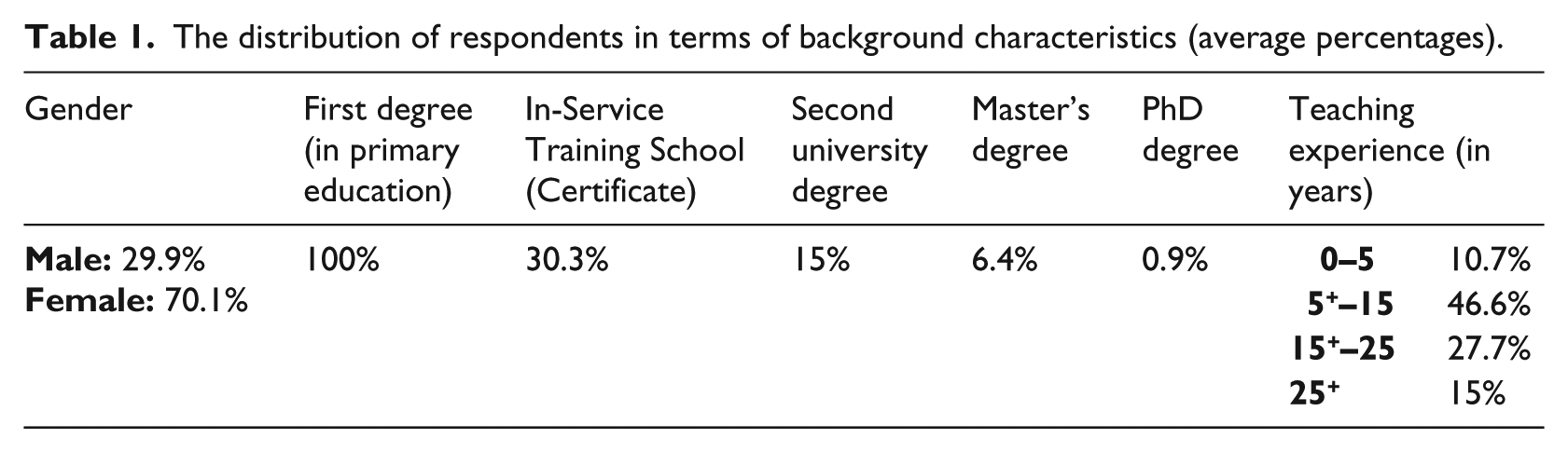
Our sample consisted of 70.1% female and 29.9% male primary school teachers. In terms of their studies, all respondents held a Bachelor degree in Primary Education. Additionally, 30.3% of teachers had attended a two-year training course at the In-Service Training School, 15% had a second university degree, 6.4% had a Master’s degree and a very small percentage (0.9%) a PhD.
Regarding their teaching experience, 10.7% of primary school teachers had 0–5 years of service at state schools, whereas the majority (46.6%) had between 5+ and 10 years; 27.7% had from 15+ to 25 years of teaching experience and 15% had more than 25 years of experience.
Table 1 provides an overview of the distribution of primary school teachers, according to their background characteristics.
The distribution of respondents in terms of background characteristics (average percentages).
Data analysis
Teachers’ perceptions about professionalism
The question on professionalism included five sub-questions. The first one (1.1) referred to the teacher, who acts as a model and contributes to students’ development of moral and social values.
The majority of teachers (50%) highlighted the importance of this parameter of professionalism, whereas 41.9% of the sample attributed fair importance to the same parameter (Figure 1).
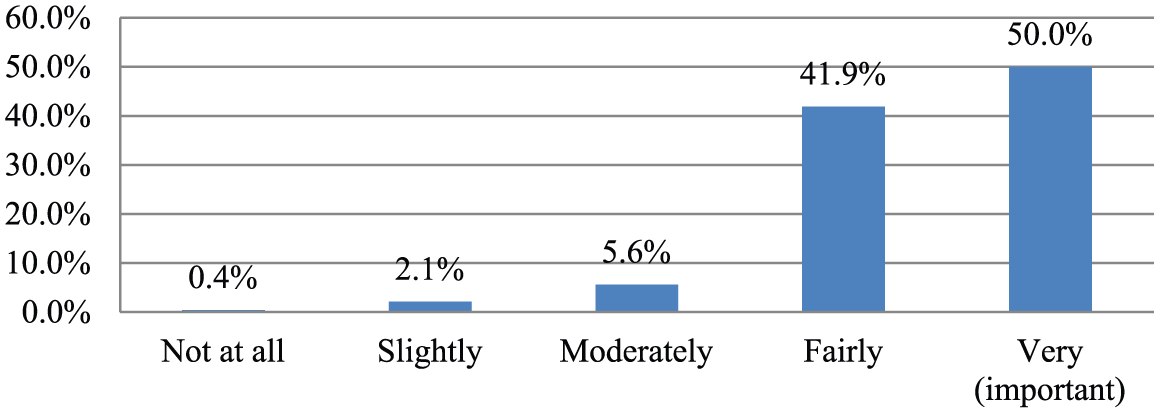
Average percentage of teachers’ answers regarding the first parameter of professionalism (teacher who acts as a model and contributes to students’ development of moral and social values).
The second sub-question (1.2) referred to the contribution of professional knowledge to teachers’ professionalism. Most teachers (45.7%) considered professional knowledge as fairly important, whereas 44% of the sample placed great importance on this aspect of professionalism (very important). A significant association was also revealed between teachers’ answers and their second university degree, since teachers holding a second degree were more likely to attribute greater importance to this aspect of professionalism (U = 2748.5, p = 0.028, r = −0.14) (Figure 2).
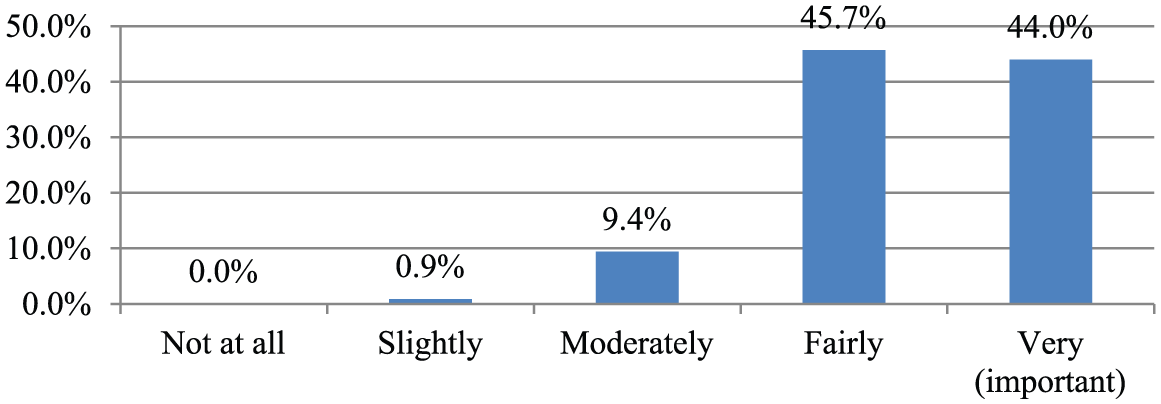
Average percentage of teachers’ answers regarding the second parameter of professionalism (contribution of professional knowledge).
According to the third aspect of professionalism (1.3)—the degree to which the teacher is allowed to apply suitable teaching methods in accordance with students’ learning requirements—a high percentage of primary teachers (47.4%) characterized this aspect as fairly important, whereas 43.6% as very important. The Mann–Whitney test revealed that teachers holding a second degree attributed greater importance to this parameter (U = 2794.5, r = −0.13) (Figure 3).
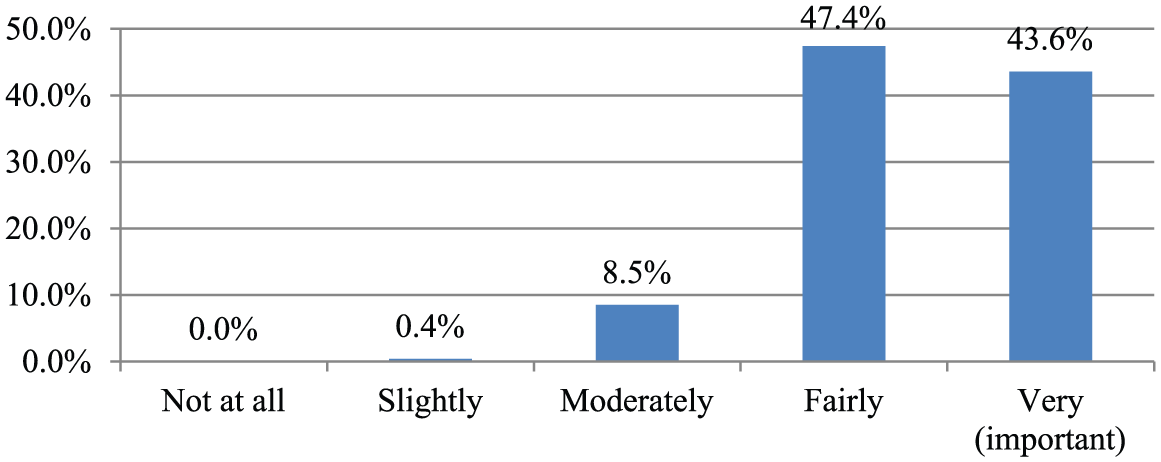
Average percentage of teachers’ answers regarding the third parameter of professionalism (degree to which the teacher is allowed to apply suitable teaching methods in accordance with students’ learning requirements).
In relation to the fourth aspect of professionalism (1.4)—the collaboration with colleagues, parents, students, etc.—the majority of the respondents (47.9%) evaluated this parameter as highest ranking (very important). However, the statistical analysis did not reveal any significant difference between this aspect of professionalism and the teachers’ background characteristics (Figure 4).
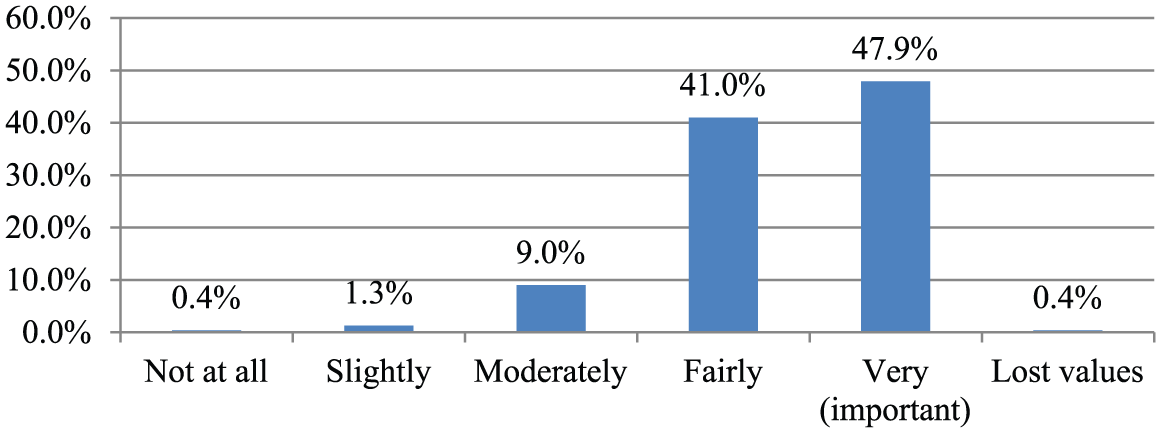
Average percentage of teachers’ answers regarding the fourth parameter of professionalism (collaboration with colleagues, parents, students, etc.).
Finally, the fifth aspect of professionalism (1.5)—teachers’ care, concern and interest about students and their achievements—was highlighted as very important by the majority of teachers (67.5%), whereas 27.4% indicated it as fairly important. The comparison of this parameter with the background variables did not reveal any statistically significant difference, according to the Mann–Whitney test (Figure 5).
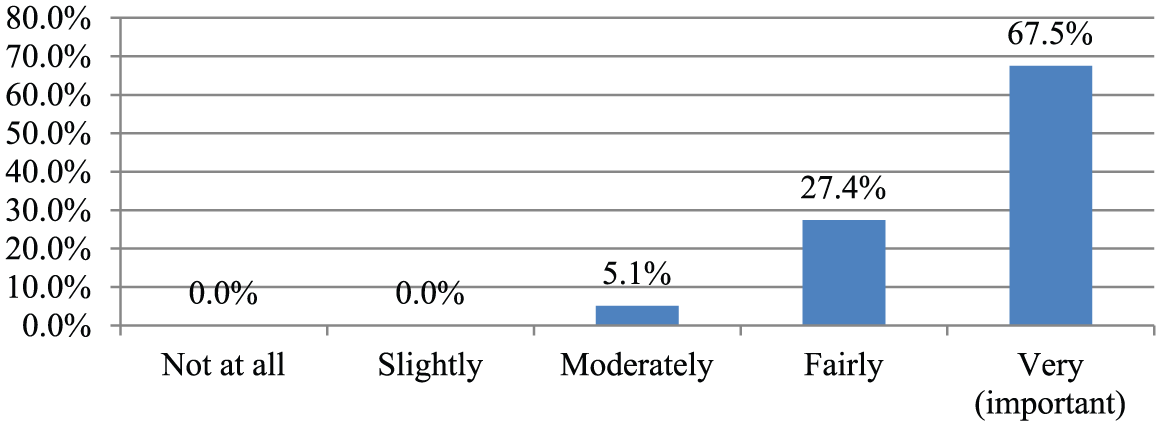
Average percentage of teachers’ answers regarding the fifth parameter of professionalism (teachers’ care, concern and interest about students and their achievements).
Teachers’ perceptions about professional development
The question on professional development included five sub-questions, concerning specific aspects of this issue.
In response to the first parameter (2.1), relating to teachers’ need for continuing education and training, the majority of teachers (53.4%) characterized it as very important. Other answers in a descending order were as follows: 40.6%: fairly important; 4.7%: moderately important; 0.9%: slightly important. Comparing this factor with the sample’s background variables, it was revealed that teachers who had attended the In-Service Training School were more likely to attribute greater importance to this aspect of professional development, according to the Mann–Whitney test (U = 3562.5, r = −0.25) (Figure 6).
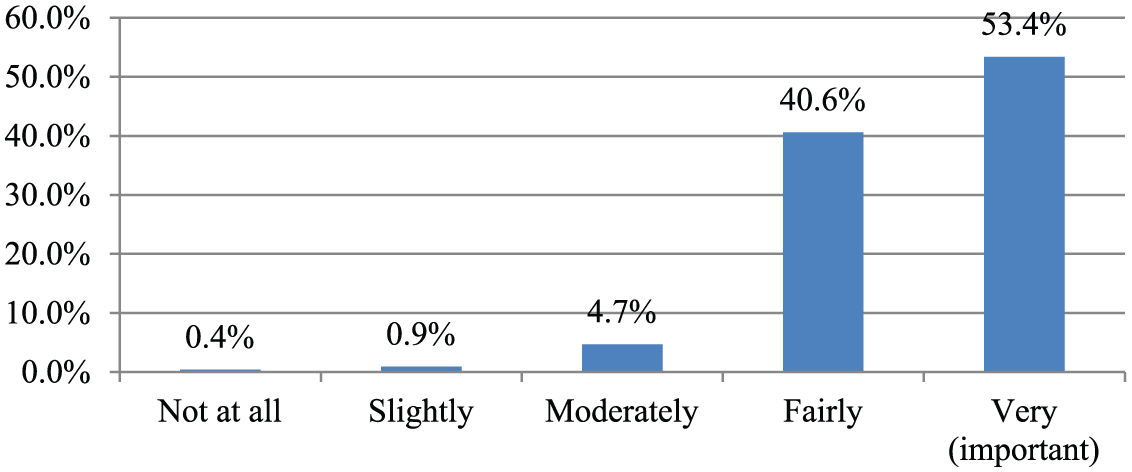
Average percentage of teachers’ answers regarding the first parameter of professional development (teachers’ need for continuing education and training).
The second parameter of professional development (2.2), relating to teachers’ participation in and/or attendance of scientific events (e.g., conferences, lectures, workshops), was characterized as very important by the 23.5% of the respondents. The majority of the answers (54.7%) ranked it as fairly important (Figure 7).
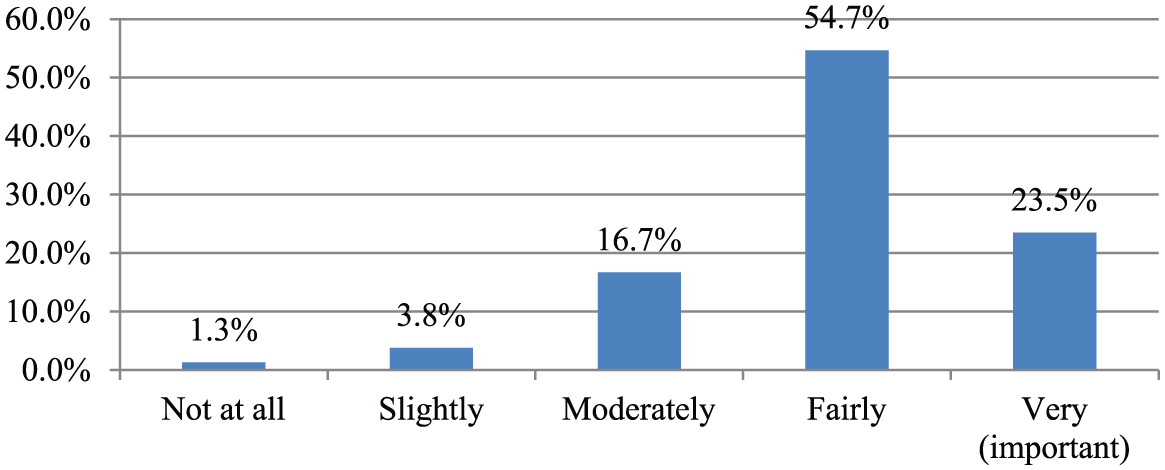
Average percentage of teachers’ answers regarding the second parameter of professional development (teachers’ participation in and/or attendance of scientific events, e.g., conferences, lectures, workshops).
The application of the Kruskal–Wallis (H) test showed that teachers’ answers on this aspect of professional development were significantly affected by their teaching experience (H(3) = 10.692, p < 0.01). The Mann–Whitney test was then applied. Teachers who had 15+ to 25 years of service at schools (Median (Mdn) = 4.00, Mean Rank (MR) = 50.09) attributed greater importance to this parameter, and their answers provided statistically significant differences compared to the answers of teachers with less teaching experience (range: 0–5 years) (Mdn = 4.00, MR = 33.56, U = 514, r = −0.31).
Subsequently, the third sub-question (2.3) focused on the collaboration with colleagues, which constitutes an integral feature of teachers’ professional development, according to the literature on the topic. Most teachers (50.9%) considered this parameter as fairly important, whereas 35% underlined it as very important (Figure 8).
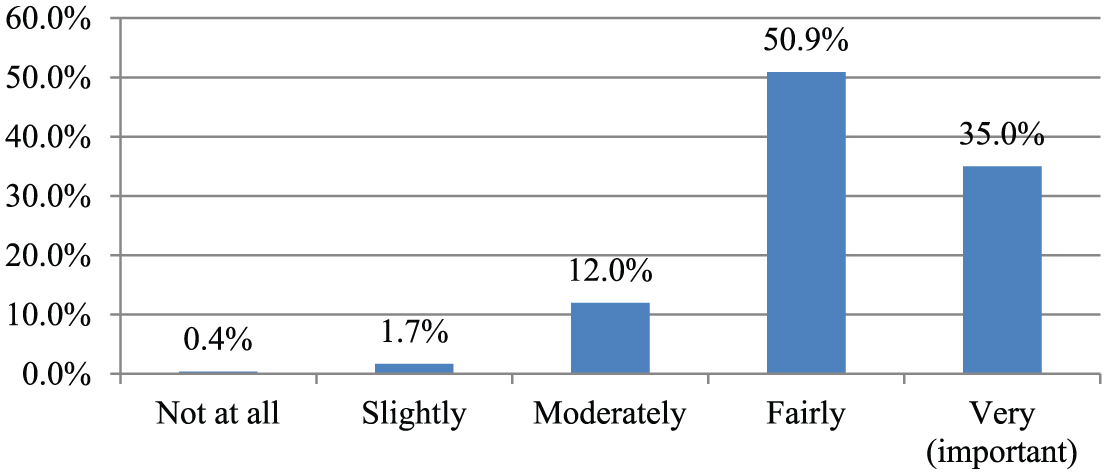
Average percentage of teachers’ answers regarding the third parameter of professional development (collaboration with colleagues).
In the fourth sub-question (2.4)—learning through the Internet and the application of new technologies—the majority of teachers (51.7%) characterized it as fairly important. However, the statistical analysis did not reveal any significant correlation with the background variables of the sample (Figure 9).
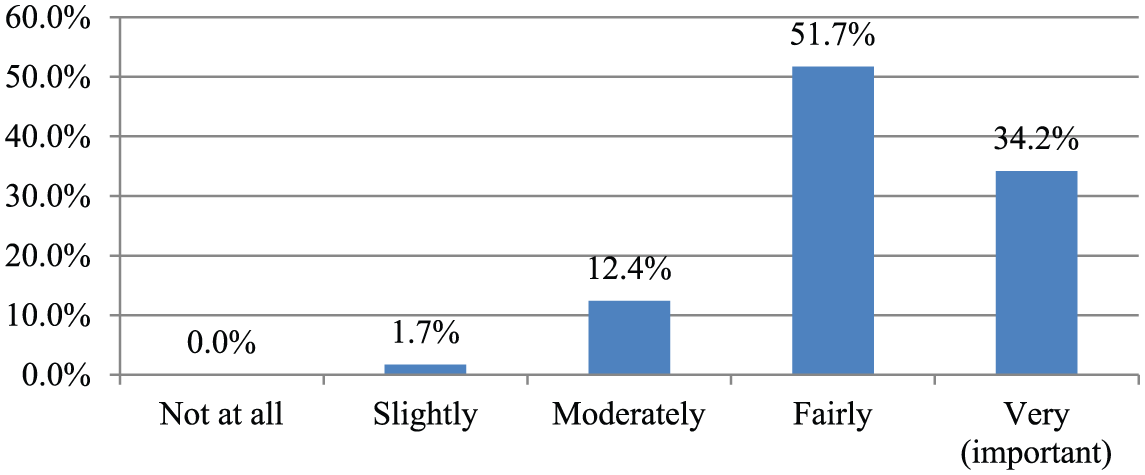
Average percentage of teachers’ answers regarding the fourth parameter of professional development (learning through the Internet and the application of new technologies).
Finally, the fifth sub-question (2.5) examined teachers’ perceptions about their personal research and study of specific educational issues. This parameter of professional development was highlighted as very important by 49.6% of the sample, whereas 41.9% of teachers ranked it as fairly important. The other findings were as follows: 7.3%: moderately important; 1.2%: slightly important; 0.0%: not at all (Figure 10).
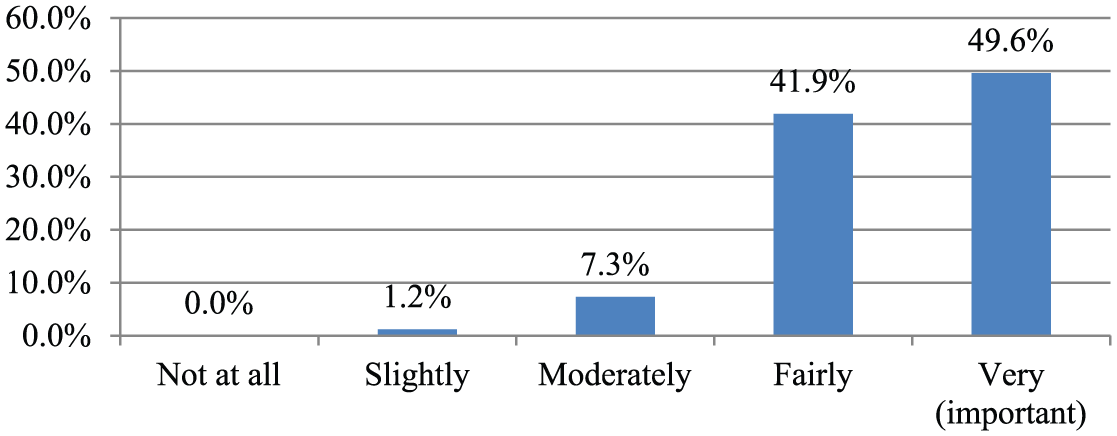
Average percentage of teachers’ answers regarding the fourth parameter of professional development (personal research and study of specific educational issues).
Discussion and conclusion
This empirical study attempted to explore the perceptions of a sample of primary school teachers in Greece on certain aspects of professionalism and professional development, which are provided in the relevant literature on the topic in the international context.
Based on our results and the results of studies in other countries, it became clear that, regarding professionalism, teachers tended to place great emphasis on the use of the appropriate teaching methods, following their students’ learning needs. Moreover, teachers’ perceptions about professionalism were closely associated with the demand for the students’ development of moral and social values. This outcome was also in accordance with the sample population’s care and concern about their students’ achievements.
It is noteworthy that care about pupils’ achievements, which appears as a main feature of professionalism in the current literature, was highlighted as a very important parameter by most teachers in our sample. Such a finding reflects teachers’ professional interest and appears to affect their perceptions about professionalism. Moreover, it is in line with other studies that indicate teachers’ efforts to contribute effectively to their students’ achievements (see Antoniou and Kyriakides, 2013; Bredeson and Johansson, 2000; Day, 1999; Gareth et al., 2001).
On the other hand, the teachers of our sample regarded professional development as a multidimensional and complicated process and stressed the importance of acquiring more knowledge and skills during their career that will inevitably enhance their professional status. To achieve the ongoing requirements for lifelong professional development, they highlighted the need for continuing education and training. These findings are in agreement with other research findings on the topic and highlight teachers’ common concerns about their professional development. Teachers’ perceptions also reflected the three concepts of professional development, as defined by Bredeson (2002): learning, engagement, and improved practice. These three constituents seem to strongly determine teachers’ sense of professional development.
Our data also revealed the power of continuing education and training as a significant parameter of teachers’ professional development, and were in line with previous studies (Katz, 1996). This remarkable finding highlights teachers’ strong desire for in-service learning, and relates to the attempt for upgrading their professional background and the reinforcement of their professional development. Similar findings are presented in some other studies (Ifanti and Fotopoulou, 2010, 2011).
Furthermore, the significant role of the background variable of teaching experience was found to differentiate teachers’ perceptions about the influence of their educational experiences upon professional development. In this respect, the issue was mainly underlined by teachers with experience from 15+ to 25 years.
Not surprisingly, the issues of personal research and further studies were recognized as important aspects of professional development and were compatible with another study, which had correlated the teachers’ personal interests with their professional knowledge and training (Day, 1999).
Moreover, a remarkable finding concerned the use of new technologies in education, since our data revealed a negative attitude of teachers. Such a finding, which can be attributed to the lack of relevant knowledge from the part of the sample, is in accordance with Hargreaves’s (2000) and Day’s (2000) studies, which underlined teachers’ difficulty in adopting new technologies in their teaching without undertaking the appropriate training.
Our findings also indicated the potential contribution of collaboration in professional development. The teachers of our sample recognized the various benefits of collaboration, and their views appeared to be in accordance with the results of other similar studies (see Ashuri-Halperin, 2000; Darling-Hammond and McLaughlin, 1995; Hawley and Valli, 1999; Hunzicker, 2011; Vrasidas and Glass, 2004). In fact, it has been pointed out that collaboration with colleagues acts as an “amplifier” for the teachers themselves and their work, as it encourages their active participation in processes leading to professional development.
Furthermore, in many cases, teachers’ answers were in accordance with the research findings of other studies, and these similarities indicate that teachers—in a wider context—share common perceptions and concerns about their professionalism and professional development. The similarities revealed how teachers perceive the aforementioned concepts as well as the factors that affect their ideas.
Summing up, we can say that teachers’ professional development is a universal phenomenon. The primary school teachers in our sample and in previous studies have recognized the significance of basic parameters of professionalism and professional development and have an integrated view of these notions. It is thus important to take into consideration these issues in the attempts made to improve teaching and learning quality at schools. Data analysis revealed their main concern about students and their achievements at school. Additionally, the need for collaboration in the school environment and the demand for training along their career were ultimately underlined. Taking together the findings of this exploratory research study and considering the international perspectives on professionalism and professional development, it becomes obvious that the views of teachers should be used as a reflection tool for any effort to enhance teachers’ professional improvement. Our research data of a case study in Greece confirm the issue, whereas future wholescale research on the topic could strengthen these findings.
Footnotes
Declaration of Conflicting Interests
The author(s) declared no potential conflicts of interest with respect to the research, authorship, and/or publication of this article.
Funding
The author(s) received no financial support for the research, authorship, and/or publication of this article.