




Abstract
In this study, pre-primary teachers’ views about professionalism and professional development in state nursery schools in Greece were investigated using a survey. This investigation of teachers’ responses regarding specific issues of professionalism and professional development revealed that the majority of the teachers in the sample valued the importance of their collaboration with colleagues in schools as well as their concern for pupils’ achievement. The findings demonstrated the coherence between teachers’ professionalism and professional development and provide a useful approach to contextualizing these notions through the lens of transformative learning.
Keywords
Introduction
Nowadays teachers experience a variety of changes and challenges in the era of globalization, such as the introduction of new technologies, multiculturalism, citizenship, and the shifting nature of work, all of which comprise complex educational situations in their workplace at schools. As a consequence, teachers are expected to manage and cater to these new demands immediately and successfully. This situation inevitably affects teachers, who are not only required to accept the ongoing changes but they must also be the agents of change in their professional lives as well as for their students’ learning and achievement. The central concept stemming from this situation is the challenging approach of transformative learning. Transformative processes and approaches are viewed as constituting a large part of the educational sector as we aspire not only to acknowledge the ongoing changes but also to strengthen the belief that teachers would be the agents of these changes. Consequently, the discourse of transformative learning and teaching, apart from the realization of the current changes, is focused on an optimistic belief that teachers can effectively react to the changes (Kalantzis and Cope, 2013; Mezirow, 2009; Mockler, 2005).
Additionally, the issues associated with transformative learning and teaching highlight teachers’ professional role via their activation in society, their collaboration with stakeholders as well as their activation as researchers (Collay et al., 2009; Curran and Murray, 2008; McComish and Parsons, 2013). Closely related to these issues are the concepts of teachers’ professionalism and professional development. In particular, teachers’ readiness to adapt and redefine the educational challenges is connected with the concepts of professionalism and professional development, which is increasingly applied to the educational field and linked to educational and broader societal changes.
Teachers’ professionalism and professional development
In order to gain a comprehensive overview of the specific aspects and elements that make up these concepts, a literature review was conducted regarding teachers’ professionalism and professional development. It is widely acknowledged that a considerable part of the research agenda has focused on teachers’ professionalism and professional development as well as on the factors that constitute and impact on these notions.
The focus on teachers’ professionalism has emerged with an increasing emphasis in the educational literature. However, defining professionalism is not considered to be an easy task, and several researchers have stressed the difficulty to define this notion due to its inherent complexities, based in lack of clarity and its broad focus (Day, 1999; Evans, 2008; Fox, 1992; Hargreaves and Goodson, 1996; Helsby, 1995). Hargreaves and Goodson (1996), for example, referred to the lack of conceptual clarity relating to the nature of professionalism and delineated it as “something which defines and articulates the quality and character of peoples’ actions within that group” (p. 4). Similarly, Day (1999) interpreted professionalism as a “consensus of the norms, which may apply to being and behaving as a professional within personal, organizational and broader political conditions” (p. 13). In fact, the concept of teachers’ professionalism includes various aspects and influences, which contribute to its definition and consequently to its formation.
Teachers’ professionalism refers to teachers’ responsibility to cope adequately with the numerous changes and challenges in rich and varied educational contexts. In this new era, teachers are expected to get actively involved with the wider educational system and contribute to educational improvement. As many researchers note, part of the educational improvement is related to teachers’ professional development by acquiring professional knowledge and skills as well as having a sound understanding of pupils’ achievements (e.g. Barton et al., 1994; Day, 2002; Helsby, 1995; Webb et al., 2004). In such a demanding context, teachers are expected to undertake new and even more complex roles and responsibilities that require an extended sense of collaboration between pupils, parents, and other educational stakeholders. Day and Gu (2007) report that teachers’ professionalism is aligned with the educational policy reforms, which can directly affect the ways in which it manifests. As a consequence, such a situation forges teachers’ professional knowledge, autonomy, and collaboration, which support teachers’ work and reinforces professionalism (Charteris and Smardon, 2015; Evans, 2008; Hargreaves, 2000; Sachs, 2000).
Teachers’ professionalism is closely related to teachers’ professional development. Indeed, teachers’ engagement in professional development issues has been extensively underlined as a recent phenomenon (Collinson and Ono, 2001; Day, 2001; De Vries et al., 2014; Herdeiro and Costa e Silva, 2013; Tang and Choi, 2009), and the relationship between professionalism and teachers’ professional development has been extensively recognized (see, for example, Evans, 2008; Fotopoulou and Ifanti, 2017; Ifanti and Fotopoulou, 2011; Kirkwood and Christie, 2006; Soine and Lumpe, 2014). Effective professional development is related to teachers’ ability to cope with educational changes through the adjustment or readjustment of their practices in order to respond effectively to the current demands. It is also referred to teachers’ ability to participate in educational activities along their career.
According to Fullan (1995), professional development is “the sum total of formal and informal learning pursued and experienced by the teacher in a compelling learning environment under conditions of complexity and dynamic change” (p. 265). In other words, professional development implies teachers are engaged in reflections and actions, which illustrate the experience and the learning they have already accumulated during their teaching career at school. Similarly, Herdeiro and Costa e Silva (2013) noted that “professional development can be seen as growing in certain aspects of professionalism and can be legitimately applied to the development of a teacher or a group of teachers in the work context”(p. 181). In a more descriptive interpretation of professional development, Day (1999) defines the term as being the process by which, alone and with others, teachers review, renew and extend their commitment as change agents to the moral purposes of teaching and by which they acquire and develop critically the knowledge, skills, planning and practice with children, young people and colleagues through each phase of their teaching lives. (p. 4)
Bredeson (2002) perceives the notion of professional development through three interdependent concepts, that is, learning, engagement, and improved practice, and defines professional development as “learning opportunities that engage educators’ creative and reflective capacities in ways that strengthen their practice” (p. 663). Thus, an investment in teachers’ professional development activities appears to be crucial not only for teaching and learning but also for the teachers themselves. Teachers need to strengthen their knowledge base, identify the appropriate support, in order to accomplish their educational duties, and meet successfully their educational demands as well as their professional needs.
There seems to be a high agreement in the constantly changing educational environment, that teachers are expected to engage consciously and successfully to current changes and demands, and the aforementioned notions of professionalism and professional development. Moreover, in order to deliberate and reflect on this agreement, it is also inspiring to take into account the main issue of transformative teacher education and new learning, which aim at providing teachers who are able to manage the societal changes and aspire to be active citizens (Kalantzis and Cope, 2013; Mockler, 2005). In this survey, we investigated the perceptions of a sample of Greek pre-primary teachers on certain aspects of professionalism and professional development, based on the current literature on the topic.
Materials and method
The sample consisted of pre-primary teachers, who were working in state nursery schools located in the region of Achaia, in western Greece. More specifically, 76 pre-primary teachers participated in the survey (response rate: 19% of the sampling frame). The sample was broadly representative of the population as a whole. The survey of this study was carried out using anonymously written questionnaires. Initially, we carried out a pilot study on a small-scale basis. The sample of that pilot study was representative in order to validate the accuracy of the questionnaire, and, if necessary, to modify it accordingly (Blaxter et al., 2004; Field and Hole, 2010). Data were analyzed with IBM SPSS (version 20.0).
The questionnaire included two parts. The first one was concerned with the background variables of the teachers, that is, gender, studies, additional qualifications, and teaching experience.
In the second part of the questionnaire, teachers were asked to present their perceptions about specific aspects of professionalism and professional development. We also sought to examine the significance that our sample was attributing to each of these parameters. In particular, the first question referred to the factors that contributed to the sample’s decision to become teachers, as well as whether teachers’ perceptions and motivations to enter the teaching profession had an impact on the engagement and the quality of their work (Watt and Richardson, 2008). The second question provided four specific aspects of professionalism:
Teacher who is acting as a model and contributing to students’ development of moral and social values,
The degree to which the teacher is allowed to apply suitable teaching methods, according to students’ learning requirements,
Collaboration with colleagues, parents, and students, and
Care, concern and interest about students and their achievement.
The third question included five parameters regarding teachers’ professional development:
Teachers’ need for continuing education and training,
Teachers’ participation in and/or attendance of scientific events (e.g. conferences, lectures, workshops),
Collaboration with colleagues,
Learning through the Internet and the application of new technologies, and
Personal research and study on specific educational issues.
In this study, our starting point was the research findings of Beijaard et al. (2000), Collinson and Ono (2001), Day (2001), Evans (2008), Kirkwood and Christie (2006) and Tang and Choi (2009). Following these research findings, we introduced a research case study with a review of teachers’ professionalism and professional development in the University of Patras, Greece.
Quantitative data analysis was carried out by applying SPSS software (v. 20.0), and the non-parametric statistics of Mann–Whitney (U) and Kruskal–Wallis (H) were used. The findings were statistically significant to at least the 5% level.
Results
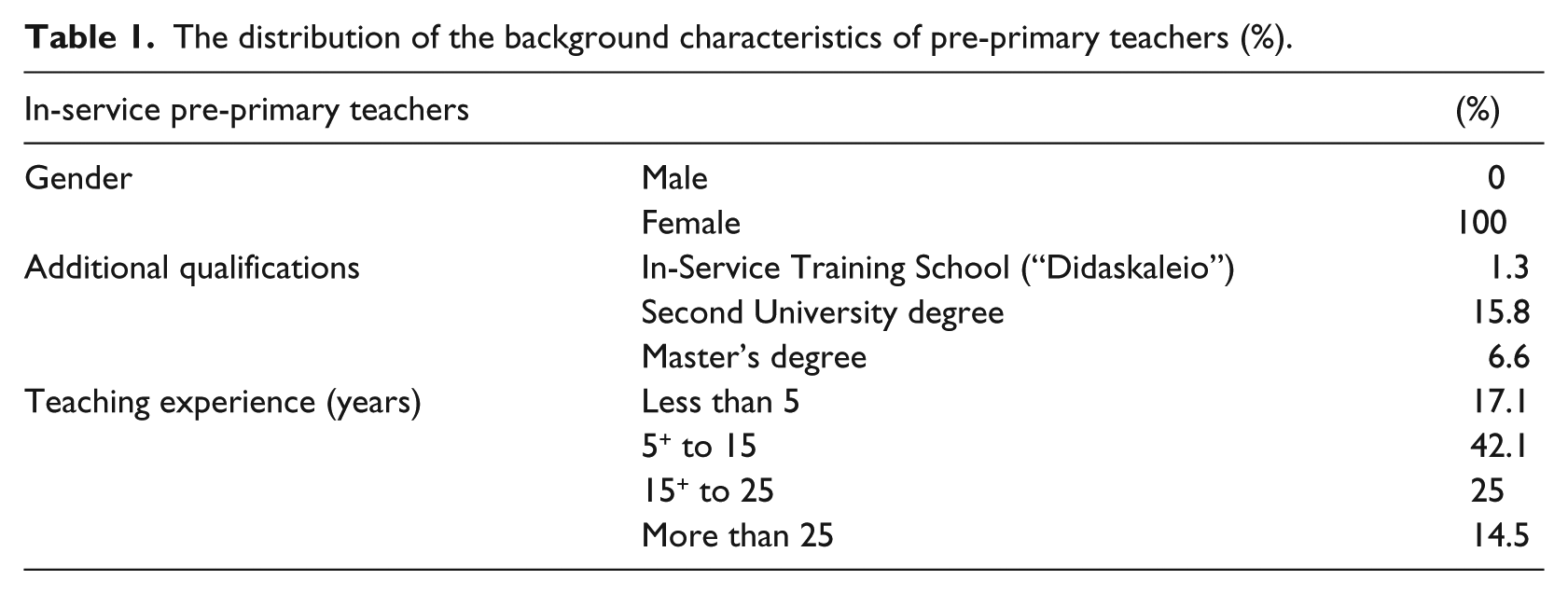
Regarding the background variables, pre-primary teachers were all female (100%). In relation to their additional studies, 1.3% of them had attended the In-Service Training School (“Didaskaleio”) 1 and 15.8% held a second University degree. A small number (1.3%) of the pre-primary teachers held a Master’s degree. In terms of their teaching experience, 17.1% of the teachers had less than 5 years, 42.1% had been teaching from 5 to 15 years, then 25% from 15 to 25 years and, finally, 14.5% had more than 25 years of experience (Table 1).
The distribution of the background characteristics of pre-primary teachers (%).
The first question referred to the factors that contributed to the sample’s decision to become a teacher, whereas the majority of the teachers answered that it was their personal choice to become a teacher (82.9%). Their family influences appeared to be the second factor (response rate: 18.4%) (Table 2).
Factors affected respondents’ choice to become teachers. a
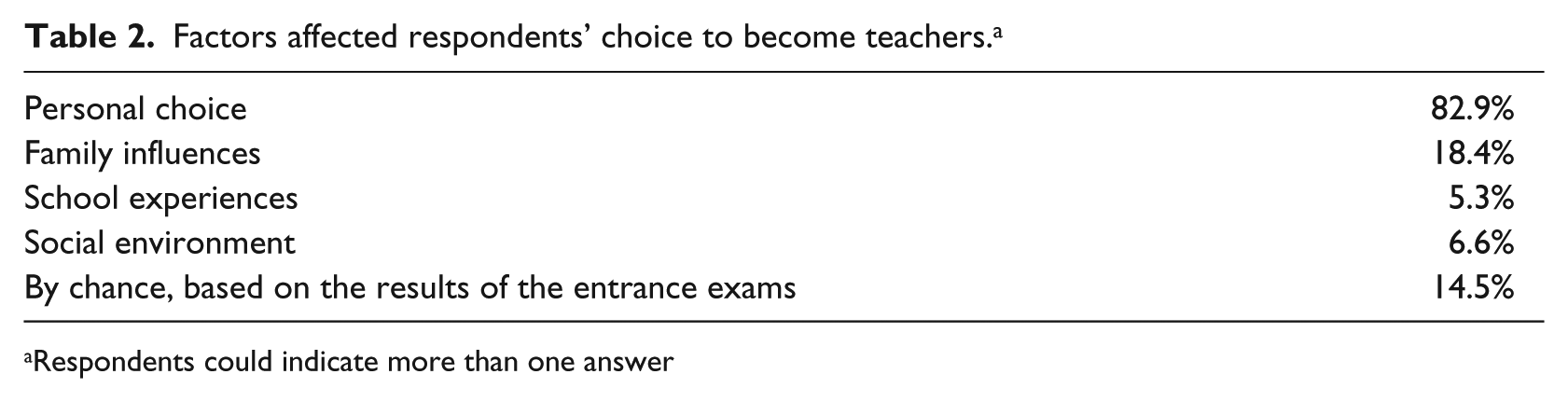
Respondents could indicate more than one answer
The second question examined teachers’ professionalism and included four sub-questions which were concerned with specific aspects of professionalism. Figure 1 provides an overview of the distribution of pre-primary teachers’ answers over the first aspect of professionalism (Teacher who is acting as a model and contributing to students’ development of moral and social values). It is significant to note that the majority of teachers (51.3%) characterized this as being fairly important, whereas 35.5% of the sample evaluated this parameter as very important (Figure 1).
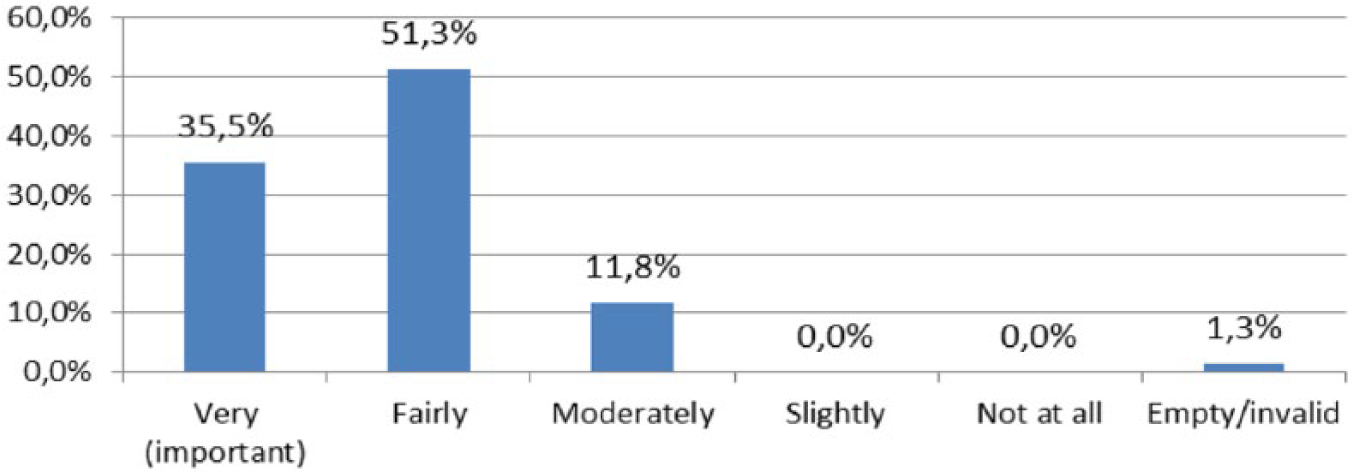
The average percentage of pre-primary teachers’ answers regarding the first parameter of professionalism (teacher who is acting as a model and contributing to students’ development of moral and social values).
For the second aspect of professionalism (The degree to which the teacher is allowed to apply suitable teaching methods, according to students’ learning requirements), a high percentage of pre-primary teachers (56.6%) underlined the importance of this aspect of professionalism. Nevertheless, this factor did not reveal any statistical correlation compared with the background variables of the sample.
Thereinafter, the third aspect of teachers’ professionalism was related to the collaboration with colleagues, parents, and students. It is worth mentioning that a considerable number of pre-primary teachers in our sample (56.6%) pointed out the strong relationship between collaboration and their sense of professionalism. Such a position did not reveal any statistical correlation with the background variables (Figure 2).
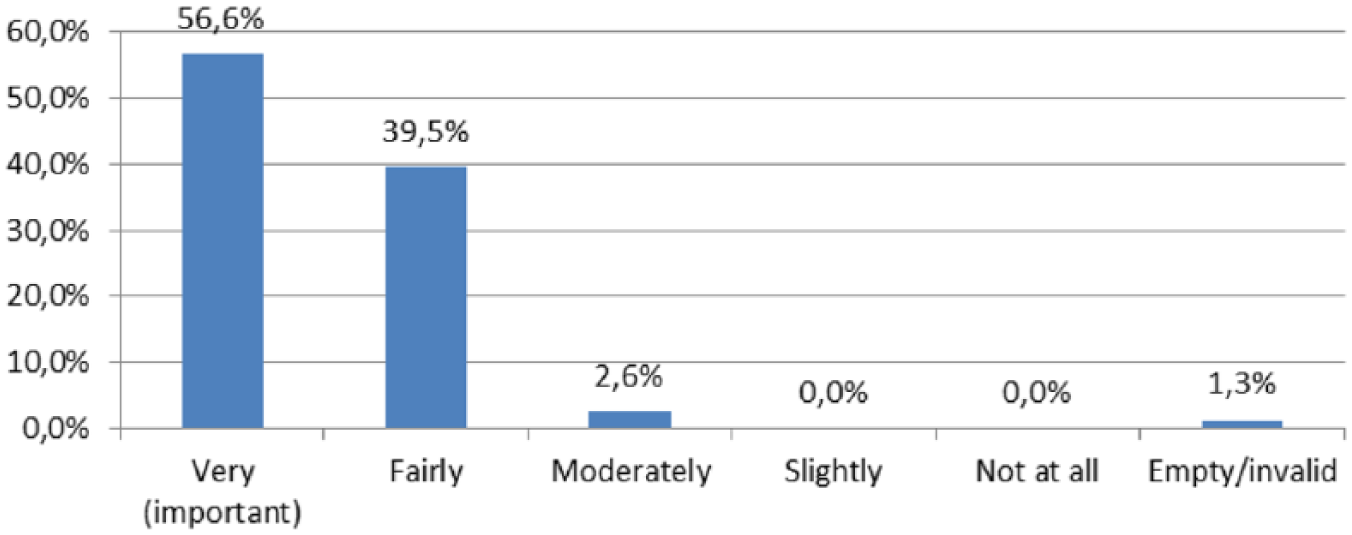
The average percentage of pre-primary teachers’ answers regarding the fourth parameter of professionalism (collaboration with colleagues, parents, and students).
Finally, the fourth aspect of professionalism, that is, care, concern and interest about students and their achievement, was evaluated as very important by the majority of the respondents in our sample.
The next question referred to teachers’ professional development and included five sub-questions, which were concerned with specific aspects of this issue.
In response to the first parameter, which was related to teachers’ need for continuing education and training, the majority of teachers (60.5%) characterized this as being very important. Some other answers, which were found in a descending order, appeared as follows: 34.2%—fairly important, 2.6%—moderately important, 2.6%—slightly important. However, the statistical analysis did not reveal any significant correlation with the background variables of the sample (Figure 3).
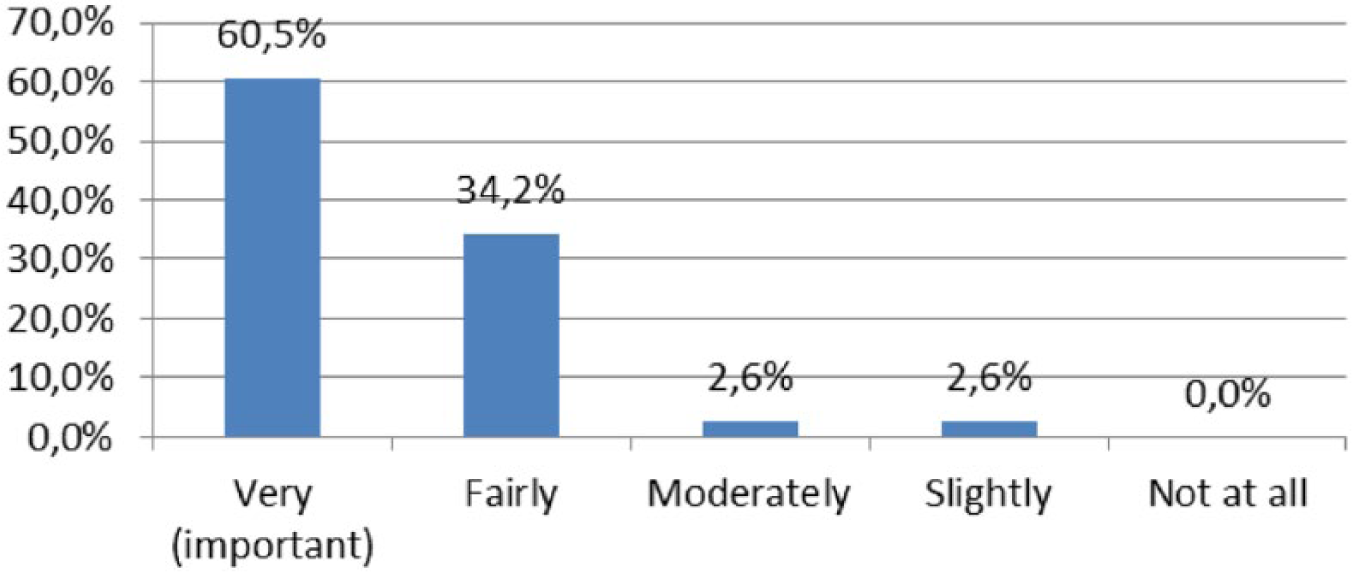
The average percentage of pre-primary teachers’ answers regarding the first parameter of professional development (teachers’ need for continuing education and training
The second parameter of professional development, which was related to teachers’ participation in and/or attendance of scientific events (e.g. conferences, lectures, workshops), was characterized as very important by the 35.5% of the respondents. The majority of the answers (53.9%) were found in the “fairly important” category.
The third sub-question focused on the collaboration with colleagues, which constituted an integral feature of teachers’ professional development, according to the literature on the topic. Most of the pre-primary teachers (46.1%) considered this parameter as very important, whereas the 44.7% of the respondents characterized it as fairly important (Figure 4).
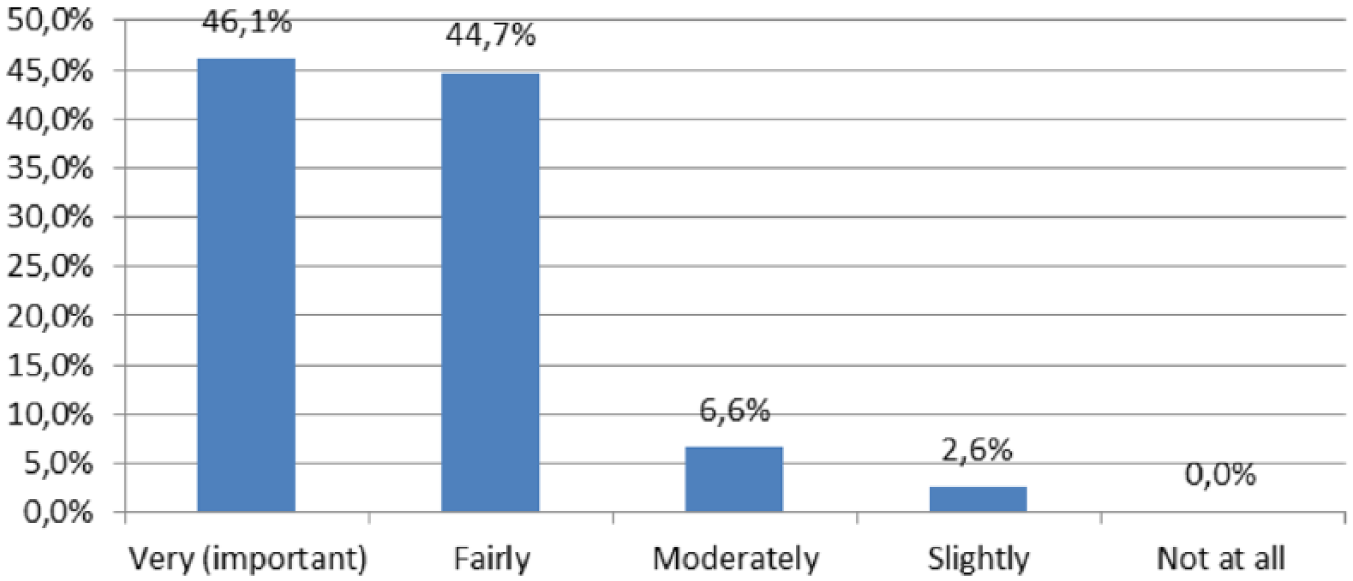
The average percentage of pre-primary teachers’ answers regarding the third parameter of professional development (the collaboration with colleagues).
The fourth sub-question of professional development was concerned with learning through the Internet and the application of new technologies. A great number of participants (72.4%) rated this aspect of professional development as being “fairly important.” The application of Kruskal–Wallis test brought out that teachers’ answers about this aspect of professional development were significantly affected by their teaching experience (H(3) = 9.579, p < 0.01). The Mann–Whitney test was then applied and their answers provided statistically significant differences (U = 103.5, p < 0.01 r = −0.38). Teachers who were ranged from 5+ to 15 years of service at school (median = 4.00, multiple regression (MR) = 24.27) had attributed greater importance to this parameter of professional development compared to the answers of teachers with more than 25 years of teaching experience (median = 4.00, MR = 15.41).
Finally, the fifth sub-question focused on teachers’ perceptions about their Personal research and study of specific educational issues. This parameter of professional development was highlighted as very important by the 40.8% of the sample, whereas 51.3% of the teachers ranked it as fairly important. The other findings were ranked as follows: 5.3%—moderately important, 2.6%—slightly important, 0.0%—not at all (Figure 5).
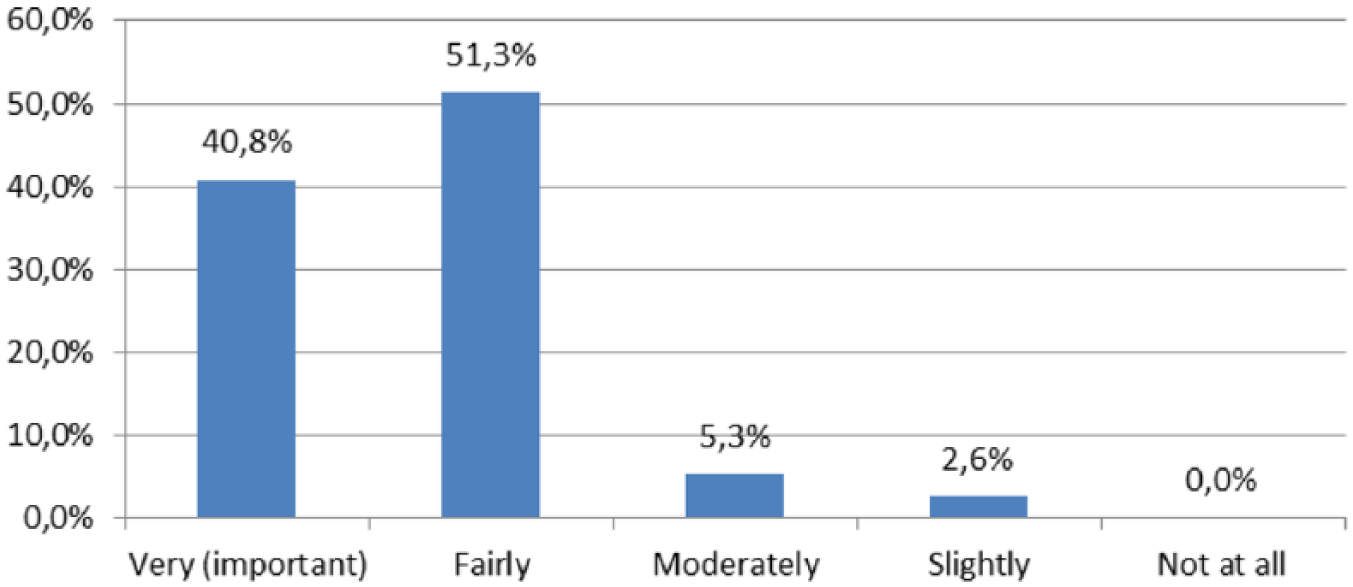
The average percentage of pre-primary teachers’ answers regarding the fifth parameter of professional development (personal research and study of specific educational issues).
Discussion and conclusion
Based on the results and taking into account some of the main theoretical issues about professionalism and professional development provided in the current literature on the topic, the data indicated that the teachers in this sample recognized the multidimensional aspects of professionalism and professional development, and attributed either more or less importance to them.
In particular, it was found that the fundamental reason for teachers (as undergraduate students) to study at the Department of Pre-primary Education, apart from their plans to become teachers, was their intrinsic motivation (personal choice) and willingness to join the teaching profession, which was also close to their positive attitudes to enhance their professionalism (Watt and Richardson, 2008).
The teachers in our sample tended to attribute significant importance to the aspect of professionalism referred to the degree that a teacher was allowed to apply suitable teaching methods, according to students’ learning demands. Such a finding reveals that teachers’ efforts to enhance their professional background had great impact on their effort to improve students’ learning by using the appropriate teaching methods. Furthermore, the distinctive feature of professionalism related to teachers’ care, concern, and interest about students and their achievements in school was characterized as very important by the majority of the respondents. These results were similar with other studies, which underlined that teachers’ efforts to care and concern about their pupils were inherent features of the formation and the identification of professionalism (e.g. Antoniou and Kyriakides, 2013; Bredeson and Johansson, 2000; Day, 1999). They were also in line with being able to engage in transformative learning and teaching, which involve teachers’ transformative approach to teaching and learning that addresses both their students’ progress and achievement (Collay et al., 2009; Thomas, 2009).
Moreover, teachers’ collaboration with colleagues, parents, and students was rated as a very important issue in the study, and no significant differences were found in relation to demographic characteristics of the sample. This finding indicates that the teachers in this sample tend to attribute great importance to this aspect of professionalism regardless of any other demographic distinction. Teachers recognized the various benefits of collaboration and their views appeared to be in accordance with the results of other studies in the field, which highlighted the notion of collaboration as a powerful force within the teaching profession (e.g. Bredeson and Johansson, 2000; Herdeiro and Costa e Silva, 2013; Hunzicker, 2011; Kedzior, 2004). Furthermore, regarding transformative learning discourse, the issue of collaboration is greatly recognized and underlines teachers’ participation in the critical thinking (Thomas, 2009). So, teachers’ perceptions of the importance of collaboration in their workplace highlight the link between professionalism and transformative learning and teaching (Mockler, 2005).
Greek pre-primary teachers also stressed the importance of their contribution to students’ moral and social development, and specifically underlined their personal research, their studies and their participation in scientific events as important aspects of professional development. In this regard, they highly acknowledged the attribution of continuing in-service training programs to the enhancement of their profession as well as the acquisition of knowledge along their career. Other researchers (see, for example, Bredeson, 2002; Day et al., 2007; Hargreaves, 2001; Webb et al., 2004) had also indicated that teachers had reported the continuing learning as a substantial factor of their professional development in order to keep up with the professional demands and responsibilities. In this regard, teachers’ answers are also in accordance with transformative learning, taking into account that the educator serves as a role-model by himself/herself demonstrating willingness to acquire professional knowledge (Kalantzis and Cope, 2013; King, 1999; Mezirow, 2009).
To sum up, this research revealed that the Greek pre-primary teachers regarded professionalism and professional development as being multidimensional and complex. They regarded it as both playing an important role in preparing themselves to creatively transform their educational contexts and extending their career as well as reinforcing their students’ efforts in the learning process. These findings underline the coherence between teachers’ professionalism and professional development with the notion of transformative learning. The results of this small study contribute to the discussion about teachers’ professional enhancement in schools and provide a form of inquiry which enable us to contextualize the notions of professionalism and professional development in the current and changeable education era through the lens of transformative learning.
Footnotes
Funding
The author(s) received no financial support for the research, authorship, and/or publication of this article.