




Abstract
Community-Based Participatory Action Research (CBPAR) promotes collaborative knowledge production and social transformation by engaging community members as co-researchers. However, sustaining meaningful participation and equitable communication remains a challenge, particularly in settings marked by power asymmetries and cultural complexity. This article introduces the VisionArte methodology, which integrates arts-based methods and sensory ethnography to foster youth engagement and enhance dialogical processes within CBPAR. Developed through fieldwork conducted in 2023-2024 with Indigenous youth in San José de Chiquitos, Bolivia, the study explores how visual and sensory tools, such as visual mapping, embodied exercises, and data portrait drawing, can build trust, strengthen communication skills, and amplify marginalized voices. A central finding is the transformative potential of collective sensory envisioning exercises, which enabled youth to articulate pressing concerns, ranging from domestic violence and healthcare access to pollution and narcotrafficking, while simultaneously challenging researchers’ assumptions about local priorities. By emphasizing co-creation, emotional attunement, and community-driven design, the VisionArte methodology demonstrates how tailored visual and sensory approaches can foster inclusive participation, redistribute epistemic power, and support long-term engagement in participatory research. This article contributes to the growing literature on arts-based methods in CBPAR by offering both theoretical insight and practical guidance for designing equitable research interactions.
Keywords
1. Introduction
In contexts marked by structural vulnerability and cultural asymmetries, traditional research practices often fail to capture the lived realities and epistemic agency of local communities. This is particularly true in rural or peri-urban regions, where academic interventions may inadvertently reproduce hierarchies rather than disrupt them (Dierckx et al., 2021). Community-Based Participatory Action Research (CBPAR) offers a promising counter-approach by centering collaboration, shared knowledge production, and social transformation (Collins et al., 2018; Ivankova, 2017). Yet sustaining engagement and enabling equitable participation, especially among youth, remains a persistent challenge, particularly in contexts with entrenched power imbalances and cultural complexity (Stoudt et al., 2019; Suarez-Balcazar, 2020).
This article examines how visual and sensory tools can strengthen participatory research by enhancing dialogue and fostering trust among young participants. Drawing on fieldwork conducted in San José de Chiquitos, Bolivia, —a culturally rich and historically complex setting, —we introduce the VisionArte methodology. Designed as a holistic and iterative framework, that integrates arts-based methods (Leavy, 2015) and sensory ethnography (Gherardi, 2019; Le Breton, 2007) to support inclusive communication, indigenous youth empowerment, and community-led inquiry.
The study is situated within the CReA international cooperation project focused on sustainable development across multiple campuses of the Universidad Católica Boliviana (Peres-Cajías, 2023; Peres-Cajías et al., 2022). It contributes to the goals of the Transversal Project, which emphasizes science communication, participatory engagement, and community empowerment. Rooted in CBPAR principles, the VisionArte approach expands conventional participatory methods by incorporating creative, embodied practices that enable youth to express concerns and aspirations through artistic media (Griniuk, 2021; McNiff, 2008).
The article proceeds in four parts. First, it contextualizes the research site and its socio-political structures. Second, it outlines the theoretical underpinnings of the study, drawing from symbolic interactionism (Blumer, 1969; Savin-Baden & Howell Major, 2013), social constructivism (Berger & Luckmann, 1966; Mertens, 2015), and the transformative paradigm (Mertens, 2009, 2017). Third, it describes the methodological design, with particular attention to the integration of art-based and sensory practices. Finally, it presents empirical findings from two youth-centered workshops, followed by a reflection on the ethical and practical implications of visual communication tools within CBPAR. By doing so, this article aims to advance the field of participatory visual research by proposing a model that is attuned to both power dynamics and the creative potential of indigenous community engagement.
1.1. Overall View on the Chiquitana Region and San José de Chiquitos
The Chiquitanía region in Bolivia’s Santa Cruz department, a biodiverse tropical savannah and dry forest area, serves as a rich ecological and cultural context for participatory visual research Fieldwork was conducted in San José de Chiquitos, a historic Jesuit mission town with around 10,000 residents, many of whom identify as Moxo-Chiquitano (Monkox culture). This community maintains a syncretic spiritual life, blending Catholic and Indigenous animistic beliefs. Notable cultural expressions such as Chiquitano Baroque music and painting, originally introduced during Jesuit colonization, have evolved into celebrated traditions and vital tools for knowledge transmission (Baptista Gumucio & Nawrot, 2019; Riester & Díez Astete, 2020). Artistic expression is deeply integrated into the community’s worldview, making the VisionArte methodology, based on visual, sensory tools, aligned with local practices.
1.2. Socio-Geographical and Hierarchical Structures
Understanding the Indigenous governance structures of the Chiquitanía is crucial for ethically and effectively conducting participatory research. Local communities, organized under bodies like the Central of Indigenous Chiquitana Communities Turubó (CCICHT), maintain traditional leadership systems centered on the caciques, who hold significant authority over community norms, resource distribution, and external collaborations (Mendoza Patiño, 2023). Despite formal gender equality, leadership remains predominantly male, mirroring patriarchal family hierarchies.
Deliberative assemblies (asambleas) are the main forums for decision-making, with broader coordination occurring through the CCICHT. Access to communities requires formal approval from local and regional caciques, reflecting their right to define the terms of collaboration. These permissions are conditional, based on clear expectations and accountability, with community leaders able to revoke access if deemed no longer beneficial (Universidad Católica Boliviana and Konrad Adenauer, 2023).
Such governance structures shape participatory research by determining who participates, speaks, and decides. Participation is inherently political, embedded in cultural protocols and power asymmetries. In this context, the VisionArte methodology functions not just as a set of visual tools but as a relational, dialogic practice. It opens space for intergenerational and intersubjective engagement, especially amplifying marginalized voices such as Indigenous youth. The following section explores how these socio-political dynamics directly shaped the participatory, visually grounded research framework.
2. Theoretical and Conceptual Framework
This study is situated at the intersection of participatory research, visual communication, and sensory and artistic ethnography. It draws on a set of complementary theoretical traditions such as symbolic interactionism, social constructivism, and the transformative paradigm, to conceptualize knowledge as relational, embodied, and co-produced within socially and historically situated contexts. These frameworks shape both the design and interpretation of the VisionArte Methodology, which aims to facilitate inclusive communication and redistribute epistemic power through visual and sensory tools.
2.1. From Communication Barriers to Trust-Building: Framing the Need for a Holistic Methodology
Communication barriers that are often subtle and taken for granted significantly limit the participation, empowerment, and agency of local communities. From both social-scientific and artistic perspectives, this raises a central question:
In many rural contexts, including San José de Chiquitos in Bolivia, communication between local communities and external stakeholders—such as NGOs, academic researchers, and public or private institutions—is shaped by power imbalances and fragmented interaction. These dynamics have contributed to mistrust, misrepresentation of local needs, and a weakening of community agency. Existing forms of engagement have failed to support sustainable collaboration, highlighting the need for more integrative and culturally grounded modes of communication. Against this backdrop, this study focuses on strengthening communicational empowerment and rebuilding trust within the San José de Chiquitos community and between community members and external actors. It addresses the following research questions: • •
To respond to these challenges, this article proposes the VisionArte Methodology, an approach that combines visual, sensory, and participatory practices to address communication gaps and support trust-building processes. Through workshops and facilitated dialogue, community members, youth, and external stakeholders jointly develop communication skills and shared understandings of local needs, contributing to more sustainable collaborative relationships.
The methodology was developed through the lead researcher’s sustained engagement with arts-based, theatrical, and art-therapeutic practices, combined with interdisciplinary collaboration and iterative refinement in pedagogical and community contexts. The name VisionArte emerges from a Spanish wordplay: visión refers to imagining alternative futures, while arte highlights the central role of arts-based methods. Together, the term also evokes envisioning oneself in the future.
As further elaborated in this study, the methodology is structured around a set of practical “tools” used as techniques and participatory dynamics. Each tool is linked to one of the four elements—earth, fire, water, and air—drawing on animistic traditions present in the region. This elemental framework is not merely symbolic; it acknowledges local Indigenous belief systems while providing a culturally resonant structure for dialogue and collective reflection.
2.2. Meaning-Making and Intersubjectivity
At the micro-sociological level, the study is informed by symbolic interactionism, which foregrounds the social production of meaning through everyday interactions (Blumer, 1969). According to this perspective, individuals act based on the meanings they assign to objects, people, and events—meanings that are not fixed but negotiated through social exchanges and continuously reinterpreted (Savin-Baden & Howell Major, 2013). This lens is especially relevant in community-based research, where researchers must attune themselves to the symbolic systems and interactional norms that structure participants’ life worlds.
Complementing this is the framework of social constructivism, which understands knowledge as co-constructed through dialogue, shared experiences, and cultural mediation (Berger & Luckmann, 1966; Mertens, 2015). Rather than seeking singular or universal truths, social constructivist research embraces multiplicity and values the perspectives of those often excluded from dominant knowledge systems. In the context of Indigenous communities such as those in San José de Chiquitos, this approach allows for a deeper appreciation of local epistemologies, grounded in relationality, storytelling, and embodied knowing.
Taken together, symbolic interactionism and social constructivism inform a view of communication not merely as the transmission of information, but as a dynamic, intersubjective process through which identities, realities, and social bonds are continually made and remade. These orientations underscore the need for dialogical tools such as drawing, mapping, and collective envisioning that support meaning-making beyond verbal discourse.
2.3. Knowledge, Power, and the Transformative Paradigm
Beyond the intersubjective level, this study is grounded in the transformative paradigm (Mertens, 2009, 2017), which explicitly addresses the political and ethical dimensions of knowledge production. Rooted in critical theory and social justice, this paradigm asserts that research should not only describe or understand the world but contribute to its transformation, particularly by centering the voices and needs of marginalized communities.
In the Chiquitana context, this means acknowledging the colonial histories, ongoing power asymmetries, and governance structures that shape both participation and representation. The transformative paradigm guides our commitment to CBPAR, which treats community members not as subjects but as co-researchers, capable of shaping research questions, methods, and outcomes (Ivankova, 2017; Wilkinson & Kemmis, 1998). This is not only an ethical imperative but also a methodological one, as knowledge becomes meaningful and actionable only when rooted in community realities.
Building on this commitment to ethical and transformative research, VisionArte can be situated within the broader field of participatory methodologies developed to engage rural communities. This field encompasses both well-established participatory approaches and more recent, arts-based innovations. Several widely used methodologies have shaped participatory work in rural contexts. A prominent example is Frans Geilfus’s 80 Tools for Participatory Development (Geilfus, 2005), which has been influential in South and Central America. This work emphasizes participation through visualization and oral communication and is primarily valued for its systematic compilation and clear presentation of established participatory tools. However, while it supports inclusive engagement, it does not explicitly integrate arts-based strategies that enable alternative forms of expression or the co-construction of shared knowledge.
In contrast, VisionArte is grounded in a CBPAR framework and ethnographic practice. It is designed to strengthen trust and foster dialogical communication among diverse social actors, with particular attention to youth in rural settings. By integrating arts-based methods, the approach seeks to enhance communicative empowerment and support the development of creative and communicational capacities within community-based research processes.
2.4. Embodiment, Affect, and Sensory Ethnography
To further extend the analytical reach of our framework, we draw on insights from sensory and affective ethnography, which emphasize the role of the body and the senses in meaning-making (Gherardi, 2019; Griniuk, 2021; Le Breton, 2007) These approaches challenge the dominance of verbal and visual representation in research by foregrounding the tactile, sonic, and emotional dimensions of experience.
In VisionArte, we use hands-on, multisensory activities like grounding exercises, drawing, soundscapes, and movement. These activities are adopted to engage participants at cognitive, embodied and emotional levels. By designing creative workshops that are attuned to sensory and affective registers, we aim to broaden the expressive possibilities available to participants, particularly youth, and to capture layers of experience that often remain unspoken or invisible (Hannes et al., 2023). Crucially, the researcher is not a neutral observer in this process, but an affectively entangled participant, whose presence and emotional responsiveness shape the co-construction of meaning. This aligns with the idea of “data as felt knowledge,” where interpretation emerges not only through analysis but through lived, sensory and visual encounters with participants and their environments and realities (Literat, 2013; Pink, 2014).
Together, these theoretical orientations form an integrated interpretive framework that informs every stage of the research—from ethical engagement and collaborative design to data generation and interpretation. They enable a methodological approach that is both reflexive and relational, attentive to both macro-level asymmetries and micro-level interactions. In what follows, we describe how these conceptual commitments were translated into a participatory methodology anchored in visual and sensory co-creation.
3. Methodological Path
3.1. Community-Based Participatory Action Research (CBPAR)
As mentioned previously this study is grounded in the principles of CBPAR, a methodology that positions community members as co-researchers throughout different stages of the research process (Ivankova, 2017). CBPAR is not only collaborative in intent but also emancipatory in orientation, aiming to redistribute knowledge production and enable collective agency. Its recursive structure emphasizes reflection, dialogue, and action, unfolding through cycles of co-inquiry that respond dynamically to local contexts and priorities (Dierckx et al., 2021; Wilkinson & Kemmis, 1998).
Our research design integrates this participatory ethos from the outset. Prior to any fieldwork, formal approval was sought from local Indigenous authorities (caciques), who reviewed the project aims, timeline, and anticipated outcomes. Community members were actively involved in defining focal concerns, throughout open discussions, focus groups and interviews that informed and shaped the creative workshops. This alignment with Indigenous governance systems, as described in the contextual section above, ensures that participation was not extractive but dialogical, conditional, and accountable Diagram 1. Interpretive Framework and Methodology summary. Lead author’s own elaboration
3.2. Arts-Based Inquiry
To support inclusive participation and unlock alternative communicative pathways, we employed a suite of arts-based methods, building on traditions of arts-based research (ABR) (Leavy, 2015) and art-based action research (ABAR) (McNiff, 2008). These approaches integrate artistic expression through drawing, mapping, and embodied exercises as both a means of inquiry and a mode of dissemination as we will see in later sections.
Arts-based inquiry which involves using the artistic process itself as a means of investigation, enabling artists, researchers, and participants to create and interpret art as a pathway to understanding lived experiences, was particularly relevant in engaging Indigenous youth, whose participation in formal deliberative structures is often limited. The workshops enabled participants to express experiences, concerns, and aspirations through visual metaphors, spatial compositions, and symbolic representations. These practices produced rich, layered data and created emotionally safe and empowering spaces for dialogue, balancing power differences that might have existed between the researcher and the community. Artistic practices were used not as illustrative adjuncts to verbal data, but as primary open space of meaning-making, reflecting the community’s sense of identity and expression.
3.3. Sensory and Affective Ethnography
To deepen our understanding of how participants experience and communicate their world, we integrated methods from sensory and affective ethnography (Merriam, 2009; Savin-Baden & Howell Major, 2013). These approaches emphasize embodied engagement, effective resonance, and multi-sensory perception as valid and necessary modes of inquiry.
Before field immersion, researchers underwent preparatory sessions designed to attune them to the sensory and emotional landscapes of the communities. During workshops, affective and somatic cues, such as posture, breathing, mood shifts, and group energy, were actively observed and responded to. For instance, breathing exercises and sound-based reflections were used to ground participants and create a shared space of presence and receptivity. These practices enhanced participants’ comfort levels and fostered collective attunement, key to building the trust and safety required for initiating co-creation processes.
3.4. Emic Perspective and Researcher Reflexivity
A central tenet of our methodological approach was the adoption of an emic perspective: that is, understanding the community from within, using its own cultural categories and modes of expression and own conceptual frameworks (Merriam, 2009; Savin-Baden & Howell Major, 2013). This required researchers to act not as distant observers but as facilitators and co-learners, engaging in shared meaning-making rather than imposing external interpretations.
The collaborative nature of VisionArte necessitates high degrees of reflexivity, especially in navigating asymmetrical power relations, language differences, and divergent expectations. It demands that we, as researchers, examine our emotional predispositions, personal histories, and cultural biases. This early reflexive thematic analysis is not merely preparatory; it is the very foundation of our interaction design. By consciously retracing our anticipatory feelings, discussing our positionality, and reflecting on our past encounters with the territory where we will work, we prepare our hearts and minds to engage authentically. “Qualitative researchers need to 'position’ themselves in their writing. This is the concept of reflexivity in which the writer engages in self-understanding about the biases, values, and experiences that he or she brings to a qualitative research study” (Creswell & Poth, 2018). In this phase, researchers should ask as a personal reflexivity exercise: How do my personal background and life experience shape how I engage in research? How do social positions (of privilege and/or marginality) shape how I experience the world and this territory? How would political and ideological commitments shape my views? How have past experiences shaped my perceptions about this culture and land? By answering these questions honestly, we can mitigate biases and approach the community not as detached observers but as empathetic co-participants. This introspection is the first step in building a relational foundation upon which genuine dialogue and trust can be cultivated afterward.
In this study, reflexivity is articulated through the positionality and personal engagement of the lead investigator. Although not a native of the territory, a sustained affective connection to the land has developed through repeated visits and experiential immersion, described as, “this land called me, and I came to her.” Culturally, ongoing engagement with local rituals and practices fosters an empathetic understanding of community traditions. Socially, this position is complex: while not from a marginalized background, experiences of being an “outsider” stem from a working-class upbringing and sustained ties with youth in precarious situations, alongside the privileges of higher education. This layered positionality shapes interpretation and interaction, highlighting how personal histories, affective ties, and social location inform the co-construction of knowledge and the ethical practice of participatory research. Reflexivity therefore functions not as a retrospective account of bias, but as an ongoing methodological practice that recognizes how lived experience conditions participatory engagement and the possibilities of transformative research.
3.5. Research Design: Cyclical and Iterative
Building on the distinction between collaboration—as a dialogical philosophy in which participants take responsibility for both their actions and their learning—and cooperation—as a structured set of procedures aimed at facilitating the achievement of shared goals (Romero Bravo et al. nd)—the research design was conceived as an explicitly co-constructive and cyclical process (Mertens, 2007). We frame these as collaborative practices, it is equally important to recognize them as inherently dialogical in nature, grounded in mutual exchange and shared meaning-making (Romero Bravo et al., nd). From the outset, adult stakeholders and youth participants were understood not merely as sources of data but as active partners whose voices and experiences shaped each subsequent phase. In this way, the project afforded equal weight to individual accountability and group responsibility, fostering an environment in which knowledge could emerge organically through interaction and mutual reflection. Each phase informed the next. The creative workshops were deliberately structured following a cyclical tailoring approach informed by (Mertens, 2017), as depicted in Diagram 2. Iterative cyclical process for the interaction design applied in the creative workshops. Lead author’s own elaboration
This “Interaction Design,” central to the VisionArte methodology, informed the research’s cyclical and iterative structure and its distinct, interconnected phases tailored for our community partners. Consequently, the workshops were adapted to span full days with the youth groups, an adjustment made as half-day sessions proved less effective due to practical challenges like travel distances and participants’ concurrent responsibilities.
The overall process, including the initial ethnographic fieldwork, spanned approximately two years. The creative workshops were typically organized as one- or two-day sessions held twice a month. In the case of the Escuela Taller de la Chiquitanía (ETCH), a second round of creative workshops, conducted a year later (in 2024), ran once a week over one month. The tools developed were tested, adapted, and refined through successive applications. This flexible architecture ensured the methodology remained responsive to community feedback and culturally situated needs. Follow-up sessions were held approximately two months thereafter, or over a more extended timeframe, depending on logistical and contextual factors such, as socio-political disruptions (e.g., strikes or road blockades) that occasionally restricted travel to San José de Chiquitos.
An overview of the different steps is as follows: • • • •
4. Case Studies: Creative Workshops with Chiquitano Youth (2023–2024)
The empirical component of this study was implemented through two groups of creative workshops conducted in 2023–2024 and distributed in 3 to 5 days of sessions with Indigenous youth from the Monkox-Chiquitano communities of in and around San José de Chiquitos. These workshops formed the central testbed for the VisionArte methodology, allowing for the testing, and refinement of visual and sensory tools within a CBPAR framework.
The first group of participants aged between 16 and 24 were recruited in collaboration with community leaders (caciques) and local coordinators of the Indigenous Central (CCICH). Prior informed consent was obtained through a partnership with the university as well as from both youth and their guardians following ethical standards for research with minors and Indigenous communities. The workshops were hosted in the communal space of the CCICH selected for its accessibility and as a request of the Indigenous Central.
The second group, composed of individuals aged 17 to 22, consisted of students from the Escuela Taller de la Chiquitanía (Chiquitania’s workshop school) (ETCH), an institution that provides basic education and vocational training in fields such as culinary arts, construction, tourism, and wood carving for youth in vulnerable socio-economic conditions. The school also offers residential facilities, functioning similarly to a boarding school. Many of these students come from challenging backgrounds; some simultaneously pursue military training or other jobs, while others have experienced family exclusion or homelessness before their enrollment. The workshops were conducted in situ.
4.1. The VisionArte Methodology: Two Dialogical Tools of the VisionArte Methodology Applied in the Creative Workshops
The VisionArte methodology is an arts-based participatory approach that combines drawing, visual resources, and sensory experiences rooted in embodied dynamics. Its primary aim is to foster dialogue and provide communication tools that empower members of vulnerable communities. This holistic methodology integrates mindfulness and playback theatre techniques, emphasizing the body as a central site of knowledge production, expression, and reflection.
Grounded in the local animistic cosmovision, it conceptualizes practice through the metaphor of the four classical elements—earth, water, fire, and air—understood as organizing principles that mediate relationships between human experience, nature, and collective spirituality. Drawing from embodied cognition and participatory design frameworks, this approach situates meaning-making within sensory experience and symbolic action, allowing participants to explore transformation through movement, imagination, and ritualized interaction.
Each element corresponds to a distinct dimension of practice and is operationalized through a range of creative tools and mechanisms—between five and eight, selected and curated—were applied across the interaction design of the creative workshops. These tools were strategically sequenced within visual-sensory exercises, group discussions, and reflective feedback sessions, each serving a specific function in supporting the progression from reflection to emotion, action, and grounding.
Within this structure, fire represents action and transformation, symbolizing the release and transmutation of limiting beliefs through symbolic actions (writing and imaginary burning of the paper, we provide a visual image of a chimney with some woods burning).
Another element explored through tools such as Energy Pass (Air and Fire), which activate vitality and collective presence through movement and interaction, dynamic taken from Playback theater.
Air, associated with mindfulness and mental clarity, was enacted through exercises from Mindfulness and an embodied dynamic for activating our brain hemispheres.
Earth embodies grounding and reciprocity. Activities such as Grounding and The Footprint engage participants in tracing or drawing their footsteps, expressing gratitude to Mother Earth on one side and formulating commitments to community care and environmental responsibility on the other.
Water, linked to the emotional dimension, was integrated through Water Wishes—a closing ritual in which participants attribute positive emotions and intentions to glasses of water (e.g., “I wish you patience,” “I wish you compassion”). The act of collectively drinking the water at the end symbolically embodies emotional integration and shared positive energy.
Together, these element-based dynamics constitute an embodied system of symbolic mediation that bridges sensory experience, collective reflection, and transformative action. Complementary activities were developed in response to issues identified during the focus groups—such as strengthening participants’ confidence in public speaking and enhancing mutual trust within the group—thus ensuring that the methodology remained contextually responsive and situated.
Throughout the creative workshops, a wide range of tools is applied; however, due to space constraints, only two selected tools are presented in this article. Among these, the following tools—Data Portraits and Imagining the Future—played a particularly significant role. In the sections that follow, we will examine the implementation and outcomes of these tools in greater detail, highlighting their contributions to the overall objectives of the methodology.
4.2. Data Portraits: Visualizing the Self
The
This tool is part of the Adaptation of the Participatory Research Process by Vaughn and Jacquez (2020). Author’s own elaboration
The exercise was deliberately framed as non-judgmental and skill-neutral: “This is not about artistic ability, it’s about expressing who you are”. This framing helped reduce performance anxiety and encouraged creative exploration. Participants were provided with drawing materials (pencils, markers, colored paper) and a printed guide with illustrative examples from previous workshops (Figures 1 and 2). Working individually, they created visual representations of themselves, which they later interpreted in small peer-to-peer exchanges. Example of the Some Data Portraits drawn by our young peers

A final collective discussion facilitated group reflection: participants were invited to describe their neighbor’s drawing using questions such as “Where do they come from?” or “What is their favorite animal?” These indirect reflections fostered a sense of recognition and empathy, often revealing previously unspoken aspects of participants’ lives. The exercise functioned simultaneously as a relational bridge and a data collection moment, generating both visual outputs and rich conversational material.
Our young peers came to discover and engage with this dialogical tool through active use and hands-on experience. During open discussions, several participants expressed that they appreciated the tool and felt that the group dynamics it fostered were consistently positive. This was particularly evident during sessions with the ETCH group. On one occasion, as the young members shared their data portraits, one participant remarked to a peer, “Wow, I can’t believe you actually know how to draw—you’re really good at it,” to which the other replied, “Thank you, you too! I can see you also have many brothers like me.” Smiles and expressions of pride were widespread in that moment, suggesting not only enjoyment but also a sense of accomplishment, luckily this moment was captured on a photograph (Figure 3). Photograph taken with the Escuela Taller de la Chiquitania (ETCH) group, we can see them while sharing and comparing their Data Portraits, June 2024
This type of reaction is often seen while applying the tool and indicates that participants may have initially perceived a “creative” or “artistic” task as potentially difficult, yet they approached and completed it with ease and confidence. This aligns with the intended design of the tool, which aims to lower barriers to participation while fostering self-confidence. Moreover, the activity supported the development of interpersonal relationships and helped to strengthen social bonds among the young participants. Participants were able to take their data portraits with them. In this way, the artefacts functioned as emotionally meaningful objects that extended beyond the research setting. They were not only associated with newly acquired knowledge and experiences, but also served as catalysts for discussion and exchange with family members and peers, thereby supporting the broader aim of fostering communication through the sharing of experiences.
Another particularly significant moment occurred with the JICH group, several months into our collaborative creative workshops. A major event was organized to bring together various stakeholders, including members of the Belgian research team, local researchers, representatives from the Central Indigenous Committee, and community members, to share outcomes, experiences, and formally sign a partnership agreement for future collaboration.
During this event, the youth participants took an active role in organizing and facilitating group activities. Notably, they independently chose to apply the data portrait tool with the adult stakeholders. This act of initiative demonstrated their genuine appropriation of the tool (Figure 4). One of them explained the tool in the following way: “It's a tool for getting to know yourself. There are shy people who can't communicate with language, but they can communicate with drawing.”- Reyna, from the San Antonio Community, part of the JICH. Photograph taken during the Joint Sterring committee in the Central Indigenous space in November 2023, young members of the JICH are explaining how to do their own Data Portrait to researchers from other campuses of UCB (Catholic University of Bolivia)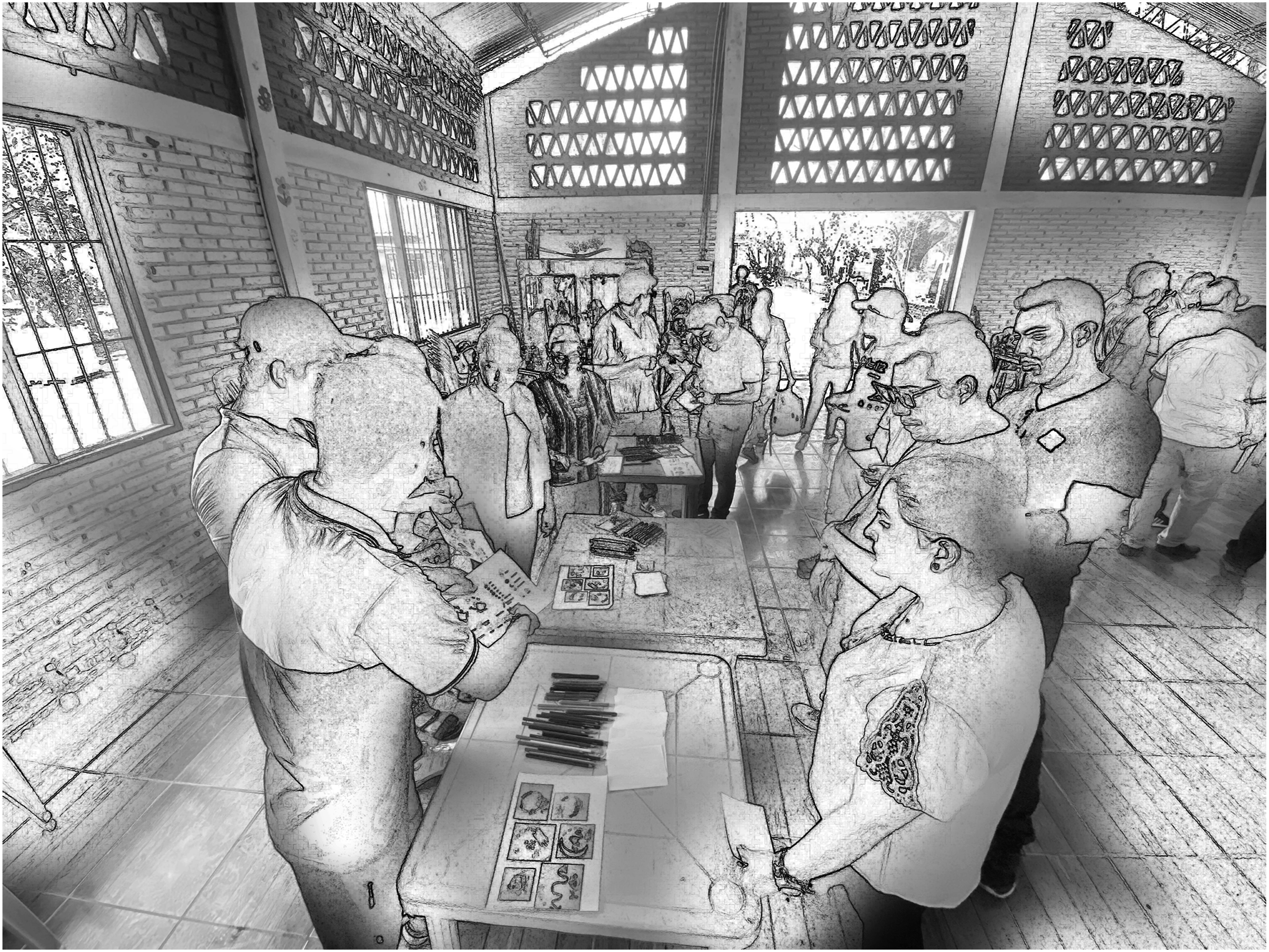
They not only guided participants through its use but also explained its purpose and shared ideas for future applications of this tool within their youth association. As they professed their aspiration to apply this when engaging with more young people in Indigenous youth-led activities they were inspired to share. This also illustrates the empowering potential of this methodology.
This moment marked a clear demonstration of agency, and power imbalances shifted, as the tool had been fully appropriated by the youth. The broader group of participants also benefited from this exchange. It offered concrete evidence of the effectiveness of our arts-based and dialogical methods, particularly those rooted in the VisionArte methodology, in promoting meaningful engagement and collaborative knowledge-building.
This tool is one of the most significant components of the methodology and is typically implemented in the final phase of the creative workshop design. Throughout the sessions, trust is gradually built as participants become familiar with the research team and the participatory process. As young participants recognize that these practices differ from conventional approaches, earlier tools help foster confidence and openness, enabling deeper engagement. Empirical observation shows that introducing this activity early has less impact than implementing it toward the end of the process. This sequencing is further supported by the lead researcher’s long-standing experience applying the tool in university teaching contexts. The following section presents a detailed discussion of this tool, understood as a protocol or set of guiding principles.
4.3. Imagine the Future: Collective Visioning Through the Senses
The “Imagining the Future” exercise is a multi-sensory tool that prompts participants to envision futures grounded in their values and needs. Beginning with an outdoor grounding practice—incorporating breathwork, silence, and sound attunement drawn from mindfulness techniques—participants distinguish sounds (nearest, furthest, loudest, softest) to sharpen presence. Gathered in a circle, they respond to the questions, “What will our future sound like here in 5, 10, or 20 years?” Many participants expressed anxiety about environmental collapse, with depictions of a future dominated by higher buildings, pollution, car or machinery noises, which talked about deeper topics such as deforestation and displacement, where “the sounds of this birds will no longer exist”.
In small groups, participants mapped first individual, then collective visions using post-its and diagrams. These were shared in plenary discussion, revealing shared aspirations (e.g., better education, healthcare, safer environments) alongside frustrations (e.g., bullying, violence against women and children, rights protection, loss of positive values).
Following this dialogical exercise, the ETCH group (who had initially expressed a desire for our support in envisioning their future local start-ups) engaged in a visual and values-based activity where they build the identity of their future start-ups, stating that their initiatives were aimed at contributing, even in a small way to address one of the issues previously discussed (the Earth dynamic enacted previously generated material to work in this stage). Some visual results were logos or small posters that grounded the idea of making a more concrete vision of the future and integrating values mentioned before. These final elements serve a clear utilitarian function. Most take the form of images that participants can apply, adapt, or modify for local sales or service announcements, such as selling bread or offering wall-repair services, activities they carry out on a daily basis within the ETCH. These materials can also be used as forms of publicity to seek employment opportunities or generate economic income (Figure 5). JICHs group diagrams that map their collective concerns. Photograph taken by the researcher. (a, b). JICHs group diagrams that map their collective concerns. Photograph taken by the researcher
With the JICH group, mapping diagrams was developed to help communicate workshop results to the Central Indigenous Committee, highlighting youth engagement in civic life and their desire for greater involvement in community decisions. A key outcome was the Committee’s increased recognition of JICH, leading to their participation in events at the university and in local spaces, where they presented three collective paintings reflecting their identity as an engaged, proactive, and organized youth group (Figure 6). JICH now holds a permanent youth representative seat in Committee meetings, advocating for Indigenous youth. In collaboration with the university, they are also launching a new initiative addressing climate change impacts on Chiquitano communities through sustainable solutions. These paintings often travel with participants to various events, serving as visual narratives that convey their stories and represent their identities. When not in circulation, the paintings are permanently displayed on the walls of the main office of the Central Indígena Turubó (CCICH) in San José. Painted by them it portrays the JICH identity through several metaphors: a free bird singing for freedom, a Chiquitana almond seed containing the sun’s light and the hope they wish to bring to their community, and a flowing river representing their revitalizing spirit. This fresh group also offers aid during wildfires, set against the backdrop of the dry green forest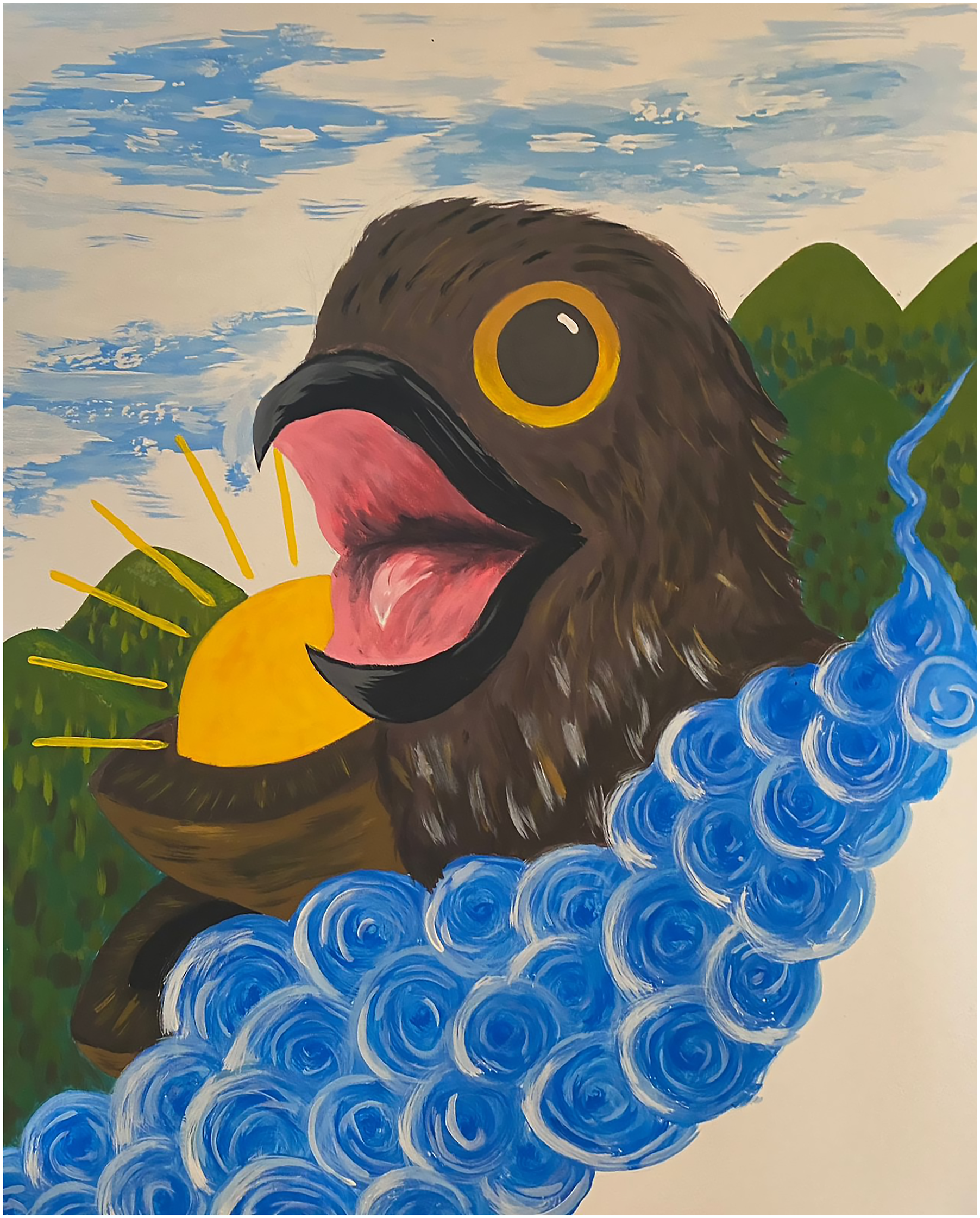
To strengthen their bond with Earth, participants used the Footprint Tool: on one sheet, they traced their left hand or foot and listed gifts from Pachamama (mother earth); on another, they traced the right and wrote a personal commitment for a shared future. Each session ended with a water-sharing ritual inspired by Masaru Emoto’s theory on water and verbal intentions. Participants spoke intentions aloud, passed glasses of water among the group, and drank them, symbolically infused with collective goodwill. This ritual fostered group cohesion, emotional closure, and opened space for informal dialogue and feedback. Over time, researcher-participant ties evolved into a collaborative partnership for community well-being.
4.4. Emergent Themes and Observations
Across both workshops, several thematic patterns emerged, each resonating closely with the study’s theoretical foundations.
Beyond their diagnostic utility, these insights emerged from a continuously cultivated relationship wherein power imbalances shifted, empowering our co-researchers to articulate their genuine and often challenging concerns. Participants felt sufficiently secure to disclose sensitive issues such as sexual abuse and alcoholism. Continuous participant feedback, integrated after each session, ensured an ongoing
4.5. From Practice to Protocol: Shaping the VisionArte Toolkit
The iterative insights gained across both workshops were not only used to adapt individual sessions but were consolidated into a formalized set of tools and facilitation strategies—what we refer to as the VisionArte Toolkit. This toolkit embodies the participatory and sensory logic of the project: it is not a static set of instruments, but a living methodology, grounded in community experience and flexible enough to be adapted across settings. Each tool, whether designed for identity exploration, future envisioning, or affective grounding, was co-developed and tested through dialogue with our co-researchers. Visual materials, drawing protocols, sensory exercises, and discussion prompts were adjusted to match local symbolic repertoires and socio-cultural sensitivities. In this way, the toolkit acts not merely as a record of methods used but as a shared resource for community-based facilitation, capable of enabling future projects to build upon the dialogical, visual, and embodied foundations laid here. With the VisionArte Toolkit now in place as a core deliverable of the project, we turn to a critical reflection on its broader ethical and practical implications for participatory visual research in contexts shaped by historical asymmetries and epistemic marginalization.
5. Ethical and Practical Implications
Conducting participatory visual research in Indigenous settings such as the Chiquitanía demands more than methodological adaptability; it requires a sustained ethical reflexivity that responds to questions of power, positionality, and cultural accountability. The VisionArte methodology, developed and tested through workshops with Chiquitano youth, illustrates the potential—and limitations—of such engagement.
5.1. Navigating Power and Permission
Access to Chiquitano communities is strictly governed by local and regional caciques, whose explicit consent is mandatory before any research may proceed. This necessitates a relational ethics of engagement (Suarez-Balcazar, 2020) in which trust-building, expectation-setting, and long-term reciprocity are central. Researchers must shift from extractive models to facilitation and negotiate not only access but also meaning, authorship, and ownership. Participatory tools in the VisionArte Toolkit therefore require contextual validation, co-ownership, and responsiveness to local definitions of value and utility.
5.2. Participation Beyond Inclusion
Inclusion is not merely about who gets to speak, but about how participation unfolds across generations and genders. For example, young women’s reluctance to voice opinions exposed gendered silences shaped by family and community norms. Visual and sensory tools opened alternative channels for expression, yet raised critical questions about visibility: whose voices are amplified, and which remain silent or censored? Researchers must recognize that silences and refusals are as meaningful as spoken contributions.
5.3. Reciprocity, Benefit, and Sustainability
VisionArte was designed as a long-term, community-seeding methodology rather than a one-off intervention. Yet limited funding cycles, institutional constraints, and shifting priorities challenge sustainability. To address this, we need a co-created a portable VisionArte Toolkit and paired it with capacity-building strategies, such as training local facilitators and embedding methods into school curricula and cultural programs, to ensure ongoing community ownership.
5.4. Reflexivity and Researcher Vulnerability
Ongoing reflexivity is crucial. We treated moments of hesitation, discomfort, and miscommunication as learning opportunities, documenting positionalities and affective responses through field notes and debriefings. This practice fostered accountability and deepened our grasp of participatory knowledge as an embodied, relational process. As (Mertens D, 2017) notes, transformative research demands that researchers share vulnerability and acknowledge the limits of their understanding.
6. Conclusion, Limitations, and Future Directions
6.1. Conclusion
This study has introduced the VisionArte methodology as a context-sensitive, participatory framework that integrates visual, sensory, and dialogical tools into Community-Based Participatory Action Research (CBPAR). Developed through iterative fieldwork with Indigenous youth in San José de Chiquitos, Bolivia, VisionArte demonstrates how creative, embodied methods can foster trust, amplify marginalized voices, and generate new modes of community engagement.
By grounding the research in theoretical traditions of symbolic interactionism, social constructivism, the transformative paradigm, sensory and affective ethnography, we have shown how knowledge production in participatory research must be relational, multimodal, and historically situated. Through art-based tools such as Data Portraits and Imagining the Future, participants were able to surface unspoken concerns, articulate collective aspirations, and actively shape the direction of the research process. In doing so, the methodology not only captured lived experience but also contributed to building communicative capacity and epistemic agency within the community.
6.2. Limitations
Several limitations of the study must be acknowledged. First, the temporal scope of the workshops, constrained by funding and logistical parameters, limited the ability to observe long-term impacts or follow up with all participants. Second, while the co-creation of the VisionArte Toolkit provides a tangible outcome, its long-term uptake depends on factors beyond the researchers’ control, including institutional support, local leadership, and continuity of facilitation. Third, complex socio-political situations have affected access to the territory, alongside several national disasters, such as the political crises and widespread fires of 2023 and 2024, which have had a significant impact not only on the environment but also on the priorities related to living spaces and physical communities. These challenges undoubtedly represent key limitations as they modify the priority of main concerns.
Methodologically, while visual and sensory approaches enabled deep forms of engagement, they also introduced interpretive challenges: drawings and symbolic representations do not speak for themselves and require careful contextualization to avoid over-reading or projection. These challenges reaffirm the need for ongoing dialogue and member validation in the analysis phase.
6.3. Recommendations
To extend and consolidate the VisionArte methodology, this study identifies three interrelated priorities central to capacity building and long-term sustainability. First, investment in local facilitation capacity is essential. Training youth facilitators, teachers, and cultural workers enables the methodology to be appropriated, adapted, and sustained within the community, reducing reliance on external actors and strengthening local ownership of both process and outcomes. This training transforms VisionArte from a project-based intervention into a transferable set of competencies embedded in everyday community practices. Second, embedding the VisionArte toolkit within existing institutional and community programs—such as intercultural education, environmental stewardship, and community health outreach—enhances its durability and relevance. Institutional integration allows the tools to circulate across contexts and cohorts while remaining sensitive to local cultural frameworks, increasing the likelihood that participatory practices become routinised rather than exceptional. Third, establishing longitudinal engagements is critical to sustaining trust and impact. Recurrent application of the toolkit enables communities to revisit and reinterpret outputs, reflect on evolving concerns, and document trajectories of change. Such sustained engagement deepens relational trust and provides a mechanism for communities to monitor progress and recalibrate collective goals. Together, these strategies position VisionArte as a capacity-building framework rather than a one-off intervention, supporting enduring communicational empowerment and the sustainability of participatory research practices in rural and peri-urban contexts.
Finally, while the VisionArte tools offer flexibility and adaptability, any cross-cultural application must proceed with careful attention to the specific cultural, linguistic, and political contexts in which they are deployed. Ensuring contextual sensitivity is essential to maintaining the ethical integrity and participatory ethos of the methodology.
To maximise the study’s practical applicability and replicalibity, the “VisionArte Toolkit” is available in the dedicated repository of the Universidad Católica Boliviana San Pablo (UCB): https://crea.ucb.edu.bo/boletines/ Sede Santa Cruz ensuring international accessibility. To support local stewardship and sustained engagement within the Bolivian context over the longer term, the toolkit is envisioned as a shared resource anchored in complementary institutional infrastructures in both the Global South and the Global North. At KU Leuven, further development and dissemination will take place through the ManGO platform, which supports participatory and community-engaged research. Although still under development, the toolkit already provides access to the core tools referenced in this text.
Supplemental Material
Supplemental Material - The VisionArte Methodology: Visual and Sensory Tools in Community-Based Action Research with Indigenous Youth in San José de Chiquitos, Bolivia
Supplemental Material for The VisionArte Methodology: Visual and Sensory Tools in Community-Based Action Research with Indigenous Youth in Alessandra Abrill Abruzzese Aguirre, Leen d’Haenens in International Journal of Qualitative Methods.
Footnotes
Acknowledgements
We extend our heartfelt thanks to all the community members who, through the Central Indígena Chiquitana Turubó (CCICH), walked alongside us in this process. Their generosity, insight, and trust made this work possible. We are equally grateful to the Escuela Taller de la Chiquitanía, whose openness and commitment to collective effort enriched the journey and helped weave this research into a shared endeavor.
Ethical Considerations
This study was approved by the Universidad Católica Boliviana “San Pablo” sede Santa Cruz, Ethical Review Board (ID no. 0050) on 10/12/2024. As this doctoral research is jointly conducted between two universities, the local institution—Universidad Católica Boliviana (UCB)—assumes responsibility for conducting ethical reviews for researchers operating in the region. Contact of the director of the ethical board at Universidad Católica Boliviana “San Pablo” sede Santa Cruz:
Consent to Participate
All participants provided written informed consent prior to participating and willingly took part in the various stages of the research. The consent process was conducted with care: forms were read together with participants, explained verbally to ensure full understanding, and adapted to the local context when needed. Original signed copies are held in both physical and scanned formats as part of the research records.
Consent for Publication
Participants also signed a clause within the informed consent indicating their agreement for photographs and videos to be used for dissemination purposes related to the research. This use was clearly explained, with emphasis on ensuring that their dignity, identity, and cultural context would be respected in all forms of publication and presentation.
Funding
The authors disclosed receipt of the following financial support for the research, authorship, and/or publication of this article: This work was supported by VLIR-UOS (BO2022IUC034A105). This work was supported by the CREA project funded by VLIR-UOS, through which Universidad Católica Boliviana and KU Leuven participate as partner institutions.
Declaration of Conflicting Interests
The authors declared no potential conflicts of interest with respect to the research, authorship, and/or publication of this article.
Data Availability Statement
All data used in this study were managed through KU Leuven’s  platform, which ensures secure storage with redundant copies in two university data centers. Metadata and access controls were applied to keep the data well-documented and findable. Data can be shared with collaborators upon request, following an access approval process to ensure responsible and secure use.
Supplemental Material
Supplemental material for this article is available online.
Author Biographies
References
Supplementary Material
Please find the following supplemental material available below.
For Open Access articles published under a Creative Commons License, all supplemental material carries the same license as the article it is associated with.
For non-Open Access articles published, all supplemental material carries a non-exclusive license, and permission requests for re-use of supplemental material or any part of supplemental material shall be sent directly to the copyright owner as specified in the copyright notice associated with the article.
