




Abstract
What do we learn when we invite others to make and create? How can drawing, cutting and pasting, repurposing objects, and photography enable us to explore complex, or hard-to-talk about experiences? What do we miss when we ask only with words, and not with action? This article explores these questions, demonstrating how to enact different arts-based research methods in practices of inquiry to open the process of thought and care in research related to public health. With reference to one line of inquiry as an exemplar – namely, how to promote care – this article reveals the complementary value of several arts-based research methods – these include: found objects; body mapping; collective collage making; and photography. This article: presents an overview of arts-based research methods, explaining what they are (and are not) and their purpose; demonstrates how arts-based research might be used to promote care; clarifies the benefits, limitations, and ethical considerations associated with arts-based research; and invites readers to consider how they might incorporate arts-based research in their scholarship, highlighting particular questions that warrant consideration.
Introduction
This article demonstrates the decision-making processes that informed the use of different arts-based research methods to promote public health. Arts-based research methods involve artistic processes and forms to generate, analyse, and/or communicate research insights. These methods leverage various creative arts to explore, express, and analyse complex issues, often emphasising lived experiences and subjective perspectives. They enable the exploration of embodied, emotional, and sensory dimensions that are often difficult to access via more conventional quantitative and qualitative methods alone (Boydell, 2019).
Given the value of arts-based research for public health (Scott et al., 2023), this article demonstrates the complementary value of different arts-based research methods. This is because this complementarity is often lost in scholarship, leaving researchers wondering, why use one method over another? For instance, while researchers have lauded the value of particular arts-based research methods (Weston & Farber, 2020), there is often limited discussion of the rationale for particular choices. As Coemans and Hannes (2017, p. 40) noted following their scoping review, ‘Although most authors gave multiple reasons for adopting arts-based methods in general, they were less explicit in arguing why exactly they chose a specific technique’. As such, this article addresses this limitation in the literature.
This article commences with an overview of arts-based research methods. It then demonstrates how arts-based research methods might be used to promote public health. The article concludes by summarising the complementarities among the exemplars presented.
Arts-Based Research Methods
Four key features epitomise arts-based research methods. First, they are transdisciplinary (Wilson, 2020) – by blending traditional research with artistic practices, they enable richer data collection and analysis. Participants are often invited to create artworks that reflect their experiences, offering insights that traditional methods might overlook. Second, they require engagement and participation (Hammond et al., 2018). They typically involve collaboration with participants, fostering deeper connections and co-creation. This collaborative aspect can lead to more meaningful results, as participants are actively involved in the research process. Third, arts-based research methods afford interpretive flexibility. Artistic expressions invite diverse interpretations, enabling researchers to explore the multiple meanings and narratives that surround a topic (Boydell, Hodgins, et al., 2016). This flexibility can be particularly valuable when addressing public health issues (Boydell, Solimine, & Jackson, 2016; Harasymchuk et al., 2024). Fourth, arts-based research methods often capture emotional resonance. Artistic expressions can convey emotions and complexities that non-artistic forms of data might miss, offering a more holistic understanding of a topic.
While arts-based research methods and art therapy incorporate artistic processes, they differ in their aims. For instance, the primary purpose of art therapy is to improve – it facilitates therapeutic healing and personal growth (Shukla et al., 2022). It involves the use of artistic expression to help people process emotions, cope with challenges, and improve mental health. However, the primary purpose of arts-based research methods is to understand – they are used to explore, analyse, and represent complex social issues, lived experiences, or phenomena through artistic processes (Leavy, 2019). They seek to generate knowledge and insights that can inform academic understanding and social change. While participants and researchers might benefit, psychologically and/or socially, from the of use of arts-based research methods, these benefits were not the primary purpose.
Arts-based research methods can promote public health. While there are varied definitions of public health (Azari & Borisch, 2023), it can be understood as ‘the art and science of preventing disease, prolonging life and promoting health through the organized efforts of society’ (Acheson, 1988, p. 1). Towards this aim, arts-based research methods can: engage people in the exploration of public health topics, including adolescent health, mental health, environment and neighbourhood effects on health, asthma, immigrant and refugee health, and menstrual practices (Baumann, Lhaki, & Burke, 2020; Baumann, Merante, et al., 2020); reveal structural issues that contribute to health inequities (Idoate et al., 2022); and help to address public health issues through, for instance, policy development (Phelan et al., 2025). As such, arts-based research methods can engage people in the exploration of public health priorities (D'Amico et al., 2016).
Despite growing interest in arts-based research methods, they are often presented discretely. For instance, in their review of arts-based research in chronic pain, Harasymchuk and colleagues (2024) noted, ‘Seven articles described the use of drawing, painting,
Examples of Arts-Based Research Methods
Reflecting on and discussing their experiences, the authors noted they had all used arts-based research methods to explore the experience of care and caring and to promote public health. Specifically, they had used these methods to study the practice and relational dynamic of nurturing, supporting, and taking responsible action towards the wellbeing and flourishing of oneself, others, communities, and the wider environment (Slaughter, 2023). Despite their shared experiences, the authors made different decisions about which methods to use and why. The following sections demonstrate these with reference to four studies that involved: found objects; body mapping; collective collage making; and photography. For comparability, the authors addressed seven questions to anchor their deliberations.
Found Objects
What Does This Arts-Based Research Method Involve?
Found objects are items that are discovered or repurposed, rather than intentionally created or manufactured for a specific use, which has ‘some value… to the finder’ (Camic, 2010, p. 82). They are often used to reveal information that might otherwise be challenging to source. This might partly explain why ‘Found objects are often something the finder doesn’t even know they want or need, until stumbling across them’ (Meissner, 2024, p. 21). Consider their use in therapy to ‘address… trauma in South Africa’ (Berman, 2005, p. 173), ‘meet clients’ who access a residential program for homeless women (Davis, 1999, p. 45), as well as ‘enhance engagement, increase curiosity, reduce difficult feelings, evoke memories and provide a sense of agency through increased physical activity and environmental action’ (Camic et al., 2011, p. 151). Of particular relevance to this article is the use of found objects in research for ‘making meaning’ (Kay, 2016). Like other projective techniques, found objects can project sentiments to ‘discover deep feelings and circumvent psychological prejudices’ (Campos et al., 2020, p. 471). They can elicit ‘psychological, social, and aesthetic factors’ (Camic, 2010, p. 81).
What was the Focus, aim, and Context of The Study?
Found objects were used in a study to promote brilliant aged care by establishing its constituents (Dadich et al., 2023). This focus served to redress the imbalanced focus on all that is wrong with aged care by raising the profile of practices that exceeded expectation.
The study occurred in a context where there was an inverse relationship between the importance of aged care and the negative discourse about it. Despite the growing significance of aged care (WHO, 2022a), many accounts of aged care are pessimistic (Batchelor et al., 2020; Humphries et al., 2016). To challenge assumptions about the poor state of aged care, the study drew attention to brilliant aged care, asking how is brilliant aged care enacted?
The study involved two stages (Dadich et al., 2023). First, nominations were invited via different networks for a Brilliant Aged Care Award. People were invited to suggest people or services that epitomised brilliant aged care. During the second stage, nominees were invited to an interview to establish how brilliant aged care was enacted. To prompt discussion, they were invited to bring along a found object that spoke brilliant aged care to them. During the interview, nominees were asked about their found object, why they chose it, and how it epitomised brilliant aged care. This process served to promote care because the study culminated with the four ingredients required for brilliant aged care.
Who were the Primary and/or Secondary Participants, and how Accessible did the Arts-Based Research Method Need to be?
This study involved primary and secondary participants. The former included the nominees who were invited to speak to a found object to better understand and promote brilliant aged care. The latter included audience members who engaged with the culminating artwork to promote knowledge translation. Following nominee consent, the found objects were used to inspire the creation of an artwork on brilliant aged care, which was then exhibited in a major tertiary referral and teaching hospital (see Figure 1). Brilliant Aged Care by Armelle Swan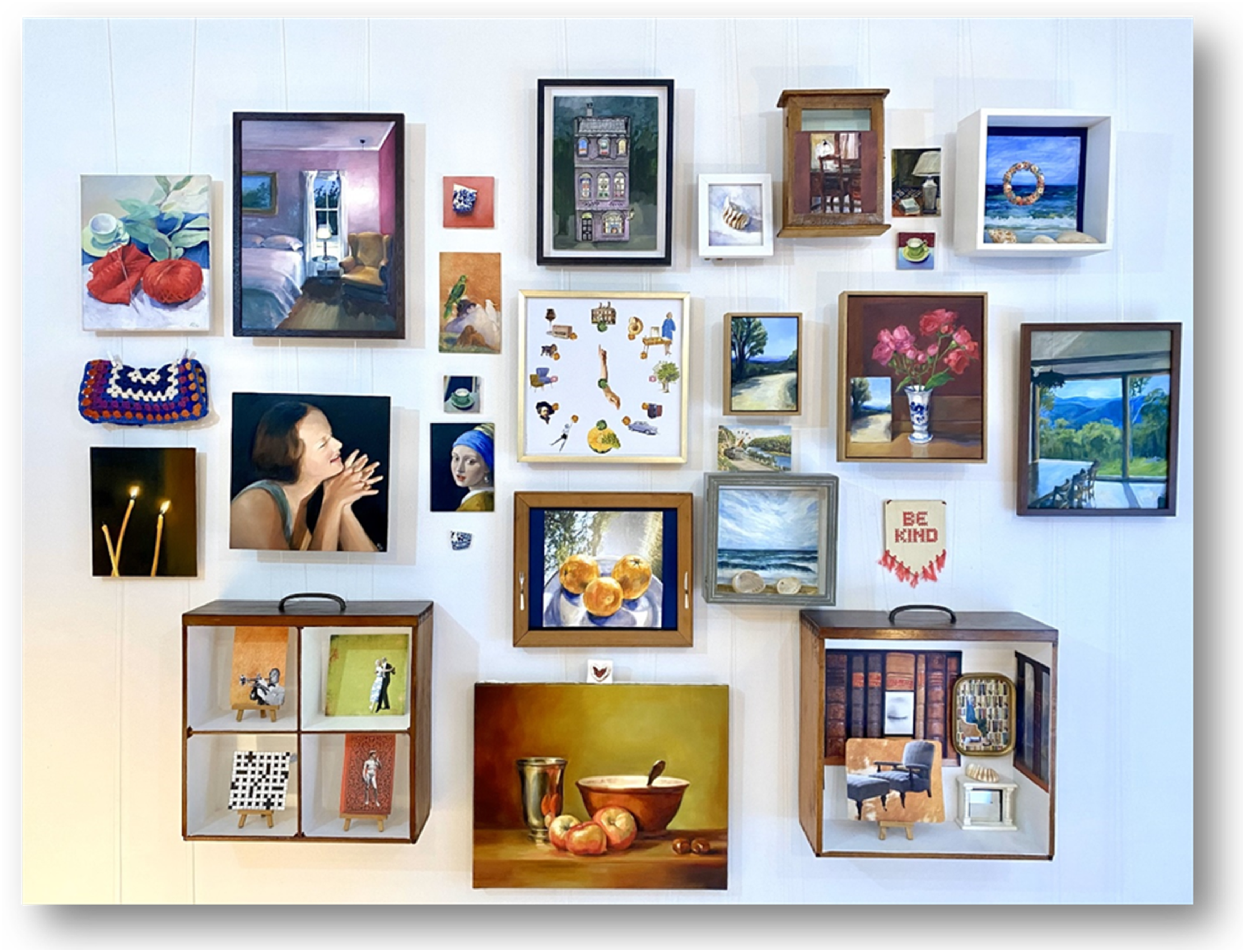
Found objects were incorporated into this study largely because they were accessible to the primary participants. This was demonstrated in two ways. First, as noted, this projective technique was thought to enable potentially humble nominees the opportunity to describe how they enacted brilliant aged care. Rather than directly ask about moments that exceeded others’ expectation and their role in these moments, nominees were invited to focus their attention on their found object, in the first instance. Following this was a transition to targeted questions about how and why they enacted aged care in particular ways. Second, it offered the nominees convenience – they could select any item they preferred and they participated in a semi-structured interview via web-conference, averting the need to travel.
What Resources Were Available to Support the use of the Arts-Based Research Method (e.g., Time, Funds, Skills, Storage Space, a Network of Potential Audience Members)?
The two-year study was supported by a grant and led by a researcher with limited access to storage. Because it was not feasible to recompense nominees for their contributions, it was appropriate to minimise inconvenience to them. Furthermore, it was important to ensure the arts-based research method did not culminate with objects that required long-term storage. However, approximately AU$7,500 was allocated to procure specialist expertise to create and exhibit the artwork, given this was beyond the research team’s skillset. Additionally, the creative who created and exhibited the artwork had the resources to store the artwork in the long-term.
Although alternative arts-based research methods were considered, these were not pursued due to time and cost, as well as nominee convenience. For instance, the lead researcher considered the involvement of a visual storyteller to illustrate the data from the semi-structured interviews – however, indicative costs suggested this method could not be supported by the budget (Graphic Recorders Australia, 2023). And although the oft-cited method of photovoice was considered (Nathan et al., 2023), this was not used to reduce nominees’ preparatory efforts.
Which Theoretical and/or Methodological Frameworks Were Used and how did These Align With the Arts-Based Research Method?
Conceptually, brilliant care is undergirded by: the broaden-and-build theory (Fredrickson & Joiner, 2018); an ethic of care (Gilligan, 1995); and positive deviance (Spreitzer & Sonenshein, 2003). The use of found objects aligned with these aspects because: like the broaden-and-build theory, it can be generative; like an ethic of care, it can foster connections; and like positive deviance, it reflects a ‘collection of behaviours that depart from the norms of a referent group, in honourable ways’ (p. 209).
Methodologically, the study drew on positive organisational scholarship in healthcare (POSH). POSH is ‘the study of that which is positive, flourishing, and lifegiving in [healthcare] organizations’ (Cameron & Caza, 2004, p. 731). Challenging the tendency to concentrate on problems, POSH attends to triumphs and achievements because of their appeal and allure – furthermore, triumphs and achievements reveal opportunities for capacity-building. The use of found objects aligns with POSH by fostering creativity, emotional engagement, and understanding. Found objects are items that are repurposed into artistic expressions, which can reveal deeper insights into experiences of and with care, as well as organisational dynamics. This method supports POSH’s focus on flourishing and wellbeing by transforming ordinary items into meaningful art, thereby highlighting positive experiences and strengths within care settings. Moreover, using found objects encourages innovative thinking and problem-solving, which complements POSH’s emphasis on positive deviance and exceptional practices. Integrating these objects into research can afford nuanced perspectives on practices and environments. This approach aligns with POSH’s goal of creating environments where people who deliver and receive care can thrive, ultimately fostering a more positive and thriving healthcare system.
What were the Benefits and Limitations of This Arts-Based Research Method?
For two reasons, the use of found objects was beneficial. First, its use was within the resources available to support the study, including the timeframe, budget, and absence of long-term storage. Second, the method offered the nominees novelty – while some were accustomed to research interviews, they were unaccustomed to the opportunity to engage in a ‘show and tell’ discussion, using an otherwise mundane object to make sense of brilliant aged care.
Although the use of found objects was not associated with obvious limitations, one warrants mention. Unlike some arts-based research methods, like theatre (Beck et al., 2011) and dance (Candelario & Henley, 2023), it relied on words – it required the nominees to verbally describe their found object, why they chose it, and how it epitomised brilliant aged care to them. As such, the use of found objects might be different, if participants are not able or not comfortable with articulating responses.
What Ethical Considerations Warranted Consideration When Using This Arts-Based Research Method?
Although the use of found objects in this study was not associated with apparent ethical considerations, one warrants mention. The use of a found object that has cultural significance, raises moral concerns, and/or is implicated in an act of cultural (mis)appropriation can raise serious ethical issues. Although no restrictions were placed on nominees’ selections, caveats might warrant consideration.
Body Mapping
What Does This Arts-Based Research Method Involve?
Body mapping involves tracing around a person’s body to create a life-sized outline (de Jager et al., 2016). This outline is then filled during a creative and reflective process, allowing people to represent their identities within their social contexts. This process allows participants to articulate stories about their experiences of the world, their lives, and their bodies via visual representation, producing an image depicting their embodied experience. Body mapping is ideal for studying the intersections of contextual factors that influence health and wellbeing, for visually depicting lived experience of an illness, intervention, service, or support, and as a knowledge translation tool.
What was the Focus, Aim, and Context of the Study?
The study aimed to establish the impact of a 12-week physical health intervention to address cardiovascular health in young people impacted by first-episode psychosis (Boydell et al., 2018). The intervention had occurred two years before the study, and clinical observations suggested that physical health gains had been maintained. Body mapping was therefore used to enable the young participants to reflect on their lives and the impact of the program.
The study was conducted in the field of psychiatry, which typically focused on mental illness and the ill effects of psychotropic medications, including weight gain, much to the neglect of physical health. To redress this imbalance, this study focused on the young participants’ experiences and perceptions.
The young participants were invited to create life-size body maps across a series of four three-hour workshops to depict their experiences with the program and its impact within and beyond their bodies (see Figure 2). Body mapping was selected because of the embodied nature of the method. It allowed for a focus on the mind and body relationship. This method allowed the researchers to use a diffractive approach that acknowledged the complex interplay of various factors. It allowed them to consider the ways that mental health experiences are shaped by material factors, such as medication, as well as discursive factors, such as societal attitudes and medical diagnoses. Body mapping offered a way to: explore how these factors were represented and interrelated in the body maps; and identify patterns in the body maps that were unique and universal. Body Map – Rising From the Ashes
Care was promoted during the workshops, which were designed to create a caring, safe space for the researchers and young people to work alongside each other. Care (or lack thereof) was the underpinning theme across the body maps, and the resulting body maps focused on the care of oneself (body and mind) as well as the relationships and social contexts (environments) that were critical to this self-care.
Self-care was central to the body mapping process. Before and throughout the body mapping workshops, participants were reminded to create their map (and share and/or visualise their stories on the map) with respect to their own boundaries to practice safe storytelling. They were encouraged to take breaks as required and check-in with the researchers, regularly.
Because body mapping is a collective art making action, where people work together while creating their own maps, care for others was also important. For example, it was critical to be aware of other participants’ boundaries and sense of safety. The researchers highlighted the need to be non-judgemental and receive others’ stories and artworks with respect and openness.
Who Were the Primary and/or Secondary Participants, and how Accessible did the Arts-Based Research Method Need to be?
This study involved primary and secondary participants. The former included young people who were clients of a first-episode psychosis clinic who had completed the intervention. The latter included scholars, policymakers, artists, clinicians, and young people who viewed the body maps exhibited to disseminate the research findings.
Body mapping was used in this study because it was a medium accessible to the primary participants. The team reflected carefully on accessibility and offered large workspace environments and multiple participation options. For example, because a participant was unable to participate in the scheduled workshops, a one-to-one creation process was facilitated with them to optimise inclusivity.
What Resources Were Available to Support the use of the Arts-Based Research Method (e.g., Time, Funds, Skills, Storage Space, A Network of Potential Audience Members)?
The one-month study was funded by a grant that supported a space to rent for the workshops, storage of the body maps, art supplies, research assistance, workshop facilitation, and the involvement of an artist to support participants. Participants were remunerated via an honorarium to acknowledge their time. They were supported by clinic staff members who provided transport to and from the workshop venue for the four workshops.
Although the researchers considered alternative arts-based research methods, they were largely deemed inappropriate given the embodied nature of the study focus. For instance, while photography might have illuminated connections between physical and mental health via visual images, the researchers opted to explore the less used arts-based method of body mapping, which can produce a powerful installation of body maps that influence policy (Gastaldo et al., 2012).
Which Theoretical Frameworks Were Used and how did These Align With the arts-Based Research Method?
Narrative approaches were used to depict the uniqueness of each individual body map and the accompanying testimonio, or story. Specifically, Frank’s (1995) narrative method was used to understand lived experiences as embedded within the social structures that shaped participants’ lives and contexts, while Reissman’s (2005) narrative inquiry invited the researchers to analyse the text in a storied form. These approaches aligned with body mapping, embracing the visual and the textual.
To analyse the data, the researchers used Braun and Clarke’s (2021) reflexive thematic analysis as well as Rose’s (2016) visual analysis methods. Reflexive thematic analysis was selected because it is an interpretive approach that emphasises the role of researcher self-awareness and critical reflection throughout the research process. It involves identifying and analysing the repeated patterns or themes in a dataset. Complementing this, Rose’s process provided a framework to examine the visual images.
What Were the Benefits and Limitations of This Arts-Based Research Method?
Body mapping challenges traditional biomedical models of mental illness by focusing on complexity and interconnectedness. The benefits of body mapping include the exploration of difficult topics that participants might not have spoken about before, or that require supported space to safely consider and explore (via careful facilitation). The maps can prompt or facilitate the sharing of knowledge, experience, and stories – such sharing might occur during the workshops and/or during complementary research methods, including interviews, focus groups, and testimonios or witness accounts. Body maps can also be powerful tools for knowledge translation (Boydell et al., 2020) – they can be displayed alongside the personal testimonials in a face-to-face artwork or exhibit, or digitally on a website.
Methodological disadvantages might include participant comfort levels. It can be exclusionary for people with different abilities as it often requires working on the floor. Furthermore, there might be cultural taboos regarding the body that must be considered. For example, if body mapping workshops are not carefully facilitated, it might be uncomfortable or confronting for some people who live with an eating disorder or body dysmorphia. Additionally, it is often challenging to decide on the story to portray via the maps and the maps only communicate partial stories (Boydell et al., 2017).
Some of the logistical challenges associated with body mapping include the physical space requirements for full-size body mapping. Body mapping can also be time consuming, resource intensive, and costly. And there are challenges around storage. Body maps are large and can occupy space, especially if paper-based. While the need for storage might be reduced through the use of fabric, this can increase cost. Additionally, the analytic process incorporating visual and textual data can be lengthy.
What Ethical Considerations Warranted Consideration When Using This Arts-Based Research Method?
The dangerous emotional terrain is a key ethical consideration in body mapping research. There is often difficulty in sharing narratives that are rife with trauma and deep emotions, which can be distressing. The researchers who conducted this study addressed this and other challenges. They (re)addressed issues of confidentiality and anonymity, ownership of the artworks produced, and the danger of (mis)interpretation – furthermore, they recommended strategies to mitigate them, for example, including regular reflexivity sessions to discuss feelings and emotions (Boydell, 2020).
Collective Collage Making
What Does This Arts-Based Research Method Involve?
Collage involves assembling many parts into a new whole. The origins of the word in the French ‘collé’ imply that the assemblage is fixed to surface. In the art history of the early 20th century, it is an approach often associated with the surrealists, who explored the unconscious mind and expressed irrational and dreamlike aspects of human experience. However, collage has been a part of making traditions for much longer – from 10th century Japanese poems to Victorian scrapbooking. It continues to be reimagined in contemporary practices of remixing and cultural jamming. In social research, qualitative methods have been likened to collage, where textual fragments are selected and assembled to construct or find meaning. Furthermore, collage has been used in arts-based research as part of a ‘borderlands epistemology’ that is multi-voiced (de Rijke, 2023; Vaughan, 2005).
A collective collage approach was used in a practice-led study to surface experiences of care in the climate crisis (Fizell, 2023), which culminated with the work, Tentacular (see Figure 3). The researchers invited colleagues to select, cut, compose, and glue images from a range of printed materials (Watfern et al., 2024). Tentacular, Photo Courtesy of the University of New South Wales Library Gallery
The researchers invited participants to share their stories of care in the climate crisis in a small group, before creating individual pieces on pre-cut paper. Each story and artwork contributed to a larger composition, like a part of a complicated jigsaw puzzle. The overarching form of Tentacular was also developed collaboratively, through conversation between the two lead researchers and with a local Aboriginal Elder and cultural leader.
What was the Focus, Aim, and Context of the Study?
As a practice-led study, its aim was to produce an artefact conveying the forms, feelings, and knowledge shared over years of engaging with people about the climate crisis using art. In other words, the study aimed to facilitate ‘Knowing through making’ (Mäkelä, 2007). The researchers did not predetermine what would emerge. Nevertheless, they were interested in how care for each other and the natural world shaped responses to the climate crisis for their creative collaborators. Contributing to the growing research on the mental health effects of climate change (Lawrance et al., 2022), the study offered a novel framing that focused on the role of care and relationships between humans and their (more-than-human) communities to understand and process emotional responses to the climate crisis.
In centring care, the researchers also centred connection – the felt relationships between living things, be they human or more-than-human. Collage seemed to be the ultimate method to find connection within the ‘hyperobject’ (Morton, 2013, p. 1) that is climate change, allowing for almost-by-chance echoes and resonances between images, and between the people making them.
The researchers built relationships of care among and between research teams, including a newly formed climate distress community of practice. The collage workshops were an opportunity for colleagues to share personal stories of care that might not otherwise have come to the fore during professional interactions in virtual meetings. Furthermore, the act of cutting – the sound, the repetitive action of moving scissors across paper – carried an element of self-care for the makers.
Who Were the Primary and/or Secondary Participants, and how Accessible did the arts-Based Research Method Need to be?
The primary participants were the invited colleagues who co-created Tentacular during a residency at The Ethics Centre in Sydney, Australia. They included: academics researching the built environment, mental health, and/or care; psychologists; and community workers. When the collage was exhibited at a university library art gallery to students, academics, and members of the public, the researchers facilitated a workshop where new makers were invited to contribute to what became an evolving composition.
For one lead researcher, collage had been their primary creative practice for over a decade, so it was partly selected due to their familiarity. As a self-trained collage-maker, they knew how inclusive collage can be – many people cut and paste, so artistic competence or knowledge were unlikely to hinder participation. With a lineage in feminist traditions of craft and dissent (Raaberg, 1998), collage can challenge virtuosic ideals and represent a powerful tool for protest, resistance, and care.
What Resources Were Available to Support the use of the Arts-Based Research Method (e.g., Time, Funds, Skills, Storage Space, a Network of Potential Audience Members)?
Collage is pluralistic, incorporating other arts-based research methods, including drawing, writing, found poetry, and painting. During the workshops, the spaces were ill equipped for ‘messy’ art-making activities, such as painting. However, the researchers offered recycled paintings from previous workshops as part of the collage materials available to participants. The final Tentacular composition also incorporated some sculptural elements, including found natural objects the participants collected.
Which Theoretical and/or Methodological Frameworks Were Used and how did These Align With the Arts-Based Research Method?
The study was informed by ecopsychology (Rhodes & Dunk, 2023), as well as work connecting care ethics and aesthetics in contemporary socially engaged art practice (see Millner & Coombs, 2022). For example, the researchers drew on Naess’ (1995) concept of the ‘ecological self’ to understand the human being as a system within systems – from the microbiome to macroeconomics, systems deeply embedded in the natural world. Linking this to art practice, the researchers understood the process of making together as a careful way of modelling interconnectedness.
The study used participatory methodologies that prioritised empowerment and collaboration to co-create the artwork and the associated knowledge (Cargo & Mercer, 2008). In this sense, it also aligned with collaborative auto-ethnographic methodologies (Chang et al., 2016), where the researchers invited colleagues to work together to share personal reflections through verbal and visual forms.
What Were the Benefits and Limitations of This arts-Based Research Method?
Collage has two key benefits. First, it is an accessible mode of art-making – many people can cut and paste, and little tuition is required to enable people to participate. Second is its ability to incorporate multiple, sometimes divergent images, perspectives, and stories within a single artwork. This multiplicity can enable researchers, participants, and audiences to shape and discover connections, associations, and other resonances. The collective collage process and final artwork can be a reminder of interconnections among individuals and species, within larger social and ecological systems. The whole becomes something different from the sum of its parts. In this sense, it is ideally suited to research that centres a post-human or systems-oriented theoretical framework.
While not impossible, collective collage can be harder to enact online. The researchers have facilitated collective collage in a virtual space, using a digital whiteboard with pre-cut digital images that participants could copy, paste, and rearrange. However, this mode of engagement hindered participants’ informal conversations and emergent interactions that might be afforded during an in-person workshop. A related limitation, whether in a virtual or physical space, is that the outcomes can be constrained by the materials available to participants. It is important to provide enough choice for participants to find images that either speak to or for them in some authentic way. For example, offering only one kind of magazine or pre-cut images would result in a different outcome to a workshop where dozens of different types of publications and therefore, many more images, are offered to participants.
What Ethical Considerations Warranted Consideration When Using This Arts-Based Research Method?
Collage involves the reuse of preexisting images, which can pose potential issues regarding intellectual property and copyright. Many countries have fair use legislation, permitting the limited use of copyrighted materials without permission, when they are sufficiently altered or transformed through a creative process, and/or are used for non-commercial purposes. It is important to be aware of the laws that might apply to a collage project and choose materials or instruct participants, accordingly.
Furthermore, when creating a collective collage with many collaborators or participants, it is important to clearly negotiate how creative outputs will be acknowledged and shared in public exhibitions, publications, or other outputs. Some contributors might wish to remain anonymous, while others will value having their name attached to their work. In Tentacular, all contributors chose to be acknowledged by name in the public exhibition of the work.
Photography
What Does This Arts-Based Research Method Involve?
Photography is a narrative medium with diverse applications, from spontaneous and informal to carefully composed works. While photographs capture a moment, they also reflect complex relationships, choices, and interactions. In today’s image-saturated world, it is important to recognise photography’s role in storytelling and meaning-making (Kislinger & Kotrschal, 2021).
A single photograph condenses layers of information about people, place, and time, engaging perceptions of light, colour, emotions, and symbols. Photographic intentions vary – from documentation to artistic expression – shaped by cultural references and stylistic choices (Bate, 2020). A garden photograph, for example, might record plant life clinically or evoke sensory experiences, like birdsong and sunlight. Ultimately, photography can extend experience and enrich narratives with depth and nuance (Ball & Smith, 2012).
What was the Focus, Aim, and Context of the Study?
The COVID-19 pandemic was difficult for many people, particularly the leaders and managers of health services, tasked with making decisions in unchartered terrain under immense pressure (Dadich & Mellick Lopes, 2022; Hølge-Hazelton et al., 2021). To surface their experiences during this period, photography was selected as a story-sharing medium.
The leaders and managers were affiliated with Maridulu Budyari Gumal – also known as the Sydney Partnership for Health, Education, Research and Enterprise (SPHERE, 2024). SPHERE is an Australian, nationally-funded partnership comprised of leading organisations to change the future of healthcare. These organisations include local health districts, speciality health networks, universities, and medical research institutes.
Fifteen leaders and managers affiliated with SPHERE were invited to share a photograph and a short paragraph to convey their experiences of leadership during the pandemic. To guide their responses, they received a brief request accompanied by an infographic to guide how they captured photographs. The infographic outlined simple photographic techniques to consider framing, light, and curation. It also drew attention to stimuli and choices when taking a photograph.
The study elicited casual snapshots of family, pets, and gardens, as well as reflections on simple rituals, like enjoying tea in the sunshine. Many highlighted social connections and new habits, such as ocean swimming. Sensory experiences – bush smells, birdsong, laughter, and touch – were prominent. Some submitted carefully crafted artworks, like a still-life of daily essentials paired with a rewritten Bob Dylan song as a COVID-19 lament, or a short-film capturing dragonflies over a personal pond, symbolising sanctuary for a public health decision-maker. Clinical images depicted staff members clad with personal protective equipment, medical procedures, and despair, accompanied by poetic statements suggesting links between photographs and embodied thinking. Together, these contributions wove personal elements into professional narratives, revealing shared experiences (Ball & Smith, 2012).
Given the artwork focus, care was a recurring theme in the photographs and written reflections. The leaders’ and managers’ responses blended gratitude with respect for colleagues. They valued personal and creative expression, humour, and serious reflections that sought transcendent themes in cultural stories. An ethic of care was embraced, acknowledging interdependencies in the shared space for health. The leaders and managers observed: ‘A world turned topsy turvy’, ‘A time to remember rather than to forget’, and ‘The acid test of 21st-century health systems’. These reflections summoned a wide and protean space that confronted understandings of health, literally and metaphorically (Doran et al., 2021).
Visual and thematic analyses of the leaders’ and managers’ photographs and reflections revealed shared values of self-care and collective care within systemic constraints. The significance of cross-disciplinary collaboration for systemic innovation emerged alongside recognition of frontline healthcare workers’ contributions amid burnout risks.
To create a cohesive artwork, Topsy Turvy was created as an interactive experience, accommodating similarities and personal differences (see Figure 4). Using a website, digital drawings were combined with poetic phrases and music. These elements were integrated into an interactive, gamified computer program, enabling audience members to curate a digital display. A black and white palette connected paradoxes and contrasts, while an interactive image generator produced hundreds of drawings, poetic phrases, words, and soundtrack. This approach enabled audiences to create personal COVID-19 assemblages and reinterpret the contributions to tell their own stories. Topsy Turvey
Who were the primary and/or secondary participants, and how accessible did the arts-based research method need to be?
Topsy Turvy’s primary audience included frontline healthcare workers during the COVID-19 pandemic, with secondary audiences extending to their families and the public, all of whom were affected by the pandemic. Engaging with the interactive digital exhibition, many healthcare workers expressed the significance of having their experiences acknowledged, noting that being seen provided a sense of cultural care and social relevance (Doran et al., 2021).
Photography was chosen because it was accessible to time-constrained leaders and managers. They were able to quickly capture and share images. Furthermore, photography can: serve as an ethnographic and documentary tool beyond written accounts (Pink, 2012); connect personal and public experiences of wellbeing and stress (Maddrell, 2016); be facilitated by the ubiquity of mobile telephones with an in-built camera (Nilsson, 2010); enable metaphorical thinking through symbols and semiotics (El Refaie, 2016); and be edited or transformed into a cohesive, collective artwork.
What Resources Were Available to Support the use of the Arts-Based Research Method (e.g., Time, Funds, Skills, Storage Space, a Network of Potential Audience Members)?
Photography as an arts-based research method required studio spaces to construct and prepare physical elements for the exhibition, which was publicly displayed, after the pandemic lockdowns. This involved assembling hanging systems and structural displays. Each artist used different resources, including digital software programs and projection facilities to digitise and gamify drawings. Photographs and written contributions were translated into digital drawings using a drawing tablet and scanning software. While a AU$15,000 grant supported the artists, other resources were provided, in-kind.
Although alternative arts-based research methods were considered, these were not pursued, largely due to the pandemic. For instance, physical media, such as painting, sculpture, and textiles, were excluded due to the public health measures that prevented in-person engagement.
Which Theoretical and/or Methodological Frameworks Were Used and how did these Align With the arts-Based Research Method?
The study used a mixed methods design (Creswell & Plano Clark, 2017) with photovoice positioned as the central arts-based research method to elicit leader and manager narratives (Sutton-Brown, 2014). These narratives were analysed using denotation and connotation methods (Doran, 2022), aligning with visual and textual interpretation in arts-based research. The final digital exhibition applied interaction and gamification theory to enhance accessibility and engagement (Apperley, 2010), supporting participatory exploration and public interface design consistent with arts-based dissemination strategies.
What Were the Benefits and Limitations of this arts-Based Research Method?
Photography as an arts-based research method was beneficial, diversifying the experiences and perspectives conveyed by the artwork. Photography offered multimodal data that presented varied styles, qualities, tones, and motifs during a particularly turbulent period (Levin, 2009). They differed in resolution, colour, light composition, environment, and timbre.
Photography has limitations. Photographic theory has critiqued uses of body, identity, and power (Carville, 2010), particularly in staged photography from high-end institutions. Though these concerns were not evident in this study, photography can invoke a reductive gaze disconnected from relationships and connections. Theorists have warned about extractive, tourist-like approaches that serve consumption at the expense of ethical concerns (Barthes, 2007). In rapid-sharing environments, diversities, biases, and absences might go unrecognised as perceptual biases can be amplified without reflective conditions (Newman & Schwarz, 2024). A slower, contemplative process of art direction and curation supports deeper consideration (Evans-Agnew & Rosemberg, 2016).
What Ethical Considerations Warranted Consideration When Using This Arts-Based Research Method?
Photography raises ethical considerations, including: whose images, environments, and stories are being used? How are they credited? Was consent obtained? Photographers must be mindful of these concerns, as well as how images are arranged and exhibited. Additionally, biases and omissions require careful attention, as narratives shape future interpretations. Audiences also need consideration, particularly when content might evoke distressing associations (Close, 2007). Practical concerns - such as reproduction costs, archiving, storage, and environmental impact - must also be addressed to ensure the work remains an ethical act of collaboration and care. By recasting the narratives embedded in the collective contributions as deidentified drawings, and creating an interactive digital platform, the wider story was emphasised.
Discussion
This study explored the potential of arts-based research methods to facilitate understanding and engagement with complex or difficult-to-discuss experiences, promote care, and open different avenues of inquiry. The use of drawing, cutting and pasting, repurposing objects, and photography provides a tangible means to express emotions and thoughts that might be challenging to articulate, verbally. Arts-based research methods can enhance the depth of the data collected and foster an inclusive and empathetic research environment.
Previous publications have highlighted the limitations of traditional verbal-only methods in capturing the full spectrum of human experience (Harasymchuk et al., 2024; Leavy, 2019). The examples presented in this article align with this body of literature, showing that arts-based methods can bridge gaps left by conventional approaches. Unlike purely verbal methods, arts-based techniques offer a multisensory experience that can reveal hidden layers of meaning and understanding.
Building on extant literature, the contribution of this article is its demonstration of the complementary value of different arts-based research methods. While the benefits of particular methods are recognised (Weston & Farber, 2020), there is limited guidance on why a researcher might use one arts-based research method over another. This article has addressed this oversight.
While the use of found objects, body mapping, collective collage making, and photography can all be beneficial, this article suggests that particular methods might be more so, depending on what a researcher aims to do and the resources available. For instance, found objects served to reveal personal and cultural narratives, making it a powerful tool to explore how care was experienced and expressed in daily life. Body mapping was effective for exploring embodied experiences, providing insights into how care affected individuals, physically and emotionally. Collective collage making fostered a sense of community, highlighting collective experiences and perspectives on care. And – as an accessible and engaging method – photography enabled participants to capture and reflect on moments of care, offering rich visual data and personal stories that were analysed for themes and patterns.
The four methods profiled in this article are germane to public health – this is largely because personal and social health are inextricably linked to public health. Individual choices and conditions collectively shape, and are shaped by the broader determinants of population wellbeing (Atkinson et al., 2020). As ‘the art and science of preventing disease, prolonging life and promoting health’ (Acheson, 1988, p. 1), public health requires an understanding of the care practices that will ‘assure the conditions in which people can be healthy’ (IoM, 1988, p. 1). As such, the four methods can be used to promote public health – each is addressed in turn.
First, found objects were used to address a public health priority – namely, healthy ageing (WHO, 2023b). Purposely focused on brilliant aged care, the study served to: reveal what constitutes the type of aged care that exceeds expectation; and exhibit these constituents via an artwork.
Second, body mapping was used to address cardiovascular and mental health, both of which are public health priorities (Patel et al., 2007; Pearson et al., 2003). This was demonstrated via a study with young people living with mental illness who completed a physical health intervention. The body maps illustrated knowledge – namely, the young people’s experiences – and exhibited this knowledge to different audiences.
Third, collective collage making was used to promote understandings of the climate crisis – another public health priority (Maslin et al., 2025). It involved different research teams with a shared interest in climate change that created knowledge and publicly exhibited this knowledge via an artwork.
Fourth, photography was used to reveal how leaders and managers of health services managed a public health crisis – the COVID-19 pandemic (Gollust et al., 2020). Recognising that public health involves the ‘Use of… experience… to improve the health of the population’ (Heller et al., 2003, p. 64), this study served to make visible, experiences that might not otherwise have been captured and communicated.
Given ageing populations (UN, 2020), the prevalence of chronic illness, including cardiovascular disease and mental health issues (WHO, 2022b, 2025), the far-reaching effects of climate change (WHO, 2023a), and the likelihood of future pandemics (Aguirre et al., 2020), the four methods can advance public health.
Questions to Guide the Selection of Arts-Based Research Methods
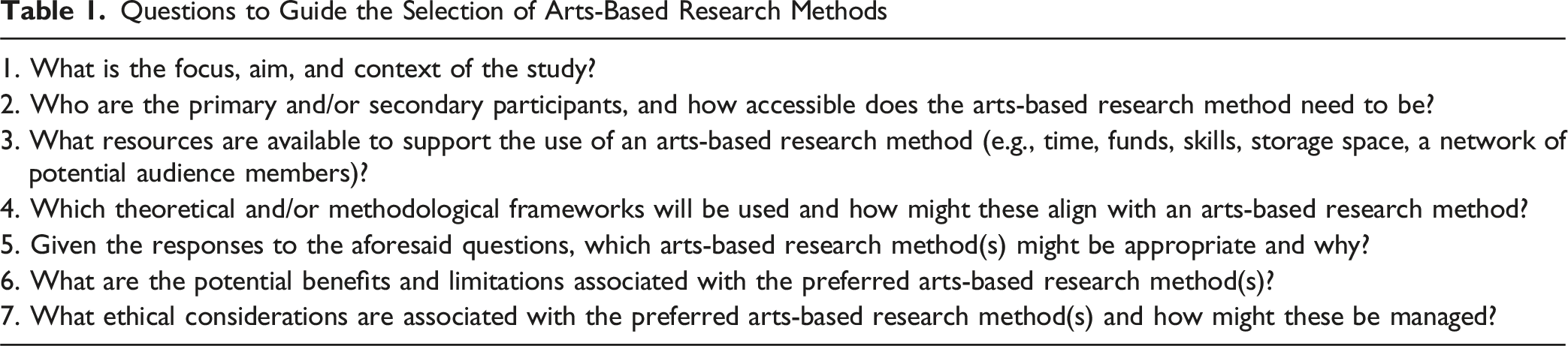
While the questions were primarily developed from the researcher’s perspective, they are intended to frame collaboration with community and public co-researchers. These questions can prompt dialogue, inviting community and public co-researchers to reflect on and shape arts-based research to optimise alignment with their lived experiences, cultural contexts, and creative preferences. By refining these questions with community and public co-researchers, researchers can foster more inclusive and participatory practices that honour diverse ways of knowing and doing. This approach can strengthen the relevance and authenticity of arts-based research and aligns with broader commitments to knowledge coproduction and equity (Graham et al., 2022; WHO, 2024).
While this article advances scholarship on arts-based research methods, two limitations warrant mention. First, because the article was restricted to four Australian examples, a comparison of additional and/or alternative arts-based research methods, particularly those used in other nations, might demonstrate the value of additional and/or alternative questions to guide the selection of arts-based research methods. Second, given the subjective reflections of the four examples, which did not involve other team members involved in these studies, the participants, or audience members, their accounts might differ to those presented in this article.
Notwithstanding the aforesaid limitations, scholars are invited to trial, adapt, and report on the use of the questions to guide the selection of arts-based research methods, so these might be improved for collective benefit. It would be particularly helpful to trial the questions with reference to: arts-based research methods that were not profiled in this article; studies conducted beyond Australia; and studies that involved participants who differ from those involved in the four studies described. Furthermore, to promote knowledge coproduction and equity, it would be helpful to trial and refine the questions with community and public co-researchers. Doing so would enhance the inclusivity and contextual relevance of the questions, ensuring they are responsive to the values, priorities, and creative expressions of those most closely engaged in the research.
In conclusion, this article underscores the complementary value of arts-based research methods in enriching the process of inquiry and promoting care. By moving beyond words to include creative actions, researchers can uncover deeper insights and foster a more empathetic and inclusive research environment.
Footnotes

Ethical Considerations
The study that involved the use of found objects was approved by the South Western Sydney Local Health District Human Research Ethics Committee (approval number: 2021/ETH01195) – all participants indicated informed consent. The study that involved the use of body mapping was approved by the South Eastern Sydney Local Health District Human Research Ethics Committee (approval number: L51289) – all participants indicated informed consent. The studies that involved the use of collective collage making and photography did not require ethics approval as all participants were collaborators and co-producers of the research output.
Funding
The authors disclosed receipt of the following financial support for the research, authorship, and/or publication of this article: The study that involved the use of found objects was supported by the Age and Ageing Clinical Academic Group of Maridulu Budyari Gumal – the Sydney Partnership for Health, Education, Research and Enterprise (SPHERE). The study that involved the use of body mapping was supported by a University of New South Wales Dean’s Strategic Priority Grant. The study that involved the use of collective collage making was supported by Black Dog Institute and The Ethics Centre. The study that involved the use of photography was supported by Maridulu Budyari Gumal – SPHERE.
Declaration of Conflicting Interests
The authors declared no potential conflicts of interest with respect to the research, authorship, and/or publication of this article.
Data Availability Statement
Due to the protocols approved by the relevant Human Research Ethics Committees, the data associated with the studies that involved the use of found objects, body mapping, collective collage making, and photography cannot be shared.