




Abstract
This article is a methodological reflection of Bye Bye Binary, a community-based participatory research project (CBPR) that explored nonbinary youths’ experiences of identity development, engagement in activism, discrimination, and mental health in Ontario, Canada. The arts-informed method of body mapping was employed in a workshop format to garner the experiences of 10 nonbinary youth (aged 16–25), in conjunction with additional qualitative methods (i.e., individual interviews and reflective notes). Findings suggest that the body-mapping workshop fostered a safe environment that promoted idea generation, affirmation, self-exploration, and connections through a shared identity, thus creating “a space where people get it.” Methodological challenges that arose throughout the process are discussed, including engagement in art as “awkward,” barriers of limited time and funding, participant recruitment, and collaboration and integration. Lastly, the authors reflect on their learnings engaging in CBPR and provide insights into how researchers can move forward and apply these methods and processes into their own work engaging in arts-informed research or with nonbinary individuals.
Keywords
Introduction
The community-based participatory research (CBPR) project Bye Bye Binary provided space for nonbinary youth to dismantle their experiences of binary notions of gender. The term “nonbinary” is an umbrella term used to encompass individuals who do not identify with a binary gender (woman/man). Nonbinary identities can be housed within the larger conceptualization of transgender (or “trans”), which is when a person does not identify with the gender they were assigned at birth (Frohard-Dourlent, Dobson, Clark, Doull, & Saewyc, 2017). While some nonbinary people identify as trans, there are many who do not feel that “trans” best describes their experiences. “Nonbinary” will be used to describe both trans- and nontrans-identified individuals in order to respect the heterogeneity of these communities. Nonbinary people who prefer to be addressed using singular “they/them” pronouns will be referred to accordingly in this article. Participants engaged in arts-informed methods through a participatory action research framework, to explore their experiences of identity development, discrimination, mental health, and desire to advocate for their needs. The authors’ intentions are to reflect on the methodological choices and lessons learned. Participants’ voices will be elucidated in unpacking the value of utilizing research methods that resonate with nonbinary youth.
This project emerged out of a community-identified need to provide nonbinary youth with new opportunities to explore their identities, share their lived gender experiences, and assert their existence. Nonbinary individuals’ existence evokes a continual question of accordance to the male/female dichotomy. Identifying as nonbinary can impact personal interactions at school and work or with family, friendships, and casual acquaintanceships, including the difficulty of navigating identity disclosure. For example, being reluctant to share their identity with individuals who are cisgender and heterosexual due to previous negative exchanges such as inappropriate questions, insults, and fetishization.
Bye Bye Binary was Furman’s master’s thesis that involved 10 nonbinary youth between the ages of 16 and 25. The primary research questions included (a) how can arts-informed CBPR facilitate conversations about nonbinary youths’ experiences? and (b) what are nonbinary students’ recommendations for transforming institutional policy, curriculum, and pedagogy within postsecondary institutions? Findings revealed that postsecondary institutions are important spaces for nonbinary youth to explore their identities. However, nonbinary youth experience many forms of gender-based discrimination on postsecondary campuses, which can contribute to experiences of poor mental health. A sense of belonging within in-person and online lesbian, gay, bisexual, transgender, queer, and Two-Spirit (LGBTQ2S) spaces was found to buffer against the harmful impacts of gender-based discrimination. Thus, there is a need for postsecondary institutions to support existing and future initiatives to promote the health and well-being of nonbinary youth. This article will provide responses to the first research question by reflecting on (a) the theories and methods employed in this study, (b) methodological challenges, and (c) lessons learned. How this research can contribute to the field of arts-informed CBPR will be examined by highlighting the value in providing space for youth to engage in creative methods to represent their experiences.
Community-Based Participatory Research
There are a number of initiatives that seek to serve the needs of trans and nonbinary youth, but they often operate from therapeutic models and fail to foster leadership and activist skills within the community. Tebbe and Budge (2016) outline CBPR as a “gold-standard” critical framework used to guide empowering research with marginalized communities (p. 1001). CBPR has been characterized by the following core principles and characteristics, stating that it (a) is participatory, (b) engages community members and researchers in a collaborative project, (c) is a co-learning process, (d) involves local community capacity building, (e) is an empowering process whereby participants can increase control over their lives, and (f) is a balance between research and action (Israel, Schulz, Parker, & Becker, 1998; Israel et al., 2005). Further, the work of feminist participatory scholars of color is a crucial component that has been intertwined with CBPR because of the undeniable impact that issues of gender, sexual orientation, race, class, and culture have on marginalized communities (Israel et al., 2008). Israel et al. (2008) reflect that while all of the CBPR principles are important to conduct ethical and meaningful research with community, not every principle will be relevant to the needs and goals of the community in question. It is suggested that the CBPR principles employed for a particular research endeavor should be owned by the specific group and be adapted in accordance with the local context (Israel et al., 2008).
Methods of conducting participatory research with trans communities to strive for greater social change have been outlined in the literature (Clements-Noelle & Backrach, 2003; Khobzi & Flicker, 2010; Pinto, Melendez, & Spector, 2008) and successfully draw from CBPR approaches, helping facilitate the progression from trans persons as research subjects to active participants in shaping research processes (Singh, Richmond, & Burnes, 2013; Travers et al., 2013). Singh, Richmond, and Burnes (2013) developed a checklist to critique traditional methods of scientific inquiry and to guide researchers in taking a participatory action research approach to working with trans communities. The checklist encourages researchers to articulate a theoretical framework that centers research on trans identities. Questioning how to engage trans participants in empowering research must also be considered, for example, providing opportunities for trans individuals to actively participate without placing a burden on them. Singh et al. (2013) also stress the importance of conducting outreach with trans communities, creating authentic relationships, collaborating with participants, and connecting research with advocacy and social change. This approach was integrated with the CBPR principles above to adapt and guide the process for this research with nonbinary individuals.
Arts-Informed Methods
Various arts-informed methods (Flicker, 2008; Holtby, Klein, Cook, & Travers, 2015; Wernick, Woodford, & Kulick, 2014; Wilson et al., 2014 ) have been used to facilitate underserved groups’ engagement with sensitive subject matter through creatively representing complex experiences. Arts-informed methods utilize art as data to further analyze, understand, and disseminate findings to the wider community (Sakamoto, 2014), increasing the accessibility of research (Cole & Knowles, 2008). Art can be a powerful medium for self-expression beyond the bounds of one’s body or the categories thrust upon individuals by society. Weber (2008) asserts that arts-informed methods such as images “can be used to capture the hard-to-put-into-words” (p .44). The complex intersections between gender identity, gender expression, sexual orientation, race, ability, and other components of one’s identity can be difficult to convey through research processes that solely rely on verbal or written data. Thus, inspiration for this project emerged from the limited studies involving LGBTQ2S youth in participatory processes with creative methods to explore their experiences with difficult and sensitive subject matter such as bullying (Wernick et al., 2014), visibility and representation (Holtby et al., 2015), and mental health (Sanchez, Lomeli-Loibl, & Nelson, 2009). It is evident that artistic expression is a significant component of community building for trans people and engages youth in discussions about honoring their lived experiences.
Creative approaches can transcend across cultures, disrupt boundaries, and support the expression of nebulous ideas. Wilson (2015) state, “arts-based approaches can transform lives, making engagement with the arts a form of intervention” (p. 7). It is evident that arts-informed methods fit well within a CBPR framework as well as trans and nonbinary peoples’ needs to resist and disrupt traditional research pedagogies that have been used to misrepresent their realities. For example, trans people have used art to contest misconceptions, promote progressive dialogue, and empower identity, self- expression, and the ability to tell one’s own true story (Dittman & Meecham, 2006). Further, trans and nonbinary peoples’ experiences as research subjects have been imbalanced, with researchers holding more power in research relationships. Arts-informed methods enable a different distribution of power, where collaboration between participants and the researcher is promoted, and accessibility of the research process is prioritized. By dismantling hierarchical power structures between participants and researchers, arts-informed methods have the potential to catalyze the co-creation of meaning through participatory inquiry and action toward social justice (Knowles & Cole, 2008).
Body Mapping
Body mapping is an arts-informed method that has been utilized in projects exploring individual and community health. Body mapping involves a process of creating life-size visual representations that holistically explore peoples’ minds and bodies (De Jager, Tewson, Ludlow, & Boydell, 2016; Skop, 2016). Body mapping derived from Morgan’s (2003) Memory Box Project at the University of Cape Town that supported South African women with HIV/AIDS in documenting their lives (Devine, 2008). South African artist Jane Solomon modified the Memory Box Project into an art therapy technique where women with HIV/AIDS used words and images to share their life stories. While body mapping arose from art therapy, this method is recognized within participatory research projects (Solomon, 2002). Body mapping has been used in participatory projects exploring myriad topic areas including HIV/AIDS (Macgregor, 2008; Maina, Sutankayo, Chorney, & Caine, 2014), refugee youth (Davy, Magalhaes, Mandich, & Galheigo, 2014), undocumented workers (Gastaldo, Magalhaes, Carrasco, & Davy, 2012), fibromyalgia (Skop, 2016), sexual health (Ramsuran & Laurwengu, 2008; Senior, Helmer, Chenhall, & Burbank, 2014), and gendered violence (Sweet & Escalante, 2015). It is fitting to choose a method about bodies and embodiment when it comes to challenging gender conformity. In a sociopolitical climate where nonbinary bodies are contested and questioned, body mapping has the potential to visually capture the nuances of gender diversity where visual art can represent markers of stigmatized identities in a way that is difficult to verbally articulate.
Although reflecting on gender identity and expression can be a daunting task for nonbinary people, body mapping assists the examination of thoughts, feelings, emotions, and vulnerabilities through artistic expression on a canvas that is the physical outline of their bodies (Gastaldo et al., 2012). Talking about nuances of gender embodiment, transitioning socially or medically, and the resulting thoughts and feelings can be emotionally charged and requires a flexible method for reflection. Experiences of gender embodiment, dysphoria, and well-being can be difficult to describe using words, but body mapping promotes a creative process that allows participants to not only become self-reflective but also share their thoughts and experiences with others. Furthermore, body mapping accounts for diverse experiences of gender embodiment with structured opportunities to reflect on the complexities of experiencing privilege and oppression as a nonbinary person holding multiple identity facets.
Method
This study was informed by Israel et al.’s (2008) CBPR principles of participation, community engagement and collaboration, and co-learning and the following guidelines from Singh, Richmond, and Burnes' (2013) checklist for participatory action research with trans communities. First, it was imperative to acknowledge the intersecting identities of nonbinary individuals (gender identity and expression, sexual orientation, race, nationality, class, etc.) as they relate to privilege and oppression and power as a researcher. It was necessary to situate this knowledge in the oppression faced by nonbinary communities and to further have this inform the researcher’s positionality related to such concerns. The conception of this study was identified by nonbinary youth during Furman’s practicum placement (a requirement of their MA degree), where they built meaningful connections with trans and nonbinary youth in the community. Nonbinary youth identified a need for spaces where they could express themselves, talk about their experiences, and discuss avenues for engaging in their community. Thus, it was germane to make methodological choices that would promote the community-identified needs such as developing research activities that were centered on nonbinary experiences and that fostered meaningful relationships among participants. A research team was consulted to establish research expectations and accountability pertaining to researcher privileges, assumptions, and biases. All aspects of the research process and data were shared with community members throughout the study in order to continuously seek and incorporate feedback. This section will describe the body-mapping workshop, individual interviews, and reflective notes undertaken in accordance with the aforementioned principles and guidelines to meaningfully engage nonbinary youth in the research process.
Body-Mapping Workshop
The method of body mapping was initially discussed with nonbinary youth during the first author’s practicum placement as a potential arts-informed activity. Given the interest in body mapping, it seemed appropriate to incorporate the activity into Bye Bye Binary. The first author hoped to collaboratively develop the body-mapping workshop curriculum, but given the limited funding to compensate nonbinary participants for their labor, an alternative approach was undertaken. Specifically, Furman and Singh collaboratively developed the body-mapping curriculum and then shared a draft version of the curriculum with participants who were interested in providing feedback. During November 2016, a three-session body-mapping workshop was facilitated at Wilfrid Laurier University in Ontario, Canada (see Table 1). The first two sessions were held on one weekend, with the third session held the following weekend. Each session lasted approximately 6 hr. A community-based approach to recruitment was undertaken, where Furman sought participants through personal connections at the LGBTQ2S centers at postsecondary campuses in Waterloo Region. Participants were compensated with CAD$25 per session and provided with lunch and snacks. The study began with 10 participants across the first and second workshop sessions but ended with 6 participants at the third session due to scheduling difficulties and barriers to commit to the project.
Workshop Outline.
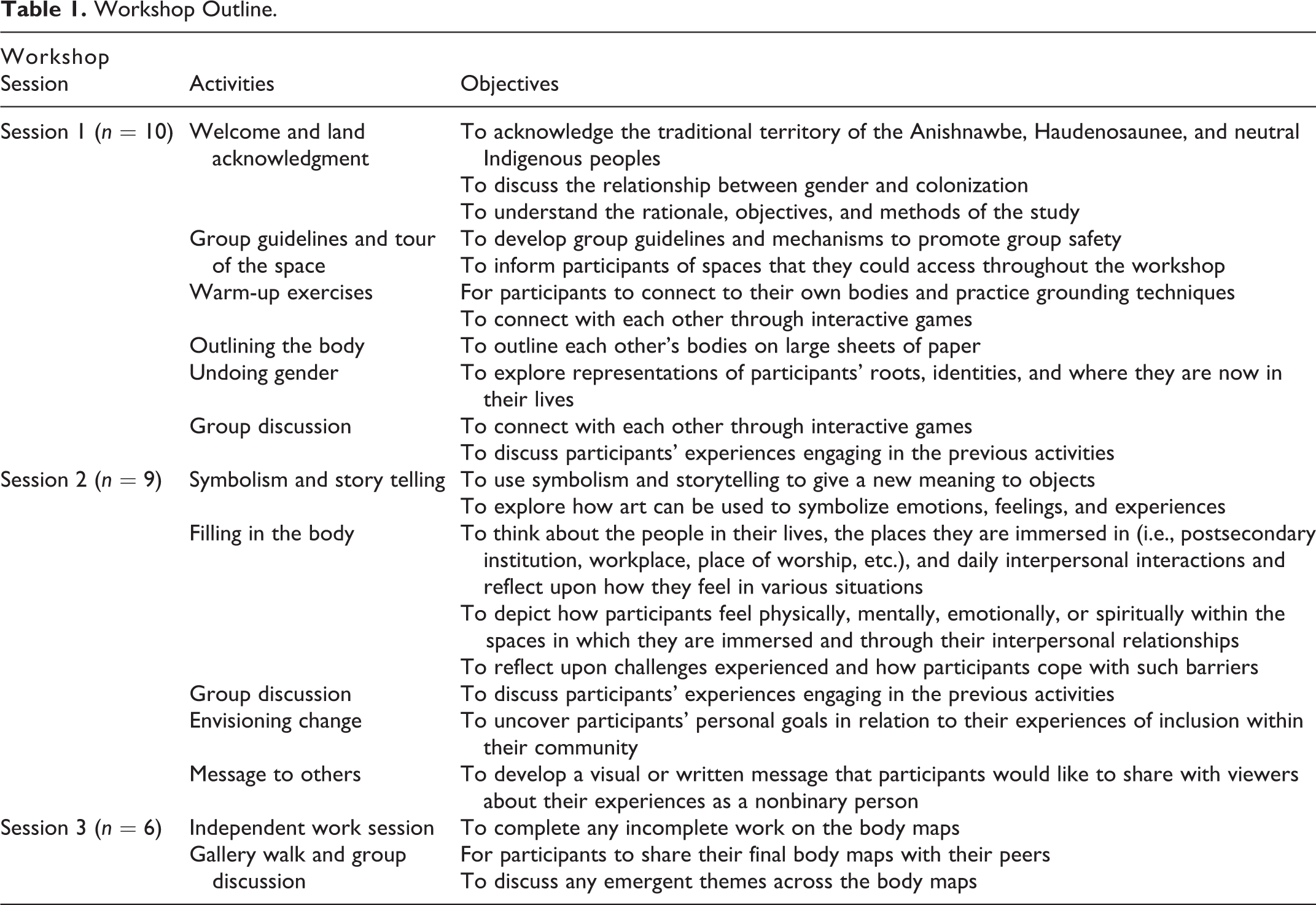
The first workshop session was organized to familiarize participants with the study, with one another, and to begin body mapping. The workshop structure was outlined to ensure all risks and benefits were understood and to guarantee that participants had an opportunity to share their feedback regarding the order of activities.
The project drew upon mechanisms to promote group safety identified by Bergold and Thomas (2012). Participants in this study drew up their own list of rules in the first session, which included (a) respect of names and pronouns; (b) participate to the fullest of your capacity; (c) do not be afraid to ask questions; (d) feel free to share any learnings from the workshop after the study, maintaining confidentiality; and (e) take care of yourself and ask the facilitator for support. The group agreed to use a “thumbs-up” symbol to indicate that they were feeling positive and conversely a “thumbs-down” to indicate that they required support.
Next, participants were led in physical exercises to foster connection between participants’ minds and bodies before tracing the outline of each other’s bodies on large sheets of paper. One participant explained why a dynamic pose was chosen for their body map (Figure 1): “I disrupt the implicit top-bottom of the paper by going diagonally across the paper with my body because bodies also have implicit top-bottoms and I wanted to depict conflict.” It was suggested that participants outline their bodies in pencil and then choose a paint color for the body outline that best represented how they were feeling in that moment.

Body map depicting a dynamic pose diagonally across the paper.
Participants were prompted to map out and reflect on their process of self-discovery on their body maps exploring representations of roots, identity development, and current identity. Prompts included (a) what symbols represent your identity? (b) what symbols illustrate your experiences with gender identity and expression, including other held identities? and (c) think about processes of coming out as nonbinary, how have you come to understand your identity?
Finally, participants were instructed to write down 10 words that they would use to describe themselves, then had an opportunity to share their words. Participants would then take turns saying words from their list that connected or related to the previous word spoken. This activity was meant to highlight individual experiences and promote a sense of connectivity among participants sharing with each other.
The second workshop was used for additional work on the body maps. An activity about symbolism and storytelling was held to encourage the use of art to symbolize emotions, feelings, and experiences for their body maps. They were prompted to think, reflect upon, and depict how they feel physically, mentally, emotionally, or spiritually within the spaces/communities in which they are immersed, with interpersonal relationships and about challenges experienced, and coping with such barriers.
Participants were later engaged in an audiorecorded group discussion where they spoke about their reasoning for creating certain images on their body maps. This discussion was fruitful in sharing participants’ responses to the body-mapping prompts and describing specific creative choices that were made to connote meaning.
Six participants attended the final workshop session to finish their body maps and to complete two exercises. Participants were first asked to reflect on what they would hope to change or what they are working toward, in order to create safer spaces for them. This was intended to uncover participants’ personal goals in relation to their experiences of inclusion within their community and included changing individual behaviors to sharing a need for larger social and structural changes. Participants were then instructed to develop a visual or written message that they would like to share with viewers about their experiences as a nonbinary person. Prompts included (a) what message would you like to share with others who might not be familiar with nonbinary identities; (b) why is it important for people to know this? and (c) where on your body map would you want to put this message, and why?
At the end of the third session, a gallery walk was held, where each person explained their body map to the rest of the group. This engagement was audiorecorded to capture conversations that arose through sharing each other’s completed artwork and served as an opportune moment to ask participants to elaborate on creative choices that were not explained (see Figure 3).
Individual Interviews
Participants were invited to participate in audiorecorded individual interviews approximately 1 month after completing the workshop. Eight of 10 participants were available to engage in individual interviews (approximately 1–1½ hr in length), where they answered questions that evaluated both the research process and outcomes (see Table 2).
Individual Interview Guide.

Reflective Notes
Reflective notes were recorded after each workshop session to document observations about the context and atmosphere. Information about the setting and details of how the sessions were running were woven into personal reflective notes about the strengths and weaknesses of each session. This served as an opportunity for Furman to document reflections as an insider/outsider working with other nonbinary youth as both a researcher and a peer.
Data Analysis
The CBPR principles of collaboration and co-learning were exercised at the data analysis phase of this study through the inclusion of a peer researcher to support the thematic and visual data analyses and a member-checking session to meaningfully involve participants in making sense of the preliminary research findings. CBPR projects have applied the approach where a peer researcher is involved in one or more parts of the research process (Guta, Flicker, & Roche, 2013). Due to the timing of a funding opportunity, a peer researcher assisted with visual and thematic analyses. The peer researcher identified as a nonbinary, White, able-bodied, undergraduate student who was involved in the local LGBTQ2S community. The peer researcher provided support in consulting and combining multiple approaches for engaging in visual analysis to cultivate a visual analytic protocol that would be critical and reflexive (Rose, 2007), apply the elements and principles of art (Helmers, 2006), and provide descriptive and interpretive analyses of visual images (Reavey, 2016). The peer researcher worked collaboratively with us to develop and implement an integrative strategy for visual analysis that involved (a) recording initial impressions of the body maps; (b) examining the context of the images and the circumstances under which they were created; (c) building in reflexivity in relation to images and emergent codes and openly discussing biases; (d) independently coding descriptions of the images and their elements and principles of design using NVivo 9 qualitative analysis software; (e) grouping codes together and identifying themes; and (f) using the member-checking session to examine each artist’s intent behind their images.
A thematic analysis (Saldaña, 2016) was employed to analyze transcripts from the group discussions and individual interviews and to further triangulate them with the visual data (see Figure 2). A coding scheme was developed and merged them into larger categorical themes, including themes specifically pertaining to the evaluation of the body-mapping workshop and the overall use of arts-informed methods in CBPR.
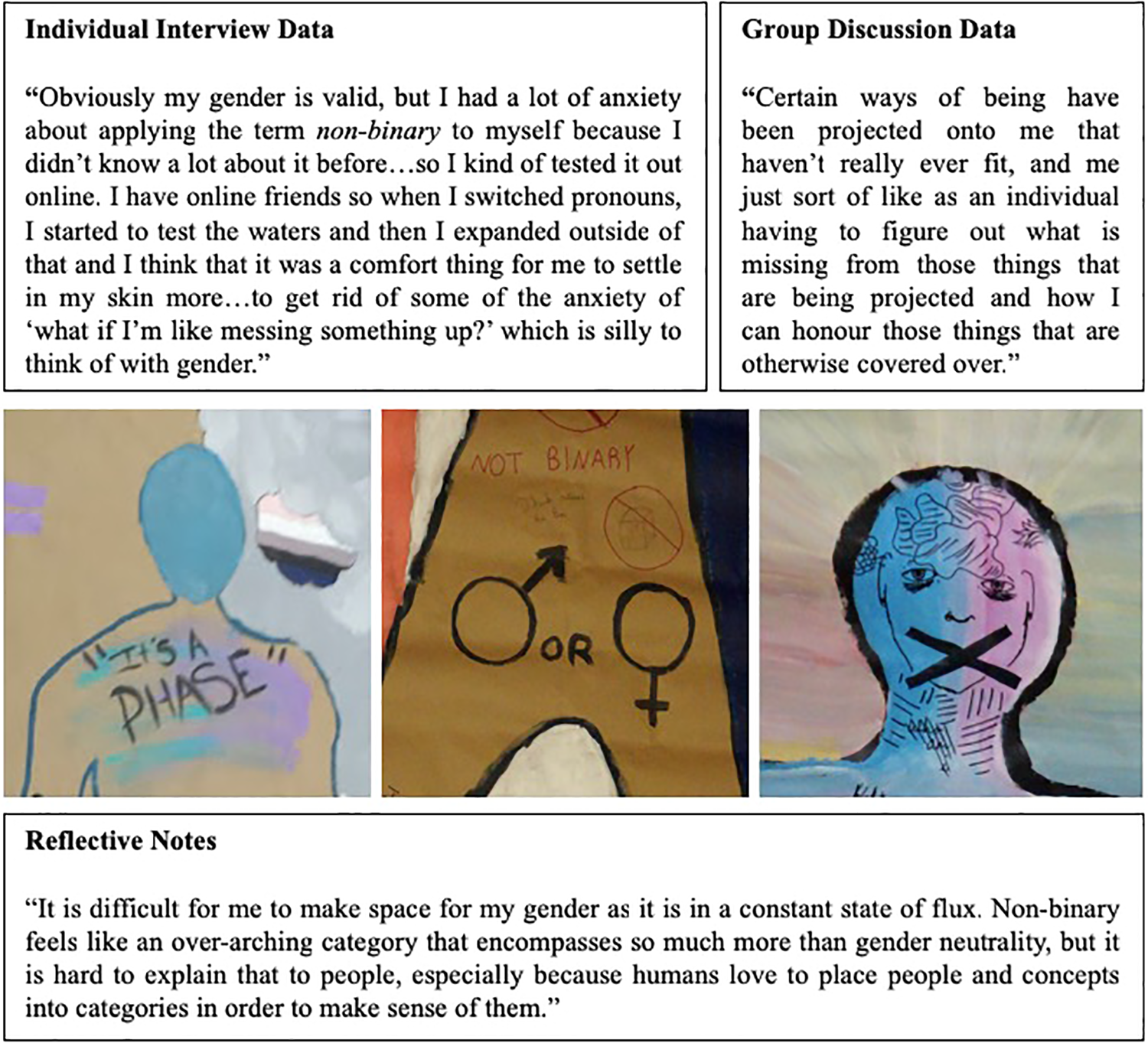
Example of data triangulation across individual interview, group discussion, reflective notes, and body-map data. The theme that emerged from this data triangulation pertains to experiences of understanding one’s nonbinary identity.
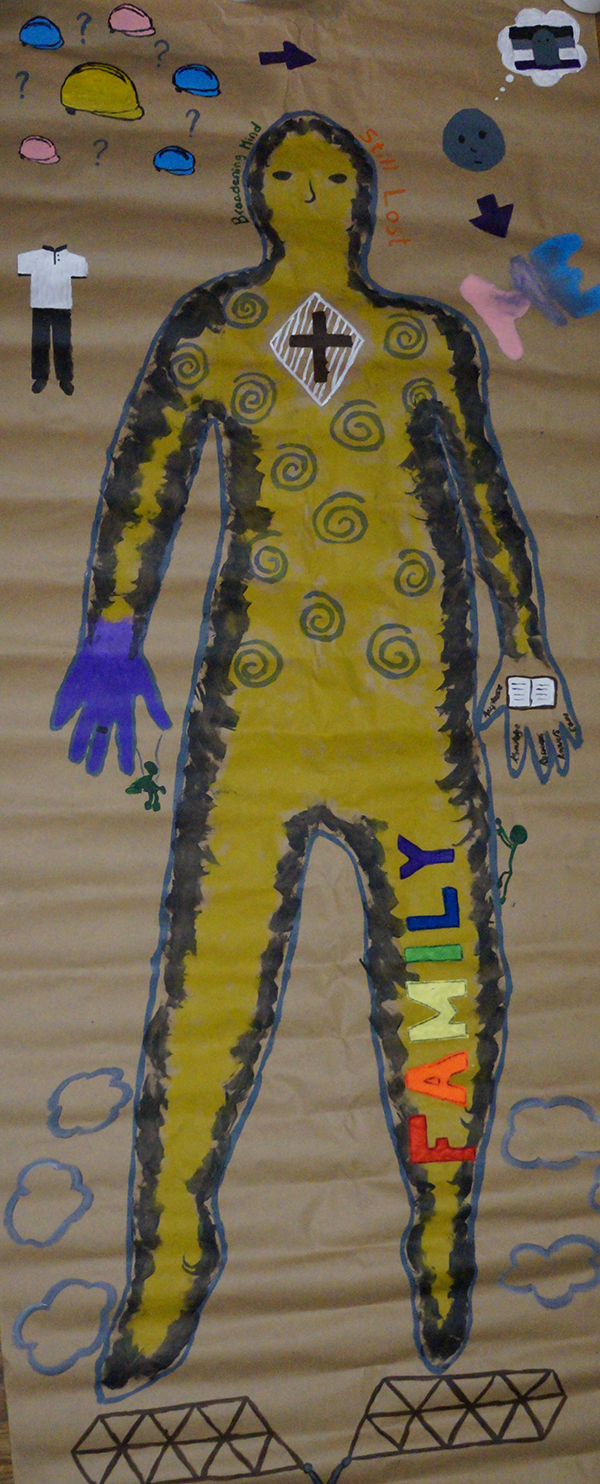
Completed body map.
Six participants attended a member-checking session, a process where the researcher brings findings back to participants for discussion. Participants provided thoughtful suggestions on how the initial themes derived from the preliminary analysis could be modified to better represent their experiences (Padgett, 2012). For example, participants suggested utilizing alternative language to label their overarching experiences of gender-based discrimination as “microaggressions” as opposed to labeling them as acts of transphobic violence. This suggestion reflected the participants’ identities as students who had access to the academic terminology of “microaggressions” that might not have been as salient with nonbinary participants in a different context. This member-checking session took place 3 months following the body-mapping workshop and individual interviews. The researchers’ interpretations of participants’ art were not shared, instead participants were centralized in the data analysis process. While planning this session, it was realized that participants were not provided with enough background information on the elements and principles of art and design (i.e., color, line, form, balance, shape) to support them through their creative process and were provided with strategies for how they could explain the meaning behind their art using art theory. After being presented with this information, participants had another opportunity to apply interpretive strategies in describing their body maps. Participants also found that including them in the visual analysis was important in giving them more opportunities to shape the research findings.
Reflections on the Process
Body-Mapping Workshop
Employing body mapping in conjunction with rapport-building activities and group discussions was effective in garnering the perspectives of nonbinary youth. Based on the participants’ reflections, the workshop was particularly valuable in providing a safer space for nonbinary youth to congregate and generate ideas. The body-mapping activity also resulted in powerful pieces of art that can serve multiple purposes, enabled participants to explore their own identity, and fostered a connection with others through shared identities.
Importance of safety
In developing the workshop, it was imperative to plan activities to promote participants’ safety. Skop (2016) suggests that researchers who utilize body mapping “need to be trained in group facilitation to ensure that participants feel emotionally safe throughout the body-mapping process” (p. 41). Having received previous group facilitation training, our team was able to create a workshop space that was physically and socially safe. The workshop was held in a building that is physically accessible and has gender-inclusive washrooms to meet the needs of nonbinary youth of varying abilities. Taking the time to give participants an initial tour of the workshop space, washrooms, and break area helped them feel that their safety was prioritized. Icebreaker activities, including the sharing of names and pronouns, the development of the collective group guidelines, and thumbs-up/thumbs-down system, were all useful in promoting ongoing safety.
In the individual interviews, some participants commented on the attempt to create an inclusive space centered on participants’ needs. One participant shared: It was really nice to be in the room filled with nonbinary folk. It was cool to meet new people and it was a comfortable space. I think we had really good discussions, were engaged and wanted to be there and work together.
A space where people get it
In Furman’s personal reflective notes from the first workshop session, it was noted that participants realized this was the first time many of them had been in a group solely comprised of nonbinary people. LGBTQ2S youth have reported the importance of having access to physical and social spaces to connect with peers, access information, gain support, and feel part of a community (De Montigny & Podmore, 2014). While there are opportunities for people to be involved in LGBTQ2S initiatives, there is a greater need for trans-specific programming (McGuire, Russell, & Anderson, 2007). This is also mirrored in the limitations of research with trans people where there is a need for inclusion of nonbinary people (Frohard-Dourlent et al., 2017). One participant reflected on the value of occupying space with solely nonbinary peers: I think it impacted a lot of individuals within the space and that it was beneficial for them. Even creating the space for different nonbinary identities to come and talk and be within a space where people get it, was very nice.
Idea generation and affirmation
It can be difficult to make art without talking about it beforehand. Students operate within institutions that prioritize knowledge and ideas that are well written or presented effectively. It can be difficult to engage in different modes of creation using artistic mediums that are not often utilized. Many participants articulated the value of pairing group discussions with body mapping throughout the workshop. One participant stated, Having discussions really helped with creating the body map. Having a discussion before doing it gave some people ideas. I remember the first day we did it without having a discussion. I was having a hard time about what to do without talking about it.
Self-exploration
Many participants identified as nonbinary within LGBTQ2S spaces but were not “out” in other areas of their lives. Some participants were “out” as nonbinary to others, while a number of them were “not out” just as some identified as trans while others did not. A few participants reflected on how body mapping helped them make more sense of their feelings and experiences. One participant shared: “it clarified a lot of stuff in my head, brought it into focus—before it was more of a fog. I got to organize my thoughts this way.” Another participant shared: “I felt like it was something I needed to do for self-discovery. Definitely helped answer some questions and validated some feelings.” Making sense of individual experiences was also perceived as a relaxing and comforting activity through body mapping: I found creating art to be very soothing, although it was hard for me to come up with what to do within the piece, because I am still trying to come to terms with what exactly is my identity.
Utility of visual aids
Body mapping is a versatile tool that has been applied in various settings for therapy, advocacy, team building, art making, and storytelling (Gastaldo et al., 2012; Solomon, 2002). Some participants envisioned how body mapping could be utilized as a tool for self-advocacy and “coming out” as nonbinary. One participant reflected: If I ever explain [my identity] to my parents, I could show them [the body map]. I think that would help explain it, ‘cause I have the process right there. I can explain each step and say how I felt. This would be a really valuable visual aid for that. The important thing about art is that there is no one-way to do it. Creating a body map of who we are through the art helps not just ourselves but the individuals who are exposed to the body maps, because it creates a connection that perhaps words and simple face-to-face interaction give.
Connections through identity
The workshop was beneficial for participants in enabling them to feel connected to others through shared identities. Members of marginalized groups have been found to report feeling a sense of belonging within identity-specific groups (Barr, Budge, & Adelson, 2016). For example, Nicolazzo (2016) found that trans university students’ development and maintenance of kinship with peers was an important factor for navigating contexts that uphold binary gender norms. A kinship network was defined as “a close group of like-minded peers” and participants tried to build a community with other trans people (p. 552). A participant shared their sentiments on connecting with nonbinary peers: It was beneficial to see what other nonbinary individuals did with their work and see the sorts of things that impacted them and how that might be similar to what has impacted myself and how we have these connections through our identity. It was validating in a way that is different than putting something into words.
Individual Interviews
Conducting individual interviews with participants after completing the body-mapping workshop was a strategic component of this study. Workshop sessions established a trusting relationship between each person and Furman, which enabled participants to speak about their experiences in the workshop and in relation to the research questions. It was evident that participants felt more comfortable speaking with Furman about their experiences of mental health such as suicidal ideation, depression, anxiety, and gender dysphoria. Such sensitive topics did not surface in the group discussions.
Methodological Challenges
Art Can Feel Awkward
The first challenge is that arts-informed methods can feel awkward to participate in. Arts-informed methods have been romanticized across the literature on qualitative and community-based research studies. There appears to be an expectation that art will be accessible across communities and that it will be implemented in a way that will unleash participants’ creativity, active participation, and capacity to collaborate. However, it was quickly realized that participants in this study were quite nervous about engaging in arts-informed methods. Participants exchanged sentiments like “I am not artistic,” “I am not creative,” and “I am really bad at painting.” Although encouragement and support were continually offered, a structured time dedicated to the learning of artistic design elements and practicing different techniques to make them feel more at ease should be offered. It could have been useful to reflect on challenging art as a professional, exclusive, and elitist space versus community-based art, which has social and political implications. The juxtaposition between the roles of “student” and “artist” challenged participants to think outside the bounds of their identities in one facet while expressing boundlessness in terms of their gender. Future workshops should provide further elaboration on how marginalized groups are often discouraged from embracing creativity and instead are pushed toward employing the cerebral and intellectual self.
Lack of Time and Funding
Lack of time and funding posed interconnected challenges. This project was funded by two grants from WLU’s Gendered Violence Task Force and Women in Science group. This funding was vital in order to purchase adequate art materials, food and snacks, and to compensate participants. In budgeting to adequately pay participants, it was decided to sacrifice the amount of time allocated for the workshop. Feedback from this study revealed that participants expressed that the lack of time not only created pressure in working quickly to complete their body maps but also impacted their ability to form strong relationships with new peers and did not allow enough time for sufficient group reflection. One participant exemplifies several honest concerns about the limited workshop time: I didn’t get to know the people that well, ‘cause there wasn’t that much time. I felt like I was falling behind at first, so was like ‘if I don’t hurry up then I won’t finish in time.’
Recruitment
Participant recruitment could be improved in future arts-informed CBPR projects with nonbinary people. Given the context of Waterloo, Ontario, a university town, it is not surprising that the majority of participants were White undergraduate students. Furman primarily recruited participants through their personal connections to nonbinary youth in the community, in addition to promotional materials that were shared through the LGBTQ2S centers at postsecondary institutions in Waterloo Region. Additional recruitment techniques could be employed to recruit more people of color and Indigenous participants for a more diverse sample. Half of the participants were individuals whom Furman already knew from their involvement with the local community. Participants who knew one another through school or community settings shared the challenges of this: “knowing people in the workshop was something that was weird for me. In some ways that could be really good, and it could lead to community, but it also was kind of weird.” Since the workshop promoted creativity and reflection, it is understandable how it could have been difficult for participants to express vulnerability alongside their peers in a community that is so small. It would have been useful to network more with community organizations and LGBTQ2S networks from other postsecondary institutions.
Collaboration and Integration
We experienced challenges in applying many of Singh et al.’s (2013) recommendations for collaboration and integration with trans people. This project could have been improved by differentiating between collaboration and consultation, integrating participants in the research process, and dismantling power imbalances (Bergold & Thomas, 2012; De Jager et al., 2016). While the time spent consulting with nonbinary people in the development of the workshop was useful, it was not inherently collaborative. Singh et al. (2013) describes the process of consultation in CBPR where the researcher is the “agent of action and knowing and engages with the phenomenon directly” through consultation (Singh et al., 2013, p. 100). We attempted to involve participants in the data analysis process to promote collaboration, in addition to hiring one participant as a peer researcher. It is evident that many of the participants would have been interested in taking a more active role in collecting, analyzing, and interpreting data, but we lacked the time and financial resources to adequately compensate each person for their contributions and provide constructive mentoring in building research skills. While we were able to secure funding to hire one participant as a researcher, we felt uncomfortable having more peer researchers involved in the process without being able to adequately compensate them. For future projects, we would hope to accumulate more funding to compensate youth in collaborative processes. Singh et al. (2013) state that “collaboration will inevitably look different in research than in practice” (p. 100), and with that, we were able to collaborate with participants in meaningful ways without undercompensating them or taking advantage of their time or skills.
We regret not having enough time or resources to have nonbinary youth meaningfully involved from the start of the study. Creating an advisory committee for this study would have provided more opportunities for nonbinary people to be involved in developing or facilitating the workshop, recruiting participants, and analyzing data. Hiring only one participant as a peer researcher to assist with data analysis helped to ameliorate some of the concerns about participant integration, but it may have also created power imbalances among participants where one person received an opportunity that others did not (Bergold & Thomas, 2012).
Lessons Learned
In reflecting on the research process, there are several observations worth noting. First, arts-informed methods are quite intensive. Successful application requires experience in group facilitation and planning to ensure that activities are accessible to individuals with different needs. Funding is also crucial in being able to purchase a variety of quality art materials for participants. We learned about the value of involving youth in a collaborative analysis of visual data through a member-checking session. Analyzing visual data has also been a complicated endeavor in arts-informed research (Boydell, Gladstone, Volpe, Allemang, & Statsiulis, 2012; Wilson, 2015). Boydell, Gladstone, Volpe, Allemang, and Statsiulis (2012) recognize that although there are a lot of detailed articles outlining processes of implementing arts-informed methods, there is very little discussion of the process of analyzing visual data. While some researchers solely rely on thematic analyses to analyze textual interpretations or descriptions of visual art, there is a lack of information pertaining to analyzing actual paintings, drawings, and other mixed mediums (Boydell et al., 2012). We refrained from interpreting participants’ art as we would be applying our worldviews to another person’s experiences. Despite the barriers of visual analysis in arts-informed CBPR, a comprehensive visual analysis approach was developed and can be used to inform future research. Wilson (2015) validated these sentiments by choosing not to interpret visual data in an arts-informed research with Black and Indigenous youth. Wilson and Flicker specifically stated that they were committed to “centralizing participant voices in the research process and outcomes” (p. 23). Thus, we opted to work with participants to analyze their own data using the elements and principles of art and design to guide their process (Helmers, 2006). Third, we learned about the value of hiring a paid peer researcher to assist with data analysis (see Table 2 for benefits and challenges of engaging in body mapping, group discussions, and interviews).
Conclusion
In alignment with recent CBPR projects working with and for trans communities (Singh et al., 2013; Travers et al., 2013), this project provided opportunities for participants to collaborate and integrate in the research process through data analysis and in the position of a peer researcher. This arts-informed CBPR project uncovered the natural fit between nonbinary youth and body mapping. Engaging in body mapping with nonbinary youth was valuable in enabling participants to express themselves through creative modalities without being limited by verbal and textual data collection methods. We are hopeful that arts-informed methods will continue to be applied in CBPR research with nonbinary youth to garner valuable findings on community experiences and needs.
This research has contributed to the field of arts-informed CBPR by highlighting the value in providing space for youth to engage in creative methods to represent their experiences. It also reveals the importance of promoting participant involvement, collaboration, and researcher positionality (Singh et al., 2013). It will be important for researchers working with nonbinary communities to be flexible in their creative approaches to working with diverse youth. Striving for collaboration, integration, personal reflection, and creativity in future arts-informed research will result in richer research processes and outcomes that amplify nonbinary community voices.
Footnotes
Acknowledgments
The authors thank the brave and fabulous youth who participated in this study for sharing their art and personal experiences. It has been an honor and privilege for the authors to work with all of them. The authors also thank Furman’s master’s thesis committee members, Dr. Robb Travers and Dr. Laurie Manwell, for providing invaluable feedback in the construction of this article.
Declaration of Conflicting Interests
The author(s) declared no potential conflicts of interest with respect to the research, authorship, and/or publication of this article.
Funding
The author(s) disclosed receipt of the following financial support for the research, authorship and/or publication of this article: Funding for the research activities was provided by two small grants from Wilfrid Laurier University’s Women in Science group and Gendered Violence Task Force.
