




Abstract
Depression is a cause of disability globally and affects not only the person living with the condition, but the whole family. How people construct meaning to ‘live well’ and make sense of the reality of living with a person diagnosed with depression were explored through narrative inquiry and stories. The purpose of this article is to justify the use of narrative inquiry methodology to explore how people make meaning and find ways to live well and live with a family member who lives with depression. An interpretivist epistemological perspective, with the ontological principles of critical realism, and a social constructionist approach were chosen to guide the methodological framework. This was because how people construct the stories about their experiences will influence how those stories are told and what meaning is given to them. Eight people who live with a family member diagnosed with depression told their stories for this study. A realist approach to data analysis was taken, transcribed data were re-storied with redundancies removed, and member checked for accuracy. Using McCormack’s and Chases’ Lenses, the data revealed the strengths and challenges individuals faced when living with a family member with depression. Narrative Inquiry was an appropriate methodology to reveal how participants made sense of and constructed meaning about living well when living with a family member who lives with depression. Through the cyclical nature of depressive illness, participants navigated the fluctuations and uncertainties to find ways to live well and live with their family member. The research has the potential to adopt aspects of a family strengths-based and family systems approach into clinical practice, which would be valuable in supporting families living with depression and other mental health conditions.
Introduction
In Australia, mood disorders such as depression are the second most common mental health issue, accounting for 8% of the population after anxiety disorders (17%) (AIHW, 2023), with one in seven people being diagnosed with depression in their lifetime (Beyond Blue, 2022). The World Health Organization (WHO) reported that depression alone affects approximately 280 million people worldwide (WHO, 2023), is one of the leading causes of global disability (World Health Organisation, 2021), accounting for 11% of all years lived with disability (World Health Organization, 2023). The preceding statistics attest to the increasing number of people in Australia and worldwide living with mental health challenges.
Rising rates of depression will also flow on to effect family members and impact the family unit affecting a family’s quality of life (Shah et al., 2021). The dominant discourse on mental health conditions and families is predominantly focused on negative aspects of caregiving when living with a family member with a chronic mental health condition (Corchón et al., 2022). This may have a considerable influence on the experience for families where one member has a chronic mental health condition (Östman et al., 2005). Research has shown that families living with a family member with depression are markedly affected by the condition (Buus et al., 2023). Both mental health policy settings and mental health service delivery models have generally not considered the socio-cultural context in which mental illness occurs or how that may affect family relationships and dynamics (McPherson & Oute, 2021). This means that families must find ways of adjusting to and living with their family member’s depression on their own (McPherson & Oute, 2021). The extent of an individual’s illness, or wellness, exerts substantial influence over the functioning and health of the family unit and the health of individual family members (Yu et al., 2020).
Therefore, it is important to understand more fully the broad range of factors that may increase the capacity of family members, and families, to live well when living with a family member with depression (Whitehead et al., 2018). As such, family strengths are essential for optimal outcomes when managing and living with the disruption of depression and other chronic illness in families, especially during stressful and challenging times. The cyclical nature of mental illnesses means that there will be times of disruption as well as relative equilibrium (Baines & Wittkowski, 2013) for the affected person and other family members. Although there are challenges, family members can develop new understandings of themselves, how to live life, and imagine the kind of future they might have (Jayawickreme et al., 2021). We will demonstrate how and why narrative inquiry methodology enabled the exploration of what living well meant to participants when living with a family member diagnosed with depression. It is not the intention here to detail the findings, as the results have been published elsewhere (Cole et al., 2024), but to explicate how narrative inquiry facilitated exploring how family members made sense of their experiences.
Theoretical Framework
In this study, an interpretivist epistemological perspective, the ontological principles of critical realism, and a social constructionist approach were chosen to guide the methodological framework. This is because people repeatedly make sense of the world around them, and people may interpret the same experience in different ways (Silverman, 2006). The story a person tells about their experience is their truth; and because each person has a different and unique interpretation of an experience multiple realities exist, each shaped and composed through their own individual lens (Denzin & Lincoln, 2018). This is particularly relevant to this study in considering the conceptualisation of living well in families living with the cyclical nature of depression, wherein meaning is fluid, dynamic, and socially constructed via the interaction of people in various encounters and life events (Gergen & Gergen, 2018). Social constructionism theory aligns with narrative inquiry, as family members shared their stories; narratives were co-constructed between the participant and researcher (Andrews et al., 2013). The meaning and phenomena of living well with depression, is, therefore, constructed through interpretation of past experiences, social norms, and cultural constructs (Bohm, 1996; Gergen, 2005).
Narrative Inquiry as a Methodological Approach
Narrative inquiry is a branch of qualitative methodology (Clandinin & Huber, 2010), grounded in phenomenology and interpretive hermeneutics (Van Manen, 2016; Welton, 1999). Narrative inquiry has emerged from the belief that humans are “storytelling animals” (Gottschall, 2012), and that humans often make sense of, and recall lived experience through stories. The foci for researchers drawn to narrative inquiry is the belief that storytelling and the resulting stories create meaning and significance in a person’s life (Mayan, 2016). Bruner (1991), and Polkinghorne (2004) emphasised that stories can be a powerful and rich source of information, as people construct and understand the world around them.
Narrative inquiry not only garners stories of human experience through the gathering of oral or written stories, or narratives (Josselson, 2006), it aims to understand how stories are constructed, who constructs them, for what reason and purpose they are formed, what discourse they draw upon (Riessman & Speedy, 2006), and to find meanings that people attribute to these experiences (Josselson, 2006). Narrative inquiry offers a way of ensuring individuals retain the power to define personal experiences and be active participants in the telling of those stories (Holloway & Freshwater, 2009). A person’s experiences, if they are to be recorded, represented, and remembered, are recounted in a story, which is then narrated. Hence, narrative inquiry was employed as the research methodology as this approach was conducive to the study’s aim of elucidating and interpreting the experiences of how families conceptualise the experience of living well when living with a family member with depression. Participants were able to recount temporal experiences, facilitating the narrative process which not only describes past experiences but recounts the way people interpret and give meaning to those experiences, giving shaping to their world (Riessman, 1993). It is through the data analysis phase that individual and collective experiences of participants can be explored, and narratives re-told in written form. The story, therefore, becomes the subject of exploration and the focus of analysis is the story that is re-constructed or co-constructed through the eyes of the teller (the participant), and the listener (the researcher) (Connelly & Clandinin, 2006; Polit & Beck, 2010).
Commonplaces of Narrative Inquiry
Narrative inquiry is a method in which understanding and inquiry into experiences are “in collaboration between researcher and participants, over time, in a place or series of places, and in social interaction with milieus” (Clandinin & Connelly, 2000, p. 20). There are three commonplaces of narrative inquiry that serve as a conceptual framework: temporality, sociality, and place (Clandinin & Connelly, 2000), and employing the three commonplaces is, to a degree, what differentiates narrative inquiry from other methodologies (Clandinin & Huber, 2002). Commonplaces are elements that need to be simultaneously explored when undertaking narrative inquiry. These commonplaces are relevant to consider how family members adjust to and live with the episodic nature of depression.
Temporality directs both the individual and the narrative inquirer to the past, present, and future, to situation, circumstance, and the ‘places’ under investigation (Clandinin & Connelly, 2000; Clandinin & Huber, 2010). Sociality refers to the social environment and conditions in which people’s experiences and circumstances are evolving and unfolding. The ‘place’ in this sense is the narrative interview (Connelly & Clandinin, 2006, p. 480), but can also mean points in the cycle of illness course.
For narrative inquiry researchers, recognising the significance of place, with which identities, memories and experiences are inextricably intertwined is an essential component of the research process (Silko, 2012). As the researcher enters into the midst of ongoing experiences in the particpant’s life, attention is drawn to the importance of acknowledging the continuing temporality of experience when it is understood narratively (Clandinin & Huber, 2002). This was particularly important in guiding and connecting the major themes of ‘time’ from the findings of this study, particularly since mental illness is often cylical (Baines & Wittkowski, 2013).
The Research Puzzle
To begin, when employing narrative inquiry, Clandinin and Connelly (2000) recommend that the work is approached as a research puzzle, to empower the narrative inquirer to contemplate and reflect on the phenomenon under study. That phenomenon is considered unique when using narrative inquiry, and, as such, it can be defined by no singular truth, assumption, or explanation (Clandinin & Connelly, 2000; Clandinin & Huber, 2010). There were several issues and factors that contributed to the research puzzle in this study. These were derived from both the literature and the lead authors’ personal experience. The family living with depression is often a system experiencing disruption, stress and strain (Gallagher & Wetherell, 2020), which is seemingly paradoxical if that family system is living well. Circular causality is often evident in times of ill-health (Nichols, 2010), and is congruent with the clinical features of depression as family members and the family unit experience associated disruption in a circular repetitive experience (Baines & Wittkowski, 2013). In this study, the escalation of stress and distress marked times when a sense of balance or homeostasis in the family was lost. To live well, family members change, alter their actions, their behaviours, and their responses, to maintain balance and ‘make space’ for depression in everyday life.
In consideration of this research puzzle, one question was posed: How do participants describe the experience of living well when living with a family member with depression? From this research question, one aim, as stated above, and three objectives were generated. • To develop an understanding of how participants perceive the experience of living well, when living with a family member with depression. • To explore the impact of depression on participants when living with a family member with the condition. • To explore the contextual factors that influence the experience of living well with a family member with depression.
Study Population and Sampling Approach
A university in a metropolitan area of Australia was selected for the study based on its convenient geographical location, size and the diversity of the staff and student community. The study setting has a large student cohort and employs a considerable number of staff, including the lead researcher of this study who has been employed by the university as an academic specialising in mental health for the past 8 years, and is also a registered nurse, who has practiced in a variety of general, acute, and mental health settings over the preceding 19 years. The researcher had no professional or personal relationship with any of the participants prior to the study. In nursing research, convenience sampling was the approach undertaken where the nurse researcher found a sample that was convenient (Jirojwong et al., 2014). Eight participants, who were living with a family member with depression were drawn from the university community; seven were female and one male. Participants were aged between 31 and 63 years. The length of time that participants had been living with the family member with depression ranged from 3 to 25 years.
Ethical Considerations
Approval was given by the Edith Cowan University Human Research Ethics (19,926-COLE; August 8th 2018). All participants gave their consent freely and voluntarily.
Data Collection
Data was collected via narrative interviews, field notes and a reflective journal. Rigor and trustworthiness were established by triangulating these three approaches to data collection.
Narrative Interviews
The narrative interview was deemed the most appropriate way to gather participants’ stories (Chase, 2005; Gregory, 2010; Hollway & Jefferson, 2000), and to find meaning in participants’ experiences (Plummer, 2001). The narrative interview is not dissimilar to the broader definition of the semi-structured interview (Chase, 2005), although it is less structured to allow participants to have more control over the research process (Hollway & Jefferson, 2000), and possesses richness and depth of data that is not always achieved through surveys or questionnaires (Gorman et al., 2005). The narrative interview was beneficial in exploring and building a comprehensive picture of the interactions and dynamics of the participant’s perceptions of living well when living with a family member with depression, and the impact on the family unit. A benefit of the individual narrative interview also enabled the researcher to explore emerging and comparative themes within and across families (Anderson & Tomlinson, 1992; Knafl, 2015; Knafl & Ayres, 1996).
Each participant was provided with proposed discussion points as a guide prior to the interview, the guide allowed participants to anticipate questions, reflect on their experiences and to consider the events over time about what they perceived living well to mean to them. This emphasised the temporal, social and spatial experience of participants (Haydon et al., 2018). During the interview, the researcher and participant can meet shared expectations and understanding as each is able to tell their stories (Miles et al., 2013); a place of mutuality and reciprocity is established, wherein “researchers establish a close bond with the participants” (Creswell, 2008, p. 511). All interviews were undertaken by the researcher on a one-to-one basis, and one interview per participant was completed. All participants chose to recount several stories, which began and ended where the participant chose. Each interview lasted between 60 and 105 minutes, with the length of the interview determined by the participant. What was told and how it was told was determined by the participant.
Field Notes and Reflective Journal
Field notes captured a plethora of information during data collection and analysis. Notes reflecting the participants discussion, engagement, body language, inclinations, silences, and comments relating to the researcher’s thoughts were completed. A reflective journal was maintained which provided a valuable and ongoing source of information regarding the researcher’s feelings, thoughts, challenges, and reflections of the research journey (Smith, 1999). Information from the field notes and reflective journal enhanced the credibility of the research in the triangulation of data. It added depth, context and richness to the data that is unlikely to have been captured purely by transcription of the interviews or audiotape alone.
Research Rigor and Trustworthiness
Fundamental to evaluating the quality and worthiness of research, is establishing credibility, transferability, dependability, and confirmability (Lincoln & Guba, 1985). Credibility is the accuracy of how findings are portrayed and establishes the participants’ perspectives as the determinant of believability and authenticity (Lincoln & Guba, 1985). This was achieved in the study through ongoing engagement with participants throughout the interview, the co-construction of narratives and analysis process, triangulation of data and member checking.
Transferability demonstrates that the methodology has been applied systematically and that the study and findings could be replicated in other contexts (Jirojwong et al., 2014). The written narratives have provided a comprehensive description of the participants experiences and perceptions of living well with depression and can be described as a ‘thick’ and ‘rich’ in details (Creswell, 2008).
Dependability shows that the findings of the study are consistent and replicable. By detailing the methodology, a future investigator should be able to replicate the study for other families living with depression. Field notes are also a source of information that can contribute to research dependability. Dependability also involves documenting any changes that ensue during the conduct of the study.
Confirmability is the confirmation of a study’s findings by others and can be established by an audit trail (Lincoln & Guba, 1985). Lincoln and Guba’s (1985), six-part audit trail was followed in this study, which consists of: raw data, data reduction and analysis products, data reconstruction and synthesis products, process notes, materials relating to intentions and dispositions and instrument development information. Confirmability has also been achieved in the study through member checking which further achieves authenticity.
Data Analysis
The selection of an appropriate data analysis method enhances the ability to capture the essence of truth, and must ensure its accessibility to the reader, while holding in abeyance the original message of the story (Dibley, 2011). In application of the principles of narrative analysis, determining a framework that reflects the objectives of the research is a fundamental step in meeting the aims of the study (Wengraf, 2001).
In this study, a realist, or naturalist approach (Elliott, 2005; Maxwell, 2012) was taken. This approach facilitated a focus on the narrative content to address the research question and meet the aims and objectives of the study and therein establish the experiences of participants living well when living with a family member with depression. Naturalism is the most predominant language in qualitative research. It emphasises rich descriptions of meaning and life events (Gubrium & Holstein, 1997), and presents a method which looks more deeply into what has been voiced and written about a person’s experience (Ayres, 2000).
Braun and Clarke (2006) attested that a flexible and accessible theoretical approach is proffered through thematic analysis. This makes the data available to the reader, while maintaining the authentic course of the story (Dibley, 2011). In the analysis of personal narratives, the approach can illuminate both individual and shared meaning, inclusive of the social actions and interactions through which human relationships are shaped and changed (Riessman, 2008).
Restorying
Restorying is an important process of narrative analysis, and involves the gathering of stories (Maynes et al., 2012), analysing them for key features, and then re-writing the story to situate it within a chronological sequence (Creswell, 2014; Maynes et al., 2012). Narrative analysis is “the configuration of the data into a coherent whole” (Polkinghorne, 1995, p. 15). The purpose of narrative analysis is “to help the reader understand why and how things happen in the way they did, and why and how our participants acted in the way they did” (Kim, 2106, p. 197).
The restorying process facilitated the emergence of themes from the participants’ experiences and this was reflected in the restoried narratives in which the participant’s voice was maintained and narrated in the same words and phrases as those voiced by them during the interview. According to Andrews et al. (2013), restorying may not be a simplistic process as narratives are co-constructed between narrator and investigator and as such there is potential for misrepresentation of the participant’s voice. After each interview the researcher put the story in a chronological sequence to reflect the researchers understanding and interpretation of the account’s participants gave. This was to ensure the story was a coherent whole. The intention of the speaker and interpretation of the investigator is always open to reinterpretation and hence meanings of words and dialogue change through interpretation and analysis of data, shared meaning, and reciprocity (Riessman, 2008). Care was taken in the process to honour the events, feelings, attitudes, and viewpoints as verbalised by the participants (Bailey & Tilley, 2002).
Member Checking
In co-constructing narratives, care was taken to ensure narratives were representative of the true essence of the participant stories by member checking and that in process of narrative smoothing, the researcher did not lose sight of the original account in the process (Spence, 1986). After each account was restoried, it was given back to the participant to member check for accuracy and to ensure the researchers interpretation was consistent with what the participant had intended to impart. Interaction with each participant was maintained throughout the restorying process and ended when participants stated the stories reflected their experiences. Two participants requested that some quotes be removed from analysis, and the researcher complied. Member checking is essential to confirm the accuracy of the reconstruction of the participants’ experiences (Lincoln & Guba, 1985); and determines if the researcher’s interpretation of the story is a sound representation of the participants’ experiences and reality (Polit & Beck, 2010).
Narrative Sequence and Emotion Discourse
During the transcription of the interviews and the subsequent restorying process, the researcher noted that there were both similarities and differences in the emotional effects and sequences over the time course of the story and within and across participant stories. Often, experiences and fragments of different stories were interwoven throughout the bigger story making up the experience over time, and small stories would divert and digress within the bigger narrative. As participant stories unfolded, one experience and situation would lead to another, and the information and stories shared were at times disjointed in terms of continuity and temporal structure.
The time course of living with depression, and the experiences that were narrated, were also not linear in their temporal structure. This study also viewed narrative sequence in terms of emotional sequencing (Hollway & Jefferson, 2000). According to Patterson (2008) situation narratives do not always flow in an ordered and straight forward manner during an interview. In fact, narratives may be ordered by the emotions and feelings the narrator attributes to them (Hollway & Jefferson, 2000). A key feature of emotion discourse is its use in stories and dialogue (Edwards, 1999). The abstract repertory of emotions provides for a remarkable adaptability in how psychological characteristics, and the actions, responses, dispositions, and motivations can be assembled in narratives and explanation of human behaviour (Edwards, 1999). The generation of metaphors may be inspired, not only by their theoretical sense, but by what they allow the narrator to say and do (Lakoff, 1988); and that was reflected in this study, as in some instances words, turns of phrase, and analogies were repeated and emphasised throughout the whole story highlighting a story’s emotional trajectory over time.
The Process of Narrative Analysis
Within this study, narrative analysis explored the content of the stories (Riessman, 2008), and thematic analysis considered the reason (why), and actions (how) the participants perceived those experiences (Braun & Clarke, 2006). The combined relationship between the analytical approaches generated a rich and thick description of experiences. In application of the phases of thematic analysis of Braun and Clarke (2006), analysis commenced following the first interview. Following from the restorying process and member-checking, rich narratives were produced, and full vertical analysis of the narratives commenced (Figure 1). Approach to data analysis.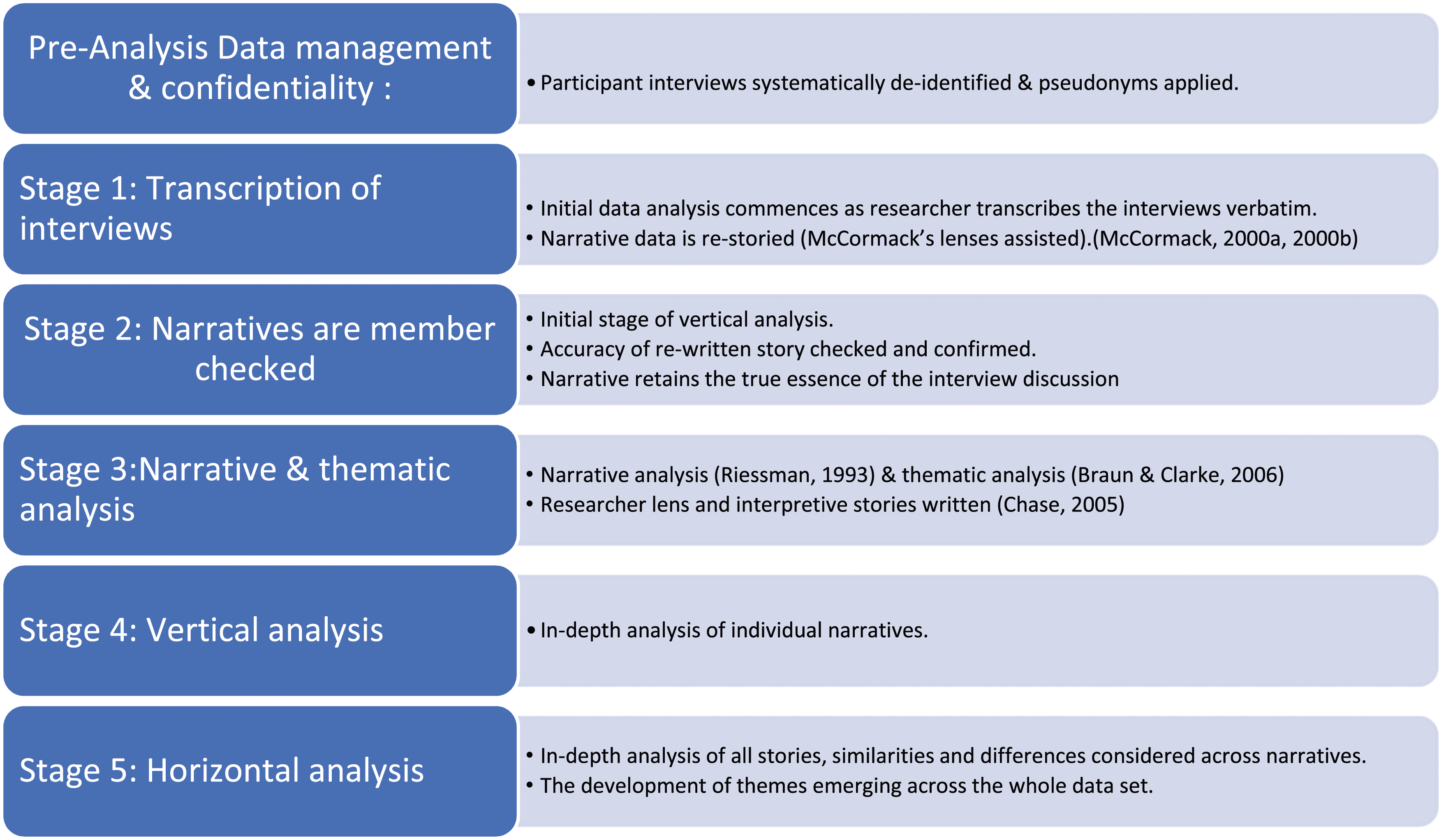
Interpreting Narratives
An interpretative guideline that the researcher adhered to was that the storyteller is both the authority and expert on their own life and should have the final say in what gets told (Clandinin & Connelly, 2000). Interpretative techniques were used during narrative analysis, to garner a wealth of contextual information that allowed the researcher to understand both the collective experiences of individuals who comprise the family, but to also compare these experiences to those of other families (Knafl, 2015; Knafl & Ayres, 1996; Knafl et al., 1996). In interpreting the narratives, attenion was given to the participants’ perceptions of living well, the imapct of depression on them and the family unit, as well as the contextual factors that influenced participants’ stories.
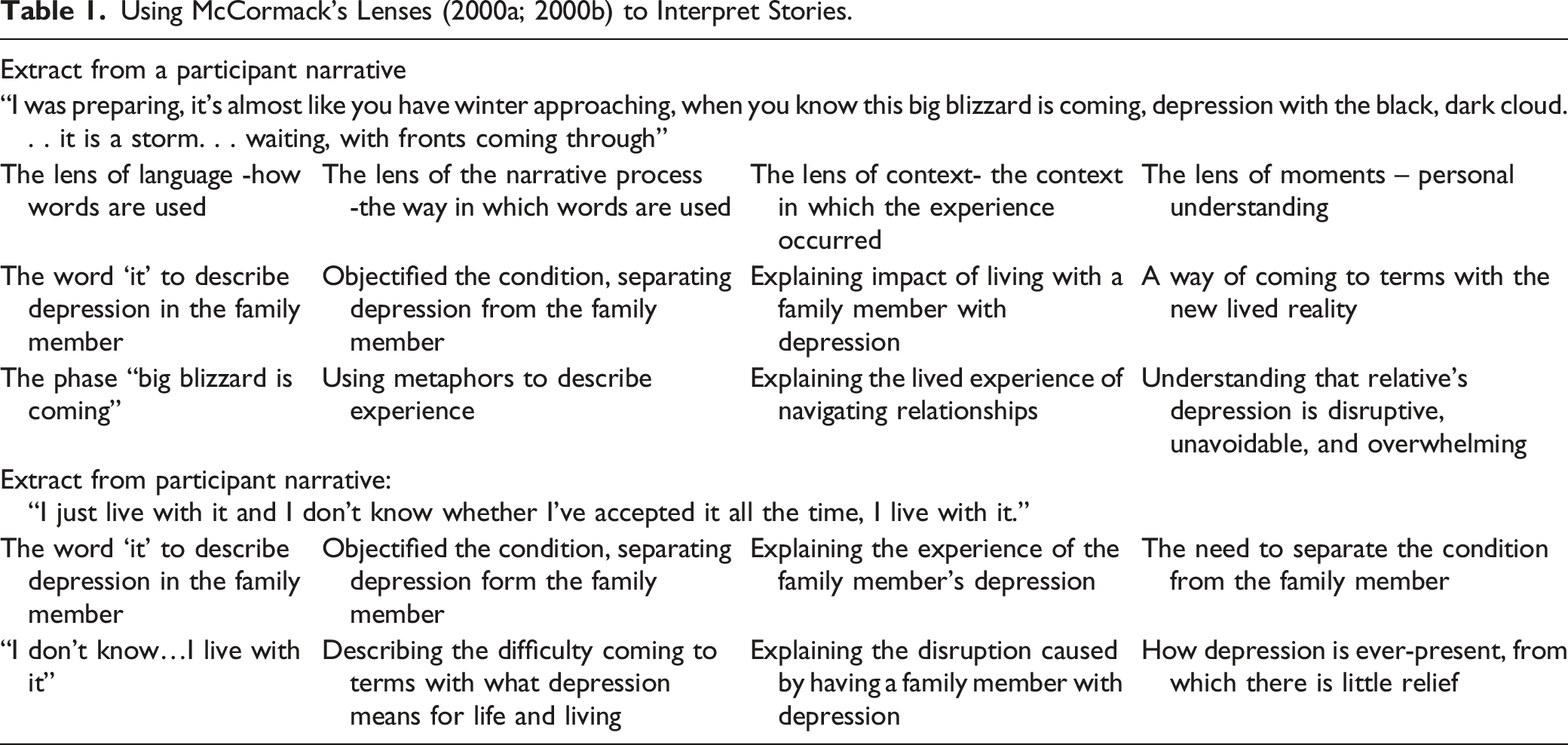
McCormack’s Lenses (McCormack, 2000a; 2000b)
Using McCormack’s Lenses (2000a; 2000b) to Interpret Stories.
Chase’s Interconnected Lenses (Chase, 2005)
Chase’s Interconnected Lenses (Chase, 2005).
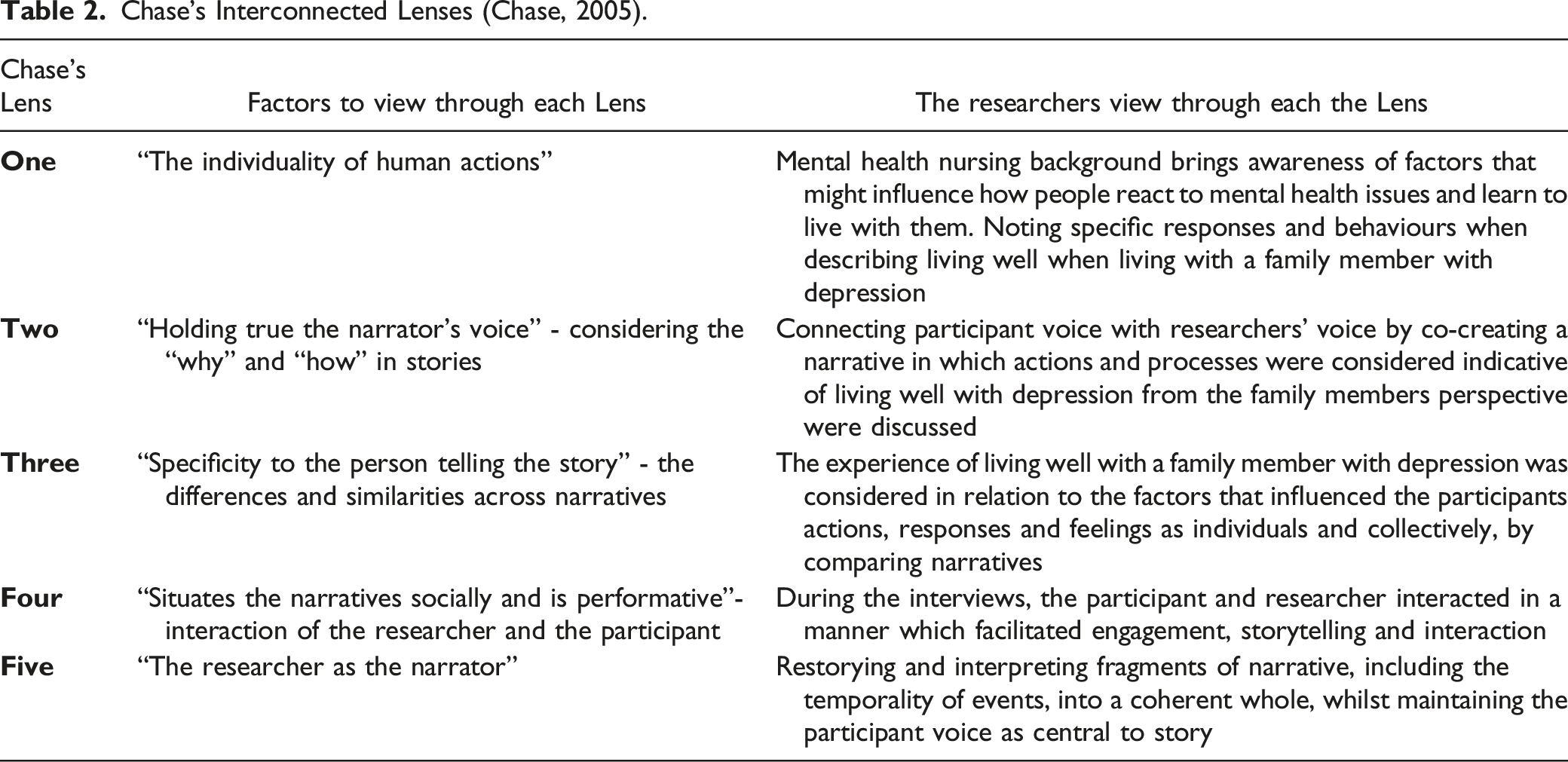
The first of Chase’s analytical lenses examines the individuality of human actions. The researcher noted specific responses and behaviours when describing living well when living with a family member with depression. This lens highlighted factors that influenced actions from the individual participant perspective. The second lens, ‘holding true the narrator’s voice’, the researcher considered the ‘why’ and ‘how’ in which actions and processes were considered indicative of living well with depression from the family members perspective were discussed. The third lens acknowledged that each narrative is specific to the person telling the story and assisted the researcher in considering the differences and similarities across narratives. The experience of living well with a family member with depression was considered in relation to the factors that influenced the participants actions, responses, and feelings as individuals and collectively, by comparing and contrasting narratives. The fourth lens helped to situate the narratives socially and the interaction of the researcher and the participant. During the interviews, the participant and researcher interacted in a manner which facilitated engagement, storytelling, and interaction.
Following on from each interview, the researcher made notes in the reflective journal which proved a valuable source of information during data analysis. The fifth lens considers the researcher as the narrator. Throughout the course of data analysis, the researcher was cognisant of consistently undertaking reflective practice, and the way in which the narratives held true to the voices of the participants during interpretation and in the presentation of data. This framework of interpretation was applied to individual transcripts; however, it was also important for the collective understanding of the data generated across family data sets (Ayres, 2000).
During narrative analysis individual cases can be compared with other narratives to contextualise like findings (Riessman & Quinney, 2005). Analysing the stories of others requires the researcher to interpret experiences according to the researchers own frame of reference or lens, hence, they must provide the context of the experience as well as the researcher’s own background. This subjectivity of narratives supports the different analytic interpretations and ideological viewpoints that ultimately create individuals’ different worlds (Riessman, 1993).
The Phases of Thematic Analysis (Braun & Clarke, 2006)
All data analysis was conducted manually, (Braun & Clarke, 2006) and no analytic software was used. Computer-generated analytical software such as NVivo (Schiellerup, 2008) was rejected, as the researcher felt this would have sanitised the interpretive process and removed, in part, the researcher from the deep and immersive process of data management and analysis (Figure 2). Conceptualisation of the analytic process.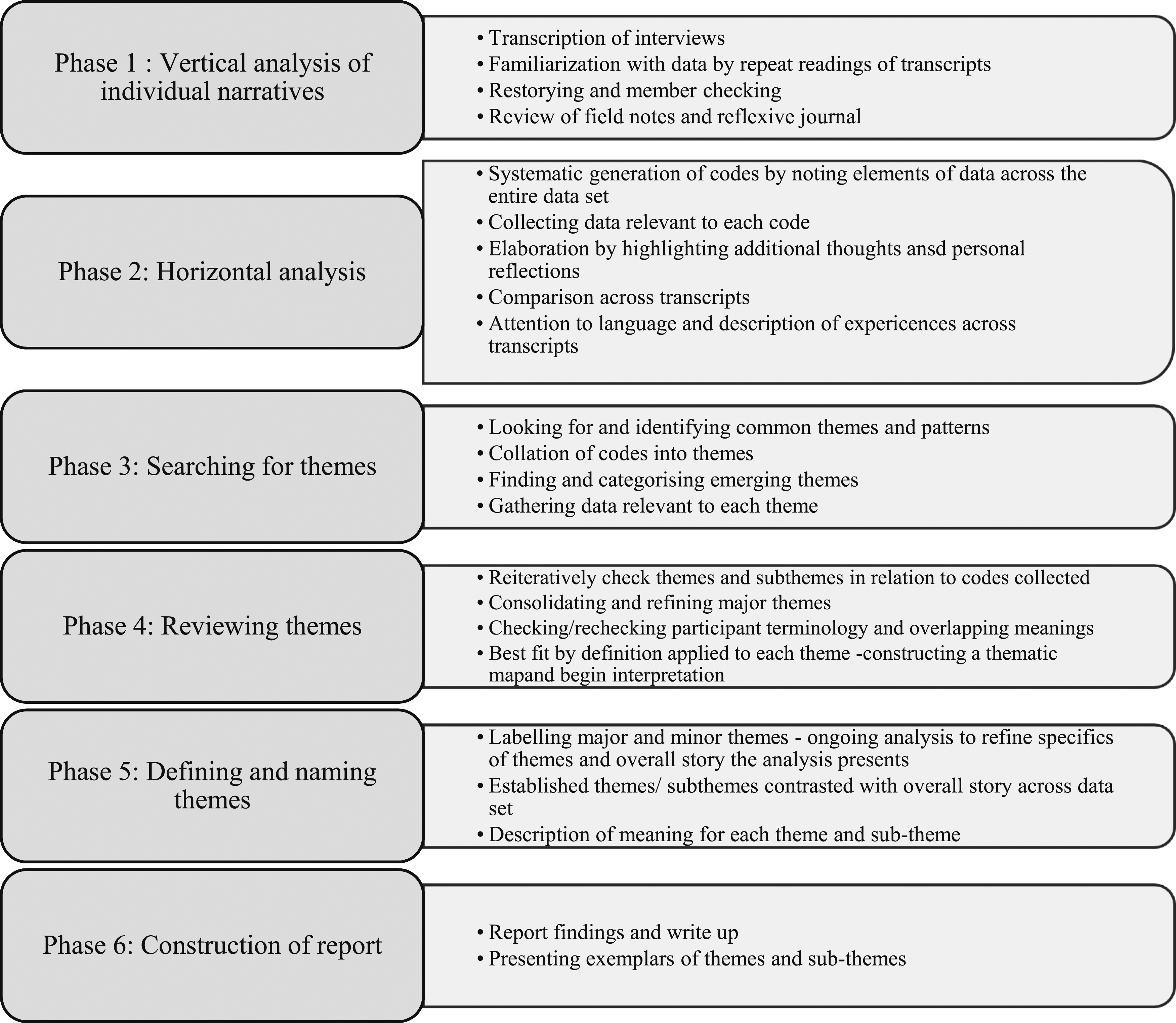
Phase 1: Familiarisation of the Data Set Collected
Researchers need to actively immerse themselves in the data collected and become familiar with the narrative content (Braun & Clarke, 2006). During Phase 1 of Braun and Clarke’s (2006) phases of thematic analysis, the researcher wrote individual interpretive stories which captured each part of the participant story and the experiences discussed. Re-reading the transcripts and interpretive stories as a whole contextualised the data collected and gave an overall sense of the participants’ experiences of living well with a family member with depression. This process enabled preservation of meaning in the story’s entirety, while considering different concepts and meanings within and across family experiences. Immersion in the transcripts in the initial phase allowed the identification and separation of explanatory accounts that conceptualised meaning attached to the phenomenon of the study. During this phase, the researcher used post-it notes of varying colours applied to sheets of flip-chart paper with participant pseudonyms to highlight initial themes, phrases, and words within individual narratives.
Phase 2: Generation of Initial Codes
In Phase 2, each narrative was reviewed again to ensure no content had been missed or further ideas overlooked. Following this, statements and sections of text that related to a families’ experience were examined and initial ideas and concepts were coded independently. According to Jirowong et al. (2014) coding is a procedure that breaks down large volumes of data into more manageable smaller categories, repeatedly reviewing sections of data and identifying compelling elements within datasets (Schwandt, 2007). In code generation, transcripts are assessed for common talking points, shared phrases, similar personal accounts, and shared broader concepts (Braun & Clarke, 2006). If common codes were identified across two or more transcripts, these were compared to previous transcriptions and those that ensued (Braun & Clarke, 2006).
During this phase, the researcher made handwritten notes in the left-hand margin of each transcript and highlighted sections of discourse to separate possible codes (words, themes, ideas) identified within the text. To ensure no ideas had been overlooked or misinterpreted the supervision team reviewed and discussed emerging concepts and concurred regarding credibility. As the research findings were explored by others from different perspectives, this process served as researcher triangulation (Liamputtong & Ezzy, 2009).
Phase 3: Search for Themes
Common codes found across two or more transcripts generated an initial theme or sub-theme across the sample (Braun & Clarke, 2006). A theme can be “a pattern found in the information that at a minimum describes and organises the possible observations and at maximum interprets the phenomenon” (Boyatzis, 1998, p. 3). As narratives were re-read, similarities in themes became more distinguishable. Each emergent theme was reiteratively compared across narratives to explore and conceptualise areas of similarity and difference across individual and families’ stories (Ayres et al., 2003). Sub-themes that did not ‘fit’ within the bounds of identified major themes were recorded separately. The purpose of recording separately is to support themes yet to be identified or used in reflection of major themes that are initially generated (Braun & Clarke, 2006).
During this phase, as more narratives were analysed, the researcher made additions to the post-it notes and added potential theme codes written at the top of flip-chart sheets that subsequently replaced entire sheets. Throughout the process, the post-it notes were transferred to other sheets and theme codes altered as appropriate. Coded information was documented into an electronic Word document with respective themes and sub-themes identified. This was particularly useful for large chunks of data or description from the transcript that would lose meaning if broken down into disparate coded themes. This process allowed for consideration of the wider context of the narratives natural flow from the interview (Riessman, 2008). The initial themes were reflected in words participants had used to describe their experiences. As analysis continued, the researcher assigned different titles to themes. This followed consideration of word definitions, language, and meanings to reflect the descriptive experiences more clearly and the living well with a family member with depression. This process formed the foundation of the horizontal analysis (Boyatzis, 1998).
The thematic analysis process was also conducted across data sets to explore if the common themes and patterns emerge across all family experiences of living well with depression. This process formed the horizontal analysis in which data were analysed both within the individual family story and across families (Ayres et al., 2003). For this study, the concept of family synthesis acknowledged the importance of understanding the individual account of a family in its own context as well as developing a synthesis that captured the essence or differences of experience across families (Ayres et al., 2003).
Phase 4: Review of Themes
During Phase 4 of analysis, several emergent themes were included within previously identified broader themes or reassigned to the major themes as they were inherently associated within other categories. This process included the checking and re-checking of themes and sub-themes, as many key terminologies overlapped in meaning. Subsequently, overarching themes were reduced. At this stage, a hard copy of the themes Word document, plus a clean copy of the narratives was printed for each participant on A3 size paper. The reading of the narratives also assisted in scrutinising the story as a whole and the coded information was further highlighted. When reading the narratives, the researcher cut and pasted sections of related text from the transcripts onto the flip-chart sheet under the main theme and sub-theme headings. This ensured the essence and natural flow of the whole story as well as key words and concepts across transcripts were retained.
When the narrative sections from each participant transcript had been allocated into themes and interrelated sub-themes, the remaining narrative sections were re-read, it became apparent that many themes were inter-related and overlapped. The best fit was then applied to what data was then included within each main theme.
Phase 5: Defining and Naming Themes
Themes and Subthemes Revealed After Data Analysis.

The findings suggest that how participants defined living well, in their own terms is in line with what is understood to be living well with chronic illnesses (Marín-Maicas et al., 2021), whereby people find ways to restore equilibrium, well-being and actively manage their lives (Robinson, 2017).
Phase 6: Construction of the Report
The final phase of the narrative analysis process ensured vivid quotes, fragments of verse, compelling statements, and extracts from the transcripts, were selected and thoughtfully composed to convey the significance of each theme and sub-theme (Braun & Clarke, 2006). The value of this process resides with the researcher’s ability to be true to each participant’s story from the beginning (Creswell, 2013; Teddlie & Tashakkori, 2009); to link abstracted themes and sub-themes from participant data sets; and to illuminate for the reader an in-depth sense of how family members living with a family member with depression describe their experiences of living well.
Narrative Inquiry as a Research Methodology: Challenges and Limitations
In all types of research, limitations and challenges are inherent. As is the nature of qualitative research, the findings of this study reflect subjective thoughts, perceptions, and feelings. While the findings of this study are useful in highlighting how eight family members perceive living well with a family member with depression, the findings need to be considered in light of their limitations. The relevance of these experiences to others may not be evident, nor the interpretations made transferable to the wider population. In most qualitative studies these issues tend to be limitations, as qualitative results contribute to understanding, but cannot be assumed to be predictive or generalisable (Sinuff et al., 2007). Additional studies would be beneficial in the future to gather such information from other families.
A limitation of the study is the impact of variables and factors relating to living well across time points, as family members’ experiences and memory might have changed over time, with parts of the story overlooked or missed. However, in the telling of stories, people reconstruct events and meaning, and this is considered a natural phenomenon that is embraced in a narrative approach. This echoes the words of Riessman and Quinney (2005) who stated that “narratives do not mirror; they refract the past” (p. 6). Similarly, Atkinson and Coffey (2003) proposed that memories are “grounded in what is tellable” (p. 118). Interpretive narratives are descriptions and explanations of life through social constructivism, and for this reason they convey the truth from the perspective of the participant. They are their representations of a reality and are not judged true or false (Muylaert et al., 2014). The perception of the experiences as described and understood by the person telling the story, was respected, recognised, and considered as truth (Bailey & Tilley, 2002).
There will be differences in the perceptions of all participants on what constitutes living well and what is considered a ‘normal’ experience living with depression within a family. The conceptualisation of living well may have been perceived and interpreted differently by participants. It may be that many families did not consider themselves to be living well, and hence, did not feel they met the study’s inclusion criteria. The participant sample was of an Anglocentric nature, and this may have bearing on the research from a wider, multicultural, and global perspective. A limitation of the study was that recruitment was from the one location and only one male participated in the study.
Conclusion
Narrative inquiry was the appropriate methodology to study the nature and experience of living well and living with depression as a family member in everyday life. A qualitative methodology and narrative inquiry provided the means to explore and examine the unique perspective and individual experiences of eight family members living well with a family member with depression, through the analysis of personal narrations. The research question, aims, research puzzle and unique inclusion of multiple methods of analysis, provided a comprehensive, qualitative picture of the perception of living well from a family member perspective to better understand the family member experience. At the time of the study, there were no identified studies relating to the family members perspective of living well, when living with an adult family member with depression, that employ narrative enquiry as the research method. The findings from this study have further contributed to the current available research and builds on the body of knowledge related to the experiences and perceptions of family members and families living with depression. The interpretive narratives co-constructed with the family members, captured the essence of their world and experiences.
This window into family members experiences of living well, when living with depression, have provided an opportunity to consider a unique family member perspective that may guide and influence family nursing and mental health care in a family systems approach. The findings may inform new ways of working to ensure a family assessment of those in crisis can assist in understanding how families manage, with particular attention to family coping patterns during times of health-disruption making this an important aspect of nursing, mental health nursing and primary health care practice. Fundamentally, employing narrative inquiry as the methodology in this study enabled us to illuminate the strengths and challenges for families when living with a family member with depression, and adopting aspects of the family strengths-based and family systems approach into clinical practice, would be valuable in supporting families living with depression and other mental health conditions.
Footnotes
Declaration of Conflicting Interests
The author(s) declared no potential conflicts of interest with respect to the research, authorship, and/or publication of this article.
Funding
The author(s) received no financial support for the research, authorship, and/or publication of this article.
