




Abstract
In recent years, we have seen the use of virtual synchronous qualitative data-collection methods grow exponentially, especially within the context of the COVID-19 pandemic. Although several recommendations for researchers conducting in-person interviews and focus groups are available in the scientific literature, they are not necessarily suited for application in a virtual context. To gain a better understanding of current practices and recommendations in virtual synchronous qualitative data collection, we conducted a scoping review. Information obtained from the 70 articles included in this review highlights the main benefits and challenges of virtual data-collection methods in research, compares differences with in-person means of data collection, and provides readers with practical insights for before, during, and after data collection. This comprehensive overview of the existing literature allowed us to outline the theoretical contributions and practical implications of our work as well as provide perspectives for future research. This scoping review can serve as a tool to inform researchers about how best to conduct virtual synchronous qualitative data collection based on other researchers’ prior experiences and the recommendations currently available in the literature.
Introduction
Recent technological advances, an emphasis on the importance of considering harder-to-reach populations, and the restrictions linked to the COVID-19 pandemic have led to the rise of virtual synchronous qualitative research (Janghorban et al., 2014; Lobe et al., 2020; Sah et al., 2020; Sedgwick & Spiers, 2009). Available means of data collection include, among others, focus groups and interviews conducted online using platforms like Zoom, Skype, Webex, and Microsoft Teams (Archibald et al., 2019; Lo Iacono et al., 2016; Morrison et al., 2020). Given the recent increase in use of these data-collection methods and the extensive means of data collection available to researchers, it is important to inform researchers about current practices and recommendations to ensure their optimal use (Roberts, 2015).
While recommendations exist on how to conduct focus groups (Kitzinger, 1995) and interviews (Kallio et al., 2016) in the context of in-person research, specific components of virtual qualitative data collection have not yet been thoroughly discussed. Some authors have published recommendations to guide researchers’ conduct during virtual qualitative data collection based on their own experience and/or the available literature (Dos Santos Marques et al., 2021; Saarijärvi & Bratt, 2021). In addition, two review articles have been published, one of which aimed to identify, synthesize, and present current evidence related to the methods of conducting virtual focus groups (Tran et al., 2021) and the second to identify and map the online data-collection strategies used in qualitative research in the health field (Salvador et al., 2020). Tran et al. highlighted the need for further research and guidance around virtual focus groups conducted using face-to-face synchronous methods, while Salvador et al.’s mapping of the literature led to the conclusion that online data-collection strategies are constantly expanding and increasingly used in health research.
No review, however, has been published that would summarize the challenges to and benefits of and provide practical insights for conducting virtual synchronous qualitative research data collection in both the health and social sciences research fields, including articles published during the pandemic, considering the most recent technological and methodological advances. Throughout their increased use during the COVID-19 pandemic, virtual synchronous qualitative data-collection methods have proven their efficacy and convenience. This should lead to their continued use, even as social-distancing measures are easing, as researchers have learned valuable lessons about their advantages, what to plan for, and how to conduct sessions when opting for this data-collection method.
Reviewing the most recent literature on this topic could allow the main benefits and challenges to be highlighted compared to in-person means of data collection and could propose practical insights for health and social-sciences researchers wanting to use virtual synchronous qualitative data-collection methods. Scoping reviews are particularly relevant tools for evidence synthesis when the main goal is to provide an overview and describe the scope of research for a certain topic rather than analyzing and reporting, as in systematic reviews (Arksey & O’Malley, 2005; Peters et al., 2015; Tricco et al., 2018).
Therefore, the purpose of this study was to explore the literature to characterize the currently available evidence that addresses virtual synchronous qualitative data collection, using video-, audio-, or text-based individual interviews and focus groups in the field of health and social sciences. This will allow the authors to highlight their main benefits and challenges compared to in-person means of data collection and propose a comprehensive set of practical insights for researchers wanting to use those types of data-collection methods.
Methods
For this scoping review, we used a well-known methodological framework (Arksey & O’Malley, 2005), including its updated recommendations (Levac et al., 2010). This framework includes the following six steps: (1) research question identification; (2) relevant study identification; (3) study selection; (4) data extraction; (5) summary of results, and (6) consultation exercise. We used the Preferred Reporting Items for Systematic reviews and Meta-Analyses extension for Scoping Reviews (PRISMA-ScR) guidelines to report the findings from our scoping review (Tricco et al., 2018).
Step 1: Research Question Identification
The research question was identified by the research team, which included researchers with expertise in qualitative research in the fields of physical and occupational therapy and speech and language rehabilitation, considering the current lack of guidance for researchers using virtual synchronous data collection. The research question agreed upon is: ⇒ What are the main benefits, challenges, and practical insights when conducting virtual synchronous qualitative data collection?
Step 2: Relevant Studies Identification
A database search using Embase, Medline, CINAHL, PsycInfo, and Web of Science was performed April 26, 2022, by a librarian from Université Laval. The search strategy was also validated by a librarian from Université de Montréal. No changes were made to the initial strategy. The following keywords were used to search databases for eligible studies: qualitative data, qualitative study, qualitative research, quality of the data, focus group*, interview*, data collection, online, web-based platform*, internet, remote, virtual, videoconferenc*, video conference*. A period dating back to 2010 was selected within which to survey the most recent trends in virtual qualitative research, as well as currently available platforms (e.g., Zoom, Microsoft Teams). The complete search strategy, MeSH, and keywords are available in Supplementary File 1. Manual searches of the retrieved study reference lists and excluded review articles were also conducted.
Applying the same search strategy used for the search in Embase, a web search was conducted in Google Advanced Search to identify the gray literature on the topic. The a priori decision was to screen only the first 60 results (five pages) because it was believed that a more extensive search would not lead to more relevant results (Stevinson & Lawlor, 2004).
Step 3: Study Selection
Covidence software (Veritas Health Innovation, Melbourne, Australia) was used for the selection phase of the study (Van der Mierden et al., 2019). The titles and abstracts of each article were first independently reviewed by two of the authors (MOD & RSM), and an article was accepted for a full review if it met the following inclusion criteria: (1) virtual synchronous data collection; (2) qualitative research methods; (3) addressed methodology aspects; (4) written in English or French; (5) research in the fields of health or social sciences. The following types of articles were excluded: (1) articles simply presenting the results from qualitative research without considering methodological aspects; (2) scoping reviews or other types of reviews; (3) conference proceedings. A consensus between the two reviewers (MOD & RSM) was needed in order to include an article. Pilot screenings of 200 titles at a time were conducted by the two reviewers (MOD & RSM) until they agreed on the application of each criterion and until the inter-rater agreement for the selection of titles reached a kappa >.6 (substantial agreement; Altman, 1990). The initial kappa was .46, and it increased to .68 for the second round of 200 titles screened. A kappa was also calculated for the inter-rater agreement during the full-text screening phase. The overall kappa for the full-text screening phase was .84. In cases of discrepancies for article selection, discussions were held between the two reviewers, and, if a decision to include an article was not unanimous, a third reviewer (DZ) was consulted until a consensus was achieved.
Step 4: Data Extraction
Data extraction was conducted independently by two of the authors (MOD & RSM) using a data-extraction form in Microsoft Excel 2020 (Microsoft, Redmond, Washington, United States) developed by the research team. Any disagreements were resolved through discussion between the two reviewers (MOD & RSM). The extraction form included study characteristics and methodological aspects of virtual qualitative data collection, including ethical considerations, recruitment process, choice of platform, considerations before, during, and after the data-collection process, benefits and challenges, differences with in-person data collection, and general recommendations. These categories were selected during the research team’s meetings and were refined during the iterative data-extraction process based on the information contained in the included articles. They were chosen because they provided answers to the research question, first by identifying benefits and challenges and then by highlighting practical recommendations specific to various key areas of virtual qualitative data collection. We did not appraise the methodological quality of the included articles since the aims of this scoping review were to highlight their main benefits and challenges compared to in-person means of data collection and to produce a comprehensive set of practical insights for researchers wanting to use those types of data-collection methods.
We piloted the use of the data-extraction form with five articles, then modified the data-extraction form based on discussions between the two reviewers (MOD & RSM) and the research team.
Step 5: Summary of Results
The data gathered in the extraction form were then presented in a descriptive summary analysis (Doyle et al., 2020) that led to the elaboration of practical insights. This simple method allowed for a straightforward descriptive summary of the data presented in the included studies and ensured that any insights would be based on all the available evidence. To do so, the content extracted from each included article was grouped in the corresponding column of the data-extraction chart to organize it in a way that best fit the data. For example, the following sentence about obtaining informed consent would be extracted and placed in the column related to ethical elements: “In lieu of meeting participants in person and establishing informed consent by signature or fingerprint, participants signed consent forms remotely during a recorded video call, and shared a ‘selfie’ with the signed form” (Reñosa et al., 2021, p. 5). Along with the narrative description, tables were developed to present the insights and the benefits and challenges associated with each section and to highlight the key points arising from the review.
Step 6: Consultation Exercise
Researchers with expertise in qualitative research in the fields of physical and occupational therapy and speech and language rehabilitation were consulted at each step of the study. Discussions among these researchers and the core analysis team were conducted at different time points to make sure that important and relevant aspects of virtual synchronous qualitative data collection were not overlooked. These experts were also involved in planning the dissemination of the scoping review results.
Results
Search Results
Figure 1 presents the PRISMA study-selection flowchart. The literature search revealed a total of 24,557 citations. After removing duplicates, the inclusion and exclusion criteria were applied to screen the titles and abstracts of 14,350 studies. 135 full-text studies were then screened for eligibility. Of these 135 studies, 28 were excluded because they reported on asynchronous data collection, 11 presented results not related to methodological aspects, nine were in research fields other than health or social sciences, eight were written in a language other than French or English, five were review articles, four were conference proceedings, and four reported on quantitative methods. Therefore, 66 studies were included for data extraction. Prisma Flow Diagram.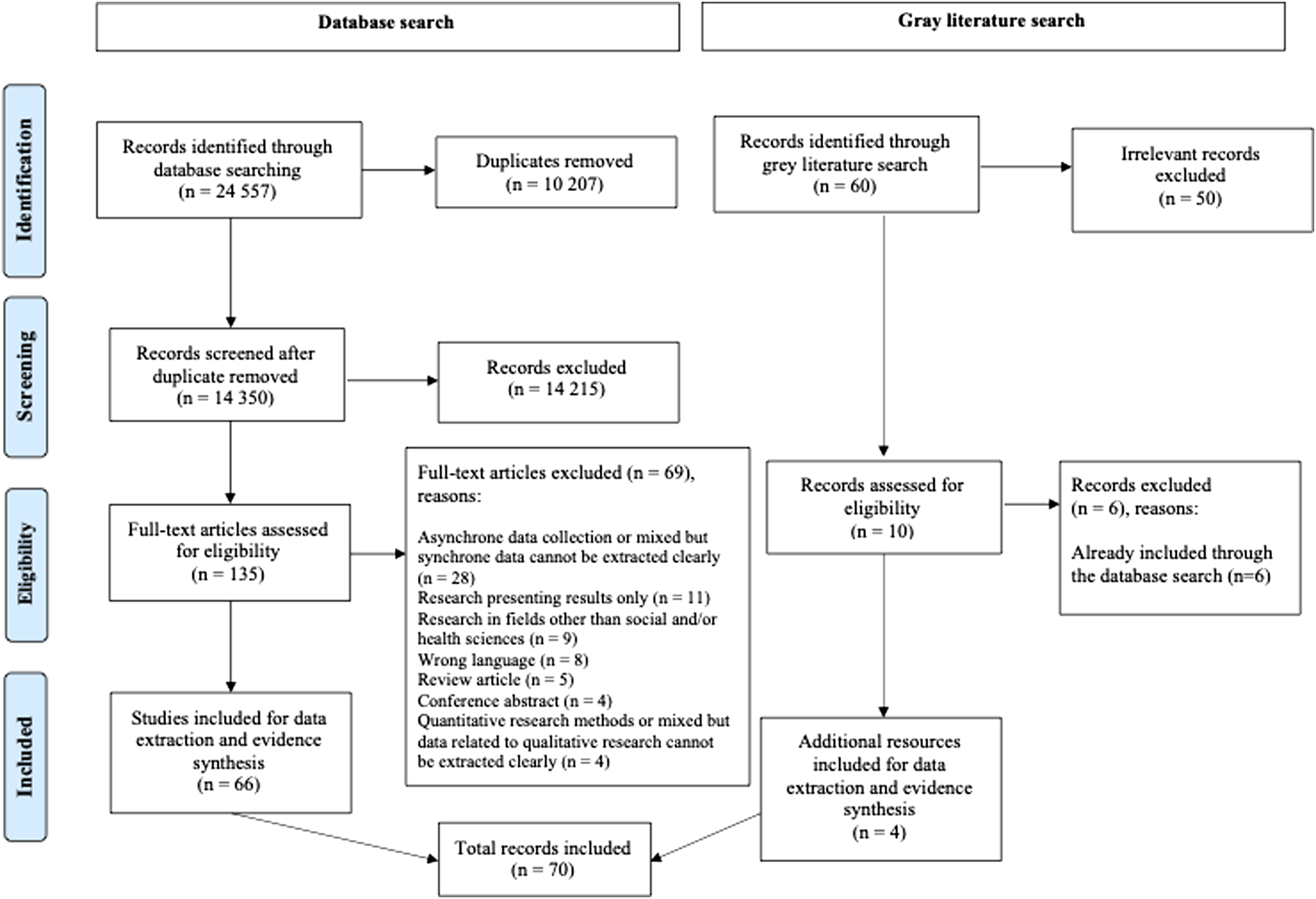
The gray literature search revealed 60 results, of which 10 were considered relevant based on our inclusion and exclusion criteria. Six of those results had previously been identified in the literature search using traditional databases, leaving four additional documents for data extraction. No additional references were found when reviewing the reference list of included studies or excluded reviews.
Summary of Included Studies
Characteristics of Included Studies.

Several articles included in our scoping review provided readers with checklists (Sipes et al., 2022; Wilkerson et al., 2014), procedural diagrams (Dodds & Hess, 2020; Dos Santos Marques et al., 2021; Lindau et al., 2022; Roberts, 2015), and sets of recommendations (Calvo-Valderrama et al., 2021; Irani, 2019; Saarijärvi & Bratt, 2021) based on the authors’ experience in collecting virtual synchronous qualitative data. For example, some authors provided readers with checklists to help decide whether to choose online or offline study design, interviews or focus groups, synchronous or asynchronous data collection, and other decision-making checklists (Wilkerson et al., 2014).
Summary of Results
The data extracted from the articles included in this scoping review have been organized into three broad categories: (1) benefits and challenges, (2) differences with in-person data collection, and (3) a proposed set of practical insights for before, during, and after data collection; these categories also include more specific subcategories. These three main categories were chosen because they allowed us to answer our research question: What are the main benefits, challenges, and practical insights of conducting virtual synchronous qualitative data collection? The subcategories emerged during data extraction and are used to present information logically and concisely, allowing readers to easily find their way through the text and quickly access the information they seek. As constructed, the readers can now get a better sense of the appropriateness of using a virtual format to conduct data collection within the first two sections before being provided with a set of practical insights in the third section.
Benefits and Challenges
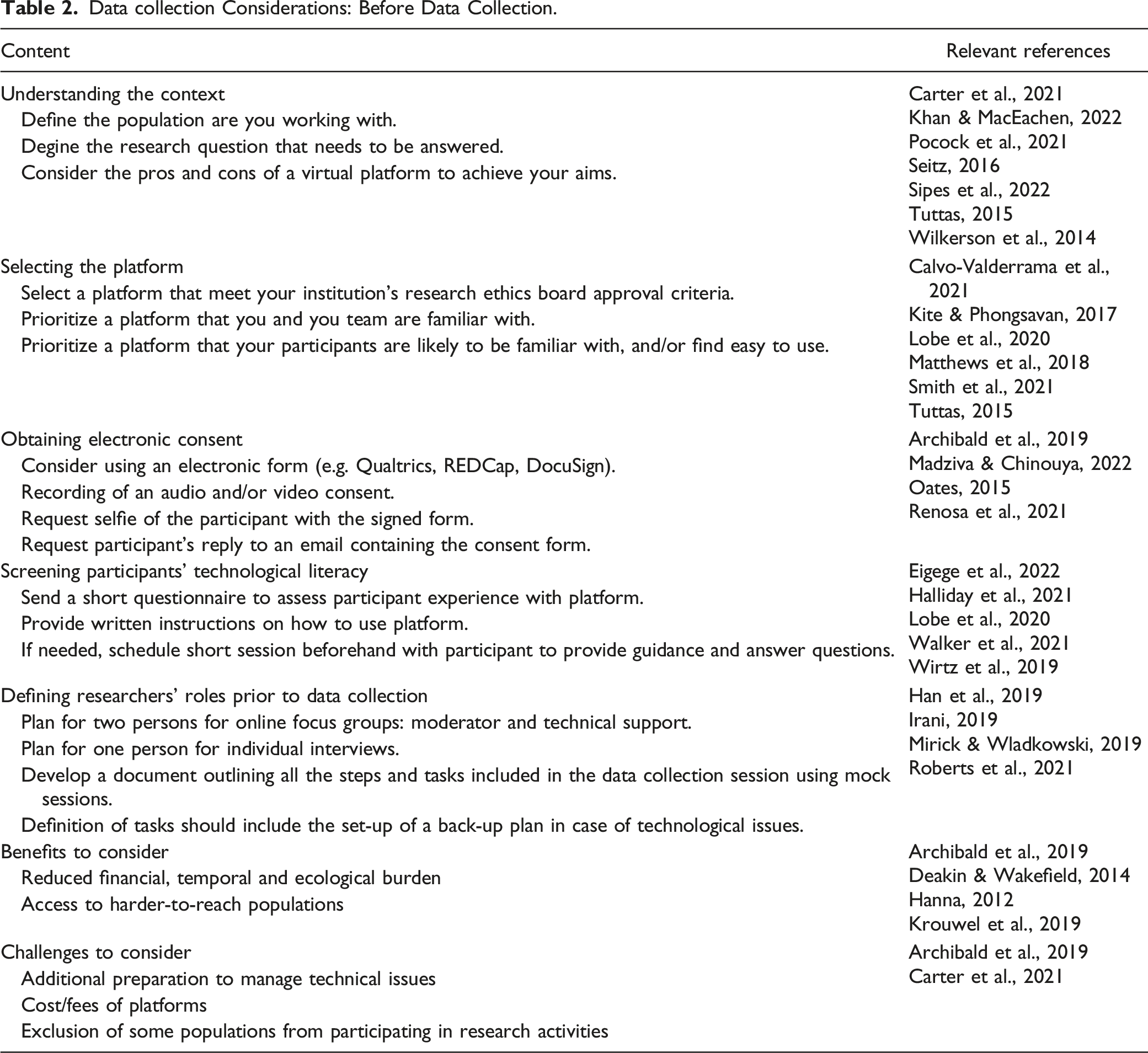
Data collection Considerations: Before Data Collection.
Data collection Considerations: During Data Collection.

Data collection Considerations: After Data Collection.

Benefits
Reduced financial, temporal, and ecological burden: Some of the major benefits associated with virtual synchronous data collection are that it is cost-effective, it requires less time, and it is associated with a limited ecological impact (Hanna, 2012; Krouwel et al., 2019).
Access to harder-to-reach populations: This type of data collection also allows access to harder-to-reach populations, defined as individuals living in remote areas, living with disabilities preventing them from easily taking part in on-site research activities, or belonging to communities that prefer to maintain a higher level of discretion (e.g. men having sex with men in a country where it is prohibited; Neville et al., 2016; Willis, 2012).
Data collection in the participant’s environment: This type of data collection method also might allow for a more comfortable environment (at home) for the participant than an unfamiliar room at the research centre (Seitz, 2016). It may also represent a non-intrusive and physically safe method of collecting data, especially in a period marked by the COVID-19 pandemic (Roberts et al., 2021). It also gives participants more control over their privacy by allowing them to decide whether to turn on their cameras or use a nickname or alias.
Quick and easy access to transcripts: Finally, an advantage of virtual synchronous qualitative data collection is the quick and easy access it gives researchers to transcripts following the session (Gray et al., 2020; Stover, 2012). Indeed, several videoconferencing platforms provide a text file or an audio or video file from which it is possible to quickly extract the text and proceed to data validation, such as member checking (i.e., transcriptions sent to participants so they can validate what they have said), and analysis.
Challenges
Additional preparation to manage technical issues: Although using virtual synchronous data collection can require less time from everyone involved, some authors have suggested that it can sometimes require more time on the part of researchers if they must learn how to use a videoconferencing platform and address technical issues encountered by both researchers and participants (Irani, 2019; Neville et al., 2016; Rupert et al., 2017). To prevent technical issues and ensure smooth data-collection sessions, researchers should adequately prepare beforehand and learn the intricacies of the videoconferencing platform they have chosen (Lindau et al., 2022; Pocock et al., 2021).
Cost/fees of platforms: In addition, some platforms require a fee to subscribe to the full version to access all the platform’s features. For example, a Zoom subscription allows the user to conduct surveys and does not subject scheduled meetings to a maximum time limit (40 minutes).
Exclusion of some populations from participating in research activities: Even though online data collection facilitates access to populations that are harder to reach (i.e., remote; Lo Iacono et al., 2016; Rupert et al., 2017) or vulnerable (e.g., men having sex with men in countries where this practice is discouraged; Neville et al., 2016), other population groups may find themselves excluded from research projects due to their lack of access to technology (e.g., individuals with lower socio-economic backgrounds or living in regions where internet access is not guaranteed) or simply their lack of knowledge of and comfort with the use of technology, as may be the case for some older people (Lo Iacono et al., 2016; Smith et al., 2021; Sullivan, 2013). Researchers should not, however, let these factors prevent them from including those populations and should, with careful advance planning, put strategies in place to facilitate their participation. Examples of such strategies include preparing explanatory documents and holding preparatory workshops, as well as temporarily providing technology or internet access to those who lack it (Aligato et al., 2021; Eigege et al., 2022; Walker, 2013).
Capturing non-verbal feedback: Virtual data collection can also make it harder for researchers to capture non-verbal feedback if the participant’s body is not entirely visible. To minimize the loss of non-verbal feedback, researchers should encourage participants to keep their cameras on and sit farther from the screen to widen the field of view and allow for a better appreciation of non-verbal cues (Chiumento et al., 2018; Smith et al., 2021). Interviewers should also be especially attentive to non-verbal cues exhibited by participants, such as moments of silence or uneasiness.
Reduced physical proximity: Due to the lack of close physical proximity to provide empathy and support, researchers should ensure the well-being of participants at the end of the meeting and in the following days, providing additional support resources as needed (Engward et al., 2022; Han et al., 2019; Melis et al., 2022).
Increased external distractions: Virtual methods of data collection may be associated with increased distractions (Oliffe et al., 2021), such as interruptions caused by pets or other family members. Some authors also reported that caretakers of small children were the most distracted participants in their online focus groups. To prevent those distractions, researchers should advise participants to choose a quiet room in which to settle during the meeting. Researchers should also choose a suitable time (when family members are less likely to require their help) to conduct data collection and remind participants to have only the videoconferencing platform open and close all other applications or browsers (Aligato et al., 2021; Irani, 2019; Seitz, 2016).
Confidentiality issues with cloud storage: There are also some issues of data breach and privacy with data from recordings on commercial videoconferencing platforms (Han et al., 2019; Pocock et al., 2021). These privacy issues are also amplified by the lack of control over the participants’ environment (Lo Iacono et al., 2016). Thus, following the session, researchers should immediately store the data on an external drive and delete it from the cloud and platform servers (Halliday et al., 2021). Recommendations regarding the participants’ environment, which will be covered in the practical insights section of this article, should also be given beforehand to ensure optimal levels of privacy during data collection (Pocock et al., 2021; Roberts et al., 2021; Smith et al., 2021).
Differences with In-Person Data Collection
When comparing online with face-to-face interviews, researchers noted that even though online interviews were shorter and contained fewer words, they still provided the same depth of discussion in terms of the number of themes addressed (Shapka et al., 2016). The same was true for online focus groups where the quantity of data was inferior online but equal to in-person in terms of quality (Kite & Phongsavan, 2017; Woodyatt et al., 2016). Conversely, although they may increase the ability to connect with participants who are geographically dispersed or unable to travel, online alternatives of data collection resulted in lower relational satisfaction for participants, which could be partly explained by a decreased sense of group belonging (Davies et al., 2020).
Practical Insights for Conducting Virtual Synchronous Qualitative Data Collection
Before Data Collection
Understanding the Context
Before selecting their platform and planning data collection, researchers should ensure that they understand the context in which they are doing their research and the population with whom they are working (Pocock et al., 2021). For example, participants taking part in research projects about sensitive topics might be wary of sharing information through web-based video-conference platforms (Seitz, 2016). As mentioned in the challenges section, the lack of physical proximity might also prevent researchers from providing adequate support and empathy to participants. Thus, virtual data collection might not be the most adequate means of collecting answers to some research questions (Khan & MacEachen, 2022). Researchers can use a checklist provided by other authors to decide whether they will opt for online or offline qualitative data collection (Wilkerson et al., 2014).
Selecting the Platform
Researchers should select a platform that meets their institution’s research ethics board’s approval criteria and with which they and the participants are comfortable working (Abrams et al., 2015; Calvo-Valderrama et al., 2021). Possible software platforms include but are not limited to: Adobe Connect, Apple FaceTime, Blackboard Collaborate, Facebook Messenger, GoToMeeting, Google Meet, Microsoft Teams, Skype, Webex by Cisco, and Zoom, to name a few of the most frequently used (Lobe et al., 2020; Smith et al., 2021). To facilitate platform selection, another author has suggested the following eight criteria to consider when choosing a platform with which to conduct a virtual interview and/or focus group: (1) the ability to accommodate up to 10 participants in the group; (2) the ability to run a focus group for up to 1.5 hours; (3) the ability to support real-time audio and full-motion video imaging; (4) the ability to support audio and video recording of the encounter; (5) the ability to restrict access to recordings to the research team; (6) the requirement of no more than moderate technical competency from participants; (7) no obligation to purchase and install the software; and (8) the provision of access to only invited parties to enter the meeting space (Tuttas, 2015).
Obtaining Electronic Consent
The findings from our scoping review did not identify major differences in the recruitment of participants in the context of virtual synchronous qualitative data collection compared with in-person data collection. Several key elements were highlighted, however, regarding ethical concerns that must be addressed when pivoting to virtual synchronous data-collection methods (Carter et al., 2021; Engward et al., 2022; Newman et al., 2021; Reñosa et al., 2021; Roberts, 2015; Varma et al., 2021). First, to obtain participants’ consent, researchers should use a method suitable to their context and convenient for the population they are trying to reach. To do so, they can use electronic forms hosted by secure web applications, such as Qualtrics, REDCap, or DocuSign (Carter et al., 2021; Halliday et al., 2021; Sharma et al., 2022). They can also record audio and/or video consent (Archibald et al., 2019; Oates, 2015), require that participants send a selfie with the signed form visible (Reñosa et al., 2021), or send the consent form as part of the email text and ask participants to consent by responding to the email with a declaration that they have read the consent form and agree to take part in the study (Madziva & Chinouya, 2022). Regarding focus groups specifically, consent forms should explicitly advise participants not to take pictures or videos of their screen showing other participants; they should also, however, be reminded that, as in any focus group, the facilitator cannot guarantee absolute confidentiality (Newman et al., 2021).
Screening Participants’ Technological Literacy
In addition, researchers should screen participants’ technological literacy beforehand in order to provide them with personalized instructions and guidance based on their comfort level with the technology (Engward et al., 2022; Walker et al., 2021; Wirtz et al., 2019). Instructions provided to participants beforehand can range from how to access the platform to ways to optimize privacy and confidentiality during the planned meeting and should be provided through a combination of text and screenshots (Wirtz et al., 2019). As for the researchers, blog entries and other resources have been created by the makers of Zoom to support videoconferencing events and their organizers. Those valuable resources can be shared with participants beforehand to facilitate their familiarization with the selected platform. If needed, researchers should proactively schedule short one-on-one sessions with participants to provide individualized guidance and answer any of their questions or concerns (Pocock et al., 2021; Santhosh et al., 2021; Walker et al., 2021).
Defining Researchers’ Roles Prior to Data Collection
According to the available recommendations, online focus group sessions should include at least two members of the research team, one serving as the moderator/facilitator and another one as the notetaker—but also, more importantly, as the one providing technical support to participants and ensuring that the session runs as smoothly as possible (Eigege et al., 2022; Roberts et al., 2021; Wirtz et al., 2019). On the other hand, just like in a face-to-face setting, the presence of a single research team member acting as both the interviewer and the technical support might be better suited to the context of an individual online interview. Researchers have suggested, and provided an example of, a document, that researchers should develop outlining all the steps and tasks included in their data-collection procedure to highlight the role of each member of the research team as well as all the key context-specific considerations (Roberts et al., 2021). To develop this document, researchers should use an iterative process in the form of mock data-collection sessions (Han et al., 2019; Irani, 2019; Roberts et al., 2021). In addition, researchers should ensure that they have planned for a backup solution in case of technological issues, such as conducting the interview on the phone instead of using a videoconferencing platform (Gray et al., 2020; Mirick & Wladkowski, 2019).
During Data Collection
Choosing the Number of Participants
When conducting virtual synchronous data collection through focus groups, researchers should aim for a lower number of participants per group (4–6) than during in-person focus groups in order to ensure a smooth process and dynamic interactions among all involved (Calvo-Valderrama et al., 2021; Carter et al., 2021; Dos Santos Marques et al., 2021; Kite & Phongsavan, 2017).
Choosing the Length of the Data-Collection Session
Virtual data-collection sessions should be scheduled to run a bit longer than face-to-face exchanges in case of technical issues or participants’ having trouble accessing the videoconference platform at the beginning of the session. An additional 15- to 30-min period prior to the start of data collection, depending on the size of the group, the platform used, and the participants’ profile, should be sufficient to ensure that all technological issues are resolved and the meeting can start on time (Saarijärvi & Bratt, 2021; Tuttas, 2015). For example, researchers should plan for extra time when running focus groups compared to interviews because of the higher number of participants who might require help with technological issues (Calvo-Valderrama et al., 2021; Kite & Phongsavan, 2017). Researchers could also consider involving participants in the planning of the session’s length so that it is acceptable to all (Santhosh et al., 2021).
Protecting Confidentiality
To maximize confidentiality, researchers should restrict platform access to invited participants only and promote the use of headsets during conversations as well as a neutral or virtual background (Abdul Rashid et al., 2021; Pocock et al., 2021; Roberts et al., 2021; Smith et al., 2021) depending on the platform used and the capacity of the participants’ computers. They should also allow each participant to choose to use either their real name or an alias during group discussions (Archibald et al., 2019; Deakin & Wakefield, 2014; Dos Santos Marques et al., 2021; Neville et al., 2016; Wirtz et al., 2019). Researchers should also encourage participants to set themselves up in a private and secure environment free of distractions and warn them about the confidentiality issues associated with using a public work computer when taking part in the virtual session (Carter et al., 2021; Neville et al., 2016; Pocock et al., 2021; Schlegel et al., 2021; Varma et al., 2021).
Walker et al. mentioned the following security features, which are specific to Zoom but also relevant to use with other platforms when possible: (1) the meeting should be password-protected; (2) researchers should use the waiting room option; (3) researchers should lock the meeting once everyone is connected; (4) researchers should disable chat between participants but preserve chat between participants and the whole group (Walker et al., 2021).
Completing Data Collection
Just as in face-to-face data collection, the moderator or interviewer must know the sequence of the session extremely well. This is especially true in a virtual context, where some elements contributing to a smooth data-collection process are out of the research team’s control and multiple unforeseen events may occur (Dos Santos Marques et al., 2021; Wirtz et al., 2019). The team member in charge of providing technical support must be aware of potential bugs and ways to effectively fix them (Valkonen et al., 2021). To facilitate the flow of conversation between a focus group’s participants, that person should also provide support to participants through the chat function to limit interruptions (Dodds & Hess, 2020). At the start of the session, especially in the context of a focus group, researchers should make use of visual support to present the purpose of the session, the sequence of events, the questions planned, and the role of each team member if applicable (Chiumento et al., 2018; Varma et al., 2021). Moreover, specifically for focus groups, researchers should ensure that the audio and video of every participant is working well at the start of the session, encourage participants to use the hand-raised function to indicate when they would like to interact, and request that participants mute themselves when not talking (Dos Santos Marques et al., 2021; Saarijärvi & Bratt, 2021).
Establishing Rapport
Finally, since physical proximity is impossible during remote data collection, researchers should ensure that they establish a rapport and trust with participants before, during, and after data collection, even if this means making time for informal discussions at the beginning and end of the session (Engward et al., 2022; Shamsuddin et al., 2021; Walker, 2013; Wong et al., 2021). These discussions may include information about the researcher and their background, participants’ general appreciation of the videoconference platform, or any other topic deemed relevant by all involved parties. Another strategy to establish rapport in the lead-up to the virtual session is for the researchers in charge of the interview or the focus group moderation to exchange several emails with the participant to present their roles and the virtual session’s main steps and objectives (Deakin & Wakefield, 2014; Lo Iacono et al., 2016; Valkonen et al., 2021).
After Data Collection
Taking the Time to Look Back
The wrap-up portion of virtual sessions represents a critical time. It allows the researchers and participants to reflect on their experience and ensure their well-being, especially when virtual sessions, whether individual interviews or focus groups, are carried out with a vulnerable population, such as older adults living alone (Melis et al., 2022) or individuals struggling with mental-health issues (Han et al., 2019), or broach sensitive topics (Pocock et al., 2021). Those moments of shared reflection are crucial to highlighting methodological issues that might have occurred during the whole process in order to improve future iterations of this data-collection method (Chiumento et al., 2018; Engward et al., 2022). To provide a safe and comfortable environment in which to do so, researchers should plan to discuss more informal topics following the session while also providing relevant resources, such as helplines or referral to clinical psychologists, if needed, and checking in with participants a couple of days later, especially if they come from a more vulnerable population, such as older adults living alone (Melis et al., 2022) or individuals with mental-health issues (Han et al., 2019).
Storing Data
When platforms offer the choice between local and cloud storage, researchers should consider selecting local storage to prevent unwanted access to data stored in the cloud. Free versions of publicly available platforms, such as Zoom, have been previously associated with security issues (Hasan & Hasan, 2022; Secara, 2020). Following discussions with participants, data should be saved on a secure portable device, such as a password-protected external hard drive, and deleted from the videoconferencing application after the session (Halliday et al., 2021). Researchers should also keep a backup audio file that allows them access to the verbal exchanges without compromising the participants’ confidentiality with video-recordings of their face and environment (Matthews et al., 2018).
Discussion
Theoretical Contributions
In qualitative research, it is important to stop and take a critical look at how we conduct our studies and, in particular, the methods we use to collect data. This scoping review has allowed us to do so regarding virtual synchronous qualitative data-collection methods. Our literature review aimed to provide a set of practical insights to researchers in the health and social-sciences fields wanting to use virtual synchronous qualitative data-collection methods as well as highlight their main benefits and challenges compared to in-person means of data collection. Currently, there are no guidelines available to help researchers conduct this kind of data collection. The findings presented in this article are based on the practical recommendations stemming from the experiences of other authors, such as Carter et al. (2021), Chiumento et al. (2018), Engward et al. (2022), Irani (2019), Lobe et al. (2020), and Santhosh et al. (2021) and initial frameworks suggested by Pocock et al. (2021), Salmons (2014), Tuttas (2015), and Wilkerson et al. (2014). We have contributed to the literature on the subject by summarizing the main benefits and challenges encountered by researchers completing virtual synchronous qualitative data collection and by providing a set of practical insights that can help plan and complete data collection for those interested in using that format.
Practical Implications
The results presented in the current scoping review provide researchers with a set of practical insights that they can use when undertaking virtual synchronous qualitative data collection within the health or social-sciences fields. Of course, researchers will need to adjust these recommended applications to best suit their specific contexts and the populations with whom they are working.
First, an important aspect worth mentioning is that, according to the articles analyzed in this review, online data collection does not seem to be associated with a decrease in the quality and quantity of data collected, making it an interesting alternative when the research context requires it. Several authors, however, recommend planning a longer session to allow time for managing technical issues and recommend forming smaller discussion groups gathering no more than 4–6 participants at one time compared with face-to-face focus groups. These recommendations may facilitate group moderation and ensure a smooth process.
Many platforms are available to support data collection. Therefore, researchers must take the time to identify their needs and the functionalities of potential platforms in order to make an informed choice. In addition, they should ensure that the chosen platform meets the criteria of their institution’s research ethics board. Another important aspect to consider when choosing a platform is its ease of use and researchers’ and participants’ familiarity with it.
As for their benefits, virtual methods of synchronous data collection are associated with reduced costs, ecological impact and time burden for both researchers and participants. They allow access to populations that are harder to reach with in-person means of data collection. They also allow for a more comfortable environment for participants, may be non-intrusive, and represent a physically safe method of collecting data, especially in a period marked by the COVID-19 pandemic, where physical and social distancing was encouraged and at times mandatory.
On the other hand, technical issues arising when using virtual means of data collection can be challenging and even lead to the loss of data. Non-verbal feedback and cues are also reduced, especially if the participant’s body is not entirely visible. The absence of physical proximity to provide support and empathy, privacy and confidentiality issues, and increased distractions may also represent new challenges that would not be as pronounced if data collection was done in person. Finally, some potential participants risk being excluded because of their lack of access to technology or their lack of confidence in using it.
Most of those challenges can be addressed by careful planning. This includes testing the platform beforehand, sending clear information to participants about how to use the platform and organize their environment during the meeting, clarifying the role of each researcher, allowing more time to conduct the meeting in the event that there are technical issues needing to be solved, and planning for participants’ emotional support if needed.
Suggestions for Future Research
Despite the sharp increase in publications reporting on virtual synchronous qualitative data collection, many key elements remain to be clarified. Even if virtual data collection allows us to reach people that face-to-face data collection does not, there are still groups of people excluded because of a lack of access to or familiarity with the technology. We still lack many solutions to facilitate access to all populations and mitigate equity issues. In addition, the rapid rise in the use of videoconferencing platforms, although very popular within the context of a pandemic, has brought to light many issues regarding virtual security and maintaining participants’ privacy. It is, therefore, necessary to better understand the available platforms’ flaws and establish robust measures to prevent them and ensure the confidentiality of exchanges. For example, based on one of the authors’ own experience, if participants are recruited through social media, a participant might try to take part in an interview twice, with different names (closed camera) or by changing their accent, or try to take part in a country-specific focus group when they are not from that country, especially when there is a financial incentive to participate. Therefore, researchers will need to think about these new imponderables and adjust their responses to these problems as well. Finally, strategies to facilitate the relationship between researchers and participants when exchanges are not done in person must be identified since authors have reported that the sense of group belonging, and the relational satisfaction of participants, was diminished during online focus groups compared to in-person groups (Davies et al., 2020). Ensuring better rapport among researchers and participants, as well as between participants, is essential to fostering an ideal environment for quality data collection.
To further improve the proposed practical insights in this scoping review, a diverse group of individuals should be involved, including experts in qualitative research and consumers from various cultural and socioeconomic backgrounds, as well as those who are vulnerable, isolated, and living with health issues, such as the elderly. This would ensure better planning of and reflexivity on the data-collection process, as well as integrating ethically based applications in guiding researchers considering moving toward virtual synchronous data collection. These recommendations should also be discussed with different consumers and experts to ensure their acceptability and feasibility. Since every research project is different depending on, among other factors, the topic investigated, the population studied, the context, and the research questions, researchers need access to an array of elements that allow them to make an informed decision about the best way to carry out data collection virtually. Input from diverse groups of people could help facilitate the researchers’ decision-making.
Strengths and Limitations
This is the first scoping review to aim to produce a comprehensive set of practical insights for researchers in the health and social-sciences fields wanting to use virtual synchronous data-collection methods, as well as to highlight their main benefits and challenges compared to in-person means of data collection. It was conducted following a rigorous methodological framework, including a database and gray-literature search. We also acknowledge some limitations. We did not perform a quality appraisal of the included studies. Still, even though it is suggested, evaluating the methodological quality of included studies in a scoping review is not required, according to the guidelines we have used (Tricco et al., 2018). We also limited the scope of our gray-literature search to the first 60 results in Google Advanced Search. Nonetheless, several themes included in the gray literature were also identified in our database search, supporting a comprehensive review. The 66 studies included in our database search, combined with the four additional records retrieved through our gray-literature search, allowed us to highlight practical insights for health and social-sciences researchers wanting to use virtual synchronous qualitative data-collection methods, as well as identify the main benefits and challenges compared to in-person means of data collection. We cannot, however, evaluate the effectiveness of these recommendations, since data regarding the effect of the methods used on data collection are still lacking.
Conclusion
This study contributes to the literature by summarizing the main benefits and challenges encountered by researchers conducting virtual synchronous qualitative data collection. Findings from this study also provide a set of practical insights that can help inform researchers about how to conduct virtual synchronous qualitative data collection based on other researchers’ prior experiences and the recommendations currently available in the literature. Future studies should focus on improving the proposed practical applications by including diverse groups of stakeholders comprising both qualitative research experts and consumers from various backgrounds, including those from harder-to-reach populations.
Supplemental Material
Supplemental Material - Virtual Synchronous Qualitative Data Collection Methods Used in Health and Social Sciences: A Scoping Review of Benefits, Challenges and Practical Insights
Supplemental Material for Virtual Synchronous Qualitative Data Collection Methods Used in Health and Social Sciences: A Scoping Review of Benefits, Challenges and Practical Insights by Marc-Olivier Dubé, Rabia Sabah Meziane, Anne Hudon, Sabrina Cavallo, Ingrid Verduyckt, and Diana Zidarov in International Journal of Qualitative Methods
Footnotes
Acknowledgements
The authors would like to acknowledge the help of Martine Gagnon and Thien Sa Hoang, librarians at Université Laval and Université de Montréal respectively. They assisted us in developing an effective search strategy for this scoping review.
Authors’ Contribution
All authors have made substantial contributions to either conception and design or analysis and interpretation of data, drafting or revision of the article, and have seen and given final approval of the submission.
Declaration of Conflicts of Interests
The author(s) declared no potential conflicts of interest with respect to the research, authorship, and/or publication of this article.
Funding
The author(s) disclosed receipt of the following financial support for the research, authorship, and/or publication of this article: Funding for this scoping review was provided by the Réseau Provincial de Recherche en Adaptation-Réadaptation (REPAR).

Supplemental Material
Supplemental material for this article is available online.
References
Supplementary Material
Please find the following supplemental material available below.
For Open Access articles published under a Creative Commons License, all supplemental material carries the same license as the article it is associated with.
For non-Open Access articles published, all supplemental material carries a non-exclusive license, and permission requests for re-use of supplemental material or any part of supplemental material shall be sent directly to the copyright owner as specified in the copyright notice associated with the article.
