




Abstract
Sexual and gender-based violence (SGBV) is a persistent concern in humanitarian contexts, yet there is a dearth of SGBV prevention and post-rape clinical care interventions tailored for refugee youth. Graphic medicine, the use of images and text such as in comic books, has been employed to depict lived experiences to promote health, wellbeing, and education. Comic books provide a low-cost, youth-friendly approach to health promotion that is accessible to varying literacy levels. Limited research, however, has described the process of developing graphic medicine approaches for SGBV prevention and sexual violence stigma reduction with and for refugee youth in humanitarian settings. To address this knowledge gap, this paper shares a Qualitative Comic Book Mapping approach, whereby qualitative data alongside theoretical and empirical SGBV literature informed the development of comic book scenarios with refugee youth aged 16-24 in Bidi Bidi refugee settlement, Uganda. Steps included conducting focus groups and in-depth individual interviews with 78 community members (youth, elders, service providers) in Bidi Bidi to explore SGBV lived experiences among refugee youth in Bidi Bidi and ideas for solutions to reduce SGBV and related stigma, in addition to improving post-rape care experiences and engagement. The Qualitative Comic Book Mapping approach involved: a) thematic analysis of qualitative data and identification of overarching themes; b) aligning qualitative themes with theories of change for SGBV prevention and stigma reduction; and c) co-developing comic book scenarios with refugee youth peer navigators and community experts to integrate SGBV prevention and stigma reduction theory with refugee youth lived experiences. The final comic book involved five youth-focused scenarios and was integrated in an intervention with refugee youth, including providing youth with a blank version of the comic book to complete themselves. We share how theoretically-informed comic books can be developed from qualitative data with refugee youth in a humanitarian setting.
Keywords
Introduction
Sexual and gender-based violence (SGBV) is a global health and human rights concern (Inter-Agency Standing Committee (IASC), 2015). SGBV involves the perpetration of sexual, physical, and/or emotional harm that is related to power disparities between social groups (e.g., men and women) (IASC, 2015). Of international concern is SGBV that is experienced by forcibly displaced persons, including refugees and asylum seekers. There were 89.3 million forcibly displaced persons at the end of 2021 (UNHCR, 2022a)—the largest number in history. Concerningly, one systemic review found that across 14 different countries, 21% of refugee or forcibly displaced women had experienced some form of sexual violence, however these statistics may be underrepresented due to sexual violence stigma (Vu et al., 2014).
SGBV harms health and well-being, and survivors experience both short and long-term impacts including physical injuries, mental health challenges, sexually transmitted infections, unplanned and unwanted pregnancies, stigma, and the breakdown of familial and/or community relationships and supports (IASC, 2015). Refugees are vulnerable to experiencing SGBV both during migration and after settling within their host country (Liebling et al., 2020). Uganda is a relevant context to understand and address SGBV among refugee and displaced persons as the largest refugee hosting nation in Africa, and the third largest globally (UNHCR, 2022a). Uganda hosts over 1.4 million refugees and asylum seekers, predominantly from South Sudan (62%) (UNHCR, 2020a). For Sudanese refugees on their journey to Ugandan refugee settlements, SGBV has been described as a “weapon of conflict,” impacting all genders (Liebling et al., 2020). Located in Uganda, in close proximity to the South Sudanese border, Bidi Bidi refugee settlement hosts over 190,000 refugees from South Sudan as of December 2022, and is among the largest refugee camps worldwide (UNHCR, 2022b).
There is an critical need to address SGBV prevention and post-rape care in humanitarian settings with adolescents and youth specifically in low and middle-income countries (LMIC) (Singh, Aryasinghe, et al., 2018a; Singh, Smith, et al., 2018b). A systematic review of SGBV programs and interventions in humanitarian settings found that programs which involved the collaboration of refugees in the design, or engaged the community during facilitation, may produce more effective strategies to reduce SGBV and increase SGBV awareness (Robbers & Morgan, 2017). Yet, specific experiences of adolescents and youth in humanitarian settings regarding SGBV prevention and post-rape clinical care are particularly understudied in LMIC and warrant urgent attention (Singh, Aryasinghe, et al., 2018a; Singh, Smith, et al., 2018b).
Graphic medicine refers to a medium that uses the interplay of pictures and text to portray health-based stories and experiences, such as comic books (Williams, 2013). Comic books have been used for health professional training, public education, as well as patient support and community building (Green & Myers, 2010a) to represent lived experiences of various health concerns, including HIV (Obare et al., 2013), epilepsy (Tekle-Haimanot et al., 2016), and depression (Unger et al., 2013). Educational health-based comic books have been used to improve health-related behaviors and/or knowledge among youth related to sexual and reproductive health and family planning (Speizer et al., 2018), HPV vaccination (Katz et al., 2014), and HIV testing (Obare et al., 2013). Graphic medicine is a unique medium whereby, according to Green and Myers (2010a) “powerful visual messages convey immediate visceral understanding in ways that conventional texts cannot” (p. 574). Readers are able to gain insight into both spoken and internal character narratives through the use of speech and thought bubbles, which can enrich insight into emotionally intricate experiences for readers who may not be familiar with the health issue and/or its impacts, while also providing representation and comfort for readers sharing similar circumstances (Williams, 2012). For readers without lived experience of the comic book subject matter, the content conveyed through the images and text can help to build empathy and compassion towards persons experiencing a particular health issue (McNicol, 2017).
While not specifically applied with refugee youth regarding SGBV prevention and post-rape care, other graphic medicine studies have used comic books with youth to address stigmatized topics and health practices. For instance, a comic book on HIV shared with school-aged youth in Kenya was found to decrease HIV-related stigma, and youth reported improved attitudes and wanting to be more inclusive towards other youth living with HIV (Obare et al., 2013). In another example, the Shujaaz comic book explored topics such as pregnancy, risk-taking, relationships, and economic behaviours, and was inclusive to the language and issues relevant to urban Kenyan youth (Speizer et al., 2018). Exposure to the Shujaaz comic among Kenyan girls aged 15-19 was associated with delayed pregnancy or first sexual experience (Speizer et al., 2018). In terms of methodology, the delivery of health promotion education through a comic book format is appropriate for youth populations (Katz et al., 2014; Obare et al., 2013; Speizer et al., 2018; Tekle-Haimanot et al., 2016), low-cost, visually appealing (Krasnoryadtseva et al., 2020), and accommodates varying literacy levels. Katz et al. engaged parents and their adolescents in providing feedback regarding a human papillomavirus (HPV) vaccine comic book tailored for adolescents (Katz et al., 2014), and Obare collected feedback on comic book colour, content, and language from youth participating in school-based workshops on HIV (Obare et al., 2013). There appears to be knowledge gaps regarding the engagement of youth in creating the focal content for comic books, particularly with refugee youth in humanitarian settings.
Graphic medicine, and comic book approaches specifically, offer great potential for SGBV prevention, sexual violence stigma reduction, and post-rape care education with refugee youth. The multiple opportunities to convey information and feelings, such as through thought and text bubbles, and images and narration, can be an impactful medium to share traumatic lived experiences, such as sexual assault (Donovan & Ustundag, 2017; Green & Myers, 2010a). Comics can speak to the shared oppressive experiences of marginalized groups, such as women and sexual assault survivors, and provide a forum to explore social justice issues (Donovan & Ustundag, 2017). For example, students from the Democratic Republic of the Congo who read a comic about human trafficking were able to build empathy, reflect on the subject matter, and conceptualize possible solutions for the issue (Wong et al., 2020). Graphic medicine has also been used among healthcare providers as a way of providing health-based information and disseminating medical knowledge to patients (Green & Myers, 2010; Waite, 2019). Further, comic books may be a promising tool for educating health professionals, such as teaching patient interaction skills (Green & Myers, 2010). It is critical to engage youth in a meaningful way when developing violence prevention strategies, including comic books, to ensure the medium and content are useful, engaging, relevant, and responsive to youth needs and priorities (Axford et al., 2023).
As there is limited attention to the use of qualitative findings and theory in developing comic books for SGBV prevention, post-rape care, and reducing sexual violence stigma in humanitarian settings, we contribute to this knowledge base by sharing methodological details of a community-based research study ‘Ngutulu Kagwero (Agents of Change)’ (Logie, Okumu, et al., 2021b). This paper discusses the use of qualitative methods to develop a theoretically-informed comic book for mobilizing knowledge on lived experiences of SGBV among refugee youth in Bidi Bidi refugee settlement, Uganda.
Study Context
Our approach, which we refer to as ‘Qualitative Comic Book Mapping,’ aimed to create a collective narrative about SGBV experiences among refugee youth, including sexual violence stigma and youth-friendly approaches for post-rape care, from a diverse sample of community members from Bidi Bidi Refugee Settlement, with a particular emphasis on refugee youth lived experiences. This multi-method approach included qualitative data collection (focus groups, in-depth interviews) with refugee youth, including sexual violence survivors, as well as in-depth interviews with healthcare providers, refugee elders, and police. After conducting data analysis, we mapped findings onto theoretical literature regarding SGBV prevention and sexual violence stigma reduction to create comic book scenarios. We then created blank versions of the comic book, and the completed comic books and blank versions were implemented as a component of an intervention for increasing SGBV prevention and post-rape care knowledge and acceptance, and sexual violence stigma reduction. The protocol for our participatory comic intervention, which was part of the Ngutulu Kagwero (‘Agents of Change’ in Bari) pilot study is detailed elsewhere (Logie, Okumu, et al., 2021b). In brief, young refugees (age 16–24) participated in workshops that involved content on sexual violence stigma, bystander practices for SGBV prevention, and post-exposure prophylaxis, and reviewed and discussed the content of the SGBV comic books (Logie, Okumu, et al., 2021b). Main findings from the workshop demonstrated increased PEP and post-rape care knowledge, bystander and coping skills, and reduced sexual violence stigma among refugee youth participants (Logie et al., 2022).
Existing comics about refugee lived experiences tend not to be situated within humanitarian settings or refugee settlements and/or do not involve the participation of refugee groups residing within these contexts (Humphrey, 2018; Vassiloudi, 2019). Thus, our methodology is unique as the comic book scenarios are situated (both the content and visuals) within Bidi Bidi, reflect qualitative findings from a range of stakeholders, and involved the participation of community members in their creation. To create accurate and culturally relevant depictions of SGBV experiences in Bidi Bidi, and to utilize the existing strengths of the community to create SGBV solutions, our comic book was created with and for refugee youth living in Bidi Bidi with the meaningful engagement of community-based collaborators working in Bidi Bidi, a team of refugee youth peer navigators, and consultations with refugee youth, refugee elders, healthcare providers and police officers in Bidi Bidi.
This paper aims to provide methodological details about the Qualitative Comic Book Mapping approach we used to design a comic book as part of SGBV prevention and sexual violence stigma reduction intervention with refugee youth in Bidi Bidi. This participatory comic book approach is an example of participatory visual research methods, a study design that has been widely used—including with newcomer children (Brown, 2020) and war-affected children (Green, 2019)—to provide opportunities for young people to communicate complex emotions, increase research engagement, and build confidence and self-awareness. Participatory visual methods also facilitate research engagement that moves beyond framing young people as passive recipients of research, to active agents and creators of knowledge (Green, 2019). We believe the insights and methods from the Ngutulu Kagwero study design could be selectively adapted and used by other researchers interested in participatory graphic medicine approaches to SGBV with youth, and other health and social issues. Our study was guided by intersectional stigma theory (Berger, 2010; Sievwright et al., 2022), rooted in Black feminism (Bowleg, 2012; Combahee River Collective, 1995; Crenshaw, 1991), which posits that “systems of power, privilege and oppression intersect to affect individual experiences and fuel stigma” (p. S356) (Sievwright et al., 2022). Intersectional stigma approaches also endeavour to challenge inequity, engage communities meaningfully in creating solutions, and build on collective efficacy and resistance to intersecting inequities (Sievwright et al., 2022).
Ngutulu Kagwero (‘Agents of Change’ in Bari) Overarching Study Design
The study was conducted in Zone 3 of Bidi Bidi refugee settlement, located within Yumbe district in northwestern Uganda. Bidi Bidi hosts over 190,000 refugees from South Sudan (UNHCR, 2020). The population of Bidi Bidi is compromised predominantly of women and children (86%), however, 25% of the population are youth aged 15-24 (UNHCR, 2022b). In terms of SGBV experiences, of the 4452 reported SGBV cases in Bidi Bidi during 2019, nearly a third were physical assault, and emotional/psychological abuse and rape each accounted for approximately a quarter of cases (UNHCR, 2020b).
This community-based project used multiple qualitative methods to inform comic book design. Peer navigators (n= 8; young women, n = 4; young men, n = 4), who are refugee community members and included survivors of SGBV, assisted with the recruitment of refugee youth to participate in focus groups, and refugee youth, elders, healthcare providers, and police officers to participate in in-depth individual interviews (IDI). Peer driven and convenience sampling were used during the recruitment process, where participants would refer others in their social networks to participate within the study, which can be a useful sampling strategy for difficult to locate populations, such as survivors of SGBV (Salganik & Heckathorn, 2004).
The inclusion criteria of focus group and IDI participants included 1) residing and/or providing services in the Bidi Bidi refugee settlement; 2) identifying as a refugee or forcibly displaced person (for youth and elder participants); 3) ability to provide informed consent; 4) ability to speak Juba Arabic, Bari, or English; 5) identifying as a survivor of SGBV (for youth IDI participants); and 6) meeting the age requirement for the participant group (16–24 years old for youth, over 18 years old for police officers and healthcare providers, and over 50 years old for elders, or identified by others in the community as an elder). The inclusion of youth, elders, and healthcare providers within focus groups and IDI permitted exploration of similar and different perspectives on SGBV topics based on age, lived experience, and profession. Within the Ugandan setting, elders are respected members of the community, and have the potential to provide traditional knowledge and wisdom. Additionally, including healthcare providers allowed for insights on the experience of serving the community, including the facilitators and barriers to service provision, whereas youth and elders would only be able to comment on healthcare from a service recipient perspective.
Focus groups and IDIs were conducted in Juba Arabic, Bari, and/or English. Youth peer navigators spoke the study languages and were the facilitators of the focus groups and IDIs. The peer navigators were able to converse with participants in multiple languages during focus groups, depending on the language needs of the participants. Focus group and IDI transcripts were transcribed and translated to English by trained translators who had strong proficiency in the study languages. All peer navigators and translators received training on research ethics, which included training on maintaining confidentiality. A confidentiality agreement was signed by all study personnel.
The completed comic book was pilot tested in a full day workshop with refugee youth aged 16-24 living in Bidi Bidi. The methods and findings of the SGBV prevention intervention have been detailed elsewhere (Logie, Okumu, et al., 2021b; Logie et al., 2022). In brief, intervention aims were to reduce sexual violence stigma, improve bystander responses for reducing SGBV, and improve knowledge and access to post-exposure prophylaxis—a key component of post-rape clinical care.
Qualitative Comic Book Mapping Process
Step 1: Focus Groups and In-depth Individual Interviews
Sharing interview data with the target audience for future programming has been used in other settings to inform the creation and content for comic-style workshop materials (Darnhofer, 2018). In a similar approach, in our study, participants (n = 48) were engaged across six focus groups: 3 focus groups were conducted with young women and 3 with young men. In-depth individual interviews (IDI) were conducted with youth (n = 12), elders (n = 8), and service providers (n = 10), which included both healthcare providers (n = 8) and police officers (n = 2). Focus groups and interviews were one hour in duration and facilitated by trained research assistants.
The focus groups and IDI aimed to understand perceptions of: 1) the landscape of SGBV within Bidi Bidi; 2) experiences of SGBV survivors within the community, with a focus on adolescents and youth; and 3) suggestions for what could be done to reduce SGBV and its impacts in the community. A sample of questions capturing these experiences include, “What is the situation of SGBV like in Bidi Bidi settlement? Can you give examples of what SGBV might look like in your community?”, “What are some challenges that survivors of SGBV face?”, and “How can these [violence prevention and survivor support] efforts be improved?” Healthcare providers were also asked about the process for seeking post-rape clinical care and what can be changed, with the questions “What kinds of things might make survivors more likely to look for or use services?” and “What might be some ways to improve access or remove those barriers for seeking healthcare among survivors of SGBV?” All focus groups and interviews were digitially recorded, transcribed verbatim, and then translated to English.
Step 2: Qualitative Analysis
The focus group and IDI data were analyzed using thematic analysis (Braun & Clarke, 2006). Thematic analysis is a six-step process beginning with the extensive, and repeated, review of qualitative data. In our study this included transcripts of the focus group and IDI translated into English. Our transcripts were intensively reviewed by at least two researchers from study teams in Canada (University of Toronto) and Uganda (Uganda Refugee and Disaster Management Council). The unique perspectives researchers brought from the two teams helped to mitigate bias during analyses, while also ensuring accurate and culturally relevant understandings of the transcript materials informed by insights from the Ugandan research team. Following transcript review, the researchers independently began initial coding the transcripts, and once completed, reviewed the codes for themes and subthemes. Data analysis by multiple investigators helped to triangulate findings and to promote validity and reliability. Discrepancies in coding and interpretation were discussed and resolved by the researchers, and member checking was completed by the Uganda study team. The researchers reviewed the identified themes and subthemes, and recoded excerpts as necessary. Once themes and subthemes were selected, the researchers analyzed the data to identify a story narrative that spoke to the dominant experiences of SGBV and post-rape care experiences among youth in Bidi Bidi.
As thematic analyses includes both inductive and deductive analyses, in addition to exploring emergent findings in the data, analyses were also informed by our guiding intersectional stigma theoretical framework (Berger, 2010; Sievwright et al., 2022). For instance, this meant that we paid particular attention to stigma and devaluation of sexual violence survivors, and how this may be shaped by gender norms, age, and other axes of social positionality. For instance, we found narratives that discussed the particular ways that sexual violence stigma operated to shame and blame survivors who were girls and women, while simultaneously silencing and erasing experiences of survivors who were boys and men. We also noted the ways that people resisted sexual violence stigma and supported one another, reflecting the importance of acknowledging social cohesion and stigma resistance in intersectional stigma analyses (Berger, 2010; Logie, Earnshaw, et al., 2021a; Sievwright et al., 2022).
Step 3: Developing Comic Book Scenarios
Following thematic analysis, comic book scenarios were designed based on themes identified in the focus groups and IDI data. Broadly, major overarching themes identified in the qualitative data by each stakeholder group included various barriers to post-rape care that included the disclosure of SGBV survivor identities throughout the community by formal (e.g., healthcare providers) and informal (e.g., peers, community members) support systems, which in turn inhibited support-seeking practices among young survivors, increased stigma, and exacerbated concerns regarding forced/early marriage of girls and young women following SGBV. The comic book scenario development thus aimed to illustrate the negative impact that these experiences can have on SGBV survivors, with the hope that the scenarios would deepen understanding of the experiences and challenges faced by survivors, reduce negative attitudes towards SGBV survivors, and role model how stigma can be addressed within the community. Additionally, themes from the data reflecting facilitators to accessing post-rape care were interwoven into various comic book scenarios, including social support from peers, family, and the community.
In total, we created five youth-centered comic book scenarios to reflect these key thematic findings. To confirm the relevance of the draft comic scenarios with the lived experiences of youth in Bidi Bidi, the comic scenarios were shared with the refugee community-partner Uganda Refugee Disaster and Management Council (URDMC). URDMC then engaged a total of 17 community members in reviewing and providing feedback on the comic images and text. These reviewers included refugee youth peer navigators (n = 8), refugee elders (n = 3), healthcare providers (n = 4), and police officers (n = 2) in Bidi Bidi. These community members provided feedback on each scenario to URDMC, and all suggestions were adapted into the final version of the comic book. The community members also helped name the comic book, Agents of Change, and its protagonist, Kiden. The Agents of Change comic book is available in three languages: English, Bari (Ngutulu Kagwero), and Juba Arabic (Nasi Albigeyero).
Each comic scenario was also theoretically informed by existing research on SGBV to help meet our study aims to generate a comic book that drew from lived experiences and could be used in an intervention to reduce SGBV, reduce sexual violence stigma, and to increase engagement with post-rape clinical care. To decrease sexual violence stigma and improve attitudes toward SGBV survivors, comic scenario development was grounded in the Community Dialogues SGBV prevention approaches developed by Tearfund Democratic Republic of Congo (Deepan, 2016) and Transforming Masculinities (Deepan, 2017). The Community Dialogues intervention model is tailored for men and women, and helps to address sexual violence stigma by exploring concepts such as gender power disparities and inequitable gender norms and how they contribute to the perpetration of SGBV against women within communities, and how community members can take action to challenge this violence (Deepan, 2016). Further, the Transforming Masculinities intervention encourages the participation of men in anti-SGBV initiatives by addressing harmful attitudes and holding men accountable for behaviours that contribute to SGBV in a community-centred way (Deepan, 2017). To adapt the Tearfund DRC interventions for our comic book, we removed the faith-based component of the intervention approaches to better suit the religious diversity of our study sample.
In addition, to develop an empowering, action-oriented comic book, transformative justice ideologies were incorporated, which included the importance of addressing abusive actions collectively as a community, transforming the underlying social conditions and beliefs that allow violence to occur, and providing support for both perpetrators and survivors throughout the reparation or healing process (Kershnar et al., 2007). Lastly, improving bystander behaviours includes providing individuals with information and skills on when and how to safely engage in SGBV prevention; for this component we drew from the Hollaback’s (now known as Right to Be) Bystander Intervention, a model that provides the “5 D” strategy (Distract, Delegate, Delay, Document, and Direct) for intervening when witnessing harassment (Right to Be, 2022).
Step 4: Qualitative Comic Book Mapping
Based on the thematic findings regarding refugee youth experiences of SGBV and related stigma, five overarching themes were identified and used to guide the creation of the comic book scenarios. Each theme, and its associated comic book scenario, were grounded in relevant theoretical and/or conceptual approaches. These scenarios span contexts of preventing violence, interrupting violence, and supporting and responding to someone who has experienced violence which aligns with primary, secondary, and tertiary prevention efforts, respectively (McMahon et al., 2011). Further, the content of the scenarios incorporates themes falling on both ends of the violence continuum with both overt (e.g., rape) and covert (e.g., harassment and negative survivor attitudes) sexual violence behaviours being depicted (McMahon et al., 2011).
Theme one: Stigma Toward Sexual Violence Survivors and the Important Role of Peer Support
The first theme identified was the experience of shame and stigmatization of youth who experienced SGBV, including that certain survivors, such as men, are often hidden in representations of SGBV survivors. In one interview, a young woman (age 21) discussed marginalization of women who are SGBV survivors: “Women, girls, and children are the most vulnerable because the community marginalizes these three categories of people. All these people’s opinions are never taken seriously in the community.” In addition, one young man (age 21) reported on the experience of men who are SGBV survivors: “Boys will not be believed by the community.”
To depict these narratives within the comic book, our opening scene illustrates sexual violence experiences in Bidi Bidi linked with collecting firewood from far distances, and how hard it is to talk about sexual violence when it is experienced by boys/men. Underlying frameworks of intersectional violence (Logie et al., 2017) and resource scarcity (Wutich & Brewis, 2014) inform this scenario. Intersectional violence helps with framing: a) the higher prevalence and risk for SGBV in Bidi Bidi among girls and women, in contexts of gender inequitable norms and poverty; and b) the ways in which gender norms increase sexual violence stigma toward boys and men who are sexual violence survivors. Resource scarcity conceptualizes social stressors linked with insufficient resources, including insufficient firewood, that could lead to additional time and distance for collecting firewood and in turn increase SGBV exposure.
Additionally, narratives illustrated peer support as a facilitator for youth to engage in post-rape clinical care. For example, a youth (IDI, young man, age 17) stated that “friends should help survivors pursue the case with police and advising to go to the health facility for examination and treatment,”- and a young woman (FG, age 19) explained the necessity of peer-topeer advice for survivors: “the same age group can come and take care of their friend and keep advising and supporting her instead of rejecting her.”
From this theme we also created the Peer Support scenario which shows how youth can provide support after learning that their friend is a survivor of SGBV. The scenario demonstrates positive interactions between two peers as they engage in conversations about SGBV incidence, exchange words of encouragement, and advocate for the importance of accessing supportive services such as health care and the police. This scenario is informed by the Hollaback’s 5D model for bystander intervention (Hollaback, n.d.), such as the “delay” strategy. This scenario provides context to inform the ways that community members can provide support to survivors by reducing isolation, being empathetic, encouraging access to medical and police services, and maintaining confidentiality about SGBV disclosure.
Theme two: Harms of Community and Peer Gossip and the Importance of Bystander Interventions
Qualitative narratives illustrated the negative impact that community and peer gossip have on survivors of SGBV. One young man (IDI, age 21) explained that “the community isolates survivors and gossips about them and abusing them saying they have no future and are carrying bastard children. In her case, the community especially her friends distanced themselves from her calling her a curse and a prostitute.” Another youth explained the abuse that survivors can experience within the community: “People abuse you that you are a Malaya-prostitute, even such girls are bullied at school by boys. If you are raped on your way from a disco when you are poorly dressed people abuse and even spit on you” (IDI, young man, age 21).
To depict the harms of community and peer gossip, we created the Peer Gossip scenario which presents the harm that gossiping about SGBV can have on survivors and the broader community in general (Figure 1). The comic provides examples of how peers can use bystander interventions to dismantle stigmatizing narratives about SGBV to promote more supportive communities. In this scenario, we adapted the Hollaback Bystander Model to extend their definition of “harassment” to include gossip which intends to victimize, isolate, and demean a survivor of violence. From Hollaback’s 5D model for bystander intervention (Hollaback, n.d.), Kiden’s friend demonstrates how to appropriately use the “direct” strategy to addresses the harm of gossip, while also confronting stigmatizing and victim-blaming narratives about survivors of violence in general. The “delay” strategy was also incorporated into this comic as Kiden’s friend enlisted help from peers to support Kiden, stating that “she needs our support now more than ever.” Peer gossip on sexual violence comic scenario.
Theme three: Resisting Sexual Violence Stigma
Our third theme presents the importance of resisting stigma experienced by SGBV survivors, including perspectives of who can be a victim of SGBV. The qualitative data revealed that in Bidi Bidi, SGBV survivors included both women and men, and those of all ages, including children and elders. Community engagement and counselling skills were described as one way to resist SGBV stigma: “some community leaders, elders and religious leaders should be trained in counselling skills. There should be frequent community dialogues to improve knowledge of danger of SGBV in the community and solutions engaging everyone” (IDI, Elder woman, age 59).
We created the What Defines Us scenario that challenges beliefs that there is a certain “type” of individual who is a SGBV survivor. This depicts a range of survivors, including different genders, community roles, ages, marital statuses, religions, and forms of dress. Being a survivor of violence is a label that may feel limiting for some as a survivor is often equated to being “weak.” Instead, this comic shows how being a survivor is only one factor of an individual’s identity, and that survivors are both strong and resilient. This comic book scenario is grounded in the Community Dialogues intervention (Deepan, 2016) “Act like a Women/Act like a Man” approach to understanding gender norms was implemented into this comic. The reflective activity discusses how perceptions of masculinity being conceptualized as toughness and not needing help, in contrast to femininity being viewed as weak and dependent, are limiting, harmful, and have negative repercussions all genders, including SGBV survivors (Deepan, 2016). In this scenario, we aimed to confront gendered ideologies around perceptions of survivors and provide representation for diverse survivor identities.
Theme four: Men’s Engagement in SGBV Prevention
Transcripts illustrated the role of men as key actors in SGBV prevention. For example, one elder explained, “I also think in my neighbourhood 90% of the SGBV is men versus women. I advise that all focus should be mostly on men on how to stop violence against women, not only to inform the women about their rights. It should be balanced effort for both” (IDI, Elder woman, age 62). Similarly, a health care provider (IDI, Clinical Officer, age 34) stated that “There is need for male involvement on projects that empower women which makes the male to usually feel left out.”
In our comic book, the Positive Masculinities scenario (Figure 2) depicts how men who perpetrate harm can be held accountable in community-centred, community-building ways, and how men can be part of the solution by intervening when SBGV is instigated by known members of the community. Tearfund DRC’s Transforming Masculinities intervention (Deepan, 2017) and transformative justice approaches were incorporated into our Positive Masculinities scenario. Positive masculinities refers to the participation of men in prosocial behaviours in relationships, understanding gendered power disparities, and men engaging in gender equity efforts both in the community and at home (Deepan, 2017). Transformative justice models (2007) discuss the need for communities to respond to known incidences of violence. Addressing violence is viewed as a shared responsibility of community members, and intervention takes the form of challenging power that contributes to violence and holding perpetrators of violence accountable by providing education and enhancing understanding about the impacts of violence, confronting the attitudes that contribute to violence, and enlisting the help of bystanders in these efforts (Kershnar et al., 2007). Positive masculinities comic scenario.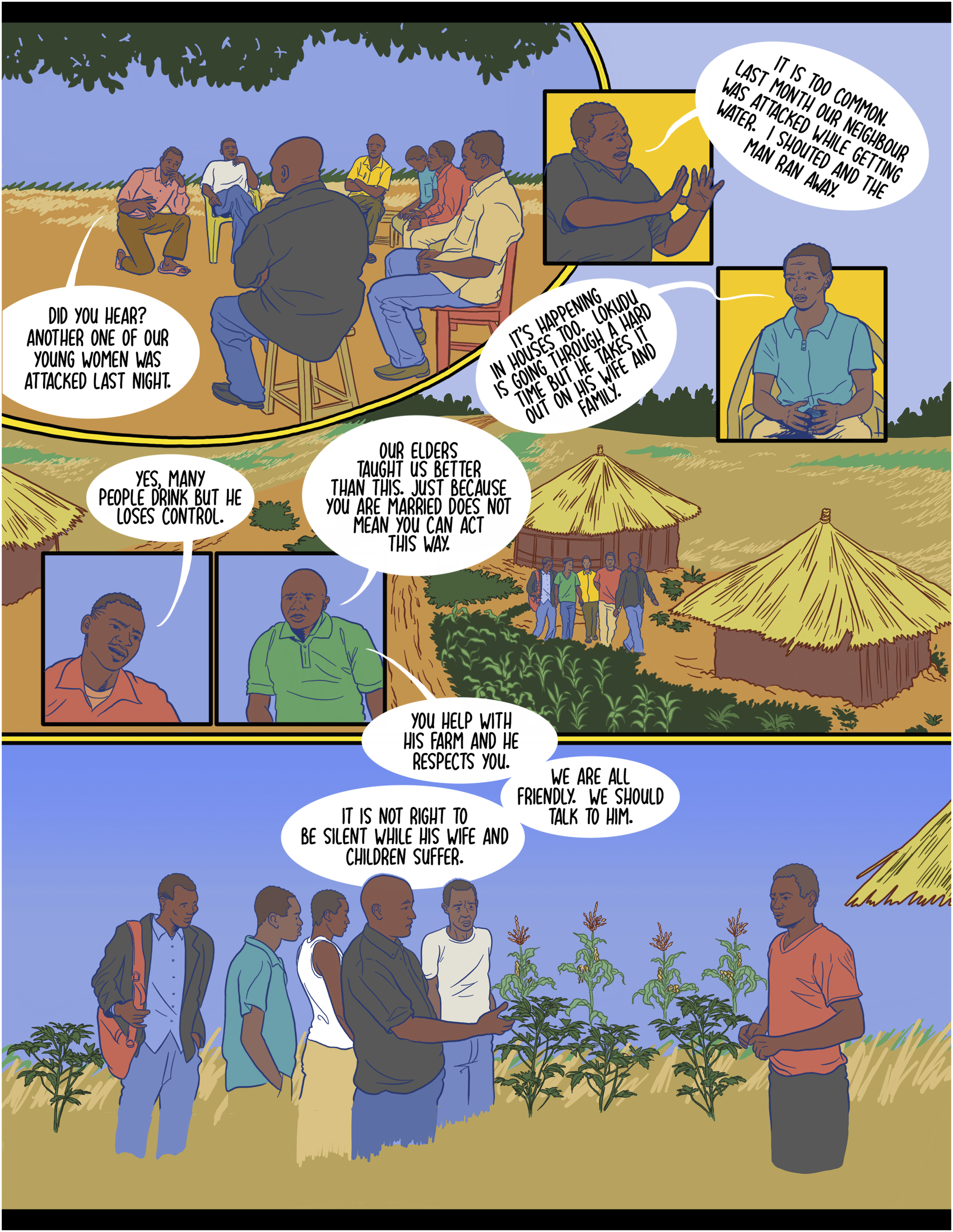
Theme five: Challenging Norms of Forced, Early and Child Marriage of SGBV Survivors
Our final theme illustrates forced and early marriage as a consequence of SGBV among girl and young women survivors. Interviews and focus groups depicted the prevalence of forced and early marriage among young women following SGBV, and stressed the need to challenge these norms. For example, one elder suggested that “elderly and religious leaders should be engaged in the fight such that traditional behaviours…such as discouraging young girls to go for marriage should be encouraged” (IDI, Elder woman, age 58). Parents were also encouraged to be involved in prevent forced marriage. One participant encouraged one way to challenge norms is to have a: “parent sensitized and education about dangers of early marriage” (IDI, man, Police Officer, age 40).
The Family Talk scenario (Figure 3) provides an example of conversation around the complexities of forced marriage and how this expectation for girls and young women, especially when forced to marry their perpetrators, causes harm. The comic scenario shows ways that survivors can navigate difficult conversations about forced marriage with family members and how to rely on other community resources, such as elders or friends, to build a circle of support. The Family Talk scenario also utilizes the “Act like a Woman/Act like a Man” approach from the Community Dialogues intervention (Deepan, 2016). The Family Talk scenario addresses norms around the forced marriage of girls and confronts gendered ideologies that pressure girls into the wife or mother role, as the elder within the comic states “the times have changed…young people should choose their relations”. Family talk comic scenario.
Disseminating the ‘Agents of Change’ Comic Book
The completed comic book was disseminated to a sample of 120 youth who participated in a participatory comic book intervention, which involved a one-day workshop consisting of knowledge-building activities about SGBV and related topics, as described elsewhere (Logie, Okumu, et al., 2021b). Refugee youth received two versions of the comic book during the workshop; the first included the full text that was read aloud by youth and the facilitator followed by a discussion, and the second was a blank version that youth were provided to create their own dialogues. The comic books were utilized during the second half of the workshop. This method aligns with other studies, such as methods in a study with immigrant children who were able to provide their own text to fotonovela images (Kirova & Emme, 2008). This ability to create dialogue allows the opportunity for individual meaning-making and storytelling. Within our workshop, refugee youth were able to write their own text within the blank text boxes, and had the opportunity to choose to share their dialogues with the larger group. A full copy of the comic book can be found at: https://www.sshinelab.com/public/NGUTULUKAGWERO-pdfdownload.pdf
Youth Experiences with ‘Agents of Change’ Comic Book
Refugee youth participants provided informed consent to share feedback on the comic book content and implementation, in terms of its use as a knowledge building tool for SGBV. Participants responded to open-ended survey questions, which were collected by peer navigators in the youth’s preferred study language (Juba Arabic, Bari, English). Youth participants described how the comic book was effective in teaching them about SGBV related topics. One youth expressed, “comic books, it is educative and we need more copies to be provided by URDMC, because they teach us sexual gender-based violence prevention” (young man). Youth also described that the comic book was a useful training tool that could be disseminated widely in the community to help support community learning about SGBV: “help us train us about SGBV. Bring for us and the community the comic books for more understanding about SGBV” (young woman). In addition, youth expressed wanting to share the comic book with their social networks to improve SGBV understanding among peers: “we also ask you to provide us with more comic books so that we share with our friends” (young man).
Youth responses suggested that graphic medicine in the form of comic books provided an accessible, informative, and youth-friendly format for disseminating information on SBGV that was realistic and specific to their community: “like what is happening in the community is all there in that comic book, and those are things that are happening in the community and we really request you to bring more comic books for those topics” (young woman). Indeed, youth expressed the desire for the creation of additional comic books that can teach about other sexual health topics such as HIV testing: “I would suggest a comic book project, HIV self-testing. Because some people fear to go for HIV test at the health centre level, food and water projects, education, projects like computer training and others” (young man).
Discussion
The current study illustrated the process of using focus groups and in-depth individual interviews to guide the creation of a comic book, employing an approach we refer to as Qualitative Comic Book Mapping. Our project is unique with its contextual (refugee youth living in a low and middle-income refugee settlement) and content (sexual violence prevention, sexual violence stigma reduction, post-rape clinical care) focus. Our methodological approach adds to current graphic medicine approaches through integrating qualitative findings, and empirical and theoretical approaches, alongside feedback from multiple community stakeholders in its development (Logie, Okumu, et al., 2021b). Similar to other graphic medicine comic books developed to advance youth wellbeing, this medium can also be used by healthcare providers and service providers to disseminate health-based information (Green & Myers, 2010; Logie et al., 2023; Waite, 2019), including sexual violence stigma reduction, and prevention of child, early, and forced marriage with families and communities in humanitarian settings.
This paper builds on the rich history of graphic medicine research (Green & Myers, 2010; Waite, 2019). Creation of this comic is detailed here to show how graphic medicine approaches such as comic books can integrate the input of multiple community stakeholders, including elders, in their creation. In Uganda, elders are a source of traditional knowledge, and their wisdom is valued for a variety of family and interpersonal issues among community members (Akena, 2016). This traditional knowledge of elders, and their respected role within their community, also speaks to the importance of involving elders within HIV prevention and intervention strategies (Akena, 2016).
As graphic medicine is a growing approach to address health-based experiences, such as HIV (Obare et al., 2013), sexual and reproductive health (Katz et al., 2014; Speizer et al., 2018), and mental health concerns (McNicol, 2017), integrating community-based research methods in their development can increase relevance to, and engagement by, its users. As graphic medicine also has the potential to address stigmatized topics rooted in gendered power inequities, including sexual violence (Donovan & Ustundag, 2017) and human trafficking (Wong et al., 2020), including persons with lived experiences of SGBV is a step toward meaningful and equitable inclusion of affected communities in research.
Policy and Practice Implications
The insights and methods shared in this Qualitative Comic Book Mapping study may inform similar SGBV related projects and/or health promotion projects with youth in humanitarian, conflict-affected and similar contexts. Results from pilot-testing this approach signal the promise of this Qualitative Comic Book Mapping approach in reducing sexual violence stigma, increasing bystander practices, and increasing post-exposure prophylaxis knowledge and acceptance among youth in a humanitarian setting (Logie et al., 2022), and can inform future research. Use of the comic book in our study signals important implications for policy and practice within the healthcare sector in humanitarian settings, as comic books were described by youth and healthcare providers (Logie et al., 2022; 2023) as an impactful training and knowledge-building tool about the realities of SGBV and the experiences of survivors. The positive reception of this methodology by both refugee youth and service providers speaks to the promise of using community-informed and youth-friendly comic books in interventions for SGBV prevention and stigma reduction. In addition, this methodology can be adapted to create other comic books to address diverse health-based and/or stigmatized issues.
Transferrable take-aways for participatory comic book mapping include integrating qualitative research findings with multiple stakeholders into comic book scenario design, grounding scenario development in theories of change, and engaging community members in reviewing and providing feedback to refine and ensure the validity of the comic book scenarios. For example, within the context of our comic book, elders provided invaluable insight into the realities of SGBV in Bidi Bidi and offered suggestions for SGBV prevention and intervention. These insights build upon recommendations for SGBV programs and interventions in humanitarian settings to meaningfully collaborate with refugees in their design to increase engagement and relevance (Robbers & Morgan, 2017). Additionally, researchers can incorporate existing theoretical frameworks to ground content in this comic scenario format that is engaging for youth audiences. For example, within our methodology, we incorporated conceptual models for bystander interventions (Hollaback, n.d.), Community Dialogues interventions (Deepan, 2016), and Tearfund DRC’s Transforming Masculinities intervention (Deepan, 2017). Lastly, researchers developing graphic medicine approaches within humanitarian settings are encouraged to meaningfully engage community members to ensure all content and implementation methods are culturally relevant and contextually, gender and age-appropriate.
Footnotes
Acknowledgments
We acknowledge all of the peer navigators and participants, as well as collaborating agencies: Uganda Refugee Disaster and Management Council (URDMC), Ugandan Ministry of Health, Office of the Prime Minister, Most At Risk Populations Initiative (MARPI), and International Research Consortium.
Declaration of Conflicting Interests
The author(s) declared no potential conflicts of interest with respect to the research, authorship, and/or publication of this article.
Funding
The author(s) disclosed receipt of the following financial support for the research, authorship, and/or publication of this article: The study was funded by Grand Challenges Canada (grant number R-ST-POC-1908–26653). Logie was also supported by Canada Research Chairs (CRC 2-SSHRC), Canada Foundation for Innovation (Digital Storytelling Lab), Social Sciences and Humanities Research Council of Canada (Insight Grant), and the Ontario Ministry for Research and Innovation (Early Researcher Aware). Funders played no role in study design.
Ethical approval
Ethics approval was obtained from three research boards: 1) the University of Toronto Research Ethics Board (37981); 2) Mildmay Uganda Research Ethics Committee (REC REF 0212–2019), and 3) Uganda National Council for Science and Technology (SS 5273). Due to the vulnerabilities experienced by refugee youth, researchers took precautions in ensuring the psychological safety, confidentiality, and consent of all participants. All participating researchers including peer navigators and peer researchers, participated in training on research ethics and completed a signed confidentiality agreement. Prior to any study participation, participants provided informed consent which included an understanding of the risk of confidentiality breaches, particularly within the context of the focus groups, and thus to be cautious when sharing experiences and perspectives. Additionally, to mitigate psychological risk due to participation, a mental health professional was onsite during study activities and was able to provide support and intervention to participants who experienced distress or required debriefing.
