




Abstract
Photovoice helps participants express their perspectives through photography. As a setting for Photovoice, nursing homes represent challenging, yet promising, contexts partly characterized by elements of Goffman’s concept of “total institutions” and more fully characterized as Heinzelmann’s “pseudo-total institutions.” We analyzed Photovoice’s applicability in nursing homes within the context of physical activity promotion research. Our results indicate Photovoice (1) helps overcome fear and builds trust between researchers and participants, (2) requires certain ethical considerations, (3) addresses technical alienation, (4) determines what is relevant from participants’ point of view, and (5) points out the invisibility of significant others. Further, we provide insights for (6) making Photovoice research a priority in organizational routines, (7) contextualizing photographs, and (8) adjusting for COVID19-related methodological challenges. We also discuss our insights for potential adaptations to ensure participant privacy and safety when using Photovoice in pseudo-total institutions, such as nursing homes. Photovoice reveals activity-promoting and activity-impeding factors possibly unrecognized with other research methods, as well as differences in stakeholder perspectives about physical activity.
Introduction
We understand nursing homes as long-term care facilities with domestic-style environments providing 24-hour functional support and health care, as well as daily socialization activities for people requiring assistance with daily living activities, often with complex health needs, and increased vulnerabilities (Sanford et al., 2015). Located in a paradigm of care and protection (Thiel et al., 2021a), nursing home residents are constantly monitored with little or no capabilities for caring for their own self-defined well-being and with very limited influence on daily routines in the contexts where they live (Marson & Powell, 2014).
On the surface, nursing homes resemble so-called “total institutions” (Davies, 1989; Goffman, 1961; Goodman, 2013). Goffman’s understanding presents total institutions characterized by bureaucratic control of a particular group’s human needs (Goffman, 1961). Total institutions are spaces where residents share similar social situations and spend all activities of daily living together, often cut off from wider society for prolonged periods, and controlled by staff members who set schedules (Goodman, 2013). With such reliance on daily activities outside the individual, “mortification of self” results (Goffman, 1961). Nursing home residents tend to adapt to rigorous contexts of total institutions by applying various and diverse strategies, such as distancing, opting out of activities, or converting to institutional routines (Bruinsma et al., 2021). Although a recent scoping review highlighted the multiplicity and diversity of residents’ wishes and needs, regarding preferences for activities, leisure, and daily routines (Schweighart et al., 2022), studies also showed residents tended to have limited agency in a priori decision-making about planning care transition and selecting their specific nursing home (Rustad et al., 2016). Nursing home residents also experienced limited agency regarding specific features offered or integrated from other life worlds into their nursing home settings (Funk, 2004; Garcia et al., 2016; O’Neill et al., 2022; Woelders & Abma, 2019).
Categorizing nursing homes as ‘total institutions’ is only partially justified. On the one hand, today’s nursing homes exhibit characteristics of a total institution, such as specifying a given daily routine and lifestyle predefined by the institution, where residents must at least tolerate their daily routines structured by fixed times primarily following organizational constraints or staffing needs (Heinzelmann, 2004). Yet, nursing homes today are conceptualized in such a way by designing daily routines, they at least strive to mirror the life worlds of people living outside such institutions (Heinzelmann, 2004). For this reason, Heinzelmann’s (2004) concept of a ‘pseudo-total institution’ better characterizes nursing homes (Heinzelmann, 2004).
Empirical Research Challenges in Behaviorally Restricted Contexts
While ensuring the safety of residents, behavioral restrictions hinder empirical qualitative studies in research contexts, such as nursing homes. First, when observer influence is feared, it is difficult to record everyday situations. Non-covert observations risk barriers obstructing free responses or influencing behaviors (Rowe et al., 2006). Second, relevant settings are accessible, yet only with limitations. Third, certain groups feel it inappropriate to complain about problems (Davies, 1989; Lewinson et al., 2012; Prins, 2010). Thus, challenges of conducting empirical research in behaviorally restricted settings include gaining access to everyday situations and observing those situations unnoticed.
Previous interview-based research showed certain groups of older people, such as residents of nursing homes, avoid saying anything negative because they fear potential negative consequences (Davies, 1989; Lewinson et al., 2012; Prins, 2010). Additionally, some nursing home areas are closed to observers because observations possibly disrupt predefined schedules or certain areas are restricted for residents' protection, such as stopping residents with dementia from wandering off. Furthermore, to avoid punishment or losing care, pressure from behavioral restrictions in nursing homes might also result in residents striving to meet caregiver expectations (Marson & Powell, 2014). Concerning research, the dependency relationship in nursing homes might cause barriers since residents possibly avoid expressing anything perceived as criticism for fear of a negative label.
Photovoice
Given the context of conducting qualitative research in pseudo-total institution nursing home settings, we examine the benefits and challenges of Photovoice.
Photovoice (Wang & Burris, 1997) is a visual qualitative participatory research method that builds upon participants’ photographs to explore individual life-worlds. Photographs facilitate dialogue with participants (Prosser & Schwartz, 1998), trigger memories, and reduce fatigue, repetition, and misunderstandings; thus, communication and interactions improve between researchers and participants (Collier, 1957; Collier & Collier, 1986). The Photovoice method was used in studies among a range of different groups, such as people experiencing homelessness (Wang et al., 2000), women with immigration experience (Morgan et al., 2010), Indigenous people (Castleden et al., 2008; Poudrier & Mac-Lean, 2009; Wilkin & Liamputtong, 2010), people with physical limitations (Dassah et al., 2017), dementia (Genoe & Dupuis, 2013), or intellectual disabilities (Jurkowski & Paul-Ward, 2007). Several studies analyzed older adults’ perceptions (Baker & Wang, 2006; Lockett et al., 2005; Novek et al., 2012; Mysyuk & Huisman, 2020 and aspects of their everyday lives, such as setting up age-friendly areas in neighborhoods or communities (Mahmood et al., 2012; Novek & Menec, 2014). Other Photovoice studies explicitly took place in nursing home contexts to identify options for creating livable, comfortable environments (Lewinson, 2015; Lewinson et al., 2012; Miller et al., 2019).
Among existing Photovoice studies involving older people and/or located in nursing home settings, critical reflections are lacking on the advantages and limitations of the method or adjustments for making it work in diverse or particularly challenging contexts (Ronzi et al., 2016). Only a few studies discussed research process challenges with older people, identifying ethical issues, power imbalances, and barriers to involvement, as well as hesitancy in taking photographs of negative aspects (cf., e.g. Ronzi et al., 2016). One study explored options and challenges related to virtual Photovoice projects with older adults (Ferlatte et al., 2022); another study recently provided methodological insights into Photovoice as a novel approach to exploring experiences of informal caregivers of nursing homes residents during the COVID-19 pandemic (Boamah et al., 2022).
To our knowledge, research critically discussing the applicability of Photovoice—or doing Photovoice—as a method for analyzing organizational barriers and options to physical activity (PA) promotion in nursing homes from the perspectives of different relevant stakeholder groups is absent. To illustrate Photovoice’s potential and limitations from different stakeholder perspectives, we discuss the advantages and challenges of applying it based on a case study involving eight nursing homes. We present reactions from residents, staff, and significant others when asked to participate in the Photovoice study; barriers and challenges from applying Photovoice; and interactions among participants while taking photographs. We also provide prerequisites and considerations for future studies when applying Photovoice in pseudo-total institutions, such as nursing homes.
Our Case Study Project on Physical Activity Promotion in Nursing Homes
We explored Photovoice’s applicability in pseudo-total nursing home settings in Germany. We sought to give voice to stakeholder groups with —under normal circumstances— limited influence on everyday routines and organizational processes. We aimed to allow those groups to depict structural conditions subjectively seen as conducive or obstructive to promoting healthy aging in photographs and then comment on them in focus group discussions. In this sense, Photovoice helps make marginalized voices heard and gives those voices for tackling problems (Wang & Redwood-Jones, 2001).
According to current official data from the German Federal Ministry of BMG German Federal Ministry of Health (2022), there are approximately 11,000 nursing homes (long-term care facilities) for about 850,000 people in Germany with an average of 70 places for residents per home (BMG German Federal Ministry of Health, 2022; Destatis, 2020). Within the German system, there are five levels of nursing care for residents: level 1 (lowest level) for 0.6%; level 2 for 17.5%; level 3 for 36.2.%; level 4 for 30.4%; and level 5 for 15.4% of residents. Nursing homes are predominantly run by non-profit organizations, particularly major welfare associations, such as faith-based organizations and the German Red Cross.
The overall BaSalt project (funded by the German Federal Ministry of Health (2019–2023, grant no. ZMVI1-2519FSB114) is a mixed-methods study examining PA promotion and counseling in nursing homes in Southwestern Germany with multiple points of data collection in eight nursing homes (Thiel et al., 2021b). The larger overall project analyzes the potentials and barriers of PA promotion in nursing homes using a participatory approach. To develop nursing home-specific actions to promote PA, the project integrates diverse perspectives from residents, nursing home staff, key significant others, relatives, external service providers, and sponsors, among others.
We present results and methodological insights from a sub-study of this project here. In our sub-study, we used multi-sited focused ethnography to identify distinctive perspectives and experiences of specific actor groups (Knoblauch, 2005) to examine potential and challenges of Photovoice as a method to study PA promotion in nursing homes. We present our findings from the larger Photovoice project involving barriers and options for PA promotion elsewhere (Altmeier et al., 2021).
Methods
Recruiting Participating Nursing Homes
We recruited participating nursing homes in summer and fall of 2019 through various channels, such as presentations at the regional health conference, a network of health service providers and policymakers at the district level, meetings with representatives of carrier institutions, and letters to all nursing homes in the regional area of interest. We presented the overall project during staff assemblies in nursing homes expressing interest. Once we reached a participation agreement, nursing home administration informed staff, residents, and significant others through newsletters or assembly meetings about the purpose and content of the overall study.
We included eight nursing homes from the Federal State of Baden-Württemberg in the larger overall project. Nursing homes varied regarding their environmental contexts, host organizations, management structures, and capacity, as well as the composition of residents. All nursing homes were small institutions, providing residency for 33–59 people, located in urban (3) and rural (5) areas. During our three-year study, participating homes showed great interest in assessing current activities, co-developing, and implementing tailored PA promotion actions for their homes.
Ethical review
We received ethical approval for the study from the Ethics Committee of the faculty of Economics and Social Sciences at the University of Tübingen (no. AZ A2.5.4–096_aa). We collected and stored personal data under the European Data Protection Basic Regulation (DSGVO) coordinated by data protection officers of participating institutions. We treated data confidentially and processed it pseudonymously.
Study Recruitment, Eligibility, and Participation
Recruitment started during general information sessions about the project in each nursing home when we invited home advisory boards, staff, and residents’ relatives to participate. We provided project information posters for display on nursing home information boards. Furthermore, we individually informed potential participants about the Photovoice study. To document their contributions to the home, several staff members and service providers asked to join the Photovoice study.
Since nursing homes are sensitive contexts and we wanted to ensure study participants were aware of their rights, we only included participants who provided their written informed consent, which is a similar choice to other Photovoice studies in nursing homes (cf. e.g. Boamah et al., 2022). Yet, we also included participants needing assistance taking, reflecting upon, and interpreting their Photovoice photographs. However, residents we excluded from participation in the sub-study, we included in parts of the larger project, such as when personal information was not collected, so they benefitted from the PA promotion interventions we later planned and implemented (cf. study protocol, Thiel et al., 2021b).
To participate, residents who consented needed the ability to operate a tablet and understand instructions in either German or English. Based on a maximum variation sampling approach, participating groups consisted of six residents, 10 staff members, and eight significant others (relatives, volunteers, and different professional service providers). For willing participants, we provided additional study explanations in an information sheet before obtaining their written consent.
Data Collection Process
Two co-authors conducted the fieldwork and combined data from the original Photovoice study (Altmeier et al., 2021), field observations, and formal observations and informal interviews during Photovoice, totaling 42 observation hours in eight nursing homes from February 2020–November 2020. In addition to observations during the Photovoice study, we observed PA patterns and interactions and organizational structure and culture for 200 hours over 34 days between January and February 2020 in the eight nursing homes during our fieldwork.
Informational Interviews
During informational interviews, we explained the project and the Photovoice study and distributed tablets for taking photographs. A research team member also spent time with each participant to explain any potential ethical issues and to discuss typical situations when using the use tablet.
Photovoice
We programmed tablets for (1) capturing a large image size (10.5 cm diagonal; compared with digital photo cameras); (2) starting the camera function when switching it on; and (3) minimizing risks of accidentally changing settings and reducing the photograph quality. We explained our study goals and that photographs are depersonalized and taken whenever the participant feels comfortable taking the photograph. We asked participants to take photographs of aspects they thought were relevant to their everyday PA in the nursing home. For participants with impaired vision, the button for taking photographs was a large, red color. A research team member explained tablet handling in detail to each participant. If a participant was physically unable or insecure about using a tablet, a research team member assisted the participant.
Observations
To gather additional information about applying Photovoice in nursing homes, we conducted six observations with participants while they took photos and talked informally with all participant groups before and after taking photographs. We observed communal areas in the homes, such as kitchens, dining rooms, living rooms, gardens, halls, offices, and sometimes private rooms. Observations lasted between 5–10 hours per day. We focused our field observations on Photovoice’s use in this setting.
Fieldnotes
DA, sometimes supported by AF, jotted field notes (as an observer in situ) in a booklet that served as a basis for writing more structured field notes after returning to desk work (Emerson et al., 2011).
Peer Debriefing Sessions
AF and AT served as critical friends for regular reflection sessions during fieldwork. We recorded reflection sessions and transcribed them verbatim.
Meaning-Making and Group Focus group Discussions
Due to COVID-19 restrictions, our planned follow-up group and photograph meaning-making discussions occurred on-site in the nursing homes
1
without our (and significant others’) physical presence. We held either online or phone training sessions to initiate discussions and work on discussion sheets. For discussions, we prepared detailed written instructions for the discussion process. With these instructions, participants were asked to (1) classify photographs as PA-promoting or PA-inhibiting; (2) chronologically assign photographed situations with points in time within daily routines; and (3) provide two to three sentences about the meaning behind the photograph.
Participants chose to work on the group questions either in self-organized discussions within three weeks or in pre-planned, scheduled sessions. If they chose the first option, discussion sheets were displayed at prominent locations in the nursing home for three weeks.
Debriefing Sessions
In debriefing sessions with participants, we conducted a survey or oral interview, during which we asked participants to answer questions about each photograph: 1. What title would you give this photograph?, 2. Is the situation you photographed a) fostering or b) hindering activity?, 3. What do you want to express with the photograph? 4. What is the potential of the depicted situation regarding fostering and hindering activity? a) to which extent is activity fostered in percent? b) to which extent is activity hindered in percent?
Data analysis
To obtain the overall picture, our thematic analysis involved repeated readings of our field notes and transcribed materials. In a subsequent step, we coded data and developed preliminary themes regarding the potential and challenges of the Photovoice method. We checked preliminary themes and refined them in relation to coded excerpts and the overall data set (Braun & Clarke, 2006; 2019). We held regular peer debriefings during data analysis among DA, AF, and AT where we acted as critical friends (Smith & McGannon, 2018) discussing analyses, refining preliminary themes, and interpreting thematic meanings.
Results
Within the Photovoice study, 24 participants took 169 photographs, varying from a minimum of eight to a maximum of 46 photographs per nursing home. Of 169 total photographs, 19 photographs were taken by six residents in four nursing homes; 65 photographs were taken by eight significant others in six nursing homes; and 85 photographs were taken by 10 staff members in eight nursing homes. Our results indicate Photovoice (1) helps overcome fear and builds trust between researchers and participants; (2) requires certain ethical considerations; (3) addresses technical alienation; (4) determines what is relevant from the participants’ point of view; (5) points out the invisibility of significant others. Our experience also suggests the following challenges: (6) making Photovoice research a priority in organizational routines, (7) contextualizing photographs, and (8) adjusting for COVID19-related methodological consequences.
Helps Overcome Fear and Builds Trust Between Researchers and Participants
Prior to the Photovoice study, our established partnerships with participating nursing homes committed us to a three-year collaboration and participatory process for assessing and improving PA promotion in participating homes. Nevertheless, Photovoice participants indicated concerns about photographs possibly being taken as criticism by nursing home staff and executive boards, which could result in negative consequences for residents as the following excerpts from fieldnotes and photographs demonstrate. During rest time after lunch, the person jokes with staff and gives orders to her fellow residents. She tells me she has lived in the home for many years. Once I explained the purpose of the study to her, she agrees to show me around and show me her perspective as a long-term expert. When I asked her about potential consequences, she does not respond. […] When she finally answers, she raises her voice: “What’s not to like here? I feel totally at home here.” (Excerpt from PV’s fieldnotes with a resident, co-author)
Relatives of residents mentioned criticism would be interpreted negatively, yet they did not share what potential negative consequences would look like and who would bear such consequences. The photographer takes me upstairs to the private room: “Between you and me, the shower is much too narrow. No one can get in there with a wheelchair. It remains all anonymous in the study, doesn’t it? The photos, even if I say something, right? The dining room has far too little space in the room. Have you already documented the broken elevator [Figure 1 Photograph of the “broken” elevator; photo taken by significant other/relative. (Excerpt from PV’s fieldnotes with significant other/relative, co-author) The general caution in using the Photovoice method is also evident to me when I look at other photographs the person has taken. The photos often look staged—nicely decorated squares of dumbbells [Figure 2 Examples of pre-arranged equipment; photos taken by significant others/service providers. On the left panel, PA equipment for strength training; on the right panel, a square of ropes for balance exercises. (Excerpt from PV’s fieldnotes with significant other/professional service provider, co-author)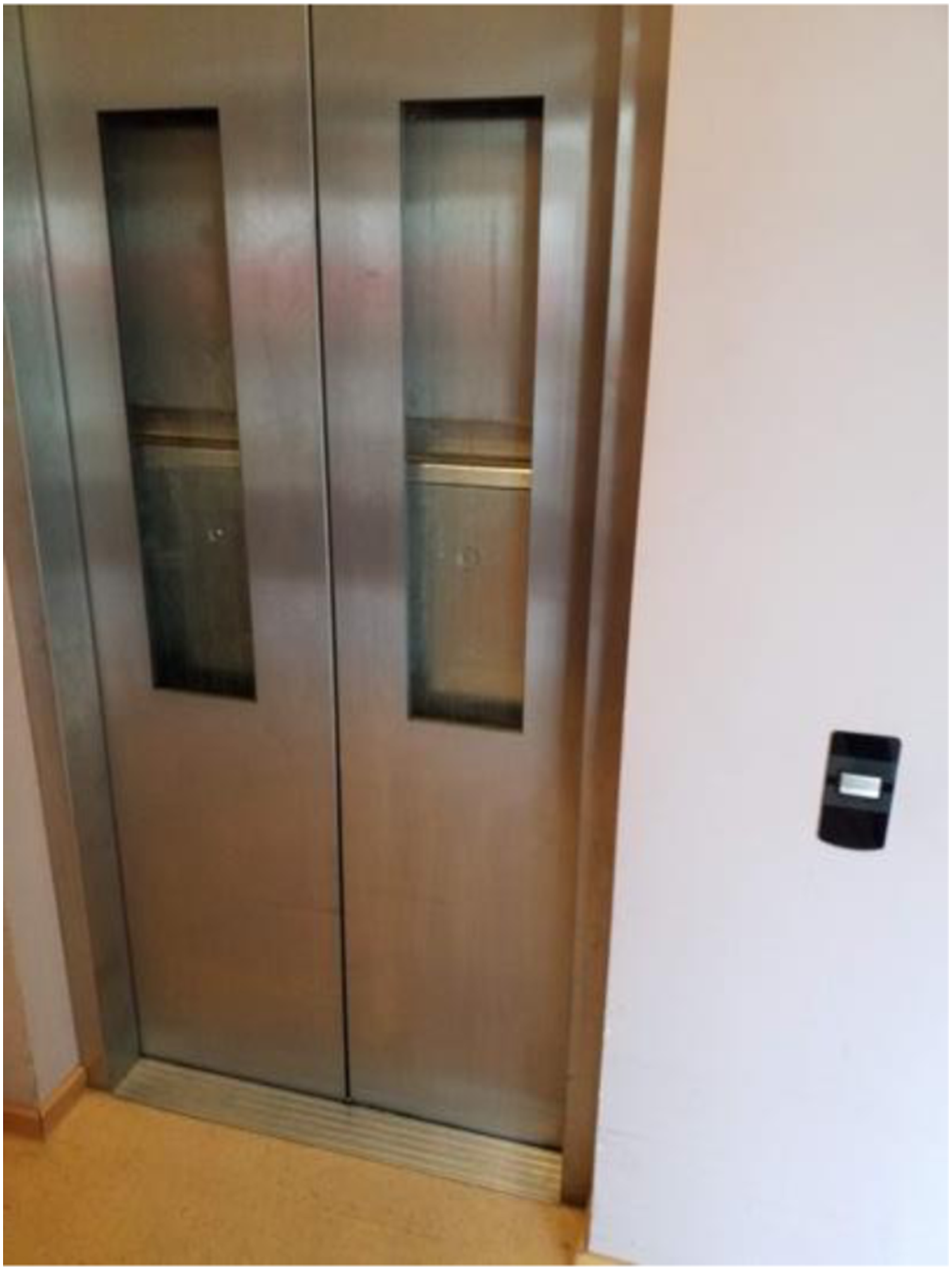

We addressed potential fears by re-stating we de-personalize all photographs and statements, and also by encouraging participants to capture photographs at times when they felt unobserved and free. To avoid misunderstandings about our Photovoice study scope, content, and tasks, we explained study goals and possible issues during face-to-face conversations with participants. Discussing their thoughts enabled participants to develop their ideas on Photovoice as a method to capture the possibilities and limitations of PA in nursing homes.
Requires Certain Ethical Considerations
Given the vulnerability of residents, we paid special attention to ethical considerations during the Photovoice study, such as informed consent, residents’ rights to their photographs, as well as preserving the anonymity of people not directly participating in the study. Other ethical considerations involved residents with high levels of cognitive impairment and maintaining resident anonymity in some homes, which is reflected in photographs. In one nursing home, a significant other approaches me. The person wonders how to deal with the anonymity of residents when taking photographs. We decide that photographs should be taken from behind [Figure 3 Examples of photographs when participants avoided showing residents’ faces. Photos taken by staff. In the left panel, a resident climbs stairs; in the right panel, residents participate in housework. (Excerpt from PV’s fieldnotes with significant other/service provider, co-author)
However, in some nursing homes, participants disregarded residents’ rights to their photographs. Some staff members took photos of residents without their explicit written and informed consent or assent. We nevertheless decided to keep those photos since they demonstrate challenges or facilitators in specific contexts, yet we maintained anonymity by blurring out people’s faces to make them unrecognizable.
Addresses Technical Alienation
Our goal was to transform any initial hesitancy about using the tablet into enthusiasm about learning a new skill. We spent considerable time ensuring each participant felt comfortable using the tablet to capture photographs. A research team member individually supported each participant while they were learning how to use the tablet and when participants needed assistance taking photographs. I ask if I can take a picture, and the person agrees. The person then suggests guiding me around the house, so I take pictures of everything that activates or impedes physical activity. The resident states they are unable to do that. The use of a walker makes it rather difficult to manage a tablet. (Excerpt from PV’s fieldnotes with a resident, co-author)
Sometimes potential participants did not regard the Photovoice method as an acceptable and comfortable data collection instrument, even when they showed interest in the study. Although most participants were open to learning how to use a tablet, technical barriers—mainly not knowing how to use a tablet—led to one participant dropping out of the study. Today, I approach a significant other. The person should have good insight into the work processes due to shifts that span three mornings and two afternoons. Tasks are to introduce new residents to the facility and to make the new ones feel comfortable. This includes running errands and introducing residents to existing groups. […] I start to explain how to conduct the study with the tablet. The person states that they do not understand the technology and have no trust in using the device appropriately. The person does not even want to touch or take the tablet; they turn and walk away. For the rest of the day, I hardly get a glimpse of this person. (Fieldnotes from interaction with a significant other/service provider, co-author)
Determines What is Relevant from the Participants’ Point of View
For residents, barriers appeared higher for collecting photos themselves than for staff members or relatives, mainly due to insecurities about scenes or subjects worthy of capturing in photographs. In nursing home B, a resident takes me to the room and points to a massage ball: “But what should I show you here; for the photo? I can still move; they do everything here. I really don’t know how I can help you.” (Excerpt from PV’s fieldnotes with a resident, co-author)
On request, research team members accompanied participants for whole or parts of days and helped them take photographs whenever residents wished to capture a specific situation. “All right; the tennis ball [Figure 4 Examples of aspects perceived relevant for everyday PA from residents’ perspectives. Photos taken by a co-author on behalf of a resident. In the left panel, a tennis ball for massages; in the center panel, strawberries on the roof balcony; in the right panel, a drawing in the hallway. (Excerpt from PV’s fieldnotes with a resident, co-author)
We spent whole days with participants, which allowed us to witness their everyday lives and routines and maintain constant communication; thus, we better understand the meaning and relevance of specific photographs. She shows me a picture of a cow [Figure 4, right panel]. It is part of the picture gallery in the home hallway. I am wondering how a picture gallery would get her active. She explains: “I like to walk past it. Some pictures remind me of vacations in former times. Some remind me of how we painted the pictures.” (Excerpt from PV’s fieldnotes with a resident, co-author)
Given the typical structural restrictions of pseudo-total institutions regarding mobility inside and outside nursing homes, staff plays central roles in creating opportunities for PA. Therefore, we sought the staff’s perspectives. Some staff members and external service providers, such as physiotherapists, shared what they did and especially how they promote residents’ PA. One staff member approaches me. She wants to participate and take photographs. She wants to show her work and what she does in the area with 10 residents who live with dementia. She does occupational therapy—training of fine motor skills. She goes through her photos in detail, showing all the things she does, like crafts and cutting out items with residents. She reminds me of two employees in other homes who showed me very similar photographs and reported similar motivations. (Excerpt from PV’s field notes with a staff member, co-author)
Points Out the Invisibility of Significant Others
We originally aimed to recruit different groups of significant others: relatives, volunteers, as well as external service providers, such as physiotherapists or social and pastoral workers. We sent information letters and displayed notes in participating nursing homes asking for their participation prior to our study and field visits. In principle, including significant others in research projects in pseudo-total institutions allows additional perspectives and thus mitigates institutional blindness. However, we received very few responses to our invitations. Additionally, there were few significant others present during our field visits. If we approached relatives when on-site, they tended to emphasize their main interest was visiting the resident and their unfamiliarity with the overall nursing home structures. Significant others are hardly visible during observations; there have been only a few visits from relatives. One person I approach at the entrance does not want to participate. She does not understand the idea of the study and does not see any benefit in participation. She wants to visit her mother, and she is uninterested in anything else. (Excerpt from PV’s fieldnotes about interaction with significant other, co-author)
Despite any potential influence on results, we relied on executive nursing home staff to recruit significant others. I notice that when I approach relatives or service providers, they usually reject the invitation to participate in the project. If home management addresses significant others, however, then they usually agree immediately. I get the feeling that in some nursing homes, no one there wants to say NO to the home management. The home manager even invites a significant other to participate in the study: “Come on, show what is happening here.” The person takes pictures, but later, they have only a little time to reflect on the pictures together with me. [e.g., Figure 5 Examples of photographs needing relevancy and contextual information; photos taken by significant others. On the left panel, a motoric game for residents in wheelchairs; on the right panel, a piano used during church services and social gatherings. (Excerpt from PV’s fieldnotes with significant other/service provider, co-author)
Significant others offered two typical reasons for their hesitation to participate: their self-perception as outsiders without inside knowledge and relative significant others particularly stated they feared negative consequences from their participation. We addressed perceptions about outsider status with relative ease in direct conversations by explicitly explaining the additional insight their specific perspectives add to the overall project. The second issue—a reason very similar to concerns expressed by residents—was more difficult to solve and required explaining the benefits of taking photographs for initiating positive change. Additionally, it was necessary to assure anonymity.
Making Photovoice Research a Priority in Organizational Routines
In several homes, we attributed few or no photographs to low staffing ratios. In this regard, staff members mentioned time limitations and tight schedules as potential barriers to Photovoice. In addition to organizational constraints, several staff members reported difficulties understanding the Photovoice purpose and process—primarily due to language issues as non-native German speakers. We translated instructions into English to address this issue.
Despite the staff’s perceived tight schedules and the extra burden of participating in the Photovoice study, nearly all staff members we approached agreed to participate in the study. We explained the potential benefits of photographs for organizational change and provided tablets for as long as they would need to take photographs. A representative of a nursing home that organized the group discussions in an organized endeavor during two team sessions tells me that after they had successfully conducted the focus group sessions, the regional manager ordered the remaining homes under his responsibility to proceed in the same way. To me, this sounds like some form of inter-house competition. (Excerpt from fieldnotes about phone interaction with nursing home representatives, co-author)
The staff’s interest to participate in discussions about photographs was higher than their willingness to take photographs; they even customized the procedure to meet their needs. The home representatives tell me about adjustments they made themselves. Instead of classifying photos, they numbered photos and wrote the numbers on the display sheets. They seem proud of finding a better way to structure the many photographs. (Excerpt from field notes from phone interaction with nursing home representatives, co-author)
After meaning-making and focus group discussions finished, we held online or face-to-face debriefing sessions with nursing home representatives. The sessions revealed that customizations provided several benefits. For example, we learned regular focus group discussions would probably fail because of work-specific time restrictions in nursing homes. Furthermore, the display sheets with photographs allowed staff an opportunity to look at the photographs repeatedly and reflect on the situations the photographs depicted.
Given the display sheets and photographs were accessible for several weeks, everyone on-site interested in participation could participate during a self-selected, individually suitable time slot. Sessions and discussions were open to everyone in the homes, not just participants who captured the photographs. Finally, access to display sheets provided anonymous participation—it enabled staff members to anonymously identify and label existing barriers to PA promotion from display sheets unobserved by superiors.
Contextualizing the Situations Depicted in Photographs
One of the main challenges of applying Photovoice in our study context was to understand the ideas captured in the photographs. We asked participants to describe each of their photographs with one statement about their photographs. I spend most of my time explaining to photographers that the photographs they take should give us as much information as possible about activity-related potentials and barriers. Staff members who take photographs of equipment especially assume others also know what the specific equipment is used for. Surveys and interviews helped me grasp the context. (Excerpt from PV fieldnotes from interaction with significant others, co-author)
Some residents were unfamiliar with questionnaire-based studies, so we helped answer questions. Our help was particularly important for participants unable or unwilling to complete the questionnaire because of the time commitment. In these cases, we conducted oral interviews instead (Novek et al., 2012) and completed the questionnaires verbatim as the participant answered questions.
After we collected tablets and surveys from the participants, we conducted final interviews and debriefings face-to-face with each participant on-site. We discussed photographs and survey responses with participants. After collecting tablets and questionnaires, we usually sit down and talk very freely about their experiences while taking photos. I can directly understand what the photo means to the participant and what they associate with it—a benefit of this procedure. (Excerpt from PV’s fieldnotes from debriefing, co-author)
When participants explained a photograph’s meaning, it helped us understand their respective contexts. The final discussion also gave us the chance to identify challenges, such as language barriers, from the questionnaire study; it also provided an opportunity to ask questions for clarification. I ask the photographer about a picture of the meeting room with the cross on a table. He responds, “I see, okay, you want to know about the church service and physical activity promotion? Well, we sing during church service. People stand up. That’s when they really start breathing again.” (Excerpt from PV’s fieldnotes from debriefing with significant other/service provider, co-author)
COVID-19 Related Challenges
Adjustments for the Photovoice Process
To reduce any complications arising when discussing visual and verbal data, we planned focus group discussions in each nursing home about photographs taken there. Although we conducted the Photovoice study on-site and supported photographers if needed, COVID-19 pandemic access restrictions later on called for alternative group formats, such as online focus group discussions (Frahsa et al., 2020). However, due to technical difficulties, our online focus group sessions were unsuccessful. When I contacted the executive staff about options for conducting the focus group on-site, they refused due to COVID-19 restrictions. We then developed a digital focus group setting; executive staff reacted very skeptically regarding its usability. In May, we tried to do a first video conference during a staff meeting. However, the technology did not work: cameras could not be switched on, the system had audio difficulties, and the homes either did not have any Wi-Fi or stable Wi-Fi at that time. (Excerpt from field notes from phone interaction, co-author)
In response, we developed focus group training for nursing home representatives, which included sharing predetermined focus group questions. We held individual training sessions on focus group facilitation with each home’s primary contact person—the trained nursing home representatives—for the larger project either on-site or online via video conference software. Trained nursing home representatives motivated nursing home staff to work with display sheets and informed them about the focus group discussion process, so staff could moderate focus group discussions. Members of the research team were available via phone to answer questions during focus group discussions.
Nursing home staff chose either working on predetermined focus group questions during (option 1) pre-planned, scheduled sessions or (option 2) self-organized discussions within three weeks. If staff chose option 1, focus group discussions were held in team sessions with up to 10 participants or small groups (2–4 persons). If staff chose option 2, photographs were placed at prominent locations in the nursing home for three weeks—a prolonged period that brought a participation flexibility benefit, as stated by several staff members. Staff members tell us any weekly planning turns out to be unpredictable during the COVID-19 pandemic and flexibility in the study timeline puts far less stress on them. (Excerpt from field notes from phone interaction with nursing home representatives, co-author)
After each focus group discussion, we held debriefing sessions online or face-to-face with nursing home representatives. Although staff response to nursing home staff-moderated focus group discussions was positive, success depended on trained nursing home representatives completing tasks we provided in coordination with nursing home executive staff.
Nursing home representative-moderated focus groups worked well in homes with strong leadership and well-organized, dedicated executive staff. Other homes needed two or three times longer than the fastest ones.
Losing Residents’ and Significant Others’ Voices in the Adjustment Processes
Prior to COVID19-related access restrictions, we finalized Photovoice in four nursing homes with participation from residents and significant others in all. However, once restrictions started, our on-site recruitment and assistance during Photovoice stopped, resulting in only six residents participating as photographers in four nursing homes. Restrictions also required residents to remain within their rooms for several periods during 2020; prohibited external service providers access to nursing homes; and restricted group activities in general (cf. in more detail Frahsa et al., 2020), which limited opportunities to identify concrete facilitators and barriers to PA.
Although we originally planned to include all perspectives in focus group discussions of photographs, significant others could not participate on-site due to COVID-19-related access restrictions. Furthermore, despite our efforts and reminders to nursing home representative focus group facilitators regarding resident participation, some focus group discussions took place without resident involvement. Although all homes appeared to have regular staff meetings and exchange processes in place, no similar routines seemed to exist involving regular meetings and co-decision-making with residents beyond home advisory boards. During the training sessions, I tell our contact person in the nursing home that it was also important to keep residents involved in the focus groups. I explained why we request photographs are publicly displayed and who should be included in the process of discussing the photos. I state that we would at least like representatives of the home advisory boards to participate. The contact person seems to be either restrained regarding this request or not very motivated to include residents. It seems the executive staff is rather hesitant about whether residents should or could be involved in discussions. I get the impression that there are generally no house meetings where co-decision-making happens between management, staff, and residents. (Excerpt from field notes from training sessions, co-author)
Discussion
Applying Photovoice in Pseudo-total Institution Nursing Homes
To overcome the challenges of pseudo-total institutions, we adjusted the Photovoice method to keep participants as anonymous as possible. Anonymity was possible by focusing data collection and analysis on photograph meaning and context, while de-prioritizing photographers and their possible age-typical impairments, such as trembling hands or unsteady standing, in the technical execution of taking the photo. However, despite efforts to secure anonymity, many participants still refrained from uncovering critical situations or only pointed to barriers commonly known in respective nursing homes, such as a broken elevator.
Contrary to Photovoice studies of neighborhoods (cf. e.g., Chan et al., 2016; Mahmood et al., 2012), a general challenge of Photovoice studies in pseudo-total institutions is the power-imbalance between very dependent people who criticize and those responsible for managing institutions. Residents in nursing homes possess very little agency regarding activity-related structural conditions. Since residents cannot even freely choose their social environments, they do not have the power to change building infrastructure. If involved in decision-making, they can oppose activities offered rather than make proactive decisions about what will be offered (Funk, 2004).
It should not go unmentioned—as Heinzelmann (2004) states—that nursing homes (despite resembling total institutions) strive to mirror the life worlds of people living outside the institution. Our study indicates that this particularly holds true regarding the rather high amount of free time granted to nursing home residents. However, a resulting lack of stimuli rather hinders residents, requiring them to organize and fill their free time with subjectively important, valued, meaningful activities.
Despite our efforts, residents, relatives, and parts of the staff remained relatively hesitant to participate. Yet, whether staff and significant others participated or not, often depended on organizational hierarchy. For example, in some homes, executive staff ordered nursing staff, trainees, or service providers to participate in the Photovoice study. If service providers participated in the study, they tended to be rather self-referential in their photographs and used the Photovoice study primarily to demonstrate their commitment to their tasks and emphasize the quality of their work, possibly as a strategy to cultivate their (often business) relationships with respective nursing homes. If relatives participated in the study, they repeatedly stressed their outsider perspective and their focus on a single resident. Furthermore, they often stated that they did not feel part of the institution.
Methodological Prerequisites for Photovoice in Pseudo-total Institutions
Ensure Residents’ Participation in all Photovoice-Related Processes
Photovoice is an opportunity for participants to identify and address structural conditions that shape their lives. To fully grasp this opportunity, residents—who experience the most dependent relationships in pseudo-total institutions—must be included in dialogue about the meanings and consequences of the issues identified through their photographs. Researchers should ensure continuous field access to build relationships, remain in contact with residents, and enable their participation in group discussions and other relevant processes related to Photovoice.
Tailor Participant Recruitment for the Context of the Respective Nursing Home
Although staff can receive study information in regular assemblies and meetings, the actual recruitment of different participant groups needs tailoring. As a first step, field observations of daily routines can identify relevant groups and people for recruitment as participants. Researchers should reflect upon the benefits and potential pitfalls of having nursing home representatives acting as recruiters for residents and significant others. Home advisory boards might also be a structure to systematically draw from for recruitment, given they often consist of residents, volunteers, and relatives. Regular events in nursing homes, such as annual parties or information days, could reach significant others. For recruiting professional service providers, purposive sampling based on nursing homes’ various services could diversify perspectives in Photovoice findings.
Adjust Data collection and Reflection on the Meaning of the Photos
To empower residents to participate, support from researchers might be crucial. Similar to previous studies (Mysyuk & Huisman, 2020), residents in our study were particularly concerned by their unfamiliarity with tablets. Researchers could support residents by assisting them in taking photographs—an approach that also had been practiced in previous studies (Novek et al., 2012). Similar to other studies (Boamah et al., 2022; Novek et al., 2012), participants (both residents and staff) felt enthusiastic after learning how to operate the tablet and apply Photovoice.
In contrast with previous studies (Radley & Taylor, 2003), we would not recommend asking staff for help conducting studies in pseudo-total institutions since doing so might influence resident answers and silence criticism. Furthermore, unlike recommendations from previous studies (Novek & Menec, 2014), we suggest researchers do not ask participants in pseudo-total institutions to write down and present their statements in public; instead, we recommend ensuring private contexts during interviews, guaranteeing anonymity during statement elaboration and presentation, and conducting debriefing and individual photograph sense-making either online or during face-to-face interviews.
Adapt the Design of Focus Group Discussions
In previous Photovoice studies, researchers used individual posters made of key photographs by participants for focus group discussions (Novek & Menec, 2014). Due to communication-inhibiting characteristics of pseudo-total institutions, we changed the design of the poster exhibitions to guarantee as much anonymity as possible. Although initially for physical distancing, our setup adaptations allowed participant groups to share their thoughts on the photographs anonymously, individually, and freely. Our experience in pseudo-total institutions suggests extending photo comment periods and providing written discussion contributions to allow for anonymity and individualized access to potentially critical or sensitive photos.
To be suitable as a basis for organizational change, the Photovoice method captures comprehensive, unconstrained stakeholder assessments of problems in pseudo-total institutions. Hence, for future studies, the Photovoice method needs scaling up to more prominently integrate residents’ voices and more explicitly address power issues. Regarding group discussions, researchers have already developed appropriate research procedures by organizing multiple focus group discussions and comparing different perspectives (Julien et al., 2013) or comparing results from focus group discussions with findings from other data sources, such as participant observation or individual interviews.
Use smartphones to take photographs
Instead of tablets, user-friendly smartphone devices could collect data for Photovoice studies. Today, there are a variety of available digital photo cameras or smartphones suitable for the Photovoice method. When choosing cameras, studies (Mysyuk & Huisman, 2020) raised two concerns: participants’ actual abilities, such as fine motor skills, and their familiarity with using such devices. In our study, smartphones were an inadequate alternative because a significant number of residents either did not have smartphones or were unfamiliar with using smartphones. Yet, given smartphones are increasingly popular also among very old people and equipment in nursing homes tends to be upgraded, future research might consider the use of smartphones as an option.
Conclusions
Photovoice makes it possible to see what researchers usually cannot see when simply looking. After building trust with participants and overcoming their initial skepticism or fear, our study showed the approach gives voice to different relevant perspectives in nursing home settings and encourages participants to actively participate and become agents of change. We identified several challenges when using Photovoice and provided practical insights and recommendations for potentially addressing those in future projects to make the best use of Photovoice as part of participatory research in pseudo-total institutions, such as nursing homes.
Footnotes
Acknowledgments
We would like to thank and acknowledge all photographers who agreed to join the project and share their photographs with us. We would like to thank all participating nursing homes for their openness and readiness to participate in the BaSAlt project and promote physical activity within their homes. We also acknowledge Kristin Bivens, English editor from the Institute of Social and Preventive Medicine at the University of Bern. Open access funding was provided by the University of Bern and swissuniversities.
Declaration of Conflicting Interests
The author(s) declared no potential conflicts of interest with respect to the research, authorship, and/or publication of this article.
Funding
The author(s) disclosed receipt of the following financial support for the research, authorship, and/or publication of this article: The BaSAlt project is funded by the German Federal Ministry of Health (2019–2023, grant no. ZMVI1-2519FSB114).
