




Abstract
Community-Based Participatory Action Research (CBPAR) is used in a variety of disciplines, including community development. However, intergenerational CBPAR research, particularly when using visual methods, has been uncommon in fields outside of those in the health domain. Given the success with which some health-related studies with vulnerable youth and adults from disadvantaged regions have applied this kind of research, we conducted a study using a similar approach on entrepreneurship and social and economic capacity building in a rural and remote region. Our CBPAR intergenerational multi-methods research project involved youth, adults, seniors, Elders (Indigenous spiritual leaders), and academic researchers as investigative co-leaders seeking findings useful for changing inequitable systems and practices. With these research partners, we employed a carefully selected set of qualitative data collection methods, including a variety of visual methods, designed to produce robust and actionable findings and knowledge mobilization opportunities. Our research design provided a powerful way to triangulate data while engaging with the broader community to co-produce knowledge across generations. One way we did this was through Indigenous language videos, featuring community members of all ages describing their perspectives on social and economic development in their communities. In this article, we describe how and why our intergenerational multi-methods approach helped us verify our data and enabled our partner communities to leverage the findings to enhance local wellbeing. In doing so, we develop the case for using intergenerational multi-methods approaches with visual method elements in business and other disciplines in which these methods are not often used.
Keywords
Introduction
Community-Based Participatory Action Research (CBPAR) involves professionally trained researchers jointly overseeing a study with community members who also actively participate in at least some aspects of the research process (Duke, 2020). While CBPAR is common in health research and some business-related disciplines like regional planning and community development (Duke, 2020), it is exceptionally rare to find CBPAR combined with intergenerational multi-methods with both visual and non-visual methods. In this article, we draw upon our experiences with planning and implementing this kind of project to describe why and how this type of research can be relevant and useful for business and community development researchers, and to provide an example that might inspire more of them to consider this qualitative approach.
Under the leadership of the community members on our research team, we decided early in the study that we needed to understand the youth perspectives about the futures of their communities. This was in part because our partner communities had young populations and any social and economic capacity building initiatives had to align with the futures the youth saw for their home regions.
While the literature describing the best practices when conducting meaningful studies with youth, adults, seniors, and Elders (Indigenous spiritual leaders) came mainly from disciplines like family studies, social inequality, education, and some health fields like gerontology, some studies, like those by Wexler (2011) and Wexler et al. (2013), were set in similar contexts to ours. Because of these sources and the past experiences of some of the academic members of our research team, we decided to include visual methods in our work to meaningfully engage with our multigenerational participants.
Our review of previous studies indicated that most researchers that apply visual methods tend to use a single, stand-alone method. However, we believed that a more pragmatic and effective way to engage with our community participants would be to apply a multiple visual methods approach combined with some non-visual methods. After a significant amount of planning, we developed a comprehensive multi-methods approach we believed would provide an engaging, time effective, and pragmatic way to collect a large amount of rich qualitative data from our youth participants and provide deep and rich insights into the research topic. We then developed a similar multi-methods approach to use with the adult, senior, and Elder participants. These methods are explained in the Project Overview and Research Design section of this article.
As visuals from research can be used to effectively communicate findings back to participants (Baumann et al., 2020), we also implemented a comprehensive plan to use participant created videos (generated by the OurVoice exercises) and imagery coupled with community member quotations (from Photovoice participants) to develop videos to share with the communities. The result was a combined video that stitched together the photos with quotations from adults and youth peer-led videos to create a cohesive presentation of voices to generate dialogue. We used one set of these videos to not only share the findings with communities, but to also elicit participant feedback about their accuracy and to generate new data. After that, we produced another set of videos in the local Cree and Dene languages (with English subtitles) to describe the overall research findings and ensure that everyone in the communities would have access to the results from the research project.
Wexler (2011) suggested that “more researchers might utilize CBPR methods if more examples of successful projects were available” (pp. 250–251). We would add that more researchers might choose to apply intergenerational and visual methods elements to CBPAR studies – especially in business and community development and other disciplines that have rarely done so – if they had an example of a successful study that took this approach. This example would be even more valuable if they were aware of the advantages they might glean from applying their own version of this type of research, which is exactly what we highlight in this paper.
In the next sections, we review the literature on intergenerational engagement in the context of Indigenous research, participatory visual methods, and multi-methods approaches for visual research. We then describe our project and research design, and subsequently, present the case for and highlight the value of intergenerational multi-methods research using visual methods in business, community development, and other disciplines outside those in which intergenerational and visual methods studies are more commonly applied.
Literature Review
Few studies have fully chronicled how and why an intergenerational multi-methods approaches are beneficial within a CBPAR research context, apart from authors in health fields such as Wexler (2011). Our literature review examined three main bodies of work surrounding key areas of intergenerational engagement in the context of Indigenous community-based research, participatory visual methods, and multi-method approaches.
Intergenerational Engagement in the Context of Indigenous Community-Based Research
Intergenerational exchange and dialogue, as an outcome of research focused on Indigenous worldviews or in partnership with Indigenous communities, is particularly important in the Canadian context for a variety of reasons. The legacy of colonialism and its traumatic impacts, especially from the residential school system, was “transmitted to subsequent generations through various psychological, physiological and social processes” (Aguiar & Halseth, 2015, p. 5). Additionally, with a population significantly younger than the Canadian average (Saskatchewan Bureau of Statistics, 2022; Statistics Canada, 2021; 2022), “reaching across age and generational boundaries can hold great potential for connection, learning, awareness and reflection” (Grenier, 2007, p. 722), especially because Indigenous youth “will form an important part of the country’s future leaders, employees and entrepreneurs” (Organisation for Economic Co-operation and Development, 2020, p. 77). Finally, the intergenerational transmission of knowledge and experience is important for preserving Indigenous worldviews, and for applying that knowledge to help our world sustain our natural environment or adapt to changes in it (Fernández-Llamazares & Cabeza, 2018).
Some studies have brought together Indigenous youth and Elders to discuss strategies for creating intergenerational research opportunities and an intergenerational action plan (Cook, 1999). Another study focused on an intergenerational wellness framework with a northern Saskatchewan Métis community (Oosman et al., 2022). The authors describe how not only was the framework co-created across generations with youth, adults, and Elders, but the youth members who designed the logo for the project also informed their framework and advanced dialogue. Elsewhere, Wexler (2011) described the “Intergenerational Dialogue Exchange and Action (IDEA) process” (p. 249) she applied as part of a research project with Indigenous people in Alaska. The IDEA process was designed “to move the field of CBPR from theory into practice” (p. 250) by facilitating an intergenerational exchange “to collect data for a community-based participatory study and provide an opportunity for communication between Elders, adults and youth” (p. 248). In that study about resilience, some of the Indigenous youth became co-researchers who recruited the adult and Elder participants who took part in interviews and focus groups the youth observed. The young co-researchers then synthesized what they learned through digital storytelling and shared those products at a community event (Wexler, 2011). An important lesson shared across these studies is that intergenerational exchanges serve to meet the needs and goals of communities, providing opportunities for stakeholders across the age continuum to tell their own stories to each other through which important insights are gained during the process, and is embedded within CBPAR methodologies.
Participatory Visual Methods
Participatory visual methods have emerged as attractive and innovative approaches for generating collaborative and in-depth forms of data, such as photos, art, video, and multi-media, by actively involving individuals in the process. Using visual methods to co-create knowledge and address complex challenges represents a participatory turn towards collaborative and community-based approaches in visual research (Gubrium et al., 2016; Pauwels, 2015). Importantly, there is a fine balance between the ethical motive that ensures research benefits communities by solving problems with communities and the scientific motive that aims to generate unique and authentic data (Pauwels, 2015). Additionally, participatory visual methods can help mitigate power asymmetries between researchers and the researched. The use of photography in photovoice, participatory video (including the use of mobile phone devices), digital story-telling and drawing and mapping have all been shown to be effective in engaging community participants, and especially in altering some of the typical power dynamics related to the researched/researcher, and to ensuring spaces for marginalized populations to both speak about and then speak back through interactive workshop sessions to social conditions. (Mitchell & Lange, 2011, p. 4)
According to Gubrium et al. (2016), visual and digital technologies create new opportunities to “work alongside communities to produce and communicate our research collaboratively” (p. 15) and develop a shared understanding. Moreover, researchers can apply visual methods where participant groups lead the data collection process, resulting in a less obtrusive environment in which the active role played by the researcher is minimized (Keenan, 2007; Young & Barrett, 2001). Removing the researcher from the research field-space during participant led projects is an effective way to collect uninterrupted and organic data (Lomax, 2011) and encourage participants to express their views with less interference or influence from researchers (Keenan, 2007). This can help participants feel as though their contribution is valued while also improving the quality and authenticity of the data collected (Buckingham, 2009; Gomez & Ryan, 2016).
Video methods are still relatively new and methodologically under-developed despite the embeddedness of digital audio-video recording tools in everyday life and the frequency with which social media users of all ages use these devices (Kissmann, 2009). Knoblauch et al. (2012) noted that “despite the fact that video now is widely used in the social sciences, there have been but very few attempts to discuss the methodology of working with this medium as an instrument of data collection and analysis” (p. 10). Twine (2016) argued that qualitative inquiry has relied more heavily on textual analysis than on visual methods, even though visual representations of everyday life can play a powerful role in uncovering latent or invisible aspects of culture, identity, and social reality.
Participatory video, sometimes captured as digital storytelling, has been a method used in a variety of fields including sociology, cultural studies, and health sciences, thus being commonly used in social research and for health promotion. In their digital story-telling project with Northwest Alaskan youth, Wexler et al. (2013) found that digital stories helped create a framework and approach for suicide prevention. This highlights the use of video as a powerful tool for promoting health and well-being. Digital storytelling has also been successfully used to reflect on one’s cultural identity, heritage, and generational gaps (Juppi, 2015). Juppi (2015) described how the experience of creating digital stories was empowering for participants and established a heightened sense of self-efficacy and ownership. Based on Freire’s (1970) work that demonstrated how images can generate dialogue, Wexler et al. (2013) found that digital storytelling “gives voice to participant experiences through personal narratives” (p. 619). The credibility and value of personal narratives were highlighted in this work, acknowledging collaboration and connection as a means of authentic storytelling from the storyteller’s point of view.
Participatory video and digital storytelling have been used as a medium for participants of all ages to express and communicate their concerns to audiences and decision-makers in their community (Larson, 1999) and to preserve and promote Indigenous oral wisdom (Cunsolo Willox et al., 2013). The most prominent forms of video use in research include participatory video, videography, video interviews, and video-based elicitation and fieldwork (Jewitt, 2012). Video in participatory research typically falls under the umbrella of such terms as participatory video, collaborative video, or community video, which refer to varying degrees of researcher involvement and community or participant engagement and ownership. Participatory video methods usually provide participants with the opportunity to lead and construct their own videos with only minimal assistance from the research team (Banks & Zeitlyn, 2015; Mitchell & Lange, 2011; Pink, 2007).
Videovoice is a community-based participatory video approach, built on the Photovoice method, for making videos that blur the distinction between research and advocacy (Gubrium & Harper, 2013). It was first used after Hurricane Katrina in New Orleans to “get (participants) behind video cameras to research issues of concern, communicate their knowledge, and advocate for change” (Catalani et al., 2012, p. 20). In addition to the community participants, the Videovoice approach included academics, filmmakers and support staff, and a week of training and orientation (Catalani et al., 2012). Another method developed from the Photovoice example is OurVoice, a “peer-to-peer video capture interview exercise” (Swanson et al., 2016, p. 45) where participants who already know each other interview each other – without researchers present – in physical settings familiar to them while capturing the exchanges using video cameras. No training is provided prior to the peer-to-peer interviews, other than to inform the participants of the interview questions they are to ask one another and to describe the time and general location parameters for the exercise (Swanson et al., 2016).
Participant-led research approaches, including photo elicitation methods like Photovoice (Wang & Burris, 1997) and participatory video methods like Videovoice (Catalani et al., 2012) and OurVoice (Swanson et al., 2016), have been used to empower youth and adults as co-researchers (Strack et al., 2004) and provide Indigenous communities with greater control and collective ownership over the research process while reducing the traditional researcher roles (Flicker et al., 2014; MacDonald et al., 2015; Riecken et al., 2006). Much of the literature surrounding peer-led approaches features youth-based studies that can provide young people with opportunities to share their perspectives, reverse power relations, and learn how to create change through having their voices heard and acting as their own advocates (Fenge et al., 2011; Strack et al., 2004; Woodgate et al., 2020). Platt (1981) acknowledged that equality and trust are important to the interview situation and that peer-led methods create a unique interview dynamic. She pointed out, for example, that when someone interviews their peers, they may be questioning social equals from their own groups and communities who “share the same background knowledge and sub-cultural understandings” (p. 76).
Multi-Method Approaches for Visual Research
Visual approaches can be used alone as well as in combination with other types of multisensory methods, including visual techniques that elicit understanding about personal and community experiences (Rouse, 2013). According to Wills et al. (2016), social scientists can use visual methods to “reveal multifaceted social phenomena” (472) and when researchers combine multiple visual and non-visual methods, they can uncover “a more rounded knowledge about practices” (478). Multi-method inquiry can facilitate triangulation to improve data consistency and generate more valid and reliable analyses by developing understanding from multiple angles and entry points into participants’ experiences (Copeland & Agosto, 2012). Further, Li et al. (2019), who used a combination of photo and video to capture community perspectives, urged business and social science scholars to “further explore the value of innovative community-based research approaches in future work” (p. 377) to actively engage participants in research studies.
In a multi-method autobiographical study exploring young people’s identities, Bagnoli (2004, 2009) found that visual methods were more than an add-on to text-based analysis. They significantly contributed “to making sense at all different stages in the analytical process” (p. 567). The methods she adopted for this study included interviews, written 1-week diaries along with visual methods such as self-portraits, participant photography, video diaries, relational maps, and timelines. Bagnoli (2004, 2009) identified the value in combining multiple visual approaches. Visual ethnography is a methodology that is cited as frequently combining multiple visual methods such as collage or drawing, photography and videography for exploring lived experiences of participants (McNely, 2013).
Taken together, combined visual methods can foster deeper understanding of intersubjectivity and meaning making processes. Although various studies have acknowledged the usefulness of bringing together a combination of visual methods to examine social phenomena (e.g. Li et al., 2019), few have illustrated a conceptual model for bringing these unique approaches together.
Project Overview and Research Design
Our study was methodologically driven by Community-Based Participatory Action Research (CBPAR), which seeks to generate positive and transformative change through engagement and collaboration with individuals who are directly affected by the very issues being studied (Vaughn & Jacquez, 2020). One of the primary goals of CBPAR is to address community challenges (Mitchell & Lange, 2011), and the approach frequently involves stakeholders and academics working together throughout the research process, from identifying the problem to planning the research approach to mobilizing the knowledge generated. In particular, research design and methods choices should be based on project and partnership goals that best suit and involve the partners (Duea et al., 2022). CBPAR “is not simply a community outreach strategy but represents a systematic effort to incorporate community participation and decision making, local theories of etiology and change, and community practices into the research effort” (Wallerstein & Duran, 2006, p. 313).
Our social and economic capacity building project focused on entrepreneurship following CBPAR principles, which included community partners in the design of the research project from the ground up. After considering the alternatives available to capture the perspectives of participants from all the communities involved and across the generations, it became clear we should use a variety of methods. This resulted in the adoption of participant-led methods and a combination of visual and non-visual methods needed to capture voices across the generational groups that were identified by our partners as key stakeholders. In collaboration with the communities, we decided to incorporate visual methods including photos and videos. Much of the literature on visual methods emerged from health and social sciences disciplines, yet we adapted these to fit our research focus on social and economic capacity building, constituting a study in the management realm.
We partnered with seven geographically remote, primarily Indigenous communities spread across the northern half of the Canadian province of Saskatchewan, to study social and economic capacity building in their region. Over the course of the 5-year project, the academic part of our research team included three researchers and two project managers. During that time, we also employed a total of 27 student research assistants (7 undergraduate and 20 graduate) over the lifecycle of the research project, with between roughly one to five working at any one time. One project manager and ten of the student research assistants were of self-declared Indigenous ancestry, however, none came from our seven partner communities.
The community members who were a part of our research team were comprised of youth, adults, seniors, and Elders from the seven communities. During the project planning phase (see Figure 1), the community-based research team members came from across the entire region to co-lead the development of the study design with the academic team members.
Data Collection and Validation Phases
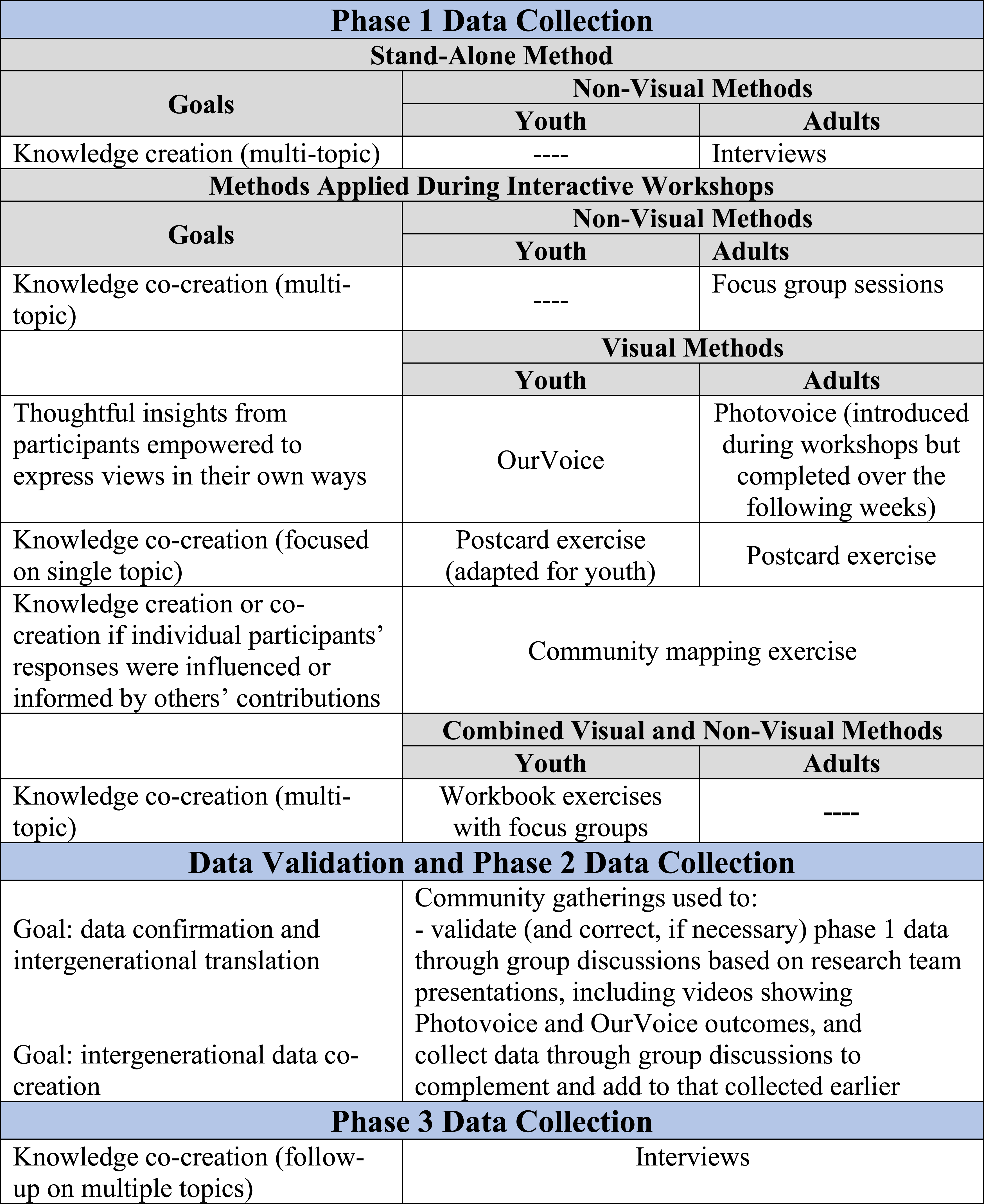
During the Phase I Data Collection and Data Validation and Phase 2 Data Collection parts of our study (see Figure 2), the community members who were a part of the research team were made up of residents from the communities in which we collected the data, with no member from one community also serving as a research team member for a different community. Because of differing types and levels of engagement as investigative co-leaders with the academic part of our team, it was not possible to establish precisely how many community members across the region served as research team members. However, we estimate that approximately five local members from each of the seven communities that participated in the study provided substantive co-leadership for the project.
Embracing the tenets of CBPAR, our community research partners played a meaningful and active role in framing and managing the research project (Wallerstein & Duran, 2006), including ensuring we engaged with and appropriately captured youth, adults, and Elders’ voices as essential participants in the co-creation of knowledge. As shown in Figure 4, that prompted our team to implement various approaches for conducting meaningful intergenerational exchanges in research, including visual methods (Photovoice, OurVoice, postcards, community mapping), which we defined as the process by which researchers seek to elicit meaningful data from participants by using participatory visual means (Literat, 2013). After carefully considering how both visual and non-visual methods could help us achieve our partnership and project goals (Duea et al., 2022), during the Phase 1 Data Collection part of our study, we chose to implement a multi-methods approach incorporating one set of visual and non-visual methods designed to effectively engage with youth, and another set for adult participants (see Figure 2).
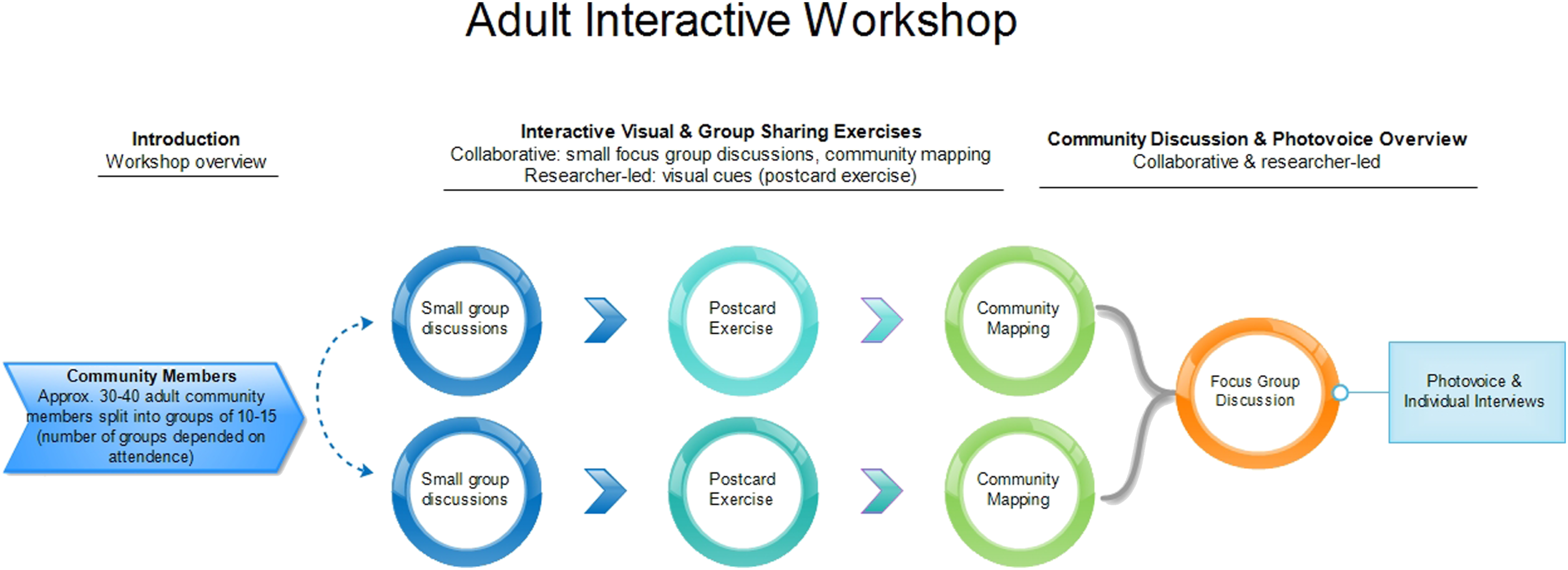
During the parts of our study labeled Phase I Data Collection and Data Validation and Phase 2 Data Collection (see Figure 2), we collected data across the seven partner communities from approximately 200 youth and young adults in grades 10, 11, and 12 and about 175 adult, senior, and Elder community members. During Phase I Data Collection, we managed the interactive workshops shown in Figure 2. The youth interactive workshop (see Figure 3) was delivered in the local high schools during afternoon sessions, and we included the adult, senior, and Elder interactive workshop (See Figure 4) as part of a community gathering at which our research team hosted a locally catered meal. Research Project Overview, Planning Phase, and Research Participants. Data Collection and Data Validation Phases.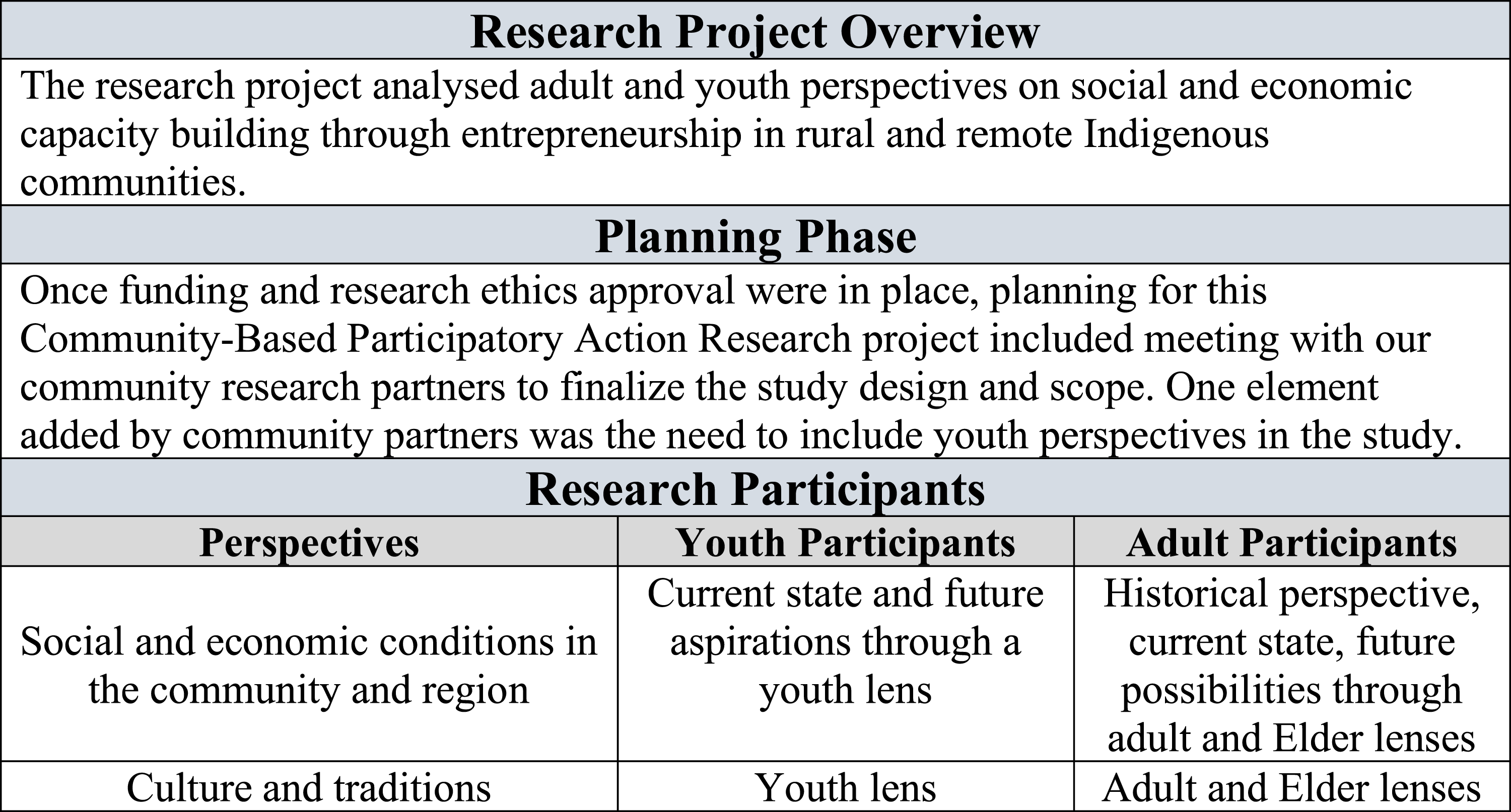
While it is beyond the scope of this article to explain in detail the methods we used and how we conducted the workshops, it is useful to briefly explain the elements shown in Figures 3 and 4. One item shown under the Introduction part of Figure 3 is the workbooks we provided to the youth to encourage and facilitate thoughtful responses. Our workshop moderators invited the participants to write their thoughts on the workbook pages designed for the focus group session, and in some cases provided the participants with time to do so during the exercise before a part of the discussion. These written responses formed part of our data.
It is also important to note that the youth and adult workshops include interactive and group sharing exercises. The interactive exercises included visual methods that generated collaborative production where participants created visual outputs (Buckingham, 2009). The youth completed an OurVoice video exercise during the workshop, while the Photovoice exercise was set up during the adult workshop and conducted over the following weeks. The interactive exercises also included researcher-led production. This included the community mapping and postcard exercises shown on Figures 3 and 4, which had participants draw on large wall maps and participate in a structured group exercise where they responded to images on cards showing a range of economic activities that might occur in their communities.
After transcribing the interviews and video content and compiling researcher field notes, we conducted a thematic analysis using NVivo. Next, we developed a presentation, supported by PowerPoint slides, that summarized the research findings according to the emergent themes. We also created a video presentation by stitching together content from the youth videos with the photos and associated quotations from the Photovoice sessions with adults.
For the Data Validation and Phase 2 Data Collection part of our study shown on Figure 2, our research team again hosted community gatherings with a meal. At that event, we presented the findings from the first phase of data collection using as many participant provided pictures (Photovoice) and videos (OurVoice) as possible during and after which community members of all ages discussed, added to, confirmed, and in some cases corrected or enhanced what we presented. Through those recorded discussions, we collected a significant amount of new data.
Phase 3 Data Collection (see Figure 2) involved interviews with both purposefully selected and new participants who provided input on specific topics selected by the research team.
Knowledge Mobilization Phase
Figure 5 summarizes the knowledge mobilization goals and methods used by the research team. The goals included ensuring all community members, including Elders and others who spoke the local Indigenous languages, had access to the research findings. Our research team also provided means for the youth, adults, seniors, and Elders in the communities to understand each other’s perspectives and aspirations for the future. To achieve these goals, and to make the findings accessible to policymakers and other non-community members who were positioned to be able to help the communities achieve their social and economic objectives, we presented the research findings at events and through media outlets and published research team newsletters and communiqués at different stages throughout the research project’s duration. The project’s social media sites were established early on and maintained until the Indigenous language videos were published online in mid-2022.
The academic conference presentations and publication activities served to disseminate the research findings throughout the academic community and to help train many of the 27 graduate and undergraduate research assistants who were part of the research team, some for longer periods of time and others for short periods. Youth interactive workshops. Adult interactive workshop (including adults, seniors, and Elders). Knowledge Mobilization Phase.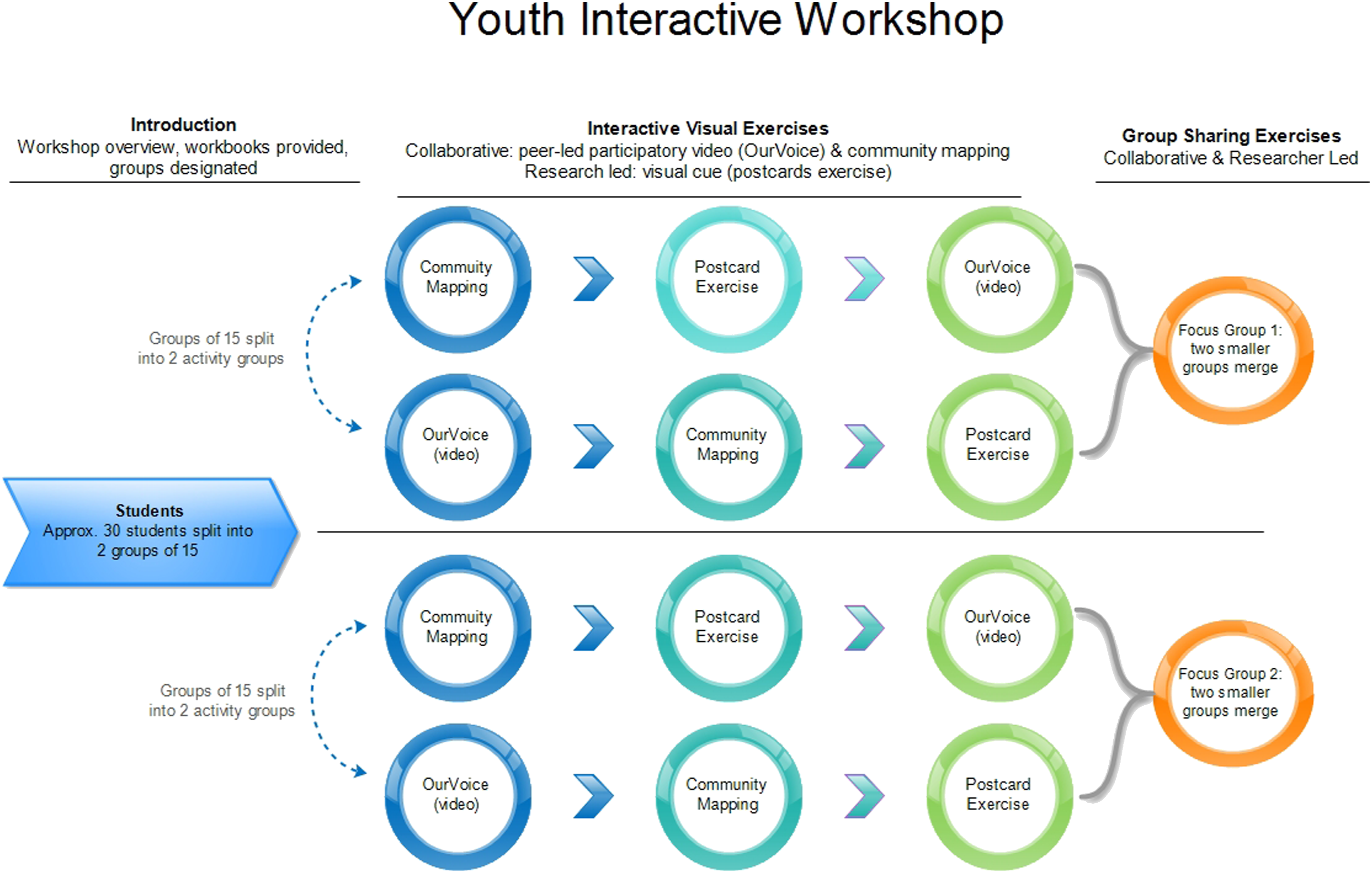

The Case for Intergenerational Multi-Methods Research
Participatory Action Research has been used in business research disciplines such as general management (see Eden & Huxham, 1996), human resources (see Zhang et al., 2015), and operations and production management (see Coughlan & Coghlan, 2002), although it appears to be most common in community development work, particularly when the studies are community-based (see Titterton & Smart, 2008). However, a search within the top journals for other business disciplines, like accounting and finance, uncovered few articles based on Participatory Action Research. It is also more difficult to find intergenerational research in business research disciplines, although there are examples in areas such as entrepreneurship (see Niittykangas & Tervo, 2005), consumer behaviour (see Moore, 2012), sustainable consumption (see Diprose et al., 2019), product brand preferences (see Mandrik et al., 2018), and workplace intergenerational differences (see Mehra & Nickerson, 2019). Likewise, visual methods appear only sparsely in some business studies in areas such as marketing and consumer research (e.g., eye-tracking, facial expression analysis, visual ethnography) (see Schembri & Boyle, 2013), human resource management (e.g., photo-elicitation, collage-making, visual storytelling) (see Cassell et al., 2016), and management (e.g., social network analysis, visual mapping, video-based observation) (see Jaspersen & Stein, 2019).
We believe that more CBPAR, intergenerational, and visual methods could be effectively used in business and other disciplines in which these methods are not often used, either individually or as in our research project, in combination. We argue that adopting a combined multi-methods intergenerational approach, while not common to these areas of research, is highly beneficial for researchers and communities. The following sections describe why and how we believe more researchers would benefit from an intergenerational multi-methods study that includes visual methods to enhance their understanding of the phenomenon and increase the robustness of their study. Specifically, we identify how multi-methods research, including a variety of visual methods, can provide data triangulation through multiple forms of data and lend itself to a valuable approach for engaging with communities to co-produce knowledge across generations.
Community Partners and Participant Perspectives
The perspectives of our community partners including leadership and intergenerational participants were crucial to shaping our study’s trajectory throughout the span of the 5-year project. Our research team collected feedback on the process from the youth participants. Most of those participants (56%) said that OurVoice was the best part of the Youth Interactive Workshops (see Figure 2). One participant said that they liked that exercise “because we did it with peers”. Another participant said that OurVoice was their favourite part “because everyone was involved and really had to think about their own community”. Many of the participants described the exercise as fun, interesting, and different. Additionally, when our research team returned to the communities to share and validate the preliminary research findings and collect new data (see Figure 2, Data Validation and Phase 2 Data Collection), some youth who did not participate in the initial phase expressed their desire to do so. In those cases, the research team accommodated their request so more participants could be involved.
Similarly, the participants in the Adult Interactive Workshops provided their feedback and suggested ways to improve them. Most participants indicated that they liked the interactive nature of the workshops and appreciated the use of the visual methods. They said the postcard and community mapping exercises generated useful discussion among the participants because it formed a collective understanding of how community is defined, and the nature of goods and services shared across communities. While we did not formally ask the Photovoice participants for their feedback about that activity, the exceptional enthusiasm and engagement demonstrated by all of those who were involved indicated a high level of interest in and satisfaction with the process.
Finally, community leaders expressed interest and sometimes surprise when learning about the findings. For example, they had not expected to hear directly from the youth (through the OurVoice videos) that they shared many of the same concerns as did the adults, seniors, and Elders in the communities.
Perspectives on Using an Intergenerational Multi-Methods Approach in Community-Based Research
Our research team drew from community feedback and lessons learned throughout the project while it was happening. Taking a closer look at each element of CBPAR, intergenerational engagement, and multi-methods participatory visual research, we offer some insights.
Community-Based Participatory Action Research
A consideration early on for researchers is framing the research design and methodological approach according to their interpretive approach and the epistemological and ontological assumptions that ground their perspectives. Following a transformative interpretive framework may lead researchers to adopt a CBPAR methodological approach, as was the case in our study, to use collaborative and participatory processes and methods to co-create knowledge that can be meaningfully put into action. Using a transformative interpretive framework, we focused on the co-creation of findings with multiple ways of knowing (Creswell, 2013).
In our experience with CBPAR projects, community direction on how best to capture stories is critical. For us, this included a rigorous planning phase during which we attempted to choose the optimum mix of visual and non-visual data collection methods based on contextual factors like the research discipline, study setting, and local community norms and customs (like when and how to offer honoraria and gifts). It also included continuous process improvement during the study based on community, participant, and researcher feedback, while continually considering the research context, study goals, and participant generational characteristics.
One product of our CBPAR approach was that during the first two data collection phases, several topics arose that our community research partners identified as requiring further inquiry, like the seemingly unique way in which people in the region viewed and used social media, and how and why local organizational governance systems sometimes had to be adapted to accommodate the unique challenges faced by communities in rural and remote regions. To explore those issues further, research team members conducted interviews during the Phase 3 Data Collection phase. This not only helped us gather more data, but it provided a means of further triangulating the information we had already collected.
Approaches for Intergenerational Community Engagement
As suggested by Duea et al. (2022), researchers must consider the goals they wish to achieve. These might include creating knowledge, effecting change (e.g., policies or procedures), exploration, or testing or building theories. One of our major goals emerged from the guidance of community members, as partners and part of our research team, who recognized the importance of understanding the perspectives of the youth in their communities. This led to intensive planning around what data collection methods would be most appropriate for our intergenerational study, and how to best engage with the different generations in the research process.
Using a multi-methods approach for intergenerational engagement in community-based research, in our experience, stimulated action by helping to remove communication barriers between youth and adults in the community. This was especially the case when community leaders heard unexpected contributions from younger members of their communities. In some of the communities in our study, this approach provided a conduit for disseminating information between and across generations. The multi-method approach helped provide leaders with the knowledge that the younger people shared many of the same concerns with the adults in the community, including those related to substance abuse, poor educational outcomes, and recreational and social deficiencies and opportunities.
Multi-Methods Utilizing Participatory Visual Approaches
When intergenerational community engaged research is conducted with youth and adult participants, or other generational mixes, the underlying expectation is that these groups offer unique perspectives and prefer to engage in different ways. We found that the interactive and flexible nature of the visual techniques we used allowed us to capture those distinctive perspectives, using approaches that worked well with the different demographics.
OurVoice provided a unique, engaging, and comfortable way for students’ voices and perspectives to be meaningfully and authentically captured. It enabled the youth to respond to the research team’s questions as posed to them by their peers, without researcher involvement, and with sufficient time to think about how to answer the questions. This generated perspectives that the team is confident would not have surfaced had a research team member asked the youth the questions. One interesting outcome was that the youth sometime chose their own settings in which to answer the provided questions. For example, some students recorded their answers outside when talking about their community’s natural beauty. Additionally, the resulting videos promoted dialogue about issues important to younger people in the communities and provided a powerful means through which community-leaders and policymakers were made aware of the relevant issues important to the participants.
The workbooks given to the youth participants for the workshops provided an effective means for some participants to write down thoughts they might not have wanted to share verbally with the group. This allowed the research team to gather data that was not captured during the focus group discussions and other activities.
With the adult, senior, and Elder participants, the interviews, interactive workshops, and subsequent Photovoice sessions proved to be an efficient way to generate a deep and rich set of qualitative data. Photovoice enabled our participants to thoughtfully capture their perspectives in unique ways that generated new insights, helped us triangulate the data, and provided stories coupled with imagery that enabled us to later present those findings to others in engaging visual ways. The participant-supplied photographs and accompanying dialogue during the interview component of the exercise uncovered interesting and important insights our research team felt would not have emerged using other means. For example, when describing how entrepreneurship was impacting their community, one participant used photographs of the local landfill to help them explain the hidden problem of additional waste generation that occurred from increased entrepreneurial activity.
For the Data Validation and Phase 2 Data Collection phase of our project, we stitched together the OurVoice videos and Photovoice imagery and accompanying narratives into new videos that we presented in our partner communities. At the community meal and gathering we hosted, we presented the new videos to show research findings from the project’s first data collection phase. This prompted rigorous participatory analysis and insightful discussions during which the attendees validated, corrected, clarified, and added to the information we presented.
As with the previous data we collected, the recordings from these community gatherings were transcribed and analyzed using NVivo. This approach is consistent with the suggestion by Nykiforuk et al. (2011) that a community focus group be used after one-on-one Photovoice sessions to ensure the viewpoints expressed align with the general community perspective, and to elicit new insights from the broader community. From a research team perspective, the data validation and data collection processes during these gatherings provided valuable new data and additional insights into the previously collected data.
The multi-methods processes (visual and non-visual) we used appealed to the rich storytelling traditions inherent in the Indigenous culture of northern Saskatchewan. The mix of methods also allowed our team to triangulate the data we collected, and led to deeper, more holistic, and richer discussions with community participants of all ages than might have been the case had we not used the multi-method approach. Finally, at the end of our project, we produced yet another set of videos using the visual elements generated from our project along with Cree and Dene language narration (with English subtitles) to make our research findings accessible to all stakeholders, even those who only spoke the local Indigenous languages.
Considering the Scope and Size of CBPAR Intergenerational Multi-Methods Projects
Our study simultaneously involved a large and diverse team of academic researchers and community members and was designed to achieve a broad set of goals. However, even though most research projects in the business and community development realm are more modest, they should be able to employ CBPAR, intergenerational, and multi-methods (including visual methods) approaches if the researchers see the potential advantages and are willing to employ these measures.
It takes significant time to plan and implement a CBPAR intergenerational multi-methods approach that includes visual methods, like the one we described. However, it can be worth the effort. In our case, by inviting community members to be research partners to help guide the project, our study moved in directions we would not have considered on our own, like making the study an intergenerational one and subsequent considerations of multiple visual and non-visual techniques. Additionally, the investigative co-leaders from the communities on our CBPAR research team ensured our project generated useful findings they could use to change inequitable systems and practices in areas such as government service provision, community governance issues, transportation system deficiencies, and food costs disparities when compared to other regions.
Conclusion
Our study helps fill a gap in the literature where few scholars have documented how and why they applied a CBPAR intergenerational multi-methods approach for their research project, especially researchers in the business and community development realms. One reason for the lack of literature in this area might be explained by some scholars avoiding intergenerational research, due to uncertainty as to its value or way of conducting it. Others might not feel comfortable applying a multi-methods approach that includes visual methods. In this article, we developed the case for using intergenerational multi-methods approaches with visual method elements in business and other disciplines to help researchers see why and how such a research design can help them achieve their research goals.
Footnotes
Acknowledgments
We wish to acknowledge our research partners across all the communities we worked in for this research project.
Declaration of Conflicting Interests
The author(s) declared no potential conflicts of interest with respect to the research, authorship, and/or publication of this article.
Funding
The author(s) disclosed receipt of the following financial support for the research, authorship, and/or publication of this article: This work was supported by the Social Sciences and Humanities Research Council of Canada (grant number 435-2013-1288).
