




Abstract
This qualitative study aimed to explore Singapore residents’ knowledge, attitudes, perceptions, and behaviors around COVID-19 as shaped by different information sources. Through utilizing WhatsApp as a means of conducting digital focus group discussions (FGDs), participants were involved in five consecutive days of discussions through both synchronous and asynchronous means. We found that the use of WhatsApp as a means of conducting FGDs not only served as a means of generating essential, time-sensitive data in the community, but also advanced the quality and quantity of data generated, democratized, and enhanced the participatory nature of FGDs, and facilitated the communication of potential issues around data privacy between facilitators and participants. Although challenges around privacy and confidentiality remain, this means of collecting data is novel in terms of providing timely and relevant data during a pandemic and would be appropriate to be further utilized in the context of other health-related research beyond a public health emergency.
Keywords
Introduction and Background
Since the declaration of COVID-19 as a Public Health Emergency of International Concern on 30 January 2020, we have seen a global escalation of public concern, panic, and misinformation around the pandemic. Unlike during SARS in 2003, the advent and pervasiveness of social media and new modalities of communication and information exchange like WhatsApp, Facebook, Instagram, and Twitter have created new dynamics in how the public interact with health and outbreak-related information. To investigate concerns around propagation of misinformation, lay health beliefs, and hysteria through social media in the context of a pandemic, we conducted a study to explore the knowledge, attitudes, perceptions, and behaviors around COVID-19 among Singapore residents using social media; specifically, focus group discussions conducted via the mobile messaging platform WhatsApp.
In recent years, digital technologies focusing on text-based data collection—be it through Zoom, Skype, Facebook or Reddit—have been increasingly used in qualitative research (Thunberg & Arnell, 2021; Vindrola-Padros et al., 2020) due to the ability of these platforms to enhance long-distance participation, extract socio-cultural nuances through varied modes of expressions like GIFs and emojis (Wong & Jensen, 2020), and capitalize on the increasingly omnipresent nature of digital means of communication. With the changing nature of research brought about by the on-going COVID-19 pandemic, WhatsApp focus groups have grown increasingly popular as a form of text-based data collection tool with numerous studies adopting this tool for public health research (Anderson et al., 2021; Colom, 2021; Gibson, 2020; Singer et al., 2020). Compared to traditional forms of in-person focus group discussions, WhatsApp focus groups present several advantages logistically and methodologically. For instance, studies have shown that participants in WhatsApp focus groups are more comfortable sharing sensitive information and disagreeing with one another, creating space for more inclusive discussions (Colom, 2021). WhatsApp focus groups also allow for different modes of communication (e.g., through incorporating pictures and links), are more cost-efficient and allow researchers to recruit a greater diversity of participants (Wong & Jensen, 2020). However, the lack of non-verbal cues in the online environment, security and privacy concerns, and a possible breaching of confidentiality could also be reasons why such forms of digital focus groups might not work for all research settings (Reid & Reid, 2005).
An earlier study on digital focus groups using WhatsApp in the Singapore context (Chen & Neo, 2019) found that Singapore was an appropriate place to conduct research using digital means. WhatsApp focus groups had the potential to generate well-elaborated responses and group interaction, particularly among younger, digitally fluent participants. Another study conducted using WhatsApp focus groups in Singapore examining public perceptions of risk and trust also found WhatsApp to be highly effective at extract specific socio-cultural nuances due to the familiarity that participants in Singapore had with WhatsApp as a text messaging platform used by most people daily (Wong & Jensen, 2020). Singapore, where this study took place, is also ranked second (88.4%) in terms of having the highest internet penetration rates in Southeast Asia. 91% of the population use a smartphone, with WhatsApp being the most highly used messaging platform, with 87.1% of the population between the ages of 16–65 years old using it daily (We are Social, 2021). During the COVID-19 pandemic, the government had also created a push message dissemination service over WhatsApp, where residents would be sent COVID-19 updates, key government announcements and clarification on widespread fake news regarding government policies daily (see Figure 1). As of 1 February 2021, 1.22 million Singapore residents have registered for this service (MCI’s response to PQ on impact of change in WhatsApp’s privacy policy on Government communications, 2021). Screenshot of the official government WhatsApp push notification sent to subscribers daily.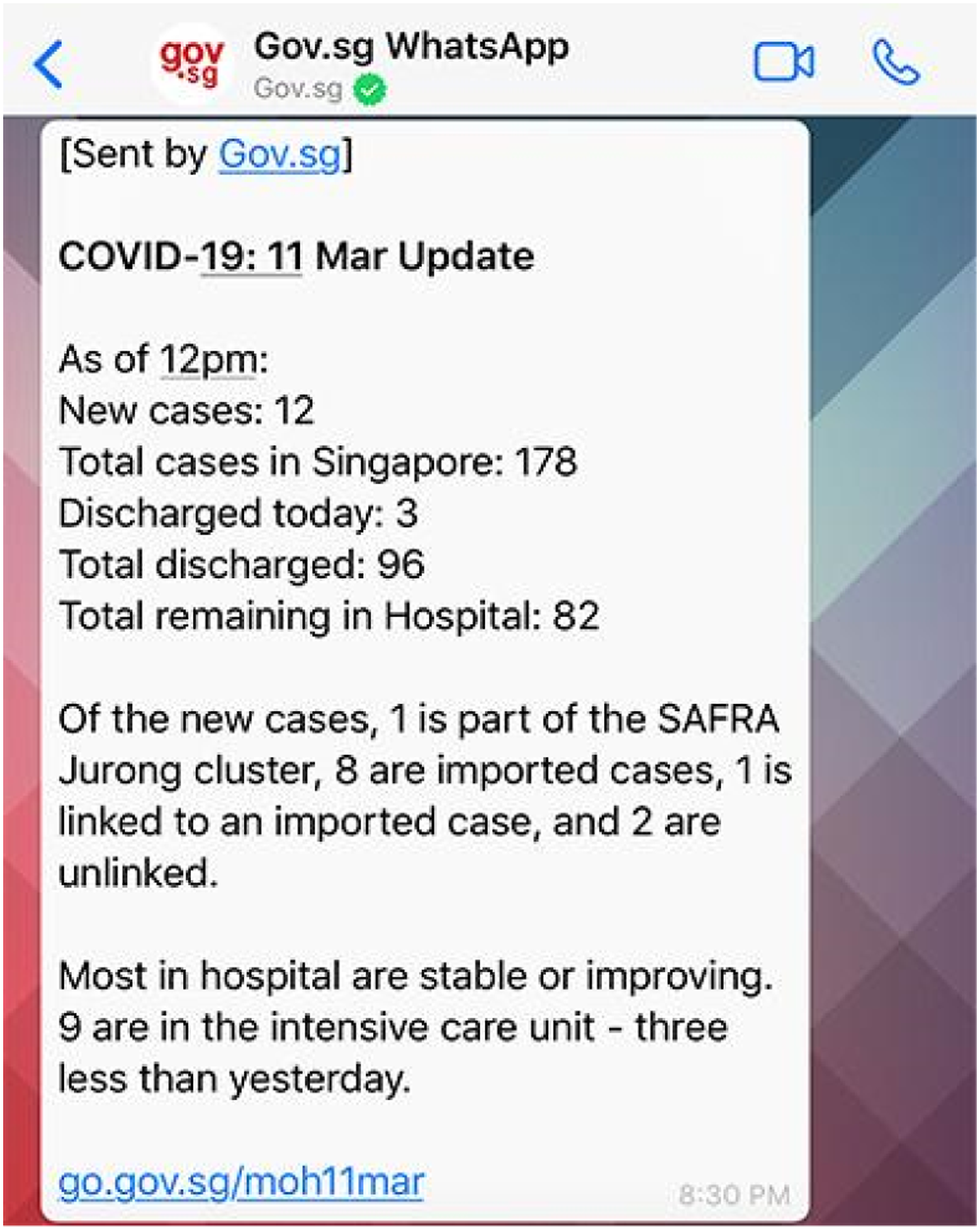
However, as previous research was conducted pre-pandemic, it was still unclear how people would respond to the ongoing nature of such a focus group discussion during a lockdown. The team was also interested to find out the extent to which a person’s surroundings would affect the quality of response, with WhatsApp allowing for the physical safety to conduct urgent data collection during a pandemic. As such, the team found it appropriate to adopt WhatsApp as a data collection platform due to the familiarity of Singaporeans with the platform and the pervasiveness of WhatsApp’s use as a platform of everyday communication among Singaporeans.
In this paper, we draw on our experiences conducting digital focus group discussions via WhatsApp during the COVID-19 pandemic to make recommendations on how to adopt this approach for qualitative health research.
Methodology
This study aimed to explore Singapore residents’ knowledge, attitudes, perceptions, and behaviors around COVID-19 as shaped by different information sources. In addition to understanding the propagation of pandemic-related information and misinformation, we also investigated the feasibility, acceptability, and rigor of collecting focus group-based qualitative data using a common, trusted, free-to-download, free-to-use mobile messaging app. Subsequent data analysis focused on the similarities and differences in knowledge, attitudes, perceptions, and behaviors across different age groups, with particular emphasis on how individuals share, post, and interact with health and outbreak-related information and how such information affects their behaviors. Evidence in the published literature also suggests that there are differences in usage patterns for WhatsApp across age and educational attainment (Rosenfeld et al., 2018). As such, eight WhatsApp-based focus groups were conducted with participants stratified by age groups, namely, 21–30 years, 31–40 years, 41–50 years, and 51 years and above.
Participant recruitment and selection
Participants were recruited through the team’s personal network via social media (Facebook, Twitter, Instagram, WhatsApp) using a standardized poster that was circulated (see Figure 2). Participants who were Singapore citizens or permanent residents, who were aged 21 and above and were WhatsApp users were included in this study. To indicate their interest to participate in this study, potential participants completed a pre-qualifying survey by scanning the QR code provided in the poster, or to access the link given in the poster. This pre-qualifying survey allowed the team to stratify people across demographics such as age, education level, housing type, marital status, gender, and ethnicity to ensure greater representation in the study. Recruitment poster for online and social media distribution.
The research team launched the recruitment poster at about 3p.m. on 10 March 2020.18 hours later at about 9a.m. on 11 March 2020, the team had received a list of about 109 sign-ups. Participants who signed up were largely skewed toward those who were in the younger age categories (i.e., below 40 years old). This is likely due to the personal social networks of the research team where the recruitment call was disseminated to and consisting of people who were in the same age bracket as the research team members, and due to a higher proportion of young individuals on social media channels.
Preparations for participants and researchers
Participants were first sorted by age group and eligible participants were then approached individually to provide their availability. Participants were then further sorted by time availability to match their schedule with the fixed synchronous group discussion time slots. Participants were then randomized within each age group to get 6-8 participants per digital focus group. The team then sought to assess if we had sufficient representation across dimensions of ethnicity, gender, and socioeconomic status. For groups that were overwhelmingly male (i.e., 51 years old and above), we sought to purposively recruit more female participants within that age bracket by repeated calls on social media and snowball sampling. The team then replaced participants in the existing digital focus groups to achieve greater representation across these demographic characteristics. All these were done internally, and the research team only “created” a group chat a few hours before the first synchronous discussion on the first day of the digital focus group, which took place over five consecutive days.
Once groupings were finalized, the research team then reached out to participants individually to share the participant information sheet and obtain informed consent. This included informing participants about study-related ethical concerns and risks, Participants were informed about the risks surrounding the study and ways in which they could mitigate these risks. For instance, recognizing that a lack of anonymity was a potential concern, the research team informed participants that they could change their names and display pictures to protect their anonymity throughout the duration of the discussion. However, while participants were aware of this, very few participants changed their display pictures or gave themselves a pseudonym during the actual FGD.
Other ethical concerns and risks (see Figure 3) included participants being able to screenshot and share responses from the group chat on to social media platforms without consent, having one’s personal details given out to other participants or having one’s phone number tagged to one’s personal details and the potential of being contacted privately outside the confines of the FGD and/or receiving unsolicited texts from other participants. While the team screened participants before admitting them into the FGDs, private messages beyond the group chat where the FGD was being conducted was beyond the facilitation team’s control. Participants were asked to immediately inform facilitators should they feel uncomfortable at any point in time, or if they had received unsolicited messages from other participants. Throughout the duration of the FGD, we had one participant who had received an unsolicited text message from another participant in the same group. The facilitators then privately messaged the sender to stop such behaviors and informed the receiver to block the sender on his/her end. The facilitators also reminded the sender that if such behaviors persisted, he/she will be removed from the FGD entirely and no longer be permitted to participate. Screenshot of informed consent process where participants were informed about the ethical concerns and security risks of being in a WhatsApp focus group discussion.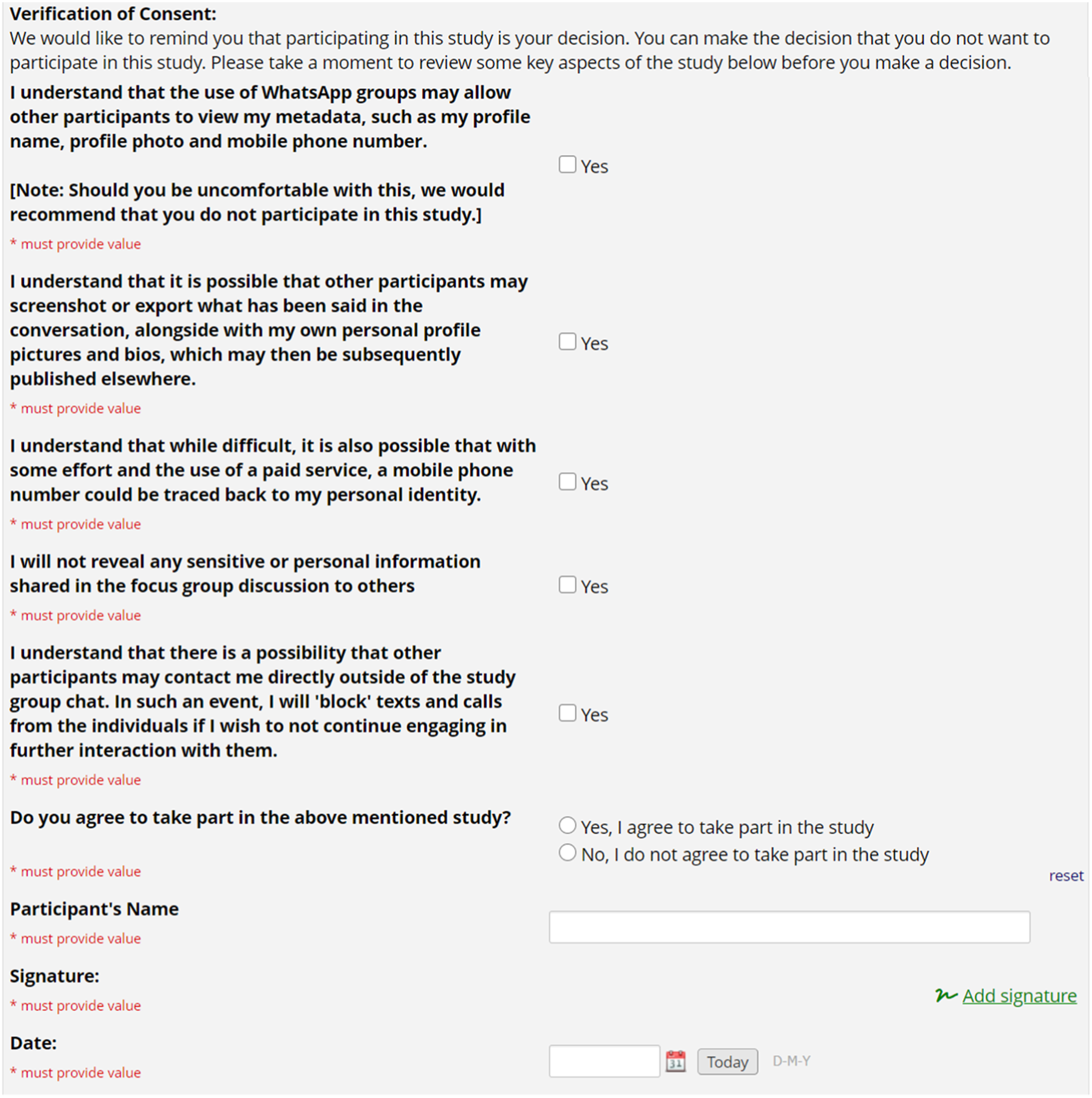
Data collection
Summary of topics for daily discussion.
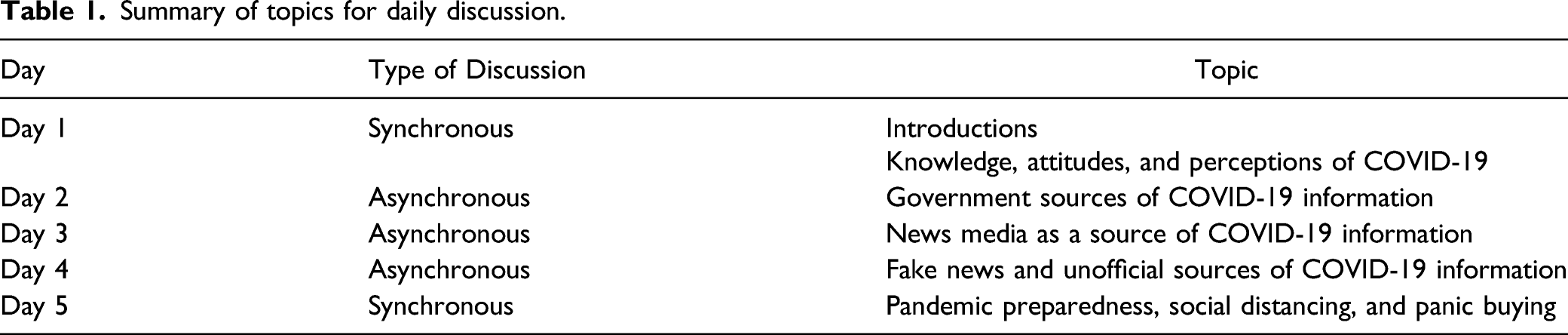
In each FGD, there was one lead facilitator from the research team who guided the flow of conversation throughout the 5 days of discussion. The main role of the facilitator was to follow the topic guide and ensure a conducive environment for participation throughout the duration of the study.
Each member of the research team took turns to facilitate at least one FGD. We realized that the facilitator also required other “softer skills” such as managing the different personalities in the group conversation, managing, and defusing heated disagreements among participants, finding ways to get those who are quieter to speak up and being on the ball to always monitor the chat. Especially for chats that are more active and have more messages sent per hour, the facilitator also needed to summarize points that were being mentioned by various participants and help participants have checkpoints so that the conversation would flow according to what the topic guide intended for the discussion of that day to be.
On the first day, the lead facilitator started the ball rolling by welcoming all participants to the group. Following a script that was developed by the research team, the lead facilitator also reminded the participants of the ground rules of the discussion (see Supplemental Appendix 2) and gave participants a two-hour window to introduce themselves. The facilitator also reminded participants to return to the WhatsApp chat group at the pre-agreed time for the day’s synchronous discussion. A similar format was used for the discussion on Day 5, where the facilitator also reminded participants of the specific time for the synchronous group discussion. On days 2–4 when asynchronous discussions were taking place, the facilitator would type the prompt of the day at 9a.m. and participants were told that they could respond anytime between 9a.m. and 6p.m. that day.
During the focus groups, participants primarily responded to questions and interacted with the facilitator and their fellow focus groupmates in text format. However, recognizing the importance of other forms of expression that are not strictly text-based, the research team took note of other cues shared by participants, including emoji, images (e.g., photos, memes), web links, and videos, that provided insights into their sentiments on the topics being discussed.
Consideration of evolving data collection context
Notably, the team kept track of Singapore’s evolving COVID-19 landscape throughout the data collection period. In every focus group discussion, we made sure to incorporate discussion of recent key pandemic-related events, particularly major policy changes (e.g., mandated use of contact tracing apps and masks, physical and social distancing rules, lockdowns, government-rendered financial assistance). This ensured that the data collected were not only reflective of changing pandemic conditions, but also that we were gleaning participants’ responses to, attitudes toward, and concerns around these changing pandemic conditions in real time. This included emotional responses to new policy announcements and perspectives on how new policies would impact participants’ daily lives.
Timeline of key pandemic-related events over the course of the data collection process.

Post-FGD procedures and feedback gathering
At the end of the discussion on Day 5, participants were given instructions on how to collect the food or rideshare vouchers as remuneration for participating in the entire duration of the study. We also collected feedback via an online survey that sought to understand the feasibility and acceptability of the WhatsApp platform for conducting research (see Supplemental Appendix 3 for survey questions). Facilitators then proceeded to thank participants for their time, informed participants that they could contact the respective groups’ facilitators should want to share detailed feedback on a one-to-one basis, removed all participants from their respective WhatsApp chat groups, and deleted all groups from the app. Voucher incentives were distributed to all participants on an individual basis within 2 weeks of the end of the FGDs; participants were given the option to receive these vouchers either electronically or via physical mail.
Data analysis
All WhatsApp chat messages from the digital FGDs were considered primary data. Chat logs were exported directly from WhatsApp in. txt format using the app’s inbuilt “Export Data” function and included web links, photos, videos, and any other media that were shared by participants during the FGDs. Exported WhatsApp chat logs were uploaded into (software) and thematically analyzed. Analyses drew on both inductive and deductive approaches. As most entries contained colloquial and abbreviated terms, looking at the data in their original form ensured that social and cultural contexts were maintained (Hymes, 2013). Analyses were conducted iteratively by all members of the research team. Three members of the team (PHMN, JML, RKJT) are local Singaporeans and one team member (SEO) is a long-term Singapore resident, ensuring that interpretation and analysis of the data was grounded in in-depth understanding of the local socio-cultural context.
Reflexivity
As argued by Fox et al. (2007), qualitative researchers who use novel methodological approaches must engage in reflection and reflexivity to make the research experience transparent and critically explore the viability of the method being used (Fox et al., 2007). Reflexivity was built into the data collection and analysis process in two main ways: the presence of an observer and parallel discussion, which functioned as a “living” analytical memo to supplement and inform our thematic analyses.
Apart from the lead facilitator who would drive individual FGDs, another 2–3 members from the research team were also included in each FGD to play an observer role. These members were also introduced at the start of the FGD, so that all participants are aware that they were a part of the group chat. The main role of the observer was to gather field notes during data collection and to consolidate all these findings in a separate “field notes” WhatsApp chat group. This “field notes” chat was crucial in allowing the team the space to discuss difficult situations while the actual focus group was happening concurrently.
Observers were also invited to point out biases and bring to the facilitator’s attention areas that may have been missed out in the “field notes” chat without directly undermining the authority of the lead facilitator. As part of the research team, observers were also brought in to mediate any disagreements that occurred between participants, or if any participant complained about receiving unsolicited text messages. Most importantly, observers helped to capture analytic memos around themes that were being generated during the discussion and highlighted main points that the team could revisit during analysis. Themes that were identified from the memos were discussed within the research team after each FGD. In our analysis, field notes were considered a secondary data source to acknowledge the reconstruction of meaning and context that resulted from the research team’s real-time discussion process.
Results
Engaging participants
The techniques used to engage participants in the FGD process are shown in Table 3. All participants were reminded daily about the importance of participation and the ground rules of engagement via the WhatsApp platform. The daily prompts addressed five key topic areas, namely: 1. Knowledge, perceptions, understanding, attitudes toward COVID-19 2. News-sourced information 3. Government-sourced information 4. Lay health beliefs, misinformation, and fake news 5. Outbreak preparedness and hysteria Steps taken to engage digital FGD participants throughout data collection period.

Successful engagement with participants was defined as the effectiveness of these topics and prompts in eliciting frequent, insightful, and rich responses from participants, including personal accounts and experiences, sharing of information sources, and encouraging healthy and constructive back-and-forth debate and discussion within groups. Groups were also kept open throughout the week so participants could continue their discussions with one another beyond the scheduled FGD slots; this was deemed helpful to developing within-group trust and rapport.
Recognizing some participants’ privacy and confidentiality concerns, throughout the week of FGDs, participants were also given the opportunity to send private messages to members of the research team to ask questions and/or provide feedback that they may not have been comfortable sharing within their allocated groups. At the end of the week, all participants were thanked by the research team and provided with incentives in the form of grocery shopping or rideshare vouchers.
Summary of thematic findings
Key themes and illustrative quotes.

Feasibility and acceptability of the digital FGD format
Participant feedback on feasibility and acceptability of the digital FGD format.

Methodological Insights
Strengths
We found that the use of WhatsApp as a means of conducting focus groups not only served as a means of generating essential, time-sensitive data in the community, but also advanced the quality of data generated, vis-a-vis traditional focus group discussions, for several reasons.
Like other forms of data collection that adopt digital means, collecting data on WhatsApp is easy and low cost compared to traditional in-person ways of collecting focus group data (Rosales & Fernández-Ardèvol, 2016). In our study, the only costs incurred were printing costs, researcher time, per-participant cost of participation incentives, and costs of purchasing mobile SIM cards which the research team used to as facilitator accounts from which WhatsApp focus group discussions were conducted. There were no costs incurred from items typical of in-person focus group discussions, such as facility/room rental, participant transportation reimbursement, snacks, audio transcription, or refreshments. These cost benefits have also been highlighted by other researchers in the wider literature (Anderson, et al., 2021)
Digital data collection also allows the research team to collect data anytime, anywhere (Colom, 2021; Singer et al., 2020). This app-based data collection method was also logistically favorable given the quarantine and lockdown measures that have been implemented in many countries during the COVID-19 pandemic. Conducting discussions over WhatsApp allowed us to generate data in a way that was rigorous, thoughtful, and perhaps most importantly at this time, protective of participants’ health and well-being due to the lack of physical exposure/contact involved. Additionally, in post-FGD feedback forms, participants also highlighted that the convenience of participating in a discussion via an app was a major reason motivating their willingness to participate in our study.
Collecting qualitative data with a widely used (i.e., WhatsApp had over 2 billion users worldwide as of February 2020), free-to-download, free-to-use app process democratized and enhanced the participatory nature of FGDs. Barriers to participation, such as the need for participants and facilitators to download and familiarize themselves with a new and unknown app, were eliminated. Also, participants’ familiarity with the WhatsApp platform allowed us to consider and facilitate the communication of potential issues around data privacy, such as the accessibility of participants’ profiles and other meta-data among other participants, and the participants’ ability to screenshot and share discussions with others.
Compared to traditional focus group discussions, app-based focus group discussions allowed for the scope to cover a much wider breadth of issues. With the discussion held over 5 days at a comfortable pace, the team could explore a range of at least five different topics with minimal participant burnout risk, as compared to exploring the same breadth of issues in a traditional 3–4-hour session. In addition, other empirical research in this area suggests that online/digital focus groups encourage participants to be more open, be more comfortable candidly sharing potentially sensitive or controversial information or opinions, and express disagreements more openly compared to in-person focus groups (Mann & Stewart, 2000; Stewart & Williams, 2005).
App-based data collection also allowed us to simultaneously collect two types of data—textual data from participant’s typed responses, as well as media data such as images, videos, GIFs, and web links. Participants could also forward messages to the group chat that they had received from the family and friends as well. The benefits of this form of data collection were manifold. First, we were able to save time and money in converting traditional audio recordings into verbatim transcripts. Next, by encouraging participants to share their thoughts through various means, they were able to “show” instead of “tell” the group what they had meant, ensuring that there is minimal data loss in translation. Finally, the team was also able to concurrently analyze textual data alongside media data, resulting in a richer and more well-rounded analysis.
Methodologically, WhatsApp-based focus groups had also proved to facilitate a more democratic data collection process as compared to traditional in-person focus groups. The lack of in-person relationship between the facilitator and participants in the WhatsApp focus group meant that power structures are not as concretely put into place. In WhatsApp focus groups, participants have as much power to speak up as facilitators and have as much control to shift the flow of conversation.
Challenges
While using WhatsApp as a means of conducting focus groups had many strengths especially during a pandemic, there were also challenges that the team had to tackle and learn from while concurrently facilitating the various WhatsApp groups. At the time of our study conception and conduct, to our best understanding and knowledge of the current published literature, there were no other research studies using WhatsApp to collect qualitative data as part of exploring the impacts of the COVID-19 pandemic as it unfolded. In fact, other studies analyzing FGDs over WhatsApp faced similar challenges as this study when it came to the data collection process (Colom, 2021; Singer et al., 2020). Against this backdrop, we present the challenges we faced while conducting this study and reflection points on how we overcame them.
Part of the digital FGD design was to compare the differences between asynchronous sessions and synchronous sessions and assess which was more suitable for the setting of an app-based focus group. We found that asynchronous sessions were more convenient for most participants across all age groups, but conversations on days of asynchronous discussions were also more scattered. This is similar to what Singer et al. (2020) and Colom (2021) found in their studies which spoke about a similar tapering off of participation toward the end of the FGD and how the elongated timeframe for a WhatsApp FGD allowed for an increased quality of data collected. For instance, in some groups, there would be long pauses in the middle of the day until the facilitator prompted the participants again for their contribution. Asynchronous discussions, however, worked for mothers with young children who required flexibility and could only respond when their children were taking a nap. Asynchronous discussions could then consider opinions from this group of participants. Synchronous sessions however, provided the team with more targeted discussions. Participants mostly stayed on point and answered the required prompts.
Compared to traditional focus groups, it was not possible for the facilitator to read and access a participant’s body language or tone of voice in app-based focus group discussions. Without these non-verbal cues, it might be hard for the facilitator to pick up certain nuances in a participant’s response and increase the chances of misunderstanding among participants. The lack of such bodily cues also means that facilitators sometimes find it hard to nudge quieter participants to respond, or to encourage more dominant participants to share the space.
When a participant is not responding on an app-based chat, the facilitator does not know whether it is because the participant is facing any difficulties, is disengaged by the conversation or simply did not have the time at that moment to participate in the discussion due to other commitments. Our team noted that in the eight FGDs that we had conducted, there were two groups that faced inactive participants. The team then had to come together in the separate “field notes” chat we had created for each FGD to discuss how we could better engage these inactive participants—which included messaging these participants privately to check if they were facing any difficulties, or in some cases, to signal them using the @ function in the WhatsApp chat and specifically asking for their response.
Also, we found that our most enthusiastic and perhaps most dominant participants tended to respond to facilitator questions more quickly than the rest of their group and tended to respond to facilitator questions with lengthy text responses or bursts of consecutive short messages, which could be perceived as “crowding out” the views of their discussion groupmates. In these situations, facilitators would thank the dominant participants for sharing their experiences and redirect the flow of discussion toward other participants who had not yet had a chance to share their views. Where needed, facilitators would also message these dominant participants privately to gently encourage them to allow other participants to share their views.
Additionally, we noted that despite having distinct discussion topics on each day of discussion, different days’ themes sometimes organically overlapped with each other as participants shared their views. This has also been highlighted as a challenge in other scholarship in this area (Anderson, et al., 2021). To manage this, the facilitators made deliberate efforts to ensure that each day’s discussion guide was adhered to as closely as possible and gently signaled to participants during discussions to let them know that the topic they were foraying into would be discussed in greater detail at another session.
Methodologically, our team also realized that when facilitating such focus groups, different methods are needed to engage different age groups and continue establishing and maintaining participant rapport online. What worked well for one group did not necessarily work the same for another age group. For instance, we noticed that older participants tended to talk in colloquial language a lot more than younger participants, who typed in fuller sentences. This could be due to younger participants being on WhatsApp using the WhatsApp Web function where they could sync their phones to their laptops, allowing them to type in longer sentences. Older participants also stayed online a bit more and hence the flow of conversation also moved faster in FGDs that involved participants of an older age range. One facilitator noted that if she looks away for 10 minutes, the FGDs that involved the older age group could have 60 unread messages, compared to the FGD with younger participants that might have only eight unread messages. Our team learned the importance of alternating between rapid and slow paces of discussions. We discussed the importance of engaging participants so that there would be no long silent pauses, especially during asynchronous discussion days, and knowing when to step in such that no one dominated the chat for too long. We also found that older participants used emojis a lot more as compared to younger participants who used gifs or animated stickers to express themselves instead. At the end of the discussion, one participant from FGD2A (from 21 to 30 years age range) gave feedback that “I would say if it was on Telegram, it might have been better, because Telegram allows you to pin messages, so we don’t have to scroll to find the questions in the flood of messages. Other than that, I think the experience was pretty smooth).” Such comments also suggest the possibility of conducting FGDs over other app-based chat platforms with more features compared to WhatsApp that younger participants might be more familiar or comfortable with.
Ways forward
At time of writing, the research team is preparing to conduct a new digital FGD study to explore the Singapore public’s experiences and understandings of the COVID-19 pandemic over a year in, with a focus on three thematic areas: 1) healthcare and information-seeking behaviors throughout the pandemic, 2) experiences with work and day-to-day activities during the pandemic, and 3) thoughts and perspectives on maintaining social interactions and mental/emotional well-being throughout the pandemic.
Summary of modifications made.

Lessons for future research
Our experience with digital FGDs using the free-to-use, free-to-download mobile communication platform WhatsApp offers several lessons for those considering this approach. Firstly, that WhatsApp-based qualitative data gathering is of high utility during a pandemic situation, where social/physical distancing and safety of participants and the research team are paramount. Secondly, that there is potential for applicability of the conduct of digital FGDs in other contexts to Singapore which report similarly high levels of mobile penetration and mobile communication platform use. Third, that future research in this area should recognize differences in use patterns, openness and transparent sharing, and utility of digital communication platforms between age groups, depending on technology familiarity, uptake, and adoption levels. Fourth, future research in this area should also reflect on the extent to which online/digital spaces are truly disembodied and in what ways this ambiguous space impacts data quality and rigor, especially when compared to traditional in-person qualitative data collection. While some researchers might point out the disembodied nature of online interactions (Dreyfus, 2013; Marin, 2022), others argue that online spaces are not disembodied as they continue to be spaces where emotions, social action, and experiences of togetherness and community are experienced (Coffey & Kanai, 2021; Osler, 2020). Finally, there is a need to strike a balance between the need to elicit high-quality data and placing potential stress on participants’ time, schedules, and well-being, especially during a pandemic where mental health concerns are paramount.
Conclusion
Digital focus group discussions via a mobile communication platform are a promising, flexible, and adaptable means of collecting qualitative data from a diverse range of respondents sampled from the public. The ability to maintain frequent and convenient two-way interaction with participants and researchers, facilitated using WhatsApp, a free-to-download, free-to-use, widely used chat app in the Singapore context, offers the potential to safely collect timely and relevant data during a pandemic, during which social and physical distancing are crucial. Additionally, this study supports findings in the wider literature that using WhatsApp for the conduct of focus groups is effective, efficient, increasingly ubiquitous, and highly accepted by study populations. Although privacy and confidentiality concerns remain, it is imperative that such digital solutions for qualitative data collection are further explored in the context of other health-related research questions beyond a public health emergency context.
Supplemental Material
Supplemental Material - Using WhatsApp Focus Group Discussions for Qualitative Data Collection: Exploring Knowledge, Attitudes, and Perceptions of COVID-19 in Singapore
Supplemental Material for Using WhatsApp Focus Group Discussions for Qualitative Data Collection: Exploring Knowledge, Attitudes, and Perceptions of COVID-19 in Singapore by Pearlyn HM Neo, Jane M Lim, Rayner KJ Tan, and Suan Ee Ong in International Journal of Qualitative Methods
Footnotes
Declaration of conflicting interests
The author(s) declared no potential conflicts of interest with respect to the research, authorship, and/or publication of this article.
Funding
The author(s) disclosed receipt of the following financial support for the research, authorship, and/or publication of this article: The publication of this study was generously funded by the Saw Swee Hock School of Public Health, National University of Singapore and the National University Health System.

Supplemental material
Supplemental material for this article is available online.
References
Supplementary Material
Please find the following supplemental material available below.
For Open Access articles published under a Creative Commons License, all supplemental material carries the same license as the article it is associated with.
For non-Open Access articles published, all supplemental material carries a non-exclusive license, and permission requests for re-use of supplemental material or any part of supplemental material shall be sent directly to the copyright owner as specified in the copyright notice associated with the article.
