



Abstract
Adopting a plant-based diet (PBD) has environmental sustainability benefits and has been shown to improve overall health and quality of life, yet for most people a diet shift towards a plant-based one remains a challenge, due to personal and environmental obstacles. Important independent decisions on self-care and nutritional habits occur in the first year of enrollment for college students. This cross-sectional quantitative study aims to examine the association between health beliefs, motivators, barriers, self-efficacy, and mental health status and following a more PBD in college students. A total of 449 Californian public university and junior college students completed an online survey. A stepwise multiple regression model was used to predict the level of intention to follow a PBD. Self-efficacy (β = 0.28, P < .001), motivators (β = 0.33, P < .001), and barriers (β = −0.19, P < .001) significantly predicted and accounted for 35% of the variance in intention to follow a PBD. The results reveal that greater self-efficacy, higher motivation, and fewer barriers predicted higher intention to follow a PBD. Beliefs did not add significantly to following a PBD.
“The students’ beliefs about plant-based nutrition did not significantly increase their likelihood of eating more plant-based.”
Background
According to the recent data from the National Health Statistics Reports, 22% of adolescents in the United States aged 12 to 19, and almost 42% of adults 20 years and older, are obese. 1 Looking at college students over a 4-year period, researchers found that students gain weight throughout college. 2 Previous research shows that the transition from high school to college is an especially vulnerable time for weight gain and lifestyle habit formation. 3 Thus, it is important to target college-age students when it comes to health behavior-related interventions for preventing obesity.
According to Statista’s database, 4 in the 2020-21 school year, there were almost 21 million American undergraduate university or college students. Of the undergraduates surveyed at the end of fall of 2021, 39% rated their health as very good and 13% rated their health as fair or poor. 4 Although most universities and colleges in the United States offer health services and promote health awareness, only half of the survey respondents felt that students’ health and well-being are prioritized. 4 It is important to further understand what university or college students perceive as healthy behaviors and the barriers to achieving a healthy lifestyle, and identify what health services students find most effective, to promote university or college level health services that reach students effectively.
With obesity rates at an all-time high, promoting a PBD could improve overall health and quality of life for college students. Numerous studies have shown that plant-based dietary patterns are associated with lower risk of various chronic diseases and lower mortality rates.5-7 Yet for most people, personal and environmental obstacles make a shift towards a PBD challenging. College is when young adults start making their own decisions on self-care and begin adopting lifelong nutritional habits, thus this is a crucial time in encouraging the shift towards a more PBD.
Studies have looked at college-age students’ barriers to healthy eating, sources of health information, determinants of health and eating behavior, as well as student academic performance and eating behaviors. No studies have looked specifically at the beliefs of American university students about plant-based nutrition as a part of a healthy lifestyle choice, and how university programs could effectively promote a more PBD among their students.
Rosenstock’s health belief model (HBM) was used as the study’s theoretical framework to understand health behavior choices and barriers among college and university students.
8
According to the HBM, perception of one’s personal health behavior depends on perceived benefits and barriers, self-efficacy, perceived threats, and cues to action. The HBM has been expanded over the years to provide a better understanding of psychological construct changes of health-related behaviors and has been adapted for this specific project (Figure 1). This conceptual model suggests that by understanding how beliefs, barriers, and motivators influence eating more plant-based foods, valuable information can be gained for creating promotional health programs that could encourage students to eat more plant-based and less processed and animal products. HBM adopted for conceptual framework.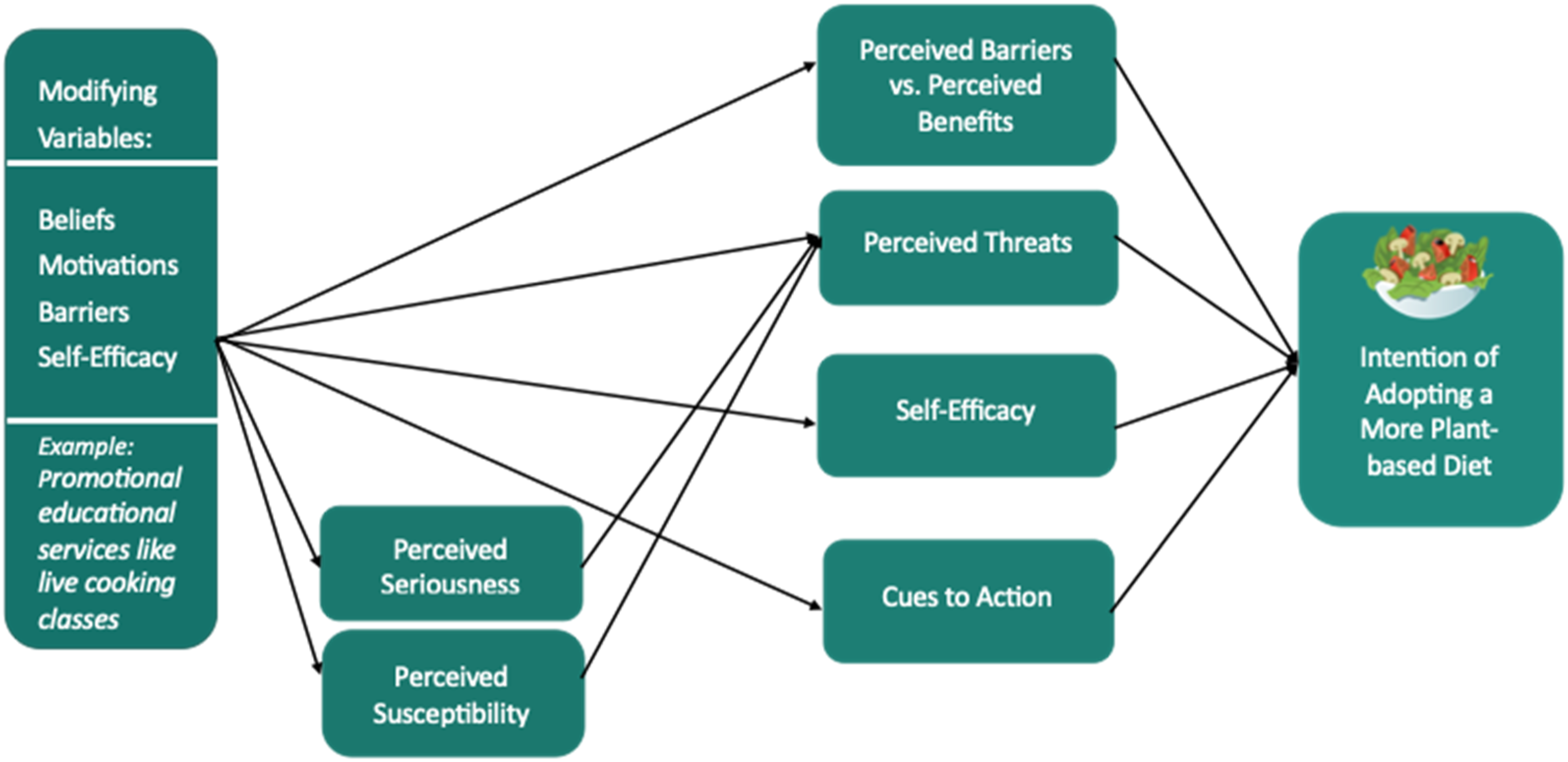
There is a myriad of research on the benefits of plant-based nutrition and more specifically understanding the current attitudes and beliefs about plant-based nutrition, and motivations and barriers to following a more PBD. It is important to see what health promotional services, if any, have been found effective in promoting healthy lifestyles and a more PBD in university settings. Health educational resources in American universities could be enhanced and there are potential beneficial implications of such health educational and promotional services.
Benefits of Plant-Based Diets
Numerous studies have shown that a whole food PBD can decrease the risk of many chronic diseases such as cancer, diabetes, heart disease, and strokes. 9 PBDs also prevent obesity, which leads to many detrimental health problems. 10 A randomized clinical trial that tested the effects of a PBD, specifically the role of plant protein on weight loss and insulin resistance, showed a reduction in both body weight and insulin resistance in the group that followed a plant-based vegan diet. 11 Almost eight out of the ten causes of death in the United States have been linked to illnesses that could be ameliorated with a healthier diet and lifestyle.12,13 In their review, Ahnen, Jonnalagadda and Slavin 14 explain the many nutritional benefits of plant proteins and their potential for not only diabetes and weight management, but also for cancer prevention, and decreasing the risk of developing metabolic syndrome.
Attitudes, Beliefs, and Barriers Towards Plant-Based Nutrition
There are several factors that influence individuals to follow a PBD. Health benefits and ethical concerns are the most cited reason for starting a PBD in the general population.15,16 Planning is an important factor in following a more PBD: action planning such as learning how to cook plant-based foods, and coping planning like mentally preparing for adverse social situations when having to modify a food order in a restaurant.17,18 An evidence mapping study looked at 56 publications of various PBD followers (vegetarian, vegan, flexitarian, and other PBDs) and found that the main motivations for starting or adhering to such diets are health, sensory/taste, animal welfare, environmental concerns, and weight loss. 19 Several studies have looked specifically at the barriers that people face in following a more PBD. Social vegan stigma has been a prominent barrier that inhibits dietary shift towards more PBDs. 20
Some studies have looked specifically at university and college-age students’ barriers to healthy eating, their source of health information, determinants of health and eating behavior, and their academic performance.21-24 One recent study looked at adherence to PBD in those already following the diet in college-aged students and found that health and ethical motivations are significant predictors of adhering to a PBD. 18 According to another study, 25 “college students are willing to try more plant-based meat and believe that increased consumption of plant-based meat can positively impact the environment” (p. 476). Sogari, Velez-Argumedo 23 used an ecological model to examine college students’ eating habits through small focus groups and found that students believe that healthy eating is eating clean, eating more vegetables and fruits, as well as eating some sort of protein. The authors suggest larger studies need to be done to evaluate whether tailored interventions could be helpful in increasing healthy lifestyle behaviors in college students. A study at Bethel University concluded that although students had knowledge about a healthy diet, they were also aware that they did not follow it. 26 Family influence on motivation regarding eating behaviors appears to be minimal among college students since most do not live with family.27,28
In a study of adolescents, the main barriers to following a more PBD were a lack of knowledge of what makes up a PBD, lack of awareness of the benefits for personal and planet health, lack of skills preparing plant-based meals, and expecting poor taste of plant-based foods. 29 Studies have looked at various factors influencing college students’ nutritional intakes, but the beliefs, motivators, and barriers of students eating more PBDs needs to be further examined in order to enhance the food environment and health promotional programs in American universities.
Mental Health and Diet
Recent research on the benefits of whole food plant-based nutrition on mental health status shows the importance of prevention and treatment of mental health disorders through nutritional interventions.30-32 The COVID-19 pandemic caused an increase in mental health issues for many, especially young people. 33 High rates of distress, mental disorders, and self-harm have continued to escalate beyond the initial pandemic spike.34,35 As the pandemic waned, most adults’ anxieties have abated somewhat and, by and large, anxiety and depression have returned to the baseline levels. 36 Yet for young adults, especially adolescents and emerging adults, negative effects have persisted, exacerbating a mental health crisis that was already of unprecedented scope. 37 According to the Healthy Minds Study, 60% of college students met the criteria for suffering from at least 1 mental health issue. 38 With the majority of college students suffering from mental health problems, it is valuable to look at the association between mental health status and the intent to follow a more PBD, especially knowing that diet influences mental health status. 39
Given the myriad of benefits of PBD and the negative state of mental and physical health of American college students, the purpose of this cross-sectional study was 3-fold: (1) to determine how the current beliefs, motivations, barriers, and self-efficacy levels of Californian college students are associated with their intent to consume a more PBD; (2) to determine what health promotional programs and university services are considered most effective by the students; and, (3) to investigate the relationship between mental health status and the likelihood of consuming a PBD among college students. Findings from this study could guide university health services to effectively promote plant-based nutrition.
Methods
Study Design and Participants
This cross-sectional quantitative study utilized an online platform to survey a total of 449 students. Ethical approval was obtained from Loma Linda University and the UC Berkeley Institutional Review Boards.
Online surveys were advertised and collected through convenience sampling. The fliers included a QR code that linked the participants to the online survey where they first answered a few questions to see if they were eligible for the study. Inclusion criteria included being a current college student (undergraduate, graduate, part-time, full-time, resident and non-resident), being able to read English, and being 18 years of age or older. Participants were recruited through fliers posted all over the UC Berkeley and Berkeley City College campuses from January 2024 to March 2024. If they met the inclusion criteria, they were directed to the informed consent form and then to the questionnaire which took about 12-15 minutes to complete.
Power analysis was performed using G*Power software version 3.1. 40 A Hierarchical linear multiple regression model was used for assessing factors influencing the likelihood of eating a more PBD. The α was set to 0.05, power was set to 80%, and a medium effect size of f2 = 0.15 was used. Using the F-test and the number of tested predictors set at 4 for linear regression, the minimum sample size needed was calculated to be 85. However, since the University of California has a very large student population of over 40,000 students and the analysis controlled for confounders, the aim was to have close to 400 students fill out the survey, knowing that would still only represent 1 percent of the total student population; however, trying to get 10% for proportional sampling would mean 4000 surveys filled out which was not feasible timewise.
Instrumentation
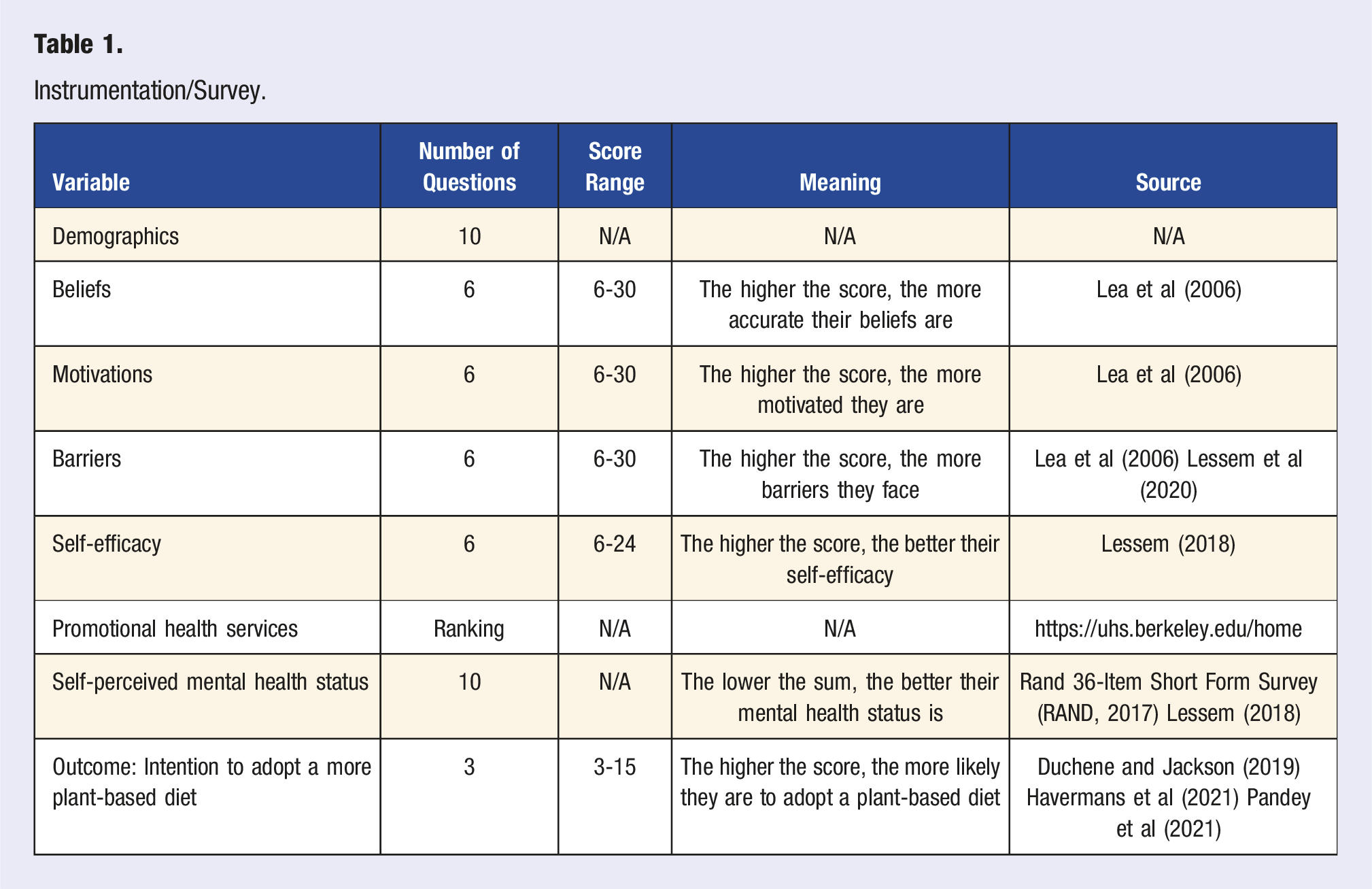
Instrumentation/Survey.
Demographics
The demographics section collected information on gender, sexual orientation, ethnicity, household income, intended major, height and weight (for BMI), history of eating disorders, whether they had heard of the term “plant-based diet” before, and their current dietary preferences [(a) meat eater, (b) omnivore, (c) vegetarian, (d) pescatarian, or (e) vegan]. A self-perceived general health question was also included to describe the sample and was presented after the mental health questions.
Predictor Variables
Four six-item sections of the survey addressed the students’ beliefs, motivation, barriers, and self-efficacy. The sections on beliefs, motivations, and barriers used a five-point Likert scale format with anchors from 1 = strongly disagree to 5 = strongly agree. For the self-efficacy section, a four-point Likert scale format was used: completely lacking in confidence (1), somewhat lacking in confidence (2), somewhat confident (3), and very confident (4).
Beliefs
Items for the beliefs section were adapted from Lea, Crawford and Worsley 42 and included 6 statements to measure students’ beliefs about plant-based nutrition. Examples of the statements are: “You cannot get enough protein on a plant-based diet,” “You cannot get enough iron on a plant-based diet,” and “Plant-based diets do not help prevent chronic diseases.” All 6 questions were negatively worded, so responses were reverse-scored and averaged to create a total belief score with a higher score indicating more accurate beliefs about plant-based nutrition.
Motivators
The motivation section, also adapted from Lea, Crawford and Worsley, 42 measured what would motivate the students to eat more plant-based, including factors such as environmental reasons, personal health reasons, or animal welfare. Examples of the statements were: “I believe eating a plant-based diet could or does help: Prevent disease in general, People have a better quality of life, Our environment, Slow down climate change, Animal welfare/rights, and Save money when buying groceries.” The responses were averaged to create a total motivation score; a higher score denotes a greater motivation to follow a PBD. In addition, means were calculated for the 6 individual item responses, and sample means were ordered from high to low, to indicate what motivates college students the most to what motivates them the least.
Barriers
The barriers questions, adapted from the questionnaires of Lea, Crawford and Worsley 42 and Lessem, Gould, 43 measured the respondents’ barriers to eating a more PBD, and included items related to cost, availability, stigma, taste, time, and convenience. Example statements include, “Eating a plant-based diet would be or is difficult for me because: It wouldn’t taste good, It would be too expensive, There is not enough choice when I eat out, and I don’t want people to think I’m strange or a hippie.” The responses were averaged to create a total barriers score; a higher score denotes more barriers to following a PBD.
Self-Efficacy
Six self-efficacy questions measured the respondents’ confidence in their ability to define and follow a PBD. The items were scored on a four-point Likert scale: completely lacking in confidence (1), somewhat lacking in confidence (2), somewhat confident (3), or very confident (4). Example statements include, “Please indicate how confident you are in your knowledge of each of the following: the definition of plant-based diet, the health benefits of plant-based diets, and where to find or purchase plant-based foods.” These questions were adapted from Lessem’s Capstone project. 43 The responses were averaged to create a total self-efficacy score. Higher scores are associated with better self-efficacy.
Outcome
Intention
The last section of the survey contained 3 questions to form the outcome variable of their intention to eat a PBD. Based on Fishman, Lushin and Mandell 45 looking at predictive validity measuring intentions, their findings suggest that the “I intend” stem might be the most valid measure of intention and that using an aggregate of 2 or 3 intention items increases predictive validity. Therefore, this study had 3 questions to measure intention to eat plant-based in the future. The first question was, “Over the past month how often have you followed a plant-based diet?” Responses were made using a five-point Likert scale: all meals/every day (1), most meals/most days (2), some meals/some days (3), almost never (4), and never (5). The second question was, “How likely are you to follow a plant-based diet in the next month?” Responses were given on a five-point Likert scale: completely likely (1), most likely (2), not sure (3), probably not (4), and definitely not 5). The third question was, “Do you intend to eat more plant-based in general?” Responses were made on a five-point Likert scale: definitely yes (1), mostly yes (2), not sure (3), probably not (4), definitely not (5). These questions for measuring the intention to eat more plant-based foods were informed through a number of recent studies.29,46,47 The responses from the 3 questions were reverse-scored and averaged, so that a higher score indicates a higher intention to adopt a PBD.
Promotional Health Services
In this section, respondents were asked to rank the different programs from most beneficial to least beneficial that are currently offered through the university’s health promotion group such as live cooking demonstrations, recorded cooking videos, participatory cooking classes, educational pamphlets, free nutrition courses, and one-on-one health coaching, from most beneficial to least beneficial. The responses to these questions were used to address the study’s second research question.
Self-Perceived Mental Health Status
The mental health scale was adapted from the validated RAND Short form 36 Survey which can be used and adapted without permission to measure how they have felt in the past 3 weeks (did you feel down and in the dumps, did you feel anxious or did you feel tired for example) on a six-point Likert scale from 1 = “none of the time” to 6 = and “all the time.” 48 There was also 1 multiple choice question from RAND which asked “In general would you say your health is”: with the choices: excellent, very good, good, fair, and poor. There were a total of ten questions. Five of the questions indicate a positive mental health status, and 5 indicate a negative mental health status. Responses to the negatively worded items were be reverse-scored per RAND’s online scoring answer key, so that a higher sum score indicates a better mental health status. This measure was used to address the study’s third research question.
Statistical Analysis
Statistical analysis was performed using IBM SPSS Statistics for Windows, version 29.0.2.0. Statistical significance was set at α < 0.05. Descriptive statistics (i.e., frequencies and percentages for categorical and means and standard deviations for ordinal and continuous level variables) were generated to provide information on the participants’ demographic characteristics, dietary history, and current dietary choices. A stepwise multiple logistic regression model was used to test the 4 potential predictors for the intention of following a PBD. Ordered means were calculated to assess the most to least beneficial promotional health programs according to the students. A regression model was also used to measure mental health predictors using both the Emotional Well-Being and the Energy/Fatigue scales combined for the intention of following a more PBD.
The items adapted for the variables of this study (Beliefs, Motivation, Barriers, Self-Efficacy, Mental Health Status, and Intention) were assessed for internal consistency reliability using Cronbach’s alpha coefficients. An alpha of 0.70 or greater was considered to represent sufficient internal consistency reliability.
Prior to conducting parametric analyses, the normality assumption were assessed for the study variables, BMI, and household income using z-scores formed by dividing skewness by the standard error of skewness. A z-score within +/− 3.29 is indicative of a normal distribution. 49 Normalizing transformations were applied to any distribution found to be skewed according to recommendations provided by Tabachnick and Fidell. 50
Preliminary analyses were conducted to assess the significance of relationships between potential confounding variables and the outcome variable (intention to adopt a more PBD). A t test was used to compare the outcome measure by gender. Pearson correlations were used to assess the significance of relationships between the outcome and household income and BMI. The relationship of potential confounders with the outcome variable were checked before considering them for entry into the regression equations. None of the potential confounders significantly correlated with the outcome variable.
Results
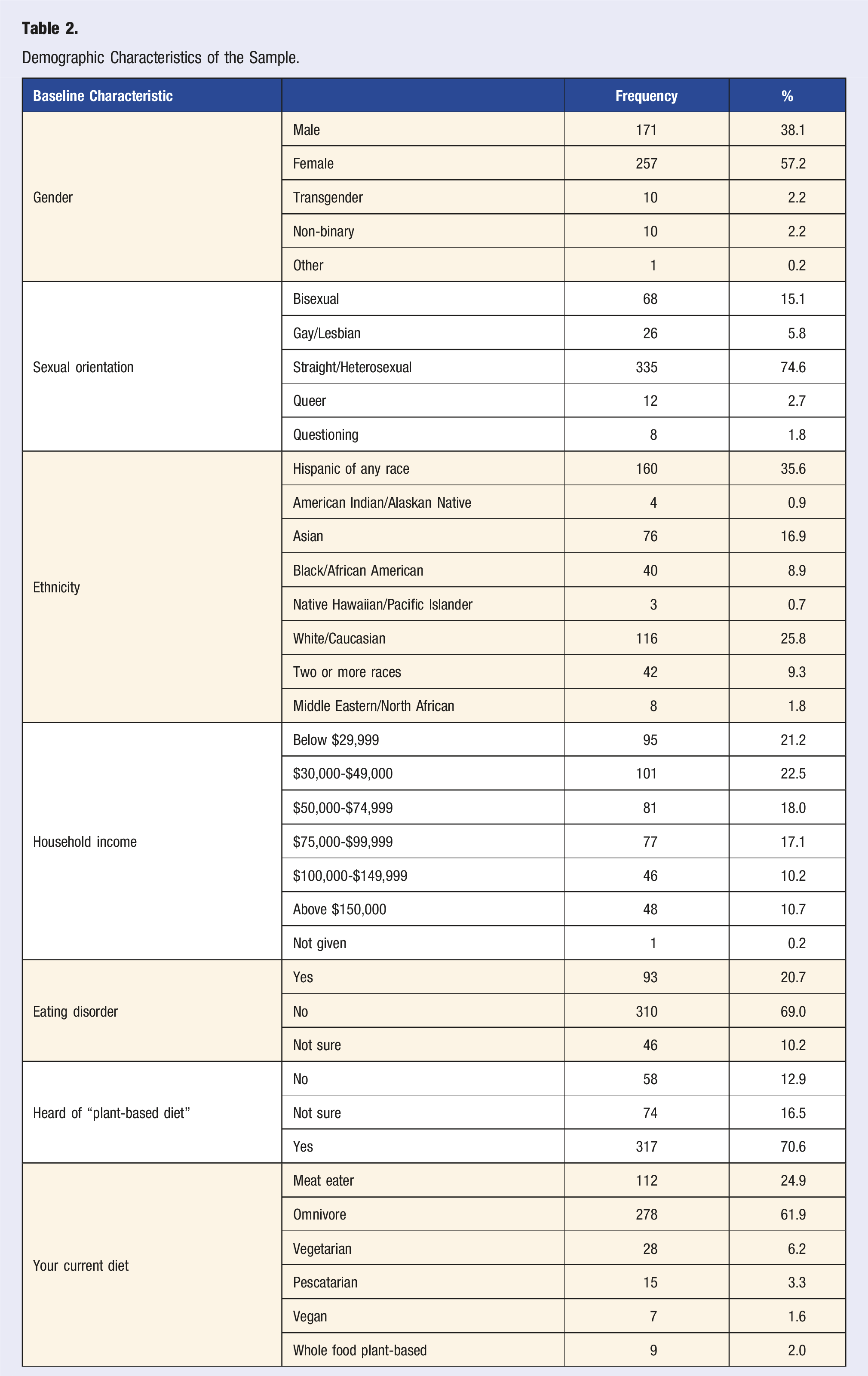
Demographic Characteristics of the Sample.
Summary Statistics for Continuous Measures.
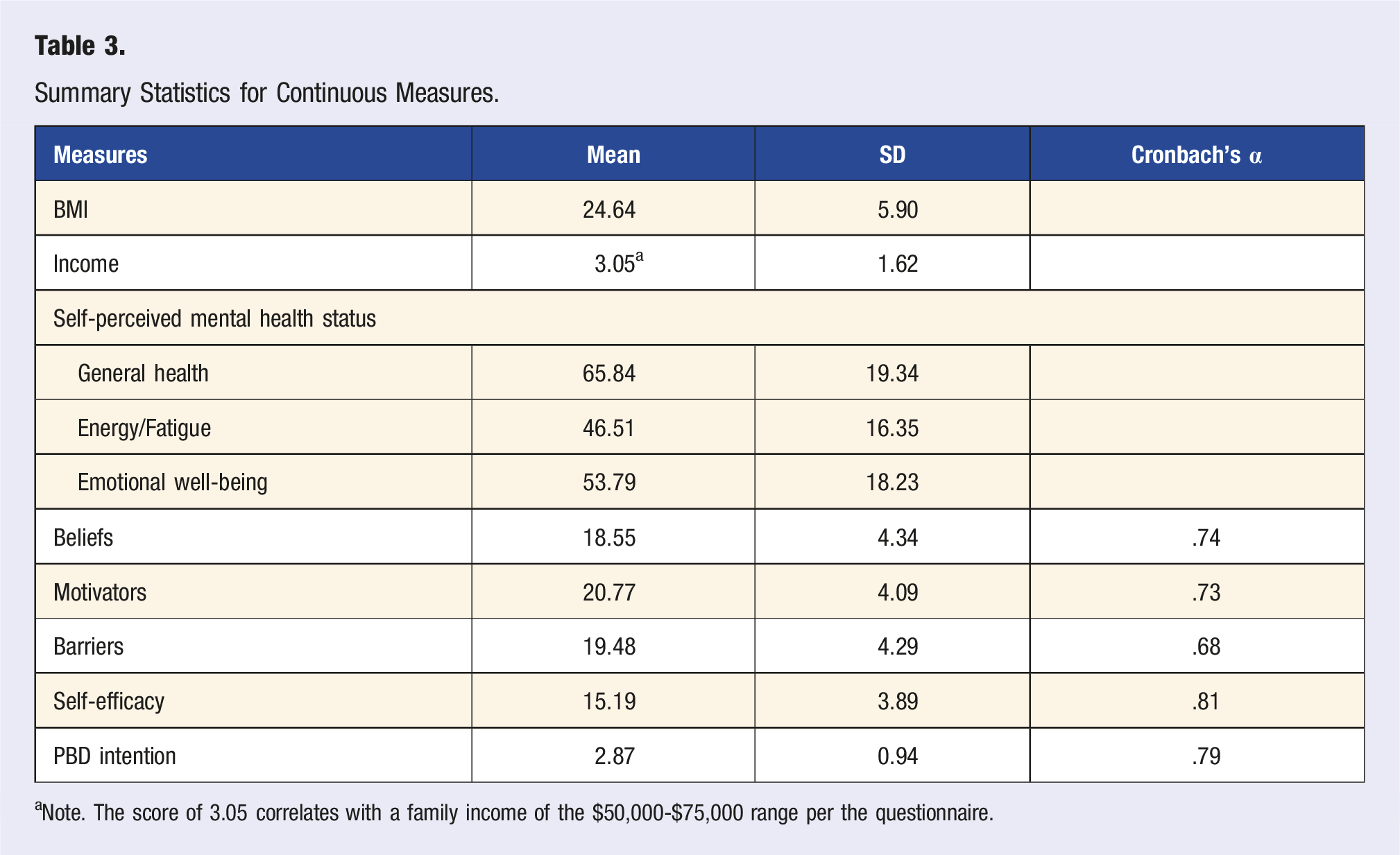
aNote. The score of 3.05 correlates with a family income of the $50,000-$75,000 range per the questionnaire.
Prior to testing the hypotheses, gender, BMI, and income were assessed as potential confounding variables. A t test was conducted comparing males and females on PBD Intention. There were too few representative respondents to run comparisons for the other genders reported, so they were excluded. The results indicate that PBD Intention did not differ significantly by gender (t (426) = 0.07, P = .941).
The relationships between PBD Intention and BMI and income level were tested using Spearman correlations. Neither BMI nor income level were significantly related to PBD Intention.
Predictors of Intention
Hierarchical Regression Results to Predict PBD Intention.
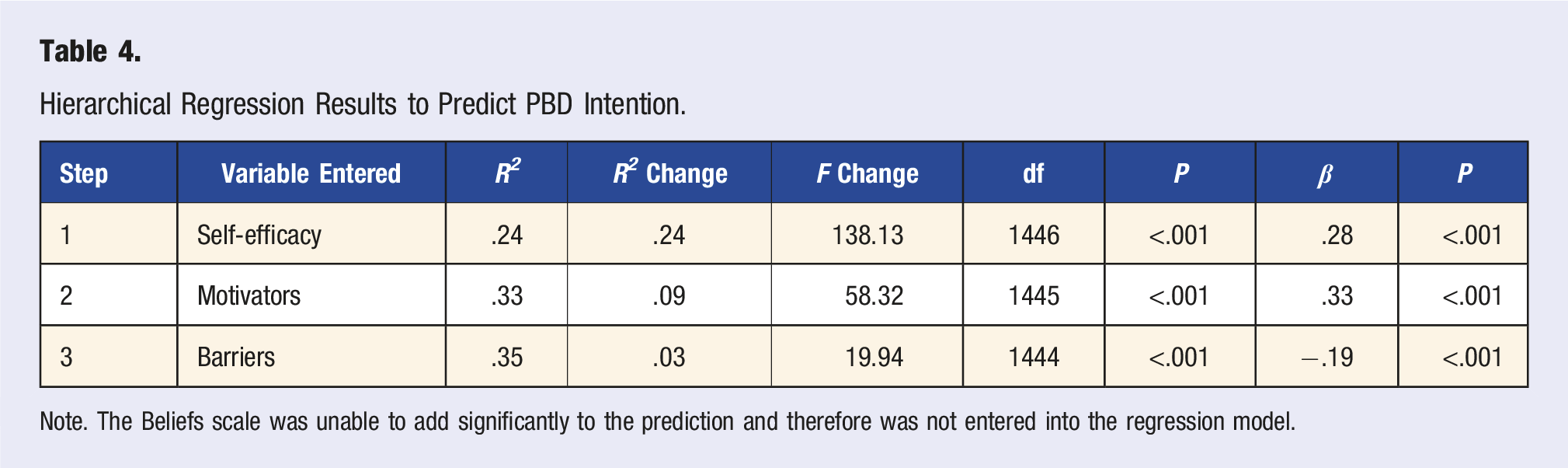
Note. The Beliefs scale was unable to add significantly to the prediction and therefore was not entered into the regression model.
Health Promotion Services
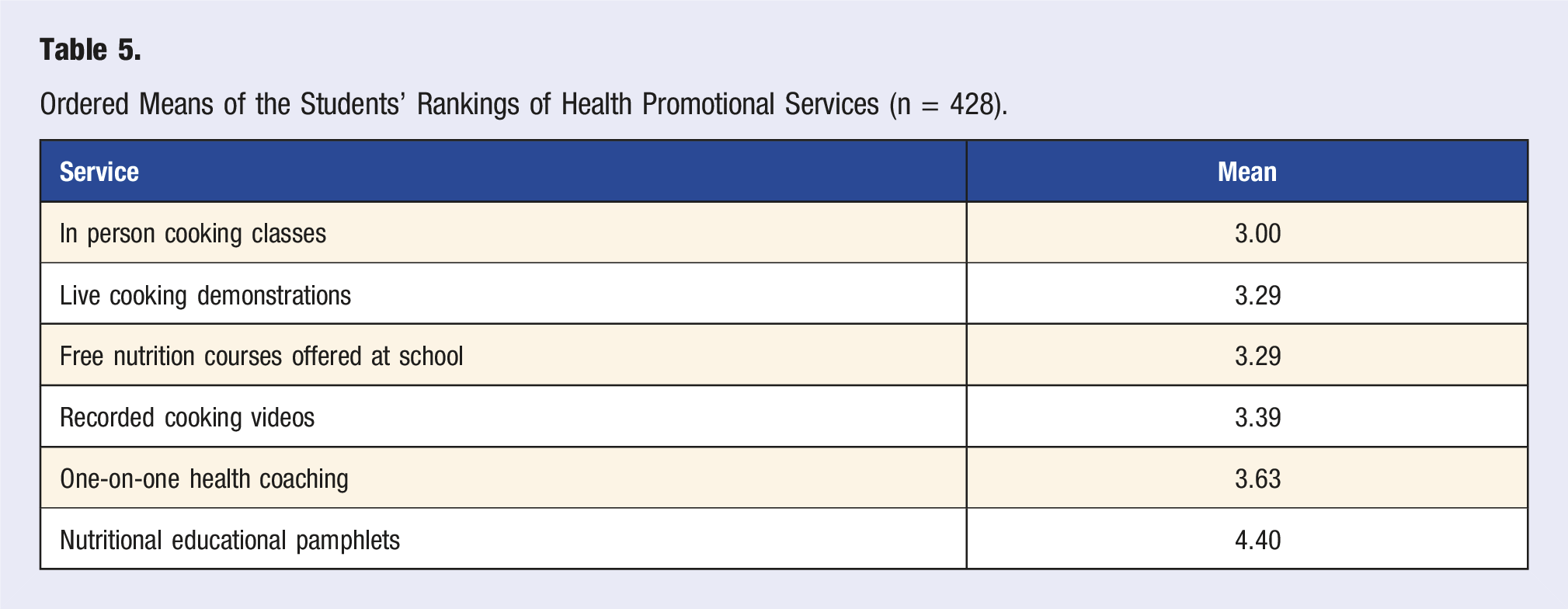
Ordered Means of the Students’ Rankings of Health Promotional Services (n = 428).
Mental Health Status
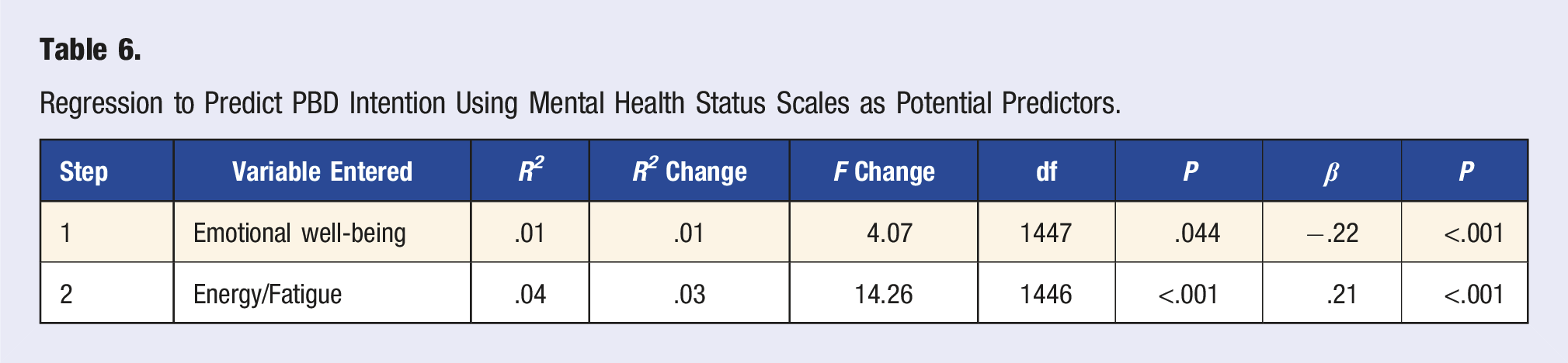
Regression to Predict PBD Intention Using Mental Health Status Scales as Potential Predictors.
Discussion
Our research indicates that barriers, motivators and self-efficacy significantly predict students’ intentions of adopting a more PBD. Surprisingly, the students’ beliefs about plant-based nutrition did not significantly increase their likelihood of eating more plant-based. This suggests that while students come from different backgrounds, cultures, and beliefs, it is their current environment, rather than their beliefs, that plays a larger role in their diet choices. While some studies highlight the influence of personal beliefs, attitudes, and pro-environmental beliefs on adult consumers’ willingness to adopt a more PBD,51,52 there remains the need to better understand the role of external and socio-cultural factors in nutritional choices, particularly among the college students. 53
By learning how the current students’ beliefs, motivators, and barriers are associated with following a more PBD, health promotion programs could be tailored to enhance these latter factors to decrease the students’ perceived barriers to following a more PBD, as well as increase their understanding of health benefits of following a more PBD. Perceived beliefs and motivations can be enhanced by increasing students’ understanding of their perceived susceptibility and perceived seriousness to adverse health events. Through tailored health educational programs, knowledge about the various benefits of PBD and the disadvantages of eating too much animal products could be enriched, and so the perceived seriousness and susceptibility to diet-induced illnesses and environmental detriments will be affected. Such knowledge will also influence the perceived benefits vs barriers and perceived health threats. Through tailored health promotional services, increased knowledge about accessing and preparing plant-based foods on campus, the intention of following a more PBD will also be enhanced.
The health promotional rankings findings are important for university administrators and health promotion groups because it shows that in person and experiential programs have a bigger impact on students’ food choices rather than information pamphlets or online demonstrations. Universities will more effectively influence the health of their students by investing in more nutritional experiential programs such as in person cooking classes, live cooking demonstrations, and free nutrition courses.
A few papers have looked at interventions in university settings promoting healthier lifestyles among students. A systematic review looked at health interventions in college-aged students looking at physical activity, nutrition (more vegetable and fruit intake), and weight loss as the outcomes. 54 In the nutrition studies 12 out of 24 studies showed significant improvement in their perspective outcomes of more physical activity, more fruits and vegetable intake, or weight loss. Surprisingly, interventions that spanned a university semester or less generally resulted in a greater number of significant outcomes in comparison to interventions that lasted more than a semester. 54 Interventions embedded in the university courses as well as face to face contact with facilitators improved nutritional outcomes. 54 Interventions involving students’ feedback on their progress also seemed more effective than just attending lectures or receiving educational resources. Most of these studies looked at specifically changing the food environment. Taking results from previous studies in conjunction with findings from this study, evidence-based tailored health promotion programs can be created and tested for their effectiveness in encouraging students to follow a more PBD. During this pivotal time in the lives of American young adults, health education and promotion programs are essential for better health outcomes.
The results from the mental health status of students confirm that students suffering from mental health problems are less likely to eat more plant-based foods. Whole food plant-based diets have been shown to enhance mental health status 39 ; therefore, by increasing access to plant-based foods, there may be a positive impact on students suffering with mental health issues.
Our study indicates that the majority of participants demonstrate a general understanding of PBDs, suggesting that the concept is not unfamiliar to them and that they possess a foundational grasp of the term, even in the absence of a precise definition.
An additional observation from our study was that a significant proportion of the respondents (almost 30%) reported having or suspecting they had an eating disorder (see Table 1). This confirms recent findings from another study that showed a significant increase in eating disorder prevalence among college students since the COVID-19 pandemic. 55 Of those that said they had or were unsure whether they had an eating disorder, almost 76% were female and 24% were male; the mean BMI didn’t differ between the 2 groups. There was a significant relationship between eating disorder status and current diet preference. Students who reported they had or were unsure if they had an eating disorder were also less likely to report having a current diet which included any red meat (χ2 = 7.00, P = .008). These finding concur with other studies that report more females suffer from eating disorders and those suffering from eating disorders tend to partake in dietary restraints.56,57 It is important to note that enhancing the students’ relationship to healthy foods through health promotional services is crucial for this age group that is more likely to suffer from some sort of eating disorders, further highlighting the need for nutritional promotional program in colleges and universities that support a healthy relationship with food.
Strengths and Limitations
The strengths include the sampling being from a large public university and nearby junior colleges which represent a diverse population both racially and socioeconomically. There may be several limitations in this study, the main being that this is a cross-sectional study, so causation cannot be inferred. Also, the participants, although from diverse backgrounds, all live in an urban liberal setting and do not represent college students in rural small colleges. The questionnaire did not specify whether the students were originally from California, from out of state, or were international students. As a result, another limitation is the uncertainty regarding their original cultural perspectives, which may influence their decisions to adopt a more plant-based diet. Participants also self-selected into the study, so they may have been more interested in or knowledgeable about plant-based nutrition. As with all self-reported questionnaires there is a chance of misinformation towards socially acceptable responses such as entering a lower weight or a taller height. Another notable limitation of the current questionnaire design is the potential difficulty in distinguishing between the items corresponding to the various variables (i.e., beliefs, motivators, and barriers). To address this issue in future studies employing a similar questionnaire format, it would be advisable to conduct a factor analysis to assess whether the observed correlation patterns are consistent with the data. 58 Factor analysis is particularly useful for reducing the number of factors derived from a set of interrelated variables prior to their inclusion in a regression model. 59 This approach could help clarify whether certain items, as currently categorized in the survey, may overlap or load onto different factors.
One last limitation may be the intention section of the questionnaire. Ajzen’s Theory of Planned Behavior argues that intention leads to behavior, but not always; thus, there may be a gap between intention and actual behavior. 60
Conclusion
Obesity rates in the U.S. continues to rise, 61 but lifestyle interventions during the college years of young adults may help mitigate this trajectory.
Our findings show that greater self-efficacy and higher motivation, as well as fewer barriers predicted higher intention to follow a PBD. Surprisingly, the students’ beliefs did not add significantly to their intention to follow a PBD. This suggests that the students’ current environment, including their motivators, barriers, and self-efficacy plays the largest role in their food choices and outcomes. More studies are needed in order to evaluate live cooking classes and free nutrition courses offered at university and college campuses to measure the impact on students eating more plant-based. Given the significant role of the environment in food choices, future research should explore theories and constructs beyond the HBM. Considering the extensive literature on food choices and the complexity involved in decision-making,62,63 qualitative studies are needed to better understand whether the factors influencing food choices in a university setting differ from those in other contexts.
Given the large number of college students that may be suffering from eating disorders, future studies should look at the impact of health promotional programs like the ones mentioned above for students cultivating a healthier relationship to food. Campus wide policy changes would also enhance the campus environment to increase motivators and reduce barriers of eating more plant-based, including greater availability and accessibility of plant-based foods on campus as well as reduced pricing of plant-based foods for students. By looking at how beliefs, barriers, and motivations are associated with eating more plant-based in a diverse California public university, effective programs can be tailored to reach all students and especially those that may be at higher risk of health issues. Understanding the values underpinning diet-related behavior through beliefs, motivators, and barriers, can provide vital insight to inform tailored nutritional promotion programs in college settings.
Footnotes
Acknowledgments
The authors would like to acknowledge Biostatistician Linda Deacon, PHD for her superb technical guidance.
Declaration of Conflicting Interests
The author(s) declared no potential conflicts of interest with respect to the research, authorship, and/or publication of this article.
Funding
The author(s) received no financial support for the research, authorship, and/or publication of this article.
