




Abstract
Purpose
Physical activity (PA) and mindfulness are independently associated with improved cognitive function; however, the effects of their combination on cognitive function are unknown. The purpose of this study was to examine the effects of an acute bout of PA, mindfulness training, and combined PA and mindfulness training on changes in cognitive function and perceived cognitive ability.
Methods
Using a repeated measures within-subjects design, adults (N = 29, Mage = 28.6) completed three 20-minute counterbalanced conditions: a) mindfulness training (MIND); b) moderate-intensity walking (PA), and c) moderate-intensity walking while listening to PA-specific mindfulness training (PAMIND). Participants completed the NIH Toolbox Cognitive Battery and PROMIS Applied Cognition Short Form before and after each condition.
Results
Within-subjects repeated measures ANOVAs revealed inhibitory control, working memory, task shifting, processing speed and the fluid composite score (P < .01 for all) improved from pre-to post-condition for all conditions. Perceived cognitive ability declined across all conditions pre- to post-condition (P < .001); decreases were largest in the MIND condition.
Conclusion
Cognitive performance improved following acute bouts of general mindfulness, PA, and the combination of the two, but perceived cognitive ability declined. Future work is warranted to examine effects in other populations and as a result of different PA and mindfulness doses and interventions.
“It is possible that physical activity and mindfulness meditation work in parallel to affect cognitive function as opposed to a synergistic relationship.”
Introduction
Cognitive function refers to a set of mental processes that lead to acquisition of knowledge. These involve functions that are essential to everyday tasks such as memory, attention, decision-making, and language comprehension. Many factors contribute to improving or maintaining cognitive function, which has broad implications for quality of life, educational and career opportunities, and decision-making abilities. Physical activity (PA) and mindfulness are two relatively low-cost, modifiable lifestyle behaviors that show promise for improving cognitive function across the lifespan and reducing age-related cognitive decline in addition to a wide array of other health benefits.1,2
Physical activity is defined as any bodily movement produced by skeletal muscles that increases energy expenditure. 3 Overall, there is moderate support that PA benefits cognitive functioning across the lifespan. 1 Higher levels of regular PA have been associated with improvements in academic achievement and performance on neuropsychological tests including processing speed, memory, and executive function in both observational and randomized trials.1,4 In addition to the effects of regular PA on cognition, acute bouts of PA also improve cognition with effect sizes ranging from .014 to .67 across systematic reviews and meta-analyses summarizing 12–79 studies.5-9 Although these reviews are promising, the effects are not consistent and suggest intensity and duration of PA and timing of cognitive assessment may influence effect sizes.5-8,10 However, effects are most consistent for the domain of executive function, but significant benefits were also observed for processing speed, attention, and memory.5-8 Moderate-intensity PA for 11–20 minutes has been shown to consistently demonstrate the most positive benefits on cognition.1,5 In general, the chronic and acute benefits of PA on cognition are observed across the lifespan. However, the strongest evidence exists for early and late life with insufficient evidence for young and middle-aged adults (ages 18–50; 1). Understanding the relationship between PA and cognition in young and middle-aged adults is important as increased PA during this time could preserve cognitive health later in life. 1
Evidence suggests practicing mindfulness meditation may also result in cognitive functioning benefits including improved attentional abilities, working memory capacity, executive functioning, self-control, and concentration.2,11 Mindfulness is the mental practice of focusing attention on and accepting the current moment without judgment through awareness of thoughts, feelings, and physical sensations. One of the most common forms of practice is guided mindfulness meditation, in which an individual is led through a mindfulness exercise by listening to verbal instructions and cues. 12 Mindfulness meditation can also include breathing methods and guided imagery. The relationship between mindfulness and cognitive functioning has been examined in several studies. For example, short-term, intensive mindfulness practice has been shown to improve sustained attention and executive processing ability after a 4-day (20 minutes/day) mindfulness meditation program. 13 Similar improvements in attention have been seen after longer-term (8 week) mindfulness meditation programs. 14 Additionally, 25-minute acute bouts of mindfulness meditation practice have been shown to result in improved executive functioning 10 minutes post-session in experienced yoga practitioners, demonstrating that beneficial cognitive outcomes of mindfulness may be experienced shortly following sessions. 15 It is hypothesized that the calming effects of mindfulness meditation in combination with the act of repeatedly focusing one’s attention may contribute to these improvements in cognitive function following mindfulness meditation. 13
Though PA and mindfulness have been independently associated with improved cognitive function, the effects of combining these two neuroprotective behaviors on cognition is unknown. A few studies have evaluated whether mindfulness following PA influences cognitive function. A study by Edwards and Loprinzi demonstrated that walking immediately followed or preceded by mindfulness meditation improved reaction time compared to a control group.16,17 Additionally, in a study by Austin and Loprinzi, 18 participants who engaged in an acute bout of exercise followed by mindfulness meditation had better long-term memory compared to controls and participants who engaged in exercise alone. Although the studies above demonstrate the potential benefits of combining exercise and mindfulness on cognitive functioning, neither of these studies combined exercise-specific mindfulness simultaneously with exercise. Therefore, it is uncertain at this time whether the combination of these techniques could have a synergistic effect on cognitive functioning. If this is the case, combining the two lifestyle behaviors simultaneously could increase the uptake of these behaviors because it would reduce the time needed to engage in each behavior alone. Understanding how these behaviors, alone, and combined relate to cognitive function could help refine future evidence-based recommendations.
Given this gap in the literature, our study sought to compare the acute effects of a general guided mindfulness training only (MIND), physical activity only (PA), and a PA plus exercise-specific guided mindfulness training (PAMIND) on cognitive function in community-dwelling adults. We hypothesized that participants in the PAMIND condition would have greater increases in cognitive functioning scores compared to either the MIND or PA only conditions.
Methods
Participants
Participants were recruited via an email sent to the Northwestern University Department of Psychology’s list of Paid Research Studies registry, consisting of community-dwelling individuals interested in participating in research through the Department of Psychology. Anyone who is willing to travel to the greater Chicagoland community to participate in research studies is eligible to be a member of this registry and participants do not necessarily have any affiliation with the field of psychology. Interested individuals were screened online or over the phone based on preference and attended a phone call with study staff to review study procedures in detail. Inclusion criteria included: (a) age 18–65 years old, (b) able to read, write, and speak English, (c) able and willing to attend in-person study visits, (d) have access to a computer with internet, (e) have no self-reported respiratory, joint, or cardiovascular problems precluding physical activity, and (f) were not pregnant or were not planning to become pregnant during the duration of the study. Individuals were required to pass the Physical Activity Readiness Questionnaire (PAR-Q;
19
) to assess the safety of exercise or obtain physician consent in order to participate. All participants completed online written informed consent. All study procedures were approved by the institutional review board. Participant flow through the study is detailed in Figure 1. Participant flow through the study.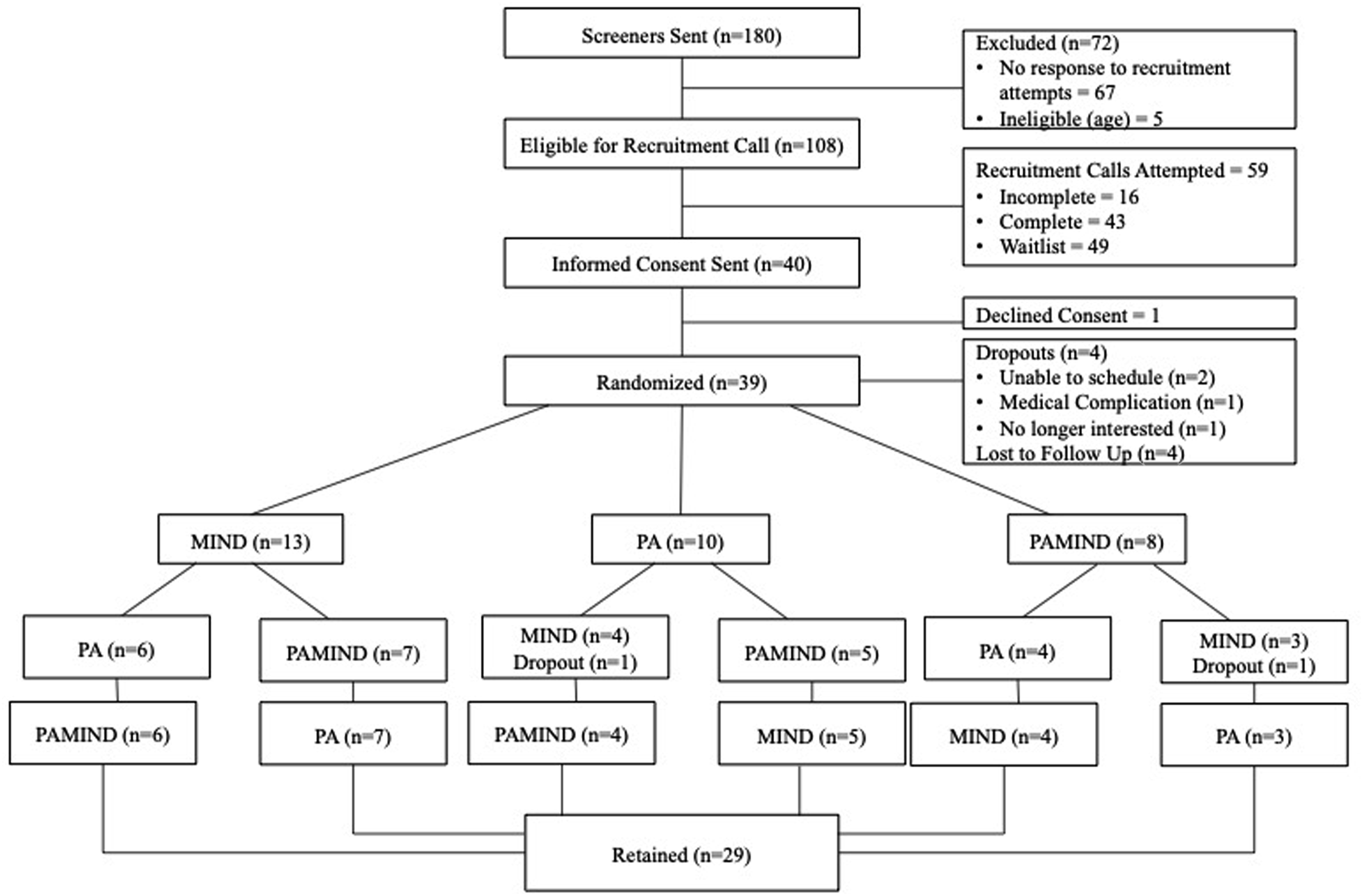
Procedures
We used a repeated measures, within-subjects cross-over design. Prior to the first study visit, participants completed a baseline questionnaire (see below). All participants completed 3 conditions counterbalanced using 1:1 randomization: a mindfulness only condition (MIND), a PA only condition (PA), and a PA + mindfulness condition (PAMIND). Study visits were required to be at least 48 hours apart from one another to ensure adequate recovery from PA. All participants were instructed to refrain from physical activity and consuming caffeine 6 hours prior to their study visit.
Participants were fitted with a heart rate monitor prior to starting each condition. Heart rate (HR), rating of perceived exertion (RPE), feeling scale (FS) and blood pressure (BP) were measured before, during, and after each condition to ensure safety and consistency across conditions. To prevent the potential confounding influence of social interaction between the participant and study staff, talking was kept to a minimum in every session. Participants completed two rounds of cognitive tasks immediately preceding and immediately following each condition. An overview of each condition structure is provided in Figure 2. Study Visit Flow. Figure 2 shows study flow visit, where HR is heart rate, BP is blood pressure, FS is feeling scale, and RPE is rating of perceived exertion.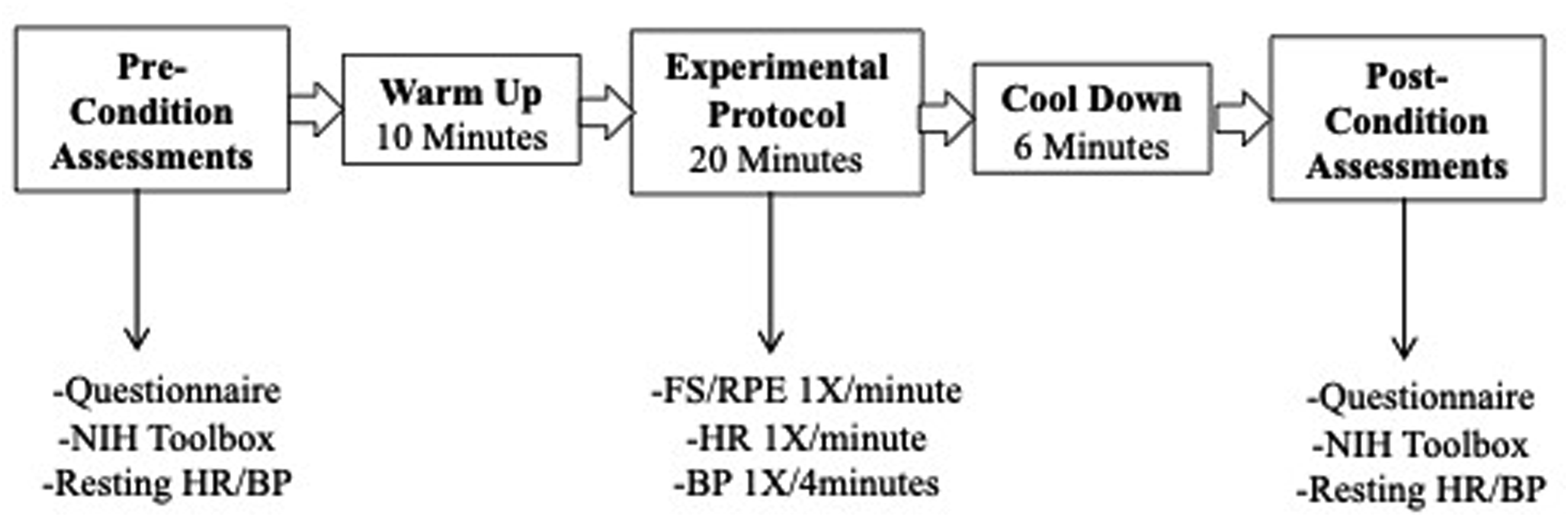
PA Condition
The PA conditions consisted of a 20-minute moderate-intensity aerobic walking on the treadmill. Participants were instructed to walk at 65% to 85% of their maximal heart rate as calculated by the Karvonen formula. 20 Prior to beginning the PA bout, participants completed a 10-minute warm-up consisting of stretching and walking on the treadmill. For the first PA session completed (PA only or PAMIND), participants were aided by research staff during the warm-up in self-selecting their moderate-intensity walking speed and incline to ensure appropriate intensity as well as participant comfort and safety. This speed and incline were used in both PA conditions (PA only and PAMIND) to ensure consistency. Participants completed a 6-minute cool down on the treadmill and self-selected stretching. At the end of the session, participants were provided with water.
MIND Condition
During this condition, participants listened to a pre-recorded, 36-minute, guided mindfulness meditation while lying on a padded exam table. The meditation emphasized bringing awareness to bodily sensations. The recording was structured such that there was a 10-minute “warm-up” period, a 20-minute “active” mindfulness meditation period, and a 6-minute “cool down” period in order to mirror the PA and PAMIND protocols.
Combined Physical Activity and Mindfulness Condition (PAMIND) Protocol
In the combined physical activity and mindfulness condition (PAMIND), participants listened to a pre-recorded, guided mindfulness meditation while walking on the treadmill for the duration of the warm-up, 20-minute walk and cool down following the exact same protocol as described above for the PA only condition.
Measures
Participant Characteristics
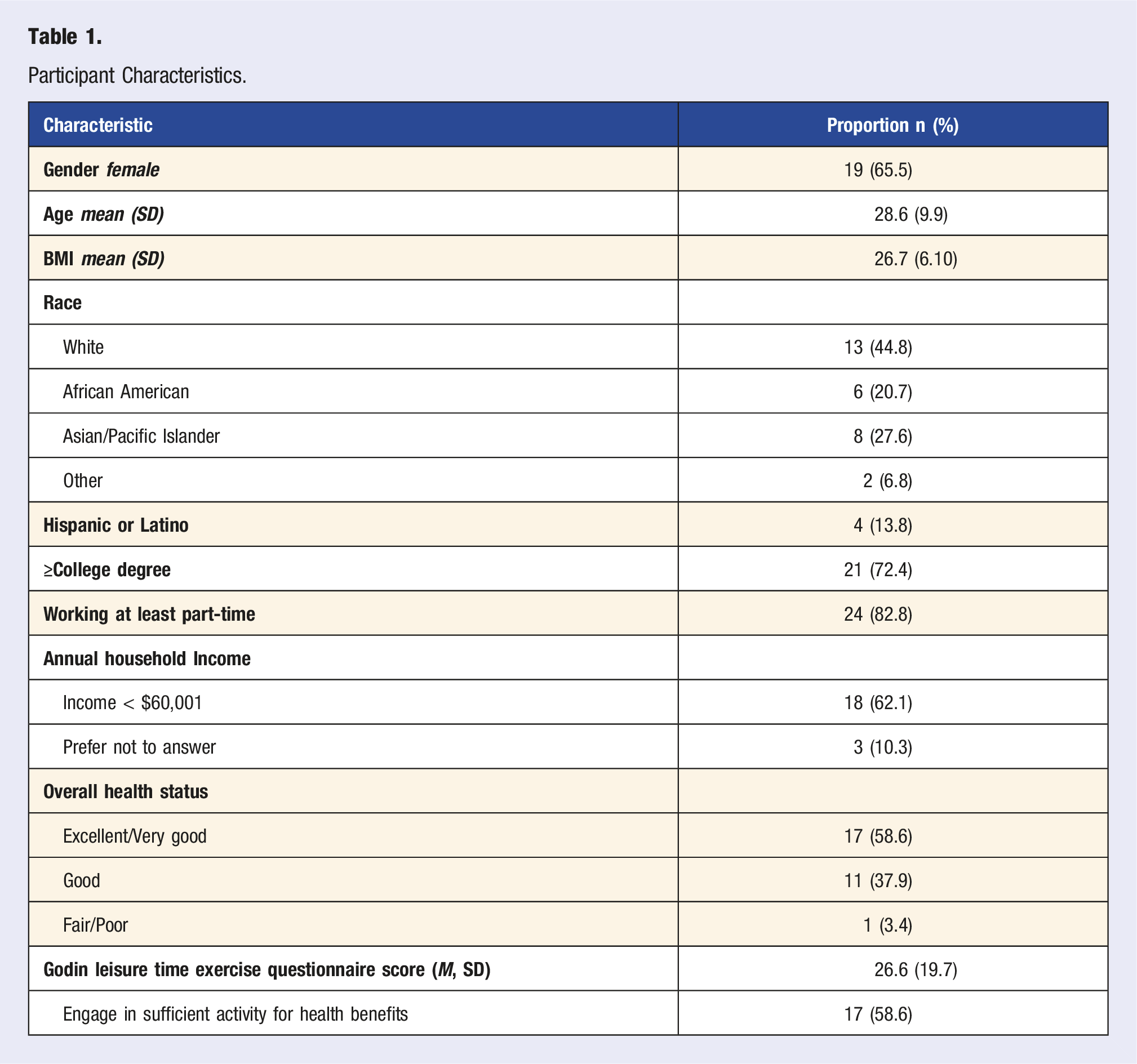
Participant Characteristics.
Godin Leisure Time Exercise Questionnaire (GLTEQ)
The GLTEQ is a self-administered questionnaire that has been validated as measure of physical activity. 21 Participants are asked to indicate the number of times per week they engaged in mild, moderate, and strenuous exercise of at least 15-minutes duration in a typical 7-day period during leisure time. 21 The total weekly activity score obtained from this questionnaire is expressed in arbitrary units by summing the products of the separate components and is referred to as leisure score index (LSI). A second moderate-to-strenuous LSI index is also calculated only including moderate and strenuous activities. Individuals reporting moderate-to-strenuous LSI ≥24 are classified as active enough to achieve substantial health benefits and individuals reporting moderate-to-strenuous LSI <24 are considered insufficiently active to achieve health benefits. 22
NIH Toolbox Cognition Battery
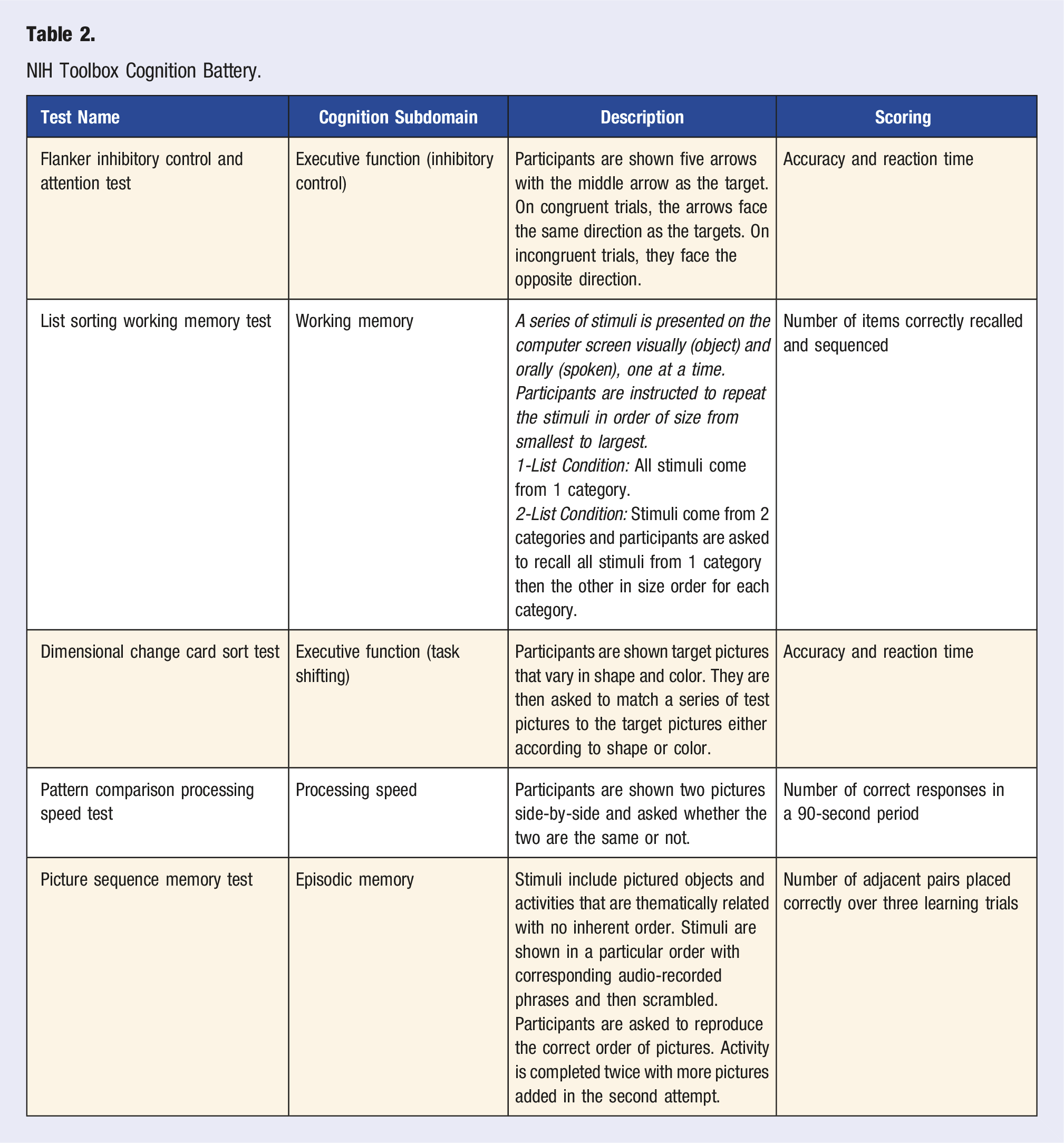
NIH Toolbox Cognition Battery.
PROMIS Applied Cognition—General Concerns Short Form 8a
Perceived cognitive function was assessed using the PROMIS applied Cognition—General Concerns Short Form 8a. 24 Participants responded to statements about their perceived cognitive function over the past 7 days on scale of 1 (Not at All) to 5 (Very Much). A total raw score ranging from 0 to 40 is calculated by summing participants’ responses to each item. The raw score it then converted to a t-score with a mean of 50 and fixed standard deviation of 10. Higher scores reflect better cognitive functioning. The PROMIS Applied Cognition questionnaire was administered before and after the experimental testing at each lab visit prior to the NIH Toolbox to ensure perceived performance on the NIH Toolbox did not impact subjective ratings of cognition.
Statistical Analysis
Twenty-four participants provided 80% power assuming a .05 alpha to detect a small to medium-sized effect (η2 ≥ .04) from pre- to post-session between the three conditions. We calculated descriptive statistics (means and standard deviations) for all variables within each condition and examined distributions. Next, we conducted a three (condition) by two (time) repeated measures within-subjects analysis of variance (ANOVA) to examine the effect of each of the three conditions on NIH toolbox measures and perceived cognition. Time and condition were included as within-subjects factors to allow each subject to as their own “control.” We also used the GLTEQ LSI cutoff to examine whether there were differential effects of the three conditions on cognition by regular physical activity participation (i.e., sufficiently vs. insufficiently active). All analyses were conducted using SPSS version 27. 25 Statistical significance was set at an alpha of .05.
Results
Participant Characteristics
There were 180 individuals who expressed interest in the study and were sent a link to the online screening; 113 individuals completed the screening, of which, 108 were eligible. Recruitment calls were made based on order of response until the targeted sample size was reached; 59 recruitment calls were attempted and 43 were completed. The other 49 eligible individuals were placed on a waitlist to be contacted if any participants were ineligible or dropped out. A total of 39 participants consented and were randomized. Of these, 4 discontinued participation and 4 were lost to follow-up before completing any conditions. A total of 29 completed all three conditions and were included in analyses. Demographic characteristics (N = 29, M age = 28.59) are presented in Table 1. Participants were, on average, 28.6 (SD = 9.9) years old and overweight [M BMI = 26.7 (SD = 6.1)]. Participants were mostly female (65.5%) and well-educated (72.4% with ≥ college degree); 44.8% were white, and 58.6% self-rated their overall health status as Very Good or Excellent. Finally, 58.6% of the sample engaged in sufficient moderate and vigorous physical activity to elicit health benefits based on their GLTEQ LSI cutoff score.
NIH Toolbox Cognition Battery
Within-subjects tests of differences across conditions on objective and perceived cognition.
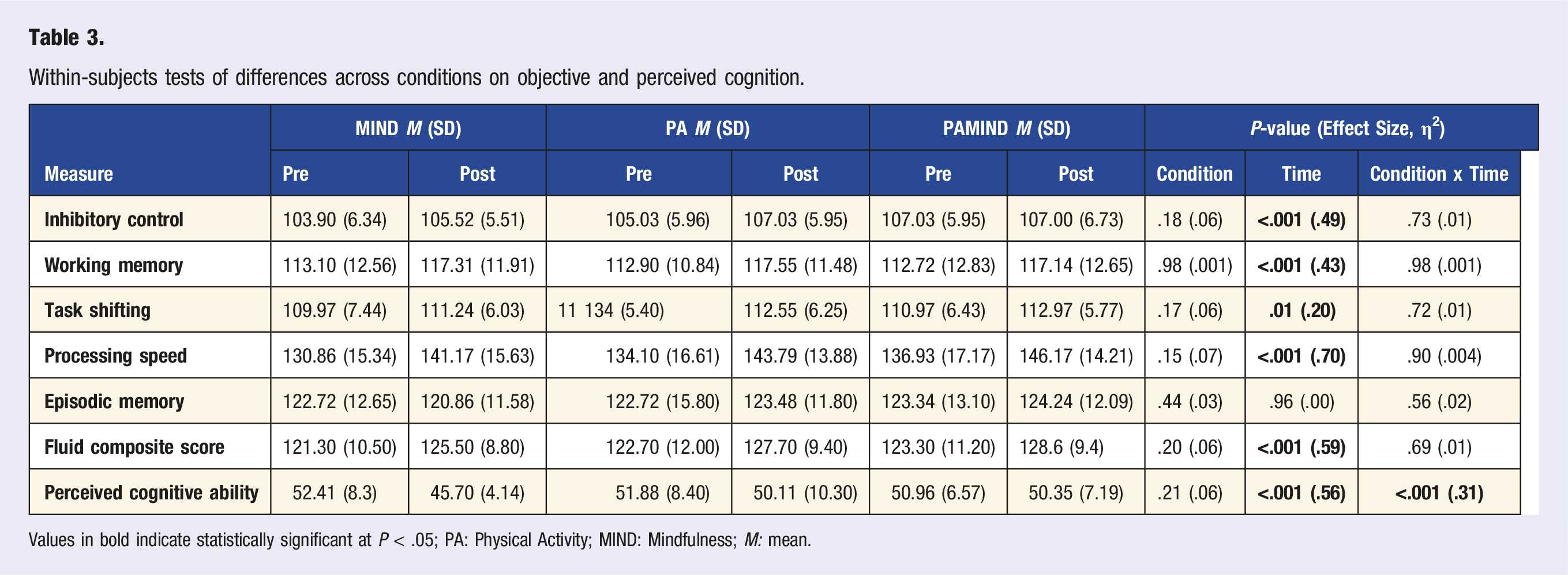
Values in bold indicate statistically significant at P < .05; PA: Physical Activity; MIND: Mindfulness; M: mean.
PROMIS Applied Cognition
There was a statistically significant [F (2,52) = 11.54, P = <.001, partial η2 = .31] time by condition interaction effect for perceived cognitive ability. Perceived cognitive function declined significantly (P < .001) pre- to post-condition across all conditions [F (2,52) = 33.53, P = <.001, partial η2 = .56]. This effect was strongest in the MIND condition. There was no significant effect of baseline physical activity on perceived cognition.
Discussion
The purpose of the study was to investigate the effects of mindfulness meditation, PA, and combined mindfulness and PA on cognition and perceived cognitive ability. While previous studies have investigated the cognitive benefits of both PA and mindfulness meditation separately or sequentially, this is the first study, to our knowledge, to investigate the simultaneous use of both techniques26,27 on pre- to post-condition cognitive performance and perceived cognitive ability. Our findings demonstrate a significant increase in cognitive performance scores from pre- to post-across all conditions for executive function, task shifting, inhibitory control, working memory, and processing speed; however, there was no significant improvement in episodic memory. We also observed a decline in perceived cognitive ability across all conditions with the greatest decline observed for the MIND condition.
Our findings regarding the improvement in cognitive performance scores pre- to post-test are consistent with findings for acute exercise and mindfulness meditation when studied separately13,28 and sequentially.16,18 However, the magnitude of differences between these increases were not significant. Thus, we did not find compelling evidence for a synergistic effect of an acute bout of physical activity and mindfulness on cognitive performance. It is possible that physical activity and mindfulness meditation work in parallel to affect cognitive function as opposed to a synergistic relationship. However, future work is warranted to further explore these relationships to determine: (a) if findings are replicated in acute bouts or prolonged training studies, (b) if other durations or intensities of mindfulness and physical activity have differential effects, and (c) the potential mechanisms by which each behavior alone and combined influence cognitive function.
The observed decline in perceived cognitive ability across all conditions, despite the fact that cognitive performance actually improved was somewhat unexpected. While no previous experimental studies have included both perceived and objectively measured cognitive performance, prior measurement research indicates that perceived cognitive abilities do not correlate with objective cognitive performance, which may explain the discrepancy between a decline in perceived cognitive function with an improvement in objective cognitive performance.29-31 The smallest decrease in perceived cognitive function was seen in the PAMIND condition. One possible explanation for this finding is that the decreased arousal 32 associated with mindfulness meditation may have led participants to feel that their cognitive ability had decreased, as arousal is generally associated with improved cognitive performance.6,32 However, it is generally accepted that there is an optimal amount of arousal, as postulated by the Yerkes-Dodson law, whereby too little or too much arousal can have a negative effect on performance. 33 Therefore, it is possible that the greater decrease in perceived cognitive function in the MIND and PA conditions separately compared to the PAMIND condition could be a result of too little and too much arousal, respectively. Due to this discrepancy between perceived and objective measurement, researchers should be aware of the measurement method used and be cautious when interpreting results.
There are several limitations to the present study. The sample was small and relatively homogenous and predominantly composed of highly educated, healthy individuals; therefore, these findings may not be generalizable to all populations. Additionally, there may be some bias related to recruiting our participants from a paid research registry as opposed to a more generalized population. Participants may have been more motivated or have more knowledge in the field of psychology than the general population, which could impact study findings. Given that improving cognitive function is a topic of interest for individuals of all backgrounds, future work should investigate the cognitive benefits of combined mindfulness meditation and PA in a larger, diversified sample that is more representative of the general population. Additionally, our sample was relatively young and about 60% self-reported excellent or very good health status, and 60% also reported engaging in enough PA to elicit health benefits. Although we did not find outcomes differed by baseline PA, future studies should explore the effects of chronic vs acute PA and mindfulness further and examine effects on cognitive function of these behaviors in older adults and those at high risk for cognitive decline. Finally, we only tested one dose of PA and mindfulness. Additional research is needed to examine whether different doses of mindfulness and PA in combination with mindfulness have differential effects on cognition.
While all conditions improved cognitive functioning pre- to post-condition, the mechanisms by which these effects occur are multifaceted and could be different and vary for acute vs chronic engagement in these behaviors, individually, and combined.34-37 Future work should explore the biological mechanisms by which mindfulness, physical activity, and the combination of these two behaviors may influence cognition both acutely and chronically. While the three conditions did not differentially influence cognition, other physical and psychosocial outcomes such as heart rate or anxiety could be differentially influenced by both acute and chronic engagement in PA, mindfulness, or the combination of the two. Future works should consider these outcomes alongside cognitive outcomes to better understand how these behaviors may influence overall health. These outcomes will aid in more refined recommendations for individuals who are interested in physical activity and mindfulness meditation practices for their cognitive health.
Conclusions
This study provides evidence that cognitive performance increased on neuropsychological tests following an acute session of mindfulness meditation, PA, and the combination of the two, despite perceived declines in cognitive function. Future work is warranted to examine these effects in other populations, with different durations and intensity of PA and mindfulness combined, and as a result of longer-term interventions.
Footnotes
Declaration of conflicting interests
The author(s) declared no potential conflicts of interest with respect to the research, authorship, and/or publication of this article.
Funding
The author(s) disclosed receipt of the following financial support for the research, authorship, and/or publication of this article: Research reported in this publication was supported by a pilot award (PI: Phillips and Victorson) from the Robert H. Lurie Comprehensive Cancer Center at Northwestern University (P30CA060553), K07CA196840 (Phillips) and Northwestern University’s Office of Undergraduate Research. The content is solely the responsibility of the authors and does not necessarily represent the official views of the National Cancer Institute or Northwestern University.
