



Abstract
Objectives. The present study examined beliefs surrounding food culture in youth athletics. Design. Qualitative research. Methods. Coaches (n = 62), parents (n = 161), and youth athletes (n = 40) in the USA completed questionnaires that explored aspects of the food environment of youth athletics, including practices related to food and beverage consumption and perspectives on the nutritional value of available foods and beverages. Results. Coaches, parents, and athletes all reported a high number of available foods and beverages, and were mixed both about whether these were healthy or unhealthy, and whether the availability of unhealthy foods and beverages was problematic. Conclusions. This study aimed to add to the literature an examination of multiple perspectives on the current food culture in youth athletics. Participant perspectives suggest that the food environment of youth sport may be an unhealthy mismatch with the physical, social, and psychological benefits of participation. Further research could aim to identify optimal environments for promoting health in youth sport. Limitations and additional directions for future research are discussed.
“...inaccurate perceptions about the health benefits of foods and beverages available during youth athletics may teach youth athletes unhealthy eating habits...”
Introduction
Youth sports participation is popular in the United States, with an estimated 72% of children participating. 1 Unfortunately, childhood obesity is also common, affecting around 18.5% of the nation’s children. 2 While some research has demonstrated that participation in a team sport predicts lower BMI, 3 other research has found no effect of youth sport on weight status. 4 This research found that youth athletes consume more calories than their non-athlete peers, and more fast food and sugar-sweetened beverages, which may offset the health benefit of the activity. 4
Little is known about the food environment in youth sports. However, there are several reasons that this may be an area of concern. First, few youth sport organizations have a written policy on healthy eating
In addition, food and beverage companies identify sports sponsorship as an effective means to penetrate local markets, 8 and increase excitement and positivity while promoting positive self-image. 9 Team sponsorship by food companies may increase preference for these foods through exposure on players’ uniforms, and contribute to eating habits through company vouchers distributed to players. 10 Furthermore, products that make nutrient claims and use sports celebrity endorsements are more likely to be selected by parents than healthier options that are not endorsed or do not make nutrient claims, even when nutrition label information is provided. 11
Nutrition is important for young athletes, not only for performance but also to ensure healthy growth and development. Most research suggests that it is unnecessary for youth athletes to consume post-workout snacks. Unlike elite or endurance athletes, recreational athletes usually meet their nutrient needs to restore and repair muscle during regular meals. 12 Further, a recent meta-analysis suggests that it is unnecessary and inadvisable for children to drink energy or sports drinks during or after a workout. 13 Because children are establishing lifelong eating habits, 14 and because an adolescent’s eating habits and body ideals can easily be influenced by their peers, 15 the food environment to which children are exposed during youth athletics may have important implications for their health.
Little is known about coach, parent, or youth perceptions of food culture in youth athletics. A qualitative study by Thomas and colleagues 16 reported that parents believe the snacks provided to their children during youth sport are often unhealthy. However, parents are unconcerned about the snacks, citing energy expenditure during sport as a balancing factor. 16 Thus, understanding the food culture in youth athletics is an important step toward health promotion in this population.
The current study sought to better understand the beliefs that coaches, parents, and athletes hold about the food culture within youth athletics. Specifically, what consumption and physical activity behaviors do coaches, parents, and athletes believe should ideally occur to promote health, and how do these practices compare to what coaches, parents, and athletes believe does occur? What barriers contribute to this discrepancy? Do coaches, parents, and athletes think the food culture in youth athletics promotes health?
Methods
Participant Recruitment
Participants were recruited in three ways. First, Coaches, Parents, and Athletes were recruited from local youth athletic teams in Ohio and Michigan. Second, to increase the sample size of these relatively hard to recruit groups, Coaches and Parents were recruited using Mechanical Turk (MTurk), an Amazon.com recruitment and data collection website, which connected participants to the survey on SurveyGizmo.com. Third, participants were recruited through a snowball sample. All participants provided informed consent or parental consent and youth assent prior to participating. The University Institutional Review Board approved all procedures prior to recruitment.
Administration Procedure
Participants completed an appropriate version of a questionnaire based on self-designation as a Coach, Parent, or Athlete, each of which took approximately 20 min. Locally recruited participants entered raffles for $25 Amazon.com gift cards. MTurk participants received a $0.75 credit to their MTurk account for participating. No external financial support was obtained for this study.
Measures
Questionnaires were developed for the current research based on recurring themes identified from a comprehensive literature review, as well as specific areas of concern identified by Thomas and colleagues. 16 The questionnaire assessed the following areas: ideal and real practices, availability of foods and beverages, and perspectives on the nutritional value of available foods and beverages. Each questionnaire consisted of demographic questions and open-ended short-answer questions. Different forms of the questionnaire were given to each group. The athlete’s questionnaire was tailored to the children’s developmental level based on the Flesch-Kincaid reading level test, and included fewer questions overall. Data were collected by SurveyGizmo.com and analyzed using SPSS Version 21.0.
Items assessing ideal and real practices explored the current and desired health related behaviors of youth athletes.
Coach, parent, and athlete perceptions of the food environment in youth athletics have not, to the authors’ knowledge, been previously studied. Results of the Thomas and colleagues 16 study suggest that the food and beverages available in youth athletics is often unhealthy in parent’s view. The present study adds to this literature the perspectives of coaches and athletes.
Analysis
Inter-Rater Reliability for Open-Ended Response Items by Question Area.
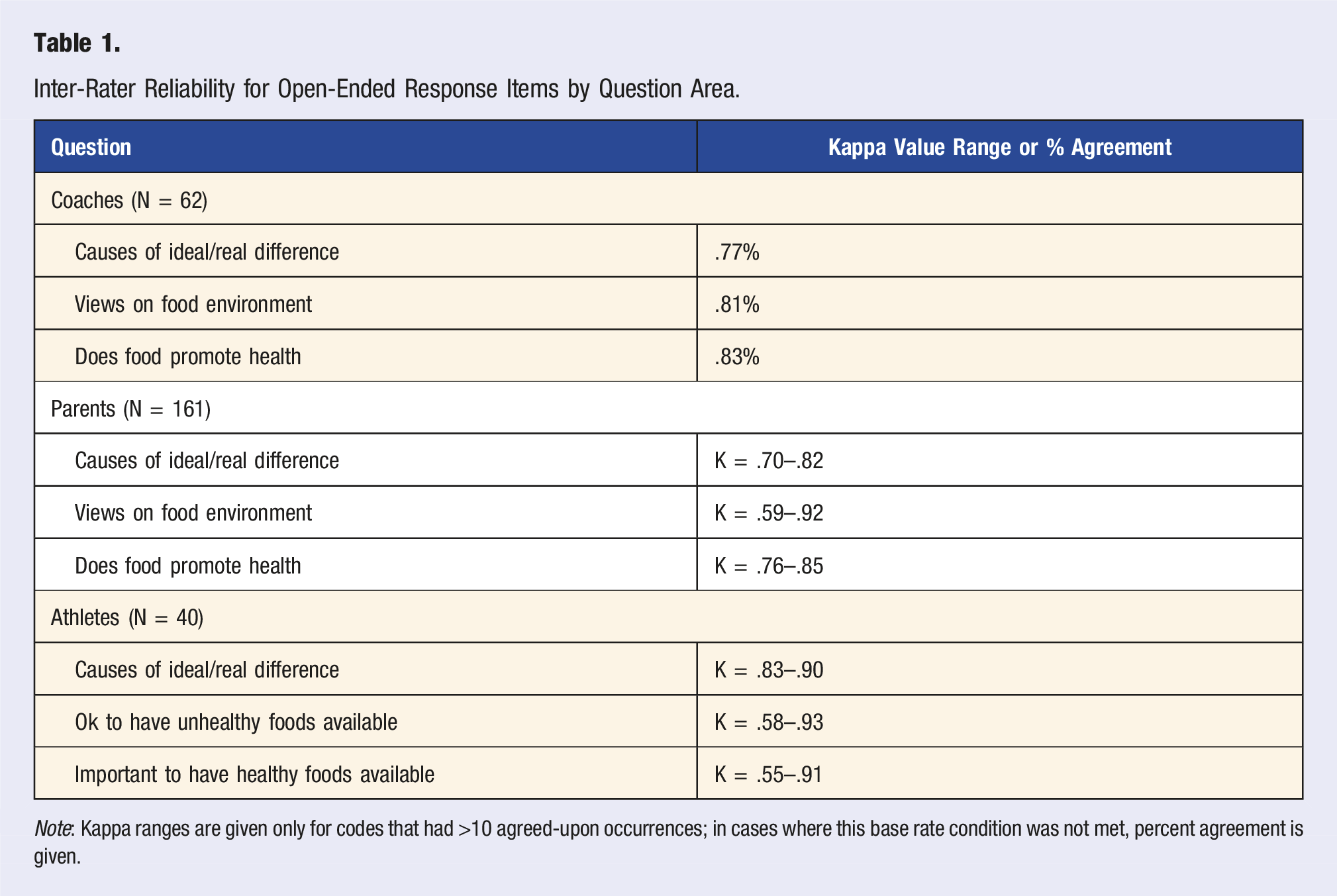
Note: Kappa ranges are given only for codes that had >10 agreed-upon occurrences; in cases where this base rate condition was not met, percent agreement is given.
Results
Participant Demographics
Participants were coaches of youth athletic teams (n = 62), parents of children on youth athletic teams (n = 161), and youth athletes between ages 8 and 18 (n = 40). Post-hoc analysis using G*Power indicated a power of .93 to detect a medium effect size with a sample size of 40. It is important to note that, although each of these participant groups is related to youth sport, the coaches, parents, and athletes sampled are not necessarily from the same program, and so cannot be directly compared.
Coaches
Coaches reported a mean of 6.6 years of coaching experience (Range: 1–20 years, SD = 5.5). Coaches most often focused their survey responses on basketball (23%), baseball (21%), and soccer (13%). The mean age of their athletes was 12.1 years (SD = 2.2, range 9–17). Most coaches reported coaching single-gender teams (68%) that were somewhat or mostly competitive (66%), and practiced an average of 3.1 days per week (SD = 1.4, range 1–6), for 95.2 min each day (SD = 37.1, range 45–210). Coaches reported an average 12.6 competitions each season (SD = 12.9, range 1–100).
Parents
Parents reported a mean age of 11.1 for their child (Range: 8–18, SD = 2.87). Parents reported most commonly on baseball (23%), soccer (21%), basketball (12%), and American football (10%), with an average of 3.65 years playing this sport (range: 1–12, SD = 2.24). Most children (65%) played on single-gender teams that were somewhat or mostly competitive (75%), and practiced an average of 2.88 days per week (SD = 1.21; range 0–6) for 80.50 min (SD = 34.11; range 0–180). Parents reported their children’s teams had an average of 11.47 competitions per season (SD = 8.24; range 1–90), which each lasted an average of 90.06 min (SD = 48.90; range 15–340).
Athletes
Participant Demographics.
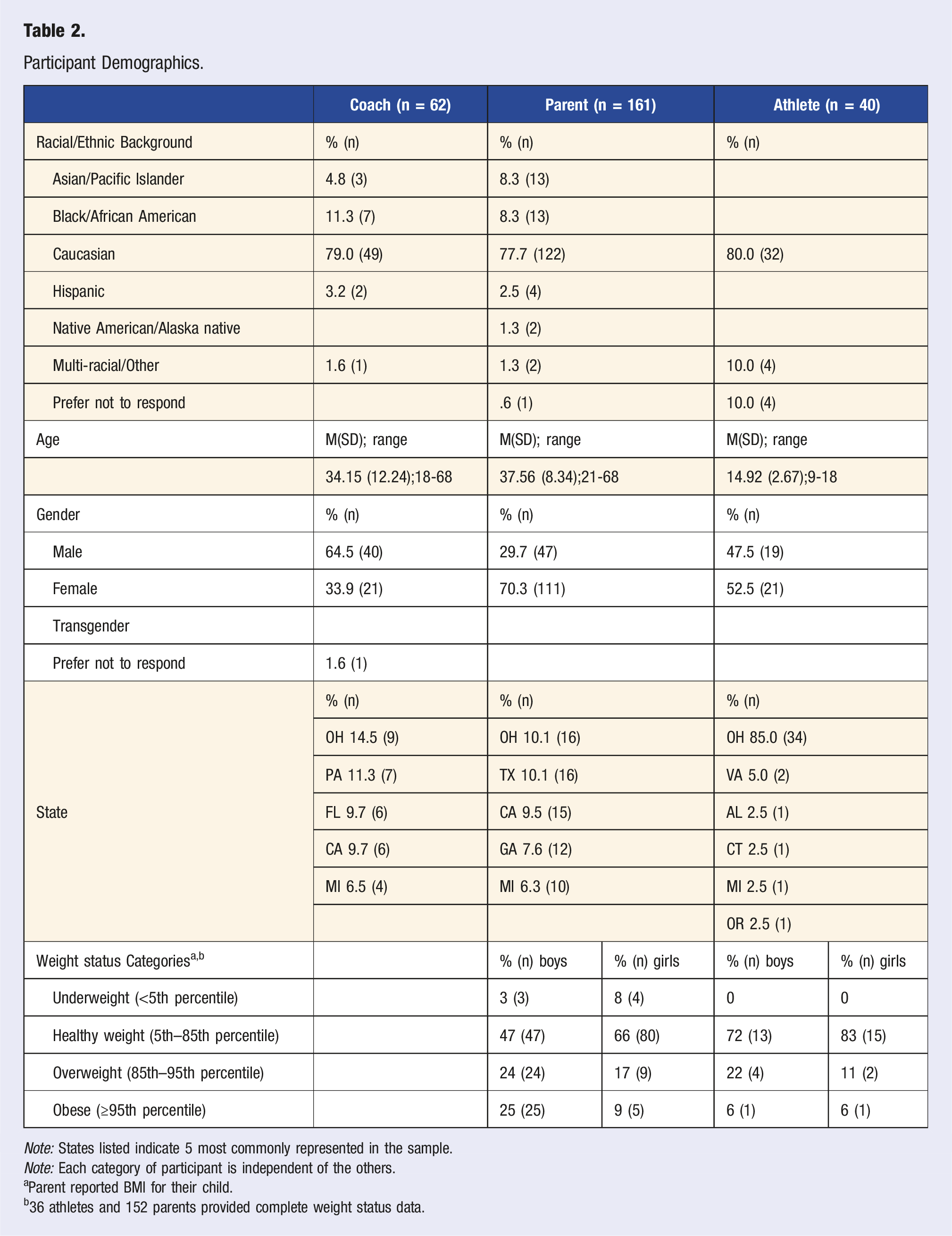
Note: States listed indicate 5 most commonly represented in the sample.
Note: Each category of participant is independent of the others.
aParent reported BMI for their child.
b36 athletes and 152 parents provided complete weight status data.
Coach Responses
Coach Quantitative Responses
Coach (N = 62) Report of Ideal and Real Practices.
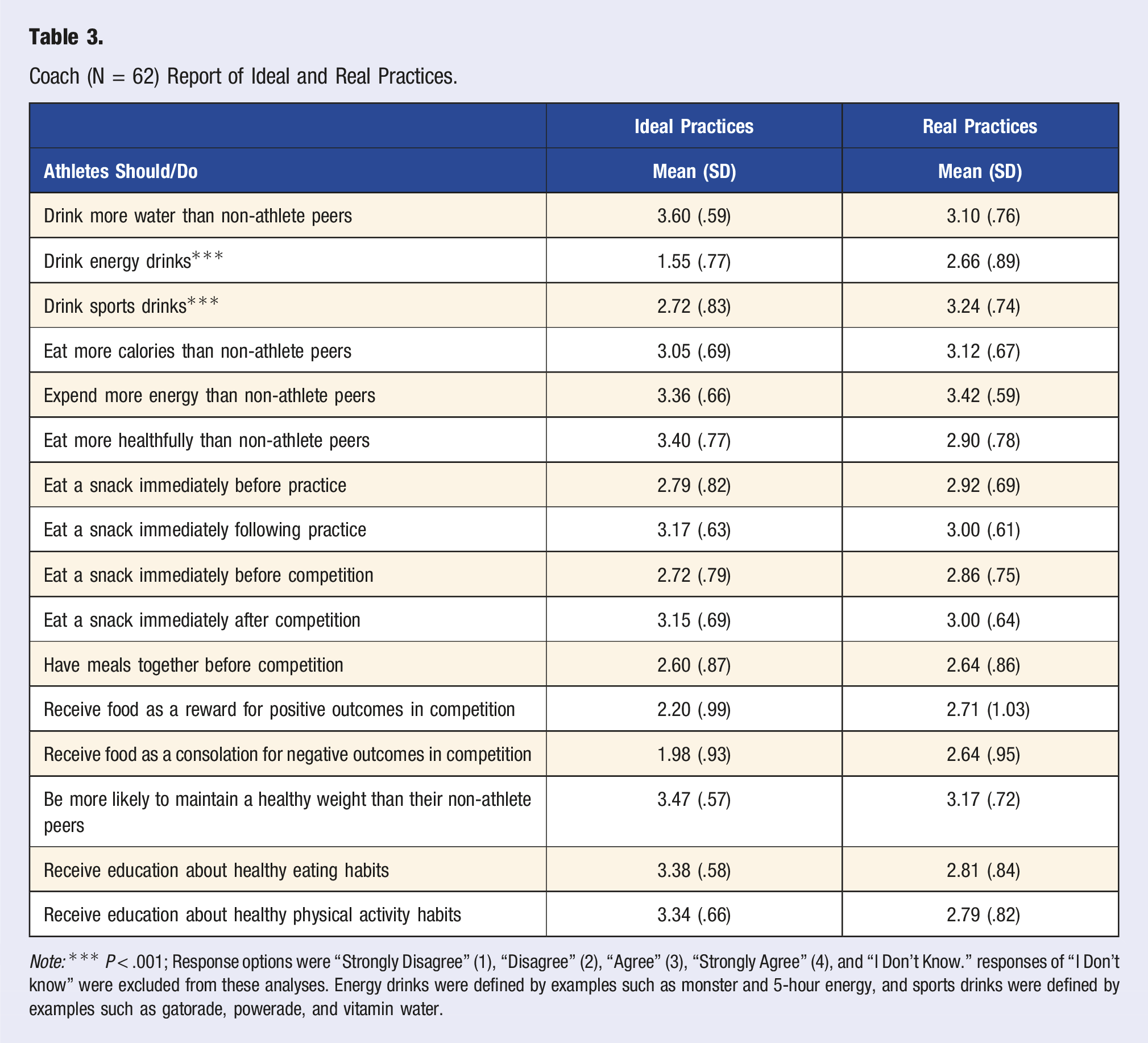
Note: *** P < .001; Response options were “Strongly Disagree” (1), “Disagree” (2), “Agree” (3), “Strongly Agree” (4), and “I Don’t Know.” responses of “I Don’t know” were excluded from these analyses. Energy drinks were defined by examples such as monster and 5-hour energy, and sports drinks were defined by examples such as gatorade, powerade, and vitamin water.
Coach Qualitative Responses
In open-ended responses, most coaches saw a discrepancy between what youth athletes should do and what occurs (69%; 37 of 54). Some coaches attributed these differences to the development of unhealthy eating habits and choices (19%; 10 of 54). For example, one coach stated, “In reality athletes are not as healthy with what foods and beverages they take in in relation to how much energy they expend. It is this way due to a lack of education on the part of many coaches.” Other coaches cited a lack of understanding of, or focus on, healthy eating (15%; 8 of 54). To explain their viewpoint, one coach stated, “I think that the sports culture is largely focused on the competition aspect and there is a lot of marketing behind ‘miracle’ foods and drinks that claim to ‘improve your game’. All this hype causes athletes to consume sports drinks and other snacks for pre- and post-gaming, when I believe the focus should be on all-around nutrition and health.”
Coaches were asked to share their perception of the nutritional value of foods and beverages available to their athletes; 55% (34 of 62) reported that these were appropriate and healthy for their team, and 23% (14 of 62) reported that these were necessary or crucial to their team. For example, one coach wrote, “I think that it is important that growing, active kids have plenty to eat. I tend to let the kids make their own food choices from a selection of healthy snacks, but every once in a while we will go out for pizza, too,” while another stated, “I think one of the keys to our success is how well our team eats each week. I think that the food we offer our players could play an even larger role if we focused on foods to help boost their performance.”
By comparison, only 19% (12 of 62) of coaches reported the available foods to be excessive and unhealthy, and 10% (6 of 62) reported them to be distracting. One coach explained, “Excessive unhealthy snacks and a lack of appropriate foods—nutrition dense food is often not provided. Pasta is provided excessively by parents in the belief that the athletes must ‘carbo-load’ to complete races,” while another wrote, “Distracting. Many of our middle school-aged kids are more worried about getting food and/or drinks at the concession stand than competing.”
Coaches were also asked directly if they think the food and beverage environment around their team promotes health. 41% (25 of 61) reported that the food and drink environment does promote health, for example, one coach stated, “they are encouraged to stay fueled and hydrated and we always provide them with foods and drinks that will do so.” Some coaches reported that athletes consume sports and energy drinks more often than they should (13%; 7 of 54). One coach explained, “Kids will do whatever the rage is. It’s up to parents and coaches to curb those energy drinks—geez, they don't need that at age 11.” Another 18% (11 of 61) reported that at the same time the food and beverage environment does and does not promote health, with such responses as “I think the snacks and water I provide for competitions promote health, but the restaurants we go out to as a team after competitions and the food and drinks available from the concessions stands at shows are very unhealthy,” and “Some of them do because they replenish their energy. But others do not because they are just junk food.”
The most common explanation given by coaches that supported the food and beverage environment (26%, 16 of 61) was that having these items available is important to provide hydration and sustenance to the athletes. For example, one coach stated, “I think the food and drink offered to our players helps to promote health by replenishing lost nutrients however, I believe we could further promote athletes’ health and performance by offering better food and drink options.”
Parent Responses
Parent Quantitative Responses
Parents reported that their child and his/her teammates should drink more water (t(140) = 7.4, P < .001), fewer energy drinks (t(143) = −13.6, P < .001), and fewer sports drinks (t(147) = −7.2, P < .001) than they currently do. Parent responses indicated belief that their children should not receive food as a reward for positive outcomes (t(140) = −9.5, P < .001), or food as consolation for negative outcomes (t(139) = −8.7, P < .001), as often occurs in sports currently. Parental responses also showed a belief that their children should receive more education about healthy eating habits (t(139) = 8.9, P < .001), and healthy physical activity habits (t(140) = 6.1, P < .001) than they currently do. Parent’s responses also indicated that compared to what happens, ideally their child and his/her teammates should eat more healthfully than how their non-athlete peers eat (t(138) = 4.4, P < .001), but they do not. Responses also indicated parental belief that their child and his/her teammates should ideally be more likely to maintain a healthy weight than their non-athlete peers (t(144) = 4.4, P < .001), but this is not always the case.
Parent Qualitative Responses
Parent (N = 161) Report of Ideal and Real Practices.
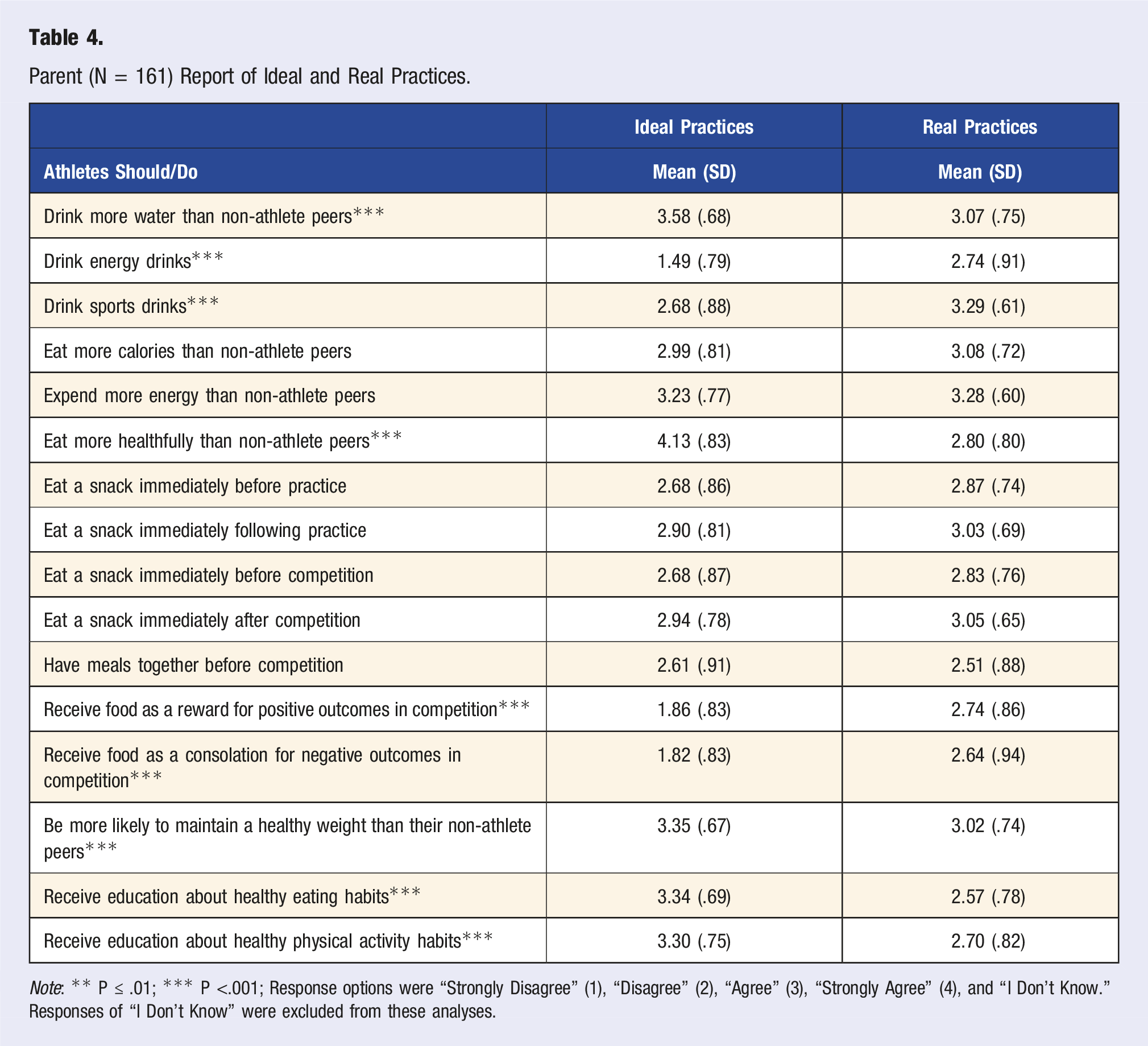
Note: ** P ≤ .01; *** P <.001; Response options were “Strongly Disagree” (1), “Disagree” (2), “Agree” (3), “Strongly Agree” (4), and “I Don’t Know.” Responses of “I Don’t Know” were excluded from these analyses.
Despite these concerns, 48% (76 of 159) of parents reported that the food environment was appropriate and healthy, such as one parent who wrote, “I feel that the food provided is essential for the kids before during and after the game,” and another who said, “These items are necessary to help their energy and dehydration.” Another 26% (42 of 159) indicated it was necessary or crucial to the team, such as one who said, “I think they need some form of food to replenish themselves after their games and practices and I find the food provided to them is appropriate.” Most parents (53%; 84 of 159) reported that the food and drink available to their children promotes health, with another 17% (27 of 159) reporting that it simultaneously does and does not. For example, one parent wrote, “they will keep the children lean. They provide necessary nutrients without being processed or refined with unneeded calories, sugars, carbohydrates, and fats,” while another said “It’s mainly fruit and granola bars. Gatorade and sports drinks aren't great but they could be worse. It’s not soda!” Still other parents made comments to support both sides, such as “they do not need to eat junk food. One of the main things about playing sports is being active and healthy. I think that by promoting the junk food they are sending the message that it's ok to eat junk because they were active,” contradicting statements like, “they are already exercising, so there is no need to focus on diet.” Finally, 28% (45 of 159) of parents reported that the foods and drinks are important because they provide hydration and sustenance to the youth athletes, for example, one parent wrote, “It gives them the necessary carbs and calories to have the energy to compete and play.”
Only 24% (38 of 159) of parents reported that these foods and beverages are excessive and unhealthy. One parent stated, “I consider the majority junk food. Children do not need Gatorade after a sporting event,” and another exclaimed, “I have no problem with water; popcorn and sports drinks are okay, within reason. I do think the coach relies a bit too much on the post-game meal; we seemingly went to McDonalds, etc. after every other game! I do think much of the food offered to the players, both at school and elsewhere, is unhealthy.” A third parent stated, “It starts when they’re little. There’s a snack mom who brings cookies/chips and drinks after practice and games. These kids will not expire if they go 2 hours without food!” Some parents specifically cited the consumption of too many sports/energy drinks (10%; 13 of 136). One parent explained, “I know that most kids just eat whatever they want not thinking about healthy choices. They also think that energy drinks and sports drinks are healthy and don't realize how much sugar and how bad for them they are. This stems from the parents not being involved in teaching the kids to make good choices.”
Athlete Responses
Athlete Quantitative Responses
Athletes have an expectation that they should burn more calories than their non-athlete peers (t(25) = 3.6, P = .001). Athletes reported discrepancies in their beliefs about what occurs in an ideal and current situation related to consumption of water (t(34) = 3.5, P = .001), energy drinks (t(35) = −4.3, P < .001), snacks before practice (t(29) = −2.4, P = .020), snacks before competitions (t(32) = −2.6, P = .014), snacks after competitions (t(29) = −2.6, P = .013), and meals before competition (t(33) = 3.7, P = .001). Athletes’ responses show that they believe they should learn more about healthy eating habits (t(31) = 3.7, P = .001), and should learn more about healthy physical activity habits (t(36) = 3.6, P = .001) than they currently do.
Athlete Qualitative Responses
Athlete (N = 40) Reports of Ideal and Real Practices.
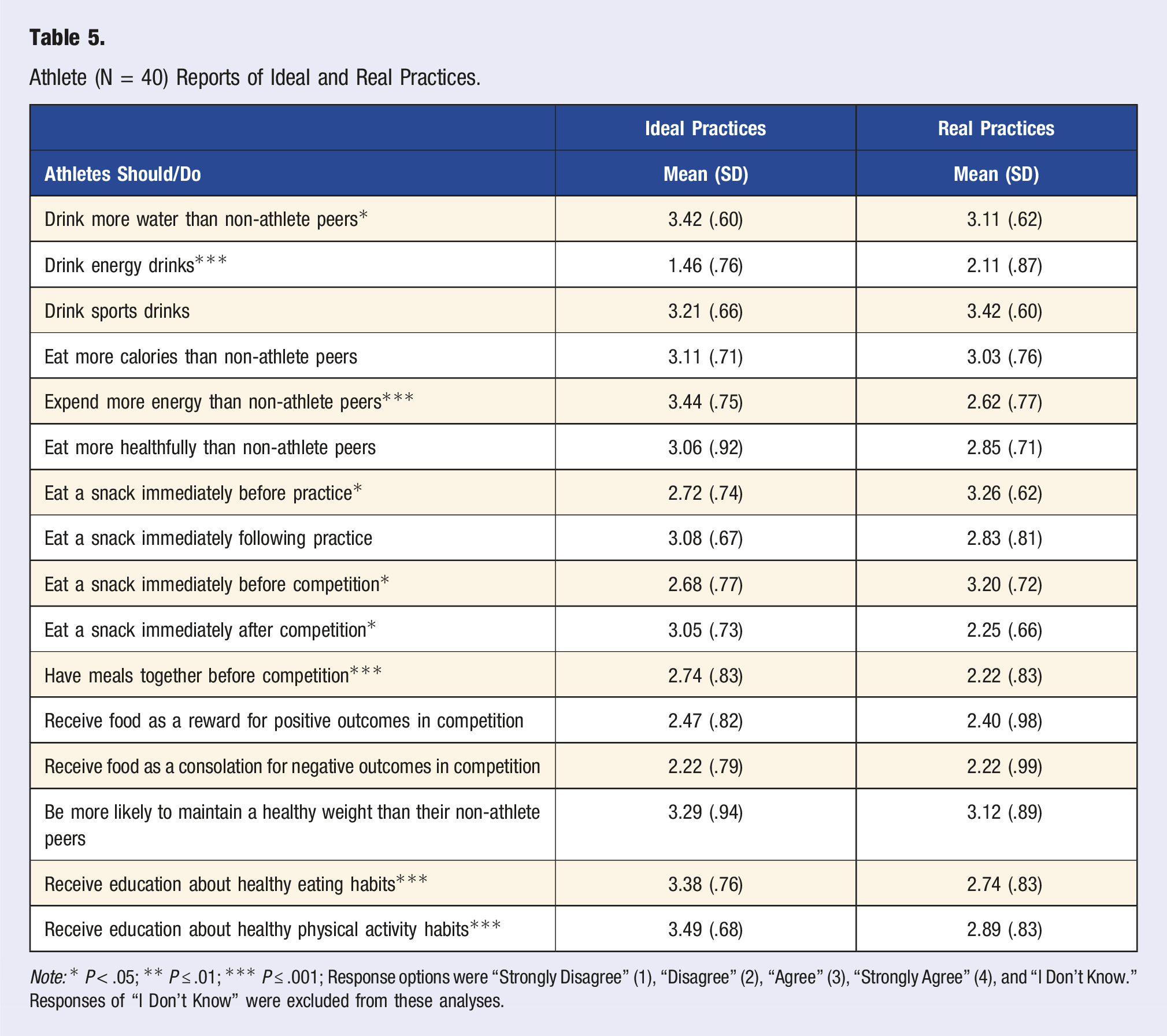
Note: * P < .05; ** P ≤ .01; *** P ≤ .001; Response options were “Strongly Disagree” (1), “Disagree” (2), “Agree” (3), “Strongly Agree” (4), and “I Don’t Know.” Responses of “I Don’t Know” were excluded from these analyses.
98% (39 of 40) of athletes reported thinking it important to have healthy food and drinks available to their team, with explanations including 48% (19 of 40) who said these provide necessary hydration and sustenance, and 28% (11 of 40) reporting that these promote optimum or improved performance. For example, one athlete said, “I think it is important to have healthy food/drinks available for the team. It is important to be well hydrated and replace calories that we have used up,” while another stated, “It will make me a better athlete and compete better against other teams.”
Similarly, 80% (32 of 40) of athletes reported that it was not acceptable to have unhealthy food and drink available, with 30% (12 of 40) saying it negatively affects performance, and 28% (11 of 40) saying it is unhealthy and makes you sick. One athlete said, “I don't think it’s okay to have unhealthy food and drinks provided for your sports team because it sets a bad example and too much unhealthy food and drinks can affect your performance in the sport.” Another agreed, “when I don't eat healthy food before and after practice or a game, I feel worse and perform worse than if I had eaten healthy food that day.”
However, 18% (7 of 40) reported it was acceptable if these unhealthy foods and beverages were consumed in moderation, as stated by these athletes, “I believe that unhealthy foods are tolerable in moderation,” “Every once in a while, but not on a daily basis,” and “After a game, we could go out to eat for pizza and pop, or ice cream. I think it’s fun to do with the team. Like bonding.”
Discussion
This study explored the perceptions of coaches, parents, and athletes about the current food and physical activity culture in youth athletics. Much of the previous research in this area has been conducted with elite or collegiate athletes or coaches separately, so this study expands the generalizability of that research both by expanding the age range (ie, considering youth sport), and by including the perspectives of coaches, parents, and athletes, rather than targeting just one of these groups. Coaches, parents, and athletes each experience the youth sport environment differently and provide a unique perspective on the issue. These disparate perspectives support the practice of including all three groups in future research, and of obtaining objective measures in these contexts to compare each perspective to observable behaviors.
What coaches, parents, and athletes in this study considered ideal practices further highlight the need for identification and dissemination of ideal practices in youth sport. For example, existing confusion over the nutritional needs of youth athletes, and whether specific items are recommended for this population needs to be clarified. For example, food and beverage advertisements promote use of products to parents and young athletes through celebrity athlete endorsement8,10 despite research evidence indicating that diet supplementation with sport or energy drinks and snacks outside of meals are inappropriate for this population.12,13
All three groups reported differences between the ideal practices and what happens in real life. Coaches, parents, and athletes cited lack of education and training, unhealthy eating habits, and the prevalence of sports drinks as contributing to the disparity between ideal practices and what occurs in youth sport. Availability of unhealthy foods and unnecessary sports drinks, through concessions, sponsorship, and provided by participating families, adds to the disparity.6,7,10 These results again point to the need for improved education and awareness of appropriate eating practices for this population. It is likely that additional barriers exist and contribute to this difference. Notably, frequently cited barriers to healthy eating of time constraints and cost barriers19,20 were not reported by participants. Future research may explore the role of social norms, sponsorship/funding, and policy as barriers to healthy habits in the context of youth sports.
Most coaches and almost half of parents reported that foods and beverages available in youth sport are appropriate and healthy, and over half of each group reported that the food environment promotes health. This is consistent with prior research 16 and with the coaches’ and parents’ belief that the athletes are expending more calories than they are taking in. As stated by one parent, “The snacks may not always be the healthiest, but they are a reasonable size and my child probably burns about the same amount of calories as he eats…” These beliefs seem to contradict the actual nutritional value of specific foods and beverages commonly reported as available. Results do indicate that participants have some understanding of what might be appropriate, suggesting that perhaps interventions should be tailored to specifically dispel misconceptions rather than provide general information. For example, participants in this study differentiated between sports drinks, whose purpose is to replace lost electrolytes, and energy drinks, whose purpose is to increase feelings of alertness, deeming sports drinks more appropriate for this population (see Table 5). However, parent and coach knowledge of nutrition was not assessed in the sample. Collecting information about any nutritional training these stakeholders have received would further illuminate the origins of their perceptions of foods as healthy (vs. unhealthy) and necessary (vs. excessive). As these findings relied on self-report, research that objectively measures what foods and beverages are available at practice and competition would add depth to the literature. Understanding the parents’ and coaches’ perspectives in relation to objective measures of the food environment would help researchers understand this important aspect of the food culture in youth sports. Additionally, exploring how the food culture varies by age, gender, location, sport, and program, and if these differences are related to funding, policy, or other variables is an important goal for future research.
Athletes’ responses were most often tied to sport-related gains in fitness or performance rather than health-specific aims, suggesting that perhaps the lessons they learn with their sports team about healthy eating and physical activity are sport-specific and are not easily generalized by this population to their global health. Further inquiry into the most effective way to help athletes generalize health lessons is warranted, as these lessons and practices may have an important impact on future health behavior through the development of lifelong eating habits.14,15
One limitation of this project was the self-report nature of the data; however, as the focus of the research was on the perceptions of the three participant groups, more objective measures were not appropriate for this type of inquiry. As with any self-report measure, conscious or unconscious participant biases may have impacted the results. One bias that may play a role in the present study is the social desirability bias, in which participants aim to manage the researcher’s impressions of them by reporting more agreeable responses.
21
For example, parents may have reported the foods their child eats are healthier than they believe these foods to be in order to appear positively to the researchers. Participant reports may also be impacted by cognitive dissonance,
22
where barriers to healthy eating such as time and money might contribute to participants changing their beliefs about what types of food they consider healthy
Additionally, due to the exploratory nature of the research, situating the findings in existing literature is challenging. Another limitation of the present study is that the three participant groups were not related (ie: did not necessarily come from the same sport, league, gender, team, and geographic location,), so comparisons of each group’s report must be interpreted as reflecting general trends of each of those groups rather than indicative of a league culture.
A final limitation is the problem of defining the words “healthy” and “unhealthy” used in this research. The World Health Organization states that “health is a state of complete physical, mental and social well-being and not merely the absence of disease or infirmity”23(p984). Although participants in this study were asked to answer questions with “healthy” in the phrase, a definition was intentionally not provided to avoid biasing participant responses. Definitions of “healthy” and “unhealthy” foods vary significantly between studies, limiting comparability. More importantly to the research questions addressed in this study, definitions vary between individuals. By not providing a specific definition, participants responded based on their personal definitions of health, which are likely more relevant to their perceptions than the researchers’ definition.
Most of the sports that coaches, parents, and athletes reported on are among the most frequent physical activities for girls and boys as of 2008, so this sample may be at least partially representative of the current culture in youth sport. 24 A comparison of the food environment in youth sports to other popular extracurricular activities for youth, such as drama, yearbook, and band, would aid in contextualizing the results of this study, as well as provide additional areas for health promotion, disease prevention, and intervention efforts with youth. Similarly, a longitudinal study of the eating and physical activity behaviors of these youth athletes as they progress through middle and high school sports, on to college, and beyond would increase understanding of the long-term effect of participation in youth athletics. The inclusion of physiological health markers would also strengthen the literature.
Conclusion
The results of this study indicate that inaccurate perceptions about the health benefits of foods and beverages available during youth athletics may teach youth athletes unhealthy eating habits and undermine the array of benefits youth sport participation provides.
Footnotes
Declaration of Conflicting Interests
The author(s) declared no potential conflicts of interest with respect to the research, authorship, and/or publication of this article.
Funding
The author(s) received no financial support for the research, authorship, and/or publication of this article.
Ethics Disclosure
All research protocols used were consistent with APA’s ethical standards and approved by the Bowling Green State University Human Subjects Review Board (#424715) prior to subject recruitment. Authors have abided by standards and guidelines of ethical treatment of research participants as outlined in the Belmont Report.
Data Availability Statement
The data that support the findings of this study are available from the corresponding author, JMM, upon reasonable request.
