




Abstract
The current study aimed to explore active metabolites of locally recognized and high yielding cultivar cluster bean (BR-99) with a wide range of adaptability having antioxidant, antidiabetic, antimicrobial, and cytotoxic potential. Six solvents were used (crude methanol, n-hexane, chloroform, ethyl acetate, butanol, and aqueous) with escalating polarity for colorimetric determination of antioxidants such as total phenolic contents (TPC), total flavonoid contents (TFC), and free radical scavenging activity (FRSA) by DPPH (2, 2-diphenyl-1-picrylhydrazyl) assay. Moreover, an antidiabetic and anticancer study was conducted by α-amylase inhibition and MTT (3-(4, 5-dimethyl-2-thiazolyl)-2, 5-diphenyl-tetrazolium bromide) assay. Biological investigations were carried out against the most commonly found infectious microbial strains. The significant results (P ≤ .001) of each activity were seen among six tested solvent extracts. The ethyl acetate and methanol extract have more antioxidant potential with the highest TPC (16.38 ± .13 mg GAE/g) and TFC (8.15 ± .24 mg CE/g), respectively. Similarly, methanol extract presented the highest free radical scavenging activity (46.31 ± .91%), followed by ethyl acetate, butanol, chloroform, aqueous, and n-hexane extract. However, the maximum α-amylase inhibition (62.54 ± 1.47%) and anticancer activity against human lung cancer cells were congregated (78.31 ± 1.46%) in butanol and chloroform, respectively. A positive correlation was seen between TPC with TFC (R2= .8356), FRSA (R2= .8381), and anti-diabetic activity (R2= .8082), which highlights the phenolic contents as strong anti-oxidant agents especially flavonoids. Each extract of cluster bean (BR-99) showed significant antimicrobial activities for all tested bacterial strains except B. cereus and E. coli. The profound results of maximum antibacterial activity were witnessed by chloroform extract while ethyl acetate extracts showed great antifungal potential against all tested fungal strains. The HPLC quantitative analysis results of cluster bean (BR-99) revealed the presence of active phytochemicals such as gallic acid, HB acid, vanillic acid, kaempferol, sinapic acid, ferulic acid, salicylic acid, coumarins, quercetin, rutin, p-coumaric acid, and catechin, and the variation in both phytochemical and biological spectrums envisioned the cluster bean (BR-99) used in future as a cheap, safer, and potent source of bioactive drugs.
Keywords
Introduction
Plants are continuously exploitive as a source of diverse chemical compounds used for natural drugs and related products. The plants produce these natural compounds in bulk amounts, used in herbicides, executioners, chemotherapeutics, or different medications (Pandey et al, 2013). These plant-driven natural bio products possess anti-microbial and anti-diabetic properties (Davidson and Naidu, 2000; Alexander, 2005; Singhal et al, 2017). Natural drugs have received preference owing to their safety than failure in the advancement of modern treatment of chronic diseases, unavoidable side effects, and microorganism resistance (Escosteguy, 2014; Li et al, 2016; Saleem et al, 2019; Kuralkar and Kuralkar, 2021). So, photo-therapy programs are encouraged nowadays and supported by governments with allopathic medicine in numerous countries, such as Pakistan, India, Russia, China, Mexico, and others (Kadian et al, 2013). World Health Organization (WHO) concluded that about eighty percent of the total world’s population lies on plant-dependent medicines (Adki et al, 2020). Currently, numerous plant-based secondary compounds (PSC), Phyto-biotics, phytogenic feed additives (PFA), or drugs considering anti-microbial, anti-oxidants, and osmoprotectants owed significant consideration due to strong positive influence on the health and well-being of living organisms (Stevanović et al, 2018; Singh and Gaikwad, 2020).
Cluster bean is known as folklore medicine, a highly potent source of phytochemicals or natural compounds (Daniel, 1989; Morris and Wang, 2007; Badr et al, 2013; Kaushik et al, 2020), and cultivated for its multiple uses in tropical Africa and Asia (Ashraf et al, 2002; Gresta et al, 2013; Mubarak et al, 2015). Pakistan is the second producer of cluster beans after India (Yadav et al, 2013; Anonymous, 2018; Rajaprakasam et al, 2021). It is well-known as the heart of the farmer fields or cash crop with broad economic benefits in food, bakery, paper, textile, explosives, mining, cosmetic, pharmaceutical, nutraceutical, well drilling industries (Whistler and Hymowitz, 1979; Ashraf et al, 2005; Abidi et al, 2015; Gresta et al, 2017) and also used for chicken, buffalos, and cattle food (Salehpour et al, 2012; Rao et al, 2014; Saeed et al, 2017). This crop is profitably contributing to crop rotation systems (Jukanti et al, 2019; Deng et al, 2019; Jerine Peter et al, 2019) with an improved soil-plant nutritional profile (Elsheikh and Ibrahim, 1999; Hinson and Adams, 2020).
Cluster bean plant has received tremendous attention as functional foods based on their high nutritional profile like 28.3 to 35.0% crude protein, 4.1 to 8.0% crude fiber, 38.8 to 59.1% carbohydrate contents, 2.3% to 7.3% oil and moisture contents along with polyphenols, tannins, and phytic acid up to 25 mg, 1750 mg and, 540 mg/100 g contents, respectively, in cluster bean seed reported by Pathak et al, 2011; Bouchenak and Lamri-Senhadji, 2013. The cluster bean seeds with important Fatty acids such as linoleic acid (55.1%), palmitic acid (24.97%), and oleic acid (23.59%) were reported by Arora et al, 1985. Cluster beans enriched in tannins, flavonoids, and coumarins are used by diabetes patients in Pakistan (Mukhtar et al 2006; Ahmed et al, 2015; Majeed et al, 2021). It is considered effective in dyspepsia, anorexia, anti-secretory, hypo-lipidemic, and anti-hyperglycemic effects (Morris and Wang, 2007). Its use as a complementary medicinal plant (Badr et al, 2013; Jamshed et al, 2018; Kaushik et al, 2020) is due to the presence of several pharmaceutically active compounds such as quercetin, daidzein, and kaempferol, reported by Sharma et al, 2011; Jain and Rijhwani, 2018. These natural bioactive molecules are now a trend in the food industry due to their cost-effective and eco-friendly nature (Tripathi and Pandey, 2016; Beyene et al, 2020). The aqueous and ethanol extract of cluster bean fruits exhibited noteworthy antidiabetic potential in alloxan and streptozocin-induced diabetes among rats (Saeed et al, 2012; Quero et al, 2020). The methanolic extract of cluster bean was reported beneficial for having maximum anti-oxidants properties linked directly to its phenolic contents (Moteriya et al, 2015; Babbar et al, 2014). Additionally, the methanolic extract was found helpful in the therapeutic cure of anti-Parkinson’s activity and motor dysfunction, owing to its anti-oxidants potential (Kaur and Saxena, 2021). The significant (99.99%) anti-viral potential of this plant was reported by Kaushik et al, 2020 tested against dengue-2-virus.
Keeping in view the pharmacological potential of cluster bean, the BR-99 is the locally available cultivar of cluster bean with maximum grain yield potential that is, 1900 kg ha−1, and also provides 30 t ha−1 fodder yield in Pakistan (lqbal Saleem et al, 2002; Khan et al, 2018; Shakir et al, 2020), however, with very less phytochemical exploitation knowledge. The current study aimed with detail exploration of the phytochemical and biological potential of locally recognized with high yield and wide range of adaptation cluster bean (BR-99) cultivar.
Methodology
Experiment Design
Seeds of one cultivar named BR-99 were obtained from Arid Zone Research Institute Bhakkar, Pakistan. A pot experiment was conducted from July to October 2019 in the Botanical Garden of Botany department GCUF in the month of July. During the experiment, the average maximum (39.2 + 2°C) and minimum temperature (28.3 + 2°C) was noticed. Seeds were sterilized with 5% NaClO4 solution up to 5 min before use. The twelve seeds were surface sterilized with .5% NaClO4 solution for up to 5 min, rinsed with water, and dried before sown. Pure, washed, and dried river sand was used in the pot to avoid contamination. After emergence, the seedlings were thinned to 5 plants per pot and allowed to grow till the maturity. Weeding and watering were done at regular intervals to ensure healthy plant growth.
Preparation of the Crude Extract
The entire plant body of cluster bean cultivar was washed thoroughly, dried in the shaded area, and then grinded into a moderately coarse powder (1 kg), and soaked in 10 L methanol in the ratio of 1:10 (1 g plant powder: 10 mL methanol solvent) for a period of 20–25 days, along with regular agitation in extraction drum (Jain and Rijhwani, 2018). The extraction drum was kept at room temperature. The methanol-soluble compounds were filtered and evaporated with rotary evaporator (Buchi, Switzerland) under reduced pressure at 45°C.
Fractionation of Crude Extract
The crude methanol extract was further used to ensure the complete and efficient extraction of all active compounds with five different solvents in order of increasing polarity. A separating funnel was used for solvent extraction with the evaporation of solvents by rotary evaporator, and resulting extracts of all solvents were poured in three different Petri plates and allowed to dry. The crude methanol extract (10 g) was poured into glass vials as crude methanol extract for further phytochemical and biological study. The remaining portion was mixed with distilled water to make an aqueous fraction and then transferred to a separating funnel. Analytical grade n-hexane was used and poured into the separating funnel. The funnel was agitated till two separate layers were formed. The n-hexane soluble compounds layers were obtained and dried to a semisolid state with a rotary evaporator. The recovered aqueous layer was re-extracted with n-hexane till all soluble compounds were obtained. The semisolid n-hexane fractionation was dried in a petri dish at about 45°C and stored in sterilized vials till next used. The same process was repeated with chloroform, ethyl acetate, and butanol, respectively. In the end, different extracts (six solvents) were formed that is, crude methanol extract, n-hexane, chloroform, ethyl acetate, butanol, and aqueous (Figure 1). These extracts were placed at 2–8°C for further phytochemical and biological investigation study. Schematic representation of different extract preparation of cluster bean (BR-99) using different solvents (methanol, n-hexane, chloroform, ethyl acetate, butanol, and aqueous).
Percent Yield of Extract
The total yield of each dried extracts were weighted to find percentage yield of each extract (Fatima et al, 2015)

Phytochemical Analysis
Total Phenolic Contents (TPC) Determination
The total phenolic of each extract was assessed by the Folin-Ciocalteau reagent assay used by Pranoothi et al (2014). Reaction mixture was made with 1 mL of each test sample (.5-4 mg/mL), Folin-Ciocalteau reagent (.5 mL) and 1.5 mL 20% Na2CO3 (20%). The absorbance of the reaction was read at 765 nm with a spectrophotometer after 60 minutes of incubation. The blank reagent was made with distilled water. Analysis was performed in triplicate and the quantification of phenolics was done by using a standard curve of gallic acid and expressed in the unit of mg gallic acid equivalent (GAE)/g dry weight (DW) of the sample.
Estimation of Total Flavonoid Contents (TFC)
Total flavonoid contents were quantified with AlCl3 colorimetric assay reported by Abdel-Sattar et al, 2008; Beyene et al, 2020. Briefly, 1 mL of each test sample (.5–4 mg/mL) were mixed with .3 mL of 5% NaNO2, and .3 mL of AlCl3 (10%) with the interval of 5 min followed by reaction with 2 mL of NaOH (1M). After 5–6 minute intervals, the absorbance was determined at 510 nm using a spectrophotometer. Distilled water was used as blank. Standard calibration was done using catechin and expressed as mg of catechin equivalents (CE)/g (DW).
High-Performance Liquid Chromatography (HPLC) Quantitative Analysis
Six solvent extracts of cluster bean were used for reverse-phase HPLC to quantify the phenolic and flavonoids contents (Proestos et al, 2005). Reaction mixture of each extract was prepared in methanol and filtered through .2 μm syringe membrane filters (Saleem et al, 2020) before injecting into HPLC. The C18 column (250 × 4.6 mm internal diameter) of 5 μm film thickness was used with temperature control system set at 30°C. Chromera HPLC system (Perkin Elmer, USA.) attached with Flexer Binary LC pump, UV/Vis LC Detector (Shelton CT, 06484 USA) controlled by software V. 4.2.6410 used to analyze the data. The mobile phase consisting of solvent A (acetonitrile: methanol, 70:30) and solvent B (double distilled water with .5% glacial acetic acid). The UV spectra were adjusted at 275 nm. Each compound was identified by retention time combination and matching of spectra. HPLC separation efficiency was assessed by the separation factor and resolution.
Anti-Oxidant Potential Estimation
In Vitro Free Radical Scavenging Assay
The antioxidant potential of cluster beans was estimated by using the method of Zahra et al (2017). Test samples were prepared in DMSO (.5-4 mg/mL). Then 20 μL of the test samples were prepared in dimethyl sulfoxide (DMSO) and mixed with 180 μL of 2, 2-diphenyl-1-picrylhydrazyl (DPPH). The DPPH was prepared by 9.2 mg dissolving in 100 mL methanol. The reaction mixtures were incubated at 37°C in the dark for 60 minutes. Ascorbic acid and DMSO were used as positive and negative controls. The absorbance of samples was measured at 517 nm. This assay is based on the discoloration of DPPH purple color and inhibition or scavenging (%) was measured

Determination of Anti-Diabetic Activity
In Vitro Alpha (α)-Amylase Inhibition Assay
The assay was performed as described by Zahra et al, 2017 with slight modification to determine the antidiabetic potential in cluster bean extracts. The stock solution of each extract was prepared in DMSO (.5–4 mg/mL). The reaction mixture was prepared in designated wells of a microtiter plate with 15 μL phosphate buffer (pH 6.8), α-amylase enzyme (25 μL), test sample (10 μL), and starch solution (40 μL), 20 μL HCl (1M), and an iodine reagent (90 μL: 5 mM) were added after incubation (50°C) for 30 minutes. Blank was prepared with α-amylase enzyme and an equal amount of phosphate buffer without test samples. Acarbose (positive control) and DMSO (negative control) were used. The absorbance of the mixture was read at 540 nm wavelength in triplicate. The inhibition (%) was calculated by

Biological Activity Determination
Cytotoxicity Assay
Cytotoxicity of cluster bean solvent extracts was determined by the MTT assay as mentioned by Rasul et al (2013). Briefly, A549 cells (100 μL) were seeded in 96-well plates at a density of 1 × 10³ to 104 cells/well for a period of overnight to grow in well. After that, cells were incubated and treated with each test sample (100 μL) of plant extracts prepared by dissolving the 4 mg/mL DMSO (.05%) for 24/48 hours. Following incubation, cell growth of each well was determined after a reaction with MTT (10 μL: 5 mg/mL in saline phosphate buffer) separately, and incubated for another 4 hours at 37°C. Afterward, DMSO (150 μL) was added and shaken with each well after the removal of the medium to dissolve formazan crystals. The absorbance was measured at 490 nm. Taxol was used as a positive control

Cell Culture
Dulbecco’s Modified Eagle’s medium was used to culture Human A549 lung cancer cells supplemented with (FBS) Fetal bovine serum (10%), penicillin (100 units/mL), and streptomycin (100 μg/mL) in a humidified atmosphere with carbon dioxide (5%) and air (95%) at 37°C. Cells were cultured in a culture dish (10 cm) and allowed to grow till confluent (70%) before testing.
Anti-Microbial Assay
Different microbial strains tested for vulnerability to cluster bean extracts.

Statistical Analysis
The results of phytochemical as well as biological assays were statistically analyzed by one-way analysis of variance (ANOVA) to test the statistical significance of variability over the treatment followed by LSD test and P < .05, P < .01, or P < .001 was considered as significant. Data were expressed as mean ± SE. Correlation coefficients were also calculated from measured phytochemical variables of cluster bean (BR-99) extracts.
Results and Discussion
Extraction Yield
Each extract yield (%) recovered in six different solvents was depicted in Figure 2. The extraction of phytochemicals from cluster bean (BR-99) was showing good yield in methanol followed by aqueous, butanol, chloroform, and ethyl acetate extract, that is, 17.80 ± .3, 12.43 ± .09, 8.67 ± .05, 7.86 ± .09, and 5.67 ± .13%, respectively, while the low yield was obtained from a hexane extract (4.36 ± .09%). It is clear from the above results that different solvent has different extraction potential as it was observed in the current study that polar solvents have shown more potential toward phytochemical extraction in comparison to non-polar solvents; however, the plant has a diverse group of compound/drugs of varying nature that may or may not be soluble in specific solvent since compound extraction is totally dependent on nature or polarity of the solvent. So, the solvent selection is a critical factor for phytochemical extraction (Fatima et al, 2015). However, greater extract yield does not ensure the maximum biological activity or the medical potential of the extract. The activity might be more prominent or striking in low yield solvent or vice versa, independent of extract yield. However, the medicinal active potential is depending on the intrinsic nature of components or compounds either present in the crude fraction form or pure form (Zahra et al, 2017). Percent extract recovery of cluster bean (BR-99) using different extraction solvents (methanol, n-hexane, chloroform, ethyl acetate, butanol, and aqueous). The level of significant was set at P<.05 using one-way ANOVA followed by LSD test. The results are expressed as mean ± SE, n= 3. *** represents P<.001, ** represents P<.01, * represents P<.05 and ns=non-significant. Abbreviations: MeOH = methanol, CHCl3 = chloroform, and EtOAc= ethyl acetate.
Phytochemical Analysis
Total Phenolic and Total Flavonoid Contents
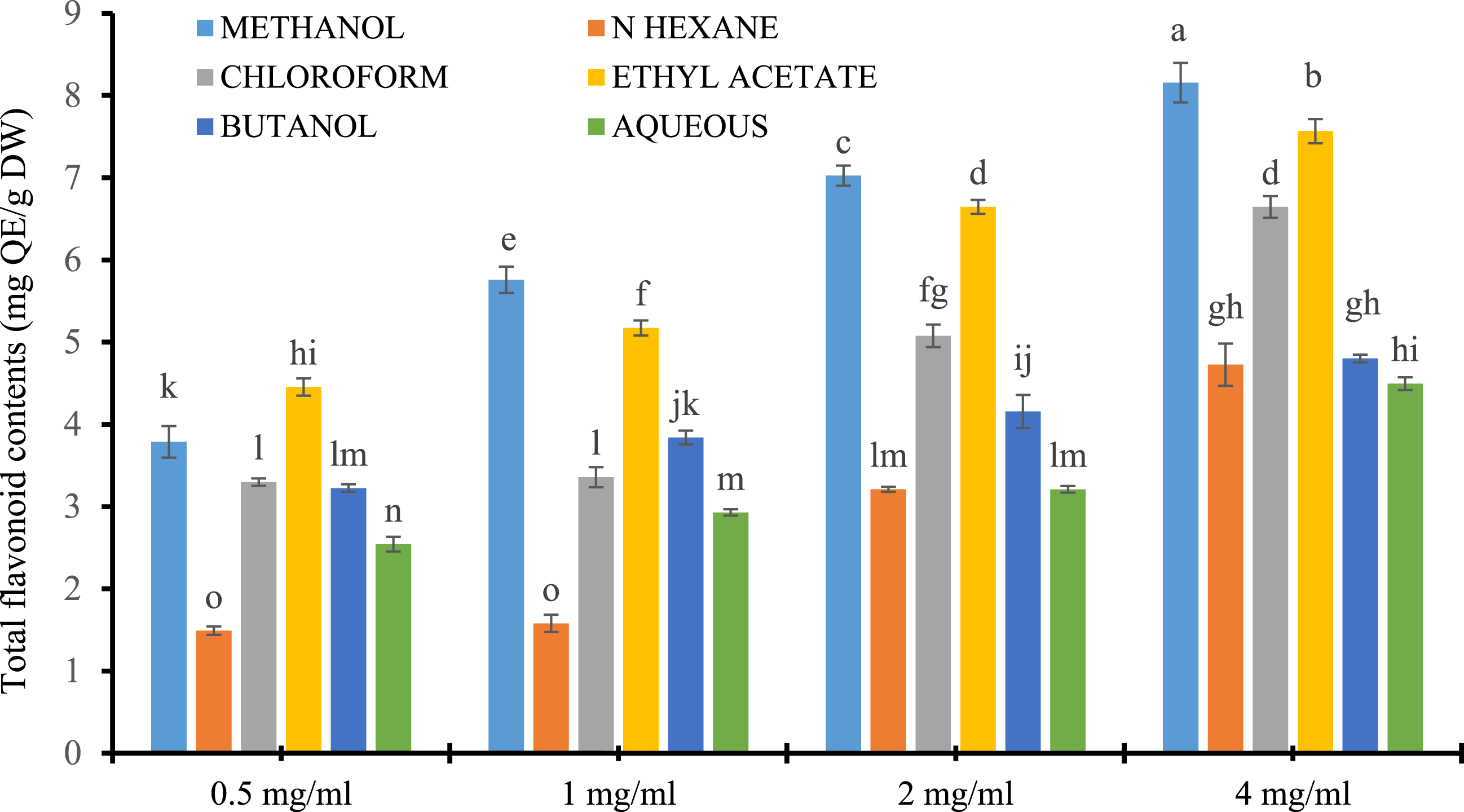
Plant polyphenols are ubiquitously found in each part of the plant. They are the metabolites of anti-oxidant potential for singlet O2 quenching, free radical scavenging, metal-ion ligation, as hydrogen donors, or for superoxide dismutation (Zahra et al, 2017). Plant-based natural bioactive molecule uses are now in trend as improved neuroprotective, anti-diabetic, hepatic-protective, anti-microbial, and nutritional stress suppressors for the better growth and development of living organisms (Kumar et al, 2014; Beyene et al, 2020). Previous literature reported cluster bean as a profound source of TPC and TFC (Kallel et al, 2014; Moteriya et al, 2014, Ammar et al, 2015) suggesting it as the phytochemically active plant. Similarly, both contents (TPC and TFC) were showing significant variation (P ≤ .001) among extracts of cluster bean prepared in different solvents as given in Figure 3 and 4, respectively. The maximum TPC ranges from the highest value of 16.38 ± .13 to the low value of 10.47 ± .084 mg GAE/g DW were produced by ethyl acetate extract followed by chloroform with the range of maximum value 16.27 ± .13 to the low value of 9.37 ± .13 mg GAE/g DW. On the whole, the phenolic contents among each extract exhibited the increasing pattern in the following order: aqueous < hexane < butanol < methanol < chloroform < ethyl acetate (Figure 3). While the flavonoids are free radical acceptors, found the diversified form of phenolics (Nijveldt et al, 2001). The order to increase in total flavonoids contents among different solvents was methanol > ethyl acetate > chloroform > butanol > hexane > aqueous with the highest value of 8.15 ± .24 to the lowest value of 3.78 ± .19 mg QE/g DW given by the methanol fraction (Figure 4). The results of the present study were supported by the findings of Moteriya et al, 2015; Tripathi and Pandey, 2016 which showed that cluster bean cultivar BR-99 has a rich source of phenolics and flavonoids. Total phenolic content (TPC) determination in different solvent extracts (methanol, n-hexane, chloroform, ethyl acetate, butanol, and aqueous) of cluster bean (BR-99). The results are expressed as mean ± SE, n= 3. *** represents P<.001, ** represents P<.01, * represents P<.05 and ns=non-significant. Total flavonoid content estimation in different solvent extracts (methanol, n-hexane, chloroform, ethyl acetate, butanol, and aqueous) of cluster bean (BR-99). The results are expressed as mean ± SE, n= 3. *** represents P<.001, ** represents P<.01, * represents P<.05 and ns=non-significant.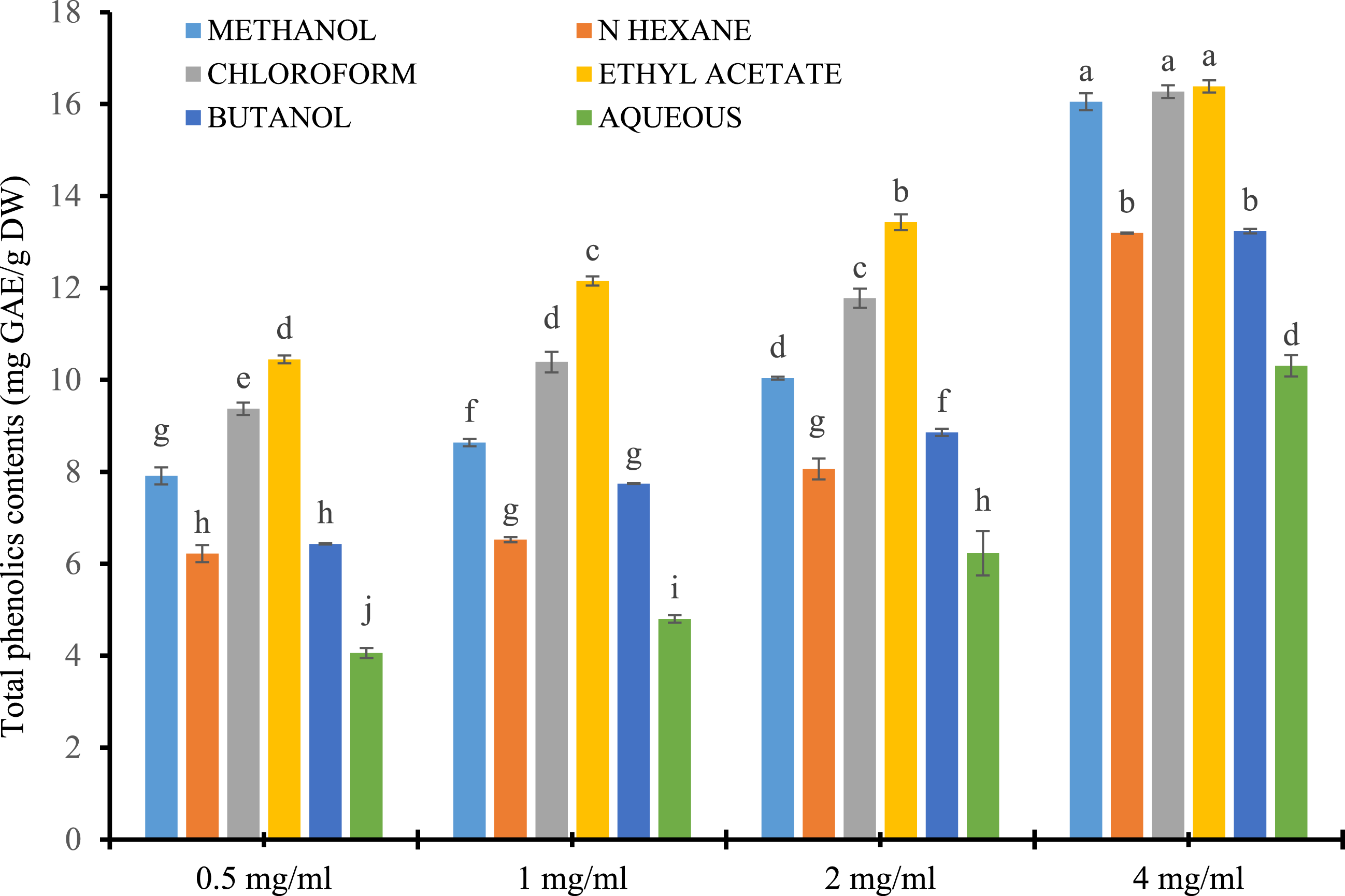
A strong positive correlation (correlation coefficient, R2 = .8356) was found to be present between the TPC and TFC signifying the antioxidant potential of phenols due to the presence of flavonoids. On the basis of literature survey, the phenolic contents (ferulic, caffeic, vanillic, gentisic acid, p-coumaric, and ellagic acids) and flavonoids contents (luteolin, daidzein, quercetin, 3-arabinosides, and kaempferol) reported by Sharma et al, 2011; Kobeasy et al, 2011; Badr et al, 2014; Adki et al, 2020, while gallic acid, sinapic acid, salicylic acid, coumarins, HB acid, vanillic acid, kaempferol, ferulic acid, quercetin, p-coumaric acid, and catechin were found more active in cluster bean cultivar BR-99 extract.
Quantification by HPLC
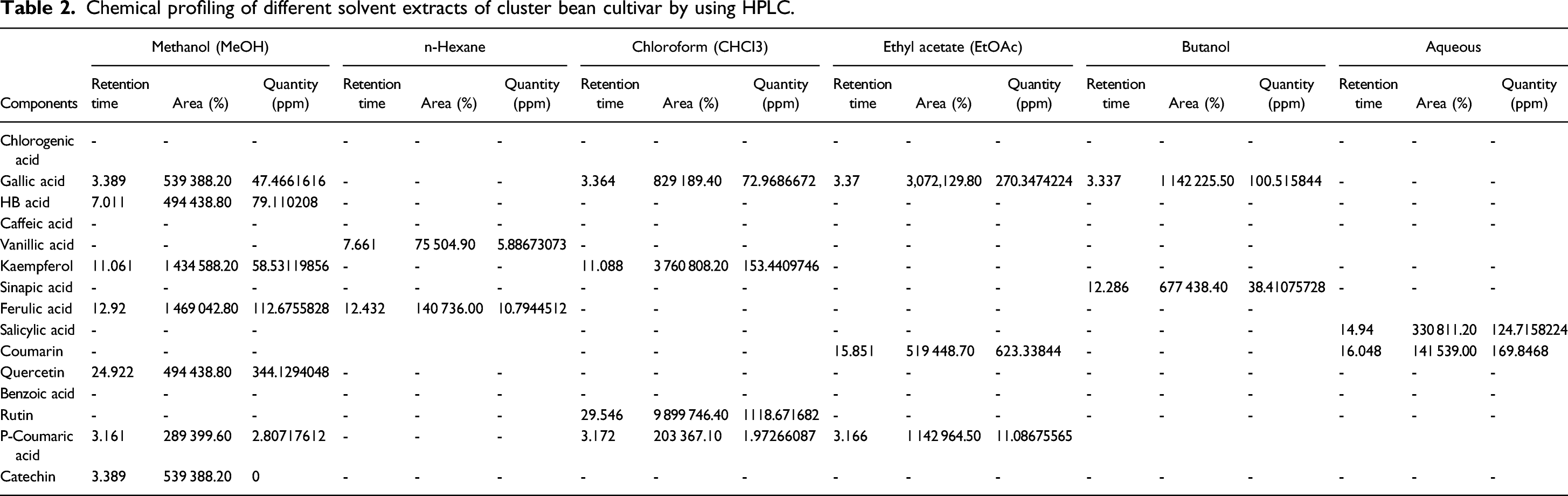
The phenolic compounds found in cluster bean extracts are given in Figure 5 and quantities are mentioned in Table 2. Out of 13 tested polyphenols, the methanol extract contained p-coumaric acid, gallic acid, kaempferol, quercetin, ferulic acid, catechin, and HB acid followed by chloroform extract with four compounds; gallic acid, kaempferol, p-coumaric acid, and rutin were, and three compounds; gallic acid, coumarins, and p-coumaric acid were noticed in the ethyl acetate extract. The aqueous and hexane extracts were found to contain few amount of flavonoids and phenolics in comparison with other extracts. The presence of all these plant metabolites was drawing a parallel correlation of plant potential with their known bioactivities, for example, rutin is usually found in the invasive plant species and shown strong antibacterial and antioxidant properties, observed in chloroform fraction with maximum yield (Dain and Mumper, 2010). The butanol extract contained a less number of testing phenols than the other extracts, but it exhibited significant FRSA, alpha-amylase inhibition assay, and biological activities. On a whole, it proposed that there are some other polyphenols along with these tested phenols which are responsible for the above-said bioactivities. However, phenolic acids, polyphenols, or flavonoids are documented for having strong potential against most common chronic diseases resulting from oxidative stress (Zhang and Tsao, 2016). Hence, the presence of bioactive polyphenols concluded this cultivar a potential source for as cheap, nontoxic, and active anticancer drugs. RP-HPLC chromatograms of (A), standard compounds (B), methanol (C), n-hexane (D) chloroform (E), ethyl acetate (F), butanol (G), and aqueous extract of cluster bean (BR-99). Chemical profiling of different solvent extracts of cluster bean cultivar by using HPLC.
Antioxidant Potential
Each solvent extract of the cluster bean cultivar showed significant (P ≤ .001) antioxidant potential. The potential of each test sample was estimated by calculating the percent scavenging of free radical DPPH as shown in Figure 6. The DPPH scavenging method is independent of the polarity of sample extracts and widely accepted for the screening of many samples (Magalhães et al, 2008). Highest FRSA was shown by methanol extract, that is, 46.31 ± .91%, followed by ethyl acetate, butanol, chloroform, aqueous, and n-hexane extract, that is, 41.67 ± .92, 41.55 ± .40%, 39.19 ± .49%, 27.98 ± .24%, and 26.36 ± .13%, respectively. However, the free radical scavenging acid of the cluster bean (BR-99) was also supported by Kobeasy et al, 2011. Similarly, leaf methanol extract of cluster bean has shown significant DPPH scavenging activity studied by Moteriya et al, 2015. Antioxidant activity may be due to its phenolic and/or nonphenolic contents. The correlation results with TPC (R
2
= .8381) were shown phenolics as strong anti-oxidant agents. The positive correlation of phenolics with cluster bean anti-oxidants potential was also reported by Babbar et al, 2014. The phenolic contents or their derivatives, provide the electron or hydrogen group of free radicals, thus neutralizing the free radicals, or acting as a chain breaker in the lipid peroxidation chain (Pande and Srinivasan 2013; Quero et al, 2020). However, it seems that methanol in comparison with other solvents was found best for phenolic compound extraction based on its polarity and solubility of phenolic compounds or its derivatives (Kallel et al, 2014; Ammar et al, 2015). Even so, it was assumed by Zahra et al, 2017 that these H-donating molecules may be volatile oils, flavonoids like quercetin, naringenin, catechin, and kaempferol, or phenolic acids such as protocatechuic, gallic acid, caffeic acid, and rosmarinic acids and also reported by Brewer, 2011. While the correlation results with TPC values concluded that probably these are derivatives that could result in the free radical scavenging acid of the extracts which were further confirmed by HPLC results. Free radical scavenging activity determination in different solvent extracts of (methanol, n-hexane, chloroform, ethyl acetate, butanol, and aqueous) of cluster bean (BR-99). The results are expressed as mean ± SE, n= 3. *** represents P<.001, ** represents P<.01, * represents P<.05 and ns=non-significant.
Anti-Diabetic Potential
Diabetes is now becoming a non-curable metabolic disorder worldwide (Rehman et al, 2019; Babu et al, 2013). The prolonged exposure and poor management in the handling of this disease severely damaged the body organs and became a major threat to human life (Akbar et al, 2018; Haq et al, 2020; Sabir et al, 2019). Currently, many synthetic antidiabetic agents have been used to combat diabetes (Akbar et al, 2018) but with several unavoidable effects (Akash et al, 2012; Shafiee et al, 2012; Saleem et al, 2019). In this context, the traditional use of plants has produced a great interest among people as well as pharmaceutical chemists (Adki et al, 2020). However, traditional medicinal plants are a source for the treatment of common to life-threatening diseases since civilization (Ahmad et al 2009; Akash et al, 2014; Majeed et al, 2021; Kaushik et al, 2020). In this context, the antidiabetic potential of each test sample of cluster bean cultivar was estimated by measuring the inhibition percentage of α-amylase enzyme in test samples as shown in Figure 7. The current work shows the therapeutic potential (P ≤ .001) of these extracts against the inhibition of α-amylase enzyme. Enzymes including α-amylase are involved in carbohydrate metabolism and absorption that increase the level of glucose in the blood (Krentz et al, 2005; Arika et al, 2015; Ledda et al 2017; Akbar et al, 2018). So, inhibition of α-amylase is one of the prominent strategies in the amelioration of diabetes (Kim et al, 2008; Tundis et al, 2016; Sangeetha and Vedasree, 2012). The maximum inhibition percentage was seen in butanol extract, that is, 62.54 ± 1.47% following methanol (61.55±1.03%), ethyl acetate (59.58 ± .41%), chloroform (58.58 ± .77%), n-hexane (48.01±.31), and water extract (31.76 ± 1.01%). The results about the anti-diabetic potential of cluster bean cultivar were supported by the previous study of Mukhtar et al, 2004; Saeed et al, 2012; Singh and Bhagwati, 2016; Gandhi et al, 2014; Moteriya et al, 2015; Adki et al, 2020. The study of Saeed et al, 2012 reported the significant anti-diabetic activity of aqueous extract and ethanolic extract of cluster bean pod in alloxan and normal diabetic rats or guinea pigs which were testified by Mukhtar et al, 2006. In vivo studies emphasized the antidiabetic potential of water and methanolic extract of cluster bean seed in streptozocin diabetic rats after successfully reversing the damage in β -cells of the pancreas (Mukhtar et al, 2004; Saeed et al, 2012; Gandhi et al, 2014 as well as Quero et al, 2020). However, the current study signifies the antidiabetic potential of butanol fraction. Butanol fraction of cluster been might have a direct influence on insulin secretion or presence of flavonoids, phenolics contents, or polyphenols as these compounds are the inhibitors of α-amylase and α-glucosidase enzymes (Tundis et al, 2016; Akbar et al, 2018). ROS (reactive oxygen species) is also one of the major factors that are linked with the progression of diabetes and its comorbidities (Khullar et al, 2010; Rehman and Akash, 2017; Akbar et al, 2018; Haq et al, 2020). As a result, oxidative stress disturbed the insulin secretion, oxidization of glucose, proteinaceous enzyme, and genesis of lipid peroxides (Zhang and Tsao, 2016; Samarghandian et al, 2017; Saeed et al, 2012). Literature survey explained oxidative stress occurred when endogenous anti-oxidant levels staggered by rising in free radical species (Kaur and Saxena, 2021). Furthermore, it resulted in an increase in the complication of treatment of diabetes mellitus (DM) patients, and Alzheimer’s and Parkinson’s diseases (Rani et al, 2016; Samarghandian et al, 2016; Akhtar et al, 2021; Pande and Srinivasan, 2013; Kaur and Saxena, 2021). The antidiabetic potential of the cluster bean cultivar (BR-99) showed a strong correlation with phenolic (R
2
= .8082) and flavonoid contents (R
2
= .7685), which are the natural antioxidants found in plants. Alpha amylase inhibition assay determination in different solvent extracts (methanol, n-hexane, chloroform, ethyl acetate, butanol, and aqueous) of cluster bean (BR-99). The results are expressed as mean ± SE, n= 3. *** represents P<.001, ** represents P<.01, * represents P<.05 and ns=non-significant.
Anti-Cancer Activity
Cytotoxicity assay of different solvent extracts of cluster bean cultivar.

Values are presented as mean ± SE (n = 3). The values with different superscript (a–d) letters show significantly (P < .05) different means.
Anti-Microbial Potential
Antibacterial activity of different solvent extracts of cluster bean cultivar tested against various bacterial strains.

Values are presented as mean ± SE (n = 3). The values with different superscript (a–e) letters show significantly (P < .05) different means. ----: No activity.
Antifungal activity of different solvent extracts of cluster bean cultivar tested against various fungal strains.

Values are presented as mean ± SE (n = 3). The values with different superscript (a–e) letters show significantly (P < .05) different means. -----: No activity.

Pictorial illustration of antibacterial activity of cluster bean (BR-99) different solvent extracts (methanol, n-hexane, chloroform, ethyl acetate, butanol, and aqueous) against E. coli (A1) front side and (A2) back side, S. enterica (B1) front side and (B2) back side, S. aureus (C1) front side and (C2) back side, and B. cereus (D1) front side and (D2) back side of cluster bean (BR-99).
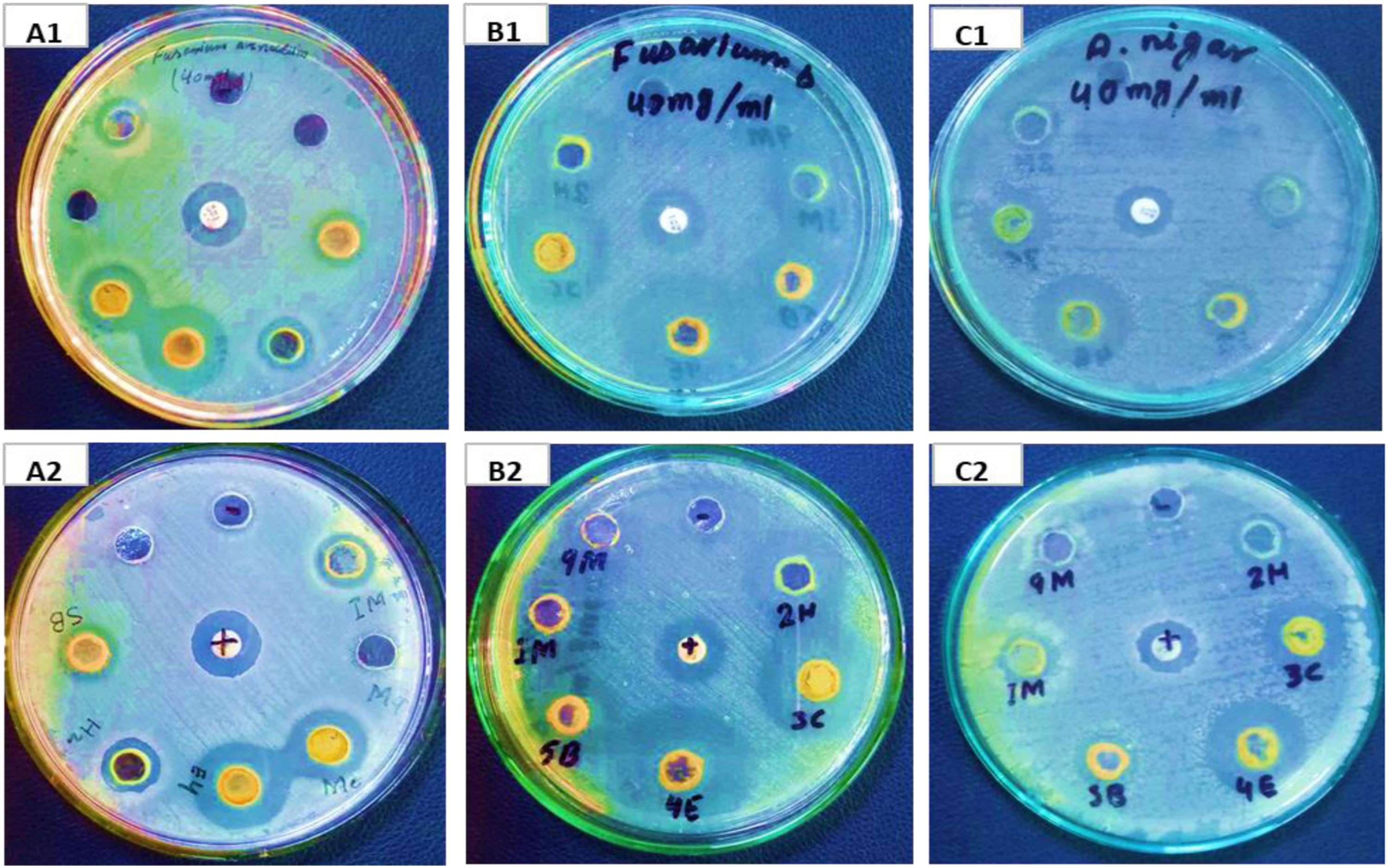
Pictorial illustration of antifungal activity of cluster bean (BR-99) different solvent extracts (methanol, n-hexane, chloroform, ethyl acetate, butanol, and aqueous) against F. avenaceum (A1) front side and (A2) back side, F. brachygibbosum (B1) front side and (B2) back side, and A. niger (C1) front side and (C2) back side.
Anti-Bacterial Assay
The antibacterial potential of the cluster bean various extracts was tested against (gram +ve and gram −ve) bacterial strain (Bacillus cereus: Staphylococcus aureus and Salmonella enterica: E. coli, respectively) (Table 4). Each extract showed a different level of inhibition against tested microbes. Amongst all, the chloroform, methanol, and ethyl acetate extracts were found to be more active against S. aureus (gram +ve bacterial strain) yielding the highest zones of inhibition, that is, 15.1 ± .32 mm, 13.4 ± .23 mm, and 12.67 ± .24 mm at 100 μL/disc, respectively, in comparison with azithromycin which produced 11 ± .32 mm zone of inhibition. While in the case of gram-negative bacteria, the chloroform fraction was effective with a 15.56 ± .29 mm zone of inhibition against S. enterica with respect to ciprofloxacin 15 ± .2 mm. All tested extracts showed very poor antibacterial activity against B. cereus and E. coli. However, the significant antibacterial potential of methanolic extract of cluster bean against S. aureus was also reported by Hassan et al (2010). The antibacterial activity of this plant was more intensified against gram-positive bacteria. The negative control used was DMSO which showed no inhibition. S. aureus and S. enterica both are causal agents of the wide range of diseases in all mammals, birds, reptiles, and insects but especially in poultry and dairy animals resulting in significant economic loss or reduced yield (Myint, 2004). These pathogens are rich in the production and secretion of enzyme coagulase, responsible for blood clotting after conversion of serum fibrinogen to fibrin. However, it is also reported that S. aureus caused Mastitis in dairy cows which reduced milk production or milk was thrown out due to either pathogen or antibiotic contamination. Staphylococcus and Salmonella species were shown high resistance against multiple antibiotics such as penicillin, streptomycin, ampicillin, tetracycline, and erythromycin, and more than 80 000 tons of antibiotics were used for agricultural purposes (Ungemach, 2000, Witte, 2000, Hassan, 2008; Hassan et al, 2010). However, it is mentionable that guar extract of these fractions should be used as feed for the agriculturally important domestic animals for their healthy growth and development products as the previous study recommended guar meal (rich in proteins and essential amino acid) in the diet of cattle, buffalo, sheep, and chicken (Salehpour et al, 2012; Saeed et al, 2017; Biel and Jaroszewska, 2019). The literature survey explained the predominant chemicals for most effective antibacterial activity against gram-positive bacteria are phenolics (Rios and Recio, 2005). However, the guar plant exhibited the antibacterial potential is because of galactomannan and saponin content reported by Hassan, 2008. According to Jeeshna et al, 2011, the plant-rich alkaloids, flavonoids, glycosides, steroids, phenols, tannins, saponins, and resins extracts showed maximum antimicrobial activities. Cluster bean cultivar (BR-99) is concluded as rich in aforesaid compounds which were further confirmed by the phytochemical analysis.
Anti-Fungal Assay
Fungal infections in both plants and animals have now become a major threat for having higher production or yield in this era (Kundu, et al, 2016; Tavernier et al, 2015). The fungal infection is also common in humans. Azole drugs have shown fungistatic activity by interfering in the synthesis of the fungoid ergosterol. These broad-spectrum drugs are continuously used in microbial contagious diseases (Katiraee et al, 2017). The action mechanism of these drugs involves interference with certain human functional pathways; therefore, they have important side effects on the human body (Laniado-Laborín and Cabrales-Vargas, 2009). Antifungal compounds are also scanty and are often very toxic (Kundu, et al, 2016). Medicinal plant extracts rich in biologically active compounds are endowed with the effective antimicrobial potential to replace man-made drugs (Abirami et al, 2013). Extracts of the cluster bean plant (BR-99) were used against three fungal strains (Fusarium avenaceum, Fusarium brachygibbosum, and Aspergillus niger) to evaluate its anti-fungal potential. All the test sample extract was shown significant results presented in Table 5. Among all fractions, the ethyl acetate was seen as more potent with an inhibition zone of 25.41 ± .25 mm, 23.61 ± .31 mm, and 20.53 ± .29 mm against F. brachygibbosum, A. niger, and F. avenaceum, respectively. Clotrimazole was used as the positive control and displayed the maximum zone of inhibition of 16 ± .32 mm, 15 ± .24 mm, and 14 ± .26 mm against F. avenaceum, F. brachygibbosum, and A. niger, respectively, while DMSO was used as a negative control to rule out any activity given by the solvent. Similarly, the antifungal potential of the cluster bean plant was also supported by Moteriya et al (2015), although Pawar (2013) reported no antifungal activity of cluster bean fruit extract against A. niger which contradicted the finding of our study. However, F. brachygibbosum was found more susceptible to each test extract with most prominent zones of inhibition 21.24 ± .12 (methanol extract), 20.47 ± .29 (hexane extract), 21.53 ± .29 (chloroform extract), 25.41 ± .25 (ethyl acetate extract), 17.55 ± .29 (butanol extract), and 15.15 ± .33 mm (aqueous extract) at 100 μ g/disc, respectively. Globally, Fusarium species are the highly virulent staple food or cash crop pathogens (Al-Sadi et al 2012; Al-Mahmooli et al 2013; Beukes et al, 2017; Xia et al 2020; Wang et al 2021), owing to its strong mycotoxins secondary metabolites like deoxynivalenol, zearalenone, and fumonisin B1 (Khaledi et al, 2017; Pollard, 2018). It causes the development of multiple epidemic diseases called fusarium head blight in the panicle and heads of cereals as well as seedlings blight and root rot in legumes (Chang et al, 2014) with the increase in yield, size, and quality of grain reduction (Ismaiel and Papenbrock, 2015). In addition, these mycotoxins could be easily entered and infected the whole food chain. It is worthful to note that in comparison polar extracts have shown significant antifungal potential than moderately polar extracts and nonpolar extracts.
Conclusion
As current study aimed to explore the phytochemical and biological profiling of highly adapted, locally recognized, and recommended high yielding cultivar of cluster bean to not only endorse the traditional uses but also bring to enlighten some furtive attributes of the subjected plant. The six solvent extracts were used to reveal the broad biological spectrum of cluster bean (BR-99) particularly. While the key finding of this study indicates that butanol fractions among all extracts are potent inhibitors of alpha-amylase. It must be concluded from this study that butanol extract has some phytochemical constituents that are more responsive toward α-amylase inhibition as exhibited by HPLC. On the other hand, cytotoxic activity against lung cancer cells was found to be congregated in the extract of chloroform and hexane fraction. Furthermore, chloroform and ethyl acetate extract were found more responsive toward anti-microbial activity. The chloroform fraction showed maximum antioxidant, antibacterial activity, and anticancer activity may be owed to the presence of rutin. In the current study, HPLC-based quantitative analysis of cluster bean cultivar (BR-99) revealed the presence of phytochemical active compounds such as gallic acid, HB acid, vanillic acid, kaempferol, sinapic acid, ferulic acid, salicylic acid, coumarin, quercetin, rutin, P-coumaric acid, and catechin. This study supports our prediction of cluster bean (BR-99) as a potent source of natural anti-oxidants. There is a dire need for the identification, isolation, and characterization of phytochemicals that are responsible for particular computed pharmacological activities and further in vivo investigations to certify and strengthen the in vitro findings.
Footnotes
Acknowledgments
The authors would like to extend their sincere appreciation to the Researcher Dr Azhar Rasool, Department of Zoology for performing the anticancer activity.
Declaration of conflicting interests
The author(s) declared no potential conflicts of interest with respect to the research, authorship, and/or publication of this article.
Funding
The author(s) received no financial support for the research, authorship, and/or publication of this article.