




Abstract
This paper highlights a comprehensive review of the design, performance, and ergonomics of women’s body armor. Body armor is an essential part of defending people in high-risk areas, such as law enforcement officers, military personnel, and security employees. Traditional body armor, however, has typically been designed with male users in mind, ignoring the anatomical and physiological variations between men and women. This review intends to draw attention to the problems with women’s body armor and offer information on new developments made to solve these problems. It addresses several topics, including anatomical and physiological differences, challenges and limitations of traditional female body armor, materials used for female body armor, design considerations for female body armor, performance evaluation, and future directions and recommendations.
Introduction
Soft body armor is a vital and crucial element of personal protective equipment for a variety of people, including law enforcement officers, personal guards, and civilians who may be exposed to potential hazards at work.1,2 The use of body armor has significantly reduced the number of serious and potentially fatal injuries caused by violent conflicts, assaults, vehicular crashes, and combat scenarios.3–5 Women’s involvement in law enforcement and related professions has significantly increased in recent years across the globe.6,7 Body armors have historically been designed mainly for men, neglecting physiological differences between men and women. Specialized body armor designed for women’s anatomy is required due to physiological variables such as variation in body shape, size, and proportions.8–10 Women’s body armor responds to these needs by providing a better fit, improved man-severability, and increased comfort. To offer the best performance and protection for female officers, it takes into account factors such as bust protection, shoulder adjustments, and waist contouring.11–13
The study carried out by Mellian and Watertown 14 revealed that the body armor alternatives available at the time were primarily designed for male body types, which resulted in poor protection for women. In response, they developed female-specific body armor, which was a revolutionary advancement in the field of body armor. Ballistic-resistant fabric made of woven plies developed from aramid polymer yarns was used to produce the contoured front protective armor panel. The unique body armor is made up of a combination of moveable panels and straps, resulting in customization and a better fit for female bodies. Considering the differences in female and male body types, there are currently several body armor designs made purely for female users.15–19
It is imperative that gender-specific design details be considered when designing women’s body armor. Designers can recognize and address the anatomical, physiological, and ergonomic distinctions between the female and male bodies to design protective gear that fits and performs well for women. The study by Coltman et al. 20 involved the torso and breast measurements of female soldiers and interviewed them about how well their body armor systems fit. The study examined the relationships between various torso and breast characteristics to determine the armor fit. It was found that variables such as breast volume, breast base circumference, and the difference in breast volume between the left and right breasts had an impact on the extent to which body armor fit. The study leads to the conclusion that by considering torso and breast characteristics in body armor sizing and design, manufacturers can more effectively meet the requirements of female soldiers.
A novel approach was proposed by Abtew et al., 21 to produce customized vests that are especially made for the female body by combining pattern engineering and virtual simulation. To create a comprehensive database, the anthropometric data of female body measurements was collected and analyzed. A 3D virtual mannequin that precisely depicts the female body shape and proportions is then made using this data. The objective of this study is to produce a seamless vest that fits comfortably and without restriction and offers the best possible protection. To validate the effectiveness of the customized vest, the researchers conducted a series of simulations and tests.
A study by Mica 22 recognized that the majority of ballistic vests available in the market are designed for the male body and may not accommodate the specific size and form of a woman’s body. Female cops may experience discomfort, limited mobility, and less protection as a result. A thorough survey of female police officers was conducted to collect information about their experiences with wearing ballistic vests to investigate this matter. The survey highlighted various fit problems commonly encountered by female officers, such as long vests, inadequate breast accommodations, discomfort in the hips and waist, and limited options for adjustment. The researchers suggested design changes based on the survey results to enhance the usefulness and fit of ballistic vests for female officers. Fitting sessions were conducted with female police officers, and feedback regarding the comfort and usefulness of the modified vests was collected to validate the efficiency of the design modifications. The study intends to explore the association between parameters like breast size and the style of bra they wear and comfort levels, as it is known that female officers frequently experience discomfort and fit concerns when wearing body armor due to these parameters. 23
Body armor may have vulnerable coverage gaps that reduce its overall protective effectiveness. By addressing the distinctive curves and features of the female body, taking gender-specific design factors into account helps close these gaps. Body armor that is properly fitted offers complete coverage, reducing the chance of harm and raising the level of protection. Yang, 10 collected input from female wearers and evaluated aspects including comfort, range of motion, breathability, and durability. The paper emphasizes the significance of thorough fit trials and testing to assess the utility and performance of fabric designs for female body armor.
Anthropometric information particular to the female body, such as measures of the chest, waist, hips, and shoulders, was collected to build a thorough database, which forms the basis for the customizing procedure. 24 A personalized vest pattern with the best possible ballistic protection and a tight, comfortable fit was designed by considering the body proportions and curves of female wearers using cutting-edge design methodologies and computer-aided modeling. In another study by Varte et al. 25 anthropometric information such as height, weight, body circumferences, body segment lengths, and other relevant dimensions from a diverse sample of female participants was collected. The collected data was then analyzed using data mining techniques to find trends, correlations, and patterns among the different anthropometric measures. The objective was to gather meaningful data that can guide the design and size of female full-body protectors.
Women tend to have smaller frames and lighter body masses compared to men. By taking these aspects into consideration, designers can develop armor that is appropriately sized and proportioned for women, reducing unnecessary weight and bulk without sacrificing protection. The study by Wendland et al. 12 examines whether reduced coverage armor offers equivalent protection while resolving fit and mobility issues, considering the potential restrictions and discomfort associated with full torso coverage armor for female officers. They concluded that decreased torso, notably in the chest and waist regions, which lessens pain and mobility limitations, provides better comfort and mobility for female wearers while delivering protection comparable to that of full torso coverage armor.
The research provides a systematic pattern-provider system to develop lightweight armor that fits the female body shape while preserving optimal protection, recognizing the need for greater fit and comfort in women’s body armor. 26 The research focuses on the utilization of dome-formation techniques, which involve molding fabric layers into dome-shaped structures to achieve a seamless and anatomically contoured fit. The designed armor provides better coverage and flexibility, reducing discomfort and restriction of movement for female officers.
This review paper aims to examine anatomical and physiological differences between men and women relevant to body armor. An attempt has been made to analyze the existing body armor available for women by considering factors such as fit, coverage, adjustability, and customization, that contribute to optimal comfort, mobility, and protection. In this study, an attempt has been made to evaluate the efficiency of various armor systems in providing the necessary level of protection for women by reviewing pertinent studies, testing, and standards. The paper examines surveys, interviews, and field studies to gain insights into the experiences, preferences, and challenges faced by female users. The study offers suggestions for the advancement and improvement of women’s body armor based on the investigation and evaluation of current designs, performance traits, and ergonomic concerns.
Challenges and limitations of traditional body armor
Women using traditional body armor designed for male users face several restrictions and problems due to a lack of consideration for their anatomical and physiological peculiarities. Some of these limitations and issues are given below:
Anatomical and physiological differences
Designing body armor that fits comfortably and offers adequate protection requires an understanding of the anatomical and physiological differences between men and women.8,11,26 Figure 1 illustrates how gender differences might affect body armor design.
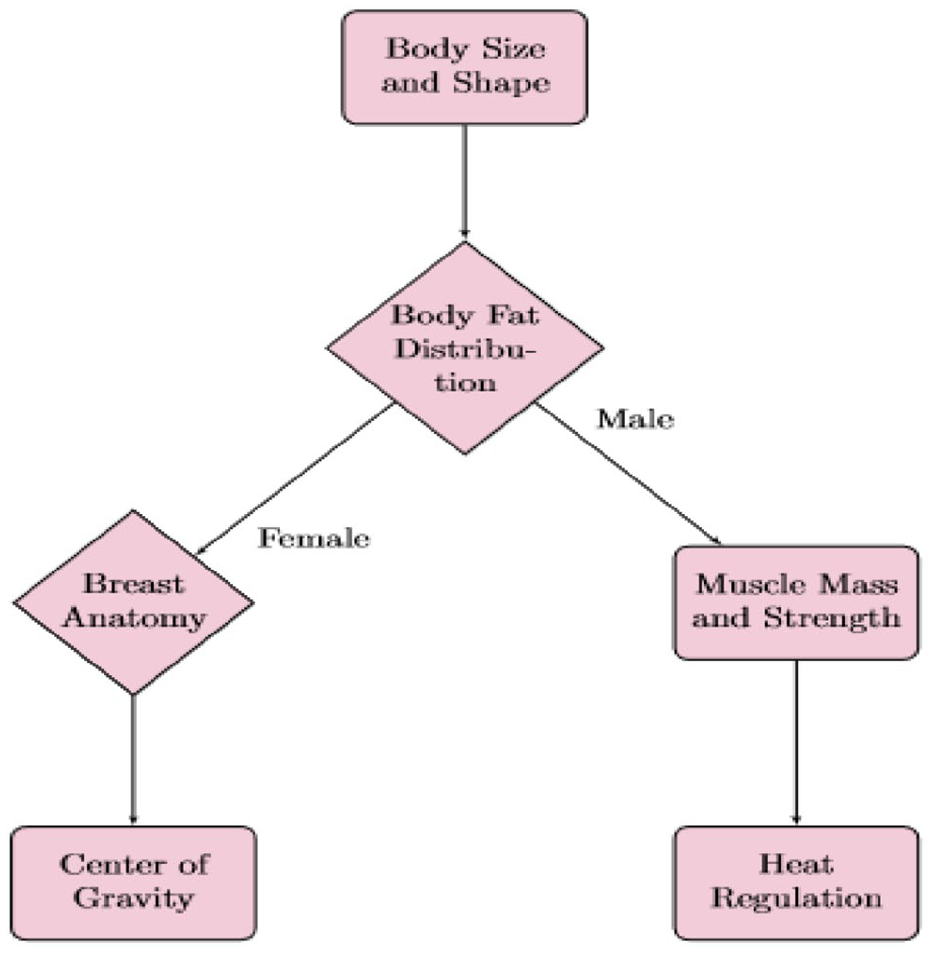
Anatomical and physiological differences considered for designing body armor.
Comparison of body size and shape between men and women for armor designing.

Various researchers24,25,29 conducted surveys and interviews with a group of female soldiers. They explored various aspects of the body armor, including size and fit, weight distribution, mobility, and thermal comfort. The researchers concluded that the body armor’s weight distribution was improper for female soldiers, placing additional strain on the shoulders, back, and hips.
Textile materials for body armors
During ancient times, body armor was crafted using natural materials such as plant-based fibers or animal hides. As civilization progressed and access to metallic resources became available, iron, copper, and steel plates emerged as popular choices for body armor. Despite their purpose of safeguarding individuals, the use of rigid metal plates posed a potential danger, as projectiles impacting these hard surfaces could lead to armor deformation and fragmentation, thereby endangering the wearer.
Advancements in material science during the 20th century gave rise to the emergence of high-performance synthetic fibers and composites. Due to their amazing characteristics, including superior strength, stiffness, resistance to corrosion, and enhanced resistance to fatigue, these materials have received widespread attention on a global scale. Kevlar and aramid fiber-based composites have achieved significant use in ballistic applications within the field of polymeric composites, mostly because of their ability to effectively resist high-velocity bullets. 48 However, due to the increased focus on sustainable development, the use of composites based on aramid fibers is limited. The search for sustainable alternatives has been motivated by the depletion of petroleum-based sources, which make up a significant portion of aramid fiber composites. Additionally, aramid fiber disposal leads to adverse effects on the environment. 49 As a result, it is critical to find substitute materials for armor applications that do not rely on synthetic fibers produced by artificial means. In order to potentially replace synthetic materials in the construction of body armor, natural fibers have been employed. Silk, hemp, ramie, coir, sisal, and many more natural fibers have been studied for use in body armor. The usage of silk from silkworms and spiders was investigated in the fabrication of flexible and light body armor. 50 Silk is a potential material for ballistic protection due to its exceptional characteristics. Hemp fibers made from the Cannabis sativa plant, according to Matheus 51 have drawn interest for their potential in various applications, including body armor. Hemp fibers are lightweight, have strong tensile strength, and are resistant to abrasion. Ramie fibers have been investigated for use in breathable, light-weight body armor systems. Coir fibers were investigated as a reinforcing ingredient in composites for a variety of applications, including body armor. 52 They have been researched for their potential as eco-friendly and lightweight armor materials, along with their high specific strength, low density, and good energy absorption capabilities.
According to a research study, incorporating coir-reinforced epoxy composites as the second layer in a multiple-layered system (MAS) demonstrated effective ballistic protection against high-power 7.62 mm ammunition when combined with a front ceramic tile. The study revealed that the MAS utilizing a coir fiber mantle as the second layer was 0.2% lighter and 34% cheaper compared to the traditional MAS that employed Kevlar™ as the second layer with the same thickness. 52
In another study conducted by Lazaro 53 epoxy resin plates reinforced with sisal fibers at a volume fraction of 30% were subjected to ballistic testing using 7.62 caliber ammunition. The study found that the sisal composite exhibited 20% higher ballistic effectiveness (indicated by smaller indentations in clay) compared to aramid, with the added advantage of being 5% lighter and 31% cheaper.
In a study conducted by Renato 54 the effectiveness of multi-layered armor was evaluated. The armor consisted of a ceramic tile as the front layer, followed by a plate made of giant bamboo fiber-reinforced epoxy composite. The findings revealed that the ballistic performance of the giant bamboo composite surpassed that of the aramid fabric by 22%. This superiority was demonstrated by a lower depth of intrusion in the clay witness. Furthermore, the bamboo composite offered additional benefits, such as being 4% lighter and 31% more cost-effective.
A study on multilayered armors that consisted of a front ceramic layer followed by an intermediate layer of aramid fabric (Kevlar) was conducted, where the aramid fabric layer was replaced with a layer of 30% volume jute fabric-reinforced epoxy composite of equal thickness as shown in Figure 2. 55 The research demonstrates that replacing the aramid fabric layer with a jute fabric composite in multilayered armors provides comparable ballistic performance while offering cost and sustainability advantages. The ballistic resistance of vinylester armor plates reinforced with Kevlar® 29 was examined both theoretically and experimentally by Silva et al. 56 The damage and energy dissipation behavior of para-aramid armor plates with varying ply numbers during high velocity hits with heavy particles was examined in a study. 57 The impact of production factors on the terminal ballistic properties of para-aramid composite armor under various situations was investigated. 58 Furthermore, the damage behavior of para-aramid armor under diverse threats using finite element analysis modeling was examined. 59 The damage behavior of the para-aramid armor plate, which is made up of 19 plies and is vulnerable to 1.1 g of weight under ballistic impact, was covered by Clegg et al. 60

Schematic diagram of the multilayered armor.
It is expected that nanotechnology would bring about significant changes with profound implications in several fields, one of which is the fabrication of stronger, lighter armor using nanostructured materials, which are thought to have the potential to replace their traditional counterparts. 61 The new type of carbon nanotube fiber exemplified by the development carried out by a group from the Department of Materials Science and Metallurgy at the University of Cambridge. Using this carbon nanotube fiber, law enforcement and military personnel might have extremely durable body armor.
It’s important to note that while these natural fibers have shown potential, they may not possess the same level of ballistic performance as synthetic fibers. Furthermore, the use of lower fiber volumes, typically less than30%, in the natural fiber-reinforced epoxy composite can lead to its fragmentation. Even by incorporating a 30% volume fraction of natural fiber in epoxy composites, delamination was observed, which can result in easy penetration of projectiles upon subsequent impacts.53,55,62 To address this issue, surface modification techniques have been extensively employed on natural fibers-reinforced composites to enhance the adhesion between the fiber and matrix. This approach proves effective in preventing delamination. The study carried out by researcher suggests that epoxy composites reinforced with curaua fibers, particularly graphene oxide-coated curaua fibers, can provide acceptable ballistic performance in a multilayered armor system. 63 The improved adherence of graphene oxide-coated curaua fibers to the epoxy matrix contributes to enhanced interfacial shear strength and reduced energy absorption through specific mechanisms, making it a promising material for armor vests. The study conducted by researcher focuses on modifying the surface of Kevlar fabric using non-polymerizing reactive plasma gas N2 and chemical vapor (CH3)2Cl2Si to address the issue of low surface friction in high-performance fiber materials for soft body armor. 64 The aim was to improve the fabric’s ballistic energy absorption capability for enhanced protection.
Design considerations for women’s body armor
Researchers point out that due to variances in the upper torsos of men and women, there are discrepancies in thermal comfort, fit, and mobility between the sexes. 65 These discrepancies can be addressed by incorporating filler materials, such as foams and pads, into women’s body armor designs.66 –68 In contrast, inadequate material selection and inappropriate design can result in a lack of protection and discomfort for personnel performing outdoor jobs. 69 Women’s body armor manufacturing presents additional challenges due to the need to accommodate their curvaceous body shape. 70 To overcome these difficulties, several designing techniques,71 –74 including cut-and-sew, overlapping, folding, and molding, have been proposed. The specifics of these various approaches will be covered in the next section.
The traditional cut-and-sew technique
This is a widely used method in designing women’s body armor.13,17,75,76 Using this technique, the final armor garment is created by sewing together the individual fabric panels according to a predetermined pattern, as shown in Figure 3.

Design processes of a ballistic vest with various protection zone (a) protection zones on front and back of the virtual body, (b) measurement values, fit and final fitting, (c) distribution of darts, and (d) set of layers (12th) while alternation of darts. 74
The following are some significant features of the conventional cut-and-sew method used in creating women’s body armor:
strength, flexibility, and breathability.
Folding and overlapping techniques
Fabric folding and overlapping are less commonly utilized techniques in the design of women’s body armor.75,79 The folding technique involves folding and sewing materials at the side with a certain shift to shape them into a three-dimensional form. However, this technique has limitations in terms of ballistic performance due to material discontinuities and poor stitching regions around folded material. Overlapping has also been employed to develop contoured surfaces in women’s body armor by layering ballistic materials. The many layers are joined by overlapping seams; however, this method could still allow small ballistic missiles to break through by breaking the loop of threads between the seams. In one patent work, overlapping techniques were used to create a lightweight, all-fabric, and curved body armor panel to shield a woman’s torso from small arms missiles, as shown in Figure 4. 14

Women body armor with overlapping seams, (a) Perspective view (b) plan view (c) exploded perspective view of different ply joined with overlapping, and (d) a vertical section through the overlapping seams. 14
Molding technique
Numerous attempts have been made to create women’s body armor that accommodates the bust area using different traditional methods.74,80 However, employed designs are full of shortcomings at the seams when it comes to projectile impact and comfort performance. Additionally, obtaining accurate surface data for women’s breasts is challenging due to the ambiguous borderline of the breast on the skin surface, resulting in less fitted body armor. To address these issues, additional designing techniques are needed to develop frontal women’s body armor panels that can properly accommodate the bust shape while providing better impact performance, comfort, and fit.18,78,81 One promising approach is the use of molding technology to create seamless frontal body armor that mimics the bust area without the need for cutting and stitching.18,81 A concept for manufacturing women’s body armor using a molding process was introduced in collaboration with Triumph International, 82 as shown in Figure 5. Additionally, a three-dimensional woven material was used to create a curved, form-fitting, and flexible panel (Figure 6) using the molding technique. The required number of layers of fabric are assembled, nearly parallel to one another, and then shaped to fit the female body. In another study, the pattern was transferred to a 3D-warp-angle interlock fabric (Figure 7(a)), and the model was validated through the molding technique. 81 Afterward, a pattern for various panel layers was also created (Figure 7(b)) and used to shape the frontal women’s body armor as depicted in Figure 7(c) using 3D warp interlock fabric.

Female body armour through the moulding process, (a) 2D Woven p-aramid fabric, (b) Moulded layer kept over the top of the other to obtain garment, and (c) Close look of panel at bust area.. 82
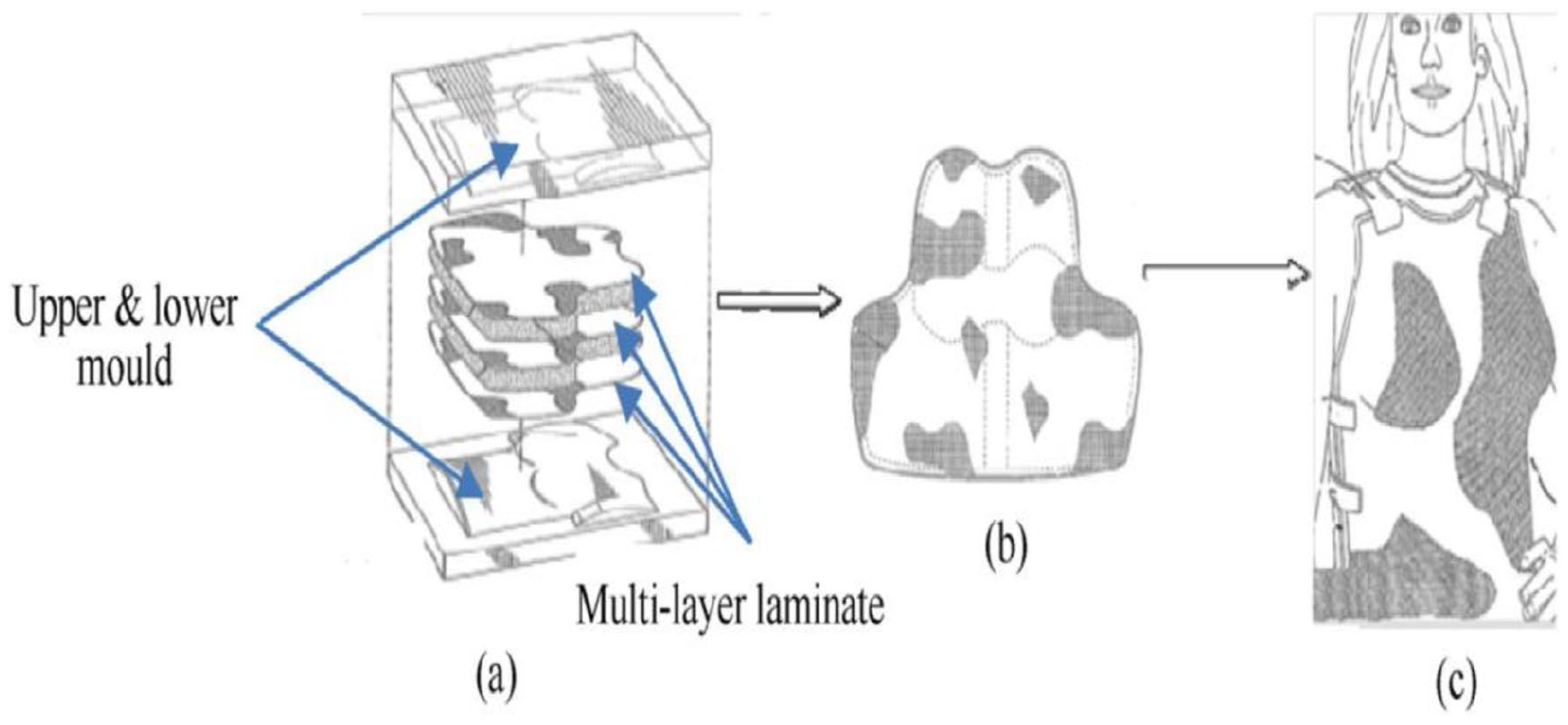
Moulding process for developing flexible women body armour with 3D woven material, (a) Multiple woven ballistic fabric layers, (b) Desired body contour, and (c) Required shape of mould.. 83
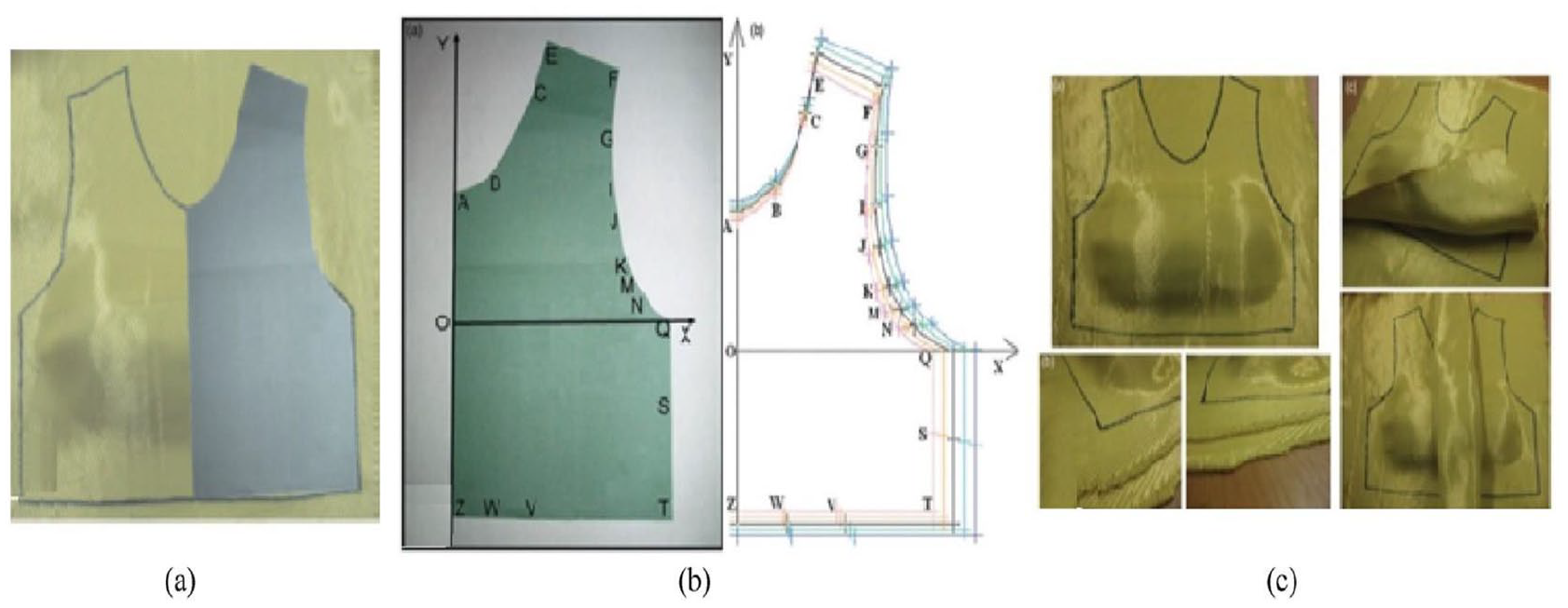
(a) Single-layer validations, (b) pattern development process for multiple layers, and (c) experimental validation for multiple layers of the front panel of the female body armor using 3D warp angle interlock fabrics. 81
Performance evaluation
When assessing the effectiveness of women’s body armor, it is important to take into account their unique needs and requirements. 84 The effectiveness and comfort of body armor made for women should be ensured, even though many evaluation procedures and criteria for evaluating body armor performance are gender neutral. In the US, the NIJ, a renowned agency, sets performance standards for body armor, as indicated in Table 2. Even though their standards are not gender-specific, they provide criteria for body armor testing and certification, such as ballistic resistance, backface deformation, and blunt trauma. 85 Here are some applicable evaluation criteria and methodologies:
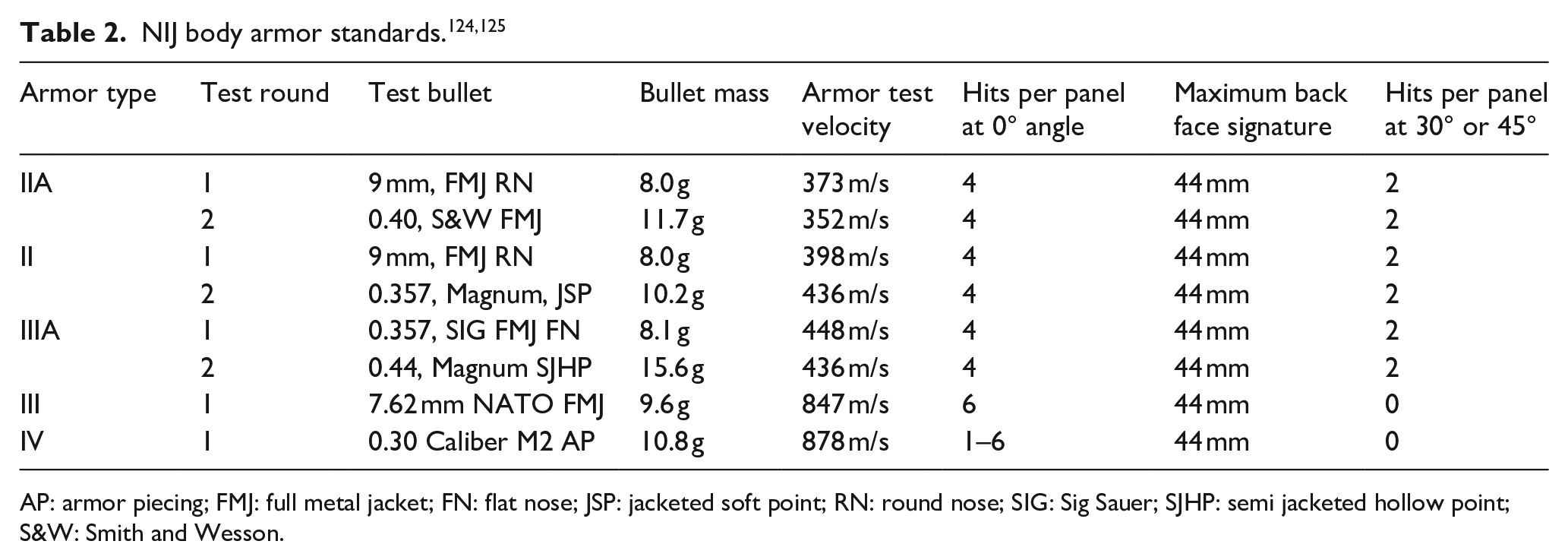
AP: armor piecing; FMJ: full metal jacket; FN: flat nose; JSP: jacketed soft point; RN: round nose; SIG: Sig Sauer; SJHP: semi jacketed hollow point; S&W: Smith and Wesson.
Anthropometric data analysis
It is essential to collect anthropometric data specifically for women because female body shapes and proportions differ from men. This information can be utilized to create body armor designs that correctly match the contours of female bodies. Measurements of the torso, shoulder breadth, bust, and hips should all be considered during the evaluation. 86
Fit and ergonomics assessment
To provide the optimum protection and comfort, body armor must fit properly. The fit of the armor on female users, including the positioning and coverage of protective panels, the adjustability of straps, and overall ergonomics, should all be considered when evaluating female body armor.84,86
Ballistic resistance testing
The body armor’s ballistic resistance for women must be evaluated. Testing should be conducted using standardized techniques, such as NIJ test standards, to assess the armor’s resistance to bullet impacts and penetration. In these tests, bullets of various calibers and speeds are repeatedly fired at the armor. 87 NIJ Standard-0101.06 establishes minimum performance requirements and test methods for the ballistic resistance of personal body armor intended to protect against gunfire. NIJ Standard-0115.00 establishes minimum performance requirements and test methods for the stab resistance of personal body armor intended to protect the torso against slash and stab threats. The National Institute of Justice (NIJ) prepared the “Ballistic Resistance of Body Armor NIJ Standard-0101.06 to categorize ballistic threats, such as projectile types, sizes, and velocities; establish deformation limits; create sample conditioning protocols; and specify acceptance testing procedures for non-military body armors as shown in Figure 8.
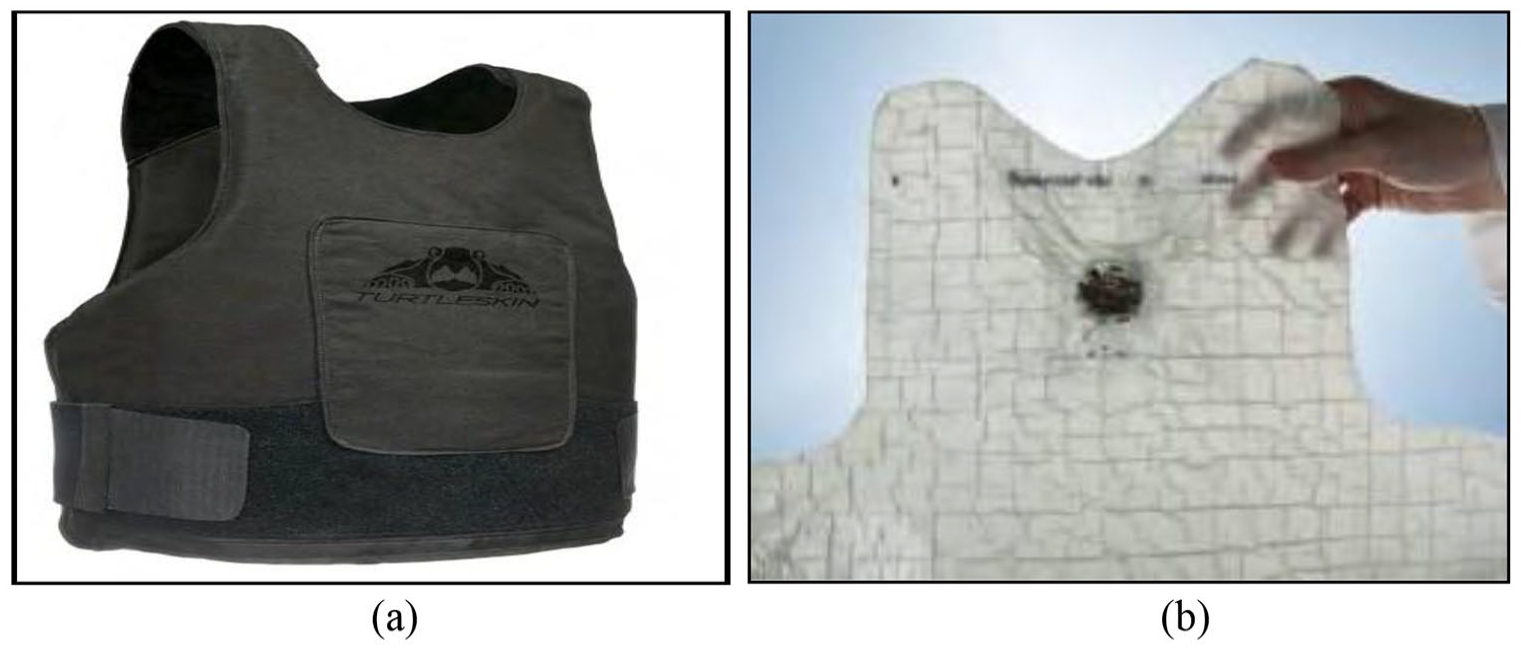
(a) Soft Body Armor Concealable Vest Constructed with UD Laminates used by Law Enforcement Officers for Ballistic Protection (TurtleSkin, Inc.) and (b) Ballistic Test Showing Arrested Projectile (Warwick Mills).
Backface deformation
Backface deformation is the term used to describe the dent or deformation that happens on the armors opposite side when it is hit by a bullet. To evaluate the possible harm the influence could create, this measurement is crucial. Testing the back face deformation as part of evaluations will help to ensure that the armor minimizes trauma and harm.88,89
Performance in dynamic situations
The effectiveness of women’s body armor should be assessed during dynamic motions that are frequently experienced in real-world situations. This includes testing how well the armor provides protection and coverage when the wearer is running, crouching, or kneeling.90,91
Environmental testing
The effectiveness of body armor should be assessed under various environmental conditions, including chemical exposure, humidity, and temperature extremes.92,93 This ensures the armor’s effectiveness and durability in challenging environments.
Future directions and recommendations
For the last many decades, women’s body armor was developed as per male body shapes, which often resulted in poor fit and reduced comfort for women. This phenomenon engaged the researchers to work further and develop new materials and appropriate designs. 94 Therefore, the application of various methods and materials, such as chemical treatments for surface modifications and the development of new materials, becomes intriguing for enhancing body armor performance while reducing its weight.95 –99
Composite materials
Composite materials are made by combining two or more different materials to create a stronger and lighter material. When used as reinforcing agents in a matrix material (such as epoxy resin), high-strength fibers like aramid fibers (e.g. Kevlar) or ultra-high molecular weight polyethylene (UHMWPE) can improve performance while reducing weight. Research was conducted by Roy et al., 100 to find solutions to problems associated with soft body armor, such as achieving high ballistic performance while maintaining flexibility and comfort for the wearer. The researchers suggest a multi-layered approach, with woven fabrics serving as the main reinforcement component. The findings suggest that these multi-layered composites have the potential to provide effective protection against ballistic threats while offering enhanced flexibility and comfort for the wearer, along with high impact resistance, as shown in Figure 9.

Image of the samples after impact testing, (a) neat p-aramid fabric, (b) coated p-aramid fabric with 6% add-on. 100
In another study, researchers discuss the preparation of the composite materials, which involves dispersing conch particles into the UHMWPE/epoxy matrix. 101 Various characterization techniques, including scanning electron microscopy (SEM) and mechanical testing, are employed to evaluate the microstructure and mechanical properties of the composites. The results of the study reveal that the incorporation of conch particles improves the ballistic performance of the UHMWPE fiber-reinforced composites. The conch particles act as energy absorbers and disruptors, dissipating the impact energy and reducing the deformation of the composite during ballistic events. This leads to enhanced penetration resistance and improves overall ballistic performance, as shown in Figure 10.

Typical images of the tested UD plate with shell particles: (a) front of UD plate and (b) back side of UD plate. 101
Nanomaterials
Body armor’s performance can be improved by incorporating nanomaterials into it. Some examples of nanomaterials that may enhance strength and toughness while maintaining low weight are carbon nanotubes, graphene, and aerogel. These materials can be applied to the surface of body armor as coatings or reinforcements to enhance its properties.
•
To assess the ballistic performance of elastic carbon nanofluids, the researchers conducted experimental tests and simulations. 105 They examined elastic carbon nanofluids’ capacity to absorb and dissipate impact energy as well as their resistance to projectile penetration. According to the findings, CNTs have outstanding ballistic resistance capacity. Due to their exceptional structure and great tensile strength, they can effectively deflect bullet energy, minimizing the potential damage to the protected surface. Furthermore, E-glass fabric reinforced with multi-walled carbon nanotubes (CNTs) showed improved mechanical behavior in ballistic impact (V50) tests, with a higher V50 value of 11.1%. These composites also showed potential for blast protection applications due to their lighter weight and better energy dissipation characteristics compared to composites without CNTs. 106 To develop polymer matrix composite armor, multi-walled carbon nanotube (MWCNT) reinforced composite mats are woven into E-glass continuous fiber poly-vinyl-ester-epoxy matrix composite laminas. Several types of armor panels were then made by adjusting the thickness and positioning of the carbon nanotube-reinforced composite matting, and their capacity to resist ballistic impact was tested against FSP. The position of the carbon nanotube-reinforced composite mats and their thickness have a significant impact on the ballistic performance of the armor at the specified armor thickness, according to the results. For instance, the best ballistic performances were found in armor panel composites with thicker CNT-reinforced composite matting at the armor frontal face. 107
•

(a) Graphene structure and (b) miniature ballistic tests by firing tiny silica spheres at sheets of graphene. 108
In one of the studies, researchers investigated the capability of graphene to enhance the tensile, impact, and antiballistic mechanical properties of conventional fiber-reinforced glass polymer (FGRP) composites for protective clothing. 113 Experimental results obtained from testing undoped samples with those from various graphene-based nanocomposites doped at different weight percentages (0.25%, 0.50%, 0.75%, and 1.00%) have confirmed the effectiveness of graphene as a nano reinforcing agent in the base material. The maximum improvements of 10.9% in tensile stress, 12.7% in Young’s modulus, 13.5% in Charpy impact strength (for 0.25% FLG), and an outstanding 72.2% enhancement in the ballistic limit (for 1% FLG) against 7.62 mm × 51 mm NATO FMJ ammunition are observed after graphene-based nanocomposites doping.
In another study, the effects of adding graphene nanoplatelets (GnPs) to epoxy matrices on the ballistic performance of hybrid (Kevlar/Cocos nucifera sheath) and non-hybrid laminates were investigated. 114 The results show that the addition of GnPs at 0.25 wt.% improved the energy absorption and ballistic limit of Kevlar fabric-reinforced epoxy composites. The investigation of ballistic performance as a function of areal density revealed that, in the absence of GnPs, an increase in areal density increased the ballistic performance of the laminates. However, after the addition of GnPs, the ballistic performance is also influenced by the laminates’ intrinsic properties (fiber/matrix adhesion), in addition to their areal density.
The purpose of this research paper is to investigate the impact of graphene oxide (GO) coating on the ballistic performance of aramid fabric, which is frequently used to make body armor and protective gear. 115 The purpose of the study is to ascertain how the GO coating’s application impacts the fabric’s ability to endure high-velocity impacts. The results show that, in comparison to uncoated aramid fabric, GO-coated aramid fabric shows a considerable improvement in absorbed energy of up to 50%, which may be attributed to higher friction between the fibers. Microfibrillation failure, primary fiber tensile rupture, secondary fiber deformation, and friction between fiber and projectile leading to cone formation in the back face of the nanocomposite were the main mechanisms of damage observed (Figure 12).
•

Photographs of the samples ballistically tested with 9 mm ammunition: (a) aramid received, (b) aramid + GO (1), and (c) aramid + GO (2). 115
The ballistic performance of polyimide aerogels against high-velocity impact is examined by Malakooti. 120 Using PMDA as the dianhydride, DMBZ as the diamine, and BTC as the crosslinker with a chain length of n = 40 and a polymer concentration of 10% w/w, a polyimide aerogel was created. A solution of 115 ml of NMP was mixed with DMBZ (7.57 g, 35.67 mmol). It was agitated for roughly 15 minutes to ensure that the diamine was fully dissolved. The results indicate the polyimide aerogels have exceptional ballistic performance. The bullets cannot penetrate the aerogel because they can absorb a large amount of energy.
User feedback and field testing
Body armor has long been used to protect soldiers on the battlefield. Soldiers wear body armor for extended period of time during operational deployments and training exercises. Therefore, it is crucial that the body armor system, consisting of front and rear hard and soft ballistic plates enclosed in a carrier, interfaces correctly with a soldier’s torso and integrates well with other components of their combat gear. If the body armor system does not fit properly, integration issues become more pronounced. The fit of body armor also significantly impacts a soldier’s job performance and combat effectiveness. Ill-fitting body armor can hinder a soldier’s ability to run efficiently, shoulder and fire a rifle, maneuver in and out of vehicles, and carry out other essential tasks. Consequently, it is of utmost importance for military organizations to design and size body armor to properly fit all soldiers. 122 The contributions of gender and percentage of body fat in physiological responses to physical work among military personnel wearing body armor was evaluated by Ricciardi et al. 28 for both men and women. The major findings indicated that physiological responses to wearing body armor did not differ based on gender, and a higher percentage of body fat was negatively correlated with physiological work performance. The study supports the need for military services to maintain body composition standards. It suggests that body fat levels of 17% for men and 26% for women may be detrimental to overall force readiness. Previous studies have shown that a majority of female soldiers express dissatisfaction with the fit of their current body armor systems.9,123 This dissatisfaction was revealed through questionnaire responses from 147 female Australian Defence Force (ADF) soldiers in combat and non-combat positions. Among the surveyed women, 68% reported that their body armor was ill-fitting, 56% found it to be too large, and 12% felt it was too small. These findings highlight the widespread issue of inadequate fit in body armor for female soldiers. 9 In another study carried out by Coltman et al., a 59-item questionnaire was administered to 97 female soldiers to gather normative data on the size, shape, and positioning of the torso and breasts among female soldiers. 11 When designing body armor for women, it is crucial for designers to pay special attention to the adjustment points on both the front and rear carriers, as well as the diverse range of breast sizes and shapes and the overall size and shape of the torso. By considering breast position data and other relevant measurements, designers can identify areas where modifications to plate shape or additional adjustability features are necessary to better accommodate female breasts within the body armor system.
Conclusions
The analysis of the literature on women’s body armor has revealed several significant difficulties and restrictions. Men and women have different anatomical and physiological make-ups, which challenges designing body armor that fits women’s bodies comfortably and effectively. Another issue is the lack of standardized performance testing procedures for women’s body armor. Despite these obstacles, there is a growing corpus of research on women’s body armor as well as several cutting-edge technologies and design strategies that show promise. These include the creation of new performance testing techniques, the use of textile materials created especially for the needs of female bodies, and the application of innovative fit and sizing systems.
Body armor for women has a promising future. It is possible to develop body armor that is both functional and comfortable for women with continued study and development. In addition to ensuring that women can fully participate in every aspect of life, including work, recreation, and military duty, this would give them the same level of safety as men.
Here are some suggestions for further study on women’s body armor:
Develop standardized performance testing procedures for body armor for women.
Further research is needed to determine how body armor affects the physiology of women.
Create novel textile materials that are specially designed for the needs of female bodies.
Create unique size and fit options for women’s body armor.
Examine the psychological impacts of body armor in more detail.
Footnotes
Declaration of conflicting interests
The author(s) declared no potential conflicts of interest with respect to the research, authorship, and/or publication of this article.
Funding
The author(s) received no financial support for the research, authorship, and/or publication of this article.
