



Abstract
New dyestuff moieties are introduced in the textile industry to upgrade the quality and aesthetic properties of dyed fabric. To contribute to this research endeavor, the current project was conducted for the dyeing of cellulosic fabric via new hetero-functional reactive dyes R1 and R2 synthesized in our previous study. Optimization of different process variables (temperature, salt, and alkali concentration) and their interactive study for exhaust dyeing was explored and delineated based on a statistical tool response surface methodology. Results divulged that both dyes displayed maximum exhaustion and fixation at a temperature of 61.50°C on the cellulosic fabric. Reactive dye R1 exhibited 87.62 (±3) exhaustion and 82.85 (±3) fixation percentage at their optimum salt (29.07 g/L) and alkali (32.55 g/L) dosage while R2 displayed 81.50 (±3) exhaustion and 77.21 (±3) fixation at its optimized salt (32.55 g/L) and alkali concentrations (22.84 g/L). All process variables showed a positive and synergistic effect on the dyeing properties. Enhanced exhaustion and fixation percentage of R1 as compared to R2 may be accredited to greater planarity and less steric hindrance of R1. Both dyes presented superb color buildup showing good to excellent color fastness on cotton fabric. Future perspectives of the current study comprised the application and assessment of dyeing parameters of these new reactive dyes on polyester cotton (PC) fabric.
Introduction
Cotton also known as “silver fabric” is a central source of interest in the textile sector and is leading natural fabric in the textile industry due to its softness, comfort, strength, air permeability, absorbency, and important dyeing properties.1–4 Dyeing is a complex coloration process of producing stunning motifs and color effects on cellulosic fabric and has wide applications in home textile, composite materials, and garments. Reactive dyes because of their permanent covalent bonding, outstanding fastness properties, simplicity of application methods and a wide variety of shades are most popular for dyeing cotton fabric.5–9 Various inorganic electrolytes and alkali was added at different stages of dyeing to achieve smooth, proper shades of dyes, and desired fastness properties. The quality of the dyed fabric and fastness properties directly affected by any variation and deviation in these process parameters. Therefore, reproducible results required careful control over these process variables including salt, alkali, temperature, pH, dye concentration, and time during the dyeing process. 10 Classical optimization method which involves at a time one-factor optimization by keeping other variables constant at a specific level is a very time consuming and lengthy process for obtaining optimized conditions. Furthermore, the interactive effects of all involved process parameters on responses cannot be investigated through the classical method. During optimization study, it is very important to know which variable has the greatest influence on the behavior and performance of dyeing. All these disadvantages of a classical method can be eliminated by using efficient statistical response surface methodological approach (RSM).11,12 RSM is an assortment of various statistical/mathematical procedures that are valuable even in the presence of multivariate interactions and helpful for developing, improving, and optimizing different processes. 13 The relative significance of different process variables can be evaluated using RSM. Consequently, process optimization through RSM increases exhaustion and fixation of reactive dyes on the cotton fabric which reduces the amount of unfixed dye in the effluent and subsequently reduces the environmental pollution. Reactive dyestuff for fibers particularly with better and enhanced dyeing properties are still in demand. Reactive dyes with sufficient affinity and substantivity are requisites for the dyeing of cellulosic fabric at the same time. 14 Moreover, dyes should have suitable tinctorial yield, great reactivity, and less dye effluent with the highest degree of fixation.15,16 Furthermore, for economic and environmental reasons a high degree of exhaustion and fixation required which was obtained at optimized process conditions.17–19
So, the present research was focused on the optimization of dyeing process variables for new hetero-functional reactive dyes. This was intended to achieve maximum exhaustion and fixation of dyes on pre-treated cotton fiber using low salt and alkali dosage for proficient fastness and aesthetic properties.
Experimental
Materials and methods
The current project was conducted in the Textile Processing Department of National Textile University, Faisalabad. Cotton fabric of an areal density of 98.7 g/m2 was used in this study. Perkin Elmer (CE-7200) UV visible spectrophotometer was used for measuring the absorption spectra of new dyes. Dyes were applied on plain weave cotton fabric using a high temperature (HT) dyeing machine (model HD- 12E). Analytical grade dyeing auxiliaries including Na2CO3, Na2SO4, and PERLAVIN PAM detergent were obtained from BASF Germany.
Dyeing procedure
A lab-scale high temperature exhaust dyeing machine containing stainless steel dye pots was employed for the study of new tri-functional reactive dyes on cotton fabric (Figure 1). These dyes were synthesized in our previous study. 20 25:1 of dye liquor to fabric ratio and 2% dye shade was used throughout the dyeing process. Distilled water was used for making dye solutions. At first, salt (Na2SO4) was used as an exhausting agent in the dyebath and after 15–20 min alkali (Na2CO3) was added to maintain the appropriate pH of the dyebath for the fixation of exhausted dye through covalent fixation. When dyeing completed, soaping of dyed fabric was carried out using 2 g/L non-ionic PERLAVIN PAM detergent. It was then boiled for 15 min to eliminate the unfixed amount of dye. After soaping, successive washing with hot and cold water was carried out and then dyed sample was dried in open air. 21
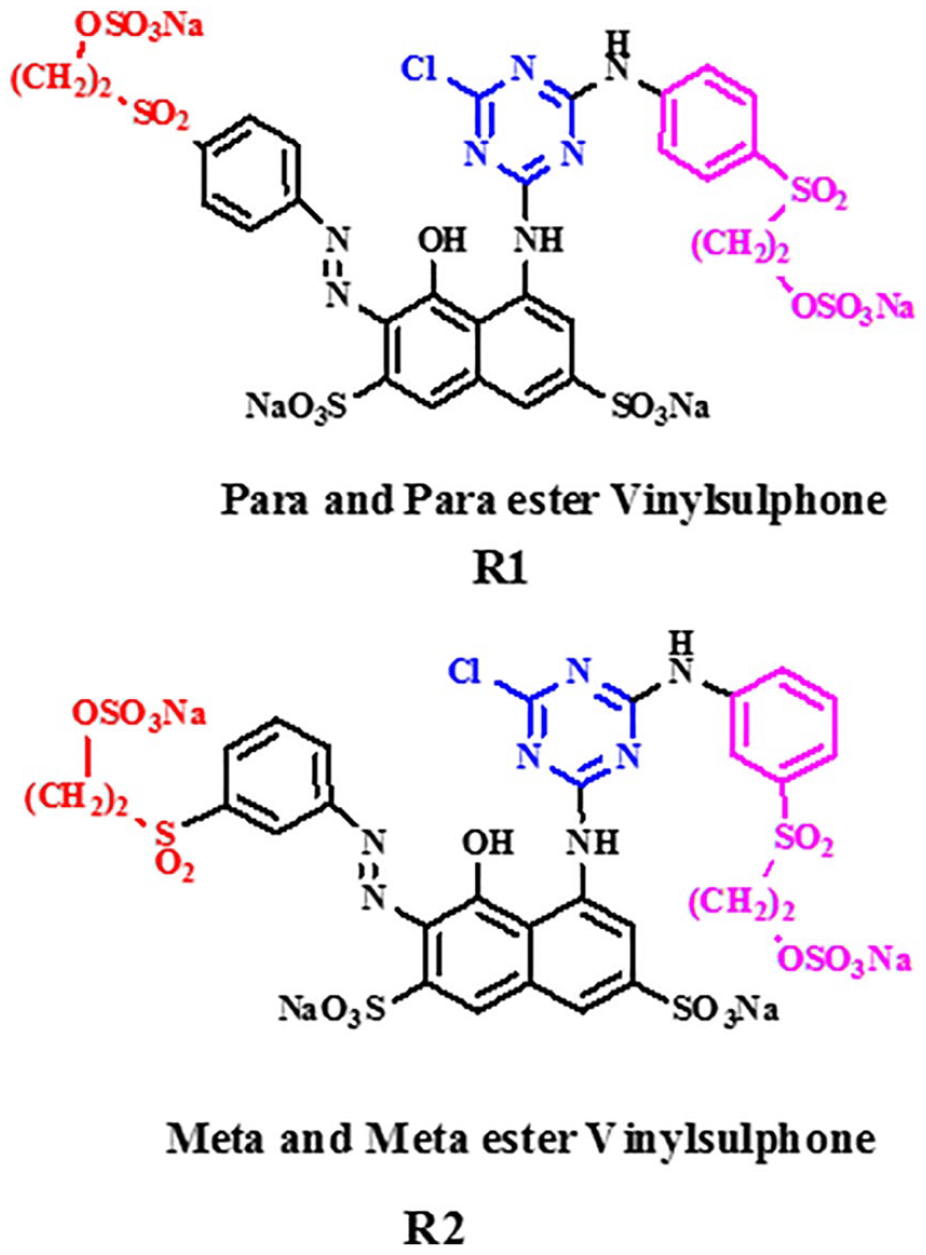
Chemical structures of hetero-functional reactive dyes.
RSM and model building
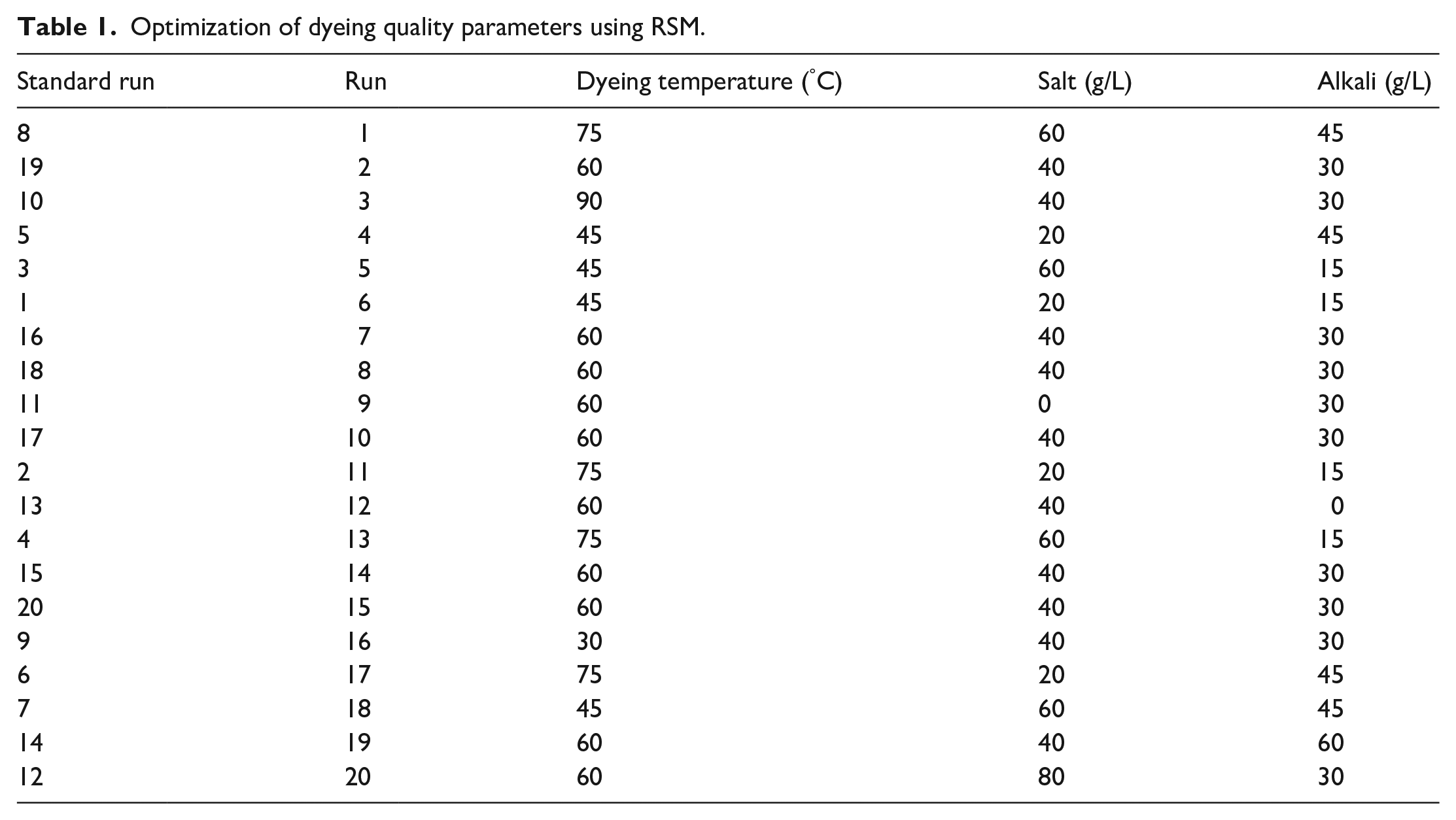
Response surface approach was used for optimizing the various dyeing process parameters of new hetero-functional reactive dyes. The experimental optimization study was carried out using a central composite design (CCD). Three important influencing dyeing parameters selected for the interactive study were (A) temperature, (B) salt, and (C) alkali. Optimization of these independent parameters was carried out in the range of 45°C–75°C, 20 to 60 g/L, and 15 to 45 g/L for temperature, salt, and alkali dosage respectively. Design-Expert software (version 7.0.0) generated 20 experimental runs (Table 1) for experimental study. A three-factor CCD consists of 6, 6, and 8 axial points, central points, and factorial points respectively. CCD was also used to assess the experimental error and data reproducibility using central points. The low and high levels of independent variables are coded to the (−1, +1) interval respectively. The values of coded variables were obtained using the following equation:

Optimization of dyeing quality parameters using RSM.
Where Xi is the independent variable real values, Xo is the Xi value at central point, ΔX is the step change, and xi is the process variable dimensionless coded value. The relationship between independent and dependent variables represented by the second-order equation, which is given as follows:

Where y is the response variable; β0 is the intercept; β1; β2; β3 is the coefficients of A, B, and C; β12; β13; β23 is the cross-products coefficients; and β11; β22; β33 is the quadratic term’s coefficients. A synergistic effect and negative effect in the equation was expressed by a positive and negative symbol of variables respectively. The optimal conditions were obtained by analyzing the surface plot, solving the regression equation and also by setting the restraints for the ranges of the variables.11,22
Dye exhaustion and fixation evaluation
The exhaustion percentage of the dyebath was determined at specified λmax of dyes through an ultraviolet-visible spectrophotometer (CE-7200) using 1 cm quartz cells. The percentage for exhaustion was determined using the equation (3).

The concentrations of dyebath before and after dyeing were represented by C1 and C2 in the equation. 21 The fixation ratio represents the dye percentage covalently attached to the fabric relative to the exhausted dye. The colorimetric data of the dyed cotton samples were determined before and after washing treatments which reflect the fixation percentage. The color strength of dyed samples at their particular λmax was determined using spectrometer. Calculations of fixation ratio were carried out using equation (4). 10

Color buildup/strength of the dyed samples before and after the clean washing was represented by (K/S)1 and (K/S)2 respectively.
Total dye fixation and fastness testing
Dye percentage which is covalently attached to the fabric concerning the dye amount applied to the sample represented the total dye fixation (%T) evaluated using the following equation (5) for reactive dyeing. 23

Where F and E in above equation indicate fixation and exhaustion respectively.
Fastness testing of dyed samples was carried out following standard methods of the International Organization for Standardization (ISO). Wash fastness of dyed samples was assessed using the ISO 105-CO3 method. Crock fastness, light fastness, perspiration fastness, and fastness to chlorinated water was evaluated under ISO 105-X12, ISO 105-B02, ISO 105-E04, and ISO 105-E03 test methods respectively.
Results and discussion
Statistical analysis and quadratic model fitness
Analysis of variance (ANOVA) was employed to interpret the results as it is the most reliable way for the evaluation of fitted model quality.22,24–28 ANOVA results for exhaustion and fixation responses of new reactive dyes, R1 and R2 are presented in Tables 2 and 3 respectively. Probability F values obtained <0.05 showing the significance of model terms statistically. The lack of fit was non-significant which showed the validity of the developed model.
ANOVA results for the exhaustion of dye R1 and R2.

ANOVA results for the fixation of both (R1 and R2) hetero-functional dyes.
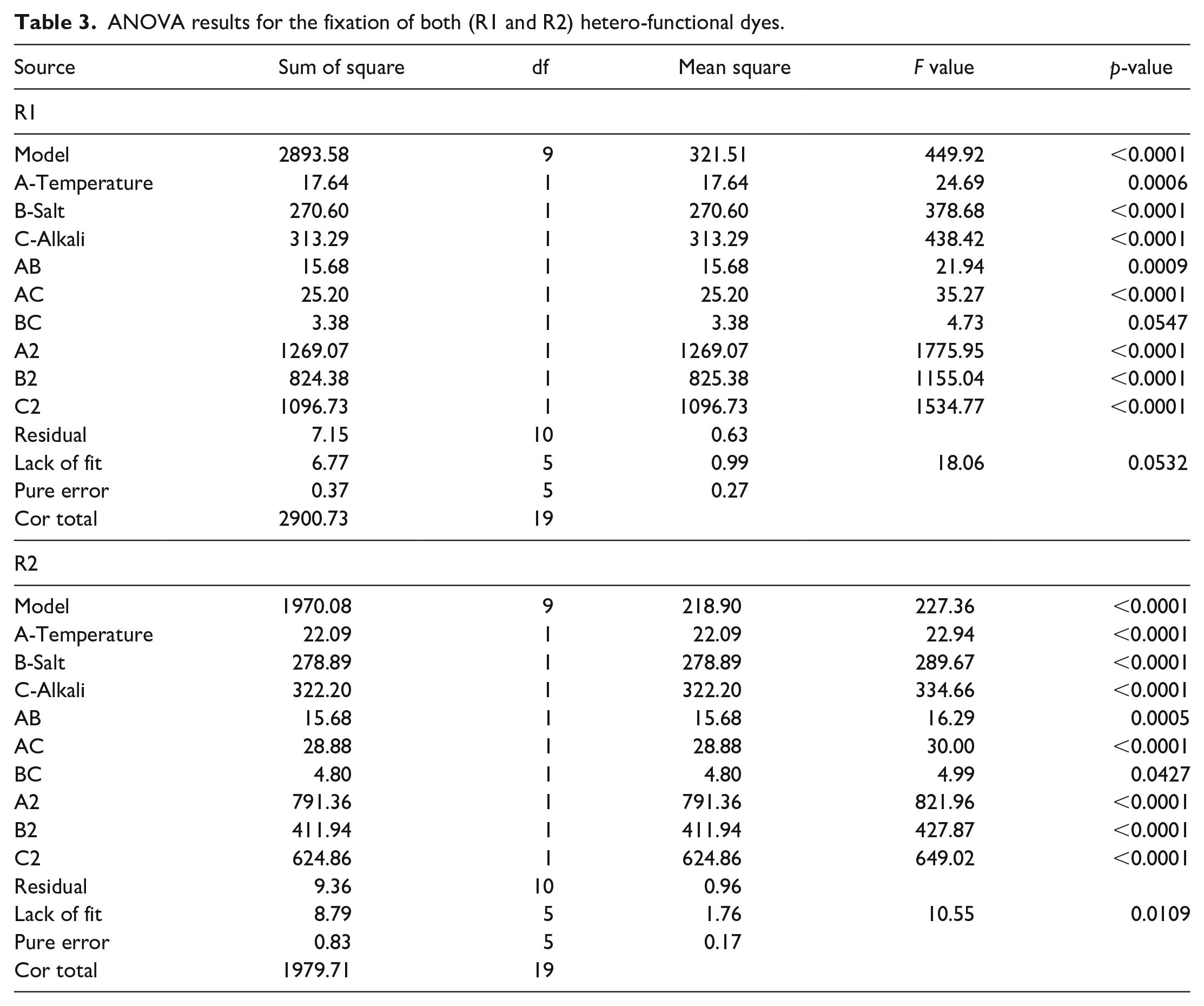
The relationship between independent and dependent variables represented by the second-order equation (Table 4). A synergistic effect and negative effect in the equation was expressed by a positive and negative symbol of variables respectively. 29 The coefficient of determination (R2) and adjusted R2 (R2adj) values was used for checking the quadratic model fitness. For a good model, the values of both should be close to 1.0. There is a good agreement between R2 and R2adj values as shown in Table 4. The adequate precision value represents the signal-to-noise ratio. The desirable value of the signal-to-noise ratio is above 4.30–33
Second order equation showing responses and fitness of Quadratic model.

Individual effect of process variables on dyeing responses
Perturbation plots displayed the effect of individual dyeing quality parameters on the exhaustion and fixation responses (Figure 2). A steep slope or curvature of a factor in the perturbation plot represented the sensitivity of response to that specific parameter while a comparatively smooth and straight line shows insensitivity to that particular parameter. 22 Exhaustion plots for new reactive dyes R1 and R2 revealed that salt (factor B) had a substantive effect on dye exhaustion. This can be justified by the fact that both hetero-functional reactive dyes and fiber carry negative charge in water, which resulted in the formation of an electrical double layer, thereby lowering the reactive dye affinity for cellulosic fiber. The effect of this electrical double layer can be reduced by adding an optimum and sufficient amount of salt in the dyebath. This added salt increased the anionic reactive dye exhaustion on fabric by masking the inherent negative charge on the cellulosic fabric.34–36 Similarly, Alkali (factor C) had a tectonic effect on the fixation of new hetero-functional reactive dyes. Proper quantity of alkali was mandatory for fixation phase of new reactive dyes because sulfatoethylsulfone (SES) group present in new reactive dyes get activated in alkaline medium to the active form (vinyl sulfone). The vinyl sulfone in close proximity with the oxygen-nucleophile present in cellulosic fabric forms a permanent covalent bond via Michael addition mechanism.37–39 Alkali was also necessary for the activation of the cotton fabric so that fabric pores should be in particular alignment into the interior for permanent bonding with the dye reactive groups. Temperature (factor A) was a key and controlling factor in the exhaust dyeing of both hetero-functional reactive dyes. The rate of various chemical and physical processes involved in exhaust dyeing was significantly affected by processing temperature. Moreover, reactive dyes first adsorbed on the fabric surface through an ionic bond. Once assembled, the ionic bond was then converted to a covalent bond at required elevated temperatures.
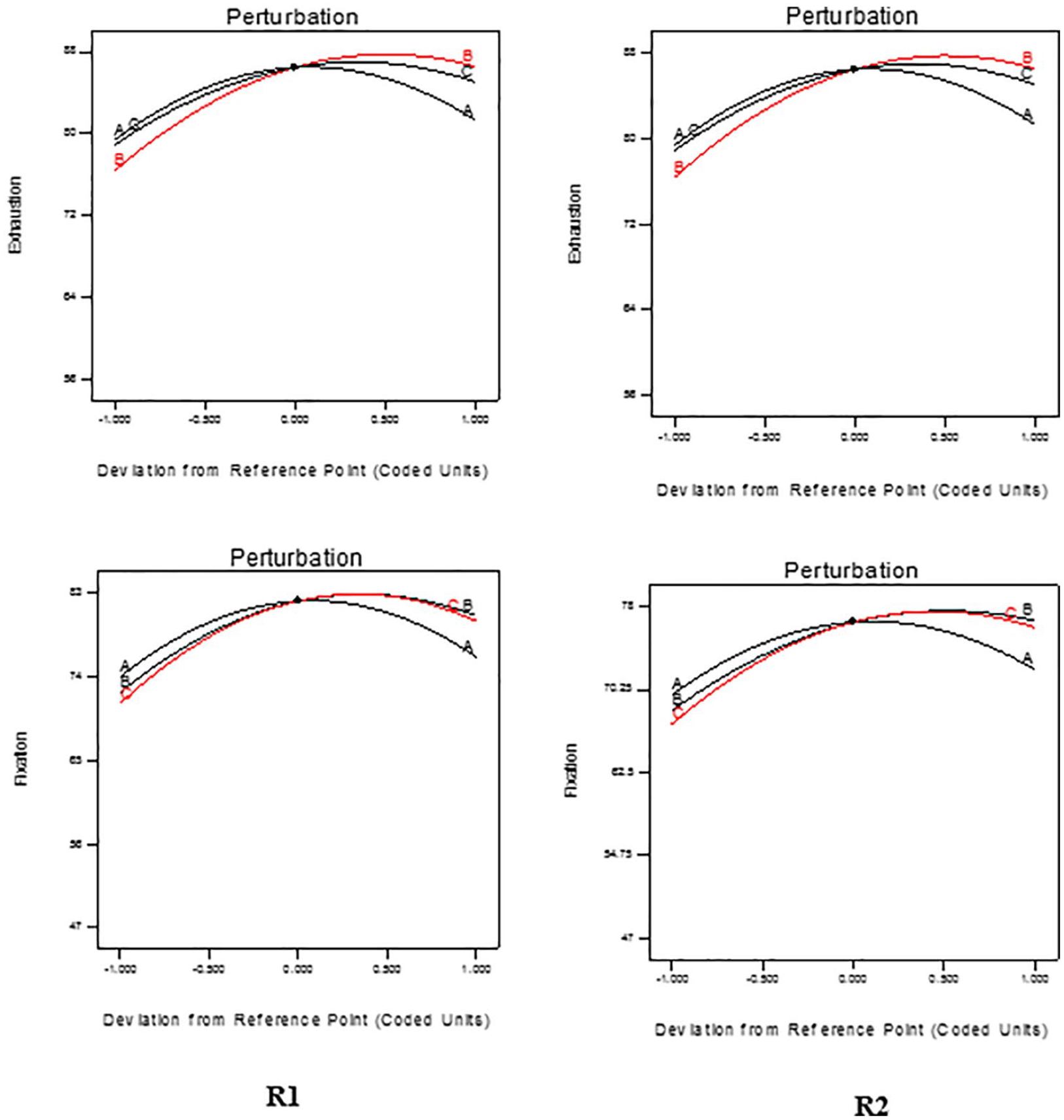
Perturbation plot of independent variables for exhaustion and fixation of R1 and R2.
Interactive effect of process variables and response surface optimization
The combined effect of salt and processing temperature on the dyes exhaustion and fixation responses was explored by varying salt dosage from 0 to 80 g/L and processing temperature between 30°C and 90°C. Alkali dosage was kept constant at its particular central point (30 g/L). Rising trend of response surface plot in Figure 3 elucidate that temperature and salt together have a protagonist influence on both dyeing responses. Increasing one variable and decreasing others at a time had an adverse effect on the dyeing exhaustion and fixation. Dye exhaustion percentage increased with increasing salt concentration in the dyebath up to a certain optimal point. Dyeing with higher or lower salt dosage than optimum level had negative effect on the exhaustion percentage which may be attributed to the low migration rate of dye to the matrix periphery. This happens due to dye aggregation which leads to uneven dyeing and poor color strength of the cotton fabric. Similarly, the variation of processing temperature up to a particular limit had a striking influence on the dye transfer rate and covalent fixation percentage of hetero-functional reactive dyes.

Response surface plots showing interaction of temperature and salt on exhaustion and fixation of R1 and R2.
The results regarding the combined effect of salt and alkali on the exhaustion and fixation of new hetero-functional reactive dyes are displayed via 3-D surface plots (Figure 4), keeping the processing temperature constant at its central point 60°C. Both process variables have a positive and synergistic effect on the dyeing exhaustion and fixation up to their optimum point. The 3-D plateaus showed the substantial effect of salt on the exhaustion response while alkali dosage had a prominent effect on the fixation response of reactive dyeing. Alkali addition beyond the optimal point causes the excessive ionization of the fabric hydroxyl group thereby starting a competition for cations within the hydroxyl group of water and cellulosate ions. Maximum dye exhaustion and fixation outcomes obtained when both process variables were together increased to their optimum level showing their collaborative effect on dyeing responses. By increasing alkali dose while keeping the salt concentration constant at a time, exhaustion and fixation were not maximally obtained.
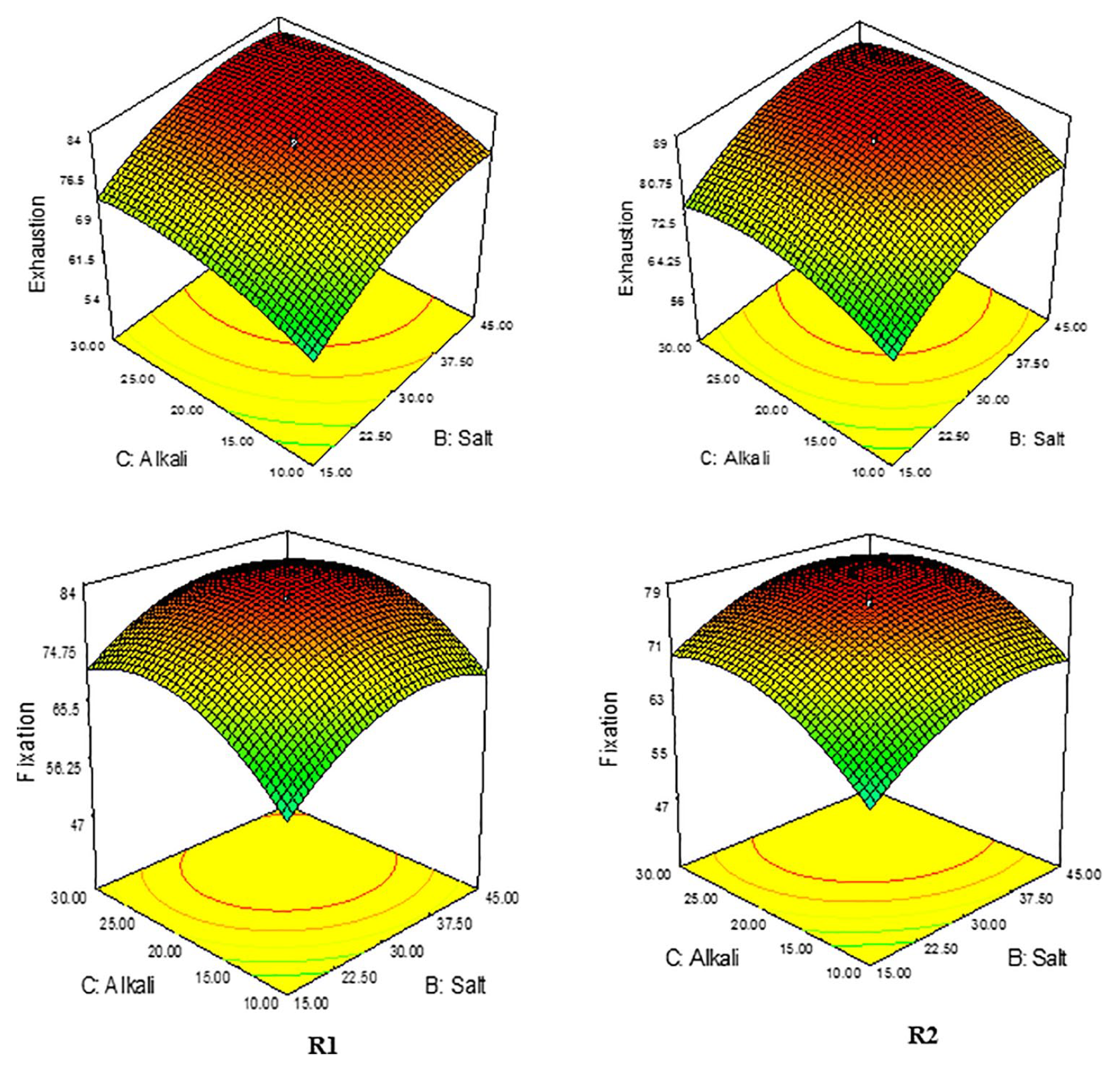
Response surface plots showing interaction of alkali and salt on exhaustion and fixation of R1 and R2.
The interactive effect of alkali dosage and processing temperature on dyeing transfer rate and chemical fixation was investigated by varying concentrations of alkali from 10 to 45 g/L and a temperature range from 30°C to 90°C for both dyes. The third variable (salt) was kept constant at its central point 40 g/L. Increasing surface plot trends in Figure 5 showed that the simultaneous increase of both factors increased the dyeing responses and ultimately affinity of both dyes for cotton fabric. The saddler surface of 3-D plots would be observed by increasing alkali dosage at constant dyeing temperature. At low temperature than optimum, the dye molecules have low kinetic energy and low mobility to react with the substrate and will be responsible for the aggregation of dye in the dyebath. 40 So, the dyeing process possibly remains incomplete because insoluble pollutants and contaminations in dyebath have maximum chances to adsorb on the cotton fabric producing dull and uneven shades with low color strength. At higher temperature, exhaustion and fixation percentage decreased which may be ascribed to the dye molecules desorption from fabric surface to the dye bath due to the de-stability of dye molecules and hydrolytic degradation of the dye reactive groups. Statistical results revealed both parameters have a positive synergistic effect on both dyeing (exhaustion and fixation) responses.

Response surface plots showing interaction of temperature and alkali on exhaustion and fixation of R1 and R2.
The optimized numerical conditions of process variables for exhaust dyeing of new hetero-functional reactive dyes were obtained using the desirability function of design expert software and outcomes are presented in Table 5.
Optimum dyeing conditions of the new hetero-functional reactive dyes.

Fastness properties
The data from wash fastness studies (Table 6) showed that dyed fabric had good (4) wash fastness which can be accredited to the fixation of the dye molecules through the covalent bond formation with the substrate which resists fading after washing.41,42 The data from the crock fastness illustrated good rubbing fastness. The staining during the rubbing fastness test was most expected from the hydrolyzed dye formed on the surface of the fiber and good rubbing fastness indicated that the content of hydrolyzed dye was very low. Lightfastness was good to excellent in a range of 4–5 as indicated from the results. Azo dyes comprising of H-acid have greater stability to sunlight as such dye chromophore can undergo to azo-hydrazone tautomerism. Therefore, they were stable to photoreduction.16,34,41,43,44 Fastness to perspiration was good because dyes were hetero-functional contains both types of reactive groups triazines and vinyl sulfone which were stable to the alkaline and acidic conditions respectively. Fastness to chlorinated water showed moderate to good (3–4) results for the trifunctional reactive dyes.
Color Fastness of the dyed cotton fabric.

Structure-activity relationship
Improved exhaustion and fixation of trifunctional reactive dye R1 as compared to R2 can be justified by considering the structure-activity relationship of both dyes. Dye structures played a significant role in its affinity towards the cellulosic substrate. More linear and planar structures have greater affinity and substantivity for the polymeric cotton substrate. Therefore, hetero-functional azo reactive dye R1 displayed boosted dyeing properties than R2 because both vinyl sulfone reactive groups were appeared at the para places resulting in greater planarity and less steric hindrance in its structure. Figure 6 presents the dye-fiber chemistry. Consequently, it has close orientation with the polymeric cellulosic chains displaying better substantivity and reactivity.35–38,45 Hydroxyl group of cellulose interacts with the reactive groups of selected dyes (triazine and sulfatoethylsulfone) under alkaline dye bath conditions.

Mechanistic pathway of cotton fiber reaction with synthesized reactive dyes.
Conclusion
Current study concluded that exhaust dyeing required a high level of control over a range of reactive dyeing process variables for improved and efficient dyeing properties of new hetero-functional reactive dyes. Outcomes of CCD proved that the present statistical quadratic model was highly significant for the optimization of new reactive dyes. The crux of this research revealed that reactive dye R1 showed maximum 87.62 (±3) exhaustion and 82.85 (±3) fixation percentage at their optimum salt (29.07 g/L) and alkali (32.55 g/L) concentrations while R2 displayed 81.50 (±3) exhaustion and 77.21 (±3) fixation at their optimized salt (32.55 g/L) and optimum alkali dose (22.84 g/L) using low salt and alkali quantities. The interactive effect of dyeing process variables presented by second-order equation and surface plots displayed positive effects on the dye exhaustion and chemical fixation for cotton dyeing. R1 displayed boosted exhaustion and fixation as compared to R2 which was attributed to the more planar and sterically less hindered structure of the former dye. In a net shell, excellent fastness properties and superb color buildup recommended the commercial practicability of these new hetero-functional reactive dyes.
Footnotes
Acknowledgements
sAuthors acknowledged the Chemistry department of the University of Agriculture Faisalabad, and the textile processing department of National Textile University, Faisalabad for providing research facilities.
Declaration of conflicting interests
The author(s) declared no potential conflicts of interest with respect to the research, authorship, and/or publication of this article.
Funding
The author(s) received no financial support for the research, authorship, and/or publication of this article.
