



Abstract
Specially designed thermal protective clothing is used by firefighters and furnace operators for safety against intense heat flux exposures. Radiative transfer becomes the main heat transfer mode under such high temperature conditions. This work dealt with the effects of thermal degradation on the radiant protective performance and radiative properties of Polysulfonamide and Nomex IIIA fabrics at virgin state and pyrolyzed state, respectively. Simultaneously, the thermal stability and flame retardancy of both fabrics were compared by using thermogravimetry, vertical burning test, and limit oxygen index methods. The obtained results of thermal degradation effect on radiative properties demonstrated that both of the reflectance and transmittance of the two kinds of fabrics at virgin condition are higher than those at pyrolyzed state. On the other hand, the radiant protective performance values of both fabrics at charred condition were lower as compared to those at virgin state. This study will be helpful to estimate the continuing performance of firefighters’ protective fabrics after thermal exposures during firefighting operations.
Keywords
Introduction
The frequent occurrence of accidents such as fire risk increases the workload and the risk of firefighters, and protective clothing is designed to safeguard them from these fire hazards.1,2 In a typical fire or radiant heat exposure, temperature of the outermost layer of the firefighters’ protective clothing consisting of outer shell, moisture barrier, and thermal liner may reach up to the order of 1000 K under high-intensity heat flux conditions. So, fabric would experience thermal oxidation degradation and be destructed within an enclosure of intense flashover fire, or the clothing materials are also degraded when exposed to low-level heating during a long proximity firefighting. 3 Generally, the fundamental changes in fabric spatial or chemical properties such as pyrolysis, char formation, and shrinkage could result in insufficient protection against hazards, which can lead to serious injuries to firefighters. 4 Therefore, it is necessary to understand how thermal protection capacity of protective clothing deteriorates after exposure to fire-ground conditions.
At present, the inherently high-temperature-resistant fabrics, such as Polysulfonamide (PSA), Nomex® (Meta-aramid), Kevlar® (Para-aramid), and polybenzimidazole (PBI) are most commonly employed as outer shell of protective clothing. 5 In recent years, works on the high-temperature-resistant behavior of these inherently flame-resistant (FR) fabrics studied by vertical burning test (VBT), limit oxygen index (LOI), and thermogravimetric analysis (TGA) methods have become rather intensive. A considerable amount of research has been conducted to investigate the thermal protective performance (TPP) of these high tenacity fabrics used for firefighting protective clothing. Shalev and Barker 6 measured the heat through various fire-resistant fabrics including PBI fabrics exposed to convection source (open flame) based on the tolerance time for each fabric obtained from the bench-scale laboratory apparatus. Some high-performance fibers such as poly-p-phenylene benzobisoxazole (PBO), meta-aramid, and para-aramid were evaluated using calorimeter and TGA/differential scanning calorimeter (DSC). 7 The result showed that PBO fiber exhibited the best performance (little or contribution to fire, low smoke, and good heat resistance) and offer a good combination between heat and flame resistance and mechanical properties. Hirshler 8 carried out a series of experiments to assess thermal resistance performance of two fabrics intended for use in thermal protective clothing: an aramid (used extensively in firefighter gear) and modified viscose cellulosic fabric. It was found that the modified viscose fabric seemed a better thermal insulator than the aramid. Zhu and Zhang 9 have developed a thermal wave skin model to characterize the thermal performance of aramid, FR cotton fabrics. Investigations have been conducted to find the effects of structural parameters, air pressure, and air layer thickness on the thermal performance of the selected FR fabrics.
As mentioned above, fabric decomposition or char formation starts during high heat exposures. These fundamental changes will degrade mechanical and thermal protective properties of outer layer in the protective clothing. It is important to know to what extent the radiant protective performance (RPP) and radiative properties of FR fabrics will vary after intense heat flux exposures. There are also several publications describing the levels of damage and changes to important properties of these inherently FR fabrics after exposure to environmental conditions such as accelerated aging besides pyrolysis reactions.10,11 However, to our best knowledge, few literatures have dealt with the changes of radiant heat penetration and thermal reflection through or from protective fabrics due to pyrolysis after an intense heat flux exposure. In an actual thermal disaster environment, the fatal injury toward human body was due to the accumulation on the surface of human skin of large amount of thermal energy resulting from radiant heat penetration from or absorption by fabrics.
In this work, the thermal decomposition behavior and flame retardancy of the widely used PSA and Nomex IIIA fabrics were first investigated by TGA, LOI, and VBT. Then, the required time to reach first- and second-degree burns of skin underneath the two kinds of fabrics were evaluated prior to and after thermal degradation. Simultaneously, the analysis of their temperature variations for surface and opposite face under different radiant heat conditions was made by using Testo thermocouples. At last, the effects of thermal decomposition of fabrics on the radiative properties were also analyzed based on the hemispherical transmittance and reflectance measurements. This research will help to analyze the continuing performance of firefighters’ protective clothing after thermal exposures during firefighting operations and also provide strong theoretical support for the development of better protective clothing.
Experimental
Fabric materials
Two high-performance fabrics as outer shell materials commonly used in the thermal protective clothing were chosen in the study. Their detailed properties are listed in Table 1. PSA fiber, a type of aromatic polyamide fiber with 75% para-linked and 25% meta-linked compounds, provided by Shanghai Tanlon Fiber Co. Ltd (China). The component of the Nomex IIIA was 93% Nomex Aramid 1313, 5% Kevlar Aramid 1414, and 2% anti-static fibers with the weave type of twill. The fabric samples were conditioned prior to test according to GB/T 6529-2008.
The structure parameters of the tested samples.

PSA: Polysulfonamide.
Experimental work
Thermal analysis tests
TGA was investigated by using Netzsch TG209F1 thermal analyzer, operated in the dynamic mode in a dry nitrogen atmosphere with a constant flow rate of 25 mL/min over a temperature range of 20°C–800°C. The heating rates were controlled at10 K/min.
Flame-retardant tests
LOI of fabric (120 mm × 60 mm) was measured by using critical oxygen index (COI) tester (Motis technology Co., Ltd, China) according to GB/T 2406-93. A scale mark was drawn on each specimen at 50 mm to the ignition side beforehand. Each test repeated five times and mean value was obtained.
VBT was conducted on a LFY-601 type instrument (Shandong, China), according to GB/T 5455-1997 (China). The testing method evaluates the upward burning behavior of the fabrics, including after-flame time (the length of time the material continues to burn after removal of the burner after 12-s ignition time), after-glow time (the length of the material glows after the flame extinguishes), damage length, and the char residue length. Six specimens (300 mm × 80 mm) of each kind of fabric were required in this test, three specimens for the warp direction test and the other three for the weft direction test. The average values for these VBT testing results in the warp and weft direction were recorded.
Evaluation of thermal protection of FR fabrics
In order to evaluate the effect of thermal degradation on thermal properties of fabrics, the flame-retardant fabrics first were exposed a convective heat flux (63 kW/m2) in a Fire Testing Protection Apparatus (FTP 30, Japan) according to ISO 9151, which is shown in Figure 1(a). The convective heat was provided by a gas burner. Heat was transferred through the fabric and air gap trapped between the fabric and copper calorimeter surface. Times for a temperature rise of 12°C and 24°C were registered using a thermocouple mounted on the calorimeter. The mean result for three test specimens was calculated as the “heat transfer index” (HTRI12 and HTRI24). 12 The time differences HTRI24-HTR12 gave a good indicator of the skin pain alarm time. These fabrics will pyrolyze and form char in the period of convective heat exposure.
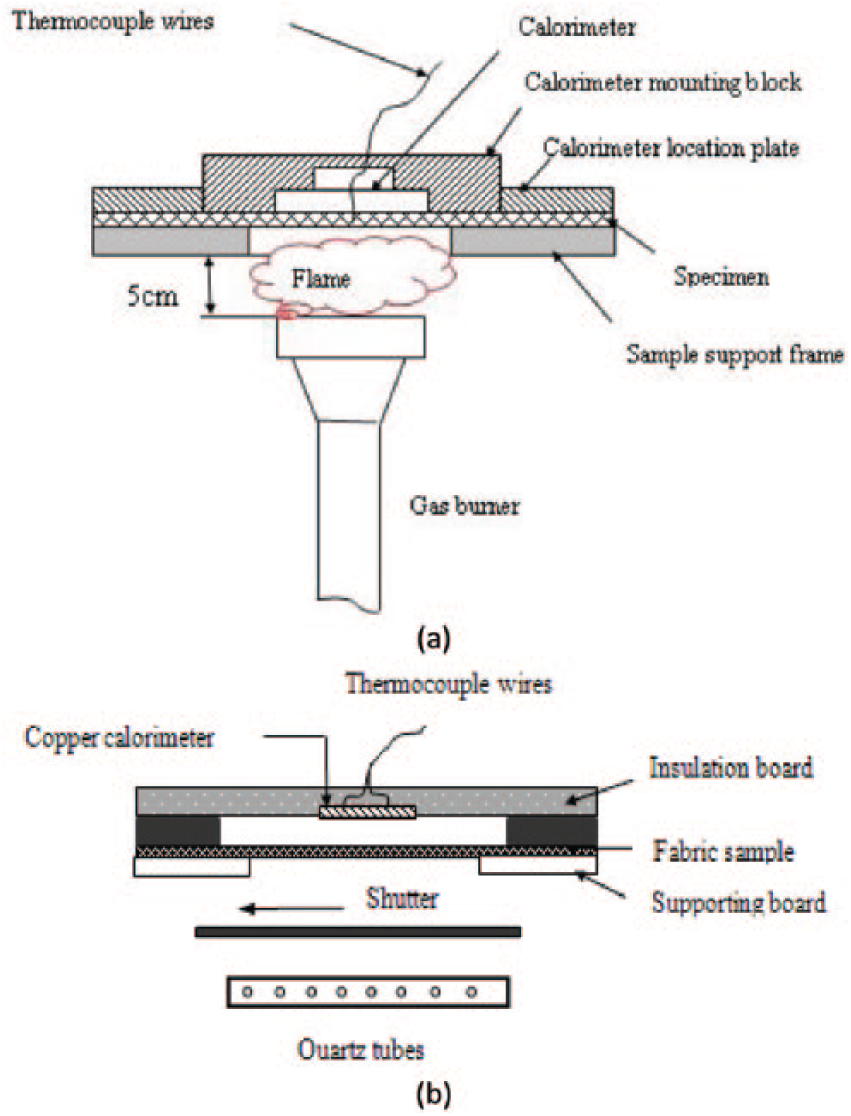
Test principle diagram of thermal protective performance of fabrics: (a) FTP and (b) RPP.
Then, the RPP of the pyrolyzed fabrics was tested in a modified RPP tester, developed to measure the time elapsed for a controlled radiant heat source to penetrate through a protective composite fabric system resulting in damage to human skin. The experimental technique employed thirteen 500-W quartz tubes radiant heating array to deliver radiant heat energy to one surface of a specimen (Figure 1(b)). The heat flux levels of 20, 30, and 40 kW/m2 were calibrated using the standard TPP disk calorimeter exposed to the heat source for 10 s—the procedure called for in ASTM F 1939. The temperature rise versus time and heat flux was measured using a copper calorimeter located behind the sample at a distance of 12.5 cm to the surface of the quartz tubes. The surface and opposite face temperature rises of the test specimens were monitored by Testo (Germany) temperature tester during the experiment. The time T in seconds to caused first- or second-degree skin burn of each kind of fabric was determined by overlaying the curve of the thermal response of the calorimeter with a curve obtained from ASTM D 4108 standard (withdrawn) in the same scale. Exposure time was 30 s for all tests. Prior to testing, the two kinds of fabrics are conditioned for at least 24 h in a standard atmosphere of 65% ± 5% relative humidity (RH) and 20°C ± 2°C.
Experimental details for directional-hemispherical transmittances and reflectances
The spectroscopic properties of protective fabrics have been investigated to characterize the effect of pyrolysis on the radiative behaviors of these fabrics. Thus, we presented the directional-hemispherical transmissivity and directional-hemispherical reflectivity measurements, which were performed on a spectrophotometer (Agilent Cary 5000 UV-Vis-NIR, Australia) with a scan speed of 10 nm/s. The measurements will be carried out on a range of wavelength 0.76–2.5 μm. The beam output
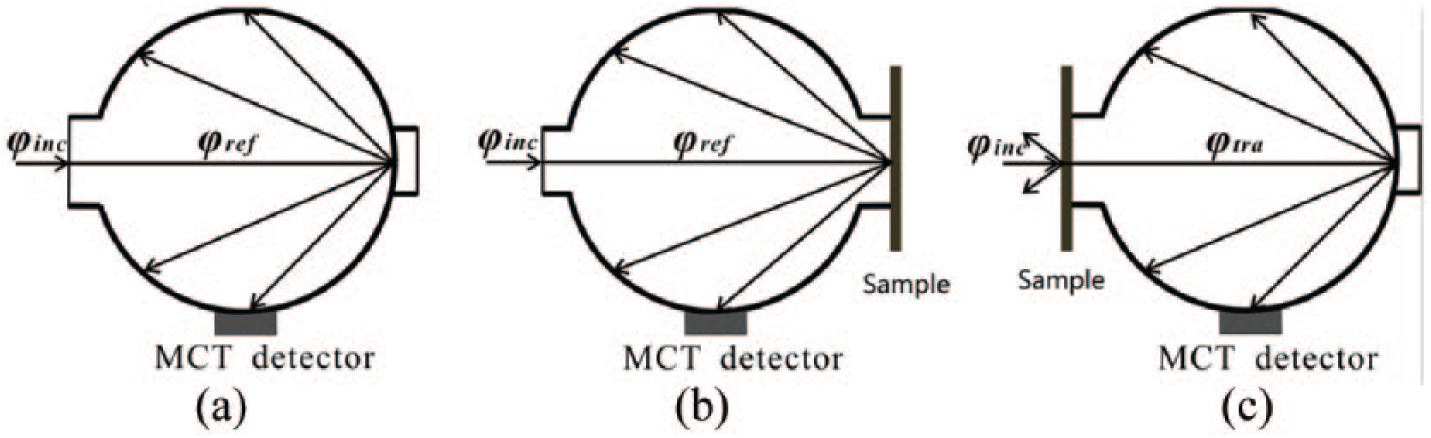
Testing principle of radiative properties: (a) reference measurement, (b) directional-hemispherical reflectance, and (c) directional-hemispherical transmittance.
Results and discussion
Thermal decomposition behaviors of thermal protective fabrics
The TG and differential thermogravimetric (DTG) curves of PSA and Nomex IIIA fabrics in a dry nitrogen atmosphere are shown in Figures 3 and 4. The characteristic parameters of the thermal decomposition process are listed in Table 2. It can be seen from Figures 3 and 4 that both PSA and Nomex IIIA fabrics had a phase of slight mass loss at the temperature of 30°C–100°C due to the loss of intermolecular bound water. The TG curve of PSA was plain at temperature of 200°C–400°C, among which the mass loss rate of was less than 3%. As for Nomex IIIA, which contained 2% conductive fiber, there was a complex depolymerization reaction in this stage, which resulted in the slow mass loss. It is shown in Table 2 that the temperature of maximum thermal decomposition rate of PSA was near to 500°C. The mass loss became rapid between 450°C and 600°C (Figure 3), which was attributed to the degradation of a large number of molecular chains pyrolyzed into smaller molecules. Consequently they would release large amount of substances which had lower vaporization temperature. The temperature of maximum thermal degradation rate of Nomex IIIA was at 462.9°C, corresponding to the degradation of Aramid 1313 fiber. 13 Another large thermal decomposition rate appeared again at 560°C–570°C, which was resulted by the degradation of Aramid 1414 fiber. Over the range of the temperature of 600°C–800°C, called as residue pyrolysis stage, the mass loss of PSA and Nomex IIIA fabrics became relatively slow, indicating that the substances and the pyrolysis matter have experienced thermal degradation with different levels in this process. In short, both of PSA and Nomex IIIA fabrics had relatively high thermal decomposition temperature in terms of maximum degradation rate. Moreover, the carbon residue was still nearly 50% at 800°C. These results revealed that the thermal dimensional stability of the two kinds of fabrics was rather excellent.
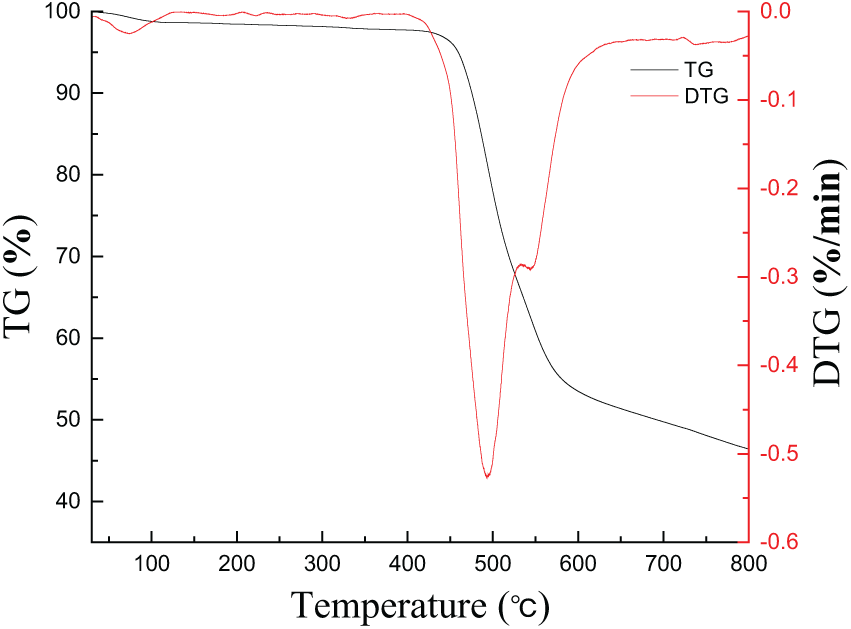
TG and DTG curves of PSA fabric in N2 atmosphere.

TG and DTG curves of Nomex® IIIA fabric in N2 atmosphere.
Thermal degradation performance value of TG and DTG.

TG: thermogravimetry; DTG: differential thermogravimetry; PSA: Polysulfonamide.
Flame-retardant performance
The post-burn images of PSA and Nomex IIIA fabrics after the VBTs are presented in Figure 5 (Left: warp direction, Right: weft direction). It can be seen from these images that the fabric burned in the warp direction with similar manner to the weft direction. However, indigenous PSA fabric exhibited a severer contraction and stouter carbonized layer. The damaged length and length of carbon residue was greater than those of the aramid fabric. The testing data of VBT and LOI are listed in Table 3.

Post-burn image of the two fabrics following vertical burning testing (a: PSA and b: Nomex IIIA).
Test results of flame resistance performance.

PSA: Polysulfonamide.
PSA and Nomex IIIA fabrics released a smell of pungent aroma when burning and there was no melting, dripping phenomenon during the burning process, which was conformed to flame-retardant requirement for the outer shell (GA634-2006, China). It can be observed in Table 3 and Figure 5 that both PSA and Nomex IIIA fabrics had no continuing burning time and smoldering time. The residual carbon length was less than 100 mm. In contrast, inherently PSA fabric had a severer contraction and stouter carbonized layer. The damaged length and length of carbon residue were greater than that of the Nomex IIIA fabric.
Analysis of TPP
Flame resistance performance
The gas flow was adjusted according to FPT-30A equipment operating instructions. Then the fabrics were exposed to a convective heat flux of 63 ± 5 kW/m2 for 20 s. The required time for a temperature rise to 12°C and 24°C for the copper calorimeter located behind the sample and their mass loss rate was measured. The test results are presented in Table 4. Fabric surface appearance prior to and after the convective heat exposures are illustrated in Figure 6.
Test results of protective performance of fabrics exposed to convective heat.

PSA: Polysulfonamide.
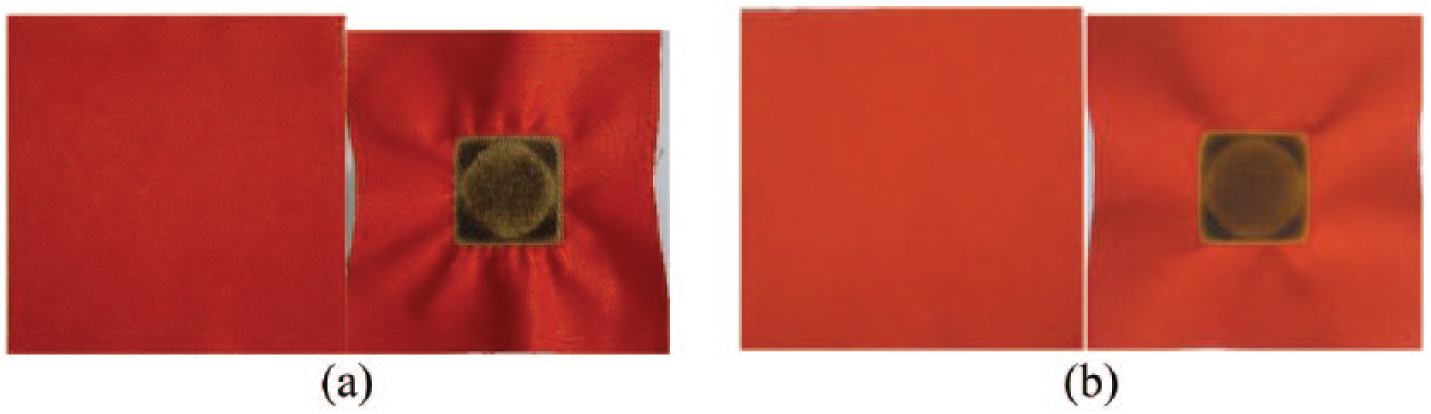
Fabric surface appearance of prior to and after the convective heat exposures (a: PSA and b: Nomex IIIA).
It can be found from Table 4 that the required time rising up to 12°C and 24°C for PSA and Nomex IIIA fabrics were similar. The mass loss rate of Nomex IIIA fabric was less than that of PSA fabric. Figure 6 showed that the fabric faded badly in the area contacting with open flame and presented a state of brown. The gap between yarns increased, but the sample still showed a good integrity.
RPP
Three virgin specimens and another three specimens exposed by a convective heat flux of 63 kW/m2 were selected to evaluate their RPP values by RPP tester under different heat flux of 20, 30, and 40 kW/m2, respectively. The surface and opposite face temperature of the samples were measured by Testo thermocouples adhered to fabric. Distance from fabric specimens to radiation heat source was 12.5 cm and the heat radiation time was 30 s. The thermal radiation penetration resistance could be characterized by the temperature gradient between the surface and opposite face. Along with RPP value combined with the required time to reach a first- or second-degree skin burn, the temperature difference between the two faces can assess fabric thermal protection capacity.
The testing results of RPP are given in Tables 5 and 6. Under the same radiant heat flux condition, required times to arrive at first- or second-degree skin burn for exposed fabrics were less than those of unexposed fabrics (virgin fabrics). The results revealed that the RPP of the degraded fabrics decreased as compared to the virgin ones. The highest relative difference was 35.7%. However, even if the fabrics were degraded, they had good TPP. 14 This can be attributed to the fact that the two kinds of fabrics tended to form char layer, which insulated heat and oxygen penetration into the fabrics. 15 However, compared with PSA fabrics, the RPP values of Nomex IIIA fabric at charred condition decreased substantially, particularly under the condition of after-exposure to higher thermal radiant heat flux. This may be because PSA fabric was easier to shrink, and a thicker embedded air layer within the fabric was obtained, which will provide a better heat insulated effect.
RPP testing results (5 mm air layer).
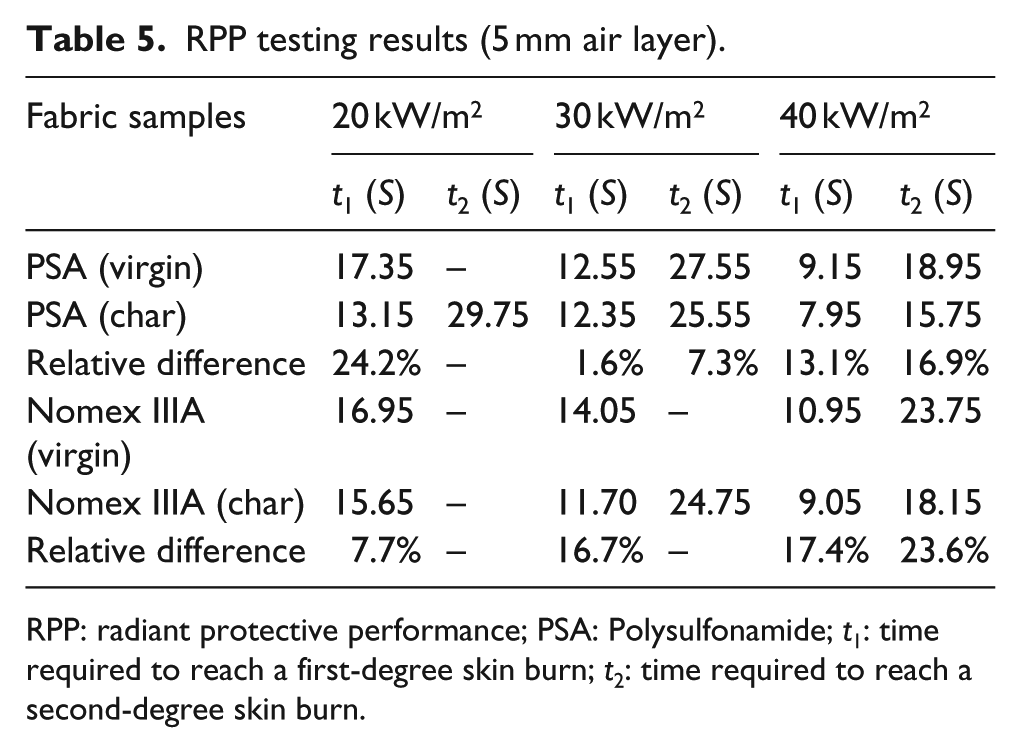
RPP: radiant protective performance; PSA: Polysulfonamide; t1: time required to reach a first-degree skin burn; t2: time required to reach a second-degree skin burn.
Test results of thermal radiation protective performance (without air layer).

PSA: Polysulfonamide; t1: time required to reach a first-degree skin burn; t2: time required to reach a second-degree skin burn.
In addition, the required time arrived at first- or second-degree skin burns for both fabrics under contact condition (Table 6; 0 mm between fabric and copper calorimeter) are shorter than those (Table 5) under the condition of 5-mm air layer. The results were consistent with the previous conclusions from Cui and Zhang 16 and Fu et al. 17 This can be explained by that the static air layer obstructed the heat transmission to copper calorimeter to a certain extent, so as to prolonging the time of skin burns.
The temperature variations of the fabrics with different radiant heat exposures are shown in Figures 7 and 8. It can be observed that the temperature profiles at the backside of exposed and unexposed fabrics presented similar increasing trend. At the beginning, the curves were abrupt and then became relatively smooth. The reason was that in the initial period, heat exchange was rather rapid resulting from high temperature difference between the fabric surface and the radiant source. However, in the last period, the results are in opposite to the above conclusion.
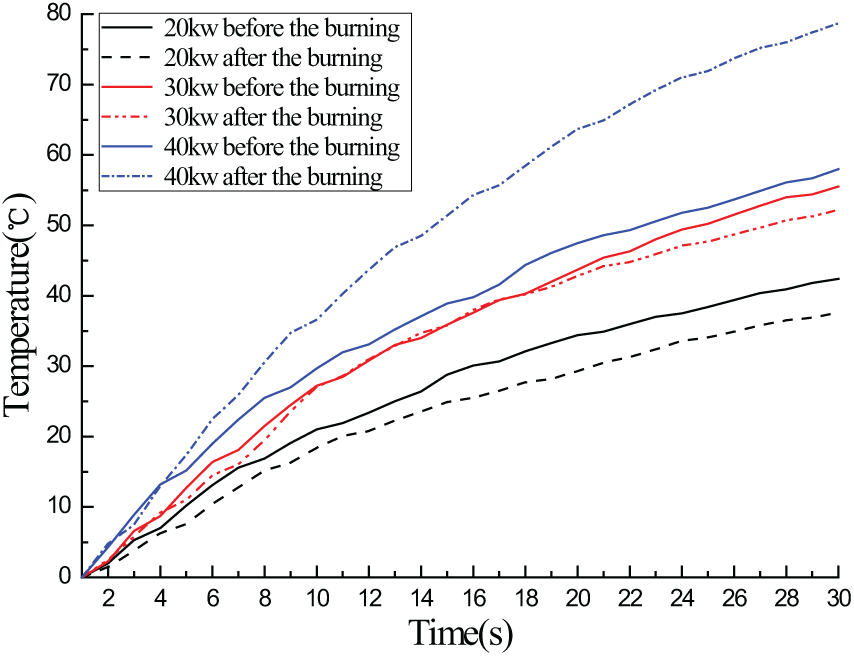
Time versus temperature curve of PSA in different thermal radiation exposures.
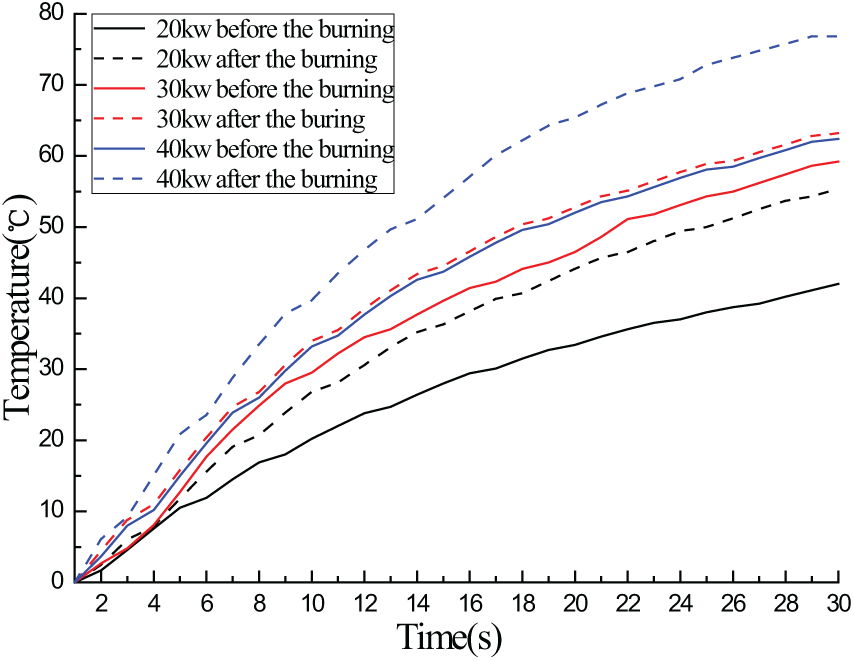
Time versus temperature curve of Nomex IIIA in different thermal radiation exposures.
The temperature variation curves for the surface and opposite face of both fabrics at virgin state and charred state are shown in Figures 9–12. An examination of these figures indicated that for all the thermal exposures, the backside temperature will surpass the surface temperature of fabric due to the heat accumulation on the back of the fabric. In addition, with the increase in the radiation heat flux, the required time decreased on the condition that the backside temperature surpassed the surface temperature. For examples, the temperature of virgin fabric backside did not exceed the surface temperate in 30-s thermal exposure when the radiant heat flux was 20 kW/m2. Under the radiant heat flux of 30 kW/m2, for the backside temperature beyond the surface temperature, the required time of PSA fabric at charred state was larger than at virgin condition, while the required time of Nomex IIIA fabric at charred condition was less than at virgin state. This may be explained by that char layer produced by the thermal degradation of PSA fabrics was relatively strong, which delayed the heat transfer toward backside of the fabric. 18 Obviously, the pyrolysis of PSA and Nomex IIIA fabrics exerted an important impact on its thermal properties under intense heat flux condition. But in a low radiant heat flux exposure, the effect of thermal degradation on RPP became inconspicuous.

The surface and backside temperature curve of PSA fabric (virgin state).

The surface and backside temperature curve of Nomex IIIA fabric (virgin state).
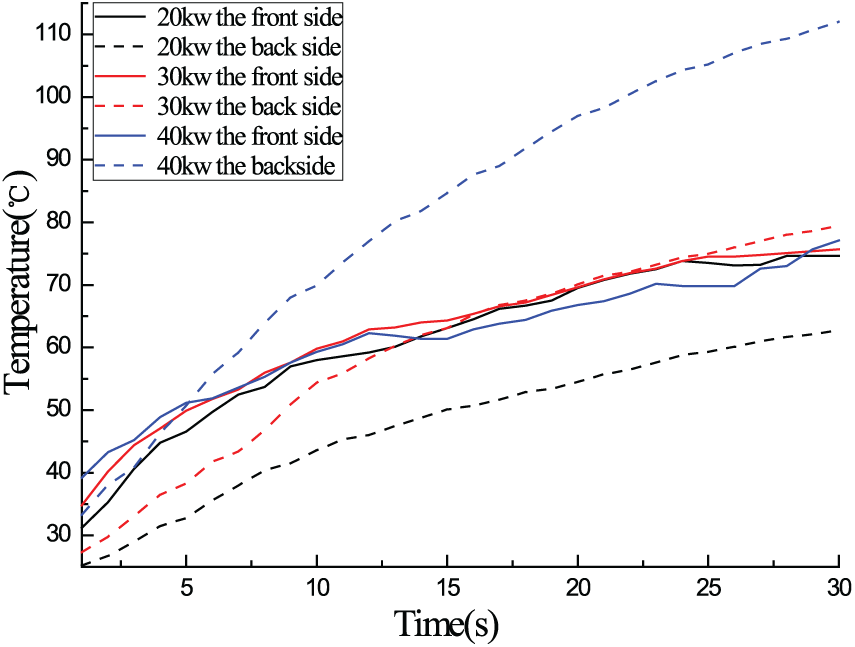
The surface and backside temperature curve of PSA fabric (fabric at charred condition).
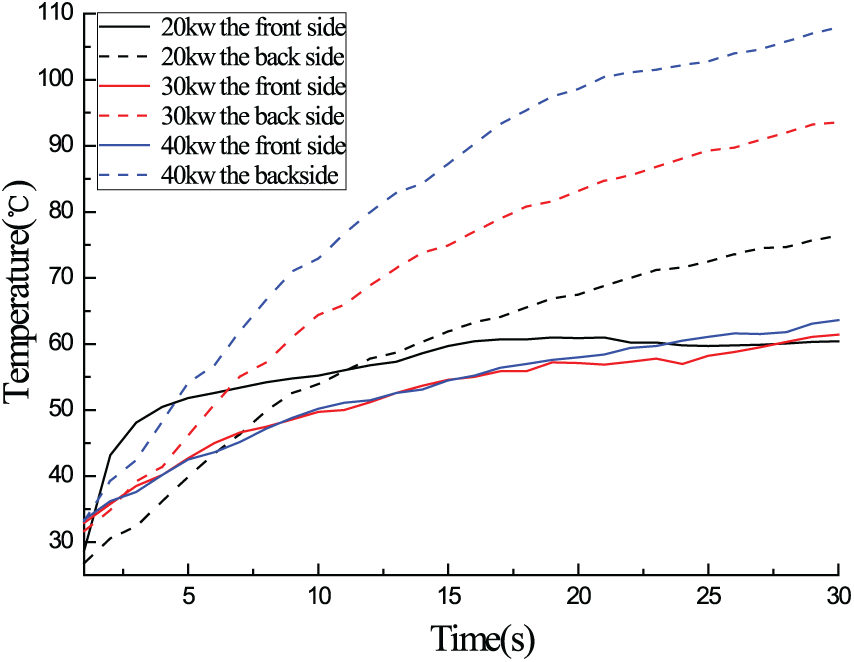
The surface and backside temperature curve of Nomex IIIA fabric (fabric at charred condition).
In practical thermal disaster environment, heat penetrates into the fabric and largely accumulates on the surface of the skin, which forms heat stress and can cause fatal damage for the wearer. Therefore, solving the conflict between heat protection and heat dissipation reasonably has been the focus in the field of thermal protection.
Characterization of radiative properties
In this section, the visible-near infrared (VI-NI) range of wavelength in fire scene was first calculated according to Wien displacement law, which is derived based on the Planck blackbody radiation law.
19
Wien displacement has two forms obtained from the two equivalent equations for Planck formula. One form is the distribution between frequency

where T is the blackbody temperature, and K is the constant
The other form is the distribution between wavelength

where
Combining equations (1) and (2), the following formula describing the relation between

In the article, the Wien displacement law (equation (2)) was used to calculate the NIR wavelength range from 760 to 2500 nm emitted from fire source. The temperature of the blackbody is inversely proportional to the peak wavelength of the radiation. The higher the temperature, the smaller the peak wavelength of the radiation. The temperature profiles of the fire scene are relatively complex and can be calculated based on equation (2). For example, the temperature of the flame center is higher than 1000°C in the petroleum, chemical industry, aircraft, and other accidents. Also, the temperature of the flame center in an oil tank fire can arrive at 1050°C–1400°C and corresponding emission range is about 1732–2276 nm. Overall, thermal protection from FR fabrics against various thermal radiant hazards focused on defense NI spectra with wavelength ranging from 760 to 2500 nm corresponding to temperature range between 886°C and 3540°C, which is representative of a high value for flame temperature.
The tested results of reflectivity for pyrolyzed fabrics and virgin fabrics are illustrated in Figure 13. It can be noticed that the reflectance values of Nomex IIIA and PSA fabrics were almost the same at virgin state, whereas these are significantly different at pyrolyzed state. On a whole, the reflectance of Nomex IIIA fabric was appreciably higher than that of PSA fabric at pyrolyzed state. The results indicated that the heat insulation capacity provided by Nomex IIIA fabric is stronger than that of PSA fabric with the same thickness at pyrolyzed state. Comparisons of reflectance difference values for fabrics between virgin and pyrolyzed states are illustrated in Figure 14. The reflectance of PSA fabric declined more rapidly than that of Nomex IIIA after charred.

Reflectance spectra of fabrics at virgin and pyrolyzed states.

Reflectance difference of fabric between virgin and pyrolyzed states.
Figure 15 shows transmittance spectra obtained for virgin and pyrolyzed Nomex IIIA and PSA fabrics. Simultaneously, the profiles for relative difference of transmittance between virgin and pyrolyzed fabric are given in Figure 16. Overall, the transmittance of PSA fabric was higher than that of Nomex IIIA fabric at virgin state. After pyrolysis, the transmittance decreased to some extent and its values of PSA fabric were slightly higher than those of Nomex IIIA fabric at pyrolyzed condition. It was also interesting to note that both transmittance and reflectance decreased at pyrolyzed state as compared to virgin state. From the radiative balance on incident radiation

Transmittance spectra of fabrics at virgin and pyrolyzed states.
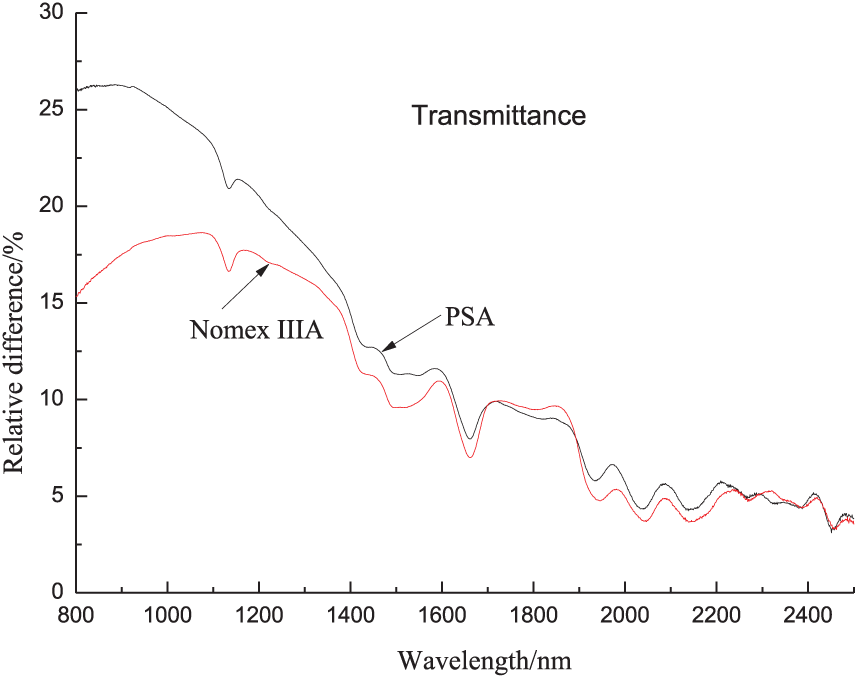
Transmittance difference of fabric between virgin and pyrolyzed states.
Conclusion
The flame-retardant performance and thermal stability of two kinds of inherently high-temperature-resistant fabrics (PSA and Nomex IIIA fabrics) were evaluated in this study. Also, the research has shed light on the effect of thermal degradation on the radiant protective capacity of this two kinds of fabrics. The investigations on retarding ignition and thermal decomposition behavior demonstrated that PSA and Nomex IIIA fabrics exhibited rather excellent flame retardancy and thermal stability. The RPP values of these fabrics at pyrolyzed condition decreased to some degree as compared to the virgin fabrics and the highest relative difference was 35.7%. However Nomex IIIA presented higher decrease than that of PSA fabric. On the other hand, the effect of pyrolysis on radiative properties of fabrics was also estimated. The results showed that both reflectance and transmittance were decreased when the fabrics were pyrolyzed.
Footnotes
Declaration of conflicting interests
The author(s) declared no potential conflicts of interest with respect to the research, authorship, and/or publication of this article.
Funding
The author(s) disclosed receipt of the following financial support for the research, authorship, and/or publication of this article: This study was financially supported by the National Key Research and Development Program of China (2017YFB0309001) and the National Natural Science Foundation of China (51576215).