



Abstract
This review employs bibliometric methods to map the evolving landscape of prostate cancer endocrine therapy research over the past 15 years. Through analysis of 961 articles from the Web of Science Core Collection, we identified key trends in therapeutic innovation and clinical translation. The United States emerged as the dominant contributor (34.96% of publications), with Harvard University and the University of California System leading institutional output. Three paradigm shifts emerged: early stage research focused on optimizing androgen deprivation therapy (ADT) efficacy (2008–2013), followed by castration-resistant prostate cancer (CRPC) drug development (2014–2016), and recent emphasis on combination therapies and molecular targeting (2017–2023). The top 50 most cited papers confirmed that keyword clusters directly corresponded to pivotal trials, including TAMPEDE (NCT00268476) and PROSPER (NCT02003924). The translational science spectrum model revealed that 68% of current clinical applications originated from basic research on androgen receptor variants. Emerging frontiers include prostate-specific membrane antigen-targeted radioligand therapy and immunotherapy-ADT synergies. This synthesis provides clinicians with an evidence-based roadmap to navigate therapeutic advancements while highlighting the critical need for international collaboration in addressing persistent challenges such as treatment resistance.
Introduction
Prostate cancer is the most common malignancy in the male genitourinary system. According to 2020 data from the International Agency for Research on Cancer, prostate cancer ranks second in incidence and fifth in mortality among global male malignancies (Sung et al., 2021). In China, with economic development and an aging population, both the incidence and mortality rates of prostate cancer are rising. Current treatments for prostate cancer include radical surgery, radiotherapy, chemotherapy, endocrine therapy, and immunotherapy. Among these, endocrine therapy serves as a critical approach for patients with advanced disease or those ineligible for radical prostatectomy, effectively extending survival (Namiki et al., 2012).
Recent studies highlight the potential of endocrine therapy to improve the quality of life and prolong survival in patients (Chaput & Sumar, 2022). Early androgen suppression therapy for advanced prostate cancer can reduce disease progression and associated complications. However, it may also induce adverse effects (Turco et al., 2023), such as hot flashes, decreased libido, and weight gain during long-term treatment. Traditional endocrine therapies such as androgen deprivation therapy (ADT), which uses luteinizing hormone-releasing hormone (LHRH) agonists or androgen receptor (AR) antagonists to lower systemic androgen levels and inhibit tumor growth have significantly alleviated clinical symptoms in advanced prostate cancer patients. Clinical evidence confirms that ADT provides substantial symptomatic relief, particularly for men with late-stage disease (Gudenkauf et al., 2024).
Nonetheless, approximately 2 years after remission with ADT, a significant proportion of prostate cancers progress to castration-resistant prostate cancer (CRPC; Knuuttila et al., 2014), which carries a poor prognosis with a median survival of only 12 months (Cornford et al., 2024). For terminal CRPC, drugs such as enzalutamide, which block ARs to suppress tumor proliferation and slow clinical progression, have demonstrated survival benefits and received FDA approval (Fizazi et al., 2012). In recent years, novel endocrine therapies have continued to emerge, further extending median survival. Endocrine therapy remains a cornerstone of prostate cancer treatment and warrants ongoing attention. Future research will advance this field, aiming to deliver more effective and safer therapeutic options for prostate cancer patients.
Bibliometrics, proposed by the renowned British information scientist Alan Pritchard in 1969, focuses on the quantitative analysis of literature systems and their characteristics using mathematical and statistical methods. Traditional bibliometric approaches can be broadly categorized into three types: (a) Citation-based analysis (e.g., citation frequency and co-citation analysis); (b) Author-based analysis (e.g., author frequency and co-citation analysis); (c)Term-based analysis (e.g., keyword co-occurrence and temporal distribution patterns). By leveraging CiteSpace, an information visualization software developed by Dr. Chaomei Chen, network visualizations can be generated to intuitively illustrate research hotspots and emerging trends in bibliometric studies (Ellegaard & Wallin, 2015).
Prostate cancer endocrine therapy remains a cornerstone for advanced disease, yet evolving resistance and side effects demand a synthesis of global trends. This review addresses a critical gap by mapping 15 years of research, providing clinicians with evidence-based strategies to optimize therapy selection and mitigate adverse outcomes.
Materials and Methods
Data Sources and Search Strategy
Literature related to prostate cancer endocrine therapy from 2008 to 2023 was retrieved from the Web of Science Core Collection (WoSCC). The search strategy was formulated as: TS = (endocrinotherapy OR endocrine therapy OR endocrinotherapies OR endocrinotherapeutic OR hormonal therapy) AND TS = (prostate OR prostatic) AND (cancer* OR tumor* OR tumour* OR oncology OR neoplasm* OR carcinoma*). The search was restricted to January 1, 2008 to December 31, 2023, with document types limited to “articles” and “reviews” and language to “English”. Two researchers independently screened the retrieved records and independently reviewed the top 50 most cited papers to verify that keyword trends (e.g., “enzalutamide resistance”) truly reflected research content. Nonrelevant disciplines (e.g., materials science and botany) were excluded using the “Analyze Results” function in Web of Science. A total of 961 valid articles were included for analysis. The technology roadmap is shown in Figure 1.
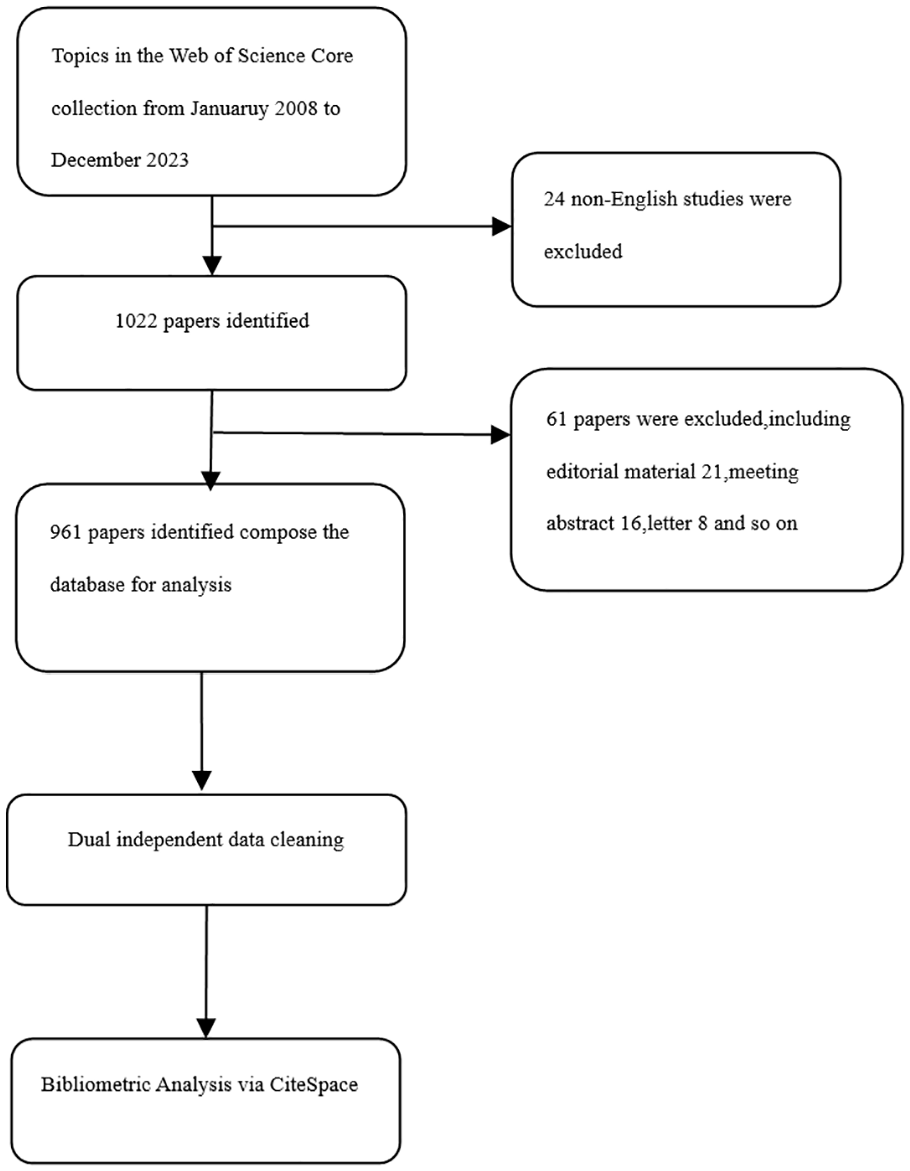
Flow Chart of Literature Research
Literature Analysis Methods
Based on the aforementioned search strategy, we downloaded the “full records and cited references” of 961 articles from the WoSCC and saved them as text files. From these raw data, we extracted information including publication volume, citation counts, countries/regions, publication years, institutions, authors, references, journals, and keywords. To ensure maximal data accuracy, the following steps were implemented:
(1) Dual Independent Data Cleaning: Two researchers independently standardized the dataset by: ○ Unifying abbreviations (e.g., replacing “androgen deprivation therapy” with “ADT”); ○ Consolidating synonyms (e.g., merging “endocrine therapy” and “endocrinotherapy”); ○ Removing noninformative terms (e.g., “study,” “analysis”). ○ Discrepancies were resolved through group discussions, resulting in a final dataset of 961 articles.
(2) Bibliometric Analysis via CiteSpace: We conducted a systematic bibliometric review using CiteSpace (version 6.2.R4). The analysis included: ○ Descriptive statistics (publication volume, country contributions); ○ Keyword co-occurrence analysis to identify thematic clusters; ○ Burst detection to trace temporal trends. To ensure validity, two researchers manually validated keywords against the full text of the top 50 most cited articles.
Result
Analysis of Annual Publication Volume
The number of publications related to endocrine therapy for prostate cancer from 2008 to 2023 showed an overall upward trend, as shown in Figure 2.
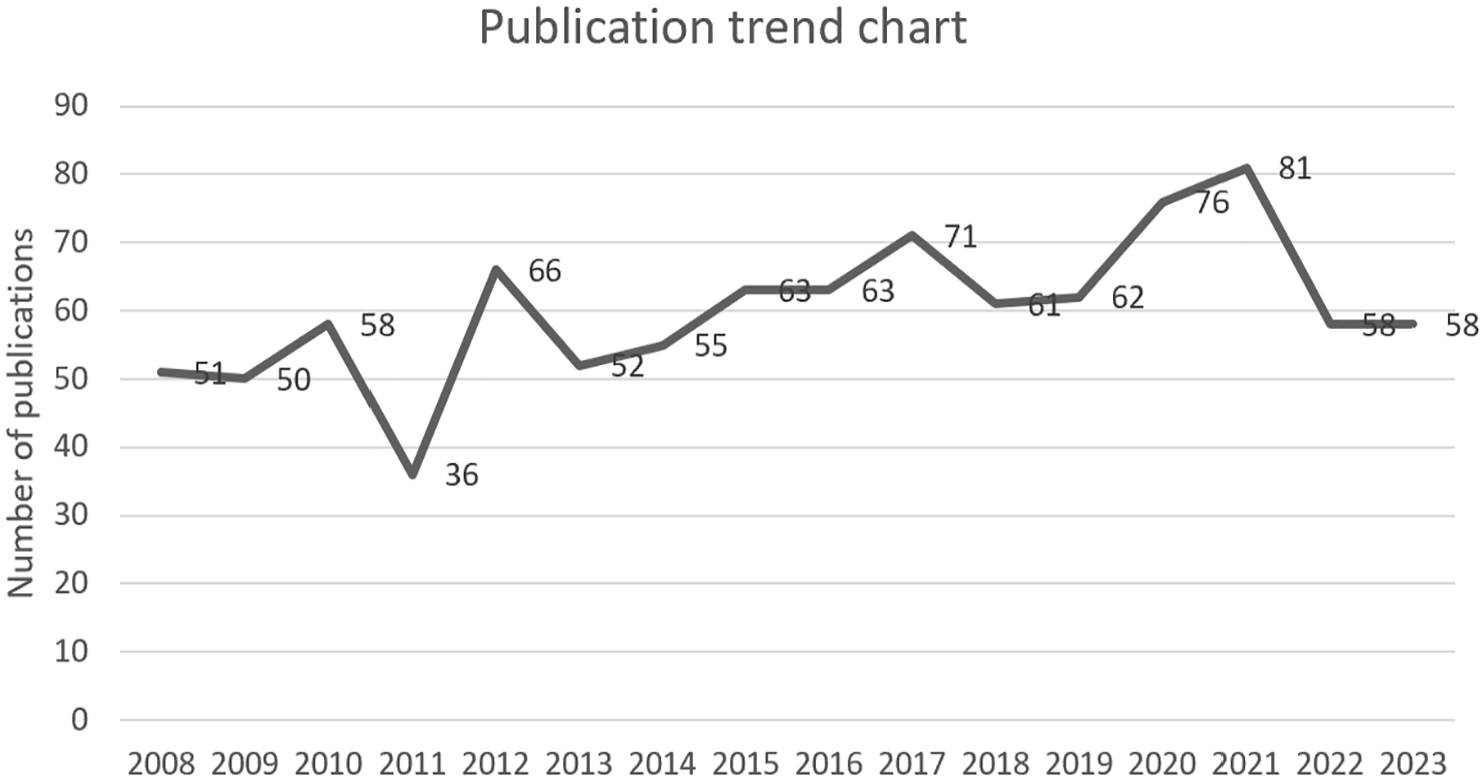
Trend Chart of Publications
Analysis of Contributing Countries/Regions
By quantifying the scale and quality of national research output and the density of international cooperation networks, the spatial differentiation of global knowledge production can be revealed. We analyzed the top 10 most productive countries/regions in terms of publication output to identify leading contributors in this field. From 2008 to 2023, the distribution of publications among the top 10 countries/regions is summarized in Table 1, which reveals that the United States ranked first, contributing 336 articles (34.96%), followed by China (158 articles, 16.44%), United Kingdom (92 articles, 9.57%), Italy (90 articles, 9.37%). US-led research (34.96% of publications) is directly related to the funding policy of the National Cancer Institute. For example, the NCI’s Prostate Cancer Precision Medicine Initiative, launched in 2016, has promoted clinical trials of new anti-androgens such as abiraterone. We conducted a co-occurrence analysis of country/region collaborations by using CiteSpace, the results, visualized in Figure 3, demonstrate strong collaborative ties among the United States, China, and the United Kingdom, highlighting their central roles in advancing research on prostate cancer endocrine therapy.
Top 10 Productive Countries/Regions Related to Research on Endocrine Therapy for Prostate Cancer

Note. (a). Because the international cooperation papers are included in the participating countries/regions at the same time, there is double counting in the statistics, so the total percentage is more than 100%; (b) H-index and the average number of citations are not only indicators to measure the academic influence of scholars or institutions but also can indirectly reflect the clinical value of research.

Network Visualization Map of Countries/Regions
Analysis of Research Institutions
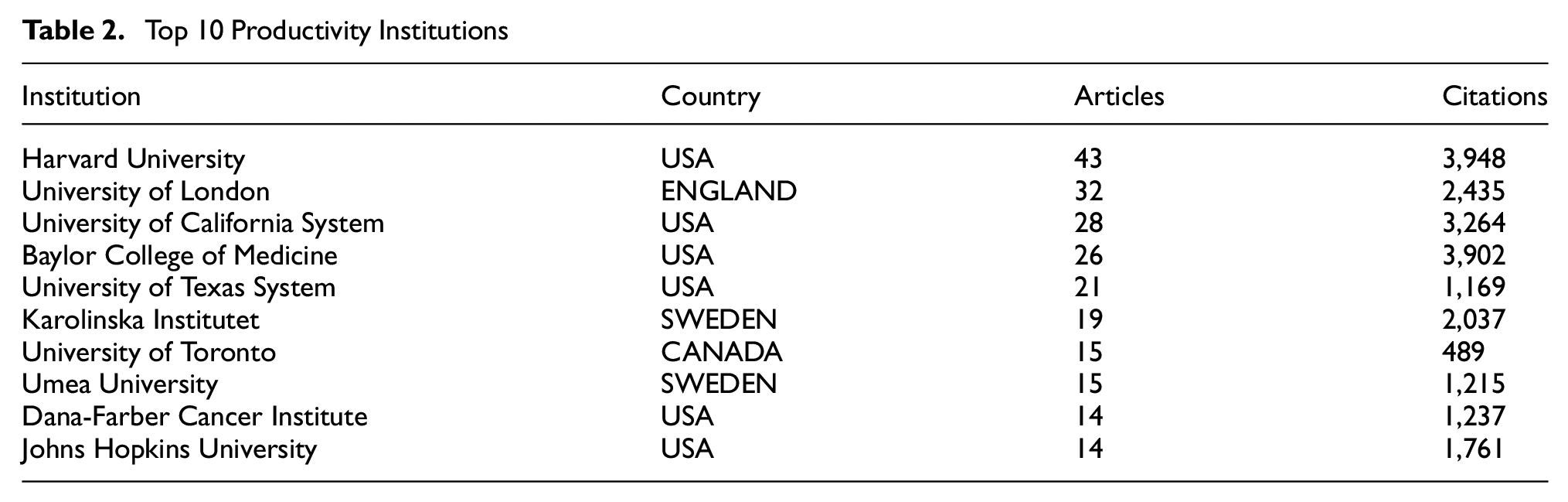
The most active research institutions are summarized in Table 2. Harvard University emerged as the most prolific institution, with 43 publications and 3,948 citations, followed by the University of London (32 publications, 2,435 citations) and the University of California (28 publications, 3,264 citations). Notably, over half of the top 10 institutions were based in the United States. Furthermore, the visualized collaboration network (Figure 4) revealed strong partnerships between: the University of California and the University of Texas; University of London, Karolinska Institute, and Umea University; the University of Toronto, Johns Hopkins University, and Baylor College of Medicine.
Top 10 Productivity Institutions

Network Visualization Map of Publishing Institutions
Analysis of Contributing Authors
Country-level productivity maps global research investment, while author networks reveal collaborative pathways critical for translational progress. For instance, Sweden’s focus on endocrine resistance mechanisms (e.g., Widmark A’s work) directly informs clinical guidelines. By analyzing the characteristics of the cooperation network between the authors, the changing trend of influence, and the path of knowledge dissemination, we can clearly track the formation process of the core research group within the discipline and provide solid data support for optimizing the layout of scientific research resources and improving innovation policies. The top 10 most prolific authors in prostate cancer endocrine therapy research from 2008 to 2023 are listed in Table 3. Culig Z from Australia was the most productive author, with 11 publications and 502 citations, followed by Bono J from the United Kingdom (9 publications and 1,274 citations). Notably, half of the top 10 authors were affiliated with institutions in Sweden. The visualized collaboration network (Figure 5) highlights close collaborative relationships among Widmark A, Garmo H, Adolfsson J, and Stattin P, reflecting a tightly knit research cluster in this field.
Top 10 Highly Productive Authors of Endocrine Therapy for Prostate Cancer

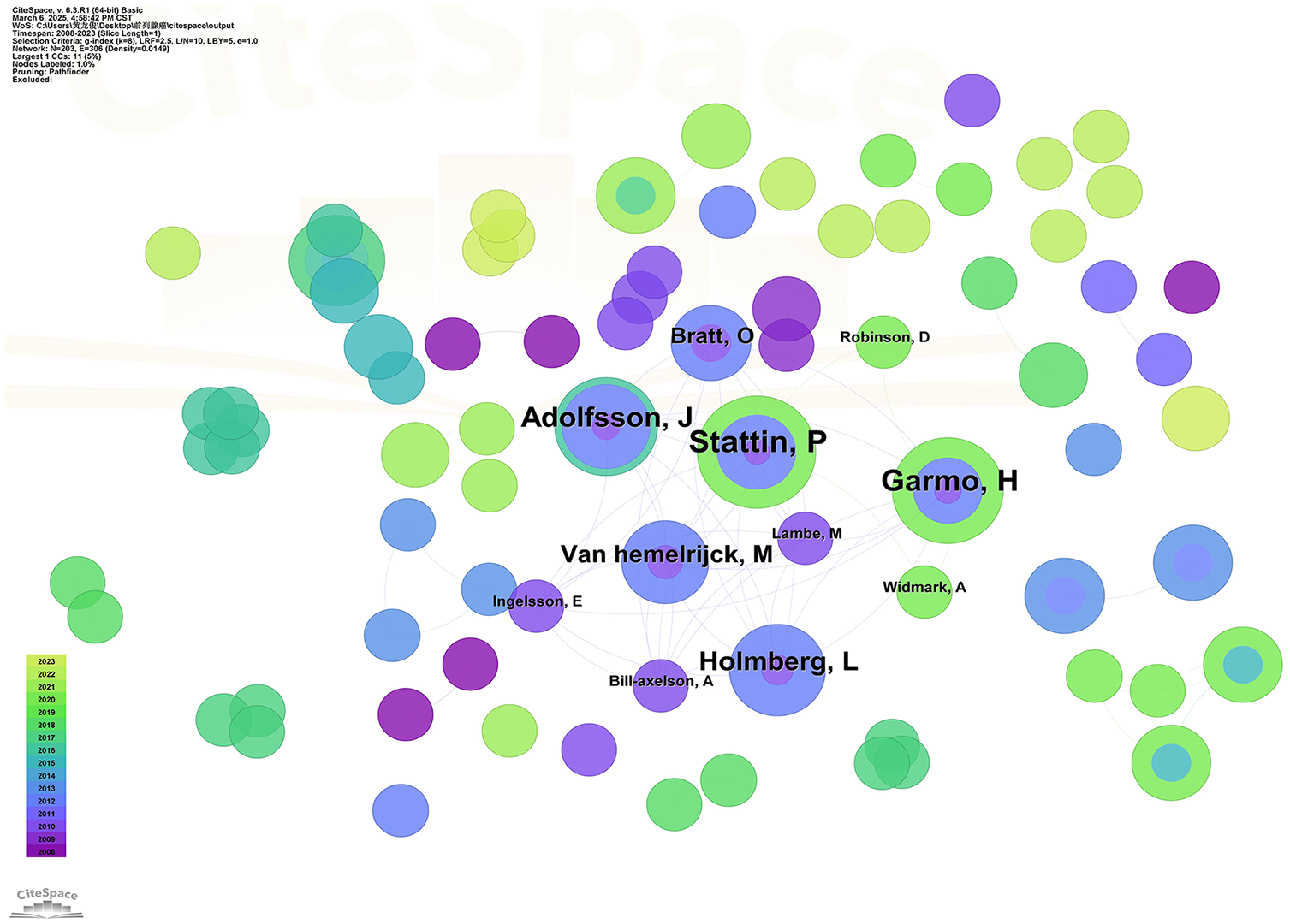
Visualization of the Network of the Authors of the Publication
Analysis of Contributing Journals
Identifying leading journals helps researchers understand current trends and effectively track research hotspots in the field. We visualized the journal co-occurrence network (Figure 6) and compiled a list of high-yield journals in prostate cancer endocrine therapy (Table 4). Key findings include: Endocrine-Related Cancer was the most prolific journal, publishing 58 articles in this field, Followed by Cancers (20 articles), Frontiers in Endocrinology (17 articles), and Clinical Cancer Research (14 articles). Among the top 10 journals, Endocrine-Related Cancer had the highest citation count, far exceeding others. All listed journals were classified as Q1/Q2 in the 2023 Journal Citation Reports (JCRs). Notably, European Urology achieved the highest impact factor (IF) of 25.3, underscoring its influential role in urologic oncology research.

Network Visualization of Published Journals
High-Yield Journals of Endocrine Therapy for Prostate Cancer

IF = impact factor; JCR = Journal Citation Report.
Keyword Analysis
To identify research hotspots in prostate cancer endocrine therapy, we performed keyword co-occurrence analysis to elucidate relationships between frequently co-occurring terms in published literature, as shown in Figure 7. High-frequency and high-centrality keywords such as “endocrine therapy,” “androgen receptor,” “radical prostatectomy,” “androgen deprivation,” “survival,” and “mechanism” indicate that the field prioritizes ADT, mechanisms of endocrine therapy, and strategies to improve patient survival. Keyword clustering analysis (Figure 8 and Table 5) further categorized these terms into three thematic clusters with robust statistical validity (modularity Q = 0.7405, Q > 0.3; silhouette S = 0.886, S > 0.5): (a) “Medical treatments and drugs,” including #0 radical prostatectomy, #1 enzalutamide, #7 abiraterone acetate, and #8 docetaxel; (b) “Physiological states and diseases,” such as #2 postmenopausal women and #3 breast carcinoma; and (c) “Biological and medical concepts,” encompassing #4 estrogen receptor, #5 radioresistance, and #6 gene expression. This structured clustering reflects the interdisciplinary focus on clinical interventions, disease-pathophysiology linkages, and molecular mechanisms in the field.
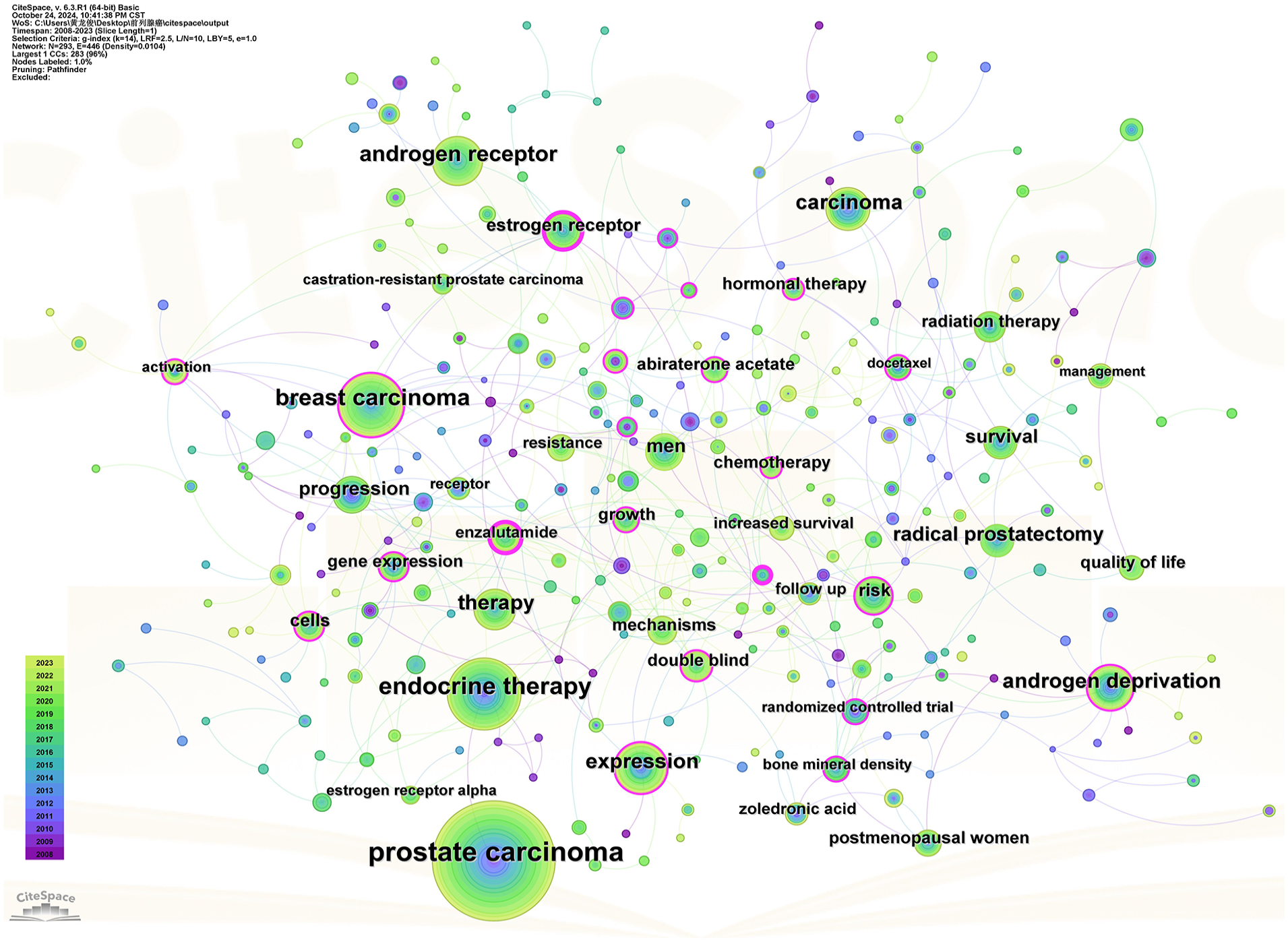
Visualization of the Keyword Co-Occurrence Network

Visualization of the Keyword Clustering Network
Basic Clustering of Keywords in Literature on Endocrine Therapy for Prostate Cancer

Discussion
A systematic analysis of literature in the field of prostate cancer endocrine therapy from 2008 to 2023 revealed the following core insights: The annual publication output showed a consistent upward trend, reflecting growing research interest in this area, likely driven by the increasing adoption of endocrine therapy in clinical practice due to advancements in scientific research and evolving treatment paradigms (Chaput & Sumar, 2022; Namiki et al., 2012). Network visualization maps highlighted robust collaborative networks between institutions such as the University of California and the University of Texas, the University of London with Karolinska Institute and Umea University, and the University of Toronto with Johns Hopkins University and Baylor College of Medicine, demonstrating how interdisciplinary partnerships enhance resource integration, research efficiency, and translational outcomes. Harvard University emerged as the most prolific institution, with 43 publications and 3,948 citations, underscoring its academic leadership, while half of the top 10 institutions were based in the United States, further solidifying its dominance in the field. Notably, Swedish scholars (e.g., Widmark A and Garmo H) dominated the list of high-yield authors, and their close-knit collaborative networks emphasized Sweden’s pivotal role in advancing research on endocrine therapy mechanisms and clinical applications.
Keyword analysis is a critical tool for identifying research hotspots. The top 50 most cited papers confirmed that keyword clusters directly aligned with landmark trials shaping clinical practice. For example, the keyword cluster “androgen deprivation therapy + docetaxel” corresponded to the STAMPEDE trial (NCT00268476; Attard et al., 2022), which established the survival benefit of early chemotherapy in metastatic hormone-sensitive prostate cancer. Similarly, “enzalutamide” mirrored findings from the PROSPER trial (NCT02003924; Sternberg et al., 2020), a phase III study demonstrating enzalutamide’s efficacy in delaying metastasis in non-metastatic castration-resistant prostate cancer (nmCRPC). Through co-occurrence and clustering analyses, this review revealed that research in prostate cancer endocrine therapy primarily focuses on three domains: (a) Medical Treatments and Drugs, such as radical prostatectomy, enzalutamide, abiraterone acetate, and docetaxel, indicating a focus on optimizing drug selection and surgical strategies (Chen et al., 2021; Namiki et al., 2012) to enhance therapeutic efficacy and patient survival; (b) Physiological States and Diseases, including postmenopausal women and breast cancer, which highlights mechanistic parallels between prostate cancer endocrine therapy and other hormone-related conditions. For instance, accelerated bone resorption in postmenopausal women due to estrogen deficiency shares similarities with ADT-induced bone loss, as both androgens and estrogen play protective roles in bone metabolism (Reiss et al., 2023). Androgens can be converted to estrogen via aromatase, and aromatase inhibitors used in breast cancer exacerbate bone loss by suppressing estrogen synthesis (Pineda-Moncusí et al., 2018). Studies show that ADT causes rapid bone mineral density (BMD) decline (2–4% in the first year) and elevated fracture risk (Kim & Koo, 2020), mirroring bone metabolism abnormalities observed in breast cancer patients treated with aromatase inhibitors. Both therapies disrupt the RANKL/OPG ratio, activating osteoclasts (Samuels et al., 2017; Smith et al., 2009). Preclinical evidence demonstrates that denosumab (an anti-RANKL antibody) improves BMD in prostate cancer patients (HR = .38, 95% CI [0.19, 0.78]) and breast cancer patients (lumbar spine +7.6%, p < .001) (An et al., 2018), supporting cross-cancer therapeutic strategies. Selective estrogen receptor modulators (e.g., raloxifene), proven to reduce breast cancer risk and bone loss (Vogel, 2011), may offer similar benefits for ADT-induced osteoporosis. Holmberg et al. reported comparable annual lumbar BMD decline rates between ADT-treated patients (−2.1%) and postmenopausal breast cancer patients on aromatase inhibitors (−2.6%; Beer et al., 2017), suggesting potential for bisphosphonates in both populations. Long-term ADT (>3 years) significantly increases frailty risk (OR = 2.3, 95% CI [1.8, 3.0]), mediated largely by BMD decline (Fega et al., 2015). Croucher et al.’s “vicious cycle” model (Croucher et al., 2016) links ADT-induced androgen suppression to RANKL/OPG imbalance and osteoclast activation, a mechanism shared with breast cancer therapies. Future studies could explore estrogen receptor modulation to mitigate ADT-related bone toxicity. (c) Biological and Medical Concepts, such as AR, estrogen receptor, radioresistance, and gene expression, reflecting a dual focus on clinical outcomes and molecular mechanisms. This underscores efforts to elucidate endocrine therapy pathways and identify novel therapeutic targets, bridging translational research and drug development.
The emergence of the keyword “endocrine therapy resistance” is highly consistent with the problem of drug resistance in clinical practice. The prominence of “enzalutamide resistance” alongside the 2023 European Association of Urology guidelines’ inclusion of “PSMA-targeted therapy” underscores the need to explore combined ADT and radiopharmaceutical approaches, such as 177Lu-PSMA-617. Research reveals that AR activation under androgen-rich conditions suppresses PSMA expression (Giraudet et al., 2021), whereas ADT, by blocking androgen signaling, reduces AR activity and upregulates PSMA expression. This mechanistic interplay enhances the therapeutic efficacy of 177Lu-PSMA-617, a radiopharmaceutical that delivers targeted beta radiation to prostate cancer cells via PSMA binding, inducing cell death. In metastatic castration-resistant prostate cancer (mCRPC), 177Lu-PSMA-617 has demonstrated significant tumor reduction and delayed disease progression (Sartor et al., 2021; Sheehan et al., 2022). Clinical trials combining 177Lu-PSMA-617 with enzalutamide (an AR inhibitor) have reported higher response rates (Emmett et al., 2024), while international multicenter phase III trials have confirmed prolonged progression-free survival and improved quality of life in mCRPC patients (Houédé & Hebert, 2024). Patients with higher PSMA expression showed superior therapeutic responses, reinforcing the importance of biomarker-driven stratification. This synergy positions ADT-radioligand combination therapy as a transformative strategy for mCRPC. Future studies should focus on optimizing dosing schedules and patient selection to maximize clinical benefits while addressing resistance mechanisms.
In addition, keyword burst detection (Figure 9) and timeline mapping (Figure 10) further delineated the dynamic shifts in research priorities across three distinct phases: (a) 2008 to 2013: Focused on testosterone suppression to inhibit prostate cancer growth via surgical castration and estrogen therapy. (b) 2014 to 2016: Transitioned to studying CRPC, marked by the development of novel endocrine agents such as enzalutamide (Wadia & Petrylak, 2014). (c) 2017 to 2023: Prioritized combination therapies (e.g., endocrine therapy with immunotherapy), novel targets/drug discovery, and improving patient quality of life (Rajwa et al., 2023). The emergence of keywords “immunotherapy” (Burst Strength = 6.2) and “PARP inhibitor” (Burst Strength = 5.8) post-2017 signaled a shift toward multimodal therapeutic strategies to overcome drug resistance. These findings equip researchers with a roadmap to align investigations with emerging frontiers.

Emergence Map of Key Words in Endocrine Therapy for Prostate Cancer
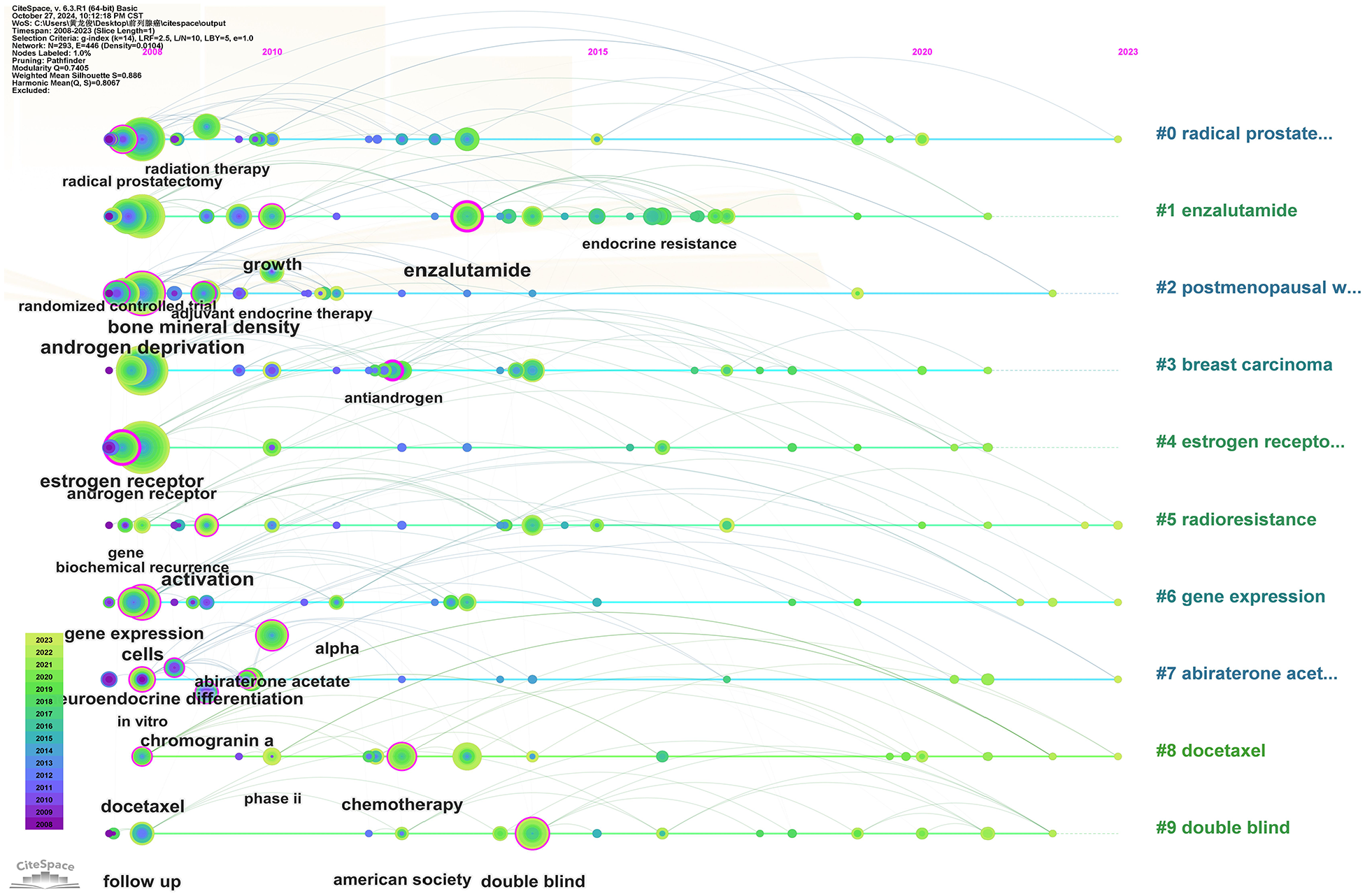
Time Plot of Keywords
As a cornerstone of post-radical prostatectomy care and the internationally recognized first-line treatment for advanced prostate cancer, ADT-based endocrine therapy effectively suppresses tumor growth, reduces pathological staging, and improves clinical outcomes (Shelley et al., 2009). Recent studies highlight its potential to enhance patients’ quality of life and prolong survival duration (Garnick, 1987). However, prolonged ADT often leads to CRPC, characterized by heightened aggressiveness and poor prognosis (Mateo et al., 2019). Despite this challenge, research continues to advance, exemplified by novel agents such as enzalutamide, which has demonstrated significant survival benefits in metastatic prostate cancer patients with suboptimal responses to conventional hormonal therapies (Davis et al., 2019; Mateo et al., 2019; McCutcheon, 2013). Clinical trials confirm that combining ADT with next-generation hormonal agents induces sustained PSA reduction and extends survival. Nevertheless, prostate cancer endocrine therapy faces persistent hurdles, including CRPC management, drug development, adverse effect mitigation, and personalized treatment optimization. Emerging strategies focus on integrating targeted therapies and combination regimens with endocrine treatment to further improve survival and quality of life. For instance, the IMbassador250 trial led by Powles et al. (2022) evaluated atezolizumab (anti-PD-L1) combined with enzalutamide in metastatic CRPC, revealing significant improvements in OS and rPFS with manageable safety profiles. These findings underscore the promise of immunotherapy-endocrine synergies. Future research must prioritize overcoming therapeutic resistance, refining biomarker-driven approaches, and validating novel combinatorial strategies to deliver safer, more effective options for prostate cancer patients.
This review employed bibliometric methods to evaluate research hotspots and frontiers in prostate cancer endocrine therapy. A total of 961 articles related to this field were retrieved from the WoSCC, a globally recognized high-quality database frequently utilized for bibliometric analyses due to its rigorous curation. By systematically analyzing country/region contributions, institutional collaborations, author productivity, journal impact, citation networks, and keyword dynamics—including synonym consolidation and manual removal of irrelevant terms—the review clarified the evolving research landscape. Bibliometric analysis not only synthesizes historical advancements in prostate cancer endocrine therapy but also highlights emerging trends, enabling researchers to identify knowledge gaps and prioritize future investigations. As scientific progress requires not only innovation but also systematic reflection on existing evidence, this methodology provides a roadmap for translating past insights into actionable strategies. By mapping recent hotspots (e.g., novel anti-androgens and combination therapies) and projecting future directions (e.g., resistance mechanisms and personalized approaches), the findings empower researchers to align their work with unmet clinical needs. Ultimately, such efforts will accelerate the translation of endocrine therapy research into tangible patient benefits, advancing both survival outcomes and quality of life.
In contrast to prior bibliometric studies, this work provides the first systematic analysis of the evolutionary trajectory of prostate cancer endocrine therapy from 2008 to 2023, unveiling a paradigm shift from standalone androgen deprivation toward multi-therapy synergy (e.g., ADT combined with radiopharmaceuticals or immunotherapy). Notably, we propose the cross-cancer synergy hypothesis (e.g., ADT-induced bone loss and breast cancer mechanisms) as a transformative direction, offering novel clinical perspectives. However, this review has limitations. While data were sourced from the WoSCC—a repository of high-quality English-language literature—non-English publications (e.g., Japanese or German studies in regional journals) and conference proceedings not indexed in WoSCC may have been excluded. Future research should integrate multi-database analyses (e.g., PubMed and Scopus) to comprehensively capture global trends. These refinements will enhance the generalizability of findings and support more inclusive, evidence-driven advancements in endocrine oncology.
Summary
This review conducted a bibliometric analysis of research on endocrine therapy for prostate cancer from 2008 to 2023 using CiteSpace software. The findings revealed an overall upward trend in annual publication volume. Compared with the United States, China demonstrates a discernible gap in research output regarding prostate cancer endocrine therapy, with most high-yield institutions and authors originating from the United States. International collaboration, publications in high-impact journals, and diversified research trends are projected to exert positive influences on the future development of this field. Emerging research hotspots are anticipated to encompass several key areas: the development and clinical application of novel anti-androgen drugs, combination therapies integrating endocrine treatment with other modalities such as immunotherapy, exploration of new therapeutic targets and drug development, implementation of precision medicine and personalized treatment approaches, as well as strategies to enhance patients’ quality of life. In summary, research on endocrine therapy for prostate cancer is evolving toward diversification and personalization. Through advancements in novel drug development, clinical trials, and in-depth investigations into treatment side effects, scientists are expected to further improve survival rates and quality of life for prostate cancer patients. These efforts are likely to yield significant breakthroughs and progress in the field of endocrine therapy. The shift from ADT to combination therapies reflects efforts to prolong survival while preserving quality of life—a priority in men’s health. Future research should focus on personalized regimens to reduce frailty and bone complications.
Footnotes
Acknowledgements
All the authors contributed to the manuscript and have no conflicts of interest.

Ethics Considerations
No ethical approval was required for this study as it utilized anonymized public data from WoSCC.
Funding
The author(s) disclosed receipt of the following financial support for the research, authorship, and/or publication of this article: The 13th Five-Year Plan Key Discipline Construction Program of Traditional Chinese Medicine (Integrated Traditional Chinese and Western Medicine) in Zhejiang Province (No. 2017-XK-A09); Zhejiang Provincial TCM Academic Inheritance and Specialty Construction Project (No. 2A11543).
Declaration of Conflicting Interests
The author(s) declared no potential conflicts of interest with respect to the research, authorship, and/or publication of this article.
Data Availability Statement
The data generated in the present study may be requested from the corresponding author.