




Abstract
With the development of modern communication, available spectrum resources are becoming increasingly scarce, which reduce network throughput. Moreover, the mobility of nodes results in the changes of network topological structure. Hence, a considerable amount of control information is consumed, which causes a corresponding increase in network power consumption and exerts a substantial impact on network lifetime. To solve the real-time transmission problem in large-scale wireless mobile sensor networks, opportunistic spectrum access is applied to adjust the transmission power of sensor nodes and the transmission velocity of data. A cognitive routing and optimization protocol based on multiple channels with a cross-layer design is proposed to study joint optimal cognitive routing with maximizing network throughput and network lifetime. Experimental results show that the cognitive routing and optimization protocol based on multiple channels achieves low computational complexity, which maximizes network throughput and network lifetime. This protocol can be also effectively applied to large-scale wireless mobile sensor networks.
Introduction
With the development of modern communication, available spectrum resources are becoming increasingly scarce, which reduce network throughput. Moreover, the mobility of nodes results in the changes of network topological structure. Hence, a large amount of control information is consumed, which causes a corresponding increase in network power consumption and exerts a substantial impact on network lifetime. Recent studies have showed that the network lifetime is one of the most essential issues in large-scale wireless mobile sensor networks, whereas network throughput is considered the most important resource in such networks. 1
The extensive use of wireless communication technology has promoted the development of cognitive radio (CR) technology 2 and the dynamic spectrum access mechanism. Moreover, opportunistic spectrum access (OSA) can effectively improve spectrum efficiency and communication quality. 3
The latest researches show that the dynamic adjustment of node transmission power and data transmission rate can increase the lifetime and throughput of wireless mobile sensor networks, and shorten the delay of end-to-end communication. Moreover, a suitable OSA can effectively solve the conflicts caused by a large number of nodes in the network.4,5 However, in these scenarios, multiple users shared the same subcarriers, which made the traditional orthogonal frequency division multiplexing (OFDM) inferior to CR technology. 6 Solving conflicts among channels is becoming increasingly popular. 7 Interestingly, spectral selection may effectively improve the transmission performance of a neighbor sensor node. 4
The distributed subcarriers and power control algorithms aim to minimize the power consumption of each bit information from subcarriers,8,9 and the simulation results demonstrated that the performance of the proposed approach is close to that of the centralized optimal solution. However, the authors only considered the data transmission rate and power consumption of a neighbor sensor node and disregarded the performance of the entire route. Inspired by biological systems, Son et al. 10 proposed a bio-inspired scheduling algorithm that reduces the energy consumption and delay for wireless sensor networks (WSNs), in which the energy-efficient routing path and the energy consumption are investigated using multiple channels for data transmission. Simulation experiment showed the effectiveness of the proposed method.
Several OSAs based on MAC (medium access control) schemes in CR networks are discussed in detail in Sultana et al. 11 The differences between the conventional MAC protocols and OSA-based MAC protocols were investigated. Palma 12 proposed a new communication protocol, named as energy efficiency protocol (EFP), is based on a hop-by-hop transport scheme and is especially devised to simultaneously solve the network energy consumption and the performance of the closed-loop system. The proposed protocol can be implemented by means of three heuristics, basically using distinct rules to control the maximum number of retransmissions allowed in terms of the voltage level of the batteries of the network nodes. El Mougy et al. 13 presented two routing approaches for WSNs; these approaches apply the concepts of node cooperation and information exchange to achieve cognition across multiple network layers. Hanefi 14 proposed a new multichannel allocation approach, named hybrid multichannel allocation for WSNs, named as HMCA in our stduy, based on hybrid time division multiple access (TDMA) and frequency division multiple access (FDMA) techniques and using dual radio with multichannel communication. Simulation experiment showed the proposed method assured steady and high packet delivery ratios in large-scale networking environments even with hundreds of sensor nodes. Spachos and Hatzinakos 15 presented a real-time cognitive WSN for carbon dioxide monitoring at a complex indoor environment. Experimental results validated the effectiveness of the proposed method.
Although many studies have considered route protocols based on spectrum choice, certain disadvantages require attention. First, some studies cannot be applied to large-scale wireless mobile sensor networks. Second, network lifetime and throughput are not considered (or only one of them is considered) when making route choices. To address these issues, a multiple-channel cognitive routing optimization protocol is proposed in the current work for selecting spectrum while maximizing network lifetime and throughput in large-scale wireless mobile sensor networks. Our proposed method based on the model of signal-to-interference plus noise ratio (SINR) can effectively solve the dynamic spectrum allocation, data transmission rate, and power control problems. The rest of this article is organized as follows. Section “Related work” summarizes system model, protocol assumption, performance analysis, and so on. Section “Results and discussion” is about simulation parameters, simulation results, and experimental analysis. Finally, conclusion of this study along with the future work is mentioned in section “Conclusion.”
Related work
A three-layer network topology is typically used in large-scale wireless mobile sensor networks, in where the information collected by a cluster head will be transmitted to the base station in multiple hops. 16 In this study, a corresponding clustering process of Deng et al. 17 and Hadi et al. 18 is adopted to analyze multiple hops transmission between cluster heads and base stations.
System model
Assume that primary users (PUs) and secondary users (SUs) represent cluster nodes in large-scale wireless mobile sensor networks. The multiple address access technology of OFDM is used in PUs, and they possess user authority. Moreover, PUs can only transmit in their allocated spectra. This access technology is only controlled by the destination nodes and is not affected by the non-authoritative users. However, SUs have not any authorized spectrum and only transmit data with the help of the idle spectrum of PUs.
A spectrum is divided into two separate channels: data channel (DC) and common control channel (CCC). DC consists of a series of discrete sub-bands, which are marked as
Destination nodes are assumed to be fixed cognitive infrastructure that permits access from PUs and SUs. Transmitters are adjusted to a series of discrete bands according to a variable carrier set by all users including PUs and SUs. PUs directly communicate with SUs with a single hop through the base stations, and SUs transmit sensor data to the base stations with multiple hops. A multiple wireless network is typically modeled as a direct connected graph
Protocol assumptions
For convenience, the following protocol assumptions are used in this study:
All SUs have the same physical characteristics.
The location and velocity of all SUs are known.
All SUs can calculate the time of packet transmission, which is defined as the ratio of the size of a packet to the transmission rate.
To satisfy the requirements of different communication power and data transmission rates, each SU may be permitted to select multiple subcarriers. Data transmission rate, communication power, and subcarrier may be assigned with the corresponding algorithms.
Definitions
Prior to designing the cognitive routing and optimization protocol based on multiple channels (CROMC) in large-scale mobile WSNs, we first present the relevant definitions used in this study.
Spectrum hole
Spectrum hole is an important parameter in cognitive wireless technology. It represents the opportunity possessed by a spectrum. The frequency point is adopted as the spectrum hole of a user


In equation (1),
According to equations (1) and (2), we can calculate the available minimum and maximum transmission power of every frequency point from each SU, respectively. The corresponding formulas are defined as follows


where
Latency
Latency is a time delay between the source node and the destination node in a WSN. It is presented as follows

where



In equations (6)–(8),
Assume that

In general, when a vast amount of data are required to be transmitted in the large-scale mobile senor networks, the value of

Network lifetime
The maximization of network lifetime can be divided into the following aspects: the minimization of path energy consumption and the realization of load balancing, which needs to consider the residual energy of each node and the amount of queuing data, that is, energy standard deviation. In this section, we discuss only the power consumption in spectrum allocations, no more network lifetime. The load balancing of route is discussed in the following sections.
Power consumption is modeled as the sum of the consumption of transmission and processing. For an

where
Route capability
The topology of an SU is usually changed because of the following reasons: First, PU access forces the spectrum withdrawal of an SU. Second, the mobility of an SU also changes its topological structure. That is, if the two nodes associated with a link are in their transmission range without affecting the communication of PUs in the network, then the link is accessible. However, changes in topology will result in broken links and packet loss. Therefore, only a limited number of data can be successfully transmitted over a limited route lifetime. Notably, route capability means that those data can be transmitted in links, and route lifetime represents the time that those data can be successfully transmitted.
Recent research shows several spectrum prediction methods based on history information, which can not only provide effective spectrum utilization but also predict the spectrum stability of links.19,20 However, Hanefi
14
believed that route capability is more important than simple route stability for on-demand routing. For example, when the data are transmitted to node

From equation (12), it can be obtained that

where

where
Protocol design
Given the current spectrum environment and hardware constraints, CROMC aims to maximize network throughput and lifetime. Figure 1 shows the overall frame of CROMC. Hence, the following assumptions are presented. First, the node with the largest residual energy in the cluster is selected as the cluster head. Second, information in the network is transmitted through every cluster head with multiple hops. Therefore, the network lifetime is maximized through path loss and energy balance according to equations (3) and (4). The network throughput is inversely proportional to path transmission delay when data are transmitted simultaneously. Therefore, maximizing network lifetime and throughput is equivalent to minimizing path loss and delay and comprehensively considering the load balancing problem. To minimize path power and delay, we first select the spectrum
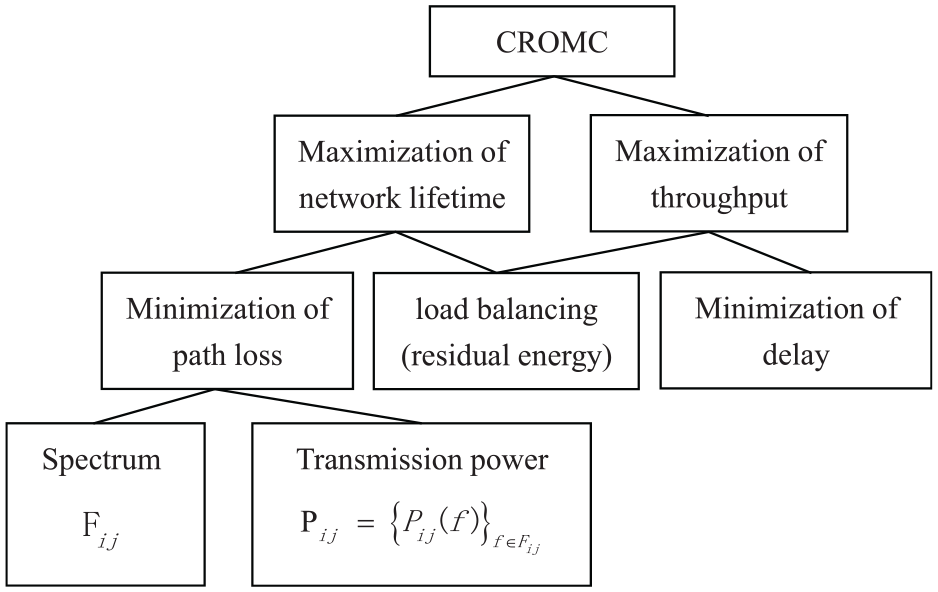
The overall frame of CROMC.
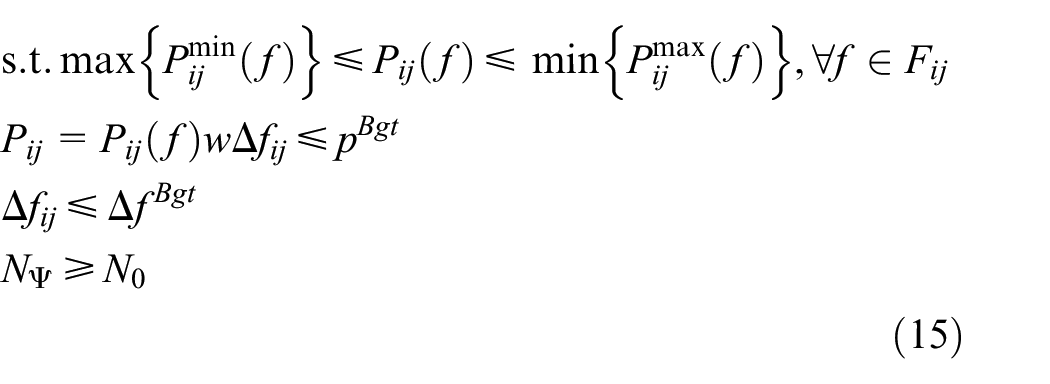
Therefore, the multi-objective optimization expression is established and load balancing is discussed in subsection “Routing.” For simplicity, we assume that the spectrum of
P1:
Given:
Find:
Minimize:
where
Evidently, the solution for
P2:
Given:
Find:
Minimize:

where


Given that the condition of equality is obtained from an inequality, we set

Then,
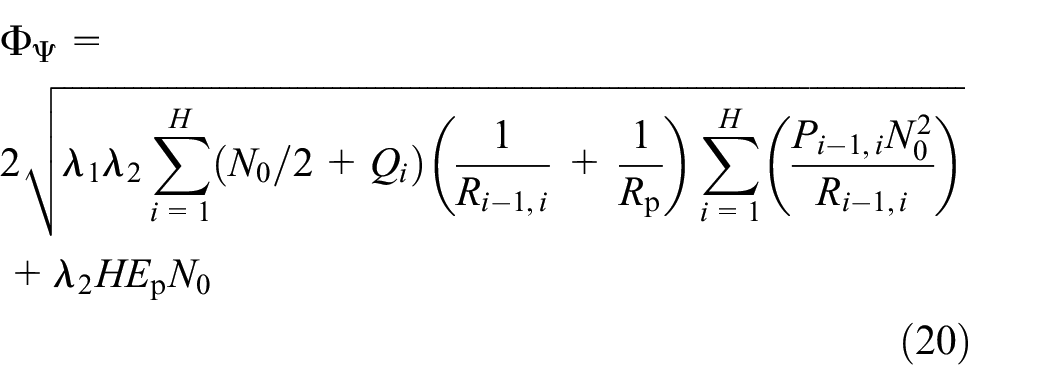
Furthermore, considering the condition of the Cauchy–Schwarz inequality, we set

where

where
Spectrum allocation and routing
To obtain the maximum network lifetime and throughput according to the goal of the protocol design, we achieve only the optimization problem of
Spectrum allocation
The spectrum allocation algorithm is implemented by every distributed SU with the given spectrum environment, which is described as follows:
P3:
Given:
Find:
Minimize:

From the fourth constraint condition, we can obtain

We set

To obtain the solution for


Then, the transmission sub-band sets of
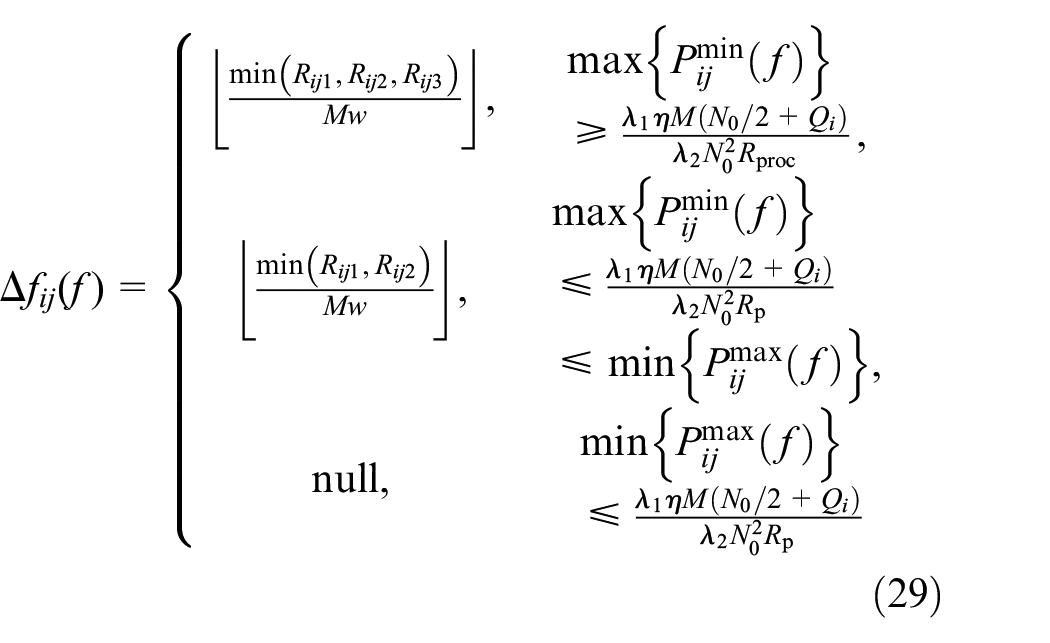
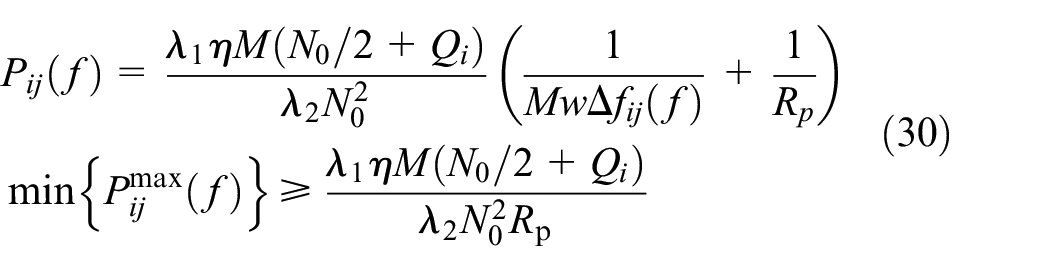
where ⌊•⌋ indicates the lower bound integer of the number of sub-bands. According to equations (29) and (30), the selection of the spectrum of
Algorithm 1.

Routing
The goal of spectrum allocation is the minmization of

Obviously,
As indicated in subsection “Spectrum allocation and routing,” energy balance and routing capability among cluster heads should be considered when selecting routes to obtain maximum network lifetime and throughput. Energy balance among cluster heads may be adjusted with link cost. In equation (31), the linear combination of residual energy among cluster head nodes is realized by fixed constants,

where

when

For route capability, we should select the route that comprises the link with the maximum route capability and can guarantee
In conclusion, for given the non-negative weight subgraph
The
Lemma 1 (existence)
The shortest route exists in a feasible route that satisfies the route selection method.
Proof
From the preceding description, SUs update and transmit routing information only in negotiations with available links. Therefore, we can draw the following conclusions. First, the route information reaching the base station represents a feasible route. Second, the transmission time is exceedingly long for all available information to reach the base station. The shortest route is a feasible route with the sum of the minimum weight, which satisfies the route selection method. Thus, Lemma 1 is proven.
Lemma 2 (deterministic)
The shortest route can be determined.
Proof
All feasible routes have the unique sum of the non-negative weights, assuming that the total weight of available route
Protocol description
Various on-demand routes have been proposed. For example, dynamic source routing (DSR) 21 and ad hoc on-demand distance vector routing (AODV) 22 are classic on-demand route protocols when users need to transmit data. Similar to the DSR and AODV protocols, the CROMC protocol is also divided into two stages: the establishment stage of route and the steady state of data transmission to the base station. Figure 2 presents the procedure of CROMC protocol.

The procedure of CROMC protocol.
During the establishment phase, source nodes broadcast a routing request (RREQ), and SUs negotiate the spectrum, data transmission, and transmission power with each neighbor node. Then, the negotiation results and route information are transmitted to the next hop until they reach the base station. With the aid of the received information, the base station selects the route with the smallest weight that satisfies the routing capacity. Then, parameters, such as spectrum, data transmission rate, and transmission power, are transmitted to all the nodes along the selected route. Each node receives the corresponding parameters and adjusts its transmission and receiving channels, data transmission rate, and transmission power. Finally, each node performs data transmission. In the steady state, the source node transfers packets to the base station using the allocated spectrum, data transmission rate, and transmission power. It also boots the routing maintenance mechanism when transmission error occurs. In the aforementioned stages, all SUs must maintain an open state to receive information from parent nodes.
Route establishment
When a request for data transmission is generated from a source node to a destination node, the source node broadcasts a route and establish the RREQ, which includes the following information: source node ID, base station ID, data delivery rate, transmission power, mobile velocity, and the location of every node. In this process, the route weight of RREQ transmitted from the source node is set to 0. The mechanism of carrier-sense multiple access with collision avoidance MAC is adopted to broadcast RREQ to the neighbor nodes. Each node is unable to obtain the information of its neighbors. Thus, all nodes transfer RREQ to their neighbors with the highest power, which informs SUs as many as possible.
When the other SUs receive the RREQ, a spectrum negotiation with the parent node will be initiated. In this negotiation process, the nodes may apperceive the results according to the spectrum generated from the local and parent nodes. From equations (29) and (30), the frequency spectrum
When the base station receives all route information, a suitable route that satisfies the routing capability and possesses the sum of the minimum routing weight will be selected as described in subsection “Routing.” A routing response will also be sent to the routing initiator. The routing response is composed of the following information: the selected route records, data transmission rate, transmission power, and packet number. After receiving the response, the root initiator will send the packet series via the selected route and channel in the steady transmission stage. All negotiation information and control packets are transmitted using CCC.
Steady transmission
The routing establishment stage, which is simpler than the steady-state stage, has two parts: data transmission and routing maintenance. All packets in the steady-state transmission phase are transmitted through DC.
Prior to transmitting data, the source node first divides the data into K packets and then sends the packets according to the allocated spectrum, data transmission rate, and transmission power. If the data cannot be received completely, then the packet is considered lost due to the delay in packet transmission. The possible reasons include a change in node speed or direction, PU access, network congestion, and hardware failure in the course of transmission. Therefore, confirmation information should be added during the data transfer process. When a packet is successfully received, the node will send an acknowledgment (ACK) message to the parent node, which confirms whether the packet has been sent successfully. After completing the data transmission process, the link is disconnected and the spectrum resource is released. Subsequently, the packets are transmitted through each node according to the selected routing, determined spectrum, data transmission rate, and transmission power until the base station.
When a route is broken, route maintenance is activated and the corresponding node acts as a new source node and rebuilds the route according to the aforementioned method, thereby continuing data transmission. All negotiation information and the control packet are retransmitted via CCC.
Performance analysis of CROMC
Computational complexity analysis
We analyze the proposed protocol to evaluate the computational complexity of CROMC. The SUs and the base station play different roles. Hence, computational complexity should be discussed separately.
For each SU, spectrum negotiation, including determining the optimal transmission power and the number of sub-bands of the available spectrum for every frequency point in the spectrum environment, will be executed among its neighbor nodes. For a given spectrum, the computational complexity of the optimal transmission power is
After receiving route information, the base station should rank the routing weights in ascending order and select a suitable route as the data transmission path. Therefore, in determining the appropriate route, the computational complexity of the base station is also depended on the complexity of the classification algorithm. Assume that
In summary, the computational complexity of the CROMC protocol is effective in polynomial time.
Effect of mobility
The impact of node mobility is inevitable in large mobile WSNs. For the proposed protocol, node mobility will affect the change in link weights. Consequently, the sum of possible route weights obtained during the route establishment stage will change over time. In this study, we analyze the impact of mobility on the change in link weight between two points.
Given a reference moment
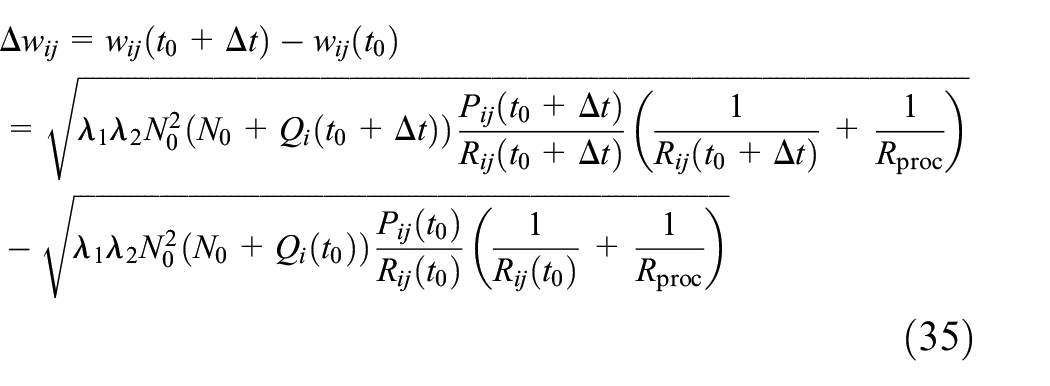
Assume that
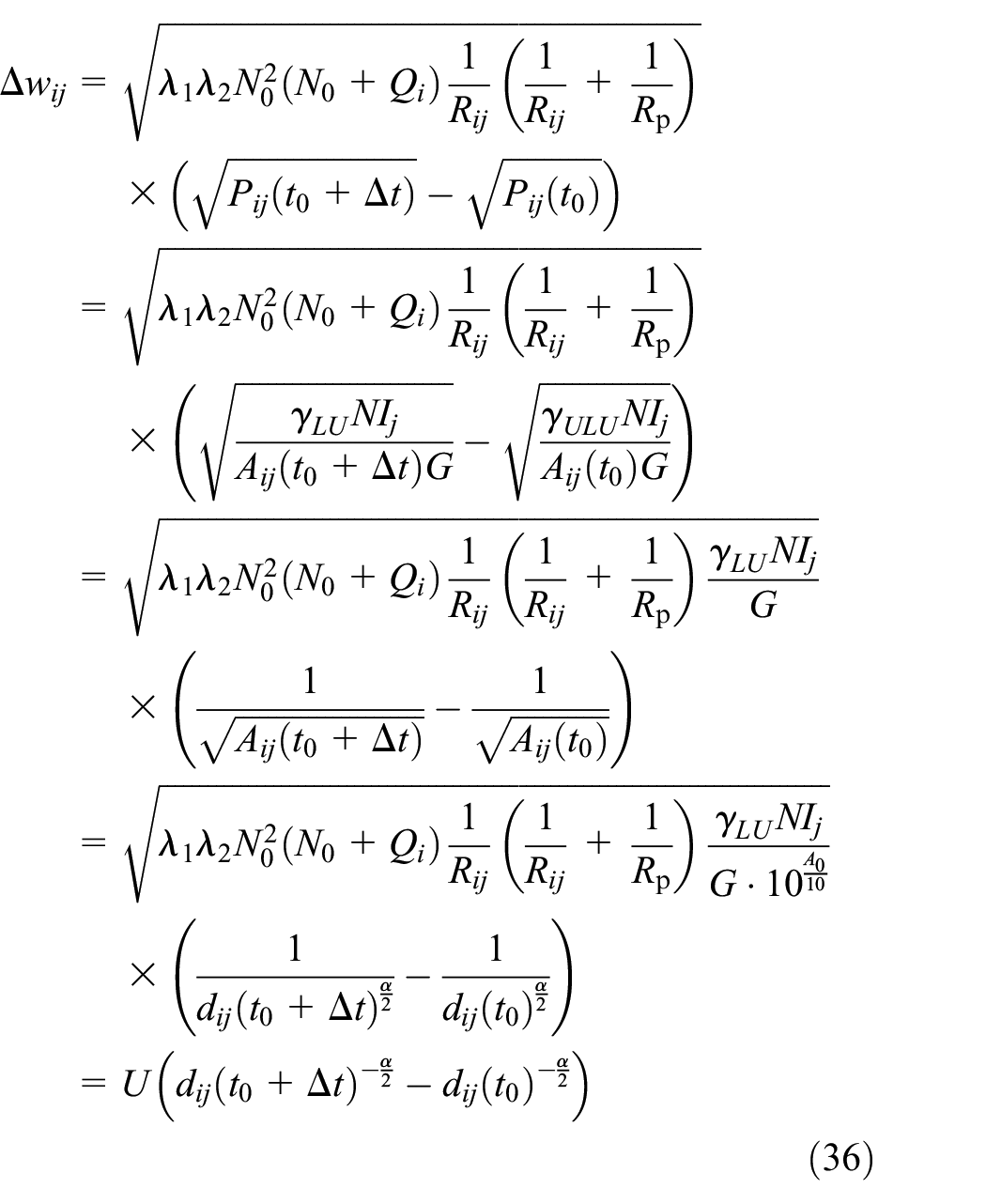
where
To clearly understand the equation, we convert it into polar coordinate. Let


The sketch of two nodes in the polar coordinate.
In equation (38),


In equation (40), the variables

where

For equation (41), it is difficult to directly obtain the numerical results. Therefore, the probability density function of
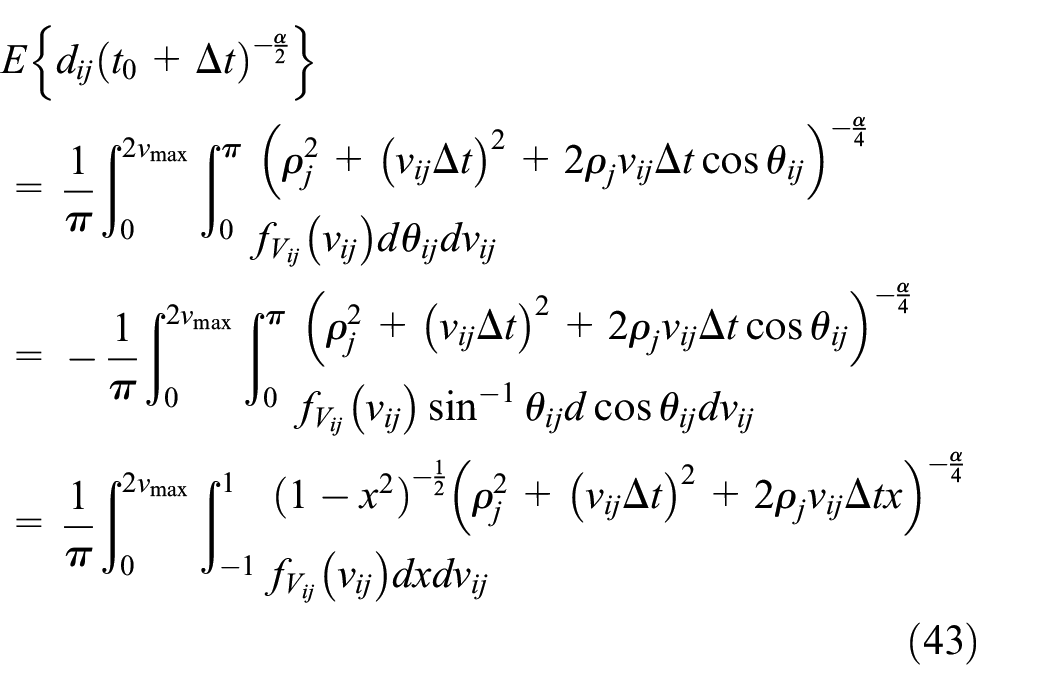
Evidently, the factor of

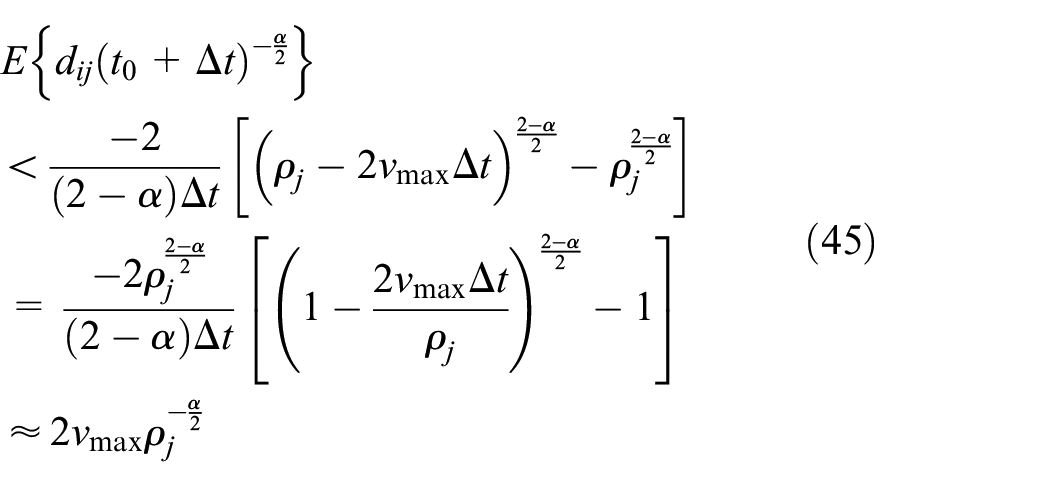
Considering
which can yield the following formula

The preceding analysis shows that data are transmitted through the route that satisfies routing capacity. Moreover, the impact of node mobility on link weight is not particularly evident and can be disregarded. Therefore, the CROMC protocol can be preferably adapted to wireless mobile sensor networks.
Results and discussion
Simulation parameter
In this section, we describe the simulation parameters used in our experiment as shown in Table 2.
The simulation parameters in this study.

PU: primary user; SU: secondary user; SNR: signal-to-noise ratio.
In addition, the parameters
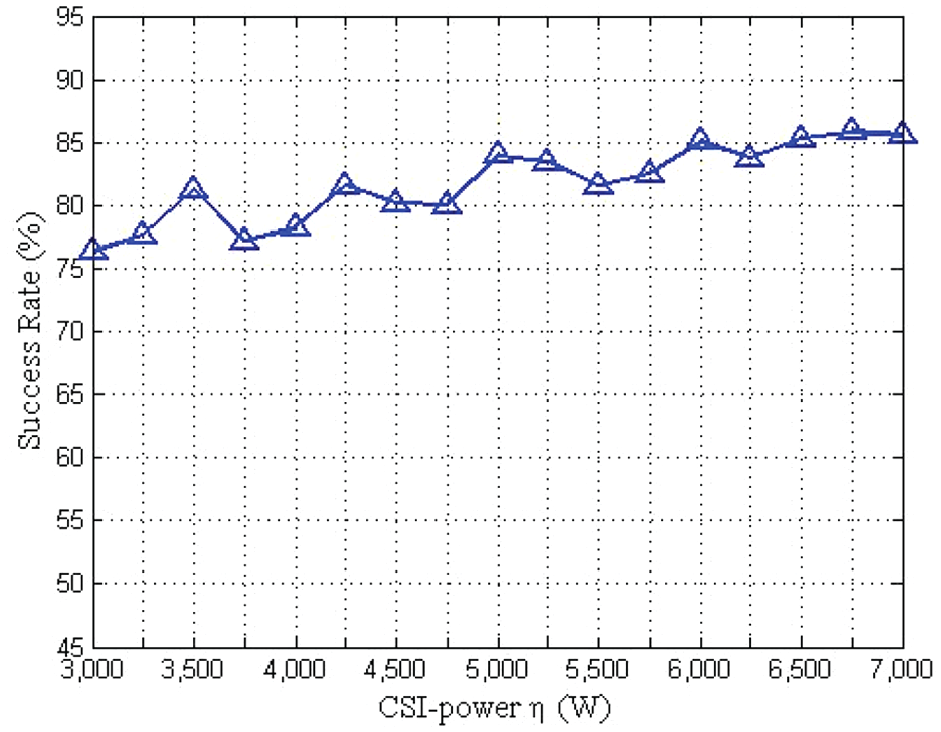
The Cauchy–Schwarz power of
Values of success rate for different values of
As shown in Figure 4, the success rate value increases gradually with an increase in
Simulation results
Figure 5 illustrates the detailed results with different
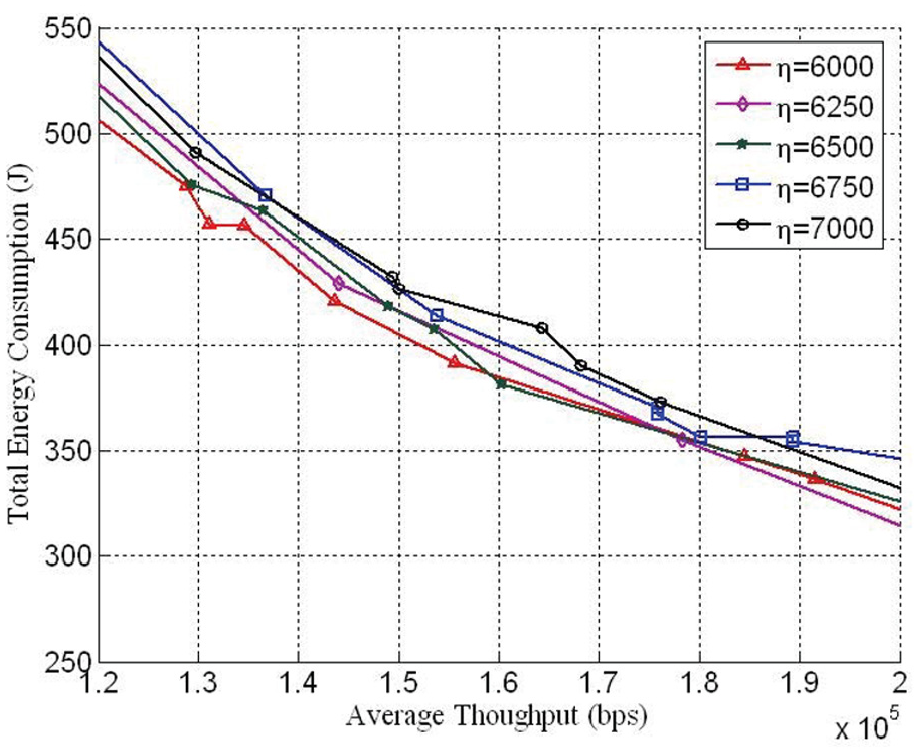
Vaules of total energy comsumption for different values of average throughput with a threshold of
To study the routing capability of CROMC, different hops of CROMC are presented in Figure 6. Notably, the average distance between the source node and the base station in the stimulation scenario is approximately 3000 m, and the maximum distance of one hop is less than 1000 m. Four hops are executed from the source station to the base station under this scenario. Therefore, our proposed method has fewer hops.
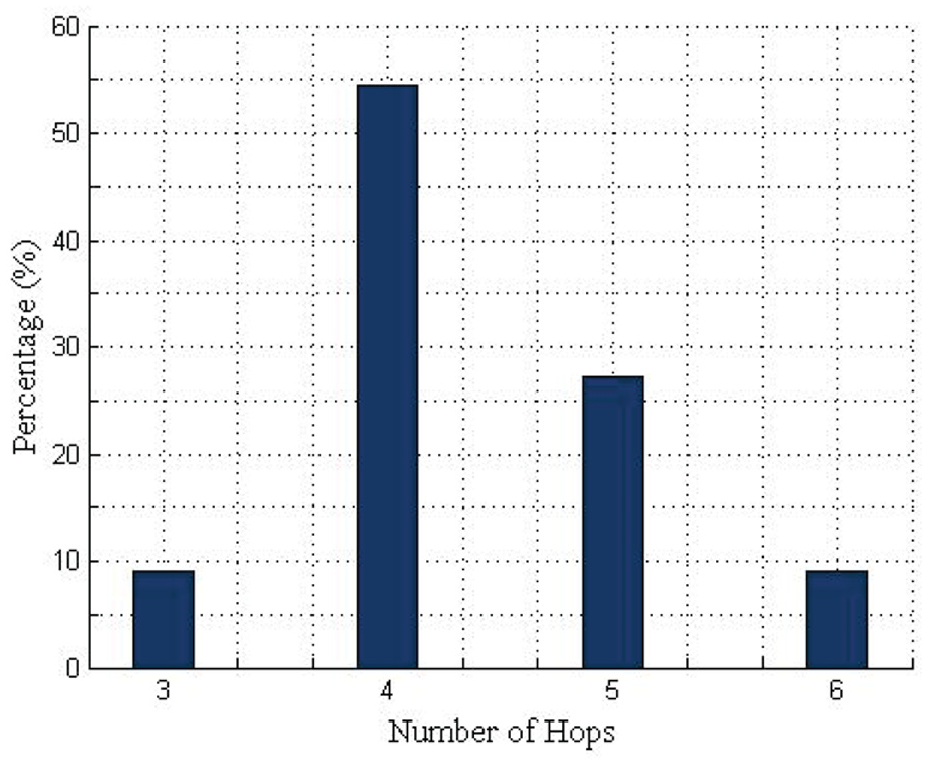
Percentage of different hops.
To evaluate the performance of CROMC, we investigated the average throughput and the total power consumption of the user with an increment of 50 between 100 and 500. Figures 7 and 8 present the different values of

Vaules of average throughput for different values of
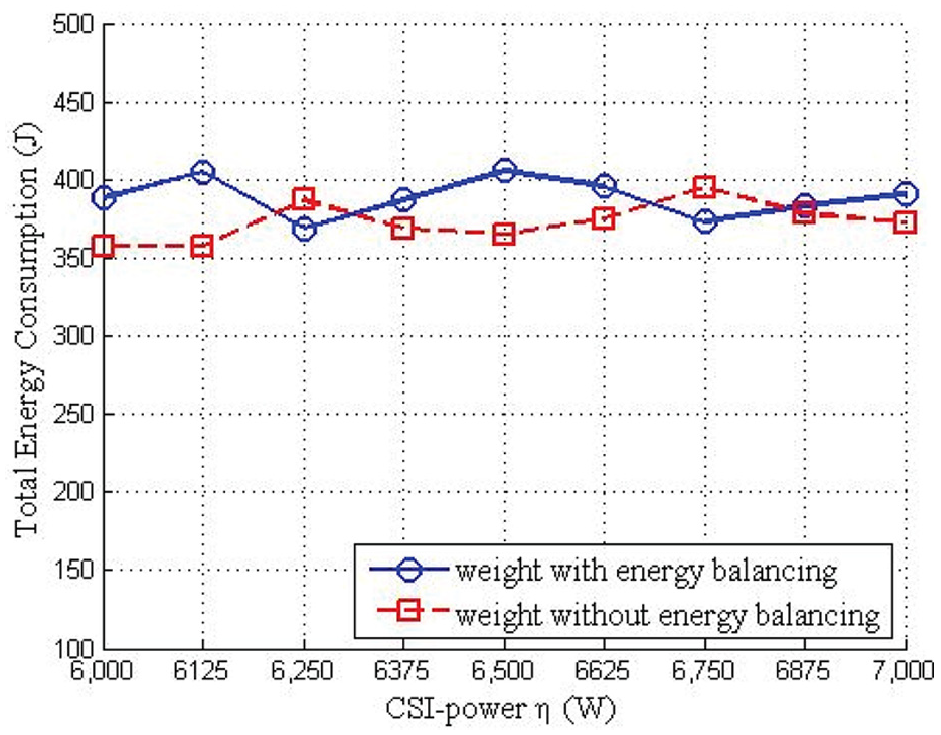
Vaules of total energy consumption for different values of
The maximum number of subcarriers in each hop cannot exceed 5 according to the simulation parameters. The maximum transmission rate modulated by M = 1/2 is 1 Mbps. Hence, the transmission rate of each hop can basically reach the maximum number of subcarriers in the simulation scenario, that is, the proposed protocol can achieve the maximum average throughput.
As shown in equations (31) and (32), the corresponding link weights present energy consumption balance and unbalance, which indicates the corresponding simulation results in Figures 7–9. From these figures, we can clearly see that the average throughput of the system will be reduced and the total power consumption will be increased. The primary reason is that the routing with the better spectrum is skipped when energy consumption balance is considered. Moreover, the standard deviation of energy (as shown in Figure 9) is relatively small after transmission under this circumstance, that is, the residual energy of all SUs in the network is basically equal.

Vaules of the energy standard deviation for different values of
To evaluate the performance of CROMC, we further compare the results of CROMC with the two other latest methods on multichannel sensor networks. The first one is EFP,
12
which is based on a hop-by-hop transport scheme and seeks the minimum power consumption, the other one is HMCA,
14
which is based on hybrid TDMA techniques and seeks the maximum throughput under the premise of delay control. Similar to the above analysis,
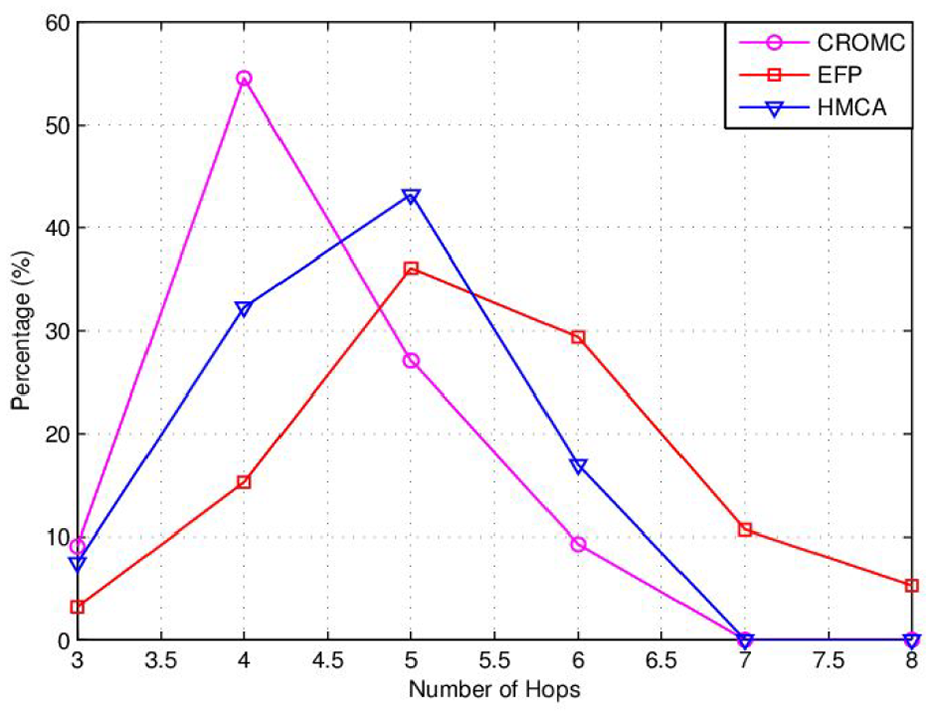
Results comparison of CROMC, EFP, and HMCA using hops.

Results comparison of CROMC, EFP, and HMCA using average throughput.
From Figure 10, we can clearly see that our proposed method achieved a high proportion of fewer hops, when the number of hops is 3 and 4. Especially, the highest percentage of the number of hops is obtained when the number of hops is 4, which is 54.5%. And, the highest percentage of the number of hops of EFP and HMCA is obtained when the number of hops is 5, which is 36% and 42.2%, respectively. It shows that CROMC is superior to the two methods on the number of hops. This is because one of the goals of CROMC is to minimize the number of transmission hops.
In Figure 11, we study how the method behaves in terms of total energy consumption and let average throughput from
Conclusion
Spectrum selection plays an important role in the research on routing protocols. Realizing on-demand information transmission with limited spectrum resources in large-scale wireless mobile sensor networks has always been a popular topic among researchers.
To maximize the throughput and lifetime of a network for on-demand data transmission under spectrum resource and hardware constraints, CROMC, which is based on the cross-layer design, was proposed. Our proposed protocol can effectively select the communication spectrum between links via spectrum negotiations among cluster heads, determine data transmission rate and transmission power between links, and transmit data by selecting minimum weight routing from the base station. The experimental result shows that our proposed method can effectively maximize network throughput and lifetime with lower computational complexity, which is also widely applied to large-scale wireless mobile sensor networks.
Footnotes
Handling Editor: Carlos Calafate
Declaration of conflicting interests
The author(s) declared no potential conflicts of interest with respect to the research, authorship, and/or publication of this article.
Funding
The author(s) disclosed receipt of the following financial support for the research, authorship, and/or publication of this article: This work was supported by the National Natural Science Foundation of China (grant numbers: 61572180, 61472467, 61471164, 61672011, 61602164), the Hunan Provincial Natural Science Foundation of China (grant numbers: 2016JJ2012, 2018JJ2024), and the Key Project of the Education Department of Hunan Province (grant number: 17A037).
