



Abstract
While food security is closely tied to conflict, to date, food security's inclusion in peace agreements has been relatively understudied. This gap exists even though food security is relevant to peace processes for several reasons, including the potential for conflict-related food insecurity to contribute to injustices that could drive future conflict. This study addresses this gap, by first mapping the presence of food security-related provisions in contemporary peace agreements, and second, testing the effect of their inclusion on subsequent peace process progress and durability of peace. Analysing peace agreements from the PA-X dataset, we find that food-related references are relatively rare, and often brief. However, when we examine their inclusion in agreements in food-insecure environments, we find strong evidence that they are positively associated with progress in peace processes, and more qualified evidence that they are associated with a lower likelihood of subsequent violence. Through these findings, we contribute to research on peace agreements highlighting the value of addressing salient conflict issues beyond “hard” security conditions alone. We also contribute to closing a gap in research on the conflict-hunger nexus which has, to date, largely neglected the role of food in peacebuilding.
Introduction
Different substantive domains addressed in peace agreements have been shown to have a significant effect on peace process outcomes (Badran, 2014; Schulte & Carolan, 2024). Technical provisions concerning contested issues such as power-sharing or self-governance have been well-documented. Increasingly, research considers the extent to which peace processes take a broad, holistic approach to peace, across a range of human security domains, such as through gender provisions (True & Riveros-Morales, 2019) and human rights clauses (Lacatus, 2024).
While food security is a core component of human security, to date, whether and how food security has been considered in peace agreements has been relatively neglected (Roa-Clavijo, 2022). Scholarship has considered provisions with connections to food security—such as land and water rights—but the specific aspect of food security remains largely unexplored. This gap persists despite conflict being the primary driver of food crises worldwide (FSIN, 2024). Furthermore, while the role of hunger as a driver of subsequent conflict is debated, failure to address food security issues in peace transitions may be indicative of neglect of wider inequalities and injustices that contribute to conflict recurrence.
Our study aims to address this gap, by first, mapping the presence of food-related provisions in contemporary peace agreements, and second, testing the association between their inclusion and peace process progress and outcomes. To do so, we draw on data on peace agreements from the PA-X Peace Agreements Database (Bell & Badanjak, 2019), combined with data on peace and conflict dynamics from UCDP dataset (Davies et al., 2024).
We find that food-related provisions are relatively rare in peace agreements. However, when we analyse their inclusion in food-insecure environments, we find strong evidence that they are positively associated with peace process progress. Evidence that food-related provisions are associated with lower likelihood of subsequent violence in food-insecure contexts is more modest, but nevertheless broadly confirmatory of the relevance of their inclusion and potential to contribute to more positive peace.
Taken together, the findings contribute to existing scholarship by first, providing support for broad, holistic approaches to peacebuilding—including, but not limited to food and other dimensions of human security. This is particularly important where issues such as food have been prominent features of conflict, often reflected in higher levels of food insecurity. We also contribute to closing a gap in research on the conflict-hunger nexus which has, to date, largely focused on the relationship between conflict and food security, and generally neglected the question of how subsequent peace processes might serve to address conflict-driven hunger and its legacies.
In the following sections, we first explain the theoretical foundations of our hypotheses, then outline our research methodology and present our findings, before concluding with a discussion of the study's implications for future peace and development scholarship and practice.
Literature Review
Food security, conflict, and peace
Extensive research has been carried out on the conflict-hunger nexus, but limited scholarship to date has explored the interface of these issues in peacebuilding specifically. In particular, there is a vast body of research on the role of conflict and insecurity in driving hunger (see Brück & d’Errico, 2019; Shemyakina, 2022) and growing attention to the strategic leveraging and targeting of food systems in conflict (Conley & de Waal, 2019; Howard-Hassmann, 2016). Increasingly, scholars have also mapped the relationship between food security and peace, variously framing food security as “foundational to peace” (Läderach et al., 2021: e249), and a “peace dividend” to be reaped (Hollemann et al., 2017: 54).
However, there is less research on the integration of hunger and food rights in peacebuilding, and what has been documented is generally not comprehensively mapped or analysed. Tschunkert and Delgado (2022) highlight pathways through which food security can create conditions conducive to peace, and therefore call for the application of a “peacebuilding lens” in humanitarian and development responses. Less directly, studies have explored the role of food assistance in building social capital, indirectly contributing to peace (Brinkman & Hendrix, 2010). Elsewhere, research has considered the role of land and natural resources in peacebuilding (Franco et al., 2018; Unruh, 2009). While these are linked to food security, few studies to date have explored their integration in peace agreements (cf. Roa-Clavijo, 2022).
This lack of attention is significant for several reasons. First, empirically, we are witnessing a deterioration in food security globally, with violent conflict identified as the single greatest driver (FSIN, 2024). That violent conflict is such a significant factor in global food crises makes the question of how, and with what effect, food security features in peacebuilding and peace agreements, an important avenue for enquiry. Relatedly, food insecurity has been shown to not only be a byproduct of violent conflict, but can be central to the way conflict parties wage war (Conley et al., 2022; Conley & de Waal, 2019; Howard-Hassmann, 2016). The inclusion of food security-related provisions in peace agreements is therefore significant for our understanding of the extent to which peace agreements reflect dynamics of the conflict itself.
Second, whether and with what effect food security provisions are included in peace agreements is also relevant to wider scholarship that challenges narrow, militaristic conceptions of peace and conflict. This is particularly the case where scholarship has suggested that different groups—for example, women and men—define peace differently and prioritise domains of human security, including food, to different degrees (Choi, 2021; Justino et al., 2018).
Third, food-related grievances associated with food insecurity and rising food prices have been associated with some forms of political and social unrest, and potential for larger-scale conflict (Hendrix & Haggard, 2015; Messer & Cohen, 2011; Newman, 2020). Given conflict-related food harms are widespread and these harms in turn may exacerbate instability, the question of whether the inclusion of food security provisions in peace agreements is associated with more durable peace, is an important, and as yet unanswered, question.
Peace processes outcomes
A wide-ranging literature studies provisions associated with peace process outcomes. One branch focuses specifically on peace-making as a process, exploring conditions under which conflict actors agree to ceasefires (Clayton et al., 2023; Clayton & Sticher, 2021), enter negotiations, and/or subsequently sign agreements (Jarstad and Nilsson, 2018). A particular focus has been on inclusivity in peace processes, whereby scholars have argued that the more meaningfully inclusive peace processes are of diverse constituents, the more likely they are to reflect a wider range of priorities and consolidate a wider basis of support (Ghais, 2022; Paffenholz et al., 2016).
However, much scholarship on reaching agreement in conflict proceeds on a parallel track to the separate subfield, detailed further below, that considers the outcomes and durability of resulting peace. Between these two avenues of inquiry lies the question of the progress within the peace process itself, as parties move through various stages of agreement. This can be a linear process as parties move from ongoing conflict, to ceasefire, to negotiations and more comprehensive agreement. However, it is more commonly “messy” and nonlinear, as parties often move forward as backwards as processes stall, relationships deteriorate, trust is rebuilt and commitments are re-established, depending on each process’ distinctive trajectory (Bell & Wise, 2022; Jackson & Bakrania, 2018; Körppen et al., 2011).
While studies of individual peace processes often highlight this dynamic (e.g., Mitchell, 2021; Ropers, 2011), cross-national and comparative work has explored the factors associated with progress within stages of the peace process in a more limited way. Moreover, to our knowledge, no study has yet expressly explored how the inclusion of provisions related to food security might affect progression (or conversely, regression) of peace processes as parties move through negotiations to various stages of agreement. However, existing research indicates that the inclusion of specific technical provisions and/or specific parties in peace processes are associated with greater likelihood of peace process progress. Following the logic outlined in the preceding section that highlights food security's relevance to conflict specifically, it is plausible that the inclusion of provisions that directly speak to key dynamics or significant consequences of conflict in peace agreements would increase the likelihood of their acceptance among negotiating parties. On this basis, we propose:
H1: Peace agreements in food-insecure contexts which include food-related provisions are associated with a higher likelihood of peace process progress.
A separate branch of scholarship turns from the process itself, to consider how provisions of peace agreements affect outcomes beyond negotiation and agreement alone. Within this, scholarship has extensively considered the role of formal institutional provisions such as power-sharing (Derouen et al., 2009), security guarantees (Walter, 2002), amnesties (Dancy, 2018), and arrangements for technical processes such as verification (Joshi et al., 2017). These constitute the first two (institutional provisions and security-related issues) of three sets of provisions Joshi and Darby (2013) survey in their study of peace accords. The third is related to rights, where literature has considered the inclusion of human rights provisions generally on peace outcomes (Lacatus & Nash, 2020), alongside more qualitative studies of the inclusion and framing of specific rights (Caspersen, 2019; Lacatus, 2024).
As in the study of peace process progress, scholarship on peace outcomes have to date largely neglected to consider food security. In response, we contend that where food insecurity is salient—whether as a consequence of fighting or as a potential factor in inequalities that contributed to conflict—there are strong theoretical reasons to believe that addressing food security in peace agreements would correspond to more durable peace. Consequently, we propose:
H2: Peace agreements in food-insecure contexts which include food-related provisions are associated with more durable peace outcomes.
Design and Methods
This study addresses how, and with what effect, food security provisions are included in peace agreements, through quantitative analysis of the inclusion of food-related provisions in contemporary peace agreements, and its association with peace process progress and durability. In this section, we outline the data and methods used to analyse these provisions.
Data
Our study draws on data from the PA-X Peace Agreements Database (Bell & Badanjak, 2019). PA-X is a dataset of peace agreements, their provisions, and the processes of which they are a part. PA-X Version 8 covers agreements from 1990 to 2023, inclusive. The dataset contains 2,055 discrete agreements, each associated with one of 171 processes. The unit of analysis of this paper is the individual peace agreement.
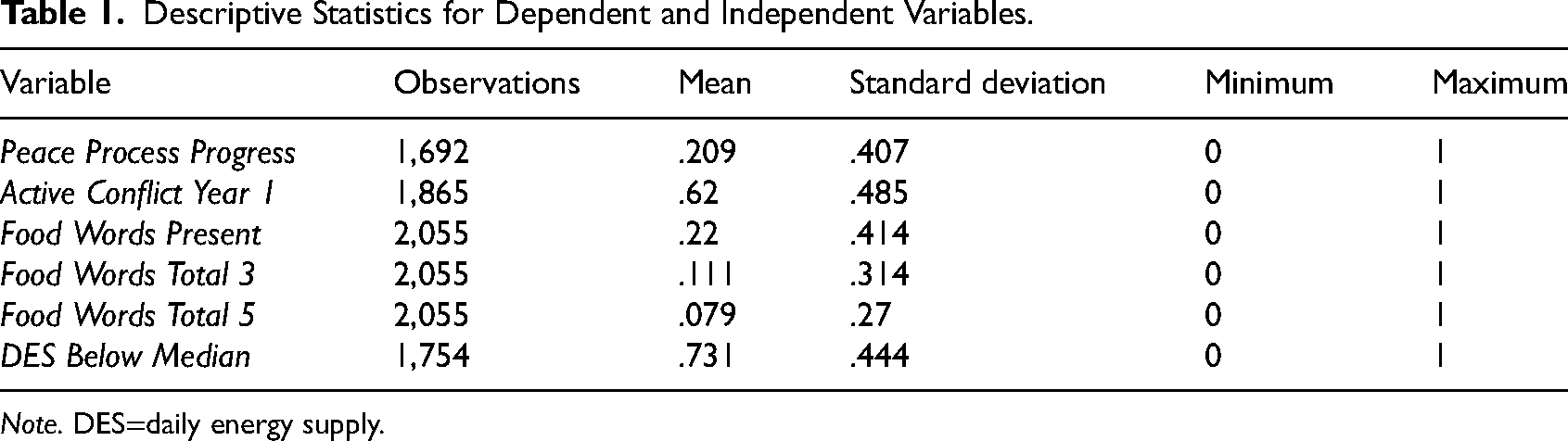
Dependent variables capture measures of the (i) progress of peace processes and (ii) occurrence of subsequent conflict. The first, Peace Process Progress, is a binary variable capturing whether an agreement represents progress compared to the previous agreement in the same process. It is based on our interpretation of the PA-X variable, Stage, a measure that indicates in which stage of the peace process an agreement is signed, and capturing the often nonlinear nature of peace-making (PA-X, n.d.). These stages include ceasefire, prenegotiation, partial substantive framework, and comprehensive implementation framework (Bell et al. 2024: 17). Peace Process Progress takes a value of 1 if an agreement represents advancement (e.g., from prenegotiation to a partial substantive framework, or from partial to comprehensive substantive framework) in these stages. We deviate from the PA-X coding of Stage by treating the stages of implementation and renewal as functions of the agreement they are implementing or renewing, rather than as separate stages so as to have as conservative an estimate of progress as possible.
The second dependent variable, Active Conflict Year 1, captures the durability of postagreement peace by establishing the occurrence of subsequent conflict in a binary variable. It takes the value of 1 if the conflict with which the agreement is associated is recorded as active in the following year. It is coded from the UCDP PRIO Armed Conflict Dataset Version 24.1 (Davies et al., 2024; Gleditsch et al., 2002).
Independent variables capture the prevalence of food-related keywords in peace agreements. PA-X contains 225 unique variables charting a wide range of characteristics of each peace agreement. However, the dataset only captures the food-related terms under an aggregate category of Land and Environment (LaEn), in which reference to food security is coded with a binary indicator alongside any reference to the environment, including, inter alia, pollution, disasters, epidemics, and institutions related to environmental affairs (Bell & Badanjak, 2019: 67–68). While this category is valuable, it does not comprehensively capture food-related terminology, nor does it do so in a way that is sensitive to frequency. To develop more specific measures, the text of all agreements in PA-X was tokenised and cleaned using the Quanteda package on R (Benoit et al., 2018) and a dictionary of food-related words was created, drawing on and expanding the list of relevant keywords featured in previous content analyses centered on food and/or food security (Benites-Lazaro et al., 2018; Dowd, 2023; Fiandrino et al., 2023; Luo et al., 2018; Nematollahi & Tajbakhsh, 2020). This aimed to capture a wide range of terms relevant to food systems and in total, included 134 discrete terms, listed in the Supplemental Appendix, alongside exclusion terms. 1 In robustness tests, reported in full in the Supplemental Appendix, we re-run models substituting our food-related keyword measure with the LaEn variable in PA-X, to ascertain whether we capture a food provision-specific effect, as distinct from natural resources or environmental factors more widely, and find support for a food-specific effect (detailed further under Results section, below).
From this process, three independent variables are constructed: first, a binary variable capturing the presence of any food-related keywords in the agreement text, Food Words Present; and then two additional binary variables, Food Words Total 3 and Food Words Total 5, coded positively if three or more, or five or more, food-related keywords appear, respectively. The first serves as a simple measure of presence, while the latter two reflect possible substantive treatment of food security, as opposed to a passing mention alone. Note that these need not be distinct keywords, and may in fact represent the repetition of a single term (e.g., “food” appearing four times). In robustness tests, detailed further below and in the Supplemental Appendix, we substitute these measures for binary measures indicating whether three or more or five or more unique key words are present—each of which could be repeated several times themselves (e.g., “food,” “hunger,” “malnutrition,” and “crops” appearing several times each).
Because we hypothesise that food-related provisions are relevant specifically to contexts where food insecurity is salient (such as conditions of widespread hunger, food crisis, and/or the weaponisation of food in conflict), we also include a measure of food insecurity. We generate this from estimates of per capita daily energy supply (DES) calculated by the Food and Agriculture Organization (FAO, n.d.). This measure estimates the average per capita kilocaloric consumption in the population. From this estimate, we generate a binary variable, DES Below Median, if the estimated DES in any conflict party in the year before agreement signing was below the global median for that year. We then interact this measure with food frequency variables to produce interaction terms accounting for the combined effect of both low levels of food consumption among the conflict parties and the presence of food-related keywords. This serves to directly test our hypothesis that where food insecurity is, or has recently been, a salient feature, provisions related to food security in the peace agreement will be positively associated with peace process progress and durability.
Descriptive statistics for independent and dependent variables are presented in Table 1.
Descriptive Statistics for Dependent and Independent Variables.
Note. DES=daily energy supply.
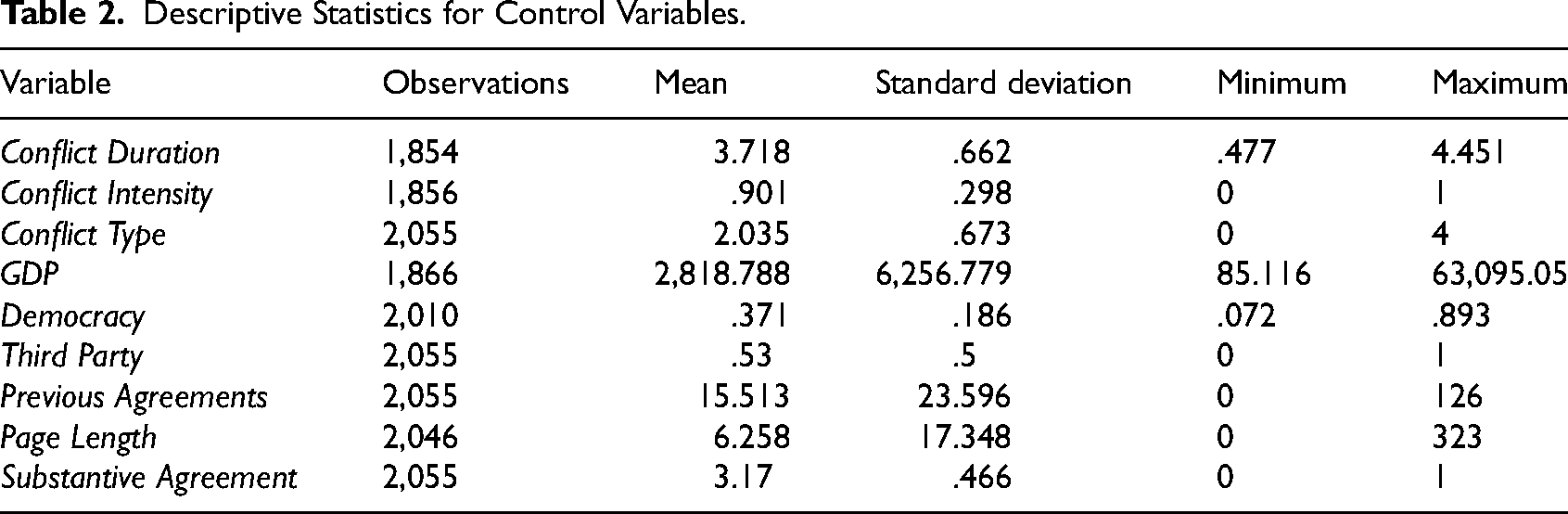
Several control variables are included to account for systematic covariates. Following similar measures included in Schulte and Carolan (2024), Nenningsland (2024), and Duursma (2020), and Walsh and Neudorfer (2024), relevant attributes of the conflict include Conflict Duration, operationalised as the log number of days between conflict onset as coded in UCDP and signing of the peace agreement; and Conflict Intensity, operationalised as a binary variable coded as 1 if a conflict resulted in more than 1,000 battle-related deaths in the UCDP dataset. To account for potential variation in peace outcomes across conflict types, Conflict Type, recodes the PA-X variable, Agreement/Conflict Type as an ordinal variable coded 1 to 4 for interstate, inter-/intra-state, intra-state, and local conflicts. Attributes of the wider contexts are accounted for in GDP, and level of democracy, Democracy, as measured by the V-DEM polyarchy index (Coppedge et al., 2024; Pemstein et al., 2024), following the studies above alongside Gilligan and Stedman (2003). Lastly, following Thomas (2024), Bell and Kitagawa (2023), Lundgren et al. (2023), and others, the following attributes of the agreement itself are accounted for: whether it included a third party signatory, affecting credibility and implementation (Third Party); number of previous agreements, affecting likelihood of progression (Previous Agreements); length of agreement in pages, affecting likelihood of inclusion of provisions of any kind (Page Length); and whether it is a substantive agreement, affecting likelihood of addressing substantive issues of any kind (Substantive Agreement). Descriptive statistics for control variables are presented in Table 2.
Descriptive Statistics for Control Variables.
Empirical strategy
We run logistic models testing the effect of food-related provisions on Peace Process Progress and Active Conflict Year. We include time fixed effects in all models for the corresponding decade of the agreement, to control for common time trends. Standard errors are clustered at the level of the country, to better account for the fact that observations within the same state may not be independent.
Limitations
Several limitations should be noted. In operationalising our dependent variable, we note that the original Stage variable as coded in PA-X is intended to classify agreements, but is not inherently ordinal. We interpret the variable in this way in order to operationalise our concept of peace progress with the best available data, and believe that this generally holds across peace processes. However, it is plausible that in a given individual process, the move from one category to another is not, in that specific context, indicative of progress and/or advance.
For our independent variable, there are several gaps owing to the challenge of sourcing robust, longitudinal, cross-national food security data. The most common measure of acute food insecurity, produced by the Integrated Food Security Phase Classification, is available only from 2004 onwards, and only for contexts facing, or recently having faced, food crisis. No data is available through this or comparable food crisis monitoring systems on contexts in Europe, North or most of Central or South America, risking biasing our sample (IPC, n.d.). Alternatives, such as a measure of the prevalence of undernourishment produced by FAO, are more widespread, but also time-limited (available from 2001 for most contexts). In addition to coverage issues, there are limitations to DES accuracy: notably, the measure is an estimated average across the entire population, and neglects the likely concentration of food insecurity in particular regions or among particular groups.
Nevertheless, we believe DES remains the most comprehensive measure of food consumption available to the authors. In sensitivity measures, we substitute our DES-derived measure for a measure of food insecurity generated from the prevalence of undernutrition combined with select IPC data on percentage of the population experiencing food stress or higher levels of food insecurity, which covers several of the contexts omitted from the DES data. The two measures are highly negatively correlated (–768, p < .0001), indicating that the higher the level of average kilocaloric consumption in the population, the lower the percentage of the population are likely to experience food stress or above. Separately, we revise our measure of undernutrition. In place of a binary measure indicating low consumption measure relative to the sample median, we create a binary measure based on a widely used kilocaloric intake cutoff of 1,800 kilocalories per day as a further robustness test (detailed further below, and in the Supplemental Appendix).
More broadly, we acknowledge that our study is limited to the analysis of what peace agreements contain, and not whether provisions are implemented, nor their ultimate impact. We proceed from the basis that even where the gap between text, implementation and outcome is considerable, the original text remains valuable to our understanding of peace processes and parties’ priorities.
Lastly, we note that our quantitative analyses are not causal models, but test associations between variables. We also cannot completely discount alternative explanations for the relationships observed, namely, that some feature of peace agreements that makes them amenable to the inclusion of food-related provisions also makes them more likely to progress and/or witness more durable peace outcomes. We aim to account for this in our robustness tests, but nonetheless encourage readers to interpret the results with this in mind.
Results
The following section first maps the presence and distribution of food-related provisions in peace agreements; before presenting the results of our empirical tests.
Mapping food provisions in peace agreements
A total of 455 (21.7%) recorded agreements contain at least one food-related keyword term. 2 Geographically, almost half (220) of all agreements containing food references were in sub-Saharan Africa, followed by Asia and the Pacific (72) and the Americas (57). Sub-Saharan Africa and Asia and the Pacific are also the regions with the most numerous references to food within agreements (2,104 and 777, respectively).
Temporally, the years 1996, 2018, and 2019 had the highest number of agreements referencing food (22 each). However, as the absolute number of agreements overall also fluctuates across time, tracking the proportion of agreements that contain food references is as important as the absolute number. Figure 1 shows notable peaks, such as in 2019, when over 40% of 54 recorded agreements contained references to food, compared to troughs such as 1990 and 1997, when just over 11% did. Nevertheless, the trendline across decades indicates only a slight upward trend overall, and relative concentration around the average of 22% of agreements containing any reference to food between 1990 and 2023.
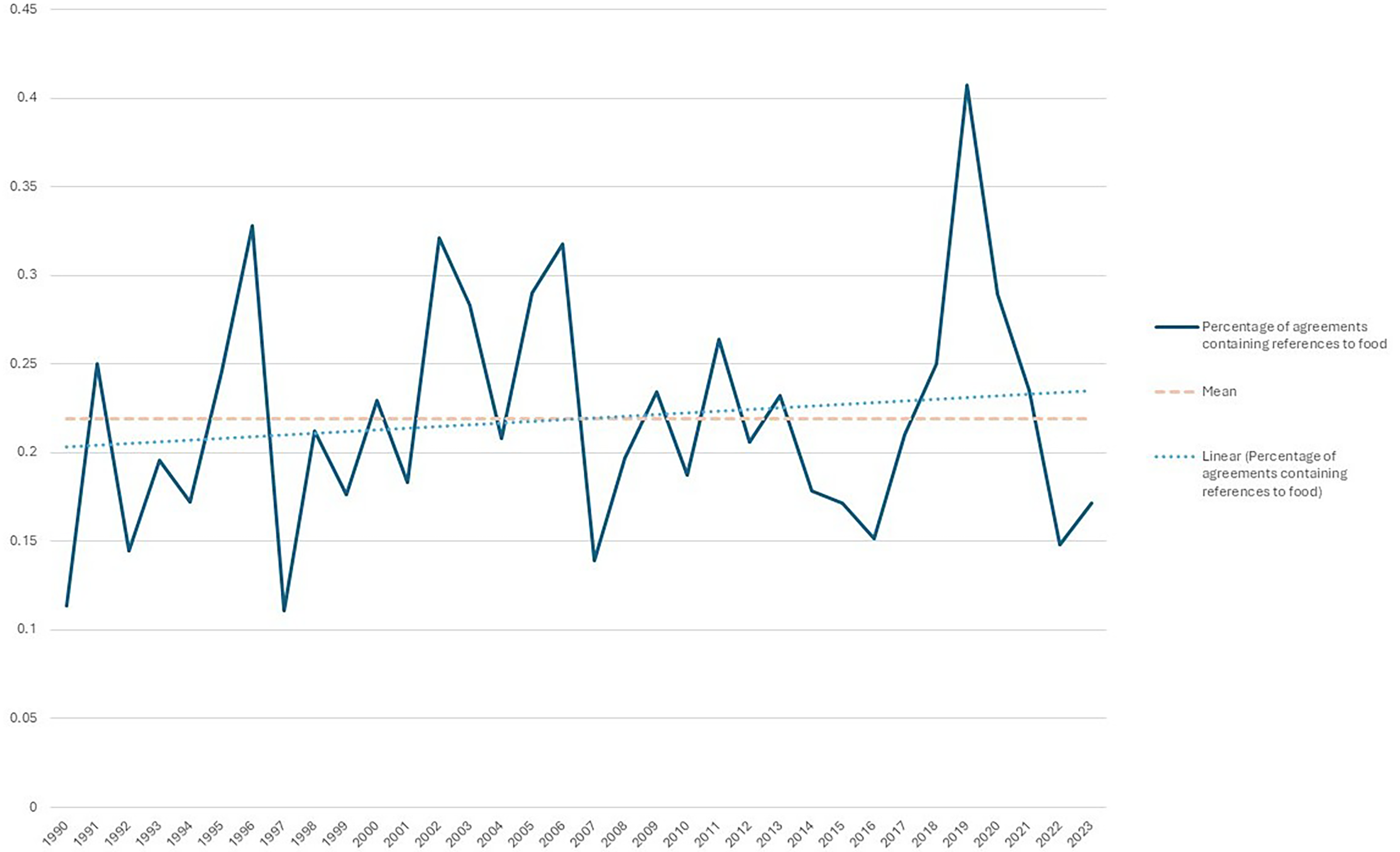
Proportion of peace agreements that contain any reference to food keywords.
Substantively, 3,863 food-related terms were recorded, with “food” itself being the most popular (457 references), followed by “agricultural” (427), “cattle” (388), and “crops” (200). While a full account of keyword frequency is contained in the Supplemental Appendix, this brief overview indicates that references to food are distinct from those to land and the environment more broadly. They also span a range of dimensions of food, from production to consumption, and a diversity of related livelihoods, from agricultural to livestock-related activities. In other words, food references do not appear to be confined to a single dimension of the food system nor its activities.
A total of 3,863 food-related terms corresponds to an average of 8.68 food-related terms per agreement in which food is referenced. However, this average conceals a wide range: 161 agreements contain only a single food-related keyword. By contrast, six agreements—three in Colombia, and one each in South Sudan, Sudan and Yemen–contain over 100 references each. 3 Considering a substantive provision related to a specific food measure or policy might contain multiple food-related keywords, it is notable that only 227 agreements contain three or more references; while 163 contain five or more. This distribution reflects the wide range of ways food is treated in peace agreements. Some mention food only briefly, and often merely as an illustrative example. For instance, the Townsville Peace Agreement signed in 2001 as part of the Solomon Islands Peace Process refers to the “free movement and flow of people, food, fuel and other services throughout Solomon Islands,” while the 1994 Vance-Owen Plan signed as part of the Bosnia Peace Process establishes that “humanitarian aid includes, but is not limited to, food, water, medical supplies and fuel.” 4 By contrast, the 2011 Doha Document for Peace in Darfur contains a total of 50 food-related keywords, made up of 13 distinct terms, including multiple references to food, agriculture, and livestock, alongside explicit references to hunger and food security, among others. 5
While a close reading of all food-related provisions is beyond the scope of this study, broad trends in framing and phrasing suggest patterns in how food is addressed in agreements. Of the 3,863 food-related references, 446 references in 145 agreements are presented in the context of either humanitarian response, development and/or aid. These include provisions aiming to facilitate the delivery of food and other humanitarian aid, or those outlining plans to establish agricultural development policies in the subsequent transition. 6 By contrast, far fewer (75 references in 35 agreements) use rights-based language, explicitly referring to the right to food, food security, nutrition, or related (see also Roa-Clavijo, 2022). Some agreements do so in illustrative lists in which food is one example, such as “the right to health care, education and culture, nutrition, a dignified dwelling, basic services,” whereas others do so in the ambitious language of the right to “food sovereignty,” or the more precisely specified right “to healthy, nutritional and culturally appropriate food, with the aim of eradicating hunger.” 7
Lastly, the degree to which the food security and/or food rights of any specific group is referenced is very limited. As only one example, only 71 references in 21 agreements contain any reference to gender in relation to food provisions, with the notable exception of Colombia's 2016 agreement, which explicitly “acknowledges the fundamental role played by rural women in their contribution to fulfilling the right to food.” 8 On the whole, however, most references to food security and food rights are framed in more general language. This means there is relatively limited attention to differences within and across groups whose experiences of food insecurity, or ambitions for food system reform, might differ in important ways.
Regression analyses
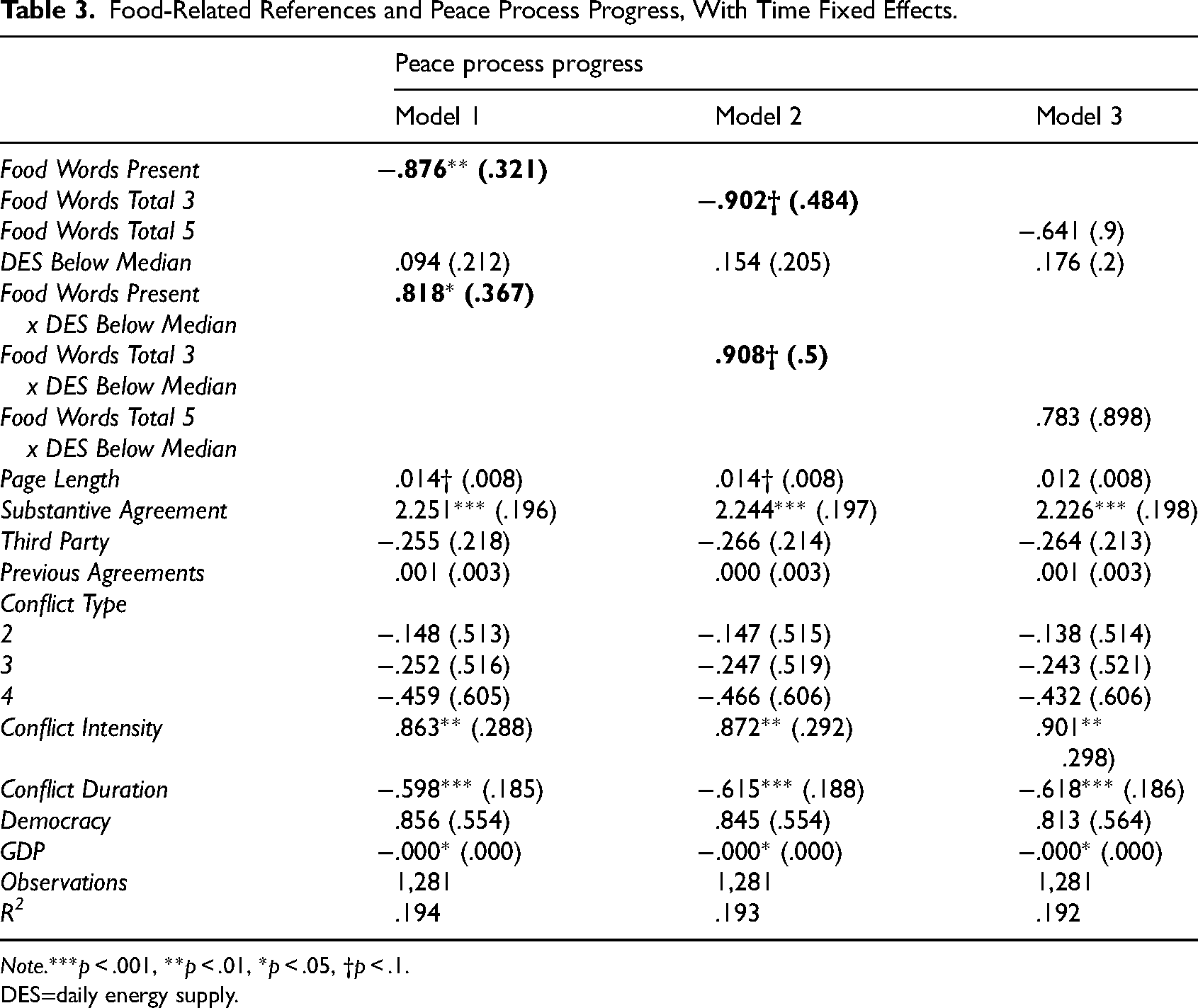
Having mapped the presence and distribution of food-related provisions in peace agreements, we now turn to testing their effect on peace process progress and durability. Table 3 presents the results of our test of hypothesis 1 and finds broad support. The models test the correlation between the presence of any (model 1), three or more (model 2), and five or more (model 3) food-related keywords in food-insecure contexts and peace agreement progress.
Food-Related References and Peace Process Progress, With Time Fixed Effects.
Note.***p < .001, **p < .01, *p < .05, †p < .1.
DES=daily energy supply.
The results indicate that when food-related keyword presence is interacted with below-median food consumption, there is a positive and statistically significant relationship with peace process progress (p < .05). Similarly, the presence of three or more keywords interacted with the same food consumption conditions is borderline significant at p < .1. There is no statistically significant relationship at the level of five or more keywords, although the coefficient remains positive. The models also show that the interacted relationships differ from individual effects, in that the presence or frequency of food-related keywords alone is consistently statistically significantly negatively associated with peace process progress. In line with hypothesis 1, the interaction term shows that when both food insecurity and food-related provisions are present, peace processes are more likely to progress. All models have relatively large coefficients close to 1, indicating that where both low food consumption and food-related keywords in agreements co-occur, these are associated with likely progress.
Control variables perform largely as expected and generally consistently across models. Of those of note, across all models, whether an agreement is substantive is consistently, positively and statistically significantly associated with process progress. Page length is also mostly positive, attesting to the importance of these control measures. Turning to conflict conditions, conflict intensity is positively associated with progress in all models, perhaps pointing to the relevance of theories that posit peace processes are most effective at specific times when parties may have depleted resources and diminished appetite for ongoing conflict (Zartman, 2022). Alternatively, this may speak to a systematic relationship between higher-intensity conflicts and the formalisation of peace processes in agreements of the kind captured in PA-X. Conflict duration is consistently, negatively and significantly associated with progress, in line with expectations that longer-running conflicts are more intractable and resistant to resolution.
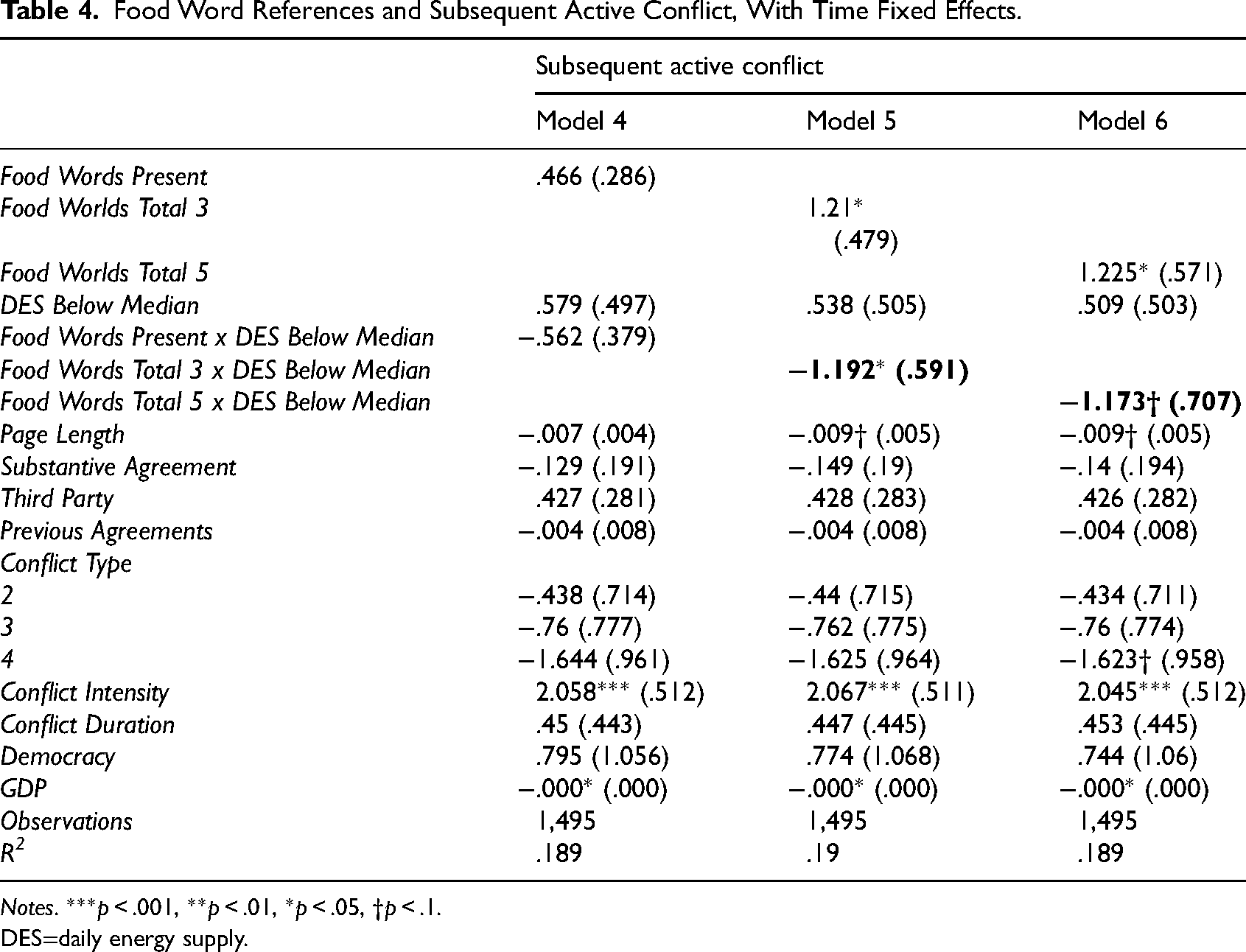
Table 4 presents the results of our test for hypothesis 2 on the durability of peace outcomes, measured in terms of the presence of active conflict the year after agreement signing. Model 4 tests the effect of the presence of any food-related keywords at all, followed by three or more (model 5) and five or more (model 6).
Food Word References and Subsequent Active Conflict, With Time Fixed Effects.
Notes. ***p < .001, **p < .01, *p < .05, †p < .1.
DES=daily energy supply.
The results show that food-related keyword presence and frequency are interacted with below-average food consumption, the inclusion of three or more, or five or more, food-related keywords in an agreement are statistically significantly and negatively associated with subsequent active conflict. Both coefficients indicate a sizeable effect on the likelihood of active conflict when both conditions of food insecurity and several food-related key terms are present. The results offer broad support for hypothesis 2. However, they contrast with the results documented in Table 3, whereby the presence of any food-related keywords had a positive association with peace process progress. When assessing peace durability, presence alone is statistically insignificant, although the sign remains negative (p = .138). This may reflect the distinct effect of substantive references to food-related keywords, such as those that might appear in dedicated food provisions in an agreement, in relation to subsequent active conflict. Alternatively, it may speak to differences in the conditions under which formal agreements in peace processes are negotiated and accepted, in contrast to the subsequent effects of their implementation and realisation of their ambition.
As in Table 3, control variables perform largely as expected, and generally remain stable throughout. A notable difference is in the effect of substantive agreements, which appears to have no effect on subsequent active conflict, although page length remains significant.
Robustness tests are reported in the Supplemental Appendix. These include a model substituting our measure of food-related provisions for the LaEn variable present in PA-X. The purpose of this test is two-fold. Narrowly, it tests for a substantive difference between food-related keywords and an existing measure of wider references to natural resources, interrogating our rationale for generating a novel variable and undertaking targeted analysis. More broadly, it serves as a test of a potential structural bias affecting agreements that contain food-related provisions. It is theoretically plausible that the relationship observed between food-related provisions and peace is merely indicative of a structural condition of peace agreements like those that include food-related provisions. Namely, agreements such as those that contain food-related provisions are, inter alia (i) agreements where parties had sufficient common ground that they could reach agreement on hard security matters and enter into those about broader human security concerns such as food, and are thereby the kinds of agreements that are more likely to progress, independent of food-related provisions; and/or (ii) agreements that are structurally more comprehensive and holistic generally, and are therefore more likely to be associated with a more durable peace, but not one specifically associated with food-related provisions. 9 By substituting our measure of food-related provisions for LaEn, we test whether this novel measure is first, justified, and second, indicative of a condition associated not with food-related provisions, but with agreements like those with food-related provisions.
The results for models including LaEn differ from models above, showing no statistically significant relationship between LaEn to either process progress or durability. We interpret this as evidence that our measure captures a distinctive phenomenon (food-related provisions) and does not replicate references to natural resources more widely. Moreover, we argue this indicates that our measure of food-related provisions does not capture a general effect of agreements that contain broader human security measures, such as provisions related to environmental security. Consequently, we believe this supports our interpretations and the case for analysing this distinctive phenomenon.
In separate sensitivity analyses, we substitute our measure of food-related references, broadly constructed, with a measure of the presence of specific types of food-related references—ranging from explicit reference to “food,” to categories that capture food crisis, food consumption, and food production. Only the category explicitly mentioning food fails to reach statistical significance: key terms associated with food items for consumption, food crises, and agricultural and livestock activities are all statistically significant and positively associated with peace process progress.
In additional robustness tests, we substitute our relative measure of below-median Dietary Energy Supply with consumption under a fixed kilocaloric threshold of 1,800 per day, which produces consistent results with our main model, although owing to the rarity of observations at this lower threshold, some models have insufficient data.
Discussion and Conclusion
This study set out to map and subsequently tests the associations between the inclusion of food-related provisions in peace agreements and peace process progress and durability.
In doing so, we find that food-related provisions are rarely meaningfully included in peace agreements: while over one-in-five agreements contain at least one reference to food, many of these include food in an illustrative list as a brief example. More detailed provisions on food issues are far rarer, with just over 10% of agreements containing three or more food-related key terms. Where they do appear, food references are often framed in terms of humanitarian aid and development, rather than in more rights-based language, and tend to be rather general, with relatively little attention to the food security of specific groups or populations, including gender considerations. While more research is required to explore the specific ways food features in individual conflicts, and if and how this corresponds to its inclusion in peace agreements, these overall trends suggest a relative marginalisation of the issue, especially given the close linkages between conflict and food crises.
In seeking to understand the effect of food-related provisions on peace processes in contexts with relatively lower food security, we find evidence to support our hypothesis that their inclusion is associated with greater peace process progress. When interacted with measures of low food consumption, inclusion of any food-related term, and at least three food-related terms, are statistically significant and positively associated with peace process progress. We contend that this reflects the fact that where food insecurity is a salient issue—reflected in relatively lower food consumption—provisions related to food in peace agreements are more likely to have support among parties, and thereby correspond to greater advances in the process.
We acknowledge that it is theoretically plausible that the relationship observed is merely indicative of a structural condition of peace agreements like those that include food, whereby agreements that are more comprehensive and holistic agreements are more likely to progress and/or result in more durable peace. However, we find some evidence to support our original interpretation in our sensitivity analyses comparing food-related provisions with land and environment. The latter show no statistically significant relationship with peace process progress.
We find somewhat more qualified support for our second hypothesis, that food-related provisions in food-insecure contexts are associated with more durable peace outcomes. When interacted with subsequent active conflict, the inclusion of three or more, or five or more food-related terms in a peace agreement is statistically significantly and negatively associated with recorded armed conflict occurring in the year following signing. While this relationship is compelling, sensitivity analyses, reported in the Supplemental Appendix, were more mixed and suggest the value of further research in this specific aspect. In particular, more comprehensive longitudinal data on food security and more granular data on subsequent conflict may reveal different, and meaningful, patterns of association.
Overall, our findings contribute to existing scholarship by first, finding support for approaches to peacebuilding that adopt broad, holistic definitions of peace—including, but not limited to food and other dimensions of human security. This is particularly important where issues such as food have been prominent features of the conflict, as often reflected in higher levels of food insecurity. We also contribute to closing a gap in the research on the conflict-hunger nexus which has, to date, largely focused on the relationship between conflict and food security, and largely neglected the question of how and with what effect subsequent peace processes might serve to address conflict-driven hunger and its legacies. While it has been beyond the scope of this study to examine individual cases in detail, future scholarship examining the specific role of food provisions in individual peace processes, agreements, and peacebuilding activities would be valuable to understand the context-specific ways in which these provisions might contribute to, enhance, or strengthen peace in particular conditions.
Supplemental Material
sj-pdf-1-jpd-10.1177_15423166251355724 - Supplemental material for The Role of Food in Peace Agreements
Supplemental material, sj-pdf-1-jpd-10.1177_15423166251355724 for The Role of Food in Peace Agreements by Seán Gurrin, Joanna Pedrina and Caitriona Dowd in Journal of Peacebuilding & Development
Footnotes
Declaration of Conflicting Interests
The authors declared no potential conflicts of interest with respect to the research, authorship, and/or publication of this article.
Funding
The authors disclosed receipt of the following financial support for the research, authorship, and/or publication of this article: This work was supported by the Irish Research Council, (grant number COALESCE/2022/1730).

Supplemental material
Supplemental material for this article is available online.
Notes
Author Biographies
References
Supplementary Material
Please find the following supplemental material available below.
For Open Access articles published under a Creative Commons License, all supplemental material carries the same license as the article it is associated with.
For non-Open Access articles published, all supplemental material carries a non-exclusive license, and permission requests for re-use of supplemental material or any part of supplemental material shall be sent directly to the copyright owner as specified in the copyright notice associated with the article.
