



Abstract
Amin Ghaziani interviews urbanist Richard Florida, author of The Rise of the Creative Class, about the skills needed to communicate big ideas beyond academia.
Richard Florida is the internationally best-selling author of The Rise of the Creative Class. A pioneering researcher and University Professor at the University of Toronto, he co-founded CityLab, the leading publication devoted to cities and urbanism, and the Creative Class Group, which advises companies, governments, and foundations worldwide. Florida also serves on the boards of global real estate, urban innovation, and venture capital firms. Somewhere in there, he found the time to sit down with Contexts’ co-editor Amin Ghaziani to discuss the skills inherent in effectively (and accessibly) communicating big ideas beyond traditional academic outlets.
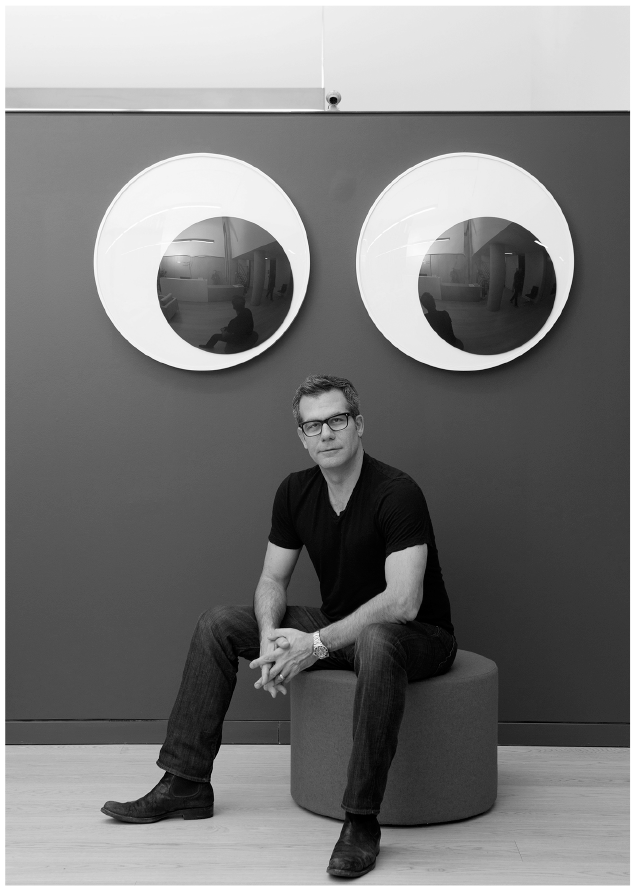
Richard Florida
Courtesy The Creative Class Group/Lorne Bridgman
Growing up working-class, you didn’t use a lot of big words, and I think for a while, I leaned into jargon; I thought the more complicated something sounded, the more serious it was. But as I reached my 40s, I said to myself—I remember this—I said to myself, “If I’m going to write another book,” which ultimately became The Rise of the Creative Class, “it’s going to be one that my parents could understand, that my mom could pick up and understand.”
This field of urban affairs—or urban development, or urban planning, or urban geography, or urban sociology, or urban economics—has a tradition of public intellectuals, like Jane Jacobs and William Whyte, and maybe I felt like I needed to somehow contribute to that. There was some new information about cities and the way they were changing, the knowledge economy, that I wanted to bring to the general public.
One example of that in the book is what I called the “three Ts,” which are technology, talent, and tolerance—being more open minded, more accepting of racial minorities, interracial couples, and the gay community. I saw them as indicators of places that were more innovative. I kept saying to myself, “I need a way to communicate that to my mother.”
When I was a kid, my mom was always telling me to get good grades, be smart, do your studies, do your homework, learn all about ‘reading, writing, and arithmetic’—the three Rs. Now, of course, they’re not three Rs. There’s only one R in reading, writing, and arithmetic—which I think is funny. But then I thought, “The ‘three Ts,’ that’s something Mom could understand.”
When I was young, I didn’t think I would be an academic. I’m a child of the late ‘50s, born in 1957. I remember the Beatles coming to America. I thought I was going to be a guitar player and have a great rock-and-roll band. Of course, that didn’t pan out! But I think my being in bands when I was young, learning to perform, had some impact on my ability to communicate with an audience.
And then finally, my dad said something really interesting to me that I’ve never forgotten. My dad wasn’t educated, but he was brilliant. He always said, “Richard, the key in life is to make things look easy.” And I was like, “Dad, what do you mean?” “Well, if you watch Frank Sinatra sing, or Gene Krupa play the drums, or Tommy Dorsey play his horn”—he’d lose me with that [laughs]—“or Mickey Mantle, Willie Mays, or Bill Russell when they play, they make the hard things look easy.” I always keep that thought in the back of my mind. I have kids who are 7 and 8 years old. I tell them that all the time: “The key in life is never to make things look hard.” So, I think I was also trying to make something complicated look easy because my dad thought that was a good idea.
And I intuit what I should observe or who I should talk to or what I should focus on in my research and writing. At Carnegie Mellon, we actually had a phrase for this. They called it “structuring and un-structuring a problem.” I think that’s what I try to do: talk to people, collect some data, and put structure on an issue.
The first book I wrote was called The Breakthrough Illusion. My editor on that was a guy named Martin Kessler. I sent Martin the manuscript and he sent me back one comment: “Your argument is not linear.” It took me a year to figure out what he meant. What he meant was, the table of contents lists a set of chapters. Each chapter should unfold a core element of your idea.
It’s really hard, sort of like making a sculpture. Your first draft is just pouring stuff out on a page, and then you begin to mold it into a head and limbs. In time you have fingers and toes and features. It’s a long process, writing a book for public consumption.
It’s also important to have a really good editor. The most successful things I have done were with brilliant editors. Like the term the “creative class.” I was trying to figure out what to call this new group of knowledge-based professionals. My editor at Basic Books, a brilliant guy named Bill Frucht, kept looking at the data my research team was generating, and he said, “You’ve identified a new class.” I said, “I’m not so sure—I am certainly no Max Weber or Karl Marx.” But one day I went into the library and picked up a book by Robert Sternberg. I think it was called The Handbook of Creativity. It had a line that went something like this: “If you come across a great artist like Pablo Picasso or Andy Warhol, a great musician like Beethoven, Mozart, or Louis Armstrong, a great revolutionary like Trotsky or Castro, or a great CEO like Jobs or Gates, they are the same kind of person—they’re a creative person.” And the notion of the creative class popped into my head.
My book was actually not titled The Rise of the Creative Class. The book was titled The Big Morph: The Rise of the Creative Class and How It’s Transforming Work, Leisure, Community and Everyday Life. When the book was about to be printed, I called my editor, and I said, “We can’t call this book The Big Morph. It just sounds too trite.” He said, “Ok, we’ll get rid of that title.” And so, on the spot we agreed to just move the colon. The Rise of the Creative Class—we didn’t even change the “and,” right? Like, that was the subtitle. Colon: And How It’s Transforming.
At the end of the day, what we academics know is ideas. But good editors and literary agents know the market for ideas. Sometimes you really blanch at that. “I don’t want to cheapen my idea like that. That’s not what I want to say.” There’s often a tension there. But at its best it can be a productive tension. When it comes out best is not only when you have an editor as a partner, but when there’s conflict—genuine intellectual conflict between the idea and the market. The goal is to figure out what needs to be right about the idea and how it fits in the market.
The other thing is timing. What is the old saying? “Fortune favors the prepared.” Mick Jagger is alleged to have said something along the lines of, “There were a lot of people who were doing what we were doing in the early ‘60s, but we were lucky, and the timing was right.” You hear much the same thing from venture capitalists and high-tech entrepreneurs. A well-known editor turned literary agent once said to me, “You had one successful book with Rise of the Creative Class; it is very unlikely you will have another.” Her point was that very few people have one successful book. Just like most musicians who have a hit, they are “one-hit wonders.” It’s The Rolling Stones and The Beatles, or U2, or Taylor Swift who are outliers. To communicate an idea, to get this kind of mass appeal in our world? It’s a lot of hard work, a lot of good work, and it’s also a ton of luck and timing.
Robert Putnam lays this out nicely in the appendix to his wonderful book, Bowling Alone. He basically says academics are used to putting ideas out there and having collegial dialogue. It can be strongly worded, and it can be quite critical, but no one’s calling you names and trying to rip you apart personally. What’s really different about the public arena is that they don’t care so much about proof as the idea—they want something they can use and apply—but then the criticism can be completely vicious on a personal level. I would caution people to think about the downside and if they’re ready for it. It really takes a strong constitution. It’s kind of like a mini version of politics. You have to be big enough to not let it hurt you—to accept it and bring it into your corpus of knowledge.
You have just got to work through your fear. This kind of career is going to be filled with failure. Most things you do are not gonna be successful, most op-eds or magazine articles you write are gonna be rejected, most books you write are gonna sell minimal numbers of copies—but you just have to keep going and going and going.