



Abstract
Amin Ghaziani interviews Nicholas Kristof about the state of social science in news and policy.
Nearly a decade ago, New York Times columnist Nicholas Kristof issued a challenge in a piece titled, “Professors, We Need You!” In it, he urged American academics out of their ivory towers and into public and policy debates. In those domains, he believed, there was far too little informed expertise, while all the big ideas and ambitious research were hidden away in obscure journals, obtuse papers, and the cloistered minds of those who stubbornly refused to speak the relevant facts, loud and clear, to the wider world. Catching up with Kristof, we were thrilled that he promoted the relevance of sociology to current social issues. Still, he told Contexts co-editor Amin Ghaziani that similar roadblocks sadly continue to keep the best of our facts and findings from reaching desks like his. To truly heed Kristof’s call will require individual ingenuity in partnership with institutional change—in other words, an imaginative sociological response to an urgent need for public engagement.
Nicholas Kristof
Courtesy New York Times
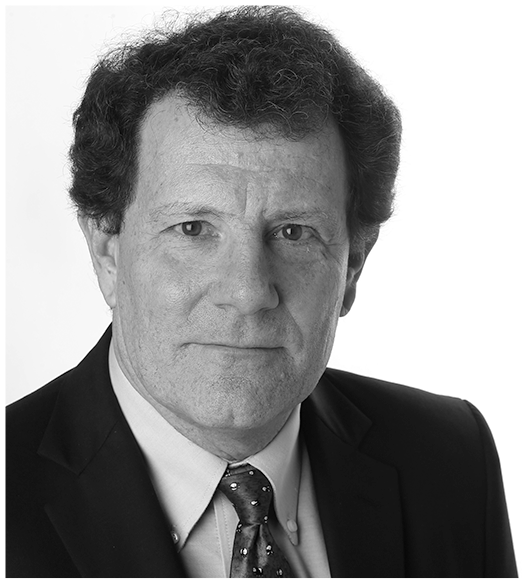
So, I wrote that essay. It was partly a call to professors to try to contribute more to that discussion, partly a call to those of us who do have megaphones to cite professors more, [and] an institutional call to universities to try to reward professors who do contribute to those public debates. I think one of my concerns is that a lot of universities, while they’re great public goods, don’t reward professors as if that were true and are suspicious of op-eds, for example, or television appearances, rather than rewarding those professors who contribute in that way.
I think we would make better policy if we had better evidence—and professors compile that evidence. They know that research. Often, they disguise it beneath heaps of equations so that it seems to be written in a Cyrillic alphabet or something, but lives would be saved, people would live better, and policy would be more effective if we drew on evidence that scholars have developed rather than just the hunches of policymakers.
Secondly, economics is unusual in that it is more centrist than most academic disciplines, and I’d say sociology is more leftist than most disciplines. One result is that the debate in economics is closer to the political center in the United States, and that gives policymakers more confidence in economists. It means that the debate is closer to where the public debate is rather than well to the left of it. To me—I’m sure a lot of your readers will disagree—but to me, one of the lessons is that there really is a benefit to a discipline recruiting conservatives and conservative voices, that they actually may give a discipline more impact on public policy rather than less.
I’m struck that, very often when scholars do go on TV, it’s because they published a book recently. Their publisher is trying to make sales, and so is arranging for them to get on TV to talk about it. I wish that universities did more of a similar outreach, simply to weigh in on matters of public discussion, so that a university press person would call up a TV producer and say, “I see you’re reporting a lot about homelessness now. We have a sociologist on faculty who’s been writing about this for 20 years, knows more about it than anybody else. Do you want to have them on air?” I don’t think that universities are as pro-active in propelling those voices to the public as they might be.
“Lives would be saved, people would live better, policy would be more effective if we drew on evidence that scholars have developed rather than just the hunches of policymakers.”
I’d likewise think that it would be good if either departments or universities did reach out more or try to get professors on the radar of writers or TV producers. Especially when an issue is in the news—Iran, right now, as we’re speaking, Iran is very much in the news, and my guess is that TV producers are very eager to find experts on Iran, on young Iranians, on gender in Iran—but the producers, they don’t know who those people are. If a university reached out and said, “We have this area specialist,” that would be great. Or guns. There’s going to be another mass shooting, somewhere here in the United States, sometime soon. And when that happens, reporters, TV producers are going to be desperate for gun policy experts. Rather than sitting in one’s office and waiting for the phone to ring, it’d be great if universities were more proactive and tried to reach out, even just on Twitter, “Here’s a study that one of our professors did about gun violence.” Or calling up news organizations and offering that professor. Sadly, gun massacres are going to be something that are going to be happening again and again, so one can prepare to get that ready for when it happens so the people weighing in aren’t just think-tank “hired guns,” so to speak, but actual people with the best scholarship.
“As it was 10 years ago, it’s still true today: Professors, we need you!”
The advanced country with the lowest abortion rate is not one that bans abortion; it’s the Netherlands, because it has very good, comprehensive sex education and very good access to contraceptives. And, as a result, the abortion rate is the lowest. That’s a really important lesson for policymakers in this country.
I think a lot of American policy-makers are worried that if they provide unemployment benefits and other social safety net benefits, then people will not work. So, it’s really important to know that countries like Denmark have a higher labor participation rate, especially for prime-age workers, than the United States does.
At M.I.T., the Poverty Action Lab has done a lot of really good studies about fighting poverty in other countries that, I think, can illuminate the situation here in the United States. There were important studies in India about what happened when women became village chiefs. It was done randomly, and those villages that randomly had a female leader turned out to be, in many ways, better run than other villages—and yet the villagers didn’t think so. It was a fascinating example of how improvements in conditions aren’t always appreciated the first time around. But after this had happened in one cycle, then people did seem to judge female leaders more objectively.
So, I do think that there’s an awful lot that we can learn from other countries, and I try to look out for that research and those studies, but if it’s catch as catch can with U.S. research, then I’d say it’s moreso with overseas research.