



Abstract
Inside the migrant camps emerging and being erased at the U.S.-Mexico border, we glimpse liminal lives crafted by punitive immigration policy yet sustained by hope.
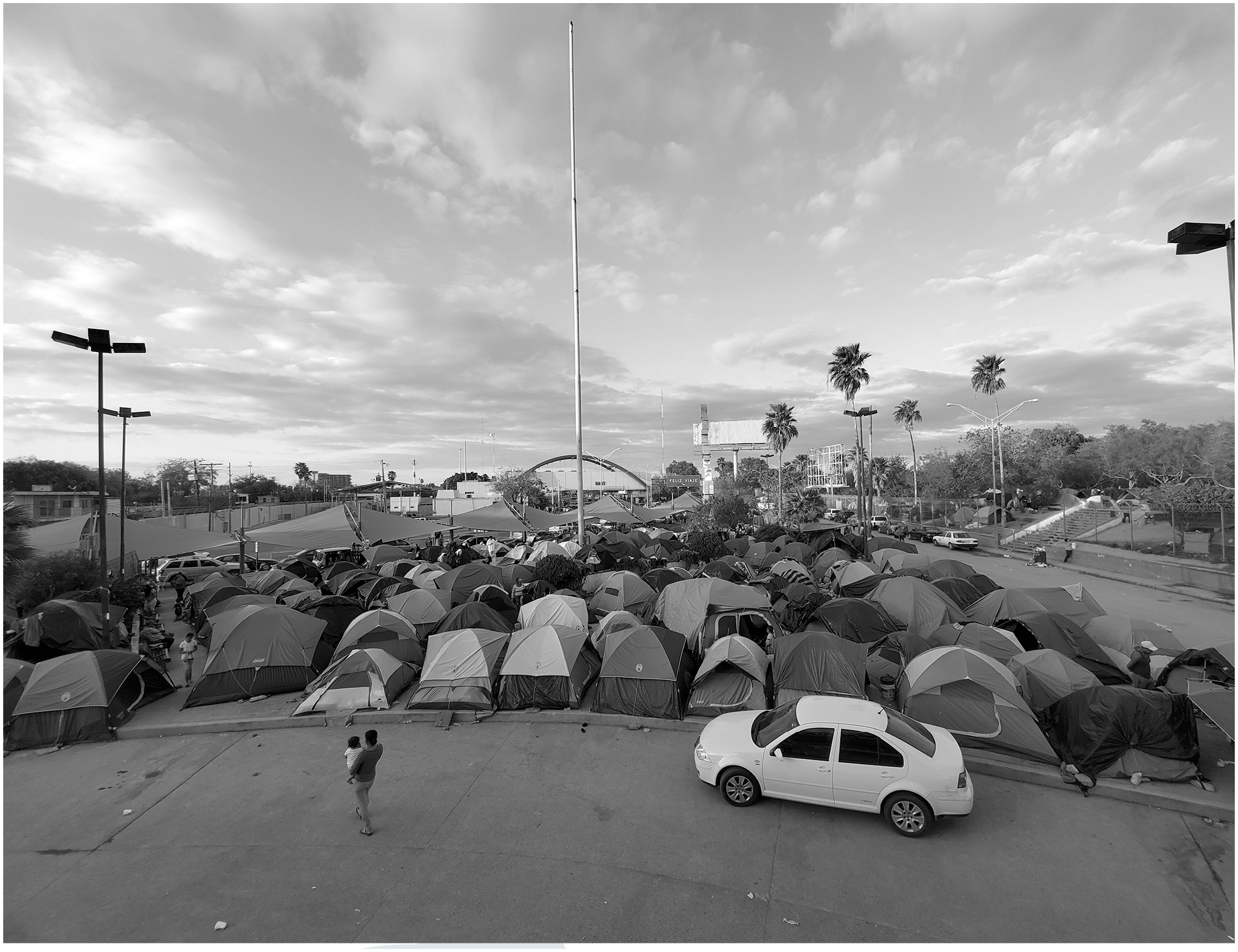
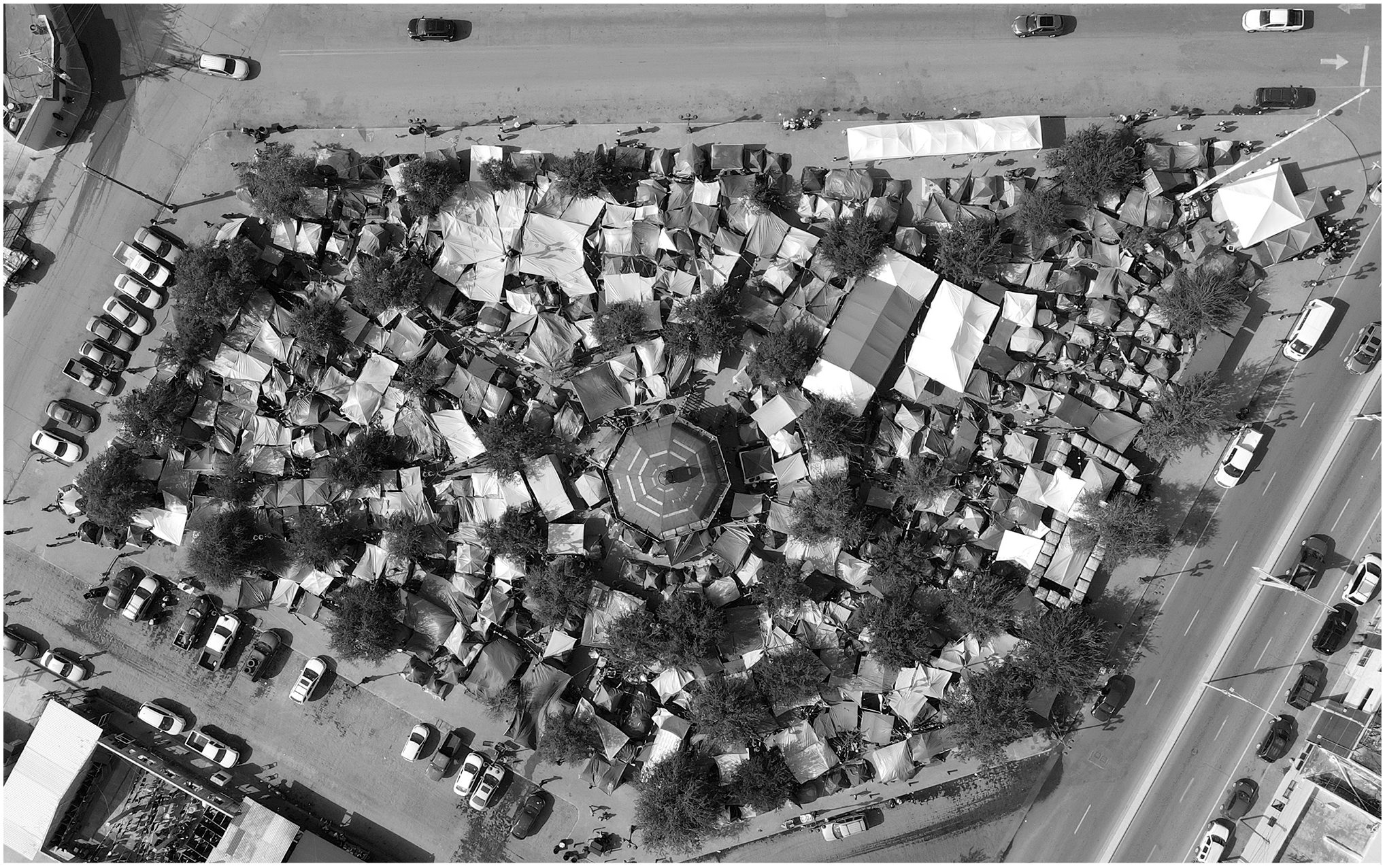
“La Puerta Mexico,” an architectural landmark, has stood silent witness to the rise, dismantling, and erasure of the Matamoros, Tamaulipas migrant camp. This camp, erected in a small public plaza at the Gateway International Bridge across from Brownsville, TX, was once the largest migrant camp on the U.S-Mexico border. By interweaving stories I collected in the camp with the immigration policies that have altered the process of asylum seeking in the United States, I trace the conditions that led to the rise of the camp, the systematic violence toward and dehumanization of camp residents, migrants’ survival strategies, the political dismantling and erasure of the Matamoros camp, and the emergence of a new camp in the neighboring city of Reynosa.
La Puerta Mexico.
Author photo
From 2018 through its dismantling in 2021, I conducted fieldwork in the Matamoros camp. I observed camp life from the arrival of the first disoriented families through to its closure. While conducting this research, I learned invaluable lessons on violence, vulnerability, and human strength.
I visited the camp several days per week, always during daylight and following safety guidelines, to protect myself and the migrants living inside the camp. I engaged in three different ethnographic techniques: participant-observation, which allowed me into everyday life in the camp; in-depth interviews (both “formal” interviews and unstructured interactions with asylum seekers and deportees, residents from Matamoros, and volunteers and workers from governmental and nongovernmental organizations living or working in the migrant camp); and landscape and aerial ethnographic photography. Photography was central in my data collection, helping me to both gather and report ethnographic insights into the evolution of the camp over its three years.
The origins of the matamoros camp
In April 2018, under Trump Administration orders, all ports of entry along the southern border of the United States began to implement an entry regulation protocol known as “metering.” The practice, which was implemented earlier, in 2016, at the border crossing at San Ysidro, California, set a daily limit on how many asylum seekers from Central America and the Caribbean could be received by officials from the Customs and Border Protection agency (CBP). Reception involved determining whether each person qualified for refugee status in the United States.
The U.S. definition of asylum is based on the 1951 Refugee Convention and its later amendment via the 1968 Protocol. Within this legal framework, a person requests asylum when they are already in U.S. territory or at a port of entry. Metering, however, involves placing CBP officers right at the border, physically preventing would-be refugees from setting foot on U.S. soil to legally request asylum. At the southern border with Mexico, applicants are required to join lengthy waiting lists just to get an interview with the U.S. immigration authorities on the Mexican side.
Metering did not cause an immediate buildup of migrants but did increase clandestine crossings with the goal of circumventing the metering hurdle. For example, paid smugglers known as coyotes increasingly helped people reach American riverbanks or other areas patrolled by Border Patrol agents, where asylum seekers could turn themselves in to immigration authorities and formally request protected status on U.S. soil.
The situation became much more complex around March 2019. The U.S government implemented a new immigration program, formally called The Migrant Protection Protocols (MPP), but better known as “Remain in Mexico.” This policy allowed certain foreigners who entered or sought admission to the United States to be returned to Mexico for the duration of their immigration procedures. Before MPP, most would have been released to sponsors in the United States while their asylum cases were pending. Afterward, entire families were expelled by CBP officers to Mexican border cities. They were given no explanation, only a simple promise that the Mexican government would treat them humanely and provide them safe shelter.
As my research shows, safe shelter never happened. People returned under MPP spent, on average, a month living in the open on the sidewalks of La Puerta Mexico. The walkways and the Plaza were full of people, primarily women and children, sleeping on pieces of cardboard. In response, non-governmental organizations (NGOs) from both sides of the border began pooling resources to supply food, tents, clothing, and essential medical services to the growing encampment.
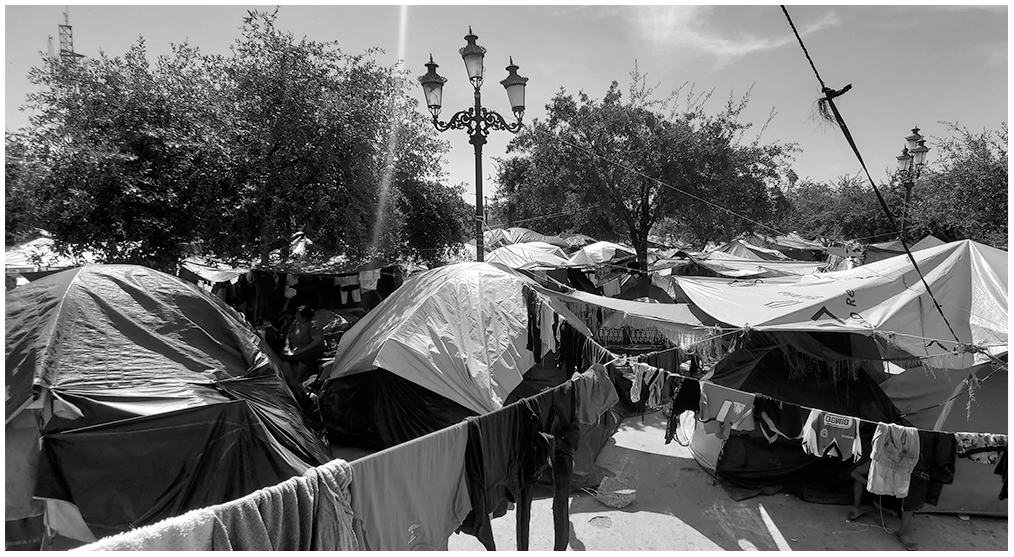
Initially, one tent housed about 15 people. In just a few months, though, more than 2,000 people had been “returned.” The tents multiplied. Because the food supply was scarce, families began to build primitive clay ovens for cooking, an attempt to be less dependent on the aid of NGOs. Clay ovens proved the first step in a more complex organizational process. Groups in the camp established leaders and spokespersons who coordinated activities and communication processes to organize food and tent distribution. Later, with the support of local NGOs, these leaders helped in the creation of “free stores” where food, hygiene supplies, and water were managed and distributed equally according to the number of families in the camp at any given time.
Under MPP, the waiting time in Mexico was supposed to be limited to the duration of the asylum process. However, in 2020, COVID-19 radically changed asylum procedures. Due to the pandemic, all asylum hearings were suspended indefinitely. Worse still, migrants started being expelled under an obscure emergency declaration, named Title 42, which prevented people from applying for asylum altogether on the ground that their presence in the United States posed an imminent health risk.
The Matamoros camp in the plaza.
Author photo
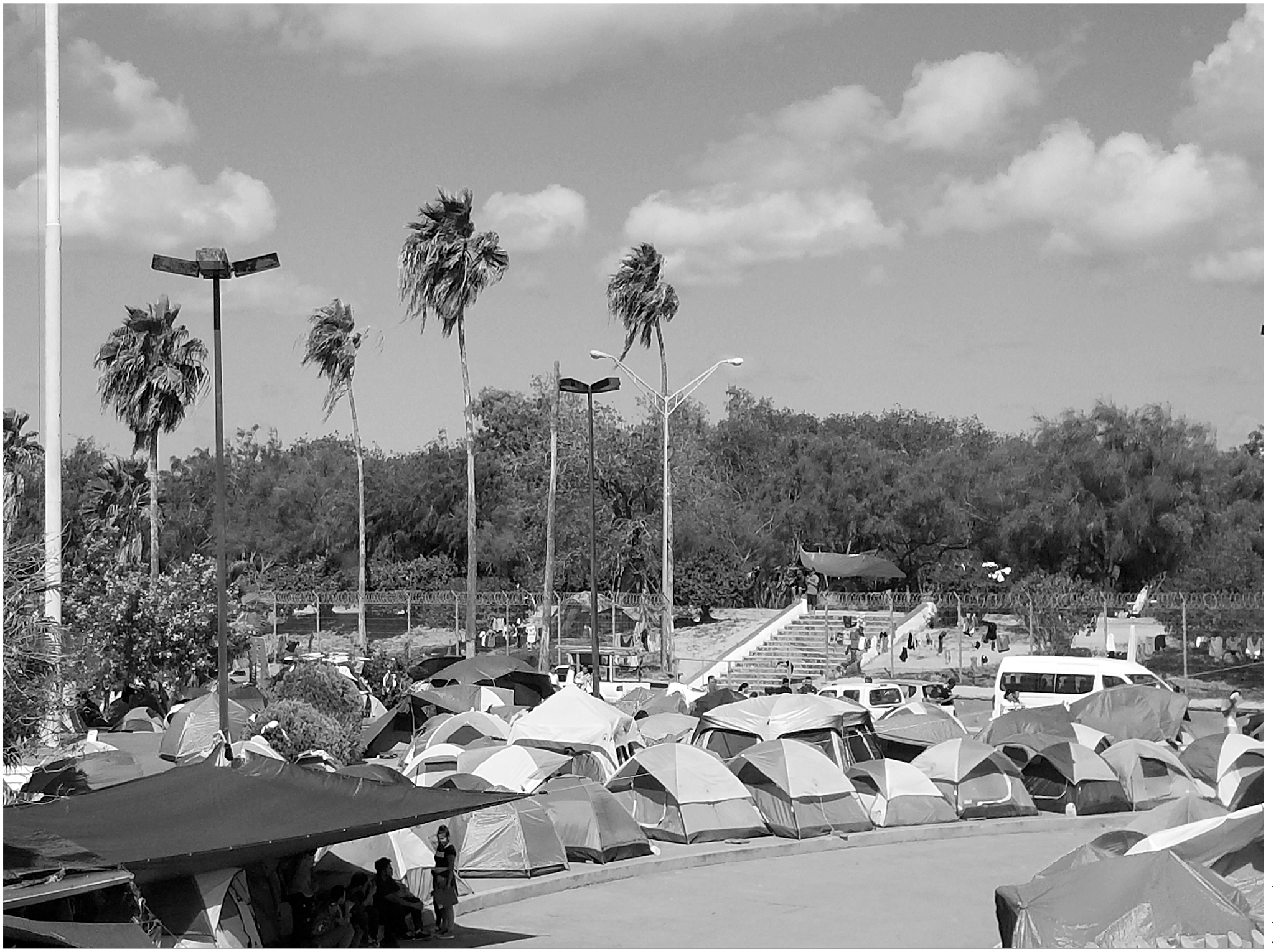
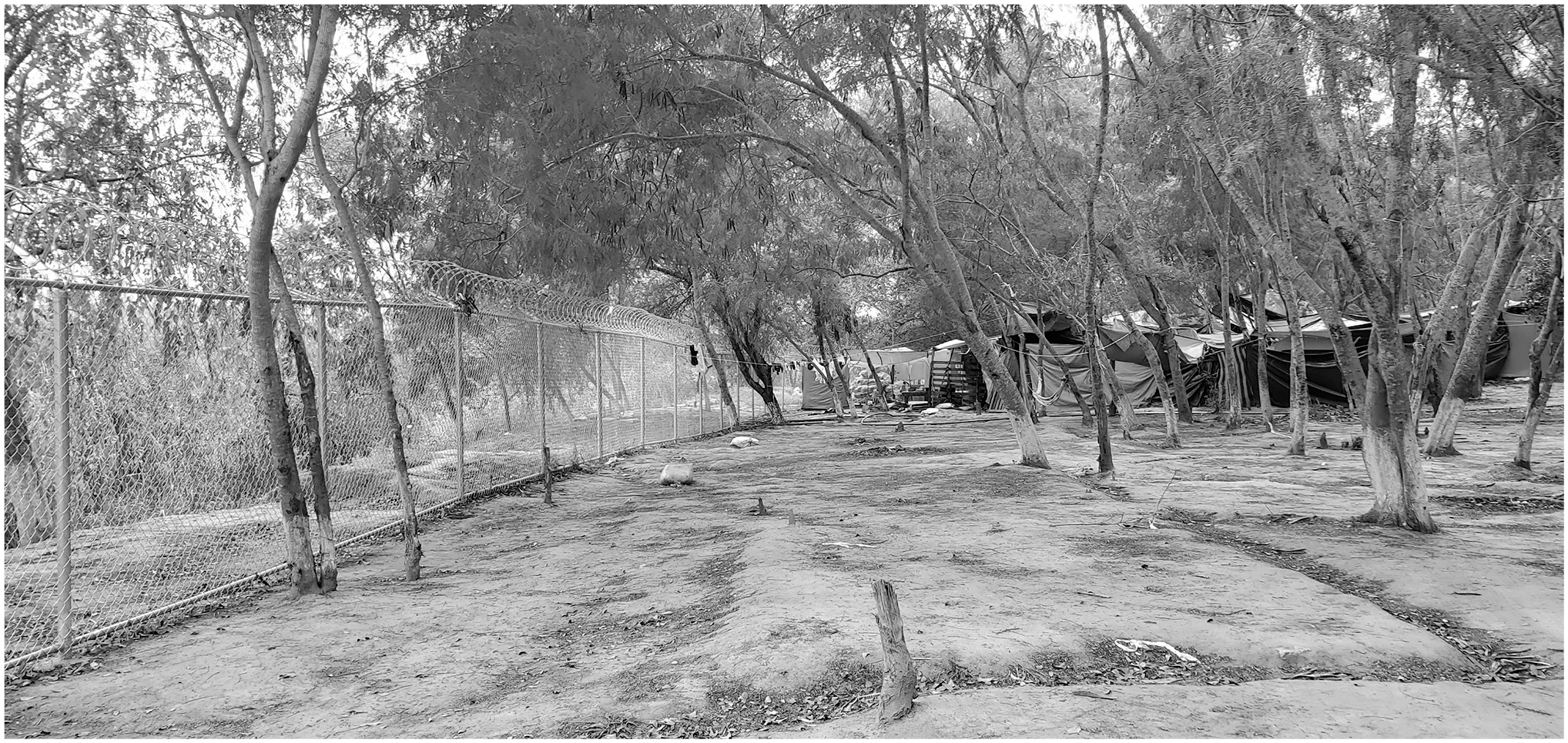
The relocated, “El Bordo” Matamoros camp site.
Author photo
According to CBP guidelines, expulsions under Title 42 were not based on immigration status—they were to be tracked separately from immigration enforcement actions. Rarely did Title 42 expulsions involve the legally required screenings for asylum seekers, meant to avoid expelling people who need protection or are at risk of severe harm.
As a humanitarian crisis grew at the U.S.-Mexico border, the Matamoros camp became ever-more crowded.
The multiple faces of violence
When the U.S. government enacted MPP and Title 42 simultaneously, things changed in La Puerta Mexico. Given the initial uncertainty around the effects and spread of COVID-19, locals’ rising discontent with the repurposing of the Plaza, and NGOs’ lack of experience with this confluence of crises, Mexican immigration officials reached a sort of breaking point. Along with some of the NGO leaders, they decided to relocate the waiting asylum seekers from the Plaza to a nearby field known locally as “El Bordo.”
El Bordo is a levee located next to the Gateway International Bridge on the banks of the Rio Grande. The site is about 7 acres, with limited access to clean water and public healthcare services. With the relocation of the camp, Mexican immigration officers completely fenced off the area, including all access to the river, and placed guard posts to control all entrances and exits. Mexican officers also established a new set of rules, which included not allowing new asylum seekers inside the camp. However, people explained to me that, turned away by Mexican immigration officials, they were able to sneak in by paying a fee to the cartels (or being secreted in by other asylum seekers).
The relocation exposed already vulnerable people to violence, infection, exploitation, legal precarity, and natural disaster. Diseases carried by the infestation of rodents, snakes, and mosquitoes ran rampant, as did severe cases of dehydration and hypothermia. Floods loomed as an ever-present threat, given El Bordo’s purpose: it was designed to flood during extreme storms, alleviating potential damage to populated areas of Matamoros.
It was a dangerous and unhealthy place, but entry into the Matamoros camp was the best bet for eventual entry into the United States.
Clearly, the relocation and fencing of the camp added an extra layer of marginalization in the form of the new smuggling system—not across the river, but into the camp. But why did asylum seekers want to be in such a dangerous and unhealthy place? Not only was it the only way to access humanitarian aid while awaiting U.S. processing, there was a rumor (eventually proved true) that, once MPP ended, everyone inside the camp would be allowed to cross. In short, entry into the Matamoros camp was the best bet for eventual entry into the United States.
Security and physical violence were the most critical issues, especially at night. The camp had no lighting, was isolated from public oversight, and was saturated by organized crime. According to social workers serving rape survivors, an average of 10 women were sexually assaulted each month the camp was active. My interviewees described the disappearances of their fellow asylum seekers, the horror of finding bodies in the river. One particularly vivid description involved the ruthless murder of one of the leaders of the Guatemalan migrants. In an act of desperation, the man and his family had tried to cross without paying the fee to the cartels. Like almost everyone, they failed and were sent back into Mexico by the U.S. CBP. A few days later, the man’s body was found, face-down in the river. It was a message to the other residents of the Matamoros camp: these were the consequences of crossing the river into the U.S without paying the fee to the cartels.
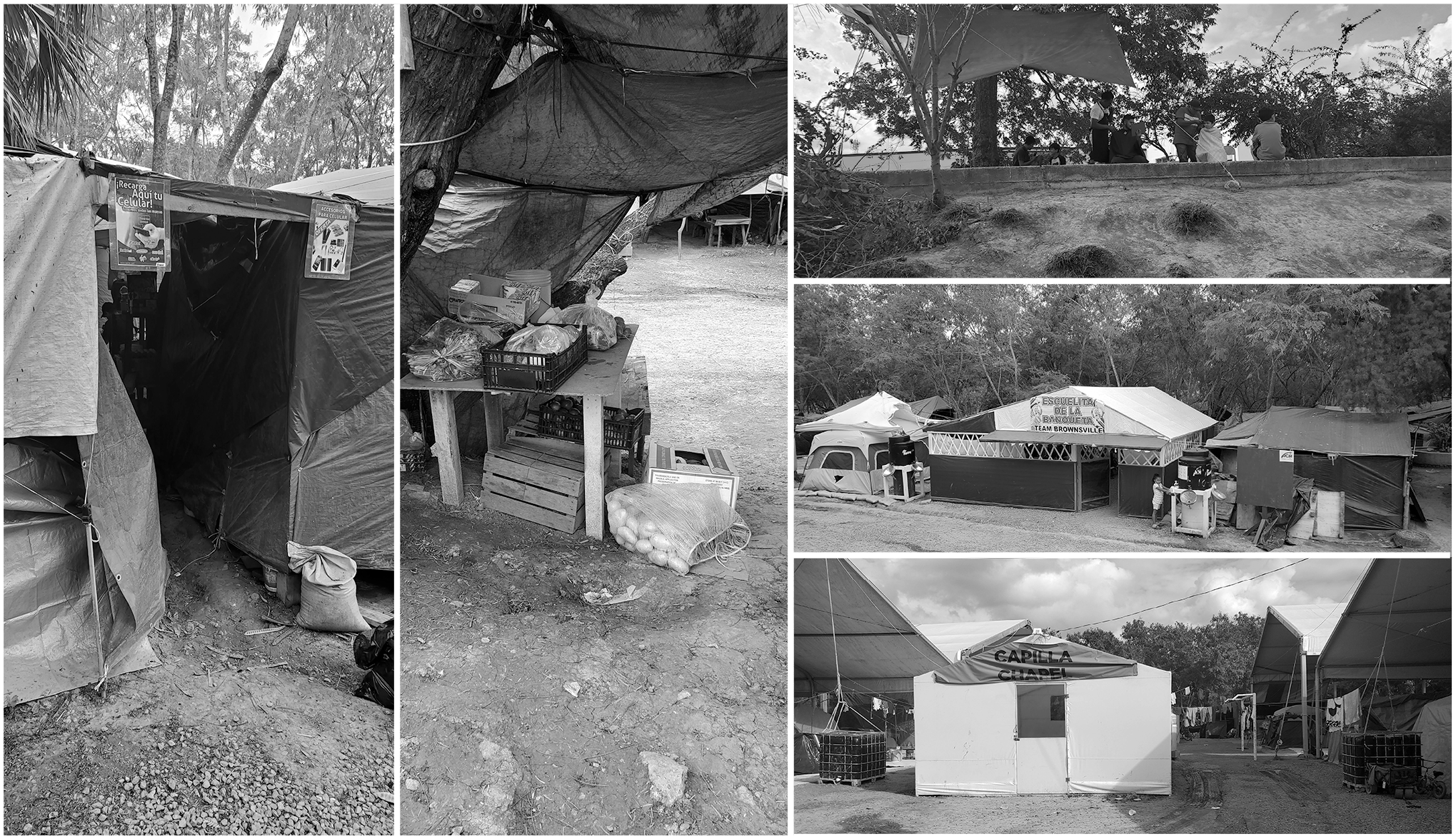
Camp residents established community spaces including a barbershop, a chapel, markets, cell phone shops, and schools.
Author photos
“At first, we put crosses to remember the dead, but we have seen so much death and suffering…. Now we prefer to think that missing people are safe, that they went back to their countries. The alternative is too painful.” Those were the words of Marina, an asylum seeker from El Salvador, as she walked me to the edge of the river. We stood at a group of crosses, each bearing the name of someone who had drowned—whether in the dangerous currents of the Rio Grande or, like the Guatemalan leader, at the hands of the cartels.
Another pressing problem arose as pregnant women, near-term, attempted to cross into the U.S. with their families. They hoped they would not be expelled with their newborns, but allowed to request asylum from U.S. soil. Instead, subject to Title 42, they were returned to Mexico by CBP officers without their U.S.-born children’s birth certificates. Valeria, an asylum seeker from Southern Mexico, told me how she was taken to a hospital, while her family, including her 3-year-old daughter, was immediately deported. There, guarded by a CBP officer and handcuffed to her hospital bed, she gave birth. Then, she and the newborn were dropped on the Mexican side of the border. Without a birth certificate, they were unable to obtain medical care in Mexico and banned from the Matamoros camp as punishment for their attempted border crossing.
Two more women would confirm similar experiences in my interviews, and at least 11 more cases were confirmed by the Fuller Project and The Guardian. Noting the lack of oversight, either from the public or lawyers, advocates suspect the actual number of such cases is higher.
We would survive
Under these inhumane conditions, in the end, surviving was all that mattered to those living in Matamoros. To stay sane and alive was a constant struggle. While doing fieldwork there, I observed the many forms and shapes of violence migrants endured. Some days, it was hunger, waking up with frozen feet, or contending with rats, snakes, and lice. Others, it came at the hands of the cartel members policing the camp. I have vivid memories of groups of men, 10 or more, walking about in black cargo pants and military boots, radios strapped to their bodies. You couldn’t miss them.
The first time I saw these enforcers, it was the day after I interviewed Mauricio. His wife had recently given birth to a little girl in the camp with no medical assistance. After the interview, Mauricio asked me to take care of Julio, his 2-year-old son, while he ran some errands. I was sitting on the ground playing with little Julio when I saw people hurridly climbing into their tents. I hid under a tarp with Julio in my shaky arms. As the men stalked through, all I could hear were the whispers of Mauricio’s neighbor. He told me, “Look at the floor, don’t look them in the eye; they do not want to be seen. I sleep with a knife in my hand; I have a lock for my tent, but it is a tent; what can a lock do to stop them?”
Despite the constant fear and reliance on humanitarian aid, people developed survival strategies that I have grouped into five categories. The first was based on moral and spiritual relief. Inside the camp, there were several weekly religious services representing a diversity of beliefs, as well as community prayer vigils and Sunday school lessons for youth. Migrants’ faith and ability to feel close to God were fundamental to keeping their strength. Relatedly, the second survival strategy focused on education and recreation. Even those with no formal education found schooling activities crucial to their mental and physical health. As part of this strategy, asylum seekers worked with a pair of NGOs to open two multilevel schools within the camp. Others established music lessons, dance clubs, and soccer tournaments.
The third survival strategy I observed within the camp was the development of informal economic activities. The camp operated as a small town, and soon it featured barbershops, diners, cleaning services, hand-wash laundry services, and shops selling vegetables, fruits, chicken, cellphones, and mobile pre-paid cards. The fourth was to provide family wellbeing. The best example is how parents sent their children away to prevent them from living in the camp. Those with the resources paid the cartels to smuggle their children across the border “alone,” understanding that unaccompanied minors were the sole exception to Title 42 expulsions from the United States.
Finally, the fifth strategy was to build and maintain webs of communication and support. A critical approach, particularly for women, this involved the creation of bonds of trust with those who could leave the camp more freely and run errands for those unable to pass back and forth through its gates. Using messaging apps, others established support and information-sharing groups that kept residents informed about threats, legal counseling, job opportunities, and other advice.
Certainly, these were not the only survival strategies employed by Matamoros’s residents across the years of the camp’s existence. The categories instead provide a sociological mapping of the ways migrants survived the many faces of violence and deprivation in this place and established forms of normalcy. Some days, singing and laughter could be heard across the fence and the tents. People living in the camp hit pinatas and made wishes before blowing out the candles on birthday cakes. There were weddings, baptisms, and holiday celebrations. But, deep down, the smiles, dancing, and laughter of the good days were poisoned by hopelessness, the terror of organized crime, fear of oblivion, and anxiety of liminality. No one knew how long they’d be in this purgatory.
Dismantling and erasure
I visited the camp the morning after Joe Biden’s inauguration. It was a rainy and cold day; everything and everyone was wet or frozen and the mud made it hard to walk. But the camp was lively. People jumped in excitement. In fact, immediately upon entering office, the Biden Administration announced the end of MPP. Asylum seekers could now cross the border, in an orderly manner, to continue their migration process. Many families began packing immediately. There was more hope than ever.
On February 26th, the first families crossed, and by March 8th, the Mexican government began the definitive dismantling of the camp. The process was not easy. It all brought further pain and dehumanization. People spent hundreds of pesos trying to access an online form to submit their cases—a system that, in the end, was never used to process the migrants of the Matamoros camp. The international organization in charge of the process did not allow anyone to leave their tents and restrained all local NGOs and donations from the camp. It effectively demolished the entire trusted support network asylum seekers had established, well before its utility was spent.
The entire trusted support network established by asylum seekers was demolished well before its utility was spent.
In one instance, a group of women was prevented from leaving, consigned to being the last set of migrants processed and allowed to leave the camp with their children. Silvia, pregnant and living alone with her 3-year-old daughter, explained that she and three other mothers were forced to remain, unbeknownst to them at the time, to protect a woman living close to them. She’d been repeatedly raped and harassed by a presumed cartel member, and those in charge of selecting the order of crossings decided they’d hold back the whole tent sector until they could find a solution for this woman. No one ever explained to Silvia or her neighbors that they would be acting as bodyguards. As people left, the sources of clean water and food were shut down. Silvia and her neighbors were forced to scavenge for food left in the recently abandoned tents of other migrants, all without understanding why their wait, made harder by the day, continued.
Wesley Shugart-Schmidt, Solidarity Engineering, used with permission
Author photo
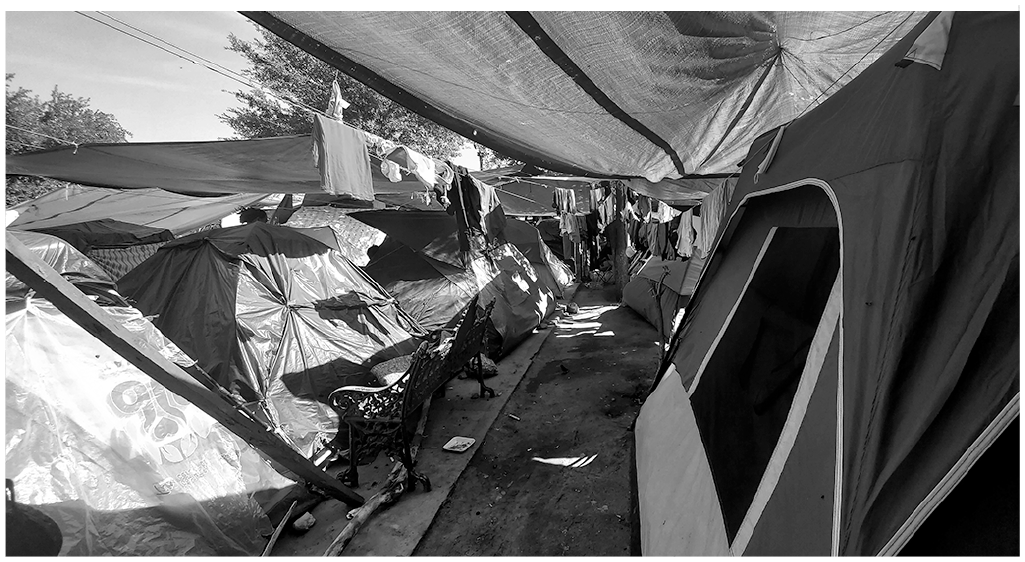
At the Reynosa camp before its demolition.
Author photo
The U.S.-Mexico border is witnessing not a migration crisis, but a humanitarian crisis.
Regrettably, these stories continued beyond March 8th. For Biden’s administration, the Matamoros camp was a physical embodiment of Donald Trump’s way of doing politics. It was practically mandated that it had to disappear.
However, the immigration policies that created the Matamoros camp were not eradicated. Families from Mexico, the Caribbean, and Central America continued to be expelled from the United States, no longer under MPP, but based on Title 42. The protections and procedures mandated by international humanitarian laws for immigrants seeking asylum continue to be suppressed under the cover of emergency health declarations. Today, more than 2.5 million people have been expelled from the United States under Title 42, including the brutal deportation of 15,000 Haitians camping under a bridge in Del Rio, Texas. The violence continues.
The rise of a new camp
When the Matamoros camp shut down, a symbol was dismantled. However, the reality of restrictive immigration policies violating migrants’ human rights remains. A new camp arose in Reynosa, Tamaulipas—only a 45-minute drive from Matamoros. There, for over a year, thousands lived in Plaza de la Republica at one edge of the Hidalgo International Bridge.
In Reynosa, as in Matamoros, people are living in the open with no place to go. They have no timeline or any legal path to the United States. In Reynosa alone, over 10,000 asylum seekers were living in public plazas, shelters, cheap motel rooms, or condemned to overcrowded apartment buildings. They, too, had limited access to clean water, were vulnerable diseases carried by animal infestations, and experienced the daily risks of kidnapping, extortion, and sexual violence.
And then, in the middle of the night, the Mexican Government shut down the Reynosa camp, too. It was only a few weeks before the next election for Tamaulipas’ Governor. Quickly, every shelter in the city hit capacity, leaving thousands of unhoused people living in spontaneous “mini camps” around the shelters. There are no services, no drinking water, and no electricity.
An NGO owned camp was opened in May 2022, but rushed by politics, it remains unfinished. It lacks a functioning sewage network, shade zones, and other basic necessities. Every time I visit Reynosa, I think back to a conversation I had with an NGO about the differences between the Reynosa and Matamoros camps. The cycle of violence was (and is) worsening, and they told me vividly, “Reynosa is Matamoros on steroids.”
It is imperative that we question how “provisional policies” of immigration control have come to this point. They have exacerbated the humanitarian crisis at the border, increased the judicial backlog of immigration cases, and effectively ended the protected status of asylum seekers in the United States. The substantial growth in border enforcement and detention has undoubtedly exacerbated migrant death, but at the same time, research shows that it has done little to deter movement. Together, they are worsening the process of what migration studies scholar Alyson Mounts has termed the “death of asylum.”
The U.S-Mexico border is witnessing not a migration crisis, but a humanitarian crisis. It is expressed in the deterrence of movement and the production of violence. The orderly and dignified processing of asylum petitions cannot be resumed fast enough. In the interim, the U.S. and Mexican governments must establish safe shelters with adequate sources of food, medical care, and education. The case of the Matamoros and Reynosa camps highlights the pressing need to challenge immigration control. It pushes us to study imposed violence in order to develop the transformative thinking and action required to improve the future of refuge and migration. And it underscores the many efforts made to convince those on both sides of the border to accept as normal and humane those policies and procedures of immigration control that should be considered exceptional and properly inhumane—or, as I believe, never considered at all.