Abstract
Nancy Rios-Contreras on Afghan and Pakistani refugees' transit experiences.
President Biden announced in April 2021 that the United States military would leave Afghanistan by the end of the year. After the withdrawal of U.S. troops, the Taliban seized power in Afghanistan and captured the capital and urban areas. Violence, economic instability, and humanitarian concerns fueled a mass migration of refugees out of Afghanistan. Afghan refugees migrated to countries like Pakistan, but Pakistan then undertook the mass deportation of Afghan refugees. Pakistani families, too, fled Pakistan’s economic crises, political instability, religious persecution, and violence. Thus the aftermath of U.S. interventions in Afghanistan has seen two countries’ civilians arrive at the United States’ own borders.
Indeed, some Afghan and Pakistani refugees migrate through Latin America to seek asylum in the United States. In 2023, the asylum process required migrant populations to use the U.S. Customs and Border Protection’s mobile app, CBP One, to request an appointment before presenting themselves at a terrestrial port of entry in Arizona, California, or Texas. The number of refugee cases processed in these locations varies per day, resulting in often long waits for migrants who end up spending weeks and months in Mexican shelters near the U.S. border. This exploratory project provides a glimpse into the transit migration of Afghan and Pakistani families and their arrival in Tijuana’s highest-capacity shelter.
I met Afghan and Pakistani families in Tijuana during the summer of 2023. We collaborated by engaging through Border PAR (participatory action research). Border PAR is a methodological framework in which border-impacted individuals do research pursuing social change for migrant communities. Participants are active research collaborators and Colegas (colleagues). In this study, Colegas completed individual, semi-structured interviews in English and were invited to participate in an optional Foto y Voz (photovoice) project using disposable cameras to capture their experiences. All Colegas received monetary compensation and selected their own pseudonyms.
Ahmad, a 28-year-old from Kabul, Afghanistan, arrived in Tijuana with his wife and 11-month-old daughter, who has epilepsy. The family had moved to the U.S. in 2004 and returned to Afghanistan in 2014. But conditions there were deteriorating. Since Ahmad’s father was a partner in U.S. road construction, his family was at risk of persecution and danger. Ahmad was also concerned with the Taliban’s gendered education ban, and so he and his family migrated to Pakistan. After receiving humanitarian visas, they then headed to Brazil. Ahmad recalled that it was difficult crossing the Darién Gap and the mountainous terrain stretching across the border of Panama and Columbia. Once the family got to Mexico, they traveled in overcrowded and stifling minivans, unable to drink water. And upon arrival in Tijuana, Ahmad said, they faced the omnipresent danger of being robbed—as migrants, they are perceived as having no rights. Ahmad told me of his hopes to reunite with family members and receive medical care for his daughter once they are safely within the United States.
HB, a 35-year-old from Kabul, Afghanistan, arrived in Tijuana with his wife, four children, and extended family. HB was clear that he loved Afghanistan. He decided to flee because, as an English-language educator, he received death threats, and because he wanted an education for his three daughters. Jobs, income, and the economy also figured into the family’s reasons for migration. HB received Brazilian humanitarian visas for this family and fled. Their journey was tough. Crossing the Darién Gap in the rain while carrying one child and luggage was dangerous, he remembered. The available transportation was overcrowded, and the language barrier was challenging. In Tapachula, Mexico, the family was robbed of their phones at gunpoint. Finally in Tijuana, he explained that now they had shelter but no monetary resources. HB saw the United States as a country with a higher standard of living, one in which he might open a school. But concerning his family’s path to get there, he warned, “it’s much more dangerous than living inside Afghanistan.”
HB [Left] and Ali [Right] look through the viewfinders of disposable cameras.
All photos © Nancy Rios-Contreras.
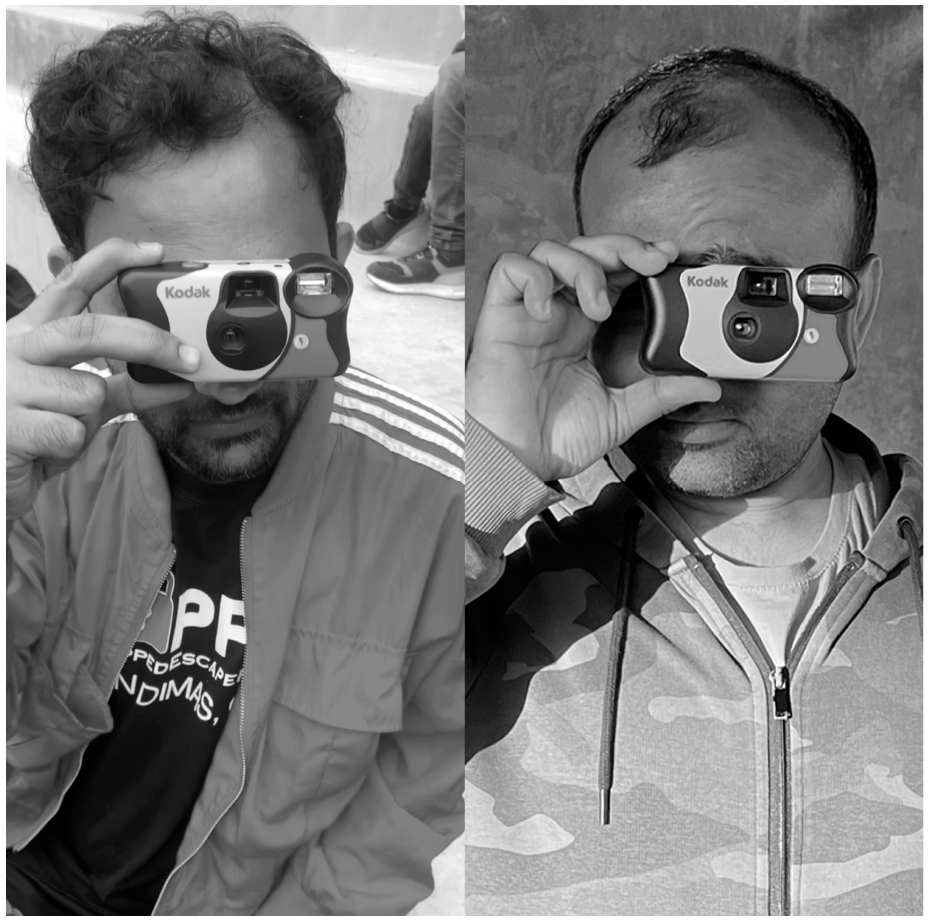
Ahmad holds a disposable camera while other men learn about the study.
Ali, a 36-year-old from Karachi, Pakistan, arrived in Tijuana with his wife and three children. He fled Pakistan 14 years earlier during a dictatorship, heading to Dubai and Azerbaijan because he faced threats being a Sunni who supports the Shia sector. There, Ali lived through a failed assassination attempt that was made to look like an accident. As a businessman, Ali had prior connections in Guatemala City, and he was able to get a visa approved by the embassy for all his family members. From Guatemala, he paid $1,500 for his family’s private transportation to Tapachula, Mexico. From there to Tijuana would prove even more expensive: along the way, individuals and police officers at checkpoints extorted the family out of $7,900. Ali said his goal was to secure their safety and start a U.S. business.
Despite the ethnic and regional differences among Afghan and Pakistani communities, all three Colegas experienced discrimination, microaggressions, and/or violence during their Latin American transit. Often mistakenly referred to as Indian, Ahmad was attuned to the way being asked “Where are you from?” suggested a dislike for migrants. Ali described asking for directions but receiving no response and being overcharged for transportation. HB vividly remembered his children’s hunger, after not being informed for four days about shelter mealtimes, and a lack of language accommodations but decided to stay silent and not report what was happening in transit because of his family’s unauthorized legal status. Raising awareness of the experiences of Afghan and Pakistani migrants through their interview testimony and photography reveal the complexity of the transit experience. A collaborative research process for and with border-impacted populations can contribute to culturally sensitive responses and a safer Latin American transit for diverse migrants.
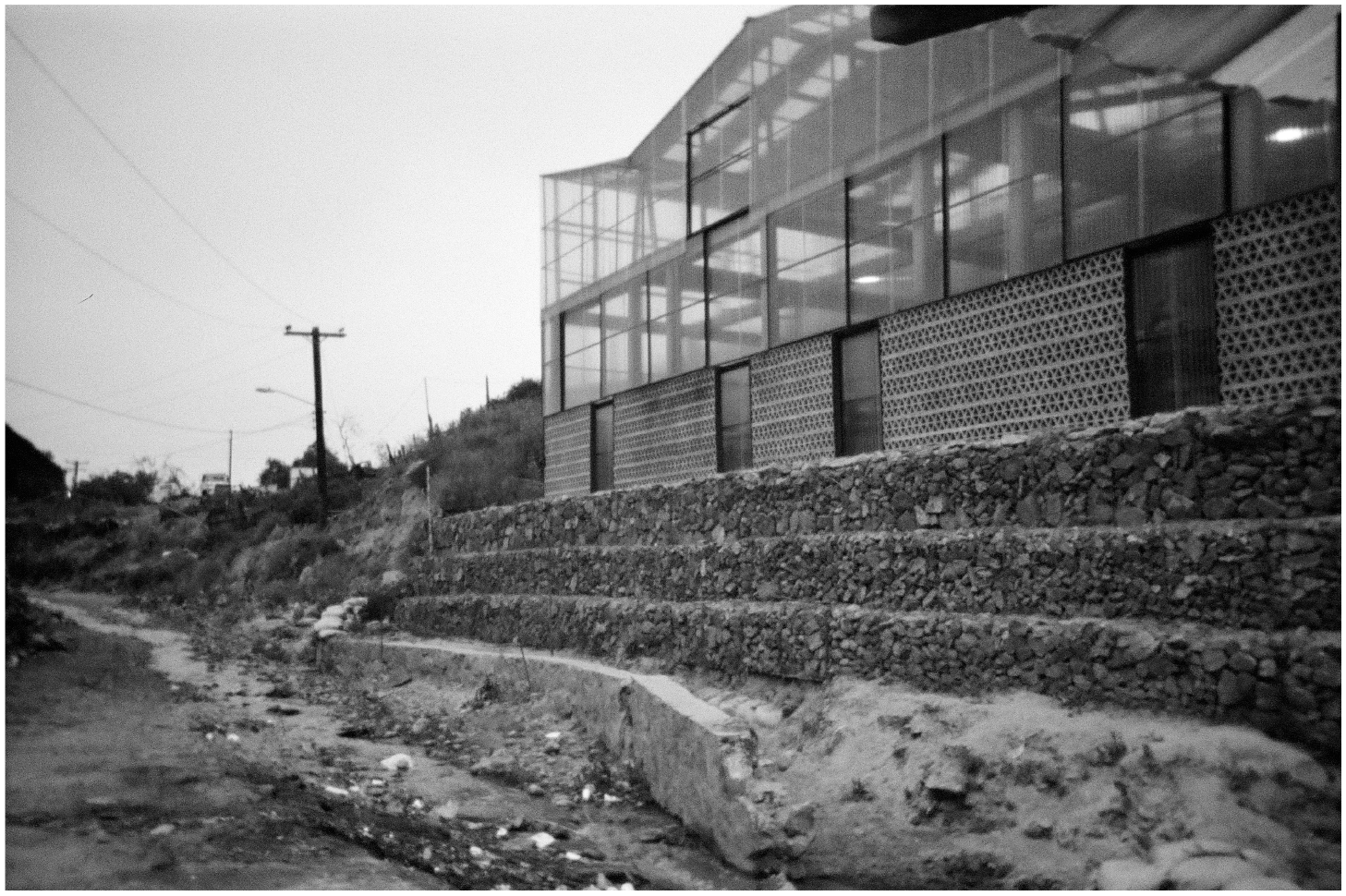
A faulty drain system in Tijuana’s canyon neighborhoods caused contaminated fecal water to run through the dirt road leading to the shelter’s entrance.
Photographer: Ahmad.
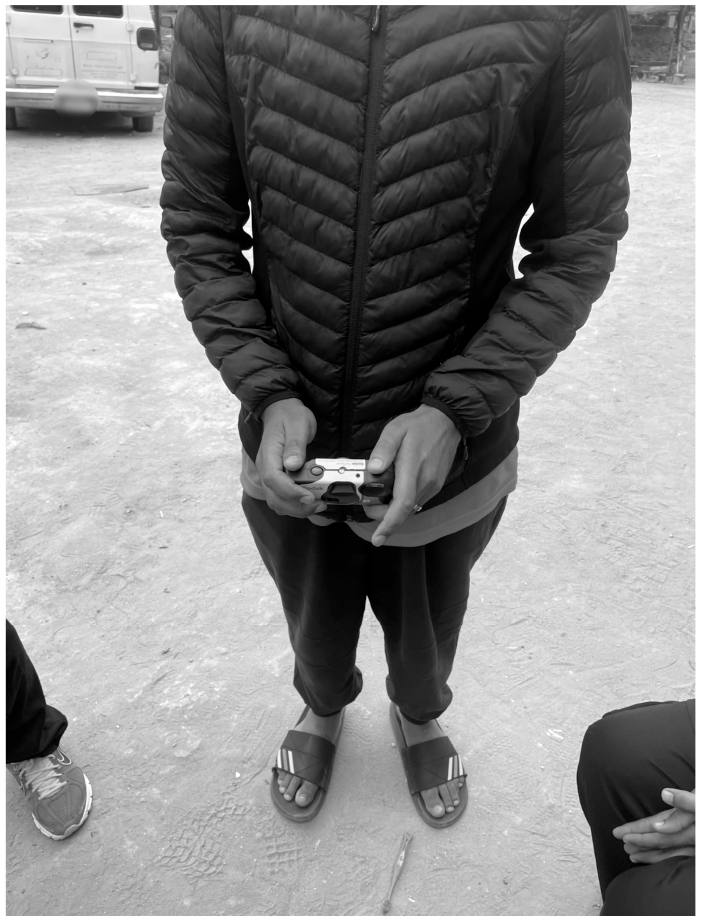
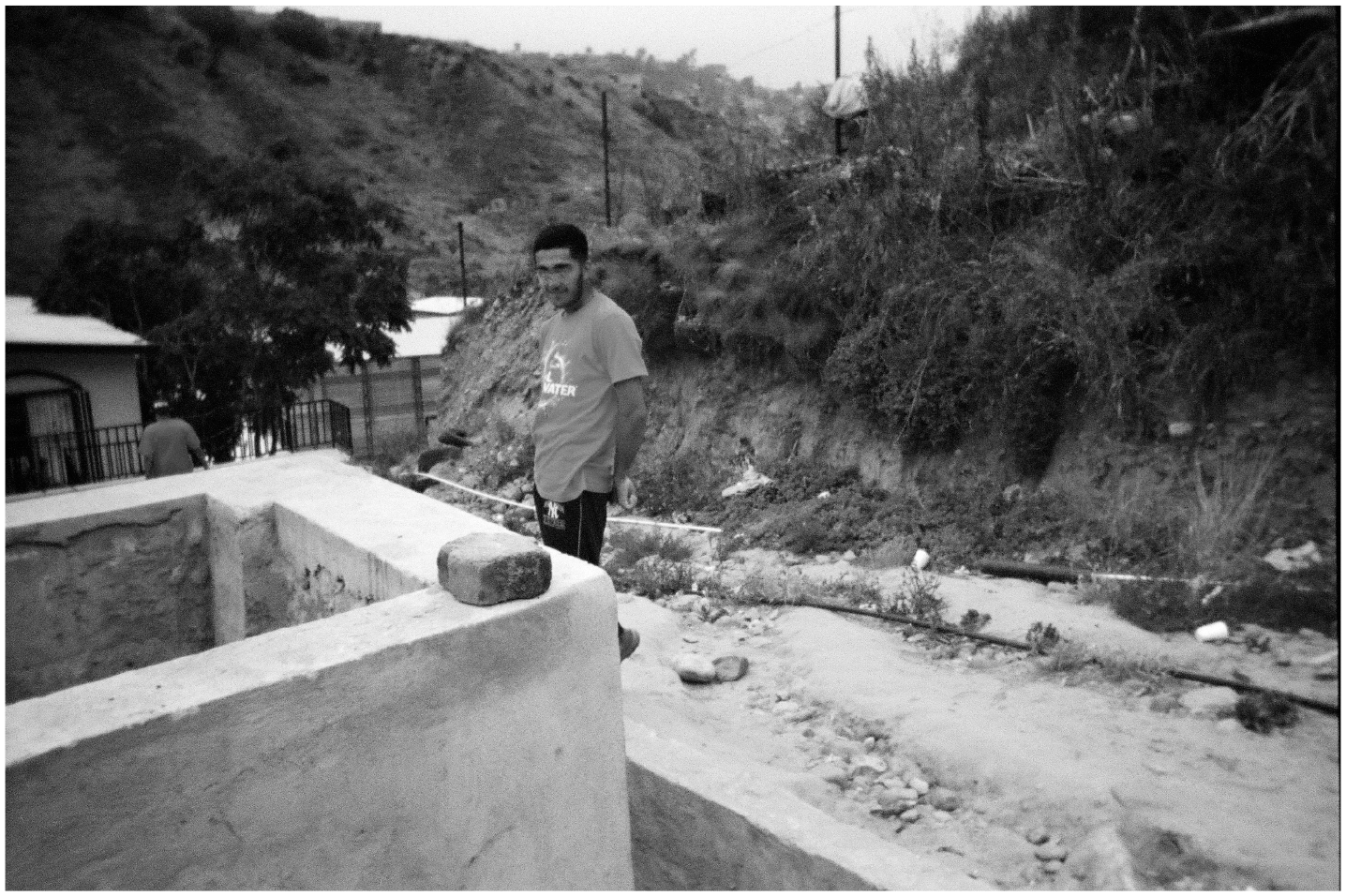
A South Asian migrant stands outside the shelter and recognizes the photographer.
Photographer: Ahmad.
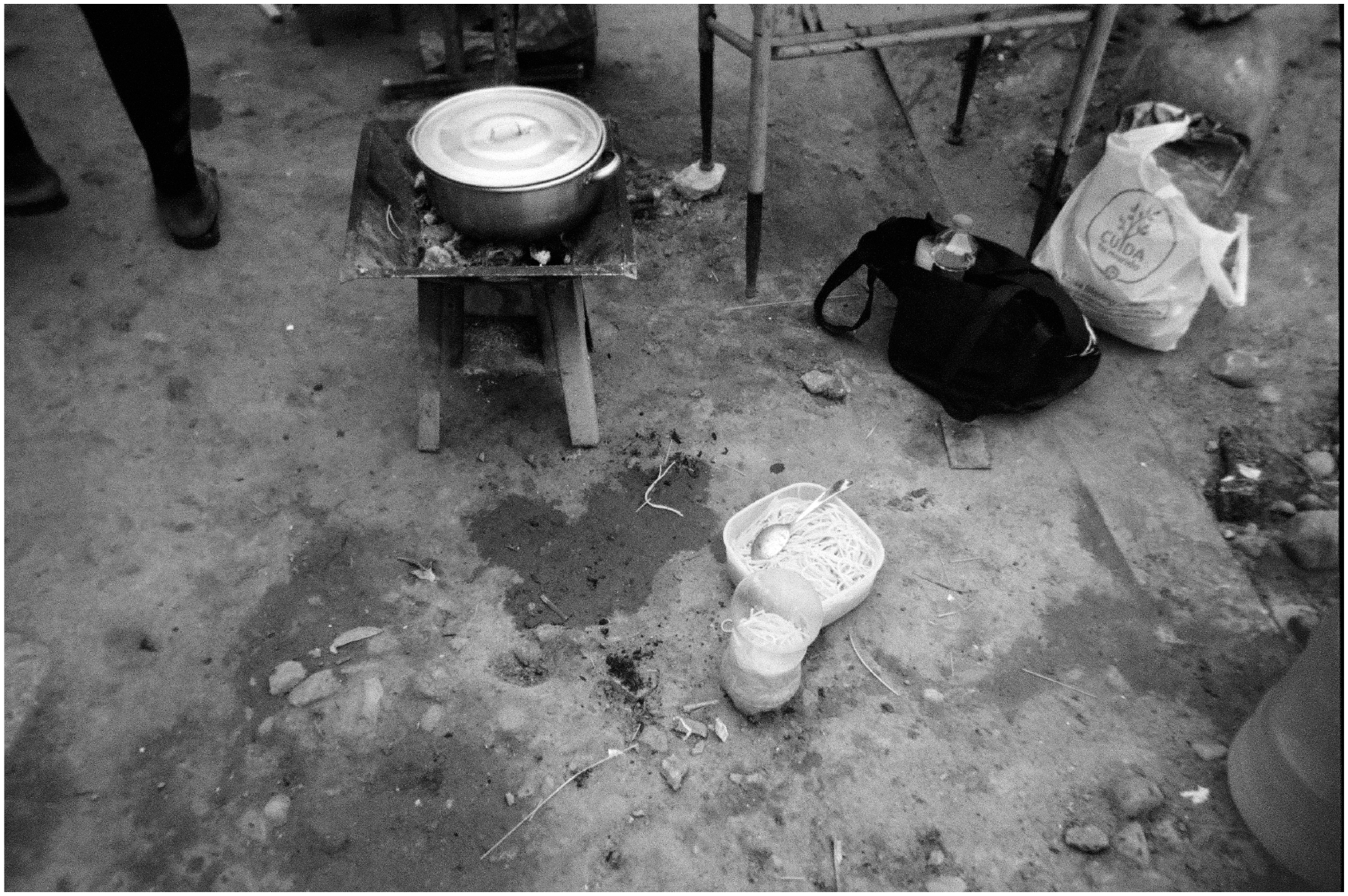
A migrant woman prepares pasta for dinner.
Photographer: Ahmad.
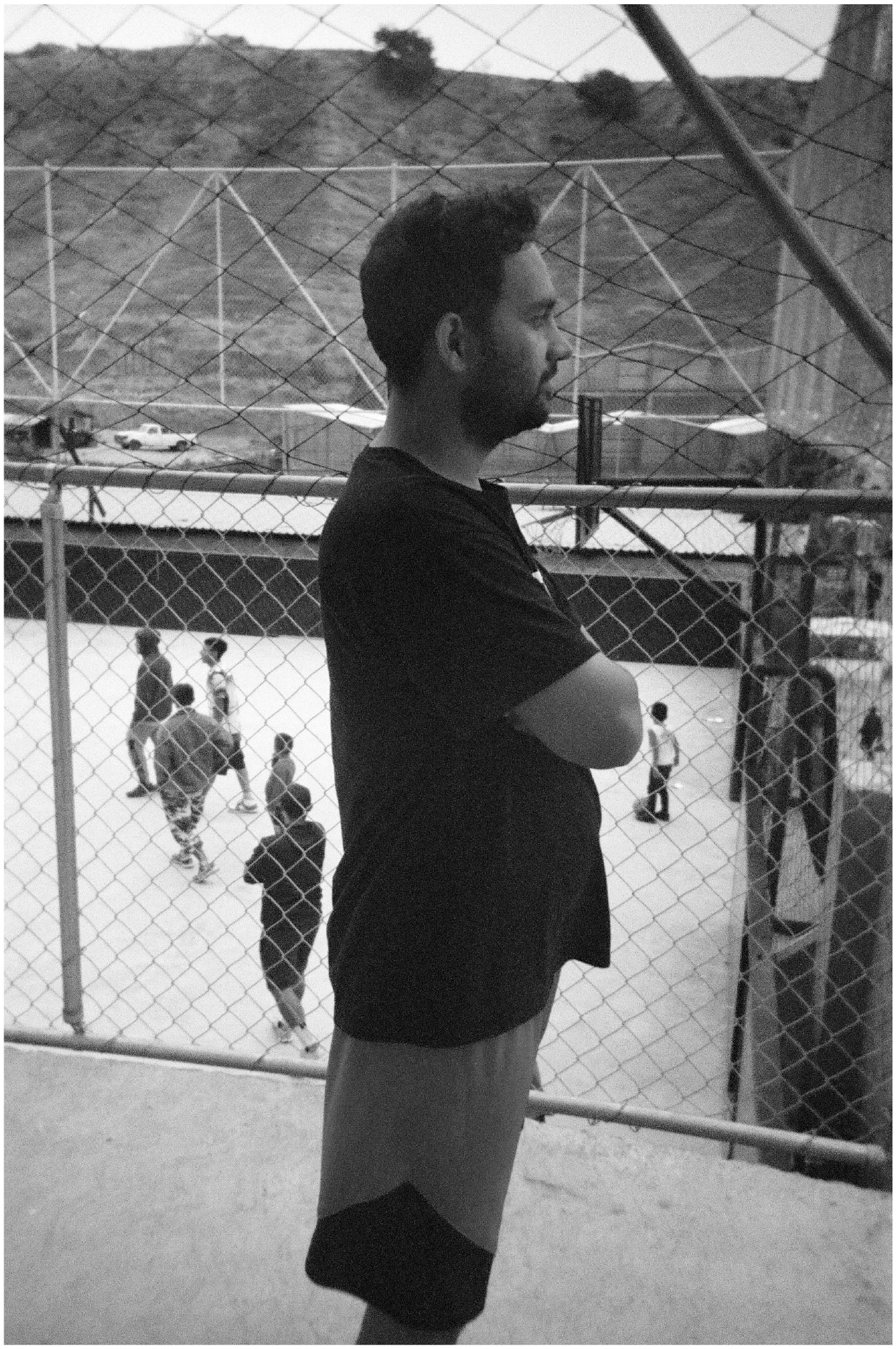
HB observes a youth soccer game and the shelter grounds.
Photographer: Ahmad.
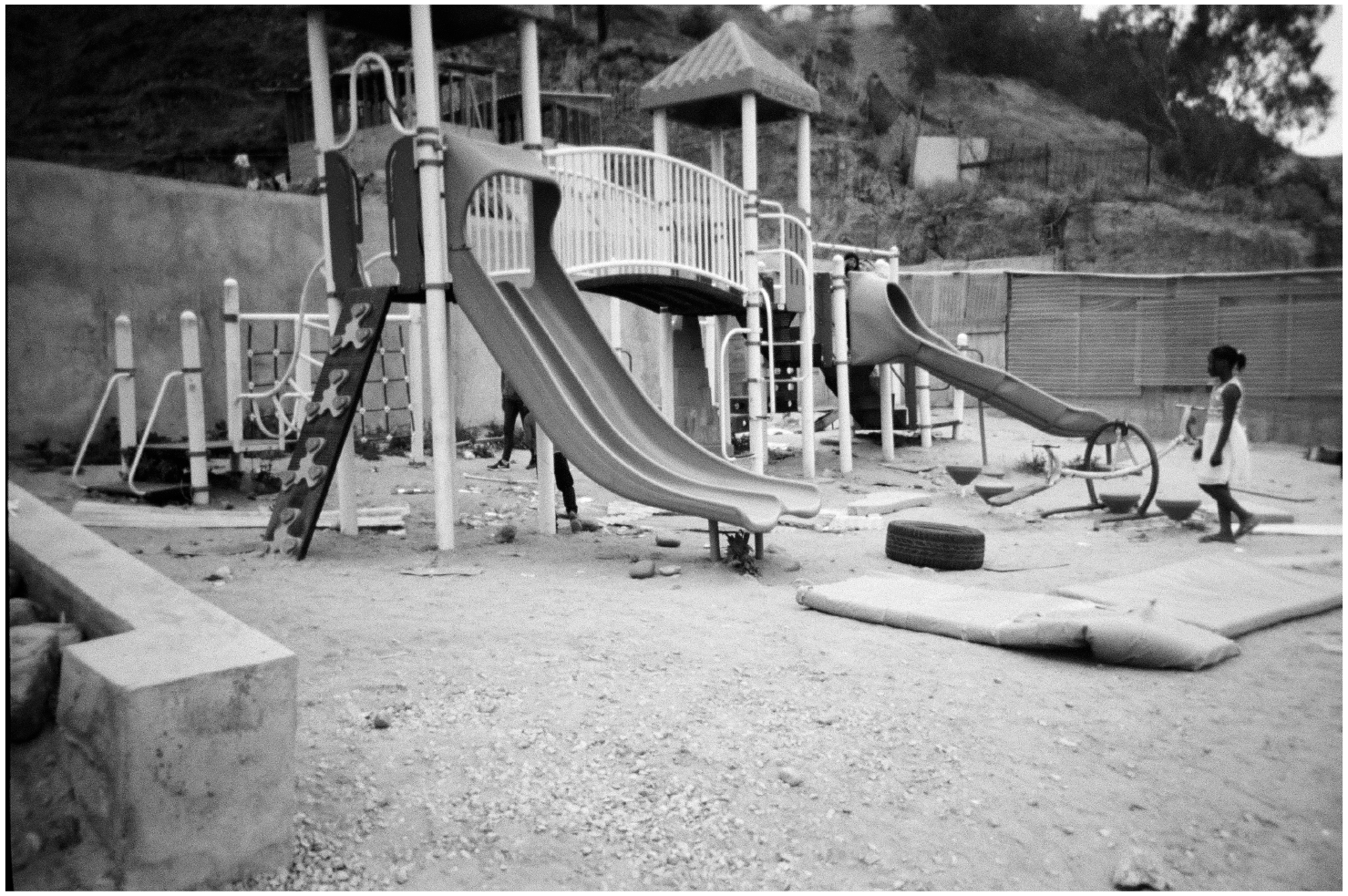
Children play on the shelter playground and make torn sleeping mats into a landing for the slide.
Photographer: HB.
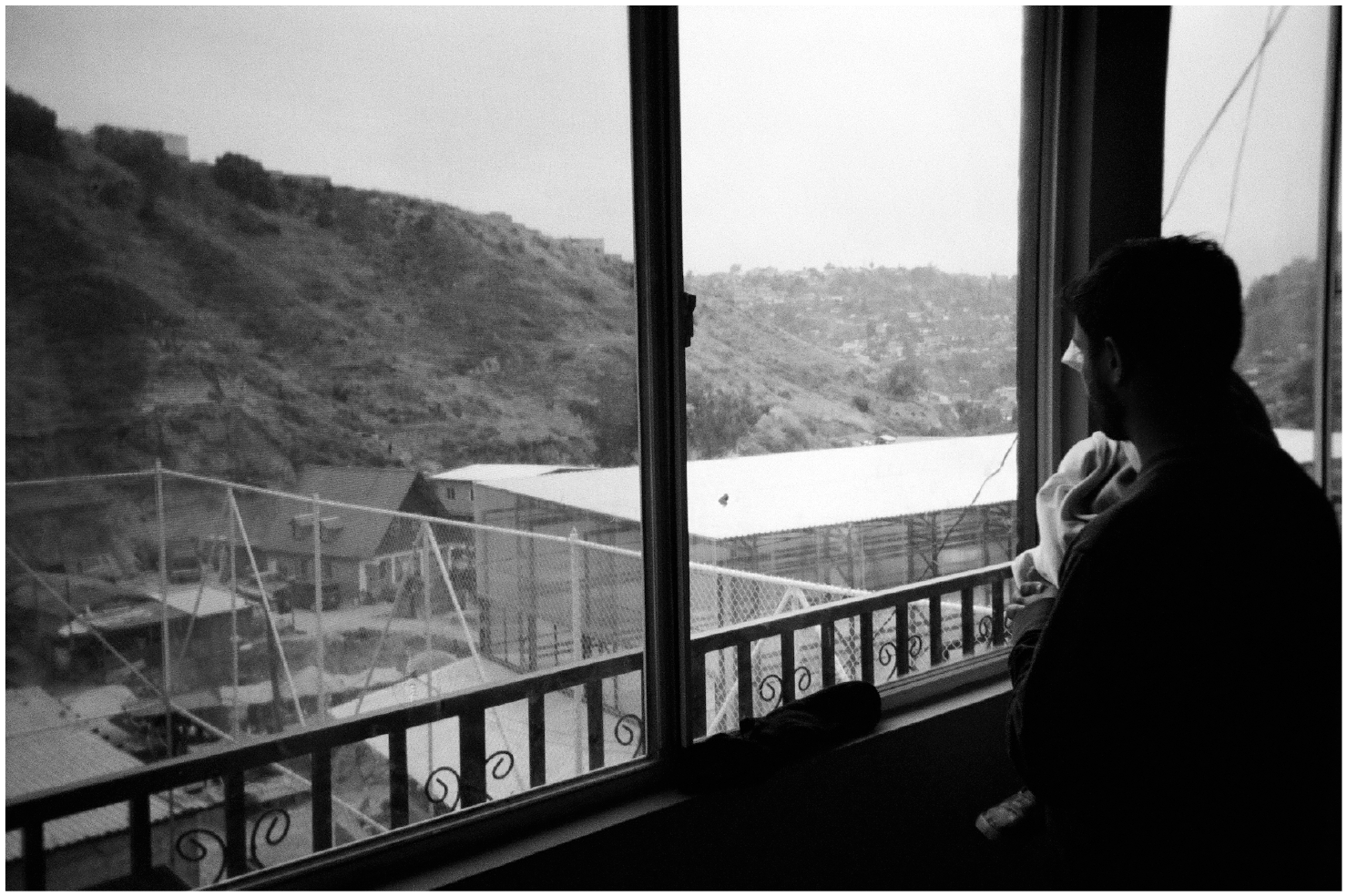
HB’s brother holds his child and looks out at the canyon from a shelter window.
Photographer: HB.
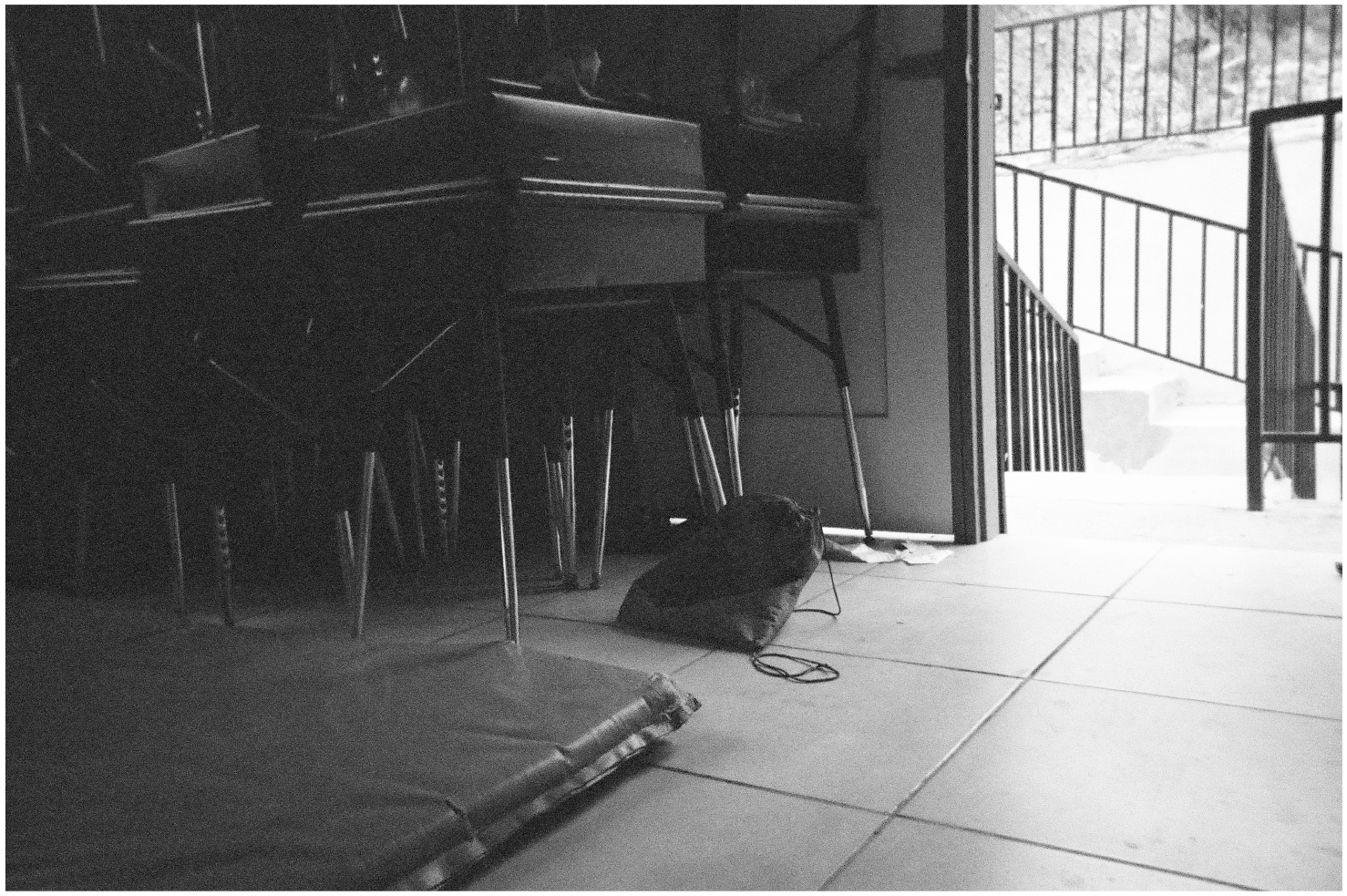
Families create space for sleeping mats by stacking student desks in a shelter classroom corner.
Photographer: HB.
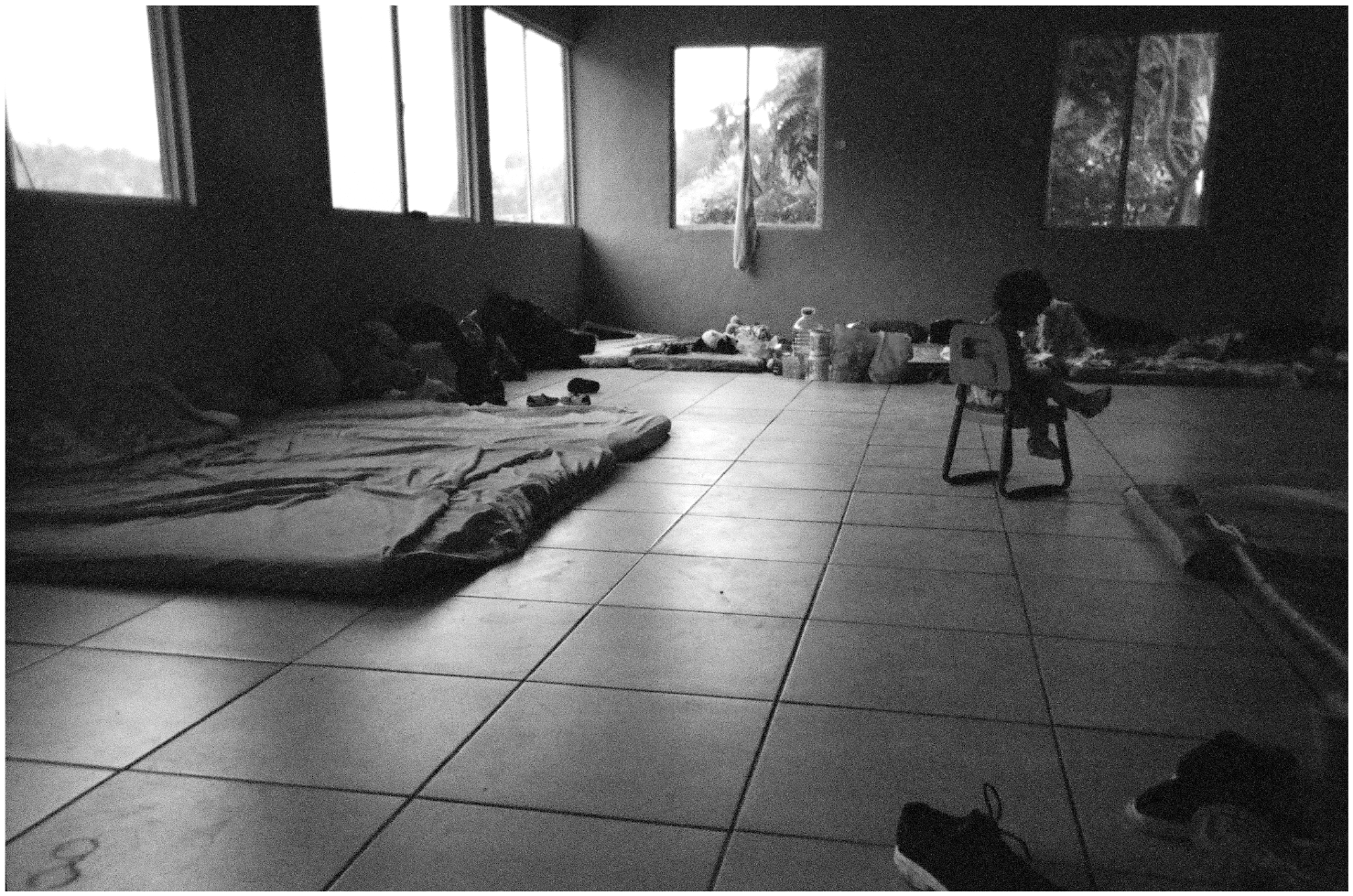
A child sits inside a classroom refashioned into assigned accommodations—however meager—for Afghan and Pakistani migrant families.
Photographer: HB.
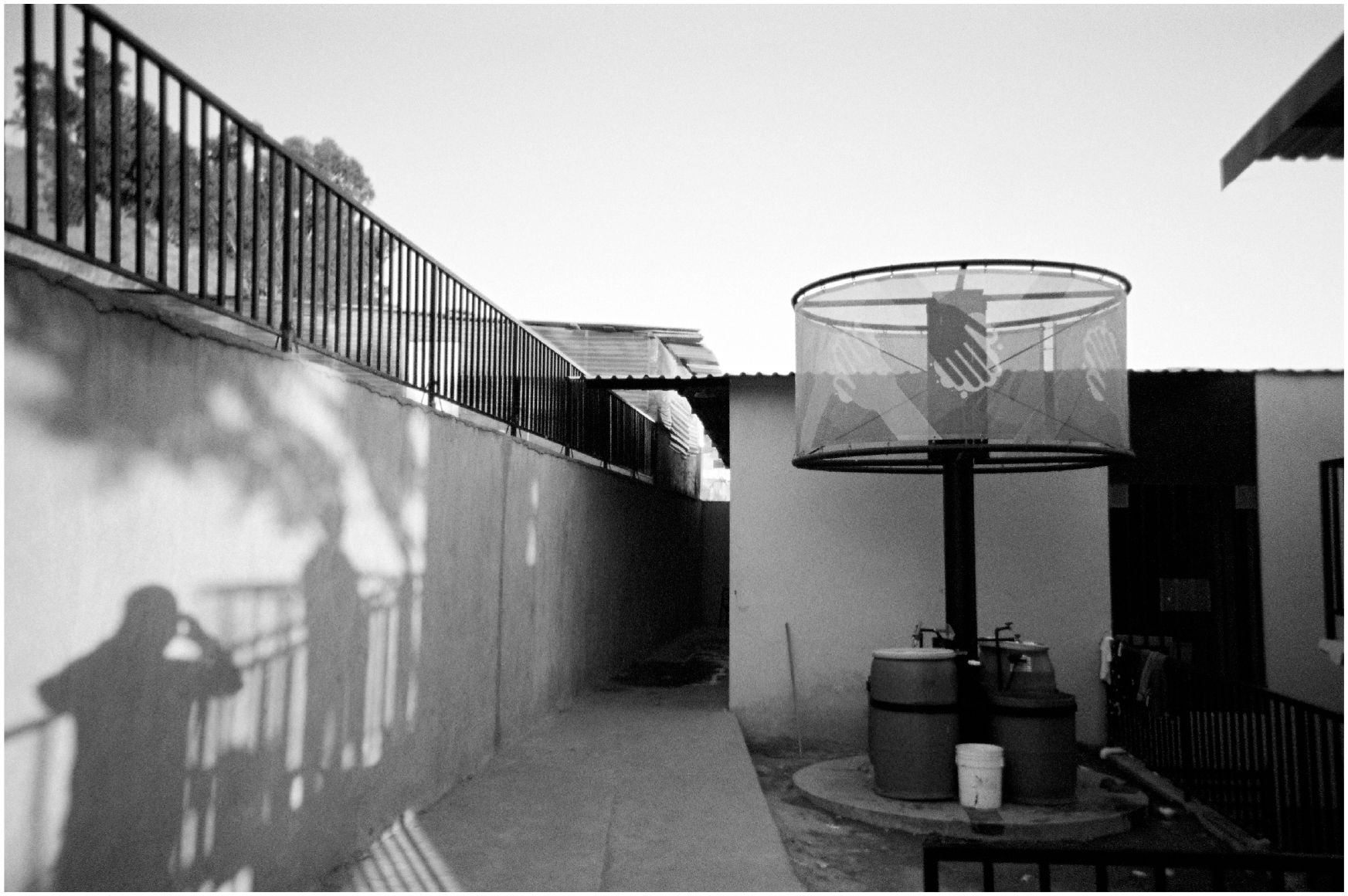
Ali is seen in the background shadow photographing a shelter water-recycling hand-washing station, a reminder of Tijuana’s clean water scarcity and drought conditions.
Photographer: Ali.
Street vendors gather near the shelter’s entrance where a sign reads, “No Pasar Propiedad Privada” (Do Not Trespass Private Property).
Photographer: Ali.
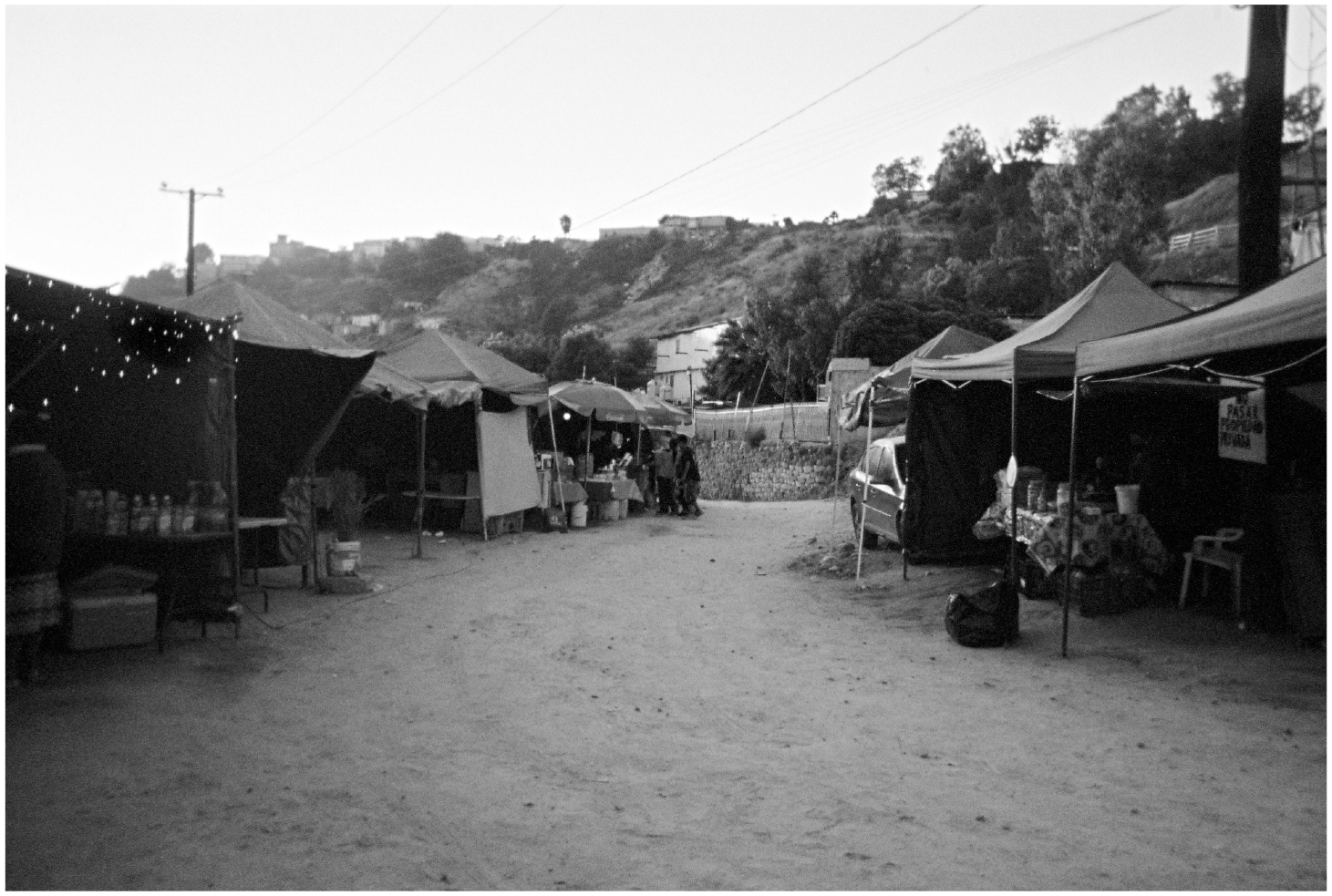
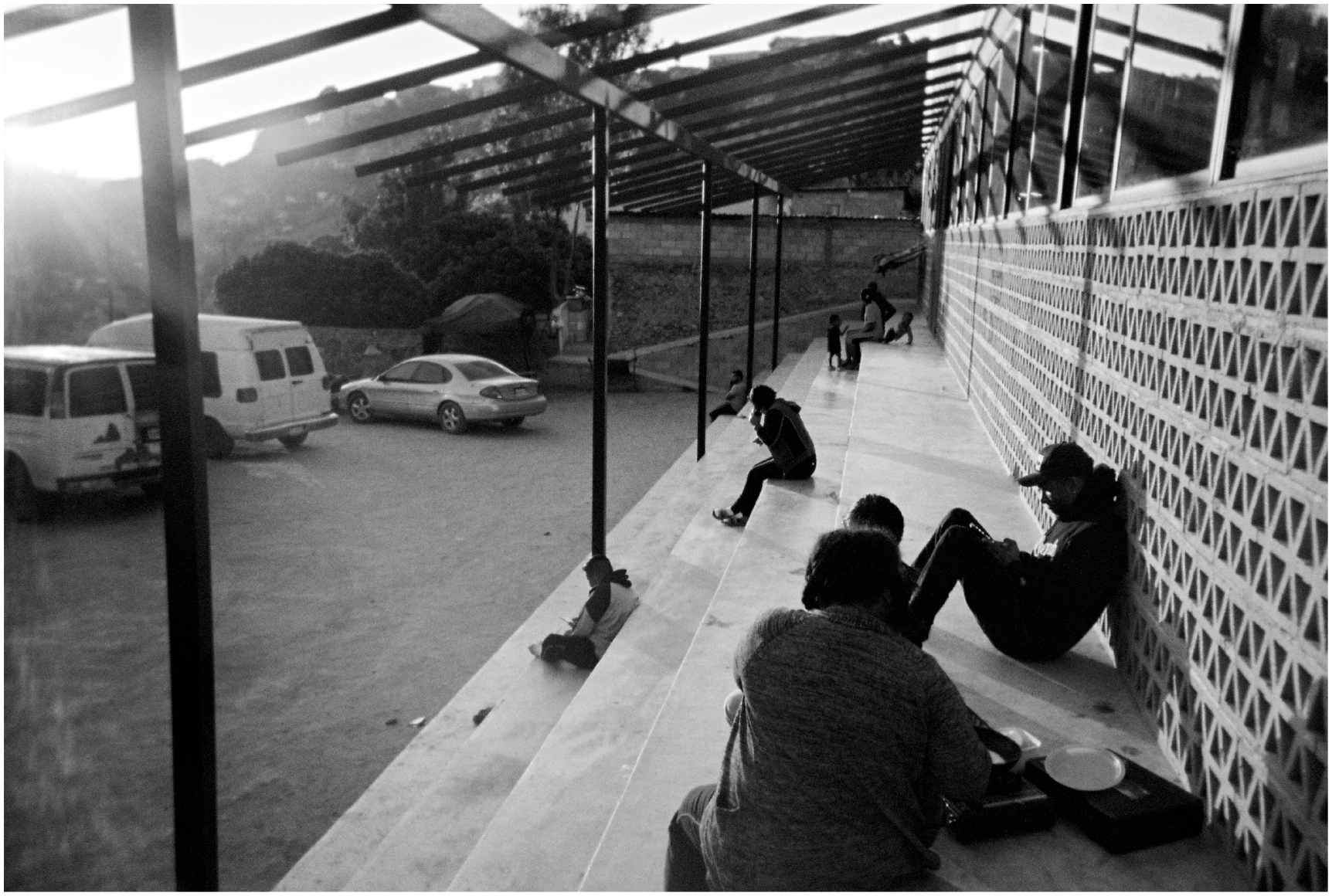
The shelter grounds are lively as the sun sets in a Tijuana canyon.
Photographer: Ali.
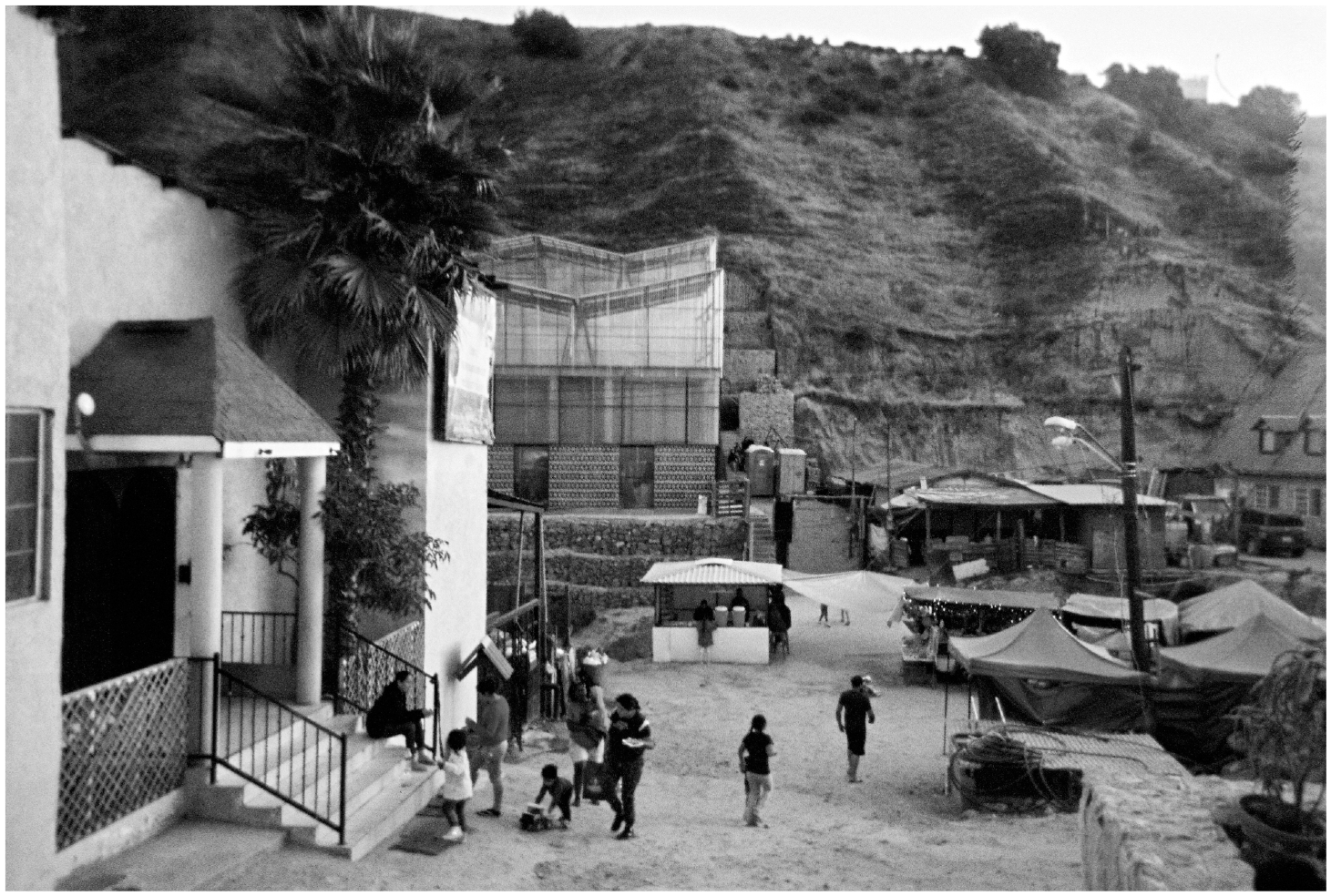
Individuals and families sit on stairs outside the shelter as the sun sets. They will wait another day for an appointment to present their asylum claims at a U.S. port of entry.
Photographer: Ali.