



Abstract
Legal violence, or the effects of an intertwining of immigration and criminal law, harms asylum seekers and immigrants, as well as the U.S. attorneys, social workers, health professionals, and advocates who help them.
Since the onset of the “humanitarian crisis” that saw a near-doubling of unaccompanied minor migrant apprehensions at the southern border of the United States between 2013 and 2014, reports have highlighted the deleterious effects of restrictive immigration policies and procedures on the health, safety, and well-being of children and their families as they move from federal custody to resettlement in communities across the country. The evidence is clear: the U.S. immigration system exacerbates trauma from asylum seekers’ prior exposure to violence, including that of unaccompanied children.
Punitive immigration policies and procedures harm the health, safety, and well-being of children and families subject to them. Sociologists Cecilia Menjívar and Leisy Abrego refer to this as “legal violence,” a term that describes the seemingly neutral and often overlooked effects of the intertwining of immigration and criminal law that can “obstruct or derail immigrants’ pathways of incorporation” through the creation of a “climate of insecurity and suffering among individual immigrants and their families.” Researchers show that legal violence extends well beyond the borderlands, into immigrant community and family life and across their social networks. Likewise, the consequences of legal violence spills over from the families and communities that are targeted by the law to those who set out to help them.
The asylum seeking, unaccompanied children who arrive in the United States encounter an array of service providers including attorneys, physical and mental health professionals, social workers, and educators, as well as advocates, such as community activists, organizers, and scholars who champion the immigrant rights cause. My ongoing research finds that these service providers and advocates are exposed to the spillover effects of legal violence and share immediate and long-lasting physical, emotional, and mental health traumas. These traumas are born out of pressures to meet the needs of vulnerable child migrants targeted by restrictive immigration policies, the shifting nature of immigration policies that make it difficult to do so, and service providers’ proximity to the immigrant experience.
The insidious nature of legal violence is evinced in that its spillover effects are not only observable among immigrant children and their families but in the lives of those aimed to help them. How governments and immigrant-serving organizations acknowledge and address harms against service providers has important implications for their well-being and, ultimately, that of asylum seeking children.
Expedited removal and fast-tracking
Service providers working with asylum seeking children, like those who work with victims of trafficking, domestic violence, and forced migration, among other vulnerable groups, demonstrate significant secondary and vicarious trauma as they fulfill work requirements, such as documenting extreme violence and advocating for victims’ rights. The long-standing U.S. aversion to Latin American migration, including that of asylum seekers and children in recent years, means working for and with asylum seeking children is especially difficult in these times. Specifically, the U.S. government’s movement toward expedited removal of undocumented immigrants and narrowing of access to asylum presents a harrowing challenge for service providers and advocates in times of humanitarian crisis.
Marlene Bastian explains the ins and outs of temporary protected status to a group of Haitian immigrants in Miami, FL. Workers like her experience the spillover effects of punitive U.S. immigration policy and practice.
Carl Juste, Iris Photocollective, Flickr CC

In 2005, for example, the Department of Justice and Department of Homeland Security developed a partnership that introduced “Operation Streamline,” an initiative to establish “zero-tolerance” immigration enforcement zones along the U.S.-Mexico border. Among its provisions, Operation Streamline charged first-time entrants with illegal entry regardless of criminal history and charged those with existing deportation records with criminal violations of federal law. Additionally, it introduced group prosecutions that denied individual rights to due process, prosecuting upwards of 80 people at once.
The insidious nature of legal violence affects not only immigrant children and their families, but also the lives of those who aim to help.
Efforts expanded under President Obama’s “Rocket Docket,” a procedure to quicken immigration hearings and therefore return a greater number of migrants to their home countries. The Rocket Docket was especially intended to minimize asylum seeking children’s time in the United States by pushing their immigration cases through court at the onset of the 2014 “humanitarian crisis.” This expedition strategy left about 70% of cases unrepresented, which all but promised deportation.
In 2018, the Trump administration introduced a new tactic—Last In, First Out—to advance the Obama-era policy of fast-tracking backlogged applications. Referred to as a “legal black hole,” this new strategy of placing the most recent arrivals at the top of the immigration courts’ priority list significantly reduced the amount of time that attorneys had to prepare cases and other service providers to meet health, education, and social service needs. In 2020, the administration invoked Title 42, citing health concerns to effectively shut the U.S.-Mexico border to asylum seekers. In total, 520,000 asylum seekers were expelled, including 13,000 children. Among those expelled were Central Americans fleeing the devastation left by Hurricanes Eta and Lota that ravaged the region in late 2020. Though promising a more humane approach to immigration policy, the Biden administration has upheld Title 42, expanded migrant detention, and reinstated expedited removal procedures (fast-tracking).
In California, U.S. Border Patrol agents oversee workers reinforcing the Border Fields State Park barrier with concertina wire.
U.S. Department of Defense
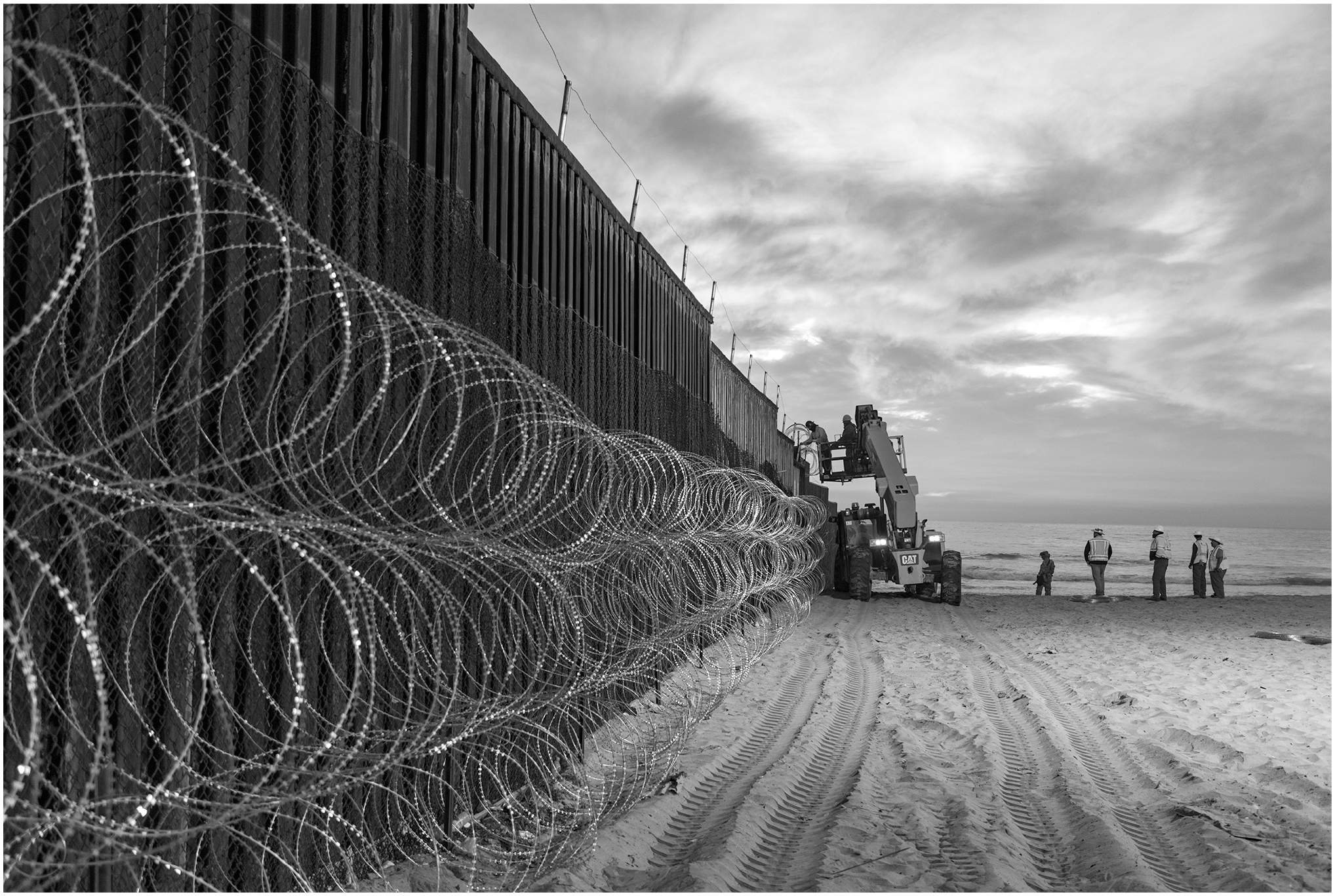
The practice of fast-tracking exemplifies the United States’ restrictionist approach to immigration. U.S. immigration controls have enduring negative consequences on the lives of immigrants and their communities. The increased raids, apprehensions, detentions, and deportations associated with recent immigration enforcement efforts inflict “legal violence” upon individuals and families. The (fear of) enforcement of punitive immigration policies exerts control over immigrants’ everyday lives and shapes their incorporation through processes of family separation, labor exploitation, exclusion from education and work opportunities, among others.
Legal violence not only affects those subjected to a particular law or in direct contact with law enforcement, but all those exposed to the risk of family dissolution through detention and deportation or disadvantage due to socioeconomic marginalization. Legal violence can cause immediate and lasting physical, mental, and emotional harms in the lives of immigrants and immigrant community helpers.
Immigrant community helpers
My study of the health effects of legal violence evolved after I recognized that my stress, anxiety, and looming burnout in 2015, just one year after the 2014 border crisis, was shared by others who volunteered to support the resettlement of unaccompanied minors in Los Angeles County. In the spring of 2015, I overheard a prominent Los Angeles-based immigration attorney share that she “can’t sleep. I have no appetite. I’m always thinking about this [asylum] case,” with a colleague as they walked down a hallway, past the room where I was waiting for my meeting to start.
I jotted this statement down on the meeting agenda in front of me, thinking, “there’s something going on here.”’ Since then, I have interviewed 64 service providers and advocates in California (46) and Texas (18), primarily in the Los Angeles and Harris County regions, respectively, to understand how service providers and advocates embody the traumatic effects of draconian immigration law and policy. A strength of this data is that it was collected between 2015 and 2022, a period that spans several crises: the 2014 humanitarian crisis, the 2016 election of Trump and turn toward family separation and anti-asylum policy, the COVID-19 pandemic, and the transition from the Trump to the Biden presidency. Service providers’ and advocates’ experiences demonstrate how even those with access to protective mechanisms such as legal status, high levels of education, English-language fluency, and other class resources can experience vicarious trauma from indirect exposure to traumatic events as well as secondary trauma if they have previously suffered a traumatic event. These harms are embodied and displayed through behaviors that impact these community helpers’ professional and personal lives.
Caught between obligations
As asylum becomes less attainable, service providers work vigorously to meet the needs of asylum seeking children and their families. One of the primary effects of fast-tracking for service providers and advocates serving unaccompanied minors is that they must also fast-track rapport building with asylum seeking children and their families. Because legal violence is inscribed into law, trauma can be especially felt by legal service providers. Along with other stakeholders involved in contributing to legal cases, such as case managers, counselors and therapists, and advocates such as expert witnesses, legal service providers encounter the human consequences of the navigating the denial of legal protection.
Asylum seeking children are asked to repeat their stories to multiple adult figures to construct narratives that might appeal to immigration court judges. A Houston-based counselor went so far as to equate this process to “a theatre for survivors [because] attorneys and judges want to see kids cry.” The director of a leading refugee rights organization in Los Angeles described the frequent result: “When you’ve heard the same version of the story hundreds of times, it’s easy to dismiss that and become numb to the reality that it’s occurring. Compassion fatigue can be a problem.”
As the coronavirus pandemic made its way across the globe in 2020 and the United States closed its borders and courts in response to the invocation of Title 42, the Trump administration unleashed what many referred to as an even more challenging “anti-asylum” policy. Speaking in July 2020, an attorney and legal clinic director explained that she “knew that working with immigrants would be emotionally and mentally taxing, but sometimes it really makes you sick. You’re always thinking about it, and sometimes I ask myself, ‘How much longer can I stay in this field?’ It’s the burnout, the compassion fatigue, the PTSD from hearing full, vivid details. All of that stays with you.” She elaborated on the nature of her work under the Trump administration, saying, “And you know, things were bad in the Obama administration, but we were optimistic. We believed that things could change for the better. Now I see there are a lot of things we took for granted. We have challenges now on a daily basis. We are on alert, paranoid, hypervigilant. You’re always worried you are one step behind the law.”
Communities weathering legal violence
Immigrant communities disproportionately bear the burden of punitive immigration laws as many service providers and advocates for asylum seekers and immigrants come from immigrant families themselves, motivated by the desire to give back to their communities. Hence, the abuses experienced by children today can be reminiscent of their personal or family migration experiences. Research consistently shows that individuals who have experienced prior trauma are at risk of experiencing secondary trauma. As service providers navigate the shifting legal terrain, they too experience the deleterious effects of legal violence.
Said one attorney, “We are on alert, paranoid, hypervigilant. You’re always worried you are one step behind the law.”
Corroborating sociological research that finds that Latinos who gain access to new resources can feel an obligation to give back to less-advantaged co-ethnics, a College Advisor for a Los Angeles Unified School District (LAUSD) high school described in her tearful interview that she takes on much more than college applications and financial aid. She assumes a counselor’s role, discussing family and friendship dynamics, access to food and clothing—and often with students who are not “college-bound,” including recently arrived unaccompanied minors. She wanted students to know that “there is someone in their corner. I got you.”
J Brew, Flickr CC
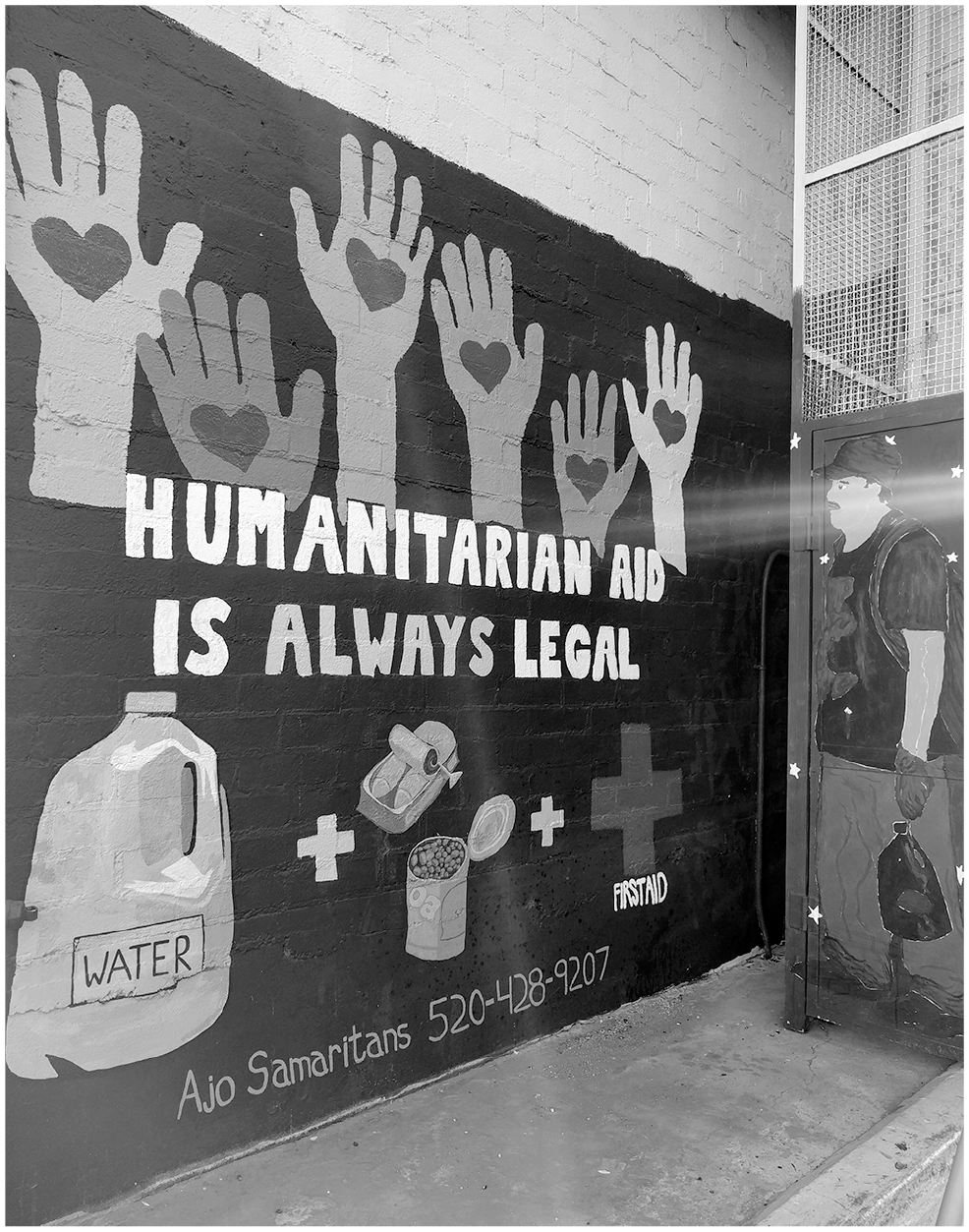
Providing services to asylum seekers and migrants under a punitive system can be costly in terms of community helpers’ personal well-being.
Simon Law, Flickr CC

The advisor also noticed that her approach differed from other instructors or counselors who limited their engagement with students to their formal job responsibilities. Along with factors like being a woman, being highly empathetic in nature, having a high case load, and professional isolation, having unresolved trauma can be a source of secondary impact. A Mexican-born paralegal in Houston explained that when service providers are immigrants themselves, “they are articulating their own childhoods through the stories of the young people they serve.”
The LAUSD College Advisor not only encountered the effects of anti-immigrant sentiments at work, but also at home. Her mixed-status family confronts the confusion, uncertainty, and hostility of the government’s rhetoric and policy changes as they work to regularize her parents’ legal status. These constant encounters with legal violence, she told me, affected her health: “My physical health, my mental health, my anxiety… I am always thinking about the ‘what ifs,’” she said. “I don’t want to get to burnout. I have had a burnout to the point of being sick, but what good does that do anybody?”
“I don’t want to get to burnout. I have had burnout to the point of being sick, but what good does that do anybody?”
Shared experiences of fear and insecurity under changing U.S. immigration policies can motivate much of the work that service providers do; yet staying motivated can be difficult when proposed and enacted policy changes put more lives at risk of family separation or removal to political and economically unstable home countries. People who were once personally motivated to help immigrant communities can defect from their occupations. A second-generation Mexican attorney in Los Angeles began practicing entertainment law after two years of civil rights and immigration law work. He said that he “left because it’s too much. It’s too hard. You take that shit home and, you know, it’s you, it’s your family. It’s too much.”
In some cases, trauma produces service providers’ desensitization as they draw out harrowing experiences from their clients to approach their cases strategically. In other cases, outcomes are much more damaging and can lead formerly dedicated service providers to leave their profession. For example, service providers reported experiencing or observing others endure sleeplessness, loss of appetite, alcoholism, fatigue, and anxiety induced by secondary stress. Among the most severe cases I observed was a second-generation Mexican man in his late-20s who, when initially hired as a case manager at a legal service center in Los Angeles in 2015, was told he would be responsible for 30-40 cases but reached nearly 100 cases in less than a year. He recalled how his weekly co-worker happy hour outing turned into a daily drinking habit—often in isolation. In the summer of 2016, he was charged with driving under the influence after work. He no longer works with unaccompanied minor asylum seekers.
Perhaps evident of gendered patterns of emotional expression and the social acceptability of sharing physical, emotional, and mental health distress, women were more likely to report having eventually moved away from coping through substance (ab)use and toward coping through therapy, religious practice, or journaling and meditation. That men’s coping mechanisms might contribute to their movement out of immigrant community serving careers suggests that the burdens of legal violence might disproportionately fall on women.
Mitigating the harms caused by punitive immigration laws and policies
As the unaccompanied minor asylum seeking population grows inside and outside of federal facilities in the United States, legal violence through fast-tracking continues. Its short- and long-term effects on physical and mental health extend beyond those who are directly impacted through exposures to secondary and vicarious trauma. The work presented here contributes to the growing social science and legal studies literature on the punitive effects of detention and incarceration of immigrants by demonstrating how it spills over into the lives of those with high levels of education; social, cultural, and human capital; and access to healthcare.
It is not just immigrant children and families who are caught in the dragnet of legal violence. Service providers also experience the deleterious effects of draconian immigration law and restrictionist policies and practices. Because service providers from immigrant families are more likely to enter occupations aimed at serving immigrants, including asylum seeking children, they are also more likely to be exposed to legal violence and disproportionately bear the burden of its lasting physical, emotional, and mental health traumas. Failure to contain legal violence promises lasting health, social, economic, and political challenges across the population for generations to come.
To close, I have developed a set of recommendations for government agencies and private employers who hope to better support service providers’ and advocates’ health and well-being. Doing so is critical to meeting the long-term legal and health needs of migrant and asylum seeking children.
Legislators and government agencies at the federal and local levels should consult research documenting the impact of restrictionist asylum policies and procedures on the U.S. citizen population, such as professionals who serve targeted immigrant communities (from lawyers to health care providers, educators, and others).
Recognizing the impact of secondary trauma imposed by the law can open the door for strategies to amend and, ultimately reverse, its effects. Therefore, I recommend policy reforms including lifting expedited removal procedures, extending hearing dates, and providing federal- and state-level funding for pro-bono legal representation and community- and school-based service centers serving asylum seekers. Along with eradicating legal violence, such strategies would also moderate the burdens that currently disrupt the long-term work and well-being of service providers.
Government and private employers should adopt trauma-informed practices that center interpersonal connection and cultural awareness with clients. To this end, employers could treat trauma as an occupational hazard and incorporate trainings on the meanings, signs, and ways of mitigating trauma.
Employers should implement supportive workplace practices, such as mentorship groups within the workplace, and ensure appropriate healthcare so that their workers are able to address cases of trauma and other embodiments of legal violence. This will help cultivate secondary or vicarious resilience, or the ability to make sense and meaning of the trauma-causing experience. Where insurance cannot be decoupled from employment, employer-provided healthcare must cover mental health services.
Individuals should seek out therapeutic support, trauma education, and trainings related to secondary trauma prevention. Establishing a personal and professional life balance is critical for the self-preservation of service providers and advocates working with asylum seeking children and their families. Workplace-based support and collaborative groups might also counter feelings of isolation or loneliness within respective occupations.
Finally, researchers might turn their attention to the outworking of trauma at organizational and individual levels, and develop meaningful scholarship that motivates action, policy, and best-practice development among those meeting the high demands of asylum seekers in the United States today.