




Abstract
“Understanding the struggles of communities of color in the containment zone of New Rochelle, New York, can help us better understand the far-reaching impacts of the tangle of the pandemics of COVID-19 and state violence.”
New Rochelle was catapulted to national news when the state of New York established it as a containment zone. While the containment zone captured national attention and served as a model of how to respond to COVID, it also served to silence the concerns of communities of color within New Rochelle. Ultimately, the communities outside of the containment zone were not only the most impacted by COVID, but also, they saw their ongoing battles with education, middle-class stability, citizenship, and policing muted. Understanding their struggles to survive and be heard can help us better understand the far-reaching impacts of the tangle of the pandemics of COVID and state violence.
The Containment Zone
On Thursday, February 27, 2020, Lawrence Garbuz of New Rochelle fell ill. On March 1, he was diagnosed with COVID-19—a novel form of the coronavirus—and hospitalized. Prior to showing signs, he traveled around New Rochelle and the New York City area. On his daily commute he came in contact with people at his job in the city and members of his faith community in a neighboring suburb, but mainly he stayed on the affluent and White side of New Rochelle. Upon his diagnosis, Garbuz’s faith community was quarantined, and he was called a “super spreader.”
The choice to call the area in New Rochelle a containment zone carried weight. “Containment zone” sounds like military terminology or a response to an environmental disaster. Declarations that the National Guard was on the ground conjured images of movies about contagions and the apocalypse. What the containment zone was, in reality, was very different. When it was established, the containment zone did not mean people could not travel in or out of the zone. It simply meant the banning of large gatherings, such as religious convenings and the closing of schools, and an influx of resources like drive thru testing and contact tracing during a time when both resources were scarce. A short time later, most Americans would be introduced to similar measures, though enacted without similar geographic limits and without as replete resources. While this response was celebrated as quickly mitigating the virus, it was at best lacking, and at worst, sociologically troubling.
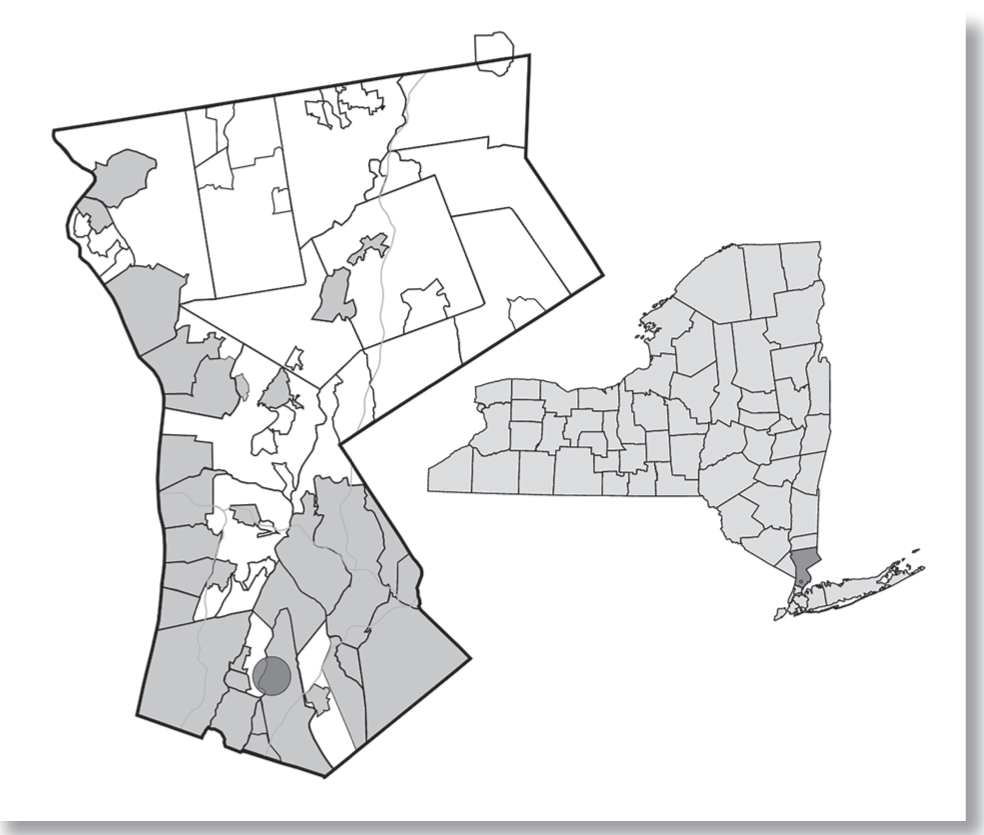
The containment zone didn’t cover all of New Rochelle, instead it covered just one mile—some of the most affluent and Whitest portions of the city. By most casual accounts, New Rochelle is integrated, but in reality, it remains segregated. Segregation in suburbs like New Rochelle cuts deep across housing, schooling, health, work, and friendships. Still, segregation is not impermeable. There are porous boundaries that mark contemporary segregation. In New Rochelle, and places like it, people in different stations in life cross paths and even for a moment cross-pollenate, but full integration remains elusive.
The containment zone intervention acknowledged spatial realities of segregation, but therein lies the danger. In drawing the boundary, it assumed who should be in, who should be out, and what was needed. It flooded one part of town with resources, while leaving out the needs voiced by other sides of town. It raises questions like, what is the line between acknowledging segregation and banking on it to contain a pandemic? Whose voices are heard when there is a crisis? What happens when multiple crises befall communities?
A Tangle of Pandemics
The arrival of the coronavirus pandemic, the establishment of the containment zone, and ongoing state violence created a perfect tangle that exposed the multiple ways the voices and needs of Black and Brown residents are muted in the midst of crisis. The night before the launch of the containment zone, there was an ICE (U.S. Immigration and Customs Enforcement) raid in New Rochelle, though it’s hard to find reports on it. Two days after activists in New Rochelle marched with thousands to end police violence, the police killed a Black man in New Rochelle, though his name never even reached regional nor national prominence. While one may assume because people in the suburbs have more resources, have less bureaucracy to navigate, and often have a core middle class of color, they would be equipped to address the issues of minoritized communities, sadly that is not the case.
For the better part of three years, Pamela and I have been immersed in New Rochelle to try to understand how different communities have their needs met in the home of the “American Dream.” A place like New Rochelle, for many outsiders, comports to a neat portrait of suburbia: tree lined, an abundance of single-family homes, well-regarded schools, wealthy and White, but the reality is that many different people live within its 13 square miles and their lives intersect often. But the needs of a few are catered to, while the voices of many are muted.
Zip Coded Inequities
New Rochelle feels small. It rarely takes more than 15 minutes to make it from one side of town to the other. However, its compactness as a place doesn’t capture the very different worlds that residents inhabit. The earliest concerns of coronavirus and its spread were concentrated in the North End, zip code 10804. A zip code where just three percent of the population lives below the poverty line. The super-spreading of COVID-19 led to fast geographically targeted interventions, but the conditions set by racism and classism would assure that the consequences of COVID would pool among the least advantaged.
Some two months after its initial arrival to New Rochelle, the city reported the highest concentration of cases were in zip codes where Black and Latinx residents were concentrated—10801 and 10805, communities where fifteen percent and nine percent respectively of the residents live below the poverty line, while the most White and affluent areas had the lowest rates. The containment zone did as intended, it pushed an array of resources into a highly affected community, one that was racially, economically, and ethnically segregated, but porous segregation meant while 10804 was cleansed, 10801 and 10805 were infected. For residents outside of the containment zone, the depths of the virus’ influence and its intersecting with ongoing battles against multiple forms of state violence persisted.
A March 12, 2020, map of the COVID-19 containment area in New Rochelle, NY.
Rcsprinter123 (user) via Wikimedia
Los Almazan
The Almazan family was living the American Dream. They have owned the Little Mexican Cafe for 30 years, it sits on Main street in 10801, just about two miles south of the containment zone. Jose Almazan, the family patriarch, kept its doors open while others had the privilege of shuttering. In March, Jose’s son, Edwin, 43, who helped run the business, fell ill with coronavirus symptoms. He tried to quarantine to protect his family but his illness progressed rapidly and he wound up in the hospital. Edwin was placed in a coma with the hopes of saving his life. Edwin would never make it out of that coma and he would not learn that he was unable to spare his father the virus as it took both of their lives in succession. Father and son gone, they left behind widow and mother Froyla and their crowning achievement, the Little Mexican Cafe.
When protections for businesses arrived with the pandemic, they protected paychecks, but not people. The family has been feeding the local community long before it was a Latinx stronghold. That same community came together and used GoFundMe to keep the business open and provide some of the costs of funeralizing the Almazan men. Their premature deaths are reminders of how class privileges hold limited protection when resources are pooled a stone throws away, yet beyond reach.
Leveled Black Education
The Lincoln corridor is also located in 10801. It is the site of the first school desegregation case waged in the north following Brown v. Board which earned it the title of “The Little Rock of the North.” Black residents wanted better education and demanded access to well-resourced schools, and instead the Board of Education leveled the only Black school in the name of integration. On February 28, we filed into a local Boys and Girls club, on the land where the Lincoln School once stood, to watch a play about the historic school desegregation case. When the play ended and the Q&A began, audience members echoed the play’s historical grievances of ignoring the Black community aligned with present-day concerns that the New Rochelle Board of Education still ignores Black and Brown needs.
For months preceding the play, Black and Brown residents protested The Board’s hiring of its latest Superintendent, Laura Feijoo, a White woman, who was suing New York City schools for “reverse discrimination.” A multiracial coalition of residents, led by Black residents, raised concern that her understanding of racial power dynamics endangered the diverse district and her offer of superintendency should be rescinded. Still, after months of organizing work, protest, and testimonies at public hearings, the Board didn’t reverse its hire. Being ignored may not seem like state violence, until you recognize that decades long silencing has been in service of claiming integration while maintaining segregated schools and lives.
Hushed Ice
The day before New Rochelle’s containment zone was created, many people were huddled at home concerned about the spread of COVID. Early in the morning, men marked with police jackets entered a residential building, traveled door to door and asked the residents, mostly Latinx, for ID as a part of an “investigation.” As they moved through the 10-unit building in 10805, they arrested one resident in front of his wife and children. They were not police, they were Immigration and Customs Enforcement, ICE.
ICE, for years, has sent chills throughout communities. New Rochelle is not a sanctuary city. The mayor says that local police will not serve as immigration enforcement, with one notable exception, they will work with federal agencies on people’s cases that have criminal records. Those kinds of exceptions matter. While it’s not known if the police collaborated with ICE, what is known is that the threat of capture and family separation became more real. The resident taken by ICE was moved across state lines, detained and disconnected from family and community who searched for him. Normally, ICE raids in New Rochelle make the news, but on the eve of the containment zone, this raid is now nearly entirely absent from the local media record. Newspapers, blogs, and politicians missed it, but its effect has been felt by the community. While one side of town prepared to be protected and receive a concentrated response to one pandemic, in other parts of town, families were separated and trust eroded silently and viciously.
Kamal Flowers
For nearly nine minutes on May 25, the world watched ex-officer Derek Chauvin extinguish the life of George Floyd, a Black man in Minneapolis. As the world watched Floyd take his last breaths and beg for his mother, resistance sparked and a national powder keg was ignited. The uprisings in Minneapolis, and around the country, quickly drew media attention that had been previously dominated by the coronavirus. On June 3, a historic crowd of thousands gathered in New Rochelle to protest police brutality and remind the world—Black Lives Matter. Still, the chants and signs of support from the cosmopolitan crowd could not stop the extrajudicial taking of Black life.
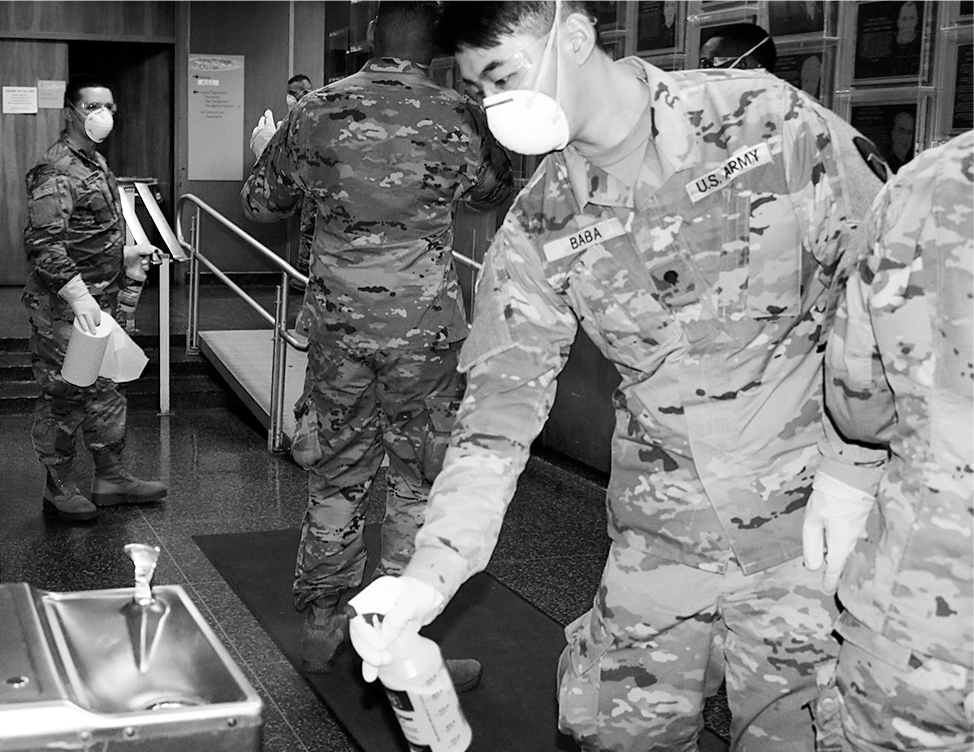
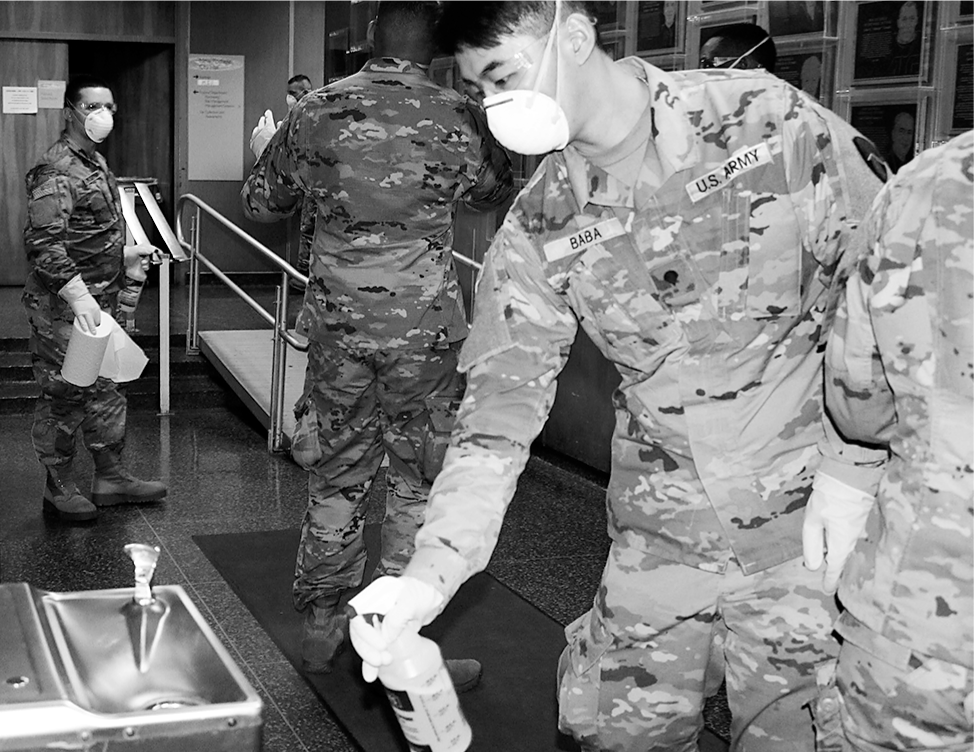
Within the city of New Rochelle, NY, members of the National Guard were deployed in order to help curtail the spread of the coronavirus pandemic. As part of their service, they were required to help clean surfaces in public buildings within the city.
Just two days later, on June 5, New Rochelle police killed Kamal Flowers, a Black man, after a traffic stop turned into a foot pursuit on Pierce Street, in the 10801 zip code. The grainy surveillance footage of the chase did not present as clear-cut of a narrative of what happened as the police department reported. From day to day and week to week, key details about the encounter changed. Sometimes Flowers was armed, other times unarmed, in some scenarios he fired a gun at officers, in other accounts he did not. As details leaked to the public it created a haze of doubt about Flowers’s innocence, while establishing the benefit of the doubt for the police department. This is a familiar script, it replays across the nation, yet still it stings deeply. Again, people took to the streets and press conferences, masks on face and in hand. Activists, clergy, the mayor and members of the city council demanded justice for Kamal Flowers by calling for an investigation by the state’s Attorney General. New York State’s Attorney General has chosen to deny the call. The police will investigate the police to see if there was any wrongdoing. The police will not release the conduct records of the officers who participated in the shooting, citing state civil rights legislation. The prospects of the officers being found guilty of any wrongdoing are slim, though the chorus of voices calling for justice is not.
Disentangling Pandemics and Listening to Communities
The twin pandemics of coronavirus and state violence reverberate through every Black and Brown community in America. However, the better resourced the community, the hope is there would be better redress. When we look at New Rochelle, we see a community that on one hand is applauded for its swift action on coronavirus and has been treated as a national model. On the other hand, we see coronavirus still ravaged Black and Brown communities within its boundaries with little mention. What would it have meant to intervene in the COVID pandemic with an eye towards providing more to those who had less in a well-to-do setting? Could they have rethought the idea of containment to account for the ways lives crisscross in diverse yet segregated suburbs? What protections could be provided for families that have more than others, but not enough to remain buffered from COVID’s reach?
The pandemic did not end the ongoing struggles that Black and Brown communities have been waging around inclusion, safety, and belonging in the suburbs. The shuttering of schools, businesses, and fear of the virus did not stop the state from continuing to ignore the calls to make ‘Black Lives Matter.’ The coronavirus pandemic laid a cover that allowed state violence to operate with little fanfare and accountability. Local media missed it, national media ignored it, yet the communities affected by these horrors continue to feel it. What if the resources that were used to mitigate harm in the North End of town, were used not on policing and enforcement on the South side of town, but on community investment? What if the voices of marginalized communities were heard and drove the change agenda, not politicians and developers?
While we know the pandemic has impacted the health of communities, its collateral and collaborative consequences on state violence will not be known for years to come. As researchers, we have an opportunity to ask different questions about the inequalities experienced in suburban life. As members of communities, we have a responsibility to listen to different voices and better understand why “the promised land” is often a site of violence. As the majority of Black, Latinx, poor people, and immigrants find themselves in the suburbs, untangling these pandemics will be critical to building better communities.