




Abstract
COVID-19 cases are unevenly distributed, disproportionately affecting persons of color. This article briefly explains what agentic values are and how they help improve people’s health outcomes in systematically oppressed groups and categories. It also focuses on how COVID-19 might be posing an additional challenge to under-served communities by depleting this important mental resource and what we can do about it.
According to Moore and colleagues, a recent CDC reports reveal that COVID-19 cases are unevenly distributed, disproportionately affecting persons of color—particularly Hispanics/Latinx, followed by Blacks/African Americans. Furthermore, Czeisler and colleagues note that these groups are also more likely to suffer from mental health problems (like anxiety, depression, or suicidal ideation) associated with the health and financial constraints caused by COVID-19 as well as an extended isolation period. While systematic data comparing the mental health effects of this health crisis across social groups is still scarce and limited, us sociologists are already familiar with the mountainous health gaps communities of color and structurally disadvantaged folk face.
Culminating from the embodied double consciousness of both being a woman of color and a neurosociologist who studies ethno-racial disparities, I hereby would like to present a key cognitive capacity that can act as a mental resource for communities of color. This cognitive capacity is the value or motivation for agency. I focus on the ‘value’ of agency rather than a predisposition or ability of agency because the concept of values provides a powerful tool to understand both individual behavior and societal factors related to agency. Below, I first briefly explain what agentic values are and how they help improve health outcomes among people in systematically oppressed groups and categories. Then, I focus on how COVID-19 might be posing an additional challenge to under-served communities by depleting this important mental resource and what we can do about it.
Agentic value orientations give people strength when they are facing detrimental life experiences, including stigma and discrimination. The valuing of agency helps people formulate creative and adaptive strategies to difficult life situations, like experiences of discrimination or stigma. This view that agency is a unique, shared capacity for coming up with new solutions at the face of problems is also grounded in some seminal psychological work like Albert Bandura’s social cognitive theory and the sociological theories of agency. See, for example, Bandura’s 2006 work, Toward a Psychology of Human Agency.
My research shows that agentic values function as a mental resource for members of disadvantaged communities. I use two well-established value dimensions from Schwartz Value Theory, to measure agentic values: openness to change (vs. conservation) and self-enhancement (vs. self-transcendence) values. While openness values tap into the creative and re-imaginative dimensions of agency, self-enhancement would correspond to a sense of control over one’s environment. In a 2017 paper, using nationally representative data from 29 countries from the European Social Survey (ESS) Round 6 (2012), I found that people who described themselves as ‘members of a group that is discriminated against in their country reported having lower well-being and health. However, these people were less negatively impacted by this stigma and caught up entirely in their well-being (happiness and life satisfaction) if they scored higher on self-enhancement.
I am currently analyzing ESS Round 7 (2014)—a data set with a special module on health and health disparities-and finding similar results. As seen in the figure above, the odds of reporting to have suffered from at least one health problem within the last twelve months (out of eleven such as diabetes, heart problems, etc.) are almost 13 to 1 for those who self-identify as belonging to a discriminated group and have the lowest levels of enhancement, compared to about 5 to 1 for those who do not. These very high odds of reporting any health problem go down from 13 to1 (an almost 93 percent chance of happening) to about 1 to 1 (even odds, 50/50 almost chance), a drastic decrease for those who reported discrimination as their level of agentic values (measured with self-enhancement) increases.
Why and how do agentic values help reduce health problems? Exploring data from a brain imaging (using a functional Magnetic Resonance Imaging, fMRI) experiment I have conducted in the last few years, I found that agentic values that might help improve health through recognizing and acting on problems. fMRI is a non-invasive brain imaging technique that uses the magnetic properties of blood to measure neural functioning. The basic assumption is that when a certain brain region is ‘active’ or being used, blood flows to that brain area and the fMRI machine (which is practically a big magnet) can measure this blood flow by taking snapshot pictures of the brain, which are later combined to create brain activity maps.
Odds of health problems with discrimination with 95% Cls
Discrimination, enhancement and odds of reporting health problems (multi-level, logistic regression with random intercepts, N = 36,549, European Social Survey Round 7, 2014)
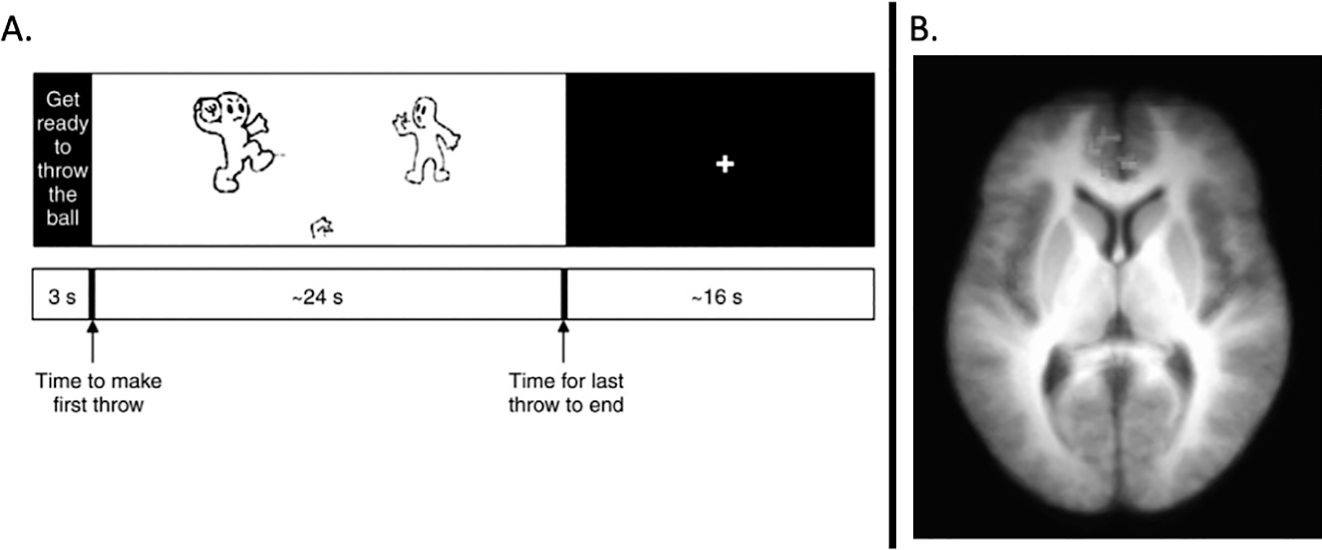
I have measured neural activity while Black and White participants were playing several rounds of a virtual ball-tossing game (Cyberball) with two other players (in fact, computer programmed responses). Throughout this game, via randomly alternating rounds, 31 participants (three participants were excluded due to technical problems during their scans) were either excluded from the game by not receiving the ball from other players for the entire round, or were included. The game was divided into three parts, where before starting the games, the participants completed a pronoun counting task. In this task, they read a short paragraph and counted the number of pronouns to elicit either agentic values (I, my, me pronouns), communal values (we, our, us) or a control/ comparison condition (they, their, theirs).
What I found, after analyzing this data at the group-level (a standard way of analyzing brain data by collapsing neural activation in response to conditions across all subjects), is that Black respondents showed greater activation in their Anterior Cingulate Cortex (ACC) than their White counterparts during the exclusion (vs. inclusion) rounds after completing the agentic value pronoun circling task (see the figure above). One common view in the neuroscience literature on the functions of the ACC is that this brain region monitors and detects existing or potential errors or conflicts, a so-called cost-benefit analysis, to guide behavior So, these results show that when agentic values were made more salient, Black participants were paying attention to being excluded from the virtual ball toss game more than White participants. In a way, they were better able to tune into the problems in their immediate environment.
The “TLDR” (too long didn’t read) summary of this article so far is that agentic values might ostensibly serve as a mental resource for members of vulnerable communities in protecting their health, helping them identify health problems and seek healthy habits and behaviors. But, so what? Does that mean that some people are born agentic and thus they will always fare better? Here is what I think sociology has even more to offer on this issue. A long-standing tradition in sociological social psychology pioneered by Melvin Kohn and Carmi Schooler and organized under the umbrella framework of “Social Structure and Personality” has eloquently demonstrated that the omnipresent concept of “social structure,” a sociological favorite key phrase, is undeniably paramount in instilling agentic values. These earlier studies have repeatedly demonstrated that occupational privileges of the middle and upper-middle class that granted higher income and social class also allowed for autonomy, flexibility, and self-direction—the value types that encompass agency. Furthermore, these values are transmitted from parents to their children, creating a vicious cycle of reproduction of agentic values among the socially privileged.
Panel A: Cyberball Game within the fMRI. Panel B: Greater activation in the Anterior Cingulate Cortex in Black vs. White respondents when primed with agentic (vs communal) pronouns during exclusion (vs inclusion) rounds (corrected alpha = 0.05, N = 28, 17 Black, 11 White participants).
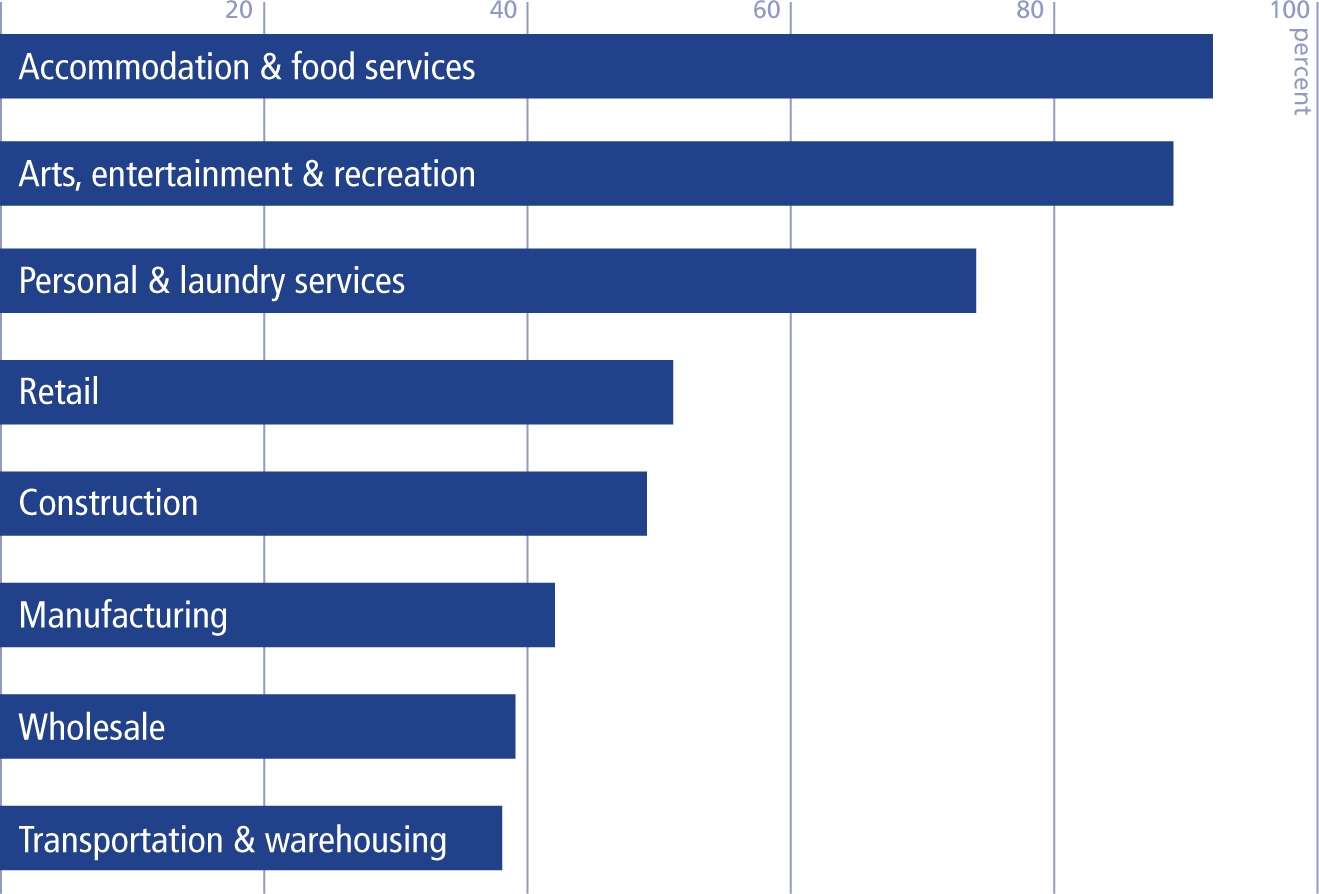
This vicious cycle will undoubtedly amplify during the current COVID-19 pandemic, with the unemployment rate going up to around 15 percent, and persons of color and those in precarious industries being the most affected. Lack of financial support and occupational means will lead to a depletion of agentic mental resources and resilience among vulnerable populations before others. The psychological effects of this crisis will be magnified among communities of color. Is it too late? Can we turn this vicious cycle into a virtuous cycle? Yes, with an agen-tic orientation from the federal government. As a neurosociologist, I do not feel qualified to comment on the details of the necessary policy changes. However, I feel confident in saying that if the U.S. government acts on restructuring the labor force and the healthcare system, targeting lower income and under-served communities, to create a safe and autonomous work and living place for all, communities can and will bounce back and will have the mental reserves to fight back COVID-19 and any other unforeseen obstacles.
Data
All the survey data discussed here are publicly available here: https://www.euro-peansocialsurvey.org/. Neurology data can be obtained by emailing the author at