



Abstract
The term “wounded warriors,” both a socially designated status and an official medical classification, creates divisions among service members.
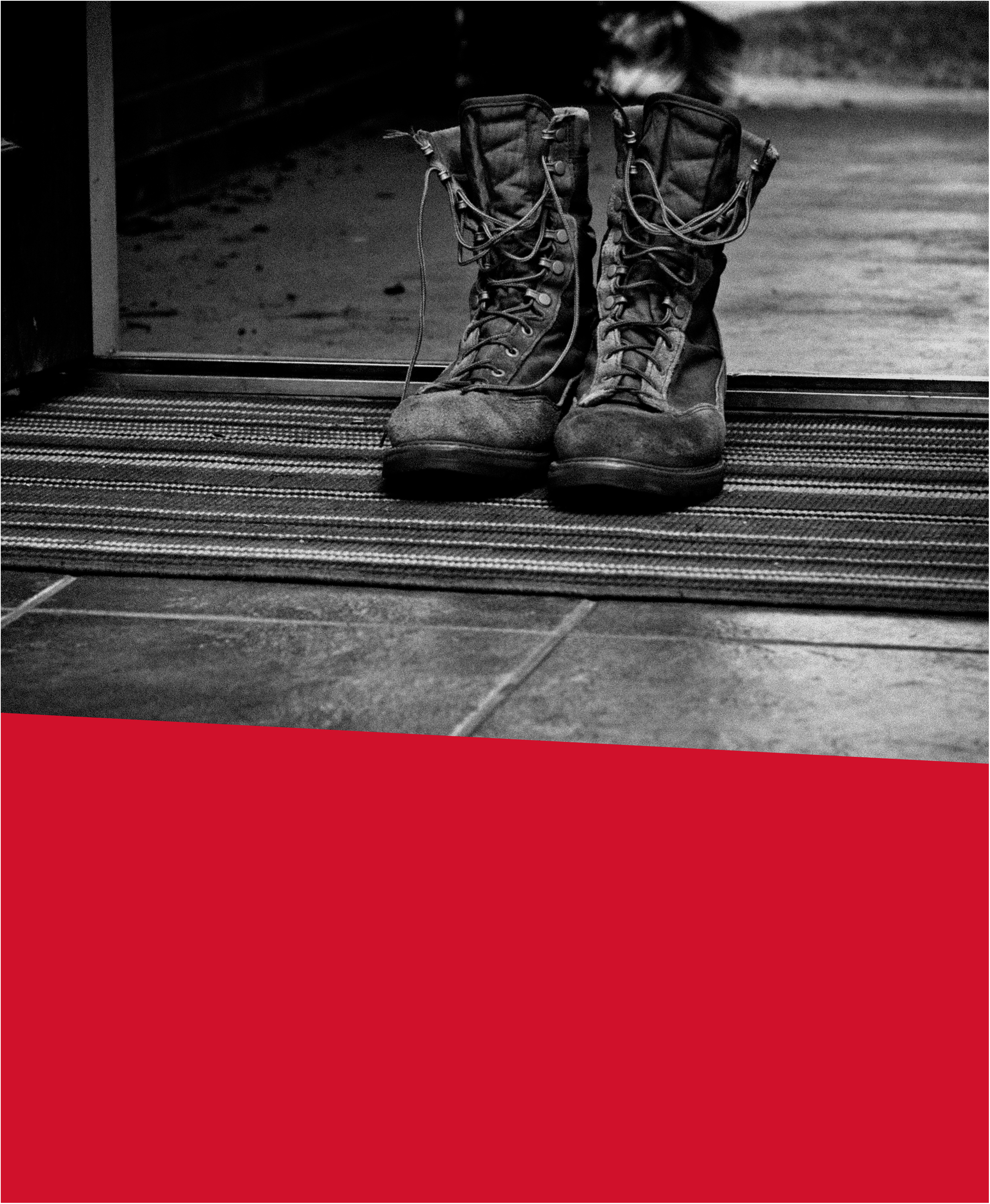
“Retirement,” a soldier’s photo capturing the day he signed out of military service. Mark Bonica, Flickr CC
In a booth at a sleepy San Antonio diner, I sit across from Daniel, a Marine Corps veteran with significant physical injuries from a helicopter crash. His wounds are hard to miss—he has burn scars on part of his face, one of his arms is severely scarred, the other arm wears a prosthetic, and though his legs were furled underneath the table, there were medical braces hidden below his pants.
Between slurps of coffee, Daniel’s talking about the problem of entitlement in the wounded veteran community—the fact that people want to help out so much that sometimes it’s too much. He says “…so, do I deserve my medical treatment? Yes. Do I deserve continued care? Yes. Do I deserve an occasional free meal?” Shrugging his shoulders, he says, “Uh… I guess, sure… whatever, but I don’t want… it’s uncomfortable for me to have people walk up to me and say ‘Hey, you want us to build you a house?’ No, I don’t want you—I’m not in this to maximize the benefit for me. That’s not what I want…”
At that exact moment, a woman swoops up the thin paper check the waitress had placed at the edge of our table. She turns toward the register, definitively stating, “I’m getting y’all’s lunch today.” Daniel chuckles slightly as he says, graciously, “Oh, thank you. Appreciate it.” He turns back to me, saying, under his breath, “And see? Stuff like that… so….” He glances to the side as I respond, “That’s so ironic.”
Of course, it’s not actually ironic: in Daniel’s everyday life, he’s unable to escape being seen as a “wounded warrior.” Knowing nothing about him, a woman from across the diner grabbed our check and paid it. She came and went so fast, I barely noticed what she looked like. She didn’t ask Daniel anything or engage in conversation with us—she just assumed she knew who he was and what had happened to him. As a nation, we recognize “wounded warriors” for their service and the personal sacrifices they have made for this country, but it’s obvious that we are too quick to favor visibly injured veterans like Daniel while forgetting the hundreds of thousands of invisibly injured “wounded warriors” walking among us. In fact, it’s part of why I use quotes around the phrase “wounded warriors”; many veterans are reluctant to adopt the label, and in my work, I consider the phrase itself an important object of analysis.
Contrast Daniel’s experience with Antonio’s. Antonio is a Navy veteran who served as a battlefield medic for Marine Corps units. His injuries, including post-traumatic stress disorder (PTSD), traumatic brain injury (TBI), and chronic pain, built up over 10 deployments in a 15-year career. Even at designated “wounded warrior,” events Antonio isn’t recognized as a wounded veteran. He told me about one incident: “[My friends and I] were at this event… This lady kept looking at me, and I was like, ‘Can I help you?’ And she’s like, ‘Oh, I just wanna talk to the warriors.’ I was like, ‘Okay, we’ll talk.’ And [the director] was like, ‘Oh, this is one of our—these are three of our warriors.’ And she looked and she’s like, ‘He’s a warrior? Oh, I didn’t think he was a warrior, because he had all of his arms and legs.’”
Daniel and Antonio are both “wounded warriors” in every imaginable sense, yet their day-to-day lives are completely different. Antonio must constantly prove his injuries and verify his status as a “wounded warrior”—not only to other veterans, but also medical professionals and the general public. If my interview with Antonio had been in that same diner, he would have gone unnoticed, his check still sitting at the table’s edge. Daniel, on the other hand, can’t escape being seen as a “wounded warrior.” He lives in a world where people constantly engage with him because of his status as a wounded veteran.
The Origin of “Wounded Warrior”
“Wounded warrior” is a new term that rose to prominence during the Iraq and Afghanistan wars. It has become the defining phrase for this generation of wounded veterans, operating as a socially designated status in the public sphere and an official medical classification in the military. Wounded Warrior Project, a non-profit started by Gulf War veterans to provide comfort items to recovering servicemembers, was the first to use “wounded warrior” in 2003. Eventually, the military adopted the term and renamed all of their in-house rehabilitation programs to incorporate the phrase. Now “wounded warrior” is everywhere—from the media, to the military, the U.S. government, and even some Wal-Mart parking lots, where designated parking spots are held for wounded veterans. Historically, veterans who were wounded in war were commonly known as disabled veterans, but “wounded warrior” latches on to the most sacred military symbol, the warrior, and re-purposes it. Curiously, the term has only been used to describe those who have served in the post-9/11 era; it is not used for other generations of wounded veterans, like Vietnam-era veterans.
“Wounded warrior” has become a socially designated status and an official medical classification in the military.
Three years ago, I began to research what it means to be a “wounded warrior” and how the phrase impacts the way that wounded veterans think of themselves. Vietnam Veterans returned home during a time of tension and negativity—something that has continued to affect the way that they understand their service to the country. I wanted to know how the era of “wounded warrior” affects the way that post-9/11 wounded veterans come to think of their service, sacrifices, and identity. I interviewed 39 wounded, injured, or ill veterans with a range of injuries, who served in different service branches and at various times during the Iraq and Afghanistan wars. When I began this research, I knew that visibility of injuries would matter, but I did not understand how divergent each path would be.
Servicemembers’ injuries aren’t always visible.
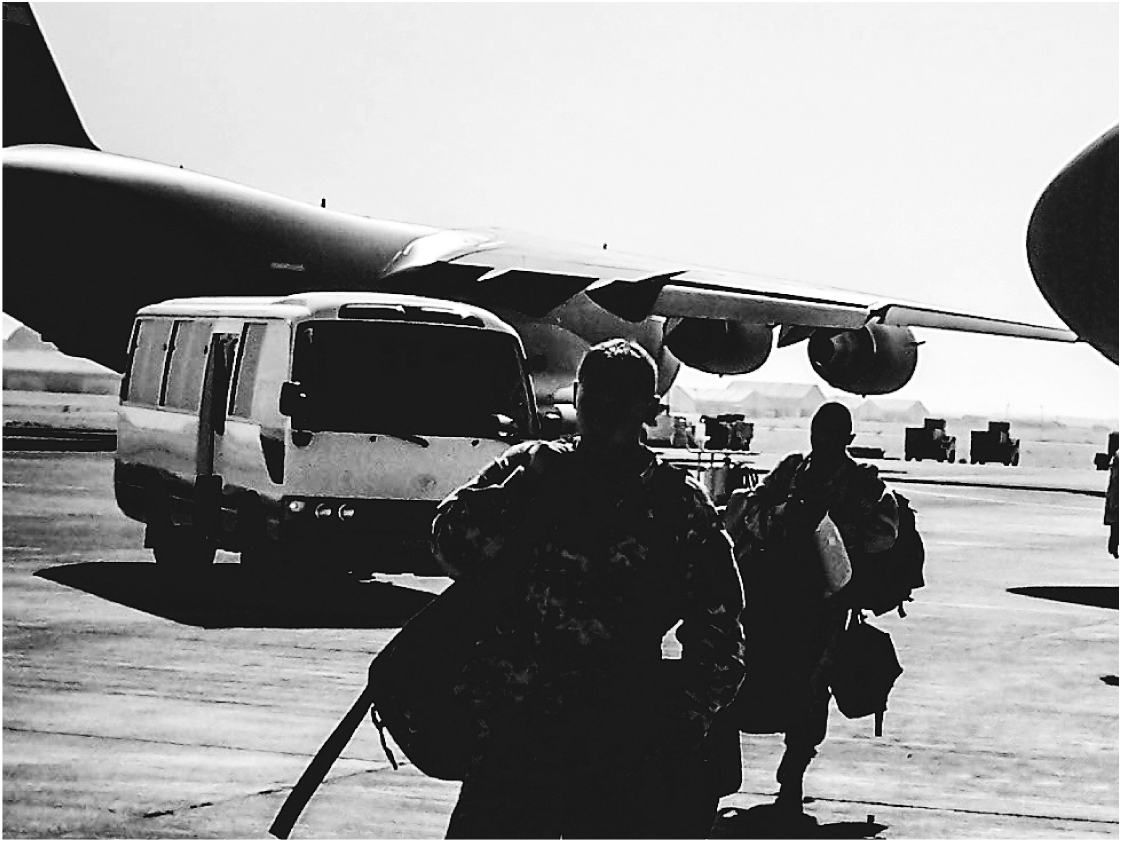
Johnny Silvercloud, Flickr CC
Every wounded veteran I interviewed meets both the official and colloquial criteria of a “wounded warrior,” yet their experiences with the military community and the civilian public are polar opposites. Visibly injured veterans come home to a system of support, with medical care and resources, and a public eager to recognize and honor their sacrifices. The path to recovery for invisibly injured veterans isn’t always immediate or available, and accessing it requires a constant battle advocating for their own injuries. The veteran who lost a limb in the IED blast and the veteran who came home with PTSD from seeing their friend injured, both “wounded warriors,” navigate very different realities as they return home.
Who’s a “Wounded Warrior” and When?
The overrepresentation of “wounded warriors” with visible injuries, whether intentional or happenstance, affects the day-to-day experiences of all wounded veterans. Images of amputees, veterans in wheelchairs, and those with severe burn scars dominate media coverage. Eye-catching pictures of an amputee summiting a mountaintop or a paralyzed veteran finishing a hand-cycling race are dynamic, enticing, and inspirational. Daniel jokingly describes it as “amputee porn,” saying, “all these commercials have amputees in it. We’re all the rage. I mean, everybody wants an amputee in their commercials.”
This popular presentation skews the reality that most wounded veterans have injuries you can’t see. The amputee veteran with the robotic-like prosthetics represents less than .05% of the wounded veteran population. According to a 2015 Congressional Research Report, there were 1,645 service members who experienced a major limb amputation, but a 2008 RAND study titled “Invisible Wounds of War” shows that hundreds of thousands of service members have been diagnosed with TBI (350,000) or PTSD (150,000 to 300,000).
The amputee veteran with the robotic-like prothestics represents less than.05% of the wounded veteran population.
For visibly injured veterans, public attention quickly becomes part of their social reality. Stares, thank yous, comments, and questions are routine. When I asked Juan, a Marine Corps veteran who lost both his legs and his arm, how often people approach him, he said, “Every day. Every day I go out. If it’s somebody buying me dinner, if it’s somebody coming up to me in the mall… they want to come up and ask me questions.” Michael, a Navy veteran with severe burn injuries to his face and arms, recalls people running into the ends of grocery aisles staring at him or approaching to ask if they can pray for him. Sometimes he forgets about his external appearance, only to be reminded by the incessant stares of other people. Invisibly injured veterans with service dogs find their once-hidden “wounded warrior” status revealed. Andrew, who has a service dog to help with his PTSD and TBI, tells me, “There was one time in Wal-Mart, I was there for 40 minutes, and I got 54 comments—54. Even if people love it, you got 54 strangers comments, pointing, staring and looking at you. That’s going to fuck with you.”
In general, people with physical disabilities experience stigma; they live in a social world in which it’s impossible to “blend.” Where “wounded warriors” and civilians with physical disabilities differ is that “wounded warriors,” especially those who fit with the visual stereotype, become walking ambassadors of the Iraq and Afghanistan generation. That is, “wounded warrior” becomes a dominant status for visibly injured post-9/11 veterans—an identity that overtakes and obscures all other aspects of how others see them. Similar to the way the military uniform erases the person wearing it, visible injuries create an unshakeable identity for veterans like Daniel, Michael, and Juan.
Todd, an Army veteran with severe burns and other facial damage, actively tries to make his appearance as normal as possible, hoping to shed his “wounded warrior” look. He explains, “I’m very unique in that [my injuries] are very obvious… I tried to play it down as much as I could. So probably 20 to 30 of my facial reconstructive surgeries were trying to get my face to blend in…. The fact that I wear a [prosthetic] ear does not do anything for me function wise. The fact that I wear an eyepiece doesn’t [either], and I wear a hair piece… I have done everything I can to play it down because… I did not want that to define the rest of my life.” Juan also describes a sort of exhaustion: “there’s some days where I wish people didn’t know me for— sometimes I just don’t want to be a Marine. I don’t want to be a triple amputee. I just want to be Juan.” In addition to being a “wounded warrior,” Juan is also a husband, father, musician, and photographer. He wants people to see him for who he is rather than what happened to him several years ago.
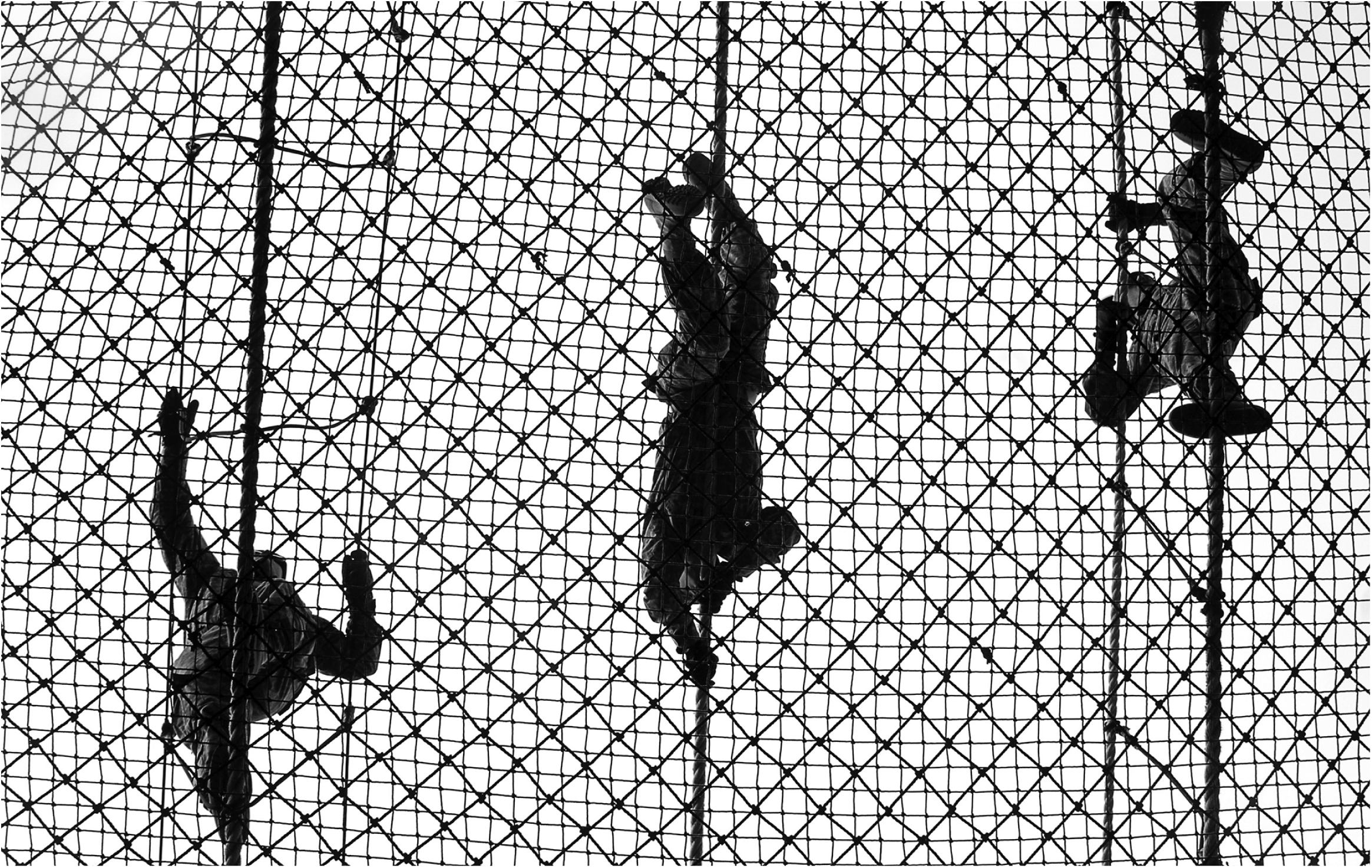
U.S. Air Force, Micky M. Bazaldua
Visibly injured veterans are disproportionately saddled with negotiating public interactions, absorbing the sea of goodwill and support for military veterans. While these acts of gratitude and signs of support come from a well-intentioned public, veterans can tire of these interactions. Luis carefully describes the strain: “When people say, ‘Thank you for your service,’ it’s kind of lost its shock value or something. I’ve heard it so much that I’m embarrassed that I can’t give them… like, that first time when someone said ‘Thank you for your service,’ …I feel like I don’t give them enough sincerity, I feel bad… I feel embarrassed for myself because I can’t do that, you know? I just hear it so much.”
David Wood, a journalist and then-senior military correspondent for The Huffington Post, argues in his article, “When Giving Up ‘Wounded Warrior’ Status Helps Vets Heal,” that wounded veterans want to shed this label, yet society clings to it. The deep entrenchment of this phrase across multiple domains of society—medical, government, and pop culture—keeps visibly injured veterans hostage in a way that the invisibly injured are not.
Invisible Warriors
Veterans with invisible injuries are shielded from the public pressures of being easily identified as a “wounded warrior,” but their social reality means they must fight for the recognition of their injuries as legitimate combat injuries. Despite a greater awareness of these “signature wounds of war,” veterans with invisible injuries still find themselves advocating to be seen as a “wounded warrior.” Their path to recovery is often winding—they may find themselves struggling to work and live their normal lives for months and years without themselves realizing or identifying the medical problems they carried home from war.
With invisible injuries, there is no visible representation of damage, which leads others to assume they’re “fine” or nothing is wrong. Veterans experience the pervasive stigma attached to mental health problems and other invisible disabilities; not only are they invisible to others, their invisibility means society may not recognize these wounds’ legitimacy.
Toward the end of our interview, Annette’s frustration with the military and the Department of Veterans Affairs (VA) is palpable. Annette is an Army veteran who served for 13 years, deploying to Iraq twice early in the conflict. She struggles with PTSD, depression, anxiety, and insomnia—conditions that have varied in intensity over the years, but continue to impact her day-to-day life. With a quiet fire in her voice, she says, “It’s like… what do I need to do? What do I need to do to get some help? For you just to treat me like a person. Like, I have some issues. I mean, it’s not like I’m making this stuff up—I’ve got all the medical records, I’ve got all of the proof that I deployed and where I was at. I’ve got sworn statements on all of the big things that happened to us. I’ve got buddy statements. I’ve got statements from the first sergeants, the commanders, people that were in charge of our unit while we were over there, and I still have to fight for things? I mean… it makes no sense. It makes no sense for somebody to think that, ‘Oh okay, well… it’s not that bad.’” Annette has felt as invisible as her injuries as she tries to prove the legitimacy of her combat wounds to access healthcare.
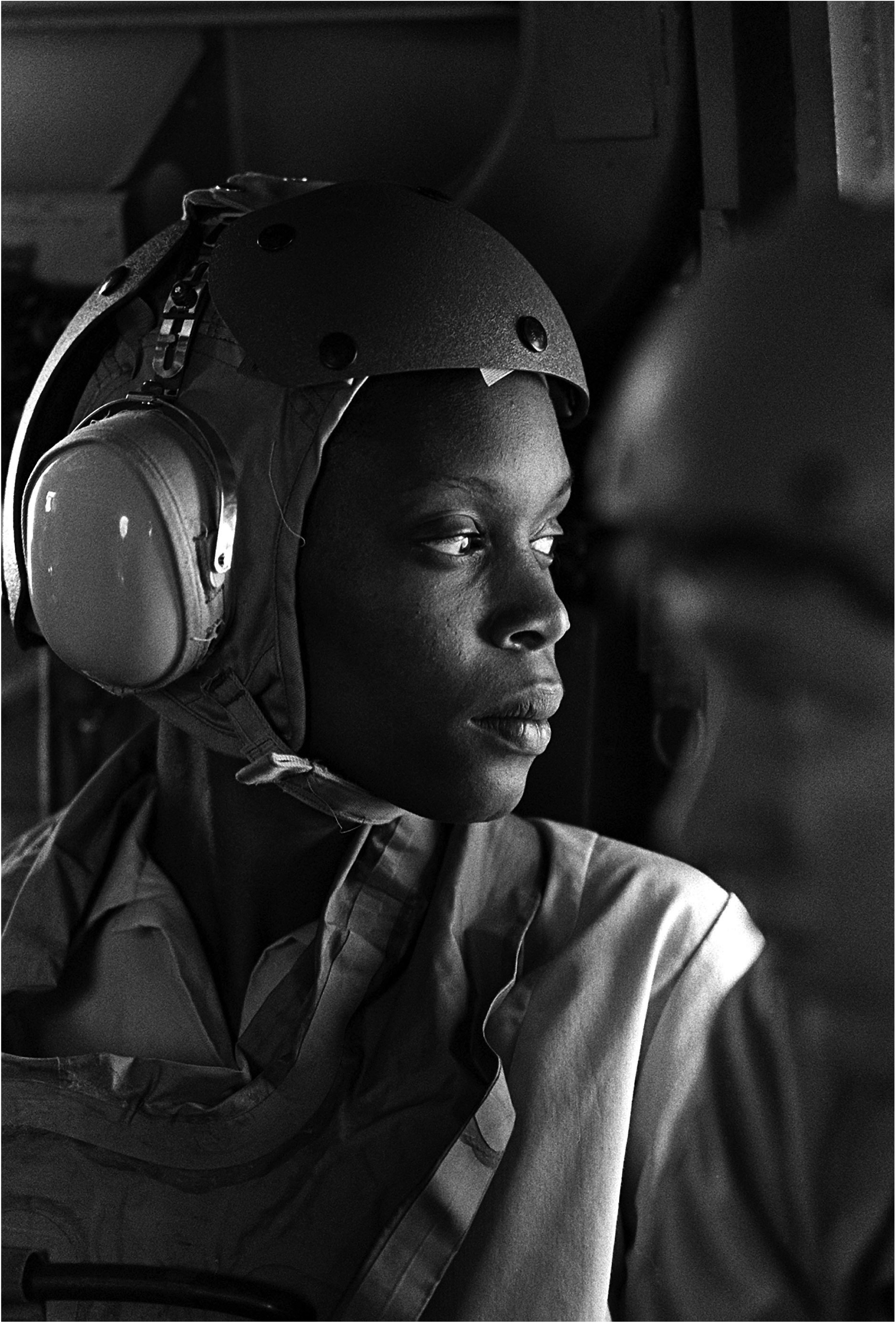
Expert Infantry, Flickr CC
Antonio had similar experiences with medical doctors in the military, as his claims to injury benefits were dismissed or questioned. “I mean, even when I went to [this base] for help. First doctor I saw didn’t even wanna—’It can’t be that bad.’ Second doctor I saw was like, ‘Maybe you caused your own symptoms with alcohol. Maybe you need to go to [rehab].’ It’s like providers don’t even care.” Nathan and his wife fought for years to get acknowledgement of his injuries from the military, including a TBI, PTSD, and hypertension from his four deployments to Iraq and Afghanistan.
Not all invisibly injured veterans have experiences like Annette, Antonio, and Nathan; many receive streamlined treatment from the military and VA medical facilities. The assessment, diagnosis, and treatment of invisible injuries has improved over the last 15 years. Military medicine has been forced to keep up with the complex, intertwined injuries service members bring back from sustained combat operations. Still, invisibly injured veterans live under a weight, wondering, “Will they believe me?” as they enter every new interaction or encounter with medical doctors, non-profit organizations, and civilians. Those with invisible injuries carry an additional burden of proof.
Jason, a Marine Corps veteran with PTSD, reflects on the challenges of his contested injury. He says it’s hard for others to determine “whether or not the story you tell is even credible, because anybody can say they have PTSD, anybody. It doesn’t mean it’s true. So yeah, there are times when you think about it and you go… ‘I kind of wish I had come back with a visible injury so that people would actually see it.’ It’s weird, because would I really want to go through an amputation? Hell no.” As visibly injured veterans are trapped in the role of “wounded warrior,” constantly coping with outside validation and affirmation, the invisibly injured are repeatedly asked to prove their membership in a community few wish to join but to which they rightfully belong.
Moving Forward
The Iraq and Afghanistan wars have forever changed our nation. They have also changed the veterans who have dutifully served over nearly two decades. The rise of the term “wounded warrior” has created a new awareness about the challenges and consequences of war for those who come back alive.
As far as we’ve come from the hostility directed toward many returning Vietnam vets, the social context of today’s homecoming isn’t problem-free. The parade of visibly injured veterans in the media creates a stereotype of “wounded warrior” that profoundly shapes the experiences of every wounded veteran. Visibly injured veterans can’t escape being seen as a “wounded warrior,” while invisibly injured veterans fight to be seen at all. With PTSD and TBI acknowledged as legitimate combat injuries, the military and VA systems of care need to build a culture that validates all wounded veterans. The hardest part of coming home shouldn’t be proving that an injury exists. For visibly injured veterans, we need to recognize and honor their sacrifice, but also resist the urge to pigeonhole them as “wounded warriors.” The story should move beyond “amputee porn” to see the whole person—what they’re doing now, and not just where they’ve been. For those who serve, the consequences of war are complicated, dynamic, and lifelong. Our understanding of wounded veterans need not be reduced to a stereotype, especially one that creates inequality and exclusion.
For those who serve, the consequences of war are complicated, dynamic, and lifelong.