



Abstract
Rachel P. King on getting past awards gaps to fix an industry.
Keywords
In the winter of 2016, for the second year in a row, the Academy of Motion Picture Arts and Sciences released a disappointing list of Oscar nominees that was, like its members, overwhelmingly White, heterosexual, and male. Actors Michael B. Jordan and Will Smith, for instance, were both snubbed among the Best Actor nominations, fueling the frustration that social media dubbed #OscarsSoWhite. Hollywood remains inside a bubble of privilege, and precious little emanating from it reflects what’s actually happening in this country. For many Americans, everyday existence has taken on a greyish dystopian cast; nearly a decade after the collapse of the economy, we’re still living with depressed wages and lost jobs and homes, as well as rampant gun violence, and more mental illness than just about any other country in the world. And driven by high levels of substance abuse and suicide, mortality is on the rise for young and middle-aged Whites.
One can only hope that emerging technologies can continue reducing the cost of movie making.
Of the eight Best Picture nominees in 2016, only one film, the surprise indie nominee Room, is set in the present day. The winner, Spotlight, is a two-hour meditation on how great journalism used to be at the turn of the millennium. The other contenders are speculative or, like Spotlight, historical. They take place anywhere from a decade to a century in the past or off in some distant future. In fact, the most overtly socially conscious of the Best Picture nominees may be the film about the financial crisis of a decade ago, The Big Short. A merciless depiction of the greed that flourished during the Bush years, it is the true story of a bunch of White guys with enough insider knowledge to exploit the system and get stinking rich. All of which is to say that Hollywood hasn’t ignored the criminality of the financial services industry or failed to castigate the malefactors, the way, say, Washington has; in addition to The Big Short, we’ve seen Wall Street: Money Never Sleeps, Margin Call, and the Wolf of Wall Street. Still, it’s telling that the producers bankrolling films keep returning to the rarefied world of finance, while the ordinary people who lost their livelihoods during the collapse are barely acknowledged by Hollywood. In a February 8th article, the New York Times excitedly reported on Hollywood’s new enthusiasm for tales of the Great Recession, noting “a growing audience for movies, plays, television shows and novels that address the misdeeds and systemic failures that brought the economy to the edge of collapse eight years ago.” The subject is attracting big money and big stars: see, for example, Jodie Foster’s new film Money Monster with George Clooney and Julia Roberts, and the forthcoming Opening Belle, starring Reese Witherspoon. Still, as the titles suggest, these films’ protagonists are, like The Big Short’s, denizens of Wall Street. In real life, Clooney, Roberts, and Witherspoon may or may not have much experience trading stocks, but they should have no trouble convincing audiences that they know what it’s like to be ostentatiously privileged.
You could, of course, say that the very thing that moviegoers don’t want in hard times is to hear about their own problems. A.O. Scott, in an otherwise insightful pre-Oscar roundup repeated that cliché, saying, “It may be that grim times call forth hopeful stories. That was true in the ’30s, for sure.”
Except that wasn’t true in the 1930s. The Depression did call forth escapist fare but it also elicited a great deal of biting social critique. Back then, Hollywood made big-budget movies with major stars that were designed to appeal to a nation of people who, like today, were both terrified and angry. For example, Black Fury examined the exploitation of coal miners, while I Was a Fugitive from a Chain Gang and Hell’s Highway were unsparing in their critique of prison labor. Heroes for Sale highlighted substance abuse and unemployment among veterans, Wild Boys of the Road looked at teen homelessness, and Make Way for Tomorrow—made right around the time Social Security was enacted—captured the plight of elderly people falling into poverty during the Depression. Some films offered radical solutions to the nation’s problems: Gabriel Over the White House attempted to show how a wise, benevolent dictator could solve the country’s problems (since the ineffectual president Herbert Hoover had failed so spectacularly), while The President Vanishes advocated pacifism and anti-corporatism. Cabin in the Cotton implied that Southern sharecroppers were well within their rights in burning down wealthy landowners’ houses. (According to film historian Thomas Doherty, the Soviet Communist leadership regarded Cabin, starring Bette Davis, such a potent indictment of capitalism that in 1934 they made it the first American talkie green-lighted for screening in the U.S.S.R.)
Reprinted with permission from Lee & Low Books
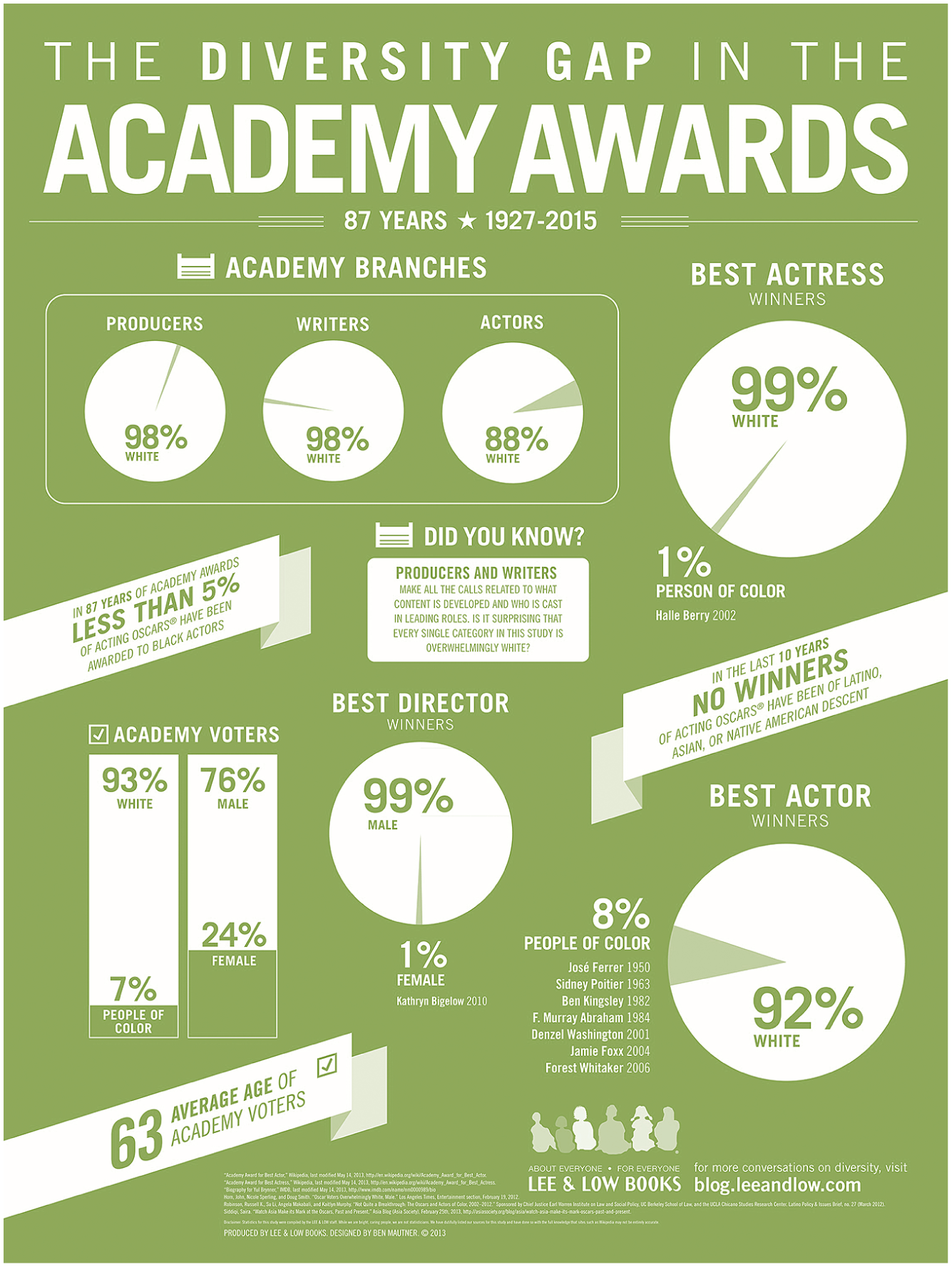
For all their rabble-rousing, it should be noted that the film studios of that time weren’t being particularly brave. For example, Cabin in the Cotton’s sharecroppers are all White; the disenfranchisement of Southern Blacks is entirely absent from the film. This whitewashed version of history prevented any alienation of the ticket-buying public below the Mason-Dixon line and allowed Hollywood to take the path of least resistance and biggest profits. This cowardice proves my point—the cravenness of not tackling racism in a film about Southern poverty shows that filmmakers weren’t being heroic when they addressed social problems such as poverty and labor strife—they were being populist and catering to mass tastes.
When I consider how socially conscious 1930s Hollywood movies were relative to today, I can’t help but think of how the crass moguls of 1930s Hollywood were self-made men—immigrants even—who were capable of conceiving that ordinary people might want entertainment that challenged the status quo. The power brokers of today’s Hollywood, with their comfortable backgrounds and Ivy League degrees, seem to have much more limited imaginations. After all, the system has always worked just fine for most of them.
Bob Nelson, screenwriter of 2013’s Oscar-nominated Nebraska and director of the 2016 movie The Confirmation, doesn’t have a typical Hollywood background; he grew up in rural Washington State with a father who was a mechanic, and he knows what it’s like to work as a janitor for $5 an hour. The Confirmation is the story of a divorced, alcoholic, and underemployed carpenter played by Clive Owen. (It’s also, believe it or not, something of a comedy.) Nelson’s films are among the rare ones that explore the lives of the working class. In one of the interviews he gave upon The Confirmation’s release, Nelson even commented on the near absence of blue-collar characters in American film and television.
In spite of Nelson’s breakout success with Nebraska, producers prefer to stick with safer choices: bread and circuses for the masses in the form of sci-fi blockbusters. But are such movies as anodyne as they might appear? Perhaps not all of them. Mad Max: Fury Road shows us a landscape devastated by climate change, and a bleak world in which the haves brutally oppress the have-nots. It’s especially a nightmare for women as this world sanctions rape and treats nubile females as baby incubators. Women are its greatest victims—and, at the end, the real victors. Similarly, the Hunger Games touches on problems plaguing poor communities: the pressure to send adolescents off to risk their lives in meaningless battles, the spectacle of young people killing each other while the state refuses to step in and help, the presence of the police as a paramilitary force constantly at the ready to put down the slightest sign of protest or insurrection.
Still, we’d probably be better off if American cinema explored these issues in more than just oblique, metaphorical ways. To their credit, American indie films do try to offer viewers realism, but there are reasons they tend to focus on well-educated, professional types. After all, these are the people (like, say, the newspaper reporters in Spotlight) that similarly well-educated indie filmmakers know best.
Although hardly a child of privilege, the (White, male) Nelson had a long road to success. His first screenplay, written in 2002 (when he was 45), took nearly 11 years to make its way to the big screen as the film Nebraska. New technologies may make this outsider path a bit less difficult for filmmakers. For example, director Sean Baker made his film Tangerine on the cheap using iPhones. The casting of Tangerine was just as groundbreaking: while mainstream movies rely on the box office track records of their stars to attract investors, Baker cast two non-White transgender actresses in their first movie roles. Both Kiki Rodriguez and Mya Taylor are excellent as a pair of L.A. prostitutes, as spunky and sympathetic as their Depression-era counterparts. (Thankfully, the racial stereotypes of the 1930s have been jettisoned.) The low costs of filming allowed Baker to cast the actors he wanted. The result: memorable performances by two new performers, as well as a film that felt very raw, surprising, and authentic. (Both Taylor and Rodriguez, whom Baker met at a community LGBTQ center consulted on the script.)
To be fair to the indie scene, there have been other fine dramas from the last decade that avoid preciousness and show Americans living in poverty or on the edge of financial disaster. In addition to The Confirmation, Love Is Strange, Fruitvale Station, Frozen River, Winter’s Bone, and Wendy and Lucy are well worth watching. Not coincidentally, there’s a good deal of gender and racial diversity in these films, both in front of and behind the camera. And we may soon have a chance to see All We Had, Katie Holmes’s film about a single mom duped into taking out a subprime mortgage. If it’s good and does well, perhaps we’ll start seeing some higher-profile projects with similar themes.
At any rate, one can only hope that emerging technologies can continue reducing the cost of movie making. Such innovation could further level the playing field, creating more opportunities for Hollywood outsiders to break into the industry, and opening the industry up to films that tell new, diverse, and most importantly, authentic stories. Then we might not care so much about Hollywood or the shiny awards it loves to give itself.